
Please wait while the formulary information is being retrieved.
Drug overview for VIMPAT (lacosamide):
Generic name: LACOSAMIDE (la-KOE-sa-mide)
Drug class: Anticonvulsants
Therapeutic class: Central Nervous System Agents
Lacosamide, a functionalized amino acid, is an anticonvulsant.
No enhanced Uses information available for this drug.
Generic name: LACOSAMIDE (la-KOE-sa-mide)
Drug class: Anticonvulsants
Therapeutic class: Central Nervous System Agents
Lacosamide, a functionalized amino acid, is an anticonvulsant.
No enhanced Uses information available for this drug.
DRUG IMAGES
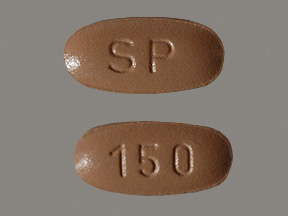 VIMPAT 150 MG TABLET
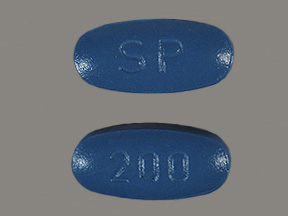 VIMPAT 200 MG TABLET
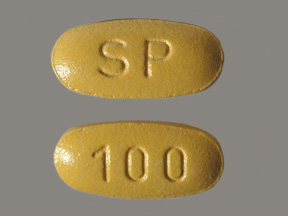 VIMPAT 100 MG TABLET
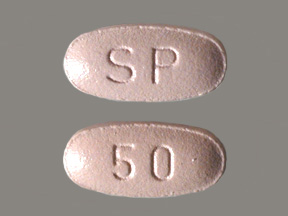 VIMPAT 50 MG TABLET
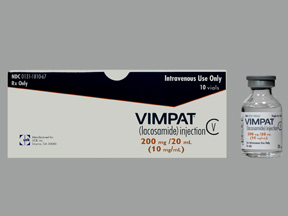 VIMPAT 200 MG/20 ML VIAL
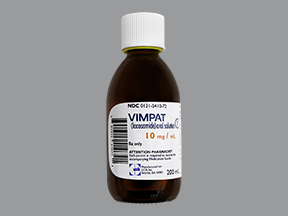 VIMPAT 10 MG/ML SOLUTION
The following indications for VIMPAT (lacosamide) have been approved by the FDA:
Indications:
Focal epilepsy
Partial epilepsy treatment adjunct
Tonic-clonic epilepsy treatment adjunct
Professional Synonyms:
Cortical epilepsy
Focal seizures
Grand mal epilepsy treatment adjunct
Local epilepsy
Partial epilepsy
Partial onset seizures treatment adjunct
Partial onset seizures
Partial seizures treatment adjunct
Partial seizures
Tonic-clonic seizures treatment adjunct
Indications:
Focal epilepsy
Partial epilepsy treatment adjunct
Tonic-clonic epilepsy treatment adjunct
Professional Synonyms:
Cortical epilepsy
Focal seizures
Grand mal epilepsy treatment adjunct
Local epilepsy
Partial epilepsy
Partial onset seizures treatment adjunct
Partial onset seizures
Partial seizures treatment adjunct
Partial seizures
Tonic-clonic seizures treatment adjunct
The following dosing information is available for VIMPAT (lacosamide):
In adults 17 years of age or older, the recommended initial oral dosage of lacosamide for the management of partial-onset seizures is 200 mg daily (administered as 100 mg twice daily) as monotherapy or 100 mg daily (administered as 50 mg twice daily) as adjunctive therapy. Dosage should be increased by 100 mg daily (50 mg twice daily) based on individual patient response and tolerability, no more frequently than once a week, up to the recommended maintenance dosage of 300-400 mg daily (150-200 mg twice daily) as monotherapy or 200-400 mg daily (100-200 mg twice daily) as adjunctive therapy.
Alternatively, lacosamide therapy may be initiated with a single oral loading dose of 200 mg in adults, followed 12 hours later by a dosage of 100 mg twice daily for 1 week; subsequent dosage may be increased by 100 mg daily (50 mg twice daily) based on individual patient response and tolerability, no more frequently than once a week, up to the recommended maintenance dosage of 300-400 mg daily (150-200 mg twice daily) as monotherapy or 200-400 mg daily (100-200 mg twice daily) as adjunctive therapy. Steady-state concentrations produced by a single lacosamide loading dose of 200 mg are comparable to those produced by an oral dosage of 100 mg twice daily. The loading dose should be administered under medical supervision because of an increased risk of adverse CNS effects.
When oral therapy is temporarily not feasible, lacosamide may be administered by IV infusion in adults at the same dosages recommended for oral administration, including the alternative loading dosage. The manufacturer states that clinical experience with IV dosing of lacosamide is limited to 5 consecutive days.
The maximum recommended dosage of lacosamide for the management of partial-onset seizures is 400 mg daily (200 mg twice daily). In clinical studies evaluating adjunctive therapy, lacosamide dosages exceeding 400 mg daily were not more effective than lower dosages and were associated with a substantially higher incidence of adverse effects.
Dosage of lacosamide in pediatric patients is based on weight.
In pediatric patients 4 years of age or older weighing at least 50 kg, the recommended initial oral dosage of lacosamide for monotherapy or adjunctive therapy of partial-onset seizures is 100 mg daily (administered as 50 mg twice daily). Dosage should be increased by 100 mg daily (50 mg twice daily) based on individual patient response and tolerability, no more frequently than once a week, up to the recommended maintenance dosage of 300-400 mg daily (150-200 mg twice daily) as monotherapy or 200-400 mg daily (100-200 mg twice daily) as adjunctive therapy.
In pediatric patients 4 years of age or older weighing 30 kg to less than 50 kg, the recommended initial oral dosage of lacosamide for monotherapy or adjunctive therapy of partial-onset seizures is 2 mg/kg daily (administered as 1 mg/kg twice daily). Dosage should be increased by 2 mg/kg daily (1 mg/kg twice daily) based on individual patient response and tolerability, no more frequently than once a week, up to the recommended maintenance dosage of 4-8 mg/kg daily (2-4 mg/kg twice daily) as monotherapy or adjunctive therapy.
In pediatric patients 4 years of age or older weighing 11 kg to less than 30 kg, the recommended initial oral dosage of lacosamide for monotherapy or adjunctive therapy of partial-onset seizures is 2 mg/kg daily (administered as 1 mg/kg twice daily). Dosage should be increased by 2 mg/kg daily (1 mg/kg twice daily) based on individual patient response and tolerability, no more frequently than once a week, up to the recommended maintenance dosage of 6-12 mg/kg daily (3-6 mg/kg twice daily) as monotherapy or adjunctive therapy.
The maximum recommended dosage of lacosamide for the management of partial-onset seizures is 400 mg daily (200 mg twice daily). In clinical studies evaluating adjunctive therapy, lacosamide dosages exceeding 400 mg daily were not more effective than lower dosages and were associated with a substantially higher incidence of adverse effects.
Alternatively, lacosamide therapy may be initiated with a single oral loading dose of 200 mg in adults, followed 12 hours later by a dosage of 100 mg twice daily for 1 week; subsequent dosage may be increased by 100 mg daily (50 mg twice daily) based on individual patient response and tolerability, no more frequently than once a week, up to the recommended maintenance dosage of 300-400 mg daily (150-200 mg twice daily) as monotherapy or 200-400 mg daily (100-200 mg twice daily) as adjunctive therapy. Steady-state concentrations produced by a single lacosamide loading dose of 200 mg are comparable to those produced by an oral dosage of 100 mg twice daily. The loading dose should be administered under medical supervision because of an increased risk of adverse CNS effects.
When oral therapy is temporarily not feasible, lacosamide may be administered by IV infusion in adults at the same dosages recommended for oral administration, including the alternative loading dosage. The manufacturer states that clinical experience with IV dosing of lacosamide is limited to 5 consecutive days.
The maximum recommended dosage of lacosamide for the management of partial-onset seizures is 400 mg daily (200 mg twice daily). In clinical studies evaluating adjunctive therapy, lacosamide dosages exceeding 400 mg daily were not more effective than lower dosages and were associated with a substantially higher incidence of adverse effects.
Dosage of lacosamide in pediatric patients is based on weight.
In pediatric patients 4 years of age or older weighing at least 50 kg, the recommended initial oral dosage of lacosamide for monotherapy or adjunctive therapy of partial-onset seizures is 100 mg daily (administered as 50 mg twice daily). Dosage should be increased by 100 mg daily (50 mg twice daily) based on individual patient response and tolerability, no more frequently than once a week, up to the recommended maintenance dosage of 300-400 mg daily (150-200 mg twice daily) as monotherapy or 200-400 mg daily (100-200 mg twice daily) as adjunctive therapy.
In pediatric patients 4 years of age or older weighing 30 kg to less than 50 kg, the recommended initial oral dosage of lacosamide for monotherapy or adjunctive therapy of partial-onset seizures is 2 mg/kg daily (administered as 1 mg/kg twice daily). Dosage should be increased by 2 mg/kg daily (1 mg/kg twice daily) based on individual patient response and tolerability, no more frequently than once a week, up to the recommended maintenance dosage of 4-8 mg/kg daily (2-4 mg/kg twice daily) as monotherapy or adjunctive therapy.
In pediatric patients 4 years of age or older weighing 11 kg to less than 30 kg, the recommended initial oral dosage of lacosamide for monotherapy or adjunctive therapy of partial-onset seizures is 2 mg/kg daily (administered as 1 mg/kg twice daily). Dosage should be increased by 2 mg/kg daily (1 mg/kg twice daily) based on individual patient response and tolerability, no more frequently than once a week, up to the recommended maintenance dosage of 6-12 mg/kg daily (3-6 mg/kg twice daily) as monotherapy or adjunctive therapy.
The maximum recommended dosage of lacosamide for the management of partial-onset seizures is 400 mg daily (200 mg twice daily). In clinical studies evaluating adjunctive therapy, lacosamide dosages exceeding 400 mg daily were not more effective than lower dosages and were associated with a substantially higher incidence of adverse effects.
Lacosamide is administered orally (as tablets or oral solution). The drug may be administered by IV infusion in adults when oral administration is temporarily not feasible (e.g., after surgery or in patients with dysphagia or acute GI disorders); safety of the IV formulation has not been established in pediatric patients. Bioequivalence has been demonstrated between the oral tablets and the 30- and 60-minute IV infusions (but not the 15-minute IV infusion) of lacosamide.
The commercially available oral solution containing 50 mg/5 mL of lacosamide is bioequivalent to the tablets. Cardiac conduction abnormalities and arrhythmias have been observed in patients receiving lacosamide orally or by IV infusion; the manufacturer recommends ECG monitoring prior to initiating therapy and after reaching steady-state maintenance dosage in patients who may be at risk. In addition, the manufacturer recommends close monitoring in patients receiving lacosamide by IV infusion.
(See Cardiac Effects under Cautions: Warnings/Precautions.) Lacosamide therapy should be withdrawn gradually (e.g., by discontinuing therapy over at least one week) to minimize the potential for increased seizure frequency in patients with seizure disorders. Patients currently receiving or beginning therapy with lacosamide and/or any other anticonvulsant for any indication should be closely monitored for the emergence or worsening of depression, suicidal thoughts or behavior (suicidality), and/or any unusual changes in mood or behavior. (See Suicidality Risk under Cautions: Warnings/Precautions.)
The commercially available oral solution containing 50 mg/5 mL of lacosamide is bioequivalent to the tablets. Cardiac conduction abnormalities and arrhythmias have been observed in patients receiving lacosamide orally or by IV infusion; the manufacturer recommends ECG monitoring prior to initiating therapy and after reaching steady-state maintenance dosage in patients who may be at risk. In addition, the manufacturer recommends close monitoring in patients receiving lacosamide by IV infusion.
(See Cardiac Effects under Cautions: Warnings/Precautions.) Lacosamide therapy should be withdrawn gradually (e.g., by discontinuing therapy over at least one week) to minimize the potential for increased seizure frequency in patients with seizure disorders. Patients currently receiving or beginning therapy with lacosamide and/or any other anticonvulsant for any indication should be closely monitored for the emergence or worsening of depression, suicidal thoughts or behavior (suicidality), and/or any unusual changes in mood or behavior. (See Suicidality Risk under Cautions: Warnings/Precautions.)
| DRUG LABEL | DOSING TYPE | DOSING INSTRUCTIONS |
|---|---|---|
| VIMPAT 200 MG/20 ML VIAL | Maintenance | Adults infuse 20 milliliters (200 mg) over 30-60 minute(s) by intravenous route 2 times per day |
| VIMPAT 50 MG TABLET | Maintenance | Adults take 1 tablet (50 mg) by oral route 2 times per day |
| VIMPAT 100 MG TABLET | Maintenance | Adults take 1 tablet (100 mg) by oral route 2 times per day |
| VIMPAT 150 MG TABLET | Maintenance | Adults take 1 tablet (150 mg) by oral route 2 times per day |
| VIMPAT 200 MG TABLET | Maintenance | Adults take 1 tablet (200 mg) by oral route 2 times per day |
| VIMPAT 10 MG/ML SOLUTION | Maintenance | Adults take 10 milliliters (100 mg) by oral route 2 times per day |
| DRUG LABEL | DOSING TYPE | DOSING INSTRUCTIONS |
|---|---|---|
| LACOSAMIDE 50 MG/5 ML CUP | Maintenance | Adults take 10 milliliters (100 mg) by oral route 2 times per day |
| LACOSAMIDE 100 MG/10 ML CUP | Maintenance | Adults take 10 milliliters (100 mg) by oral route 2 times per day |
| LACOSAMIDE 150 MG/15 ML CUP | Maintenance | Adults take 10 milliliters (100 mg) by oral route 2 times per day |
| LACOSAMIDE 200 MG/20 ML CUP | Maintenance | Adults take 10 milliliters (100 mg) by oral route 2 times per day |
| LACOSAMIDE 50 MG TABLET | Maintenance | Adults take 1 tablet (50 mg) by oral route 2 times per day |
| LACOSAMIDE 100 MG TABLET | Maintenance | Adults take 1 tablet (100 mg) by oral route 2 times per day |
| LACOSAMIDE 150 MG TABLET | Maintenance | Adults take 1 tablet (150 mg) by oral route 2 times per day |
| LACOSAMIDE 200 MG TABLET | Maintenance | Adults take 1 tablet (200 mg) by oral route 2 times per day |
| LACOSAMIDE 200 MG/20 ML VIAL | Maintenance | Adults infuse 20 milliliters (200 mg) over 30-60 minute(s) by intravenous route 2 times per day |
| LACOSAMIDE 10 MG/ML SOLUTION | Maintenance | Adults take 10 milliliters (100 mg) by oral route 2 times per day |
The following drug interaction information is available for VIMPAT (lacosamide):
There are 0 contraindications.
There are 0 severe interactions.
There are 2 moderate interactions.
The clinician should assess the patient’s characteristics and take action as needed. Actions required for moderate interactions include, but are not limited to, discontinuing one or both agents, adjusting dosage, altering administration.
| Drug Interaction | Drug Names |
|---|---|
| Lacosamide/Beta-Blockers; Diltiazem; Verapamil SEVERITY LEVEL: 3-Moderate Interaction: Assess the risk to the patient and take action as needed. MECHANISM OF ACTION: Lacosamide may enhance the slow inactivation of voltage-gated sodium channels and may cause dose-dependent bradycardia, prolongation of the PR interval, atrioventricular (AV) block, or ventricular tachyarrhythmia.(1) CLINICAL EFFECTS: Concurrent use of lacosamide and agents that affect cardiac conduction (beta-blockers, non-dihydropyridine calcium channel blockers) may increase the risk of bradycardia, prolongation of the PR interval, atrioventricular (AV) block, or ventricular tachyarrhythmia.(1) PREDISPOSING FACTORS: None determined. PATIENT MANAGEMENT: Lacosamide should be used with caution in patients on concomitant medications that affect cardiac conduction, including beta-blockers and non-dihydropyridine calcium channel blockers.(1) If concurrent use is needed, obtain an ECG before lacosamide therapy and after lacosamide dose is titrated to steady-state.(1) Patients should be monitored closely when lacosamide is given intravenously.(1) DISCUSSION: In a clinical trial in patients with partial-onset seizures, asymptomatic first-degree atrioventricular (AV) block occurred in 4/944 (0.4%) of patient who received lacosamide compared to 0/364 (0%) with placebo.(1) In a clinical trial in patients with diabetic neuropathy, asymptomatic first-degree AV block occurred in 5/1023 (0.5%) of patients who received lacosamide compared to 0/291 (0%) with placebo.(1) Second-degree and complete AV block have been reported in patients with seizures.(1) One case of profound bradycardia was observed in a patient during a 15-minute infusion of 150 mg of lacosamide.(1) Two postmarketing reports of third-degree AV block in patients with significant cardiac history and also receiving metoprolol and amlodipine during infusion of lacosamide injection at doses higher than recommended have been reported.(1) A case report of an 88 year old female taking bisoprolol documented complete AV block after initiation of lacosamide. The patient required pacemaker implementation.(2) |
ACEBUTOLOL HCL, ATENOLOL, ATENOLOL-CHLORTHALIDONE, BETAPACE, BETAPACE AF, BETAXOLOL HCL, BISOPROLOL FUMARATE, BISOPROLOL-HYDROCHLOROTHIAZIDE, BREVIBLOC, BYSTOLIC, CARDIZEM, CARDIZEM CD, CARDIZEM LA, CARTIA XT, CARVEDILOL, CARVEDILOL ER, COREG, COREG CR, DILT-XR, DILTIAZEM 12HR ER, DILTIAZEM 24HR ER, DILTIAZEM 24HR ER (CD), DILTIAZEM 24HR ER (LA), DILTIAZEM 24HR ER (XR), DILTIAZEM HCL, DILTIAZEM HCL-0.7% NACL, DILTIAZEM HCL-0.9% NACL, DILTIAZEM HCL-NACL, DILTIAZEM-D5W, ESMOLOL HCL, ESMOLOL HCL-SODIUM CHLORIDE, ESMOLOL HCL-WATER, HEMANGEOL, INDERAL LA, INDERAL XL, INNOPRAN XL, KAPSPARGO SPRINKLE, LABETALOL HCL, LABETALOL HCL-WATER, LOPRESSOR, MATZIM LA, METOPROLOL SUCCINATE, METOPROLOL TARTRATE, METOPROLOL-HYDROCHLOROTHIAZIDE, NADOLOL, NEBIVOLOL HCL, PINDOLOL, PROPRANOLOL HCL, PROPRANOLOL HCL ER, PROPRANOLOL-HYDROCHLOROTHIAZID, RAPIBLYK, SOTALOL, SOTALOL AF, SOTALOL HCL, SOTYLIZE, TENORETIC 100, TENORETIC 50, TENORMIN, TIADYLT ER, TIAZAC, TIMOLOL MALEATE, TOPROL XL, TRANDOLAPRIL-VERAPAMIL ER, VERAPAMIL ER, VERAPAMIL ER PM, VERAPAMIL HCL, VERAPAMIL SR |
| Lacosamide/Sodium Channel Blockers; Potassium Channel Blockers SEVERITY LEVEL: 3-Moderate Interaction: Assess the risk to the patient and take action as needed. MECHANISM OF ACTION: Lacosamide may enhance the slow inactivation of voltage-gated sodium channels and may cause dose-dependent bradycardia, prolongation of the PR interval, atrioventricular (AV) block, or ventricular tachyarrhythmia.(1) CLINICAL EFFECTS: Concurrent use of lacosamide and agents that affect cardiac conduction (sodium channel blockers and potassium channel blockers) may increase the risk of bradycardia, prolongation of the PR interval, atrioventricular (AV) block, or ventricular tachyarrhythmia.(1) PREDISPOSING FACTORS: None determined. PATIENT MANAGEMENT: Lacosamide should be used with caution in patients on concomitant medications that affect cardiac conduction, including sodium channel blockers and potassium channel blockers.(1) If concurrent use is needed, obtain an ECG before lacosamide therapy and after lacosamide dose is titrated to steady-state.(1) Patients should be monitored closely when lacosamide is given intravenously.(1) DISCUSSION: In a clinical trial in patients with partial-onset seizures, asymptomatic first-degree atrioventricular (AV) block occurred in 4/944 (0.4%) of patient who received lacosamide compared to 0/364 (0%) with placebo.(1) In a clinical trial in patients with diabetic neuropathy, asymptomatic first-degree AV block occurred in 5/1023 (0.5%) of patients who received lacosamide compared to 0/291 (0%) with placebo.(1) Second-degree and complete AV block have been reported in patients with seizures.(1) One case of profound bradycardia was observed in a patient during a 15-minute infusion of 150 mg of lacosamide.(1) A case report of a 49 year old male with refractory complex partial and generalized seizures described the development of ventricular tachycardia four months after addition of lacosamide 400 mg/day to the existing regimen of carbamazepine, lamotrigine, clonazepam, and valproate. The patient's ECG showed first-degree AV block, posterior left fascicular block, and severe widening of the QRS complex, all of which resolved upon discontinuation of lacosamide.(2) |
4-AMINOPYRIDINE, AMIODARONE HCL, AMIODARONE HCL-D5W, AMPYRA, APTIOM, ASPRUZYO SPRINKLE, CARBAMAZEPINE, CARBAMAZEPINE ER, CARBATROL, CEREBYX, CORVERT, DALFAMPRIDINE, DALFAMPRIDINE ER, DEPAKOTE, DEPAKOTE ER, DEPAKOTE SPRINKLE, DIAMINOPYRIDINE, DILANTIN, DILANTIN-125, DISOPYRAMIDE PHOSPHATE, DIVALPROEX SODIUM, DIVALPROEX SODIUM ER, DOFETILIDE, DUETACT, EPRONTIA, EQUETRO, ESLICARBAZEPINE ACETATE, FIRDAPSE, FLECAINIDE ACETATE, FOSPHENYTOIN SODIUM, GLIMEPIRIDE, GLIPIZIDE, GLIPIZIDE ER, GLIPIZIDE XL, GLIPIZIDE-METFORMIN, GLYBURIDE, GLYBURIDE-METFORMIN HCL, IBUTILIDE FUMARATE, LAMICTAL, LAMICTAL (BLUE), LAMICTAL (GREEN), LAMICTAL (ORANGE), LAMICTAL ODT, LAMICTAL ODT (BLUE), LAMICTAL ODT (GREEN), LAMICTAL ODT (ORANGE), LAMICTAL XR, LAMICTAL XR (BLUE), LAMICTAL XR (GREEN), LAMICTAL XR (ORANGE), LAMOTRIGINE, LAMOTRIGINE (BLUE), LAMOTRIGINE (GREEN), LAMOTRIGINE (ORANGE), LAMOTRIGINE ER, LAMOTRIGINE ODT, LAMOTRIGINE ODT (BLUE), LAMOTRIGINE ODT (GREEN), LAMOTRIGINE ODT (ORANGE), LIDOCAINE, LIDOCAINE HCL, LIDOCAINE HCL IN 5% DEXTROSE, MEXILETINE HCL, MULTAQ, NEXTERONE, NORPACE, NORPACE CR, NUEDEXTA, OXCARBAZEPINE, OXCARBAZEPINE ER, OXTELLAR XR, PACERONE, PHENTERMINE-TOPIRAMATE ER, PHENYTEK, PHENYTOIN, PHENYTOIN SODIUM, PHENYTOIN SODIUM EXTENDED, PIOGLITAZONE-GLIMEPIRIDE, PROCAINAMIDE HCL, PROPAFENONE HCL, PROPAFENONE HCL ER, QSYMIA, QUINIDINE GLUCONATE, QUINIDINE SULFATE, RANOLAZINE ER, SODIUM VALPROATE, SUBVENITE, SUBVENITE (BLUE), SUBVENITE (GREEN), SUBVENITE (ORANGE), TEGRETOL, TEGRETOL XR, TIKOSYN, TOPAMAX, TOPIRAMATE, TOPIRAMATE ER, TOPIRAMATE ER SPRINKLE, TRILEPTAL, TROKENDI XR, VALPROATE SODIUM, VALPROIC ACID |
The following contraindication information is available for VIMPAT (lacosamide):
Drug contraindication overview.
The manufacturer states that there are no known contraindications to the use of lacosamide.
The manufacturer states that there are no known contraindications to the use of lacosamide.
There are 0 contraindications.
There are 10 severe contraindications.
Adequate patient monitoring is recommended for safer drug use.
| Severe List |
|---|
| Brugada syndrome |
| Child-pugh class A hepatic impairment |
| Child-pugh class B hepatic impairment |
| Chronic kidney disease stage 4 (severe) GFR 15-29 ml/min |
| Chronic kidney disease stage 5 (failure) GFr<15 ml/min |
| Complete atrioventricular block |
| Disease of liver |
| Pregnancy |
| Second degree atrioventricular heart block |
| Suicidal ideation |
There are 10 moderate contraindications.
Clinically significant contraindication, where the condition can be managed or treated before the drug may be given safely.
| Moderate List |
|---|
| Atrial fibrillation |
| Atrial flutter |
| Chronic heart failure |
| Coronary artery disease |
| First degree atrioventricular heart block |
| Kidney disease with likely reduction in glomerular filtration rate (GFr) |
| Myocardial ischemia |
| Orthostatic hypotension |
| Sick sinus syndrome |
| Structural disorder of heart |
The following adverse reaction information is available for VIMPAT (lacosamide):
Adverse reaction overview.
Adverse reactions occurring in 5% or more of patients receiving oral lacosamide as adjunctive therapy in controlled clinical trials for partial-onset seizures and reported more frequently than with placebo include dizziness, headache, diplopia, nausea, vomiting, fatigue, blurred vision, ataxia, somnolence, tremor, nystagmus, memory impairment, balance disorder, vertigo, and diarrhea. Adverse effects reported in the study evaluating lacosamide monotherapy generally were similar to those reported in the adjunctive placebo-controlled studies with the exception of insomnia (occurring in 2% or more of patients receiving lacosamide monotherapy). Systemic adverse effects associated with short-term IV lacosamide therapy in patients with partial-onset seizures generally appear to be consistent with those associated with oral administration of the drug; local adverse effects include injection site pain or discomfort, irritation, and erythema.
Adverse reactions occurring in 5% or more of patients receiving oral lacosamide as adjunctive therapy in controlled clinical trials for partial-onset seizures and reported more frequently than with placebo include dizziness, headache, diplopia, nausea, vomiting, fatigue, blurred vision, ataxia, somnolence, tremor, nystagmus, memory impairment, balance disorder, vertigo, and diarrhea. Adverse effects reported in the study evaluating lacosamide monotherapy generally were similar to those reported in the adjunctive placebo-controlled studies with the exception of insomnia (occurring in 2% or more of patients receiving lacosamide monotherapy). Systemic adverse effects associated with short-term IV lacosamide therapy in patients with partial-onset seizures generally appear to be consistent with those associated with oral administration of the drug; local adverse effects include injection site pain or discomfort, irritation, and erythema.
There are 23 severe adverse reactions.
| More Frequent | Less Frequent |
|---|---|
| None. | None. |
| Rare/Very Rare |
|---|
|
Accidental fall Agranulocytosis Angioedema Atrial fibrillation Atrial flutter Atrioventricular block Autoimmune hepatitis Bradycardia DRESS syndrome Drug-induced psychosis Dyskinesia Eosinophilia Myocarditis Nephritis Neutropenic disorder Paradoxical convulsion Stevens-johnson syndrome Suicidal Suicidal ideation Syncope Toxic epidermal necrolysis Ventricular tachycardia Worsening of seizure |
There are 44 less severe adverse reactions.
| More Frequent | Less Frequent |
|---|---|
|
Blurred vision Diplopia Dizziness Headache disorder Nausea Vomiting |
Ataxia Diarrhea Drowsy Fatigue Gait abnormality General weakness Injection site sequelae Memory impairment Nystagmus Oral hypoesthesia Pruritus of skin Tremor Vertigo |
| Rare/Very Rare |
|---|
|
Abnormal hepatic function tests Acute cognitive impairment Aggressive behavior Agitation Anemia Constipation Depression Disturbance of attention Dysarthria Dyspepsia Feeling of alcohol intoxication Fever Hallucinations Hypoesthesia Insomnia Irritability Mood changes Muscle spasm Palpitations Paresthesia Prolonged PR interval Skin rash Tinnitus Urticaria Xerostomia |
The following precautions are available for VIMPAT (lacosamide):
Safety and efficacy of lacosamide in pediatric patients younger than 4 years of age have not been established. Use of lacosamide tablets and oral solution in pediatric patients 4 years of age and older is supported by data from partial-onset seizure studies in adults, pharmacokinetic studies in adults and pediatric patients, and safety data in pediatric patients. Safety of lacosamide injection has not been established in pediatric patients.
Lacosamide has been shown in vitro to interfere with the activity of collapsin response mediator protein-2 (CRMP-2), a protein involved in neuronal differentiation and control of axonal outgrowth; potential adverse effects on CNS development cannot be ruled out. (See Description.) Administration of lacosamide to rats during the neonatal and juvenile periods of postnatal development resulted in decreased brain weights and long-term neurobehavioral changes (e.g., altered open field performance, deficits in learning and memory). The no-effect dosage for developmental neurotoxicity in rats was associated with an area under the plasma concentration-time curve (AUC) less than that in humans at the maximum recommended dosage of 400 mg daily.
Contraindicated
Severe Precaution
Management or Monitoring Precaution
Lacosamide has been shown in vitro to interfere with the activity of collapsin response mediator protein-2 (CRMP-2), a protein involved in neuronal differentiation and control of axonal outgrowth; potential adverse effects on CNS development cannot be ruled out. (See Description.) Administration of lacosamide to rats during the neonatal and juvenile periods of postnatal development resulted in decreased brain weights and long-term neurobehavioral changes (e.g., altered open field performance, deficits in learning and memory). The no-effect dosage for developmental neurotoxicity in rats was associated with an area under the plasma concentration-time curve (AUC) less than that in humans at the maximum recommended dosage of 400 mg daily.
Contraindicated
| None |
Severe Precaution
| None |
Management or Monitoring Precaution
| None |
There are no adequate data in humans to determine if there is any risk associated with the use of lacosamide during pregnancy. In animal studies, lacosamide produced developmental toxicity (i.e., increased embryofetal and perinatal mortality, growth deficit) when given orally to pregnant rats. Developmental neurotoxicity was observed in animals given lacosamide during a period of postnatal development corresponding to the third trimester of human pregnancy.
These effects were observed at dosages associated with clinically relevant plasma exposures. Women who are pregnant while receiving lacosamide should be encouraged to enroll in the North American Antiepileptic Drug (NAAED) Pregnancy Registry; patients can enroll by calling 888-233-2334. Information on the registry also can be found on the website https://www.aedpregnancyregistry.org.
These effects were observed at dosages associated with clinically relevant plasma exposures. Women who are pregnant while receiving lacosamide should be encouraged to enroll in the North American Antiepileptic Drug (NAAED) Pregnancy Registry; patients can enroll by calling 888-233-2334. Information on the registry also can be found on the website https://www.aedpregnancyregistry.org.
Lacosamide and/or its metabolites are distributed into milk of lactating rats. It is not known if lacosamide is distributed into human milk. The effects of lacosamide on the nursing infant or on milk production also are not known. The known benefits of breast-feeding should be considered along with the mother's clinical need for lacosamide and any potential adverse effects on the infant from the drug or underlying maternal condition.
Clinical studies of lacosamide did not include sufficient numbers of geriatric patients to determine whether they respond differently than younger patients. Systemic exposure and peak plasma concentrations of lacosamide (normalized for dosage and body weight) were approximately 20% higher in geriatric individuals compared with younger individuals, which may be related to differences in body weight and renal clearance. (See Dosage and Administration: Special Populations.)
The following prioritized warning is available for VIMPAT (lacosamide):
No warning message for this drug.
No warning message for this drug.
The following icd codes are available for VIMPAT (lacosamide)'s list of indications:
| Focal epilepsy | |
| G40.0 | Localization-related (focal) (partial) idiopathic epilepsy and epileptic syndromes with seizures of localized onset |
| G40.00 | Localization-related (focal) (partial) idiopathic epilepsy and epileptic syndromes with seizures of localized onset, not intractable |
| G40.009 | Localization-related (focal) (partial) idiopathic epilepsy and epileptic syndromes with seizures of localized onset, not intractable, without status epilepticus |
| G40.01 | Localization-related (focal) (partial) idiopathic epilepsy and epileptic syndromes with seizures of localized onset, intractable |
| G40.019 | Localization-related (focal) (partial) idiopathic epilepsy and epileptic syndromes with seizures of localized onset, intractable, without status epilepticus |
| G40.1 | Localization-related (focal) (partial) symptomatic epilepsy and epileptic syndromes with simple partial seizures |
| G40.10 | Localization-related (focal) (partial) symptomatic epilepsy and epileptic syndromes with simple partial seizures, not intractable |
| G40.109 | Localization-related (focal) (partial) symptomatic epilepsy and epileptic syndromes with simple partial seizures, not intractable, without status epilepticus |
| G40.11 | Localization-related (focal) (partial) symptomatic epilepsy and epileptic syndromes with simple partial seizures, intractable |
| G40.119 | Localization-related (focal) (partial) symptomatic epilepsy and epileptic syndromes with simple partial seizures, intractable, without status epilepticus |
| G40.2 | Localization-related (focal) (partial) symptomatic epilepsy and epileptic syndromes with complex partial seizures |
| G40.20 | Localization-related (focal) (partial) symptomatic epilepsy and epileptic syndromes with complex partial seizures, not intractable |
| G40.209 | Localization-related (focal) (partial) symptomatic epilepsy and epileptic syndromes with complex partial seizures, not intractable, without status epilepticus |
| G40.21 | Localization-related (focal) (partial) symptomatic epilepsy and epileptic syndromes with complex partial seizures, intractable |
| G40.219 | Localization-related (focal) (partial) symptomatic epilepsy and epileptic syndromes with complex partial seizures, intractable, without status epilepticus |
| G40.C | Lafora progressive myoclonus epilepsy |
| G40.C0 | Lafora progressive myoclonus epilepsy, not intractable |
| G40.C01 | Lafora progressive myoclonus epilepsy, not intractable, with status epilepticus |
| G40.C09 | Lafora progressive myoclonus epilepsy, not intractable, without status epilepticus |
| G40.C1 | Lafora progressive myoclonus epilepsy, intractable |
| G40.C11 | Lafora progressive myoclonus epilepsy, intractable, with status epilepticus |
| G40.C19 | Lafora progressive myoclonus epilepsy, intractable, without status epilepticus |
| Partial epilepsy treatment adjunct | |
| G40.0 | Localization-related (focal) (partial) idiopathic epilepsy and epileptic syndromes with seizures of localized onset |
| G40.00 | Localization-related (focal) (partial) idiopathic epilepsy and epileptic syndromes with seizures of localized onset, not intractable |
| G40.009 | Localization-related (focal) (partial) idiopathic epilepsy and epileptic syndromes with seizures of localized onset, not intractable, without status epilepticus |
| G40.01 | Localization-related (focal) (partial) idiopathic epilepsy and epileptic syndromes with seizures of localized onset, intractable |
| G40.019 | Localization-related (focal) (partial) idiopathic epilepsy and epileptic syndromes with seizures of localized onset, intractable, without status epilepticus |
| G40.1 | Localization-related (focal) (partial) symptomatic epilepsy and epileptic syndromes with simple partial seizures |
| G40.10 | Localization-related (focal) (partial) symptomatic epilepsy and epileptic syndromes with simple partial seizures, not intractable |
| G40.109 | Localization-related (focal) (partial) symptomatic epilepsy and epileptic syndromes with simple partial seizures, not intractable, without status epilepticus |
| G40.11 | Localization-related (focal) (partial) symptomatic epilepsy and epileptic syndromes with simple partial seizures, intractable |
| G40.119 | Localization-related (focal) (partial) symptomatic epilepsy and epileptic syndromes with simple partial seizures, intractable, without status epilepticus |
| G40.2 | Localization-related (focal) (partial) symptomatic epilepsy and epileptic syndromes with complex partial seizures |
| G40.20 | Localization-related (focal) (partial) symptomatic epilepsy and epileptic syndromes with complex partial seizures, not intractable |
| G40.209 | Localization-related (focal) (partial) symptomatic epilepsy and epileptic syndromes with complex partial seizures, not intractable, without status epilepticus |
| G40.21 | Localization-related (focal) (partial) symptomatic epilepsy and epileptic syndromes with complex partial seizures, intractable |
| G40.219 | Localization-related (focal) (partial) symptomatic epilepsy and epileptic syndromes with complex partial seizures, intractable, without status epilepticus |
| Tonic-clonic epilepsy treatment adjunct | |
| G40.3 | Generalized idiopathic epilepsy and epileptic syndromes |
| G40.30 | Generalized idiopathic epilepsy and epileptic syndromes, not intractable |
| G40.309 | Generalized idiopathic epilepsy and epileptic syndromes, not intractable, without status epilepticus |
| G40.31 | Generalized idiopathic epilepsy and epileptic syndromes, intractable |
| G40.319 | Generalized idiopathic epilepsy and epileptic syndromes, intractable, without status epilepticus |
| G40.4 | Other generalized epilepsy and epileptic syndromes |
| G40.40 | Other generalized epilepsy and epileptic syndromes, not intractable |
| G40.409 | Other generalized epilepsy and epileptic syndromes, not intractable, without status epilepticus |
| G40.41 | Other generalized epilepsy and epileptic syndromes, intractable |
| G40.419 | Other generalized epilepsy and epileptic syndromes, intractable, without status epilepticus |
| G40.C | Lafora progressive myoclonus epilepsy |
| G40.C0 | Lafora progressive myoclonus epilepsy, not intractable |
| G40.C01 | Lafora progressive myoclonus epilepsy, not intractable, with status epilepticus |
| G40.C09 | Lafora progressive myoclonus epilepsy, not intractable, without status epilepticus |
| G40.C1 | Lafora progressive myoclonus epilepsy, intractable |
| G40.C11 | Lafora progressive myoclonus epilepsy, intractable, with status epilepticus |
| G40.C19 | Lafora progressive myoclonus epilepsy, intractable, without status epilepticus |
Formulary Reference Tool