
Please wait while the formulary information is being retrieved.
Drug overview for METHAZOLAMIDE (methazolamide):
Generic name: METHAZOLAMIDE (METH-a-ZOL-a-mide)
Drug class: Carbonic Anhydrase Inhibitors
Therapeutic class: Cardiovascular Therapy Agents
Methazolamide is a carbonic anhydrase inhibitor.
Methazolamide is used only in the adjunctive treatment of open-angle (noncongestive, chronic simple) or secondary glaucoma and for short-term preoperative therapy in angle-closure (obstructive, narrow-angle) glaucoma when delay of surgery is desired in order to lower intraocular pressure (IOP). Long-term use of oral carbonic anhydrase inhibitors is limited by systemic adverse effects. (See Uses: Glaucoma, in the Carbonic Anhydrase Inhibitors General Statement 52:40.12.)
Generic name: METHAZOLAMIDE (METH-a-ZOL-a-mide)
Drug class: Carbonic Anhydrase Inhibitors
Therapeutic class: Cardiovascular Therapy Agents
Methazolamide is a carbonic anhydrase inhibitor.
Methazolamide is used only in the adjunctive treatment of open-angle (noncongestive, chronic simple) or secondary glaucoma and for short-term preoperative therapy in angle-closure (obstructive, narrow-angle) glaucoma when delay of surgery is desired in order to lower intraocular pressure (IOP). Long-term use of oral carbonic anhydrase inhibitors is limited by systemic adverse effects. (See Uses: Glaucoma, in the Carbonic Anhydrase Inhibitors General Statement 52:40.12.)
DRUG IMAGES
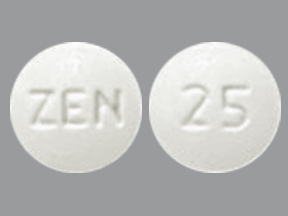 METHAZOLAMIDE 25 MG TABLET
The following indications for METHAZOLAMIDE (methazolamide) have been approved by the FDA:
Indications:
Angle-closure glaucoma
Open angle glaucoma
Secondary glaucoma
Professional Synonyms:
Chronic glaucoma
Compensated glaucoma
Glaucoma simplex
Narrow angle glaucoma
Open-angle glaucoma
Simple glaucoma
Indications:
Angle-closure glaucoma
Open angle glaucoma
Secondary glaucoma
Professional Synonyms:
Chronic glaucoma
Compensated glaucoma
Glaucoma simplex
Narrow angle glaucoma
Open-angle glaucoma
Simple glaucoma
The following dosing information is available for METHAZOLAMIDE (methazolamide):
Dosage of methazolamide must be adjusted according to the patient's requirements and response. The usual adult dosage of methazolamide is 50-100 mg 2 or 3 times daily.
Methazolamide is administered orally.
| DRUG LABEL | DOSING TYPE | DOSING INSTRUCTIONS |
|---|---|---|
| METHAZOLAMIDE 50 MG TABLET | Maintenance | Adults take 1 tablet (50 mg) by oral route 2 times per day |
| METHAZOLAMIDE 25 MG TABLET | Maintenance | Adults take 2 tablets (50 mg) by oral route 2 times per day |
| DRUG LABEL | DOSING TYPE | DOSING INSTRUCTIONS |
|---|---|---|
| METHAZOLAMIDE 25 MG TABLET | Maintenance | Adults take 2 tablets (50 mg) by oral route 2 times per day |
| METHAZOLAMIDE 50 MG TABLET | Maintenance | Adults take 1 tablet (50 mg) by oral route 2 times per day |
The following drug interaction information is available for METHAZOLAMIDE (methazolamide):
There are 1 contraindications.
These drug combinations generally should not be dispensed or administered to the same patient. A manufacturer label warning that indicates the contraindication warrants inclusion of a drug combination in this category, regardless of clinical evidence or lack of clinical evidence to support the contraindication.
| Drug Interaction | Drug Names |
|---|---|
| Methenamine/Sulfonamides SEVERITY LEVEL: 1-Contraindicated Drug Combination: This drug combination is contraindicated and generally should not be dispensed or administered to the same patient. MECHANISM OF ACTION: Methenamine is hydrolyzed to formaldehyde in acidic urine. Sulfonamides may form an insoluble precipitate with formaldehyde in the urine.(1,2) CLINICAL EFFECTS: The concurrent administration of methenamine and sulfamethizole or sulfathiazole is likely to form a precipitate in the urine.(1-3) PREDISPOSING FACTORS: None determined. PATIENT MANAGEMENT: Methenamine should not be administered to patients receiving sulfonamides.(1-3) DISCUSSION: Methenamine is hydrolyzed to formaldehyde in acidic urine. An in vitro study showed that addition of methenamine and mandelic acid to saturated solutions of sulfamethizole at pH 5.0 and 6.0 produced a precipitate in one hour.(4) |
MB CAPS, ME-NAPHOS-MB-HYO 1, METHENAMINE, METHENAMINE HIPPURATE, METHENAMINE MANDELATE, URELLE, URETRON D-S, URIBEL TABS, URIMAR-T, URNEVA, URO-MP, URO-SP, UROGESIC-BLUE, UROQID-ACID NO.2, URYL |
There are 3 severe interactions.
These drug interactions can produce serious consequences in most patients. Actions required for severe interactions include, but are not limited to, discontinuing one or both agents, adjusting dosage, altering administration scheduling, and providing additional patient monitoring. Review the full interaction monograph for more information.
| Drug Interaction | Drug Names |
|---|---|
| Topiramate/Carbonic Anhydrase Inhibitors SEVERITY LEVEL: 2-Severe Interaction: Action is required to reduce the risk of severe adverse interaction. MECHANISM OF ACTION: Topiramate is a weak carbonic anhydrase inhibitor and can induce renal bicarbonate loss, resulting in metabolic acidosis. It can also reduce urinary citrate excretion and increase urinary pH, posing a risk for nephrolithiasis. As well, carbonic anhydrase inhibitors can cause decreased sweating and elevated body temperature, predisposing patients to heat-related disorders.(1) CLINICAL EFFECTS: The concurrent use of topiramate with another carbonic anhydrase inhibitor may increase the risk of metabolic acidosis and kidney stone formation.(1) Concurrent use of topiramate with other carbonic anhydrase inhibitors may increase the incidence of oligohidrosis and hyperthermia, especially in pediatric or adolescent patients.(1-2) Overheating and dehydration can lead to brain damage and death. PREDISPOSING FACTORS: Patients with conditions that predispose to acidosis (such as renal disease, severe respiratory disorders, status epilepticus, diarrhea, and being on a ketogenic diet) may be at increased risk of experiencing adverse effects from concurrent carbonic anhydrase inhibitors.(1) Pediatric and adolescent patients and patients with dehydration may be more likely to experience heat-related disorders.(1) PATIENT MANAGEMENT: The US manufacturer of topiramate states that the concurrent use of topiramate with other carbonic anhydrase inhibitors should be avoided. Patients receiving concurrent therapy should be monitored for the appearance of or worsening of metabolic acidosis, nephrolithiasis, and hyperthermia.(1) Check serum bicarbonate at baseline and periodically during treatment. Monitor for signs and symptoms of metabolic acidosis: hyperventilation, fatigue, anorexia, arrhythmias, stupor. Monitor for signs and symptoms of heat stroke: skin feels very hot with little or no sweating, confusion, muscle cramps, rapid heartbeat, or rapid breathing. Monitor for signs and symptoms of dehydration: dry mouth, urinating less than usual, dark-colored urine, dry skin, feeling tired, dizziness, or irritability. If signs or symptoms of metabolic acidosis, dehydration, oligohidrosis, or elevated body temperature occur, a decreased dose or discontinuation of zonisamide should be considered. DISCUSSION: Topiramate is a weak carbonic anhydrase inhibitor. Carbonic anhydrase inhibitors increase urinary bicarbonate excretion, reduce urinary citrate excretion and increase urinary pH. Concurrent use of topiramate with other carbonic anhydrase inhibitors may increase the risk of metabolic acidosis and kidney stone formation and should therefore be avoided.(1) Case reports of decreased sweating and elevated temperature have been reported, especially in pediatric patients. Some cases resulted in heat stroke that required hospital treatment.(1) |
EPRONTIA, PHENTERMINE-TOPIRAMATE ER, QSYMIA, TOPAMAX, TOPIRAMATE, TOPIRAMATE ER, TOPIRAMATE ER SPRINKLE, TROKENDI XR |
| Zonisamide/Carbonic Anhydrase Inhibitors SEVERITY LEVEL: 2-Severe Interaction: Action is required to reduce the risk of severe adverse interaction. MECHANISM OF ACTION: Zonisamide is a carbonic anhydrase inhibitor and can induce renal bicarbonate loss, resulting in metabolic acidosis. It can also reduce urinary citrate excretion and increase urinary pH, posing a risk for nephrolithiasis. As well, carbonic anhydrase inhibitors can cause decreased sweating and elevated body temperature, predisposing patients to heat-related disorders. Concurrent use of zonisamide with other carbonic anhydrase inhibitors may result in an additive risk of all these effects.(1-2) CLINICAL EFFECTS: The concurrent use of zonisamide with another carbonic anhydrase inhibitor may increase the risk of metabolic acidosis and kidney stone formation.(1) Concurrent use of zonisamide with other carbonic anhydrase inhibitors may increase the incidence of oligohidrosis and hyperthermia, especially in pediatric or adolescent patients.(1-2) Overheating and dehydration can lead to brain damage and death. PREDISPOSING FACTORS: Patients with conditions that predispose to acidosis (such as renal disease, severe respiratory disorders, status epilepticus, diarrhea, and being on a ketogenic diet) may be at increased risk of experiencing adverse effects from concurrent carbonic anhydrase inhibitors.(1) Pediatric and adolescent patients and patients with dehydration may be more likely to experience heat-related disorders.(1) PATIENT MANAGEMENT: The UK and US manufacturers of zonisamide state that caution should be used in adults when zonisamide is prescribed with other carbonic anhydrase inhibitors.(1-2) Pediatric and adolescent patients must not take carbonic anhydrase inhibitors concurrently with zonisamide.(1) Check serum bicarbonate at baseline and periodically during treatment. Monitor for signs and symptoms of metabolic acidosis: hyperventilation, fatigue, anorexia, arrhythmias, stupor. Monitor for signs and symptoms of heat stroke: skin feels very hot with little or no sweating, confusion, muscle cramps, rapid heartbeat, or rapid breathing. Monitor for signs and symptoms of dehydration: dry mouth, urinating less than usual, dark-colored urine, dry skin, feeling tired, dizziness, or irritability. If signs or symptoms of metabolic acidosis, dehydration, oligohidrosis, or elevated body temperature occur, a decreased dose or discontinuation of zonisamide should be considered. DISCUSSION: Zonisamide is a carbonic anhydrase inhibitor. Carbonic anhydrase inhibitors increase urinary bicarbonate excretion, reduce urinary citrate excretion and increase urinary pH. Concurrent use of zonisamide with other carbonic anhydrase inhibitors may increase the risk of metabolic acidosis and kidney stone formation and should therefore be avoided.(1) Case reports of decreased sweating and elevated temperature have been reported, especially in pediatric patients. Some cases resulted in heat stroke that required hospital treatment and resulted in death.(1) |
ZONEGRAN, ZONISADE, ZONISAMIDE |
| Dextroamphetamine Transdermal/Urinary Alkalinizers SEVERITY LEVEL: 2-Severe Interaction: Action is required to reduce the risk of severe adverse interaction. MECHANISM OF ACTION: Urinary alkalinizers decrease the renal elimination of dextroamphetamine.(1) CLINICAL EFFECTS: Concurrent use of dextroamphetamine and urinary alkalinizers may result in increased dextroamphetamine levels and side effects. PREDISPOSING FACTORS: None determined. PATIENT MANAGEMENT: Coadministration of dextroamphetamine with urinary alkalinizing agents should be avoided.(1) DISCUSSION: Concurrent use of alkalinizing agents with dextroamphetamine decreases the renal elimination of dextroamphetamine. Co-administration of these should be avoided because of the potential of increased actions of dextroamphetamine.(1) |
XELSTRYM |
There are 7 moderate interactions.
The clinician should assess the patient’s characteristics and take action as needed. Actions required for moderate interactions include, but are not limited to, discontinuing one or both agents, adjusting dosage, altering administration.
| Drug Interaction | Drug Names |
|---|---|
| Sympathomimetics/Urinary Alkalinizers SEVERITY LEVEL: 3-Moderate Interaction: Assess the risk to the patient and take action as needed. MECHANISM OF ACTION: Unionized sympathomimetic amines will be reabsorbed into systemic circulation from the distal tubules of the kidneys. CLINICAL EFFECTS: Enhanced sympathomimetic activity and increased risk of sympathomimetic toxicity. PREDISPOSING FACTORS: None determined. PATIENT MANAGEMENT: Watch patient for enhanced sympathomimetic side effects when urinary alkalinizers are concomitantly used. A lower dose of certain sympathomimetics may be required. DISCUSSION: Signs and symptoms of sympathomimetic toxicity include euphoria, confusion, delirium, hallucinations and nervousness. |
AKOVAZ, ARYNTA, BENZPHETAMINE HCL, EMERPHED, EPHEDRINE HCL, EPHEDRINE SULFATE, EPHEDRINE SULFATE-0.9% NACL, EPHEDRINE SULFATE-NACL, LISDEXAMFETAMINE DIMESYLATE, MIDODRINE HCL, REZIPRES, VYVANSE |
| Acetazolamide; Methazolamide/Aspirin (Greater Than 100 mg); Salicylates SEVERITY LEVEL: 3-Moderate Interaction: Assess the risk to the patient and take action as needed. MECHANISM OF ACTION: Acetazolamide and methazolamide may reduce blood pH, causing a shift of salicylates from plasma into tissues (eg, central nervous system). Alternatively, toxicity may be due to salicylate-induced displacement of the carbonic anhydrase inhibitor from its protein binding sites and inhibition of renal tubular secretion. CLINICAL EFFECTS: An increase in the pharmacologic effects of salicylates with possible toxicity may occur. PREDISPOSING FACTORS: High doses of salicylates, low body weight. PATIENT MANAGEMENT: Avoid the combination if possible. If it is necessary to administer these drugs concurrently, monitor salicylate levels and monitor the patient for symptoms of toxicity. Adjust the dose as needed. DISCUSSION: Two young patients with unimpaired renal and hepatic function were found to have developed metabolic acidosis after treatment for glaucoma and joint pain with a combination of salicylates and carbonic anhydrase inhibitors in normal doses.(1) A 67-year old woman and a 75-year old woman taking carbonic anhydrase inhibitors for therapy of glaucoma and high doses of aspirin for arthritis developed severe acid-base imbalance and salicylate intoxication.(2) Neither patient exhibited ill effects when taking high aspirin doses without a carbonic anhydrase inhibitor. Carbonic anhydrase inhibitor-induced acidemia increases the risk of developing salicylate intoxication in patients receiving high aspirin doses. Two elderly patients, who were chronically receiving aspirin developed lethargy, incontinence, and confusion after dosing with acetazolamide.(3) These effects could have been due to either drug (see mechanism). |
ACETYL SALICYLIC ACID, ASA-BUTALB-CAFFEINE-CODEINE, ASCOMP WITH CODEINE, ASPIRIN, BALSALAZIDE DISODIUM, BISMUTH SUBSALICYLATE, BUTALBITAL-ASPIRIN-CAFFEINE, CARISOPRODOL-ASPIRIN-CODEINE, CHOLINE MAGNESIUM TRISALICYLAT, COLAZAL, MB CAPS, NORGESIC, NORGESIC FORTE, ORPHENADRINE-ASPIRIN-CAFFEINE, ORPHENGESIC FORTE, PHENYL SALICYLATE, SALSALATE, SODIUM SALICYLATE, URELLE, URETRON D-S, URIBEL TABS, URIMAR-T, URNEVA, URO-MP, URO-SP, YOSPRALA |
| Lithium/Carbonic Anhydrase Inhibitors SEVERITY LEVEL: 3-Moderate Interaction: Assess the risk to the patient and take action as needed. MECHANISM OF ACTION: Carbonic anhydrase inhibitors may increase the renal excretion of lithium, either by alkalinization of the urine or by impairing the proximal tubular reabsorption of lithium. CLINICAL EFFECTS: Concurrent use of a carbonic anhydrase inhibitor may result in decreased levels and clinical effectiveness of lithium. PREDISPOSING FACTORS: None determined. PATIENT MANAGEMENT: Lithium levels should be monitored in patients receiving concurrent therapy or if the carbonic anhydrase inhibitor is withdrawn from concurrent therapy. The dose of lithium may need to be adjusted. DISCUSSION: One study involving six subjects showed that the concurrent use of a single dose of both lithium carbonate and acetazolamide caused a 27% to 31% increase in the urinary excretion of lithium.(1) Acetazolamide has been used in combination with other agents to treat lithium toxicity.(2) |
LITHIUM CARBONATE, LITHIUM CARBONATE ER, LITHIUM CITRATE, LITHIUM CITRATE TETRAHYDRATE, LITHOBID |
| Brinzolamide/Carbonic Anhydrase Inhibitors SEVERITY LEVEL: 3-Moderate Interaction: Assess the risk to the patient and take action as needed. MECHANISM OF ACTION: Brinzolamide and other carbonic anhydrase inhibitors cause a decrease in aqueous humor secretion by slowing the formation of bicarbonate ions with a subsequent reduction of sodium and fluid transport which results in a reduction of intraocular pressure.(1) CLINICAL EFFECTS: If brinzolamide is given with other carbonic anhydrase inhibitors it may cause electrolyte disturbances, because brinzolamide can be absorbed systemically.(1) PREDISPOSING FACTORS: Patients with conditions that predispose to acidosis (such as renal disease, severe respiratory disorders, status epilepticus, diarrhea, and being on a ketogenic diet) may be at increased risk of experiencing adverse effects from concurrent carbonic anhydrase inhibitors. PATIENT MANAGEMENT: It is not recommended to use brinzolamide with systemic carbonic anhydrase inhibitors. DISCUSSION: Although no human data is available, electrolyte imbalance, development of an acidotic state, and possible nervous system effects may occur following oral administration of brinzolamide and another carbonic anhydrase inhibitor.(1) |
AZOPT, BRINZOLAMIDE, SIMBRINZA |
| Dorzolamide/Carbonic Anhydrase Inhibitors SEVERITY LEVEL: 3-Moderate Interaction: Assess the risk to the patient and take action as needed. MECHANISM OF ACTION: Dorzolamide and other carbonic anhydrase inhibitors cause a decrease in aqueous humor secretion by slowing the formation of bicarbonate ions with a subsequent reduction of sodium and fluid transport which results in a reduction of intraocular pressure.(1) CLINICAL EFFECTS: If dorzolamide is given with other carbonic anhydrase inhibitors it may cause electrolyte disturbances, because dorzolamide can be absorbed systemically.(1) PREDISPOSING FACTORS: Patients with conditions that predispose to acidosis (such as renal disease, severe respiratory disorders, status epilepticus, diarrhea, and being on a ketogenic diet) may be at increased risk of experiencing adverse effects from concurrent carbonic anhydrase inhibitors. PATIENT MANAGEMENT: The manufacturer of dorzolamide states that concurrent use with oral carbonic anhydrase inhibitors is not recommended.(1) DISCUSSION: Although no human data is available, electrolyte imbalance, development of an acidotic state, and possible nervous system effects may occur following administration of dorzolamide and oral carbonic anhydrase inhibitors.(1) |
BIMATOPROST-BRIMONIDINE-DORZOL, BIMATOPROST-DORZOLAMID-TIMOLOL, BRIMONIDINE-DORZOLAMIDE, COSOPT, COSOPT PF, DORZOLAMIDE, DORZOLAMIDE HCL, DORZOLAMIDE-TIMOLOL, TIMOLOL-BRIMONI-DORZOL-BIMATOP, TIMOLOL-BRIMONIDIN-DORZOLAMIDE, TIMOLOL-DORZOLAMIDE-BIMATOPRST |
| Memantine; Amantadine/Urinary Alkalinizers SEVERITY LEVEL: 3-Moderate Interaction: Assess the risk to the patient and take action as needed. MECHANISM OF ACTION: Memantine and amantadine elimination is impaired by urinary alkalinization.(1,2) CLINICAL EFFECTS: Potentiation of memantine or amantadine effects may be observed. PREDISPOSING FACTORS: None determined. PATIENT MANAGEMENT: Monitor patient for adverse reactions such as dizziness, headache, or confusion if a urinary alkalinizer is required. The memantine or amantadine dose may need to be adjusted when a urinary alkalinizer is started or stopped.(1,2) DISCUSSION: The clearance of memantine was reduced by about 80% under alkaline urine conditions at pH 8. Urine alkalinization may lead to an accumulation of memantine with a possible increase in adverse effects. Urine pH is also altered by diet and clinical state of the patient (e.g., renal tubular acidosis or severe infections of the urinary tract). Hence, memantine should be used with caution under these conditions.(1) A study in rats showed that concomitant administration of sodium bicarbonate with amantadine caused a decrease in amantadine renal clearance (1.16 vs. 0.76). Amantadine's area-under-the-curve (AUC) was increased approximately 78%.(3) A study in 12 healthy subjects showed that plasma concentrations of memantine are dependent on urine pH. Alkaline urine pH caused a 79% reduction in renal clearance.(4) |
AMANTADINE, AMANTADINE HCL, GOCOVRI, MEMANTINE HCL, MEMANTINE HCL ER, MEMANTINE HCL-DONEPEZIL HCL ER, NAMENDA XR, NAMZARIC, OSMOLEX ER |
| Metformin/Carbonic Anhydrase Inhibitors SEVERITY LEVEL: 3-Moderate Interaction: Assess the risk to the patient and take action as needed. MECHANISM OF ACTION: Carbonic anhydrase inhibitors increase bicarbonate excretion which may cause metabolic acidosis.(1) High systemic concentrations of metformin may result in lactic acidosis.(2,3) Topiramate, a mild carbonic anhydrase inhibitor, may also increase systemic exposure to metformin.(1) CLINICAL EFFECTS: Carbonic anhydrase inhibitors may increase the risk for metformin associated lactic acidosis.(1-3) Untreated lactic acidosis may be fatal. Symptoms of lactic acidosis include malaise, myalgias, respiratory distress, low blood pH, increased anion gap and elevated blood lactate.(2) Carbonic anhydrase inhibitors linked to this monograph are acetazolamide, dichlorphenamide, methazolamide, sulthiame, topiramate, and zonisamide. PREDISPOSING FACTORS: Risk factors for metformin associated lactic acidosis include renal impairment,sepsis, dehydration, excessive alcohol intake, acute or chronic metabolic acidosis, hepatic insufficiency, acute heart failure, metformin plasma levels > 5 micrograms/mL, and conditions which may lead to tissue hypoxia. Geriatric patients may also be at higher risk due to slower metformin clearance and increased half-life in this population. The risk for metabolic acidosis is higher with increased doses of either agent. PATIENT MANAGEMENT: For patients receiving concurrent therapy, monitor renal function and assure that patient does not have risk factors for metformin associated lactic acidosis. Discontinue metformin when risk factors are present. If both drugs are given, monitor renal function and for signs and symptoms of metformin toxicity (lactic acidosis) such as malaise, myalgias, respiratory distress, increasing somnolence, and respiratory distress. Laboratory results which may signal lactic acidosis include: low pH, an increased anion gap, and increased lactate to pyruvate ratio. Manufacturer recommendations: the manufacturer of metformin recommends caution with concomitant use of carbonic anhydrase inhibitors due to an increased risk for metformin associated lactic acidosis.(2) The manufacturer of topiramate notes that topiramate can frequently cause metabolic acidosis and that metformin should not be used in patients with metabolic acidosis.(1) DISCUSSION: A literature search for lactic acidosis due solely to the combination of metformin and carbonic anhydrase inhibitors or topiramate did not reveal any case reports of symptomatic metabolic acidosis due to this combination. Never-the-less, since carbonic anhydrase inhibitors act by inhibiting the reabsorption of bicarbonate in the renal tubule, some lowering of systemic bicarbonate and pH is common and supports the plausibility of this interaction. In addition, a pharmacokinetic interaction has been described with topiramate. A study in healthy volunteers evaluated the effect of topiramate 100 mg every 12 hours on the kinetics of metformin 500 mg every 12 hours. Mean metformin exposure (area-under-curve or AUC) was increased 25%.(1) |
ACTOPLUS MET, ALOGLIPTIN-METFORMIN, DAPAGLIFLOZIN-METFORMIN ER, GLIPIZIDE-METFORMIN, GLYBURIDE-METFORMIN HCL, INVOKAMET, INVOKAMET XR, JANUMET, JANUMET XR, JENTADUETO, JENTADUETO XR, KAZANO, METFORMIN ER GASTRIC, METFORMIN ER OSMOTIC, METFORMIN HCL, METFORMIN HCL ER, PIOGLITAZONE-METFORMIN, RIOMET, SAXAGLIPTIN-METFORMIN ER, SEGLUROMET, SITAGLIPTIN-METFORMIN, SITAGLIPTIN-METFORMIN ER, SYNJARDY, SYNJARDY XR, TRIJARDY XR, XIGDUO XR, ZITUVIMET, ZITUVIMET XR |
The following contraindication information is available for METHAZOLAMIDE (methazolamide):
Drug contraindication overview.
No enhanced Contraindications information available for this drug.
No enhanced Contraindications information available for this drug.
There are 6 contraindications.
Absolute contraindication.
| Contraindication List |
|---|
| Hepatic cirrhosis |
| Hyperchloremic acidosis |
| Hypokalemia |
| Hyponatremia |
| Primary adrenocortical insufficiency |
| Renal tubular acidosis |
There are 4 severe contraindications.
Adequate patient monitoring is recommended for safer drug use.
| Severe List |
|---|
| Blood dyscrasias |
| Disease of liver |
| Recurrent calcium renal calculi |
| Respiratory acidosis |
There are 4 moderate contraindications.
Clinically significant contraindication, where the condition can be managed or treated before the drug may be given safely.
| Moderate List |
|---|
| Gout |
| Kidney disease with reduction in glomerular filtration rate (GFr) |
| Type 1 diabetes mellitus |
| Type 2 diabetes mellitus |
The following adverse reaction information is available for METHAZOLAMIDE (methazolamide):
Adverse reaction overview.
No enhanced Common Adverse Effects information available for this drug.
No enhanced Common Adverse Effects information available for this drug.
There are 29 severe adverse reactions.
| More Frequent | Less Frequent |
|---|---|
| None. |
Crystalluria Depression Hematuria Kidney stone Nephrotoxicity |
| Rare/Very Rare |
|---|
|
Acute cognitive impairment Agranulocytosis Allergic dermatitis Anaphylaxis Aplastic anemia Black tarry stools Blood dyscrasias Bloody stools Drug fever Hepatic necrosis Hypokalemia Hyponatremia Metabolic acidosis Muscle weakness Myopia Paralysis Pruritus of skin Seizure disorder Skin rash Stevens-johnson syndrome Tinnitus Toxic epidermal necrolysis Tremor Urticaria |
There are 15 less severe adverse reactions.
| More Frequent | Less Frequent |
|---|---|
|
Anorexia Diarrhea Dysgeusia Fatigue Malaise Nausea Vomiting |
Dizziness Drowsy Paresthesia |
| Rare/Very Rare |
|---|
|
Glycosuria Headache disorder Hearing disorder Polyuria Skin photosensitivity |
The following precautions are available for METHAZOLAMIDE (methazolamide):
No enhanced Pediatric Use information available for this drug.
Contraindicated
Severe Precaution
Management or Monitoring Precaution
Contraindicated
| None |
Severe Precaution
| None |
Management or Monitoring Precaution
| None |
No enhanced Pregnancy information available for this drug.
No enhanced Lactation information available for this drug.
No enhanced Geriatric Use information available for this drug.
The following prioritized warning is available for METHAZOLAMIDE (methazolamide):
No warning message for this drug.
No warning message for this drug.
The following icd codes are available for METHAZOLAMIDE (methazolamide)'s list of indications:
| Angle-closure glaucoma | |
| H40.2 | Primary angle-closure glaucoma |
| H40.20 | Unspecified primary angle-closure glaucoma |
| H40.20x0 | Unspecified primary angle-closure glaucoma, stage unspecified |
| H40.20x1 | Unspecified primary angle-closure glaucoma, mild stage |
| H40.20x2 | Unspecified primary angle-closure glaucoma, moderate stage |
| H40.20x3 | Unspecified primary angle-closure glaucoma, severe stage |
| H40.20x4 | Unspecified primary angle-closure glaucoma, indeterminate stage |
| H40.21 | Acute angle-closure glaucoma |
| H40.211 | Acute angle-closure glaucoma, right eye |
| H40.212 | Acute angle-closure glaucoma, left eye |
| H40.213 | Acute angle-closure glaucoma, bilateral |
| H40.219 | Acute angle-closure glaucoma, unspecified eye |
| H40.22 | Chronic angle-closure glaucoma |
| H40.221 | Chronic angle-closure glaucoma, right eye |
| H40.2210 | Chronic angle-closure glaucoma, right eye, stage unspecified |
| H40.2211 | Chronic angle-closure glaucoma, right eye, mild stage |
| H40.2212 | Chronic angle-closure glaucoma, right eye, moderate stage |
| H40.2213 | Chronic angle-closure glaucoma, right eye, severe stage |
| H40.2214 | Chronic angle-closure glaucoma, right eye, indeterminate stage |
| H40.222 | Chronic angle-closure glaucoma, left eye |
| H40.2220 | Chronic angle-closure glaucoma, left eye, stage unspecified |
| H40.2221 | Chronic angle-closure glaucoma, left eye, mild stage |
| H40.2222 | Chronic angle-closure glaucoma, left eye, moderate stage |
| H40.2223 | Chronic angle-closure glaucoma, left eye, severe stage |
| H40.2224 | Chronic angle-closure glaucoma, left eye, indeterminate stage |
| H40.223 | Chronic angle-closure glaucoma, bilateral |
| H40.2230 | Chronic angle-closure glaucoma, bilateral, stage unspecified |
| H40.2231 | Chronic angle-closure glaucoma, bilateral, mild stage |
| H40.2232 | Chronic angle-closure glaucoma, bilateral, moderate stage |
| H40.2233 | Chronic angle-closure glaucoma, bilateral, severe stage |
| H40.2234 | Chronic angle-closure glaucoma, bilateral, indeterminate stage |
| H40.229 | Chronic angle-closure glaucoma, unspecified eye |
| H40.2290 | Chronic angle-closure glaucoma, unspecified eye, stage unspecified |
| H40.2291 | Chronic angle-closure glaucoma, unspecified eye, mild stage |
| H40.2292 | Chronic angle-closure glaucoma, unspecified eye, moderate stage |
| H40.2293 | Chronic angle-closure glaucoma, unspecified eye, severe stage |
| H40.2294 | Chronic angle-closure glaucoma, unspecified eye, indeterminate stage |
| H40.23 | Intermittent angle-closure glaucoma |
| H40.231 | Intermittent angle-closure glaucoma, right eye |
| H40.232 | Intermittent angle-closure glaucoma, left eye |
| H40.233 | Intermittent angle-closure glaucoma, bilateral |
| H40.239 | Intermittent angle-closure glaucoma, unspecified eye |
| H40.24 | Residual stage of angle-closure glaucoma |
| H40.241 | Residual stage of angle-closure glaucoma, right eye |
| H40.242 | Residual stage of angle-closure glaucoma, left eye |
| H40.243 | Residual stage of angle-closure glaucoma, bilateral |
| H40.249 | Residual stage of angle-closure glaucoma, unspecified eye |
| Open angle glaucoma | |
| H40.1 | Open-angle glaucoma |
| H40.10 | Unspecified open-angle glaucoma |
| H40.10x0 | Unspecified open-angle glaucoma, stage unspecified |
| H40.10x1 | Unspecified open-angle glaucoma, mild stage |
| H40.10x2 | Unspecified open-angle glaucoma, moderate stage |
| H40.10x3 | Unspecified open-angle glaucoma, severe stage |
| H40.10x4 | Unspecified open-angle glaucoma, indeterminate stage |
| H40.11 | Primary open-angle glaucoma |
| H40.111 | Primary open-angle glaucoma, right eye |
| H40.1110 | Primary open-angle glaucoma, right eye, stage unspecified |
| H40.1111 | Primary open-angle glaucoma, right eye, mild stage |
| H40.1112 | Primary open-angle glaucoma, right eye, moderate stage |
| H40.1113 | Primary open-angle glaucoma, right eye, severe stage |
| H40.1114 | Primary open-angle glaucoma, right eye, indeterminate stage |
| H40.112 | Primary open-angle glaucoma, left eye |
| H40.1120 | Primary open-angle glaucoma, left eye, stage unspecified |
| H40.1121 | Primary open-angle glaucoma, left eye, mild stage |
| H40.1122 | Primary open-angle glaucoma, left eye, moderate stage |
| H40.1123 | Primary open-angle glaucoma, left eye, severe stage |
| H40.1124 | Primary open-angle glaucoma, left eye, indeterminate stage |
| H40.113 | Primary open-angle glaucoma, bilateral |
| H40.1130 | Primary open-angle glaucoma, bilateral, stage unspecified |
| H40.1131 | Primary open-angle glaucoma, bilateral, mild stage |
| H40.1132 | Primary open-angle glaucoma, bilateral, moderate stage |
| H40.1133 | Primary open-angle glaucoma, bilateral, severe stage |
| H40.1134 | Primary open-angle glaucoma, bilateral, indeterminate stage |
| H40.119 | Primary open-angle glaucoma, unspecified eye |
| H40.1190 | Primary open-angle glaucoma, unspecified eye, stage unspecified |
| H40.1191 | Primary open-angle glaucoma, unspecified eye, mild stage |
| H40.1192 | Primary open-angle glaucoma, unspecified eye, moderate stage |
| H40.1193 | Primary open-angle glaucoma, unspecified eye, severe stage |
| H40.1194 | Primary open-angle glaucoma, unspecified eye, indeterminate stage |
| H40.12 | Low-tension glaucoma |
| H40.121 | Low-tension glaucoma, right eye |
| H40.1210 | Low-tension glaucoma, right eye, stage unspecified |
| H40.1211 | Low-tension glaucoma, right eye, mild stage |
| H40.1212 | Low-tension glaucoma, right eye, moderate stage |
| H40.1213 | Low-tension glaucoma, right eye, severe stage |
| H40.1214 | Low-tension glaucoma, right eye, indeterminate stage |
| H40.122 | Low-tension glaucoma, left eye |
| H40.1220 | Low-tension glaucoma, left eye, stage unspecified |
| H40.1221 | Low-tension glaucoma, left eye, mild stage |
| H40.1222 | Low-tension glaucoma, left eye, moderate stage |
| H40.1223 | Low-tension glaucoma, left eye, severe stage |
| H40.1224 | Low-tension glaucoma, left eye, indeterminate stage |
| H40.123 | Low-tension glaucoma, bilateral |
| H40.1230 | Low-tension glaucoma, bilateral, stage unspecified |
| H40.1231 | Low-tension glaucoma, bilateral, mild stage |
| H40.1232 | Low-tension glaucoma, bilateral, moderate stage |
| H40.1233 | Low-tension glaucoma, bilateral, severe stage |
| H40.1234 | Low-tension glaucoma, bilateral, indeterminate stage |
| H40.129 | Low-tension glaucoma, unspecified eye |
| H40.1290 | Low-tension glaucoma, unspecified eye, stage unspecified |
| H40.1291 | Low-tension glaucoma, unspecified eye, mild stage |
| H40.1292 | Low-tension glaucoma, unspecified eye, moderate stage |
| H40.1293 | Low-tension glaucoma, unspecified eye, severe stage |
| H40.1294 | Low-tension glaucoma, unspecified eye, indeterminate stage |
| H40.13 | Pigmentary glaucoma |
| H40.131 | Pigmentary glaucoma, right eye |
| H40.1310 | Pigmentary glaucoma, right eye, stage unspecified |
| H40.1311 | Pigmentary glaucoma, right eye, mild stage |
| H40.1312 | Pigmentary glaucoma, right eye, moderate stage |
| H40.1313 | Pigmentary glaucoma, right eye, severe stage |
| H40.1314 | Pigmentary glaucoma, right eye, indeterminate stage |
| H40.132 | Pigmentary glaucoma, left eye |
| H40.1320 | Pigmentary glaucoma, left eye, stage unspecified |
| H40.1321 | Pigmentary glaucoma, left eye, mild stage |
| H40.1322 | Pigmentary glaucoma, left eye, moderate stage |
| H40.1323 | Pigmentary glaucoma, left eye, severe stage |
| H40.1324 | Pigmentary glaucoma, left eye, indeterminate stage |
| H40.133 | Pigmentary glaucoma, bilateral |
| H40.1330 | Pigmentary glaucoma, bilateral, stage unspecified |
| H40.1331 | Pigmentary glaucoma, bilateral, mild stage |
| H40.1332 | Pigmentary glaucoma, bilateral, moderate stage |
| H40.1333 | Pigmentary glaucoma, bilateral, severe stage |
| H40.1334 | Pigmentary glaucoma, bilateral, indeterminate stage |
| H40.139 | Pigmentary glaucoma, unspecified eye |
| H40.1390 | Pigmentary glaucoma, unspecified eye, stage unspecified |
| H40.1391 | Pigmentary glaucoma, unspecified eye, mild stage |
| H40.1392 | Pigmentary glaucoma, unspecified eye, moderate stage |
| H40.1393 | Pigmentary glaucoma, unspecified eye, severe stage |
| H40.1394 | Pigmentary glaucoma, unspecified eye, indeterminate stage |
| H40.14 | Capsular glaucoma with pseudoexfoliation of lens |
| H40.141 | Capsular glaucoma with pseudoexfoliation of lens, right eye |
| H40.1410 | Capsular glaucoma with pseudoexfoliation of lens, right eye, stage unspecified |
| H40.1411 | Capsular glaucoma with pseudoexfoliation of lens, right eye, mild stage |
| H40.1412 | Capsular glaucoma with pseudoexfoliation of lens, right eye, moderate stage |
| H40.1413 | Capsular glaucoma with pseudoexfoliation of lens, right eye, severe stage |
| H40.1414 | Capsular glaucoma with pseudoexfoliation of lens, right eye, indeterminate stage |
| H40.142 | Capsular glaucoma with pseudoexfoliation of lens, left eye |
| H40.1420 | Capsular glaucoma with pseudoexfoliation of lens, left eye, stage unspecified |
| H40.1421 | Capsular glaucoma with pseudoexfoliation of lens, left eye, mild stage |
| H40.1422 | Capsular glaucoma with pseudoexfoliation of lens, left eye, moderate stage |
| H40.1423 | Capsular glaucoma with pseudoexfoliation of lens, left eye, severe stage |
| H40.1424 | Capsular glaucoma with pseudoexfoliation of lens, left eye, indeterminate stage |
| H40.143 | Capsular glaucoma with pseudoexfoliation of lens, bilateral |
| H40.1430 | Capsular glaucoma with pseudoexfoliation of lens, bilateral, stage unspecified |
| H40.1431 | Capsular glaucoma with pseudoexfoliation of lens, bilateral, mild stage |
| H40.1432 | Capsular glaucoma with pseudoexfoliation of lens, bilateral, moderate stage |
| H40.1433 | Capsular glaucoma with pseudoexfoliation of lens, bilateral, severe stage |
| H40.1434 | Capsular glaucoma with pseudoexfoliation of lens, bilateral, indeterminate stage |
| H40.149 | Capsular glaucoma with pseudoexfoliation of lens, unspecified eye |
| H40.1490 | Capsular glaucoma with pseudoexfoliation of lens, unspecified eye, stage unspecified |
| H40.1491 | Capsular glaucoma with pseudoexfoliation of lens, unspecified eye, mild stage |
| H40.1492 | Capsular glaucoma with pseudoexfoliation of lens, unspecified eye, moderate stage |
| H40.1493 | Capsular glaucoma with pseudoexfoliation of lens, unspecified eye, severe stage |
| H40.1494 | Capsular glaucoma with pseudoexfoliation of lens, unspecified eye, indeterminate stage |
| H40.15 | Residual stage of open-angle glaucoma |
| H40.151 | Residual stage of open-angle glaucoma, right eye |
| H40.152 | Residual stage of open-angle glaucoma, left eye |
| H40.153 | Residual stage of open-angle glaucoma, bilateral |
| H40.159 | Residual stage of open-angle glaucoma, unspecified eye |
| Secondary glaucoma | |
| H40.14 | Capsular glaucoma with pseudoexfoliation of lens |
| H40.141 | Capsular glaucoma with pseudoexfoliation of lens, right eye |
| H40.1410 | Capsular glaucoma with pseudoexfoliation of lens, right eye, stage unspecified |
| H40.1411 | Capsular glaucoma with pseudoexfoliation of lens, right eye, mild stage |
| H40.1412 | Capsular glaucoma with pseudoexfoliation of lens, right eye, moderate stage |
| H40.1413 | Capsular glaucoma with pseudoexfoliation of lens, right eye, severe stage |
| H40.1414 | Capsular glaucoma with pseudoexfoliation of lens, right eye, indeterminate stage |
| H40.142 | Capsular glaucoma with pseudoexfoliation of lens, left eye |
| H40.1420 | Capsular glaucoma with pseudoexfoliation of lens, left eye, stage unspecified |
| H40.1421 | Capsular glaucoma with pseudoexfoliation of lens, left eye, mild stage |
| H40.1422 | Capsular glaucoma with pseudoexfoliation of lens, left eye, moderate stage |
| H40.1423 | Capsular glaucoma with pseudoexfoliation of lens, left eye, severe stage |
| H40.1424 | Capsular glaucoma with pseudoexfoliation of lens, left eye, indeterminate stage |
| H40.143 | Capsular glaucoma with pseudoexfoliation of lens, bilateral |
| H40.1430 | Capsular glaucoma with pseudoexfoliation of lens, bilateral, stage unspecified |
| H40.1431 | Capsular glaucoma with pseudoexfoliation of lens, bilateral, mild stage |
| H40.1432 | Capsular glaucoma with pseudoexfoliation of lens, bilateral, moderate stage |
| H40.1433 | Capsular glaucoma with pseudoexfoliation of lens, bilateral, severe stage |
| H40.1434 | Capsular glaucoma with pseudoexfoliation of lens, bilateral, indeterminate stage |
| H40.149 | Capsular glaucoma with pseudoexfoliation of lens, unspecified eye |
| H40.1490 | Capsular glaucoma with pseudoexfoliation of lens, unspecified eye, stage unspecified |
| H40.1491 | Capsular glaucoma with pseudoexfoliation of lens, unspecified eye, mild stage |
| H40.1492 | Capsular glaucoma with pseudoexfoliation of lens, unspecified eye, moderate stage |
| H40.1493 | Capsular glaucoma with pseudoexfoliation of lens, unspecified eye, severe stage |
| H40.1494 | Capsular glaucoma with pseudoexfoliation of lens, unspecified eye, indeterminate stage |
| H40.3 | Glaucoma secondary to eye trauma |
| H40.30 | Glaucoma secondary to eye trauma, unspecified eye |
| H40.30x0 | Glaucoma secondary to eye trauma, unspecified eye, stage unspecified |
| H40.30x1 | Glaucoma secondary to eye trauma, unspecified eye, mild stage |
| H40.30x2 | Glaucoma secondary to eye trauma, unspecified eye, moderate stage |
| H40.30x3 | Glaucoma secondary to eye trauma, unspecified eye, severe stage |
| H40.30x4 | Glaucoma secondary to eye trauma, unspecified eye, indeterminate stage |
| H40.31 | Glaucoma secondary to eye trauma, right eye |
| H40.31x0 | Glaucoma secondary to eye trauma, right eye, stage unspecified |
| H40.31x1 | Glaucoma secondary to eye trauma, right eye, mild stage |
| H40.31x2 | Glaucoma secondary to eye trauma, right eye, moderate stage |
| H40.31x3 | Glaucoma secondary to eye trauma, right eye, severe stage |
| H40.31x4 | Glaucoma secondary to eye trauma, right eye, indeterminate stage |
| H40.32 | Glaucoma secondary to eye trauma, left eye |
| H40.32x0 | Glaucoma secondary to eye trauma, left eye, stage unspecified |
| H40.32x1 | Glaucoma secondary to eye trauma, left eye, mild stage |
| H40.32x2 | Glaucoma secondary to eye trauma, left eye, moderate stage |
| H40.32x3 | Glaucoma secondary to eye trauma, left eye, severe stage |
| H40.32x4 | Glaucoma secondary to eye trauma, left eye, indeterminate stage |
| H40.33 | Glaucoma secondary to eye trauma, bilateral |
| H40.33x0 | Glaucoma secondary to eye trauma, bilateral, stage unspecified |
| H40.33x1 | Glaucoma secondary to eye trauma, bilateral, mild stage |
| H40.33x2 | Glaucoma secondary to eye trauma, bilateral, moderate stage |
| H40.33x3 | Glaucoma secondary to eye trauma, bilateral, severe stage |
| H40.33x4 | Glaucoma secondary to eye trauma, bilateral, indeterminate stage |
| H40.4 | Glaucoma secondary to eye inflammation |
| H40.40 | Glaucoma secondary to eye inflammation, unspecified eye |
| H40.40x0 | Glaucoma secondary to eye inflammation, unspecified eye, stage unspecified |
| H40.40x1 | Glaucoma secondary to eye inflammation, unspecified eye, mild stage |
| H40.40x2 | Glaucoma secondary to eye inflammation, unspecified eye, moderate stage |
| H40.40x3 | Glaucoma secondary to eye inflammation, unspecified eye, severe stage |
| H40.40x4 | Glaucoma secondary to eye inflammation, unspecified eye, indeterminate stage |
| H40.41 | Glaucoma secondary to eye inflammation, right eye |
| H40.41x0 | Glaucoma secondary to eye inflammation, right eye, stage unspecified |
| H40.41x1 | Glaucoma secondary to eye inflammation, right eye, mild stage |
| H40.41x2 | Glaucoma secondary to eye inflammation, right eye, moderate stage |
| H40.41x3 | Glaucoma secondary to eye inflammation, right eye, severe stage |
| H40.41x4 | Glaucoma secondary to eye inflammation, right eye, indeterminate stage |
| H40.42 | Glaucoma secondary to eye inflammation, left eye |
| H40.42x0 | Glaucoma secondary to eye inflammation, left eye, stage unspecified |
| H40.42x1 | Glaucoma secondary to eye inflammation, left eye, mild stage |
| H40.42x2 | Glaucoma secondary to eye inflammation, left eye, moderate stage |
| H40.42x3 | Glaucoma secondary to eye inflammation, left eye, severe stage |
| H40.42x4 | Glaucoma secondary to eye inflammation, left eye, indeterminate stage |
| H40.43 | Glaucoma secondary to eye inflammation, bilateral |
| H40.43x0 | Glaucoma secondary to eye inflammation, bilateral, stage unspecified |
| H40.43x1 | Glaucoma secondary to eye inflammation, bilateral, mild stage |
| H40.43x2 | Glaucoma secondary to eye inflammation, bilateral, moderate stage |
| H40.43x3 | Glaucoma secondary to eye inflammation, bilateral, severe stage |
| H40.43x4 | Glaucoma secondary to eye inflammation, bilateral, indeterminate stage |
| H40.5 | Glaucoma secondary to other eye disorders |
| H40.50 | Glaucoma secondary to other eye disorders, unspecified eye |
| H40.50x0 | Glaucoma secondary to other eye disorders, unspecified eye, stage unspecified |
| H40.50x1 | Glaucoma secondary to other eye disorders, unspecified eye, mild stage |
| H40.50x2 | Glaucoma secondary to other eye disorders, unspecified eye, moderate stage |
| H40.50x3 | Glaucoma secondary to other eye disorders, unspecified eye, severe stage |
| H40.50x4 | Glaucoma secondary to other eye disorders, unspecified eye, indeterminate stage |
| H40.51 | Glaucoma secondary to other eye disorders, right eye |
| H40.51x0 | Glaucoma secondary to other eye disorders, right eye, stage unspecified |
| H40.51x1 | Glaucoma secondary to other eye disorders, right eye, mild stage |
| H40.51x2 | Glaucoma secondary to other eye disorders, right eye, moderate stage |
| H40.51x3 | Glaucoma secondary to other eye disorders, right eye, severe stage |
| H40.51x4 | Glaucoma secondary to other eye disorders, right eye, indeterminate stage |
| H40.52 | Glaucoma secondary to other eye disorders, left eye |
| H40.52x0 | Glaucoma secondary to other eye disorders, left eye, stage unspecified |
| H40.52x1 | Glaucoma secondary to other eye disorders, left eye, mild stage |
| H40.52x2 | Glaucoma secondary to other eye disorders, left eye, moderate stage |
| H40.52x3 | Glaucoma secondary to other eye disorders, left eye, severe stage |
| H40.52x4 | Glaucoma secondary to other eye disorders, left eye, indeterminate stage |
| H40.53 | Glaucoma secondary to other eye disorders, bilateral |
| H40.53x0 | Glaucoma secondary to other eye disorders, bilateral, stage unspecified |
| H40.53x1 | Glaucoma secondary to other eye disorders, bilateral, mild stage |
| H40.53x2 | Glaucoma secondary to other eye disorders, bilateral, moderate stage |
| H40.53x3 | Glaucoma secondary to other eye disorders, bilateral, severe stage |
| H40.53x4 | Glaucoma secondary to other eye disorders, bilateral, indeterminate stage |
| H40.6 | Glaucoma secondary to drugs |
| H40.60 | Glaucoma secondary to drugs, unspecified eye |
| H40.60x0 | Glaucoma secondary to drugs, unspecified eye, stage unspecified |
| H40.60x1 | Glaucoma secondary to drugs, unspecified eye, mild stage |
| H40.60x2 | Glaucoma secondary to drugs, unspecified eye, moderate stage |
| H40.60x3 | Glaucoma secondary to drugs, unspecified eye, severe stage |
| H40.60x4 | Glaucoma secondary to drugs, unspecified eye, indeterminate stage |
| H40.61 | Glaucoma secondary to drugs, right eye |
| H40.61x0 | Glaucoma secondary to drugs, right eye, stage unspecified |
| H40.61x1 | Glaucoma secondary to drugs, right eye, mild stage |
| H40.61x2 | Glaucoma secondary to drugs, right eye, moderate stage |
| H40.61x3 | Glaucoma secondary to drugs, right eye, severe stage |
| H40.61x4 | Glaucoma secondary to drugs, right eye, indeterminate stage |
| H40.62 | Glaucoma secondary to drugs, left eye |
| H40.62x0 | Glaucoma secondary to drugs, left eye, stage unspecified |
| H40.62x1 | Glaucoma secondary to drugs, left eye, mild stage |
| H40.62x2 | Glaucoma secondary to drugs, left eye, moderate stage |
| H40.62x3 | Glaucoma secondary to drugs, left eye, severe stage |
| H40.62x4 | Glaucoma secondary to drugs, left eye, indeterminate stage |
| H40.63 | Glaucoma secondary to drugs, bilateral |
| H40.63x0 | Glaucoma secondary to drugs, bilateral, stage unspecified |
| H40.63x1 | Glaucoma secondary to drugs, bilateral, mild stage |
| H40.63x2 | Glaucoma secondary to drugs, bilateral, moderate stage |
| H40.63x3 | Glaucoma secondary to drugs, bilateral, severe stage |
| H40.63x4 | Glaucoma secondary to drugs, bilateral, indeterminate stage |
| H42 | Glaucoma in diseases classified elsewhere |
Formulary Reference Tool