Please wait while the formulary information is being retrieved.
Drug overview for FLUTICASONE-VILANTEROL (fluticasone furoate/vilanterol trifenatate):
Generic name: FLUTICASONE FUROATE/VILANTEROL TRIFENATATE (floo-TIK-a-sone/vye-LAN-ter-ol)
Drug class: Orally Inhaled Steroids
Therapeutic class:
Fluticasone furoate and vilanterol trifenatate (fluticasone/vilanterol) is a fixed-combination preparation containing an inhaled synthetic trifluorinated corticosteroid (fluticasone furoate) and a long-acting beta2-adrenergic agonist (vilanterol trifenatate).
No enhanced Uses information available for this drug.
Generic name: FLUTICASONE FUROATE/VILANTEROL TRIFENATATE (floo-TIK-a-sone/vye-LAN-ter-ol)
Drug class: Orally Inhaled Steroids
Therapeutic class:
Fluticasone furoate and vilanterol trifenatate (fluticasone/vilanterol) is a fixed-combination preparation containing an inhaled synthetic trifluorinated corticosteroid (fluticasone furoate) and a long-acting beta2-adrenergic agonist (vilanterol trifenatate).
No enhanced Uses information available for this drug.
DRUG IMAGES
 FLUTICASONE-VILANTEROL 100-25
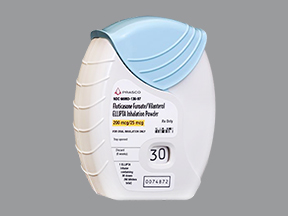 FLUTICASONE-VILANTEROL 200-25
The following indications for FLUTICASONE-VILANTEROL (fluticasone furoate/vilanterol trifenatate) have been approved by the FDA:
Indications:
None.
Professional Synonyms:
None.
Indications:
None.
Professional Synonyms:
None.
The following dosing information is available for FLUTICASONE-VILANTEROL (fluticasone furoate/vilanterol trifenatate):
Dosage of fluticasone furoate is expressed in terms of the fuorate salt. Dosage of vilanterol trifenatate is expressed in terms of vilanterol.
Fluticasone/vilanterol is supplied with a disposable plastic inhaler containing 2 foil strips, each with 30 blisters (or 14 blisters in the institutional package). One strip contains fluticasone furoate (50,100, or 200 mcg per blister), and the other strip contains vilanterol (25 mcg per blister). A blister from each strip is used to create 1 dose.
After the inhaler is activated, the powder within a pair of blisters is exposed and dispersed into the air stream created by the patient's inhalation. Using standardized in vitro testing at a flow rate of 60 L/minute for 4 seconds, the inhaler delivered 22 mcg of vilanterol and 46,92, or 184mcg of fluticasone furoate per pair of blisters. The precise amount of drug delivered to the lungs with each activation of the inhaler device depends on patient factors such as inspiratory flow.
Fluticasone/vilanterol is supplied with a disposable plastic inhaler containing 2 foil strips, each with 30 blisters (or 14 blisters in the institutional package). One strip contains fluticasone furoate (50,100, or 200 mcg per blister), and the other strip contains vilanterol (25 mcg per blister). A blister from each strip is used to create 1 dose.
After the inhaler is activated, the powder within a pair of blisters is exposed and dispersed into the air stream created by the patient's inhalation. Using standardized in vitro testing at a flow rate of 60 L/minute for 4 seconds, the inhaler delivered 22 mcg of vilanterol and 46,92, or 184mcg of fluticasone furoate per pair of blisters. The precise amount of drug delivered to the lungs with each activation of the inhaler device depends on patient factors such as inspiratory flow.
Fluticasone furoate in fixed combination with vilanterol trifenatate (fluticasone/vilanterol) is administered by oral inhalation once daily using a disposable inhaler that delivers a fixed combination of powdered vilanterol trifenatate and fluticasone furoate from foil-wrapped blisters. Fluticasone/vilanterol should be used at the same time every day, and should not be used more than one time every 24 hours. If a dose is missed, take the dose as soon as possible.
Take the next dose at the regularly scheduled time. Do not take 2 doses at the same time. Prior to use, store fluticasone/vilanterol in the original foil tray at room temperature (20-25degreesC; excursions permitted between 15-30oC) in a dry place away from heat and sunlight; the product should only be removed from the tray immediately before initial use.
The date the tray is opened and the discard date (6 weeks after opening) should be written on the inhaler label. The number of doses remaining in the inhaler is displayed on the counter located on the front of the device. The cover of the inhaler should not be opened until immediately before use; to avoid wasting doses, the inhaler cover should not be closed again until the dose has been inhaled.
When the cover of the inhaler is opened fully to expose the mouthpiece, a click should be heard. If the dose counter does not advance when the click is heard, the dose has not been properly prepared, and the patient should contact the clinician. Before inhaling the dose, the patient should exhale completely, but should not exhale into the mouthpiece of the inhaler.
The patient should then place the mouthpiece firmlybetweenthe lips and inhale deeply through the inhaler with a steady breath; the patient should not inhale through the nose. The air vent on the inhaler should not be blocked while the dose is administered. The patient should remove the inhaler from the mouth, hold the breath for about 3-4 seconds (or as long as comfortable), and then exhale slowly and gently.
While some patients may taste or feel a dose of drug delivered from the inhaler, patients should be instructed not to use another dose even if they do not perceive that the dose has been delivered. After the dose is administered, the inhaler should be closed by sliding the cover up and over the mouthpiece as far as possible. Rinsing the mouth with water (without swallowing) after inhalation of the fixed combination drug is advised.
The inhaler does not need to be cleaned after use. However, if desired, the mouthpiece can be cleaned with a dry tissue before closing the cover. The inhaler should be discarded 6 weeks after removal of the inhaler from the foil tray or when the counter reads "0".
Take the next dose at the regularly scheduled time. Do not take 2 doses at the same time. Prior to use, store fluticasone/vilanterol in the original foil tray at room temperature (20-25degreesC; excursions permitted between 15-30oC) in a dry place away from heat and sunlight; the product should only be removed from the tray immediately before initial use.
The date the tray is opened and the discard date (6 weeks after opening) should be written on the inhaler label. The number of doses remaining in the inhaler is displayed on the counter located on the front of the device. The cover of the inhaler should not be opened until immediately before use; to avoid wasting doses, the inhaler cover should not be closed again until the dose has been inhaled.
When the cover of the inhaler is opened fully to expose the mouthpiece, a click should be heard. If the dose counter does not advance when the click is heard, the dose has not been properly prepared, and the patient should contact the clinician. Before inhaling the dose, the patient should exhale completely, but should not exhale into the mouthpiece of the inhaler.
The patient should then place the mouthpiece firmlybetweenthe lips and inhale deeply through the inhaler with a steady breath; the patient should not inhale through the nose. The air vent on the inhaler should not be blocked while the dose is administered. The patient should remove the inhaler from the mouth, hold the breath for about 3-4 seconds (or as long as comfortable), and then exhale slowly and gently.
While some patients may taste or feel a dose of drug delivered from the inhaler, patients should be instructed not to use another dose even if they do not perceive that the dose has been delivered. After the dose is administered, the inhaler should be closed by sliding the cover up and over the mouthpiece as far as possible. Rinsing the mouth with water (without swallowing) after inhalation of the fixed combination drug is advised.
The inhaler does not need to be cleaned after use. However, if desired, the mouthpiece can be cleaned with a dry tissue before closing the cover. The inhaler should be discarded 6 weeks after removal of the inhaler from the foil tray or when the counter reads "0".
No dosing information available.
No generic dosing information available.
The following drug interaction information is available for FLUTICASONE-VILANTEROL (fluticasone furoate/vilanterol trifenatate):
There are 0 contraindications.
There are 0 severe interactions.
There are 0 moderate interactions.
The following contraindication information is available for FLUTICASONE-VILANTEROL (fluticasone furoate/vilanterol trifenatate):
Drug contraindication overview.
*Primary treatment of status asthmaticus or acute episodes of COPD or asthma requiring intensive measures. *Severe hypersensitivity to milk proteins or any ingredients.
*Primary treatment of status asthmaticus or acute episodes of COPD or asthma requiring intensive measures. *Severe hypersensitivity to milk proteins or any ingredients.
There are 0 contraindications.
There are 0 severe contraindications.
There are 0 moderate contraindications.
The following adverse reaction information is available for FLUTICASONE-VILANTEROL (fluticasone furoate/vilanterol trifenatate):
Adverse reaction overview.
Patients with COPD: The most common adverse reactions (incidence >=3%) with fluticasone/vilanterol were nasopharyngitis, upper respiratory tract infection, headache, oral candidiasis, back pain, pneumonia, bronchitis, sinusitis, cough, oropharyngeal pain, arthralgia, hypertension, influenza, pharyngitis, and pyrexia. Patients with asthma: The most common adverse reactions (incidence >=2%) with fluticasone/vilanterol were nasopharyngitis, oral candidiasis, headache, influenza, upper respiratory tract infection, bronchitis, sinusitis, oropharyngeal pain, dysphonia, and cough.
Patients with COPD: The most common adverse reactions (incidence >=3%) with fluticasone/vilanterol were nasopharyngitis, upper respiratory tract infection, headache, oral candidiasis, back pain, pneumonia, bronchitis, sinusitis, cough, oropharyngeal pain, arthralgia, hypertension, influenza, pharyngitis, and pyrexia. Patients with asthma: The most common adverse reactions (incidence >=2%) with fluticasone/vilanterol were nasopharyngitis, oral candidiasis, headache, influenza, upper respiratory tract infection, bronchitis, sinusitis, oropharyngeal pain, dysphonia, and cough.
There are 0 severe adverse reactions.
There are 0 less severe adverse reactions.
The following precautions are available for FLUTICASONE-VILANTEROL (fluticasone furoate/vilanterol trifenatate):
Safety and efficacy of fluticasone/vilanterolfor the maintenance treatment of asthma have been established in pediatric patients>=5 years of age. The recommended dosage for pediatric patients with asthma differs from the adult dosage. Orally inhaled corticosteroids may cause a reduction in growth velocity when administered to children and adolescents.
Contraindicated
Severe Precaution
Management or Monitoring Precaution
Contraindicated
| None |
Severe Precaution
| None |
Management or Monitoring Precaution
| None |
There are insufficient data on the use of fluticasone/vilanterolor the individual components in pregnant women. In an animal reproduction study, no fetal structural abnormalities were observed when fluticasone furoate and vilanterol were administered by inhalation alone or in combination to pregnant rats during the period of organogenesis. Women with poorly or moderately controlled asthma are at increased risk of several perinatal outcomes such as pre-eclampsia in the mother and prematurity, low birth weight, and small for gestational age in the neonate.
Closely monitor pregnant womenand adjust medications as necessary to maintain optimal control of asthma. The effects of fluticasone/vilanterol on labor and delivery are not known. Because of the potential for beta-agonist interference with uterine contractility, use of vilanterol during labor should be restricted to those patients in whom the benefits clearly outweigh the risks.
Closely monitor pregnant womenand adjust medications as necessary to maintain optimal control of asthma. The effects of fluticasone/vilanterol on labor and delivery are not known. Because of the potential for beta-agonist interference with uterine contractility, use of vilanterol during labor should be restricted to those patients in whom the benefits clearly outweigh the risks.
It is not known whether fluticasone furoate or vilanterol is distributed into milk or whether the drugs can affect milk production or the breastfed child; low concentrations of other inhaled corticosteroids have been detected in human milk. Consider the developmental and health benefits of breastfeeding along with the mother's clinical need for fluticasone/vilanterol and any potential adverse effects on the breastfed child from the drugs or underlying maternal condition.
Precaution Exists
Precaution exists. (No data or inconclusive human data.) Use of this drug by breast feeding mothers should be evaluated carefully.
Precaution Exists
Precaution exists. (No data or inconclusive human data.) Use of this drug by breast feeding mothers should be evaluated carefully.
| Drug Name | Excretion Potential | Effect on Infant | Notes |
|---|---|---|---|
| Fluticasone (inhal, Nasal) | Unknown. It is unknown whether the drug is excreted in human breast milk. | It is not known whether this drug has an adverse effect on the nursing infant. (No data or inconclusive human data) | Insuff human data avail; significant exposure to a nursing infant is unlikely |
| Vilanterol (inhal) | Unknown. It is unknown whether the drug is excreted in human breast milk. | It is not known whether this drug has an adverse effect on the nursing infant. (No data or inconclusive human data) | Insufficient data for vilanterol; other beta-agonists are excreted in milk |
A significant number of patients >=65 years of age were included in the clinical trials of fluticasone/vilanterol for the management of COPD and asthma. Although no overall differences in safety and efficacy were observed between geriatric and younger adults, and other clinical experience revealed no evidence of age-related differences, the possibility that some geriatric patients may exhibit increased sensitivity to the drug cannot be ruled out. Dosage adjustment is not necessary in geriatric patients.
Precaution Exists
Geriatric management or monitoring precaution exists.
Precaution Exists
Geriatric management or monitoring precaution exists.
| Drug Name | Narrative | REN | HEP | CARDIO | NEURO | PULM | ENDO |
|---|---|---|---|---|---|---|---|
| Fluticasone (inh) | Musculoskeletal-Use with caution in patients with osteoporosis. Decreases in bone mineral density (BMD) has been observed with long-term administration of products containing inhaled corticosteroids. | N | N | N | N | N | Y |
| Vilanterol | Cardiovascular-Use caution in severe cardiovascular diseases, particularly coronary insufficiency, since beta-agonists increase heart rate and blood pressure. Endocrine-Use caution in poorly controlled diabetes or hyperthyroidism. | N | N | Y | N | N | N |
The following prioritized warning is available for FLUTICASONE-VILANTEROL (fluticasone furoate/vilanterol trifenatate):
No warning message for this drug.
No warning message for this drug.
The following icd codes are available for FLUTICASONE-VILANTEROL (fluticasone furoate/vilanterol trifenatate)'s list of indications:
No ICD codes found for this drug.
No ICD codes found for this drug.
Formulary Reference Tool