Please wait while the formulary information is being retrieved.
Drug overview for KISQALI (ribociclib succinate):
Generic name: RIBOCICLIB SUCCINATE (RYE-boe-SYE-klib)
Drug class: Antineoplastic- Cyclin-Dependent Kinase (CDK) 4/6 Inhibitors
Therapeutic class: Antineoplastics
Ribociclib, a selective inhibitor of cyclin-dependent kinases 4 (CDK4) and 6 (CDK6), is an antineoplastic agent.
No enhanced Uses information available for this drug.
Generic name: RIBOCICLIB SUCCINATE (RYE-boe-SYE-klib)
Drug class: Antineoplastic- Cyclin-Dependent Kinase (CDK) 4/6 Inhibitors
Therapeutic class: Antineoplastics
Ribociclib, a selective inhibitor of cyclin-dependent kinases 4 (CDK4) and 6 (CDK6), is an antineoplastic agent.
No enhanced Uses information available for this drug.
DRUG IMAGES
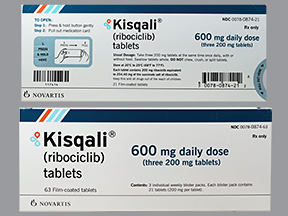 KISQALI 600 MG DAILY DOSE
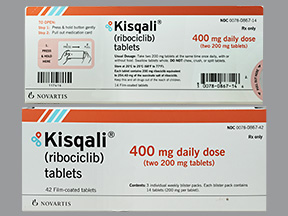 KISQALI 400 MG DAILY DOSE
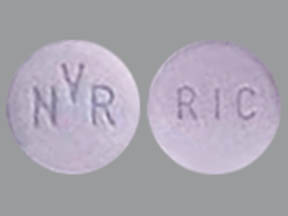 KISQALI 200 MG DAILY DOSE
The following indications for KISQALI (ribociclib succinate) have been approved by the FDA:
Indications:
Hormone receptor (HR)-positive, HER2-negative advanced breast cancer
Hormone receptor (HR)-positive, HER2-negative early-stage breast cancer
Professional Synonyms:
Hormone receptor (HR)-positive, HER2-negative metastatic breast cancer
Hormone receptor(+), HER2(-) early breast cancer
HR+, HER2- early breast CA
HR-positive, human epidermal growth factor receptor 2 (HER2)-negative advanced breast cancer
HR-positive, human epidermal growth factor receptor 2 (HER2)-negative metastatic breast cancer
Indications:
Hormone receptor (HR)-positive, HER2-negative advanced breast cancer
Hormone receptor (HR)-positive, HER2-negative early-stage breast cancer
Professional Synonyms:
Hormone receptor (HR)-positive, HER2-negative metastatic breast cancer
Hormone receptor(+), HER2(-) early breast cancer
HR+, HER2- early breast CA
HR-positive, human epidermal growth factor receptor 2 (HER2)-negative advanced breast cancer
HR-positive, human epidermal growth factor receptor 2 (HER2)-negative metastatic breast cancer
The following dosing information is available for KISQALI (ribociclib succinate):
Dosage of ribociclib succinate is expressed in terms of ribociclib.
Dosage interruption and/or reduction, or discontinuance of ribociclib therapy, may be necessary based on severity of adverse reactions. Dosage adjustment of ribociclib is recommended based on individual safety and tolerability.
Early breast cancer: If dosage reduction from 400 mg once daily is necessary, the dosage should be reduced to 200 mg once daily. If the toxicity recurs at a dosage of 200 mg once daily, ribociclib therapy should be discontinued.
Advanced or metastatic breast cancer: If dosage reduction from 600 mg once daily is necessary, the dosage should be reduced to 400 mg once daily. If the toxicity recurs at a dosage of 400 mg once daily, the dosage should be reduced to 200 mg once daily. If the toxicity recurs at a dosage of 200 mg once daily, ribociclib therapy should be discontinued.
Concomitant use of ribociclib with drugs that are strong inhibitors of cytochrome P-450 (CYP) isoenzyme 3A should be avoided, and selection of an alternative drug with less CYP3A inhibition potential is recommended. If concomitant use of a strong CYP3A inhibitor cannot be avoided, the manufacturer recommends reducing the dosage of ribociclib to 200 mg once daily in patients with early breast cancer and 400 mg once daily in patients with advanced or metastatic breast cancer. When concomitant use of the strong CYP3A inhibitor is discontinued, the ribociclib dosage should be returned (after at least 5 elimination half-lives of the CYP3A inhibitor) to the dosage used prior to initiation of the strong CYP3A inhibitor.
Dosage interruption and/or reduction, or discontinuance of ribociclib therapy, may be necessary based on severity of adverse reactions. Dosage adjustment of ribociclib is recommended based on individual safety and tolerability.
Early breast cancer: If dosage reduction from 400 mg once daily is necessary, the dosage should be reduced to 200 mg once daily. If the toxicity recurs at a dosage of 200 mg once daily, ribociclib therapy should be discontinued.
Advanced or metastatic breast cancer: If dosage reduction from 600 mg once daily is necessary, the dosage should be reduced to 400 mg once daily. If the toxicity recurs at a dosage of 400 mg once daily, the dosage should be reduced to 200 mg once daily. If the toxicity recurs at a dosage of 200 mg once daily, ribociclib therapy should be discontinued.
Concomitant use of ribociclib with drugs that are strong inhibitors of cytochrome P-450 (CYP) isoenzyme 3A should be avoided, and selection of an alternative drug with less CYP3A inhibition potential is recommended. If concomitant use of a strong CYP3A inhibitor cannot be avoided, the manufacturer recommends reducing the dosage of ribociclib to 200 mg once daily in patients with early breast cancer and 400 mg once daily in patients with advanced or metastatic breast cancer. When concomitant use of the strong CYP3A inhibitor is discontinued, the ribociclib dosage should be returned (after at least 5 elimination half-lives of the CYP3A inhibitor) to the dosage used prior to initiation of the strong CYP3A inhibitor.
Ribociclib is administered orally without regard to food at approximately the same time each day, preferably in the morning. The tablets should be swallowed intact and should not be broken, chewed, crushed, or split. If a dose of ribociclib is missed or vomited, patients should not take an extra dose.
The next dose should be taken at the regularly scheduled time. Store ribociclib tablets at 20oC to 25oC for up to 2 months. Ribociclib is commercially available as a single entity (Kisqali(R)) and also available copackaged with letrozole (Kisqali(R) Femara(R) Co-Pack). Clinicians should consult the respective manufacturers' labeling for information on dosage and administration (including dosage adjustments), adverse effects, and contraindications of other antineoplastic agents used in combination regimens.
The next dose should be taken at the regularly scheduled time. Store ribociclib tablets at 20oC to 25oC for up to 2 months. Ribociclib is commercially available as a single entity (Kisqali(R)) and also available copackaged with letrozole (Kisqali(R) Femara(R) Co-Pack). Clinicians should consult the respective manufacturers' labeling for information on dosage and administration (including dosage adjustments), adverse effects, and contraindications of other antineoplastic agents used in combination regimens.
| DRUG LABEL | DOSING TYPE | DOSING INSTRUCTIONS |
|---|---|---|
| KISQALI 200 MG DAILY DOSE | Maintenance | Adults take 1 tablet (200 mg) by oral route once daily at approximately the same time each day on days 1 through 21 of a 28 day treatment cycle |
| KISQALI 400 MG DAILY DOSE | Maintenance | Adults take 2 tablets (400 mg) by oral route once daily at approximately the same time each day on days 1 through 21 of a 28 day treatment cycle |
| KISQALI 600 MG DAILY DOSE | Maintenance | Adults take 3 tablets (600 mg) by oral route once daily at approximately the same time each day on days 1 through 21 of a 28 day treatment cycle |
No generic dosing information available.
The following drug interaction information is available for KISQALI (ribociclib succinate):
There are 83 contraindications.
These drug combinations generally should not be dispensed or administered to the same patient. A manufacturer label warning that indicates the contraindication warrants inclusion of a drug combination in this category, regardless of clinical evidence or lack of clinical evidence to support the contraindication.
| Drug Interaction | Drug Names |
|---|---|
| Vardenafil (Greater Than 2.5 mg)/Strong CYP3A4 Inhibitors SEVERITY LEVEL: 1-Contraindicated Drug Combination: This drug combination is contraindicated and generally should not be dispensed or administered to the same patient. MECHANISM OF ACTION: Strong CYP3A4 inhibitors may inhibit the metabolism of vardenafil.(1-3) CLINICAL EFFECTS: Concurrent use of strong CYP3A4 inhibitors may result in increased levels, clinical effects, and side effects of vardenafil.(1-3) PREDISPOSING FACTORS: None determined. PATIENT MANAGEMENT: The US manufacturer of vardenafil states that a maximum dose of 2.5 mg of vardenafil every 24 hours should not be exceeded in patients taking strong CYP3A4 inhibitors.(1) Note that other countries have different warnings. The Canadian(3) and UK(3) manufacturer of vardenafil state that vardenafil should not exceed 5 mg in patients taking clarithromycin. The UK manufacturer of vardenafil states that the concurrent use of vardenafil with strong CYP3A4 inhibitors should be avoided.(3) The US manufacturer of cobicistat states that a maximum dose of 2.5 mg of vardenafil every 72 hours should not be exceeded in patients taking cobicistat.(4) DISCUSSION: Concurrent use of ketoconazole (200 mg, a strong inhibitor of CYP3A4) with vardenafil (5 mg) increased the vardenafil area-under-curve (AUC) and maximum concentration (Cmax) by 10-fold and 4-fold, respectively.(1-3) Concurrent administration of erythromycin (500 mg three times daily, a moderate inhibitor of CYP3A4) with vardenafil (5 mg) increased the AUC and Cmax of vardenafil by 4-fold and 3-fold, respectively.(1-3) |
VARDENAFIL HCL |
| Irinotecan/Strong CYP3A4 Inhibitors; Darunavir SEVERITY LEVEL: 1-Contraindicated Drug Combination: This drug combination is contraindicated and generally should not be dispensed or administered to the same patient. MECHANISM OF ACTION: Inhibitors of CYP3A4 may inhibit the metabolism of SN-38, the active metabolite of irinotecan. Strong CYP3A4 inhibitors and darunavir may prevent the breakdown of SN-38 to its inactive metabolites APC, NPC, M2, M3, and M4.(1,2) CLINICAL EFFECTS: Coadministration of irinotecan with a strong CYP3A4 inhibitor may result in increased irinotecan plasma concentration, and therefore increased exposure to its active metabolite SN-38. Increased SN-38 exposure may lead to serious toxicity, including severe neutropenia, interstitial pulmonary disease, and even death.(3) PREDISPOSING FACTORS: None determined. PATIENT MANAGEMENT: Concurrent use of irinotecan and strong CYP3A4 inhibitors or darunavir is contraindicated.(2-4) Strong CYP3A4 inhibitors should be discontinued at least 1 week prior to starting irinotecan.(4) The US manufacturer of itraconazole states that concomitant administration with irinotecan is contra-indicated during and two weeks after itraconazole treatment.(5) If concurrent therapy is warranted, consider a four-fold reduction in irinotecan dose.(3) Patients receiving concurrent therapy should be closely monitored for toxicity. DISCUSSION: A randomized cross-over study involving seven patients was performed in which each was given irinotecan 350 mg/m2 IV alone for 90 minutes and followed 3 weeks later by irinotecan 100 mg/m2 given with ketoconazole 200 mg orally 1 hour before or 23 hours after the infusion of irinotecan, or both cycles were given vice versa. With ketoconazole coadministration, the conversion of irinotecan to its inactive metabolite was reduced by 87%, whereas the relative exposure to the active prodrug was increased by 109%. Both hematologic (degree of myelosuppression; percent decrease in neutrophil count) and nonhematologic (nausea, vomiting, and diarrhea) parameters were similar between the courses, despite a 3.5 fold reduced irinotecan dose when given in combination with ketoconazole. The authors concluded that the coadministration of various CYP3A4 inhibitors could potentiate a fatal outcome.(3) A prospective, open-label, randomized study was conducted to determine the pharmacokinetics of lopinavir (LPV)/ritonavir (RTV) administration with irinotecan (CPT11). Eight HIV-infected, Caucasian male patients with Kaposi's sarcoma, stage IV (according to New York University classification) were administered highly active antiretroviral therapy (HAART). HAART consisted of 400 mg lopinavir/ 100 mg ritonavir (Kaletra) twice daily (b.i.d) in association with NRTIs b.i.d. for at least 1 month before the start of anticancer chemotherapy. Patients were then treated with irinotecan as a single agent (150 mg/m2) over a 90 min infusion at days 1 and 10, every 3 weeks. Concomitant LPV/RTV treatment reduced the irinotecan clearance from 21.3 +/- 6.3 to 11.3 +/- 3.5 l/h/m2 (P=0.0008) causing an 89% increase of CPT11 AUC (P=0.001) and a 20% increase in the Cmax of CPT11 (p=0.02). The LPV/RTV treatment increased the AUC of SN38 by 204% (p=0.0001) and AUC of SN38G by 94% (P=0.002). Conversely, LPV/RTV treatment caused an 81% reduction in AUC of APC (p=0.02). Overall, the authors concluded that CYP3A4 inhibitors like LPV/RTV decrease CPT11 clearance and increase SN-38 exposure, potentially leading to CPT11 toxicity if not monitored closely.(7) Strong CYP3A4 Inhibitors include: adagrasib, boceprevir, ceritinib, clarithromycin, cobicistat, ensitrelvir, idelalisib, indinavir, itraconazole, josamycin, ketoconazole, lonafarnib, lopinavir, mibefradil, mifepristone, nefazodone, nelfinavir, nirmatrelvir/ritonavir, paritaprevir, posaconazole, ribociclib, saquinavir, telaprevir, telithromycin, tipranavir, troleandomycin, tucatinib, and voriconazole.(8) One or more of the drug pairs linked to this monograph have been included in a list of interactions that should be considered "high-priority" for inclusion and should not be inactivated in EHR systems. This DDI subset was vetted by an expert panel commissioned by the U.S. Office of the National Coordinator (ONC) for Health Information Technology. |
CAMPTOSAR, IRINOTECAN HCL, ONIVYDE |
| Eplerenone/Strong CYP3A4 Inhibitors; Protease Inhibitors SEVERITY LEVEL: 1-Contraindicated Drug Combination: This drug combination is contraindicated and generally should not be dispensed or administered to the same patient. MECHANISM OF ACTION: Strong inhibitors of CYP3A4 and protease inhibitors may inhibit the metabolism of eplerenone.(1-3) CLINICAL EFFECTS: Concurrent use of eplerenone with a strong inhibitor of CYP3A4 or a protease inhibitor may result in 5-fold increases in eplerenone concentrations and toxicity (e.g. hyperkalemia, hypotension).(1-3) PREDISPOSING FACTORS: Severe renal disease increases the risk for hyperkalemia. PATIENT MANAGEMENT: The manufacturer of eplerenone states that the concurrent use of strong CYP3A4 inhibitors is contraindicated.(1) The US Department of Health and Human Services HIV guidelines state that protease inhibitors are contraindicated with eplerenone.(3) The US manufacturer of itraconazole states that concurrent use of eplerenone is contraindicated during and two weeks after itraconazole treatment.(4) The starting dose of eplerenone for hypertension should be reduced to 25 mg in patients receiving moderate CYP3A4 inhibitors.(1) In all patients taking eplerenone who start taking a moderate CYP3A4 inhibitor, check serum potassium and creatinine levels after 3-7 days of concurrent therapy.(1) DISCUSSION: Ketoconazole (200 mg BID) increased the maximum concentration (Cmax) and area-under-curve (AUC) of a single dose of eplerenone (100 mg) by 1.7-fold and 5.4-fold, respectively.(1) The concurrent use of eplerenone with less potent CYP3A4 inhibitors (erythromycin 500 mg BID, fluconazole 200 mg daily, saquinavir 1200 mg TID, and verapamil 240 mg daily) increased the Cmax of eplerenone by 1.4-fold to 1.6-fold and the AUC of eplerenone by 2.0-fold and 2.9-fold.(1) Strong inhibitors of CYP3A4 and protease inhibitors linked to this monograph include: adagrasib, amprenavir, atazanavir, boceprevir, ceritinib, clarithromycin, cobicistat, darunavir, ensitrelvir, fosamprenavir, idelalisib, indinavir, itraconazole, josamycin, ketoconazole, lonafarnib, lopinavir, mibefradil, mifepristone, nefazodone, nelfinavir, nirmatrelvir/ritonavir, paritaprevir, posaconazole, ribociclib, saquinavir, telaprevir, telithromycin, tipranavir, troleandomycin, tucatinib, and voriconazole.(1,2) |
EPLERENONE |
| Silodosin; Tamsulosin/Strong CYP3A4 Inhibitors SEVERITY LEVEL: 1-Contraindicated Drug Combination: This drug combination is contraindicated and generally should not be dispensed or administered to the same patient. MECHANISM OF ACTION: Strong CYP3A4 inhibitors may inhibit the metabolism of silodosin and tamsulosin.(1,2) CLINICAL EFFECTS: Coadministration of a strong CYP3A4 inhibitor may cause an increase in silodosin and tamsulosin levels and effects, including severe hypotension.(1,2) PREDISPOSING FACTORS: In patients receiving tamsulosin, the interaction may be worse in patients who are CYP2D6 poor metabolizers because tamsulosin also undergoes metabolism by this pathway.(2) PATIENT MANAGEMENT: The US manufacturer of silodosin states that concurrent use of strong CYP3A4 inhibitors is contraindicated.(1) The US manufacturer of tamsulosin states that tamsulosin should not be used with strong CYP3A4 inhibitors.(2) The US manufacturer of itraconazole states that silodosin or tamsulosin should not be administered until at least 2 weeks after itraconazole treatment.(3) DISCUSSION: Administration of ketoconazole (200 mg daily for 4 days) increased the Cmax and AUC of a single dose of silodosin (4 mg) by 3.7-fold and 2.9-fold, respectively.(1) Administration of ketoconazole (400 mg daily for 4 days) increased the Cmax and AUC of a single dose of silodosin (8 mg) by 3.8-fold and 3.2-fold, respectively.(1) In a study in 24 healthy male subjects, administration of ketoconazole (400 mg daily for 5 days) increased the Cmax and AUC of a single dose of tamsulosin (0.4 mg) by 2.2-fold (90% CI 1.96, 2.45) and 2.8-fold (90% CI 2.56, 3.07), respectively. No serous adverse events were reported when subjects took tamsulosin with ketoconazole.(2,4) Strong inhibitors of CYP3A4 include: adagrasib, boceprevir, ceritinib, clarithromycin, cobicistat, idelalisib, itraconazole, josamycin, ketoconazole, lonafarnib, mibefradil, mifepristone, nefazodone, posaconazole, ribociclib, telaprevir, telithromycin, troleandomycin, tucatinib and voriconazole.(5,6) |
DUTASTERIDE-TAMSULOSIN, JALYN, SILODOSIN, TAMSULOSIN HCL |
| Efalizumab; Natalizumab/Immunosuppressives; Immunomodulators SEVERITY LEVEL: 1-Contraindicated Drug Combination: This drug combination is contraindicated and generally should not be dispensed or administered to the same patient. MECHANISM OF ACTION: Natalizumab,(1-3) efalizumab,(4) immunosuppressives, and immunomodulators all suppress the immune system. CLINICAL EFFECTS: Concurrent use of natalizumab(1-3) or efalizumab(4) with immunosuppressives or immunomodulators may result in an increased risk of infections, including progressive multifocal leukoencephalopathy (PML), an opportunistic infection caused by the JC virus (JCV). PREDISPOSING FACTORS: Previous JCV infection, longer duration of natalizumab treatment - especially if greater than 2 years, and prior or concomitant treatment with immunosuppressant medication are all independent risk factors which increase the risk for PML.(1,5) The FDA has estimated PML incidence stratified by risk factors: If anti-JCV antibody positive, no prior immunosuppressant use and natalizumab treatment less than 25 months, incidence <1/1,000. If anti-JCV antibody positive, history of prior immunosuppressant use and natalizumab treatment less than 25 months, incidence 2/1,000 If anti-JCV antibody positive, no prior immunosuppressant use and natalizumab treatment 25-48 months, incidence 4/1,000 If anti-JCV antibody positive, history of prior immunosuppressant use and natalizumab treatment 25-48 months, incidence 11/1,000. PATIENT MANAGEMENT: The US manufacturer of natalizumab states patients with Crohn's disease should not receive concurrent immunosuppressants, with the exception of limited overlap of corticosteroids, due to the increased risk for PML. For new natalizumab patients currently receiving chronic oral corticosteroids for Crohn's Disease, begin corticosteroid taper when therapeutic response to natalizumab has occurred. If corticosteroids cannot be discontinued within six months of starting natalizumab, discontinue natalizumab.(3) The US manufacturer of natalizumab states that natalizumab should not ordinarily be used in multiple sclerosis patients receiving immunosuppressants or immunomodulators due to the increased risk for PML. Immunosuppressives include, but are not limited to azathioprine, cyclophosphamide, cyclosporine, mercaptopurine, methotrexate, mitoxantrone, mycophenolate, and corticosteroids.(3,6) The UK manufacturer of natalizumab states that concurrent use with immunosuppressives or antineoplastic agents is contraindicated.(1) The Canadian manufacturer of natalizumab states that natalizumab should not be used with immunosuppressive or immunomodulatory agents.(2) The US manufacturer of certolizumab states that concurrent therapy with natalizumab is not recommended.(7) DISCUSSION: Progressive multifocal leukoencephalopathy has been reported in patients receiving concurrent natalizumab were recently or concomitantly taking immunomodulators or immunosuppressants.(1-5,8,9) In a retrospective cohort study of multiple sclerosis patients newly initiated on a disease-modifying therapy, use of high-efficacy agents (alemtuzumab, natalizumab, or ocrelizumab) resulted in the same risk of overall infections as moderate-efficacy agents, but there was an elevated risk of serious infections (adjusted hazard ratio [aHR] = 1.24, 95% confidence interval (CI) = 1.06-1.44) and UTIs (aHR = 1.21, 95% CI = 1.14-1.30).(10) |
TYRUKO, TYSABRI |
| Tolvaptan/Strong CYP3A4 Inhibitors SEVERITY LEVEL: 1-Contraindicated Drug Combination: This drug combination is contraindicated and generally should not be dispensed or administered to the same patient. MECHANISM OF ACTION: Strong inhibitors of CYP3A4 may inhibit the metabolism of tolvaptan.(1) Toxicity may result from an overly rapid correction of serum sodium. CLINICAL EFFECTS: Concurrent use of a strong inhibitor of CYP3A4 may result in increased levels of tolvaptan.(1) Elevated levels of tolvaptan may lead to increased clinical effects such as hypotension, hypovolemia, and thirst, as well as toxicity in the form of neurologic sequelae such as osmotic demyelination syndrome (ODS). ODS can lead to coma and death. Symptoms of ODS include dysarthria, mutism, dysphagia, lethargy, affective changes, spastic quadriparesis, seizures, and coma.(1) PREDISPOSING FACTORS: None determined. PATIENT MANAGEMENT: Concurrent use of tolvaptan and strong CYP3A4 inhibitors is contraindicated.(1) The US manufacturer of itraconazole states that concurrent use with tolvaptan is contraindicated during and two weeks after itraconazole treatment.(2) DISCUSSION: Tolvaptan is a substrate of CYP3A4. Concurrent administration of ketoconazole (200 mg daily) increased tolvaptan exposure by 5-fold. Administration of ketoconazole at dosages of 400 mg daily would be expected to produce greater increases, as would concurrent administration with other strong CYP3A4 inhibitors.(1) Strong inhibitors of CYP3A4 include: adagrasib, boceprevir, ceritinib, clarithromycin, cobicistat, ensitrelvir, idelalisib, indinavir, itraconazole, josamycin, ketoconazole, lonafarnib, lopinavir/ritonavir, mibefradil, mifepristone, nefazodone, nelfinavir, nirmatrelvir/ritonavir, paritaprevir, posaconazole, ribociclib, saquinavir, telaprevir, telithromycin, tipranavir, tucatinib, and voriconazole.(3) |
JYNARQUE, SAMSCA, TOLVAPTAN |
| Live Vaccines; Live BCG/Selected Immunosuppressive Agents SEVERITY LEVEL: 1-Contraindicated Drug Combination: This drug combination is contraindicated and generally should not be dispensed or administered to the same patient. MECHANISM OF ACTION: A variety of disease modifying agents suppress the immune system. Immunocompromised patients may be at increased risk for uninhibited replication after administration of live, attenuated vaccines or intravesicular BCG. Immune response to vaccines may be decreased during periods of immunocompromise.(1) CLINICAL EFFECTS: The expected serum antibody response may not be obtained and/or the vaccine may result in illness.(1) After instillation of intravesicular BCG, immunosuppression may interfere with local immune response, or increase the severity of mycobacterial infection following inadvertent systemic exposure.(2) PREDISPOSING FACTORS: Immunosuppressive diseases (e.g. hematologic malignancies, HIV disease), treatments (e.g. radiation) and drugs may all increase the magnitude of immunodeficiency. PATIENT MANAGEMENT: The Centers for Disease Control(CDC) Advisory Committee on Immunization Practices (ACIP) states that live-virus and live, attenuated vaccines should not be administered to patients who are immunocompromised. The magnitude of immunocompromise and associated risks should be determined by a physician.(1) For patients scheduled to receive chemotherapy, vaccination should ideally precede the initiation of chemotherapy by 14 days. Patients vaccinated while on immunosuppressive therapy or in the 2 weeks prior to starting therapy should be considered unimmunized and should be revaccinated at least 3 months after discontinuation of therapy.(1) Patients who receive anti-B cell therapies should not receive live vaccines for at least 6 months after such therapies due to a prolonged duration of immunosuppression. An exception is the Zoster vaccine, which can be given at least 1 month after receipt of anti-B cell therapies.(1) The US manufacturer of abatacept states live vaccines should not be given during or for up to 3 months after discontinuation of abatacept.(2) The US manufacturer of live BCG for intravesicular treatment of bladder cancer states use is contraindicated in immunosuppressed patients.(3) The US manufacturer of daclizumab states live vaccines are not recommended during and for up to 4 months after discontinuation of treatment.(4) The US manufacturer of guselkumab states that live vaccines should be avoided during treatment with guselkumab.(5) The US manufacturer of inebilizumab-cdon states that live vaccines are not recommended during treatment and after discontinuation until B-cell repletion. Administer all live vaccinations at least 4 weeks prior to initiation of inebilizumab-cdon.(6) The US manufacturer of ocrelizumab states that live vaccines are not recommended during treatment and until B-cell repletion occurs after discontinuation of therapy. Administer all live vaccines at least 4 weeks prior to initiation of ocrelizumab.(7) The US manufacturer of ozanimod states that live vaccines should be avoided during and for up to 3 months after discontinuation of ozanimod.(8) The US manufacturer of siponimod states that live vaccines are not recommended during treatment and for up to 4 weeks after discontinuation of treatment.(9) The US manufacturer of ustekinumab states BCG vaccines should not be given in the year prior to, during, or the year after ustekinumab therapy.(10) The US manufacturer of satralizumab-mwge states that live vaccines are not recommended during treatment and should be administered at least four weeks prior to initiation of satralizumab-mwge.(11) The US manufacturer of ublituximab-xiiy states that live vaccines are not recommended during treatment and until B-cell recovery. Live vaccines should be administered at least 4 weeks prior to initiation of ublituximab-xiiy.(12) The US manufacturer of etrasimod states that live vaccines should be avoided during and for 5 weeks after treatment. Live vaccines should be administered at least 4 weeks prior to initiation of etrasimod.(13) The US manufacturer of emapalumab-lzsg states that live vaccines should not be administered to patients receiving emapalumab-lzsg and for at least 4 weeks after the last dose of emapalumab-lzsg. The safety of immunization with live vaccines during or following emapalumab-lzsg therapy has not been studied.(14) The US manufacturer of sibeprenlimab-szsi states live vaccines should not be given within 30 days prior to initiation or during treatment with sibeprenlimab-szsi.(15) DISCUSSION: Killed or inactivated vaccines do not pose a danger to immunocompromised patients.(1) Patients with a history of leukemia who are in remission and have not received chemotherapy for at least 3 months are not considered to be immunocompromised.(1) |
ACAM2000 (NATIONAL STOCKPILE), ADENOVIRUS TYPE 4, ADENOVIRUS TYPE 4 AND TYPE 7, ADENOVIRUS TYPE 7, BCG (TICE STRAIN), BCG VACCINE (TICE STRAIN), DENGVAXIA, ERVEBO (NATIONAL STOCKPILE), M-M-R II VACCINE, PRIORIX, PROQUAD, ROTARIX, ROTATEQ, STAMARIL, VARIVAX VACCINE, VAXCHORA ACTIVE COMPONENT, VAXCHORA VACCINE, VIVOTIF, YF-VAX |
| Saxagliptin (>2.5 mg)/Strong CYP3A4 Inhibitors; Atazanavir; Darunavir SEVERITY LEVEL: 1-Contraindicated Drug Combination: This drug combination is contraindicated and generally should not be dispensed or administered to the same patient. MECHANISM OF ACTION: Strong inhibitors of CYP3A4 may inhibit the metabolism of saxagliptin.(1,2) CLINICAL EFFECTS: Concurrent use of a strong inhibitor of CYP3A4 may result in elevated levels and increased effects of saxagliptin.(1,2) PREDISPOSING FACTORS: None determined. PATIENT MANAGEMENT: The US manufacturer of saxagliptin states that the dose of saxagliptin should be limited to 2.5 mg daily in patients taking strong inhibitors of CYP3A4.(1) DISCUSSION: Pretreatment with ketoconazole (200 mg every 12 hours for 9 days) increased the maximum concentration (Cmax) and area-under-curve (AUC) of a single dose of saxagliptin (100 mg) by 62% and 2.5-fold, respectively. The Cmax and AUC of the active metabolite of saxagliptin decreased 95% and 91%, respectively. The Cmax and AUC of ketoconazole decreased 16% and 13%, respectively.(1,2) Pretreatment with ketoconazole (200 mg every 12 hours for 7 days) increased the Cmax and AUC of a single dose of saxagliptin (100 mg) by 2.4-fold and 3.7-fold, respectively. The Cmax and AUC of the active metabolite of saxagliptin decreased 96% and 90%, respectively.(1) Inhibitors of CYP3A4 linked to this monograph include: adagrasib, atazanavir, boceprevir, ceritinib, clarithromycin, cobicistat, darunavir, ensitrelvir, idelalisib, indinavir, itraconazole, josamycin, ketoconazole, lonafarnib, lopinavir/ritonavir, mibefradil, mifepristone, nefazodone, nelfinavir, nirmatrelvir/ritonavir, paritaprevir, posaconazole, ribociclib, saquinavir, telaprevir, telithromycin, tipranavir, tucatinib, and voriconazole.(1,3,4) |
DAPAGLIFLOZIN-SAXAGLIPTIN, SAXAGLIPTIN HCL, SAXAGLIPTIN-METFORMIN ER |
| Ticagrelor/Strong CYP3A4 Inhibitors; Protease Inhibitors SEVERITY LEVEL: 1-Contraindicated Drug Combination: This drug combination is contraindicated and generally should not be dispensed or administered to the same patient. MECHANISM OF ACTION: Strong inhibitors of CYP3A4 may inhibit the metabolism of ticagrelor.(1,2) CLINICAL EFFECTS: Concurrent use of a strong inhibitor of CYP3A4 may result in a substantial increase in exposure to and effects from ticagrelor, including increased risk of bleeding.(1,2) PREDISPOSING FACTORS: None determined. PATIENT MANAGEMENT: The UK manufacturer of ticagrelor states that concurrent use of strong CYP3A4 inhibitors is contraindicated.(1) The US manufacturer of ticagrelor states that concurrent use of strong CYP3A4 inhibitors should be avoided.(2) The US manufacturer of itraconazole states that concurrent use of ticagrelor is contraindicated during and two weeks after itraconazole treatment.(3) DISCUSSION: Concurrent ketoconazole increased ticagrelor maximum concentration (Cmax) and area-under-curve (AUC) by 2.4-fold and 7.3-fold, respectively. The Cmax and AUC of the active ticagrelor metabolite decreased by 89% and 56%, respectively.(1) Strong CYP3A4 inhibitors linked include: adagrasib, atazanavir, boceprevir, ceritinib, clarithromycin, cobicistat, darunavir, ensitrelvir, fosamprenavir, idelalisib, indinavir, itraconazole, josamycin, ketoconazole, lonafarnib, lopinavir/ritonavir, mibefradil, mifepristone, nefazodone, nelfinavir, nirmatrelvir/ritonavir, paritaprevir/ritonavir, posaconazole, ribociclib, saquinavir, telaprevir, telithromycin, tucatinib, and voriconazole.(4,5) |
BRILINTA, TICAGRELOR |
| Slt High Strength Antimuscarinics/Strong CYP3A4 Inhibitors SEVERITY LEVEL: 1-Contraindicated Drug Combination: This drug combination is contraindicated and generally should not be dispensed or administered to the same patient. MECHANISM OF ACTION: Strong CYP3A4 inhibitors may inhibit the metabolism of darifenacin(1) and fesoterodine.(2) CLINICAL EFFECTS: The concurrent administration of a strong inhibitor of CYP3A4 may result in elevated levels of and signs of toxicity from darifenacin(1) and fesoterodine.(2) PREDISPOSING FACTORS: The risk of anticholinergic toxicities including cognitive decline, delirium, falls and fractures is increased in geriatric patients using more than one medicine with anticholinergic properties.(3) PATIENT MANAGEMENT: The US manufacturer of darifenacin states that the daily dose of darifenacin should not exceed 7.5 mg in patients receiving potent CYP3A4 inhibitors.(1) The US manufacturer of fesoterodine states that the daily dose of fesoterodine should not exceed 4 mg in adult patients receiving potent CYP3A4 inhibitors. In pediatric patients, the daily dose of fesoterodine in patients taking strong CYP3A4 inhibitors should be reduced to 4 mg in patients weighing greater than 35 kilograms. Use of fesoterodine in pediatric patients weighing greater than 25 kilograms and up to 35 kilograms is not recommended.(2) The US manufacturer of itraconazole states that concurrent use with fesoterodine is contraindicated in patients with severe renal or hepatic impairment during and two weeks after itraconazole treatment.(4) DISCUSSION: In a study in 10 extensive CYP2D6 metabolizers and 1 poor CYP2D6 metabolizer, concurrent administration of ketoconazole (400 mg) increased the area-under-curve (AUC) and maximum concentration (Cmax) of darifenacin (7.5 mg daily) by 3.9-fold and 4.6-fold, respectively, in extensive metabolizers and by 12.9-fold and 12-fold, respectively, in the poor metabolizer, compared to historical controls. The concurrent administration of ketoconazole (400 mg) and darifenacin (15 mg daily) increased darifenacin AUC and Cmax by 11.5-fold and 10.73-fold, respectively, in extensive metabolizers and by 4.9-fold and 4.9-fold, respectively, in the poor metabolizer, compared to historical controls.(1) Concurrent administration of darifenacin (30 mg daily) and erythromycin, a moderate CYP3A4 inhibitor, increased darifenacin AUC and Cmax by 128% and 95%, respectively. Administration of darifenacin (30 mg daily) and fluconazole, another moderate CYP3A4 inhibitor, increased darifenacin AUC and Cmax by 84% and 88%, respectively. No dosage adjustment is recommended during concurrent therapy with moderate inhibitors of CYP3A4.(1) In a study, co-administration of ketoconazole (200 mg twice a day) increased the Cmax and AUC of the active metabolite of fesoterodine 2.0 and 2.3-fold in CYP2D6 extensive metabolizers and 2.1 and 2.5-fold in CYP2D6 poor metabolizers, respectively. Fesoterodine Cmax and AUC were 4.5-fold and 5.7-fold higher in subjects who were CYP2D6 poor metabolizers and taking ketoconazole when compared to extensive CYP2D6 metabolizers not taking ketoconazole.(2) In another study, ketoconazole (200 mg daily) increased the Cmax and AUC of the active metabolite of fesoterodine 2.2-fold in CYP2D6 extensive metabolizers and 1.5-fold and 1.9-fold in CYP P-450-2D6 poor metabolizers, respectively.(1,2) Fesoterodine Cmax and AUC were 3.4-fold and 4.2-fold higher in subjects who were CYP2D6 poor metabolizers and taking ketoconazole when compared to extensive CYP2D6 metabolizers not taking ketoconazole.(2) Based on a controlled randomized study in 28 healthy adults, oral fluconazole (200 mg daily) taken with oral fesoterodine (8 mg daily) was generally well tolerated in patients. A slightly non-clinically significant rise in plasma fesoterodine levels did occur. No clinically significant side effects were reported. The most common side effects reported by patients include: dizziness, blurred vision and abdominal distension when fluconazole was taken with fesoterodine.(5) Strong inhibitors of CYP3A4 include: adagrasib, boceprevir, ceritinib, clarithromycin, cobicistat, ensitrelvir, grapefruit, idelalisib, indinavir, itraconazole, ketoconazole, levoketoconazole, lonafarnib, lopinavir/ritonavir, mibefradil, mifepristone, nefazodone, nelfinavir, nirmatrelvir/ritonavir, paritaprevir, posaconazole, ribociclib, saquinavir, telaprevir, telithromycin, tipranavir, troleandomycin, tucatinib, and voriconazole.(6) |
DARIFENACIN ER, FESOTERODINE FUMARATE ER, TOVIAZ |
| Ergot Alkaloids/Selected Strong CYP3A4 Inhibitors SEVERITY LEVEL: 1-Contraindicated Drug Combination: This drug combination is contraindicated and generally should not be dispensed or administered to the same patient. MECHANISM OF ACTION: Strong inhibitors of CYP3A4 may inhibit the hepatic metabolism of ergot alkaloids.(1-4) CLINICAL EFFECTS: Concurrent use may result in increased levels of ergot alkaloids, which may result in clinical signs of ergotism, including vasospasm, dysesthesia, renal ischemia, and peripheral ischemia. PREDISPOSING FACTORS: None determined. PATIENT MANAGEMENT: The concurrent use of dihydroergotamine,(1,2) ergotamine,(2,3) or methylergonovine(2,4) and strong inhibitors of CYP3A4 is contraindicated. It would be prudent to avoid the concurrent use of all ergot alkaloids and strong inhibitors of CYP3A4. Patients receiving concurrent therapy should be monitored for clinical signs of ergotism. One or both agents may need to be discontinued. Patients should be treated symptomatically for ergotism. DISCUSSION: Case reports have documented clinical signs of ergotism following concomitant therapy with various ergot alkaloids and strong inhibitors of CYP3A4 such as clarithromycin, erythromycin, indinavir, nelfinavir, ritonavir, and troleandomycin. Selected strong CYP3A4 inhibitors linked include: adagrasib, ceritinib, cobicistat, grapefruit, idelalisib, josamycin, levoketoconazole, lonafarnib, mibefradil, nefazodone, ribociclib, and tucatinib. |
BREKIYA, CAFERGOT, DIHYDROERGOTAMINE MESYLATE, ERGOLOID MESYLATES, ERGOMAR, ERGOTAMINE TARTRATE, ERGOTAMINE-CAFFEINE, METHYLERGONOVINE MALEATE, METHYSERGIDE MALEATE, MIGERGOT, MIGRANAL, TRUDHESA |
| Flibanserin/Strong or Moderate CYP3A4 Inhibitors SEVERITY LEVEL: 1-Contraindicated Drug Combination: This drug combination is contraindicated and generally should not be dispensed or administered to the same patient. MECHANISM OF ACTION: Flibanserin is primarily metabolized by CYP3A4, though CYP2C19 also plays a role in metabolism.(1) CLINICAL EFFECTS: Concurrent use of a strong or moderate inhibitor of CYP3A4 may result in high to very high levels of and toxicity from flibanserin, including severe hypotension or syncope.(1) PREDISPOSING FACTORS: Patients with any degree of hepatic impairment, who are poor CYP2C19 metabolizers, or who also receive concomitant therapy with strong CYP2C19 inhibitors are expected to have increased systemic concentrations of flibanserin, adding to the risk for hypotension or syncopal episodes.(1) Hypotensive or syncopal episodes are more common when flibanserin is taken during waking hours.(1) PATIENT MANAGEMENT: The concomitant use of flibanserin with moderate or strong CYP3A4 inhibitors significantly increases flibanserin concentrations which may lead to hypotension and syncope. The manufacturer of flibanserin states moderate or strong CYP3A4 inhibitors are contraindicated.(1) If the benefit of initiating a CYP3A4 inhibitor within 2 days of stopping flibanserin clearly outweighs the risk flibanserin-associated hypotension or syncope, monitor and counsel the patient regarding symptoms of hypotension or syncope. Discontinue moderate or strong CYP3A4 inhibitors for 2 weeks before initiating or restarting flibanserin therapy.(1) DISCUSSION: In a drug interaction study with 15 healthy subjects, the combination of flibanserin (100 mg on day 6) and fluconazole (a moderate CYP3A4 and strong CYP2C19 inhibitor, 400 mg once then 200 mg daily for 5 days) resulted in an increased flibanserin exposure of 7-fold. Hypotension or syncope requiring supine placement with leg elevation occurred in 3 subjects (20%). One patient became unresponsive with a blood pressure of 64/41 mm Hg and required emergency room treatment where she required intravenous saline.(1) Though the combination has not been studied, a similar result is plausible with voriconazole, a strong CYP3A4 inhibitor and moderate CYP2C19 inhibitor.(1) In a drug interaction study with flibanserin 50 mg (one-half of the recommended dose) and ketoconazole 400 mg, flibanserin exposure increased 4.5-fold. One of 24 patients(4%) developed syncope.(1) A study of 12 healthy men and women on itraconazole (400 mg once then 200 mg daily for 4 days) with flibanserin 50 mg given 2 hours after itraconazole found that flibanserin exposure was increased 2.6-fold.(1) Strong inhibitors of CYP3A4 include: adagrasib, boceprevir, ceritinib, clarithromycin, cobicistat, ensitrelvir, idelalisib, indinavir, itraconazole, josamycin, ketoconazole, lonafarnib, lopinavir/ritonavir, mibefradil, mifepristone, nefazodone, nelfinavir, nirmatrelvir/ritonavir, paritaprevir, posaconazole, ribociclib, saquinavir, telaprevir, telithromycin, tipranavir, troleandomycin, tucatinib, and voriconazole.(1-3) Moderate inhibitors of CYP3A4 include: amprenavir, aprepitant, atazanavir, avacopan, berotralstat, clofazimine, conivaptan, crizotinib, darunavir/ritonavir, diltiazem, dronedarone, duvelisib, erythromycin, fedratinib, fluconazole (also a CYP2C19 inhibitor), fluvoxamine, fosamprenavir, fosnetupitant, imatinib, isavuconazonium, lenacapavir, letermovir, ledipasvir, netupitant, nilotinib, rilzabrutinib, schisandra, stiripentol, treosulfan, and verapamil.(1-3) |
ADDYI, FLIBANSERIN |
| Macitentan/Strong CYP3A4 Inhibitors SEVERITY LEVEL: 1-Contraindicated Drug Combination: This drug combination is contraindicated and generally should not be dispensed or administered to the same patient. MECHANISM OF ACTION: Strong inhibitors of CYP3A4 may inhibit the metabolism of macitentan.(1) CLINICAL EFFECTS: Concurrent use of a strong inhibitor of CYP3A4 may result in elevated levels and increased effects of macitentan.(1) PREDISPOSING FACTORS: None determined. PATIENT MANAGEMENT: The manufacturer of macitentan states that use of strong inhibitors of CYP3A4 should be avoided. When strong CYP3A4 inhibitors are required (e.g. protease inhibitors in the treatment of HIV), use other treatment options for pulmonary arterial hypertension.(1) The Journal of American College of Cardiology (JACC) states concurrent use of macitentan and nirmatrelvir-ritonavir is not advised. JACC recommends discontinuing macitentan for at least 36 hours before initiation of nirmatrelvir-ritonavir.(2) DISCUSSION: Pretreatment with ketoconazole increased the area-under-curve (AUC) and maximum concentration (Cmax) of macitentan approximately 2.3 and 1.3-fold respectively.(1) Strong inhibitors of CYP3A4 include: adagrasib, boceprevir, ceritinib, clarithromycin, cobicistat, ensitrelvir, idelalisib, indinavir, itraconazole, josamycin, ketoconazole, levoketoconazole, lonafarnib, lopinavir/ritonavir, mibefradil, mifepristone, nefazodone, nelfinavir, nirmatrelvir/ritonavir, paritaprevir, posaconazole, ribociclib, saquinavir, telaprevir, telithromycin, tipranavir, troleandomycin, tucatinib, and voriconazole.(3) |
MACITENTAN, OPSUMIT, OPSYNVI |
| Avanafil/Strong CYP3A4 Inhibitors; Atazanavir; Darunavir SEVERITY LEVEL: 1-Contraindicated Drug Combination: This drug combination is contraindicated and generally should not be dispensed or administered to the same patient. MECHANISM OF ACTION: Inhibitors of CYP3A4 may inhibit the metabolism of avanafil.(1-2) CLINICAL EFFECTS: The concurrent administration of a CYP3A4 inhibitor may result in elevated levels of avanafil, which may result in increased adverse effects such as hypotension, visual changes, and priapism.(1-2) PREDISPOSING FACTORS: None determined. PATIENT MANAGEMENT: The US manufacturer of avanafil states that the concurrent use of strong inhibitors of CYP3A4 is contraindicated.(1) The US Department of Health and Human Services HIV guidelines state that boosted atazanavir or darunavir should not be coadministered with avanafil. Unboosted atazanavir may be coadministered with avanafil doses not exceeding 50 mg every 24 hours.(2) The US manufacturer of itraconazole states that concurrent use of avanafil is contraindicated during and two weeks after itraconazole treatment.(3) DISCUSSION: Ketoconazole (400 mg daily), a strong inhibitor of CYP3A4, increased the maximum concentration (Cmax) and area-under-curve (AUC) of a single dose of avanafil (50 mg) by 3-fold and 13-fold, respectively. The half-life of avanafil increased from 5 hours to 9 hours.(1) Ritonavir (600 mg BID), a strong inhibitor of CYP3A4 and an inhibitor of CYP2C19, increased the Cmax and AUC of a single dose of avanafil (50 mg) by 2.4-fold and 13-fold, respectively. The half-life of avanafil increased from 5 hours to 9 hours.(1) Erythromycin (500 mg BID), a moderate inhibitor of CYP3A4, increased the Cmax and AUC of a single dose of avanafil (200 mg) by 2-fold and 3-fold, respectively. The half-life of avanafil increased from 5 hours to 8 hours.(1) Strong inhibitors of CYP3A4 include: adagrasib, boceprevir, ceritinib, clarithromycin, cobicistat, elvitegravir, ensitrelvir, idelalisib, indinavir, itraconazole, josamycin, ketoconazole, lonafarnib, lopinavir/ritonavir, mibefradil, nefazodone, nelfinavir, nirmatrelvir/ritonavir, paritaprevir, posaconazole, ribociclib, saquinavir, telaprevir, telithromycin, tipranavir, troleandomycin, tucatinib, and voriconazole.(4-5) |
AVANAFIL, STENDRA |
| Vorapaxar/Strong CYP3A4 Inhibitors; Protease Inhibitors SEVERITY LEVEL: 1-Contraindicated Drug Combination: This drug combination is contraindicated and generally should not be dispensed or administered to the same patient. MECHANISM OF ACTION: Inhibitors of CYP3A4 may inhibit the metabolism of vorapaxar.(1-3) CLINICAL EFFECTS: Concurrent use of an agent that is a strong inhibitor of CYP3A4 or a protease inhibitor may result in elevated levels of and clinical effects of vorapaxar,(1) including an increased risk of bleeding. PREDISPOSING FACTORS: The risk for bleeding episodes may be greater in patients with disease-associated factors (e.g. thrombocytopenia). Drug associated risk factors include concurrent use of multiple drugs which inhibit anticoagulant/antiplatelet metabolism and/or have an inherent risk for bleeding (e.g. NSAIDs). PATIENT MANAGEMENT: The US manufacturer of vorapaxar states that concurrent use with strong inhibitors of CYP3A4 should be avoided.(1) The US Department of Health and Human Services HIV guidelines state that protease inhibitors should not be coadministered with vorapaxar.(4) The US manufacturer of itraconazole states that concurrent use with vorapaxar is not recommended during and two weeks after itraconazole treatment.(5) If concurrent therapy is warranted, monitor patients receiving concurrent therapy for signs of blood loss, including decreased hemoglobin, hematocrit, fecal occult blood, and/or decreased blood pressure and promptly evaluate patients with any symptoms. When applicable, perform agent-specific laboratory test (e.g. INR, aPTT) to monitor efficacy and safety of anticoagulation. Discontinue anticoagulation in patients with active pathologic bleeding. Instruct patients to report any signs and symptoms of bleeding, such as unusual bleeding from the gums or nose; unusual bruising; red or black, tarry stools; red, pink or dark brown urine; acute abdominal or joint pain and/or swelling. DISCUSSION: In a study in 12 healthy subjects, ketoconazole (400 mg daily for 28 days) increased exposure to vorapaxar (20 mg on Day 7, 2.5 mg on Days 8-28) by 2-fold.(1,2) Strong inhibitors of CYP3A4 and protease inhibitor linked to this monograph include: adagrasib, atazanavir, ceritinib, clarithromycin, cobicistat, darunavir, ensitrelvir, fosamprenavir, idelalisib, indinavir, itraconazole, josamycin, ketoconazole, lonafarnib, lopinavir/ritonavir, mibefradil, nefazodone, nelfinavir, nirmatrelvir/ritonavir, paritaprevir, posaconazole, ribociclib, saquinavir, telaprevir, telithromycin, tipranavir, tucatinib, and voriconazole.(6) |
ZONTIVITY |
| Naloxegol/Strong CYP3A4 Inhibitors SEVERITY LEVEL: 1-Contraindicated Drug Combination: This drug combination is contraindicated and generally should not be dispensed or administered to the same patient. MECHANISM OF ACTION: Inhibitors of CYP3A4 may inhibit the metabolism of naloxegol.(1) CLINICAL EFFECTS: Concurrent use of a strong inhibitor of CYP3A4 may result in increased levels of naloxegol, which may precipitate opioid withdrawal symptoms.(1) PREDISPOSING FACTORS: Patients taking methadone may be more likely to experience gastrointestinal side effects such as abdominal pain and diarrhea as a result of opioid withdrawal.(1) PATIENT MANAGEMENT: The concurrent use of naloxegol and strong CYP3A4 inhibitors is contraindicated.(1) The US manufacturer of itraconazole states that concurrent administration with naloxegol is contraindicated during and two weeks after itraconazole treatment.(5) If concurrent use is deemed medically necessary, monitor patients for signs of opioid withdrawal such as sweating, chills, diarrhea, stomach pain, anxiety, irritability, yawning, restlessness, muscle/joint aches, increased lacrimation, running nose, and piloerection. Monitor patients taking methadone for abdominal pain and diarrhea as well.(1) DISCUSSION: Ketoconazole (400 mg daily for 5 days), a strong inhibitor of CYP3A4, increased the maximum concentration (Cmax) and area-under-curve (AUC) of a single dose of naloxegol by 9.58-fold and 12.85-fold, respectively.(2) Diltiazem (240 mg XR daily), a moderate inhibitor of CYP3A4, increased the Cmax and AUC of a single dose of naloxegol by 2.85 and 3.41, respectively.(2) Strong inhibitors of CYP3A4 include: adagrasib, boceprevir, ceritinib, clarithromycin, cobicistat, ensitrelvir, indinavir, itraconazole, josamycin, ketoconazole, lonafarnib, lopinavir/ritonavir, mibefradil, mifepristone, nefazodone, nelfinavir, nirmatrelvir/ritonavir, paritaprevir, posaconazole, ribociclib, saquinavir, telaprevir, telithromycin, tipranavir, tucatinib, and voriconazole.(1,3,4) |
MOVANTIK |
| Trastuzumab Emtansine/Strong CYP3A4 Inhibitors SEVERITY LEVEL: 1-Contraindicated Drug Combination: This drug combination is contraindicated and generally should not be dispensed or administered to the same patient. MECHANISM OF ACTION: Trastuzumab emtansine is a conjugate of trastuzumab and emtansine, a complex of MCC-DM1. DM1 is a microtubule inhibitor and is metabolized by CYP3A4. Strong inhibitors of CYP3A4 are expected to inhibit the metabolism of DM1.(1-4) CLINICAL EFFECTS: Concurrent use of strong inhibitors of CYP3A4 are expected to increase exposure to and toxicity from DM1, an active metabolite of trastuzumab emtansine, including hepatotoxicity, pneumonitis, hemorrhage, thrombocytopenia, or neurotoxicity.(1-4) PREDISPOSING FACTORS: None determined. PATIENT MANAGEMENT: The US, UK, and Canadian manufacturers recommend avoiding the use of strong CYP3A4 inhibitors in patients undergoing therapy with trastuzumab emtansine. Consider alternatives with no or minimal enzyme inhibition.(1-4) If concurrent use with trastuzumab emtansine is unavoidable, consider delaying trastuzumab emtansine treatment until the strong CYP3A4 inhibitor has cleared from circulation (approximately 3 half-lives of the inhibitor). If strong CYP3A4 inhibitors are used concurrently with trastuzumab emtansine, patients should be closely monitored for toxicity.(1-3) The Australian manufacturer recommends patients receiving strong CYP3A4 inhibitors concomitantly with trastuzumab emtansine should be closely monitored for adverse reactions.(4) DISCUSSION: Trastuzumab emtansine is a conjugate of trastuzumab and emtansine, a complex of MCC-DM1. DM1 is a microtubule inhibitor. In vitro studies in human liver microsomes indicate that DM1 is metabolized by CYP3A4 and inhibition of this isoenzyme is expected to result in elevated levels of and toxicity from DM1.(1-4) Strong inhibitors of CYP3A4 include: adagrasib, boceprevir, ceritinib, clarithromycin, cobicistat, ensitrelvir, idelalisib, indinavir, itraconazole, josamycin, ketoconazole, lonafarnib, lopinavir, mibefradil, mifepristone, nefazodone, nelfinavir, nirmatrelvir/ritonavir, paritaprevir, posaconazole, ribociclib, saquinavir, telaprevir, telithromycin, tipranavir, troleandomycin, tucatinib, and voriconazole.(5,6) |
KADCYLA |
| Isavuconazonium/Selected Strong CYP3A4 Inhibitors SEVERITY LEVEL: 1-Contraindicated Drug Combination: This drug combination is contraindicated and generally should not be dispensed or administered to the same patient. MECHANISM OF ACTION: Concurrent use of strong CYP3A4 inhibitors may inhibit the metabolism of isavuconazonium.(1) CLINICAL EFFECTS: Concurrent use of a strong CYP3A4 inhibitor may result in elevated levels and toxicity from isavuconazonium, leading to antifungal discontinuation. Adverse reactions may include headache, dizziness, paresthesia, somnolence, disturbance in attention, dysgeusia, dry mouth, diarrhea, oral hypoesthesia, vomiting, hot flush, anxiety, restlessness, palpitations, tachycardia, photophobia and arthralgia.(1) PREDISPOSING FACTORS: Patients with familial short QT syndrome may be at increased risk of heart arrhythmias.(1) PATIENT MANAGEMENT: The concurrent use of isavuconazonium with strong inhibitors of CYP3A4 is contraindicated.(1) The US manufacturer of itraconazole states that administration of isavuconazonium is contraindicated during and two weeks after itraconazole treatment. If concurrent therapy is deemed medically necessary, monitor patients for isavuconazonium toxicity, including headache, dizziness, paresthesia, somnolence, disturbance in attention, dysgeusia, dry mouth, diarrhea, oral hypoesthesia, vomiting, hot flush, anxiety, restlessness, palpitations, tachycardia, photophobia and arthralgia. Isavuconazonium or the CYP3A4 inhibitor may need to be discontinued. DISCUSSION: Ketoconazole (200 mg BID) increased the maximum concentration (Cmax) and area-under-curve (AUC) of isavuconazole (from a single dose of isavuconazonium equivalent to 200 mg isavuconazole) by 9% and 422%, respectively.(1) Lopinavir/ritonavir (400 mg/100 mg BID) increased the Cmax and AUC of isavuconazole by 74% and 96%, respectively.(1) Supratherapeutic doses of isavuconazonium (three times the recommended dosage) used in a study resulted in 17.9% of patients discontinuing isavuconazonium therapy.(1) Strong CYP3A4 inhibitors linked to this monograph include: adagrasib, boceprevir, ceritinib, clarithromycin, cobicistat, ensitrelvir, idelalisib, indinavir, itraconazole, josamycin, ketoconazole, levoketoconazole, mibefradil, mifepristone, nefazodone, nelfinavir, posaconazole, ribociclib, saquinavir, telaprevir, telithromycin, tipranavir, tucatinib, and voriconazole. |
CRESEMBA |
| Trabectedin/Strong CYP3A4 Inhibitors SEVERITY LEVEL: 1-Contraindicated Drug Combination: This drug combination is contraindicated and generally should not be dispensed or administered to the same patient. MECHANISM OF ACTION: Agents which strongly inhibit the CYP3A4 enzyme may impede the metabolism of trabectedin. CLINICAL EFFECTS: Concurrent use of strong CYP3A4 inhibitors may increase systemic exposure and the risk for adverse effects from trabectedin.(1) PREDISPOSING FACTORS: None determined. PATIENT MANAGEMENT: When possible, avoid the use of strong CYP3A4 inhibitors in patients receiving trabectedin.(1) The US manufacturer of itraconazole states that concomitant administration with trabectedin is not recommended during and two weeks after itraconazole treatment.(3) If short term use (i.e. less than 14 days) of a CYP3A4 inhibitor is required, administer the strong CYP3A4 inhibitor one week after trabectedin infusion and discontinue it prior to the next trabectedin infusion.(1) Monitor closely for adverse effects and decrease dosage if required. DISCUSSION: In an interaction study, a single dose of trabectedin with ketoconazole 200 mg orally twice daily for 7.5 days increased trabectedin exposure (AUC, area-under-curve) 66% compared with a single dose of trabectedin given alone.(1) Strong CYP3A4 inhibitors linked to this monograph include: adagrasib, boceprevir, ceritinib, clarithromycin, cobicistat, ensitrelvir, idelalisib, itraconazole, josamycin, ketoconazole, lonafarnib, mibefradil, mifepristone, nefazodone, nelfinavir, nirmatrelvir/ritonavir, posaconazole, ribociclib, ritonavir, telaprevir, telithromycin, troleandomycin, tucatinib, and voriconazole.(2) |
EVDI, YONDELIS |
| Talimogene laherparepvec/Selected Immunosuppressants SEVERITY LEVEL: 1-Contraindicated Drug Combination: This drug combination is contraindicated and generally should not be dispensed or administered to the same patient. MECHANISM OF ACTION: Talimogene laherparepvec is a live, attenuated herpes simplex virus.(1) CLINICAL EFFECTS: Concurrent use of talimogene laherparepvec in patients receiving immunosuppressive therapy may cause a life-threatening disseminated herpetic infection.(1) PREDISPOSING FACTORS: None determined. PATIENT MANAGEMENT: Talimogene laherparepvec is contraindicated in immunosuppressed patients.(1) The magnitude of immunocompromise and associated risks due to immunosuppressant drugs should be determined by a physician. DISCUSSION: Concurrent use of talimogene laherparepvec in patients receiving immunosuppressive therapy may cause a life-threatening disseminated herpetic infection.(1) |
IMLYGIC |
| Lomitapide/Strong or Moderate CYP3A4 Inhibitors SEVERITY LEVEL: 1-Contraindicated Drug Combination: This drug combination is contraindicated and generally should not be dispensed or administered to the same patient. MECHANISM OF ACTION: Lomitapide is primarily metabolized via CYP3A4.(1) CLINICAL EFFECTS: Concurrent use of a strong or moderate inhibitor of CYP3A4 may result in high to very high levels of and toxicity from lomitapide.(1) PREDISPOSING FACTORS: The interaction may be more severe in patients with hepatic impairment or with end-stage renal disease.(1) PATIENT MANAGEMENT: Given the magnitude of this interaction and the potential toxicity of lomitapide, moderate and strong CYP3A4 inhibitors are contraindicated.(1) When possible use an alternative to the CYP3A4 inhibitor. If a moderate or strong CYP3A4 inhibitor is required, discontinue lomitapide. Due to its long half-life, it will take 1 to 2 weeks for remaining lomitapide to be eliminated; thus lomitapide adverse effects could occur after discontinuation. The US manufacturer of itraconazole states that concurrent use with lomitapide is contraindicated during and two weeks after itraconazole treatment.(4) DISCUSSION: Concurrent administration with ketoconazole (a strong inhibitor of CYP3A4) increased lomitapide area-under-curve (AUC) by 27-fold.(1) Strong inhibitors of CYP3A4 include: adagrasib, boceprevir, ceritinib, clarithromycin, cobicistat, ensitrelvir, idelalisib, indinavir, itraconazole, josamycin, ketoconazole, lonafarnib, lopinavir/ritonavir, mibefradil, nefazodone, nelfinavir, nirmatrelvir/ritonavir, paritaprevir, posaconazole, ribociclib, saquinavir, telaprevir, telithromycin, tipranavir, tucatinib, and voriconazole.(1-3,5) Moderate inhibitors of CYP3A4 include: amprenavir, aprepitant, atazanavir, avacopan, berotralstat, clofazimine, conivaptan, crizotinib, darunavir/ritonavir, diltiazem, dronedarone, duvelisib, erythromycin, fedratinib, fluconazole (also a CYP2C19 inhibitor), fluvoxamine, fosamprenavir, fosnetupitant, imatinib, isavuconazonium, lenacapavir, lefamulin, letermovir, netupitant, nilotinib, nirogacestat, rilzabrutinib, schisandra, stiripentol, treosulfan, and verapamil.(1-3) |
JUXTAPID |
| Ribociclib/Strong CYP3A4 Inducers SEVERITY LEVEL: 1-Contraindicated Drug Combination: This drug combination is contraindicated and generally should not be dispensed or administered to the same patient. MECHANISM OF ACTION: Strong inducers of CYP3A4 may induce the metabolism of ribociclib.(1) CLINICAL EFFECTS: Concurrent use of a strong inducer of CYP3A4 may result in decreased levels and effectiveness of ribociclib.(1) PREDISPOSING FACTORS: Induction effects may be more likely with regular use of the inducer for longer than 1-2 weeks. PATIENT MANAGEMENT: The US manufacturer of ribociclib states that the concurrent use of CYP3A4 inducers should be avoided, and that alternative treatments with less CYP3A4 induction should be considered.(1) DISCUSSION: In a study with healthy subjects, co-administration of rifampin(600 mg daily for 14 days), decreased ribociclib area-under-curve (AUC) by 89% and maximum concentration (Cmax) by 81%.(1) A pharmacokinetic simulation suggests that a moderate CYP3A4 inducer, efavirenz, may decrease ribociclib's Cmax and AUC by 51% and 70%.(4) Strong inducers of CYP3A4 include: apalutamide, barbiturates, enzalutamide, fosphenytoin, mitotane, phenobarbital, phenytoin, primidone, rifampin, rifapentine, and St. John's wort.(2-4) |
ASA-BUTALB-CAFFEINE-CODEINE, ASCOMP WITH CODEINE, BUTALB-ACETAMINOPH-CAFF-CODEIN, BUTALBITAL, BUTALBITAL-ACETAMINOPHEN, BUTALBITAL-ACETAMINOPHEN-CAFFE, BUTALBITAL-ASPIRIN-CAFFEINE, CEREBYX, DILANTIN, DILANTIN-125, DONNATAL, ERLEADA, FIORICET, FOSPHENYTOIN SODIUM, LYSODREN, MITOTANE, MYSOLINE, PENTOBARBITAL SODIUM, PHENOBARBITAL, PHENOBARBITAL SODIUM, PHENOBARBITAL-BELLADONNA, PHENOBARBITAL-HYOSC-ATROP-SCOP, PHENOHYTRO, PHENYTEK, PHENYTOIN, PHENYTOIN SODIUM, PHENYTOIN SODIUM EXTENDED, PRIFTIN, PRIMIDONE, RIFADIN, RIFAMPIN, SEZABY, TENCON, XTANDI |
| Lovastatin; Simvastatin/Ribociclib SEVERITY LEVEL: 1-Contraindicated Drug Combination: This drug combination is contraindicated and generally should not be dispensed or administered to the same patient. MECHANISM OF ACTION: Ribociclib may inhibit the metabolism of lovastatin and simvastatin by CYP3A4.(1,2) CLINICAL EFFECTS: Concurrent use of ribociclib may result in elevated levels of lovastatin and simvastatin and increase the risk of rhabdomyolysis.(1,2) PREDISPOSING FACTORS: None determined. PATIENT MANAGEMENT: Concurrent use of strong CYP3A4 inhibitors with lovastatin or simvastatin is contraindicated.(1,2) Therapy with lovastatin or simvastatin should be suspended during ribociclib therapy. In patients requiring long-term therapy with ribociclib, consider the use of pravastatin or reduced dosages of atorvastatin or fluvastatin, using the lowest dose possible.(3) Patients should be carefully monitored for and instructed to report any signs of myopathy. DISCUSSION: In a study in healthy subjects, concomitant administration of ribociclib (400 mg once daily for 8 days) with midazolam increased the midazolam maximum concentration (Cmax) and area under the curve (AUC) by 2.1-fold and 3.8-fold, respectively. Administration of ribociclib 600 mg once daily is predicted to increase the midazolam Cmax and AUC by 2.4-fold and 5.2-fold, respectively.(4) |
EZETIMIBE-SIMVASTATIN, FLOLIPID, LOVASTATIN, SIMVASTATIN, VYTORIN, ZOCOR |
| Lurasidone/Ribociclib SEVERITY LEVEL: 1-Contraindicated Drug Combination: This drug combination is contraindicated and generally should not be dispensed or administered to the same patient. MECHANISM OF ACTION: Strong CYP3A4 inhibitors such as ribociclib, may inhibit the metabolism of lurasidone.(1) CLINICAL EFFECTS: Concomitant use of lurasidone with strong inhibitors of CYP3A4 may lead to orthostatic hypotension, akathisia, acute dystonia, Parkinsonism or other lurasidone toxicities.(1) PREDISPOSING FACTORS: Elderly patients, particularly those with a history of falls, swallowing disorders, Parkinson Disease, Lewy Body Disease, or other dementias are more sensitive to antipsychotics and have a greater risk for adverse effects.(1) PATIENT MANAGEMENT: The concurrent use of strong CYP3A4 inhibitors, such as ribociclib, with lurasidone, is contraindicated.(1) DISCUSSION: In a study in healthy subjects, concomitant administration of ribociclib (400 mg once daily for 8 days) with midazolam increased the midazolam maximum concentration (Cmax) and area under the curve (AUC) by 2.1-fold and 3.8-fold, respectively. Administration of ribociclib 600 mg once daily is predicted to increase the midazolam Cmax and AUC by 2.4-fold and 5.2-fold, respectively.(2) |
LATUDA, LURASIDONE HCL |
| Alprazolam; Estazolam; Triazolam/Ribociclib SEVERITY LEVEL: 1-Contraindicated Drug Combination: This drug combination is contraindicated and generally should not be dispensed or administered to the same patient. MECHANISM OF ACTION: Ribociclib may inhibit the metabolism of alprazolam, estazolam, and triazolam by CYP3A4.(1-4) CLINICAL EFFECTS: Inhibition of benzodiazepine metabolism may produce increased levels of these agents, as well as increased clinical effects, including profound sedation, respiratory depression, coma, and/or death. PREDISPOSING FACTORS: None determined. PATIENT MANAGEMENT: The concurrent use of alprazolam,(1) estazolam,(2) or triazolam(3) with strong CYP3A4 inhibitors is contraindicated. If concurrent use is necessary, monitor patients for unusual dizziness or lightheadedness, extreme sleepiness, slowed or difficult breathing, or unresponsiveness. DISCUSSION: In a study in healthy subjects, concomitant administration of ribociclib (400 mg once daily for 8 days) with midazolam increased the midazolam maximum concentration (Cmax) and area under the curve (AUC) by 2.1-fold and 3.8-fold, respectively. Administration of ribociclib 600 mg once daily is predicted to increase the midazolam Cmax and AUC by 2.4-fold and 5.2-fold, respectively.(4) |
ALPRAZOLAM, ALPRAZOLAM ER, ALPRAZOLAM INTENSOL, ALPRAZOLAM ODT, ALPRAZOLAM XR, ESTAZOLAM, TRIAZOLAM, XANAX |
| Eletriptan/Ribociclib SEVERITY LEVEL: 1-Contraindicated Drug Combination: This drug combination is contraindicated and generally should not be dispensed or administered to the same patient. MECHANISM OF ACTION: Ribociclib is a strong inhibitor of CYP3A4 and may inhibit the metabolism of eletriptan via this pathway.(1) CLINICAL EFFECTS: Concurrent use may result in elevated levels of and adverse effects from eletriptan.(1) PREDISPOSING FACTORS: None determined. PATIENT MANAGEMENT: The US manufacturer of eletriptan states that eletriptan should not be used within at least 72 hours of administration of a strong CYP3A4 inhibitor.(2) If migraine treatment is needed during ribociclib therapy use triptans not metabolized by CYP3A4 such as frovatriptan, sumatriptan, or zolmitriptan.(2-4) DISCUSSION: In a study in healthy subjects, concomitant administration of ribociclib (400 mg once daily for 8 days) with midazolam increased the midazolam maximum concentration (Cmax) and area under the curve (AUC) by 2.1-fold and 3.8-fold, respectively. Administration of ribociclib 600 mg once daily is predicted to increase the midazolam Cmax and AUC by 2.4-fold and 5.2-fold, respectively.(5) |
ELETRIPTAN HBR, RELPAX |
| Valbenazine (Greater Than 40 mg)/Strong CYP3A4 Inhibitors SEVERITY LEVEL: 1-Contraindicated Drug Combination: This drug combination is contraindicated and generally should not be dispensed or administered to the same patient. MECHANISM OF ACTION: Agents which inhibit the CYP3A4 enzyme may inhibit the metabolism of valbenazine.(1) CLINICAL EFFECTS: Concurrent use of strong CYP3A4 inhibitors may increase systemic exposure and the risk for valbenazine toxicities such as QT prolongation.(1) PREDISPOSING FACTORS: The risk of QT prolongation or torsade de pointes may be increased in patients with cardiovascular disease (e.g. heart failure, myocardial infarction, history of torsade de pointes, congenital long QT syndrome), hypokalemia, hypomagnesemia, hypocalcemia, bradycardia, female gender, or advanced age.(2) Concurrent use of more than one drug known to cause QT prolongation or higher systemic concentrations of either QT prolonging drug are additional risk factors for torsade de pointes. Factors which may increase systemic drug concentrations include rapid infusion of an intravenous dose or impaired metabolism or elimination of the drug (e.g. coadministration with an agent which inhibits its metabolism or elimination, genetic impairment in drug metabolism or elimination, and/or renal/hepatic dysfunction).(2) Concurrent use of strong CYP2D6 inhibitors may further increase levels of valbenazine.(1) PATIENT MANAGEMENT: Reduce the valbenazine dose to 40 mg once daily when valbenazine is coadministered with a strong CYP3A4 inhibitor.(1) During concomitant therapy with a strong CYP3A4 inhibitor, monitor patients closely for prolongation of the QT interval. Obtain serum calcium, magnesium, and potassium levels and monitor ECG at regular intervals. Correct any electrolyte abnormalities. Instruct patients to report any irregular heartbeat, dizziness, or fainting. DISCUSSION: In a drug interaction study in healthy subjects, coadministration of ketoconazole with valbenazine increased valbenazine maximum concentration (Cmax) and area-under-the-curve (AUC) by 2 and 1.5-fold, respectively. Cmax and AUC for the active metabolite of valbenazine (alpha-HTBZ) increased by approximately 2 and 1.6-fold, respectively. Strong CYP3A4 inhibitors linked to this monograph include: adagrasib, boceprevir, ceritinib, clarithromycin, cobicistat, ensitrelvir, idelalisib, indinavir, itraconazole, josamycin, ketoconazole, lonafarnib, lopinavir, mibefradil, mifepristone, nefazodone, nelfinavir, nirmatrelvir/ritonavir, paritaprevir, posaconazole, ribociclib, saquinavir, telaprevir, telithromycin, tipranavir, troleandomycin, tucatinib, and voriconazole.(3) |
INGREZZA, INGREZZA INITIATION PK(TARDIV), INGREZZA SPRINKLE |
| Abemaciclib/Strong CYP3A4 Inhibitors SEVERITY LEVEL: 1-Contraindicated Drug Combination: This drug combination is contraindicated and generally should not be dispensed or administered to the same patient. MECHANISM OF ACTION: Abemaciclib is a substrate of CYP3A4. Strong inhibitors of CYP3A4 may inhibit the metabolism of abemaciclib.(1) CLINICAL EFFECTS: Concurrent use of a strong inhibitor of CYP3A4 may result in increased levels and toxicity from abemaciclib.(1) PREDISPOSING FACTORS: None determined. PATIENT MANAGEMENT: Recommendations for management of this interaction vary in different regions. The US manufacturer of abemaciclib states to avoid concurrent administration with ketoconazole, a strong CYP3A4 inhibitor.(1) The US manufacturer of abemaciclib recommends a dose reduction of abemaciclib if concurrent use with other strong CYP3A4 inhibitors (other than ketoconazole). In patients on the recommended starting dose of abemaciclib 200 mg twice daily or 150 mg twice daily, reduce the abemaciclib dose to 100 mg twice daily. In patients who have had a dose reduction of abemaciclib to 100 mg twice daily due to adverse reactions, further reduce the dose to 50 mg twice daily with concurrent use of a strong CYP3A4 inhibitor.(1) The Australian manufacturer of abemaciclib recommends specific dose recommendations based on the concomitant strong CYP3A4 inhibitor. If given with ketoconazole, the recommended abemaciclib dose is 50 mg once daily. If given with itraconazole, the recommended abemaciclib dose is 50 mg twice daily. If given with clarithromycin, the recommended abemaciclib dose is 100 mg twice daily. For other strong CYP3A4 inhibitors, the recommended abemaciclib dose is 50 mg twice daily.(2) If the concurrent strong CYP3A4 inhibitor is discontinued, increase the abemaciclib dose after 3-5 half-lives of the inhibitor to the dose that was used prior to starting the strong inhibitor.(1,2) Monitor patient for signs and symptoms of abemaciclib toxicity with concurrent use. DISCUSSION: Abemaciclib is a substrate of CYP3A4.(1) Concurrent administration of ketoconazole (a strong CYP3A4 inhibitor) is predicted to increase the area-under-curve (AUC) of abemaciclib up to 16-fold.(1) Concurrent administration of itraconazole (a strong CYP3A4 inhibitor) is predicted to increase the relative potency adjusted unbound AUC of abemaciclib and its active metabolites (M2, M18, and M20) by 2.2-fold.(1) Concurrent administration of clarithromycin (500 mg twice daily, a strong CYP3A4 inhibitor) with a single dose of 50 mg of abemaciclib increased the relative potency adjusted unbound AUC of abemaciclib and its active metabolites (M2, M18, and M20) by 1.7-fold.(1) Strong CYP3A4 inhibitors linked to this monograph include: adagrasib, boceprevir, ceritinib, clarithromycin, cobicistat, ensitrelvir, grapefruit, idelalisib, indinavir, itraconazole, josamycin, levoketoconazole, lonafarnib, mibefradil, mifepristone, nefazodone, nelfinavir, nirmatrelvir, posaconazole, ribociclib, ritonavir, saquinavir, telaprevir, telithromycin, tucatinib, troleandomycin, and voriconazole.(3,4) |
VERZENIO |
| Acalabrutinib/Strong CYP3A4 Inhibitors SEVERITY LEVEL: 1-Contraindicated Drug Combination: This drug combination is contraindicated and generally should not be dispensed or administered to the same patient. MECHANISM OF ACTION: Agents which inhibit the CYP3A4 enzyme may inhibit the metabolism of acalabrutinib.(1) CLINICAL EFFECTS: Concurrent use of strong CYP3A4 inhibitors may increase systemic exposure and the risk for acalabrutinib toxicities such as neutropenia, anemia, or thrombocytopenia.(1) PREDISPOSING FACTORS: None determined. PATIENT MANAGEMENT: Avoid concomitant use of acalabrutinib and strong CYP3A inhibitors. Consider an alternative concomitant medication with less potential for CYP3A4 inhibition. If a CYP3A inhibitor will be used short-term (such as anti-infective for up to 7 days), interrupt acalabrutinib therapy. DISCUSSION: In a drug interaction study in healthy subjects, coadministration of itraconazole (200mg once daily for 5 days) with acalabrutinib increased acalabrutinib maximum concentration (Cmax) and area-under-the-curve (AUC) by 3.9 and 5.1-fold, respectively. Strong CYP3A4 inhibitors linked to this monograph include: adagrasib, boceprevir, clarithromycin, cobicistat, ensitrelvir, idelalisib, indinavir, itraconazole, josamycin, ketoconazole, lonafarnib, mibefradil, mifepristone, nefazodone, nelfinavir, nirmatrelvir/ritonavir, posaconazole, ribociclib, ritonavir, saquinavir, telaprevir, telithromycin, troleandomycin, tucatinib and voriconazole.(3) |
CALQUENCE |
| Cilostazol (Greater Than 50 mg BID)/Strong & Moderate 3A4 Inhibitors that Prolong QT SEVERITY LEVEL: 1-Contraindicated Drug Combination: This drug combination is contraindicated and generally should not be dispensed or administered to the same patient. MECHANISM OF ACTION: Strong and moderate inhibitors of CYP3A4 may inhibit the metabolism of cilostazol at CYP3A4.(1) Both agents have been shown to prolong the QT interval.(1,2) CLINICAL EFFECTS: The concurrent use of cilostazol and strong and moderate inhibitors of CYP3A4 may result in elevated levels of cilostazol, which may produce increased effects of cilostazol and adverse effects.(1) Concurrent use may also result in potentially life-threatening cardiac arrhythmias, including torsades de pointes (TdP).(2) PREDISPOSING FACTORS: In general, the risk of QT prolongation or torsade de pointes may be increased in patients with cardiovascular disease (e.g. heart failure, myocardial infarction, history of torsade de pointes, congenital long QT syndrome), hypokalemia, hypomagnesemia, hypocalcemia, bradycardia, female gender, or advanced age.(1) Concurrent use of more than one drug known to cause QT prolongation or higher systemic concentrations of either QT prolonging drug are additional risk factors for torsade de pointes. Factors which may increase systemic drug concentrations include rapid infusion of an intravenous dose or impaired metabolism or elimination of the drug (e.g. coadministration with an agent which inhibits its metabolism or elimination, genetic impairment in drug metabolism or elimination, and/or renal/hepatic dysfunction).(1) This interaction may also be more severe in patients taking inhibitors of CYP2C19.(1) PATIENT MANAGEMENT: The dose of cilostazol should be limited to 50 mg twice daily in patients receiving concurrent therapy with strong and moderate inhibitors of CYP3A4.(1) If concurrent therapy is warranted, consider obtaining serum calcium, magnesium, and potassium levels and monitoring ECG at baseline and at regular intervals. Correct any electrolyte abnormalities. Instruct patients to report any irregular heartbeat, dizziness, or fainting. DISCUSSION: In a study in 16 healthy males, the administration of a single dose of cilostazol (10 mg) with erythromycin (500 mg every eight hours) increased the maximum concentration (Cmax) and area-under-curve (AUC) of cilostazol by 47% and 73%, respectively. The Cmax and AUC of 4'-trans-hydroxy-cilostazol were increased by 29% and 141%, respectively.(3) Analysis of population pharmacokinetics indicated that the concurrent administration of diltiazem with cilostazol increased cilostazol concentrations by 53%.(1) Concurrent administration of diltiazem and cilostazol decreased cilostazol clearance by 30%, increased the Cmax by 30%, and increased AUC by 40%. In a study, the administration of a single dose of cilostazol (10 mg) with erythromycin (500 mg every eight hours) increased the Cmax and AUC of cilostazol by 47% and 73%, respectively. The AUC of 4'-trans-hydroxy-cilostazol was increased by 141%.(1) In an vitro study in human liver microsomes, ketoconazole inhibited the metabolism of cilostazol.(4) One or more of the drug pairs linked to this monograph have been included in a list of interactions that should be considered "high-priority" for inclusion and should not be inactivated in EHR systems. This DDI subset was vetted by an expert panel commissioned by the U.S. Office of the National Coordinator (ONC) for Health Information Technology. |
CILOSTAZOL |
| Entrectinib/Strong CYP3A4 Inhibitors that Prolong QT SEVERITY LEVEL: 1-Contraindicated Drug Combination: This drug combination is contraindicated and generally should not be dispensed or administered to the same patient. MECHANISM OF ACTION: Strong inhibitors of CYP3A4 that prolong the QT interval may inhibit the metabolism of entrectinib(1,2) and result in additive effects on the QT interval.(1) CLINICAL EFFECTS: The concurrent use of entrectinib with strong inhibitors of CYP3A4 that prolong the QTc interval may result in elevated levels of and effects from entrectinib, including potentially life-threatening cardiac arrhythmias, including torsades de pointes, hepatotoxicity, CNS effects, hyperuricemia, anemia, or neutropenia.(1,2) Symptoms of hepatotoxicity can include nausea, vomiting, jaundice, dark urine, abdominal pain, and unexplained fatigue.(1) PREDISPOSING FACTORS: The risk of QT prolongation or torsades de pointes may be increased in patients with cardiovascular disease (e.g. heart failure, myocardial infarction, history of torsades de pointes, congenital long QT syndrome), hypokalemia, hypomagnesemia, hypocalcemia, bradycardia, female gender, or advanced age.(2) Concurrent use of more than one drug known to cause QT prolongation or higher systemic concentrations of either QT prolonging drug are additional risk factors for torsades de pointes. Factors which may increase systemic drug concentrations include rapid infusion of an intravenous dose or impaired metabolism or elimination of the drug (e.g. coadministration with an agent which inhibits its metabolism or elimination, and/or renal/hepatic dysfunction).(2) PATIENT MANAGEMENT: Avoid the concurrent use of entrectinib with medications that inhibit CYP3A4 and prolong the QT interval.(1) When concurrent therapy cannot be avoided, obtain ECGs and electrolyte values (serum calcium, magnesium, and potassium) prior to the start of treatment, after initiation of any drug known to prolong the QT interval, and periodically monitor during therapy. Correct any electrolyte abnormalities. Monitor liver tests, including AST and ALT. For adult and pediatric patients 2 years and older, reduce the entrectinib dose as follows: -If the starting dose is 600 mg, reduce the entrectinib dose to 100 mg daily. -If the starting dose is 400 mg, reduce the entrectinib dose to 50 mg daily. -If the starting dose is 300 mg, reduce the entrectinib dose to 50 mg daily. -If the starting dose is 200 mg, reduce the entrectinib dose to 50 mg on alternate days.(1) For pediatric patients less than 2 years old, avoid coadministration with strong CYP3A4 inhibitors.(1) If concomitant use is discontinued, increase the entrectinib dose to the dose that was used before starting the inhibitor after three to five plasma half-lives of the strong CYP3A4 inhibitor. Advise patients to immediately report any symptoms of hepatotoxicity and any irregular heartbeat, dizziness, or fainting. If QTc prolongation develops: ---Monitor and supplement electrolytes as clinically indicated ---Review and adjust concomitant QT prolonging medications ---Interrupt entrectinib therapy for QTc interval greater than 500 ms. ---Follow labeling recommendations regarding restarting entrectinib.(1) If torsade de pointes, polymorphic ventricular tachycardia, and/or signs/symptoms of serious arrhythmia occur, permanently discontinue entrectinib.(1) DISCUSSION: In clinical trials, 3.1% of patients with at least one post-baseline ECG experienced QTcF prolongation of greater than 60 msec after starting entrectinib.(1) Coadministration of itraconazole (strong CYP3A4 inhibitor) with a single 100 mg entrectinib dose increased entrectinib maximum concentration (Cmax) and area-under-the-curve (AUC) by 1.7-fold and 6-fold.(1) Coadministration of a moderate CYP3A4 inhibitor with entrectinib is predicted to increase entrectinib Cmax and AUC by 2.9-fold and 3-fold. Agents that are linked to this monograph may have varying degrees of potential to prolong the QTc interval. Agents linked to this monograph have been shown to prolong the QTc interval either through their mechanism of action, through studies on their effects on the QTc interval, or through reports of QTc prolongation and/or torsades de pointes in clinical trials and/or postmarketing reports.(3) |
ROZLYTREK |
| Oral Lefamulin/Strong & Mod CYP3A4 Inhibitor that Prolong QT SEVERITY LEVEL: 1-Contraindicated Drug Combination: This drug combination is contraindicated and generally should not be dispensed or administered to the same patient. MECHANISM OF ACTION: Inhibitors of CYP3A4 that prolong the QT interval may inhibit the metabolism of oral lefamulin and may result in additive effects on the QTc interval.(1) CLINICAL EFFECTS: The concurrent use of oral lefamulin with inhibitors of CYP3A4 that prolong the QTc interval may result in elevated levels of and effects from lefamulin, including potentially life-threatening cardiac arrhythmias, including torsades de pointes.(1) PREDISPOSING FACTORS: The risk of QT prolongation or torsades de pointes may be increased in patients with cardiovascular disease (e.g. heart failure, myocardial infarction, history of torsades de pointes, congenital long QT syndrome), hypokalemia, hypomagnesemia, hypocalcemia, bradycardia, female gender, or advanced age.(2) Concurrent use of more than one drug known to cause QT prolongation or higher systemic concentrations of either QT prolonging drug are additional risk factors for torsades de pointes. Factors which may increase systemic drug concentrations include rapid infusion of an intravenous dose or impaired metabolism or elimination of the drug (e.g. coadministration with an agent which inhibits its metabolism or elimination, and/or renal/hepatic dysfunction).(2) PATIENT MANAGEMENT: Avoid the concurrent use of lefamulin with medications that prolong the QT interval and inhibit CYP3A4.(1) When concurrent therapy cannot be avoided, obtain ECGs and electrolyte values (serum calcium, magnesium, and potassium) prior to the start of treatment, after initiation of any drug known to prolong the QT interval, and periodically monitor during therapy. Correct any electrolyte abnormalities.(1) Instruct patients to report any irregular heartbeat, dizziness, or fainting. DISCUSSION: In a thorough QT study, intravenous lefamulin increased the QTcF 13.6 msec (90% CI = 15.5 msec) and oral lefamulin increased the QTcF by 9.3 msec (90% CI = 10.9 msec).(1) Coadministration of ketoconazole (strong CYP3A4 inhibitor) with lefamulin tablets increased lefamulin maximum concentration (Cmax) and area-under-the-curve (AUC) by 165% and 58%.(1) In a study, oral lefamulin tablets administered concomitantly with and at 2 or 4 hours before oral midazolam (a CYP3A4 substrate) increased the area-under-curve (AUC) and maximum concentration (Cmax) of midazolam by 200% and 100%, respectively. No clinically significant effect on midazolam pharmacokinetics was observed when co-administered with lefamulin injection.(1) Agents that are linked to this monograph may have varying degrees of potential to prolong the QTc interval. Agents linked to this monograph have been shown to prolong the QTc interval either through their mechanism of action, through studies on their effects on the QTc interval, or through reports of QTc prolongation and/or torsades de pointes in clinical trials and/or postmarketing reports.(3) Strong and moderate CYP3A4 inhibitors linked to this monograph include: adagrasib, ceritinib, clarithromycin, clofazimine, crizotinib, erythromycin, fluconazole, levoketoconazole, nilotinib, posaconazole, ribociclib, telithromycin, and voriconazole.(4) |
XENLETA |
| Ubrogepant/Strong CYP3A4 Inhibitors SEVERITY LEVEL: 1-Contraindicated Drug Combination: This drug combination is contraindicated and generally should not be dispensed or administered to the same patient. MECHANISM OF ACTION: Strong inhibitors of CYP3A4 may inhibit the metabolism of ubrogepant.(1) CLINICAL EFFECTS: Concurrent use of ubrogepant with strong CYP3A4 inhibitors may result in a significant increase in exposure of ubrogepant.(1) PREDISPOSING FACTORS: None determined. PATIENT MANAGEMENT: The US manufacturer of ubrogepant states coadministration with strong CYP3A4 inhibitors is contraindicated.(1) DISCUSSION: Coadministration of ubrogepant with ketoconazole, a strong CYP3A4 inhibitor, resulted in a 9.7-fold and 5.3-fold increase in area-under-curve (AUC) and concentration maximum (Cmax), respectively.(1) Strong inhibitors of CYP3A4 include: adagrasib, boceprevir, ceritinib, clarithromycin, cobicistat, ensitrelvir, idelalisib, indinavir, itraconazole, josamycin, ketoconazole, lonafarnib, lopinavir/ritonavir, mibefradil, mifepristone, nefazodone, nelfinavir, nirmatrelvir/ritonavir, paritaprevir, posaconazole, ribociclib, saquinavir, telaprevir, telithromycin, tipranavir, troleandomycin, tucatinib, and voriconazole.(2,3) |
UBRELVY |
| Lemborexant/Strong and Moderate CYP3A4 Inhibitors SEVERITY LEVEL: 1-Contraindicated Drug Combination: This drug combination is contraindicated and generally should not be dispensed or administered to the same patient. MECHANISM OF ACTION: Inhibitors of CYP3A4 may inhibit the metabolism of lemborexant.(1) CLINICAL EFFECTS: Concurrent use of a strong or moderate inhibitor of CYP3A4 may result in increased levels of and effects from lemborexant, including somnolence, fatigue, CNS depressant effects, daytime impairment, headache, and nightmare or abnormal dreams.(1) PREDISPOSING FACTORS: None determined. PATIENT MANAGEMENT: The concurrent use of strong or moderate CYP3A4 inhibitors with lemborexant should be avoided.(1) DISCUSSION: Lemborexant is a CYP3A4 substrate. In a PKPB model, concurrent use of lemborexant with itraconazole increased area-under-curve (AUC) and concentration maximum (Cmax) by 3.75-fold and 1.5-fold, respectively. Concurrent use of lemborexant with fluconazole increased AUC and Cmax by 4.25-fold and 1.75-fold, respectively.(1) Strong inhibitors of CYP3A4 include: adagrasib, boceprevir, ceritinib, clarithromycin, cobicistat, ensitrelvir, idelalisib, indinavir, itraconazole, josamycin, ketoconazole, lonafarnib, lopinavir, mibefradil, mifepristone, nefazodone, nelfinavir, nirmatrelvir, paritaprevir, posaconazole, ribociclib, saquinavir, telaprevir, telithromycin, troleandomycin, tucatinib, and voriconazole.(2) Moderate CYP3A4 inhibitors include: amprenavir, aprepitant, atazanavir, avacopan, berotralstat, clofazimine, conivaptan, crizotinib, darunavir, diltiazem, dronedarone, duvelisib, erythromycin, fedratinib, fluconazole, fluvoxamine, fosamprenavir, fosnetupitant, imatinib, isavuconazonium, oral lefamulin, lenacapavir, letermovir, netupitant, nilotinib, nirogacestat, rilzabrutinib, schisandra, stiripentol, treosulfan, and verapamil.(2) |
DAYVIGO |
| Lumateperone (>10.5 mg)/Strong CYP3A4 Inhib; Protease Inhib SEVERITY LEVEL: 1-Contraindicated Drug Combination: This drug combination is contraindicated and generally should not be dispensed or administered to the same patient. MECHANISM OF ACTION: Strong inhibitors of CYP3A4 and protease inhibitors may inhibit the metabolism of lumateperone.(1,2) CLINICAL EFFECTS: Concurrent use of lumateperone with strong CYP3A4 inhibitors or protease inhibitors increases lumateperone exposure, which may increase the risk of adverse reactions.(1,2) PREDISPOSING FACTORS: Patients with moderate or severe hepatic impairment (Child-Pugh class B or C) may be at higher risk of increased lumateperone exposure.(1) PATIENT MANAGEMENT: The manufacturer of lumateperone recommends decreasing the dosage of lumateperone to 10.5 mg once daily in patients receiving strong CYP3A4 inhibitors.(1) The US Department of Health and Human Services HIV guidelines state that protease inhibitors should not be coadministered with lumateperone.(2) DISCUSSION: Coadministration of lumateperone with itraconazole, a strong CYP3A4 inhibitor, resulted in a 4-fold and 3.5-fold increase in area-under-curve (AUC) and concentration maximum (Cmax), respectively.(1) Coadministration of lumateperone with diltiazem, a moderate CYP3A4 inhibitor, resulted in a 2.5-fold and 2-fold increase AUC and Cmax, respectively.(1) Strong inhibitors of CYP3A4 include: adagrasib, amprenavir, atazanavir, boceprevir, ceritinib, clarithromycin, cobicistat, darunavir, ensitrelvir, fosamprenavir, grapefruit, idelalisib, indinavir, itraconazole, josamycin, ketoconazole, levoketoconazole, lonafarnib, lopinavir/ritonavir, mibefradil, mifepristone, nefazodone, nelfinavir, nirmatrelvir/ritonavir, paritaprevir, posaconazole, ribociclib, saquinavir, telaprevir, telithromycin, tipranavir, troleandomycin, tucatinib, and voriconazole.(2-4) |
CAPLYTA |
| Nimodipine/Strong CYP3A4 Inhibitors SEVERITY LEVEL: 1-Contraindicated Drug Combination: This drug combination is contraindicated and generally should not be dispensed or administered to the same patient. MECHANISM OF ACTION: Nimodipine is metabolized by CYP3A4. Strong inhibitors of CYP3A4 may decrease the metabolism of nimodipine.(1-3) CLINICAL EFFECTS: Concurrent use of strong CYP3A4 inhibitors may result in increased levels of and toxicity from nimodipine.(1-3) PREDISPOSING FACTORS: None determined. PATIENT MANAGEMENT: The US manufacturer of nimodipine capsules states that the concurrent use of strong CYP3A4 inhibitors is contraindicated due to the risk of significant hypotension.(1) The US manufacturer of nimodipine solution states that strong CYP3A4 inhibitors should generally be avoided.(2) The US manufacturers of some strong CYP3A4 inhibitors, including cobicistat(4) and ritonavir,(5) state that concurrent use of CYP3A4 substrates for which increased levels may cause serious or life-threatening events are contraindicated. If coadministration is necessary, monitor the patient closely and adjust the dose of nimodipine as needed.(3) DISCUSSION: In 7 healthy volunteers, cimetidine (a moderate CYP3A4 inhibitor) 200 mg 3 times daily with meals and 400 mg at bedtime increased the area-under-curve (AUC) and maximum concentration (Cmax) of nimodipine (30 mg 3 times daily) by 82% and 54%, respectively. There was no change in blood pressure, heart rate, or tolerability of nimodipine, and no dose adjustment was required.(6) The combination of nimodipine with strong CYP3A4 inhibitors has not been studied, but a more marked effect is expected. Strong inhibitors of CYP3A4 include: adagrasib, boceprevir, ceritinib, clarithromycin, cobicistat, ensitrelvir, idelalisib, indinavir, itraconazole, josamycin, ketoconazole, lonafarnib, lopinavir/ritonavir, mibefradil, mifepristone, nefazodone, nelfinavir, nirmatrelvir/ritonavir, paritaprevir, posaconazole, ribociclib, saquinavir, telaprevir, telithromycin, tipranavir, troleandomycin, tucatinib, and voriconazole.(7-8) |
NIMODIPINE, NYMALIZE |
| Rimegepant/Strong CYP3A4 Inhibitors SEVERITY LEVEL: 1-Contraindicated Drug Combination: This drug combination is contraindicated and generally should not be dispensed or administered to the same patient. MECHANISM OF ACTION: Rimegepant is primarily metabolized by CYP3A4. Strong inhibitors of CYP3A4 may decrease the metabolism of rimegepant.(1) CLINICAL EFFECTS: Concurrent use of strong CYP3A4 inhibitors may result in increased levels of and toxicity from rimegepant.(1) PREDISPOSING FACTORS: None determined. PATIENT MANAGEMENT: The US manufacturer of rimegepant recommends avoiding concomitant use of agents that are strong CYP3A4 inhibitors due to a significant increase in exposure to rimegepant.(1) DISCUSSION: In a drug interaction study, itraconazole, a strong CYP3A4 inhibitor, increased the area-under-curve (AUC) and maximum concentration (Cmax) of rimegepant (75 mg) by 4-fold and 1.5-fold, respectively.(1) Strong inhibitors of CYP3A4 include: adagrasib, boceprevir, ceritinib, clarithromycin, cobicistat, ensitrelvir, idelalisib, indinavir, itraconazole, josamycin, ketoconazole, lonafarnib, lopinavir, mibefradil, mifepristone, nefazodone, nelfinavir, nirmatrelvir/ritonavir, paritaprevir, posaconazole, ribociclib, saquinavir, telaprevir, telithromycin, tipranavir, troleandomycin, tucatinib, and voriconazole.(2-3) |
NURTEC ODT |
| Pimozide/Strong CYP3A4 Inhibitors that Prolong QT SEVERITY LEVEL: 1-Contraindicated Drug Combination: This drug combination is contraindicated and generally should not be dispensed or administered to the same patient. MECHANISM OF ACTION: Strong CYP3A4 inhibitors that prolong the QTc interval may inhibit the metabolism of pimozide and cause an additive risk of QTc prolongation.(1) CLINICAL EFFECTS: Concurrent use of strong CYP3A4 inhibitors that prolong QT may increase the levels and effects of pimozide including additive QTc prolongation and potentially life-threatening cardiac arrhythmias like torsades de pointes. Concurrent use may also result in extrapyramidal symptoms such as akathisia, bradykinesia, cogwheel rigidity, dystonia, hypertonia, and oculogyric crisis.(1) PREDISPOSING FACTORS: The risk of QT prolongation or torsades de pointes may be increased in patients with cardiovascular disease (e.g. heart failure, myocardial infarction, history of torsades de pointes, congenital long QT syndrome), hypokalemia, hypomagnesemia, hypocalcemia, bradycardia, female gender, or advanced age.(2) Concurrent use of more than one drug known to cause QT prolongation or higher systemic concentrations of either QT prolonging drug are additional risk factors for torsades de pointes. Factors which may increase systemic drug concentrations include rapid infusion of an intravenous dose or impaired metabolism or elimination of the drug (e.g. coadministration with an agent which inhibits its metabolism or elimination, genetic impairment in drug metabolism or elimination, and/or renal/hepatic dysfunction).(2) The risk of anticholinergic toxicities including cognitive decline, delirium, falls and fractures is increased in geriatric patients using more than one medicine with anticholinergic properties.(3) PATIENT MANAGEMENT: The use of pimozide with strong CYP3A4 inhibitors that prolong QT is contraindicated, especially when other risk factors for QT prolongation are present. The manufacturer of pimozide states that concomitant treatment with strong CYP3A4 inhibitors is contraindicated and treatment with less potent inhibitors of CYP3A4 should also be avoided.(1) If concurrent use cannot be avoided, then correct or minimize QT prolonging risk factors, use the lowest effective dose of pimozide, and discontinue other concurrent QT prolonging agents or CYP3A4 inhibitors if possible. If concurrent therapy is warranted, consider obtaining serum calcium, magnesium, and potassium levels and monitoring ECG at baseline and at regular intervals. Correct any electrolyte abnormalities.(1) Instruct patients to report any irregular heartbeat, dizziness, or fainting. DISCUSSION: Pimozide is metabolized at CYP3A. Elevated levels of pimozide may prolong the QTc interval resulting in life-threatening ventricular arrhythmias.(1) Strong inhibitors of CYP3A4 that prolong QT include: adagrasib, ceritinib, clarithromycin, levoketoconazole, lonafarnib, lopinavir, posaconazole, ribociclib, saquinavir, telithromycin, and voriconazole.(5,6) |
PIMOZIDE |
| Ivabradine/Strong CYP3A4 Inhibitors that Prolong QT SEVERITY LEVEL: 1-Contraindicated Drug Combination: This drug combination is contraindicated and generally should not be dispensed or administered to the same patient. MECHANISM OF ACTION: Strong inhibitors of CYP3A4 that prolong the QTc interval may inhibit the metabolism of ivabradine and result in additive risk of QT prolongation.(1,2) CLINICAL EFFECTS: Concurrent use of strong inhibitors of CYP3A4 that prolong QT may result in elevated levels of and toxicity from ivabradine including an additive reduction in heart rate which can contribute to QT prolongation or torsades de pointes.(1,2) PREDISPOSING FACTORS: The risk of QT prolongation or torsade de pointes may be increased in patients with cardiovascular disease (e.g. heart failure, myocardial infarction, history of torsade de pointes, congenital long QT syndrome), hypokalemia, hypomagnesemia, hypocalcemia, bradycardia, female gender, or advanced age.(3) Concurrent use of more than one drug known to cause QT prolongation or higher systemic concentrations of either QT prolonging drug are additional risk factors for torsade de pointes. Factors which may increase systemic drug concentrations include rapid infusion of an intravenous dose or impaired metabolism or elimination of the drug (e.g. coadministration with an agent which inhibits its metabolism or elimination, genetic impairment in drug metabolism or elimination, and/or renal/hepatic dysfunction).(3) PATIENT MANAGEMENT: The manufacturer of ivabradine states that concurrent use with strong CYP3A4 inhibitors is contraindicated.(1,2,4,5) Guideline recommendations state ivabradine should not be used with protease inhibitors.(6) If concurrent therapy is deemed medically necessary, monitor patients receiving concurrent therapy for bradycardia (heart rate less than 50 bpm), dizziness, fatigue, hypotension, and/or symptoms of atrial fibrillation (heart palpitations, chest pressure, shortness of breath). DISCUSSION: Concurrent use of potent CYP3A4 inhibitors ketoconazole (200 mg daily) and josamycin (1000 mg twice daily) increased mean ivabradine plasma exposure by 7- to 8-fold.(1) Strong CYP3A4 inhibitors that prolong QT linked to this monograph include: adagrasib, ceritinib, clarithromycin, levoketoconazole, lonafarnib, lopinavir/ritonavir, posaconazole, ribociclib, saquinavir, telithromycin, and voriconazole. |
CORLANOR, IVABRADINE HCL |
| Suvorexant/Strong CYP3A4 Inhibitors; Atazanavir; Darunavir SEVERITY LEVEL: 1-Contraindicated Drug Combination: This drug combination is contraindicated and generally should not be dispensed or administered to the same patient. MECHANISM OF ACTION: Inhibitors of CYP3A4 impair the metabolism of suvorexant.(1) CLINICAL EFFECTS: Concurrent use of suvorexant with a CYP3A4 inhibitor may result in an increase in hypnotic levels and clinical adverse effects such as confusion, memory loss, sleep-walking or sleep-driving behaviors, thought or behavioral changes, or excessive daytime drowsiness, as well as toxic effects such as profound sedation, respiratory depression, coma, and/or death.(1) PREDISPOSING FACTORS: Systemic exposure may also be increased in patients with severe hepatic impairment. Elderly and debilitated patients are more likely to have impaired motor or cognitive performance when treated with hypnotics. PATIENT MANAGEMENT: The US manufacturer of suvorexant states that concurrent use with strong inhibitors of CYP3A4 is not recommended. Consider alternative agents with less CYP3A4 inhibition when possible.(1) The US Department of Health and Human Services HIV guidelines state that suvorexant should not be coadministered with protease inhibitors.(2) Patients requiring concurrent therapy will need a substantially lower dose of suvorexant. Patients should be counseled that concurrent use of a strong CYP3A4 inhibitor with suvorexant may result in an increase in side effects such as confusion, memory loss, sleep-walking or sleep-driving behaviors, or daytime drowsiness. With moderate inhibitors of CYP3A4, the manufacturer recommends a starting dose of 5 mg daily and a maximum dose of 10 mg daily.(1) DISCUSSION: Ketoconazole increased suvorexant AUC and Cmax by approximately 2.75-fold and 1.25-fold, respectively.(1) Strong inhibitors of CYP3A4 include: adagrasib, boceprevir, clarithromycin, cobicistat, elvitegravir, ensitrelvir, indinavir, itraconazole, josamycin, ketoconazole, lonafarnib, lopinavir/ritonavir, mibefradil, nefazodone, nelfinavir, nirmatrelvir/ritonavir, paritaprevir, posaconazole, ribociclib, saquinavir, telaprevir, telithromycin, tipranavir, and voriconazole.(3,4) |
BELSOMRA |
| Cobimetinib/Strong CYP3A4 Inhibitors SEVERITY LEVEL: 1-Contraindicated Drug Combination: This drug combination is contraindicated and generally should not be dispensed or administered to the same patient. MECHANISM OF ACTION: Agents that inhibit the CYP3A4 isoenzyme may inhibit the metabolism of cobimetinib.(1) CLINICAL EFFECTS: Concurrent use of strong CYP3A4 inhibitors may increase levels of and effects from cobimetinib, including hemorrhage, cardiomyopathy, dermatologic reactions, retinopathy, hepatotoxicity, or rhabdomyolysis.(1) PREDISPOSING FACTORS: None determined. PATIENT MANAGEMENT: Avoid the use of strong CYP3A4 inhibitors in patients undergoing therapy with cobimetinib.(1) Consider alternatives with no or minimal enzyme inhibition. The manufacturer of cobimetinib states an alternative to a strong or moderate CYP3A4 inhibitor in patients taking cobimetinib 20 mg or 40 mg daily is recommended.(1) DISCUSSION: In a study, itraconazole 200 mg once daily for 14 days followed by a single dose of cobimetinib 10 mg increased mean cobimetinib area-under-curve (AUC) 6.7-fold (90% CI 5.6, 8.0).(1) Strong inhibitors of CYP3A4 include: adagrasib, boceprevir, ceritinib, clarithromycin, cobicistat, ensitrelvir, idelalisib, indinavir, itraconazole, josamycin, ketoconazole, lonafarnib, lopinavir, mibefradil, mifepristone, nefazodone, nelfinavir, nirmatrelvir/ritonavir, paritaprevir, posaconazole, ribociclib, saquinavir, telaprevir, telithromycin, tipranavir, troleandomycin, tucatinib, or voriconazole.(2,3) |
COTELLIC |
| Dabrafenib/Strong CYP3A4 Inhibitors SEVERITY LEVEL: 1-Contraindicated Drug Combination: This drug combination is contraindicated and generally should not be dispensed or administered to the same patient. MECHANISM OF ACTION: Agents that inhibit the CYP3A4 isoenzyme may inhibit the metabolism of dabrafenib.(1) CLINICAL EFFECTS: Concurrent use of strong CYP3A4 inhibitors may increase levels of and effects from dabrafenib, including hemorrhage, cardiomyopathy, uveitis, skin toxicities, or hyperglycemia.(1) PREDISPOSING FACTORS: None determined. PATIENT MANAGEMENT: Avoid the use of strong CYP3A4 inhibitors in patients undergoing therapy with dabrafenib.(1) Consider alternatives with no or minimal enzyme inhibition. If concomitant use is unavoidable, monitor patients closely for toxicity. DISCUSSION: Ketoconazole (400 mg daily for 4 days) increased the area-under-curve (AUC) of dabrafenib (75 mg BID) by 71%. The AUC of hydroxy-dabrafenib and desmethyl-dabrafenib increased by 82% and 68%, respectively.(1) Strong inhibitors of CYP3A4 include: adagrasib, boceprevir, ceritinib, clarithromycin, cobicistat, ensitrelvir, indinavir, itraconazole, josamycin, ketoconazole, lopinavir, mibefradil, mifepristone, nefazodone, nelfinavir, nirmatrelvir/ritonavir, posaconazole, ribociclib, saquinavir, telaprevir, telithromycin, tipranavir, troleandomycin, tucatinib, or voriconazole.(2,3) |
TAFINLAR |
| Doxorubicin/Strong CYP3A4 Inhibitors SEVERITY LEVEL: 1-Contraindicated Drug Combination: This drug combination is contraindicated and generally should not be dispensed or administered to the same patient. MECHANISM OF ACTION: Agents that inhibit the CYP3A4 isoenzyme may inhibit the metabolism of doxorubicin.(1) CLINICAL EFFECTS: Concurrent use of strong CYP3A4 inhibitors may increase levels of and effects from doxorubicin, including cardiomyopathy, myelosuppression, or hepatic impairment.(1) PREDISPOSING FACTORS: None determined. PATIENT MANAGEMENT: Avoid the use of strong CYP3A4 inhibitors in patients undergoing therapy with doxorubicin.(1) Consider alternatives with no or minimal enzyme inhibition. DISCUSSION: Doxorubicin is a substrate of CYP3A4.(1) Strong inhibitors of CYP3A4 include: adagrasib, boceprevir, ceritinib, clarithromycin, cobicistat, ensitrelvir, idelalisib, indinavir, itraconazole, josamycin, ketoconazole, lonafarnib, lopinavir, mibefradil, mifepristone, nefazodone, nelfinavir, nirmatrelvir/ritonavir, paritaprevir, posaconazole, ribociclib, saquinavir, telaprevir, telithromycin, tipranavir, troleandomycin, tucatinib, or voriconazole.(2,3) |
ADRIAMYCIN, CAELYX, DOXIL, DOXORUBICIN HCL, DOXORUBICIN HCL LIPOSOME |
| Olaparib/Strong CYP3A4 Inhibitors SEVERITY LEVEL: 1-Contraindicated Drug Combination: This drug combination is contraindicated and generally should not be dispensed or administered to the same patient. MECHANISM OF ACTION: Agents that inhibit the CYP3A4 isoenzyme may inhibit the metabolism of olaparib.(1,2) CLINICAL EFFECTS: Concurrent use of strong CYP3A4 inhibitors may increase levels of and effects from olaparib, including myelodysplastic syndrome, pneumonitis, thromboembolic events, anemia, neutropenia or thrombocytopenia.(1,2) PREDISPOSING FACTORS: None determined. PATIENT MANAGEMENT: Avoid the use of strong CYP3A4 inhibitors in patients undergoing therapy with olaparib.(1,2) Consider alternatives with no or minimal enzyme inhibition. If concomitant use with olaparib cannot be avoided, reduce the olaparib dose. Dosage adjustments are specific to the formulation of olaparib (CAPsules or TABlets).(1,2) -Reduce the dosage of the CAPsule formulation to 150 mg (3 CAPsules) taken twice daily.(1) -Reduce the dosage of the TABlet formulation to 100 mg (one 100 mg TABlet) twice daily).(2) If the CYP3A4 inhibitor is discontinued, resume the dose of olaparib taken prior to initiation of the CYP3A4 inhibitor after 3 to 5 half-lives.(1,2) DISCUSSION: In an interaction study, the area-under-curve (AUC) and concentration maximum (Cmax) of olaparib was increased 2.7- and 1.4-fold, respectively when it was administered with itraconazole (dose not specified), a strong CYP3A4 inhibitor.(1,2,3) Strong inhibitors of CYP3A4 include: adagrasib, boceprevir, ceritinib, clarithromycin, cobicistat, ensitrelvir, idelalisib, indinavir, itraconazole, josamycin, ketoconazole, lonafarnib, lopinavir, mibefradil, mifepristone, nefazodone, nelfinavir, nirmatrelvir/ritonavir, paritaprevir, posaconazole, ribociclib, saquinavir, telaprevir, telithromycin, tipranavir, troleandomycin, tucatinib, and voriconazole.(4,5) |
LYNPARZA |
| Sonidegib/Strong CYP3A4 Inhibitors SEVERITY LEVEL: 1-Contraindicated Drug Combination: This drug combination is contraindicated and generally should not be dispensed or administered to the same patient. MECHANISM OF ACTION: Agents that inhibit the CYP3A4 isoenzyme may inhibit the metabolism of sonidegib.(1) CLINICAL EFFECTS: Concurrent use of strong CYP3A4 inhibitors may increase levels of and effects from sonidegib, including musculoskeletal adverse reactions (elevated creatine kinase) or rhabdomyolysis.(1) PREDISPOSING FACTORS: None determined. PATIENT MANAGEMENT: Avoid the use of strong CYP3A4 inhibitors in patients undergoing therapy with sonidegib.(1) Consider alternatives with no or minimal enzyme inhibition. DISCUSSION: In a study, 15 healthy subjects received a single sonidegib 800 mg alone or after ketoconazole 200 mg twice daily for 14 days. Mean area-under-curve (AUC) and concentration maximum (Cmax) increased by 2.2-fold and 1.5-fold respectively.(1) Strong inhibitors of CYP3A4 include: adagrasib, boceprevir, ceritinib, clarithromycin, cobicistat, ensitrelvir, idelalisib, indinavir, itraconazole, josamycin, ketoconazole, lonafarnib, lopinavir, mibefradil, mifepristone, nefazodone, nelfinavir, nirmatrelvir/ritonavir, paritaprevir, posaconazole, ribociclib, saquinavir, telaprevir, telithromycin, tipranavir, troleandomycin, tucatinib, or voriconazole.(2,3) |
ODOMZO |
| Vincristine/Strong CYP3A4 Inhibitors SEVERITY LEVEL: 1-Contraindicated Drug Combination: This drug combination is contraindicated and generally should not be dispensed or administered to the same patient. MECHANISM OF ACTION: Agents that inhibit the CYP3A4 isoenzyme may inhibit the metabolism of vincristine.(1) CLINICAL EFFECTS: Concurrent use of strong CYP3A4 inhibitors may increase levels of and effects from vincristine, including myelosuppression, neurologic toxicity, tumor lysis syndrome, hepatotoxicity, constipation, or bowel obstruction.(1) PREDISPOSING FACTORS: None determined. PATIENT MANAGEMENT: Avoid the use of strong CYP3A4 inhibitors in patients undergoing therapy with vincristine.(1) Consider alternatives with no or minimal enzyme inhibition. The manufacturer of vincristine states that concomitant use of strong CYP3A4 inhibitors should be avoided.(1) The manufacturer of lopinavir/ritonavir states that patients who develop significant hematological or gastrointestinal toxicity on concomitant vincristine should temporarily hold lopinavir/ritonavir, or use alternative medications that do not inhibit CYP3A4 or P-gp.(2) DISCUSSION: Vincristine is a substrate of CYP3A4. Inhibitors of CYP3A4 may increase toxicity of vincristine.(1) There are several case reports of neurotoxicity with concurrent administration of vincristine and itraconazole (6,12-16), posaconazole (8), and voriconazole.(11) There is a case report of neurotoxicity with concurrent administration of lopinavir-ritonavir with vincristine.(9) In a retrospective study of 29 adults with acute lymphoplastic leukemia (ALL) receiving concurrent vincristine and azole therapy (fluconazole, voriconazole, or posaconazole), patients were more likely to have a dose modification (dose reduction or discontinue drug, 58.6% vs. 23.8%, p = 0.02) and more likely to have symptoms of decreased peristalsis (65.5% vs. 28.6%, p = 0.019). A mean dose reduction of vincristine when combined with an azole was 46.5%. Six patients had to withhold treatment with vincristine because of the severity of the neurotoxicity.(10) In a prospective study in 22 children receiving various chemotherapy with prophylactic itraconazole oral solution (0.5 ml/kg per day), two children receiving vincristine developed non-alcoholic steatohepatitis (NASH) and one child developed syndrome of inappropriate anti-diuretic hormone secretion (SIADH).(17) In a retrospective review, 8 ALL patients on vincristine and voriconazole prophylaxis (200 mg twice a day) did not show any signs of neurotoxicity.(18) Strong inhibitors of CYP3A4 include: adagrasib, boceprevir, ceritinib, clarithromycin, cobicistat, ensitrelvir, fusidic acid, idelalisib, indinavir, itraconazole, josamycin, ketoconazole, lonafarnib, lopinavir, mifepristone, nefazodone, nelfinavir, nirmatrelvir, paritaprevir, posaconazole, ribociclib, saquinavir, telaprevir, telithromycin, tipranavir, troleandomycin, tucatinib, or voriconazole.(3,4) |
VINCASAR PFS, VINCRISTINE SULFATE |
| Bosutinib/Strong CYP3A4 Inhibitors that Prolong QT SEVERITY LEVEL: 1-Contraindicated Drug Combination: This drug combination is contraindicated and generally should not be dispensed or administered to the same patient. MECHANISM OF ACTION: Strong inhibitors of CYP3A4 that prolong the QTc interval may inhibit the metabolism of bosutinib and result in additive risk of QT prolongation.(1) CLINICAL EFFECTS: Concurrent use of strong inhibitors of CYP3A4 that prolong QT may result in elevated levels of and toxicity from bosutinib, including additive QTc prolongation, which may result in potentially life-threatening cardiac arrhythmias, including torsades de pointes (TdP).(1) Other toxicities include nausea, vomiting, diarrhea, abdominal pain, myelosuppression, transaminitis, renal toxicity, and cardiac failure.(1) PREDISPOSING FACTORS: The risk of QT prolongation or torsades de pointes may be increased in patients with cardiovascular disease (e.g. heart failure, myocardial infarction, history of torsades de pointes, congenital long QT syndrome), hypokalemia, hypomagnesemia, hypocalcemia, bradycardia, female gender, or advanced age.(2) Concurrent use of more than one drug known to cause QT prolongation or higher systemic concentrations of either QT prolonging drug are additional risk factors for torsades de pointes. Factors which may increase systemic drug concentrations include rapid infusion of an intravenous dose or impaired metabolism or elimination of the drug (e.g. coadministration with an agent which inhibits its metabolism or elimination, genetic impairment in drug metabolism or elimination, and/or renal/hepatic dysfunction).(2) PATIENT MANAGEMENT: Avoid the use of strong CYP3A4 inhibitors that prolong QT in patients undergoing therapy with bosutinib.(1) Consider alternatives with no or minimal enzyme inhibition and with no effect on the QTc interval. Patients receiving concurrent therapy with a strong CYP3A4 inhibitor and bosutinib should be monitored for prolongation of the QTc interval. When concurrent therapy is warranted: consider obtaining serum calcium, magnesium, and potassium levels and monitoring EKG at baseline and regular intervals. Correct any electrolyte abnormalities. Instruct patients to report any irregular heartbeat, dizziness, or fainting. DISCUSSION: In a randomized, phase I, double-blind, placebo-controlled, sequential group study, 48 healthy adults received a single dose of bosutinib 100, 200, 300, 400, 500, or 600 mg with ketoconazole 400 mg days -1 and days 1-4. Bosutinib area-under-curve (AUC) and maximum concentration (Cmax) increased 7.3-fold and 7.7-fold.(3) In an open-label, randomized, 2-period, crossover study, healthy subjects received a single dose of bosutinib 100 mg alone and with multiple doses of ketoconazole 400 mg. Bosutinib Cmax and AUC increased 5.2-fold and 8.6-fold, respectively.(4) A retrospective review of 618 cancer patients treated with 902 administrations of tyrosine kinase inhibitors were evaluated for rate and incidence of QTc prolongation. In patients who received bosutinib, QTc prolongation was identified in 8 patients(38.1%), with 5 patients (62.5%) having Grade 1 (QTc 450-480 ms) and 3 patients(37.5%) having Grade 2 (QTc 480-500 ms) events. Grade 3 events occurred in 1 (12.5%) patient having QTc greater than or equal to 500 ms. No patients had a QTc change greater than or equal to 60 ms, ventricular tachycardia (VT), sudden cardiac death (SCD), or TdP.(5) Agents that are linked to this monograph may have varying degrees of potential to prolong the QTc interval but are generally accepted to have a risk of causing Torsades de Pointes. Agents linked to this monograph have been shown to prolong the QTc interval either through their mechanism of action, through studies on their effects on the QTc interval, or through reports of QTc prolongation and/or Torsades de Pointes in clinical trials and/or post-marketing reports.(6) Strong inhibitors of CYP3A4 that prolong QT include: adagrasib, ceritinib, clarithromycin, levoketoconazole, lopinavir, posaconazole, ribociclib, saquinavir, telithromycin, and voriconazole.(7,8) |
BOSULIF, BOSUTINIB |
| Ranolazine/Strong CYP3A4 Inhibitors that Prolong QT SEVERITY LEVEL: 1-Contraindicated Drug Combination: This drug combination is contraindicated and generally should not be dispensed or administered to the same patient. MECHANISM OF ACTION: Strong inhibitors of CYP3A4 that prolong the QTc interval may inhibit the metabolism of ranolazine and result in additive effects on the QTc interval.(1,2) CLINICAL EFFECTS: Concurrent use of strong inhibitors of CYP3A4 that prolong the QTc interval may result in elevated levels of and clinical effects from ranolazine, including additive QTc prolongation and life-threatening cardiac arrhythmia like torsades de pointes.(1,2) PREDISPOSING FACTORS: The risk of QT prolongation or torsades de pointes may be increased in patients with cardiovascular disease (e.g. heart failure, myocardial infarction, history of torsades de pointes, congenital long QT syndrome), hypokalemia, hypomagnesemia, hypocalcemia, bradycardia, female gender, or advanced age.(3) Concurrent use of more than one drug known to cause QT prolongation or higher systemic concentrations of either QT prolonging drug are additional risk factors for torsades de pointes. Factors which may increase systemic drug concentrations include rapid infusion of an intravenous dose or impaired metabolism or elimination of the drug (e.g. coadministration with an agent which inhibits its metabolism or elimination, genetic impairment in drug metabolism or elimination, and/or renal/hepatic dysfunction).(3) PATIENT MANAGEMENT: The concurrent use of ranolazine with strong CYP3A4 inhibitors is contraindicated.(1,2) If concurrent therapy is deemed medically necessary, consider obtaining serum calcium, magnesium, and potassium levels and monitoring ECG at baseline and at regular intervals. Correct any electrolyte abnormalities. Instruct patients to report any irregular heartbeat, dizziness, or fainting. DISCUSSION: Concurrent use of ketoconazole (200 mg twice daily), a strong CYP3A4 inhibitor, increased plasma levels of ranolazine (1000 mg twice daily) by 220%.(1) Ranolazine-induced QTc prolongation is dose and concentration-related.(1,2) Strong inhibitors of CYP3A4 that prolong the QTc interval include: adagrasib, ceritinib, clarithromycin, levoketoconazole, lonafarnib, lopinavir, posaconazole, ribociclib, saquinavir, telithromycin, and voriconazole.(1,2,4,5) |
ASPRUZYO SPRINKLE, RANOLAZINE ER |
| Voclosporin/Strong CYP3A4 Inhibitors SEVERITY LEVEL: 1-Contraindicated Drug Combination: This drug combination is contraindicated and generally should not be dispensed or administered to the same patient. MECHANISM OF ACTION: Agents that inhibit the CYP3A4 isoenzyme may inhibit the metabolism of voclosporin.(1) CLINICAL EFFECTS: Concurrent use of strong CYP3A4 inhibitors may increase levels of and effects from voclosporin, including infection, neurotoxicity, nephrotoxicity, hypertension, or hyperkalemia.(1) PREDISPOSING FACTORS: None determined. PATIENT MANAGEMENT: The prescribing information for voclosporin states the use of strong CYP3A4 inhibitors in patients undergoing therapy with voclosporin is contraindicated.(1) Consider alternatives with no or minimal enzyme inhibition. DISCUSSION: Concurrent use of voclosporin and ketoconazole 400 mg daily (strong CYP3A4 inhibitor)for 9 days increased the concentration maximum (Cmax) and area-under-curve (AUC) by 6.45-fold and 18.55-fold, respectively.(1) Concurrent use of voclosporin and verapamil 80 mg three times a day for 10 days (moderate CYP3A4 inhibitor and P-gp inhibitor) increased Cmax and AUC by 2.08-fold and 2.71-fold, respectively.(1) Strong inhibitors of CYP3A4 include: adagrasib, boceprevir, ceritinib, clarithromycin, cobicistat, ensitrelvir, idelalisib, indinavir, itraconazole, josamycin, ketoconazole, lonafarnib, lopinavir, mibefradil, mifepristone, nefazodone, nelfinavir, nirmatrelvir/ritonavir, paritaprevir, posaconazole, ribociclib, saquinavir, telaprevir, telithromycin, tipranavir, troleandomycin, tucatinib, or voriconazole.(2,3) |
LUPKYNIS |
| Finerenone/Strong CYP3A4 Inhibitors SEVERITY LEVEL: 1-Contraindicated Drug Combination: This drug combination is contraindicated and generally should not be dispensed or administered to the same patient. MECHANISM OF ACTION: Strong inhibitors of CYP3A4 may inhibit the metabolism of finerenone.(1) CLINICAL EFFECTS: Concurrent use of finerenone with a strong inhibitor of CYP3A4 increases finerenone concentrations and may increase the risk of toxicity (e.g. hyperkalemia, hypotension).(1) PREDISPOSING FACTORS: Severe renal disease increases the risk for hyperkalemia. PATIENT MANAGEMENT: The manufacturer of finerenone states that the concurrent use of strong CYP3A4 inhibitors is contraindicated.(1) In all patients taking finerenone with a moderate or weak CYP3A4 inhibitor, monitor serum potassium during drug initiation or dosage adjustment of either finerenone or the moderate or weak CYP3A4 inhibitor. Dose adjustment may be necessary.(1) DISCUSSION: Concurrent use of finerenone with itraconazole, a strong CYP3A4 inhibitor, increased finerenone area-under-curve (AUC) by greater than 400%.(1) Concurrent use of finerenone with erythromycin, a moderate CYP3A4 inhibitor, increased finerenone mean AUC by 248% and concentration maximum (Cmax) by 88%.(1) Strong inhibitors of CYP3A4 include: adagrasib, boceprevir, ceritinib, clarithromycin, cobicistat, ensitrelvir, idelalisib, indinavir, itraconazole, josamycin, ketoconazole, lonafarnib, lopinavir, mibefradil, mifepristone, nefazodone, nelfinavir, nirmatrelvir/ritonavir, paritaprevir, posaconazole, ribociclib, saquinavir, telaprevir, telithromycin, tipranavir, troleandomycin, tucatinib, and voriconazole.(2,3) |
KERENDIA |
| Alfuzosin/Strong CYP3A4 Inhibitors that Prolong QT SEVERITY LEVEL: 1-Contraindicated Drug Combination: This drug combination is contraindicated and generally should not be dispensed or administered to the same patient. MECHANISM OF ACTION: Strong CYP3A4 inhibitors decrease the metabolism of alfuzosin. Concurrent use of alfuzosin with other agents that prolong the QTc interval may result in additive effects on the QTc interval.(1) CLINICAL EFFECTS: Coadministration of strong CYP3A4 inhibitors that prolong the QTc interval may cause an increase in alfuzosin levels and effects, including severe hypotension. Coadministration may lead to additive risk of potentially life-threatening cardiac arrhythmias, including torsades de pointes.(1) PREDISPOSING FACTORS: The risk of QT prolongation or torsade de pointes may be increased in patients with cardiovascular disease (e.g. heart failure, myocardial infarction, history of torsade de pointes, congenital long QT syndrome), hypokalemia, hypomagnesemia, hypocalcemia, bradycardia, female gender, or advanced age.(2) Concurrent use of more than one drug known to cause QT prolongation or higher systemic concentrations of either QT prolonging drug are additional risk factors for torsade de pointes. Factors which may increase systemic drug concentrations include rapid infusion of an intravenous dose or impaired metabolism or elimination of the drug (e.g. coadministration with an agent which inhibits its metabolism or elimination, genetic impairment in drug metabolism or elimination, and/or renal/hepatic dysfunction).(2) PATIENT MANAGEMENT: The US manufacturer of alfuzosin states that concurrent use of strong CYP3A4 inhibitors is contraindicated.(1) If concurrent therapy is warranted, consider obtaining serum calcium, magnesium, and potassium levels and monitoring ECG at baseline and at regular intervals. Correct any electrolyte abnormalities. Instruct patients to report any irregular heartbeat, dizziness, or fainting. DISCUSSION: Repeated administration of ketoconazole (400 mg, a strong inhibitor of CYP3A4) increased the maximum concentration (Cmax) and area-under-curve (AUC) of a single dose of alfuzosin (10 mg) by 2.3-fold and 3.2-fold, respectively.(1) Administration of ketoconazole (200 mg daily) increased the Cmax and AUC of a single dose of alfuzosin (10 mg) by 2.1-fold and 2.5-fold, respectively.(1) Strong inhibitors of CYP3A4 that prolong the QTc interval include: adagrasib, ceritinib, clarithromycin, lonafarnib, posaconazole, ribociclib, telithromycin, and voriconazole.(3) |
ALFUZOSIN HCL ER, UROXATRAL |
| Conivaptan/Selected Strong CYP3A4 Inhibitors SEVERITY LEVEL: 1-Contraindicated Drug Combination: This drug combination is contraindicated and generally should not be dispensed or administered to the same patient. MECHANISM OF ACTION: Strong inhibitors of CYP3A4 may inhibit the metabolism of conivaptan.(1) Toxicity may result from an overly rapid correction of serum sodium. Conivaptan may also increase levels of levoketoconazole.(4) CLINICAL EFFECTS: Concurrent use of a strong inhibitor of CYP3A4 may result in increased levels of conivaptan.(1) Elevated levels of these agents may lead to increased clinical effects such as hypotension, hypovolemia, and thirst, as well as toxicity in the form of neurologic sequelae such as osmotic demyelination syndrome (ODS). ODS can lead to coma and death. Symptoms of ODS include dysarthria, mutism, dysphagia, lethargy, affective changes, spastic quadriparesis, seizures, and coma.(1) PREDISPOSING FACTORS: None determined. PATIENT MANAGEMENT: Concurrent use of conivaptan and strong CYP3A4 inhibitors is contraindicated.(1) The US manufacturer of itraconazole states that concurrent use with conivaptan is contraindicated during and two weeks after itraconazole treatment.(2) DISCUSSION: Conivaptan is a substrate of CYP3A4. Coadministration of conivaptan (10mg) and ketoconazole (a strong CYP3A4 inhibitor, 200 mg) resulted in a 4-fold increase in the AUC and an 11-fold increase in the Cmax of conivaptan.(1) Strong inhibitors of CYP3A4 include: adagrasib, boceprevir, ceritinib, clarithromycin, cobicistat, ensitrelvir, idelalisib, indinavir, itraconazole, josamycin, ketoconazole, levoketoconazole, lonafarnib, lopinavir/ritonavir, mibefradil, mifepristone, nefazodone, nelfinavir, nirmatrelvir/ritonavir, paritaprevir, posaconazole, ribociclib, saquinavir, telaprevir, telithromycin, tipranavir, tucatinib, and voriconazole.(3) |
CONIVAPTAN-D5W, VAPRISOL-5% DEXTROSE |
| Levoketoconazole/Strong CYP3A4 Inhibitors that Prolong QT SEVERITY LEVEL: 1-Contraindicated Drug Combination: This drug combination is contraindicated and generally should not be dispensed or administered to the same patient. MECHANISM OF ACTION: Strong CYP3A4 inhibitors that prolong the QT interval may inhibit the metabolism of levoketoconazole and result in additive effects on the QT interval.(1) CLINICAL EFFECTS: Concurrent administration of a strong CYP3A4 inhibitor that prolongs the QT interval may result in elevated levels of and toxicity from levoketoconazole.(1) Elevated levels of levoketoconazole may increase the risk of QTc prolongation and potentially life-threatening cardiac arrhythmias, including torsades de pointes, hepatotoxicity, hypertension, hypokalemia, and hemorrhagic events.(1) PREDISPOSING FACTORS: The risk of QT prolongation or torsades de pointes may be increased in patients with cardiovascular disease (e.g. heart failure, myocardial infarction, history of torsades de pointes, congenital long QT syndrome), hypokalemia, hypomagnesemia, hypocalcemia, bradycardia, female gender, or advanced age.(2) Concurrent use of more than one drug known to cause QT prolongation or higher systemic concentrations of either QT prolonging drug are additional risk factors for torsades de pointes. Factors which may increase systemic drug concentrations include rapid infusion of an intravenous dose or impaired metabolism or elimination of the drug (e.g. coadministration with an agent which inhibits its metabolism or elimination, genetic impairment in drug metabolism or elimination, and/or renal/hepatic dysfunction).(2) PATIENT MANAGEMENT: The US manufacturer of levoketoconazole states that levoketoconazole is contraindicated with other agents that prolong the QT interval. Avoid the use of strong CYP3A4 inhibitors two weeks before and during levoketoconazole treatment. Levoketoconazole is also contraindicated in patients with a prolonged QTcF interval of greater than 470 msec at baseline, history of torsades de pointes, ventricular tachycardia, ventricular fibrillation, or long QT syndrome (including first-degree family history). Use caution in patients with other risk factors for QT prolongation including congestive heart failure, bradyarrhythmias, and uncorrected electrolyte abnormalities. Consider more frequent ECG monitoring. Prior to starting levoketoconazole, obtain a baseline ECG and correct hypokalemia or hypomagnesemia. If a patient develops QT prolongation with a QTc interval greater than 500 msec, temporarily discontinue levoketoconazole. After resolution of prolonged QTc interval, levoketoconazole may be resumed at a lower dose. If QTc interval prolongation recurs, permanently discontinue levoketoconazole.(1) If concurrent therapy is warranted, consider obtaining serum calcium, magnesium, and potassium levels and monitoring ECG at baseline and at regular intervals. Correct any electrolyte abnormalities. Instruct patients to report any irregular heartbeat, dizziness, or fainting. DISCUSSION: The US manufacturer of levoketoconazole states levoketoconazole is both an inhibitor and substrate of CYP3A4.(1) During phase 1 and 2 studies, which excluded patients with baseline QTcF interval greater than 470 msec, 4 (2.4%) patients experienced QTcF > 500 msec, and 23 (14.7%) patients experienced change-from-baseline QTcF > 60 msec.(1) Agents that are linked to this monograph may have varying degrees of potential to prolong the QTc interval but are generally accepted to have a risk of causing Torsades de Pointes. Agents linked to this monograph have been shown to prolong the QTc interval either through their mechanism of action, through studies on their effects on the QTc interval, or through reports of QTc prolongation and/or Torsades de Pointes in clinical trials and/or post-marketing reports.(3) Strong CYP3A4 inhibitors linked to this monograph include: ceritinib, clarithromycin, lopinavir/ritonavir, posaconazole, ribociclib, saquinavir, telithromycin, and voriconazole.(4) |
RECORLEV |
| Daridorexant/Strong CYP3A4 Inhibitors SEVERITY LEVEL: 1-Contraindicated Drug Combination: This drug combination is contraindicated and generally should not be dispensed or administered to the same patient. MECHANISM OF ACTION: Strong inhibitors of CYP3A4 may inhibit the metabolism of daridorexant.(1) CLINICAL EFFECTS: Concurrent use of a strong inhibitor of CYP3A4 may result in increased levels of and effects from daridorexant including somnolence, fatigue, CNS depressant effects, daytime impairment, or headache.(1) PREDISPOSING FACTORS: None determined. PATIENT MANAGEMENT: The Canadian and UK manufacturers of daridorexant state that concurrent use of strong CYP3A4 inhibitors is contraindicated.(2-3) The US manufacturer of daridorexant states that concurrent use of strong CYP3A4 inhibitors with daridorexant should be avoided.(1) DISCUSSION: Daridorexant is a CYP3A4 substrate. In a PKPB model, concurrent use of daridorexant with itraconazole, a strong CYP3A4 inhibitor, increased daridorexant area-under-curve (AUC) by 400%.(1) Strong inhibitors of CYP3A4 include: adagrasib, boceprevir, ceritinib, clarithromycin, cobicistat, ensitrelvir, idelalisib, indinavir, itraconazole, josamycin, ketoconazole, levoketoconazole, lonafarnib, lopinavir, mibefradil, mifepristone, nefazodone, nelfinavir, nirmatrelvir, paritaprevir, posaconazole, ribociclib, saquinavir, telaprevir, telithromycin, tipranavir, troleandomycin, tucatinib, and voriconazole.(4) |
QUVIVIQ |
| Mitapivat/Strong CYP3A4 Inhibitors SEVERITY LEVEL: 1-Contraindicated Drug Combination: This drug combination is contraindicated and generally should not be dispensed or administered to the same patient. MECHANISM OF ACTION: Strong inhibitors of CYP3A4 may inhibit the metabolism of mitapivat.(1) CLINICAL EFFECTS: Concurrent use of a strong inhibitor of CYP3A4 may result in increased levels of and effects from mitapivat including decreased estrone and estradiol levels in males, increased urate, back pain, and arthralgias.(1) PREDISPOSING FACTORS: None determined. PATIENT MANAGEMENT: The concurrent use of strong CYP3A4 inhibitors with mitapivat should be avoided.(1) DISCUSSION: Mitapivat is a CYP3A4 substrate. In a pharmacokinetic study with mitapivat 20 mg single dose, itraconazole increased mitapivat area-under-curve (AUC) and concentration maximum (Cmax) by 4.9-fold and 1.7-fold, respectively. In a pharmacokinetic study with mitapivat 50 mg twice daily, itraconazole increased mitapivat AUC and Cmax by 3.6-fold and 2.2-fold, respectively. With ketoconazole, mitapivat doses of 5, 20, or 50 mg twice daily had an AUC and Cmax increased by 3.9-fold and 2.4-fold, respectively.(1) Strong inhibitors of CYP3A4 include: adagrasib, boceprevir, ceritinib, clarithromycin, cobicistat, ensitrelvir, indinavir, itraconazole, josamycin, ketoconazole, levoketoconazole, lopinavir, mibefradil, mifepristone, nefazodone, nelfinavir, nirmatrelvir, paritaprevir, posaconazole, ribociclib, saquinavir, telaprevir, telithromycin, tipranavir, troleandomycin, tucatinib, and voriconazole.(2) |
AQVESME, PYRUKYND |
| Pacritinib/Strong CYP3A4 Inhibitors that Prolong QT SEVERITY LEVEL: 1-Contraindicated Drug Combination: This drug combination is contraindicated and generally should not be dispensed or administered to the same patient. MECHANISM OF ACTION: Strong inhibitors of CYP3A4 that prolong the QTc interval may inhibit the metabolism of pacritinib and result in additive risk of QT prolongation.(1) CLINICAL EFFECTS: Concurrent use of strong CYP3A4 inhibitors that prolong the QTc interval may increase the levels and effects of pacritinib, including additive QTc prolongation, which may result in potentially life-threatening cardiac arrhythmias, including torsades de pointes (TdP).(1) Other toxicities include bleeding, diarrhea, thrombocytopenia, major adverse cardiovascular events, thrombosis, and infection.(1) PREDISPOSING FACTORS: The risk of QT prolongation or torsades de pointes may be increased in patients with cardiovascular disease (e.g. heart failure, myocardial infarction, history of torsades de pointes, congenital long QT syndrome), hypokalemia, hypomagnesemia, hypocalcemia, bradycardia, female gender, or advanced age.(2) Concurrent use of more than one drug known to cause QT prolongation or higher systemic concentrations of either QT prolonging drug are additional risk factors for torsades de pointes. Factors which may increase systemic drug concentrations include rapid infusion of an intravenous dose or impaired metabolism or elimination of the drug (e.g. coadministration with an agent which inhibits its metabolism or elimination, genetic impairment in drug metabolism or elimination, and/or renal/hepatic dysfunction).(2) PATIENT MANAGEMENT: The use of strong CYP3A4 inhibitors that prolong the QTc interval is contraindicated in patients undergoing therapy with pacritinib.(1) Consider alternatives with no or minimal enzyme inhibition and with no effect on the QTc interval. If coadministration is unavoidable, monitor for prolongation of the QTc interval.(1) When concurrent therapy is warranted: consider obtaining serum calcium, magnesium, and potassium levels and monitoring EKG at baseline and regular intervals. Correct any electrolyte abnormalities. Instruct patients to report any irregular heartbeat, dizziness, or fainting. If patients develop QTc prolongation >500 msec or >60 msec from baseline, hold pacritinib. If QTc prolongation resolves to <=480 msec or to baseline within 1 week, resume pacritinib at the same dose. If time to resolution of the QTc interval takes greater than 1 week to resolve, reduce the pacritinib dose according to labeling.(1) DISCUSSION: Clarithromycin (500 mg twice daily for 5 days) increased maximum concentration (Cmax) and area-under-curve (AUC) of a single dose of pacritinib (400 mg) by 30% and 80%, respectively.(1) In a 24 week clinical study, patients treated with pacritinib 200 mg twice daily had a change in QTc from baseline of 11 msec (90% CI: 5-17).(1) Pacritinib has been associated with QTc interval prolongation. In clinical trials, patients with QTc prolongation >500 msec occurred in 1.4% of patients in the treatment arm compared to 1% in the control arm. The treatment arm had a greater incidence of an increase in QTc > 60 msec from baseline than the control arm (1.9% vs 1%, respectively). QTc prolongation adverse reactions were higher in the treatment arm than the control group (3.8% vs 2%, respectively).(1) Agents that are linked to this monograph may have varying degrees of potential to prolong the QTc interval but are generally accepted to have a risk of causing Torsades de Pointes. Agents linked to this monograph have been shown to prolong the QTc interval either through their mechanism of action, through studies on their effects on the QTc interval, or through reports of QTc prolongation and/or Torsades de Pointes in clinical trials and/or post-marketing reports.(5) Strong inhibitors of CYP3A4 that prolong QT include: adagrasib, ceritinib, clarithromycin, levoketoconazole, lopinavir, posaconazole, ribociclib, saquinavir, telithromycin, and voriconazole.(3,4) |
VONJO |
| Pimavanserin (Greater Than 10 mg)/Strong CYP3A4 Inhibitors that Prolong QT SEVERITY LEVEL: 1-Contraindicated Drug Combination: This drug combination is contraindicated and generally should not be dispensed or administered to the same patient. MECHANISM OF ACTION: Strong inhibitors of CYP3A4 that prolong the QTc interval may inhibit the metabolism of pimavanserin and result in additive effects on the QTc interval.(1) CLINICAL EFFECTS: Concurrent use of strong CYP3A4 inhibitors that prolong the QTc interval may increase systemic exposure and the risk for pimavanserin toxicities such as peripheral edema, confusion, or additive QTc prolongation and life-threatening cardiac arrhythmias like torsades de pointes.(1) PREDISPOSING FACTORS: The risk of QT prolongation or torsade de pointes may be increased in patients with cardiovascular disease (e.g. heart failure, myocardial infarction, history of torsade de pointes, congenital long QT syndrome), hypokalemia, hypomagnesemia, hypocalcemia, bradycardia, female gender, or advanced age.(2) Concurrent use of more than one drug known to cause QT prolongation or higher systemic concentrations of either QT prolonging drug are additional risk factors for torsade de pointes. Factors which may increase systemic drug concentrations include rapid infusion of an intravenous dose or impaired metabolism or elimination of the drug (e.g. coadministration with an agent which inhibits its metabolism or elimination, genetic impairment in drug metabolism or elimination, and/or renal/hepatic dysfunction).(2) PATIENT MANAGEMENT: The manufacturer of pimavanserin recommends avoiding use with agents that prolong the QTc interval.(1) The US Department of Health and Human Services HIV guidelines state that pimavanserin should not be coadministered with saquinavir or lopinavir due to the risk of QTc prolongation.(3) If concomitant use of pimavanserin and a strong CYP3A4 inhibitor is needed, the pimavanserin dose should be reduced to 10 mg once daily.(1) During concomitant therapy with a strong CYP3A4 inhibitor, monitor patients closely for prolongation of the QT interval. Obtain serum calcium, magnesium, and potassium levels and monitor ECG at regular intervals. Correct any electrolyte abnormalities. Instruct patients to report any irregular heartbeat, dizziness, or fainting. DISCUSSION: In a drug interaction study, ketoconazole increased pimavanserin maximum concentration (Cmax) 1.5-fold and area-under-curve(AUC) 3-fold. A thorough QTc study performed in 252 subjects found a mean maximum change from baseline of 13.5 msec (upper bound of the 90% confidence interval was 16.6 msec) at twice the therapeutic dose.(1) Thus, coadministration of pimavanserin and a QT prolonging agent, even at a reduced dose, may increase the risk for significant QT prolongation. Strong CYP3A4 inhibitors linked to this monograph include: adagrasib, ceritinib, clarithromycin, levoketoconazole, lonafarnib, lopinavir, posaconazole, ribociclib, saquinavir, telithromycin, and voriconazole.(4) |
NUPLAZID |
| Futibatinib/Strong CYP3A4 Inhibitors SEVERITY LEVEL: 1-Contraindicated Drug Combination: This drug combination is contraindicated and generally should not be dispensed or administered to the same patient. MECHANISM OF ACTION: Futibatinib is primarily metabolized by CYP3A4. Agents that are strong CYP3A4 inhibitors may inhibit the metabolism of futibatinib.(1) CLINICAL EFFECTS: Concurrent use with inhibitors of CYP3A4 may result in elevated systemic levels and toxicity from futibatinib including hyperphosphatemia, retinal pigment epithelial detachment and elevated liver enzymes.(1) PREDISPOSING FACTORS: None determined. PATIENT MANAGEMENT: The manufacturer of futibatinib states concurrent use with strong CYP3A4 inhibitors should be avoided.(1) DISCUSSION: In an interaction study, multiple doses of itraconazole (an inhibitor of CYP3A4) increased the mean maximum concentration (Cmax) and area-under-curve (AUC) of futibatinib by 51% and 41%, respectively.(1) Strong CYP3A4 inhibitors linked to this monograph include: adagrasib, boceprevir, ceritinib, clarithromycin, cobicistat, ensitrelvir, grapefruit, idelalisib, indinavir, itraconazole, josamycin, ketoconazole, levoketoconazole, lonafarnib, lopinavir, mibefradil, mifepristone, nefazodone, nelfinavir, nirmatrelvir, paritaprevir, posaconazole, ribociclib, saquinavir, telaprevir, telithromycin, tipranavir, troleandomycin, tucatinib, and voriconazole.(2,3) |
LYTGOBI |
| Nadofaragene Firadenovec/Selected Immunosuppressants SEVERITY LEVEL: 1-Contraindicated Drug Combination: This drug combination is contraindicated and generally should not be dispensed or administered to the same patient. MECHANISM OF ACTION: Nadofaragene firadenovec may contain low levels of replication-competent adenovirus.(1) CLINICAL EFFECTS: Concurrent use of nadofaragene firadenovec in patients receiving immunosuppressive therapy may cause disseminated adenovirus infection.(1) PREDISPOSING FACTORS: None determined. PATIENT MANAGEMENT: Individuals who are immunosuppressed or immune-deficient should not receive nadofaragene firadenovec.(1) DISCUSSION: Nadofaragene firadenovec is a non-replicating adenoviral vector-based gene therapy but may contain low levels of replication-competent adenovirus. Immunocompromised persons, including those receiving immunosuppressant therapy, may be at risk for disseminated adenovirus infection.(1) |
ADSTILADRIN |
| Elacestrant/Strong and Moderate CYP3A4 Inhibitors SEVERITY LEVEL: 1-Contraindicated Drug Combination: This drug combination is contraindicated and generally should not be dispensed or administered to the same patient. MECHANISM OF ACTION: Inhibitors of CYP3A4 may inhibit the metabolism of elacestrant.(1) CLINICAL EFFECTS: Concomitant use of a strong or moderate CYP3A4 inhibitor increases elacestrant plasma concentrations, which may increase the incidence and severity of adverse reactions.(1) PREDISPOSING FACTORS: None determined. PATIENT MANAGEMENT: Avoid concomitant use of strong or moderate CYP3A4 inhibitors with elacestrant.(1) DISCUSSION: Coadministration of itraconazole (a strong CYP3A4 inhibitor) increased elacestrant area-under-curve (AUC) and maximum concentration (Cmax) by 5.3-fold and 4.4-fold, respectively.(1) Coadministration of fluconazole (a moderate CYP3A4 inhibitor) is predicted to increase elacestrant AUC and Cmax by 2.3-fold and 1.6-fold, respectively.(1) Strong inhibitors of CYP3A4 include: adagrasib, boceprevir, ceritinib, clarithromycin, cobicistat, ensitrelvir, idelalisib, indinavir, itraconazole, josamycin, ketoconazole, levoketoconazole, lonafarnib, lopinavir, mibefradil, mifepristone, nefazodone, nelfinavir, nirmatrelvir, paritaprevir, posaconazole, ribociclib, saquinavir, telaprevir, telithromycin, tipranavir, troleandomycin, tucatinib, and voriconazole.(2) Moderate CYP3A4 inhibitors include: amprenavir, aprepitant, atazanavir, avacopan, berotralstat, clofazimine, conivaptan, crizotinib, darunavir, diltiazem, dronedarone, duvelisib, erythromycin, fedratinib, fluconazole, fluvoxamine, fosamprenavir, fosnetupitant, imatinib, isavuconazonium, oral lefamulin, lenacapavir, letermovir, netupitant, nilotinib, nirogacestat, rilzabrutinib, schisandra, stiripentol, tofisopam, treosulfan, verapamil, and voxelotor.(2) |
ORSERDU |
| Sparsentan/Strong CYP3A4 Inhibitors SEVERITY LEVEL: 1-Contraindicated Drug Combination: This drug combination is contraindicated and generally should not be dispensed or administered to the same patient. MECHANISM OF ACTION: Strong inhibitors of CYP3A4 may inhibit the metabolism of sparsentan.(1) CLINICAL EFFECTS: Concurrent use of a strong inhibitor of CYP3A4 may result in increased levels of and effects from sparsentan including hepatotoxicity, hypotension, hyperkalemia, and renal impairment.(1) PREDISPOSING FACTORS: None determined. PATIENT MANAGEMENT: The concurrent use of strong CYP3A4 inhibitors with sparsentan should be avoided. If concurrent use cannot be avoided, interrupt therapy with sparsentan. When resuming sparsentan, consider dose titration.(1) DISCUSSION: Co-administration of a single dose of sparsentan with itraconazole (a strong CYP3A4 inhibitor) increased concentration maximum (Cmax) and area-under-curve (AUC) of sparsentan by 25% and 174%, respectively.(1) Strong inhibitors of CYP3A4 include: adagrasib, boceprevir, ceritinib, clarithromycin, cobicistat, ensitrelvir, idelalisib, indinavir, itraconazole, josamycin, ketoconazole, levoketoconazole, lopinavir, mibefradil, mifepristone, nefazodone, nelfinavir, nirmatrelvir, paritaprevir, posaconazole, ribociclib, saquinavir, telaprevir, telithromycin, tipranavir, troleandomycin, tucatinib, and voriconazole.(2) |
FILSPARI |
| Leniolisib/Strong CYP3A4 Inhibitors SEVERITY LEVEL: 1-Contraindicated Drug Combination: This drug combination is contraindicated and generally should not be dispensed or administered to the same patient. MECHANISM OF ACTION: Strong inhibitors of CYP3A4 may inhibit the metabolism of leniolisib.(1) CLINICAL EFFECTS: Concurrent use of a strong inhibitor of CYP3A4 may result in increased levels of and effects from leniolisib including neutropenia.(1) Common side effects may also include sinusitis.(1) PREDISPOSING FACTORS: None determined. PATIENT MANAGEMENT: The concurrent use of strong CYP3A4 inhibitors with leniolisib should be avoided.(1) DISCUSSION: Leniolisib exposure was increased 2-fold when coadministered with itraconazole, a strong CYP3A4 inhibitor.(1) Strong inhibitors of CYP3A4 include: adagrasib, boceprevir, ceritinib, clarithromycin, cobicistat, ensitrelvir, idelalisib, indinavir, itraconazole, josamycin, ketoconazole, levoketoconazole, lopinavir, mibefradil, mifepristone, nefazodone, nelfinavir, nirmatrelvir, paritaprevir, posaconazole, ribociclib, saquinavir, telaprevir, telithromycin, tipranavir, troleandomycin, tucatinib, and voriconazole.(2) |
JOENJA |
| Fezolinetant/CYP1A2 Inhibitors SEVERITY LEVEL: 1-Contraindicated Drug Combination: This drug combination is contraindicated and generally should not be dispensed or administered to the same patient. MECHANISM OF ACTION: Inhibitors of CYP1A2 may inhibit the metabolism of fezolinetant.(1-4) CLINICAL EFFECTS: Concurrent use of a CYP1A2 inhibitor may increase levels of and adverse effects from fezolinetant.(1-4) PREDISPOSING FACTORS: None determined. PATIENT MANAGEMENT: Recommendations for concurrent use of fezolinetant with CYP1A2 inhibitors differ in different regions. The US manufacturer of fezolinetant states that concurrent use with strong, moderate, and weak CYP1A2 inhibitors is contraindicated.(1) The Australian, Canadian, and UK manufacturers of fezolinetant state that concurrent use with strong and moderate CYP1A2 inhibitors is contraindicated, while weak CYP1A2 inhibitors are not predicted to cause clinically relevant changes in fezolinetant exposure.(2-4) DISCUSSION: In a study, fluvoxamine, a strong CYP1A2 inhibitor, increased fezolinetant maximum concentration (Cmax) and area-under-curve (AUC) by 80% and 840%, respectively. Mexiletine (400 mg every 8 hours), a moderate CYP1A2 inhibitor, increased fezolinetant Cmax and AUC by 40% and 360%, respectively. Cimetidine (300 mg every 6 hours), a weak CYP1A2 inhibitor, increased fezolinetant Cmax and AUC by 30% and 100%, respectively.(1) Strong CYP1A2 inhibitors linked to this monograph include angelica root, ciprofloxacin, enasidenib, enoxacin, fluvoxamine, and rofecoxib. Moderate CYP1A2 inhibitors linked to this monograph include capmatinib, dipyrone, fexinidazole, genistein, hormonal contraceptives, methoxsalen, mexiletine, osilodrostat, phenylpropanolamine, pipemidic acid, rucaparib, troleandomycin, vemurafenib, and viloxazine. Weak CYP1A2 inhibitors linked to this monograph include acyclovir, allopurinol, artemisinin, belumosudil, caffeine, cannabidiol, cimetidine, curcumin, dan-shen, deferasirox, disulfiram, Echinacea, famotidine, ginseng, norfloxacin, obeticholic acid, parsley, piperine, propafenone, propranolol, ribociclib, simeprevir, thiabendazole, ticlopidine, triclabendazole, valacyclovir, verapamil, and zileuton.(5-7) |
VEOZAH |
| Palovarotene/Strong CYP3A4 Inhibitors SEVERITY LEVEL: 1-Contraindicated Drug Combination: This drug combination is contraindicated and generally should not be dispensed or administered to the same patient. MECHANISM OF ACTION: Strong inhibitors of CYP3A4 may inhibit the metabolism of palovarotene.(1,2) CLINICAL EFFECTS: Concurrent use of a strong CYP3A4 inhibitor may result in increased levels of and effects from palovarotene including rash, alopecia, skin exfoliation, photosensitivity, reduction in bone mass, hyperostosis, and night blindness.(1,2) PREDISPOSING FACTORS: None determined. PATIENT MANAGEMENT: The concurrent use of strong CYP3A4 inhibitors with palovarotene should be avoided.(1,2) DISCUSSION: In a clinical trial, ketoconazole, a strong CYP3A4 inhibitor, increased the maximum concentration (Cmax) and area-under-curve (AUC) of palovarotene by 121% and 212%, respectively.(1,2) Strong inhibitors of CYP3A4 include: adagrasib, boceprevir, ceritinib, clarithromycin, cobicistat, ensitrelvir, grapefruit, idelalisib, indinavir, itraconazole, josamycin, ketoconazole, levoketoconazole, lonafarnib, lopinavir, mibefradil, mifepristone, nefazodone, nelfinavir, nirmatrelvir, paritaprevir, posaconazole, ribociclib, saquinavir, telaprevir, telithromycin, tipranavir, troleandomycin, tucatinib, and voriconazole.(3) |
SOHONOS |
| Colchicine (for Cardioprotection)/Strong CYP3A4 Inhibitors;Atazanavir;Darunavir SEVERITY LEVEL: 1-Contraindicated Drug Combination: This drug combination is contraindicated and generally should not be dispensed or administered to the same patient. MECHANISM OF ACTION: Strong CYP3A4 inhibitors may inhibit the metabolism of colchicine.(1,2) CLINICAL EFFECTS: Concurrent use of a strong CYP3A4 inhibitor may result in elevated levels of and toxicity from colchicine. Symptoms of colchicine toxicity include muscle weakness or pain; numbness or tingling in the fingers or toes; myelosuppression; abdominal pain; nausea; severe diarrhea or vomiting; feeling weak or tired; increased infections; and pale or gray color of the lips, tongue, or palms of hands.(1,2) PREDISPOSING FACTORS: This interaction is expected to be more severe in patients with renal or hepatic impairment.(1,2) PATIENT MANAGEMENT: The manufacturer of colchicine used for cardiovascular risk reduction states that concurrent use of colchicine with strong CYP3A4 inhibitors is contraindicated.(1) DISCUSSION: There are several reports of colchicine toxicity(4-6) and death(7,8) following the addition of clarithromycin to therapy. In a retrospective review of 116 patients who received clarithromycin and colchicine during the same hospitalization, 10.2% (9/88) of patients who received simultaneous therapy died, compared to 3.6% (1/28) of patients who received sequential therapy.(9) An FDA review of 117 colchicine-related deaths that were not attributable to overdose found that 60 deaths (51%) involved concurrent use of clarithromycin.(2) In a study in 23 subjects, pretreatment with clarithromycin (250 mg twice daily for 7 days) increased the maximum concentration (Cmax) and area-under-curve (AUC) of a single dose of colchicine (0.6 mg) by 227.2% (range 65.7% to 591.1%) and by 281.5% (range 88.7% to 851.6%), respectively.(1) In a study in 24 subjects, pretreatment with ketoconazole (200 mg twice daily for 5 days) increased the Cmax and AUC of a single dose of colchicine (0.6 mg) by 101.7% (range 19.6% to 219%) and by 212.2% (range 76.7% to 419.6%), respectively.(1) In a study in 18 subjects, pretreatment with ritonavir (100 mg twice daily for 5 days) increased the Cmax and AUC of a single dose of colchicine (0.6 mg) by 184.4% (range 79.2% to 447.4%) and by 296% (range 53.8% to 924.4%), respectively.(1) Colchicine toxicity has been reported with concurrent use of CYP3A4 and P-gp inhibitors such as clarithromycin, cyclosporine, diltiazem, erythromycin, and verapamil.(1,2) Strong inhibitors of CYP3A4 include: adagrasib, atazanavir, boceprevir, ceritinib, clarithromycin, cobicistat, darunavir, ensitrelvir, idelalisib, indinavir, itraconazole, josamycin, ketoconazole, levoketoconazole, lonafarnib, lopinavir/ritonavir, mibefradil, mifepristone, nefazodone, nelfinavir, nirmatrelvir, paritaprevir, posaconazole, ribociclib, saquinavir, telaprevir, telithromycin, tipranavir, troleandomycin, tucatinib, and voriconazole.(1,10) |
LODOCO |
| Gepirone/Strong CYP3A4 Inhibitors that Prolong QT SEVERITY LEVEL: 1-Contraindicated Drug Combination: This drug combination is contraindicated and generally should not be dispensed or administered to the same patient. MECHANISM OF ACTION: Strong inhibitors of CYP3A4 that prolong the QTc interval may inhibit the metabolism of gepirone and result in additive risk of QT prolongation.(1) CLINICAL EFFECTS: Concurrent use of strong CYP3A4 inhibitors that prolong QT may increase the levels and effects of gepirone including additive QTc prolongation, which may result in potentially life-threatening cardiac arrhythmias, including torsades de pointes (TdP).(1) Serotonin syndrome may also result. Symptoms of serotonin syndrome may include tremor, agitation, diaphoresis, hyperreflexia, clonus, tachycardia, hyperthermia, and muscle rigidity.(1) PREDISPOSING FACTORS: The risk of QT prolongation or torsades de pointes may be increased in patients with cardiovascular disease (e.g. heart failure, myocardial infarction, history of torsades de pointes, congenital long QT syndrome), hypokalemia, hypomagnesemia, hypocalcemia, bradycardia, female gender, or advanced age.(2) Concurrent use of more than one drug known to cause QT prolongation or higher systemic concentrations of either QT prolonging drug are additional risk factors for torsades de pointes. Factors which may increase systemic drug concentrations include rapid infusion of an intravenous dose or impaired metabolism or elimination of the drug (e.g. coadministration with an agent which inhibits its metabolism or elimination, genetic impairment in drug metabolism or elimination, and/or renal/hepatic dysfunction).(2) PATIENT MANAGEMENT: The use of strong CYP3A4 inhibitors is contraindicated in patients undergoing therapy with gepirone.(1) If coadministration with a strong CYP3A4 inhibitor is unavoidable, monitor for prolongation of the QTc interval more frequently.(1) When concurrent therapy is warranted: consider obtaining serum calcium, magnesium, and potassium levels and monitoring EKG at baseline and regular intervals. Correct any electrolyte abnormalities. Instruct patients to report any irregular heartbeat, dizziness, or fainting. If QTcF is > 450 msec at baseline, do not initiate gepirone. If QTc increases to > 450 msec during treatment, monitor ECGs more frequently and do not increase the dose of gepirone.(1) DISCUSSION: In a study, ketoconazole (200 mg twice daily), a strong CYP3A4 inhibitor, increased the maximum concentration (Cmax) and area-under-curve (AUC) of gepirone 36.3 mg by about 5.25-fold and 5.5-fold, respectively.(1) In a thorough QT study, 100 mg per day of immediate-release gepirone increased the mean QTc by 18.4 msec (upper 90% CI = 22.7 msec) on day 1 and 16.1 msec (upper 90% CI = 20.7) on day 7. The dose of gepirone was 2-fold the exposure of the recommended maximum daily dose.(1) Agents that are linked to this monograph may have varying degrees of potential to prolong the QTc interval. Agents linked to this monograph have been shown to prolong the QTc interval either through their mechanism of action, through studies on their effects on the QTc interval, or through reports of QTc prolongation and/or torsades de pointes in clinical trials and/or postmarketing reports.(3) Strong inhibitors of CYP3A4 that prolong QT include: adagrasib, ceritinib, clarithromycin, levoketoconazole, lonafarnib, lopinavir, posaconazole, ribociclib, saquinavir, telithromycin, and voriconazole.(4,5) |
EXXUA |
| Etrasimod/Immunosuppressive 3A4 Inhibitors that Prolong QT SEVERITY LEVEL: 1-Contraindicated Drug Combination: This drug combination is contraindicated and generally should not be dispensed or administered to the same patient. MECHANISM OF ACTION: Strong and moderate inhibitors of CYP3A4 may impair the CYP3A4-mediated metabolism of etrasimod. Etrasimod is metabolized by CYP2C8, CYP2C9, and CYP3A4.(1) Initiation of etrasimod has a negative chronotropic effect, which may increase the risk of developing QT prolongation.(1) Etrasimod causes reversible sequestration of lymphocytes in lymphoid tissues, resulting in a mean 55% decrease in peripheral blood lymphocyte count at 52 weeks.(1) Other immunosuppressives and immune-modulators also suppress the immune system. CLINICAL EFFECTS: In patients who are poor metabolizers of CYP2C9 or who are also taking a strong or moderate CYP2C9 inhibitor, concurrent use of a strong or moderate CYP3A4 inhibitor may result in elevated levels of and clinical effects from etrasimod including immunosuppression, decreased lung function, bradycardia, and AV conduction delays. Initiation of etrasimod may result in a transient decrease in heart rate. A mean decrease in heart rate of 7.2 (8.98) beats per minute was seen 2 to 3 hours after the first dose. The first dose has also been associated with heart block. Symptomatic bradycardia has been observed. Bradycardia may be associated with an increase in the QTc interval, increasing the risk for torsades de pointes.(1) Concurrent use of etrasimod with immunosuppressive or immune-modulating agents may result in an increased risk of serious and fatal infections such as disseminated herpes infection, cryptococcal infection, or progressive multifocal leukoencephalopathy.(1) PREDISPOSING FACTORS: Pre-existing cardiovascular or cerebrovascular disease (e.g. heart failure, ischemic heart disease, history of myocardial infarction, stroke, or heart block), severe untreated sleep apnea, a prolonged QTc interval prior to etrasimod initiation, factors associated with QTc prolongation (e.g. hypokalemia, hypomagnesemia), or concomitant treatment with QT prolonging agents may increase risk for cardiovascular toxicity due to etrasimod. The risk of QT prolongation or torsades de pointes may also be increased in patients with a history of torsades de pointes, hypocalcemia, bradycardia, female gender, or advanced age.(2) Concurrent use of more than one drug known to cause QT prolongation or higher systemic concentrations of the QT prolonging drug are additional risk factors for torsades de pointes. Factors which may increase systemic drug concentrations include rapid infusion of an intravenous dose or impaired metabolism or elimination of the drug (e.g. coadministration with an agent which inhibits its metabolism or elimination, genetic impairment in drug metabolism or elimination, and/or renal/hepatic dysfunction).(2) CYP2C9 poor metabolizers (e.g., *2/*3, *3/*3) may have decreased clearance of etrasimod when etrasimod is used concomitantly with strong or moderate inhibitors of CYP3A4.(1) Additionally, incomplete washout of previously prescribed immunosuppressive or immune-modulating medications increases the risk of adverse effects. PATIENT MANAGEMENT: The etrasimod US prescribing information states etrasimod has not been studied in combination with anti-neoplastic, immune-modulating, or immunosuppressive therapies. Concomitant administration of these therapies with etrasimod should be avoided because of the risk of additive immune effects during therapy and in the weeks following administration. Etrasimod's effect on peripheral lymphocytes may persist for up to 5 weeks after discontinuation.(1) When switching from drugs with prolonged immune effects, the half-life and mode of action of these drugs must be considered in order to avoid unintended additive immunosuppressive effects.(1) In addition, concomitant use with strong or moderate CYP3A4 inhibitors in patients who are CYP2C9 poor metabolizers or who are also taking a strong or moderate CYP2C9 inhibitor is not recommended.(1) If concurrent therapy is unavoidable, obtain an ECG to determine if preexisting conduction abnormalities are present prior to initiation of etrasimod.(1) Advice from a cardiologist is recommended in patients with preexisting heart and cerebrovascular conditions, prolonged QTc interval, risk factors for QT prolongation, concurrent therapy with QT prolonging drugs or drugs that slow the heart rate or AV conduction.(1) Monitor blood pressure during treatment.(1) DISCUSSION: Fatal disseminated herpes zoster and herpes simplex infections, cryptococcal meningitis, disseminated cryptococcal infections, and cases of progressive multifocal leukoencephalopathy (PML) have been reported in patients treated with other sphingosine-1 phosphate receptor modulators.(1) Initiation of etrasimod may result in a transient decrease in heart rate or transient AV conduction delays.(1) A transient decrease in heart rate was observed during the initial dosing phase of etrasimod and bradyarrhythmic events (AV blocks) were detected at a higher incidence under etrasimod treatment than placebo.(1) CYP2C9 activity is decreased in individuals with genetic variants such as CYP2C9*2 and CYP2C9*3 alleles. The impact of CYP2C9 genetic variants on the pharmacokinetics of etrasimod has not been directly evaluated. Increased exposure of etrasimod in patients who are CYP2C9 poor metabolizers is expected with concomitant use of strong or moderate inhibitors of CYP3A4.(1) Concomitant use of etrasimod with steady-state fluconazole (a moderate CYP2C9 and CYP3A4 inhibitor) increased etrasimod area-under-curve (AUC) by 84%.(1) CYP3A4 inhibitors linked to this monograph include: crizotinib, lonafarnib, nilotinib and ribociclib.(3) |
VELSIPITY |
| Repotrectinib/Strong and Moderate CYP3A4 Inhibitors SEVERITY LEVEL: 1-Contraindicated Drug Combination: This drug combination is contraindicated and generally should not be dispensed or administered to the same patient. MECHANISM OF ACTION: Inhibitors of CYP3A4 may inhibit the metabolism of repotrectinib.(1) CLINICAL EFFECTS: Concomitant use of a strong or moderate CYP3A4 inhibitor increases repotrectinib plasma concentrations, which may increase the incidence and severity of adverse reactions, including CNS effects (dizziness, ataxia, cognitive disorders), interstitial lung disease/pneumonitis, hepatotoxicity, and myalgia.(1) PREDISPOSING FACTORS: None determined. PATIENT MANAGEMENT: Avoid concomitant use of strong or moderate CYP3A4 inhibitors with repotrectinib. Discontinue CYP3A4 inhibitors for 3 to 5 half lives of the inhibitor prior to initiating repotrectinib.(1) DISCUSSION: In a study, itraconazole (a strong CYP3A4 and P-gp inhibitor) increased the area-under-curve (AUC) and maximum concentration (Cmax) of repotrectinib by 5.9-fold and 1.7-fold, respectively.(1) Strong inhibitors of CYP3A4 include: adagrasib, boceprevir, ceritinib, clarithromycin, cobicistat, ensitrelvir, grapefruit, indinavir, itraconazole, josamycin, ketoconazole, levoketoconazole, lopinavir, mibefradil, mifepristone, nefazodone, nelfinavir, nirmatrelvir, posaconazole, ribociclib, saquinavir, telaprevir, telithromycin, tipranavir, troleandomycin, tucatinib, and voriconazole.(2) Moderate CYP3A4 inhibitors include: amprenavir, aprepitant, atazanavir, berotralstat, clofazimine, conivaptan, darunavir, diltiazem, dronedarone, erythromycin, fluconazole, fluvoxamine, fosamprenavir, fosnetupitant, imatinib, isavuconazonium, letermovir, netupitant, nilotinib, schisandra, stiripentol, tofisopam, treosulfan, and verapamil.(2) |
AUGTYRO |
| Nirogacestat/Strong and Moderate CYP3A4 Inhibitors SEVERITY LEVEL: 1-Contraindicated Drug Combination: This drug combination is contraindicated and generally should not be dispensed or administered to the same patient. MECHANISM OF ACTION: Inhibitors of CYP3A4 may inhibit the metabolism of nirogacestat.(1) CLINICAL EFFECTS: Concomitant use of a strong or moderate CYP3A4 inhibitor increases nirogacestat plasma concentrations, which may increase the incidence and severity of adverse reactions, including hepatotoxicity, diarrhea, hypokalemia, and hypophosphatemia.(1) PREDISPOSING FACTORS: None determined. PATIENT MANAGEMENT: Avoid concomitant use of strong or moderate CYP3A4 inhibitors with nirogacestat.(1) DISCUSSION: In a study, itraconazole (a strong CYP3A4 inhibitor) increased the area-under-curve (AUC) and maximum concentration (Cmax) of nirogacestat by 8.2-fold and 2.5-fold, respectively, following a single 100 mg dose of nirogacestat. In a PKPB model, nirogacestat AUC was predicted to increase by 6.33-, 5.19-, and 3.46-fold following coadministration of multiple doses of nirogacestat (150 mg BID) with itraconazole, ketoconazole and clarithromycin (strong CYP3A inhibitors), respectively.(1) In a PKPB model, nirogacestat AUC was predicted to increase 2.73-and 3.18-fold following coadministration of multiple doses of nirogacestat (150 mg BID) with erythromycin (moderate CYP3A inhibitor) and fluconazole (moderate CYP3A inhibitor), respectively.(1) Strong inhibitors of CYP3A4 include: adagrasib, boceprevir, ceritinib, clarithromycin, cobicistat, ensitrelvir, grapefruit, idelalisib, indinavir, itraconazole, josamycin, ketoconazole, levoketoconazole, lopinavir, mibefradil, mifepristone, nefazodone, nelfinavir, nirmatrelvir, paritaprevir, posaconazole, ribociclib, saquinavir, telaprevir, telithromycin, tipranavir, troleandomycin, tucatinib, and voriconazole.(2) Moderate CYP3A4 inhibitors include: amprenavir, aprepitant, atazanavir, avacopan, berotralstat, clofazimine, conivaptan, crizotinib, darunavir, diltiazem, dronedarone, duvelisib, erythromycin, fedratinib, fluconazole, fluvoxamine, fosamprenavir, fosnetupitant, imatinib, isavuconazonium, oral lefamulin, lenacapavir, letermovir, netupitant, nilotinib, schisandra, stiripentol, tofisopam, treosulfan, verapamil, and voxelotor.(2) |
OGSIVEO |
| Ribociclib/Lonafarnib SEVERITY LEVEL: 1-Contraindicated Drug Combination: This drug combination is contraindicated and generally should not be dispensed or administered to the same patient. MECHANISM OF ACTION: Ribociclib and lonafarnib are both agents that inhibit the CYP3A4 isoenzyme and are substrates of CYP3A4.(1,2) Lonafarnib is a sensitive CYP3A4 substrate.(2) Both agents have been shown to prolong the QTc interval.(1,2) CLINICAL EFFECTS: Concurrent use of ribociclib and lonafarnib may increase the levels of and effects from both agents, including additive QTc prolongation and potentially life-threatening cardiac arrhythmias including torsades de pointes, hepatotoxicity, and myelosuppression.(1,2) Elevated levels of ribociclib may also increase the risk of severe skin reactions and interstitial lung disease.(1) Elevated levels of lonafarnib may also increase the risk of nausea and vomiting and hypertension.(2) PREDISPOSING FACTORS: The risk of QT prolongation or torsades de pointes may be increased in patients with cardiovascular disease (e.g. heart failure, myocardial infarction, history of torsades de pointes, congenital long QT syndrome), hypokalemia, hypomagnesemia, hypocalcemia, bradycardia, female gender, or advanced age.(3) Concurrent use of more than one drug known to cause QT prolongation or higher systemic concentrations of either QT prolonging drug are additional risk factors for torsades de pointes. Factors which may increase systemic drug concentrations include rapid infusion of an intravenous dose or impaired metabolism or elimination of the drug (e.g. coadministration with an agent which inhibits its metabolism or elimination, genetic impairment in drug metabolism or elimination, and/or renal/hepatic dysfunction).(3) PATIENT MANAGEMENT: The use of lonafarnib with strong CYP3A4 inhibitors like ribociclib is contraindicated.(2) Consider alternatives with no or minimal enzyme inhibition and with no effect on the QTc interval. If concurrent therapy is warranted, consider obtaining serum calcium, magnesium, and potassium levels and monitoring ECG at baseline and at regular intervals. Correct any electrolyte abnormalities. Instruct patients to report any irregular heartbeat, dizziness, or fainting. DISCUSSION: In a drug interaction study in healthy subjects, coadministration of ritonavir (100 mg twice a day for 14 days) with a single dose of ribociclib (400 mg) increased ribociclib maximum concentration (Cmax) and area-under-curve (AUC) by 1.7 and 3.2-fold, respectively. Cmax and AUC for LEQ803 (ribociclib metabolite) decreased by 96% and 98%, respectively.(1) Ribociclib has been shown to prolong the QTc interval in a concentration-dependent manner. At steady state, the mean increase in QTc interval exceeded 20 msec.(1) With coadministration of a single oral dose of lonafarnib 50 mg following 200 mg ketoconazole (a strong CYP3A4 inhibitor) once daily for 5 days, the AUC and Cmax of lonafarnib were increased by 425% and 270%, respectively.(2) In a thorough QT study, lonafarnib 200 mg twice daily for 9 consecutive days and a single 200 mg dose on day 10 increased the mean QTc interval by 19 msec (upper bound of 90% confidence interval = 27 msec) on day 10 at 48 hours after administration of the morning dose of lonafarnib 200 mg. The Cmax on Day 10 was 2233 ng/ml, which is similar to the mean Cmax of 2695 ng/ml observed in the Hutchinson-Gilford Progeria Syndrome patient population.(2) |
ZOKINVY |
| Dronedarone/Strong CYP3A4 Inhibitors that Prolong QT SEVERITY LEVEL: 1-Contraindicated Drug Combination: This drug combination is contraindicated and generally should not be dispensed or administered to the same patient. MECHANISM OF ACTION: Strong CYP3A4 inhibitors that prolong the QTc interval may inhibit the metabolism of dronedarone and result in additive risk of QTc prolongation. Dronedarone is a CYP3A4 substrate.(1) CLINICAL EFFECTS: Concurrent use of a strong CYP3A4 inhibitor that prolongs QT may increase the levels and effects of dronedarone, including additive QTc prolongation, which may result in life-threatening cardiac arrhythmias like torsades de pointes( TdP).(1) PREDISPOSING FACTORS: The risk of QT prolongation or torsade de pointes may be increased in patients with cardiovascular disease (e.g. heart failure, myocardial infarction, history of torsade de pointes, congenital long QT syndrome), hypokalemia, hypomagnesemia, hypocalcemia, bradycardia, female gender, or advanced age.(2) Concurrent use of more than one drug known to cause QT prolongation or higher systemic concentrations of either QT prolonging drug are additional risk factors for torsade de pointes. Factors which may increase systemic drug concentrations include rapid infusion of an intravenous dose or impaired metabolism or elimination of the drug (e.g. coadministration with an agent which inhibits its metabolism or elimination, and/or renal/hepatic dysfunction).(2) PATIENT MANAGEMENT: The US manufacturer of dronedarone states that concurrent administration of strong CYP3A4 inhibitors is contraindicated. Concurrent use of drugs that prolong the QT interval is also contraindicated. Treatment with drugs that prolong QTc or are strong CYP3A4 inhibitors must be stopped before starting dronedarone.(1) If alternatives are not available and concurrent therapy is deemed medically necessary, obtain serum calcium, magnesium, and potassium levels and monitor ECG at baseline and at regular intervals. Correct any electrolyte abnormalities. Instruct patients to report any irregular heartbeat, dizziness, or fainting. If the QTc interval is >500 msec, discontinue dronedarone.(1) DISCUSSION: Concurrent use of ketoconazole 200 mg once daily and dronedarone (dosage not stated) increased the area-under-curve (AUC) and maximum concentration (Cmax) of dronedarone by 17-fold and 9-fold, respectively.(1) Dronedarone causes dose-dependent increases in QTc, with 400 mg twice daily taken with food causing an estimated 15 msec increase in QTcF.(1) Strong CYP3A4 inhibitors that prolong QT linked to this monograph include: adagrasib, ceritinib, clarithromycin, levoketoconazole, lonafarnib, lopinavir, posaconazole, ribociclib, saquinavir, telithromycin, and voriconazole. |
MULTAQ |
| Ensartinib/Selected Strong CYP3A4 Inhibitors SEVERITY LEVEL: 1-Contraindicated Drug Combination: This drug combination is contraindicated and generally should not be dispensed or administered to the same patient. MECHANISM OF ACTION: Ensartinib is primarily metabolized by CYP3A4. Ensartinib metabolism may be inhibited by strong CYP3A4 inhibitors.(1) CLINICAL EFFECTS: The concurrent administration of a strong CYP3A4 inhibitor may result in elevated levels of and toxicity from ensartinib.(1) PREDISPOSING FACTORS: None determined. PATIENT MANAGEMENT: The US manufacturer of ensartinib states that concurrent use of strong CYP3A4 inhibitors should be avoided.(1) DISCUSSION: Ensartinib is predominately metabolized by CYP3A4.(1) Strong CYP3A4 inhibitors include: adagrasib, ceritinib, ensitrelvir, grapefruit, idelalisib, ribociclib, troleandomycin, and voriconazole.(2,3) |
ENSACOVE |
| Suzetrigine/Strong CYP3A4 Inhibitors SEVERITY LEVEL: 1-Contraindicated Drug Combination: This drug combination is contraindicated and generally should not be dispensed or administered to the same patient. MECHANISM OF ACTION: Suzetrigine and M6-SUZ (active metabolite of suzetrigine) are CYP3A4 substrates. Strong CYP3A4 inhibitors increase suzetrigine and M6-SUZ exposures, which may cause suzetrigine adverse reactions.(1) CLINICAL EFFECTS: The concurrent administration of a strong CYP3A4 inhibitor may result in elevated levels of and toxicity from suzetrigine including pruritis, muscle spasms, increased blood creatine phosphokinase, and rash.(1) PREDISPOSING FACTORS: None determined. PATIENT MANAGEMENT: Concurrent use of suzetrigine and strong CYP3A4 inhibitors is contraindicated.(1) DISCUSSION: Concomitant administration of itraconazole (a strong CYP3A4 inhibitor) with a single dose of suzetrigine increased the area-under-curve (AUC) of suzetrigine and active metabolite M6-SUZ by 4.8-fold and 4.4-fold, respectively, while the maximum concentration (Cmax) of suzetrigine increased by 1.5-fold and Cmax of M6-SUZ decreased by 32%.(1) Strong CYP3A4 inhibitors include: adagrasib, boceprevir, ceritinib, clarithromycin, cobicistat, ensitrelvir, grapefruit, idelalisib, indinavir, itraconazole, josamycin, ketoconazole, levoketoconazole, lonafarnib, lopinavir/ritonavir, mibefradil, mifepristone, nefazodone, nelfinavir, nirmatrelvir/ritonavir, paritaprevir, posaconazole, ribociclib, saquinavir, telaprevir, telithromycin, tipranavir, troleandomycin, tucatinib, and voriconazole.(2-3) |
JOURNAVX |
| Gepotidacin/Strong CYP3A4 Inhibitors that Prolong QT SEVERITY LEVEL: 1-Contraindicated Drug Combination: This drug combination is contraindicated and generally should not be dispensed or administered to the same patient. MECHANISM OF ACTION: Strong inhibitors of CYP3A4 that prolong QT may inhibit the metabolism of gepotidacin and result in additive effects on the QTc interval.(1,2) CLINICAL EFFECTS: Concurrent use of strong CYP3A4 inhibitors may result in increased levels and toxicity from gepotidacin,(1) including diarrhea, nausea, abdominal pain and prolongation of the QT interval, which may result in life-threatening arrhythmia and death. Concurrent use may also result in additive QTc prolongation, which may lead to life-threatening cardiac arrhythmias like torsade de pointes.(1) PREDISPOSING FACTORS: The risk of QT prolongation or torsades de pointes may be increased in patients with cardiovascular disease (e.g. heart failure, myocardial infarction, history of torsades de pointes, congenital long QT syndrome), hypokalemia, hypomagnesemia, hypocalcemia, bradycardia, female gender, or advanced age.(2) Concurrent use of more than one drug known to cause QT prolongation or higher systemic concentrations of either QT prolonging drug are additional risk factors for torsades de pointes. Factors which may increase systemic drug concentrations include rapid infusion of an intravenous dose or impaired metabolism or elimination of the drug (e.g. coadministration with an agent which inhibits its metabolism or elimination, genetic impairment in drug metabolism or elimination, and/or renal/hepatic dysfunction).(2) PATIENT MANAGEMENT: The manufacturer of gepotidacin states to avoid concurrent administration with strong CYP3A4 inhibitors.(1) The manufacturer of gepotidacin states that the concurrent use of QT prolonging agents should be avoided. If concurrent use cannot be avoided, obtain ECGs prior to initiating gepotidacin, during concomitant use, and as clinically indicated.(1) If concurrent therapy is warranted, correct any electrolyte abnormalities and instruct patients to report any irregular heartbeat, dizziness, or fainting. DISCUSSION: Gepotidacin is primarily metabolized by CYP3A4.(1) Concomitant administration of a strong inhibitor of CYP3A4 (itraconazole; 200 mg per day for 3 days), and a single 1500 mg dose of gepotidacin resulted in a increase in gepotidacin maximum concentration (Cmax) of 1.4-fold and area under the curve (AUC) of 1.5-fold.(1) The effect of gepotidacin on the QTc interval was evaluated in a randomized, active (moxifloxacin 400 mg) and placebo-controlled, double-blind cross-over trial in healthy subjects who received single intravenous (IV) infusions of gepotidacin over 2 hours. A dose- and concentration-dependent QTc prolongation effect of gepotidacin was observed. The mean placebo-corrected change from baseline QTcF values around Tmax were 12 msec at 1,000 mg IV and 22 msec at 1,800 mg IV (not approved dosing regimens and route of administration). Agents that are linked to this monograph may have varying degrees of potential to prolong the QTc interval. Agents linked to this monograph have been shown to prolong the QTc interval either through their mechanism of action, through studies on their effects on the QTc interval, or through reports of QTc prolongation and/or torsades de pointes in clinical trials and/or postmarketing reports.(3) Strong CYP3A4 inhibitors that prolong the QT interval linked to this monograph include: adagrasib, ceritinib, clarithromycin, levoketoconazole, lonafarnib, lopinavir-ritonavir, posaconazole, ribociclib, saquinavir, telithromycin, and voriconazole.(3,4) |
BLUJEPA |
| Avutometinib-Defactinib/Strong CYP3A4 Inhibitors SEVERITY LEVEL: 1-Contraindicated Drug Combination: This drug combination is contraindicated and generally should not be dispensed or administered to the same patient. MECHANISM OF ACTION: Avutometinib and defactinib are CYP3A4 substrates. Strong CYP3A4 inhibitors may inhibit the metabolism of defactinib. Avutometinib also undergoes non-enzymatic degradation is not affected by CYP3A4 inhibitors.(1) CLINICAL EFFECTS: The concurrent administration of a strong CYP3A4 inhibitor may result in elevated levels of defactinib and toxicity from avutometinib-defactinib, including hepatotoxicity, rhabdomyolysis, ocular toxicities, and skin toxicities.(1) PREDISPOSING FACTORS: None determined. PATIENT MANAGEMENT: Concurrent use of avutometinib-defactinib and strong CYP3A4 inhibitors should be avoided.(1) DISCUSSION: Defactinib maximum concentration (Cmax) increased by 2.2-fold and area-under-curve (AUC) by 3.9-fold following concomitant use with itraconazole (strong CYP3A4 inhibitor) 200 mg daily for 10 days. The AUC of M4, a major active metabolite of defactinib, increased by 2.2-fold and Cmax decreased by 6.8%.(1) No clinically significant differences in avutometinib pharmacokinetics were observed when used concomitantly with itraconazole.(1) Strong CYP3A4 inhibitors include: adagrasib, boceprevir, ceritinib, clarithromycin, cobicistat, ensitrelvir, grapefruit, idelalisib, indinavir, itraconazole, josamycin, ketoconazole, levoketoconazole, lonafarnib, lopinavir/ritonavir, mibefradil, mifepristone, nefazodone, nelfinavir, nirmatrelvir/ritonavir, paritaprevir, posaconazole, ribociclib, saquinavir, telaprevir, telithromycin, tipranavir, troleandomycin, tucatinib, and voriconazole.(2-3) |
AVMAPKI-FAKZYNJA |
| Taletrectinib/Strong CYP3A4 Inhibitors that Prolong QT SEVERITY LEVEL: 1-Contraindicated Drug Combination: This drug combination is contraindicated and generally should not be dispensed or administered to the same patient. MECHANISM OF ACTION: Strong inhibitors of CYP3A4 that prolong QT may inhibit the metabolism of taletrectinib and result in additive effects on the QTc interval.(1,2) CLINICAL EFFECTS: Concurrent use of strong CYP3A4 inhibitors may result in increased levels and toxicity from taletrectinib including hepatotoxicity and myalgia. Concurrent use may also result in additive QTc prolongation, which may lead to life-threatening cardiac arrhythmias like torsade de pointes.(1) PREDISPOSING FACTORS: The risk of QT prolongation or torsades de pointes may be increased in patients with cardiovascular disease (e.g. heart failure, myocardial infarction, history of torsades de pointes, congenital long QT syndrome), hypokalemia, hypomagnesemia, hypocalcemia, bradycardia, female gender, or advanced age.(2) Concurrent use of more than one drug known to cause QT prolongation or higher systemic concentrations of either QT prolonging drug are additional risk factors for torsades de pointes. Factors which may increase systemic drug concentrations include rapid infusion of an intravenous dose or impaired metabolism or elimination of the drug (e.g. coadministration with an agent which inhibits its metabolism or elimination, genetic impairment in drug metabolism or elimination, and/or renal/hepatic dysfunction).(2) Taletrectinib should be taken on an empty stomach. Administration with food may increase the risk of QT prolongation or torsade de pointes. PATIENT MANAGEMENT: Avoid concurrent administration with strong CYP3A4 inhibitors that prolong the QTc interval. If concurrent therapy cannot be avoided, adjust the frequency of monitoring as recommended in the prescribing information. Withhold taletrectinib if the QTc interval is >500 msec or the change from baseline is >60 msec.(1) If concurrent therapy is warranted, consider obtaining serum calcium, magnesium, and potassium levels and monitoring ECG at baseline and at regular intervals. Correct any electrolyte abnormalities. Instruct patients to report any irregular heartbeat, dizziness, or fainting. DISCUSSION: Taletrectinib is primarily metabolized by CYP3A4.(1) Concomitant administration of itraconazole 200 mg daily (a strong inhibitor of CYP3A4) and taletrectinib resulted in a increase in taletrectinib maximum concentration (Cmax) of 1.8-fold and area under the curve (AUC) of 3.3-fold.(1) In a pooled safety population, 351 patients had at least one post baseline ECG assessment. Of those patients, 13% experienced an increase in QTcF of >60 msec compared to baseline after receiving taletrectinib and 2.6% had an increase in QTcF to >500 msec. Overall, 3.4% of patients had Grade 3 or greater QTc interval prolongation. The median time from the first dose of taletrectinib to the onset of ECG QT prolongation was 22 days (range: 1 day to 38.7 months). QTc prolongation led to dose interruption and dose reduction, each in 2.8% of patients treated with taletrectinib.(1) Agents that are linked to this monograph may have varying degrees of potential to prolong the QTc interval. Agents linked to this monograph have been shown to prolong the QTc interval either through their mechanism of action, through studies on their effects on the QTc interval, or through reports of QTc prolongation and/or torsades de pointes in clinical trials and/or postmarketing reports.(3) Strong CYP3A4 inhibitors that prolong the QT interval linked to this monograph include: adagrasib, ceritinib, clarithromycin, lonafarnib, lopinavir-ritonavir, ribociclib, saquinavir, telithromycin, and voriconazole.(4,5) |
IBTROZI |
| Sebetralstat/Strong CYP3A4 Inhibitors that Prolong QT SEVERITY LEVEL: 1-Contraindicated Drug Combination: This drug combination is contraindicated and generally should not be dispensed or administered to the same patient. MECHANISM OF ACTION: Strong inhibitors of CYP3A4 that prolong QT may inhibit the metabolism of sebetralstat and result in additive effects on the QTc interval.(1,2) CLINICAL EFFECTS: Concurrent use of strong CYP3A4 inhibitors may result in increased levels and effects of sebetralstat including additive QTc prolongation, which may result in potentially life-threatening cardiac arrhythmias like torsades de pointes (TdP).(1) PREDISPOSING FACTORS: Child-Pugh class B or C hepatic impairment may increase the risk for increased exposure to sebetralstat. Sebetralstat should be avoided in patients with severe hepatic impairment (Child-Pugh class C).(1) The risk of QT prolongation or torsades de pointes may be increased in patients with cardiovascular disease (e.g. heart failure, myocardial infarction, history of torsades de pointes, congenital long QT syndrome), hypokalemia, hypomagnesemia, hypocalcemia, bradycardia, female gender, or advanced age.(2) Concurrent use of more than one drug known to cause QT prolongation or higher systemic concentrations of either QT prolonging drug are additional risk factors for torsades de pointes. Factors which may increase systemic drug concentrations include rapid infusion of an intravenous dose or impaired metabolism or elimination of the drug (e.g. coadministration with an agent which inhibits its metabolism or elimination, genetic impairment in drug metabolism or elimination, and/or renal/hepatic dysfunction).(2) PATIENT MANAGEMENT: The manufacturer of sebetralstat states that concomitant use with strong CYP3A4 inhibitors should be avoided.(1) If concurrent therapy is warranted, consider obtaining serum calcium, magnesium, and potassium levels and monitoring ECG at baseline and at regular intervals. Correct any electrolyte abnormalities. Instruct patients to report any irregular heartbeat, dizziness, or fainting. DISCUSSION: Concomitant use of sebetralstat with itraconazole (200 mg once daily for 6 days), a strong CYP3A4 inhibitor, increased sebetralstat maximum concentration (Cmax) and area-under-curve (AUC) by 2.4-fold and 5.2-fold, respectively.(1) In a study in healthy subjects, the largest mean increase in QTc interval was 10.4 msec (upper confidence interval = 15.3 msec) after administration of sebetralstat (2.5 times the maximum recommended dose). The increase in the QTc interval was concentration dependent.(1) Strong CYP3A4 inhibitors that prolong the QT interval linked to this monograph include: adagrasib, ceritinib, clarithromycin, levoketoconazole, lonafarnib, lopinavir-ritonavir, posaconazole, ribociclib, saquinavir, telithromycin, and voriconazole.(3,4) |
EKTERLY |
| Rilzabrutinib/Strong CYP3A4 Inhibitors SEVERITY LEVEL: 1-Contraindicated Drug Combination: This drug combination is contraindicated and generally should not be dispensed or administered to the same patient. MECHANISM OF ACTION: Rilzabrutinib is metabolized via CYP3A4. Strong inhibitors of CYP3A4 may inhibit the metabolism of rilzabrutinib.(1) CLINICAL EFFECTS: Concurrent use of strong CYP3A4 inhibitors may increase levels of and effects from rilzabrutinib, including hepatotoxicity and immunosuppression.(1) PREDISPOSING FACTORS: Patients with moderate to severe hepatic impairment (Child-Pugh class B-C) may be more susceptible to the effects of this drug interaction due to the potential for increased rilzabrutinib exposure.(1) PATIENT MANAGEMENT: Avoid the use of strong CYP3A4 inhibitors in patients taking rilzabrutinib. If concurrent use cannot be avoided and the CYP3A4 inhibitor will be used short term (i.e., less than 7 days), interrupt treatment with rilzabrutinib.(1) DISCUSSION: In a clinical study, ritonavir (a strong CYP3A4 inhibitor) increased the maximum concentration (Cmax) of rilzabrutinib by 5-fold and the area-under-curve (AUC) by 8-fold at steady state.(1) Strong inhibitors of CYP3A4 linked to this monograph include: adagrasib, boceprevir, ceritinib, clarithromycin, cobicistat, ensitrelvir, grapefruit, idelalisib, indinavir, itraconazole, josamycin, ketoconazole, levoketoconazole, lopinavir, mibefradil, mifepristone, nefazodone, nelfinavir, nirmatrelvir/ritonavir, paritaprevir, posaconazole, ribociclib, saquinavir, telaprevir, telithromycin, tipranavir, troleandomycin, tucatinib, and voriconazole.(2,3) |
WAYRILZ |
| Remibrutinib/Strong CYP3A4 Inhibitors SEVERITY LEVEL: 1-Contraindicated Drug Combination: This drug combination is contraindicated and generally should not be dispensed or administered to the same patient. MECHANISM OF ACTION: Remibrutinib is metabolized via CYP3A4. Strong inhibitors of CYP3A4 may inhibit the metabolism of remibrutinib.(1) CLINICAL EFFECTS: Concurrent use of strong CYP3A4 inhibitors may increase levels of and effects from remibrutinib, including bleeding.(1) PREDISPOSING FACTORS: The risk for bleeding episodes may be greater in older patients (65 years and over) and patients with disease-associated factors (e.g. thrombocytopenia). Drug associated risk factors include concurrent use of multiple drugs which inhibit anticoagulant/antiplatelet metabolism and/or have an inherent risk for bleeding (e.g. NSAIDs). PATIENT MANAGEMENT: Avoid the use of strong CYP3A4 inhibitors in patients taking remibrutinib.(1) DISCUSSION: In a clinical study, remibrutinib maximum concentration (Cmax) increased by 3.3-fold and area-under-curve (AUC) increased by 4.3-fold following concomitant administration with ritonavir (a strong CYP3A4 inhibitor) 100 mg twice daily for 4 days.(1) Strong inhibitors of CYP3A4 linked to this monograph include: adagrasib, boceprevir, ceritinib, clarithromycin, cobicistat, ensitrelvir, grapefruit, idelalisib, indinavir, itraconazole, josamycin, ketoconazole, levoketoconazole, lonafarnib, lopinavir, mibefradil, mifepristone, nefazodone, nelfinavir, nirmatrelvir/ritonavir, paritaprevir, posaconazole, ribociclib, saquinavir, telaprevir, telithromycin, tipranavir, troleandomycin, tucatinib, and voriconazole.(2,3) |
RHAPSIDO |
| Solifenacin (Greater Than 5 mg)/Strong CYP3A4 Inhibitors SEVERITY LEVEL: 1-Contraindicated Drug Combination: This drug combination is contraindicated and generally should not be dispensed or administered to the same patient. MECHANISM OF ACTION: Strong CYP3A4 inhibitors may inhibit the metabolism of solifenacin.(1-3) CLINICAL EFFECTS: The concurrent administration of a strong inhibitor of CYP3A4 may result in elevated levels of and signs of toxicity from solifenacin.(1-3) PREDISPOSING FACTORS: The risk of anticholinergic toxicities including cognitive decline, delirium, falls and fractures is increased in geriatric patients using more than one medicine with anticholinergic properties.(4) PATIENT MANAGEMENT: The US and Swedish manufacturers of solifenacin state the daily dose should be limited to 5 mg in adults and should not exceed the starting dose in children and adolescents when administered with strong CYP3A4 inhibitors. The starting dose of solifenacin is 2 mg for patients weighing up to 15 kg, 3 mg for patients over 15 kg to 45 kg, 4 mg for patients over 45 kg to 60 kg, and 5 mg for patients over 60 kg.(1,24) The Swedish manufacturer of the combination product of tamsulosin-solifenacin states that the daily dose of solifenacin should not exceed 6 mg in patients receiving potent CYP3A4 inhibitors.(3) The US manufacturer of itraconazole states that concurrent use with solifenacin is contraindicated in patients with severe renal or hepatic impairment during and two weeks after itraconazole treatment.(5) DISCUSSION: Concurrent use of ketoconazole (400 mg daily for 21 days) increased the Cmax and AUC of solifenacin (10 mg) by 1.5-fold and 2.7-fold,respectively.(1) Strong inhibitors of CYP3A4 include: adagrasib, boceprevir, ceritinib, clarithromycin, cobicistat, ensitrelvir, grapefruit, idelalisib, indinavir, itraconazole, josamycin, ketoconazole, levoketoconazole, lonafarnib, lopinavir/ritonavir, mibefradil, mifepristone, nefazodone, nelfinavir, nirmatrelvir/ritonavir, paritaprevir, posaconazole, ribociclib, saquinavir, telaprevir, telithromycin, tipranavir, troleandomycin, tucatinib, and voriconazole.(6) |
SOLIFENACIN SUCCINATE, VESICARE |
| Levomilnacipran (Greater Than 80mg)/Strong CYP3A4 Inhibitors SEVERITY LEVEL: 1-Contraindicated Drug Combination: This drug combination is contraindicated and generally should not be dispensed or administered to the same patient. MECHANISM OF ACTION: Strong inhibitors of CYP3A4 may inhibit the metabolism of levomilnacipran.(1) CLINICAL EFFECTS: Concurrent use of a strong inhibitor of CYP3A4 may result in elevated levels and increased effects of levomilnacipran.(1) PREDISPOSING FACTORS: None determined. PATIENT MANAGEMENT: The dose of levomilnacipran should not exceed 80 mg daily in patients taking strong inhibitors of CYP3A4.(1) Monitor patients receiving concurrent therapy for agitation, hallucinations, muscle twitching/stiffness/tightness, rapid heartbeat, high or low blood pressure, sweating or fever, nausea or vomiting, diarrhea, abnormal bleeding or bruising, difficulty urinating or the inability to urinate, seizures or convulsions, signs of mania (greatly increased energy, trouble sleeping, racing thoughts, reckless behavior, unusually grand ideas, excessive happiness or irritability, talking more or faster than usual). DISCUSSION: Pretreatment with ketoconazole, a strong inhibitor of CYP3A4, increased the Cmax and AUC of levomilnacipran between 1.25 and 1.50-fold and between 1.50 and 1.75-fold, respectively.(1) Strong inhibitors of CYP3A4 include: adagrasib, boceprevir, ceritinib, clarithromycin, cobicistat, ensitrelvir, grapefruit, idelalisib, indinavir, itraconazole, josamycin, ketoconazole, levoketoconazole, lonafarnib, lopinavir/ritonavir, mibefradil, mifepristone, nefazodone, nelfinavir, nirmatrelvir/ritonavir, paritaprevir, posaconazole, ribociclib, saquinavir, telaprevir, telithromycin, tipranavir, troleandomycin, tucatinib, and voriconazole.(1-3) |
FETZIMA |
| Vilazodone (Greater Than 20 mg)/Strong CYP3A4 Inhibitors SEVERITY LEVEL: 1-Contraindicated Drug Combination: This drug combination is contraindicated and generally should not be dispensed or administered to the same patient. MECHANISM OF ACTION: Strong inhibitors of CYP3A4 may inhibit the metabolism of vilazodone.(1) CLINICAL EFFECTS: Concurrent use of a strong inhibitor of CYP3A4 may result in elevated levels and increased effects of vilazodone.(1) PREDISPOSING FACTORS: None determined. PATIENT MANAGEMENT: The dose of vilazodone should be reduced to 20 mg daily when coadministered with strong inhibitors of CYP3A4.(1) Monitor patients receiving concurrent therapy for agitation, hallucinations, muscle twitching/stiffness/tightness, rapid heartbeat, high or low blood pressure, sweating or fever, nausea or vomiting, diarrhea, abnormal bleeding or bruising, difficulty urinating or the inability to urinate, seizures or convulsions, signs of mania (greatly increased energy, trouble sleeping, racing thoughts, reckless behavior, unusually grand ideas, excessive happiness or irritability, talking more or faster than usual). DISCUSSION: Ketoconazole increased vilazodone concentrations by 50%.(1) Strong inhibitors of CYP3A4 include: adagrasib, boceprevir, ceritinib, clarithromycin, cobicistat, ensitrelvir, grapefruit, idelalisib, indinavir, itraconazole, josamycin, ketoconazole, levoketoconazole, lonafarnib, lopinavir/ritonavir, mibefradil, mifepristone, nefazodone, nelfinavir, nirmatrelvir/ritonavir, paritaprevir, posaconazole, ribociclib, saquinavir, telaprevir, telithromycin, tipranavir, troleandomycin, tucatinib, and voriconazole.(1-3) |
VIIBRYD, VILAZODONE HCL |
| Orforglipron (Greater Than 9 mg)/Selected Strong CYP3A4 Inhibitors SEVERITY LEVEL: 1-Contraindicated Drug Combination: This drug combination is contraindicated and generally should not be dispensed or administered to the same patient. MECHANISM OF ACTION: Orforglipron is metabolized via CYP3A4. Strong inhibitors of CYP3A4 may inhibit the metabolism of orforglipron.(1) CLINICAL EFFECTS: Concurrent use of orforglipron with strong CYP3A4 inhibitors may increase the levels and toxicities of orforglipron, including severe gastrointestinal adverse effects.(1) PREDISPOSING FACTORS: None determined. PATIENT MANAGEMENT: The manufacturer of orforglipron states that when used concomitantly with strong CYP3A4 inhibitors, the orforglipron maximum dosage is 9 mg once daily.(1) DISCUSSION: In a clinical study, coadministration of orforglipron with clarithromycin 500 mg twice daily, a strong CYP3A4 inhibitor, resulted in a 3.5-fold increase in orforglipron area-under-curve (AUC) and a 1.9-fold increase in maximum concentration (Cmax).(1) Strong inhibitors of CYP3A4 include: adagrasib, boceprevir, ceritinib, ensitrelvir, grapefruit, idelalisib, indinavir, itraconazole, josamycin, ketoconazole, levoketoconazole, lonafarnib, mibefradil, mifepristone, nefazodone, nelfinavir, posaconazole, ribociclib, telaprevir, telithromycin, troleandomycin, tucatinib, and voriconazole.(2,3) |
FOUNDAYO |
There are 112 severe interactions.
These drug interactions can produce serious consequences in most patients. Actions required for severe interactions include, but are not limited to, discontinuing one or both agents, adjusting dosage, altering administration scheduling, and providing additional patient monitoring. Review the full interaction monograph for more information.
| Drug Interaction | Drug Names |
|---|---|
| Selected Opioids/Selected CYP3A4 Inhibitors SEVERITY LEVEL: 2-Severe Interaction: Action is required to reduce the risk of severe adverse interaction. MECHANISM OF ACTION: CYP3A4 inhibitors may inhibit the metabolism of alfentanil,(1,2) benzhydrocodone,(3) fentanyl,(1,2) hydrocodone,(4) oxycodone,(5) and sufentanil.(6) Benzhydrocodone is a prodrug of hydrocodone.(3) CLINICAL EFFECTS: The concurrent administration of a CYP3A4 inhibitor may result in elevated levels of and toxicity from alfentanil,(1,2) benzhydrocodone,(3) fentanyl,(1,2) hydrocodone,(4) oxycodone,(5) and sufentanil,(6) including profound sedation, respiratory depression, coma, and/or death. PREDISPOSING FACTORS: Heat. PATIENT MANAGEMENT: Monitor patients receiving potent or moderate CYP3A4 inhibitors for an extended period of time. Dosage adjustments should be made if warranted. The manufacturer of itraconazole states that concomitant administration of fentanyl is not recommended during and 2 weeks after itraconazole treatment.(7) Avoid exposing the fentanyl patch application site and surrounding area to direct external heat sources as there have been reports of overdose and death as a result of exposure to heat. The manufacturer of sufentanil sublingual tablets states that if concomitant use with CYP3A4 inhibitors is necessary, consider use of an alternate agent that allows dose adjustment.(6) Respiratory depression can occur at any time during opioid therapy, especially during therapy initiation and following dosage increases. The risk of opioid-related overdose or overdose-related death is increased with higher opioid doses, and this risk persists over the course of therapy. Consider these risks when using concurrently with other agents that may cause CNS depression.(8) Discuss opioid reversal agents (e.g., naloxone, nalmefene) with all patients when prescribing or renewing an opioid analgesic or medicine to treat opioid use disorder (OUD). Consider prescribing an opioid reversal agent (e.g., naloxone, nalmefene) to patients prescribed medicines to treat OUD or opioid analgesics who are at increased risk of opioid overdose (such as those taking CNS depressants) and when a patient has household members/close contacts at risk for accidental overdose. Discuss the options for obtaining an opioid reversal agent (e.g., prescription, over-the-counter, or as part of a community-based program).(9) DISCUSSION: A nested-case control study of patients who were prescribed fentanyl patches, hydromorphone, or oxycodone and were hospitalized for opioid toxicity found that, among 70 cases and 120 control patients, CYP3A4-inhibiting macrolides (erythromycin and clarithromycin) were associated with a higher risk of opioid toxicity (aOR 3.80, 95% CI: 1.36-11.56 with fentanyl; aOR 3.38, 95% CI: 1.28-8.97 with hydromorphone; aOR 3.11, 95% CI: 1.05-9.51 with oxycodone).(10) In a randomized, placebo-controlled trial in 20 healthy subjects, clarithromycin (500 mg twice daily) increased the area-under-curve (AUC) of a single oral dose of oxycodone (10 mg) by 2-fold and 2.3-fold in young and elderly subjects, respectively.(11) In a controlled cross-over study in 6 subjects, 7 days of pretreatment with erythromycin decreased the clearance of alfentanil by 25%. Alfentanil half-life increased by 56%.(12) Erythromycin has been shown to inhibit fentanyl metabolism in vitro.(13) In a randomized, double-blind, placebo-controlled crossover study in 9 subjects, single doses of intravenous fluconazole (400 mg) and oral fluconazole (400 mg) decreased the clearance of a single dose of alfentanil (20 mcg/kg) by 58% and 55%, respectively. Alfentanil half-life almost doubled after both intravenous and oral fluconazole. Both intravenous and oral fluconazole increased subjective effects of alfentanil and increased alfentanil-induced respiratory depression.(14) In a cross-over study, pretreatment with itraconazole (200 mg daily for 4 days) had no effect on a single dose of intravenous fentanyl (3 mcg/kg).(15) In a cross-over study in 12 healthy subjects, itraconazole (200 mg daily for 5 days) increased the AUC and Cmax of a single oral dose of oxycodone (10 mg) by 144% and 45%, respectively. The AUC of noroxycodone decreased 49% and the AUC of oxymorphone increased 359% with concurrent itraconazole and oral oxycodone. Itraconazole increased the AUC of a single intravenous dose of oxycodone (0.1 mg/kg) by 51%.(16) In a randomized cross-over study in 12 healthy subjects, ketoconazole increased the AUC of oxycodone by 2-fold to 3-fold and also increased oxycodone-related nausea, drowsiness, and pruritus.(17) In a randomized cross-over study in 10 healthy subjects, ketoconazole increased the AUC of oxymorphone by 3-fold following a single dose of oxycodone (0.2 mg/kg). Increased side effects were also noted.(18,19) Ketoconazole has been shown to inhibit the metabolism of alfentanil,(20) fentanyl,(13) and oxycodone(21) in vitro. In a study of 11 subjects, ritonavir reduced the clearance of fentanyl 67% and increased the AUC 174%. Eight subjects reported nausea during the study.(22) In a randomized cross-over study in 16 healthy subjects, ritonavir (300 mg twice daily for 4 days) and lopinavir/ritonavir (400/100 mg twice daily for 4 days) increased the AUC of a single dose of oxycodone (10 mg) by 3.0-fold and 2.6-fold, respectively. Oxycodone half-life increased 55% and 58%, respectively, with concurrent ritonavir or lopinavir/ritonavir. Both regimens also increased self-reported oxycodone effects.(23) The Australian manufacturer of ritonavir states that the AUC of fentanyl may be potentially increased 3-fold with concurrent ritonavir.(24) In a randomized cross-over study in 11 healthy subjects, telithromycin (800 mg daily for 4 days) increased the AUC of a single dose of oxycodone (10 mg immediate-release) by 80%. The AUC of noroxycodone was decreased by 46%. There was a modest increase in the pharmacodynamic effects of oxycodone.(25) In a randomized cross-over study in 10 healthy subjects, troleandomycin increased the AUC of alfentanil by 135%.(26) In a randomized cross-over study in 12 healthy subjects, troleandomycin increased the AUC of a single dose of fentanyl (oral transmucosal, 10 mcg/kg) by 76%.(27) Troleandomycin has been shown to inhibit alfentanil(19) and fentanyl(28) metabolism in vitro. In a randomized, cross-over study in 12 healthy subjects, concurrent use of voriconazole and alfentanil increased the AUC of alfentanil 6-fold and decreased its clearance by 85%.(25,29) In a randomized, cross-over study in 12 healthy subjects, voriconazole (400 mg twice daily, Day 1; 200 mg twice daily, Day 2) and fluconazole (400 mg daily, Day 1; 200 mg daily, Day 2) decreased the clearance of a single dose of intravenous fentanyl (5 mcg/kg) by 23% and 16%, respectively.(30) In a randomized cross-over study in 12 healthy subjects, pretreatment with voriconazole for 4 days increased the AUC, Cmax, and half-life of a single dose of oxycodone (10 mg) by 3.6-fold, 1.7-fold, 2.0-fold, respectively.(31) There are case reports of interactions between alfentanil and erythromycin,(32) fentanyl and clarithromycin,(33) fentanyl and fluconazole,(34) fentanyl and itraconazole,(35) and oxycodone and voriconazole.(36) In the case report with fentanyl and fluconazole, the patient died of respiratory depression.(34) A study in healthy subjects shown that the application of heat over the fentanyl patch system increased mean overall fentanyl exposure by 120% and average maximum fentanyl level by 61%.(2) In a single dose study of sufentanil sublingual tablet 15 mcg with a strong CYP3A4 inhibitor, ketoconazole, resulted in 77% and 19% greater AUC and Cmax values of sufentanil, respectively, compared to its administration alone.(6) Strong CYP3A4 inhibitors that have been documented to interact with alfentanil, benzhydrocodone, fentanyl, hydrocodone, and/or oxycodone or would be expected to interact with these agents include: boceprevir, clarithromycin, cobicistat, elvitegravir, ensitrelvir, grapefruit, idelalisib, indinavir, itraconazole, josamycin, ketoconazole, lonafarnib, lopinavir, mibefradil, nefazodone, nelfinavir, nirmatrelvir, paritaprevir, posaconazole, ribociclib, saquinavir, telaprevir, telithromycin, tipranavir, troleandomycin, tucatinib, voriconazole.(37) Moderate CYP3A4 inhibitors that have been documented to interact with alfentanil, benzhydrocodone, fentanyl, hydrocodone, and/or oxycodone include: erythromycin and fluconazole.(37) |
DSUVIA, ENDOCET, FENTANYL, FENTANYL CITRATE, FENTANYL CITRATE-0.9% NACL, FENTANYL CITRATE-D5W, FENTANYL CITRATE-STERILE WATER, FENTANYL CITRATE-WATER, FENTANYL-BUPIVACAINE-0.9% NACL, FENTANYL-BUPIVACAINE-NACL, FENTANYL-ROPIVACAINE-0.9% NACL, FENTANYL-ROPIVACAINE-NACL, HYCODAN, HYDROCODONE BITARTRATE, HYDROCODONE BITARTRATE ER, HYDROCODONE-ACETAMINOPHEN, HYDROCODONE-CHLORPHENIRAMNE ER, HYDROCODONE-HOMATROPINE MBR, HYDROCODONE-IBUPROFEN, HYSINGLA ER, NALOCET, OXYCODONE HCL, OXYCODONE HCL ER, OXYCODONE HYDROCHLORIDE, OXYCODONE-ACETAMINOPHEN, OXYCONTIN, PERCOCET, PRIMLEV, PROLATE, ROXICODONE, ROXYBOND, SUFENTANIL CITRATE, XTAMPZA ER |
| Colchicine (for Gout & FMF)/Strong CYP3A4 Inhibitors SEVERITY LEVEL: 2-Severe Interaction: Action is required to reduce the risk of severe adverse interaction. MECHANISM OF ACTION: Strong CYP3A4 inhibitors may inhibit the metabolism of colchicine.(1,2) CLINICAL EFFECTS: Concurrent use of a strong CYP3A4 inhibitor may result in elevated levels of and toxicity from colchicine. Symptoms of colchicine toxicity include muscle weakness or pain; numbness or tingling in the fingers or toes; myelosuppression; abdominal pain; nausea; severe diarrhea or vomiting; feeling weak or tired; increased infections; and pale or gray color of the lips, tongue, or palms of hands.(1,2) PREDISPOSING FACTORS: This interaction is expected to be more severe in patients with renal and/or hepatic impairment(1,2) and in patients who receive concurrent therapy. PATIENT MANAGEMENT: The concurrent use of a strong CYP3A4 inhibitor with colchicine is contraindicated in patients with renal or hepatic impairment.(1-3) Avoid concurrent use in other patients, if possible.(3) In patients without renal or hepatic impairment who are currently taking or have taken strong CYP3A4 inhibitors in the previous 14 days, the dosage of colchicine should be reduced. For gout flares, the recommended colchicine dosage is 0.6 mg (1 tablet) for one dose, then 0.3 mg (half tablet) 1 hour later. This dose should be repeated no earlier than in 3 days.(1,2) For gout prophylaxis, if the original colchicine dosage was 0.6 mg twice daily, use 0.3 mg daily. If the original dosage was 0.6 mg daily, use 0.3 mg every other day.(3-11) For Familial Mediterranean fever (FMF), the recommended maximum daily dose of colchicine is 0.6 mg (may be given as 0.3 mg twice a day).(1,2) Patients should be instructed to immediately report any signs of colchicine toxicity, such as muscle weakness/pain, numbness/tingling in fingers/toes, unusual bleeding or bruising, infections, weakness/tiredness, pale/gray color of the lips/tongue/palms of hands, and/or severe diarrhea/vomiting. DISCUSSION: In a study in 21 subjects, pretreatment with azithromycin (500 mg Day 1, then 250 mg daily Days 2-5) increased the maximum concentration (Cmax) and area-under-curve (AUC) of a single dose of colchicine (0.6 mg) by 21.6% (range -41.7% to 222%) and by 57.1% (range -24.3% to 241.1%), respectively.(1) There are several reports of colchicine toxicity(4-6) and death(7,8) following the addition of clarithromycin to therapy. In a retrospective review of 116 patients who received clarithromycin and colchicine during the same hospitalization, 10.2% (9/88) of patients who received simultaneous therapy died, compared to 3.6% (1/28) of patients who received sequential therapy.(9) An FDA review of 117 colchicine-related deaths that were not attributable to overdose found that 60 deaths (51%) involved concurrent use of clarithromycin.(2) In a study in 23 subjects, pretreatment with clarithromycin (250 mg twice daily for 7 days) increased the maximum concentration (Cmax) and area-under-curve (AUC) of a single dose of colchicine (0.6 mg) by 227.2% (range 65.7% to 591.1%) and by 281.5% (range 88.7% to 851.6%), respectively.(1) In a study in 24 subjects, pretreatment with ketoconazole (200 mg twice daily for 5 days) increased the Cmax and AUC of a single dose of colchicine (0.6 mg) by 101.7% (range 19.6% to 219%) and by 212.2% (range 76.7% to 419.6%), respectively.(1) In a study in 18 subjects, pretreatment with ritonavir (100 mg twice daily for 5 days) increased the Cmax and AUC of a single dose of colchicine (0.6 mg) by 184.4% (range 79.2% to 447.4%) and by 296% (range 53.8% to 924.4%), respectively.(1) Colchicine toxicity has been reported with concurrent use of CYP3A4 and P-gp inhibitors such as clarithromycin, cyclosporine, diltiazem, erythromycin, and verapamil.(1,2) Strong inhibitors of CYP3A4 include: adagrasib, atazanavir, boceprevir, ceritinib, clarithromycin, cobicistat, darunavir, ensitrelvir, idelalisib, indinavir, itraconazole, josamycin, ketoconazole, levoketoconazole, lonafarnib, lopinavir/ritonavir, mibefradil, mifepristone, nefazodone, nelfinavir, nirmatrelvir, posaconazole, ribociclib, ritonavir, saquinavir, telaprevir, telithromycin, tipranavir, tucatinib, and voriconazole.(1,10) |
COLCHICINE, COLCRYS, GLOPERBA, MITIGARE, PROBENECID-COLCHICINE |
| Ziprasidone/Selected QT Prolonging Agents SEVERITY LEVEL: 2-Severe Interaction: Action is required to reduce the risk of severe adverse interaction. MECHANISM OF ACTION: Ziprasidone has been shown to prolong the QTc interval. Concurrent use with other agents that prolong the QTc interval may result in additive effects on the QTc interval.(1) CLINICAL EFFECTS: The concurrent use of ziprasidone with other agents that prolong the QTc interval may result in potentially life-threatening cardiac arrhythmias, including torsades de pointes.(1) PREDISPOSING FACTORS: The risk of QT prolongation or torsade de pointes may be increased in patients with cardiovascular disease (e.g. heart failure, myocardial infarction, history of torsade de pointes, congenital long QT syndrome), hypokalemia, hypomagnesemia, hypocalcemia, bradycardia, female gender, or advanced age.(1,3) Concurrent use of more than one drug known to cause QT prolongation or higher systemic concentrations of either QT prolonging drug are additional risk factors for torsade de pointes. Factors which may increase systemic drug concentrations include rapid infusion of an intravenous dose or impaired metabolism or elimination of the drug (e.g. coadministration with an agent which inhibits its metabolism or elimination, genetic impairment in drug metabolism or elimination, and/or renal/hepatic dysfunction).(3) PATIENT MANAGEMENT: The manufacturer of ziprasidone states under contraindications that ziprasidone should not be used with other drugs that prolong the QT interval such as dofetilide, sotalol, quinidine, other Class Ia and III anti-arrhythmics, mesoridazine, thioridazine, chlorpromazine, droperidol, pimozide, sparfloxacin, gatifloxacin, moxifloxacin, halofantrine, mefloquine, pentamidine, arsenic trioxide, levomethadyl acetate, dolasetron mesylate, probucol or tacrolimus.(1) It would be prudent to avoid the use of ziprasidone with medicines suspected of prolonging the QT interval. If concurrent therapy is warranted, consider obtaining serum calcium, magnesium, and potassium levels and monitoring ECG at baseline and at regular intervals. Correct any electrolyte abnormalities. Instruct patients to report any irregular heartbeat, dizziness, or fainting. DISCUSSION: Agents that are linked to this monograph may have varying degrees of potential to prolong the QTc interval. Agents linked to this monograph have been shown to prolong the QTc interval either through their mechanism of action, through studies on their effects on the QTc interval, or through reports of QTc prolongation and/or torsades de pointes in clinical trials and/or postmarketing reports.(2) |
GEODON, ZIPRASIDONE HCL, ZIPRASIDONE MESYLATE |
| Maraviroc/Strong CYP3A4 Inhibitors SEVERITY LEVEL: 2-Severe Interaction: Action is required to reduce the risk of severe adverse interaction. MECHANISM OF ACTION: Strong inhibitors of CYP3A4 may inhibit the metabolism of maraviroc.(1) CLINICAL EFFECTS: Concurrent use of a strong inhibitor of CYP3A4 without a dosage adjustment of maraviroc may result in elevated levels of and toxicity from maraviroc. (1) PREDISPOSING FACTORS: This interaction may be more severe in patients with renal and/or hepatic impairment.(1) PATIENT MANAGEMENT: The US manufacturer of maraviroc states that adult patients receiving concurrent therapy with strong inhibitors of CYP3A4 should receive a dose of 150 mg maraviroc twice daily. This is the recommended dose in patients receiving strong CYP3A4 inhibitors regardless of whether or not the patient is also receiving a strong inducer of CYP3A4.(1) In adults, maraviroc should not be used with a strong CYP3A4 inhibitor in patients with a creatinine clearance less than 30 ml/min or end-stage renal disease.(1) Adult patients with hepatic impairment should be closely monitored for maraviroc-related side effects.(1) In pediatric patients aged 2 years and older weighing at least 10 kg, patients receiving concurrent therapy with strong inhibitors of CYP3A4 should receive the following maraviroc dose based on tablet or oral solution (20 mg/ml): - 10 - <20 kg: 50 mg twice daily or 50 mg (2.5ml) twice daily - 20 - <30 kg: 75 mg twice daily or 80 mg (4 ml) twice daily - 30 - <40 kg: 100 mg twice daily or 100 mg (5 ml) twice daily - >= 40 kg: 150 mg twice daily or 150 mg (7.5 ml) twice daily In pediatric patients aged 2 years and older weighing at least 10 kg, no dose recommendations are available with mild to moderate renal impairment. Maraviroc is contraindicated in pediatric patients with severe renal impairment or end-stage renal disease who are on concurrent therapy with strong CYP3A4 inhibitors.(1) NIH guidelines recommend a dose reduction of 150 mg maraviroc twice daily with itraconazole and posaconazole. Dose reduction should also be considered with concurrent isavuconazole and voriconazole.(2) DISCUSSION: In a study in 12 subjects, concurrent atazanavir (400 mg daily) increased the Cmin, AUC, and Cmax of maraviroc (300 mg twice daily) by 4.19-fold, 3.57-fold, and 2.09-fold, respectively.(1) In a study in 12 subjects, concurrent atazanavir/ritonavir (300/100 mg twice daily) increased the Cmin, AUC, and Cmax of maraviroc (300 mg twice daily) by 6.67-fold, 4.88-fold, and 2.67-fold, respectively.(1) In a study in 12 subjects, concurrent darunavir/ritonavir (600/100 mg twice daily) increased the Cmin, AUC, and Cmax of maraviroc (150 mg twice daily) by 8.00-fold, 4.05-fold, and 2.29-fold, respectively.(1) In a study in 10 subjects, concurrent darunavir/ritonavir (600/100 mg twice daily) and etravirine (200 mg twice daily) increased the Cmin, AUC, and Cmax of maraviroc (150 mg twice daily) by 5.27-fold, 3.10-fold, 1.77-fold, respectively.(1) In a study in 12 subjects, concurrent ketoconazole (400 mg daily) increased the Cmin, AUC, and Cmax of maraviroc (100 mg twice daily) by 3.75-fold, 5.00-fold, and 3.38-fold, respectively.(1) In a study in 11 subjects, concurrent lopinavir/ritonavir (400/100 mg twice daily) increased the Cmin, AUC, and Cmax of maraviroc (300 mg twice daily) by 9.24-fold, 3.95-fold, and 1.97-fold, respectively.(1) In a study in 11 subjects, concurrent lopinavir/ritonavir (400/100 mg twice daily) and efavirenz (600 mg daily) increased the Cmin, AUC, and Cmax of maraviroc (300 mg twice daily) by 6.29-fold, 2.53-fold, 1.25-fold, respectively.(1) In a study in 8 subjects, concurrent ritonavir (100 mg twice daily) increased the Cmin, AUC, and Cmax of maraviroc (100 mg twice daily) by 4.55-fold, 2.61-fold, and 1.28-fold, respectively.(1) In a study in 11 subjects, concurrent saquinavir/ritonavir (1000/100 mg twice daily) increased the Cmin, AUC, and Cmax of maraviroc (100 mg twice daily) by 11.3-fold, 9.77-fold, 4.78-fold, respectively.(1) In a study in 11 subjects, concurrent saquinavir/ritonavir (1000/100 mg twice daily) and efavirenz (600 mg daily) increased the Cmin, AUC, and Cmax, of maraviroc (100 mg twice daily) by 8.42-fold, 5.00-fold, and 2.26-fold, respectively.(1) In a study in 12 subjects, concurrent tipranavir/ritonavir (500/200 mg twice daily) increased the Cmin and AUC of maraviroc (150 mg twice daily) by 80% and 2%, respectively. The Cmax of maraviroc decreased by 14%.(1) Strong inhibitors of CYP3A4 include: adagrasib, boceprevir, ceritinib, clarithromycin, cobicistat, delavirdine, idelalisib, isavuconazonium, itraconazole, josamycin, ketoconazole, lonafarnib, mibefradil, mifepristone, nefazodone, ribociclib, posaconazole, telaprevir, telithromycin, tucatinib, and voriconazole.(2) |
MARAVIROC, SELZENTRY |
| Everolimus/Strong CYP3A4 Inhibitors; Darunavir SEVERITY LEVEL: 2-Severe Interaction: Action is required to reduce the risk of severe adverse interaction. MECHANISM OF ACTION: Strong CYP3A4 inhibitors may inhibit the metabolism of everolimus.(1,2) CLINICAL EFFECTS: Concurrent use of strong CYP3A4 inhibitors may result in elevated levels of and toxicity from everolimus.(1,2) PREDISPOSING FACTORS: None determined. PATIENT MANAGEMENT: The US manufacturer of everolimus states that concurrent use of strong inhibitors of CYP3A4 should be avoided.(1,2) The Department of Health and Human Services HIV guidelines state that darunavir should not be coadministered with everolimus, and therapeutic drug monitoring is recommended when everolimus is used with other protease inhibitors.(3) The American Society of Transplantation (AST) guidelines state that clarithromycin, ketoconazole, voriconazole, and HIV protease inhibitors are contraindicated with everolimus.(4) If the combination of clarithromycin and everolimus must be used, AST guidelines recommend lowering the dose of everolimus by up to 50% upon initiation of the antibiotic and monitoring levels daily.(4) The US manufacturer of itraconazole states that concurrent use of everolimus is not recommended during and two weeks after itraconazole treatment.(5) If everolimus is used with itraconazole or ketoconazole, AST guidelines recommend lowering the dose of everolimus by at least 50% and monitoring everolimus levels closely.(4) Case reports have described the use of voriconazole with everolimus.(6) DISCUSSION: In a study in healthy subjects, concurrent use of ketoconazole, a strong CYP3A4 inhibitor and a Pg-p inhibitor, increased everolimus area-under-curve (AUC) and maximum concentration (Cmax) by 3.9-fold and 15.0-fold, respectively.(1) In a case report, a renal transplant patient on everolimus and started on voriconazole experienced an increase in everolimus trough concentration (Cmin) of 7.5-fold, which was normalized with a lowering of everolimus dose from 1.5 mg twice daily to 0.25 mg twice daily. Voriconazole was discontinued after one month, and another month later, posaconazole was started. Cmin increased by 3.8-fold, which led to an adjustment of everolimus dose from 1 mg twice daily to 0.5 mg twice daily.(6) Strong inhibitors of CYP3A4 include: adagrasib, boceprevir, ceritinib, clarithromycin, cobicistat, idelalisib, indinavir, itraconazole, ketoconazole, lonafarnib, lopinavir, nefazodone, nirmatrelvir/ritonavir, posaconazole, ribociclib, saquinavir, telaprevir, telithromycin, tipranavir, tucatinib, and voriconazole.(1,7,8) Moderate inhibitors of CYP3A4 have been shown to have less of an effect on everolimus pharmacokinetics. In a study in healthy subjects, concurrent use of erythromycin, a moderate CYP3A4 inhibitor and a P-gp inhibitor, increased everolimus AUC and Cmax by 2.0-fold and 4.4-fold, respectively.(1) In a study in healthy subjects, concurrent use of verapamil, a moderate CYP3A4 inhibitor and a P-gp inhibitor, increased everolimus AUC and Cmax by 2.3-fold and 3.5-fold, respectively.(1) |
AFINITOR, AFINITOR DISPERZ, EVEROLIMUS, TORPENZ, YULITHIRA, ZORTRESS |
| Salmeterol/Selected Strong CYP3A4 Inhibitors SEVERITY LEVEL: 2-Severe Interaction: Action is required to reduce the risk of severe adverse interaction. MECHANISM OF ACTION: Strong CYP3A4 inhibitors may inhibit the metabolism of the portion of salmeterol that is swallowed, resulting in significant systemic absorption.(1) An in vitro study showed that ketoconazole completely inhibited the formation of alpha-hydroxysalmeterol by CYP3A4.(1,2) CLINICAL EFFECTS: Concurrent use of strong CYP3A4 inhibitors may result in systemic effects of salmeterol, including palpitations and sinus tachycardia.(1) PREDISPOSING FACTORS: None determined. PATIENT MANAGEMENT: The US manufacturer states that the concurrent use of salmeterol with strong inhibitors of CYP3A4 is not recommended.(1) The Canadian manufacturer of salmeterol states that concurrent use of itraconazole should be approached with caution.(2) The US manufacturer of itraconazole states that concurrent administration with salmeterol is not recommended during and two weeks after itraconazole treatment.(4) Consider the use of alternative agents. DISCUSSION: In a study in 20 healthy subjects, concurrent administration of salmeterol (50 mcg twice daily) and ketoconazole (400 mg once daily) for 7 days increased the plasma area-under-curve (AUC) and maximum concentration (Cmax) of salmeterol 16-fold and 1.4-fold, respectively. Concurrent use did not result in clinically significant changes in heart rate, mean blood potassium, mean blood glucose or mean QTc; however, concurrent use was associated with more frequent increases in QTc duration. Three subjects were withdrawn from the study because of systemic salmeterol effects (2 with QTc prolongation and 1 with palpitations and sinus tachycardia).(1) Strong CYP3A4 inhibitors linked to this monograph include: adagrasib, ceritinib, clarithromycin, idelalisib, itraconazole, josamycin, ketoconazole, lonafarnib, mibefradil, mifepristone, nefazodone, posaconazole, ribociclib, telithromycin, troleandomycin, tucatinib, and voriconazole.(5,6) |
SEREVENT DISKUS |
| Deferiprone/Selected Myelosuppressive Agents SEVERITY LEVEL: 2-Severe Interaction: Action is required to reduce the risk of severe adverse interaction. MECHANISM OF ACTION: Concurrent use of deferiprone with other drugs known to be associated with neutropenia or agranulocytosis may increase the frequency or risk for severe toxicity.(1) CLINICAL EFFECTS: Concurrent use of deferiprone and myelosuppressive agents may result in severe neutropenia or agranulocytosis, which may be fatal. PREDISPOSING FACTORS: Agranulocytosis may be less common in patients receiving deferiprone for thalassemia, and more common in patients treated for other systemic iron overload conditions (e.g. myelodysplastic syndromes, sickle cell disease).(2,3) Inadequate monitoring appears to increase the risk for severe outcomes. Manufacturer post market surveillance found that in all fatal cases of agranulocytosis reported between 1999 and 2005, data on weekly white blood count (WBC) monitoring was missing. In three fatal cases, deferiprone was continued for two to seven days after the detection of neutropenia or agranulocytosis.(2) PATIENT MANAGEMENT: If possible, discontinue one of the drugs associated with risk for neutropenia or agranulocytosis. If alternative therapy is not available, documentation and adherence to the deferiprone monitoring protocol is essential. Baseline absolute neutrophil count (ANC) must be at least 1,500/uL prior to starting deferiprone. Monitor ANC weekly during therapy. If infection develops, interrupt deferiprone therapy and monitor ANC more frequently. If ANC is less than 1,500/uL but greater than 500/uL, discontinue deferiprone and any other drugs possibly associated with neutropenia. Initiate ANC and platelet counts daily until recovery (i.e. ANC at least 1,500/uL). If ANC is less than 500/uL, discontinue deferiprone, evaluate patient and hospitalize if appropriate. Do not resume deferiprone unless potential benefits outweigh potential risks.(1) DISCUSSION: Drugs linked to this monograph have an FDA Boxed Warning for risk of neutropenia, agranulocytosis, or pancytopenia, or have > 5% risk for neutropenia and/or warnings describing risk for myelosuppression in manufacturer prescribing information.(1-25) In pooled clinical studies submitted to the FDA, 6.1% of deferiprone patients met criteria for neutropenia and 1.7% of patients developed agranulocytosis.(1) The time to onset of agranulocytosis was highly variable with a range of 65 days to 9.2 years (median, 161 days).(3) |
DEFERIPRONE, DEFERIPRONE (3 TIMES A DAY), FERRIPROX, FERRIPROX (2 TIMES A DAY), FERRIPROX (3 TIMES A DAY) |
| Ivacaftor/Strong and Moderate CYP3A4 Inhibitors SEVERITY LEVEL: 2-Severe Interaction: Action is required to reduce the risk of severe adverse interaction. MECHANISM OF ACTION: Strong and moderate inhibitors of CYP3A4 may inhibit the metabolism of ivacaftor.(1) CLINICAL EFFECTS: Concurrent use of a strong or moderate inhibitor of CYP3A4 may result in elevated levels of and toxicity from ivacaftor.(1) PREDISPOSING FACTORS: This interaction may be more severe in patients with hepatic impairment.(1) PATIENT MANAGEMENT: In patients receiving concurrent strong CYP3A4 inhibitors such as boceprevir, ceritinib, clarithromycin, cobicistat, conivaptan, idelalisib, indinavir, itraconazole, ketoconazole, lopinavir/ritonavir, mibefradil, nefazodone, nelfinavir, nirmatrelvir/ritonavir, posaconazole, ritonavir, saquinavir, telaprevir, telithromycin, troleandomycin, tucatinib, or voriconazole, the dose of ivacaftor should be reduced to one 150 mg tablet or one packet (25 mg if body weight 5 kg to < 7 kg, 50 mg if body weight < 14 kg, 75 mg if weight equal or > 14 kg) two times a week.(1) In patients receiving concurrent moderate CYP3A4 inhibitors such as amprenavir, aprepitant, atazanavir, berotralstat, crizotinib, cyclosporine, darunavir/ritonavir, diltiazem, dronedarone, erythromycin, fluconazole, fosamprenavir, fosaprepitant, imatinib, isavuconazonium, ledipasvir, netupitant, schisandra or verapamil, the dose of ivacaftor should be reduced to one 150 mg tablet or one packet (25 mg if body weight 5 kg to < 7 kg, 50 mg if body weight < 14 kg, 75 mg if weight equal or > 14 kg) daily.(1) In patients who are less than 6 months of age, concurrent use of ivacaftor with strong or moderate CYP3A4 inhibitors is not recommended.(1) DISCUSSION: Concurrent administration with ketoconazole (a strong inhibitor of CYP3A4) increased ivacaftor area-under-curve (AUC) by 8.5-fold.(1) Concurrent administration with fluconazole (a moderate inhibitor of CYP3A4) increased ivacaftor area-under-curve (AUC) by 3-fold.(1) A study in 12 subjects compared ivacaftor alone (study A), ivacaftor with ritonavir (a strong inhibitor of CYP3A4) 50 mg daily on days 1-4 (study B), and ivacaftor with ritonavir 50 mg daily for two weeks prior and on days 1-4 of ivacaftor administration (study C). In study A, B, and C, ivacaftor AUC increased from 10.94 mcg/hr to 215.6 mcg/hr and 216 mcg/hr, respectively, with the addition of ritonavir. Ivacaftor concentration maximum (Cmax) was 0.9944 mcg, 1.812 mcg, and 2.267 mcg in study A, B, and C, respectively.(2) Strong inhibitors of CYP3A4 include: adagrasib, boceprevir, ceritinib, clarithromycin, cobicistat, ensitrelvir, idelalisib, indinavir, itraconazole, josamycin, ketoconazole, lonafarnib, lopinavir/ritonavir, mibefradil, nefazodone, nelfinavir, nirmatrelvir/ritonavir, posaconazole, ribociclib, ritonavir, saquinavir, telaprevir, telithromycin, troleandomycin, tucatinib, and voriconazole.(3-5) Moderate inhibitors of CYP3A4 include: amprenavir, aprepitant, atazanavir, avacopan, berotralstat, clofazimine, conivaptan, crizotinib, darunavir/ritonavir, diltiazem, dronedarone, duvelisib, erythromycin, fedratinib, fluconazole, fluvoxamine, fosamprenavir, fosnetupitant, imatinib, isavuconazonium, lenacapavir, letermovir, ledipasvir, netupitant, nilotinib, nirogacestat, rilzabrutinib, schisandra, stiripentol, treosulfan and verapamil.(3-5) |
KALYDECO |
| Regorafenib/Strong CYP3A4 Inhibitors SEVERITY LEVEL: 2-Severe Interaction: Action is required to reduce the risk of severe adverse interaction. MECHANISM OF ACTION: Regorafenib and active M2 and M5 metabolites contribute to anticancer activity. Although interpatient variability is high, with repeated dosing the systemic exposure to each component (regorafenib, M2 and M5) is similar. CYP3A4 converts regorafenib to the active M2 metabolite. M2 is subsequently converted, via an unknown pathway, to the active M5 metabolite.(1) Thus, inhibition of CYP3A4 leads to increased serum levels of regorafenib, but decreased levels of both M2 and M5.(1,2) CLINICAL EFFECTS: In an interaction study of regorafenib with a strong CYP3A4 inhibitor, a 33% increase in exposure to regorafenib did not compensate for a 93% decrease in exposure to M2 and M5. Overall, mean exposure to the combination of regorafenib, M2 and M5 decreased by approximately 50 per cent.(1) PREDISPOSING FACTORS: None determined. PATIENT MANAGEMENT: The manufacturer of regorafenib states concomitant use with strong inhibitors of CYP3A4 should be avoided. Whenever possible, to assure maximal efficacy of regorafenib it would be prudent to use an alternative agent in place of the strong CYP3A4 inhibitor.(2) The US manufacturer of itraconazole states that concurrent use of regorafenib is not recommended during and two weeks after itraconazole treatment.(4) DISCUSSION: Regorafenib was approved for use prior to completion of an exposure-response analysis or a population pharmacokinetic study.(1) The outcomes of these studies will increase understanding and improve prediction of regorafenib interaction risks. Strong CYP3A4 inhibitors linked to this monograph are: adagrasib, boceprevir, clarithromycin, cobicistat, ensitrelvir, idelalisib, indinavir, itraconazole, josamycin, ketoconazole, lopinavir/ritonavir, mibefradil, mifepristone, nefazodone, nelfinavir, nirmatrelvir/ritonavir, posaconazole, ribociclib, ritonavir, saquinavir, telaprevir, telithromycin, tucatinib, and voriconazole.(3) |
STIVARGA |
| Bosentan/Strong and Moderate CYP3A4 Inhibitors SEVERITY LEVEL: 2-Severe Interaction: Action is required to reduce the risk of severe adverse interaction. MECHANISM OF ACTION: Bosentan is metabolized by CYP2C9 and CYP3A4. It is also an inducer of these enzymes. With regular dosing bosentan auto-induces its own metabolism.(1) Strong and moderate CYP3A4 inhibitors may inhibit the CYP3A4 mediated metabolism of bosentan.(1,2) CLINICAL EFFECTS: Concurrent use of bosentan with an inhibitor of CYP3A4 may result in elevated levels of and toxicity from bosentan.(1) PREDISPOSING FACTORS: Concurrent use of bosentan, a CYP3A4 inhibitor and a CYP2C9 inhibitor (e.g. amiodarone, fluconazole, miconazole, oxandrolone, sulfinpyrazone, or phenylbutazone)(3) could lead to blockade of both major metabolic pathways for bosentan, resulting in large increases in bosentan plasma concentrations.(1,3) PATIENT MANAGEMENT: Review medication list to see if patient is also receiving a CYP2C9 inhibitor (e.g. amiodarone, fluconazole, miconazole, oxandrolone, sulfinpyrazone, or phenylbutazone). Concomitant use of both a CYP2C9 and CYP3A4 inhibitor is not recommended by the manufacturer as the combination may lead to large increases in bosentan plasma concentrations.(1) For patients stabilized on bosentan when a CYP3A4 inhibitor is initiated, monitor tolerance to concomitant therapy and adjust bosentan dose if needed. In patients who have been receiving a strong CYP3A4 inhibitor for at least 10 days, start bosentan at 62.5 mg once daily or every other day based upon individual tolerability. Discontinue use of bosentan at least 36 hours prior to initiation of a strong CYP3A4 inhibitor. After at least 10 days following the initiation of a strong CYP3A4 inhibitor, resume bosentan at 62.5 mg once daily or every other day based upon individual tolerability. DISCUSSION: In a study in healthy subjects, concurrent bosentan and ketoconazole (a strong CYP3A4 inhibitor) administration increased bosentan steady-state maximum concentrations (Cmax) and area-under-curve (AUC) by 2.1-fold and 2.3-fold, respectively.(2) Strong CYP3A4 inhibitors linked to this monograph include: adagrasib, boceprevir, ceritinib, clarithromycin, itraconazole, josamycin, ketoconazole, levoketoconazole, mibefradil, mifepristone, nefazodone, posaconazole, ribociclib, telaprevir, telithromycin, troleandomycin, tucatinib, and voriconazole.(3) Moderate CYP3A4 inhibitors linked to this monograph include: aprepitant, berotralstat, clofazimine, conivaptan, diltiazem, dronedarone, erythromycin, fluvoxamine, fosnetupitant, imatinib, isavuconazonium, letermovir, netupitant, nilotinib, schisandra, stiripentol, treosulfan, and verapamil.(3) |
BOSENTAN, TRACLEER |
| Guanfacine/Strong & Moderate CYP3A4 Inhibitors SEVERITY LEVEL: 2-Severe Interaction: Action is required to reduce the risk of severe adverse interaction. MECHANISM OF ACTION: Strong or moderate inhibitors of CYP3A4 may inhibit the metabolism of guanfacine.(1) CLINICAL EFFECTS: The concurrent administration of a strong or moderate CYP3A4 inhibitor may result in elevated levels of guanfacine, which may result in increased adverse effects such as hypotension, bradycardia, loss of consciousness, and drowsiness.(1) PREDISPOSING FACTORS: None determined. PATIENT MANAGEMENT: Patients maintained on guanfacine may need dosage adjustments if strong or moderate inhibitors of CYP3A4 are initiated or discontinued. The manufacturer of extended-release guanfacine recommends a starting dose of extended-release guanfacine initiated at half the recommended level of the weight based dosing in patients receiving strong or moderate inhibitors of CYP3A4. If a patient has been maintained on extended-release guanfacine and is started on a strong or moderate CYP3A4 inhibitor, the dose of extended-release guanfacine should be decreased to half the recommended weight based dose. If a patient has been maintained on extended-release guanfacine and a strong or moderate CYP3A4 inhibitor and the strong or moderate CYP3A4 inhibitor is discontinued, the dose of extended-release guanfacine may need to be increased to the recommended weight based dose based upon patient response. Extended-release guanfacine target dose range for attention deficit hyperactivity disorder is 0.05-0.12 mg/kg/day. Doses above 4 mg/day have not been evaluated in children ages 6-12 years and doses above 7 mg/day have not been evaluated in adolescents ages 13-17 years.(1) DISCUSSION: Ketoconazole (dosage not stated), a strong inhibitor of CYP3A4, increased the maximum concentration (Cmax) and area-under-curve (AUC) of guanfacine (dosage not stated) by approximately 1.75-fold and 3-fold, respectively.(1) Strong inhibitors of CYP3A4 include: adagrasib, boceprevir, ceritinib, clarithromycin, cobicistat, ensitrelvir, idelalisib, indinavir, itraconazole, josamycin, ketoconazole, levoketoconazole, lonafarnib, lopinavir/ritonavir, mibefradil, mifepristone, nefazodone, nelfinavir, nirmatrelvir/ritonavir, posaconazole, ribociclib, ritonavir, saquinavir, telaprevir, telithromycin, tipranavir, troleandomycin, tucatinib, and voriconazole.(1-3) Moderate inhibitors of CYP3A4 include: amprenavir, aprepitant, atazanavir, avacopan, berotralstat, clofazimine, conivaptan, crizotinib, darunavir, diltiazem, dronedarone, duvelisib, erythromycin, fedratinib, fluconazole, fluvoxamine, fosnetupitant, imatinib, isavuconazonium, lenacapavir, letermovir, netupitant, nilotinib, rilzabrutinib, schisandra, stiripentol, tofisopam, treosulfan and verapamil.(1-3) |
GUANFACINE HCL, GUANFACINE HCL ER, INTUNIV |
| Eliglustat/Strong & Moderate CYP3A4 Inhibitors SEVERITY LEVEL: 2-Severe Interaction: Action is required to reduce the risk of severe adverse interaction. MECHANISM OF ACTION: Strong or moderate inhibitors of CYP3A4 may inhibit the metabolism of eliglustat. If the patient is also taking an inhibitor of CYP2D6, eliglustat metabolism can be further inhibited.(1) CLINICAL EFFECTS: Concurrent use of an agent that is a strong or moderate inhibitor of CYP3A4 may result in elevated levels of and clinical effects of eliglustat, including prolongation of the PR, QTc, and/or QRS intervals, which may result in life-threatening cardiac arrhythmias.(1) PREDISPOSING FACTORS: If the patient has liver disease, is also taking an inhibitor of CYP2D6 and/or is an intermediate or poor metabolizer of CYP2D6, eliglustat metabolism can be further inhibited.(1) The risk of QT prolongation or torsades de pointes may be increased in patients with cardiovascular disease (e.g. heart failure, myocardial infarction, history of torsades de pointes, congenital long QT syndrome), hypokalemia, hypomagnesemia, hypocalcemia, bradycardia, female gender, or advanced age.(2) Concurrent use of more than one drug known to cause QT prolongation or higher systemic concentrations of either QT prolonging drug are additional risk factors for torsades de pointes. Factors which may increase systemic drug concentrations include rapid infusion of an intravenous dose or impaired metabolism or elimination of the drug (e.g. coadministration with an agent which inhibits its metabolism or elimination, genetic impairment in drug metabolism or elimination, and/or renal/hepatic dysfunction).(2) PATIENT MANAGEMENT: The concurrent use of eliglustat with strong or moderate inhibitors of CYP3A4 concomitantly with strong or moderate inhibitors of CYP2D6 in both extensive and intermediate metabolizers of CYP2D6 is contraindicated.(1) The concurrent use of eliglustat with strong inhibitors of CYP3A4 in intermediate and poor metabolizers of CYP2D6 is contraindicated.(1) The concurrent use of eliglustat with moderate inhibitors of CYP3A4 in intermediate and poor metabolizers of CYP2D6 should be avoided.(1) The dosage of eliglustat with strong or moderate inhibitors of CYP3A4 in extensive metabolizers of CYP2D6 should be limited to 84 mg daily.(1) The concurrent use of eliglustat with strong inhibitors of CYP3A4 concomitantly with strong or moderate inhibitors of CYP2D6 is contraindicated.(1) The concurrent use of eliglustat with moderate inhibitors of CYP3A4 concomitantly with strong or moderate inhibitors of CYP2D6 in poor metabolizers of CYP2D6 should be avoided and is contraindicated in extensive and intermediate metabolizers of CYP2D6.(1) If concurrent therapy is warranted, consider obtaining serum calcium, magnesium, and potassium levels and monitoring ECG at baseline and at regular intervals. Correct any electrolyte abnormalities. Instruct patients to report any irregular heartbeat, dizziness, or fainting. DISCUSSION: Ketoconazole (400 mg daily), a strong inhibitor of CYP3A4, increased eliglustat (84 mg BID) maximum concentration (Cmax) and area-under-curve (AUC) by 4-fold and 4.4-fold, respectively, in extensive metabolizers. Physiologically-based pharmacokinetic (PKPB) models suggested ketoconazole would increase eliglustat Cmax and AUC by 4.4-fold and 5.4-fold, respectively, in intermediate metabolizers. PKPB models suggested ketoconazole may increase the Cmax and AUC of eliglustat (84 mg daily) by 4.3-fold and 6.2-fold, respectively, in poor metabolizers.(1) PKPB models suggested fluconazole, a moderate inhibitor of CYP3A4, would increase eliglustat Cmax and AUC by 2.8-fold and 3.2-fold, respectively, in extensive metabolizers and by 2.5-fold and 2.9-fold, respectively in intermediate metabolizers. PKPB models suggest that concurrent eliglustat (84 mg BID), paroxetine (a strong inhibitor of CYP2D6), and ketoconazole would increase eliglustat Cmax and AUC by 16.7-fold and 24.2-fold, respectively, in extensive metabolizers. In intermediate metabolizers, eliglustat Cmax and AUC would be expected to increase 7.5-fold and 9.8-fold, respectively.(1) PKPB models suggest that concurrent eliglustat (84 mg BID), terbinafine (a moderate inhibitor of CYP2D6), and ketoconazole would increase eliglustat Cmax and AUC by 10.2-fold and 13.6-fold, respectively, in extensive metabolizers. In intermediate metabolizers, eliglustat Cmax and AUC would be expected to increase 4.2-fold and 5-fold, respectively.(1) Strong inhibitors of CYP3A4 include: adagrasib, boceprevir, ceritinib, clarithromycin, ensitrelvir, indinavir, itraconazole, josamycin, ketoconazole, levoketoconazole, lonafarnib, lopinavir, mibefradil, mifepristone, nefazodone, nelfinavir, nirmatrelvir/ritonavir, paritaprevir, posaconazole, ribociclib, saquinavir, telaprevir, telithromycin, tucatinib, and voriconazole.(1,3,4) Moderate inhibitors of CYP3A4 include: amprenavir, aprepitant, atazanavir, avacopan, casopitant, clofazimine, conivaptan, crizotinib, darunavir, duvelisib, erythromycin, fluconazole, fosamprenavir, fosnetupitant, isavuconazonium, lenacapavir, letermovir, netupitant, nilotinib, rilzabrutinib, schisandra, stiripentol, tofisopam, and treosulfan.(1,3,4) |
CERDELGA |
| Eszopiclone > 2 mg; Zopiclone > 5 mg/Strong 3A4 Inhibitors SEVERITY LEVEL: 2-Severe Interaction: Action is required to reduce the risk of severe adverse interaction. MECHANISM OF ACTION: Strong inhibitors of CYP3A4 impair the metabolism of eszopiclone(1) and zopiclone.(2,3) CLINICAL EFFECTS: Concurrent use of eszopiclone(1) or zopiclone(2,3) with a strong CYP3A4 inhibitor may result in an increase in hypnotic levels and clinical adverse effects such as confusion, memory loss, sleep-walking or sleep-driving behaviors, thought or behavioral changes, or excessive daytime drowsiness, as well as toxic effects such as profound sedation, respiratory depression, coma, and/or death. PREDISPOSING FACTORS: Systemic exposure may also be increased in patients with severe hepatic impairment. Elderly and debilitated patients are more likely to have impaired motor or cognitive performance when treated with hypnotics. PATIENT MANAGEMENT: The US manufacturer of eszopiclone states the total dose should not exceed 2 mg in patients taking strong CYP3A4 inhibitors.(1) The Canadian manufacturer of zopiclone states the prescribed dose should not exceed 5 mg in patients treated with strong CYP3A4 inhibitors.(2) Patients should be counseled that concurrent use of a strong CYP3A4 inhibitor with eszopiclone or zopiclone may result in an increase in side effects such as confusion, memory loss, sleep-walking or sleep-driving behaviors, or daytime drowsiness. DISCUSSION: Concurrent administration of ketoconazole (400 mg daily for 5 days) increased the area-under-curve (AUC) of eszopiclone by 2.2-fold. Eszopiclone maximum concentration (Cmax) and half-life were increased 1.4-fold and 1.3-fold, respectively.(1) An in vitro study in human liver microsomes found that ketoconazole inhibited the metabolism of zopiclone.(2) In a study in 10 subjects, itraconazole (200 mg daily for 4 days) increased the AUC, Cmax, and half-life of zopiclone by 73%, 29%, and 40%, respectively. However, there were no significant differences in clinical effects when compared to placebo.(4) Strong inhibitors of CYP3A4 include: adagrasib, boceprevir, ceritinib, clarithromycin, cobicistat, elvitegravir, ensitrelvir, idelalisib, indinavir, itraconazole, josamycin, ketoconazole, levoketoconazole, lopinavir/ritonavir, mibefradil, mifepristone, nefazodone, nelfinavir, nirmatrelvir/ritonavir, paritaprevir, posaconazole, ribociclib, ritonavir, saquinavir, telaprevir, telithromycin, tipranavir, tucatinib, and voriconazole.(5,6) |
ESZOPICLONE, LUNESTA |
| Lumacaftor-ivacaftor/Slt Strong CYP3A4 Inhibitor & Substrate SEVERITY LEVEL: 2-Severe Interaction: Action is required to reduce the risk of severe adverse interaction. MECHANISM OF ACTION: Adagrasib, ceritinib, clarithromycin, idelalisib, indinavir, itraconazole, josamycin, ketoconazole, levoketoconazole, lopinavir/ritonavir, nefazodone, nelfinavir, nirmatrelvir/ritonavir, posaconazole, ribociclib, ritonavir, telithromycin, and tucatinib are both strong inhibitors and substrates of CYP3A4.(1,2) Strong inhibitors of CYP3A4 may inhibit the CYP3A4-mediated metabolism of ivacaftor. Lumacaftor is a strong inducer of CYP3A4. Over time, lumacaftor induction moderates the CYP3A4 inhibitor effect on ivacaftor. In addition, lumacaftor may increase the metabolism of agents that are metabolized by CYP3A4.(3) CLINICAL EFFECTS: Concurrent use of a strong inhibitor of CYP3A4 may result in elevated levels of and toxicity from ivacaftor.(3) Concurrent use of lumacaftor with agents that are CYP3A4 substrates may result in decreased levels and effectiveness of the substrate.(3) PREDISPOSING FACTORS: The interaction severity may be increased in patients with hepatic impairment.(3) PATIENT MANAGEMENT: The US manufacturer of lumacaftor-ivacaftor states that concurrent use of sensitive CYP3A4 substrates and those with a narrow therapeutic index are not recommended. An alternative to macrolide antibiotics (e.g. clarithromycin, telithromycin) should be considered, such as ciprofloxacin, azithromycin, and levofloxacin. Azole antifungals are not recommended. Consider an alternative such as fluconazole.(3) The US manufacturer of itraconazole states that concurrent use with lumacaftor-ivacaftor is not recommended two weeks before, during, and two weeks after itraconazole treatment.(5) If concurrent use is necessary, recommended adjustments depend upon whether lumacaftor-ivacaftor or the strong CYP3A4 inhibitor was started first. - If the patient has been stabilized on lumacaftor-ivacaftor therapy when the CYP3A4 inhibitor is started, no dose adjustments are necessary. - If lumacaftor-ivacaftor tablets are started in a patient currently receiving a strong CYP3A4 inhibitor, then begin with one tablet daily for the first week of treatment. Following this period, continue with the recommended daily dose. - If lumacaftor-ivacaftor granules are started in a patient currently receiving a strong CYP3A4 inhibitor, then begin with one packet of oral granules every other day for the first week of treatment. Following this period, continue with the recommended daily dose. If lumacaftor-ivacaftor tablet therapy is stopped for more than one week while taking a strong CYP3A4 inhibitor, when re-initiated the lumacaftor-ivacaftor tablets the dose should be one tablet daily for the first week. Following this period, continue with the recommended daily dose. If lumacaftor-ivacaftor granules therapy is stopped for more than one week while taking a strong CYP3A4 inhibitor, when re-initiated the lumacaftor-ivacaftor granules the dose should be one packet of oral granules every other day for the first week. Following this period, continue with the recommended daily dose. DISCUSSION: In an interaction study lumacaftor reduced exposure to ivacaftor, a CYP3A4 sensitive substrate, by 80%.(3) Concurrent administration with itraconazole (a strong inhibitor of CYP3A4) increased ivacaftor area-under-curve (AUC) by 4.3-fold.(3) A study in 12 subjects compared ivacaftor alone (study A), ivacaftor with ritonavir (a strong inhibitor of CYP3A4) 50 mg daily on days 1-4 (study B), and ivacaftor with ritonavir 50 mg daily for two weeks prior and on days 1-4 of ivacaftor administration (study C). In study A, B, and C, ivacaftor AUC increased from 10.94 mcg/hr to 215.6 mcg/hr and 216 mcg/hr, respectively, with the addition of ritonavir. Ivacaftor concentration maximum (Cmax) was 0.9944 mcg, 1.812 mcg, and 2.267 mcg in study A, B, and C, respectively.(4) Agents that are both strong inhibitors and substrates of CYP3A4 linked to this monograph include: adagrasib, ceritinib, clarithromycin, idelalisib, indinavir, itraconazole, josamycin, ketoconazole, levoketoconazole, lopinavir/ritonavir, nefazodone, nelfinavir, nirmatrelvir/ritonavir, posaconazole, ribociclib, ritonavir, telithromycin, and tucatinib.(1-2) |
ORKAMBI |
| Selected Multiple Sclerosis Agents/Immunosuppressants; Immunomodulators SEVERITY LEVEL: 2-Severe Interaction: Action is required to reduce the risk of severe adverse interaction. MECHANISM OF ACTION: Ocrelizumab or ofatumumab in combination with immunosuppressives and immune-modulators all suppress the immune system.(1,2) CLINICAL EFFECTS: Concurrent use of ocrelizumab or ofatumumab with immunosuppressive or immune-modulating agents may result in an increased risk of serious infections, such as disseminated herpetic infection or progressive multifocal leukoencephalopathy (PML), an opportunistic infection caused by the JC virus (JCV).(1,2) PREDISPOSING FACTORS: Incomplete washout of previously prescribed immunosuppressive or immune-modulating medications. PATIENT MANAGEMENT: The ocrelizumab US prescribing information states: - Ocrelizumab and other immune-modulating or immunosuppressive therapies, (including immunosuppressant doses of corticosteroids) are expected to increase the risk of immunosuppression, and the risk of additive immune system effects must be considered if these therapies are coadministered with ocrelizumab. When switching from drugs with prolonged immune effects, such as daclizumab, fingolimod, natalizumab, teriflunomide, or mitoxantrone, the duration and mode of action of these drugs must be considered to avoid unintended additive immunosuppressive effects when initiating ocrelizumab.(1) The ofatumumab US prescribing information states: - Ofatumumab and other immunosuppressive therapies (including systemic corticosteroids) may have the potential for increased immunosuppressive effects and increase the risk of infection. When switching between therapies, the duration and mechanism of action of each therapy should be considered due to the potential for additive immunosuppressive effects. Ofatumumab for MS therapy has not been studied in combination with other MS agents that suppress the immune system.(2) DISCUSSION: Fatal disseminated herpes zoster and herpes simplex infections and cases of progressive multifocal leukoencephalopathy (PML) have been reported in patients who previously received immunomodulators or immunosuppressants.(1,2) In a retrospective cohort study of multiple sclerosis patients newly initiated on a disease-modifying therapy, use of high-efficacy agents (alemtuzumab, natalizumab, or ocrelizumab) resulted in the same risk of overall infections as moderate-efficacy agents, but there was an elevated risk of serious infections (adjusted hazard ratio [aHR] = 1.24, 95% confidence interval (CI) = 1.06-1.44) and UTIs (aHR = 1.21, 95% CI = 1.14-1.30).(3) |
KESIMPTA PEN, OCREVUS, OCREVUS ZUNOVO |
| Cariprazine/Strong CYP3A4 Inhibitors; Protease Inhibitors SEVERITY LEVEL: 2-Severe Interaction: Action is required to reduce the risk of severe adverse interaction. MECHANISM OF ACTION: Cariprazine and its major active metabolite DDCAR are metabolized by CYP3A4. CLINICAL EFFECTS: Concurrent use of a strong CYP3A4 inhibitor or protease inhibitor may result in elevated levels of and toxicity from cariprazine.(1-4) PREDISPOSING FACTORS: None determined. PATIENT MANAGEMENT: When possible, avoid the use of strong CYP3A4 inhibitors and protease inhibitors with cariprazine. The US manufacturer of cariprazine states that concurrent use of strong CYP3A4 inhibitors requires a dose adjustment. If a strong CYP3A4 inhibitor is initiated in a patient on a stable dose of cariprazine, the following dose adjustments are recommended: -If current cariprazine dose is 1.5 or 3 mg daily - Decrease cariprazine dose to 0.5 mg daily. -If current cariprazine dose is 4.5 or 6 mg daily - Decrease cariprazine dose to 0.75 mg daily. In adult patients taking a strong CYP3A4 inhibitor when cariprazine is started, the following dose adjustments are recommended: -For schizophrenia or bipolar mania: Start cariprazine dose at 0.5 mg daily; increase to 0.75 mg daily, if needed. -For bipolar depression or adjunctive therapy for treatment of Major Depressive Disorder (MDD): Start cariprazine dose at 0.5 mg daily.(1) -Initiating cariprazine is not recommended in pediatric patients while taking a strong CYP3A4 inhibitor.(1) Cariprazine has two active metabolites, DCAR and DDCAR which have similar in vitro activity and potency. However, DDCAR has a longer half-life (1-3 weeks) than cariprazine (2-4 days), resulting in systemic DDCAR concentrations that are about 4-fold higher than cariprazine. Thus although interaction onset may begin within a few days, the full effect of inhibition may not be seen for 4 or more weeks. When the inhibitor is discontinued, cariprazine, DCAR and DDCAR will begin to fall and the dosage may need be increased. Monitor for decreased effectiveness for 4 or more weeks. The Australian, Canadian, and UK manufacturers of cariprazine state that concurrent use of strong CYP3A4 inhibitors is contraindicated.(2-4) The Canadian manufacturer of cariprazine states that concurrent use of strong CYP3A4 inhibitors is also contraindicated for at least 2 weeks after cariprazine discontinuation.(3) DISCUSSION: In an interaction study, coadministration of ketoconazole 400 mg/day with cariprazine 0.5 mg/day increased cariprazine exposure (AUC, area-under-curve) 4-fold and increased DDCAR AUC about 1.5-fold.(1) In a PKPB model, coadministration of ketoconazole 400 mg/day with cariprazine 0.5 mg/day is predicted to increase cariprazine concentration maximum (Cmax) and AUC by 5.5-fold and 6-fold, respectively. Coadministration of fluconazole 200 mg/day with cariprazine 0.5 mg/day is predicted to increased cariprazine Cmax and AUC by up to 3-fold.(1) Strong CYP3A4 inhibitors linked to this monograph include: adagrasib, atazanavir, boceprevir, ceritinib, clarithromycin, cobicistat, darunavir, ensitrelvir, grapefruit, idelalisib, indinavir, itraconazole, josamycin, ketoconazole, levoketoconazole, lonafarnib, lopinavir-ritonavir, mibefradil, mifepristone, nefazodone, nelfinavir, nirmatrelvir/ritonavir, paritaprevir, posaconazole, ribociclib, saquinavir, telaprevir, telithromycin, tipranavir, troleandomycin, tucatinib, and voriconazole.(6,7) |
VRAYLAR |
| Venetoclax/Strong CYP3A4 Inhibitors SEVERITY LEVEL: 2-Severe Interaction: Action is required to reduce the risk of severe adverse interaction. MECHANISM OF ACTION: Strong CYP3A4 inhibitors inhibit the metabolism of venetoclax.(1) CLINICAL EFFECTS: Concurrent use of strong inhibitors of CYP3A4 may result in elevated levels of venetoclax, increasing the risk for tumor lysis syndrome and other toxicities.(1) PREDISPOSING FACTORS: Risk factors for tumor lysis syndrome include (1): - the ramp-up phase of venetoclax therapy when tumor burden is highest - initial magnitude of tumor burden - renal impairment The risk of venetoclax toxicities may be increased in patients with severe hepatic impairment.(1) PATIENT MANAGEMENT: Recommendations vary depending on diagnosis, stage of therapy, and strong CYP3A4 inhibitor. During the initiation/ramp-up phase of venetoclax therapy in patients with chronic lymphocytic leukemia (CLL) or small lymphocytic lymphoma (SLL), strong CYP3A4 inhibitors are contraindicated due to the increased risk for tumor lysis syndrome. During the initiation/ramp-up phase of venetoclax therapy in patients with acute myeloid leukemia (AML) who are taking strong CYP3A4 inhibitors, decrease venetoclax dose as follows: - With posaconazole, decrease venetoclax dose on day 1 to 10 mg, on day 2 to 20 mg, on day 3 to 50 mg, and on day 4 to 70 mg. - With other strong CYP3A4 inhibitors, decrease venetoclax dose on day 1 to 10 mg, on day 2 to 20 mg, on day 3 to 50 mg, and on day 4 to 100 mg. In patients taking a steady daily dosage for CLL, SLL, or AML (after completion of the ramp-up phase), avoid use of a strong CYP3A4 inhibitor if possible. If a strong CYP3A4 inhibitor must be used, decrease venetoclax daily dose as follows: - When used concomitantly with posaconazole, decrease venetoclax to 70 mg daily. - When used concomitantly with other strong CYP3A4 inhibitors, decrease venetoclax to 100 mg daily. Monitor for tumor lysis syndrome, hematologic and non-hematologic toxicity and adjust dosage as directed in prescribing information. If the strong CYP3A4 inhibitor is discontinued, the manufacturer of venetoclax recommends resuming the prior (i.e. pre-inhibitor) venetoclax dose 2 to 3 days after discontinuation of the strong CYP3A4 inhibitor.(1) DISCUSSION: In 11 previously treated NHL subjects, ketoconazole (a strong CYP3A4 inhibitor which also inhibits P-gp and BCRP) 400 mg daily for 7 days increased the maximum concentration (Cmax) and area-under-curve (AUC) of venetoclax by 130 % and 540 %, respectively.(1) In 12 patients with NHL, venetoclax 50 mg single dose was administered on day 1 and day 8 with ketoconazole 400 mg once daily administered on days 5-11 to evaluate pharmacokinetic parameters of concurrent administration. Coadministration increased venetoclax Cmax and AUC with a mean increase of 2.3-fold and 6.4-fold, respectively, with a range in AUC change of 2-12-fold. One patient excluded from statistical analysis due to receiving a dose of ketoconazole of 200 mg once daily had an increase in venetoclax Cmax and AUC of 2.3-fold and 3.5-fold, respectively.(2) In a study in 6 healthy subjects, coadministration of venetoclax and ritonavir (50 mg once daily) for 14 days increased venetoclax's Cmax and AUC by 140 % and 690 %, respectively.(1) Coadministration of posaconazole (a strong CYP3A4 and P-gp inhibitor) 300 mg daily and venetoclax 50 mg daily for 7 days led to a 61 % and 86 % increase in venetoclax Cmax, respectively, compared to venetoclax 400 mg daily administered alone. Venetoclax AUC increased by 90 % and 144 %, respectively.(1) Strong inhibitors of CYP3A4 include: adagrasib, boceprevir, ceritinib, clarithromycin, cobicistat, ensitrelvir, idelalisib, indinavir, itraconazole, josamycin, ketoconazole, lonafarnib, lopinavir, mibefradil, mifepristone, nefazodone, nelfinavir, nirmatrelvir, paritaprevir, posaconazole, ribociclib, saquinavir, telaprevir, telithromycin, tipranavir, troleandomycin, tucatinib, and voriconazole.(3-4) |
VENCLEXTA, VENCLEXTA STARTING PACK |
| Sildenafil(PAH);Tadalafil(BPH,PAH)/Slt Strong 3A4 Inhibitors SEVERITY LEVEL: 2-Severe Interaction: Action is required to reduce the risk of severe adverse interaction. MECHANISM OF ACTION: Strong CYP3A4 inhibitors may inhibit the metabolism of sildenafil(1) and tadalafil.(2) CLINICAL EFFECTS: Concurrent use of strong CYP3A4 inhibitors may result in increased levels, clinical effects, and side effects of sildenafil(1) and tadalafil.(2) PREDISPOSING FACTORS: None determined. PATIENT MANAGEMENT: The US manufacturer of sildenafil states that the concurrent use of strong CYP3A4 inhibitors with sildenafil when used for the treatment of pulmonary arterial hypertension (PAH) is not recommended.(5) The US manufacturer of tadalafil states that the concurrent use of strong CYP3A4 inhibitors with tadalafil when used for the treatment of pulmonary arterial hypertension (PAH) is not recommended.(6) The US manufacturer of itraconazole states that the concurrent use of sildenafil or tadalafil is not recommended when sildenafil or tadalafil is used for the treatment of PAH.(7) The US manufacturer of sildenafil recommends a starting dose of 25 mg of sildenafil for erectile dysfunction in patients receiving concomitant therapy with strong CYP3A4 inhibitors.(1) The US manufacturer of tadalafil states that the maximum recommended dose of as needed tadalafil for erectile dysfunction in patients taking strong inhibitors of CYP3A4 is 10 mg every 72 hours.(2) The maximum recommended dose of daily tadalafil for erectile dysfunction in patients taking strong inhibitors of CYP3A4 is 2.5 mg.(3) DISCUSSION: Concurrent administration of a single 100 mg dose of sildenafil with erythromycin (500 mg twice daily for five days) resulted in an increase of sildenafil area-under-curve (AUC) by 182%. Therefore, the manufacturer of sildenafil recommends a starting dose of 25 mg of sildenafil in patients receiving concomitant therapy with other strong CYP3A4 inhibitors such as itraconazole or ketoconazole.(1) Concurrent administration of a single 20 mg dose of tadalafil with ketoconazole (400 mg daily) increased tadalafil AUC and maximum concentration (Cmax) by 312% and 22%, respectively. Concurrent administration of a single 10 mg dose of tadalafil with ketoconazole (200 mg daily) increased tadalafil AUC and Cmax by 107% and 15%, respectively.(2) Strong CYP3A4 inhibitors include adagrasib, ceritinib, clarithromycin, ensitrelvir, grapefruit, idelalisib, itraconazole, josamycin, ketoconazole, levoketoconazole, lonafarnib, nefazodone, posaconazole, ribociclib, telithromycin, and voriconazole.(1-4) |
ALYQ, ENTADFI, OPSYNVI, REVATIO, SILDENAFIL CITRATE, TADALAFIL, TADLIQ |
| Deflazacort/Strong and Moderate CYP3A4 Inhibitors SEVERITY LEVEL: 2-Severe Interaction: Action is required to reduce the risk of severe adverse interaction. MECHANISM OF ACTION: Deflazacort is a prodrug and is rapidly metabolized to the active metabolite, 21-desDFZ, by esterases. The metabolite 21-desDFZ is metabolized by CYP3A4 to inactive metabolites.(1) Inhibitors of CYP3A4 may inhibit the metabolism of the active metabolite of deflazacort metabolized by CYP3A4.(1) CLINICAL EFFECTS: Concurrent use of strong or moderate CYP3A4 inhibitors may result in increased systemic exposure to and effects from deflazacort.(1) PREDISPOSING FACTORS: None determined. PATIENT MANAGEMENT: The manufacturer recommends decreasing the dose to one-third of the recommended dose of deflazacort when used concurrently with strong or moderate CYP3A4 inhibitors. For example, if the recommended dose of deflazacort is 36 mg per day, the reduced dose would be 12 mg per day when administered with strong or moderate CYP3A4 inhibitors.(1) DISCUSSION: Deflazacort is a prodrug and is rapidly metabolized to the active metabolite, 21-desDFZ. The metabolite 21-desDFZ is metabolized by CYP3A4.(1) Coadministration of deflazacort with clarithromycin, a strong CYP3A4 inhibitor, increased total geometric mean exposure (maximum concentration (Cmax) and area-under-curve (AUC)) to the active metabolite 21-desDFZ by 2.3- to 3.4-fold.(1) |
DEFLAZACORT, EMFLAZA, JAYTHARI, KYMBEE, PYQUVI |
| Ribociclib/Strong CYP3A4 Inhibitors SEVERITY LEVEL: 2-Severe Interaction: Action is required to reduce the risk of severe adverse interaction. MECHANISM OF ACTION: Agents which inhibit the CYP3A4 enzyme may inhibit the metabolism of ribociclib.(1) CLINICAL EFFECTS: Concurrent use of strong CYP3A4 inhibitors may increase systemic exposure and the risk for ribociclib toxicities such as neutropenia or QT prolongation.(1) PREDISPOSING FACTORS: The risk of QT prolongation or torsade de pointes may be increased in patients with cardiovascular disease (e.g. heart failure, myocardial infarction, history of torsade de pointes, congenital long QT syndrome), hypokalemia, hypomagnesemia, hypocalcemia, bradycardia, female gender, or advanced age.(2) Concurrent use of more than one drug known to cause QT prolongation or higher systemic concentrations of either QT prolonging drug are additional risk factors for torsade de pointes. Factors which may increase systemic drug concentrations include rapid infusion of an intravenous dose or impaired metabolism or elimination of the drug (e.g. coadministration with an agent which inhibits its metabolism or elimination, genetic impairment in drug metabolism or elimination, and/or renal/hepatic dysfunction).(2) PATIENT MANAGEMENT: Avoid concomitant use of ribociclib and strong CYP3A inhibitors. Consider an alternative concomitant medication with less potential for CYP3A4 inhibition. The US manufacturer states the following dose modifications are needed if use of a strong CYP3A4 inhibitor cannot be avoided: -For patients with early breast cancer, decrease ribociclib to 200 mg once daily. -For patients with advanced or metastatic breast cancer, decrease ribociclib to 400 mg once daily. -If the strong CYP3A4 inhibitor is discontinued, change the ribociclib dose (after at least 5 half-lives of the strong CYP3A4 inhibitor) to the dose used prior to the initiation of the strong CYP3A4 inhibitor.(1) The Swedish manufacturer states that if patients must be given a strong CYP3A4 inhibitor concurrently with ribociclib, the ribociclib dose should be reduced to 400 mg once daily. In patients who have had their ribociclib dose reduced to 400 mg daily and in whom coadministration of a strong CYP3A4 inhibitor cannot be avoided, the ribociclib dose should be further reduced to 200 mg. In patients who have had their ribociclib dose reduced to 200 mg daily and in whom coadministration of a strong CYP3A4 inhibitor cannot be avoided, ribociclib treatment should be interrupted.(4) During concomitant therapy with a strong CYP3A4 inhibitor, monitor patients closely for prolongation of the QT interval. Obtain serum calcium, magnesium, and potassium levels and monitor ECG at regular intervals. Correct any electrolyte abnormalities. Instruct patients to report any irregular heartbeat, dizziness, or fainting. DISCUSSION: In a drug interaction study in healthy subjects, coadministration of ritonavir (100 mg twice a day for 14 days) with a single dose of ribociclib (400 mg) increased ribociclib maximum concentration (Cmax) and area-under-the-curve (AUC) by 1.7 and 3.2-fold, respectively. Cmax and AUC for LEQ803 (ribociclib metabolite) decreased by 96% and 98%, respectively.(1) Data from a pharmacokinetic simulation suggests that erythromycin, a moderate CYP3A4 inhibitor, may increase ribociclib (600 mg)Cmax and AUC by 1.2-fold and 1.3-fold. The increase of ribociclib's Cmax and AUC was estimated to be 1.4-fold and 2.1-fold in patients on ribociclib 400 mg. The increase of ribociclib's Cmax and AUC was estimated to be 1.7-fold and 2.8-fold in patients on ribociclib 200 mg.(4) Strong CYP3A4 inhibitors linked to this monograph include: boceprevir, cobicistat, ensitrelvir, indinavir, itraconazole, josamycin, ketoconazole, mibefradil, nefazodone, nelfinavir, nirmatrelvir/ritonavir, paritaprevir, telaprevir, tipranavir, troleandomycin, and tucatinib.(3) |
APTIVUS, EVOTAZ, GENVOYA, ITRACONAZOLE, ITRACONAZOLE MICRONIZED, KETOCONAZOLE, NEFAZODONE HCL, PAXLOVID, PREZCOBIX, SPORANOX, STRIBILD, SYMTUZA, TOLSURA, TUKYSA, VIRACEPT, XOCOVA |
| Ribociclib/QT Prolonging Agents SEVERITY LEVEL: 2-Severe Interaction: Action is required to reduce the risk of severe adverse interaction. MECHANISM OF ACTION: Concurrent use of ribociclib with agents that prolong the QTc interval may result in additive effects on the QTc interval.(1) CLINICAL EFFECTS: The concurrent use of ribociclib with agents that prolong the QTc interval may result in potentially life-threatening cardiac arrhythmias, including torsades de pointes.(1) PREDISPOSING FACTORS: The risk of QT prolongation or torsades de pointes may be increased in patients with cardiovascular disease (e.g. heart failure, myocardial infarction, history of torsades de pointes, congenital long QT syndrome), hypokalemia, hypomagnesemia, hypocalcemia, bradycardia, female gender, or advanced age.(2) Concurrent use of more than one drug known to cause QT prolongation or higher systemic concentrations of either QT prolonging drug are additional risk factors for torsades de pointes. Factors which may increase systemic drug concentrations include rapid infusion of an intravenous dose or impaired metabolism or elimination of the drug (e.g. coadministration with an agent which inhibits its metabolism or elimination, and/or renal/hepatic dysfunction).(2) PATIENT MANAGEMENT: Avoid concurrent use of ribociclib with agents known to prolong the QT interval.(1) If concurrent therapy is deemed medically necessary, monitor patients closely. Obtain serum calcium, magnesium, and potassium levels and correct any electrolyte abnormalities at the beginning of each ribociclib cycle. Monitor ECG at baseline, Day 14 of the first cycle, at the beginning of the second cycle, and as necessary. If a prolonged QTc is noted, refer to ribociclib prescribing information for current dose modification and management instructions. Ribociclib may need to be interrupted, reduced, or discontinued.(1) Instruct patients to report any irregular heartbeat, dizziness, or fainting. DISCUSSION: Ribociclib has been shown to prolong the QTc interval in a concentration-dependent manner. At steady state, the mean increase in QTc interval exceeded 20 msec.(1) Agents that are linked to this monograph may have varying degrees of potential to prolong the QTc interval. Agents linked to this monograph have been shown to prolong the QTc interval either through their mechanism of action, through studies on their effects on the QTc interval, or through reports of QTc prolongation and/or torsades de pointes in clinical trials and/or postmarketing reports.(3) |
ADLARITY, AGRYLIN, ANAGRELIDE HCL, ARICEPT, ARSENIC TRIOXIDE, AZITHROMYCIN, BETAPACE, BETAPACE AF, CAPRELSA, CELEXA, CESIUM CHLORIDE, CHLOROQUINE PHOSPHATE, CHLORPROMAZINE HCL, CIPRO, CIPROFLOXACIN, CIPROFLOXACIN HCL, CIPROFLOXACIN-D5W, CITALOPRAM HBR, CLOFAZIMINE, CORVERT, DIFLUCAN, DIPRIVAN, DISKETS, DISOPYRAMIDE PHOSPHATE, DOFETILIDE, DONEPEZIL HCL, DONEPEZIL HCL ODT, DROPERIDOL, E.E.S. 200, E.E.S. 400, ERY-TAB, ERYPED 200, ERYPED 400, ERYTHROCIN LACTOBIONATE, ERYTHROCIN STEARATE, ERYTHROMYCIN, ERYTHROMYCIN ESTOLATE, ERYTHROMYCIN ETHYLSUCCINATE, ERYTHROMYCIN LACTOBIONATE, ESCITALOPRAM OXALATE, FLECAINIDE ACETATE, FLUCONAZOLE, FLUCONAZOLE-NACL, GATIFLOXACIN SESQUIHYDRATE, HALOPERIDOL, HALOPERIDOL DECANOATE, HALOPERIDOL LACTATE, HYDROXYCHLOROQUINE SULFATE, IBUTILIDE FUMARATE, LEVOFLOXACIN, LEVOFLOXACIN HEMIHYDRATE, LEVOFLOXACIN-D5W, LEXAPRO, MEMANTINE HCL-DONEPEZIL HCL ER, METHADONE HCL, METHADONE HCL-0.9% NACL, METHADONE HCL-NACL, METHADONE INTENSOL, METHADOSE, MOXIFLOXACIN, MOXIFLOXACIN HCL, NAMZARIC, NORPACE, NORPACE CR, NUEDEXTA, PENTAM 300, PENTAMIDINE ISETHIONATE, PLAQUENIL, PROCAINAMIDE HCL, PROPOFOL, QUINIDINE GLUCONATE, QUINIDINE SULFATE, SEVOFLURANE, SOTALOL, SOTALOL AF, SOTALOL HCL, SOTYLIZE, SOVUNA, THIORIDAZINE HCL, THIORIDAZINE HYDROCHLORIDE, TIKOSYN, TRISENOX, ULTANE, ZITHROMAX, ZITHROMAX TRI-PAK |
| Cyclosporine;Sirolimus;Temsirolimus/Ribociclib SEVERITY LEVEL: 2-Severe Interaction: Action is required to reduce the risk of severe adverse interaction. MECHANISM OF ACTION: The metabolism of cyclosporine, sirolimus, and temsirolimus by CYP3A4 may be inhibited by ribociclib. CLINICAL EFFECTS: Concurrent administration of ribociclib may result in elevated levels of and toxicity from cyclosporine, sirolimus, or temsirolimus. PREDISPOSING FACTORS: None determined. PATIENT MANAGEMENT: Cyclosporine, sirolimus, or temsirolimus levels and renal function should be monitored if ribociclib is initiated or discontinued from concurrent therapy. The dosage of cyclosporine, sirolimus, or temsirolimus may need to be adjusted. The manufacturer of ribociclib states that caution is recommended when ribociclib is administered with CYP3A4 substrates with a narrow therapeutic index. The dose of the sensitive CYP3A4 substrate with a narrow therapeutic index may need to be reduced.(5) The manufacturer of sirolimus states that the concurrent use of strong CYP3A4 inhibitors is not recommended and should be avoided.(1) The US manufacturer of temsirolimus recommends that concurrent therapy with strong CYP3A4 inhibitors such as ribociclib be avoided. If concurrent use is warranted, a dosage reduction to 12.5 mg/week of temsirolimus should be considered. If ribociclib is discontinued, a washout period of 1 week should be allowed before adjusting the dosage of temsirolimus to previous levels.(2) DISCUSSION: In a study in healthy subjects, concomitant administration of ribociclib (400 mg once daily for 8 days) with midazolam increased the midazolam maximum concentration (Cmax) and area under the curve (AUC) by 2.1-fold and 3.8-fold, respectively. Administration of ribociclib 600 mg once daily is predicted to increase the midazolam Cmax and AUC by 2.4-fold and 5.2-fold, respectively.(5) |
CYCLOSPORINE, CYCLOSPORINE MODIFIED, FYARRO, GENGRAF, NEORAL, SANDIMMUNE, SIROLIMUS, TEMSIROLIMUS, TORISEL |
| Midazolam/Ribociclib SEVERITY LEVEL: 2-Severe Interaction: Action is required to reduce the risk of severe adverse interaction. MECHANISM OF ACTION: Ribociclib is a strong inhibitor of CYP3A4 and may decrease metabolism of midazolam. CLINICAL EFFECTS: Concurrent administration of ribociclib and midazolam, metabolized by CYP3A4, may result in increased clinical effects (e.g. profound sedation, respiratory depression, coma, and/or death) of midazolam. CYP3A4 is the major or only hepatic metabolism pathway for the phase I elimination of midazolam. PREDISPOSING FACTORS: None determined. PATIENT MANAGEMENT: Benzodiazepines that do not undergo extensive CYP hepatic metabolism (e.g. lorazepam, oxazepam) may be an alternative in ribociclib patients. If concurrent use is necessary, monitor patients for unusual dizziness or lightheadedness, extreme sleepiness, slowed or difficult breathing, or unresponsiveness. DISCUSSION: In a study in healthy subjects, concomitant administration of ribociclib (400 mg once daily for 8 days) with midazolam increased the midazolam maximum concentration (Cmax) and area under the curve (AUC) by 2.1-fold and 3.8-fold, respectively. Administration of ribociclib 600 mg once daily is predicted to increase the midazolam Cmax and AUC by 2.4-fold and 5.2-fold, respectively. |
MIDAZOLAM, MIDAZOLAM HCL, MIDAZOLAM HCL-0.8% NACL, MIDAZOLAM HCL-0.9% NACL, MIDAZOLAM HCL-D5W, MIDAZOLAM HCL-NACL, MIDAZOLAM-0.9% NACL, MIDAZOLAM-NACL, MKO (MIDAZOLAM-KETAMINE-ONDAN), NAYZILAM |
| Brigatinib/Strong CYP3A4 Inhibitors SEVERITY LEVEL: 2-Severe Interaction: Action is required to reduce the risk of severe adverse interaction. MECHANISM OF ACTION: Brigatinib is a substrate of CYP3A4. Strong inhibitors of CYP3A4 may inhibit the metabolism of brigatinib.(1) CLINICAL EFFECTS: Concurrent use of a strong inhibitor of CYP3A4 may result in increased levels and toxicity from brigatinib.(1) PREDISPOSING FACTORS: None determined. PATIENT MANAGEMENT: The manufacturer of brigatinib states to avoid concurrent administration with strong CYP3A4 inhibitors. If concurrent therapy cannot be avoided, reduce the once daily dose of brigatinib by approximately 50% (i.e. from 180 mg to 90 mg). Upon discontinuation of a strong CYP3A4 inhibitor, resume the brigatinib dose that was tolerated prior to initiating the strong CYP3A4 inhibitor.(1) Monitor patient for signs of brigatinib toxicity with concurrent use. DISCUSSION: Brigatinib is a substrate of CYP3A4.(1) Concurrent administration of itraconazole (200 mg twice daily, a strong CYP3A4 inhibitor) with a single 90 mg dose of brigatinib increased the brigatinib maximum concentration (Cmax) by 21% and area-under-curve (AUC) by 101% compared to brigatinib alone.(1) Strong CYP3A4 inhibitors linked to this monograph include: adagrasib, boceprevir, clarithromycin, cobicistat, ensitrelvir, idelalisib, indinavir, itraconazole, josamycin, ketoconazole, lonafarnib, mibefradil, mifepristone, nefazodone, nelfinavir, nirmatrelvir/ritonavir, posaconazole, ribociclib, ritonavir, saquinavir, telaprevir, telithromycin, troleandomycin, tucatinib, and voriconazole.(2,3) |
ALUNBRIG |
| Neratinib/Strong CYP3A4 Inhibitors;Moderate CYP3A4 & P-gp Dual Inhibitors SEVERITY LEVEL: 2-Severe Interaction: Action is required to reduce the risk of severe adverse interaction. MECHANISM OF ACTION: Inhibitors of CYP3A4 may inhibit the metabolism of neratinib.(1) CLINICAL EFFECTS: Concurrent use of strong CYP3A4 inhibitors or moderate CYP3A4 and P-glycoprotein (P-gp) dual inhibitors may result in increased systemic exposure to and effects from neratinib.(1) PREDISPOSING FACTORS: None determined. PATIENT MANAGEMENT: Avoid the concurrent use of neratinib with strong CYP3A4 inhibitors or moderate CYP3A4 and P-gp dual inhibitors.(1) The Australian and Canadian manufacturer of nirmatrelvir/ritonavir state that concurrent use with neratinib is contraindicated due to the potential for hepatotoxicity and other serious reactions.(2,3) Canadian labeling contraindicates concurrent use of atazanavir/ritonavir and lopinavir/ritonavir with neratinib.(4,5) If concurrent use is warranted, monitor patients closely for increased incidence and severity of diarrhea, abdominal pain, nausea, vomiting, and dehydration. DISCUSSION: Ketoconazole (400 mg daily for 5 days), a strong CYP3A4 inhibitor, increased maximum concentration (Cmax) and area-under-curve (AUC) of a single dose of neratinib by 221% and 381%, respectively.(1) Pharmacokinetic models predicted that verapamil, a moderate CYP3A4 and P-gp dual inhibitor, would increase the Cmax and AUC of neratinib by 203% and 299%, respectively. Fluconazole, a moderate CYP3A4 inhibitor, is not expected to have a significant interaction with neratinib.(1) Strong CYP3A4 inhibitors include: adagrasib, boceprevir, clarithromycin, cobicistat, diltiazem, ensitrelvir, grapefruit juice, idelalisib, indinavir, itraconazole, ketoconazole, lonafarnib, mibefradil, mifepristone, nefazodone, nelfinavir, nirmatrelvir, posaconazole, ribociclib, telaprevir, telithromycin, troleandomycin, tucatinib, and voriconazole.(1,6) Moderate CYP3A4 and P-gp dual inhibitors include: atazanavir, conivaptan, diltiazem, dronedarone, erythromycin, isavuconazole, istradefylline, josamycin, nilotinib, and verapamil.(1,6) |
NERLYNX |
| Ibrutinib/Strong CYP3A4 Inhibitors SEVERITY LEVEL: 2-Severe Interaction: Action is required to reduce the risk of severe adverse interaction. MECHANISM OF ACTION: Agents that inhibit the CYP3A4 isoenzyme may inhibit the metabolism of ibrutinib.(1) CLINICAL EFFECTS: Concurrent use of strong CYP3A4 inhibitors may increase levels of and effects from ibrutinib.(1) PREDISPOSING FACTORS: None determined. PATIENT MANAGEMENT: Avoid the use of strong CYP3A4 inhibitors in patients undergoing therapy with ibrutinib.(1) The concurrent chronic use of strong CYP3A4 inhibitors with ibrutinib is not recommended. For short-term use of strong CYP3A4 inhibitors, such as 7 days or less of antibiotics/antifungals, consider interruption of ibrutinib therapy.(1) The Australian and UK manufacturers of ibrutinib state that use of strong CYP3A4 inhibitors should be avoided. If the benefit outweighs the risk and a strong CYP3A4 inhibitor must be used, reduce the ibrutinib dose to 140 mg for the duration of the inhibitor use or withhold ibrutinib temporarily (for 7 days or less). Monitor patient closely for toxicity and follow dose modification guidance as needed.(2,3) DISCUSSION: In a study in 18 healthy subjects, ketoconazole (400 mg daily for 7 days) increased the Cmax and AUC of ibrutinib (single 40 mg dose) by 24-fold and 29-fold, respectively.(1) The coadministration of multiple doses of voriconazole increased ibrutinib's Cmax and AUC by 6.7-fold and 5.7-fold.(1) Simulations under fed conditions suggest that posaconazole may increase ibrutinib's AUC by 7-fold to 10-fold.(1) Strong inhibitors of CYP3A4 include: adagrasib, boceprevir, ceritinib, clarithromycin, cobicistat, ensitrelvir, idelalisib, indinavir, itraconazole, josamycin, ketoconazole, lonafarnib, lopinavir/ritonavir, mibefradil, mifepristone, nefazodone, nelfinavir, nirmatrelvir, paritaprevir, ribociclib, saquinavir, telaprevir, telithromycin, troleandomycin and tucatinib.(4,5) |
IMBRUVICA |
| Tezacaftor-Ivacaftor/Strong and Moderate CYP3A4 Inhibitors SEVERITY LEVEL: 2-Severe Interaction: Action is required to reduce the risk of severe adverse interaction. MECHANISM OF ACTION: Strong and moderate inhibitors of CYP3A4 may inhibit the metabolism of tezacaftor-ivacaftor.(1,2) CLINICAL EFFECTS: Concurrent use of a strong or moderate inhibitor of CYP3A4 may result in elevated levels of and toxicity from tezacaftor-ivacaftor.(1,2) PREDISPOSING FACTORS: This interaction may be more severe in patients with hepatic impairment.(1,2) PATIENT MANAGEMENT: Refer to current prescribing information for tezacaftor-ivacaftor for dose adjustment recommendations with strong and moderate CYP3A4 inhibitors.(2) Dose modifications for concurrent use of strong CYP3A4 inhibitors: - In adults, patients 12 years and older, and patients 6 to 12 years old weighing at least 30 kg who are receiving concurrent strong CYP3A4 inhibitors, the morning dose of tezacaftor 100 mg/ivacaftor 150 mg should be given twice a week, approximately 3 to 4 days apart. The evening dose of ivacaftor 150 mg should not be taken. - In patients 6 to 12 years old weighing less than 30 kg who are receiving concurrent strong CYP3A4 inhibitors, the morning dose of tezacaftor 50 mg/ivacaftor 75 mg should be given twice a week, approximately 3 to 4 days apart. The evening dose of ivacaftor 75 mg should not be taken.(2) Dose modifications for concurrent use of moderate CYP3A4 inhibitors: - In adults, patients 12 years and older, and patients 6 to 12 years old weighing at least 30 kg who are receiving concurrent moderate CYP3A4 inhibitors, the morning dose of tezacaftor 100 mg/ivacaftor 150 mg should be given every other day alternating with ivacaftor 150 mg. The evening dose of ivacaftor 150 mg should not be taken. - In patients 6 to 12 years old weighing less than 30 kg who are receiving concurrent moderate CYP3A4 inhibitors, the morning dose of tezacaftor 50 mg/ivacaftor 75 mg should be given every other day alternating with ivacaftor 75 mg. The evening dose of ivacaftor 75 mg should not be taken.(2) DISCUSSION: Concurrent administration with ketoconazole (a strong inhibitor of CYP3A4) increased ivacaftor area-under-curve (AUC) by 8.5-fold.(1) Concurrent administration with fluconazole (a moderate inhibitor of CYP3A4) increased ivacaftor AUC by 3-fold.(1) Concurrent administration with itraconazole (a strong inhibitor of CYP3A4) increased tezacaftor AUC by 4-fold and ivacaftor by 15.6-fold.(2) Concurrent administration with fluconazole (a moderate inhibitor of CYP3A4) increased tezacaftor AUC by 2-fold.(2) A study in 12 subjects compared ivacaftor alone (study A), ivacaftor with ritonavir (a strong inhibitor of CYP3A4) 50 mg daily on days 1-4 (study B), and ivacaftor with ritonavir 50 mg daily for two weeks prior and on days 1-4 of ivacaftor administration (study C). In study A, B, and C, ivacaftor AUC increased from 10.94 mcg/hr to 215.6 mcg/hr and 216 mcg/hr, respectively, with the addition of ritonavir. Ivacaftor concentration maximum (Cmax) was 0.9944 mcg, 1.812 mcg, and 2.267 mcg in study A, B, and C, respectively.(3) Strong inhibitors of CYP3A4 include: adagrasib, boceprevir, ceritinib, clarithromycin, cobicistat, ensitrelvir, idelalisib, indinavir, itraconazole, josamycin, ketoconazole, levoketoconazole, lonafarnib, lopinavir/ritonavir, mibefradil, nefazodone, nelfinavir, nirmatrelvir/ritonavir, posaconazole, ribociclib, ritonavir, saquinavir, telaprevir, telithromycin, troleandomycin, tucatinib, and voriconazole.(4-6) Moderate inhibitors of CYP3A4 include: amprenavir, aprepitant, atazanavir, avacopan, berotralstat, clofazimine, conivaptan, crizotinib, darunavir/ritonavir, diltiazem, dronedarone, duvelisib, erythromycin, fedratinib, fluconazole, fluvoxamine, fosamprenavir, fosnetupitant, imatinib, isavuconazonium, lenacapavir, letermovir, netupitant, nilotinib, rilzabrutinib, schisandra, stiripentol, treosulfan, and verapamil.(4-6) |
SYMDEKO |
| Aripiprazole Lauroxil Submicronized (Aristada Initio)/Strong CYP3A4 Inhibitors SEVERITY LEVEL: 2-Severe Interaction: Action is required to reduce the risk of severe adverse interaction. MECHANISM OF ACTION: Strong CYP3A4 inhibitors may inhibit the metabolism of aripiprazole.(1) CLINICAL EFFECTS: Concurrent administration of a strong CYP3A4 inhibitor may result in elevated levels of and toxicity from aripiprazole.(1) PREDISPOSING FACTORS: With aripiprazole(1), this interaction is expected to be more severe in patients who are CYP2D6 poor metabolizers, or who receive concomitant treatment with a strong CYP2D6 inhibitor (e.g. bupropion, fluoxetine, paroxetine, quinidine) in addition to treatment with a strong CYP3A4 inhibitor. PATIENT MANAGEMENT: The US manufacturer of the extended release injectable aripiprazole lauroxil, submicronized (Aristada Initio) recommends avoiding use of strong 3A4 inhibitors with Aristada Initio. Aristada Initio is only available as a single strength as a single-dose prefilled syringe.(1) DISCUSSION: Drug interaction studies have not been conducted with Aristada Initio. Aristada Initio has a long half-life (15-18 days).(1) The coadministration of ketoconazole (200 mg daily for 14 days) with a single dose of aripiprazole (15 mg) resulted in increases in the area-under-curve (AUC) of aripiprazole and its active metabolite by 63% and 77%, respectively. Itraconazole is expected to interact similarly.(1) CYP3A4 inhibitors linked to this monograph include: adagrasib, atazanavir, boceprevir, ceritinib, clarithromycin, cobicistat, darunavir, ensitrelvir, idelalisib, indinavir, itraconazole, josamycin, ketoconazole, levoketoconazole, lonafarnib, lopinavir, mibefradil, mifepristone, nefazodone, nelfinavir, nirmatrelvir, paritaprevir, posaconazole, ribociclib, saquinavir, telaprevir, telithromycin, tipranavir, troleandomycin, tucatinib, and voriconazole.(2) |
ARISTADA INITIO |
| Elagolix/Strong CYP3A4 Inhibitors SEVERITY LEVEL: 2-Severe Interaction: Action is required to reduce the risk of severe adverse interaction. MECHANISM OF ACTION: Agents which inhibit the CYP3A4 enzyme may inhibit the metabolism of elagolix.(1) CLINICAL EFFECTS: Concurrent use of strong CYP3A4 inhibitors may increase systemic exposure and the risk for elagolix toxicities including an increased risk of ALT elevations.(1) PREDISPOSING FACTORS: None determined. PATIENT MANAGEMENT: Concomitant use of elagolix 200 mg twice daily and strong CYP3A4 inhibitors for more than 1 month is not recommended. Limit concomitant use of elagolix 150 mg once daily and strong CYP3A4 inhibitors to 6 months. DISCUSSION: In a drug interaction study in 11 healthy subjects, coadministration of ketoconazole (400 mg once daily) with a single dose of elagolix (150 mg) increased elagolix maximum concentration (Cmax) and area-under-the-curve (AUC) by 1.77-fold and 2.2-fold, respectively.(1) Strong CYP3A4 inhibitors linked to this monograph include: adagrasib, boceprevir, ceritinib, clarithromycin, cobicistat, ensitrelvir, indinavir, itraconazole, josamycin, ketoconazole, lopinavir, mibefradil, mifepristone, nefazodone, nelfinavir, paritaprevir, posaconazole, ribociclib, saquinavir, telaprevir, telithromycin, tipranavir, troleandomycin, tucatinib, and voriconazole.(2,3) |
ORIAHNN, ORILISSA |
| Duvelisib/Strong CYP3A4 Inhibitors SEVERITY LEVEL: 2-Severe Interaction: Action is required to reduce the risk of severe adverse interaction. MECHANISM OF ACTION: Strong inhibitors of CYP3A4 may inhibit the metabolism of duvelisib.(1) CLINICAL EFFECTS: Concurrent use of a strong inhibitor of CYP3A4 may result in elevated levels and increased effects of duvelisib.(1) PREDISPOSING FACTORS: None determined. PATIENT MANAGEMENT: The manufacturer of duvelisib states that use of strong inhibitors of CYP3A4 should be avoided. When strong CYP3A4 inhibitors are required, reduce the dose of duvelisib to 15 mg twice daily.(1) DISCUSSION: Coadministration of ketoconazole (200 mg twice daily for 5 days) with a single oral 10 mg dose of duvelisib increased the area-under-curve (AUC) and maximum concentration (Cmax) of duvelisib approximately 4-fold and 1.7-fold, respectively. Based on physiologically-based pharmacokinetic (PKPB) modeling, the increase in exposure to duvelisib is estimated to be approximately 2-fold at steady state with concurrent use of strong CYP3A4 inhibitors. PKPB modeling showed no effect on duvelisib exposure with concurrent use of mild or moderate CYP3A4 inhibitors.(1) Strong inhibitors of CYP3A4 include: adagrasib, boceprevir, ceritinib, clarithromycin, cobicistat, ensitrelvir, idelalisib, indinavir, itraconazole, josamycin, ketoconazole, lopinavir/ritonavir, mibefradil, mifepristone, nefazodone, nelfinavir, nirmatrelvir/ritonavir, posaconazole, ribociclib, ritonavir, saquinavir, telaprevir, telithromycin, tipranavir, tucatinib, and voriconazole.(2,3) |
COPIKTRA |
| Lorlatinib/Strong CYP3A4 Inhibitors SEVERITY LEVEL: 2-Severe Interaction: Action is required to reduce the risk of severe adverse interaction. MECHANISM OF ACTION: Strong inhibitors of CYP3A4 may inhibit the metabolism of lorlatinib.(1) CLINICAL EFFECTS: Concurrent use of a strong inhibitor of CYP3A4 may result in elevated levels and increased effects of lorlatinib.(1) PREDISPOSING FACTORS: None determined. PATIENT MANAGEMENT: The manufacturer of lorlatinib states that use of strong inhibitors of CYP3A4 should be avoided. When strong CYP3A4 inhibitors are required, reduce the dose of lorlatinib to 75 mg once daily. In patients who have had a dose reduction to 75 mg once daily due to adverse reactions and who initiate a strong CYP3A4 inhibitor, reduce the lorlatinib dose to 50 mg once daily.(1) If concurrent use of a strong CYP3A4 inhibitor is discontinued, increase the lorlatinib dose after 3 plasma half-lives of the strong CYP3A4 inhibitor to the dose that was used before starting the strong inhibitor.(1) DISCUSSION: Coadministration of itraconazole with a single oral 100 mg dose of lorlatinib increased the area-under-curve (AUC) and maximum concentration (Cmax) of lorlatinib approximately 42% and 24%, respectively.(1) Strong inhibitors of CYP3A4 include: adagrasib, boceprevir, clarithromycin, cobicistat, ensitrelvir, indinavir, itraconazole, josamycin, ketoconazole, levoketoconazole, lopinavir/ritonavir, mibefradil, mifepristone, nefazodone, nelfinavir, nirmatrelvir/ritonavir, paritaprevir, posaconazole, ribociclib, saquinavir, telaprevir, telithromycin, tipranavir, tucatinib, and voriconazole.(2,3) |
LORBRENA |
| Larotrectinib/Strong CYP3A4 Inhibitors SEVERITY LEVEL: 2-Severe Interaction: Action is required to reduce the risk of severe adverse interaction. MECHANISM OF ACTION: Agents which inhibit the CYP3A4 enzyme may inhibit the metabolism of larotrectinib.(1) CLINICAL EFFECTS: Concurrent use of strong CYP3A4 inhibitors may increase systemic exposure and the risk for larotrectinib toxicities such as neurotoxicity or hepatotoxicity.(1) PREDISPOSING FACTORS: None determined. PATIENT MANAGEMENT: Avoid concomitant use of larotrectinib and strong CYP3A inhibitors. Consider an alternative concomitant medication with less potential for CYP3A4 inhibition.(1) The US manufacturer of larotrectinib states when concomitant use of larotrectinib and a strong CYP3A4 inhibitor is needed, the larotrectinib dose should be reduced by 50%.(1) If the strong CYP3A4 inhibitor is discontinued, change the larotrectinib dose to the dose used prior to the initiation of the strong CYP3A4 inhibitor after 3 to 5 elimination half-lives.(1) DISCUSSION: In a drug interaction study in healthy subjects, coadministration of itraconazole (strong 3A4 inhibitor) with a single dose of larotrectinib (100 mg) increased larotrectinib maximum concentration (Cmax) and area-under-the-curve (AUC) by 2.8 and 4.3-fold, respectively. (1) Strong CYP3A4 inhibitors linked to this monograph include: adagrasib, boceprevir, clarithromycin, cobicistat, ensitrelvir, idelalisib, indinavir, itraconazole, josamycin, ketoconazole, levoketoconazole, lonafarnib, lopinavir/ritonavir, mibefradil, mifepristone, nefazodone, nelfinavir, nirmatrelvir/ritonavir, paritaprevir, posaconazole, ribociclib, saquinavir, telaprevir, telithromycin, tipranavir, troleandomycin, tucatinib, and voriconazole.(3) |
VITRAKVI |
| Clopidogrel/Selected Strong CYP3A4 Inhibitors SEVERITY LEVEL: 2-Severe Interaction: Action is required to reduce the risk of severe adverse interaction. MECHANISM OF ACTION: Clopidogrel is a prodrug and is converted to its active metabolite via a 2 step process. The first conversion step is mediated by CYP2C19, CYP1A2 and CYP2B6, while the second step is mediated by CYP3A4, CYP2B6 and CYP2C19.(1,2) CYP2C19 contributes to both steps and is thought to be the more important enzyme involved in formation of the pharmacologically active metabolite.(1) CYP3A4 is responsible for 39.8% of the second step of metabolism. Strong CYP3A4 inhibitors may inhibit the metabolism of clopidogrel to its active form by CYP3A4.(1,3) CLINICAL EFFECTS: Concurrent use of strong CYP3A4 inhibitors may result in decreased clopidogrel effectiveness, resulting in increased risk of adverse cardiac events.(1) PREDISPOSING FACTORS: None determined. PATIENT MANAGEMENT: The US manufacturer of clopidogrel does not make specific recommendations for concurrent use with strong CYP3A4 inhibitors. Patient monitoring for adequate inhibition of platelet reactivity with clopidogrel is warranted. Consider alternatives to strong CYP3A4 inhibitors in patients stabilized on clopidogrel and alternatives to clopidogrel in patients stabilized on strong CYP3A4 inhibitors. If concurrent therapy is warranted, consider appropriate testing to assure adequate inhibition of platelet reactivity. DISCUSSION: In a randomized, cross-over study in healthy subjects, ketoconazole (400 mg daily) decreased the maximum concentration (Cmax) of the active metabolite of clopidogrel (300 mg loading dose, followed by 75 mg daily) by 61%. The area-under-curve (AUC) of the active metabolite of clopidogrel was decreased by 22% following the loading dose and by 29% during maintenance dosing. Clopidogrel-induced inhibition of platelet aggregation was decreased by 28% following the loading dose and by 33% during the maintenance dose.(4) A randomized cross over study in 12 healthy volunteers and 9 HIV-infected patients evaluated the impact of boosted antiretroviral therapy (ARV) on the pharmacokinetics and efficacy of clopidogrel. Healthy patients had 3.2-fold lower AUC (p=0.02) and Cmax of clopidogrel active metabolite (p=0.03) than HIV patients. Platelet reactivity was also 35% lower in health patients compared to HIV patients (p=0.04). All healthy patients had a platelet reactivity below the cut-off value at 4 hours after clopidogrel dose, while 44% of HIV patients were above the cut-off value of 206.(5) A cross-sectional study in 240 post acute coronary syndrome (ACS) patients compared platelet reactivity under aspirin and P2Y12 inhibitor therapy between HIV and non-HIV patients with first episode ACS on dual antiplatelet therapy. Study evaluated residual platelet aggregation (RPA), P2Y12 assay (PRU), and VASP platelet reactivity index (VASP-PRI). HIV patients were all on antiretroviral (ARV) therapy, most commonly with protease inhibitors (darunavir, lopinavir, atazanavir, and indinavir in combination with ritonavir in all but two patients). Patients on ARV containing protease inhibitors compared to other combinations had increased platelet reactivity to P2Y12 inhibitors and higher prevalence of high residual platelet reactivity (HPR) (OR 4.4 (95%CI 1.1-18.1) with RPA, P = 0.04; OR 3.1 (95%CI = 0.84-11.5) with VASP-PRI; P = 0.09, and OR 4.3 (95%CI 1.02-18.1) with PRU, P = 0.047). Patients with CD4 T cell count lower than 350/mm3 also had consistently increased platelet reactivity to P2Y12 inhibitors and higher prevalence of HPR (OR 3.41 (95%CI 0.60-19.4) with RPA, P = 0.17; OR 7.1 (95%CI 0.94-54.2) with VASP-PRI, P = 0.06; and OR 7.9 (95%CI 1.42-44.8) with PRU, P = 0.002), although this association was not significant for all three tests.(6) Selected strong CYP3A4 inhibitors linked to this monograph include: adagrasib, boceprevir, ceritinib, clarithromycin, ensitrelvir, idelalisib, itraconazole, josamycin, levoketoconazole, mibefradil, nefazodone, posaconazole, ribociclib, telaprevir, telithromycin, tucatinib, and troleandomycin.(7) |
CLOPIDOGREL, CLOPIDOGREL BISULFATE, PLAVIX |
| Fedratinib/Strong CYP3A4 Inhibitors SEVERITY LEVEL: 2-Severe Interaction: Action is required to reduce the risk of severe adverse interaction. MECHANISM OF ACTION: Strong inhibitors of CYP3A4 may inhibit the metabolism of fedratinib.(1) CLINICAL EFFECTS: Concurrent use of a strong inhibitor of CYP3A4 may result in elevated levels and increased effects of fedratinib, such as neutropenia, thrombocytopenia, hepatotoxicity, or gastrointestinal toxicity.(1) Symptoms of hepatotoxicity can include nausea, vomiting, jaundice, dark urine, abdominal pain, and unexplained fatigue. PREDISPOSING FACTORS: None determined. PATIENT MANAGEMENT: Consider alternative therapies that do not strongly inhibit CYP3A4 when taking fedratinib.(1) Reduce the fedratinib dose to 200 mg once daily when administered concurrently with a strong CYP3A4 inhibitor.(1) If the strong CYP3A4 inhibitor is discontinued, the fedratinib dose should be increased to 300 mg once daily during the first two weeks after discontinuation of the CYP3A4 inhibitor, and then to 400 mg once daily thereafter as tolerated.(1) Monitor liver tests, including AST, ALT, and bilirubin. Advise patients to immediately report any symptoms of hepatotoxicity. DISCUSSION: In a pharmacokinetic study in healthy subjects, coadministration of ketoconazole 200 mg twice daily (strong CYP3A4 inhibitor) with a single 300 mg fedratinib dose increased fedratinib area-under-the-curve (AUC) by 3.06-fold and maximum concentration (Cmax) by 1.93-fold. The exposure to fedratinib was determined to be similar to the exposure from a single 500 mg dose of fedratinib alone.(1,2) Based on modeling and simulation, coadministration of a strong CYP3A4 inhibitor, such as ketoconazole 400 mg once daily, with fedratinib 400 mg once daily is predicted to increased fedratinib AUC by 2-fold.(1) Based on modeling and simulation, coadministration of a moderate CYP3A4 inhibitor, such as erythromycin 500 mg three times daily or diltiazem 120 mg twice daily, with fedratinib 400 mg once daily is predicted to increased fedratinib AUC by 1.2-fold and 1.1-fold, respectively.(1) Strong inhibitors of CYP3A4 include: adagrasib, boceprevir, ceritinib, clarithromycin, cobicistat, ensitrelvir, idelalisib, indinavir, itraconazole, josamycin, ketoconazole, lopinavir/ritonavir, mibefradil, mifepristone, nefazodone, nelfinavir, nirmatrelvir/ritonavir, posaconazole, ribociclib, ritonavir, saquinavir, telaprevir, telithromycin, and tucatinib.(1,3,4) |
INREBIC |
| Istradefylline/Strong CYP3A4 Inhibitors SEVERITY LEVEL: 2-Severe Interaction: Action is required to reduce the risk of severe adverse interaction. MECHANISM OF ACTION: Strong inhibitors of CYP3A4 may inhibit the metabolism of istradefylline.(1) CLINICAL EFFECTS: Concurrent use of a strong inhibitor of CYP3A4 may result in elevated levels and increased effects of istradefylline, such as dyskinesias, impulse control disorder, hallucinations and psychosis.(1) PREDISPOSING FACTORS: Patients with hepatic impairment may be exposed to higher concentrations of istradefylline and may be more susceptible to the effects of strong CYP3A4 inhibitors.(1) PATIENT MANAGEMENT: The manufacturer of istradefylline states that the maximum dose of istradefylline in patients on concomitant strong CYP3A4 inhibitors is 20 mg daily.(1) DISCUSSION: Coadministration of ketoconazole (a strong CYP3A4 inhibitor) 200 mg twice daily for 4 days with a single 40 mg dose of istradefylline increased the area-under-the-curve (AUC) of istradefylline by 2.5-fold, but did not affect the maximum concentration (Cmax).(1) Strong inhibitors of CYP3A4 include: adagrasib, boceprevir, ceritinib, clarithromycin, cobicistat, ensitrelvir, idelalisib, indinavir, itraconazole, josamycin, ketoconazole, lopinavir/ritonavir, mibefradil, mifepristone, nefazodone, nelfinavir, nirmatrelvir/ritonavir, posaconazole, ribociclib, ritonavir, saquinavir, telaprevir, telithromycin, tucatinib, and voriconazole.(2,3) |
NOURIANZ |
| Naldemedine/Strong CYP3A4 Inhibitors SEVERITY LEVEL: 2-Severe Interaction: Action is required to reduce the risk of severe adverse interaction. MECHANISM OF ACTION: Inhibitors of CYP3A4 may inhibit the metabolism of naldemedine.(1) CLINICAL EFFECTS: Concurrent use of strong inhibitors of CYP3A4 may result in increased levels and potential risk of adverse reactions of naldemedine.(1) PREDISPOSING FACTORS: None determined. PATIENT MANAGEMENT: The UK manufacturer states concurrent use of a strong inhibitor of CYP3A4 should be avoided.(1) The US manufacturer recommends monitoring for potential naldemedine-related adverse reactions.(2) If concurrent use is unavoidable, monitor patients for signs of naldemedine adverse reactions, such as abdominal pain and opioid withdrawal. DISCUSSION: Itraconazole, a strong inhibitor of CYP3A, increased exposure to naldemedine area-under-curve (AUC) by 2.9-fold which may result in an increased risk of adverse reactions.(1) Strong inhibitors of CYP3A include: adagrasib, boceprevir, ceritinib, clarithromycin, cobicistat, ensitrelvir, idelalisib, indinavir, itraconazole, josamycin, ketoconazole, lonafarnib, lopinavir/ritonavir, mibefradil, mifepristone, nefazodone, nelfinavir, nirmatrelvir/ritonavir, posaconazole, ribociclib, ritonavir, saquinavir, telaprevir, telithromycin, troleandomycin, tucatinib, and voriconazole.(1-4) |
SYMPROIC |
| Elexacaftor-Tezacaftor-Ivacaftor/Strong CYP3A4 Inhibitors SEVERITY LEVEL: 2-Severe Interaction: Action is required to reduce the risk of severe adverse interaction. MECHANISM OF ACTION: Strong inhibitors of CYP3A4 may inhibit the metabolism of elexacaftor-tezacaftor-ivacaftor.(1) CLINICAL EFFECTS: Concurrent use of a strong CYP3A4 inhibitor may result in elevated levels of and toxicity from elexacaftor-tezacaftor-ivacaftor.(1) PREDISPOSING FACTORS: This interaction may be more severe in patients with hepatic impairment.(1) PATIENT MANAGEMENT: The dosage of elexacaftor-tezacaftor-ivacaftor should be reduced when co-administered with strong CYP3A4 inhibitors. -The evening dose of ivacaftor should not be taken. -For individuals 12 years and older or children 6 to less than 12 years old weighing more than 30 kg, the morning dose of therapy should be modified as follows: Day 1 - two tablets of elexacaftor-tezacaftor-ivacaftor; Day 2 - no dose; Day 3 - no dose; Day 4 - two tablets of elexacaftor-tezacaftor-ivacaftor. Thereafter, continue two elexacaftor-tezacaftor-ivacaftor tablets twice a week, approximately 3 to 4 days apart. -For children 2 to less than 6 years old weighing less than 14 kg, the morning dose of therapy should be modified as follows: Day 1 - one packet of elexacaftor-tezacaftor-ivacaftor (elexacaftor 80 mg/tezacaftor 40 mg/ivacaftor 60 mg); Day 2 - no dose; Day 3 - no dose; Day 4 - one packet of elexacaftor-tezacaftor-ivacaftor. Thereafter, continue two elexacaftor-tezacaftor-ivacaftor tablets twice a week, approximately 3 to 4 days apart. -For children 2 to less than 6 years old weighing 14 kg or more, the morning dose of therapy should be modified as follows: Day 1 - one packet of elexacaftor-tezacaftor-ivacaftor (elexacaftor 100 mg/tezacaftor 50 mg/ivacaftor 75 mg); Day 2 - no dose; Day 3 - no dose; Day 4 - one packet of elexacaftor-tezacaftor-ivacaftor. Thereafter, continue two elexacaftor-tezacaftor-ivacaftor tablets twice a week, approximately 3 to 4 days apart. -For children 6 to less than 12 years old weighing less than 30 kg, the morning dose of therapy should be modified as follows: Day 1 - two tablets of elexacaftor-tezacaftor-ivacaftor (elexacaftor 50 mg/tezacaftor 25 mg/ivacaftor 37.5 mg); Day 2 - no dose; Day 3 - no dose; Day 4 - two tablets of elexacaftor-tezacaftor-ivacaftor. Thereafter, continue two elexacaftor-tezacaftor-ivacaftor tablets twice a week, approximately 3 to 4 days apart.(1) DISCUSSION: Co-administration with itraconazole, a strong CYP3A4 inhibitor, increased elexacaftor area-under-curve (AUC) by 2.8-fold and tezacaftor AUC by 4 to 4.5-fold. When co-administered with itraconazole and ketoconazole, ivacaftor AUC increased by 15.6-fold and 8.5-fold, respectively.(1) A study in 12 subjects compared ivacaftor alone (study A), ivacaftor with ritonavir (a strong inhibitor of CYP3A4) 50 mg daily on days 1-4 (study B), and ivacaftor with ritonavir 50 mg daily for two weeks prior and on days 1-4 of ivacaftor administration (study C). In study A, B, and C, ivacaftor AUC increased from 10.94 mcg/hr to 215.6 mcg/hr and 216 mcg/hr, respectively, with the addition of ritonavir. Ivacaftor concentration maximum (Cmax) was 0.9944 mcg, 1.812 mcg, and 2.267 mcg in study A, B, and C, respectively.(2) Strong inhibitors of CYP3A4 include: adagrasib, boceprevir, ceritinib, clarithromycin, cobicistat, ensitrelvir, idelalisib, indinavir, itraconazole, josamycin, ketoconazole, levoketoconazole, lonafarnib, lopinavir/ritonavir, mibefradil, nefazodone, nelfinavir, nirmatrelvir/ritonavir, paritaprevir, posaconazole, ribociclib, saquinavir, telaprevir, telithromycin, tipranavir, troleandomycin, tucatinib, and voriconazole.(3-5) |
TRIKAFTA |
| Salmeterol Combinations/Selected CYP3A4 Inhibitors SEVERITY LEVEL: 2-Severe Interaction: Action is required to reduce the risk of severe adverse interaction. MECHANISM OF ACTION: Inhibitors of CYP3A4 may inhibit the CYP3A4 metabolism of the portion of both the corticosteroid (budesonide or fluticasone) and salmeterol that is swallowed, resulting in significant systemic absorption.(1-18) CLINICAL EFFECTS: Inhibitors of CYP3A4 may result in increased systemic exposure and effects of budesonide or fluticasone, including Cushing's syndrome and adrenal suppression. Systemic effects of salmeterol, including palpitations and sinus tachycardia, may also occur.(1-18) PREDISPOSING FACTORS: The risk of Cushing's syndrome and adrenal suppression may be higher in patients with concurrent use of systemic glucocorticoids. PATIENT MANAGEMENT: Concurrent therapy of budesonide-salmeterol or fluticasone-salmeterol with strong CYP3A4 inhibitors is not recommended.(18) Alternative corticosteroids that are less affected by CYP3A4 inhibitors should be considered, like beclomethasone. Canadian labeling contraindicates concurrent use of atazanavir/ritonavir, darunavir/cobicistat, and lopinavir/ritonavir with salmeterol.(19-22) If concurrent therapy is warranted, patients should be closely monitored for systemic effects. Advise patients receiving concurrent therapy to rinse their mouth thoroughly after administering budesonide-salmeterol or fluticasone-salmeterol to limit the amount of drug that is swallowed. DISCUSSION: A study in 18 healthy subjects examined the effects of ritonavir (100 mg twice daily) on fluticasone nasal spray (200 mcg daily). In most subjects, fluticasone was undetectable (<10 pg/ml) when administered alone. In subjects in whom fluticasone was detectable when given alone, maximum concentration (Cmax) and area-under-curve (AUC) averaged 11.9 pg/ml and 8.43 pg x hr/ml, respectively. With concurrent ritonavir, fluticasone Cmax and AUC increased to 318 pg/ml and 3102.6 pg x hr/ml, respectively.(8,13,17) This reflects increases in Cmax and AUC by 25-fold and 350-fold, respectively. The cortisol AUC decreased by 86%.(18) There have been many case reports of Cushing's syndrome in patients treated concurrently with ritonavir and fluticasone.(23-41) In a study in 20 healthy subjects, concurrent administration of salmeterol (50 mcg twice daily) and ketoconazole (400 mg once daily, a strong inhibitor of CYP3A4) for 7 days increased the plasma AUC and Cmax of salmeterol 16-fold and 1.4-fold, respectively. Concurrent use did not result in clinically significant changes in heart rate, mean blood potassium, mean blood glucose or mean QTc; however, concurrent use was associated with more frequent increases in QTc duration. Three subjects were withdrawn from the study because of systemic salmeterol effects (2 with QTc prolongation and 1 with palpitations and sinus tachycardia).(18) An in vitro study showed that ketoconazole completely inhibited the metabolism of salmeterol to alpha-hydroxysalmeterol by CYP3A4.(42) Selected CYP3A4 inhibitors linked to this monograph include: adagrasib, atazanavir, boceprevir, ceritinib, clarithromycin, cobicistat, darunavir, ensitrelvir, idelalisib, indinavir, itraconazole, josamycin, ketoconazole, levoketoconazole, lonafarnib, lopinavir, mibefradil, nefazodone, nelfinavir, nirmatrelvir, paritaprevir, posaconazole, ribociclib, saquinavir, telaprevir, telithromycin, tipranavir, troleandomycin, tucatinib, and voriconazole.(43) |
ADVAIR DISKUS, ADVAIR HFA, AIRDUO DIGIHALER, FLUTICASONE-SALMETEROL, FLUTICASONE-SALMETEROL HFA, WIXELA INHUB |
| Avapritinib/Strong CYP3A4 Inhibitors SEVERITY LEVEL: 2-Severe Interaction: Action is required to reduce the risk of severe adverse interaction. MECHANISM OF ACTION: Strong inhibitors of CYP3A4 may inhibit the metabolism of avapritinib.(1) CLINICAL EFFECTS: Concurrent use of avapritinib with a strong CYP3A4 inhibitor increases avapritinib plasma concentrations, which may increase the incidence and severity of adverse reactions of avapritinib.(1) PREDISPOSING FACTORS: None determined. PATIENT MANAGEMENT: Avoid concomitant use of avapritinib with strong CYP3A4 inhibitors.(1) DISCUSSION: Coadministration of avapritinib 300 mg once daily with itraconazole 200 mg daily, a strong CYP3A4 inhibitor, is predicted to increase avapritinib AUC by 600% at steady state.(1) Strong inhibitors of CYP3A4 include: adagrasib, boceprevir, ceritinib, clarithromycin, cobicistat, ensitrelvir, idelalisib, indinavir, itraconazole, josamycin, ketoconazole, lonafarnib, lopinavir/ritonavir, mibefradil, mifepristone, nefazodone, nelfinavir, nirmatrelvir/ritonavir, posaconazole, ribociclib, saquinavir, telaprevir, telithromycin, troleandomycin, tucatinib, and voriconazole.(2,3) |
AYVAKIT |
| Tamoxifen/Ribociclib SEVERITY LEVEL: 2-Severe Interaction: Action is required to reduce the risk of severe adverse interaction. MECHANISM OF ACTION: Concurrent use of ribociclib with tamoxifen may result in additive effects on the QTc interval.(1,2) Additionally, ribociclib is a strong CYP3A4 inhibitor and may increase the plasma concentration of tamoxifen.(1) CLINICAL EFFECTS: The concurrent use of ribociclib with tamoxifen may result in potentially life-threatening cardiac arrhythmias, including torsades de pointes. As well, concurrent use may result in elevated levels of and adverse effects from tamoxifen.(1) PREDISPOSING FACTORS: The risk of QT prolongation or torsades de pointes may be increased in patients with cardiovascular disease (e.g. heart failure, myocardial infarction, history of torsades de pointes, congenital long QT syndrome), hypokalemia, hypomagnesemia, hypocalcemia, bradycardia, female gender, or advanced age.(3) Concurrent use of more than one drug known to cause QT prolongation or higher systemic concentrations of either QT prolonging drug are additional risk factors for torsades de pointes. Factors which may increase systemic drug concentrations include rapid infusion of an intravenous dose or impaired metabolism or elimination of the drug (e.g. coadministration with an agent which inhibits its metabolism or elimination, and/or renal/hepatic dysfunction).(3) PATIENT MANAGEMENT: The manufacturer of ribociclib states that ribociclib is not indicated for concomitant use with tamoxifen.(1) DISCUSSION: Ribociclib has been shown to prolong the QTc interval in a concentration-dependent manner. At steady state, the mean increase in QTc interval exceeded 20 msec.(1) In a phase 3, randomized, double-blind, placebo-controlled trial (MONALEESA-7), a QTcF interval increase of greater than 60 ms from baseline was observed in 14/87 (16%) of patients in the ribociclib and tamoxifen combination group, compared to 18/245 (7%) of patients receiving ribociclib plus a non-steroidal aromatase inhibitor and 6/90 (7%) of patients receiving tamoxifen alone. None of the patients developed clinical symptoms or arrhythmias.(1,2) In a clinical trial, ribociclib (600 mg) increased the maximum concentration (Cmax) and area-under-curve (AUC) of tamoxifen by approximately 2-fold.(1) |
SOLTAMOX, TAMOXIFEN CITRATE |
| Romidepsin/Strong CYP3A4 Inhibitors that Prolong QT SEVERITY LEVEL: 2-Severe Interaction: Action is required to reduce the risk of severe adverse interaction. MECHANISM OF ACTION: Strong CYP3A4 inhibitors may inhibit the metabolism of romidepsin.(1) CLINICAL EFFECTS: Concurrent use of strong inhibitors of CYP3A4 may result in elevated levels of and toxicity from romidepsin, including prolongation of the QT interval which may result in life-threatening arrhythmia and death; myelosuppression including thrombocytopenia, neutropenia, lymphopenia or anemia; serious infections; or tumor lysis syndrome.(1) PREDISPOSING FACTORS: The risk of QT prolongation or torsade de pointes may be increased in patients with cardiovascular disease (e.g. heart failure, myocardial infarction, history of torsade de pointes, congenital long QT syndrome), hypokalemia, hypomagnesemia, hypocalcemia, bradycardia, female gender, or advanced age. Concurrent use of more than one drug known to cause QT prolongation or higher systemic concentrations of either QT prolonging drug are additional risk factors for torsade de pointes. Factors which may increase systemic drug concentrations include rapid infusion of an intravenous dose or impaired metabolism or elimination of the drug (e.g. coadministration with an agent which inhibits its metabolism or elimination, and/or renal/hepatic dysfunction).(2) PATIENT MANAGEMENT: The US manufacturer of romidepsin states that appropriate cardiovascular monitoring, such as baseline and regular monitoring of ECG and obtaining serum calcium, magnesium, and potassium levels, should be performed if concurrent therapy with agents known to prolong the ECG is warranted. Monitor for romidepsin toxicity and follow recommended dose modifications for toxicity, if necessary, when romidepsin is initially co-administered with strong CYP3A4 inhibitors. Instruct patients to report any irregular heartbeat, dizziness, or fainting episodes; unusual tiredness, shortness of breath, paleness, unusual or unexplained bleeding or bruising; signs of infection such as fever, cough, flu-like symptoms; burning on urination; muscle aches; or worsening of skin problems.(1) DISCUSSION: In patients with advanced cancer, ketoconazole increased the Cmax and AUC of romidepsin (8mg/m2) by 10% and 25%, respectively.(1) In two clinical trials, discontinuation of romidepsin secondary to QT prolongation occurred in at least 2% of patients.(1) Strong inhibitors of CYP3A4 that prolong QT include: adagrasib, ceritinib, clarithromycin, levoketoconazole, lonafarnib, lopinavir/ritonavir, posaconazole, ribociclib, saquinavir, telithromycin, and voriconazole.(3) |
ISTODAX, ROMIDEPSIN |
| Osilodrostat/Strong CYP3A4 Inhibitors that Prolong QT SEVERITY LEVEL: 2-Severe Interaction: Action is required to reduce the risk of severe adverse interaction. MECHANISM OF ACTION: Strong inhibitors of CYP3A4 that prolong the QT interval may inhibit the metabolism of osilodrostat(1,2) and result in additive effects on the QT interval.(1) CLINICAL EFFECTS: The concurrent use of osilodrostat with strong inhibitors of CYP3A4 that prolong the QTc interval may result in elevated levels of and effects from osilodrostat, including potentially life-threatening cardiac arrhythmias, including torsades de pointes.(1) PREDISPOSING FACTORS: The risk of increased exposure to osilodrostat is higher if the coadministered drug also inhibits other CYP or UDP-glucuronosyltransferases (UGT) enzymes, or if the patient is taking other drugs that inhibit other CYP or UGT enzymes.(1) The risk of QT prolongation or torsades de pointes may be increased in patients with cardiovascular disease (e.g. heart failure, myocardial infarction, history of torsades de pointes, congenital long QT syndrome), hypokalemia, hypomagnesemia, hypocalcemia, bradycardia, female gender, or advanced age.(2) Concurrent use of more than one drug known to cause QT prolongation or higher systemic concentrations of either QT prolonging drug are additional risk factors for torsades de pointes. Factors which may increase systemic drug concentrations include rapid infusion of an intravenous dose or impaired metabolism or elimination of the drug (e.g. coadministration with an agent which inhibits its metabolism or elimination, and/or renal/hepatic dysfunction).(2) PATIENT MANAGEMENT: The US manufacturer of osilodrostat recommends a dose reduction by half the current dose of osilodrostat with concomitant use of agents that are strong CYP3A4 inhibitors due to a significant increase in exposure to osilodrostat.(1) Use caution when using osilodrostat concurrently with other agents that can prolong the QT interval and consider more frequent ECG monitoring. A dose-dependent QT interval prolongation was noted in clinical studies. Prior to initiating therapy with osilodrostat, obtain a baseline ECG and monitor for QTc interval changes thereafter. Consider temporary discontinuation of therapy if the QTc interval increases > 480 msec. When concurrent therapy cannot be avoided, obtain ECGs and electrolyte values (serum calcium, magnesium, and potassium) prior to the start of treatment, after initiation of any drug known to prolong the QT interval, and periodically monitor during therapy. Correct any electrolyte abnormalities. Instruct patients to report any irregular heartbeat, dizziness, or fainting.(2) DISCUSSION: Osilodrostat is metabolized by multiple CYP and UGT enzymes. Strong CYP3A4 inhibitors are predicted to inhibit metabolism of osilodrostat.(1) QTc prolongation has been reported with osilodrostat. In a thorough QT study in 86 healthy patients, osilodrostat increased baseline QTcF by 1.73 msec at a 10 mg dose and 25.38 msec at a 150 mg dose (up to 2.5 times the maximum recommended dosage). The predicted mean placebo-corrected QTcF at the highest recommended dose in clinical practice (30 mg twice daily) was estimated as 5.3 msec.(1) In a clinical study, five patients (4%) were reported to have an event of QT prolongation, three patients (2%) had a QTcF increase of > 60 msec from baseline, and 18 patients (13%) had a new QTcF value of > 450 msec.(1) Agents that are linked to this monograph may have varying degrees of potential to prolong the QTc interval. Agents linked to this monograph have been shown to prolong the QTc interval either through their mechanism of action, through studies on their effects on the QTc interval, or through reports of QTc prolongation and/or torsades de pointes in clinical trials and/or postmarketing reports.(3) Strong CYP3A4 inhibitors linked to this monograph include: adagrasib, ceritinib, clarithromycin, levoketoconazole, lonafarnib, lopinavir/ritonavir, posaconazole, ribociclib, saquinavir, telithromycin, and voriconazole.(4,5) |
ISTURISA |
| Selumetinib/Strong and Moderate CYP3A4 Inhibitors SEVERITY LEVEL: 2-Severe Interaction: Action is required to reduce the risk of severe adverse interaction. MECHANISM OF ACTION: Inhibitors of CYP3A4 may inhibit the metabolism of selumetinib.(1) CLINICAL EFFECTS: Concurrent use of a strong or moderate inhibitor of CYP3A4 may result in increased levels of and effects from selumetinib, including vomiting, diarrhea, skin rashes, ocular toxicity (e.g., blurred vision, visual loss), cardiomyopathy, and rhabdomyolysis.(1) PREDISPOSING FACTORS: None determined. PATIENT MANAGEMENT: The US manufacturer of selumetinib states that the coadministration of selumetinib with strong or moderate CYP3A4 inhibitors should be avoided. If coadministration cannot be avoided, the dosage of selumetinib should be reduced as follows: -If the current dose is 25 mg/m2 twice daily, reduce to 20 mg/m2 twice daily. -If the current dosage is 20 mg/m2 twice daily, reduce to 15 mg/m2 twice daily. If the strong or moderate CYP3A4 inhibitor is discontinued, resume the selumetinib dose that was taken prior to the initiation of the inhibitor after 3 half-lives of the CYP3A4 inhibitor have elapsed.(1) DISCUSSION: In a study of 26 healthy subjects, itraconazole 200 mg twice daily (a strong CYP3A4 inhibitor) increased the area-under-curve (AUC) and maximum concentration (Cmax) of selumetinib 25 mg by 49% and 19%, respectively. Fluconazole 400 mg loading dose then 200 mg daily (a moderate CYP3A4 inhibitor and strong CYP2C19 inhibitor) increased AUC and Cmax of selumetinib (25 mg) by 53% and 26%.(1,2) In a pharmacokinetic model, erythromycin (a moderate CYP3A4 inhibitor) was predicted to increase selumetinib AUC and Cmax by 41% and 23%, respectively.(1) Strong inhibitors of CYP3A4 include: adagrasib, boceprevir, ceritinib, clarithromycin, cobicistat, ensitrelvir, idelalisib, indinavir, itraconazole, josamycin, ketoconazole, levoketoconazole, lonafarnib, lopinavir/ritonavir, mibefradil, mifepristone, nefazodone, nelfinavir, nirmatrelvir/ritonavir, paritaprevir, posaconazole, ribociclib, saquinavir, telaprevir, telithromycin, tipranavir, troleandomycin, tucatinib and voriconazole.(3) Moderate CYP3A4 inhibitors include: amprenavir, aprepitant, atazanavir, avacopan, berotralstat, clofazimine, conivaptan, crizotinib, darunavir, diltiazem, dronedarone, duvelisib, erythromycin, fedratinib, fluconazole, fluvoxamine, fosamprenavir, fosnetupitant, imatinib, isavuconazonium, lenacapavir, letermovir, netupitant, nilotinib, rilzabrutinib, schisandra, stiripentol, tofisopam, treosulfan, and verapamil.(3) |
KOSELUGO |
| Pemigatinib/Strong and Moderate CYP3A4 Inhibitors SEVERITY LEVEL: 2-Severe Interaction: Action is required to reduce the risk of severe adverse interaction. MECHANISM OF ACTION: Inhibitors of CYP3A4 may inhibit the metabolism of pemigatinib.(1) CLINICAL EFFECTS: Concomitant use of a strong or moderate CYP3A4 inhibitor increases pemigatinib plasma concentrations, which may increase the incidence and severity of adverse reactions.(1) PREDISPOSING FACTORS: None determined. PATIENT MANAGEMENT: The US manufacturer of pemigatinib states that coadministration with strong or moderate CYP3A4 inhibitors should be avoided. If coadministration cannot be avoided, the dosage of pemigatinib should be reduced as follows: -Reduce dose from 13.5 mg to 9 mg. -Reduce dose from 9 mg to 4.5 mg. If the strong or moderate CYP3A4 inhibitor is discontinued, resume the pemigatinib dose that was taken prior to the initiation of the inhibitor after 3 half-lives of the CYP3A4 inhibitor have elapsed.(1) DISCUSSION: Itraconazole, a strong CYP3A4 inhibitor, increased the maximum concentration (Cmax) by 17% and area-under-curve (AUC) by 88% following a single oral pemigatinib dose of 4.5 mg. Concomitant use of moderate CYP3A4 inhibitors is predicted to increase pemigatinib exposure by approximately 50-80%.(1) Strong inhibitors of CYP3A4 include: adagrasib, boceprevir, ceritinib, clarithromycin, cobicistat, ensitrelvir, grapefruit, idelalisib, indinavir, itraconazole, josamycin, ketoconazole, levoketoconazole, lonafarnib, lopinavir/ritonavir, mibefradil, mifepristone, nefazodone, nelfinavir, nirmatrelvir/ritonavir, paritaprevir, posaconazole, ribociclib, saquinavir, telaprevir, telithromycin, tipranavir, troleandomycin, tucatinib, and voriconazole.(2) Moderate CYP3A4 inhibitors include: amprenavir, aprepitant, atazanavir, avacopan, berotralstat, clofazimine, conivaptan, crizotinib, darunavir, diltiazem, dronedarone, duvelisib, erythromycin, fedratinib, fluconazole, fluvoxamine, fosamprenavir, fosnetupitant, imatinib, isavuconazonium, lenacapavir, letermovir, netupitant, nilotinib, rilzabrutinib, schisandra, stiripentol, tofisopam, treosulfan, and verapamil.(2) |
PEMAZYRE |
| Selpercatinib/Strong CYP3A4 Inhibitors that Prolong QT SEVERITY LEVEL: 2-Severe Interaction: Action is required to reduce the risk of severe adverse interaction. MECHANISM OF ACTION: Strong CYP3A4 inhibitors that prolong the QT interval may inhibit the metabolism of selpercatinib and result in additive effects on the QT interval.(1) CLINICAL EFFECTS: Concurrent administration of a strong CYP3A4 inhibitor that prolongs the QT interval may result in elevated levels of and toxicity from selpercatinib.(1) Elevated levels of selpercatinib may increase the risk of QTc prolongation and potentially life-threatening cardiac arrhythmias, including torsades de pointes, hepatotoxicity, hypertension, and severe or life-threatening hemorrhagic events.(1) PREDISPOSING FACTORS: The risk of QT prolongation or torsades de pointes may be increased in patients with cardiovascular disease (e.g. heart failure, myocardial infarction, history of torsades de pointes, congenital long QT syndrome), hypokalemia, hypomagnesemia, hypocalcemia, bradycardia, female gender, or advanced age.(2) Concurrent use of more than one drug known to cause QT prolongation or higher systemic concentrations of either QT prolonging drug are additional risk factors for torsades de pointes. Factors which may increase systemic drug concentrations include rapid infusion of an intravenous dose or impaired metabolism or elimination of the drug (e.g. coadministration with an agent which inhibits its metabolism or elimination, genetic impairment in drug metabolism or elimination, and/or renal/hepatic dysfunction).(2) PATIENT MANAGEMENT: The US manufacturer of selpercatinib recommends avoiding concomitant use of strong CYP3A4 inhibitors with selpercatinib. If concomitant use cannot be avoided, monitor the QTc interval more frequently and reduce the dose of selpercatinib as follows: - If the current dose of selpercatinib is 160 mg twice daily, decrease the dose to 80 mg twice daily. - If the current dose of selpercatinib is 120 mg twice daily, decrease the dose to 40 mg twice daily. - If the current dose of selpercatinib is 80 mg twice daily, decrease the dose to 40 mg twice daily. - If the current dose of selpercatinib is 40 mg three times daily, decrease the dose to 40 mg once daily.(1) When concurrent therapy is warranted, consider obtaining serum calcium, magnesium, and potassium levels and monitoring ECG at baseline and at regular intervals. Correct any electrolyte abnormalities. Instruct patients to report any irregular heartbeat, dizziness, or fainting.(2) If grade 3 QT interval prolongation occurs, withhold selpercatinib until recovery to baseline or Grades 0 or 1, then resume selpercatinib at a reduced dose. If grade 4 QT interval prolongation occurs, discontinue selpercatinib.(1) After the CYP3A4 inhibitor has been discontinued for 3 to 5 elimination half-lives, resume selpercatinib at the dose taken prior to initiating the CYP3A inhibitor.(1) DISCUSSION: In a thorough QT study, selpercatinib 160 mg twice daily increased QTc by a mean of 10.6 msec (upper 90% confidence interval: 12.1 msec). An increase in QTcF interval to greater than 500 msec was measured in 6% of patients and an increase in the QTcF interval of at least 60 msec over baseline was measured in 15% of patients.(1) In a study, itraconazole (a strong CYP3A inhibitor) increased the area-under-curve (AUC) and maximum concentration (Cmax) of selpercatinib by 133% and 30%, respectively.(1) Agents that are linked to this monograph may have varying degrees of potential to prolong the QTc interval. Agents linked to this monograph have been shown to prolong the QTc interval either through their mechanism of action, through studies on their effects on the QTc interval, or through reports of QTc prolongation and/or torsades de pointes in clinical trials and/or postmarketing reports.(3) Strong CYP3A4 inhibitors linked to this monograph include: adagrasib, ceritinib, clarithromycin, levoketoconazole, lonafarnib, lopinavir/ritonavir, posaconazole, ribociclib, saquinavir, telithromycin, and voriconazole.(4) |
RETEVMO |
| Quetiapine/Strong CYP3A4 Inhibitors that Prolong QT SEVERITY LEVEL: 2-Severe Interaction: Action is required to reduce the risk of severe adverse interaction. MECHANISM OF ACTION: Strong CYP3A4 inhibitors may inhibit the metabolism of quetiapine.(1) Quetiapine is a sensitive substrate for CYP3A4 and so an approximately 5-fold or higher increase in exposure (AUC, area-under-curve) is possible when quetiapine is given with a strong CYP3A4 inhibitor.(2) In addition, concurrent use with other agents that prolong the QTc interval may result in additive effects on the QTc interval.(1) CLINICAL EFFECTS: Concurrent use of a strong CYP3A4 inhibitor that also prolongs the QT interval may result in elevated levels of and toxicity from quetiapine,(1-4) including potentially life-threatening cardiac arrhythmias, such as torsades de pointes.(1,5) PREDISPOSING FACTORS: The risk of QT prolongation or torsades de pointes may be increased in patients with cardiovascular disease (e.g. heart failure, myocardial infarction, history of torsades de pointes, congenital long QT syndrome), hypokalemia, hypomagnesemia, hypocalcemia, bradycardia, female gender, or advanced age.(5) Concurrent use of more than one drug known to cause QT prolongation or higher systemic concentrations of either QT prolonging drug are additional risk factors for torsades de pointes. Factors which may increase systemic drug concentrations include rapid infusion of an intravenous dose or impaired metabolism or elimination of the drug (e.g. coadministration with an agent which inhibits its metabolism or elimination, genetic impairment in drug metabolism or elimination, and/or renal/hepatic dysfunction).(5) PATIENT MANAGEMENT: The US manufacturer of quetiapine states that concurrent use with agents known to prolong the QT interval should be avoided.(1) If addition of concomitant therapy with a strong CYP3A4 inhibitor is required, US manufacturers state the quetiapine dose should be reduced to 1/6th of the original dose. When the inhibitor is discontinued, return to the original quetiapine dose.(1) The UK manufacturer states the concurrent use of quetiapine with strong CYP3A4 inhibitors is contraindicated.(5) If concurrent therapy is warranted, consider obtaining serum calcium, magnesium, and potassium levels and monitoring ECG at baseline and at regular intervals. Correct any electrolyte abnormalities. Instruct patients to report any irregular heartbeat, dizziness, fainting, excessive drowsiness, rapid pulse/hypotension, weakness, fatigue, dizziness, or muscle stiffness/tremors (EPS). Monitor patients when strong inhibitors of CYP3A4 are co-prescribed with quetiapine as the magnitude of the interaction is highly variable between patients. Use of higher doses of either the CYP3A4 inhibitor or quetiapine are other factors which may affect the magnitude of this interaction. Decrease the quetiapine dose if needed. DISCUSSION: In a study, concurrent use of ketoconazole (200 mg daily for 4 days, a strong inhibitor of CYP3A4) and quetiapine resulted in an increase in quetiapine Cmax and AUC by 3.35-fold and 6.2-fold, respectively. Ketoconazole also decreased the mean apparent oral clearance of quetiapine by 84%, and increased quetiapine mean elimination half-life by 2.6-fold.(1,6) Although quetiapine was not associated with QT or QTc changes in clinical trials, QT prolongation has been reported in post-marketing reports in conjunction with the use of other agents known to prolong the QT interval.(1) Strong inhibitors of CYP3A4 that also are known QT prolonging agents include: adagrasib, ceritinib, clarithromycin, levoketoconazole, lonafarnib, lopinavir, posaconazole, ribociclib, saquinavir, telithromycin, and voriconazole.(7,8) These agents may have varying degrees of potential to prolong the QTc interval but are generally accepted to have a risk of causing Torsades de Pointes. Agents linked to this monograph have been shown to prolong the QTc interval either through their mechanism of action, through studies on their effects on the QTc interval, or through reports of QTc prolongation and/or Torsades de Pointes in clinical trials and/or post-marketing reports.(8) |
QUETIAPINE FUMARATE, QUETIAPINE FUMARATE ER, SEROQUEL, SEROQUEL XR |
| Inebilizumab/Immunosuppressives; Immunomodulators SEVERITY LEVEL: 2-Severe Interaction: Action is required to reduce the risk of severe adverse interaction. MECHANISM OF ACTION: Inebilizumab, immunosuppressives, and immunomodulators all suppress the immune system.(1) CLINICAL EFFECTS: Concurrent use of inebilizumab with immunosuppressive or immunomodulating agents may result in myelosuppression including neutropenia resulting in an increased risk for serious infections.(1) PREDISPOSING FACTORS: None determined. PATIENT MANAGEMENT: The US manufacturer of inebilizumab states that the concurrent use of inebilizumab with immunosuppressive agents, including systemic corticosteroids, may increase the risk of infection. If concurrent therapy is warranted, consider the risk of additive immune suppression and monitor based on prescribing information for both agents.(1) DISCUSSION: Inebilizumab has not been studied in combination with other immunosuppressants. If concurrent therapy is warranted, consider the potential for increased immunosuppressive risks from both agents. The most common infections reported by inebilizumab treated patients in the randomized and open-label clinical trial periods included urinary tract infections (20%), nasopharyngitis (13%), upper respiratory tract infections (8%), and influenza (7%). Although there been no cases of Hepatitis B virus reactivation or progressive multifocal leukoencephalopathy reported in patients taking inebilizumab, these infections have been observed in patients taking other B-cell-depleting antibodies.(1) |
UPLIZNA |
| Lurbinectedin/Strong CYP3A4 Inhibitors SEVERITY LEVEL: 2-Severe Interaction: Action is required to reduce the risk of severe adverse interaction. MECHANISM OF ACTION: Strong CYP3A4 inhibitors may inhibit the metabolism of lurbinectedin.(1) CLINICAL EFFECTS: Concurrent use of strong CYP3A4 inhibitors with lurbinectedin may increase systemic exposure and the risk for toxicities such as myelosuppression, hepatotoxicity, neuropathy, fatigue, nausea, and musculoskeletal pain.(1) PREDISPOSING FACTORS: None determined. PATIENT MANAGEMENT: The US manufacturer of lurbinectedin states that the concurrent use of lurbinectedin with strong CYP3A4 inhibitors should be avoided. If the use of a strong CYP3A4 inhibitor cannot be avoided, reduce the dose of lurbinectedin by 50%. After discontinuation of the strong CYP3A4 inhibitor for 5 half-lives of the inhibitor, resume the lurbinectedin dose used before starting the inhibitor.(1) DISCUSSION: Itraconazole (a strong CYP3A4 inhibitor) increased the area-under-curve (AUC) of total lurbinectedin by 2.7-fold and unbound lurbinectedin by 2.4-fold.(1) In a study including data from 443 patients with solid and hematologic malignancies treated in six phase I and three phase II trials with lurbinectedin as a single agent or combined with other agents, lurbinectedin clearance decreased by 30%, area-under-curve (AUC) increased by 42%, and concentration maximum (Cmax) increased by 7% when coadministered with a CYP3A inhibitor.(2) Strong inhibitors of CYP3A4 include: adagrasib, boceprevir, ceritinib, clarithromycin, cobicistat, ensitrelvir, grapefruit, idelalisib, indinavir, itraconazole, josamycin, ketoconazole, levoketoconazole, lonafarnib, lopinavir/ritonavir, mibefradil, mifepristone, nefazodone, nelfinavir, nirmatrelvir/ritonavir, paritaprevir, posaconazole, ribociclib, saquinavir, telaprevir, telithromycin, tipranavir, troleandomycin, tucatinib, and voriconazole.(3,4) |
ZEPZELCA |
| Vemurafenib/Strong CYP3A4 Inhibitors that Prolong QT SEVERITY LEVEL: 2-Severe Interaction: Action is required to reduce the risk of severe adverse interaction. MECHANISM OF ACTION: Vemurafenib is a substrate of CYP3A4. Strong inhibitors of CYP3A4 may inhibit the metabolism of vemurafenib.(1) Use of CYP3A4 inhibitors that prolong the QTc interval may result in additive effects on the QTc interval. CLINICAL EFFECTS: Concurrent use of a strong inhibitor of CYP3A4 that prolongs the QTc interval may result in increased levels and toxicity from vemurafenib, including additive QT prolongation and life-threatening cardiac arrhythmias like torsades de pointes.(1) PREDISPOSING FACTORS: The risk of QT prolongation or torsades de pointes may be increased in patients with cardiovascular disease (e.g. heart failure, myocardial infarction, history of torsades de pointes, congenital long QT syndrome), hypokalemia, hypomagnesemia, hypocalcemia, bradycardia, female gender, or advanced age.(2) Concurrent use of more than one drug known to cause QT prolongation or higher systemic concentrations of either QT prolonging drug are additional risk factors for torsades de pointes. Factors which may increase systemic drug concentrations include rapid infusion of an intravenous dose or impaired metabolism or elimination of the drug (e.g. coadministration with an agent which inhibits its metabolism or elimination, genetic impairment in drug metabolism or elimination, and/or renal/hepatic dysfunction).(2) PATIENT MANAGEMENT: The manufacturer of vemurafenib states to avoid concurrent administration with strong CYP3A4 inhibitors and replace these drugs with alternative drugs whenever possible.(1) If concurrent therapy is warranted, monitor the patient for signs of vemurafenib toxicity. Consider dose reduction of vemurafenib if clinically indicated. Consider obtaining serum calcium, magnesium, and potassium levels. Correct any electrolyte abnormalities. Instruct patients to report any irregular heartbeat, dizziness, or fainting. Vemurafenib should not be initiated in patients taking medications known to prolong the QT interval, patients having a baseline QTc greater than 500 msec, uncorrectable electrolyte abnormalities, or known long QT syndrome.(1) All patients receiving vemurafenib should undergo ECG testing at baseline, after 15 days of treatment, monthly during the first 3 months of treatment, and then every 3 months. If a patient's QTc exceeds 500 msec during treatment, vemurafenib should be discontinued and cardiac risk factors for QT prolongation should be controlled. Consider discontinuing other medications known to prolong the QT interval at this time. If the patient's QTc decreases below 500 msec, vemurafenib may be introduced at a lower dosage according to the current labeling recommendations. If the patient's QTc remains greater than 500 msec and increased >60 msec from pre-treatment values after controlling cardiac risk factors for prolongation, permanently discontinue vemurafenib.(1) DISCUSSION: A study of vemurafenib 960 mg twice daily with itraconazole 200 mg daily increased vemurafenib area-under-curve (AUC) by 40% with a similar increase in concentration maximum (Cmax).(1) Vemurafenib is associated with concentration-dependent QTc interval prolongation. In the first month of treatment, the largest mean QTc change was 12.8 msec (upper boundary of 90% CI: 14.9 msec). In the first 6 months of treatment, the largest mean QTc change was 15.1 msec (upper boundary of 90% CI: 17.7 msec).(1) Strong CYP3A4 inhibitors that prolong QT linked to this monograph include: adagrasib, ceritinib, clarithromycin, levoketoconazole, lonafarnib, lopinavir, posaconazole, ribociclib, saquinavir, telithromycin, and voriconazole.(3,4) |
ZELBORAF |
| Baricitinib/Immunosuppressives; Immunomodulators SEVERITY LEVEL: 2-Severe Interaction: Action is required to reduce the risk of severe adverse interaction. MECHANISM OF ACTION: Concurrent use of baricitinib with other biologic disease-modifying antirheumatic drugs (DMARDs) or potent immunosuppressants such as azathioprine or cyclosporine may result in additive or synergistic effects on the immune system. CLINICAL EFFECTS: Concurrent use of baricitinib with other biologic DMARDs or potent immunosuppressants such as azathioprine or cyclosporine may increase the risk of serious infections.(1) PREDISPOSING FACTORS: None determined. PATIENT MANAGEMENT: The US manufacturer of baricitinib states that concurrent use of baricitinib with biologic DMARDs or potent immunosuppressants is not recommended.(1) DISCUSSION: Most patients who developed serious infections while being treated with baricitinib were on concomitant immunosuppressants like methotrexate and corticosteroids. The combination of baricitinib with other biologic DMARDs has not been studied.(1) |
OLUMIANT |
| Axitinib/Strong CYP3A4 Inhibitors SEVERITY LEVEL: 2-Severe Interaction: Action is required to reduce the risk of severe adverse interaction. MECHANISM OF ACTION: Agents that inhibit the CYP3A4 isoenzyme may inhibit the metabolism of axitinib.(1) CLINICAL EFFECTS: Concurrent use of strong CYP3A4 inhibitors may increase levels of and effects from axitinib, including hypertension, thromboembolic events, or hepatotoxicity.(1) PREDISPOSING FACTORS: None determined. PATIENT MANAGEMENT: Avoid the use of strong CYP3A4 inhibitors in patients undergoing therapy with axitinib.(1) Consider alternatives with no or minimal enzyme inhibition. If concurrent use with axitinib is warranted, consider decreasing the dose of axitinib by one-half (e.g. start with an initial dose of 2 mg twice daily). Subsequent doses may be increased or decreased based on patient response. When the CYP3A4 inhibitor has been discontinued, allow a washout period equal to 3-5 half-lives of the inhibitor before increasing the dose of axitinib.(1) DISCUSSION: Ketoconazole (400 mg twice daily, a strong inhibitor of CYP3A4) increased the maximum concentration (Cmax) and area-under-curve (AUC) of axitinib (5 mg) by approximately 1.5-fold and 2-fold, respectively. Recommended dosage adjustments are expected to produce AUC levels comparable to axitinib administered without a strong CYP3A4 inhibitor; however, no data is available.(1) Strong inhibitors of CYP3A4 include: adagrasib, boceprevir, ceritinib, clarithromycin, cobicistat, ensitrelvir, idelalisib, indinavir, itraconazole, josamycin, ketoconazole, lonafarnib, lopinavir, mibefradil, mifepristone, nefazodone, nelfinavir, nirmatrelvir/ritonavir, paritaprevir, posaconazole, ribociclib, saquinavir, telaprevir, telithromycin, tipranavir, troleandomycin, tucatinib, or voriconazole.(2,3) |
INLYTA |
| Cabazitaxel/Strong CYP3A4 Inhibitors SEVERITY LEVEL: 2-Severe Interaction: Action is required to reduce the risk of severe adverse interaction. MECHANISM OF ACTION: Agents that inhibit the CYP3A4 isoenzyme may inhibit the metabolism of cabazitaxel.(1) CLINICAL EFFECTS: Concurrent use of strong CYP3A4 inhibitors may increase levels of and effects from cabazitaxel, including bone marrow suppression, renal failure, cystitis, or pulmonary dysfunction.(1) PREDISPOSING FACTORS: None determined. PATIENT MANAGEMENT: Avoid the use of strong CYP3A4 inhibitors in patients undergoing therapy with cabazitaxel.(1) Consider alternatives with no or minimal enzyme inhibition. If concurrent use is required, consider a 25% cabazitaxel dose reduction.(1) DISCUSSION: In a study in 23 advanced cancer patients, ketoconazole (400 mg daily) increased the exposure of cabazitaxel (5 mg/m2) by 25%.(1) Strong inhibitors of CYP3A4 include: adagrasib, boceprevir, ceritinib, clarithromycin, cobicistat, ensitrelvir, idelalisib, indinavir, itraconazole, josamycin, ketoconazole, lonafarnib, lopinavir, mibefradil, mifepristone, nefazodone, nelfinavir, nirmatrelvir/ritonavir, paritaprevir, posaconazole, ribociclib, saquinavir, telaprevir, telithromycin, tipranavir, troleandomycin, tucatinib, or voriconazole.(2,3) |
JEVTANA |
| Cabozantinib/Strong CYP3A4 Inhibitors SEVERITY LEVEL: 2-Severe Interaction: Action is required to reduce the risk of severe adverse interaction. MECHANISM OF ACTION: Agents that inhibit the CYP3A4 isoenzyme may inhibit the metabolism of cabozantinib.(1,2) CLINICAL EFFECTS: Concurrent use of strong CYP3A4 inhibitors may increase levels of and effects from cabozantinib, including hemorrhage, thrombotic events, hypertension and hypertensive crisis, diarrhea, proteinuria, or osteonecrosis of the jaw.(1,2) PREDISPOSING FACTORS: None determined. PATIENT MANAGEMENT: Avoid the use of strong CYP3A4 inhibitors in patients undergoing therapy with cabozantinib.(1,2) Consider alternatives with no or minimal enzyme inhibition. Dosage adjustments are specific to the formulation of cabozantinib prescribed.(1,2) If concurrent use of cabozantinib TABlets are warranted, reduce the daily dose of cabozantinib TABlets by 20 mg (e.g. from 60 mg to 40 mg daily, or from 40 mg to 20 mg daily).(1) If concurrent use of cabozantinib CAPsules are warranted, the dose of cabozantinib CAPsules should be reduced by 40 mg (e.g. from 140 mg to 100 mg daily or from 100 mg to 60 mg daily).(2) When the CYP3A4 inhibitor has been discontinued, resume the dose of cabozantinib that was used previously 2-3 days after discontinuation of the inhibitor.(1,2) DISCUSSION: In a study in healthy subjects, ketoconazole (400 mg daily for 27 days) increased the area-under-curve (AUC) of a single dose of cabozantinib by 38%.(3,4) Strong inhibitors of CYP3A4 include: adagrasib, boceprevir, ceritinib, clarithromycin, cobicistat, ensitrelvir, idelalisib, indinavir, itraconazole, josamycin, ketoconazole, levoketoconazole, lonafarnib, lopinavir, mibefradil, mifepristone, nefazodone, nelfinavir, nirmatrelvir/ritonavir, paritaprevir, posaconazole, ribociclib, saquinavir, telaprevir, telithromycin, tipranavir, troleandomycin, tucatinib, or voriconazole.(2,3) |
CABOMETYX, COMETRIQ |
| Docetaxel/Strong CYP3A4 Inhibitors SEVERITY LEVEL: 2-Severe Interaction: Action is required to reduce the risk of severe adverse interaction. MECHANISM OF ACTION: Agents that inhibit the CYP3A4 isoenzyme may inhibit the metabolism of docetaxel.(1) CLINICAL EFFECTS: Concurrent use of strong CYP3A4 inhibitors may increase levels of and effects from docetaxel, including cutaneous reactions, neurologic reactions, eye disorders, or asthenia.(1) PREDISPOSING FACTORS: None determined. PATIENT MANAGEMENT: Avoid the use of strong CYP3A4 inhibitors in patients undergoing therapy with docetaxel.(1) Consider alternatives with no or minimal enzyme inhibition. If concurrent therapy with docetaxel is required, consider a 50% reduction in the dose of docetaxel. Monitor patients receiving concurrent therapy closely for signs of toxicity.(1) DISCUSSION: In a randomized, cross-over study in 7 cancer patients, patients received docetaxel (100 mg/m2 intravenous) alone and docetaxel (10 mg/m2 intravenous) with ketoconazole (200 mg daily for 3 days). The mean dose-normalized area-under-curve (AUC) of docetaxel increased 2.2-fold and docetaxel clearance decreased 49% when administered with ketoconazole.(1) In a randomized, cross-over study in 7 subjects, subjects received docetaxel (100 mg/m2) alone and docetaxel (15 mg/m2) with ketoconazole (400 mg 3 times daily). Ketoconazole decreased docetaxel clearance by 50%. There was large inter-patient variability.(2) In a study in 15 subjects, ketoconazole increased fecal docetaxel excretion by 2-fold but did not affect urinary parent drug excretion.(3) In a study in 41 patients, concurrent ketoconazole allowed a dose of 70 mg docetaxel with similar docetaxel AUC and toxicity compared to the administration of docetaxel (75 mg/m2) alone.(4) A study in 42 patients examined escalating doses of ketoconazole on docetaxel pharmacokinetics. Ketoconazole at doses of 1200 mg daily, 800 mg daily, and 600 mg daily increased docetaxel exposure 2.6-fold, 1.6-fold, and 1.3 to 1.5-fold, respectively.(5) A parallel study in 82 subjects compared docetaxel (75 mg/m2) alone with docetaxel (70 mg) with ketoconazole. Concurrent ketoconazole decreased docetaxel clearance by 40%. Similar docetaxel AUC and tumor efficacy were noted, with decreased toxicity during concurrent ketoconazole and reduced-dose docetaxel therapy.(6) In a study in 12 patients, the administration of ritonavir (100 mg) simultaneously or 60 minutes before docetaxel (100 mg orally) increased the bioavailability of docetaxel by 131% and 161%, respectively.(7) Data from two clinical trials involving patients taking docetaxel concurrently with ritonavir and patients taking docetaxel oral or I.V. alone were analyzed in order to determine the impact of ritonavir's strong inhibition of CYP3A4 on the pharmacokinetics of docetaxel. Patients from the first trial were randomly assigned to receive either ritonavir 100 mg followed by oral docetaxel 10 mg 60 minutes later on day 1, ritonavir 100 mg and docetaxel 10 mg simultaneously on day 8, and I.V. docetaxel 100 mg on day 22 or an identical regimen with the only difference being that days 1 and 8 were reversed. The second trial was utilized solely for the data on patients being administered oral docetaxel 75 mg/m2 alone or I.V. docetaxel 100 mg/m2. The results of the study showed an increase in the gut bioavailability of docetaxel from 19 to 39% with co-administration of ritonavir as well as a reduction in the clearance of docetaxel by approximately 90%.(8) There are several case reports of docetaxel toxicity in patients treated with concurrent ritonavir.(9,10) Strong inhibitors of CYP3A4 include: adagrasib, boceprevir, ceritinib, clarithromycin, cobicistat, ensitrelvir, idelalisib, indinavir, itraconazole, josamycin, ketoconazole, lonafarnib, lopinavir, mibefradil, mifepristone, nefazodone, nelfinavir, nirmatrelvir/ritonavir, paritaprevir, posaconazole, ribociclib, saquinavir, telaprevir, telithromycin, tipranavir, troleandomycin, tucatinib, or voriconazole.(11,12) |
BEIZRAY, BEIZRAY-ALBUMIN, DOCETAXEL, DOCIVYX |
| Erlotinib/Strong CYP3A4 Inhibitors SEVERITY LEVEL: 2-Severe Interaction: Action is required to reduce the risk of severe adverse interaction. MECHANISM OF ACTION: Agents that inhibit the CYP3A4 isoenzyme may inhibit the metabolism of erlotinib.(1) CLINICAL EFFECTS: Concurrent use of strong CYP3A4 inhibitors may increase levels of and effects from erlotinib, including interstitial lung disease, renal failure, hepatotoxicity, gastrointestinal perforation, skin disorders, ocular disorders, or cerebrovascular events.(1) PREDISPOSING FACTORS: None determined. PATIENT MANAGEMENT: Avoid the use of strong CYP3A4 inhibitors in patients undergoing therapy with erlotinib.(1) Consider alternatives with no or minimal enzyme inhibition. If concurrent therapy with erlotinib is required, decrease the dose of erlotinib by 50 mg decrements.(1) The AU manufacturer of erlotinib cautions administering erlotinib with potent CYP3A4 inhibitors and states the dose of erlotinib should be reduced if toxicity is observed.(2) DISCUSSION: Co-administration of erlotinib with a strong CYP3A4 inhibitor, ketoconazole, increased erlotinib area-under-curve (AUC) by 67%.(1) In a study, 24 healthy subjects received a single erlotinib 100 mg dose alone or after ketoconazole 200 mg twice daily for 5 days. Mean AUC and concentration maximum (Cmax) increased by approximately 2-fold.(3) Strong inhibitors of CYP3A4 include: adagrasib, boceprevir, ceritinib, clarithromycin, cobicistat, ensitrelvir, idelalisib, indinavir, itraconazole, josamycin, ketoconazole, lonafarnib, lopinavir, mibefradil, mifepristone, nefazodone, nelfinavir, nirmatrelvir/ritonavir, paritaprevir, posaconazole, ribociclib, saquinavir, telaprevir, telithromycin, tipranavir, troleandomycin, tucatinib, or voriconazole.(4,5) |
ERLOTINIB HCL |
| Ixabepilone/Strong CYP3A4 Inhibitors SEVERITY LEVEL: 2-Severe Interaction: Action is required to reduce the risk of severe adverse interaction. MECHANISM OF ACTION: Agents that inhibit the CYP3A4 isoenzyme may inhibit the metabolism of ixabepilone.(1) CLINICAL EFFECTS: Concurrent use of strong CYP3A4 inhibitors may increase levels of and effects from ixabepilone, including hepatotoxicity, peripheral neuropathy, myelosuppression, or neutropenia.(1) PREDISPOSING FACTORS: None determined. PATIENT MANAGEMENT: Avoid the use of strong CYP3A4 inhibitors in patients undergoing therapy with ixabepilone.(1) Consider alternatives with no or minimal enzyme inhibition. If concurrent use with ixabepilone is warranted, a dose reduction to 20 mg/m2 of ixabepilone should be considered. Patients receiving concurrent therapy should be closely monitored for acute toxicities (e.g. frequent monitoring of peripheral blood counts). If the inhibitor is discontinued, allow a 1 week washout period before adjusting the dose of ixabepilone to recommended amounts.(1) DISCUSSION: In vitro studies indicate that CYP3A4 is the main route of metabolism for ixabepilone.(1) Strong inhibitors of CYP3A4 include: adagrasib, boceprevir, ceritinib, clarithromycin, cobicistat, ensitrelvir, idelalisib, indinavir, itraconazole, josamycin, ketoconazole, lonafarnib, lopinavir, mibefradil, mifepristone, nefazodone, nelfinavir, nirmatrelvir/ritonavir, paritaprevir, posaconazole, ribociclib, saquinavir, telaprevir, telithromycin, tipranavir, troleandomycin, tucatinib, or voriconazole.(2,3) |
IXEMPRA |
| Paclitaxel/Strong CYP3A4 Inhibitors SEVERITY LEVEL: 2-Severe Interaction: Action is required to reduce the risk of severe adverse interaction. MECHANISM OF ACTION: Agents that inhibit the CYP3A4 isoenzyme may inhibit the metabolism of paclitaxel.(1) CLINICAL EFFECTS: Concurrent use of strong CYP3A4 inhibitors may increase levels of and effects from paclitaxel, including myelosuppression, neutropenia, sensory neuropathy, pneumonitis, anemia, or thrombocytopenia.(1) PREDISPOSING FACTORS: None determined. PATIENT MANAGEMENT: Avoid the use of strong CYP3A4 inhibitors in patients undergoing therapy with paclitaxel.(1) Consider alternatives with no or minimal enzyme inhibition. DISCUSSION: In vitro studies indicate CYP3A4 may be the secondary pathway for two minor metabolites of paclitaxel.(1) Strong inhibitors of CYP3A4 include: adagrasib, boceprevir, ceritinib, clarithromycin, cobicistat, ensitrelvir, idelalisib, indinavir, itraconazole, josamycin, ketoconazole, lonafarnib, lopinavir, mibefradil, mifepristone, nefazodone, nelfinavir, nirmatrelvir/ritonavir, paritaprevir, posaconazole, ribociclib, saquinavir, telaprevir, telithromycin, tipranavir, troleandomycin, tucatinib, or voriconazole.(2,3) |
ABRAXANE, PACLITAXEL, PACLITAXEL PROTEIN-BOUND |
| Palbociclib/Strong CYP3A4 Inhibitors SEVERITY LEVEL: 2-Severe Interaction: Action is required to reduce the risk of severe adverse interaction. MECHANISM OF ACTION: Agents that inhibit the CYP3A4 isoenzyme may inhibit the metabolism of palbociclib.(1) CLINICAL EFFECTS: Concurrent use of strong CYP3A4 inhibitors may increase levels of and effects from palbociclib, including neutropenia, interstitial lung disease, or pneumonitis.(1) PREDISPOSING FACTORS: None determined. PATIENT MANAGEMENT: Avoid the use of strong CYP3A4 inhibitors in patients undergoing therapy with palbociclib.(1) Consider alternatives with no or minimal enzyme inhibition. If concurrent use with palbociclib cannot be avoided, reduce the dose of palbociclib to 75 mg daily. If the 3A4 inhibitor is discontinued, a washout period of 3-5 half-lives of the inhibitor should occur before the palbociclib dose is adjusted upward.(1) DISCUSSION: In a study in 12 healthy subjects, itraconazole (200 mg daily) increased the concentration maximum (Cmax) and area-under-curve (AUC) of a single dose of palbociclib by 34% and 87%, respectively.(1) Strong inhibitors of CYP3A4 include: adagrasib, boceprevir, ceritinib, clarithromycin, cobicistat, ensitrelvir, idelalisib, indinavir, itraconazole, josamycin, ketoconazole, lonafarnib, lopinavir, mibefradil, mifepristone, nefazodone, nelfinavir, nirmatrelvir/ritonavir, paritaprevir, posaconazole, ribociclib, saquinavir, telaprevir, telithromycin, tipranavir, troleandomycin, tucatinib, or voriconazole.(2,3) |
IBRANCE |
| Ponatinib/Strong CYP3A4 Inhibitors SEVERITY LEVEL: 2-Severe Interaction: Action is required to reduce the risk of severe adverse interaction. MECHANISM OF ACTION: Agents that inhibit the CYP3A4 isoenzyme may inhibit the metabolism of ponatinib.(1) CLINICAL EFFECTS: Concurrent use of strong CYP3A4 inhibitors may increase levels of and effects from ponatinib, including thromboembolic events, hepatotoxicity, heart failure, hypertension, pancreatitis, neuropathy, ocular toxicity, hemorrhage, myelosuppression, or tumor lysis syndrome.(1) PREDISPOSING FACTORS: None determined. PATIENT MANAGEMENT: Avoid the use of strong CYP3A4 inhibitors in patients undergoing therapy with ponatinib.(1) Consider alternatives with no or minimal enzyme inhibition. If concurrent administration with ponatinib is warranted, the recommended ponatinib dose should be reduced based on current daily dose during concomitant treatment:(1) -If current daily dose is 45 mg, reduce to 30 mg daily. -If current daily dose is 30 mg, reduce to 15 mg daily. -If current daily dose is 15 mg, reduce to 10 mg daily. -If current daily dose is 10 mg, avoid concurrent use with strong CYP3A4 inhibitors. Even with the dose reduction, patients receiving concomitant therapy may be at increased risk for adverse reactions. Assure recommended monitoring (e.g. complete blood counts, liver function, lipase, blood pressure measurement) is scheduled and patient is aware of signs of thrombosis (e.g. symptoms of myocardial infarction or stroke). If the ponatinib dose has been reduced due to coadministration of a CYP3A4 inhibitor, and the inhibitor is subsequently discontinued, reevaluate ponatinib efficacy and safety to determine if a dose increase is appropriate.(1) DISCUSSION: In 22 healthy volunteers, ketoconazole (400 mg once daily) increased the concentration maximum (Cmax) and area-under-curve (AUC) of a single 15 mg dose of ponatinib by 47% and 78%, respectively.(1) Strong inhibitors of CYP3A4 include: adagrasib, boceprevir, ceritinib, clarithromycin, cobicistat, ensitrelvir, idelalisib, indinavir, itraconazole, josamycin, ketoconazole, lonafarnib, lopinavir, mibefradil, mifepristone, nefazodone, nelfinavir, nirmatrelvir/ritonavir, paritaprevir, posaconazole, ribociclib, saquinavir, telaprevir, telithromycin, tipranavir, troleandomycin, tucatinib, or voriconazole.(2,3) |
ICLUSIG |
| Vinblastine/Strong CYP3A4 Inhibitors SEVERITY LEVEL: 2-Severe Interaction: Action is required to reduce the risk of severe adverse interaction. MECHANISM OF ACTION: Agents that inhibit the CYP3A4 isoenzyme may inhibit the metabolism of vinblastine.(1) CLINICAL EFFECTS: Concurrent use of strong CYP3A4 inhibitors may increase levels of and effects from vinblastine, including leukopenia, alopecia, hypertension, or constipation.(1) PREDISPOSING FACTORS: None determined. PATIENT MANAGEMENT: Avoid the use of strong CYP3A4 inhibitors in patients undergoing therapy with vinblastine.(1) Consider alternatives with no or minimal enzyme inhibition. The manufacturer of vinblastine states that caution should be used if coadministered with strong CYP3A4 inhibitors.(1) The manufacturer of lopinavir/ritonavir states that patients who develop significant hematological or gastrointestinal toxicity on concomitant vinblastine should temporarily hold lopinavir/ritonavir, or use alternative medications that do not inhibit CYP3A4 or P-gp.(2) DISCUSSION: There have been 2 case reports of vinblastine hematologic toxicity during concurrent lopinavir-ritonavir therapy. In both cases, vinblastine was administered without toxicity when lopinavir-ritonavir therapy was suspended.(3,4) Strong inhibitors of CYP3A4 include: adagrasib, boceprevir, ceritinib, clarithromycin, cobicistat, ensitrelvir, idelalisib, indinavir, itraconazole, josamycin, ketoconazole, lonafarnib, lopinavir, mifepristone, nefazodone, nelfinavir, nirmatrelvir, paritaprevir, posaconazole, ribociclib, saquinavir, telaprevir, telithromycin, tipranavir, troleandomycin, tucatinib, or voriconazole.(5,6) |
VINBLASTINE SULFATE |
| Ceritinib/Ribociclib SEVERITY LEVEL: 2-Severe Interaction: Action is required to reduce the risk of severe adverse interaction. MECHANISM OF ACTION: Ceritinib and ribociclib are both strong inhibitors as well as substrates of CYP3A4 and can both prolong the QTc interval.(1,2) CLINICAL EFFECTS: Concurrent use of ceritinib and ribociclib may result in elevated levels of and toxicity from both agents. The magnitude of effect of the two-way inhibition of the metabolism of ceritinib and ribociclib is unknown. Potential toxicities include: additive QTc prolongation, which may result in potentially life-threatening cardiac arrhythmias including torsades de pointes (TdP), neutropenia, severe cutaneous reactions, nausea, vomiting, diarrhea, abdominal pain, transaminitis, hyperglycemia, interstitial lung disease, and pancreatitis.(1,2) PREDISPOSING FACTORS: The risk of QT prolongation or torsades de pointes may be increased in patients with cardiovascular disease (e.g. heart failure, myocardial infarction, history of torsades de pointes, congenital long QT syndrome), hypokalemia, hypomagnesemia, hypocalcemia, bradycardia, female gender, or advanced age.(3) Concurrent use of more than one drug known to cause QT prolongation or higher systemic concentrations of either QT prolonging drug are additional risk factors for torsades de pointes. Factors which may increase systemic drug concentrations include rapid infusion of an intravenous dose or impaired metabolism or elimination of the drug (e.g. coadministration with an agent which inhibits its metabolism or elimination, genetic impairment in drug metabolism or elimination, and/or renal/hepatic dysfunction).(3) Patients with severe hepatic impairment (Child-Pugh C) may be at increased risk of this interaction. Ceritinib dose reduction may be warranted in severe hepatic impairment. See prescribing information for recommendations.(1) PATIENT MANAGEMENT: Avoid the concurrent use of ceritinib and ribociclib.(1,2) Consider alternatives with no or minimal enzyme inhibition and with no effect on the QTc interval. There is currently no FDA-approved indication for the concurrent use of ceritinib and ribociclib. The optimal doses of ceritinib and ribociclib when used in combination is unknown. Combination therapy with ceritinib and ribociclib would ideally be utilized within the context of a clinical trial. Patients receiving concurrent therapy with ceritinib and ribociclib should be monitored for prolongation of the QTc interval. When concurrent therapy is warranted: consider obtaining serum calcium, magnesium, and potassium levels and monitoring EKG at baseline and regular intervals. Correct any electrolyte abnormalities. Instruct patients to report any irregular heartbeat, dizziness, or fainting. DISCUSSION: The magnitude of effect of a two-way inhibition of the metabolism of ceritinib and ribociclib is unknown. There is currently no FDA-approved indication for the concurrent use of ceritinib and ribociclib. Combination therapy with ceritinib and ribociclib would ideally be utilized within the context of a clinical trial. In a study in 19 healthy subjects, ketoconazole (200 mg twice daily for 14 days) increased the maximum concentration (Cmax) and area-under-curve (AUC) of a single dose of ceritinib (450 mg) by 22% and 2.9-fold, respectively. The steady-state AUC of ceritinib at reduced doses after concurrent ketoconazole was predicted by simulations to be similar to the steady-state AUC of ceritinib alone.(1) In a clinical trial 3% of patients experienced a QTc interval increase over baseline greater than 60 msec. Less than 1% of patients (1 of 304) treated with ceritinib was found to have a QTc greater than 500 msec. The upper limit of the 90% confidence interval for mean QTC increase was 16 msec at ceritinib 750 mg. Data suggested that ceritinib produces concentration-dependent QTc interval prolongation.(1) In a drug interaction study in healthy subjects, coadministration of ritonavir (100 mg twice a day for 14 days) with a single dose of ribociclib (400 mg) increased ribociclib Cmax and AUC by 1.7 and 3.2-fold, respectively. Cmax and AUC for LEQ803 (ribociclib metabolite) decreased by 96% and 98%, respectively.(2) Ribociclib has been shown to prolong the QTc interval in a concentration-dependent manner. At steady state, the mean increase in QTc interval exceeded 20 msec.(2) |
ZYKADIA |
| Crizotinib/Strong CYP3A4 Inhibitors that Prolong QT SEVERITY LEVEL: 2-Severe Interaction: Action is required to reduce the risk of severe adverse interaction. MECHANISM OF ACTION: Strong inhibitors of CYP3A4 that prolong the QTc interval may inhibit the metabolism of crizotinib and result in additive risk of QT prolongation.(1) CLINICAL EFFECTS: Concurrent use of strong inhibitors of CYP3A4 that prolong QT may result in elevated levels of and toxicity from crizotinib, including additive QTc prolongation, which may result in potentially life-threatening cardiac arrhythmias, including torsades de pointes (TdP).(1) Other toxicities include neutropenia, bradycardia, hepatotoxicity, interstitial lung disease, and severe visual loss.(1) PREDISPOSING FACTORS: The risk of QT prolongation or torsades de pointes may be increased in patients with cardiovascular disease (e.g. heart failure, myocardial infarction, history of torsades de pointes, congenital long QT syndrome), hypokalemia, hypomagnesemia, hypocalcemia, bradycardia, female gender, or advanced age.(2) Concurrent use of more than one drug known to cause QT prolongation or higher systemic concentrations of either QT prolonging drug are additional risk factors for torsades de pointes. Factors which may increase systemic drug concentrations include rapid infusion of an intravenous dose or impaired metabolism or elimination of the drug (e.g. coadministration with an agent which inhibits its metabolism or elimination, genetic impairment in drug metabolism or elimination, and/or renal/hepatic dysfunction).(2) PATIENT MANAGEMENT: Avoid the use of strong CYP3A4 inhibitors that prolong the QTc interval in patients undergoing therapy with crizotinib.(1) Consider alternatives with no or minimal enzyme inhibition and with no effect on the QTc interval. In Adults: If concurrent use of crizotinib for metastatic non-small cell lung cancer or inflammatory myofibroblastic tumor in adults and a strong CYP3A4 inhibitor is unavoidable, a dose reduction of crizotinib to 250 mg daily is recommended. In Pediatrics or Young Adults: If concurrent use of crizotinib for systemic anaplastic large cell lymphoma (in pediatrics), inflammatory myofibroblastic tumor (in pediatrics) or systemic anaplastic large cell lymphoma (in young adults) and a strong CYP3A4 inhibitor is unavoidable, dose reductions of crizotinib based on body surface area (BSA) are recommended for both capsule and pellet formulations. See prescribing information for dose reductions. If the strong CYP3A4 inhibitor is discontinued and not replaced with another strong CYP3A4 inhibitor, resume the dose of crizotinib that was taken prior to initiating the inhibitor.(1) Patients receiving concurrent therapy with a strong CYP3A4 inhibitor with crizotinib should be monitored for prolongation of the QTc interval.(1) When concurrent therapy is warranted, consider obtaining serum calcium, magnesium, and potassium levels and monitoring EKG at baseline and regular intervals. Correct any electrolyte abnormalities. Instruct patients to report any irregular heartbeat, dizziness, or fainting. DISCUSSION: Ketoconazole (200 mg twice daily) increased maximum concentration (Cmax) and area-under-curve (AUC) of a single dose of crizotinib (150 mg) by 44% and 216%, respectively. Itraconazole (200 mg twice daily) increased the Cmax and AUC of crizotinib (250 mg daily) by 33% and 57%, respectively.(1) A retrospective review of 618 cancer patients treated with 902 administrations of tyrosine kinase inhibitors were evaluated for rate and incidence of QTc prolongation. In patients who received crizotinib, QTc prolongation was identified in 1 patient (50%) with 1 patient (100%) having a Grade 1 event. No patients had a QTc change greater than or equal to 60 ms, VT, SCD, or TdP.(3) Agents that are linked to this monograph may have varying degrees of potential to prolong the QTc interval but are generally accepted to have a risk of causing Torsades de Pointes. Agents linked to this monograph have been shown to prolong the QTc interval either through their mechanism of action, through studies on their effects on the QTc interval, or through reports of QTc prolongation and/or Torsades de Pointes in clinical trials and/or post-marketing reports.(4) Strong inhibitors of CYP3A4 that prolong QT include: adagrasib, ceritinib, clarithromycin, levoketoconazole, lonafarnib, lopinavir, posaconazole, ribociclib, telithromycin, and voriconazole.(5,6) |
XALKORI |
| Dasatinib/Strong CYP3A4 Inhibitors that Prolong QT SEVERITY LEVEL: 2-Severe Interaction: Action is required to reduce the risk of severe adverse interaction. MECHANISM OF ACTION: Strong inhibitors of CYP3A4 that prolong the QTc interval may inhibit the metabolism of dasatinib and result in additive risk of QT prolongation.(1) CLINICAL EFFECTS: Concurrent use of strong inhibitors of CYP3A4 that prolong QT may result in elevated levels of and toxicity from dasatinib, including additive QTc prolongation, which may result in potentially life-threatening cardiac arrhythmias, including torsades de pointes (TdP).(1) Other toxicities include myelosuppression, serious hemorrhages, fluid retention, pulmonary hypertension, cardiac ischemia, transient ischemic attacks, and severe dermatological reactions.(1) PREDISPOSING FACTORS: The risk of QT prolongation or torsades de pointes may be increased in patients with cardiovascular disease (e.g. heart failure, myocardial infarction, history of torsades de pointes, congenital long QT syndrome), hypokalemia, hypomagnesemia, hypocalcemia, bradycardia, female gender, or advanced age.(2) Concurrent use of more than one drug known to cause QT prolongation or higher systemic concentrations of either QT prolonging drug are additional risk factors for torsades de pointes. Factors which may increase systemic drug concentrations include rapid infusion of an intravenous dose or impaired metabolism or elimination of the drug (e.g. coadministration with an agent which inhibits its metabolism or elimination, genetic impairment in drug metabolism or elimination, and/or renal/hepatic dysfunction).(2) PATIENT MANAGEMENT: Avoid the use of strong CYP3A4 inhibitors that prolong QT in patients undergoing therapy with dasatinib.(1) Consider alternatives with no or minimal enzyme inhibition and with no effect on the QTc interval. If concurrent use with dasatinib and a strong inhibitor of CYP3A4 is warranted, consider decreasing the dose of dasatinib to 20 mg daily in patients taking dasatinib 70 mg daily, 20 mg daily in patients taking dasatinib 100 mg daily, and to 40 mg daily in patients taking dasatinib 140 mg daily. If this dose is not tolerated, either the strong CYP3A4 inhibitor must be discontinued or dasatinib should be stopped until therapy with the CYP3A4 inhibitor has been completed. When the CYP3A4 inhibitor has been discontinued, a one-week washout period should be allowed before the dosage of dasatinib is increased. For patients taking 60 mg or 40 mg daily, consider interrupting dasatinib until the inhibitor is discontinued. Allow a washout period of approximately one week after the inhibitor is stopped before reinitiating dasatinib.(1) Patients receiving concurrent therapy with a strong CYP3A4 inhibitor and dasatinib should be monitored for prolongation of the QTc interval. When concurrent therapy is warranted: consider obtaining serum calcium, magnesium, and potassium levels and monitoring EKG at baseline and regular intervals. Correct any electrolyte abnormalities. Instruct patients to report any irregular heartbeat, dizziness, or fainting. DISCUSSION: In a study in healthy subjects, concurrent ketoconazole (200 mg twice daily) with dasatinib (20 mg) increased dasatinib maximum concentration (Cmax) and area-under-curve (AUC) by 4-fold and 5-fold, respectively. Recommended dosage adjustments are expected to adjust the dasatinib AUC to ranges observed without CYP3A4 inhibitors; however, there are no clinical data available.(1) A retrospective review of 618 cancer patients treated with 902 administrations of tyrosine kinase inhibitors were evaluated for rate and incidence of QTc prolongation. In patients who received dasatinib, QTc prolongation was identified in 48 patients(41.7%) with 8 patients(16.7%) having Grade 1 and 15 patients(31.3%) having Grade 2 events. Grade 3 events occurred in 8 patients(16.7%) having QTc greater than or equal to 500 ms and 14 patients (29.2%) having QTc change greater than or equal to 60 ms. VT was seen in 2 (4.2%) patients and 1 (2.1%) patient experienced TdP.(3) Agents that are linked to this monograph may have varying degrees of potential to prolong the QTc interval but are generally accepted to have a risk of causing Torsades de Pointes. Agents linked to this monograph have been shown to prolong the QTc interval either through their mechanism of action, through studies on their effects on the QTc interval, or through reports of QTc prolongation and/or Torsades de Pointes in clinical trials and/or post-marketing reports.(4) Strong inhibitors of CYP3A4 that prolong QT include: adagrasib, ceritinib, clarithromycin, levoketoconazole, lonafarnib, lopinavir, posaconazole, ribociclib, telithromycin, and voriconazole.(5,6) |
DASATINIB, PHYRAGO, SPRYCEL |
| Lapatinib/Strong CYP3A4 Inhibitors that Prolong QT SEVERITY LEVEL: 2-Severe Interaction: Action is required to reduce the risk of severe adverse interaction. MECHANISM OF ACTION: Strong inhibitors of CYP3A4 that prolong the QTc interval may inhibit the metabolism of lapatinib and result in additive risk of QT prolongation.(1) CLINICAL EFFECTS: Concurrent use of strong inhibitors of CYP3A4 that prolong QT may result in elevated levels of and toxicity from dasatinib, including additive QTc prolongation, which may result in potentially life-threatening cardiac arrhythmias, including torsades de pointes (TdP).(1) Other toxicities include severe diarrhea, cardiotoxicity, hepatotoxicity, interstitial lung disease, and severe dermatological reactions.(1) PREDISPOSING FACTORS: The risk of QT prolongation or torsades de pointes may be increased in patients with cardiovascular disease (e.g. heart failure, myocardial infarction, history of torsades de pointes, congenital long QT syndrome), hypokalemia, hypomagnesemia, hypocalcemia, bradycardia, female gender, or advanced age.(2) Concurrent use of more than one drug known to cause QT prolongation or higher systemic concentrations of either QT prolonging drug are additional risk factors for torsades de pointes. Factors which may increase systemic drug concentrations include rapid infusion of an intravenous dose or impaired metabolism or elimination of the drug (e.g. coadministration with an agent which inhibits its metabolism or elimination, genetic impairment in drug metabolism or elimination, and/or renal/hepatic dysfunction).(2) PATIENT MANAGEMENT: Avoid the use of strong CYP3A4 inhibitors in patients undergoing therapy with lapatinib.(1) Consider alternatives with no or minimal enzyme inhibition and with no effect on the QTc interval. If concurrent use with lapatinib is warranted, a dose reduction to 500 mg/day should be considered. If the 3A4 inhibitor is discontinued, at least 1 week should elapse before the lapatinib dose is adjusted upward.(1) Patients receiving concurrent therapy with a strong CYP3A4 inhibitor and lapatinib should be monitored for prolongation of the QTc interval. When concurrent therapy is warranted: consider obtaining serum calcium, magnesium, and potassium levels and monitoring EKG at baseline and regular intervals. Correct any electrolyte abnormalities. Instruct patients to report any irregular heartbeat, dizziness, or fainting. DISCUSSION: In a study in healthy subjects, ketoconazole (200 mg twice daily for 7 days) increased lapatinib area-under-curve (AUC) and half-life (T1/2) by 3.6-fold and 1.7-fold, respectively. The dosage adjustment to 500 mg/day is based on pharmacokinetic studies and is predicted to adjust lapatinib AUC to the range observed without inhibitors; however, there are no clinical data with this dosage adjustment in patients receiving strong CYP3A4 inhibitors.(1) Agents that are linked to this monograph may have varying degrees of potential to prolong the QTc interval but are generally accepted to have a risk of causing Torsades de Pointes. Agents linked to this monograph have been shown to prolong the QTc interval either through their mechanism of action, through studies on their effects on the QTc interval, or through reports of QTc prolongation and/or Torsades de Pointes in clinical trials and/or post-marketing reports.(3) Strong inhibitors of CYP3A4 that prolong QT include: adagrasib, ceritinib, clarithromycin, levoketoconazole, lonafarnib, lopinavir, posaconazole, ribociclib, telithromycin, and voriconazole.(4,5) |
LAPATINIB, TYKERB |
| Nilotinib/Strong CYP3A4 Inhibitors that Prolong QT SEVERITY LEVEL: 2-Severe Interaction: Action is required to reduce the risk of severe adverse interaction. MECHANISM OF ACTION: Agents that inhibit the CYP3A4 isoenzyme may inhibit the metabolism of nilotinib.(1-3) CLINICAL EFFECTS: Concurrent use of strong inhibitors of CYP3A4 that prolong QT may result in elevated levels of and toxicity from nilotinib, including additive QTc prolongation, which may result in potentially life-threatening cardiac arrhythmias, including torsades de pointes (TdP).(1-3) Other toxicities include myelosuppression, severe hemorrhage, vascular occlusive events, hepatotoxicity, pancreatitis, and fluid retention.(1-3) PREDISPOSING FACTORS: The risk of QT prolongation or torsades de pointes may be increased in patients with cardiovascular disease (e.g. heart failure, myocardial infarction, history of torsades de pointes, congenital long QT syndrome), hypokalemia, hypomagnesemia, hypocalcemia, bradycardia, female gender, or advanced age.(4) Concurrent use of more than one drug known to cause QT prolongation or higher systemic concentrations of either QT prolonging drug are additional risk factors for torsades de pointes. Factors which may increase systemic drug concentrations include rapid infusion of an intravenous dose or impaired metabolism or elimination of the drug (e.g. coadministration with an agent which inhibits its metabolism or elimination, genetic impairment in drug metabolism or elimination, and/or renal/hepatic dysfunction).(4) PATIENT MANAGEMENT: Avoid the use of strong CYP3A4 inhibitors that prolong QT in patients undergoing therapy with nilotinib.(1-3) Consider alternatives with no or minimal enzyme inhibition and with no effect on the QTc interval. Consider interrupting nilotinib therapy if a strong CYP3A4 inhibitor is needed. If concurrent use is warranted with nilotinib hydrochloride, a dose reduction to 300 mg once daily in patients with resistant or intolerant Ph+CML or to 200 mg once daily in patients with newly diagnosed Ph+CML-CP should be considered.(1) If concurrent use is warranted with nilotinib tartrate, a dose reduction to 142 mg once daily in patients with resistant or intolerant Ph+CML or to 95 mg once daily in patients with newly diagnosed Ph+CML-CP should be considered.(2) If concurrent use is warranted with nilotinib orally disintegrating tablets, a dose reduction to 120 mg once daily in patients with resistant or intolerant Ph+CML or to 80 mg once daily in patients with newly diagnosed Ph+CML-CP should be considered.(3) If the 3A4 inhibitor is discontinued, a washout period should occur before the nilotinib dose is adjusted upward.(1-3) Patients receiving concurrent therapy with a strong CYP3A4 inhibitor and nilotinib should be monitored for prolongation of the QTc interval. When concurrent therapy is warranted: consider obtaining serum calcium, magnesium, and potassium levels and monitoring EKG at baseline and regular intervals. Correct any electrolyte abnormalities. Instruct patients to report any irregular heartbeat, dizziness, or fainting. DISCUSSION: In a study in healthy subjects, concurrent ketoconazole (400 mg daily) increased nilotinib area-under-curve (AUC) by 3-fold.(1-3) A retrospective review of 618 cancer patients treated with 902 administrations of tyrosine kinase inhibitors were evaluated for rate and incidence of QTc prolongation. In patients who received nilotinib, QTc prolongation was identified in 29 patients (38.7%) with 1 patient(3.5%) having Grade 1 and 2 patients(7%) having Grade 2 events. Grade 3 events occurred in 9 patients (31%) having QTc greater than or equal to 500 ms and 17 patients(58.6%) having QTc change greater than or equal to 60 ms. No patients developed VT, SCD, or TdP.(5) Agents that are linked to this monograph may have varying degrees of potential to prolong the QTc interval but are generally accepted to have a risk of causing Torsades de Pointes. Agents linked to this monograph have been shown to prolong the QTc interval either through their mechanism of action, through studies on their effects on the QTc interval, or through reports of QTc prolongation and/or Torsades de Pointes in clinical trials and/or post-marketing reports.(6) Strong inhibitors of CYP3A4 that prolong QT include: adagrasib, ceritinib, clarithromycin, levoketoconazole, lonafarnib, lopinavir, posaconazole, ribociclib, telithromycin, and voriconazole.(7,8) |
DANZITEN, NILOTINIB D-TARTRATE, NILOTINIB HCL, TASIGNA |
| Pazopanib/Strong CYP3A4 Inhibitors that Prolong QT SEVERITY LEVEL: 2-Severe Interaction: Action is required to reduce the risk of severe adverse interaction. MECHANISM OF ACTION: Strong inhibitors of CYP3A4 that prolong the QTc interval may inhibit the metabolism of pazopanib and result in additive risk of QT prolongation.(1) CLINICAL EFFECTS: Concurrent use of strong inhibitors of CYP3A4 that prolong QT may result in elevated levels of and toxicity from pazopanib, including additive QTc prolongation, which may result in potentially life-threatening cardiac arrhythmias, including torsades de pointes (TdP).(1) Other toxicities include hepatotoxicity, cardiac dysfunction, serious hemorrhage, arterial and venous thrombosis, thrombotic microangiopathy, gastrointestinal perforation and fistula, hypertension, hypothyroidism, interstitial lung disease, and proteinuria.(1) PREDISPOSING FACTORS: The risk of QT prolongation or torsades de pointes may be increased in patients with cardiovascular disease (e.g. heart failure, myocardial infarction, history of torsades de pointes, congenital long QT syndrome), hypokalemia, hypomagnesemia, hypocalcemia, bradycardia, female gender, or advanced age.(2) Concurrent use of more than one drug known to cause QT prolongation or higher systemic concentrations of either QT prolonging drug are additional risk factors for torsades de pointes. Factors which may increase systemic drug concentrations include rapid infusion of an intravenous dose or impaired metabolism or elimination of the drug (e.g. coadministration with an agent which inhibits its metabolism or elimination, genetic impairment in drug metabolism or elimination, and/or renal/hepatic dysfunction).(2) PATIENT MANAGEMENT: Avoid the use of strong CYP3A4 inhibitors in patients undergoing therapy with pazopanib.(1) Consider alternatives with no or minimal enzyme inhibition. If concurrent administration with pazopanib is warranted, the dosage of pazopanib should be reduced to 400 mg. Additional dosage reductions may be required if adverse events occur.(1) Patients receiving concurrent therapy with a strong CYP3A4 inhibitor and pazopanib should be monitored for prolongation of the QTc interval. When concurrent therapy is warranted: consider obtaining serum calcium, magnesium, and potassium levels and monitoring EKG at baseline and regular intervals. Correct any electrolyte abnormalities. Instruct patients to report any irregular heartbeat, dizziness, or fainting. DISCUSSION: Administration of multiple doses of oral pazopanib (400 mg) with multiple doses of oral ketoconazole (400 mg) increased the area-under-curve (AUC) and maximum concentration (Cmax) of pazopanib by 1.7-fold and 1.5-fold, respectively. Administration of a single dose of pazopanib ophthalmic drops and ketoconazole, an inhibitor of CYP3A4 and P-gp, increased the AUC and Cmax of pazopanib by 220% and 150%, respectively. Administration of lapatinib (1500 mg), a weak inhibitor of CYP3A4, P-gp, and BCRP, increased the AUC and Cmax of pazopanib (800 mg) by 50% and 60%, respectively. Decreasing the dosage of pazopanib to 400 mg in patients receiving strong CYP3A4 inhibitors is expected to adjust the AUC of pazopanib to the normal range; however, there are no clinical data available to support this.(1) A retrospective review of 618 cancer patients treated with 902 administrations of tyrosine kinase inhibitors were evaluated for rate and incidence of QTc prolongation. In patients who received pazopanib, QTc prolongation was identified in 32 patients (19.4%) with 18 patients (56.3%) having Grade 1 and 4 patients (12.5%) having Grade 2 events. Grade 3 events occurred in 3 patients (9.3%) having QTc greater than or equal to 500 ms and 4 patients (12.5%) having QTc change greater than or equal to 60 ms. VT was seen in 2 (6.3%) patients and 1 (3.1%) patient experienced SCD.(3) Agents that are linked to this monograph may have varying degrees of potential to prolong the QTc interval but are generally accepted to have a risk of causing Torsades de Pointes. Agents linked to this monograph have been shown to prolong the QTc interval either through their mechanism of action, through studies on their effects on the QTc interval, or through reports of QTc prolongation and/or Torsades de Pointes in clinical trials and/or post-marketing reports.(4) Strong inhibitors of CYP3A4 that prolong QT include: adagrasib, ceritinib, clarithromycin, levoketoconazole, lonafarnib, lopinavir, posaconazole, ribociclib, telithromycin, and voriconazole.(5,6) |
PAZOPANIB HCL, VOTRIENT |
| Sunitinib/Strong CYP3A4 Inhibitors that Prolong QT SEVERITY LEVEL: 2-Severe Interaction: Action is required to reduce the risk of severe adverse interaction. MECHANISM OF ACTION: Strong inhibitors of CYP3A4 that prolong the QTc interval may inhibit the metabolism of sunitinib and result in additive risk of QT prolongation.(1) CLINICAL EFFECTS: Concurrent use of strong inhibitors of CYP3A4 that prolong QT may result in elevated levels of and toxicity from sunitinib, including additive QTc prolongation, which may result in potentially life-threatening cardiac arrhythmias, including torsades de pointes (TdP).(1) Other toxicities include neutropenia, hepatotoxicity, hypertension, cardiotoxicity, hemorrhagic events, thrombotic microangiopathy, proteinuria, severe dermatological reactions, thyroid dysfunction, hypoglycemia, and osteonecrosis of the jaw.(1) PREDISPOSING FACTORS: The risk of QT prolongation or torsades de pointes may be increased in patients with cardiovascular disease (e.g. heart failure, myocardial infarction, history of torsades de pointes, congenital long QT syndrome), hypokalemia, hypomagnesemia, hypocalcemia, bradycardia, female gender, or advanced age.(2) Concurrent use of more than one drug known to cause QT prolongation or higher systemic concentrations of either QT prolonging drug are additional risk factors for torsades de pointes. Factors which may increase systemic drug concentrations include rapid infusion of an intravenous dose or impaired metabolism or elimination of the drug (e.g. coadministration with an agent which inhibits its metabolism or elimination, genetic impairment in drug metabolism or elimination, and/or renal/hepatic dysfunction).(2) PATIENT MANAGEMENT: Avoid the use of strong CYP3A4 inhibitors that prolong QT in patients undergoing therapy with sunitinib.(1) Consider alternatives with no or minimal enzyme inhibition and with no effect on the QTc interval. If concurrent therapy with sunitinib is warranted, a dosage reduction of sunitinib to a minimum of 37.5 mg daily in patients with gastrointestinal stromal tumors (GIST) or advanced renal cell carcinoma (RCC) or to a minimum of 25 mg in patients with pancreatic neuroendocrine tumors (pNET) should be considered. Monitor QT interval more frequently.(1) Patients receiving concurrent therapy with a strong CYP3A4 inhibitor and sunitinib should be monitored for prolongation of the QTc interval. When concurrent therapy is warranted: consider obtaining serum calcium, magnesium, and potassium levels and monitoring EKG at baseline and regular intervals. Correct any electrolyte abnormalities. Instruct patients to report any irregular heartbeat, dizziness, or fainting. DISCUSSION: In a study in healthy subjects, concurrent ketoconazole increased the combined (sunitinib plus primary active metabolite) maximum concentration (Cmax) and area-under-curve (AUC) by 49% and 51%, respectively, of a single dose of sunitinib.(1) A retrospective review of 618 cancer patients treated with 902 administrations of tyrosine kinase inhibitors were evaluated for rate and incidence of QTc prolongation. In patients who received sunitinib, QTc prolongation was identified in 26 patients(19.4%) with 16 patients(61.5%) having Grade 1 and 6 patients(23.1%) having Grade 2 events. Grade 3 events occurred in 1 patient(3.8%) having QTc greater than or equal to 500 ms and 1 patient(3.8%) having QTc change greater than or equal to 60 ms. VT was seen in 1 (3.8%) patient and 1 (3.8%) patient experienced SCD.(3) Strong inhibitors of CYP3A4 that prolong QT include: adagrasib, ceritinib, clarithromycin, levoketoconazole, lonafarnib, lopinavir, posaconazole, ribociclib, telithromycin, and voriconazole.(4,5) |
SUNITINIB MALATE, SUTENT |
| Toremifene/Strong CYP3A4 Inhibitors that Prolong QT SEVERITY LEVEL: 2-Severe Interaction: Action is required to reduce the risk of severe adverse interaction. MECHANISM OF ACTION: Strong inhibitors of CYP3A4 that prolong the QTc interval may inhibit the metabolism of toremifene and result in additive risk of QT prolongation.(1) CLINICAL EFFECTS: Concurrent use of strong inhibitors of CYP3A4 that prolong QT may result in elevated levels of and toxicity from toremifene, including additive QTc prolongation, which may result in potentially life-threatening cardiac arrhythmias, including torsades de pointes (TdP).(1) Other toxicities include hepatotoxicity and hypercalcemia.(1) PREDISPOSING FACTORS: The risk of QT prolongation or torsades de pointes may be increased in patients with cardiovascular disease (e.g. heart failure, myocardial infarction, history of torsades de pointes, congenital long QT syndrome), hypokalemia, hypomagnesemia, hypocalcemia, bradycardia, female gender, or advanced age.(2) Concurrent use of more than one drug known to cause QT prolongation or higher systemic concentrations of either QT prolonging drug are additional risk factors for torsades de pointes. Factors which may increase systemic drug concentrations include rapid infusion of an intravenous dose or impaired metabolism or elimination of the drug (e.g. coadministration with an agent which inhibits its metabolism or elimination, genetic impairment in drug metabolism or elimination, and/or renal/hepatic dysfunction).(2) PATIENT MANAGEMENT: Avoid the use of strong CYP3A4 inhibitors that prolong QT in patients undergoing therapy with toremifene.(1) Consider alternatives with no or minimal enzyme inhibition and with no effect on the QTc interval. If treatment with a strong CYP3A4 inhibitor is required, toremifene therapy should be interrupted. If it is not possible to interrupt toremifene therapy, electrocardiograms (ECGs) should be obtained and patients should be closely monitored for QT prolongation.(1) Consider obtaining serum calcium, magnesium, and potassium levels at baseline and regular intervals. Correct any electrolyte abnormalities. Instruct patients to report any irregular heartbeat, dizziness, or fainting. DISCUSSION: In a study in 18 subjects, ketoconazole (200 mg daily) increased the maximum concentration (Cmax) and area-under-curve (AUC) of toremifene (80 mg daily) by 1.4-fold and 2.9-fold, respectively. N-demethyltoremifene Cmax and AUC decreased by 56% and 20%, respectively.(1) Strong inhibitors of CYP3A4 that prolong QT include: adagrasib, ceritinib, clarithromycin, levoketoconazole, lonafarnib, lopinavir, posaconazole, ribociclib, telithromycin, and voriconazole.(3,4) |
FARESTON, TOREMIFENE CITRATE |
| Ribociclib/Mifepristone SEVERITY LEVEL: 2-Severe Interaction: Action is required to reduce the risk of severe adverse interaction. MECHANISM OF ACTION: Ribociclib and mifepristone are both strong inhibitors as well as substrates of CYP3A4.(1,2) CLINICAL EFFECTS: Concurrent use of ribociclib and mifepristone may result in elevated levels of and toxicity from both agents. The magnitude of effect of the two-way inhibition of the metabolism of ribociclib and mifepristone is unknown. Potential toxicities include: QTc prolongation, which may result in potentially life-threatening cardiac arrhythmias including torsades de pointes (TdP), neutropenia, severe cutaneous reactions, nausea, vomiting, diarrhea, abdominal pain, transaminitis, hypoglycemia, adrenal insufficiency, hypokalemia, and interstitial lung disease.(1,2) PREDISPOSING FACTORS: The risk of QT prolongation or torsades de pointes may be increased in patients with cardiovascular disease (e.g. heart failure, myocardial infarction, history of torsades de pointes, congenital long QT syndrome), hypokalemia, hypomagnesemia, hypocalcemia, bradycardia, female gender, or advanced age.(3) Concurrent use of more than one drug known to cause QT prolongation or higher systemic concentrations of either QT prolonging drug are additional risk factors for torsades de pointes. Factors which may increase systemic drug concentrations include rapid infusion of an intravenous dose or impaired metabolism or elimination of the drug (e.g. coadministration with an agent which inhibits its metabolism or elimination, genetic impairment in drug metabolism or elimination, and/or renal/hepatic dysfunction).(3) PATIENT MANAGEMENT: Avoid the concurrent use of ribociclib and mifepristone.(1,2) Consider alternatives with no or minimal enzyme inhibition and with no effect on the QTc interval. The magnitude of effect of the two-way inhibition of the metabolism of ribociclib and mifepristone is unknown. The optimal doses of ribociclib and mifepristone when used concurrently have not been determined. Manufacturers provide recommendations for dose modification of ribociclib and mifepristone when each is used with a strong CYP3A4 inhibitor, but the recommendations may not apply when there is a two-way inhibition. Dose modifications mentioned below are informational only. The US manufacturer of ribociclib states that the following dose modifications are needed if use of a strong CYP3A4 inhibitor cannot be avoided: -For patients with early breast cancer, decrease ribociclib to 200 mg once daily. -For patients with advanced or metastatic breast cancer, decrease ribociclib to 400 mg once daily. -If the strong CYP3A4 inhibitor is discontinued, change the ribociclib dose (after at least 5 half-lives of the strong CYP3A4 inhibitor) to the dose used prior to the initiation of the strong CYP3A4 inhibitor.(1) The Swedish manufacturer of ribociclib states that if patients must be given a strong CYP3A4 inhibitor concurrently with ribociclib, the ribociclib dose should be reduced to 400 mg once daily. In patients who have had their ribociclib dose reduced to 400 mg daily and in whom coadministration of a strong CYP3A4 inhibitor cannot be avoided, the ribociclib dose should be further reduced to 200 mg. In patients who have had their ribociclib dose reduced to 200 mg daily and in whom coadministration of a strong CYP3A4 inhibitor cannot be avoided, ribociclib treatment should be interrupted.(4) The manufacturer of mifepristone for use in patients with endogenous Cushing's syndrome states the benefit of the CYP3A4 inhibitor must be carefully weighed against the potential risks and concurrent use should only occur when necessary.(2) If starting mifepristone in a patient already taking a strong CYP3A4 inhibitor, initiate mifepristone at 300 mg and titrate if clinically indicated to a maximum dose of 900 mg.(2) If a strong CYP3A4 inhibitor is started in a patient already taking mifepristone, the following dose adjustments are recommended: - If current mifepristone dose is 300 mg, no dose change warranted; - If current mifepristone dose is 600 mg, reduce dose to 300 mg and titrate if clinically indicated to a maximum dose of 600 mg; - If current mifepristone dose is 900 mg, reduce dose to 600 mg and titrate if clinically indicated to a maximum dose of 900 mg; and - If current mifepristone dose if 1200 mg, reduce dose to 900 mg.(2) Patients receiving concurrent therapy with ribociclib and mifepristone should be monitored for prolongation of the QTc interval. When concurrent therapy is warranted: consider obtaining serum calcium, magnesium, and potassium levels at baseline and regular intervals. Correct any electrolyte abnormalities. Instruct patients to report any irregular heartbeat, dizziness, or fainting. DISCUSSION: The magnitude of effect of a two-way inhibition of the metabolism of ribociclib and mifepristone is unknown. In a drug interaction study in healthy subjects, coadministration of ritonavir (100 mg twice a day for 14 days) with a single dose of ribociclib (400 mg) increased ribociclib maximum concentration (Cmax) and area-under-the-curve (AUC) by 1.7 and 3.2-fold, respectively. Cmax and AUC for LEQ803 (ribociclib metabolite) decreased by 96% and 98%, respectively.(1) Ribociclib has been shown to prolong the QTc interval in a concentration-dependent manner. At steady state, the mean increase in QTc interval exceeded 20 msec.(1) A drug interaction study examined mifepristone 600 mg daily with concurrent ketoconazole 200 mg twice daily on days 13-17. Concurrent administration increased mifepristone AUC and Cmax by 1.38-fold and 1.28-fold, respectively.(2) A drug interaction study of 33 healthy subjects on itraconazole 200 mg daily coadministered with mifepristone 900 mg daily for 14 days found that itraconazole increased the Cmax and AUC of mifepristone by 1.1-fold and 1.2-fold, respectively.(2) |
KORLYM, MIFEPREX, MIFEPRISTONE |
| Tacrolimus/Ribociclib SEVERITY LEVEL: 2-Severe Interaction: Action is required to reduce the risk of severe adverse interaction. MECHANISM OF ACTION: Strong inhibitors of CYP3A4 such as ribociclib may inhibit the metabolism of tacrolimus.(1,2) In addition, concurrent use of tacrolimus with ribociclib may result in additive or synergistic effects on the QTc interval.(1,2) CLINICAL EFFECTS: Concurrent use with ribociclib may result in elevated levels of and toxicity from tacrolimus, including nephrotoxicity and neurotoxicity.(1) In addition, concurrent administration may result in prolongation of the QTc interval and life-threatening cardiac arrhythmias, including torsades de pointes. PREDISPOSING FACTORS: The risk of QT prolongation or torsade de pointes may be increased in patients with cardiovascular disease (e.g. heart failure, myocardial infarction, history of torsade de pointes, congenital long QT syndrome), hypokalemia, hypomagnesemia, hypocalcemia, bradycardia, female gender, or advanced age.(3) Concurrent use of more than one drug known to cause QT prolongation or higher systemic concentrations of either QT prolonging drug are additional risk factors for torsade de pointes. Factors which may increase systemic drug concentrations include rapid infusion of an intravenous dose or impaired metabolism or elimination of the drug (e.g. coadministration with an agent which inhibits its metabolism or elimination, and/or renal/hepatic dysfunction).(3) PATIENT MANAGEMENT: Avoid concurrent use of ribociclib with agents known to prolong the QT interval.(2) If concurrent therapy is deemed medically necessary, monitor patients closely. Obtain serum calcium, magnesium, and potassium levels and correct any electrolyte abnormalities at the beginning of each ribociclib cycle. Monitor ECG at baseline, Day 14 of the first cycle, at the beginning of the second cycle, and as necessary. If a prolonged QTc is noted, refer to ribociclib prescribing information for current dose modification and management instructions. Ribociclib may need to be interrupted, reduced, or discontinued.(2) The US manufacturer of tacrolimus states that coadministration with a strong CYP3A4 inhibitor like ribociclib may result in a rapid and sharp rise in tacrolimus concentration despite immediate tacrolimus dose reduction. Frequent monitoring of tacrolimus levels should start within 1-3 days of initiation of concurrent therapy and continue as necessary.(1) Consider obtaining serum calcium, magnesium, and potassium levels and monitoring ECG at baseline and at regular intervals. Correct any electrolyte abnormalities. Instruct patients to report any irregular heartbeat, dizziness, or fainting. DISCUSSION: Coadministration of midazolam (a sensitive CYP3A4 substrate) with multiple doses of ribociclib (400 mg) increased the midazolam exposure by 3.8-fold in healthy subjects, compared with administration of midazolam alone. Ribociclib given at the clinically relevant dose of 600 mg is predicted to increase the midazolam AUC by 5.2-fold.(2) The coadministration of amiodarone (a weak CYP3A4 inhibitor) and tacrolimus was described in a case report of a 73-year-old kidney transplant recipient with normal renal function who was on amiodarone for years. Tacrolimus 7 mg per day was started and after 3 months, the patient was found to have a tacrolimus level of 63 ng/mL. The dose of tacrolimus was lowered to 2 mg per day, and tacrolimus levels dropped to 12.9 ng/mL.(4) In another case report, a 65-year-old man on amiodarone for 5 years started tacrolimus 3 mg twice daily status-post renal transplant. After one day, QTc was prolonged from a baseline of 440 ms to 535 ms. QTc dropped to 493 ms three days after discontinuation of amiodarone and dose reduction of tacrolimus.(5) A case report describes the interaction between azithromycin (a weak CYP3A4 inhibitor) and tacrolimus in a 27-year old woman with acute myelogenous leukemia who had a bone marrow transplant. On tacrolimus 0.02 mg/kg/day IV, the patient had stable tacrolimus levels of 15.8 to 17.5 ng/mL. Three days after initiation of azithromycin 500 mg daily, tacrolimus levels rose to over 30 ng/mL.(6) In a case report, a 64-year-old kidney transplant recipient on a stable dose of tacrolimus 10 mg twice daily for 5 months was started on ranolazine (a weak CYP3A4 inhibitor) 500 mg twice daily for angina. Tacrolimus levels rose from the patient's stable levels of 7 to 10 ng/mL in the previous 5 months to 17.8 ng/mL after 1 day.(7) Another case report describes a 54-year-old kidney transplant recipient on tacrolimus 3 mg twice daily with trough levels of 4.5 to 7.4 ng/mL for the previous 4 years. After he was started on ranolazine 375 mg twice daily, tacrolimus levels rose to 10.9 ng/mL and serum creatinine (Scr) rose from 1.2 to 2 mg/dL. Ranolazine was discontinued after one month, and tacrolimus levels dropped to 3.6 ng/mL, with complete reversal of renal failure.(8) A 62-year-old kidney transplant recipient on a stable dose of tacrolimus for years was started on ranolazine and titrated to 1,000 mg twice daily over one month. After 2 weeks, he experienced renal failure with Scr rising from 1.5 to 2.4 mg/dL, and tacrolimus level was elevated at 14 ng/mL. Ranolazine was discontinued and tacrolimus levels decreased to 7 ng/mL after 3 days, with Scr returning to baseline.(9) |
ASTAGRAF XL, ENVARSUS XR, PROGRAF, TACROLIMUS, TACROLIMUS XL |
| Ribociclib/Idelalisib SEVERITY LEVEL: 2-Severe Interaction: Action is required to reduce the risk of severe adverse interaction. MECHANISM OF ACTION: Ribociclib and idelalisib are both strong inhibitors of the CYP3A4 enzyme and are substrates of CYP3A4.(1,2) CLINICAL EFFECTS: Concurrent use of strong CYP3A4 inhibitors may increase systemic exposure and the risk for ribociclib toxicities such as neutropenia or QT prolongation.(1) Concurrent use of strong CYP3A4 inhibitors may increase levels of and effects from idelalisib, including hepatotoxicity, diarrhea, colitis, pneumonitis, neutropenia or intestinal perforation.(2) PREDISPOSING FACTORS: The risk of QT prolongation or torsade de pointes may be increased in patients with cardiovascular disease (e.g. heart failure, myocardial infarction, history of torsade de pointes, congenital long QT syndrome), hypokalemia, hypomagnesemia, hypocalcemia, bradycardia, female gender, or advanced age.(3) Concurrent use of more than one drug known to cause QT prolongation or higher systemic concentrations of either QT prolonging drug are additional risk factors for torsade de pointes. Factors which may increase systemic drug concentrations include rapid infusion of an intravenous dose or impaired metabolism or elimination of the drug (e.g. coadministration with an agent which inhibits its metabolism or elimination, genetic impairment in drug metabolism or elimination, and/or renal/hepatic dysfunction).(3) PATIENT MANAGEMENT: Avoid concomitant use of ribociclib and idelalisib. Consider an alternative concomitant medication with less potential for CYP3A4 inhibition.(1,2) The optimal dosing of ribociclib and idelalisib when used in combination is unknown. Manufacturers provide recommendations for dose modification of ribociclib and idelalisib when each is used with a strong CYP3A4 inhibitor, but the recommendations may not apply when there is a two-way inhibition. Dose modifications mentioned below are informational only. The US manufacturer of ribociclib states that the following dose modifications are needed if use of a strong CYP3A4 inhibitor cannot be avoided: -For patients with early breast cancer, decrease ribociclib to 200 mg once daily. -For patients with advanced or metastatic breast cancer, decrease ribociclib to 400 mg once daily. -If the strong CYP3A4 inhibitor is discontinued, change the ribociclib dose (after at least 5 half-lives of the strong CYP3A4 inhibitor) to the dose used prior to the initiation of the strong CYP3A4 inhibitor.(1) The Swedish manufacturer states that if patients must be given a strong CYP3A4 inhibitor concurrently with ribociclib, the ribociclib dose should be reduced to 400 mg once daily. In patients who have had their ribociclib dose reduced to 400 mg daily and in whom coadministration of a strong CYP3A4 inhibitor cannot be avoided, the ribociclib dose should be further reduced to 200 mg. In patients who have had their ribociclib dose reduced to 200 mg daily and in whom coadministration of a strong CYP3A4 inhibitor cannot be avoided, ribociclib treatment should be interrupted.(5) If concurrent use with idelalisib is warranted, monitor patients for toxicity and follow toxicity dose modification guidelines.(2) During concomitant therapy with ribociclib and idelalisib, monitor patients closely for prolongation of the QT interval. Obtain serum calcium, magnesium, and potassium levels and monitor ECG at regular intervals. Correct any electrolyte abnormalities. Instruct patients to report any irregular heartbeat, dizziness, or fainting. DISCUSSION: In a drug interaction study in healthy subjects, coadministration of ritonavir (100 mg twice a day for 14 days) with a single dose of ribociclib (400 mg) increased ribociclib maximum concentration (Cmax) and area-under-the-curve (AUC) by 1.7 and 3.2-fold, respectively. Cmax and AUC for LEQ803 (ribociclib metabolite) decreased by 96% and 98%, respectively.(1) Data from a pharmacokinetic simulation suggests that erythromycin, a moderate CYP3A4 inhibitor, may increase ribociclib (600 mg)Cmax and AUC by 1.2-fold and 1.3-fold. The increase of ribociclib's Cmax and AUC was estimated to be 1.4-fold and 2.1-fold in patients on ribociclib 400 mg. The increase of ribociclib's Cmax and AUC was estimated to be 1.7-fold and 2.8-fold in patients on ribociclib 200 mg.(5) In a study in healthy subjects, ketoconazole (400 mg daily for 4 days) increased the area-under-curve (AUC) of idelalisib (400 mg single dose) by 1.8-fold.(2) |
ZYDELIG |
| Leflunomide; Teriflunomide/Selected Immunosuppressants SEVERITY LEVEL: 2-Severe Interaction: Action is required to reduce the risk of severe adverse interaction. MECHANISM OF ACTION: Concurrent use of leflunomide or teriflunomide and potent immunosuppressants may result in additive or synergistic effects on the immune system.(1,2) Leflunomide is a prodrug and is converted to its active metabolite teriflunomide.(1) CLINICAL EFFECTS: Concurrent use of leflunomide or teriflunomide with immunosuppressants may result in an increased risk of serious infections, including opportunistic infections, especially Pneumocystis jiroveci pneumonia, tuberculosis (including extra-pulmonary tuberculosis), and aspergillosis. PREDISPOSING FACTORS: None determined. PATIENT MANAGEMENT: If leflunomide or teriflunomide is used concurrently with immunosuppressive agents, chronic CBC monitoring should be performed more frequently, every month instead of every 6 to 8 weeks. If bone marrow suppression or a serious infection occurs, leflunomide or teriflunomide should be stopped and rapid drug elimination procedure should be performed.(1,2) DISCUSSION: Pancytopenia, agranulocytosis and thrombocytopenia have been reported in patients receiving leflunomide or teriflunomide alone, but most frequently in patients taking concurrent immunosuppressants.(1,2) Severe and potentially fatal infections, including sepsis, have been reported in patients receiving leflunomide or teriflunomide, especially Pneumocystis jiroveci pneumonia and aspergillosis. Tuberculosis has also been reported.(1,2) |
ARAVA, AUBAGIO, LEFLUNICLO, LEFLUNOMIDE, TERIFLUNOMIDE |
| Glasdegib/Strong CYP3A4 Inhibitors that Prolong QT SEVERITY LEVEL: 2-Severe Interaction: Action is required to reduce the risk of severe adverse interaction. MECHANISM OF ACTION: Strong CYP3A4 inhibitors that prolong the QTc interval may inhibit the metabolism of glasdegib and result in additive effects on the QTc interval.(1) CLINICAL EFFECTS: Concurrent use of strong CYP3A4 inhibitors that prolong the QTc interval may increase systemic exposure and the risk for glasdegib toxicities such as neutropenia. Concurrent use may also result in additive QTc prolongation, which may lead to life-threatening cardiac arrhythmias like torsade de pointes.(1) PREDISPOSING FACTORS: The risk of QT prolongation or torsade de pointes may be increased in patients with cardiovascular disease (e.g. heart failure, myocardial infarction, history of torsade de pointes, congenital long QT syndrome), hypokalemia, hypomagnesemia, hypocalcemia, bradycardia, female gender, or advanced age.(2) Concurrent use of more than one drug known to cause QT prolongation or higher systemic concentrations of either QT prolonging drug are additional risk factors for torsade de pointes. Factors which may increase systemic drug concentrations include rapid infusion of an intravenous dose or impaired metabolism or elimination of the drug (e.g. coadministration with an agent which inhibits its metabolism or elimination, genetic impairment in drug metabolism or elimination, and/or renal/hepatic dysfunction).(2) PATIENT MANAGEMENT: Avoid concurrent use of glasdegib with medications that prolong the QT interval.(1) When concurrent therapy cannot be avoided, obtain ECGs and electrolyte values (serum calcium, magnesium, and potassium) prior to the start of treatment, after initiation of any drug known to prolong the QT interval, and periodically monitor during therapy. Correct any electrolyte abnormalities. Instruct patients to report any irregular heartbeat, dizziness, or fainting. If QTc prolongation develops: ---Monitor and supplement electrolytes as clinically indicated. ---Review and adjust concomitant QT prolonging medications. ---Interrupt glasdegib therapy for QTc interval greater than 500 ms. ---Monitor ECGs at least weekly for 2 weeks following resolution of QTc prolongation. ---Follow labeling recommendations regarding restarting glasdegib.(1) DISCUSSION: In a drug interaction study in healthy subjects, coadministration of ketoconazole (strong 3A4 inhibitor) with glasdegib increased glasdegib maximum concentration (Cmax) and area-under-the-curve (AUC) by 1.4 and 2.4-fold, respectively.(1) In a randomized, single-dose, double-blind, 4-way cross-over, placebo- and open-label moxifloxacin-controlled study in 36 healthy subjects, the largest placebo and baseline-adjusted QTc interval change was 8 msec (90% CI: 6-10 msec) with a single 150 mg dose of glasdegib. (The 150 mg single dose was used to achieve therapeutic plasma concentrations.) With two-fold therapeutic plasma concentrations (achieved with a 300 mg single dose), the QTc change was 13 msec (90% CI: 11-16 msec).(1) Strong CYP3A4 inhibitors that prolong QT linked to this monograph include: adagrasib, ceritinib, clarithromycin, levoketoconazole, lonafarnib, lopinavir, posaconazole, ribociclib, saquinavir, telithromycin, and voriconazole.(3) |
DAURISMO |
| Antineoplastic Syst Enzyme Inh that Inhibit 3A4/Carbamazepine SEVERITY LEVEL: 2-Severe Interaction: Action is required to reduce the risk of severe adverse interaction. MECHANISM OF ACTION: Ceritinib,(1) crizotinib,(2) duvelisib,(3) fedratinib,(4) idelalisib,(5) imatinib,(6) nilotinib,(7) ribociclib,(8) and tucatinib(9) are substrates and inhibitors of CYP3A4. Carbamazepine, a strong CYP3A4 inducer, may increase the metabolism of these agents, and they may inhibit the hepatic metabolism of carbamazepine. CLINICAL EFFECTS: Concurrent use of strong CYP3A4 inducers may decrease the levels and effectiveness of antineoplastic systemic enzyme inhibitors, including ceritinib,(1) crizotinib,(2) duvelisib,(3) fedratinib,(4) idelalisib,(5) imatinib,(6) nilotinib,(7) ribociclib,(8) sevabertinib,(15) and tucatinib.(9) In addition, serum carbamazepine levels may increase with subsequent increases in the pharmacological and toxic effects of carbamazepine, including dizziness, ataxia, blurred vision, or SIADH.(10) PREDISPOSING FACTORS: Simultaneous use of other drugs, i.e. other anticonvulsants, or carbamazepine blood levels already near the toxic range before initiation of a CYP3A4 inhibitor may increase the risk of a severe interactions.(10) PATIENT MANAGEMENT: Avoid the concurrent use of carbamazepine in patients receiving therapy with antineoplastic enzyme inhibitors. Consider the use of alternative agents with less enzyme induction potential.(1-9) Because of the nonlinear pharmacokinetic profile of nilotinib, increasing its dose is unlikely to compensate for enzyme induction.(7) If concurrent use of a CYP3A4 inducer cannot be avoided with imatinib, the dose of imatinib should be increased by at least 50% and clinical response should be carefully monitored. Dosages up to 1,200 mg/day (600 mg twice daily) have been used in patients receiving concurrent therapy with strong CYP3A4 inducers.(6) The manufacturer of carbamazepine states CYP3A4 inhibitors may increase plasma carbamazepine levels. If concurrent use is warranted, close monitoring of carbamazepine levels is indicated and dosage adjustment may be required.(10) In patients receiving concurrent therapy with carbamazepine and a CYP3A4 inhibitor, carbamazepine levels should be monitored closely and the patient observed for signs of toxicity (dizziness, ataxia, blurred vision, or SIADH). The dosage of carbamazepine may need to be adjusted or carbamazepine may need to be discontinued.(10) DISCUSSION: In a study in 19 healthy subjects, rifampin (600 mg daily for 14 days) decreased the Cmax and AUC of a single dose of ceritinib by 44% and 70%, respectively.(1) In a study in healthy subjects, rifampin (600 mg daily for 8 days) decreased the Cmax and AUC of idelalisib (150 mg single dose) by 58% and 75%, respectively.(5) Pretreatment of 14 healthy subjects with rifampin (600 mg daily for 10 days) increased the clearance of a single dose of imatinib (400 mg) by 3.8-fold. The area-under-curve (AUC) and maximum concentration (Cmax) decreased by 74% and 54%, respectively.(6,12) The Cmax of the CGP74588 metabolite increased by 88.6%, but the AUC of CGP74588 decreased by 11%.(12) In a study in healthy subjects, concurrent rifampin (600 mg daily for 12 days) decreased nilotinib AUC by 80%.(7) Carbamazepine is almost completely metabolized to carbamazepine-10,11-epoxide, with only 5% of the drug excreted unchanged. Pharmacokinetic studies have indicated the major pathway for carbamazepine metabolism is catalyzed by CYP3A4, with minor contributions from CYP2C8 and CYP3A5.(10,11) In a study, carbamazepine decreased sevabertinib's AUC 79% and Cmax 57%.(15) |
CARBAMAZEPINE, CARBAMAZEPINE ER, CARBATROL, EQUETRO, TEGRETOL, TEGRETOL XR |
| Pimavanserin (Less Than or Equal To 10 mg)/Strong CYP3A4 Inhibitors that Prolong QT SEVERITY LEVEL: 2-Severe Interaction: Action is required to reduce the risk of severe adverse interaction. MECHANISM OF ACTION: Strong inhibitors of CYP3A4 that prolong the QTc interval may inhibit the metabolism of pimavanserin and result in additive effects on the QTc interval.(1) CLINICAL EFFECTS: Concurrent use of strong CYP3A4 inhibitors that prolong the QTc interval may increase systemic exposure and the risk for pimavanserin toxicities such as peripheral edema, confusion, or additive QTc prolongation and life-threatening cardiac arrhythmias like torsades de pointes.(1) PREDISPOSING FACTORS: The risk of QT prolongation or torsade de pointes may be increased in patients with cardiovascular disease (e.g. heart failure, myocardial infarction, history of torsade de pointes, congenital long QT syndrome), hypokalemia, hypomagnesemia, hypocalcemia, bradycardia, female gender, or advanced age.(2) Concurrent use of more than one drug known to cause QT prolongation or higher systemic concentrations of either QT prolonging drug are additional risk factors for torsade de pointes. Factors which may increase systemic drug concentrations include rapid infusion of an intravenous dose or impaired metabolism or elimination of the drug (e.g. coadministration with an agent which inhibits its metabolism or elimination, genetic impairment in drug metabolism or elimination, and/or renal/hepatic dysfunction).(2) PATIENT MANAGEMENT: The manufacturer of pimavanserin recommends avoiding use with agents that prolong the QTc interval.(1) The US Department of Health and Human Services HIV guidelines state that pimavanserin should not be coadministered with saquinavir or lopinavir due to the risk of QTc prolongation.(3) If concomitant use of pimavanserin and a strong CYP3A4 inhibitor is needed, the pimavanserin dose should be reduced to 10 mg once daily.(1) During concomitant therapy with a strong CYP3A4 inhibitor, monitor patients closely for prolongation of the QT interval. Obtain serum calcium, magnesium, and potassium levels and monitor ECG at regular intervals. Correct any electrolyte abnormalities. Instruct patients to report any irregular heartbeat, dizziness, or fainting. DISCUSSION: In a drug interaction study, ketoconazole increased pimavanserin maximum concentration (Cmax) 1.5-fold and area-under-curve(AUC) 3-fold. A thorough QTc study performed in 252 subjects found a mean maximum change from baseline of 13.5 msec (upper bound of the 90% confidence interval was 16.6 msec) at twice the therapeutic dose.(1) Thus, coadministration of pimavanserin and a QT prolonging agent, even at a reduced dose, may increase the risk for significant QT prolongation. Strong CYP3A4 inhibitors linked to this monograph include: adagrasib, ceritinib, clarithromycin, levoketoconazole, lonafarnib, lopinavir, posaconazole, ribociclib, saquinavir, telithromycin, and voriconazole.(4) |
NUPLAZID |
| Artemether;Lumefantrine/Strong CYP3A4 Inhib that Prolong QT SEVERITY LEVEL: 2-Severe Interaction: Action is required to reduce the risk of severe adverse interaction. MECHANISM OF ACTION: Potent inhibitors of CYP3A4 that prolong the QTc interval may inhibit the metabolism of artemether and lumefantrine and result in additive effects on the QTc interval.(1) CLINICAL EFFECTS: Concurrent use of potent CYP3A4 inhibitors that prolong the QTc interval with artemether-lumefantrine may result in elevated levels of the antimalarial agents and increased risk of toxicities, including additive prolongation of the QTc interval, which may result in life threatening arrhythmia and death.(1) PREDISPOSING FACTORS: The risk of QT prolongation or torsades de pointes may be increased in patients with cardiovascular disease (e.g. heart failure, myocardial infarction, history of torsades de pointes, congenital long QT syndrome), hypokalemia, hypomagnesemia, hypocalcemia, bradycardia, female gender, or advanced age.(2) Concurrent use of more than one drug known to cause QT prolongation or higher systemic concentrations of either QT prolonging drug are additional risk factors for torsades de pointes. Factors which may increase systemic drug concentrations include rapid infusion of an intravenous dose or impaired metabolism or elimination of the drug (e.g. coadministration with an agent which inhibits its metabolism or elimination, genetic impairment in drug metabolism or elimination, and/or renal/hepatic dysfunction).(2) PATIENT MANAGEMENT: The US manufacturer of artemether-lumefantrine states that the use of artemether-lumefantrine should be avoided in patients taking drugs that are known to prolong the QTc interval. Concurrent use with potent CYP3A4 inhibitors should be approached with caution.(1) If concurrent therapy is warranted, consider obtaining serum calcium, magnesium, and potassium levels and monitoring ECG at baseline and at regular intervals. Correct any electrolyte abnormalities. Instruct patients to report any irregular heartbeat, dizziness, or fainting. DISCUSSION: In a study in 13 healthy subjects, administration of ketoconazole (400 mg Day 1, 200 mg Days 2-5, a potent inhibitor of CYP3A4) with a single dose of artemether-lumefantrine (20 mg/120 mg) increased the area-under-curve (AUC) of artemether and lumefantrine by 2.3-fold and 1.6-fold, respectively.(1) Agents that are linked to this monograph may have varying degrees of potential to prolong the QTc interval. Agents linked to this monograph have been shown to prolong the QTc interval either through their mechanism of action, through studies on their effects on the QTc interval, or through reports of QTc prolongation and/or torsades de pointes in clinical trials and/or postmarketing reports.(3) Strong CYP3A4 inhibitors that prolong the QTc interval linked to this monograph include: ceritinib, clarithromycin, lopinavir, ribociclib, saquinavir, telithromycin, and voriconazole.(4,5) |
COARTEM |
| Sodium Iodide I 131/Myelosuppressives; Immunomodulators SEVERITY LEVEL: 2-Severe Interaction: Action is required to reduce the risk of severe adverse interaction. MECHANISM OF ACTION: Sodium iodide I 131 can cause depression of the hematopoetic system. Myelosuppressives and immunomodulators also suppress the immune system.(1) CLINICAL EFFECTS: Concurrent use of sodium iodide I 131 with agents that cause bone marrow depression, including myelosuppressives or immunomodulators, may result in an enhanced risk of hematologic disorders, including anemia, blood dyscrasias, bone marrow depression, leukopenia, and thrombocytopenia. Bone marrow depression may increase the risk of serious infections and bleeding.(1) PREDISPOSING FACTORS: None determined. PATIENT MANAGEMENT: The US manufacturer of sodium iodide I 131 states that concurrent use with bone marrow depressants may enhance the depression of the hematopoetic system caused by large doses of sodium iodide I 131.(1) Sodium iodide I 131 causes a dose-dependent bone marrow suppression, including neutropenia or thrombocytopenia, in the 3 to 5 weeks following administration. Patients may be at increased risk of infections or bleeding during this time. Monitor complete blood counts within one month of therapy. If results indicate leukopenia or thrombocytopenia, dosimetry should be used to determine a safe sodium iodide I 131 activity.(1) DISCUSSION: Hematologic disorders including death have been reported with sodium iodide I 131. The most common hematologic disorders reported include anemia, blood dyscrasias, bone marrow depression, leukopenia, and thrombocytopenia.(1) |
HICON, SODIUM IODIDE I-131 |
| Ponesimod/Immunosuppressives; Immunomodulators that Prolong QT SEVERITY LEVEL: 2-Severe Interaction: Action is required to reduce the risk of severe adverse interaction. MECHANISM OF ACTION: Ponesimod in combination with immunosuppressives and immune-modulators all suppress the immune system.(1) Initiation of ponesimod has a negative chronotropic effect leading to a mean decrease in heart rate of 6 beats per minute (bpm) after the first dose. The first dose has also been associated with heart block.(1) CLINICAL EFFECTS: Concurrent use of ponesimod with immunosuppressive or immune-modulating agents may result in an increased risk of serious infections, such as disseminated herpetic infection, cryptococcal infection, or progressive multifocal leukoencephalopathy (PML), an opportunistic infection caused by the JC virus (JCV).(1) The heart rate lowering effect of ponesimod reaches an initial decrease within an hour and reaches its nadir within 2-4 hours. The heart rate typically recovers to baseline levels 4-5 hours after administration. All patients recovered from bradycardia. The conduction abnormalities typically were transient, asymptomatic, resolved within 24 hours. Second- and third-degree AV blocks were not reported. With up-titration after Day 1, the post-dose decrease in heart rate is less pronounced. Bradycardia may be associated with an increase in the QTc interval, increasing the risk for torsades de pointes.(1,2) PREDISPOSING FACTORS: Incomplete washout of previously prescribed immunosuppressive or immune-modulating medications may increase the risk from this interaction. Pre-existing cardiovascular or cerebrovascular disease (e.g. heart failure, ischemic heart disease, history of myocardial infarction, stroke, or heart block), severe untreated sleep apnea, a prolonged QTc interval prior to ponesimod initiation, factors associated with QTc prolongation, or concomitant treatment with QT prolonging agents may increase risk for cardiovascular toxicity due to ponesimod.(1) The risk of QT prolongation or torsades de pointes may also be increased in patients with a history of torsades de pointes, hypocalcemia, bradycardia, female gender, or advanced age.(2) Concurrent use of more than one drug known to cause QT prolongation or higher systemic concentrations of the QT prolonging drug are additional risk factors for torsades de pointes. Factors which may increase systemic drug concentrations include rapid infusion of an intravenous dose or impaired metabolism or elimination of the drug (e.g. coadministration with an agent which inhibits its metabolism or elimination, genetic impairment in drug metabolism or elimination, and/or renal/hepatic dysfunction).(2) PATIENT MANAGEMENT: The ponesimod US prescribing information states ponesimod has not been studied in combination with anti-neoplastic, immune-modulating, or immunosuppressive therapies. Caution should be used during concomitant administration because of the risk of additive immune effects during therapy and in the weeks following administration. When switching from drugs with prolonged immune effects, the half-life and mode of action of these drugs must be considered in order to avoid unintended additive immunosuppressive effects. Initiating treatment with ponesimod after alemtuzumab is not recommended. However, ponesimod can generally be started immediately after discontinuation of beta interferon or glatiramer acetate.(1) Ponesimod is generally not recommended in patients receiving concurrent treatment with a QT prolonging agent, anti-arrhythmic drugs, or drugs that may decrease heart rate. Consultation with a cardiologist is recommended. Consult the prescribing information for recommendations regarding cardiac monitoring.(1) DISCUSSION: Fatal disseminated herpes zoster and herpes simplex infections, cryptococcal meningitis, disseminated cryptococcal infections, and cases of progressive multifocal leukoencephalopathy (PML) have been reported in patients who previously received immunomodulators or immunosuppressants.(1) After the first dose of ponesimod, heart rate decrease may begin within the first hour. Decline is usually maximal at approximately 4 hours. With continued, chronic dosing, post-dose decrease in heart rate is less pronounced. Heart rate gradually returns to baseline in about 4-5 hours.(1) |
PONVORY |
| Fingolimod/Immunosuppressives; Immunomodulators that Prolong QT SEVERITY LEVEL: 2-Severe Interaction: Action is required to reduce the risk of severe adverse interaction. MECHANISM OF ACTION: Fingolimod in combination with immunosuppressives and immune-modulators all suppress the immune system.(1-3) Initiation of fingolimod has a negative chronotropic effect leading to a mean decrease in heart rate of 13 beats per minute (bpm) after the first dose. The first dose has also been associated with heart block.(1-3) CLINICAL EFFECTS: Concurrent use of fingolimod with immunosuppressive or immune-modulating agents may result in an increased risk of serious infections, such as disseminated herpetic infection or progressive multifocal leukoencephalopathy (PML), an opportunistic infection caused by the JC virus (JCV).(1-3) The heart rate lowering effect of fingolimod is biphasic with an initial decrease usually within 6 hours, followed by a second decrease 12 to 24 hours after the first dose. Symptomatic bradycardia and heart block, including third degree block, have been observed. Bradycardia may be associated with an increase in the QTc interval, increasing the risk for torsades de pointes. There is no consistent signal of increased incidence of QTc outliers, either absolute or change from baseline, associated with fingolimod treatment.(1-3) PREDISPOSING FACTORS: Incomplete washout of previously prescribed immunosuppressive or immune-modulating medications may increase the risk from this interaction. Pre-existing cardiovascular or cerebrovascular disease (e.g. heart failure, ischemic heart disease, history of myocardial infarction, stroke, or heart block), severe untreated sleep apnea, a prolonged QTc interval prior to fingolimod initiation, factors associated with QTc prolongation (e.g. hypokalemia, hypomagnesemia), or concomitant treatment with QT prolonging agents may increase risk for cardiovascular toxicity due to fingolimod. The risk of QT prolongation or torsades de pointes may also be increased in patients with a history of torsades de pointes, hypocalcemia, bradycardia, female gender, or advanced age.(4) Concurrent use of more than one drug known to cause QT prolongation or higher systemic concentrations of the QT prolonging drug are additional risk factors for torsades de pointes. Factors which may increase systemic drug concentrations include rapid infusion of an intravenous dose or impaired metabolism or elimination of the drug (e.g. coadministration with an agent which inhibits its metabolism or elimination, genetic impairment in drug metabolism or elimination, and/or renal/hepatic dysfunction).(4) PATIENT MANAGEMENT: Recommendations for managing this interaction differ between regulatory approving agencies. The fingolimod US prescribing information states: - Antineoplastic, immune-modulating, or immunosuppressive therapies (including corticosteroids) are expected to increase the risk of immunosuppression, and the risk of additive immune system effects must be considered if these therapies are coadministered with fingolimod. When switching from drugs with prolonged immune effects, such as natalizumab, teriflunomide or mitoxantrone, the duration and mode of action of these drugs must be considered to avoid unintended additive immunosuppressive effects when initiating fingolimod.(1) The fingolimod Canadian prescribing information states: - Concurrent use with immunosuppressive or immunomodulatory agents is contraindicated due to the risk of additive immune system effects. However, co-administration of a short course of corticosteroids (up to 5 days) did not increase the overall rate of infection in patients participating Phase III clinical trials.(2) The fingolimod UK summary of product characteristics states: - Fingolimod is contraindicated in patients currently receiving immunosuppressive therapies or those immunocompromised by prior therapies. When switching patients from another disease modifying therapy to fingolimod, the half-life and mode of action of the other therapy must be considered in order to avoid an additive immune effect whilst at the same time minimizing the risk of disease activation.(3) Patients receiving concurrent treatment with a QT prolonging agent at the time fingolimod is initiated or resumed should be monitored overnight with continuous ECG monitoring in a medical facility. Consult the prescribing information for recommendations regarding cardiac monitoring.(1) Correct hypokalemia or hypomagnesemia prior to starting fingolimod. DISCUSSION: Fatal disseminated herpes zoster and herpes simplex infections and cases of progressive multifocal leukoencephalopathy (PML) have been reported in patients who previously received immunomodulators or immunosuppressants.(1-3) After the first dose of fingolimod, heart rate decrease may begin within an hour. Decline is usually maximal at approximately 6 hours followed by a second decrease 12 to 24 hours after the first dose. The second dose may further decrease heart rate, but the magnitude of change is smaller than the first dose. With continued, chronic dosing, heart rate gradually returns to baseline in about one month.(1,2) In a thorough QT interval study of doses of 1.25 or 2.5 mg fingolimod at steady-state, when a negative chronotropic effect of fingolimod was still present, fingolimod treatment resulted in a prolongation of QTc, with the upper boundary of the 90% confidence interval (CI) of 14.0 msec. The cause of death in a patient who died within 24 hours after taking the first dose of fingolimod was not conclusive; however a link to fingolimod or a drug interaction with fingolimod could not be ruled out.(1) |
FINGOLIMOD, GILENYA, TASCENSO ODT |
| Ozanimod/Immunosuppressives;Immunomodulators that Prolong QT SEVERITY LEVEL: 2-Severe Interaction: Action is required to reduce the risk of severe adverse interaction. MECHANISM OF ACTION: Ozanimod in combination with immunosuppressives and immune-modulators all suppress the immune system.(1,2) Initiation of ozanimod has a negative chronotropic effect leading to a mean decrease in heart rate of 13 beats per minute (bpm) after the first dose. The first dose has also been associated with heart block.(1,2) CLINICAL EFFECTS: Concurrent use of ozanimod with immunosuppressive or immune-modulating agents may result in an increased risk of serious infections, such as disseminated herpetic infection or progressive multifocal leukoencephalopathy (PML), an opportunistic infection caused by the JC virus (JCV).(1,2) The initial heart rate lowering effect of ozanimod usually occurs within 5 hours. With continued up-titration, the maximal heart rate effect of ozanimod occurred on Day 8. Symptomatic bradycardia and heart block, including third degree block, have been observed. Bradycardia may be associated with an increase in the QTc interval, increasing the risk for torsades de pointes.(1,2) PREDISPOSING FACTORS: Incomplete washout of previously prescribed immunosuppressive or immune-modulating medications may increase the risk from this interaction. Pre-existing cardiovascular or cerebrovascular disease (e.g. heart failure, ischemic heart disease, history of myocardial infarction, stroke, or heart block), severe untreated sleep apnea, a prolonged QTc interval prior to ozanimod initiation, factors associated with QTc prolongation (e.g. hypokalemia, hypomagnesemia), or concomitant treatment with QT prolonging agents may increase risk for cardiovascular toxicity due to ozanimod.(1,2) The risk of QT prolongation or torsades de pointes may also be increased in patients with a history of torsades de pointes, hypocalcemia, bradycardia, female gender, or advanced age.(3) Concurrent use of more than one drug known to cause QT prolongation or higher systemic concentrations of the QT prolonging drug are additional risk factors for torsades de pointes. Factors which may increase systemic drug concentrations include rapid infusion of an intravenous dose or impaired metabolism or elimination of the drug (e.g. coadministration with an agent which inhibits its metabolism or elimination, genetic impairment in drug metabolism or elimination, and/or renal/hepatic dysfunction).(3) PATIENT MANAGEMENT: The ozanimod US prescribing information includes this information regarding this interaction: -Ozanimod has not been studied in combination with anti-neoplastic, immune-modulating, or immunosuppressive therapies. Caution should be used during concomitant administration because of the risk of additive immune effects during therapy and in the week following administration. When switching from drugs with prolonged immune effects, the half-life and mode of action of these drugs must be considered in order to avoid unintended additive immunosuppressive effects. Initiating treatment with ozanimod after alemtuzumab is not recommended. However, ozanimod can generally be started immediately after discontinuation of beta interferon or glatiramer acetate.(1,2) Patients receiving concurrent treatment with a QT prolonging agent at the time ozanimod is initiated or resumed should receive consultation with a cardiologist. Consult the prescribing information for recommendations regarding cardiac monitoring.(1) DISCUSSION: Fatal disseminated herpes zoster and herpes simplex infections and cases of progressive multifocal leukoencephalopathy (PML) have been reported in patients who previously received immunomodulators or immunosuppressants.(1,2) After the first dose of ozanimod heart rate decline is usually maximal at approximately 5 hours, returning to baseline at 6 hours. With continued, chronic dosing, max heart rate effect occurred on day 8.(1,2) |
ZEPOSIA |
| Siponimod/Immunosuppressives; Immunomodulators that Prolong QT SEVERITY LEVEL: 2-Severe Interaction: Action is required to reduce the risk of severe adverse interaction. MECHANISM OF ACTION: Siponimod in combination with immunosuppressives and immune-modulators all suppress the immune system.(1,2) Initiation of siponimod has a negative chronotropic effect and can cause bradycardia.(1,2) CLINICAL EFFECTS: Concurrent use of siponimod with immunosuppressive or immune-modulating agents may result in an increased risk of serious infections, such as disseminated herpetic infection or progressive multifocal leukoencephalopathy (PML), an opportunistic infection caused by the JC virus (JCV).(1,2) The heart rate lowering effect of siponimod starts within an hour, and the Day 1 decline is maximal at approximately 3-4 hours. This leads to a mean decrease in heart rate of 5-6 beats per minute after the first dose. The first dose has also been associated with heart block. With continued up-titration, further heart rate decreases are seen on subsequent days, with maximal decrease from Day 1-baseline reached on Day 5-6. Symptomatic bradycardia has been observed. Bradycardia may be associated with an increase in the QTc interval, increasing the risk for torsade de pointes.(1) PREDISPOSING FACTORS: Incomplete washout of previously prescribed immunosuppressive or immune-modulating medications may increase the risk from this interaction. Pre-existing cardiovascular or cerebrovascular disease (e.g. heart failure, ischemic heart disease, history of myocardial infarction, stroke, or heart block), severe untreated sleep apnea, a prolonged QTc interval prior to siponimod initiation, factors associated with QTc prolongation (e.g. hypokalemia, hypomagnesemia), or concomitant treatment with QT prolonging agents may increase risk for cardiovascular toxicity due to siponimod. The risk of QT prolongation or torsades de pointes may also be increased in patients with a history of torsades de pointes, hypocalcemia, bradycardia, female gender, or advanced age.(3) Concurrent use of more than one drug known to cause QT prolongation or higher systemic concentrations of the QT prolonging drug are additional risk factors for torsades de pointes. Factors which may increase systemic drug concentrations include rapid infusion of an intravenous dose or impaired metabolism or elimination of the drug (e.g. coadministration with an agent which inhibits its metabolism or elimination, genetic impairment in drug metabolism or elimination, and/or renal/hepatic dysfunction).(3) PATIENT MANAGEMENT: The siponimod US prescribing information includes this information regarding this interaction: -Siponimod has not been studied in combination with anti-neoplastic, immune-modulating, or immunosuppressive therapies. Caution should be used during concomitant administration because of the risk of additive immune effects during therapy and in the week following administration. When switching from drugs with prolonged immune effects, the half-life and mode of action of these drugs must be considered in order to avoid unintended additive immunosuppressive effects. Initiating treatment with siponimod after alemtuzumab is not recommended. However, siponimod can generally be started immediately after discontinuation of beta interferon or glatiramer acetate.(1,2) Patients receiving concurrent treatment with a QT prolonging agent at the time siponimod is initiated or resumed should be referred to a cardiologist. Consult the prescribing information for recommendations regarding cardiac monitoring.(1) DISCUSSION: Fatal disseminated herpes zoster and herpes simplex infections and cases of progressive multifocal leukoencephalopathy (PML) have been reported in patients who previously received immunomodulators or immunosuppressants.(1,2) After the first dose of siponimod, heart rate decrease may begin within an hour. Decline is usually maximal at approximately 3-4 hours. With continued, chronic dosing, heart rate gradually returns to baseline in about 10 days.(1,2) A transient, dose-dependent decrease in heart rate was observed during the initial dosing phase of siponimod, which plateaued at doses greater than or equal to 5 mg, and bradyarrhythmic events (AV blocks and sinus pauses) were detected at a higher incidence under siponimod treatment than placebo. AV blocks and sinus pauses occurred above the recommended dose of 2 mg, with notably higher incidence under non-titrated conditions compared to dose titration conditions.(1) |
MAYZENT |
| Cladribine Oral/Immunosuppressives; Immunomodulators SEVERITY LEVEL: 2-Severe Interaction: Action is required to reduce the risk of severe adverse interaction. MECHANISM OF ACTION: Cladribine in combination with immunosuppressives and immune-modulators all suppress the immune system.(1-2) CLINICAL EFFECTS: Concurrent use of cladribine with immunosuppressive or immune-modulating agents may result in an increased risk of serious infections, such as disseminated herpetic infection or progressive multifocal leukoencephalopathy (PML), an opportunistic infection caused by the JC virus (JCV).(1-2) PREDISPOSING FACTORS: Incomplete washout of previously prescribed immunosuppressive or immune-modulating medications. PATIENT MANAGEMENT: Recommendations for cladribine regarding this interaction differ between regulatory approving agencies. The cladribine US prescribing information states: -Concomitant use with myelosuppressive or other immunosuppressive drugs is not recommended. Acute short-term therapy with corticosteroids can be administered. In patients who have previously been treated with immunomodulatory or immunosuppressive drugs, consider potential additive effect, the mode of action, and duration of effect of the other drugs prior to initiation of cladribine.(1) The cladribine Canadian prescribing information states: -Use of cladribine in immunocompromised patients is contraindicated because of a risk of additive effects on the immune system. Acute short-term therapy with corticosteroids can be administered during cladribine treatment.(2) DISCUSSION: Fatal disseminated herpes zoster and herpes simplex infections and cases of progressive multifocal leukoencephalopathy (PML) have been reported in patients who previously received immunomodulators or immunosuppressants.(1-2) |
CLADRIBINE, MAVENCLAD |
| Ribociclib/Strong CYP3A4 Inhibitors that Prolong QT SEVERITY LEVEL: 2-Severe Interaction: Action is required to reduce the risk of severe adverse interaction. MECHANISM OF ACTION: Strong inhibitors of CYP3A4 that prolong the QTc interval may inhibit the metabolism of ribociclib and result in additive risk of QT prolongation.(1) CLINICAL EFFECTS: Concurrent use of strong CYP3A4 inhibitors may increase systemic exposure and the risk for ribociclib toxicities such as neutropenia or QT prolongation. QT prolongation may result in potentially life-threatening cardiac arrhythmias, including torsades de pointes.(1) PREDISPOSING FACTORS: The risk of QT prolongation or torsade de pointes may be increased in patients with cardiovascular disease (e.g. heart failure, myocardial infarction, history of torsade de pointes, congenital long QT syndrome), hypokalemia, hypomagnesemia, hypocalcemia, bradycardia, female gender, or advanced age.(2) Concurrent use of more than one drug known to cause QT prolongation or higher systemic concentrations of either QT prolonging drug are additional risk factors for torsade de pointes. Factors which may increase systemic drug concentrations include rapid infusion of an intravenous dose or impaired metabolism or elimination of the drug (e.g. coadministration with an agent which inhibits its metabolism or elimination, genetic impairment in drug metabolism or elimination, and/or renal/hepatic dysfunction).(2) PATIENT MANAGEMENT: Avoid concomitant use of ribociclib and strong CYP3A inhibitors that prolong the QTc interval. Consider an alternative concomitant medication with less potential for CYP3A4 inhibition. The US manufacturer states the following dose modifications are needed if use of a strong CYP3A4 inhibitor cannot be avoided: -For patients with early breast cancer, decrease ribociclib to 200 mg once daily. -For patients with advanced or metastatic breast cancer, decrease ribociclib to 400 mg once daily. -If the strong CYP3A4 inhibitor is discontinued, change the ribociclib dose (after at least 5 half-lives of the strong CYP3A4 inhibitor) to the dose used prior to the initiation of the strong CYP3A4 inhibitor.(1) The Swedish manufacturer states that if patients must be given a strong CYP3A4 inhibitor concurrently with ribociclib, the ribociclib dose should be reduced to 400 mg once daily. In patients who have had their ribociclib dose reduced to 400 mg daily and in whom coadministration of a strong CYP3A4 inhibitor cannot be avoided, the ribociclib dose should be further reduced to 200 mg. In patients who have had their ribociclib dose reduced to 200 mg daily and in whom coadministration of a strong CYP3A4 inhibitor cannot be avoided, ribociclib treatment should be interrupted.(4) During concomitant therapy with a strong CYP3A4 inhibitor, monitor patients closely for prolongation of the QT interval. Obtain serum calcium, magnesium, and potassium levels and monitor ECG at regular intervals. Correct any electrolyte abnormalities. Instruct patients to report any irregular heartbeat, dizziness, or fainting. DISCUSSION: Ribociclib has been shown to prolong the QTc interval in a concentration-dependent manner. At steady state, the mean increase in QTc interval exceeded 20 msec.(1) In a drug interaction study in healthy subjects, coadministration of ritonavir (100 mg twice a day for 14 days) with a single dose of ribociclib (400 mg) increased ribociclib maximum concentration (Cmax) and area-under-the-curve (AUC) by 1.7 and 3.2-fold, respectively. Cmax and AUC for LEQ803 (ribociclib metabolite) decreased by 96% and 98%, respectively.(1) Data from a pharmacokinetic simulation suggests that erythromycin, a moderate CYP3A4 inhibitor, may increase ribociclib (600 mg)Cmax and AUC by 1.2-fold and 1.3-fold. The increase of ribociclib's Cmax and AUC was estimated to be 1.4-fold and 2.1-fold in patients on ribociclib 400 mg. The increase of ribociclib's Cmax and AUC was estimated to be 1.7-fold and 2.8-fold in patients on ribociclib 200 mg.(4) Strong CYP3A4 inhibitors linked to this monograph include: adagrasib, clarithromycin, lopinavir, posaconazole, saquinavir, telithromycin, and voriconazole.(3) |
CLARITHROMYCIN, CLARITHROMYCIN ER, KALETRA, KRAZATI, LANSOPRAZOL-AMOXICIL-CLARITHRO, LOPINAVIR-RITONAVIR, NOXAFIL, OMECLAMOX-PAK, POSACONAZOLE, VFEND, VFEND IV, VOQUEZNA TRIPLE PAK, VORICONAZOLE, VORICONAZOLE (HPBCD) |
| Avacopan/Strong CYP3A4 Inhibitors SEVERITY LEVEL: 2-Severe Interaction: Action is required to reduce the risk of severe adverse interaction. MECHANISM OF ACTION: Agents that inhibit the CYP3A4 isoenzyme may inhibit the metabolism of avacopan.(1) CLINICAL EFFECTS: Concurrent use of strong CYP3A4 inhibitors may increase levels of and effects from avacopan, including serious infections, elevated liver enzymes, or hepatotoxicity.(1) PREDISPOSING FACTORS: None determined. PATIENT MANAGEMENT: Reduce the dose of avacopan to 30 mg once daily when coadministered with strong CYP3A4 inhibitors.(1) Australian and UK manufacturers of avacopan state coadministration with strong CYP3A4 inhibitors should be used with caution. Patients must be monitored for potential increase of side effects due to the increased exposure of avacopan.(2,3) Monitor liver tests, including AST, ALT, alkaline phosphatase, and total bilirubin. Advise patients to report any symptoms of hepatotoxicity. DISCUSSION: In a study, administration of itraconazole 200 mg once daily for 4 days increased the maximum concentration (Cmax) and area-under-curve (AUC) of avacopan by 1.87-fold and 2.19-fold.(1) Strong inhibitors of CYP3A4 include: adagrasib, boceprevir, ceritinib, clarithromycin, cobicistat, ensitrelvir, idelalisib, indinavir, itraconazole, josamycin, ketoconazole, lopinavir, mibefradil, mifepristone, nefazodone, nelfinavir, nirmatrelvir/ritonavir, paritaprevir, posaconazole, ribociclib, saquinavir, telaprevir, telithromycin, tipranavir, troleandomycin, tucatinib, or voriconazole.(4,5) |
TAVNEOS |
| Trazodone/Select CYP3A4 Inhibitors that Prolong QT SEVERITY LEVEL: 2-Severe Interaction: Action is required to reduce the risk of severe adverse interaction. MECHANISM OF ACTION: CYP3A4 inhibitors may inhibit the metabolism of trazodone.(1-7) Trazodone has been shown to prolong the QT interval. Other agents that prolong the QT interval may have an additive effect. Trazodone's active metabolite meta-chlorophenylpiperazine (m-CPP) is metabolized by CYP2D6. Telithromycin and lopinavir-ritonavir are also weak CYP2D6 inhibitors.(1) CLINICAL EFFECTS: Concurrent use of CYP3A4 inhibitors may result in elevated levels of and adverse effects from trazodone, including nausea, dizziness, hypotension, syncope, serotonin syndrome, and cardiac arrhythmias including QT prolongation or torsades de pointes, which may be life-threatening.(1) Symptoms of serotonin syndrome may include tremor, agitation, diaphoresis, hyperreflexia, clonus, tachycardia, hyperthermia, and muscle rigidity. PREDISPOSING FACTORS: This interaction may be more severe with larger and/or routine doses of trazodone. The risk of QT prolongation or torsades de pointes may be increased in patients with cardiovascular disease (e.g. heart failure, myocardial infarction, history of torsades de pointes, congenital long QT syndrome), hypokalemia, hypomagnesemia, hypocalcemia, bradycardia, female gender, or advanced age.(8) Concurrent use of more than one drug known to cause QT prolongation or higher systemic concentrations of either QT prolonging drug are additional risk factors for torsades de pointes. Factors which may increase systemic drug concentrations include rapid infusion of an intravenous dose or impaired metabolism or elimination of the drug (e.g. coadministration with an agent which inhibits its metabolism or elimination, genetic impairment in drug metabolism or elimination, and/or renal/hepatic dysfunction).(8) PATIENT MANAGEMENT: The US manufacturer of trazodone states that concurrent use with agents known to prolong the QT interval should be avoided.(1) If concurrent use is warranted, a lower dose of trazodone should be considered in patients receiving CYP3A4 inhibitors.(1-7) If concurrent therapy is warranted, consider obtaining serum calcium, magnesium, and potassium levels and monitoring ECG at baseline and at regular intervals. Correct any electrolyte abnormalities. Instruct patients to report any irregular heartbeat, dizziness, or fainting. In addition to QT prolongation, patients should be monitored for signs and symptoms of serotonin syndrome. Instruct patients to report muscle twitching, tremors, shivering and stiffness, fever, heavy sweating, heart palpitations, restlessness, confusion, agitation, trouble with coordination, or severe diarrhea. DISCUSSION: In a cross-over study in 10 healthy subjects, pretreatment with clarithromycin (500 mg, 4 doses given over 32 hours) increased the maximum concentration, (Cmax) half-life, and area-under-curve (AUC) of a single dose of trazodone (50 mg) by 35% (p<0.005), 96% (p<0.02), and 99% (p<0.001), respectively. Trazodone oral clearance decreased by 46% (p<0.001). Pharmacodynamic effects of trazodone were also increased, as shown by changes in self-rated sedation, observer-rated sedation, digit-symbol substitution test (DSST) scores.(9) In a study in 10 healthy subjects, short-term ritonavir (four doses of 200 mg twice daily) increased the AUC and half-life of a single dose of trazodone (50 mg) by 2.4-fold and 2.2-fold, respectively. The Cmax of trazodone increased 34% and its clearance decreased 52%. Three subjects experienced nausea, dizziness, or hypotension and one of these subjects also experienced syncope during concurrent administration.(1-3) In a single case report, a female experienced serotonin syndrome characterized by high blood pressure (240/120 mmHg); intermittent numbness of the right side of her lips and nose and fingers of the right hand; nausea; loose stools; flushed, pruritic skin; confusion; and difficulty concentrating four days after the addition of trazodone (25-50 mg daily) to nefazodone.(7) An in vitro study in human liver microsomes showed that indinavir, ketoconazole, and ritonavir inhibited the metabolism of trazodone.(6) Strong and moderate CYP3A4 inhibitors linked to this monograph include: ceritinib, clarithromycin, levoketoconazole, lonafarnib, lopinavir/ritonavir, posaconazole, ribociclib, telithromycin, and voriconazole are considered to be potent inhibitors of the CYP3A4 isoenzyme.(10) Fluconazole's inhibition of CYP3A4 is dose dependent.(11) |
RALDESY, TRAZODONE HCL |
| Tizanidine/Selected Moderate and Weak CYP1A2 Inhibitors SEVERITY LEVEL: 2-Severe Interaction: Action is required to reduce the risk of severe adverse interaction. MECHANISM OF ACTION: Moderate and weak CYP1A2 inhibitors may inhibit the metabolism of tizanidine by CYP1A2.(1) CLINICAL EFFECTS: Concurrent use of moderate and weak CYP1A2 inhibitors may result in elevated levels of and effects from tizanidine, including hypotension, bradycardia, drowsiness, sedation, and decreased psychomotor function. PREDISPOSING FACTORS: The risk of anticholinergic toxicities including cognitive decline, delirium, falls and fractures is increased in geriatric patients using more than one medicine with anticholinergic properties.(2) PATIENT MANAGEMENT: The US manufacturer of tizanidine states that concurrent use of tizanidine with inhibitors of CYP1A2 should be avoided.(3) If adverse reactions such as hypotension, bradycardia or excessive drowsiness occur, reduce tizanidine dosage or discontinue tizanidine therapy.(3) DISCUSSION: In a study, cannabidiol 750 mg twice daily (a weak CYP1A2 inhibitor) increased the maximum concentration (Cmax) and area-under-curve (AUC) of a 200 mg single dose of caffeine (a sensitive CYP1A2 substrate) by 15% and 95%, respectively.(1) In a study in 10 healthy subjects, concurrent fluvoxamine, a strong inhibitor of CYP1A2, increased tizanidine Cmax, AUC, and half-life (T1/2) by 12-fold, 33-fold, and 3-fold, respectively. Significant decreases in blood pressure and increases in drowsiness and psychomotor impairment occurred.(3) In a study in 10 healthy subjects, concurrent ciprofloxacin, a strong inhibitor of CYP1A2, increased tizanidine Cmax and AUC by 7-fold and 10-fold, respectively. Significant decreases in blood pressure and increases in drowsiness and psychomotor impairment occurred.(3) Moderate CYP1A2 inhibitors linked to this monograph include: dipyrone, fexinidazole, genistein, methoxsalen, phenylpropanolamine, pipemidic acid, propranolol, rucaparib, and troleandomycin. Weak CYP1A2 inhibitors linked to this monograph include: allopurinol, artemisinin, belumosudil, caffeine, cannabidiol, curcumin, dan-shen, disulfiram, Echinacea, ginseng, parsley, piperine, ribociclib, simeprevir, thiabendazole, and triclabendazole.(4) |
ONTRALFY, TIZANIDINE HCL, ZANAFLEX |
| Upadacitinib (Greater Than or Equal To 30 mg)/Strong CYP3A4 Inhibitors SEVERITY LEVEL: 2-Severe Interaction: Action is required to reduce the risk of severe adverse interaction. MECHANISM OF ACTION: Strong inhibitors of CYP3A4 may inhibit the metabolism of upadacitinib.(1,2) CLINICAL EFFECTS: Concurrent use of a strong CYP3A4 inhibitor may result in elevated levels of and toxicity from upadacitinib, including neutropenia, serious infections, thrombosis, myocardial infarction, stroke, GI perforation, and transaminitis.(1,2) Concurrent use of upadacitinib with immunosuppressives or immunomodulators, including idelalisib, lonafarnib, and ribociclib, may result in an increased risk of serious infections. PREDISPOSING FACTORS: None determined. PATIENT MANAGEMENT: The manufacturer of upadacitinib states that upadacitinib requires a dose adjustment with concurrent strong CYP3A4 inhibitors.(1) If upadacitinib is being used for atopic dermatitis concurrently with strong CYP3A4 inhibitors, limit the upadacitinib dose to 15 mg once daily. Coadministration of upadacitinib 30 mg once daily with strong CYP3A4 inhibitors is not recommended.(1) If upadacitinib is being used for ulcerative colitis concurrently with strong CYP3A4 inhibitors, limit the upadacitinib dose to 30 mg once daily for 8 weeks during the induction phase and then 15 mg once daily in the maintenance phase.(1) If upadacitinib is being used for Crohn's disease concurrently with strong CYP3A4 inhibitors, limit the upadacitinib dose to 30 mg once daily for 12 weeks during the induction phase and then 15 mg once daily in the maintenance phase.(1) If upadacitinib is being used for rheumatoid arthritis, psoriatic arthritis, ankylosing spondylitis, non-radiographic axial spondyloarthritis, polyarticular juvenile idiopathic arthritis, or giant cell arteritis, no dose adjustment is needed with strong CYP3A4 inhibitors. Monitor closely for adverse reactions.(1) Concurrent use of upadacitinib 15 mg with strong CYP3A4 inhibitors should be approached with caution. Patients should be closely monitored for adverse reactions.(1,2) For concurrent treatment with nirmatrelvir-ritonavir, dose adjustments should be considered throughout the nirmatrelvir-ritonavir treatment and for 3 days following the last dose of nirmatrelvir-ritonavir.(3) DISCUSSION: In a study of 11 subjects, ketoconazole (400 mg daily for 6 days, a strong CYP3A4 inhibitor) increased the maximum concentration (Cmax) and area-under-curve (AUC) of single-dose upadacitinib 3 mg by 1.7-fold and 1.75-fold, respectively.(1,2) Strong inhibitors of CYP3A4 include: adagrasib, boceprevir, ceritinib, clarithromycin, cobicistat, ensitrelvir, grapefruit, idelalisib, indinavir, itraconazole, josamycin, ketoconazole, lonafarnib, lopinavir, mibefradil, mifepristone, nefazodone, nelfinavir, nirmatrelvir/ritonavir, paritaprevir, posaconazole, ribociclib, saquinavir, telaprevir, telithromycin, tipranavir, troleandomycin, tucatinib, and voriconazole.(4,5) |
RINVOQ, RINVOQ LQ |
| Amiodarone/Strong CYP3A4 Inhibitors that Prolong QT SEVERITY LEVEL: 2-Severe Interaction: Action is required to reduce the risk of severe adverse interaction. MECHANISM OF ACTION: Strong CYP3A4 inhibitors that prolong the QTc interval may inhibit the metabolism of amiodarone and result in additive risk of QT prolongation. Amiodarone is a CYP3A4 substrate.(1) CLINICAL EFFECTS: Concurrent use of strong CYP3A4 inhibitors that prolong QT may increase the levels and effects of amiodarone including additive QTc prolongation, which may result in potentially life-threatening cardiac arrhythmias like torsades de pointes (TdP).(1) PREDISPOSING FACTORS: The risk of QT prolongation or torsades de pointes may be increased in patients with cardiovascular disease (e.g. heart failure, myocardial infarction, history of torsades de pointes, congenital long QT syndrome), hypokalemia, hypomagnesemia, hypocalcemia, bradycardia, female gender, or advanced age.(2) Concurrent use of more than one drug known to cause QT prolongation or higher systemic concentrations of either QT prolonging drug are additional risk factors for torsades de pointes. Factors which may increase systemic drug concentrations include rapid infusion of an intravenous dose or impaired metabolism or elimination of the drug (e.g. coadministration with an agent which inhibits its metabolism or elimination, genetic impairment in drug metabolism or elimination, and/or renal/hepatic dysfunction).(2) PATIENT MANAGEMENT: The US manufacturer of amiodarone states that the concurrent use of QT prolonging agents should be avoided and that the need to co-administer amiodarone with any other drug known to prolong the QTc interval must be based on a careful assessment of the potential risks and benefits of doing so for each patient. Concurrent use with CYP3A4 inhibitors should also be avoided.(1) If concurrent therapy is deemed medically necessary, consider obtaining serum calcium, magnesium, and potassium levels and monitoring ECG at baseline and at regular intervals. Correct any electrolyte abnormalities. Instruct patients to report any irregular heartbeat, dizziness, or fainting. DISCUSSION: QTc prolongation has been reported during concurrent amiodarone and azole antifungals, fluoroquinolones, and macrolide antibiotics.(1) A retrospective review of patients who received concurrent amiodarone and haloperidol over a 24 month period found 49 patients who received concurrent therapy for 381 exposures. The mean increase in QTc interval was 9.8 msec; the average change in QTc interval per patient was 23.6 msec.(3) Agents that are linked to this monograph may have varying degrees of potential to prolong the QTc interval. Agents linked to this monograph have been shown to prolong the QTc interval either through their mechanism of action, through studies on their effects on the QTc interval, or through reports of QTc prolongation and/or torsades de pointes in clinical trials and/or postmarketing reports.(4) Strong inhibitors of CYP3A4 that prolong QT include: adagrasib, ceritinib, clarithromycin, lonafarnib, ribociclib, telithromycin, and voriconazole.(5,6) |
AMIODARONE HCL, AMIODARONE HCL-D5W, NEXTERONE, PACERONE |
| Tolterodine (Greater Than 1 mg IR or Greater Than 2 mg ER)/Strong CYP3A4 Inhibitors that Prolong QT SEVERITY LEVEL: 2-Severe Interaction: Action is required to reduce the risk of severe adverse interaction. MECHANISM OF ACTION: Strong CYP3A4 inhibitors may inhibit the metabolism of tolterodine by CYP3A4.(1,2) Tolterodine has been observed to prolong the QTc interval. Concurrent use with other agents that prolong the QTc interval may result in additive effects on the QTc interval.(1,2) CLINICAL EFFECTS: The concurrent administration of tolterodine with strong CYP3A4 inhibitors may result in elevated levels of tolterodine and signs of toxicity, including potentially life-threatening arrhythmias.(1,2) PREDISPOSING FACTORS: Patients who are CYP2D6 poor metabolizers may be at increased risk.(1,2) The risk of QT prolongation or torsades de pointes may be increased in patients with cardiovascular disease (e.g. heart failure, myocardial infarction, history of torsades de pointes, congenital long QT syndrome), hypokalemia, hypomagnesemia, hypocalcemia, bradycardia, female gender, or advanced age.(3) Concurrent use of more than one drug known to cause QT prolongation or higher systemic concentrations of either QT prolonging drug are additional risk factors for torsades de pointes. Factors which may increase systemic drug concentrations include rapid infusion of an intravenous dose or impaired metabolism or elimination of the drug (e.g. coadministration with an agent which inhibits its metabolism or elimination, genetic impairment in drug metabolism or elimination, and/or renal/hepatic dysfunction).(3) The risk of anticholinergic toxicities including cognitive decline, delirium, falls and fractures is increased in geriatric patients using more than one medicine with anticholinergic properties.(4) PATIENT MANAGEMENT: The manufacturer of tolterodine recommends that a maximum tolterodine dosage of 1 mg twice daily of the non extended release dosage form(1) or 2 mg once daily of the extended release dosage form(2) be used in patients receiving concurrent therapy with strong CYP3A4 inhibitors. The manufacturer of tolterodine states concurrent use agents known to prolong the QT interval should be used with caution. Consider close observation in patients with a known history of QT prolongation or patients taking antiarrhythmic medications.(1,2) If concurrent therapy is warranted, consider obtaining serum calcium, magnesium, and potassium levels and monitoring ECG at baseline and at regular intervals. Correct any electrolyte abnormalities. Instruct patients to report any irregular heartbeat, dizziness, or fainting. DISCUSSION: In a study in eight subjects who were deficient in CYP2D6, the concurrent administration of tolterodine (2 mg) with ketoconazole (200 mg once daily for four days), another inhibitor of CYP3A4, resulted in a 60% decrease in tolterodine clearance.(6) Tolterodine AUC and Cmax increased 2.5-fold and 2-fold, respectively.(2) In a study of the effect of tolterodine immediate release tablets, the effect on the QT interval appeared greater for 8 mg/day (two times the therapeutic dose) compared to 4 mg/day. Tolterodine 2 mg BID and tolterodine 4 mg BID increased the QTcF by 5.01 msec (0.28-9.74 msec) and 11.84 msec (7.11-16.58 msec), respectively. The change in QT interval was more pronounced in CYP2D6 poor metabolizers (PM) than extensive metabolizers (EMs).(1,2) Strong inhibitors of CYP3A4 include: adagrasib, ceritinib, clarithromycin, lonafarnib, lopinavir, posaconazole, ribociclib, saquinavir, telithromycin, and voriconazole.(1,7,8) |
TOLTERODINE TARTRATE, TOLTERODINE TARTRATE ER |
| Selected Steroids/Selected Strong CYP3A4 Inhibitors SEVERITY LEVEL: 2-Severe Interaction: Action is required to reduce the risk of severe adverse interaction. MECHANISM OF ACTION: Strong CYP3A4 inhibitors may inhibit the metabolism of corticosteroids metabolized by CYP3A4. CLINICAL EFFECTS: Concurrent use of strong CYP3A4 inhibitors may result in increased systemic exposure to and effects from corticosteroids metabolized by CYP3A4, including Cushing's syndrome and adrenal suppression. PREDISPOSING FACTORS: None determined. PATIENT MANAGEMENT: If possible, avoid concurrent therapy between corticosteroids metabolized by CYP3A4 and strong CYP3A4 inhibitors. Alternative corticosteroids that are less affected by CYP3A4 inhibitors should be considered, like beclomethasone, prednisone, and prednisolone. If concurrent therapy is warranted, patients should be closely monitored for systemic effects. The corticosteroid may need to be discontinued. DISCUSSION: In a study, boceprevir (800 mg TID for 7 days) increased the area-under-curve (AUC) of a single dose of prednisone (40 mg) by 22%. The maximum concentration (Cmax) and AUC of prednisolone increased by 16% and 37%, respectively.(3) A study of 14 healthy adults found that concurrent use of ketoconazole with ciclesonide increased the AUC of ciclesonide's active metabolite, des-ciclesonide, by approximately 3.6-fold at steady state, while levels of ciclesonide remained unchanged. However, the study concluded that no dosage adjustments were required because ciclesonide has a very low potential to cause side effects.(4) A study in 18 healthy subjects examined the effects of ritonavir (100 mg twice daily) on fluticasone nasal spray (200 mcg daily). In most subjects, fluticasone was undetectable (<10 pg/ml) when administered alone. In subjects in whom fluticasone was detectable when given alone, Cmax and area-under-curve AUC averaged 11.9 pg/ml and 8.43 pg x hr/ml, respectively. With concurrent ritonavir, fluticasone Cmax and AUC increased to 318 pg/ml and 3102.6 pg x hr/ml, respectively.(6-8) This reflects increases in Cmax and AUC by 25-fold and 350-fold, respectively.(6) The cortisol AUC decreased by 86%.(10-13) In a study in 10 healthy subjects, ritonavir (200 mg twice daily for 4 and 14 days) increased the AUC of a single dose of prednisolone by 1.41-fold and 1.30-fold, respectively, after 4 days and 14 days of ritonavir.(14) There have been several case reports of Cushing's syndrome in patients treated concurrently with ritonavir and inhaled budesonide,(15-16) dexamethasone,(17) injectable triamcinolone,(18-21) nasal fluticasone.(23-41) Hepatitis has also been reported with concurrent budesonide and ritonavir.(42) In a study in 9 healthy subjects, mibefradil (50 mg once daily for 3 days) increased the AUC, Cmax, and elimination half-life of methylprednisolone by 3.8-fold, 1.8-fold, and 2.7-fold, respectively.(43) In a study in 8 healthy subjects, following nefazodone administration the following changes were seen with methylprednisolone: mean (+/-SD) area under the concentration-time curve was significantly higher (1393 +/- 343 vs. 2966 +/- 928 ug*h/L; P < 0.005), apparent clearance was lower (28.7 +/- 7.2 vs. 14.6 +/- 7.8 L/h; P < 0.02) and the terminal elimination half-life was longer (2.28 +/- 0.49 vs. 3.32 +/- 0.95 hours; P < 0.02).(44) Selected steroids metabolized by CYP3A4 are linked to this monograph.(45) Selected CYP3A4 inhibitors linked to this monograph include: adagrasib, boceprevir, ceritinib, clarithromycin, erythromycin, itraconazole, josamycin, ketoconazole, lonafarnib, mibefradil, nefazodone, paritaprevir, posaconazole, ribociclib, telaprevir, telithromycin, troleandomycin, tucatinib, and voriconazole.(1-2,45) |
AIRSUPRA, ALDOSTERONE, ALKINDI SPRINKLE, ALVESCO, ANALPRAM HC, ANUCORT-HC, ANUSOL-HC, ARMONAIR DIGIHALER, ARNUITY ELLIPTA, AZELASTINE-FLUTICASONE, BETALOAN SUIK, BETAMETHASONE ACETATE MICRO, BETAMETHASONE ACETATE-SOD PHOS, BETAMETHASONE DIPROPIONATE, BETAMETHASONE SOD PHOS-ACETATE, BETAMETHASONE SOD PHOS-WATER, BETAMETHASONE SODIUM PHOSPHATE, BETAMETHASONE VALERATE, BREO ELLIPTA, BREYNA, BREZTRI AEROSPHERE, BUDESONIDE, BUDESONIDE DR, BUDESONIDE EC, BUDESONIDE ER, BUDESONIDE MICRONIZED, BUDESONIDE-FORMOTEROL FUMARATE, BUPIVACAINE-DEXAMETH-EPINEPHRN, CELESTONE, CLOBETASOL PROPIONATE MICRO, CORTEF, CORTENEMA, CORTIFOAM, CORTISONE ACETATE, DEPO-MEDROL, DESONIDE MICRONIZED, DESOXIMETASONE, DESOXYCORTICOSTERONE ACETATE, DEXABLISS, DEXAMETHASONE, DEXAMETHASONE ACETATE, DEXAMETHASONE ACETATE MICRO, DEXAMETHASONE INTENSOL, DEXAMETHASONE ISONICOTINATE, DEXAMETHASONE MICRONIZED, DEXAMETHASONE SOD PHOS-WATER, DEXAMETHASONE SODIUM PHOSPHATE, DEXAMETHASONE-0.9% NACL, DEXLYT, DEXONTO, DMT SUIK, DOUBLEDEX, DYMISTA, EOHILIA, FLUDROCORTISONE ACETATE, FLUOCINOLONE ACETONIDE, FLUOCINOLONE ACETONIDE MICRO, FLUOCINONIDE MICRONIZED, FLUTICASONE FUROATE, FLUTICASONE PROPIONATE, FLUTICASONE PROPIONATE HFA, FLUTICASONE PROPIONATE MICRO, FLUTICASONE-VILANTEROL, HEMADY, HEMMOREX-HC, HEXATRIONE, HYDROCORTISONE, HYDROCORTISONE ACETATE, HYDROCORTISONE SOD SUCCINATE, HYDROCORTISONE-PRAMOXINE, KENALOG-10, KENALOG-40, KENALOG-80, KHINDIVI, LIDOCAINE-HYDROCORTISONE, LIDOCIDEX-I, MAS CARE-PAK, MEDROL, MEDROLOAN II SUIK, MEDROLOAN SUIK, METHYLPREDNISOLONE, METHYLPREDNISOLONE AC MICRO, METHYLPREDNISOLONE ACETATE, METHYLPREDNISOLONE SODIUM SUCC, OMNARIS, PROCTOCORT, PROCTOFOAM-HC, PULMICORT, PULMICORT FLEXHALER, SOLU-CORTEF, SOLU-MEDROL, SYMBICORT, TAPERDEX, TARPEYO, TICANASE, TRELEGY ELLIPTA, TRIAMCINOLONE, TRIAMCINOLONE ACETONIDE, TRIAMCINOLONE DIACETATE, TRIAMCINOLONE DIACETATE MICRO, TRILOAN II SUIK, TRILOAN SUIK, UCERIS, XHANCE, ZCORT, ZILRETTA |
| Mavacamten/Strong CYP3A4 Inhibitors SEVERITY LEVEL: 2-Severe Interaction: Action is required to reduce the risk of severe adverse interaction. MECHANISM OF ACTION: Strong CYP3A4 inhibitors may inhibit the metabolism of mavacamten.(1-3) CLINICAL EFFECTS: Concurrent use of an inhibitor of CYP3A4 increases plasma exposure of mavacamten which may increase the incidence and severity of adverse reactions of mavacamten.(1-3) PREDISPOSING FACTORS: CYP2C19 poor metabolizers may experience an increased incidence or severity of adverse effects.(1-3) PATIENT MANAGEMENT: The US manufacturer of mavacamten recommends initiating mavacamten at the recommended starting dosage of 2.5 mg orally once daily in patients who are on stable therapy with a moderate CYP3A4 inhibitor. Reduce dose by one level (i.e., 15 to 10 mg, 10 to 5 mg, or 5 to 2.5 mg) in patients who are on mavacamten treatment and intend to initiate a strong CYP3A4 inhibitor. Schedule clinical and echocardiographic assessment 4 weeks after inhibitor initiation, and do not up-titrate mavacamten until 12 weeks after inhibitor initiation.(1) Avoid initiation of concomitant strong CYP3A4 inhibitors in patients who are on stable treatment with 2.5 mg of mavacamten because a lower dose is not available.(1) For short-term use (e.g. 1 week), interrupt mavacamten therapy for the duration of the strong CYP3A4 inhibitor. After therapy with the strong CYP3A4 inhibitor is discontinued, mavacamten may be reinitiated at the previous dose immediately upon discontinuation.(1) The Canadian manufacturers of mavacamten state concomitant use with strong CYP3A4 inhibitors is contraindicated.(2) The UK manufacturer of mavacamten states concomitant use with strong CYP3A4 inhibitors is dependent on CYP2C19 phenotype. In patients who are CYP2C19 poor metabolizers, concurrent use of strong CYP3A4 inhibitors is contraindicated. In patient who are CYP2C19 intermediate, normal, rapid, or ultrarapid metabolizers, strong CYP3A4 inhibitors may be used concurrently without dose adjustment of mavacamten. Monitor left ventricular ejection fraction (LVEF) in 4 weeks then resume usual monitoring schedule.(3) DISCUSSION: Concomitant use of mavacamten (15 mg) with ketoconazole 400 mg, a strong CYP3A4 inhibitor, once daily is predicted to increase mavacamten area-under-curve (AUC) and maximum concentration (Cmax) up to 130% and 90%, respectively.(1) Strong inhibitors of CYP3A4 include: adagrasib, boceprevir, ceritinib, clarithromycin, cobicistat, ensitrelvir, idelalisib, indinavir, itraconazole, josamycin, ketoconazole, lonafarnib, lopinavir, mibefradil, mifepristone, nefazodone, nelfinavir, nirmatrelvir/ritonavir, paritaprevir, posaconazole, ribociclib, saquinavir, telaprevir, telithromycin, tipranavir, troleandomycin, and tucatinib.(4,5) |
CAMZYOS |
| Clozapine/Myelosuppressive CYP3A4 Inhibitors that Prolong QT SEVERITY LEVEL: 2-Severe Interaction: Action is required to reduce the risk of severe adverse interaction. MECHANISM OF ACTION: CYP3A4 inhibitors may inhibit the metabolism of clozapine.(1,2) Concurrent use of clozapine with agents that prolong the QTc interval and cause myelosuppression may result in additive effects on both the QTc interval and blood counts.(1) CLINICAL EFFECTS: The concurrent administration of clozapine with CYP3A4 inhibitors may result in elevated levels of clozapine and an increase in clozapine related side effects such as orthostatic hypotension, syncope, QT prolongation, profound sedation and seizures.(1) The use of clozapine in patients maintained on agents that prolong the QTc interval may result in potentially life-threatening cardiac arrhythmias, including torsades de pointes.(1) Moderate neutropenia, even if due to combination therapy, may require abrupt discontinuation of clozapine resulting in decompensation of the patient's psychiatric disorder (e.g. schizophrenia). The disease treated by the myelosuppressive agent may be compromised if myelosuppression requires dose reduction, delay, or discontinuation of the myelosuppressive agent. Undetected severe neutropenia or agranulocytosis may be fatal. PREDISPOSING FACTORS: The risk of QT prolongation or torsades de pointes may be increased in patients with cardiovascular disease (e.g. heart failure, myocardial infarction, history of torsades de pointes, congenital long QT syndrome), hypokalemia, hypomagnesemia, hypocalcemia, bradycardia, female gender, or advanced age.(2) Concurrent use of more than one drug known to cause QT prolongation or higher systemic concentrations of either QT prolonging drug are additional risk factors for torsades de pointes. Factors which may increase systemic drug concentrations include rapid infusion of an intravenous dose or impaired metabolism or elimination of the drug (e.g. coadministration with an agent which inhibits its metabolism or elimination, genetic impairment in drug metabolism or elimination, and/or renal/hepatic dysfunction).(3) Low white blood counts prior to initiation of the myelosuppressive agent may increase risk for clinically significant neutropenia. PATIENT MANAGEMENT: Clozapine levels should be monitored in patients receiving concurrent therapy with strong CYP3A4 inhibitors. Patients should be monitored for signs of clozapine toxicity, including QT prolongation and myelosuppression. The dosage of clozapine may need to be adjusted, or one or both agents may need to be discontinued. Clozapine levels should also be monitored following the discontinuation of of the CYP3A4 inhibitor from concurrent therapy.(1) If a patient stabilized on clozapine therapy requires treatment with a myelosuppressive agent, the clozapine prescriber should consult with prescriber of the myelosuppressive agent (e.g. oncologist) to discuss treatment and monitoring options.(2) More frequent absolute neutrophil count (ANC) monitoring or treatment alternatives secondary to neutropenic episodes may need to be considered. The U.S. Food and Drug Administration (FDA) recommends that prescribers monitor patients' ANC according to the monitoring frequencies described in the prescribing information. Severe neutropenia remains a serious, potentially fatal risk that is greatest in the first several months of clozapine treatment. ANC monitoring can help identify neutropenia early to allow for timely intervention.(4) Australia, Canada and U.K.: Clozapine is only available through a restricted distribution system which requires documentation of the ANC prior to dispensing. For most clozapine patients, clozapine treatment must be interrupted for a suspected clozapine-induced ANC < 1000 cells/microliter. For patients with benign ethnic neutropenia (BEN), treatment must be interrupted for suspected clozapine-induced neutropenia < 500 cells/microliter.(2) If concurrent therapy is warranted in patients receiving clozapine, consider obtaining serum calcium, magnesium, and potassium levels and monitoring ECG at baseline and at regular intervals. Correct any electrolyte abnormalities. Instruct patients to report any irregular heartbeat, dizziness, or fainting. DISCUSSION: In a study in 92 psychiatric patients maintained on clozapine, the ratio of clozapine levels/dose was found to correlate with expression of CYP3A4.(1) Clozapine is a substrate of CYP1A2, CYP2D6, and CYP3AA4.(2) Myelosuppressive CYP3A4 inhibitors that prolong QT linked to this monograph include: adagrasib, lonafarnib, and ribociclib. |
CLOZAPINE, CLOZAPINE ODT, CLOZARIL, VERSACLOZ |
| Pexidartinib/Strong CYP3A4 Inhibitors SEVERITY LEVEL: 2-Severe Interaction: Action is required to reduce the risk of severe adverse interaction. MECHANISM OF ACTION: Strong inhibitors of CYP3A4 may inhibit the metabolism of pexidartinib.(1,2) CLINICAL EFFECTS: Concurrent use of a strong inhibitor of CYP3A4 may result in elevated levels and increased effects of pexidartinib, such as hepatotoxicity.(1,2) Symptoms can include nausea, vomiting, jaundice, dark urine, abdominal pain, and unexplained fatigue. PREDISPOSING FACTORS: None determined. PATIENT MANAGEMENT: The US manufacturer of pexidartinib states that pexidartinib coadministration with strong inhibitors of CYP3A4 should be avoided.(1) If coadministration with a strong CYP3A4 inhibitor cannot be avoided, reduce the pexidartinib dose according to the following recommendations. If the planned total daily dose is currently 500 mg, modify the total daily dose to 250 mg by administering 125 mg twice daily. If the planned total daily dose is currently 375 mg, modify the total daily dose to 250 mg by administering 125 mg twice daily. If the planned total daily dose is currently 250 mg, modify the total daily dose to 125 mg by administering 125 mg once daily. If concomitant use of a strong CYP3A4 inhibitor is discontinued, increase the pexidartinib dose to the dose that was used before starting the inhibitor after three plasma half-lives of the strong CYP3A4 inhibitor. Monitor liver tests, including AST, ALT, total bilirubin, direct bilirubin, ALP and gamma-glutamyltransferase (GGT) according to the recommendations in the Turalio package insert. Advise patients to immediately report any symptoms of hepatotoxicity. DISCUSSION: Coadministration of itraconazole (strong CYP3A4 inhibitor) increased pexidartinib maximum concentration (Cmax) and area-under-the-curve (AUC) by 48% and 70%.(1) Strong inhibitors of CYP3A4 include: adagrasib, boceprevir, ceritinib, clarithromycin, cobicistat, ensitrelvir, indinavir, itraconazole, josamycin, ketoconazole, lopinavir/ritonavir, mibefradil, mifepristone, nefazodone, nelfinavir, nirmatrelvir/ritonavir, posaconazole, ribociclib, ritonavir, saquinavir, telaprevir, telithromycin, tucatinib, and voriconazole.(1,3) |
TURALIO |
| Pirtobrutinib/Strong CYP3A4 Inhibitors SEVERITY LEVEL: 2-Severe Interaction: Action is required to reduce the risk of severe adverse interaction. MECHANISM OF ACTION: Strong inhibitors of CYP3A4 may inhibit the metabolism of pirtobrutinib.(1) CLINICAL EFFECTS: Concurrent use of a strong inhibitor of CYP3A4 may result in increased levels of and effects from pirtobrutinib including hemorrhage and cytopenias such as neutropenia, anemia, and thrombocytopenia.(1) PREDISPOSING FACTORS: None determined. PATIENT MANAGEMENT: The concurrent use of strong CYP3A4 inhibitors with pirtobrutinib should be avoided. If concurrent use cannot be avoided, reduce the dose of pirtobrutinib by 50 mg. If the current pirtobrutinib dosage is 50 mg once daily, interrupt pirtobrutinib treatment for the duration of strong CYP3A4 inhibitor use.(1) After discontinuation of a strong CYP3A4 inhibitor for 5 half-lives, resume the previous pirtobrutinib dose.(1) DISCUSSION: Co-administration of a single 200 mg dose of pirtobrutinib with itraconazole (a strong CYP3A4 inhibitor) increased area-under-curve (AUC) of pirtobrutinib by 49%.(1) Strong inhibitors of CYP3A4 include: adagrasib, boceprevir, ceritinib, clarithromycin, cobicistat, ensitrelvir, idelalisib, indinavir, itraconazole, josamycin, ketoconazole, levoketoconazole, lonafarnib, lopinavir, mibefradil, mifepristone, nefazodone, nelfinavir, nirmatrelvir, paritaprevir, posaconazole, ribociclib, saquinavir, telaprevir, telithromycin, tipranavir, troleandomycin, tucatinib, and voriconazole.(2) |
JAYPIRCA |
| Omaveloxolone/Strong CYP3A4 Inhibitors SEVERITY LEVEL: 2-Severe Interaction: Action is required to reduce the risk of severe adverse interaction. MECHANISM OF ACTION: Strong inhibitors of CYP3A4 may inhibit the metabolism of omaveloxolone.(1) CLINICAL EFFECTS: Concurrent use of a strong inhibitor of CYP3A4 may result in increased levels of and effects from omaveloxolone including hepatotoxicity and hyperlipidemia.(1) PREDISPOSING FACTORS: None determined. PATIENT MANAGEMENT: The concurrent use of strong CYP3A4 inhibitors with omaveloxolone should be avoided. If concurrent use cannot be avoided, reduce the omaveloxolone dosage to 50 mg daily and monitor closely. If adverse reactions emerge, coadministration with strong CYP3A4 inhibitors should be discontinued.(1) DISCUSSION: Coadministration of omaveloxolone with itraconazole (a strong CYP3A4 inhibitor) increased the concentration maximum (Cmax) and area-under-curve (AUC) of omaveloxolone by 3-fold and 4-fold, respectively.(1) Strong inhibitors of CYP3A4 include: adagrasib, boceprevir, ceritinib, clarithromycin, cobicistat, ensitrelvir, idelalisib, indinavir, itraconazole, josamycin, ketoconazole, levoketoconazole, lopinavir, mibefradil, mifepristone, nefazodone, nelfinavir, nirmatrelvir, paritaprevir, posaconazole, ribociclib, saquinavir, telaprevir, telithromycin, tipranavir, troleandomycin, tucatinib, and voriconazole.(2) |
SKYCLARYS |
| Tretinoin/Strong CYP3A4 Inhibitors SEVERITY LEVEL: 2-Severe Interaction: Action is required to reduce the risk of severe adverse interaction. MECHANISM OF ACTION: Strong inhibitors of CYP3A4 may inhibit the metabolism of tretinoin.(1) CLINICAL EFFECTS: Concurrent use of a strong CYP3A4 inhibitor may result in increased levels of and effects from tretinoin including hepatotoxicity and hyperlipidemia.(1) Retinoids, including tretinoin, have been associated with intracranial hypertension, especially in pediatric patients. Early signs and symptoms include papilledema, headache, nausea, vomiting, and visual disturbances.(1) PREDISPOSING FACTORS: None determined. PATIENT MANAGEMENT: The concurrent use of strong CYP3A4 inhibitors with tretinoin should be avoided. If concurrent use cannot be avoided, monitor patients more frequently for adverse reactions.(1) Evaluate patients with symptoms for intracranial hypertension (such as papilledema, headache, nausea, vomiting, and visual disturbances), and, if present, institute care in concert with neurological assessment. Consider interruption, dose reduction, or discontinuation of tretinoin as appropriate.(1) DISCUSSION: In 13 patients on tretinoin for 4 weeks, single-dose ketoconazole (400 to 1200 mg) increased tretinoin area-under-curve (AUC) by 72%.(1) Strong inhibitors of CYP3A4 include: adagrasib, boceprevir, ceritinib, clarithromycin, cobicistat, ensitrelvir, idelalisib, indinavir, itraconazole, josamycin, ketoconazole, levoketoconazole, lonafarnib, lopinavir, mibefradil, mifepristone, nefazodone, nelfinavir, nirmatrelvir, paritaprevir, posaconazole, ribociclib, saquinavir, telaprevir, telithromycin, tipranavir, troleandomycin, tucatinib, and voriconazole.(2) |
RETINOIC ACID, TRETINOIN, TRETINOIN ACID |
| Ritlecitinib/Immunosuppressives; Immunomodulators SEVERITY LEVEL: 2-Severe Interaction: Action is required to reduce the risk of severe adverse interaction. MECHANISM OF ACTION: Ritlecitinib, immunosuppressives, and immunomodulators all suppress the immune system. CLINICAL EFFECTS: Concurrent use of ritlecitinib with immunosuppressives or immunomodulators may result in an increased risk of serious infections. PREDISPOSING FACTORS: None determined. PATIENT MANAGEMENT: The US manufacturer of ritlecitinib states that concurrent use of ritlecitinib with other JAK inhibitors, biologic immunomodulators, cyclosporine or other potent immunosuppressants is not recommended.(1) DISCUSSION: Serious infections have been reported in patients receiving ritlecitinib. Reported infections included appendicitis, COVID-19 infection (including pneumonia), and sepsis. Reports of viral reactivation, including herpes virus reactivation was reported in clinical studies with ritlecitinib.(1) |
LITFULO |
| Quizartinib/Strong CYP3A4 Inhibitors that Prolong QT SEVERITY LEVEL: 2-Severe Interaction: Action is required to reduce the risk of severe adverse interaction. MECHANISM OF ACTION: Strong inhibitors of CYP3A4 that prolong the QTc interval may inhibit the metabolism of quizartinib and result in additive effects on the QTc interval.(1) CLINICAL EFFECTS: Concurrent use of a strong inhibitor of CYP3A4 that prolongs the QTc interval may result in elevated levels and increased effects of quizartinib such as neutropenia.(1) Concurrent use may also result in additive QTc prolongation, which may lead to life-threatening cardiac arrhythmias like torsade de pointes.(1) PREDISPOSING FACTORS: The risk of QT prolongation or torsades de pointes may be increased in patients with cardiovascular disease (e.g. heart failure, myocardial infarction, history of torsades de pointes, congenital long QT syndrome), hypokalemia, hypomagnesemia, hypocalcemia, bradycardia, female gender, or advanced age.(2) Concurrent use of more than one drug known to cause QT prolongation or higher systemic concentrations of either QT prolonging drug are additional risk factors for torsades de pointes. Factors which may increase systemic drug concentrations include rapid infusion of an intravenous dose or impaired metabolism or elimination of the drug (e.g. coadministration with an agent which inhibits its metabolism or elimination, genetic impairment in drug metabolism or elimination, and/or renal/hepatic dysfunction).(2) PATIENT MANAGEMENT: The US manufacturer of quizartinib recommends reducing the dosage of quizartinib when used concomitantly with strong CYP3A inhibitors.(1) The manufacturer recommends the following dose reduction: -If the patient is taking 53 mg once daily, reduce the dose to 26.5 mg once daily. -If the patient is taking 35.4 mg once daily, reduce the dose to 17.7 mg once daily. -If the patient is taking 26.5 mg once daily, reduce the dose to 17.7 mg once daily. -If the patient is taking 17.7 mg once daily, interrupt treatment with quizartinib for the duration of strong CYP3A4 inhibitor use. After discontinuation of a strong CYP3A4 inhibitor for 5 half-lives, resume the quizartinib dose that was taken before initiating the strong inhibitor. Quizartinib is only available through a restricted REMS program due to the serious risk of QT prolongation, torsades de pointes (TdP), and cardiac arrest. The manufacturer recommends monitoring as follows: -Initiate quizartinib only if the QTcF is less than or equal to 450 ms. -During induction and consolidation, monitor ECGs prior to initiation and then at minimum once weekly during treatment. -During maintenance, monitor ECGs prior to initiation and then at minimum once weekly for the first month following dose initiation and escalation and clinically therafter. Dose escalation may occur only if the QTcF is less than or equal to 450 ms. The manufacturer recommends the following dose modifications for adverse reactions: -If the QTcF is 450 ms to 480 ms (Grade 1) - Continue quizartinib dose. -If the QTcF is 481 ms to 500 ms (Grade 2) - Reduce the dose of quizartinib without interruption based on prescribing information. Resume the previous dose in the next cycle if the QTcF has decreased to less than 450 ms. -If the QTcF is greater than 500 ms (Grade 3) - Interrupt quizartinib. Resume at a reduced dose based on prescribing information when the QTcF is less than 450 ms. Maintain the dose of 26.5 mg once daily during maintenance if the QTcF is greater than 500 ms during induction or consolidation. -If recurrent QTcF is greater than 500 ms (Grade 3) - Permanently discontinue quizartinib if QTcF is greater than 500 ms despite dose reduction and correction/elimination of other risk factors. -If TdP, polymorphic ventricular tachycardia, or signs/symptoms of life-threatening arrhythmia occur (Grade 4) - Permanently discontinue quizartinib. Obtain ECGs and electrolyte values (serum calcium, magnesium, and potassium) prior to the start of treatment, after initiation of any drug known to prolong the QT interval, and periodically monitor during therapy. Correct any electrolyte abnormalities. Instruct patients to report any irregular heartbeat, dizziness, or fainting. DISCUSSION: The area-under-curve (AUC) of quizartinib increased by 94% and the maximum concentration (Cmax) by 17% following coadministration of a single 26.5 mg quizartinib dose with ketoconazole (a strong CYP3A4 inhibitor). The AUC of active metabolite AC886 decreased by 15% and decreased Cmax by 60%.(1) Quizartinib has been associated with QTc interval prolongation, torsades de pointes, ventricular arrhythmias, cardiac arrest, and sudden death. Quizartinib increased QTc in a dose- and concentration-dependent manner.(1) In an exposure-response analysis, quizartinib had a predicted concentration-dependent QTc prolongation of 18 to 24 ms (upper bound of 2-sided 90% CI: 21 and 27 ms) at a median steady-state Cmax dose of 26.5 mg and 53 mg during maintenance therapy.(1) In patients administered quizartinib, 2.3% of 265 patients had a QTcF greater than 500 msec and 10% of patients had a increase from baseline QTcF greater than 60 msec.(1) In patients administered quizartinib during the induction phase, torsades de pointes occurred in approximately 0.2% of patients, cardiac arrest occurred in 0.6%, including 0.4% with a fatal outcome, and 0.1% of patients experienced ventricular fibrillation.(1) Agents that are linked to this monograph may have varying degrees of potential to prolong the QTc interval but are generally accepted to have a risk of causing torsades de pointes. Agents linked to this monograph have been shown to prolong the QTc interval either through their mechanism of action, through studies on their effects on the QTc interval, or through reports of QTc prolongation and/or torsades de pointes in clinical trials and/or postmarketing reports.(3) Strong inhibitors of CYP3A4 include: adagrasib, ceritinib, clarithromycin, lonafarnib, lopinavir, ribociclib, saquinavir, telithromycin, and voriconazole.(4,5) |
VANFLYTA |
| Meperidine/Selected CYP3A4 Inhibitors SEVERITY LEVEL: 2-Severe Interaction: Action is required to reduce the risk of severe adverse interaction. MECHANISM OF ACTION: CYP3A4 inhibitors may inhibit the metabolism of meperidine. CLINICAL EFFECTS: The concurrent administration of a CYP3A4 inhibitor may result in elevated levels of and toxicity from meperidine, including profound sedation, respiratory depression, coma, and/or death. PREDISPOSING FACTORS: None determined. PATIENT MANAGEMENT: If concomitant use is necessary, consider dose reduction of meperidine until stable drug effects are achieved. Monitor patients for respiratory depression and sedation at frequent intervals.(1) If the CYP3A4 inhibitor is discontinued, consider increasing the meperidine dose until stable drug effects are achieved. Monitor for signs of opioid withdrawal.(1) The Australian manufacturer of nirmatrelvir/ritonavir contraindicates co-administration with meperidine.(2) Respiratory depression can occur at any time during opioid therapy, especially during therapy initiation and following dosage increases. The risk of opioid-related overdose or overdose-related death is increased with higher opioid doses, and this risk persists over the course of therapy. Consider these risks when using concurrently with other agents that may cause CNS depression.(3) Discuss opioid reversal agents (e.g., naloxone, nalmefene) with all patients when prescribing or renewing an opioid analgesic or medicine to treat opioid use disorder (OUD). Consider prescribing an opioid reversal agent (e.g., naloxone, nalmefene) to patients prescribed medicines to treat OUD or opioid analgesics who are at increased risk of opioid overdose (such as those taking CNS depressants) and when a patient has household members/close contacts at risk for accidental overdose. Discuss the options for obtaining an opioid reversal agent (e.g., prescription, over-the-counter, or as part of a community-based program).(4) DISCUSSION: Plasma concentrations of the active metabolite normeperidine may be increased by ritonavir (strong CYP3A4 inhibitor).(1) Strong CYP3A4 inhibitors that would be expected to interact with meperidine include: boceprevir, clarithromycin, cobicistat, elvitegravir, idelalisib, indinavir, itraconazole, josamycin, ketoconazole, lonafarnib, lopinavir, mibefradil, nelfinavir, nirmatrelvir, paritaprevir, posaconazole, ribociclib, saquinavir, telaprevir, telithromycin, tipranavir, troleandomycin, tucatinib, voriconazole.(5) Moderate CYP3A4 inhibitors include: erythromycin and fluconazole.(5) |
DEMEROL, MEPERIDINE HCL, MEPERIDINE HCL-0.9% NACL |
| Erdafitinib/Strong CYP3A4 or Moderate CYP2C9 Inhibitors SEVERITY LEVEL: 2-Severe Interaction: Action is required to reduce the risk of severe adverse interaction. MECHANISM OF ACTION: Erdafitinib is metabolized by CYP3A4 and CYP2C9. Strong inhibitors of CYP3A4 or moderate inhibitors of CYP2C9 may inhibit the metabolism of erdafitinib.(1) CLINICAL EFFECTS: Concurrent use of strong CYP3A4 or moderate CYP2C9 inhibitors may increase the levels and effects of erdafitinib, including retinopathy and hyperphosphatemia.(1) PREDISPOSING FACTORS: None determined. PATIENT MANAGEMENT: The US prescribing information states that concurrent use of erdafitinib with strong CYP3A4 inhibitors or moderate CYPC9 inhibitors should be avoided. If concurrent use cannot be avoided, monitor closely for adverse reactions and consider a dose modification based on prescribing information. If the strong CYP3A4 or moderate CYP2C9 inhibitor is discontinued, consider increasing the erdafitinib dose if patient does not have any drug-related toxicity.(1) If concurrent use with nitisinone cannot be avoided, the manufacturer of nitisinone recommends reducing the dosage of a CYP2C9 substrate like erdafitinib by one-half.(2) DISCUSSION: In PKPB models, concurrent use of fluconazole (a moderate CYP2C9 and CYP3A4 inhibitor) resulted in erdafitinib mean ratios for concentration maximum (Cmax) and area-under-curve (AUC) of 121% and 148% , respectively, compared to erdafitinib alone.(1) In PKPB models, concurrent use of itraconazole (a strong CYP3A4 inhibitor and P-gp inhibitor) resulted in erdafitinib mean ratios for Cmax and AUC of 105% and 134%, respectively, compared to erdafitinib alone.(1) Strong inhibitors of CYP3A4 include: adagrasib, boceprevir, ceritinib, clarithromycin, cobicistat, ensitrelvir, idelalisib, indinavir, itraconazole, josamycin, ketoconazole, levoketoconazole, lonafarnib, lopinavir, mibefradil, mifepristone, nefazodone, nelfinavir, nirmatrelvir, paritaprevir, posaconazole, ribociclib, saquinavir, telaprevir, telithromycin, tipranavir, troleandomycin, tucatinib, and voriconazole.(3,4) Moderate inhibitors of CYP2C9 include: adagrasib, amiodarone, apazone, asciminib, benzbromarone, fluconazole, miconazole, mifepristone, milk thistle, nitisinone, oxandrolone, phenylbutazone, and sulfaphenazole.(2,3) |
BALVERSA |
| Capivasertib/Strong CYP3A4 Inhibitors SEVERITY LEVEL: 2-Severe Interaction: Action is required to reduce the risk of severe adverse interaction. MECHANISM OF ACTION: Strong CYP3A4 inhibitors may inhibit the CYP3A4 metabolism of capivasertib.(1) CLINICAL EFFECTS: Concurrent use of strong CYP3A4 inhibitors may result in increased systemic exposure to and effects from capivasertib, hyperglycemia, severe diarrhea, and cutaneous adverse reactions.(1) PREDISPOSING FACTORS: None determined. PATIENT MANAGEMENT: Avoid concomitant use with strong CYP3A4 inhibitors. If concomitant use cannot be avoided, reduce the capivasertib dose to 320 mg twice daily for 4 days followed by 3 days off.(1) After discontinuation of the strong CYP3A4 inhibitor for 3 to 5 half-lives of the inhibitor, resume the capivasertib dosage that was taken prior to initiating the strong CYP3A4 inhibitor.(1) DISCUSSION: Itraconazole (strong CYP3A4 inhibitor) is predicted to increase capivasertib area-under-curve (AUC) by up to 1.7-fold and maximum concentration (Cmax) by up to 1.4-fold.(1) Strong CYP3A4 inhibitors linked to this monograph include: adagrasib, boceprevir, ceritinib, clarithromycin, cobicistat, ensitrelvir, grapefruit, idelalisib, indinavir, itraconazole, josamycin, ketoconazole, levoketoconazole, lonafarnib, lopinavir, mibefradil, mifepristone, nefazodone, nelfinavir, nirmatrelvir, paritaprevir, posaconazole, ribociclib, saquinavir, telaprevir, telithromycin, tipranavir, troleandomycin, tucatinib, and voriconazole.(2,3) |
TRUQAP |
| Encorafenib/CYP3A4 Inhibitors and Substrates that Prolong QT SEVERITY LEVEL: 2-Severe Interaction: Action is required to reduce the risk of severe adverse interaction. MECHANISM OF ACTION: Encorafenib is a CYP3A4 substrate and a strong CYP3A4 inducer. Strong and moderate inhibitors of CYP3A4 may inhibit the metabolism of encorafenib. Also, the metabolism of sensitive substrates of CYP3A4 may be induced by encorafenib.(1) Encorafenib may prolong the QTc interval. Concomitant use with other QT prolonging agents may result in an additive risk of QT prolongation.(1) CLINICAL EFFECTS: Concomitant use of encorafenib with agents that are both strong or moderate CYP3A4 inhibitors and CYP3A4 substrates may result in increased levels and effects from encorafenib including QT prolongation. Concomitant use may also result in decreased levels and effectiveness of the CYP3A4 substrate.(1) PREDISPOSING FACTORS: The risk of QT prolongation or torsades de pointes may be increased in patients with cardiovascular disease (e.g. heart failure, myocardial infarction, history of torsades de pointes, congenital long QT syndrome), hypokalemia, hypomagnesemia, hypocalcemia, bradycardia, female gender, or advanced age.(2) Concurrent use of more than one drug known to cause QT prolongation or higher systemic concentrations of either QT prolonging drug are additional risk factors for torsades de pointes. Factors which may increase systemic drug concentrations include rapid infusion of an intravenous dose or impaired metabolism or elimination of the drug (e.g. coadministration with an agent which inhibits its metabolism or elimination, and/or renal/hepatic dysfunction).(2) Induction effects may be more likely with regular use of the inducer for longer than 1-2 weeks. PATIENT MANAGEMENT: Avoid concomitant use of encorafenib with strong or moderate CYP3A4 inhibitors that are also CYP3A4 substrates and prolong the QTc interval.(1) The US manufacturer of encorafenib states that it should be avoided with CYP3A4 substrates for which decreased plasma concentrations may result in decreased therapeutic efficacy. If coadministration cannot be avoided, refer to the CYP3A4 substrate prescribing information for recommendations.(1) In addition, concurrent use of strong or moderate CYP3A4 inhibitors or QT prolonging medications with encorafenib should be avoided.(1) The net effect of this two-way interaction is unknown and optimal doses of the drugs when used concurrently have not been determined. The manufacturer provides recommendations for dose modification when encorafenib is used with a CYP3A4 inhibitor, but the recommendations may not apply when there is a two-way interaction. Dose modifications mentioned below are informational only. If concurrent use of strong or moderate CYP3A4 inhibitors with encorafenib is unavoidable, reduce the encorafenib dose as follows: - If the current daily dose of encorafenib is 450 mg, reduce encorafenib to 150 mg with strong CYP3A4 inhibitors, and 225 mg with moderate CYP3A4 inhibitors. - If the current daily dose of encorafenib is 300 mg, reduce encorafenib to 75 mg with strong CYP3A4 inhibitors, and 150 mg with moderate CYP3A4 inhibitors. - If the current daily dose of encorafenib is 225 mg or 150 mg, reduce encorafenib to 75 mg with both strong and moderate CYP3A4 inhibitors. - After the inhibitor has been discontinued for 3 to 5 half-lives, resume encorafenib dose that was taken prior to initiating the CYP3A4 inhibitor.(1) When concurrent therapy cannot be avoided, monitor patients closely for prolongation of the QT interval. Obtain ECGs and electrolyte values (serum calcium, magnesium, and potassium) at regular intervals. Correct any electrolyte abnormalities. Instruct patients to report any irregular heartbeat, dizziness, or fainting. Recommended dosage modifications for encorafenib and QTc prolongation adverse reactions include: - QTcF greater than 500 ms and less than or equal to 60 ms increase from baseline: Withhold encorafenib until QTcF less than or equal to 500 ms. Resume at reduced dose. If more than one recurrence, permanently discontinue encorafenib. - QTcF greater than 500 ms and greater than 60 ms increase from baseline: Permanently discontinue encorafenib.(1) See encorafenib prescribing information for additional information regarding dose reductions.(1) DISCUSSION: Coadministration of posaconazole (strong CYP3A4 inhibitor) or diltiazem (moderate CYP3A4 inhibitor) increased the area-under-curve (AUC) of encorafenib by 3-fold and 2-fold, respectively, and increased the maximum concentration (Cmax) by 68% and 45%, respectively, after a single dose of encorafenib 50 mg (0.1 times the recommended dose).(1) Encorafenib 450 mg daily with binimetinib 45 mg twice daily decreased the AUC and Cmax of single dose of midazolam 2 mg, a sensitive CYP3A4 substrate, by 82% and 74%, respectively, relative to midazolam 2 mg alone.(1) Encorafenib has been associated with a dose-dependent QTc interval prolongation. Following administration of encorafenib in combination with binimetinib, the largest mean (90% CI) QTcF change from baseline was 18 ms (14-22 ms), based on central tendency analysis.(1) Following administration of encorafenib in combination with cetuximab and mFOLFOX6, an increase of QTcF >500 ms was measured in 4% (9/226) of patients. Following administration of encorafenib with cetuximab and FOLFIRI, an increase of QTcF >500 ms was measured in 1.5% (1/65) of patients.(1) Agents that are linked to this monograph may have varying degrees of potential to prolong the QTc interval. Agents linked to this monograph have been shown to prolong the QTc interval either through their mechanism of action, through studies on their effects on the QTc interval, or through reports of QTc prolongation and/or torsades de pointes in clinical trials and/or postmarketing reports.(3) Agents that are both strong CYP3A4 inhibitors and CYP3A4 substrates and prolong the QTc interval linked to this monograph include: adagrasib, ceritinib, clarithromycin, and ribociclib.(4) Agents that are both moderate CYP3A4 inhibitors and CYP3A4 substrates and prolong the QTc interval linked to this monograph include: crizotinib, dronedarone, erythromycin, oral lefamulin and nilotinib.(4) |
BRAFTOVI |
| Ivosidenib/CYP3A4 Inhibitors and Substrates that Prolong QT SEVERITY LEVEL: 2-Severe Interaction: Action is required to reduce the risk of severe adverse interaction. MECHANISM OF ACTION: Ivosidenib is a CYP3A4 substrate and a strong CYP3A4 inducer. Strong and moderate inhibitors of CYP3A4 may inhibit the metabolism of ivosidenib. Also, the metabolism of sensitive substrates of CYP3A4 may be induced by ivosidenib.(1) Ivosidenib may prolong the QTc interval. Concomitant use with other QT prolonging agents may result in an additive risk of QT prolongation.(1) CLINICAL EFFECTS: Concomitant use of ivosidenib with agents that are both strong or moderate CYP3A4 inhibitors and CYP3A4 substrates may result in increased levels and effects from ivosidenib including QT prolongation. Concomitant use may also result in decreased levels and effectiveness of the CYP3A4 substrate.(1) PREDISPOSING FACTORS: The risk of QT prolongation or torsades de pointes may be increased in patients with cardiovascular disease (e.g. heart failure, myocardial infarction, history of torsades de pointes, congenital long QT syndrome), hypokalemia, hypomagnesemia, hypocalcemia, bradycardia, female gender, or advanced age.(2) Concurrent use of more than one drug known to cause QT prolongation or higher systemic concentrations of either QT prolonging drug are additional risk factors for torsades de pointes. Factors which may increase systemic drug concentrations include rapid infusion of an intravenous dose or impaired metabolism or elimination of the drug (e.g. coadministration with an agent which inhibits its metabolism or elimination, and/or renal/hepatic dysfunction).(2) Induction effects may be more likely with regular use of the inducer for longer than 1-2 weeks. PATIENT MANAGEMENT: Avoid concomitant use of ivosidenib with strong or moderate CYP3A4 inhibitors that are also CYP3A4 substrates and prolong the QTc interval. Consider an alternative concomitant medication with less potential for CYP3A4 interaction.(1) The US manufacturer of ivosidenib states that if coadministration with a sensitive CYP3A4 substrate cannot be avoided, monitor patients for loss of therapeutic effect of these drugs.(1) The net effect of this two-way interaction is unknown and optimal doses of the drugs when used concurrently have not been determined. The manufacturer provides recommendations for dose modification when ivosidenib is used with a CYP3A4 inhibitor, but the recommendations may not apply when there is a two-way interaction. Dose modifications mentioned below are informational only. If coadministration of a strong CYP3A4 inhibitor cannot be avoided, reduce ivosidenib dose to 250 mg once daily. After the inhibitor has been discontinued for at least 5 half-lives, resume the ivosidenib dose that was taken prior initiating the CYP3A4 inhibitor (500 mg once daily).(1) No dose adjustment is recommended for ivosidenib when coadministered with moderate CYP3A4 inhibitors.(1) When concurrent therapy cannot be avoided, monitor patients closely for prolongation of the QT interval. Obtain ECGs and electrolyte values (serum calcium, magnesium, and potassium) at regular intervals. Correct any electrolyte abnormalities.(1) Instruct patients to report any irregular heartbeat, dizziness, or fainting. Recommended dosage modifications for ivosidenib and QTc interval prolongation adverse reactions include: - QTc interval greater than 480 msec (millisecond) and less than 500 msec: Monitor and supplement electrolyte levels as clinically indicated. Review and adjust concomitant medications with known QTc interval-prolonging effects. Withhold ivosidenib until after the QT interval returns to less than or equal to 480 msec. Resume ivosidenib at a dose of 500 mg once daily. Monitor ECGs at least weekly for 2 weeks following resolution of QTc prolongation. - QTc interval greater than 500 msec: Monitor and supplement electrolyte levels as clinically indicated. Review and adjust concomitant medications with known QTc interval-prolonging effects. Withhold ivosidenib until after the QT interval returns to within 30 msec of baseline or less than or equal to 480 msec. Resume ivosidenib at a reduced dose of 250 mg once daily. Monitor ECGs at least weekly for 2 weeks following resolution of QTc prolongation. Consider re-escalating the dose of ivosidenib to 500 mg daily if an alternative etiology for QTc prolongation can be identified. - QTc interval prolongation with signs/symptoms of life-threatening arrhythmia: Permanently discontinue ivosidenib.(1) See ivosidenib prescribing information for additional information regarding dose reductions.(1) DISCUSSION: In a drug interaction study in healthy subjects, coadministration of itraconazole (200 mg once daily for 18 days) with a single dose of ivosidenib (250 mg) increased ivosidenib area-under-the-curve (AUC) by 269%. No change was seen in ivosidenib's maximum concentration (Cmax).(1) Data from a pharmacokinetic simulation suggests that fluconazole, a moderate CYP3A4 inhibitor, may increase ivosidenib (500 mg) single-dose AUC by 173%. In regards to multiple-dosing, coadministration of ivosidenib with fluconazole is predicted to increase ivosidenib Cmax and AUC by 152% and 190%, respectively.(1) In a PBPK model, ivosidenib 500 mg for 15 days was predicted to decrease the AUC and Cmax of midazolam 5 mg by 82% and 73%, respectively.(3) In clinical trials of ivosidenib, 9% of patients experienced a QTc interval greater than 500 msec and 14% of patients had an increased from baseline QTc interval of greater than 60 msec. Patients with a baseline QTc of equal to or greater than 450 msec without pre-existing bundle branch block, or with a history of long QT syndrome were excluded from this trial.(1) Agents that are linked to this monograph may have varying degrees of potential to prolong the QTc interval. Agents linked to this monograph have been shown to prolong the QTc interval either through their mechanism of action, through studies on their effects on the QTc interval, or through reports of QTc prolongation and/or torsades de pointes in clinical trials and/or postmarketing reports.(3) Agents that are both strong CYP3A4 inhibitors and CYP3A4 substrates and prolong the QTc interval linked to this monograph include: clarithromycin and ribociclib.(4) Agents that are both moderate CYP3A4 inhibitors and CYP3A4 substrates and prolong the QTc interval linked to this monograph include: erythromycin and oral lefamulin.(4) |
TIBSOVO |
| Ropeginterferon alfa-2b/Slt Immunosuppress; Immunomodulator SEVERITY LEVEL: 2-Severe Interaction: Action is required to reduce the risk of severe adverse interaction. MECHANISM OF ACTION: Ropeginterferon alfa-2b and immunosuppressives both suppress the immune system. CLINICAL EFFECTS: Concurrent use of ropeginterferon alfa-2b with immunosuppressives may result in an increased risk of serious infections. PREDISPOSING FACTORS: None determined. PATIENT MANAGEMENT: Avoid concurrent use of myelosuppressive agents.(1-2) If concurrent use cannot be avoided, monitor for effects of excessive immunosuppression. DISCUSSION: In clinical trials, 20% of patients experienced leukopenia. Interferon alfa products may cause fatal or life-threatening infections.(1-2) |
BESREMI |
| Pralsetinib/Strong and Moderate CYP3A4 Inhib that Prolong QT SEVERITY LEVEL: 2-Severe Interaction: Action is required to reduce the risk of severe adverse interaction. MECHANISM OF ACTION: Strong and moderate CYP3A4 inhibitors (including combined moderate CYP3A4 and P-glycoprotein (P-gp) inhibitors) that prolong the QTc interval may inhibit the metabolism of pralsetinib and result in additive risk of QT prolongation.(1-3) CLINICAL EFFECTS: Concurrent administration of a strong or moderate CYP3A4 inhibitor (including combined moderate CYP3A4 and P-gp inhibitors) that prolongs QT may result in elevated levels of and toxicity from pralsetinib, including additive QTc prolongation, which may result in potentially life-threatening cardiac arrhythmias like torsades de pointes (TdP).(1-3) Other toxicities include hemorrhagic events, pneumonitis, hepatotoxicity, and hypertension.(1-3) PREDISPOSING FACTORS: The risk of QT prolongation or torsades de pointes may be increased in patients with cardiovascular disease (e.g. heart failure, myocardial infarction, history of torsades de pointes, congenital long QT syndrome), hypokalemia, hypomagnesemia, hypocalcemia, bradycardia, female gender, or advanced age.(4) Concurrent use of more than one drug known to cause QT prolongation or higher systemic concentrations of either QT prolonging drug are additional risk factors for torsades de pointes. Factors which may increase systemic drug concentrations include rapid infusion of an intravenous dose or impaired metabolism or elimination of the drug (e.g. coadministration with an agent which inhibits its metabolism or elimination, genetic impairment in drug metabolism or elimination, and/or renal/hepatic dysfunction).(4) PATIENT MANAGEMENT: Coadministration of pralsetinib with strong or moderate CYP3A4 inhibitors (including combined moderate CYP3A4 and P-gp inhibitors) that prolong QT should be avoided.(1-3) If coadministration with a strong or moderate CYP3A4 inhibitor that prolongs QT cannot be avoided, use with caution and reduce the dose of pralsetinib as follows: -If the current dose is 400 mg once daily, decrease the dose to 300 mg daily. -If the current dose is 300 mg once daily, decrease the dose to 200 mg daily. -If the current dose is 200 mg once daily, decrease the dose to 100 mg daily. After the inhibitor is discontinued for three to five half-lives, resume the dose of pralsetinib at the dose taken prior to initiation of the inhibitor.(1) When concurrent therapy is warranted: consider obtaining serum calcium, magnesium, and potassium levels and monitoring EKG at baseline and regular intervals. Correct any electrolyte abnormalities. Instruct patients to report any irregular heartbeat, dizziness, or fainting. If the QTc interval exceeds 500 ms, interrupt pralsetinib therapy until QTc is <470 ms. Resume pralsetinib at the same dose if risk factors that cause QT prolongation an are identified and corrected. If risk factors that cause QT prolongation are not identified, resume pralsetinib at a reduced dose. Permanently discontinue pralsetinib if the patient develops life-threatening arrhythmia.(3) DISCUSSION: Coadministration of voriconazole 400 mg twice daily for 1 day then 200 mg twice daily (a strong CYP3A inhibitor) resulted in 122% and 20% increase in pralsetinib area-under-curve (AUC) and maximum concentration (Cmax), respectively.(1) Fluconazole 400 mg daily (a moderate CYP3A4 inhibitor) increased pralsetinib AUC and Cmax by 71% and 15%, respectively.(1) Verapamil 80 mg three times daily (a moderate CYP3A4 and P-glycoprotein inhibitor) increased pralsetinib AUC and Cmax by 108% and 60%, respectively.(1) In clinical trials, QTc prolongation developed in 5.1% of patients on pralsetinib, with 2 patients (0.4%) having serious prolongation. Two patients required dose reductions or interruptions. No patients required permanent discontinuation of pralsetinib, and there was no life-threatening or fatal QT prolongation.(2) In a secondary analysis of the phase II ARROW study, ECG and plasma concentrations of 34 patients were examined. At steady state, mean change in QTc was 4.9-7.7 ms, with a greater QTc increase at higher concentrations, especially above 3,000 ng/mL. Although median minimum concentration (Cmin) is 1,150 ng/mL, there is a large interindividual variation and concentrations above 3,000 ng/mL may be expected in some patients.(2) Strong CYP3A4 inhibitors that prolong QT linked to this monograph include: ceritinib, ribociclib, and voriconazole.(5,6) Moderate CYP3A4 inhibitors that prolong QT include: crizotinib, fluconazole, oral lefamulin and nilotinib.(5,6) Dual moderate CYP3A4 and P-gp inhibitors that prolong QT include: dronedarone and erythromycin.(5,6) |
GAVRETO |
| Deuruxolitinib/Immunosuppressives; Immunomodulators SEVERITY LEVEL: 2-Severe Interaction: Action is required to reduce the risk of severe adverse interaction. MECHANISM OF ACTION: Deuruxolitinib, immunosuppressives, and immunomodulators all suppress the immune system.(1) CLINICAL EFFECTS: Concurrent use of deuruxolitinib and potent immunosuppressants may increase the risk of serious infections.(1) PREDISPOSING FACTORS: None determined. PATIENT MANAGEMENT: The US manufacturer of deuruxolitinib states that concurrent use of deuruxolitinib with other JAK inhibitors, biologic immunomodulators, cyclosporine or other potent immunosuppressants is not recommended.(1) If concurrent use cannot be avoided, patients should be monitored for signs and symptoms of infection. If a patient develops a serious or opportunistic infection, interrupt deuruxolitinib treatment until the infection is controlled. DISCUSSION: Serious infections have been reported in patients receiving treatment with deuruxolitinib.(1) |
LEQSELVI |
| Revumenib/Strong CYP3A4 Inhibitors that Prolong QT SEVERITY LEVEL: 2-Severe Interaction: Action is required to reduce the risk of severe adverse interaction. MECHANISM OF ACTION: Strong inhibitors of CYP3A4 that prolong the QTc interval may inhibit the metabolism of revumenib and result in additive risk of QT prolongation.(1) CLINICAL EFFECTS: Concurrent use of strong CYP3A4 inhibitors may increase the levels of and effects from revumenib including QTc prolongation, which may result in potentially life-threatening cardiac arrhythmias like torsades de pointes (TdP).(1) PREDISPOSING FACTORS: The risk of QT prolongation or torsades de pointes may be increased in patients with cardiovascular disease (e.g. heart failure, myocardial infarction, history of torsades de pointes, congenital long QT syndrome), hypokalemia, hypomagnesemia, hypocalcemia, bradycardia, female gender, or advanced age.(2) Concurrent use of more than one drug known to cause QT prolongation or higher systemic concentrations of either QT prolonging drug are additional risk factors for torsades de pointes. Factors which may increase systemic drug concentrations include rapid infusion of an intravenous dose or impaired metabolism or elimination of the drug (e.g. coadministration with an agent which inhibits its metabolism or elimination, genetic impairment in drug metabolism or elimination, and/or renal/hepatic dysfunction).(2) PATIENT MANAGEMENT: The manufacturer of revumenib states that concomitant use of other drugs that may prolong the QTc interval should be avoided. If concurrent use cannot be avoided, obtain ECGs prior to initiating revumenib, during concomitant use, and as clinically indicated.(1) If the QTc interval is greater than 480 ms, withhold revumenib therapy. Resume revumenib after the QTc interval drops to 480 msec or less.(1) If concomitant use of strong CYP3A4 inhibitors is unavoidable, dose reduction of revumenib is necessary. -For patients 1 year and older who weigh at least 40 kg, decrease the dosage of revumenib to 160 mg twice daily. -For patients 1 year and older who weigh less than 40 kg, decrease the dosage of revumenib to 95 mg/m2 twice daily. Refer to the revumenib prescribing information for total tablet dosage by body surface area. If the strong CYP3A4 inhibitor is discontinued, increase the dose of revumenib to the recommended dose without strong CYP3A4 inhibitors after at least 5 half-lives of the inhibitor.(1) If coadministration with a strong CYP3A4 inhibitor that prolongs QT is unavoidable, monitor for prolongation of the QTc interval.(1) When concurrent therapy is warranted: consider obtaining serum calcium, magnesium, and potassium levels and monitoring EKG at baseline and regular intervals. Correct any electrolyte abnormalities. Instruct patients to report any irregular heartbeat, dizziness, or fainting. DISCUSSION: In a study, azole antifungals that are strong CYP3A4 inhibitors (i.e., posaconazole, itraconazole, and voriconazole) increased the area-under-curve (AUC) and maximum concentration (Cmax) of revumenib by 2-fold. Cobicistat (a strong CYP3A4 inhibitor) increased the AUC and Cmax of revumenib by 2.5-fold.(1) In clinical trials, QTc interval prolongation was reported as an adverse event in 29% of 135 patients treated with the recommended dosage of revumenib; 12% of patients had Grade 3 QTc prolongation. Revumenib increased the QTc interval in a concentration-dependent manner. At the mean steady-state Cmax using the highest approved recommended dosage of revumenib without CYP3A4 inhibitors, QTc increase was predicted to be 27 msec (upper bound of 90% confidence interval = 30 msec). At the steady-state Cmax using the highest approved recommended dosage of revumenib with CYP3A4 inhibitors, QTc increase was predicted to be 19 msec (upper bound of 90% confidence interval = 22 msec).(1) Agents that are linked to this monograph may have varying degrees of potential to prolong the QTc interval. Agents linked to this monograph have been shown to prolong the QTc interval either through their mechanism of action, through studies on their effects on the QTc interval, or through reports of QTc prolongation and/or torsades de pointes in clinical trials and/or postmarketing reports.(3) Strong inhibitors of CYP3A4 that prolong the QT interval include: adagrasib, ceritinib, clarithromycin, lonafarnib, lopinavir, ribociclib, saquinavir.(4,5) |
REVUFORJ |
| Dordaviprone/Strong CYP3A4 Inhibitors that Prolong QT SEVERITY LEVEL: 2-Severe Interaction: Action is required to reduce the risk of severe adverse interaction. MECHANISM OF ACTION: Dordaviprone is a CYP3A4 substrate and has been shown to prolong the QTc interval. Strong CYP3A4 inhibitors that prolong the QTc interval may inhibit the metabolism of dordaviprone and result in additive risk of QT prolongation.(1) CLINICAL EFFECTS: Concurrent use of strong CYP3A4 inhibitors that prolong QT may increase the levels and effects of dordaviprone, including additive QTc prolongation, which may result in potentially life-threatening cardiac arrhythmias like torsades de pointes (TdP).(1) PREDISPOSING FACTORS: This interaction may be more severe in patients with renal or hepatic impairment.(1) The risk of QT prolongation or torsades de pointes may be increased in patients with cardiovascular disease (e.g. heart failure, myocardial infarction, history of torsades de pointes, congenital long QT syndrome), hypokalemia, hypomagnesemia, hypocalcemia, bradycardia, female gender, or advanced age.(2) Concurrent use of more than one drug known to cause QT prolongation or higher systemic concentrations of either QT prolonging drug are additional risk factors for torsades de pointes. Factors which may increase systemic drug concentrations include rapid infusion of an intravenous dose or impaired metabolism or elimination of the drug (e.g. coadministration with an agent which inhibits its metabolism or elimination, genetic impairment in drug metabolism or elimination, and/or renal/hepatic dysfunction).(2) PATIENT MANAGEMENT: The US manufacturer of dordaviprone states that the concurrent use of QT prolonging agents should be avoided. If current use cannot be avoided, separate administration of dordaviprone and the QT-prolonging agent. The manufacturer does not provide details about how to separate administration and states that the exposure-response relationship and time course of pharmacodynamic response is not fully characterized. Dordaviprone's time to maximum concentration (Tmax) occurs at 1.4 hours (0.5, 5.6 hours) and mean terminal half-life is 11 hours.(1) Concomitant use with strong CYP3A4 inhibitors should also be avoided.(1) If concomitant use with a strong CYP3A4 inhibitor cannot be avoided in adult and pediatric patients who weigh at least 52.5 kg, reduce the dordaviprone dosage from 625 mg to 375 mg once weekly. Recommended doses for patients weighing less than 52.5 kg receiving strong CYP3A4 inhibitors has not been established.(1) Baseline and periodic monitoring of ECG and electrolytes is recommended.(1) Increase the frequency of monitoring in patients with congenital long QT syndrome, existing QTc prolongation, history of ventricular arrhythmias, electrolyte abnormalities, heart failure, or who are taking strong CYP3A4 inhibitors.(1) If QTc interval prolongation occurs, dose modifications are warranted. If QTc is >500 msec or the change from baseline is >60 msec, interrupt dordaviprone therapy until QTc interval is <= 480 msec or returns to baseline. If the patient has Torsades de pointes, polymorphic ventricular tachycardia, or signs or symptoms of serious or life-threatening arrhythmia, permanently discontinue dordaviprone.(1) If concurrent therapy is warranted, consider obtaining serum calcium, magnesium, and potassium levels and monitoring ECG at baseline and at regular intervals. Correct any electrolyte abnormalities. Instruct patients to report any irregular heartbeat, dizziness, or fainting. DISCUSSION: In a study, concomitant use of dordaviprone with itraconazole 200 mg daily for 8 days (a strong CYP3A4 inhibitor) increased dordaviprone maximum concentration (Cmax) and area-under-curve (AUC) by 2-fold and 4-fold, respectively.(1) Moderate CYP3A4 inhibitors (fluconazole or erythromycin) are predicted to increase dordaviprone Cmax and AUC by 1.5-fold and 2.5-fold.(1) Dordaviprone causes concentration-dependent QTc interval prolongation. In a QT study, the estimated change in QTcF was 11.8 msec (90% CI: 9.8, 13.7) with dordaviprone at 1.2 times the maximum recommended dose.(1) In a pooled safety analysis, out of 82 patients with a post-baseline ECG, 6% of patients had an increase in QTc of >60 msec from baseline and 1.2% had an increase in QTc >500 msec.(1) Strong inhibitors of CYP3A4 that prolong QT include: adagrasib, ceritinib, clarithromycin, levoketoconazole, lonafarnib, lopinavir-ritonavir, posaconazole, ribociclib, saquinavir, telithromycin, and voriconazole.(3,4) |
MODEYSO |
| Elinzanetant/Strong CYP3A4 Inhibitors SEVERITY LEVEL: 2-Severe Interaction: Action is required to reduce the risk of severe adverse interaction. MECHANISM OF ACTION: Elinzanetant is metabolized via CYP3A4. Strong inhibitors of CYP3A4 may inhibit the metabolism of elinzanetant.(1,2) CLINICAL EFFECTS: Concurrent use of elinzanetant with strong CYP3A4 inhibitors may result in a significant increase in exposure of elinzanetant.(1,2) PREDISPOSING FACTORS: None determined. PATIENT MANAGEMENT: The Canadian manufacturer of elinzanetant states coadministration with strong CYP3A4 inhibitors is contraindicated.(1) The US manufacturer of elinzanetant states concurrent use with strong CYP3A4 inhibitors should be avoided.(2) DISCUSSION: Coadministration of elinzanetant with itraconazole 200 mg daily, a strong CYP3A4 inhibitor, resulted in a 4.6-fold to 6.3-fold increase in area-under-curve (AUC) and a 3.3-fold increase in maximum concentration (Cmax).(1) Strong inhibitors of CYP3A4 include: adagrasib, boceprevir, ceritinib, clarithromycin, cobicistat, ensitrelvir, grapefruit, idelalisib, indinavir, itraconazole, josamycin, ketoconazole, levoketoconazole, lonafarnib, lopinavir/ritonavir, mibefradil, mifepristone, nefazodone, nelfinavir, nirmatrelvir/ritonavir, paritaprevir, posaconazole, ribociclib, saquinavir, telaprevir, telithromycin, tipranavir, troleandomycin, tucatinib, and voriconazole.(3,4) |
LYNKUET |
| Imlunestrant/Strong CYP3A4 Inhibitors SEVERITY LEVEL: 2-Severe Interaction: Action is required to reduce the risk of severe adverse interaction. MECHANISM OF ACTION: Agents that inhibit the CYP3A4 isoenzyme may inhibit the metabolism of imlunestrant.(1) CLINICAL EFFECTS: Concurrent use of strong CYP3A4 inhibitors may increase levels of and effects from imlunestrant, including hepatotoxicity, myelosuppression, interstitial lung disease, and gastrointestinal adverse effects.(1) PREDISPOSING FACTORS: This interaction is expected to be more severe in patients with hepatic impairment.(1) The recommended dosage of imlunestrant for patients with moderate (Child-Pugh B) or severe (Child-Pugh C) hepatic impairment is 200 mg once daily. See prescribing information for recommendations.(1) PATIENT MANAGEMENT: Avoid concomitant use of imlunestrant with strong CYP3A4 inhibitors. If concomitant use cannot be avoided, reduce the dose of imlunestrant to 200 mg once daily.(1) DISCUSSION: In a clinical study, imlunestrant area-under-curve (AUC) increased 2.1-fold and maximum concentration (Cmax) increased by 1.9-fold following concomitant use of itraconazole (strong CYP3A inhibitor) for multiple days.(1) Strong inhibitors of CYP3A4 include: adagrasib, boceprevir, ceritinib, clarithromycin, cobicistat, ensitrelvir, grapefruit (Citrus paradisi), idelalisib, indinavir, itraconazole, josamycin, ketoconazole, levoketoconazole, lonafarnib, lopinavir/ritonavir, mibefradil, mifepristone, nefazodone, nelfinavir, nirmatrelvir/ritonavir, paritaprevir, posaconazole, ribociclib, saquinavir, telaprevir, telithromycin, tipranavir, troleandomycin, tucatinib, or voriconazole.(2,3) |
INLURIYO |
| Sevabertinib/Strong CYP3A4 Inhibitors SEVERITY LEVEL: 2-Severe Interaction: Action is required to reduce the risk of severe adverse interaction. MECHANISM OF ACTION: Sevabertinib is metabolized via CYP3A4. Strong inhibitors of CYP3A4 may inhibit the metabolism of sevabertinib.(1) CLINICAL EFFECTS: Concurrent use of sevabertinib with strong CYP3A4 inhibitors may result in a significant increase in exposure of sevabertinib.(1) PREDISPOSING FACTORS: None determined. PATIENT MANAGEMENT: The US manufacturer of sevabertinib states coadministration with strong CYP3A4 inhibitors should be avoided.(1) If coadministration with strong CYP3A4 inhibitors cannot be avoided, reduce sevabertinib dosage as follows: - If current dosage is 20 mg twice daily; reduce to 10 mg twice daily - If current dosage is 10 mg twice daily; reduce to 10 mg once daily - If current dosage is 10 mg once daily; withhold sevabertinib until the strong CYP3A4 inhibitor is discontinued.(1) After the strong CYP3A4 inhibitor has been discontinued for 3 to 5 elimination half-lives, resume the sevabertinib dosage that was used prior to initiating the strong inhibitor.(1) DISCUSSION: Coadministration of sevabertinib with itraconazole 200 mg daily, a strong CYP3A4 inhibitor, resulted in a 2.3-fold increase in area-under-curve (AUC) and a 1.6-fold increase in maximum concentration (Cmax).(1) Strong inhibitors of CYP3A4 include: adagrasib, boceprevir, ceritinib, clarithromycin, cobicistat, ensitrelvir, grapefruit, idelalisib, indinavir, itraconazole, josamycin, ketoconazole, levoketoconazole, lonafarnib, lopinavir/ritonavir, mibefradil, mifepristone, nefazodone, nelfinavir, nirmatrelvir/ritonavir, paritaprevir, posaconazole, ribociclib, saquinavir, telaprevir, telithromycin, tipranavir, troleandomycin, tucatinib, and voriconazole.(2,3) |
HYRNUO |
| Vepdegestrant/Strong CYP3A4 Inhibitors that Prolong QT SEVERITY LEVEL: 2-Severe Interaction: Action is required to reduce the risk of severe adverse interaction. MECHANISM OF ACTION: Strong CYP3A4 inhibitors that prolong the QTc interval may inhibit the metabolism of vepdegestrant and cause an additive risk of QTc prolongation.(1) CLINICAL EFFECTS: Concurrent use of strong CYP3A4 inhibitors that prolong QT may result in elevated vepdegestrant levels and toxicities, including neutropenia, hepatotoxicity, and additive QT prolongation, which may lead to potentially life-threatening cardiac arrhythmias like torsades de pointes.(1) PREDISPOSING FACTORS: The risk of QT prolongation or torsade de pointes may be increased in patients with cardiovascular disease (e.g. heart failure, myocardial infarction, history of torsade de pointes, congenital long QT syndrome), hypokalemia, hypomagnesemia, hypocalcemia, bradycardia, female gender, and advanced age.(1,2) Concurrent use of more than one drug known to cause QT prolongation or higher systemic concentrations of either QT prolonging drug are additional risk factors for torsade de pointes. Factors which may increase systemic drug concentrations include rapid infusion of an intravenous dose or impaired metabolism or elimination of the drug (e.g. coadministration with an agent which inhibits its metabolism or elimination, genetic impairment in drug metabolism or elimination, and/or renal/hepatic dysfunction).(2) PATIENT MANAGEMENT: The manufacturer of vepdegestrant states that concurrent use of strong CYP3A4 inhibitors should be avoided.(1) The manufacturer of vepdegestrant also states that concurrent use of other drugs that are known to prolong the QTc interval should be avoided.(1) In patients taking 200 mg daily of vepdegestrant, if concurrent use cannot be avoided, lower the dosage of vepdegestrant to 100 mg daily. After the CYP3A4 inhibitor is discontinued for 3 to 5 elimination half-lives, resume vepdegestrant 200 mg daily. Patients on vepdegestrant 100 mg daily should avoid coadministration of strong CYP3A4 inhibitors.(1) For levoketoconazole, the manufacturer states that levoketoconazole is contraindicated with other agents that prolong the QT interval.(3) If concurrent use is warranted, monitor ECG when initiating vepdegestrant, during concurrent use, and as clinically indicated. Consider increasing the frequency of ECG monitoring. Do not initiate vepdegestrant in patients with a baseline QTc >470 ms. Withhold vepdegestrant if the QTc is >480 ms or the change from baseline is >60 ms.(1) Consider obtaining serum calcium, magnesium, and potassium levels and correct any electrolyte abnormalities. Instruct patients to report any irregular heartbeat, dizziness, or fainting. DISCUSSION: Vepdegestrant is a CYP3A4 substrate. In a study, itraconazole 200 mg daily (a strong CYP3A4 inhibitor) increased the area-under-curve (AUC) and maximum concentration (Cmax) of vepdegestrant by 1.7-fold and 1.5-fold, respectively.(1) Vepdegestrant 200 mg daily increased QTc by 12 ms (upper confidence interval = 15 ms) in patients with ESR1 mutation-positive breast cancer.(1) In VERITAC-2, QTc prolongation occurred in 10% of patients, with 1.6% of patients having Grade 3 events. QTc was >500 ms in 1.6% of patients and QTc increase from baseline of >60 ms occurred in 2.6% of patients.(1) Strong CYP3A4 inhibitors that prolong the QTc interval linked to this monograph include: adagrasib, ceritinib, clarithromycin, levoketoconazole, lonafarnib, lopinavir, posaconazole, ribociclib, saquinavir, telithromycin and voriconazole.(4,5) |
VEPPANU |
There are 65 moderate interactions.
The clinician should assess the patient’s characteristics and take action as needed. Actions required for moderate interactions include, but are not limited to, discontinuing one or both agents, adjusting dosage, altering administration.
| Drug Interaction | Drug Names |
|---|---|
| Sildenafil (for ED); Tadalafil (for ED)/Selected Strong CYP3A4 Inhibitors SEVERITY LEVEL: 3-Moderate Interaction: Assess the risk to the patient and take action as needed. MECHANISM OF ACTION: Strong CYP3A4 inhibitors may inhibit the metabolism of sildenafil(1) and tadalafil.(2) CLINICAL EFFECTS: Concurrent use of strong CYP3A4 inhibitors may result in increased levels, clinical effects, and side effects of sildenafil(1) and tadalafil.(2) PREDISPOSING FACTORS: None determined. PATIENT MANAGEMENT: The US manufacturer of sildenafil states the recommended dose of sildenafil when used for erectile dysfunction in patients receiving concomitant therapy with strong CYP3A4 inhibitors is 25 mg in a 48 hour period.(1) The US manufacturer of tadalafil states that the maximum recommended dose of as needed tadalafil for erectile dysfunction in patients taking strong inhibitors of CYP3A4 is 10 mg every 72 hours.(2) The maximum recommended dose of daily tadalafil for erectile dysfunction in patients taking strong inhibitors of CYP3A4 is 2.5 mg.(3) The US manufacturer of tadalafil chewable tablets (Chewtadzy) states the maximum recommended dose of as needed tadalafil for erectile dysfunction in patients taking strong CYP3A4 inhibitors is 10 mg every 72 hours. The use of tadalafil chewable tablets (Chewtazdy) for once daily use for erectile dysfunction or benign prostatic hyperplasia (BPH) is not recommended in patients taking strong CYP3A4 inhibitors due to the lack of a 2.5 mg tablet strength.(3) DISCUSSION: Concurrent administration of a single 100 mg dose of sildenafil with erythromycin (500 mg twice daily for five days) resulted in an increase of sildenafil area-under-curve (AUC) by 182%. Therefore, the manufacturer of sildenafil recommends a starting dose of 25 mg of sildenafil in patients receiving concomitant therapy with other strong CYP3A4 inhibitors such as itraconazole or ketoconazole.(1) Concurrent administration of a single 20 mg dose of tadalafil with ketoconazole (400 mg daily) increased tadalafil AUC and maximum concentration (Cmax) by 312% and 22%, respectively. Concurrent administration of a single 10 mg dose of tadalafil with ketoconazole (200 mg daily) increased tadalafil AUC and Cmax by 107% and 15%, respectively.(2) Strong CYP3A4 inhibitors include adagrasib, ceritinib, clarithromycin, ensitrelvir, grapefruit, idelalisib, itraconazole, josamycin, ketoconazole, levoketoconazole, lonafarnib, nefazodone, posaconazole, ribociclib, telithromycin, tucatinib, and voriconazole.(4,5) |
CIALIS, SILDENAFIL CITRATE, TADALAFIL, VIAGRA, VYBRIQUE |
| Cilostazol (Less Than or Equal To 50 mg BID)/Strong & Moderate 3A4 Inhibitors that Prolong QT SEVERITY LEVEL: 3-Moderate Interaction: Assess the risk to the patient and take action as needed. MECHANISM OF ACTION: Strong and moderate inhibitors of CYP3A4 may inhibit the metabolism of cilostazol at CYP3A4.(1) Both agents have been shown to prolong the QT interval.(1,2) CLINICAL EFFECTS: The concurrent use of cilostazol and strong and moderate inhibitors of CYP3A4 may result in elevated levels of cilostazol, which may produce increased effects of cilostazol and adverse effects.(1) Concurrent use may also result in potentially life-threatening cardiac arrhythmias, including torsades de pointes(TdP).(2) PREDISPOSING FACTORS: In general, the risk of QT prolongation or torsade de pointes may be increased in patients with cardiovascular disease (e.g. heart failure, myocardial infarction, history of torsade de pointes, congenital long QT syndrome), hypokalemia, hypomagnesemia, hypocalcemia, bradycardia, female gender, or advanced age.(1) Concurrent use of more than one drug known to cause QT prolongation or higher systemic concentrations of either QT prolonging drug are additional risk factors for torsade de pointes. Factors which may increase systemic drug concentrations include rapid infusion of an intravenous dose or impaired metabolism or elimination of the drug (e.g. coadministration with an agent which inhibits its metabolism or elimination, genetic impairment in drug metabolism or elimination, and/or renal/hepatic dysfunction).(1) This interaction may also be more severe in patients taking inhibitors of CYP2C19.(1) PATIENT MANAGEMENT: The dose of cilostazol should be limited to 50 mg twice daily in patients receiving concurrent therapy with strong and moderate inhibitors of CYP3A4.(1) If concurrent therapy is warranted, consider obtaining serum calcium, magnesium, and potassium levels and monitoring ECG at baseline and at regular intervals. Correct any electrolyte abnormalities. Instruct patients to report any irregular heartbeat, dizziness, or fainting. DISCUSSION: In a study in 16 healthy males, the administration of a single dose of cilostazol (10 mg) with erythromycin (500 mg every eight hours) increased the maximum concentration (Cmax) and area-under-curve (AUC) of cilostazol by 47% and 73%, respectively. The Cmax and AUC of 4'-trans-hydroxy-cilostazol were increased by 29% and 141%, respectively.(3) Analysis of population pharmacokinetics indicated that the concurrent administration of diltiazem with cilostazol increased cilostazol concentrations by 53%.(1) Concurrent administration of diltiazem and cilostazol decreased cilostazol clearance by 30%, increased the Cmax by 30%, and increased AUC by 40%. In a study, the administration of a single dose of cilostazol (10 mg) with erythromycin (500 mg every eight hours) increased the Cmax and AUC of cilostazol by 47% and 73%, respectively. The AUC of 4'-trans-hydroxy-cilostazol was increased by 141%.(1) In an vitro study in human liver microsomes, ketoconazole inhibited the metabolism of cilostazol.(4) One or more of the drug pairs linked to this monograph have been included in a list of interactions that should be considered "high-priority" for inclusion and should not be inactivated in EHR systems. This DDI subset was vetted by an expert panel commissioned by the U.S. Office of the National Coordinator (ONC) for Health Information Technology. |
CILOSTAZOL |
| Slt Low Strength Antimuscarinics/Strong CYP3A4 Inhibitors SEVERITY LEVEL: 3-Moderate Interaction: Assess the risk to the patient and take action as needed. MECHANISM OF ACTION: Strong CYP3A4 inhibitors may inhibit the metabolism of darifenacin(1) and fesoterodine.(2) CLINICAL EFFECTS: The concurrent administration of a strong inhibitor of CYP3A4 may result in elevated levels of and signs of toxicity from darifenacin(1) and fesoterodine.(2) PREDISPOSING FACTORS: None determined. PATIENT MANAGEMENT: The US manufacturer of darifenacin states that the daily dose of darifenacin should not exceed 7.5 mg in patients receiving potent CYP3A4 inhibitors.(1) The US manufacturer of fesoterodine states that the daily dose of fesoterodine should not exceed 4 mg in adult patients receiving potent CYP3A4 inhibitors. In pediatric patients, the daily dose of fesoterodine taking strong CYP3A4 inhibitors should be reduced to 4 mg in patients weighing greater than 35 kilograms. Use of fesoterodine in pediatric patients weighing greater than 25 kilograms and up to 35 kilograms is not recommended.(2) DISCUSSION: In a study in 10 extensive CYP2D6 metabolizers and 1 poor CYP2D6 metabolizer, concurrent administration of ketoconazole (400 mg) increased the area-under-curve (AUC) and maximum concentration (Cmax) of darifenacin (7.5 mg daily) by 3.9-fold and 4.6-fold, respectively, in extensive metabolizers and by 12.9-fold and 12-fold, respectively, in the poor metabolizer, compared to historical controls. The concurrent administration of ketoconazole (400 mg) and darifenacin (15 mg daily) increased darifenacin AUC and Cmax by 11.5-fold and 10.73-fold, respectively, in extensive metabolizers and by 4.9-fold and 4.9-fold, respectively, in the poor metabolizer, compared to historical controls.(1) Concurrent administration of darifenacin (30 mg daily) and erythromycin, a moderate CYP3A4 inhibitor, increased darifenacin AUC and Cmax by 128% and 95%, respectively. Administration of darifenacin (30 mg daily) and fluconazole, another moderate CYP3A4 inhibitor, increased darifenacin AUC and Cmax by 84% and 88%, respectively. No dosage adjustment is recommended during concurrent therapy with moderate inhibitors of CYP3A4.(1) In a study, co-administration of ketoconazole (200 mg twice a day) increased the Cmax and AUC of the active metabolite of fesoterodine 2.0 and 2.3-fold in CYP2D6 extensive metabolizers and 2.1 and 2.5-fold in CYP2D6 poor metabolizers, respectively. Fesoterodine Cmax and AUC were 4.5-fold and 5.7-fold higher in subjects who were CYP2D6 poor metabolizers and taking ketoconazole when compared to extensive CYP2D6 metabolizers not taking ketoconazole.(2) In another study, ketoconazole (200 mg daily) increased the Cmax and AUC of the active metabolite of fesoterodine 2.2-fold in CYP2D6 extensive metabolizers and 1.5-fold and 1.9-fold in CYP2D6 poor metabolizers, respectively.(1,2) Fesoterodine Cmax and AUC were 3.4-fold and 4.2-fold higher in subjects who were CYP2D6 poor metabolizers and taking ketoconazole when compared to extensive CYP2D6 metabolizers not taking ketoconazole.(2) Based on a controlled randomized study in 28 healthy adults, oral fluconazole (200 mg daily) taken with oral fesoterodine (8 mg daily) was generally well tolerated in patients. A slightly non-clinically significant rise in plasma fesoterodine levels did occur. No clinically significant side effects were reported. The most common side effects reported by patients include: dizziness, blurred vision and abdominal distension when fluconazole was taken with fesoterodine.(3) Strong inhibitors of CYP3A4 include: adagrasib, boceprevir, ceritinib, clarithromycin, cobicistat, ensitrelvir, grapefruit, idelalisib, indinavir, itraconazole, josamycin, ketoconazole, lonafarnib, lopinavir/ritonavir, mibefradil, mifepristone, nefazodone, nelfinavir, nirmatrelvir/ritonavir, paritaprevir, posaconazole, ribociclib, saquinavir, telaprevir, telithromycin, tipranavir, tucatinib, and voriconazole.(4) |
DARIFENACIN ER, FESOTERODINE FUMARATE ER, TOVIAZ |
| Aripiprazole IR/Strong CYP3A4 Inhib; Atazanavir; Darunavir SEVERITY LEVEL: 3-Moderate Interaction: Assess the risk to the patient and take action as needed. MECHANISM OF ACTION: Strong CYP3A4 inhibitors may inhibit the metabolism of aripiprazole.(1-2) CLINICAL EFFECTS: Concurrent administration of a strong CYP3A4 inhibitor may result in elevated levels of and toxicity from aripiprazole.(1-2) PREDISPOSING FACTORS: This interaction is expected to be more severe in patients who are CYP2D6 poor metabolizers, or who receive concomitant treatment with a strong CYP2D6 inhibitor (e.g. bupropion, fluoxetine, paroxetine, quinidine) in addition to treatment with a strong CYP3A4 inhibitor.(1-2) PATIENT MANAGEMENT: The US manufacturer of aripiprazole states that the dose of immediate release oral or injectable aripiprazole should be reduced to one-half of its normal dose when strong CYP3A4 inhibitors are coadministered, unless aripiprazole is being administered as adjunctive therapy for Major Depressive Disorder. If the patient is also receiving a strong CYP2D6 inhibitor or is a known CYP2D6 poor metabolizer, the dose of aripiprazole should be reduced to one-fourth its normal dose. When the inhibitors are discontinued, the dose of aripiprazole should be increased.(1) The US Department of Health and Human Services HIV guidelines state that patients on ritonavir- or cobicistat-boosted protease inhibitors should have their dose of aripiprazole decreased to one-fourth of the usual dose. Patients on unboosted atazanavir should have their aripiprazole decreased to one-half of the usual dose.(2) DISCUSSION: The coadministration of ketoconazole (200 mg daily for 14 days) with a single oral dose of aripiprazole (15 mg) resulted in increases in the area-under-curve (AUC) of aripiprazole and its active metabolite by 63% and 77%, respectively. In simulations, the combination of strong CYP2D6 and CYP3A4 inhibitors is predicted to increase aripiprazole Cmax and AUC by 4.5-fold. The concurrent use of strong CYP3A4 inhibitors in poor CYP2D6 metabolizers is predicted to increase aripiprazole Cmax and AUC by 3-fold.(1) CYP3A4 inhibitors linked to this monograph include: adagrasib, atazanavir, boceprevir, ceritinib, clarithromycin, cobicistat, darunavir, ensitrelvir, grapefruit, idelalisib, indinavir, itraconazole, josamycin, ketoconazole, levoketoconazole, lonafarnib, lopinavir, mibefradil, mifepristone, nefazodone, nelfinavir, nirmatrelvir, paritaprevir, posaconazole, ribociclib, saquinavir, telaprevir, telithromycin, tipranavir, troleandomycin, tucatinib, and voriconazole.(3) |
ABILIFY, ARIPIPRAZOLE, ARIPIPRAZOLE ODT, OPIPZA |
| Cinacalcet/Strong CYP3A4 Inhibitors SEVERITY LEVEL: 3-Moderate Interaction: Assess the risk to the patient and take action as needed. MECHANISM OF ACTION: Strong CYP3A4 inhibitors may inhibit the metabolism of cinacalcet by CYP3A4.(1) CLINICAL EFFECTS: Concurrent use of strong CYP3A4 inhibitors may result in elevated levels of and toxicity from cinacalcet.(1) PREDISPOSING FACTORS: None determined. PATIENT MANAGEMENT: PTH and serum calcium concentrations should be closely monitored if a strong CYP3A4 inhibitor is initiated or discontinued in patients receiving cinacalcet therapy. The dosage of cinacalcet may need to be adjusted.(1) DISCUSSION: In a study, administration of cinacalcet on day 5 of a seven day course of ketoconazole (200 mg twice daily) increased cinacalcet area-under-curve (AUC) and maximum concentration (Cmax) by 2.3-fold and by 2.2-fold, respectively.(1) Strong inhibitors of CYP3A4 include: adagrasib, boceprevir, ceritinib, clarithromycin, cobicistat, ensitrelvir, idelalisib, indinavir, itraconazole, josamycin, ketoconazole, lonafarnib, lopinavir, mibefradil, mifepristone, nefazodone, nelfinavir, nirmatrelvir/ritonavir, paritaprevir, posaconazole, ribociclib, saquinavir, telaprevir, telithromycin, tipranavir, troleandomycin, tucatinib and voriconazole.(2) |
CINACALCET HCL, SENSIPAR |
| Eszopiclone; Zopiclone; Zolpidem/Strong CYP3A4 Inhibitors SEVERITY LEVEL: 3-Moderate Interaction: Assess the risk to the patient and take action as needed. MECHANISM OF ACTION: Strong inhibitors of CYP3A4 impair the metabolism of eszopiclone, zopiclone, and zolpidem.(1-5,8) CLINICAL EFFECTS: Concurrent use of eszopiclone, zopiclone, or zolpidem with a strong CYP3A4 inhibitor may result in an increase in hypnotic levels and clinical effects, as well as toxic effects such as profound sedation, respiratory depression, coma, and/or death. PREDISPOSING FACTORS: Systemic exposure may also be increased in patients with severe hepatic impairment. Elderly and debilitated patients are more likely to have impaired motor or cognitive performance when treated with hypnotics. PATIENT MANAGEMENT: The US manufacturer of eszopiclone states the total dose should not exceed 2 mg in patients taking strong CYP3A4 inhibitors.(1) The Canadian manufacturer of zopiclone states the prescribed dose should not exceed 5 mg in patients treated with strong CYP3A4 inhibitors.(8) Patients should be counseled that concurrent use of a strong CYP3A4 inhibitor with eszopiclone, zopiclone, or zolpidem may result in an increase in side effects such as confusion, memory loss, sleep-walking or sleep-driving behaviors, or daytime drowsiness. DISCUSSION: Concurrent administration of ketoconazole (400 mg daily for 5 days) increased the area-under-curve (AUC) of eszopiclone by 2.2-fold. Eszopiclone maximum concentration (Cmax) and half-life were increased 1.4-fold and 1.3-fold, respectively.(1) An in vitro study in human liver microsomes found that ketoconazole inhibited the metabolism of zopiclone.(2) In a study in 10 subjects, itraconazole (200 mg daily for 4 days) increased the AUC, Cmax, and half-life of zopiclone by 73%, 29%, and 40%, respectively. However, there were no significant differences in clinical effects when compared to placebo.(6) In a randomized, double-blind, cross-over study in 12 healthy subjects, concurrent use of ketoconazole (200 mg twice daily) and zolpidem (5 mg) decreased zolpidem clearance by 64% and increased its AUC 1.83-fold. In the same study, concurrent use of itraconazole and fluconazole with zolpidem had no clinically significant effects on zolpidem pharmacokinetics.(3,5) In a randomized, cross-over study in 10 healthy subjects, concurrent use of itraconazole (200 mg daily for 4 days) with a single dose of zolpidem (10 mg on day 4) increased the AUC of zolpidem by 34% when compared to placebo. However, there were no significant differences in clinical effects when compared to placebo.(5,7) Strong CYP3A4 inhibitors linked to this monograph are: adagrasib, boceprevir, ceritinib, clarithromycin, cobicistat, ensitrelvir, idelalisib, indinavir, itraconazole, josamycin, lonafarnib, nefazodone, nelfinavir, nirmatrelvir/ritonavir, posaconazole, ribociclib, ritonavir, telaprevir, telithromycin, troleandomycin, tucatinib, and voriconazole. |
AMBIEN, AMBIEN CR, EDLUAR, ESZOPICLONE, LUNESTA, ZOLPIDEM TARTRATE, ZOLPIDEM TARTRATE ER |
| Selected Calcium Channel Blockers/Selected Strong CYP3A4 Inhibitors SEVERITY LEVEL: 3-Moderate Interaction: Assess the risk to the patient and take action as needed. MECHANISM OF ACTION: Strong CYP3A4 inhibitors may inhibit the first-pass and elimination metabolism of calcium channel blockers by CYP3A4. CLINICAL EFFECTS: The concurrent use of strong CYP3A4 inhibitors with calcium channel blockers metabolized by CYP3A4 may result in elevated levels of the calcium channel blocker and risk of adverse effects, including hypotension and bradycardia. PREDISPOSING FACTORS: None determined. PATIENT MANAGEMENT: The concurrent use of strong CYP3A4 inhibitors with calcium channel blockers should be approached with caution. When these agents are used concurrently, the dose of the calcium channel blocker may need to be adjusted or an alternative agent considered. Monitor patients for increased calcium channel blocker effects. If the strong CYP3A4 inhibitor is discontinued, the dose of the calcium channel blocker may need to be increased and patients should be observed for decreased effects. DISCUSSION: A double-blind, randomized, two-phase crossover study in nine subjects examined the effects of itraconazole on felodipine. The half-life of felodipine increased by 71% during concurrent itraconazole. In seven of the nine subjects, the maximum concentration (Cmax) of felodipine when administered with placebo was lower than the 32-hour concentration of felodipine when administered with itraconazole. Concurrent use also resulted in significantly greater effects on both blood pressure and heart rate.(10,11) A randomized cross-over trial in seven subjects examined the effects of ketoconazole (200 mg daily for 4 days) on nisoldipine (5 mg daily). The concurrent use of ketoconazole increased the nisoldipine area-under-curve (AUC) and Cmax by 24-fold and 11-fold, respectively. Increases in the M9 nisoldipine metabolite were similar.(7) PKPB modeling of nifedipine and ritonavir noted a decreased systolic blood pressure > 40 mmHg.(8) There are several case reports of patients developing increased levels of calcium channel blockers and adverse effects with concurrent strong CYP3A4 inhibitors.(9-16) Strong CYP3A4 inhibitors include: adagrasib, ceritinib, cobicistat, ensitrelvir, grapefruit, idelalisib, indinavir, itraconazole, ketoconazole, levoketoconazole, lopinavir, mibefradil, mifepristone, nefazodone, nelfinavir, posaconazole, ribociclib, saquinavir, tipranavir, troleandomycin, tucatinib, and voriconazole.(17,18) |
CARDENE I.V., CARDIZEM, CARDIZEM CD, CARDIZEM LA, CARTIA XT, DILT-XR, DILTIAZEM 12HR ER, DILTIAZEM 24HR ER, DILTIAZEM 24HR ER (CD), DILTIAZEM 24HR ER (LA), DILTIAZEM 24HR ER (XR), DILTIAZEM HCL, DILTIAZEM HCL-0.7% NACL, DILTIAZEM HCL-0.9% NACL, DILTIAZEM HCL-NACL, DILTIAZEM-D5W, MATZIM LA, NICARDIPINE HCL, NICARDIPINE HCL-0.9% NACL, NICARDIPINE HCL-NACL, NIFEDIPINE, NIFEDIPINE ER, NIFEDIPINE MICRONIZED, PROCARDIA XL, TIADYLT ER, TIAZAC, TRANDOLAPRIL-VERAPAMIL ER, VERAPAMIL ER, VERAPAMIL ER PM, VERAPAMIL HCL, VERAPAMIL SR |
| Saxagliptin(<=2.5 mg)/Strong CYP3A4 Inhibitors; Atazanavir; Darunavir SEVERITY LEVEL: 3-Moderate Interaction: Assess the risk to the patient and take action as needed. MECHANISM OF ACTION: Strong inhibitors of CYP3A4 may inhibit the metabolism of saxagliptin.(1,2) CLINICAL EFFECTS: Concurrent use of a strong inhibitor of CYP3A4 may result in elevated levels and increased effects of saxagliptin.(1,2) PREDISPOSING FACTORS: None determined. PATIENT MANAGEMENT: The US manufacturer of saxagliptin states that the dose of saxagliptin should be limited to 2.5 mg daily in patients taking strong inhibitors of CYP3A4.(1) DISCUSSION: Pretreatment with ketoconazole (200 mg every 12 hours for 9 days) increased the maximum concentration (Cmax) and area-under-curve (AUC) of a single dose of saxagliptin (100 mg) by 62% and 2.5-fold, respectively. The Cmax and AUC of the active metabolite of saxagliptin decreased 95% and 91%, respectively. The Cmax and AUC of ketoconazole decreased 16% and 13%, respectively.(1,2) Pretreatment with ketoconazole (200 mg every 12 hours for 7 days) increased the Cmax and AUC of a single dose of saxagliptin (100 mg) by 2.4-fold and 3.7-fold, respectively. The Cmax and AUC of the active metabolite of saxagliptin decreased 96% and 90%, respectively.(1) Inhibitors of CYP3A4 linked to this monograph include: adagrasib, atazanavir, boceprevir, ceritinib, clarithromycin, cobicistat, darunavir, ensitrelvir, idelalisib, indinavir, itraconazole, josamycin, ketoconazole, lonafarnib, lopinavir/ritonavir, mibefradil, mifepristone, nefazodone, nelfinavir, nirmatrelvir/ritonavir, paritaprevir, posaconazole, ribociclib, saquinavir, telaprevir, telithromycin, tipranavir, tucatinib, and voriconazole.(1,3,4) |
SAXAGLIPTIN HCL, SAXAGLIPTIN-METFORMIN ER |
| Vardenafil (Less Than or Equal To 2.5 mg)/Strong CYP3A4 Inhibitors SEVERITY LEVEL: 3-Moderate Interaction: Assess the risk to the patient and take action as needed. MECHANISM OF ACTION: Strong CYP3A4 inhibitors may inhibit the metabolism of vardenafil.(1-3) CLINICAL EFFECTS: Concurrent use of strong CYP3A4 inhibitors may result in increased levels, clinical effects, and side effects of vardenafil, including hypotension, visual changes, and sustained erections.(1-3) PREDISPOSING FACTORS: None determined. PATIENT MANAGEMENT: The US manufacturer of vardenafil states that a maximum dose of 2.5 mg of vardenafil every 24 hours should not be exceeded in patients taking strong CYP3A4 inhibitors.(1) Note that other countries have different warnings. The Canadian(3) and UK(3) manufacturer of vardenafil state that vardenafil should not exceed 5 mg in patients taking clarithromycin. The UK manufacturer of vardenafil states that the concurrent use of vardenafil with strong CYP3A4 inhibitors should be avoided.(3) The US manufacturer of cobicistat states that a maximum dose of 2.5 mg of vardenafil every 72 hours should not be exceeded in patients taking cobicistat.(4) DISCUSSION: Concurrent use of ketoconazole (200 mg, a strong inhibitor of CYP3A4) with vardenafil (5 mg) increased the vardenafil area-under-curve (AUC) and maximum concentration (Cmax) by 10-fold and 4-fold, respectively.(1-3) Concurrent administration of erythromycin (500 mg three times daily, a moderate inhibitor of CYP3A4) with vardenafil (5 mg) increased the AUC and Cmax of vardenafil by 4-fold and 3-fold, respectively.(1-3) |
VARDENAFIL HCL |
| Bedaquiline/QT Prolonging Agents SEVERITY LEVEL: 3-Moderate Interaction: Assess the risk to the patient and take action as needed. MECHANISM OF ACTION: Concurrent use of bedaquiline with other agents that prolong the QTc interval may result in additive effects on the QTc interval.(1) CLINICAL EFFECTS: The use of bedaquiline patients maintained on agents that prolong the QTc interval may result in potentially life-threatening cardiac arrhythmias, including torsades de pointes.(1) PREDISPOSING FACTORS: The risk of QT prolongation or torsades de pointes may be increased in patients with cardiovascular disease (e.g. heart failure, myocardial infarction, history of torsades de pointes, congenital long QT syndrome), hypokalemia, hypomagnesemia, hypocalcemia, bradycardia, female gender, or advanced age.(2) Concurrent use of more than one drug known to cause QT prolongation or higher systemic concentrations of either QT prolonging drug are additional risk factors for torsades de pointes. Factors which may increase systemic drug concentrations include rapid infusion of an intravenous dose or impaired metabolism or elimination of the drug (e.g. coadministration with an agent which inhibits its metabolism or elimination, genetic impairment in drug metabolism or elimination, and/or renal/hepatic dysfunction).(2) PATIENT MANAGEMENT: Bedaquiline should be used with caution in patients receiving therapy with agents that prolong the QT interval. Patients should receive a baseline electrocardiogram (ECG) before initiation, 2 weeks after initiation, during treatment as clinically indicated, and at the expected time of maximum increase of the QT interval when receiving concurrent agents that prolong the QT interval. Bedaquiline and other QT prolonging agents should be discontinued if the patient develops a clinically significant ventricular arrhythmia or a QTcF of greater than 500 msec confirmed by repeat ECGs. If a patient develops syncope, perform an ECG.(1) Also consider obtaining serum calcium, magnesium, and potassium levels at baseline and regular intervals. Correct any electrolyte abnormalities. Instruct patients to report any irregular heartbeat, dizziness, or fainting. DISCUSSION: In a clinical trial, mean increases in QTc were greater in patients treated with bedaquiline than with placebo. At Week 1, bedaquiline increased QTc by an average of 9.9 msec, compared with 2.5 msec for placebo. At Week 24, bedaquiline increased QTc by an average of 15.7 msec, compared with 6.2 msec for placebo. In another clinical trial in which patients received bedaquiline with other QT prolonging agents, QT prolongation was additive and proportional to the number of QT prolonging drugs used. Patients receiving bedaquiline alone averaged a QTc increase of 23.7 msec over baseline, while patients receiving bedaquiline with at least one other QT prolonging agent averaged a QTc increase of 30.7 msec.(1) In a study, bedaquiline was coadministered with QTc prolonging agents clofazimine and levofloxacin. In the study, 5% of patients had a QTc >= 500 ms and 43% of patients had an increase in QTc >= 60 ms from baseline.(1) Agents that are linked to this monograph may have varying degrees of potential to prolong the QTc interval but are generally accepted to have a risk of causing Torsades de Pointes. Agents linked to this monograph have been shown to prolong the QTc interval either through their mechanism of action, through studies on their effects on the QTc interval, or through reports of QTc prolongation and/or Torsades de Pointes in clinical trials and/or post-marketing reports.(3) |
SIRTURO |
| Levomilnacipran (Less Than or Equal To 80 mg)/Strong CYP3A4 Inhibitors SEVERITY LEVEL: 3-Moderate Interaction: Assess the risk to the patient and take action as needed. MECHANISM OF ACTION: Strong inhibitors of CYP3A4 may inhibit the metabolism of levomilnacipran.(1) CLINICAL EFFECTS: Concurrent use of a strong inhibitor of CYP3A4 may result in elevated levels and increased effects of levomilnacipran.(1) PREDISPOSING FACTORS: None determined. PATIENT MANAGEMENT: The dose of levomilnacipran should not exceed 80 mg daily in patients taking strong inhibitors of CYP3A4.(1) DISCUSSION: Pretreatment with ketoconazole, a strong inhibitor of CYP3A4, increased the maximum concentration (Cmax) and area-under-curve (AUC) of levomilnacipran between 1.25 and 1.50-fold and between 1.50 and 1.75-fold, respectively.(1) Strong inhibitors of CYP3A4 include: adagrasib, boceprevir, ceritinib, clarithromycin, cobicistat, ensitrelvir, grapefruit, idelalisib, indinavir, itraconazole, josamycin, ketoconazole, levoketoconazole, lonafarnib, lopinavir, mibefradil, mifepristone, nefazodone, nelfinavir, nirmatrelvir, paritaprevir, posaconazole, ribociclib, saquinavir, telaprevir, telithromycin, tipranavir, troleandomycin, tucatinib and voriconazole.(1-3) |
FETZIMA |
| Theophylline Derivatives/Selected CYP1A2 Inhibitors SEVERITY LEVEL: 3-Moderate Interaction: Assess the risk to the patient and take action as needed. MECHANISM OF ACTION: CYP1A2 inhibitors may reduce the elimination rate of theophylline derivatives. CLINICAL EFFECTS: The concurrent administration of selected CYP1A2 inhibitors and theophylline or their derivatives may result in increased levels and toxicity of theophylline.(1-19) PREDISPOSING FACTORS: Concomitant therapy with inhibitors of CYP3A4 (e.g. clarithromycin, itraconazole, ritonavir) which block a secondary metabolic pathway for theophylline, may increase the magnitude of this interaction. PATIENT MANAGEMENT: Theophylline levels should be closely monitored in patients receiving concurrent therapy. The dosage of theophylline may need to be decreased after a CYP1A2 inhibitor is initiated. If the CYP1A2 inhibitor is discontinued in a patient stabilized on the combination, the theophylline level may fall. Monitor theophylline levels and adjust dose accordingly. DISCUSSION: A study in 5 patients with active hepatitis B and 4 healthy subjects examined the effects of a single dose of interferon alpha (9 million units in 8 subjects, 18 million units in 1 subject). There was no effect on theophylline in 1 subject. In the other 8 subjects, interferon increased theophylline half-life by 70% and decreased theophylline clearance by 49% (range 33% to 81%).(1) A study in 11 healthy subjects examined the effects of interferon alpha (3 million International Units daily for 3 days) on a single aminophylline (4 mg/kg) infusion. Interferon increased the half-life, area-under-curve (AUC), and mean residence time by 13.7%, 17.9%, and 16.3%, respectively. Theophylline clearance decreased by 9.1%.(2) In a study in healthy males, peginterferon alfa-2a (180 mcg once weekly for 4 weeks) increased theophylline AUC by 25%.(3,4) Concurrent interferon alfa has been shown to increase theophylline levels by 100%.(5) A study in 7 patients with chronic hepatitis C examined the effects of interferon beta (3 million to 9 million International Units daily for 8 weeks) on theophylline ethylenediamine (single 250 mg infusion). Interferon decreased theophylline clearance by 26.3% and increased theophylline half-life by 39.3%. There was no correlation between interferon dose and effect. The greatest effect was seen in a patient who received 3 million International Units daily, while no effect was seen in a patient who received 9 million International Units daily.(6) Increased serum theophylline levels with signs and symptoms of theophylline toxicity have been reported in patients following the addition of mexiletine to their treatment.(7-15) In a study evaluated the combination of disulfiram and theophylline in 20 recovering alcoholics. Patients received a single IV dose of theophylline while being given either 250 mg or 500 mg of disulfiram daily. Both dosages of disulfiram decreased the clearance of theophylline. However, the effect was greatest in patients receiving disulfiram 500 mg daily.(16) Increases in serum theophylline concentration and half-life have been reported during concurrent administration of theophylline and ticlopidine.(17) In healthy subjects, rofecoxib (12.5 mg/day, 25 mg/day, or 50 mg/day for seven days) increased the area-under-curve (AUC) of a single dose of theophylline (300 mg) by 38% to 60%. Therefore, the manufacturer of rofecoxib recommends that theophylline levels be monitored if rofecoxib is initiated or changed in patients receiving theophylline.(18) Selected CYP1A2 inhibitors linked to this monograph include: acyclovir, Angelica dahurica, artemisinin, belumosudil, cannabidiol, curcumin, danshen, dipyrone, disulfiram, echinacea, enasidenib, fexinidazole, genistein, ginseng, interferons, methoxsalen, mexiletine, parsley, phenylpropanolamine, pipemidic acid, piperine, propafenone, ribociclib, rofecoxib, rucaparib, simeprevir, ticlopidine, triclabendazole, valacyclovir, and verapamil.(19) |
AMINOPHYLLINE, DYPHYLLINE, THEO-24, THEOPHYLLINE, THEOPHYLLINE ANHYDROUS, THEOPHYLLINE ER, THEOPHYLLINE ETHYLENEDIAMINE |
| Felodipine/Selected CYP3A4 Inhibitors SEVERITY LEVEL: 3-Moderate Interaction: Assess the risk to the patient and take action as needed. MECHANISM OF ACTION: Strong CYP3A4 inhibitors may inhibit the metabolism of felodipine by CYP3A4.(1) CLINICAL EFFECTS: The concurrent administration of strong CYP3A4 inhibitors may result in elevated levels of felodipine leading to adverse effects, including severe hypotension and peripheral edema.(1) PREDISPOSING FACTORS: None determined. PATIENT MANAGEMENT: The concurrent use of felodipine with strong CYP3A4 inhibitors should be approached with caution.(1) When these agents are used concurrently, the dose of felodipine may need to be decreased and patients should be observed for increased effects.(1) If the strong CYP3A4 inhibitor is discontinued, the dose of felodipine may need to be increased and patients should be observed for decreased effects.(1) DISCUSSION: Concurrent use of an extended release formulation of felodipine with itraconazole resulted in approximately 8-fold increase in the AUC, more than 6-fold increase in the Cmax, and 2-fold prolongation in the half-life of felodipine.(1) A double-blind, randomized, two-phase crossover study in nine subjects examined the effects of itraconazole, a strong CYP3A4 inhibitor, on felodipine. The half-life of felodipine increased by 71% during concurrent itraconazole. In seven of the nine subjects, the maximum concentration (Cmax) of felodipine when administered with placebo was lower than the 32-hour concentration of felodipine when administered with itraconazole. Concurrent use also resulted in significantly greater effects on both blood pressure and heart rate.(1,2) There are two case reports of patients developing edema following the addition of itraconazole to felodipine therapy.(5) In the second report, the patient was rechallenged with concurrent itraconazole and again developed edema.(3) Voriconazole has been shown to inhibit the metabolism of felodipine in vitro.(4) Selected strong CYP3A4 inhibitors linked to this monograph are: adagrasib, cobicistat, conivaptan, ensitrelvir, grapefruit, idelalisib, indinavir, lopinavir, lopinavir/ritonavir, mibefradil, nefazodone, nelfinavir, ribociclib, ritonavir, saquinavir, troleandomycin, and tucatinib.(5) |
FELODIPINE ER |
| Bromocriptine; Cabergoline/Selected CYP3A4 Inhibitors SEVERITY LEVEL: 3-Moderate Interaction: Assess the risk to the patient and take action as needed. MECHANISM OF ACTION: Certain azole antifungals (itraconazole(1,6), ketoconazole(2), posaconazole(3,4), and voriconazole(5)), protease inhibitors (amprenavir(7), atazanavir(8), boceprevir(9), darunavir(10), ensitrelvir(11), fosamprenavir(12), indinavir(13), lopinavir(14), nelfinavir(15), nirmatrelvir/ritonavir,(16) ritonavir(17), saquinavir(18), telaprevir(19), and tipranavir(20)), and other strong CYP3A4 inhibitors (cobicistat, idelalisib, levoketoconazole, mibefradil, nefazodone, and ribociclib(21)) may inhibit the metabolism of bromocriptine and cabergoline by CYP3A4. CLINICAL EFFECTS: Concurrent use of bromocriptine or cabergoline with azole antifungals, protease inhibitors, or other strong CYP3A4 inhibitors may result in increased levels of bromocriptine and cabergoline, which may result in increased side effects of these agents. PREDISPOSING FACTORS: None determined. PATIENT MANAGEMENT: Use caution with concurrent therapy with bromocriptine and cabergoline with azole antifungals, protease inhibitors, or other strong CYP3A4 inhibitors. DISCUSSION: Itraconazole has been shown to increase cabergoline concentrations with concurrent use. A case report including 2 patients with concurrent therapy of cabergoline and itraconazole noted plasma levels of cabergoline to be increased by 300% in one of the patients. This increase in cabergoline concentrations was noted to increase clinical improvement.(6) Posaconazole has been shown to inhibit the CYP3A4 mediated metabolism of midazolam by 83%.(3) Voriconazole (400 mg every 12 hours for one day, then 200 mg every 12 hours for 8 days) increased the maximum concentration (Cmax) and area-under-curve (AUC) of a single dose of sirolimus (2 mg) by 7-fold and 11-fold, respectively. Ergot alkaloids are metabolized by the same isoenzyme system.(5) |
BROMOCRIPTINE MESYLATE, CABERGOLINE, CYCLOSET |
| Ribociclib/Possible QT Prolonging Agents SEVERITY LEVEL: 3-Moderate Interaction: Assess the risk to the patient and take action as needed. MECHANISM OF ACTION: Concurrent use of ribociclib with agents that prolong the QTc interval may result in additive effects on the QTc interval.(1) CLINICAL EFFECTS: The concurrent use of ribociclib with agents that prolong the QTc interval may result in potentially life-threatening cardiac arrhythmias, including torsades de pointes.(1) PREDISPOSING FACTORS: The risk of QT prolongation or torsades de pointes may be increased in patients with cardiovascular disease (e.g. heart failure, myocardial infarction, history of torsades de pointes, congenital long QT syndrome), hypokalemia, hypomagnesemia, hypocalcemia, bradycardia, female gender, or advanced age.(2) Concurrent use of more than one drug known to cause QT prolongation or higher systemic concentrations of either QT prolonging drug are additional risk factors for torsades de pointes. Factors which may increase systemic drug concentrations include rapid infusion of an intravenous dose or impaired metabolism or elimination of the drug (e.g. coadministration with an agent which inhibits its metabolism or elimination, and/or renal/hepatic dysfunction).(2) PATIENT MANAGEMENT: Avoid concurrent use of ribociclib with agents known to prolong the QT interval.(1) If concurrent therapy is deemed medically necessary, monitor patients closely. Obtain serum calcium, magnesium, and potassium levels and correct any electrolyte abnormalities at the beginning of each ribociclib cycle. Monitor ECG at baseline, Day 14 of the first cycle, at the beginning of the second cycle, and as necessary. If a prolonged QTc is noted, refer to ribociclib prescribing information for current dose modification and management instructions. Ribociclib may need to be interrupted, reduced, or discontinued.(1) Instruct patients to report any irregular heartbeat, dizziness, or fainting. DISCUSSION: Ribociclib has been shown to prolong the QTc interval in a concentration-dependent manner. At steady state, the mean increase in QTc interval exceeded 20 msec.(1) In MONALEESA-7, an increase of greater than 60 ms from baseline in the QTcF interval was observed in 14/87 (16%) of patients in the ribociclib and tamoxifen combination group.(1) Agents that are linked to this monograph may have varying degrees of potential to prolong the QTc interval. Agents linked to this monograph have been shown to prolong the QTc interval either through their mechanism of action, through studies on their effects on the QTc interval, or through reports of QTc prolongation and/or torsades de pointes in clinical trials and/or postmarketing reports.(3) |
APOKYN, APOMORPHINE HCL, BESPONSA, EFAVIRENZ, EFAVIRENZ-EMTRIC-TENOFOV DISOP, EFAVIRENZ-LAMIVU-TENOFOV DISOP, ERIBULIN MESYLATE, ERZOFRI, GRANISETRON HCL, GRANISOL, HALAVEN, HYDROXYZINE HCL, HYDROXYZINE PAMOATE, INVEGA, INVEGA HAFYERA, INVEGA SUSTENNA, INVEGA TRINZA, LENVIMA, LOFEXIDINE HCL, LUCEMYRA, NEXAVAR, OFLOXACIN, ONAPGO, ONDANSETRON HCL, ONDANSETRON HCL-0.9% NACL, PALIPERIDONE ER, PROPAFENONE HCL, PROPAFENONE HCL ER, QUALAQUIN, QUININE HCL, QUININE SULFATE, RUBRACA, SANCUSO, SIGNIFOR, SIGNIFOR LAR, SORAFENIB, SUSTOL, SYMFI, TAGRISSO, VIBATIV |
| Atorvastatin/Ribociclib SEVERITY LEVEL: 3-Moderate Interaction: Assess the risk to the patient and take action as needed. MECHANISM OF ACTION: Ribociclib may inhibit the metabolism of atorvastatin by CYP3A4.(1,2) CLINICAL EFFECTS: Concurrent administration may result in increased levels of the HMG-CoA reductase inhibitor, which may result in an increased risk of rhabdomyolysis. PREDISPOSING FACTORS: The risk for myopathy or rhabdomyolysis may be greater in patients 65 years and older, inadequately treated hypothyroidism, renal impairment, carnitine deficiency, malignant hyperthermia, or in patients with a history of myopathy or rhabdomyolysis. Patients with a SLCO1B1 polymorphism that leads to decreased function of the hepatic uptake transporter OATP1B1 may have increased statin concentrations and be predisposed to myopathy or rhabdomyolysis. PATIENT MANAGEMENT: Consider a reduction of atorvastatin dose with concurrent ribociclib. Monitor patients receiving concurrent therapy for signs and symptoms of rhabdomyolysis if concurrent therapy is warranted. DISCUSSION: In a study in healthy subjects, concomitant administration of ribociclib (400 mg once daily for 8 days) with midazolam increased the midazolam maximum concentration (Cmax) and area under the curve (AUC) by 2.1-fold and 3.8-fold, respectively. Administration of ribociclib 600 mg once daily is predicted to increase the midazolam Cmax and AUC by 2.4-fold and 5.2-fold, respectively. |
AMLODIPINE-ATORVASTATIN, ATORVALIQ, ATORVASTATIN CALCIUM, CADUET, LIPITOR |
| Buspirone; Diazepam/Ribociclib SEVERITY LEVEL: 3-Moderate Interaction: Assess the risk to the patient and take action as needed. MECHANISM OF ACTION: Ribociclib may inhibit the metabolism of buspirone or diazepam by CYP3A4.(1) CLINICAL EFFECTS: Concurrent use of ribociclib may result in increased levels of and effects from buspirone or diazepam. Increased effects from diazepam may include profound sedation, respiratory depression, coma, and/or death. Increased effects from buspirone may include lightheadedness, asthenia, dizziness, and somnolence. PREDISPOSING FACTORS: None determined. PATIENT MANAGEMENT: Patients receiving concurrent therapy with buspirone or diazepam and ribociclib should be monitored for adverse effects. The dosage of buspirone or diazepam may need to be adjusted.(1,2) The manufacturer of buspirone states that when administered with a potent inhibitor of CYP3A4, a low dose of buspirone used cautiously is recommended. DISCUSSION: In a study in healthy subjects, concomitant administration of ribociclib (400 mg once daily for 8 days) with midazolam increased the midazolam maximum concentration (Cmax) and area-under-curve (AUC) by 2.1-fold and 3.8-fold, respectively. Administration of ribociclib 600 mg once daily is predicted to increase the midazolam Cmax and AUC by 2.4-fold and 5.2-fold, respectively. |
BUCAPSOL, BUSPIRONE HCL, DIAZEPAM, VALIUM, VALTOCO |
| Clonazepam/Strong CYP3A4 Inhibitors SEVERITY LEVEL: 3-Moderate Interaction: Assess the risk to the patient and take action as needed. MECHANISM OF ACTION: Strong CYP3A4 inhibitors may inhibit the metabolism of clonazepam by CYP3A4.(1,2) CLINICAL EFFECTS: The concurrent administration of strong CYP3A4 inhibitors with clonazepam may result in elevated levels of and increased clinical effects from clonazepam. Toxic effects of increased levels of benzodiazepines include profound sedation, respiratory depression, coma, and/or death.(1,2) PREDISPOSING FACTORS: None determined. PATIENT MANAGEMENT: Patients receiving concurrent therapy with strong CYP3A4 inhibitors should be monitored for increased clonazepam effects. The dosage of clonazepam may need to be decreased or discontinued.(1,2) If concurrent use is necessary, monitor patients for unusual dizziness or lightheadedness, extreme sleepiness, slowed or difficult breathing, or unresponsiveness. DISCUSSION: In a study in 98 patients with schizophrenia or bipolar disorder, the expression of CYP3A4 was found to be the major determinant of clonazepam plasma concentrations normalized by the dose and bodyweight (1263 +/- 482.9 and 558.5 +/- 202.4 ng/mL per mg/kg bodyweight in low and normal expressers, respectively, p<0.0001).(2) Strong CYP3A4 inhibitors linked to this monograph include: adagrasib, boceprevir, ceritinib, clarithromycin, cobicistat, itraconazole, josamycin, ketoconazole, mibefradil, mifepristone, nefazodone, paritaprevir, posaconazole, ribociclib, telaprevir, telithromycin, troleandomycin, tucatinib, and voriconazole.(3,4) |
CLONAZEPAM, KLONOPIN |
| Pitolisant/QT Prolonging Agents SEVERITY LEVEL: 3-Moderate Interaction: Assess the risk to the patient and take action as needed. MECHANISM OF ACTION: Concurrent use of pitolisant with agents that prolong the QTc interval may result in additive effects on the QTc interval.(1) CLINICAL EFFECTS: The concurrent use of pitolisant with agents that prolong the QTc interval may result in potentially life-threatening cardiac arrhythmias, including torsades de pointes.(1) PREDISPOSING FACTORS: Patients who are CYP2D6 poor metabolizers or on concurrent use with CYP2D6 inhibitors are at increased risk for higher systemic exposure to pitolisant and may be at increased risk of QT prolongation.(1) The risk of QT prolongation or torsades de pointes may be increased in patients with cardiovascular disease (e.g. heart failure, myocardial infarction, history of torsades de pointes, congenital long QT syndrome), hypokalemia, hypomagnesemia, hypocalcemia, bradycardia, female gender, or advanced age.(2) Concurrent use of more than one drug known to cause QT prolongation or higher systemic concentrations of either QT prolonging drug are additional risk factors for torsades de pointes. Factors which may increase systemic drug concentrations include rapid infusion of an intravenous dose or impaired metabolism or elimination of the drug (e.g. coadministration with an agent which inhibits its metabolism or elimination, and/or renal/hepatic dysfunction).(2) PATIENT MANAGEMENT: When concurrent therapy cannot be avoided, obtain ECGs and electrolyte values (serum calcium, magnesium, and potassium) prior to the start of treatment, after initiation of any drug known to prolong the QT interval, and periodically monitor during therapy. Correct any electrolyte abnormalities. Instruct patients to report any irregular heartbeat, dizziness, or fainting.(2) DISCUSSION: In two dedicated QT prolongation studies, supra-therapeutic doses of pitolisant at 3-6 times the therapeutic dose (108-216 mg) were seen to cause mild to moderate QTc prolongation (10-13 ms). A study in patients who were CYP2D6 poor metabolizers had higher systemic exposure up to 3-fold compared to CYP2D6 extensive metabolizers.(1) Agents that are linked to this monograph may have varying degrees of potential to prolong the QTc interval. Agents linked to this monograph have been shown to prolong the QTc interval either through their mechanism of action, through studies on their effects on the QTc interval, or through reports of QTc prolongation and/or torsades de pointes in clinical trials and/or postmarketing reports.(3) |
WAKIX |
| Brexpiprazole/Strong CYP3A4 Inhibitors; Protease Inhibitors SEVERITY LEVEL: 3-Moderate Interaction: Assess the risk to the patient and take action as needed. MECHANISM OF ACTION: Strong CYP3A4 inhibitors may inhibit the metabolism of brexpiprazole.(1) CLINICAL EFFECTS: Concurrent administration of a strong CYP3A4 inhibitor may result in elevated levels of and toxicity from brexpiprazole.(1) PREDISPOSING FACTORS: With brexpiprazole(1) this interaction is expected to be more severe in patients who are CYP2D6 poor metabolizers, or who receive concomitant treatment with a strong CYP2D6 inhibitor (e.g. bupropion, fluoxetine, paroxetine, quinidine) in addition to treatment with a strong CYP3A4 inhibitor. Strong CYP3A4 inhibitors are expected to increase brexpiprazole levels 4.8-fold in poor CYP2D6 metabolizers. Concurrent use of strong CYP2D6 and CYP3A4 inhibitors is expected to increase brexpiprazole levels 5.1-fold in extensive metabolizers of CYP2D6. With brexpiprazole, the interaction may also be more severe in patients taking moderate CYP2D6 inhibitors.(1) PATIENT MANAGEMENT: The US manufacturer of brexpiprazole recommends the following dose adjustments for patients who are receiving a strong CYP3A4 inhibitor: - in patients taking a strong CYP3A4 inhibitor without a strong or moderate CYP2D6 inhibitor, administer half the usual dosage of brexpiprazole. - in patients taking a strong CYP3A4 inhibitor who are poor CYP2D6 metabolizers or are receiving a strong or moderate inhibitor of CYP2D6, decrease the dose to one-fourth the usual dose.(1) The dose of brexpiprazole should be adjusted to its original level if the CYP3A4 inhibitor is discontinued.(1) The US Department of Health and Human Services HIV guidelines recommend that patients taking any ritonavir- or cobicistat-boosted protease inhibitor have their dose of brexpiprazole decreased to 25% of the usual dose. Patients on unboosted atazanavir should have their dose of brexpiprazole decreased to 50% of the usual dose.(2) DISCUSSION: Coadministration of ketoconazole increased the AUC of brexpiprazole approximately 2-fold.(1) CYP3A4 inhibitors linked to this monograph include: adagrasib, amprenavir, atazanavir, boceprevir, clarithromycin, cobicistat, darunavir, ensitrelvir, fosamprenavir, idelalisib, indinavir, itraconazole, josamycin, ketoconazole, levoketoconazole, lonafarnib, lopinavir/ritonavir, mibefradil, mifepristone, nefazodone, nelfinavir, nirmatrelvir, paritaprevir, posaconazole, ribociclib, saquinavir, telaprevir, telithromycin, tipranavir, tucatinib, and voriconazole.(3) |
REXULTI |
| Iloperidone/Strong CYP3A4 Inhibitors that Prolong QT SEVERITY LEVEL: 3-Moderate Interaction: Assess the risk to the patient and take action as needed. MECHANISM OF ACTION: Strong CYP3A4 inhibitors may inhibit the metabolism of iloperidone.(1) CLINICAL EFFECTS: Concurrent administration of a strong CYP3A4 inhibitor may result in elevated levels of and toxicity from iloperidone.(1) Elevated levels of iloperidone may increase the risk of QTc prolongation.(1) PREDISPOSING FACTORS: The risk of QT prolongation or torsades de pointes may be increased in patients with cardiovascular disease (e.g. heart failure, myocardial infarction, history of torsades de pointes, congenital long QT syndrome), hypokalemia, hypomagnesemia, hypocalcemia, bradycardia, female gender, advanced age, and with concurrent use of inhibitors of CYP2D6, which metabolizes iloperidone.(2) Concurrent use of more than one drug known to cause QT prolongation or higher systemic concentrations of either QT prolonging drug are additional risk factors for torsades de pointes. Factors which may increase systemic drug concentrations include rapid infusion of an intravenous dose or impaired metabolism or elimination of the drug (e.g. coadministration with an agent which inhibits its metabolism or elimination, genetic impairment in drug metabolism or elimination, and/or renal/hepatic dysfunction).(2) PATIENT MANAGEMENT: The US manufacturer of iloperidone states that the dose of iloperidone should be reduced to one-half of its normal dose when strong CYP3A inhibitors are coadministered. If the patient is also receiving a CYP2D6 inhibitor, iloperidone should be reduced to one-half of its normal dose but no additional dose reduction is required with both a CYP2D6 inhibitor and CYP3A4 inhibitor. When the inhibitor is discontinued, the dose of iloperidone should be increased.(1) When concurrent therapy is warranted, consider obtaining serum calcium, magnesium, and potassium levels and monitoring ECG at baseline and at regular intervals. Correct any electrolyte abnormalities. Instruct patients to report any irregular heartbeat, dizziness, or fainting. DISCUSSION: Coadministration of ketoconazole (200 mg twice daily for 4 days) increased the AUC of iloperidone (3 mg single dose) and its P88 and P95 metabolites by 57%, 55%, and 35%, respectively.(1) Coadministration of ketoconazole (200 mg twice daily) and iloperidone (12 mg twice daily) was associated with a mean QTcF increase of 19 msec from baseline, compared with an increase of 9 msec with iloperidone alone.(1) Coadministration of ketoconazole and paroxetine (a CYP2D6 inhibitor) did not increase the effects on iloperidone compared with either agent alone.(1) |
FANAPT |
| Zanubrutinib/Strong CYP3A4 Inhibitors SEVERITY LEVEL: 3-Moderate Interaction: Assess the risk to the patient and take action as needed. MECHANISM OF ACTION: Strong inhibitors of CYP3A4 may inhibit the metabolism of zanubrutinib.(1) CLINICAL EFFECTS: Concurrent use of a strong CYP3A4 inhibitor may result in elevated levels of and toxicity from zanubrutinib.(1) PREDISPOSING FACTORS: Patients with severe hepatic impairment (Child-Pugh class C) have elevated zanubrutinib plasma concentrations and may be more susceptible to the effects of this interaction.(1) PATIENT MANAGEMENT: The dosage of zanubrutinib should be reduced when coadministered with strong CYP3A4 inhibitors. Interrupt the dose as recommended by prescribing information for adverse reactions.(1) The US manufacturer of zanubrutinib states that when it is coadministered with: -Clarithromycin 250 mg twice daily, limit the dose of zanubrutinib to 80 mg twice daily. -Clarithromycin 500 mg twice daily, limit the dose of zanubrutinib to 80 mg once daily. -Posaconazole suspension 100 mg once daily, limit the dose of zanubrutinib to 80 mg twice daily. -Posaconazole suspension at a dosage higher than 100 mg once daily, or posaconazole delayed-release tablets 300 mg once daily, or posaconazole intravenous 300 mg once daily, limit the dose of zanubrutinib to 80 mg once daily. -Other CYP3A4 inhibitors, limit the dose of zanubrutinib to 80 mg once daily.(1) The Canadian manufacturer of zanubrutinib states that the dosage of zanubrutinib should be reduced to 80 mg once daily when coadministered with all strong CYP3A4 inhibitors.(2) DISCUSSION: Co-administration with itraconazole 200 mg once daily, a strong CYP3A4 inhibitor, increased zanubrutinib concentration maximum (Cmax) and area-under-curve (AUC) by 157% and 278%, respectively.(1) Strong inhibitors of CYP3A4 include: adagrasib, boceprevir, ceritinib, clarithromycin, cobicistat, ensitrelvir, idelalisib, indinavir, itraconazole, josamycin, ketoconazole, lopinavir/ritonavir, mibefradil, mifepristone, nefazodone, nelfinavir, nirmatrelvir/ritonavir, posaconazole, ribociclib, ritonavir, saquinavir, telaprevir, telithromycin, troleandomycin, tucatinib, and voriconazole.(3-5) |
BRUKINSA |
| Mefloquine/Selected Strong CYP3A4 Inhibitors;Protease Inhibitors SEVERITY LEVEL: 3-Moderate Interaction: Assess the risk to the patient and take action as needed. MECHANISM OF ACTION: Inhibitors of CYP3A4 may inhibit the metabolism of mefloquine.(1) CLINICAL EFFECTS: Concurrent use of strong CYP3A4 inhibitors or protease inhibitors with mefloquine may result in elevated levels of mefloquine and toxicity.(1) PREDISPOSING FACTORS: None determined. PATIENT MANAGEMENT: The manufacturer of mefloquine states that concurrent use with strong CYP3A4 inhibitors should be approached with caution.(1) The US Department of Health and Human Services HIV guidelines recommend considering alternative therapies to protease inhibitors or monitoring for adverse events and virologic response.(2) DISCUSSION: In a study in 8 healthy subjects, administration of ketoconazole (400 mg daily) for 10 days followed by a single 500 mg dose of mefloquine resulted in an increase in the AUC of mefloquine by 79%. The elimination half-life was increased from 322 hours to 448 hours.(1) Strong CYP3A4 inhibitors and protease inhibitors linked to this monograph include: adagrasib, atazanavir, boceprevir, ceritinib, clarithromycin, cobicistat, darunavir, ensitrelvir, fosamprenavir, idelalisib, indinavir, itraconazole, josamycin, mibefradil, mifepristone, nefazodone, nelfinavir, nirmatrelvir/ritonavir, paritaprevir, posaconazole, ribociclib, saquinavir, telaprevir, telithromycin, tipranavir, troleandomycin, tucatinib, and voriconazole.(3,4) |
MEFLOQUINE HCL |
| Amisulpride/QT Prolonging Agents SEVERITY LEVEL: 3-Moderate Interaction: Assess the risk to the patient and take action as needed. MECHANISM OF ACTION: Amisulpride has been shown to prolong the QT interval. Concurrent use with QT prolonging agents may result in additive effects on the QT interval.(1) CLINICAL EFFECTS: The concurrent use of amisulpride with agents that prolong the QTc interval may result in potentially life-threatening cardiac arrhythmias, including torsades de pointes.(1) PREDISPOSING FACTORS: The risk of QT prolongation or torsades de pointes may be increased in patients with cardiovascular disease (e.g. heart failure, myocardial infarction, history of torsades de pointes, congenital long QT syndrome), hypokalemia, hypomagnesemia, hypocalcemia, bradycardia, female gender, or advanced age.(2) Concurrent use of more than one drug known to cause QT prolongation or higher systemic concentrations of either QT prolonging drug are additional risk factors for torsades de pointes. Factors which may increase systemic drug concentrations include rapid infusion of an intravenous dose or impaired metabolism or elimination of the drug (e.g. coadministration with an agent which inhibits its metabolism or elimination, and/or renal/hepatic dysfunction).(2) PATIENT MANAGEMENT: Use caution when using amisulpride concurrently with other agents that can prolong the QT interval. Amisulpride may cause a dose and concentration dependent increase in the QTc interval. When concurrent therapy cannot be avoided, obtain ECGs and electrolyte values (serum calcium, magnesium, and potassium) prior to the start of treatment, after initiation of any drug known to prolong the QT interval, and periodically monitor during therapy. ECG monitoring is recommended in patients with pre-existing arrhythmias or cardiac conduction disorders; electrolyte abnormalities; congestive heart failure; or in patients taking medications or with other medical conditions known to prolong the QT interval. Correct any electrolyte abnormalities.(1) Instruct patients to report any irregular heartbeat, dizziness, or fainting.(2) DISCUSSION: QT prolongation and torsades de pointes have been reported with amisulpride. In a study in 40 patients with post operative nausea and vomiting, amisulpride increased baseline QTcF by 5 msec after a 2-minute intravenous infusion of 5 mg and by 23.4 msec after an 8-minute intravenous infusion of 40 mg. Based on an exposure-response relationship, it is expected that a 10 mg intravenous infusion over 1 minute may increase the QTcF by 13.4 msec.(1) Agents that are linked to this monograph may have varying degrees of potential to prolong the QTc interval. Agents linked to this monograph have been shown to prolong the QTc interval either through their mechanism of action, through studies on their effects on the QTc interval, or through reports of QTc prolongation and/or torsades de pointes in clinical trials and/or postmarketing reports.(3) |
BARHEMSYS |
| Oxaliplatin/Possible QT Prolonging Agents SEVERITY LEVEL: 3-Moderate Interaction: Assess the risk to the patient and take action as needed. MECHANISM OF ACTION: Concurrent use of oxaliplatin with agents that prolong the QTc interval may result in additive effects on the QTc interval.(1) CLINICAL EFFECTS: The concurrent use of oxaliplatin with agents that prolong the QTc interval may result in potentially life-threatening cardiac arrhythmias, including torsades de pointes.(1) PREDISPOSING FACTORS: The risk of QT prolongation or torsades de pointes may be increased in patients with cardiovascular disease (e.g. heart failure, myocardial infarction, history of torsades de pointes, congenital long QT syndrome), hypokalemia, hypomagnesemia, hypocalcemia, bradycardia, female gender, or advanced age.(2) Concurrent use of more than one drug known to cause QT prolongation or higher systemic concentrations of either QT prolonging drug are additional risk factors for torsades de pointes. Factors which may increase systemic drug concentrations include rapid infusion of an intravenous dose or impaired metabolism or elimination of the drug (e.g. coadministration with an agent which inhibits its metabolism or elimination, and/or renal/hepatic dysfunction).(2) PATIENT MANAGEMENT: Avoid the concurrent use of oxaliplatin in patients with congenital long QT syndrome. ECG monitoring is recommended if oxaliplatin therapy is initiated in patients with congestive heart failure, bradyarrhythmias, drugs known to prolong the QT interval, and electrolyte abnormalities.(1) When concurrent therapy cannot be avoided, obtain ECGs and electrolyte values (serum calcium, magnesium, and potassium) prior to the start of treatment, after initiation of any drug known to prolong the QT interval, and periodically monitor during therapy. Correct any electrolyte abnormalities. Instruct patients to report any irregular heartbeat, dizziness, or fainting. DISCUSSION: Prescribing information for oxaliplatin states post-marketing cases of QT prolongation and ventricular arrhythmias, including fatal Torsades de Pointes, have been reported.(1) Case reports have documented QT prolongation in patients with varying cancer indications for oxaliplatin.(3-6) Agents that are linked to this monograph may have varying degrees of potential to prolong the QTc interval. Agents linked to this monograph have been shown to prolong the QTc interval either through their mechanism of action, through studies on their effects on the QTc interval, or through reports of QTc prolongation and/or torsades de pointes in clinical trials and/or postmarketing reports.(7) |
OXALIPLATIN |
| Fostamatinib/Strong CYP3A4 Inhibitors SEVERITY LEVEL: 3-Moderate Interaction: Assess the risk to the patient and take action as needed. MECHANISM OF ACTION: Strong CYP3A4 inhibitors may inhibit the metabolism of R406, the active metabolite of fostamatinib.(1) CLINICAL EFFECTS: Concurrent administration of a strong CYP3A4 inhibitor may result in elevated levels of and toxicity from R406, the major metabolite of fostamatinib.(1) Elevated levels of fostamatinib may increase the risk of hepatotoxicity, hypertension, diarrhea, and neutropenia.(1) PREDISPOSING FACTORS: None determined. PATIENT MANAGEMENT: Recommendations for concurrent use of fostamatinib with strong CYP3A4 inhibitors differ in different regions. The US manufacturer of fostamatinib advises monitoring for fostamatinib toxicities that may require a dose reduction.(1) The UK manufacturer of fostamatinib states that a 50% dose reduction of fostamatinib may be warranted for short-term use of a strong CYP3A4 inhibitor (e.g., antifungals, antibacterials). After discontinuation of the CYP3A4 inhibitor for 2-3 days, the original dose of fostamatinib that was used prior to the start of the inhibitor should be resumed. Monitor the patient for fostamatinib toxicities that may require dose reduction.(2) DISCUSSION: In a study of 8 healthy males, ketoconazole (200 mg twice daily), a strong CYP3A4 inhibitor, increased the area-under-curve (AUC) and maximum concentration (Cmax) of single-dose fostamatinib 80 mg by 102% and 37%, respectively.(3) Strong CYP3A4 inhibitors linked to this monograph include: adagrasib, boceprevir, ceritinib, clarithromycin, cobicistat, ensitrelvir, idelalisib, indinavir, itraconazole, josamycin, ketoconazole, lonafarnib, lopinavir, mibefradil, mifepristone, nefazodone, nelfinavir, nirmatrelvir/ritonavir, paritaprevir, posaconazole, ribociclib, saquinavir, telaprevir, telithromycin, tipranavir, troleandomycin, tucatinib, and voriconazole.(3) |
TAVALISSE |
| Ustekinumab/Immunosuppressives; Immunomodulators SEVERITY LEVEL: 3-Moderate Interaction: Assess the risk to the patient and take action as needed. MECHANISM OF ACTION: Ustekinumab, immunosuppressives, and immunomodulators all suppress the immune system.(1) CLINICAL EFFECTS: Concurrent use of ustekinumab with immunosuppressive or immunomodulating agents may result in an increased risk for serious infections.(1) PREDISPOSING FACTORS: None determined. PATIENT MANAGEMENT: The US manufacturer of ustekinumab recommends caution because the concurrent use of ustekinumab with immunosuppressive agents may increase the risk of infection. If concurrent therapy is warranted, consider the risk of additive immune suppression and monitor based on prescribing information for both agents.(1) DISCUSSION: Ustekinumab has not been studied in combination with other immunosuppressants in psoriasis studies. In psoriatic arthritis studies, concomitant methotrexate use did not appear to influence the safety or efficacy of ustekinumab. In Crohn's disease and ulcerative colitis studies, concomitant use of immunosuppressants or corticosteroids did not appear to influence the safety or efficacy of ustekinumab. If concurrent therapy is warranted, consider the potential for increased immunosuppressive risks from both agents.(1) The most common infections reported by ustekinumab treated patients in the clinical trial periods included nasopharyngitis(8%) and upper respiratory tract infection(5%). Serious bacterial, mycobacterial, fungal, and viral infections were observed in patients receiving ustekinumab. Cases of interstitial pneumonia, eosinophilic pneumonia, and cryptogenic organizing pneumonia resulting in respiratory failure or prolonged hospitalization have been reported in patients receiving ustekinumab.(1) |
IMULDOSA, OTULFI, PYZCHIVA, PYZCHIVA AUTOINJECTOR, SELARSDI, STARJEMZA, STELARA, STEQEYMA, USTEKINUMAB, USTEKINUMAB-AAUZ, USTEKINUMAB-AEKN, USTEKINUMAB-TTWE, WEZLANA, YESINTEK |
| Ruxolitinib/Strong CYP3A4 Inhibitors SEVERITY LEVEL: 3-Moderate Interaction: Assess the risk to the patient and take action as needed. MECHANISM OF ACTION: Agents that inhibit the CYP3A4 isoenzyme may inhibit the metabolism of ruxolitinib.(1) CLINICAL EFFECTS: Concurrent use of strong CYP3A4 inhibitors may increase levels of and effects from ruxolitinib, including thrombocytopenia, risk of infection, non-melanoma skin cancer, lipid elevations.(1) PREDISPOSING FACTORS: In patients taking ruxolitinib, this interaction may be more severe in patients with a low platelet count.(1) PATIENT MANAGEMENT: Reduce the dosage of ruxolitinib when coadministered with strong CYP3A4 inhibitors. Dose modifications of ruxolitinib in patients on concomitant strong CYP3A4 inhibitors depend on the indication. For myelofibrosis, starting doses of ruxolitinib therapy in patients concurrently taking strong CYP3A4 inhibitors is based on platelet count: -In patients with a platelet count greater than or equal to 100 X 10x9/L who are receiving a strong inhibitor of CYP3A4, the recommended starting dose of ruxolitinib is 10 mg twice daily or ruxolitinib XR 22 mg once daily. -In patients with a platelet count greater than 50 X 10x9/L to less than 100 X 10x9/L who are receiving a strong inhibitor of CYP3A4, the recommended starting dose of ruxolitinib is 5 mg once daily. Do not use ruxolitinib XR. For polycythemia vera, the starting dose of ruxolitinib in patients concurrently taking a strong CYP3A4 inhibitor is 5 mg twice daily or ruxolitinib XR 11 mg once daily. In patients with a diagnosis of myelofibrosis or polycythemia vera who are stabilized on ruxolitinib doses of 10 mg twice daily or more or on ruxolitinib XR doses of 22 mg once daily or more, and in whom a strong CYP3A4 inhibitor is initiated, reduce the dose of ruxolitinib by 50% (rounded up to the closest available tablet strength). In patients with a diagnosis of myelofibrosis or polycythemia vera who are stabilized on ruxolitinib doses of 5 mg twice daily in whom a strong CYP3A4 inhibitor is initiated, reduce the dose of ruxolitinib to 5 mg once daily. Do not use ruxolitinib XR. In patients with a diagnosis of myelofibrosis or polycythemia vera stabilized on ruxolitinib doses of 5 mg once daily or ruxolitinib XR doses of 11 mg once daily, avoid the use of strong CYP3A4 inhibitors or interrupt ruxolitinib therapy for the duration of the CYP3A4 inhibitor treatment. In patients with a diagnosis of acute or chronic graft-versus-host disease, no dose adjustment is recommended for concurrent use of strong CYP3A4 inhibitors in patients on ruxolitinib. It is recommended to increase the frequency of blood count monitoring when ruxolitinib is used with strong CYP3A4 inhibitors for acute or chronic graft-versus-host disease. The dose should be adjusted based on monitoring of safety and efficacy.(1) DISCUSSION: In healthy subjects, ketoconazole (200 mg twice daily for 4 days) increased the concentration maximum (Cmax), area-under-curve (AUC), and half-life of a single dose of ruxolitinib (10 mg) by 33%, 91%, and 62%, respectively. There was also a corresponding increase in pSTAT3 inhibition, a pharmacodynamic marker for ruxolitinib.(1) In healthy subjects, erythromycin (a moderate inhibitor of CYP3A4, 500 mg twice daily for 4 days) increased the Cmax and AUC of a single dose of ruxolitinib (10 mg) by 8% and 27%, respectively. Therefore, no dosage adjustment is recommended with moderate or mild inhibitors of CYP3A4.(1) Strong inhibitors of CYP3A4 include: adagrasib, boceprevir, ceritinib, clarithromycin, cobicistat, ensitrelvir, idelalisib, indinavir, itraconazole, josamycin, ketoconazole, lonafarnib, lopinavir, mibefradil, mifepristone, nefazodone, nelfinavir, nirmatrelvir/ritonavir, paritaprevir, posaconazole, ribociclib, saquinavir, telaprevir, telithromycin, tipranavir, troleandomycin, tucatinib, or voriconazole.(2,3) |
JAKAFI, JAKAFI XR |
| Tofacitinib/Strong CYP3A4 Inhibitors SEVERITY LEVEL: 3-Moderate Interaction: Assess the risk to the patient and take action as needed. MECHANISM OF ACTION: Agents that inhibit the CYP3A4 isoenzyme may inhibit the metabolism of tofacitinib.(1) CLINICAL EFFECTS: Concurrent use of strong CYP3A4 inhibitors may increase levels of and effects from tofacitinib, including serious infections, thrombosis, gastrointestinal perforation, neutropenia, anemia, elevated liver enzymes, or lipid elevations.(1) PREDISPOSING FACTORS: None determined. PATIENT MANAGEMENT: In patients taking a strong CYP3A4 inhibitor, the starting dose of tofacitinib should be reduced as follows: - Xeljanz for rheumatoid arthritis, psoriatic arthritis, and ankylosing spondylitis: reduce to 5 mg once daily. - Xeljanz XR for rheumatoid arthritis, psoriatic arthritis, and ankylosing spondylitis: switch to Xeljanz 5 mg once daily. - Xeljanz for ulcerative colitis: - Induction: 5 mg twice daily for 8 weeks. If needed continue for maximum of 16 weeks. - Maintenance: 5 mg once daily. May consider 5 mg twice daily if loss of response. - Xeljanz XR for ulcerative colitis: - Induction: 11 mg once daily for 8 weeks. If needed continue for maximum of 16 weeks. - Maintenance: Not recommended. Switch to Xeljanz and follow strong CYP3A4 inhibitor recommendation. - Xeljanz oral solution for polyarticular course juvenile idiopathic arthritis (pcJIA) or psoriatic arthritis (patients 2 years or older): - >= 10 kg to <20 kg: 3.2 mg once daily - >= 20 kg to <40 kg: 4 mg once daily - >= 40 kg: 5 mg once daily (1)(1) For concurrent treatment with nirmatrelvir-ritonavir, dose adjustments should be considered throughout the nirmatrelvir-ritonavir treatment and for 3 days following the last dose of nirmatrelvir-ritonavir.(2) DISCUSSION: In a study, administration of ketoconazole, increased the area-under-curve (AUC) of tofacitinib by more than 2-fold.(1) Strong inhibitors of CYP3A4 include: adagrasib, boceprevir, ceritinib, clarithromycin, cobicistat, ensitrelvir, grapefruit, idelalisib, indinavir, itraconazole, josamycin, ketoconazole, lonafarnib, lopinavir, mibefradil, mifepristone, nefazodone, nelfinavir, nirmatrelvir/ritonavir, paritaprevir, posaconazole, ribociclib, saquinavir, telaprevir, telithromycin, tipranavir, troleandomycin, tucatinib, or voriconazole.(3,4) |
TOFACITINIB CITRATE, TOFACITINIB CITRATE ER, XELJANZ, XELJANZ XR |
| Repaglinide/Strong CYP3A4 Inhibitors SEVERITY LEVEL: 3-Moderate Interaction: Assess the risk to the patient and take action as needed. MECHANISM OF ACTION: Strong CYP3A4 inhibitors may inhibit the metabolism of repaglinide by CYP3A4.(1-3) CLINICAL EFFECTS: Concurrent use of repaglinide and strong CYP3A4 inhibitors may result in elevated levels of and effects from repaglinide, including hypoglycemia. PREDISPOSING FACTORS: Concurrent administration with a CYP2C8 inhibitor. PATIENT MANAGEMENT: Patients maintained on repaglinide should be closely monitored if a strong CYP3A4 inhibitor is added to or withdrawn from concurrent therapy. A dosage adjustment of the antidiabetic agent may be required during therapy with a strong CYP3A4 inhibitor. DISCUSSION: In a study, concurrent administration of itraconazole (100 mg twice daily for 3 days) increased the area-under-curve (AUC) and maximum concentration (Cmax) of a single dose of repaglinide (0.25 mg) by 1.4 fold and 1.5 fold, respectively. Concurrent administration of itraconazole (100 mg twice daily for 3 days) and gemfibrozil (600 mg twice daily for 3 days) increased the area-under-curve (AUC) and maximum concentration (Cmax) of a single dose of repaglinide (0.25 mg) by 19 fold and 2.8 fold, respectively.(1,5) In a randomized, double-blind, crossover study in nine healthy subjects, clarithromycin (250 mg daily for 5 days) increased the area-under-curve (AUC) and maximum concentration (Cmax) of a single dose of repaglinide (0.25 mg) by 40% and 67%, respectively. The AUC and Cmax of insulin increased by 51% and 61%, respectively.(2) In a randomized, cross-over study of 12 healthy volunteers, telithromycin (800 mg for 3 days) raised the mean Cmax and AUC of repaglinide (0.25 mg single dose on day 3) to 138% and 177% respectively. Telithromycin did not effect the elimination half-life of repaglinide. Telithromycin increased the urinary excretion of unchanged repaglinide to 229%. The renal clearance of repaglinide was increased by telithromycin to 138%. Telithromycin also lowered the Cmax of blood glucose by 10% and mean concentration of blood glucose by as much as 12% after repaglinide intake.(3) Severe hypoglycemia has been reported in patients following the addition of clarithromycin to repaglinide therapy.(4) |
REPAGLINIDE |
| Galantamine/QT Prolonging Agents SEVERITY LEVEL: 3-Moderate Interaction: Assess the risk to the patient and take action as needed. MECHANISM OF ACTION: Galantamine may reduce heart rate by increasing acetylcholine in the heart and increasing vagal tone. Bradycardia has been associated with increased risk of QTc interval prolongation.(1) Concurrent use of galantamine with other agents that prolong the QTc interval may result in additive effects on the QTc interval.(2) CLINICAL EFFECTS: The use of galantamine in patients maintained on agents that prolong the QTc interval may result in potentially life-threatening cardiac arrhythmias, including torsades de pointes.(2) PREDISPOSING FACTORS: The risk of QT prolongation or torsade de pointes may be increased in patients with cardiovascular disease (e.g. heart failure, myocardial infarction, history of torsade de pointes, congenital long QT syndrome), hypokalemia, hypomagnesemia, hypocalcemia, bradycardia, female gender, advanced age or when receiving concomitant treatment with an inhibitor of CYP3A4.(3) Concurrent use of more than one drug known to cause QT prolongation or higher systemic concentrations of either QT prolonging drug are additional risk factors for torsade de pointes. Factors which may increase systemic drug concentrations include rapid infusion of an intravenous dose or impaired metabolism or elimination of the drug (e.g. coadministration with an agent which inhibits its metabolism or elimination, genetic impairment in drug metabolism or elimination, and/or renal/hepatic dysfunction).(3) PATIENT MANAGEMENT: The UK manufacturer of galantamine states that it should be used with caution in patients treated with drugs that affect the QTc interval.(2) If concurrent therapy is warranted, monitor ECG more frequently and consider obtaining serum calcium, magnesium, and potassium levels at baseline and at regular intervals. Correct any electrolyte abnormalities. Instruct patients to report any irregular heartbeat, dizziness, or fainting. DISCUSSION: Therapeutic doses of galantamine have been reported to cause QTc prolongation in patients.(2) An 85 year old male with dementia was restarted on galantamine 8 mg daily after a 2-week treatment interruption due to a syncopal episode that occurred 3 months previously. During his prior syncopal episode, he was hypotensive and bradycardic, but QTc interval was normal. After restarting galantamine, he was found to be hypotension and bradycardiac again, and QTc interval was significantly prolonged to 503 msec, over 60 msec longer than when he was off galantamine. Galantamine was discontinued and his QTc interval returned to baseline.(4) A 47 year old schizophrenic male experienced prolongation of the QTc interval to 518 msec after galantamine was increased from 8 mg daily to 12 mg daily. Although he was also on quetiapine and metoprolol, he had been stable on his other medications. His QTc interval normalized after galantamine was stopped.(5) The European pharmacovigilance (Eudravigilance) database contains 14 reports of torsades de pointe in patients on galantamine as of October 2019.(1) A pharmacovigilance study based on the FDA Adverse Event Reporting System (FAERS) database found that, of a total of 33,626 cases of TdP/QT prolongation reported between January 2004 and September 2022, 54 cases occurred in patients on galantamine. The disproportionality analysis found a ROR = 5.12, 95% CI (3.92,6.68) and a PRR = 5.11, chi-square = 175.44.(6) Agents that are linked to this monograph may have varying degrees of potential to prolong the QTc interval but are generally accepted to have a risk of causing Torsades de Pointes. Agents linked to this monograph have been shown to prolong the QTc interval either through their mechanism of action, through studies on their effects on the QTc interval, or through reports of QTc prolongation and/or Torsades de Pointes in clinical trials and/or post-marketing reports.(7) |
GALANTAMINE ER, GALANTAMINE HBR, GALANTAMINE HYDROBROMIDE, ZUNVEYL |
| COVID-19 Vaccines/Immunosuppressives; Immunomodulators SEVERITY LEVEL: 3-Moderate Interaction: Assess the risk to the patient and take action as needed. MECHANISM OF ACTION: Immunosuppressants and immunomodulators may prevent the immune system from properly responding to the COVID-19 vaccine.(1-3) CLINICAL EFFECTS: Administration of a COVID-19 vaccine with immunosuppressants or immunomodulators may interfere with vaccine-induced immune response and impair the efficacy of the vaccine. However, patients should be offered and given a COVID-19 vaccine even if the use and timing of immunosuppressive agents cannot be adjusted.(1-3) PREDISPOSING FACTORS: None determined. PATIENT MANAGEMENT: The Centers for Disease Control and Prevention (CDC),(1) Infectious Diseases Society of America (IDSA),(2) and the American College of Rheumatology (ACR)(3) have published guidances for COVID-19 vaccination in patients on immunosuppressants. The CDC states that all immunocompromised patients over 6 months of age should receive at least 1 dose of COVID-19 vaccine if eligible. See the CDC's Interim Clinical Considerations for Use of COVID-19 Vaccines for specific recommendations based on age, vaccination history, and vaccine manufacturer.(1) The CDC advises planning for vaccination at least 2 weeks before starting or resuming immunosuppressive therapy.(1) IDSA recommends timing COVID-19 vaccination at least 2 weeks before starting or at least 3 months after completing immunosuppressive therapy.(2) The ACR states that in general, immunosuppressants and immunomodulators should be held for 1-2 weeks after each vaccine dose.(3) Patients should be offered and given a COVID-19 vaccine even if the use and timing of immunosuppressive agents cannot be adjusted, though the immune response will likely be blunted. COVID-19 vaccines should not be delayed in patients taking immunosuppressive therapies.(1-2) See below for specific recommendations for certain agents. B-cell depleting agents, including rituximab: The CDC states that the utility of B-cell quantification to guide clinical care is not known and is not recommended. Patients who receive B-cell depleting therapy on a continuing basis should receive COVID-19 vaccines about 4 weeks before the next scheduled dose. For patients who received 1 or more doses of COVID-19 vaccine during treatment with B-cell-depleting therapies that were administered over a limited period (e.g., as part of a treatment regimen for certain malignancies), revaccination may be considered according to the current CDC recommendations for unvaccinated patients. The suggested interval to start revaccination is about 6 months after completion of the B-cell-depleting therapy.(1) IDSA recommends waiting for at least 3-6 months after the last infusion of B-cell depleting therapy before administering COVID-19 vaccines.(2) The ACR recommends consulting with the rheumatologist to determine optimal timing of COVID-19 vaccination. Measuring CD19 B cells may be considered to determine need for a booster vaccine dose. If B cell levels are not measured, a supplemental vaccine dose 2-4 weeks before the next scheduled dose of rituximab is recommended.(3) Recipients of hematopoietic cell transplant or CAR-T-cell therapy who received one or more doses of COVID-19 vaccine prior to or during treatment should undergo revaccination following the current CDC recommendations for unvaccinated patients. Revaccination should start at least 3 months (12 weeks) after transplant or CAR-T-cell therapy.(1,2) The CDC includes abatacept, cyclophosphamide, and TNF-alpha and cytokine inhibitors in their general recommendation to hold therapy for at least 2 weeks following vaccination (1) while the ACR provides different recommendations:(3) *Abatacept: - Subcutaneous abatacept should be withheld for 1-2 weeks after each vaccine dose, as disease activity allows. - For intravenous abatacept, time administration so that vaccination will occur 1 week before the next abatacept infusion. *Cyclophosphamide: When feasible, administer cyclophosphamide 1 week after each COVID-19 vaccine dose. *TNF-alpha inhibitors and cytokine inhibitors: The ACR was not able to reach consensus on whether to modify dosing or timing of these agents with COVID-19 vaccination. DISCUSSION: IDSA recommendations are based on cohort and case control studies in immunocompromised patients that found low to modest vaccine effectiveness (37-61%) but lower risks of COVID-19 association hospitalization, COVID-19 related mortality, and critical illness.(2) The ACR convened a COVID-19 Vaccine Guidance Task Force to provide guidance on optimal use of COVID-19 vaccines in rheumatology patients. These recommendations are based on limited clinical evidence of COVID-19 vaccines in patients without rheumatic and musculoskeletal disorders and evidence of other vaccines in this patient population.(3) The ACR recommendation for rituximab is based on studies of humoral immunity following receipt of other vaccines. These studies have uncertain generalizability to vaccination against COVID-19, as it is unknown if efficacy is attributable to induction of host T cells versus B cell (antibody-based) immunity.(3) The ACR recommendation for mycophenolate is based on preexisting data of mycophenolate on non-COVID-19 vaccine immunogenicity. Emerging data suggests that mycophenolate may impair SARS-CoV-2 vaccine response in rheumatic and musculoskeletal disease and transplant patients.(3) The ACR recommendation for methotrexate is based on data from influenza vaccines and pneumococcal vaccines with methotrexate.(3) The ACR recommendation for JAK inhibitors is based on concerns related to the effects of JAK inhibitors on interferon signaling that may result in a diminished vaccine response.(3) The ACR recommendation for subcutaneous abatacept is based on several studies suggesting a negative effect of abatacept on vaccine immunogenicity. The first vaccine dose primes naive T cells, naive T cell priming is inhibited by CTLA-4, and abatacept is a CTLA-4Ig construct. CTLA-4 should not inhibit boosts of already primed T cells at the time of the second vaccine dose.(3) |
COMIRNATY 2025-2026 (12Y UP), COMIRNATY 2025-2026(5-11Y), MNEXSPIKE 2025-2026 (12Y UP), NUVAXOVID 2025-2026, SPIKEVAX 2025-2026 (12Y UP), SPIKEVAX 2025-2026 (6M-11Y) |
| Midostaurin/Strong CYP3A4 Inhibitors that Prolong QT SEVERITY LEVEL: 3-Moderate Interaction: Assess the risk to the patient and take action as needed. MECHANISM OF ACTION: Strong inhibitors of CYP3A4 that prolong the QTc interval may inhibit the metabolism of midostaurin and result in additive risk of QT prolongation.(1) CLINICAL EFFECTS: Concurrent use of strong inhibitors of CYP3A4 that prolong QT may result in elevated levels of and toxicity from midostaurin, including additive QTc prolongation, which may result in potentially life-threatening cardiac arrhythmias, including torsades de pointes (TdP).(1) PREDISPOSING FACTORS: The risk of QT prolongation or torsades de pointes may be increased in patients with cardiovascular disease (e.g. heart failure, myocardial infarction, history of torsades de pointes, congenital long QT syndrome), hypokalemia, hypomagnesemia, hypocalcemia, bradycardia, female gender, or advanced age.(2) Concurrent use of more than one drug known to cause QT prolongation or higher systemic concentrations of either QT prolonging drug are additional risk factors for torsades de pointes. Factors which may increase systemic drug concentrations include rapid infusion of an intravenous dose or impaired metabolism or elimination of the drug (e.g. coadministration with an agent which inhibits its metabolism or elimination, genetic impairment in drug metabolism or elimination, and/or renal/hepatic dysfunction).(2) PATIENT MANAGEMENT: The manufacturer of midostaurin states to consider alternative therapies that do not inhibit CYP3A4 whenever possible. Consider interval assessments of QT by electrocardiogram (ECG) if taken concurrently with medications that can prolong the QT interval.(1) Monitor patient for signs of midostaurin toxicity with concurrent use, especially during the first week of concurrent therapy in advanced systemic mastocytosis (SM) population and during the first week of each cycle of chemotherapy in acute myeloid leukemia (AML) population.(1) If concurrent therapy is warranted, consider obtaining serum calcium, magnesium, and potassium levels and monitoring ECG at baseline and at regular intervals. Correct any electrolyte abnormalities. Instruct patients to report any irregular heartbeat, dizziness, or fainting. DISCUSSION: Midostaurin is a substrate of CYP3A4.(1) Concurrent administration of ketoconazole (400 mg daily for 10 days, a strong CYP3A4 inhibitor) with a single 50 mg dose of midostaurin on day 6 increased the area-under-curve (AUC) of midostaurin and the active metabolite, CGP62221, 10.4-fold and 3.5-fold, respectively. The AUC over time to last measurable concentration of CGP62221 increased by 1.2-fold compared to midostaurin alone.(1) Concurrent administration of itraconazole (100 mg twice daily on days 22-28 for 13 doses, a strong CYP3A4 inhibitor) with multiple doses of midostaurin (100 mg twice daily on days 1-2 and 50 mg twice daily on days 3-28) increased day 28 minimum concentration (Cmin) of midostaurin, CGP62221 and CGP52421 by 2.1-fold, 1.2-fold, and 1.3-fold, respectively, compared to day 21 Cmin concentrations with midostaurin alone.(1) Strong CYP3A4 inhibitors linked to this monograph include: ceritinib, clarithromycin, lopinavir/ritonavir, posaconazole, ribociclib, saquinavir, telithromycin, and voriconazole.(3,4) |
RYDAPT |
| Intravenous Lefamulin/Selected Possible QT Prolonging Agents SEVERITY LEVEL: 3-Moderate Interaction: Assess the risk to the patient and take action as needed. MECHANISM OF ACTION: Concurrent use of lefamulin with agents that prolong the QTc interval may result in additive effects on the QTc interval.(1) CLINICAL EFFECTS: The concurrent use of lefamulin with agents that prolong the QTc interval may result in potentially life-threatening cardiac arrhythmias, including torsades de pointes.(1) PREDISPOSING FACTORS: The risk of QT prolongation or torsades de pointes may be increased in patients with cardiovascular disease (e.g. heart failure, myocardial infarction, history of torsades de pointes, congenital long QT syndrome), hypokalemia, hypomagnesemia, hypocalcemia, bradycardia, female gender, or advanced age.(2) Concurrent use of more than one drug known to cause QT prolongation or higher systemic concentrations of either QT prolonging drug are additional risk factors for torsades de pointes. Factors which may increase systemic drug concentrations include rapid infusion of an intravenous dose or impaired metabolism or elimination of the drug (e.g. coadministration with an agent which inhibits its metabolism or elimination, and/or renal/hepatic dysfunction).(2) PATIENT MANAGEMENT: Avoid the concurrent use of lefamulin with other medications that prolong the QT interval.(1) When concurrent therapy cannot be avoided, obtain ECGs and electrolyte values (serum calcium, magnesium, and potassium) prior to the start of treatment, after initiation of any drug known to prolong the QT interval, and periodically monitor during therapy. Correct any electrolyte abnormalities.(1) Instruct patients to report any irregular heartbeat, dizziness, or fainting. DISCUSSION: In a thorough QT study, intravenous lefamulin increased the QTcF by 13.6 msec (90% CI = 15.5 msec) and oral lefamulin increased the QTcF by 9.3 msec (90% CI = 10.9 msec).(1) Agents that are linked to this monograph may have varying degrees of potential to prolong the QTc interval. Agents linked to this monograph have been shown to prolong the QTc interval either through their mechanism of action, through studies on their effects on the QTc interval, or through reports of QTc prolongation and/or torsades de pointes in clinical trials and/or postmarketing reports.(3) |
XENLETA |
| Atogepant/Strong CYP3A4 Inhibitors SEVERITY LEVEL: 3-Moderate Interaction: Assess the risk to the patient and take action as needed. MECHANISM OF ACTION: Agents that inhibit the CYP3A4 isoenzyme may inhibit the metabolism of atogepant.(1) CLINICAL EFFECTS: Concurrent use of strong CYP3A4 inhibitors may increase levels of and effects from atogepant, including nausea, constipation, and fatigue.(1) PREDISPOSING FACTORS: None determined. PATIENT MANAGEMENT: The manufacturer of atogepant recommends that patients on concomitant strong CYP3A4 inhibitors receive atogepant 10 mg once daily for prevention of episodic migraines and for prevention of chronic migraines.(1) DISCUSSION: In a study of healthy subjects, itraconazole, a strong CYP3A4 inhibitor, increased the atogepant area-under-curve (AUC) by 5.5-fold and maximum concentration (Cmax) by 2.15-fold.(1) Strong inhibitors of CYP3A4 include: adagrasib, boceprevir, ceritinib, clarithromycin, cobicistat, ensitrelvir, idelalisib, indinavir, itraconazole, josamycin, ketoconazole, lonafarnib, lopinavir, mibefradil, mifepristone, nefazodone, nelfinavir, nirmatrelvir/ritonavir, paritaprevir, posaconazole, ribociclib, saquinavir, telaprevir, telithromycin, tipranavir, troleandomycin, tucatinib, or voriconazole.(2,3) |
QULIPTA |
| Upadacitinib (Less Than 30 mg)/Strong CYP3A4 Inhibitors SEVERITY LEVEL: 3-Moderate Interaction: Assess the risk to the patient and take action as needed. MECHANISM OF ACTION: Strong inhibitors of CYP3A4 may inhibit the metabolism of upadacitinib.(1,2) CLINICAL EFFECTS: Concurrent use of a strong CYP3A4 inhibitor may result in elevated levels of and toxicity from upadacitinib, including neutropenia, serious infections, thrombosis, myocardial infarction, stroke, GI perforation, and transaminitis.(1,2) Concurrent use of upadacitinib with immunosuppressives or immunomodulators, including idelalisib, lonafarnib, and ribociclib, may result in an increased risk of serious infections. PREDISPOSING FACTORS: None determined. PATIENT MANAGEMENT: The manufacturer of upadacitinib states that upadacitinib requires a dose adjustment with concurrent strong CYP3A4 inhibitors.(1) If upadacitinib is being used for atopic dermatitis concurrently with strong CYP3A4 inhibitors, limit the upadacitinib dose to 15 mg once daily. Coadministration of upadacitinib 30 mg once daily with strong CYP3A4 inhibitors is not recommended.(1) If upadacitinib is being used for ulcerative colitis concurrently with strong CYP3A4 inhibitors, limit the upadacitinib dose to 30 mg once daily for 8 weeks during the induction phase and then 15 mg once daily in the maintenance phase.(1) If upadacitinib is being used for Crohn's disease concurrently with strong CYP3A4 inhibitors, limit the upadacitinib dose to 30 mg once daily for 12 weeks during the induction phase and then 15 mg once daily in the maintenance phase.(1) If upadacitinib is being used for rheumatoid arthritis, psoriatic arthritis, ankylosing spondylitis, non-radiographic axial spondyloarthritis, polyarticular juvenile idiopathic arthritis, or giant cell arteritis, no dose adjustment is needed with strong CYP3A4 inhibitors. Monitor closely for adverse reactions.(1) Concurrent use of upadacitinib 15 mg with strong CYP3A4 inhibitors should be approached with caution. Patients should be closely monitored for adverse reactions.(1,2) For concurrent treatment with nirmatrelvir-ritonavir, dose adjustments should be considered throughout the nirmatrelvir-ritonavir treatment and for 3 days following the last dose of nirmatrelvir-ritonavir.(3) DISCUSSION: In a study of 11 subjects, ketoconazole (400 mg daily for 6 days, a strong CYP3A4 inhibitor) increased the maximum concentration (Cmax) and area-under-curve (AUC) of single-dose upadacitinib 3 mg by 1.7-fold and 1.75-fold, respectively.(1,2) Strong inhibitors of CYP3A4 include: adagrasib, boceprevir, ceritinib, clarithromycin, cobicistat, ensitrelvir, grapefruit, idelalisib, indinavir, itraconazole, josamycin, ketoconazole, lonafarnib, lopinavir, mibefradil, mifepristone, nefazodone, nelfinavir, nirmatrelvir/ritonavir, paritaprevir, posaconazole, ribociclib, saquinavir, telaprevir, telithromycin, tipranavir, troleandomycin, tucatinib, and voriconazole.(4,5) |
RINVOQ |
| Tolterodine (Less Than or Equal to 1 mg or Less Than or Equal to 2 mg ER)/Strong CYP3A4 Inhibitors that Prolong QT SEVERITY LEVEL: 3-Moderate Interaction: Assess the risk to the patient and take action as needed. MECHANISM OF ACTION: Strong CYP3A4 inhibitors may inhibit the metabolism of tolterodine by CYP3A4.(1,2) Tolterodine has been observed to prolong the QTc interval. Concurrent use with other agents that prolong the QTc interval may result in additive effects on the QTc interval.(1,2) CLINICAL EFFECTS: The concurrent administration of tolterodine with strong CYP3A4 inhibitors may result in elevated levels of tolterodine and signs of toxicity, including potentially life-threatening cardiac arrhythmias.(1,2) PREDISPOSING FACTORS: Patients who are CYP2D6 poor metabolizers may be at increased risk.(1,2) The risk of QT prolongation or torsades de pointes may be increased in patients with cardiovascular disease (e.g. heart failure, myocardial infarction, history of torsades de pointes, congenital long QT syndrome), hypokalemia, hypomagnesemia, hypocalcemia, bradycardia, female gender, or advanced age.(3) Concurrent use of more than one drug known to cause QT prolongation or higher systemic concentrations of either QT prolonging drug are additional risk factors for torsades de pointes. Factors which may increase systemic drug concentrations include rapid infusion of an intravenous dose or impaired metabolism or elimination of the drug (e.g. coadministration with an agent which inhibits its metabolism or elimination, genetic impairment in drug metabolism or elimination, and/or renal/hepatic dysfunction).(3) The risk of anticholinergic toxicities including cognitive decline, delirium, falls and fractures is increased in geriatric patients using more than one medicine with anticholinergic properties.(4) PATIENT MANAGEMENT: The manufacturer of tolterodine recommends that a maximum tolterodine dosage of 1 mg twice daily of the non extended release dosage form(1) or 2 mg once daily of the extended release dosage form(2) be used in patients receiving concurrent therapy with strong CYP3A4 inhibitors. The manufacturer of tolterodine states concurrent use agents known to prolong the QT interval should be used with caution. Consider close observation in patients with a known history of QT prolongation or patients taking antiarrhythmic medications.(1,2) If concurrent therapy is warranted, consider obtaining serum calcium, magnesium, and potassium levels and monitoring ECG at baseline and at regular intervals. Correct any electrolyte abnormalities. Instruct patients to report any irregular heartbeat, dizziness, or fainting. DISCUSSION: In a study in eight subjects who were deficient in CYP2D6, the concurrent administration of tolterodine (2 mg) with ketoconazole (200 mg once daily for four days), another inhibitor of CYP3A4, resulted in a 60% decrease in tolterodine clearance.(6) Tolterodine AUC and Cmax increased 2.5-fold and 2-fold, respectively.(2) In a study of the effect of tolterodine immediate release tablets, the effect on the QT interval appeared greater for 8 mg/day (two times the therapeutic dose) compared to 4 mg/day. Tolterodine 2 mg BID and tolterodine 4 mg BID increased the QTcF by 5.01 msec (0.28-9.74 msec) and 11.84 msec (7.11-16.58 msec), respectively. The change in QT interval was more pronounced in CYP2D6 poor metabolizers (PM) than extensive metabolizers (EMs).(1,2) Strong inhibitors of CYP3A4 include: adagrasib, ceritinib, clarithromycin, lonafarnib, lopinavir, posaconazole, ribociclib, saquinavir, telithromycin, and voriconazole.(1,7,8) |
TOLTERODINE TARTRATE, TOLTERODINE TARTRATE ER |
| Gilteritinib/Strong CYP3A4 Inhibitors that Prolong QT SEVERITY LEVEL: 3-Moderate Interaction: Assess the risk to the patient and take action as needed. MECHANISM OF ACTION: Strong inhibitors of CYP3A4 that prolong the QTc interval may inhibit the metabolism of gilteritinib and result in additive risk of QT prolongation.(1) CLINICAL EFFECTS: Concurrent use of strong CYP3A4 inhibitors that prolong the QTc interval may increase the levels and effects of gilteritinib, including additive QTc prolongation, which may result in potentially life-threatening cardiac arrhythmias, including torsades de pointes (TdP).(1) PREDISPOSING FACTORS: The risk of QT prolongation or torsades de pointes may be increased in patients with cardiovascular disease (e.g. heart failure, myocardial infarction, history of torsades de pointes, congenital long QT syndrome), hypokalemia, hypomagnesemia, hypocalcemia, bradycardia, female gender, or advanced age.(2) Concurrent use of more than one drug known to cause QT prolongation or higher systemic concentrations of either QT prolonging drug are additional risk factors for torsades de pointes. Factors which may increase systemic drug concentrations include rapid infusion of an intravenous dose or impaired metabolism or elimination of the drug (e.g. coadministration with an agent which inhibits its metabolism or elimination, genetic impairment in drug metabolism or elimination, and/or renal/hepatic dysfunction).(2) PATIENT MANAGEMENT: The use of gilteritinib with strong CYP3A4 inhibitors should be used with caution. Consider alternatives with no or minimal enzyme inhibition. If concurrent use is warranted, monitor patients more frequently for adverse reactions. Interrupt and reduce gilteritinib dose if toxicities occur.(1) If coadministration with a strong CYP3A4 inhibitor is unavoidable, monitor for prolongation of the QTc interval. When concurrent therapy is warranted: consider obtaining serum calcium, magnesium, and potassium levels and monitoring EKG at baseline and regular intervals. Correct any electrolyte abnormalities. Instruct patients to report any irregular heartbeat, dizziness, or fainting. Prior to initiation of therapy with gilteritinib, obtain baseline ECG and on days 8 and 15 of cycle 1, and prior to the start of the next two subsequent cycles. If QTc prolongation develops: ---Monitor and supplement electrolytes as clinically indicated ---Review and adjust concomitant QT prolonging medications For a QTc interval greater than 500 msec: ---Interrupt gilteritinib therapy ---Resume gilteritinib therapy at 80 mg when the QTc interval returns to within 30 msec of baseline or <= 480 msec. For QTc interval increased by > 30 msec on ECG on Day 8 of cycle 1: ---Confirm with ECG on Day 9 ---If confirmed, consider dose reduction to 80 mg.(1) DISCUSSION: Itraconazole (a strong CYP3A4 inhibitor) increased maximum concentration (Cmax) and area-under-curve (AUC) of a single dose of gilteritinib by 20% and 1200%, respectively.(1) In the gilteritinib clinical trial, 1.4% of patients developed a QTc interval greater than 500 msec and 7% of patients had an increase QTc greater than 60 msec.(1) Agents that are linked to this monograph may have varying degrees of potential to prolong the QTc interval but are generally accepted to have a risk of causing Torsades de Pointes. Agents linked to this monograph have been shown to prolong the QTc interval either through their mechanism of action, through studies on their effects on the QTc interval, or through reports of QTc prolongation and/or Torsades de Pointes in clinical trials and/or post-marketing reports.(5) Strong inhibitors of CYP3A4 that prolong QT include: ceritinib, clarithromycin, lonafarnib, lopinavir, ribociclib, saquinavir, telithromycin, and voriconazole.(3,4) |
XOSPATA |
| Triclabendazole/QT Prolonging Agents SEVERITY LEVEL: 3-Moderate Interaction: Assess the risk to the patient and take action as needed. MECHANISM OF ACTION: Triclabendazole has been observed to prolong the QTc interval. Concurrent use with other agents that prolong the QTc interval may result in additive effects on the QTc interval.(1) Triclabendazole is partially metabolized by CYP1A2. Ciprofloxacin, propafenone, and vemurafenib are CYP1A2 inhibitors and may inhibit the CYP1A2 mediated metabolism of triclabendazole. CLINICAL EFFECTS: The concurrent use of triclabendazole with other agents that prolong the QTc interval may result in potentially life-threatening cardiac arrhythmias, including torsades de pointes.(1) PREDISPOSING FACTORS: The risk of QT prolongation or torsades de pointes may be increased in patients with cardiovascular disease (e.g. heart failure, myocardial infarction, history of torsades de pointes, congenital long QT syndrome), hypokalemia, hypomagnesemia, hypocalcemia, bradycardia, female gender, or advanced age.(2) Concurrent use of more than one drug known to cause QT prolongation or higher systemic concentrations of either QT prolonging drug are additional risk factors for torsades de pointes. Factors which may increase systemic drug concentrations include rapid infusion of an intravenous dose or impaired metabolism or elimination of the drug (e.g. coadministration with an agent which inhibits its metabolism or elimination, genetic impairment in drug metabolism or elimination, and/or renal/hepatic dysfunction).(2) Hepatic impairment and concurrent use of CYP1A2 inhibitors may raise triclabendazole levels and increase the risk of QT prolongation.(1) PATIENT MANAGEMENT: The manufacturer of triclabendazole states concurrent use with agents known to prolong the QT interval should be used with caution. Monitor ECG in patients with a history of QTc prolongation, symptoms of long QT interval, electrolyte imbalances, concurrent CYP1A2 inhibitors, or hepatic impairment. If signs of a cardiac arrhythmia develop, stop treatment with triclabendazole and monitor ECG.(1) If concurrent therapy is warranted, consider obtaining serum calcium, magnesium, and potassium levels and monitoring ECG at baseline and at regular intervals. Correct any electrolyte abnormalities. Instruct patients to report any irregular heartbeat, dizziness, or fainting. DISCUSSION: In a thorough QT study, a dose-dependent prolongation in the QTc interval was observed with triclabendazole. The largest placebo-corrected mean increase in QTc was 9.2 msec (upper limit of confidence interval (UCI): 12.2 msec) following oral administration of 10 mg/kg triclabendazole twice daily (at the recommended dose), and the largest placebo-corrected mean increase in QTc was 21.7 msec (UCI: 24.7 msec) following oral administration of 10 mg/kg triclabendazole twice daily for 3 days (3 times the approved recommended dosing duration).(1) Agents that are linked to this monograph may have varying degrees of potential to prolong the QTc interval but are generally accepted to have a risk of causing Torsades de Pointes. Agents linked to this monograph have been shown to prolong the QTc interval either through their mechanism of action, through studies on their effects on the QTc interval, or through reports of QTc prolongation and/or Torsades de Pointes in clinical trials and/or post-marketing reports.(3) |
EGATEN |
| Sarilumab/Immunosuppressives; Immunomodulators SEVERITY LEVEL: 3-Moderate Interaction: Assess the risk to the patient and take action as needed. MECHANISM OF ACTION: Sarilumab, immunosuppressives, and immunomodulators all suppress the immune system.(1) CLINICAL EFFECTS: Concurrent use of sarilumab with immunosuppressive or immunomodulating agents may result in an increased risk for serious infections.(1) PREDISPOSING FACTORS: None determined. PATIENT MANAGEMENT: The US manufacturer of sarilumab recommends caution because the concurrent use of sarilumab with immunosuppressive agents may increase the risk of infection. If concurrent therapy is warranted, consider the risk of additive immune suppression and monitor based on prescribing information for both agents.(1) DISCUSSION: Sarilumab was studied as monotherapy and in combination with methotrexate or conventional disease modifying antirheumatic drugs (DMARDs) in rheumatoid arthritis studies. Sarilumab has not been studied with biological DMARDs and concurrent use should be avoided. If concurrent therapy is warranted, consider the potential for increased immunosuppressive risks from both agents.(1) The most common infections reported by sarilumab treated patients in the clinical trial periods included pneumonia and cellulitis. Serious bacterial, mycobacterial, fungal, and viral infections were observed in patients receiving sarilumab. Cases of tuberculosis, candidiasis, and pneumocystis with sarilumab have been reported.(1) |
KEVZARA |
| Lumateperone (<=10.5 mg)/Strong CYP3A4 Inhib; Protease Inhib SEVERITY LEVEL: 3-Moderate Interaction: Assess the risk to the patient and take action as needed. MECHANISM OF ACTION: Strong inhibitors of CYP3A4 and protease inhibitors may inhibit the metabolism of lumateperone.(1,2) CLINICAL EFFECTS: Concurrent use of lumateperone with strong CYP3A4 inhibitors or protease inhibitors increases lumateperone exposure, which may increase the risk of adverse reactions.(1,2) PREDISPOSING FACTORS: Patients with moderate or severe hepatic impairment (Child-Pugh class B or C) may be at higher risk of increased lumateperone exposure.(1) PATIENT MANAGEMENT: The manufacturer of lumateperone recommends decreasing the dosage of lumateperone to 10.5 mg once daily in patients receiving strong CYP3A4 inhibitors.(1) The US Department of Health and Human Services HIV guidelines state that protease inhibitors should not be coadministered with lumateperone.(2) DISCUSSION: Coadministration of lumateperone with itraconazole, a strong CYP3A4 inhibitor, resulted in a 4-fold and 3.5-fold increase in area-under-curve (AUC) and concentration maximum (Cmax), respectively.(1) Coadministration of lumateperone with diltiazem, a moderate CYP3A4 inhibitor, resulted in a 2.5-fold and 2-fold increase AUC and Cmax, respectively.(1) Strong inhibitors of CYP3A4 include: adagrasib, amprenavir, atazanavir, boceprevir, ceritinib, clarithromycin, cobicistat, darunavir, ensitrelvir, fosamprenavir, grapefruit, idelalisib, indinavir, itraconazole, josamycin, ketoconazole, levoketoconazole, lonafarnib, lopinavir/ritonavir, mibefradil, mifepristone, nefazodone, nelfinavir, nirmatrelvir/ritonavir, paritaprevir, posaconazole, ribociclib, saquinavir, telaprevir, telithromycin, tipranavir, troleandomycin, tucatinib, and voriconazole.(2-4) |
CAPLYTA |
| Valbenazine (Less Than or Equal to 40 mg)/Strong CYP3A4 Inhibitors SEVERITY LEVEL: 3-Moderate Interaction: Assess the risk to the patient and take action as needed. MECHANISM OF ACTION: Agents which inhibit the CYP3A4 enzyme may inhibit the metabolism of valbenazine.(1) CLINICAL EFFECTS: Concurrent use of strong CYP3A4 inhibitors may increase systemic exposure and the risk for valbenazine toxicities such as QT prolongation.(1) PREDISPOSING FACTORS: The risk of QT prolongation or torsade de pointes may be increased in patients with cardiovascular disease (e.g. heart failure, myocardial infarction, history of torsade de pointes, congenital long QT syndrome), hypokalemia, hypomagnesemia, hypocalcemia, bradycardia, female gender, or advanced age.(2) Concurrent use of more than one drug known to cause QT prolongation or higher systemic concentrations of either QT prolonging drug are additional risk factors for torsade de pointes. Factors which may increase systemic drug concentrations include rapid infusion of an intravenous dose or impaired metabolism or elimination of the drug (e.g. coadministration with an agent which inhibits its metabolism or elimination, genetic impairment in drug metabolism or elimination, and/or renal/hepatic dysfunction).(2) Concurrent use of strong CYP2D6 inhibitors may further increase levels of valbenazine.(1) PATIENT MANAGEMENT: Reduce the valbenazine dose to 40 mg once daily when valbenazine is coadministered with a strong CYP3A4 inhibitor.(1) During concomitant therapy with a strong CYP3A4 inhibitor, monitor patients closely for prolongation of the QT interval. Obtain serum calcium, magnesium, and potassium levels and monitor ECG at regular intervals. Correct any electrolyte abnormalities. Instruct patients to report any irregular heartbeat, dizziness, or fainting. DISCUSSION: In a drug interaction study in healthy subjects, coadministration of ketoconazole with valbenazine increased valbenazine maximum concentration (Cmax) and area-under-the-curve (AUC) by 2 and 1.5-fold, respectively. Cmax and AUC for the active metabolite of valbenazine (alpha-HTBZ) increased by approximately 2 and 1.6-fold, respectively. Strong CYP3A4 inhibitors linked to this monograph include: adagrasib, boceprevir, ceritinib, clarithromycin, cobicistat, ensitrelvir, idelalisib, indinavir, itraconazole, josamycin, ketoconazole, lonafarnib, lopinavir, mibefradil, mifepristone, nefazodone, nelfinavir, nirmatrelvir/ritonavir, paritaprevir, posaconazole, ribociclib, saquinavir, telaprevir, telithromycin, tipranavir, troleandomycin, tucatinib, and voriconazole.(3) |
INGREZZA, INGREZZA SPRINKLE |
| Ublituximab/Immunosuppressives; Immunomodulators SEVERITY LEVEL: 3-Moderate Interaction: Assess the risk to the patient and take action as needed. MECHANISM OF ACTION: Ublituximab, immunosuppressives, and immunomodulators all suppress the immune system.(1) CLINICAL EFFECTS: Concurrent use of ublituximab with immunosuppressive or immunomodulating agents may result in an increased risk for serious infections.(1) PREDISPOSING FACTORS: Incomplete washout of previously prescribed immunosuppressive or immune-modulating medications. PATIENT MANAGEMENT: The US manufacturer of ublituximab recommends caution because the concurrent use of ublituximab with immunomodulating or immunosuppressive agents, including immunosuppressant doses of corticosteroids, may increase the risk of infection.(1) If concurrent therapy is warranted, consider the risk of additive immune suppression and monitor based on prescribing information for both agents. When switching from agents with immune effects, the half-life and mechanism of action of these drugs must be taken into consideration in order to prevent additive immunosuppressive effects.(1) DISCUSSION: The most common infections reported by ublituximab-treated patients in the clinical trial periods included upper respiratory tract infections and urinary tract infections. Serious, including life-threatening or fatal, bacterial and viral infections were observed in patients receiving ublituximab.(1) Serious and/or fatal bacterial, fungal, and new or reactivated viral infections have been associated with other anti-CD20 B-cell depleting therapies. There were no cases of progressive multifocal leukoencephalopathy (PML) reported during the clinical trials; however, there have been reports of PML during or following completion of other anti-CD20 B-cell depleting therapies.(1) |
BRIUMVI |
| Bortezomib/Strong CYP3A4 Inhibitors SEVERITY LEVEL: 3-Moderate Interaction: Assess the risk to the patient and take action as needed. MECHANISM OF ACTION: Strong inhibitors of CYP3A4 may inhibit the metabolism of bortezomib.(1) CLINICAL EFFECTS: Concurrent use of a strong inhibitor of CYP3A4 may result in increased levels of and effects from bortezomib including peripheral neuropathy, thrombocytopenia, and neutropenia.(1) PREDISPOSING FACTORS: Patients with moderate to severe hepatic impairment have increased exposure to bortezomib. PATIENT MANAGEMENT: The concurrent use of strong CYP3A4 inhibitors with bortezomib should be approached with caution. If concurrent use is necessary, monitor patients for signs of bortezomib toxicity and consider a dose reduction of bortezomib.(1) DISCUSSION: In a 2-way crossover study, 12 patients were randomized to receive concomitant ketoconazole (a strong CYP3A4 inhibitor) during one of either 2 cycles of bortezomib. Ketoconazole 400 mg daily for 4 days increased the AUC of bortezomib by 35% and increased blood proteasome inhibitory effect by 24-46%. However, the frequency and grade of adverse events were not increased by ketoconazole.(2) In a retrospective review, 6 patients with relapsed multiple myeloma received bortezomib; 2 patients were also on itraconazole (a strong CYP3A4 inhibitor), 1 patient was on lansoprazole (a CYP2C19 inhibitor), and 1 patient was on itraconazole and lansoprazole. New or worsening peripheral neuropathy and grade 4 thrombocytopenia occurred in all 3 patients on itraconazole, and grade 3 neutropenia occurred in 2 of the patients, compared to none of the patients not on itraconazole.(3) In a case report, two patient with refractory multiple myeloma started on bortezomib with itraconazole or voriconazole and developed paralytic ileus 12 and 15 days later. The authors suggest that these were cases of autonomic neuropathy caused by concomitant use of itraconazole or voriconazole with bortezomib.(4) In a retrospective study of 48 patients with relapsed or refractory multiple myeloma on bortezomib, concomitant use of itraconazole was a risk factor for developing early-onset peripheral neuropathy [OR 19.0 (1.89-190.96, p=0.01)] on multivariate logistic regression analysis.(5) Strong inhibitors of CYP3A4 include: adagrasib, boceprevir, ceritinib, clarithromycin, cobicistat, ensitrelvir, idelalisib, indinavir, itraconazole, josamycin, ketoconazole, levoketoconazole, lonafarnib, lopinavir, mibefradil, mifepristone, nefazodone, nelfinavir, nirmatrelvir, paritaprevir, posaconazole, ribociclib, saquinavir, telaprevir, telithromycin, tipranavir, troleandomycin, tucatinib, and voriconazole.(6) |
BORTEZOMIB, BORUZU, VELCADE |
| Aripiprazole Lauroxil (Aristada)/Strong CYP3A4 Inhibitors; Atazanavir; Darunavir SEVERITY LEVEL: 3-Moderate Interaction: Assess the risk to the patient and take action as needed. MECHANISM OF ACTION: Strong CYP3A4 inhibitors may inhibit the metabolism of aripiprazole.(1) CLINICAL EFFECTS: Concurrent administration of a strong CYP3A4 inhibitor may result in elevated levels of and toxicity from aripiprazole.(1) PREDISPOSING FACTORS: This interaction is expected to be more severe in patients who are CYP2D6 poor metabolizers, or who receive concomitant treatment with a strong CYP2D6 inhibitor (e.g. bupropion, fluoxetine, paroxetine, quinidine) in addition to treatment with a strong CYP3A4 inhibitor.(1) PATIENT MANAGEMENT: The US manufacturer of aripiprazole lauroxil extended-release injection (Aristada) recommends the following dose adjustments for patients who receive a strong CYP3A4 inhibitor for greater than 14 days:(1) - in patients already receiving aripiprazole lauroxil, reduce dose to the next lower strength. For patients receiving 441 mg, no further dose reduction is necessary, if tolerated. - for patients who are known to be poor CYP2D6 metabolizers and are taking a strong CYP3A4 inhibitor for greater than 14 days, reduce dose to 441 mg per month. For patients receiving 441 mg, no further dose reduction is necessary, if tolerated. - for patients taking both a strong CYP2D6 and CYP3A4 inhibitor for greater than 14 days, avoid 662 mg, 882 mg, and 1,064 mg doses. No dose adjustment is necessary in patients taking the 441 mg dose, if tolerated. DISCUSSION: The coadministration of ketoconazole (200 mg daily for 14 days) with a single oral dose of aripiprazole (15 mg) resulted in increases in the area-under-curve (AUC) of aripiprazole and its active metabolite by 63% and 77%, respectively. In simulations, the combination of strong CYP2D6 and CYP3A4 inhibitors is predicted to increase aripiprazole Cmax and AUC by 4.5-fold. The concurrent use of strong CYP3A4 inhibitors in poor CYP2D6 metabolizers is predicted to increase aripiprazole Cmax and AUC by 3-fold.(1) CYP3A4 inhibitors linked to this monograph include: adagrasib, atazanavir, boceprevir, ceritinib, clarithromycin, cobicistat, darunavir, ensitrelvir, idelalisib, indinavir, itraconazole, josamycin, ketoconazole, levoketoconazole, lonafarnib, lopinavir, mibefradil, mifepristone, nefazodone, nelfinavir, nirmatrelvir, paritaprevir, posaconazole, ribociclib, saquinavir, telaprevir, telithromycin, tipranavir, troleandomycin, tucatinib, and voriconazole.(2) |
ARISTADA |
| Zuranolone/Strong CYP3A4 Inhibitors SEVERITY LEVEL: 3-Moderate Interaction: Assess the risk to the patient and take action as needed. MECHANISM OF ACTION: Strong inhibitors of CYP3A4 may inhibit the metabolism of zuranolone.(1) CLINICAL EFFECTS: Concurrent use of strong CYP3A4 inhibitors may increase the levels and effects of zuranolone, including somnolence and CNS depression.(1) PREDISPOSING FACTORS: None determined. PATIENT MANAGEMENT: The US prescribing information recommends dose adjustment if zuranolone is to be given with a strong CYP3A4 inhibitor. Reduce the zuranolone dose to 30 mg orally once daily in the evening for 14 days when used concurrently with strong CYP3A4 inhibitors.(1) DISCUSSION: Coadministration of zuranolone with itraconazole (a strong CYP3A4 inhibitor) increased the maximum concentration (Cmax) by 25% and area-under-curve (AUC) by 62%.(1) Strong inhibitors of CYP3A4 include: adagrasib, boceprevir, ceritinib, clarithromycin, cobicistat, ensitrelvir, idelalisib, indinavir, itraconazole, josamycin, ketoconazole, levoketoconazole, lonafarnib, lopinavir, mibefradil, mifepristone, nefazodone, nelfinavir, nirmatrelvir, paritaprevir, posaconazole, ribociclib, saquinavir, telaprevir, telithromycin, tipranavir, troleandomycin, tucatinib, and voriconazole.(2,3) |
ZURZUVAE |
| Amlodipine; Levamlodipine/Slt Strong CYP3A4 Inhibit SEVERITY LEVEL: 3-Moderate Interaction: Assess the risk to the patient and take action as needed. MECHANISM OF ACTION: Strong CYP3A4 inhibitors may inhibit the first-pass and elimination metabolism of calcium channel blockers by CYP3A4. CLINICAL EFFECTS: The concurrent use of strong CYP3A4 inhibitors with calcium channel blockers metabolized by CYP3A4 may result in elevated levels of the calcium channel blocker and risk of adverse effects, including hypotension and bradycardia. PREDISPOSING FACTORS: None determined. PATIENT MANAGEMENT: The concurrent use of strong CYP3A4 inhibitors with calcium channel blockers should be approached with caution. When these agents are used concurrently, the dose of the calcium channel blocker may need to be adjusted or an alternative agent considered. Monitor patients for increased calcium channel blocker effects. If the strong CYP3A4 inhibitor is discontinued, the dose of the calcium channel blocker may need to be increased and patients should be observed for decreased effects. DISCUSSION: Coadministration of a 180 mg dose of diltiazem (moderate CYP3A4 inhibitor) with 5 mg amlodipine resulted in a 60% increase in amlodipine systemic exposure. Strong inhibitor of CYP3A4 may increase plasma concentrations of amlodipine to a greater extent.(1) In a study in 19 healthy subjects, telaprevir (750 mg every 8 hours for 7 days) increased the maximum concentration (Cmax) and area-under-curve (AUC) of a single dose of amlodipine (5mg) by 1.27-fold and 2.79-fold, respectively.(3) Strong CYP3A4 inhibitors include: adagrasib, ceritinib, clarithromycin, cobicistat, ensitrelvir, fluconazole, idelalisib, indinavir, itraconazole, josamycin, ketoconazole, levoketoconazole, lopinavir, mibefradil, mifepristone, nefazodone, nelfinavir, posaconazole, ribociclib, saquinavir, telithromycin, tipranavir, troleandomycin, tucatinib, and voriconazole.(4,5) |
AMLODIPINE BESILATE, AMLODIPINE BESYLATE, AMLODIPINE BESYLATE-BENAZEPRIL, AMLODIPINE-ATORVASTATIN, AMLODIPINE-OLMESARTAN, AMLODIPINE-VALSARTAN, AMLODIPINE-VALSARTAN-HCTZ, AZOR, CADUET, CONJUPRI, CONSENSI, EXFORGE, EXFORGE HCT, KATERZIA, LEVAMLODIPINE MALEATE, LOTREL, NORLIQVA, NORVASC, OLMESARTAN-AMLODIPINE-HCTZ, PRESTALIA, SDAMLO, TELMISARTAN-AMLODIPINE, TRIBENZOR |
| Tocilizumab/Immunosuppressives; Immunomodulators SEVERITY LEVEL: 3-Moderate Interaction: Assess the risk to the patient and take action as needed. MECHANISM OF ACTION: Tocilizumab, immunosuppressives, and immunomodulators all suppress the immune system.(1) CLINICAL EFFECTS: Concurrent use of tocilizumab with immunosuppressive or immunomodulating agents may result in an increased risk for serious infections.(1) PREDISPOSING FACTORS: None determined. PATIENT MANAGEMENT: The US manufacturer of tocilizumab recommends caution because the concurrent use of tocilizumab with immunosuppressive agents may increase the risk of infection. If concurrent therapy is warranted, consider the risk of additive immune suppression and monitor based on prescribing information for both agents.(1) DISCUSSION: Tocilizumab was studied as monotherapy and in combination with methotrexate, non-biologic DMARDs or corticosteroids, depending on the indication. Tocilizumab has not been studied with biological DMARDs and concurrent use should be avoided. If concurrent therapy is warranted, consider the potential for increased immunosuppressive risks from both agents.(1) The most common infections reported by tocilizumab treated patients in the clinical trial periods included pneumonia, urinary tract infection, cellulitis, herpes zoster, gastroenteritis, diverticulitis, sepsis and bacterial arthritis. Serious bacterial, mycobacterial, fungal, and viral infections were observed in patients receiving tocilizumab. Cases of tuberculosis, cryptococcus, aspergillosis, candidiasis, and pneumocystosis have been reported.(1) |
ACTEMRA, ACTEMRA ACTPEN, AVTOZMA, AVTOZMA AUTOINJECTOR, TOFIDENCE, TYENNE, TYENNE AUTOINJECTOR |
| Vamorolone/Strong CYP3A4 Inhibitors SEVERITY LEVEL: 3-Moderate Interaction: Assess the risk to the patient and take action as needed. MECHANISM OF ACTION: Strong CYP3A4 inhibitors may inhibit the metabolism of vamorolone which is metabolized by CYP3A4.(1) CLINICAL EFFECTS: Concurrent use of strong CYP3A4 inhibitors may result in increased systemic exposure to and effects from vamorolone, including Cushing's syndrome and adrenal suppression. PREDISPOSING FACTORS: None determined. PATIENT MANAGEMENT: If vamorolone is used concurrently with a strong CYP3A4 inhibitor, reduce the dose of vamorolone to 4 mg/kg once daily. No dose adjustment is needed with moderate or weak CYP3A4 inhibitors.(1) DISCUSSION: In a study, multiple doses of itraconazole (a strong CYP3A4 inhibitor) increased vamorolone concentration maximum (Cmax) and area-under-curve (AUC) by 8% and 44%, respectively.(1) Strong CYP3A4 inhibitors linked to this monograph include: adagrasib, boceprevir, ceritinib, clarithromycin, cobicistat, ensitrelvir, idelalisib, indinavir, itraconazole, josamycin, ketoconazole, levoketoconazole, lonafarnib, lopinavir, mibefradil, nefazodone, nelfinavir, nirmatrelvir, paritaprevir, posaconazole, ribociclib, saquinavir, telaprevir, telithromycin, tipranavir, troleandomycin, tucatinib, and voriconazole.(2) |
AGAMREE |
| Dexmedetomidine Sublingual/Possible QT Prolonging Agents SEVERITY LEVEL: 3-Moderate Interaction: Assess the risk to the patient and take action as needed. MECHANISM OF ACTION: Dexmedetomidine sublingual has been shown to prolong the QTc interval. Concurrent use with other agents that prolong the QTc interval may result in additive effects on the QTc interval.(1) CLINICAL EFFECTS: The concurrent use of dexmedetomidine sublingual with other agents that prolong the QTc interval may result in potentially life-threatening cardiac arrhythmias, including torsades de pointes.(1) PREDISPOSING FACTORS: The risk of QT prolongation or torsade de pointes may be increased in patients with cardiovascular disease (e.g. heart failure, myocardial infarction, history of torsade de pointes, congenital long QT syndrome), hypokalemia, hypomagnesemia, hypocalcemia, bradycardia, female gender, or advanced age.(2) Concurrent use of more than one drug known to cause QT prolongation or higher systemic concentrations of either QT prolonging drug are additional risk factors for torsade de pointes. Factors which may increase systemic drug concentrations include rapid infusion of an intravenous dose or impaired metabolism or elimination of the drug (e.g. coadministration with an agent which inhibits its metabolism or elimination, genetic impairment in drug metabolism or elimination, and/or renal/hepatic dysfunction).(2) PATIENT MANAGEMENT: The manufacturer of dexmedetomidine sublingual states that concurrent use should be avoided with other agents known to prolong the QTc interval.(1) If concurrent therapy is warranted, consider obtaining serum calcium, magnesium, and potassium levels and monitoring ECG at baseline and at regular intervals. Correct any electrolyte abnormalities. Instruct patients to report any irregular heartbeat, dizziness, or fainting. DISCUSSION: In a QT study, dexmedetomidine sublingual had a concentration dependent effect on the QT interval. The mean QTc (95% confidence interval) increased from baseline by 6 (7) msec with a 120 mcg single dose, 8 (9) msec with 120 mcg followed by 2 additional doses of 60 mcg (total 3 doses), 8 (11) msec with a single 180 mcg dose, and 11 (14) msec with 180 mcg followed by 2 additional doses of 90 mcg (total 3 doses), respectively.(1) Agents that are linked to this monograph may have varying degrees of potential to prolong the QTc interval. Agents linked to this monograph have been shown to prolong the QTc interval either through their mechanism of action, through studies on their effects on the QTc interval, or through reports of QTc prolongation and/or torsades de pointes in clinical trials and/or postmarketing reports.(3) |
IGALMI |
| Mavorixafor/Strong CYP3A4 Inhibitors that Prolong QT SEVERITY LEVEL: 3-Moderate Interaction: Assess the risk to the patient and take action as needed. MECHANISM OF ACTION: Strong CYP3A4 inhibitors that prolong the QTc interval may inhibit the metabolism of mavorixafor and result in additive risk of QT prolongation.(1) Mavorixafor is also a substrate of P-glycoprotein (P-gp). P-gp inhibitors may increase mavorixafor exposure.(1) Many CYP3A4 inhibitors also inhibit P-glycoprotein (P-gp), including adagrasib, clarithromycin, lopinavir/ritonavir, saquinavir, and telithromycin.(2) CLINICAL EFFECTS: Concurrent use of strong CYP3A4 inhibitors that prolong QT may increase the levels and effects of mavorixafor including additive QTc prolongation, which may result in potentially life-threatening cardiac arrhythmias like torsades de pointes (TdP).(1) PREDISPOSING FACTORS: The risk of QT prolongation or torsades de pointes may be increased in patients with cardiovascular disease (e.g. heart failure, myocardial infarction, history of torsades de pointes, congenital long QT syndrome), hypokalemia, hypomagnesemia, hypocalcemia, bradycardia, female gender, or advanced age.(3) Concurrent use of more than one drug known to cause QT prolongation or higher systemic concentrations of either QT prolonging drug are additional risk factors for torsades de pointes. Factors which may increase systemic drug concentrations include rapid infusion of an intravenous dose or impaired metabolism or elimination of the drug (e.g. coadministration with an agent which inhibits its metabolism or elimination, genetic impairment in drug metabolism or elimination, and/or renal/hepatic dysfunction).(3) PATIENT MANAGEMENT: Reduce the dose of mavorixafor to 200 mg once daily when used concomitantly with strong CYP3A4 inhibitors.(1) If concurrent use is warranted, monitor ECG prior to initiation, during concurrent therapy, and as clinically indicated.(1) When concurrent therapy is warranted: consider obtaining serum calcium, magnesium, and potassium levels and monitoring EKG at baseline and regular intervals. Correct any electrolyte abnormalities. Instruct patients to report any irregular heartbeat, dizziness, or fainting. If QT prolongation occurs, a dose reduction or discontinuation of mavorixafor may be required.(1) DISCUSSION: In a study with healthy subjects, itraconazole 200 mg daily (a strong CYP3A4 and P-gp inhibitor) increased the exposure to single-dose mavorixafor 200 mg similar to that from single-dose mavorixafor 400 mg alone. This suggests that itraconazole increased mavorixafor exposure by about 2-fold.(1) A study in healthy volunteers found that ritonavir 100 mg twice daily (a strong CYP3A4 inhibitor and P-gp inhibitor) increased the area-under-curve (AUC) and maximum concentration (Cmax) of single-dose mavorixafor 200 mg by 60% and 39%, respectively.(4) Agents that are linked to this monograph may have varying degrees of potential to prolong the QTc interval. Agents linked to this monograph have been shown to prolong the QTc interval either through their mechanism of action, through studies on their effects on the QTc interval, or through reports of QTc prolongation and/or torsades de pointes in clinical trials and/or postmarketing reports.(5) Strong inhibitors of CYP3A4 that prolong QT include: adagrasib, ceritinib, clarithromycin, lonafarnib, lopinavir/ritonavir, posaconazole, ribociclib, saquinavir, telithromycin, and voriconazole.(2,6) |
XOLREMDI |
| Aripiprazole IM Monthly (Abilify Maintena)/Strong CYP3A4 Inhibitors; Atazanavir; Darunavir SEVERITY LEVEL: 3-Moderate Interaction: Assess the risk to the patient and take action as needed. MECHANISM OF ACTION: Strong CYP3A4 inhibitors may inhibit the metabolism of aripiprazole.(1) CLINICAL EFFECTS: Concurrent administration of a strong CYP3A4 inhibitor may result in elevated levels of and toxicity from aripiprazole.(1) PREDISPOSING FACTORS: This interaction is expected to be more severe in patients who are CYP2D6 poor metabolizers, or who receive concomitant treatment with a strong CYP2D6 inhibitor (e.g. bupropion, fluoxetine, paroxetine, quinidine) in addition to treatment with a strong CYP3A4 inhibitor.(1-2) PATIENT MANAGEMENT: The US manufacturer of aripiprazole IM monthly injection (Abilify Maintena) recommends the following dose adjustments for patients who receive a strong CYP3A4 inhibitor for longer than 14 days:(1) - if the aripiprazole dose is 400 mg per month and a strong CYP3A4 inhibitor is started, then decrease aripiprazole dose to 300 mg per month. - if the aripiprazole dose is 400 mg per month and patient receives concomitant treatment with a strong CYP3A4 inhibitor AND a strong CYP2D6 inhibitor, then decrease dose to 200 mg per month. - if the aripiprazole dose is 300 mg per month and a strong CYP3A4 inhibitor is started, then decrease aripiprazole dose to 200 mg per month. Patients who are CYP2D6 poor metabolizers and receive treatment with a strong CYP3A inhibitor should also receive 200 mg per month. - if the aripiprazole dose is 300 mg per month and patient receives concomitant treatment with a strong CYP3A4 inhibitor AND a strong CYP2D6 inhibitor, then decrease dose to 160 mg per month. The monthly aripiprazole dose may need to be increased if long-term CYP3A4 inhibitor treatment is discontinued.(1) DISCUSSION: There have been no specific drug-drug interaction studies with aripiprazole long-acting injections. The coadministration of ketoconazole (200 mg daily for 14 days) with a single oral dose of aripiprazole (15 mg) resulted in increases in the area-under-curve (AUC) of aripiprazole and its active metabolite by 63% and 77%, respectively. In simulations, the combination of strong CYP2D6 and CYP3A4 inhibitors is predicted to increase aripiprazole Cmax and AUC by 4.5-fold. The concurrent use of strong CYP3A4 inhibitors in poor CYP2D6 metabolizers is predicted to increase aripiprazole Cmax and AUC by 3-fold.(1) CYP3A4 inhibitors linked to this monograph include: adagrasib, atazanavir, boceprevir, ceritinib, clarithromycin, cobicistat, darunavir, ensitrelvir, idelalisib, indinavir, itraconazole, josamycin, ketoconazole, levoketoconazole, lonafarnib, lopinavir, mibefradil, mifepristone, nefazodone, nelfinavir, nirmatrelvir, paritaprevir, posaconazole, ribociclib, saquinavir, telaprevir, telithromycin, tipranavir, troleandomycin, tucatinib, and voriconazole.(2) |
ABILIFY MAINTENA |
| Aripiprazole IM Every 2 Months (Abilify Asimtufii)/Strong CYP3A4 Inhibitors; Atazanavir; Darunavir SEVERITY LEVEL: 3-Moderate Interaction: Assess the risk to the patient and take action as needed. MECHANISM OF ACTION: Strong CYP3A4 inhibitors may inhibit the metabolism of aripiprazole.(1) CLINICAL EFFECTS: Concurrent administration of a strong CYP3A4 inhibitor may result in elevated levels of and toxicity from aripiprazole.(1) PREDISPOSING FACTORS: This interaction is expected to be more severe in patients who are CYP2D6 poor metabolizers, or who receive concomitant treatment with a strong CYP2D6 inhibitor (e.g. bupropion, fluoxetine, paroxetine, quinidine) in addition to treatment with a strong CYP3A4 inhibitor.(1) PATIENT MANAGEMENT: The US manufacturer of aripiprazole IM every 2 months injection (Abilify Asimtufii) makes the following recommendations for patients who receive a strong CYP3A4 inhibitor for greater than 14 days:(1) - if the aripiprazole dose is 960 mg every 2 months and a strong CYP3A4 inhibitor is started, reduce the aripiprazole dose to 720 mg once every 2 months. - if the patient is taking both a strong CYP3A4 inhibitor AND a strong CYP2D6 inhibitor, avoid use of Abilify Asimtufii. - if the patient is a poor CYP2D6 metabolizer and receives treatment with a strong CYP3A4 inhibitor, avoid use of Abilify Asimtufii. DISCUSSION: There have been no specific drug-drug interaction studies with aripiprazole long-acting injections. The coadministration of ketoconazole (200 mg daily for 14 days) with a single oral dose of aripiprazole (15 mg) resulted in increases in the area-under-curve (AUC) of aripiprazole and its active metabolite by 63% and 77%, respectively. In simulations, the combination of strong CYP2D6 and CYP3A4 inhibitors is predicted to increase aripiprazole Cmax and AUC by 4.5-fold. The concurrent use of strong CYP3A4 inhibitors in poor CYP2D6 metabolizers is predicted to increase aripiprazole Cmax and AUC by 3-fold.(1) CYP3A4 inhibitors linked to this monograph include: adagrasib, atazanavir, boceprevir, ceritinib, clarithromycin, cobicistat, darunavir, ensitrelvir, idelalisib, indinavir, itraconazole, josamycin, ketoconazole, levoketoconazole, lonafarnib, lopinavir, mibefradil, mifepristone, nefazodone, nelfinavir, nirmatrelvir, paritaprevir, posaconazole, ribociclib, saquinavir, telaprevir, telithromycin, tipranavir, troleandomycin, tucatinib, and voriconazole.(2) |
ABILIFY ASIMTUFII |
| Givinostat/Possible QT Prolonging Agents SEVERITY LEVEL: 3-Moderate Interaction: Assess the risk to the patient and take action as needed. MECHANISM OF ACTION: Givinostat may prolong the QTc interval. Concurrent use with other agents that prolong the QTc interval may result in additive effects on the QTc interval.(1) CLINICAL EFFECTS: The concurrent use of givinostat with other agents that prolong the QTc interval may result in potentially life-threatening cardiac arrhythmias, including torsades de pointes.(1) PREDISPOSING FACTORS: The risk of QT prolongation or torsade de pointes may be increased in patients with cardiovascular disease (e.g. heart failure, myocardial infarction, history of torsade de pointes, congenital long QT syndrome), hypokalemia, hypomagnesemia, hypocalcemia, bradycardia, female gender, or advanced age.(2) Concurrent use of more than one drug known to cause QT prolongation or higher systemic concentrations of either QT prolonging drug are additional risk factors for torsade de pointes. Factors which may increase systemic drug concentrations include rapid infusion of an intravenous dose or impaired metabolism or elimination of the drug (e.g. coadministration with an agent which inhibits its metabolism or elimination, genetic impairment in drug metabolism or elimination, and/or renal/hepatic dysfunction).(2) PATIENT MANAGEMENT: The manufacturer of givinostat states that the concurrent use of QT prolonging agents should be avoided. If concurrent use cannot be avoided, obtain ECGs prior to initiating givinostat, during concomitant use, and as clinically indicated.(1) If the QTc interval is greater than 500 ms or the change from baseline is greater than 60 ms, withhold givinostat therapy.(1) If concurrent therapy is warranted, consider obtaining serum calcium, magnesium, and potassium levels and monitoring ECG at baseline and at regular intervals. Correct any electrolyte abnormalities.(1) Instruct patients to report any irregular heartbeat, dizziness, or fainting. DISCUSSION: In a QT study, the largest mean increase in QTc interval of 13.6 ms (upper confidence interval of 17.1 ms) occurred 5 hours after administration of givinostat 265.8 mg (approximately 5 times the recommended 53.2 mg dose in patients weighing 60 kg or more).(1) Agents that are linked to this monograph may have varying degrees of potential to prolong the QTc interval. Agents linked to this monograph have been shown to prolong the QTc interval either through their mechanism of action, through studies on their effects on the QTc interval, or through reports of QTc prolongation and/or torsades de pointes in clinical trials and/or postmarketing reports.(3) |
DUVYZAT |
| Vanzacaftor-Tezacaftor-Deutivacaftor/Strong CYP3A4 Inhibitors SEVERITY LEVEL: 3-Moderate Interaction: Assess the risk to the patient and take action as needed. MECHANISM OF ACTION: Strong inhibitors of CYP3A4 may inhibit the metabolism of vanzacaftor-tezacaftor-deutivacaftor. Vanzacaftor, tezacaftor, and deutivacaftor are CYP3A4 substrates.(1) CLINICAL EFFECTS: Concurrent use of a strong CYP3A4 inhibitor may result in elevated levels of and toxicity from vanzacaftor-tezacaftor-deutivacaftor, such as hepatotoxicity.(1) PREDISPOSING FACTORS: This interaction may be more severe in patients with hepatic impairment.(1) PATIENT MANAGEMENT: The US manufacturer of vanzacaftor-tezacaftor-deutivacaftor states that concurrent use with strong CYP3A4 inhibitors requires a dose adjustment. If concurrent use is warranted, the following dose adjustments are recommended: -For individuals 12 years and older AND any weight OR children 6 to less than 12 years old AND weight greater than or equal to 40 kg - one tablet of vanzacaftor 10mg/tezacaftor 50 mg/deutivacaftor 125 mg once a week; -For children 6 to less than 12 years old AND weighing less than 40 kg - two tablets of vanzacaftor 4 mg/tezacaftor 20 mg/deutivacaftor 50 mg once a week.(1) DISCUSSION: Concurrent administration with itraconazole (200 mg every 12 hours on Day 1, followed by 200 mg daily, a strong inhibitor of CYP3A4) with tezacaftor (25 mg daily)-ivacaftor (50 mg daily) increased tezacaftor area-under-curve (AUC) and concentration maximum (Cmax) by 4-fold and 2.83-fold, respectively.(1) Concurrent administration with itraconazole (200 mg daily, a strong inhibitor of CYP3A4) with single-dose elexacaftor 20 mg-tezacaftor 50 mg-deutivacaftor 50 mg increased tezacaftor AUC and Cmax by 4.51-fold and 1.48-fold and deutivacaftor AUC and Cmax by 11.1-fold and 1.96-fold.(1) Concurrent administration with itraconazole (200 mg daily, a strong inhibitor of CYP3A4) with vanzacaftor (5 mg single dose) increased vanzacaftor AUC and Cmax by 6.37-fold and 1.55-fold, respectively.(1) Concurrent administration with fluconazole (200 mg daily, a moderate inhibitor of CYP3A4) with vanzacaftor (20 mg daily)-tezacaftor (100 mg daily)-deutivacaftor (250 mg daily) is predicted to increase vanzacaftor AUC and Cmax by 2.55-fold and 2.48-fold and deutivacaftor by 3.13-fold and 2.27-fold, respectively.(1) Concurrent administration with erythromycin (500 mg four times daily, a moderate inhibitor of CYP3A4) with vanzacaftor (20 mg daily)-tezacaftor (100 mg daily)-deutivacaftor (250 mg daily) is predicted to increase vanzacaftor AUC and Cmax by 3.29-fold and 3.19-fold and deutivacaftor by 4.13-fold and 2.89-fold, respectively.(1) Concurrent administration with verapamil (80 mg three times daily, a moderate inhibitor of CYP3A4) with vanzacaftor (20 mg daily)-tezacaftor (100 mg daily)-deutivacaftor (250 mg daily) is predicted to increase vanzacaftor AUC and Cmax by 3.93-fold and 3.8-fold and deutivacaftor by 5.11-fold and 3.43-fold, respectively.(1) Strong inhibitors of CYP3A4 include: adagrasib, boceprevir, ceritinib, clarithromycin, cobicistat, ensitrelvir, grapefruit, idelalisib, indinavir, itraconazole, josamycin, ketoconazole, levoketoconazole, lonafarnib, lopinavir/ritonavir, mibefradil, mifepristone, nefazodone, nelfinavir, nirmatrelvir/ritonavir, paritaprevir, posaconazole, ribociclib, saquinavir, telaprevir, telithromycin, tipranavir, troleandomycin, tucatinib, and voriconazole.(2-4) |
ALYFTREK |
| Apixaban/Strong and Moderate CYP3A4 Inhibitors SEVERITY LEVEL: 3-Moderate Interaction: Assess the risk to the patient and take action as needed. MECHANISM OF ACTION: Apixaban is a substrate of CYP3A4 and P-glycoprotein (P-gp). It is about 20% metabolized, mainly by CYP3A4.(1-4) Strong and moderate CYP3A4 inhibitors may inhibit the metabolism of apixaban by CYP3A4. CLINICAL EFFECTS: Concurrent use of a CYP3A4 inhibitor may result in elevated levels of and clinical effects of apixaban, including an increased risk of bleeding, especially in the setting of concurrent therapy with an agent that inhibits P-gp.(1-4) PREDISPOSING FACTORS: The risk for bleeding episodes may be greater in patients with disease-associated factors (e.g. thrombocytopenia). Drug-associated risk factors include concurrent use of P-gp inhibitors and concurrent use of multiple drugs which inhibit anticoagulant/antiplatelet metabolism or have an inherent risk for bleeding (e.g. NSAIDs). PATIENT MANAGEMENT: The US manufacturer of apixaban provides recommendations regarding concurrent use with strong inhibitors of both CYP3A4 and P-gp, but does not provide guidance for concurrent use with agents that inhibit CYP3A4 alone.(1) The Australian, Canadian, and UK labels for apixaban state that no dose adjustment for apixaban is required when co-administered with agents that are not strong inhibitors of both CYP3A4 and P-gp.(2-4) Expert opinion on the clinical significance of this interaction is varied and depends on the inhibitor. Some experts state that specific agents (i.e., voriconazole, imatinib, and crizotinib) should be contraindicated.(5) Others state that concurrent use is acceptable if there are no other pharmacokinetic interactions; otherwise, a 50% dose reduction of apixaban is suggested.(6) In patients who are also on concurrent P-gp inhibitors, consider the manufacturer recommendations for use with dual CYP3A4 and P-gp inhibitors. The US manufacturer of apixaban states that if concurrent use of strong CYP3A4 and P-gp inhibitors cannot be avoided, the dosage of apixaban should be reduced by 50%. In patients already receiving apixaban 2.5 mg twice daily, avoid the concurrent use of strong inhibitors of both P-gp and CYP3A4.(1) The Australian(2) and Canadian(3) manufacturers of apixaban states that the concurrent use of agents that are strong inhibitors of both P-gp and CYP3A4 with apixaban is contraindicated. The UK manufacturer of apixaban states that concurrent use of these agents is not recommended.(4) Concurrent use of agents that are dual P-gp and moderate CYP3A4 inhibitors are expected to increase apixaban levels to a lesser extent than agents that are P-gp and strong CYP3A4 inhibitors. No dose adjustment of apixaban is necessary. Use caution when administering apixaban with moderate inhibitors of CYP3A4. If concurrent therapy is warranted, monitor patients receiving concurrent therapy for signs of blood loss, including decreased hemoglobin, hematocrit, fecal occult blood, and/or decreased blood pressure and promptly evaluate patients with any symptoms. When applicable, perform agent-specific laboratory test (e.g. INR, aPTT) to monitor efficacy and safety of anticoagulation. Discontinue anticoagulation in patients with active pathologic bleeding. Instruct patients to report any signs and symptoms of bleeding, such as unusual bleeding from the gums or nose; unusual bruising; red or black, tarry stools; red, pink or dark brown urine; acute abdominal or joint pain and/or swelling. DISCUSSION: The US manufacturer of apixaban states that apixaban dose reduction is recommended when apixaban exposure increases by more than 50%, while efficacy is maintained when exposure is 25% lower. Therefore, no dose adjustment of apixaban is recommended for drug interactions that affect apixaban exposure by 75% to 150%.(7) In a microdose cocktail study using apixaban 25 mcg, voriconazole 400 mg every 12 hours for 2 doses then 200 mg every 12 hours (strong CYP3A4 inhibitor) had "only a minor interaction," increasing the AUC of apixaban by 1.33-fold (95% CI 1.01-1.75) while the Cmax and half-life remained unchanged.(8) Another microdose cocktail study with apixaban 25 mcg and voriconazole 400 mg twice daily found that apixaban AUC increased by 1.24-fold with a non-significant change in Cmax.(9) A retrospective cohort study of 50 oncology patients on apixaban identified 14 patients on concurrent voriconazole, with 3 of those patients receiving reduced-dose apixaban. No bleeding or thrombosis occurred in any of the patients on concurrent voriconazole.(10) An article evaluating the clinical significance of efflux transporters like P-gp and BCRP in apixaban exposure analyzed pharmacokinetic data from drug-drug interaction studies and concluded that all apixaban interactions can be explained by inhibition of intestinal CYP3A4. The authors explain that apixaban is a highly permeable and soluble compound, so its ability to undergo passive diffusion renders the role of membrane transporters irrelevant, as evidenced by a lack of change in apixaban absorption rate in the presence of drugs known to inhibit P-gp and BCRP.(11) A review article on DOAC drug-drug interactions suggests that the combination of voriconazole, crizotinib or imatinib with apixaban or rivaroxaban is contraindicated due to the potential for significant increases in DOAC AUC. The authors state that data with voriconazole is missing and thus the interactions are unpredictable.(5) Another review article states that apixaban may be used with voriconazole if no other pharmacokinetic inhibitor is present; otherwise, concurrent use requires a 50% apixaban dose reduction. No dose adjustment is recommended with moderate CYP3A4 inhibitors.(6) Strong CYP3A4 inhibitors linked to this monograph include: boceprevir, ceritinib, ensitrelvir, idelalisib, mibefradil, nefazodone, ribociclib, troleandomycin, and voriconazole.(12,13) Moderate CYP3A4 inhibitors linked to this monograph include: aprepitant, avacopan, berotralstat, clofazimine, crizotinib, duvelisib, fedratinib, fosnetupitant, imatinib, oral lefamulin, lenacapavir, letermovir, netupitant, nilotinib, nirogacestat, rilzabrutinib, schisandra, stiripentol, tofisopam, treosulfan, and voxelotor.(12,13) |
ELIQUIS, ELIQUIS SPRINKLE |
| Rivaroxaban/Strong and Moderate CYP3A4 Inhibitors SEVERITY LEVEL: 3-Moderate Interaction: Assess the risk to the patient and take action as needed. MECHANISM OF ACTION: Rivaroxaban is a substrate of CYP3A4 and P-glycoprotein (P-gp). It is about 18% metabolized, mainly by CYP3A4.(1-4) Strong and moderate CYP3A4 inhibitors may inhibit the metabolism of rivaroxaban by CYP3A4. CLINICAL EFFECTS: Concurrent use of a CYP3A4 inhibitor may result in elevated levels of and clinical effects of rivaroxaban, including an increased risk of bleeding, especially in the setting of concurrent therapy with an agent that inhibits P-gp.(1-4) PREDISPOSING FACTORS: The risk for bleeding episodes may be greater in patients with disease-associated factors (e.g. thrombocytopenia). Patients with renal impairment may be at higher risk of elevated rivaroxaban levels. Drug-associated risk factors include concurrent use of P-gp inhibitors and concurrent use of multiple drugs which inhibit anticoagulant/antiplatelet metabolism or have an inherent risk for bleeding (e.g. NSAIDs). PATIENT MANAGEMENT: The US manufacturer of rivaroxaban provides recommendations regarding concurrent use with strong and moderate inhibitors of both CYP3A4 and P-gp, but does not provide guidance for concurrent use with agents that inhibit CYP3A4 alone.(1) The Canadian manufacturer of rivaroxaban states that increases in rivaroxaban levels by drugs inhibiting only CYP3A4 are expected to be less clinically relevant compared to drugs inhibiting both CYP3A4 and P-gp.(2) The UK manufacturer of rivaroxaban states that drug interactions with agents that inhibit only CYP3A4 are likely not clinically relevant in most patients but may be significant in high-risk patients (e.g., renal impairment).(3) The Australian manufacturer of rivaroxaban states that drug interactions with drugs that inhibit only CYP3A4 are not clinically relevant.(4) Expert opinion on the clinical significance of this interaction is varied and depends on the inhibitor. Some experts state that specific agents (i.e., voriconazole, imatinib, and crizotinib) should be contraindicated.(5) Others state that concurrent use is acceptable if there are no other pharmacokinetic interactions; otherwise, the combination should be avoided.(6) In patients who are also on concurrent P-gp inhibitors, consider the manufacturer recommendations for use with dual CYP3A4 and P-gp inhibitors. The Australian and Canadian manufacturers of rivaroxaban state that the concurrent use of agents that are both an inhibitor of P-gp and a strong inhibitor of CYP3A4 with rivaroxaban is contraindicated.(2,4) The US manufacturer states that concurrent use of strong CYP3A4 and P-gp inhibitors should be avoided(1) while the UK manufacturer states that concurrent use is not recommended.(3) Agents that are not strong inhibitors of both CYP3A4 and P-gp, including fluconazole, are expected to increase rivaroxaban levels to a lesser extent and can be used with rivaroxaban with caution in patients with normal renal function; however, in patients with decreased renal function (CrCL of 15 ml/min to 80 ml/min) these agents should only be used if the benefits of concurrent therapy outweigh the increased risk of bleeding.(1-4) If concurrent therapy is warranted, monitor patients receiving concurrent therapy for signs of blood loss, including decreased hemoglobin, hematocrit, fecal occult blood, and/or decreased blood pressure and promptly evaluate patients with any symptoms. When applicable, perform agent-specific laboratory test (e.g. INR, aPTT) to monitor efficacy and safety of anticoagulation. Discontinue anticoagulation in patients with active pathologic bleeding. Instruct patients to report any signs and symptoms of bleeding, such as unusual bleeding from the gums or nose; unusual bruising; red or black, tarry stools; red, pink or dark brown urine; acute abdominal or joint pain and/or swelling. DISCUSSION: In a microdose cocktail study using rivaroxaban 25 mcg, voriconazole 400 mg every 12 hours for 2 doses then 200 mg every 12 hours (strong CYP3A4 inhibitor) had "only a minor interaction," increasing the AUC of rivaroxaban by 1.33-fold (p<0.05) while the Cmax and half-life remained unchanged.(7) Another microdose cocktail study with rivaroxaban 25 mcg and voriconazole 400 mg twice daily found that rivaroxaban AUC increased by 1.16-fold with a non-significant change in Cmax.(8) A review article on DOAC drug-drug interactions suggests that the combination of voriconazole, crizotinib or imatinib with apixaban or rivaroxaban is contraindicated due to the potential for significant increases in DOAC AUC. The authors state that data with voriconazole is missing and thus the interactions are unpredictable.(5) Another review article states that rivaroxaban may be used with voriconazole if no other pharmacokinetic inhibitor is present; otherwise, concurrent use should be avoided. No dose adjustment is recommended with moderate CYP3A4 inhibitors.(6) Strong CYP3A4 inhibitors linked to this monograph include: boceprevir, ceritinib, ensitrelvir, idelalisib, mibefradil, nefazodone, ribociclib, troleandomycin, and voriconazole.(9,10) Moderate CYP3A4 inhibitors linked to this monograph include: aprepitant, avacopan, berotralstat, clofazimine, crizotinib, duvelisib, fedratinib, fosnetupitant, imatinib, oral lefamulin, lenacapavir, letermovir, netupitant, nirogacestat, rilzabrutinib, schisandra, stiripentol, tofisopam, treosulfan, and voxelotor.(9,10) |
RIVAROXABAN, XARELTO |
| Cladribine Oncology Inj/Immunosuppressives; Immunomodulators SEVERITY LEVEL: 3-Moderate Interaction: Assess the risk to the patient and take action as needed. MECHANISM OF ACTION: Cladribine in combination with immunosuppressives and immune-modulators all suppress the immune system.(1-4) CLINICAL EFFECTS: Concurrent use of cladribine with immunosuppressive or immune-modulating agents may result in an increased risk of serious infections.(1-4) PREDISPOSING FACTORS: Incomplete washout of previously prescribed immunosuppressive or immune-modulating medications. PATIENT MANAGEMENT: Recommendations for cladribine regarding this interaction differ between regulatory approving agencies. The cladribine US, UK, and Australian prescribing information state: -Caution should be exercised if cladribine injection is administered before, after, or in conjunction with other drugs known to cause immunosuppression or myelosuppression.(1-3) The cladribine Canadian prescribing information states: -Proceed carefully in patients with severe bone marrow impairment of any etiology since further suppression of bone marrow function should be anticipated.(4) DISCUSSION: Severe bone marrow suppression, including neutropenia, anemia and thrombocytopenia, has been commonly observed in patients treated with cladribine injection, especially at high doses.(1-4) |
CLADRIBINE |
| Roflumilast/Strong or Moderate CYP3A4 Inhibitors; Dual CYP3A4 and CYP1A2 Inhibitors SEVERITY LEVEL: 3-Moderate Interaction: Assess the risk to the patient and take action as needed. MECHANISM OF ACTION: Agents that are either strong or moderate CYP3A4 inhibitors or dual inhibitors of CYP1A2 and CYP3A4 may inhibit the metabolism of roflumilast.(1) CLINICAL EFFECTS: The coadministration of roflumilast with strong or moderate CYP3A4 inhibitors or dual inhibitors of CY3A4 and CYP1A2 may increase roflumilast systemic exposure and may result in increased adverse reactions.(1) PREDISPOSING FACTORS: None determined. PATIENT MANAGEMENT: The manufacturer of roflumilast states concurrent use with CYP3A4 inhibitors or dual inhibitors of CYP3A4 and CYP1A2 should be approached with caution and the risk should be weighed carefully against the benefit. Consider alternatives with no or minimal enzyme inhibition.(1) DISCUSSION: In healthy subjects, concurrent use of roflumilast (500 mcg single dose) with erythromycin, a moderate CYP3A4 inhibitor, (500 mg three times daily for 15 days) increased the area-under-curve (AUC) and concentration maximum (Cmax) of roflumilast by 70% and 40%, respectively, and decreased the AUC and Cmax of roflumilast N-oxide by 4% and 34%, respectively.(1,2) In healthy subjects, concurrent use of roflumilast (500 mcg single dose) with ketoconazole, a strong CYP3A4 inhibitor, (200 mg twice daily for 13 days) increased the AUC and Cmax of roflumilast by 99% and 23%, respectively, and decreased the AUC and Cmax of roflumilast N-oxide by 3% and 38%, respectively.(1) In healthy subjects, concurrent use of roflumilast (500 mcg single dose) with fluvoxamine, a dual CYP3A4 and CYP1A2 inhibitor, (50 mg daily for 14 days) increased the AUC and Cmax of roflumilast by 156% and 12%, respectively, and decreased the AUC and Cmax of roflumilast N-oxide by 52% and 210%, respectively.(1) In healthy subjects, concurrent use of roflumilast (500 mcg single dose) with cimetidine, a dual CYP3A4 and CYP1A2 inhibitor, (400 mg twice daily for 14 days) increased the AUC and Cmax of roflumilast by 85% and 46%, respectively, and increased the AUC and decreased Cmax of roflumilast N-oxide by 27% and 4%, respectively.(1) Strong CYP3A4 inhibitors linked to this monograph include: adagrasib, boceprevir, ceritinib, clarithromycin, cobicistat, ensitrelvir, idelalisib, indinavir, itraconazole, josamycin, ketoconazole, levoketoconazole, lonafarnib, lopinavir, mibefradil, mifepristone, nefazodone, nelfinavir, nirmatrelvir, paritaprevir, posaconazole, saquinavir, telaprevir, tipranavir, tucatinib, and voriconazole.(3,4) Moderate CYP3A4 inhibitors linked to this monograph include: amprenavir, aprepitant, atazanavir, avacopan, berotralstat, clofazimine, conivaptan, crizotinib, darunavir, diltiazem, dronedarone, duvelisib, erythromycin, fedratinib, fluconazole, fluvoxamine, fosamprenavir, fosnetupitant, imatinib, isavuconazole, lefamulin (oral), lenacapavir, letermovir, netupitant, nilotinib, nirogacestat, schisandra, stiripentol, tofisopam, treosulfan, and voxelotor.(3,4) Dual CYP3A4 and CYP1A2 inhibitors linked to this monograph include: belumosudil, cannabidiol, cimetidine, ciprofloxacin, fluvoxamine, glecaprevir/pibrentasvir, grapefruit, osilodrostat, piperine, ribociclib, rucaparib, simeprevir, telithromycin, troleandomycin, verapamil, and viloxazine.(3,4) |
DALIRESP, ROFLUMILAST |
| Nerandomilast/Strong CYP3A4 Inhibitors SEVERITY LEVEL: 3-Moderate Interaction: Assess the risk to the patient and take action as needed. MECHANISM OF ACTION: Agents that are strong CYP3A4 inhibitors may inhibit the metabolism of nerandomilast.(1) CLINICAL EFFECTS: The coadministration of nerandomilast with strong CYP3A4 inhibitors may increase nerandomilast systemic exposure and may result in increased adverse reactions.(1) PREDISPOSING FACTORS: None determined. PATIENT MANAGEMENT: The manufacturer of nerandomilast states the dose of nerandomilast should be reduced to 9 mg twice daily with concurrent use of strong CYP3A4 inhibitors.(1) DISCUSSION: In healthy subjects, concurrent use of nerandomilast with itraconazole, a strong CYP3A4 inhibitor, (200 mg once daily for 4 days) increased the area-under-curve (AUC) and concentration maximum (Cmax) of nerandomilast by 2.2-fold and 1.3-fold, respectively.(1) Strong CYP3A4 inhibitors linked to this monograph include: adagrasib, boceprevir, ceritinib, clarithromycin, cobicistat, ensitrelvir, grapefruit, idelalisib, indinavir, itraconazole, josamycin, ketoconazole, levoketoconazole, lonafarnib, lopinavir, mibefradil, mifepristone, nefazodone, nelfinavir, nirmatrelvir, paritaprevir, posaconazole, ribociclib, saquinavir, telaprevir, telithromycin, tipranavir, troleandomycin, tucatinib, and voriconazole.(2,3) |
JASCAYD |
| Ziftomenib/Strong CYP3A4 Inhibitors that Prolong QT SEVERITY LEVEL: 3-Moderate Interaction: Assess the risk to the patient and take action as needed. MECHANISM OF ACTION: Ziftomenib is a CYP3A4 substrate and has been shown to prolong the QTc interval. Strong CYP3A4 inhibitors that prolong the QTc interval may inhibit the metabolism of ziftomenib and result in additive risk of QT prolongation.(1) CLINICAL EFFECTS: Concurrent use of strong CYP3A4 inhibitors may increase the levels and effects of ziftomenib, including differentiation syndrome, neutropenia, and additive QTc prolongation, which may result in potentially life-threatening cardiac arrhythmias like torsades de pointes (TdP).(1) PREDISPOSING FACTORS: The risk of QT prolongation or torsades de pointes may be increased in patients with cardiovascular disease (e.g. heart failure, myocardial infarction, history of torsades de pointes, congenital long QT syndrome), hypokalemia, hypomagnesemia, hypocalcemia, bradycardia, female gender, or advanced age.(2) Concurrent use of more than one drug known to cause QT prolongation or higher systemic concentrations of either QT prolonging drug are additional risk factors for torsades de pointes. Factors which may increase systemic drug concentrations include rapid infusion of an intravenous dose or impaired metabolism or elimination of the drug (e.g. coadministration with an agent which inhibits its metabolism or elimination, genetic impairment in drug metabolism or elimination, and/or renal/hepatic dysfunction).(2) PATIENT MANAGEMENT: The US manufacturer of ziftomenib states that concomitant use with strong CYP3A4 inhibitors should be monitored more closely for adverse reactions.(1) The manufacturer of ziftomenib states that the concurrent use of QT prolonging agents should be avoided. If concurrent use cannot be avoided, obtain ECGs prior to initiating ziftomenib, during concomitant use, and as clinically indicated. More frequent ECG monitoring may be necessary. Do not initiate ziftomenib if baseline QTcF > 480 ms.(1) Perform ECG at least once weekly for the first 4 weeks on treatment, then at least monthly thereafter. If the QTc interval is greater than 500 ms or the change from baseline is greater than 60 ms, withhold ziftomenib therapy.(1) If concurrent therapy is warranted, consider obtaining serum calcium, magnesium, and potassium levels and monitoring ECG at baseline and at regular intervals. Correct any electrolyte abnormalities. Instruct patients to report any irregular heartbeat, dizziness, or fainting. DISCUSSION: Concomitant use of ziftomenib with itraconazole, voriconazole, and posaconazole (strong CYP3A4 inhibitors) is predicted to increase ziftomenib area-under-curve (AUC) and maximum concentration (Cmax) by 3-fold and 2-fold, respectively.(1) Moderate CYP3A4 inhibitors (fluconazole, erythromycin, and isavuconazole) are predicted to increase ziftomenib AUC and Cmax by 2-fold and 2-fold, respectively.(1) Weak CYP3A4 inhibitors (cimetidine) are predicted to increase ziftomenib AUC and Cmax by 1.4-fold and 1.4-fold, respectively.(1) In clinical trials, QTc interval prolongation was reported as an adverse event in 12% of 112 patients treated with the recommended dosage of ziftomenib. QTc was >500 ms in 9% of patients and the increase from baseline QTcF was >60 ms in 12% of patients. Ziftomenib increased the QTc interval in a concentration-dependent manner. At a dose of 600 mg daily, the largest mean increase in QTc was 7.7 ms (upper bound of confidence interval = 12.6 ms).(1) Strong inhibitors of CYP3A4 include: ceritinib, lopinavir/ritonavir, posaconazole, ribociclib, saquinavir, telithromycin, and voriconazole.(3,4) |
KOMZIFTI |
| Solifenacin (Less Than or Equal To 5 mg)/Strong CYP3A4 Inhibitors SEVERITY LEVEL: 3-Moderate Interaction: Assess the risk to the patient and take action as needed. MECHANISM OF ACTION: Strong CYP3A4 inhibitors may inhibit the metabolism of solifenacin.(1-3) CLINICAL EFFECTS: The concurrent administration of a strong inhibitor of CYP3A4 may result in elevated levels of and signs of toxicity from solifenacin.(1-3) PREDISPOSING FACTORS: None determined. PATIENT MANAGEMENT: The US and Swedish manufacturers of solifenacin state the daily dose should be limited to 5 mg in adults and should not exceed the starting dose in children and adolescents when administered with strong CYP3A4 inhibitors. The starting dose of solifenacin is 2 mg for patients weighing up to 15 kg, 3 mg for patients over 15 kg to 45 kg, 4 mg for patients over 45 kg to 60 kg, and 5 mg for patients over 60 kg.(1,2) The Swedish manufacturer of the combination product of tamsulosin-solifenacin states that the daily dose of solifenacin should not exceed 6 mg in patients receiving potent CYP3A4 inhibitors.(3) DISCUSSION: Concurrent use of ketoconazole (400 mg daily for 21 days) increased the Cmax and AUC of solifenacin (10 mg) by 1.5-fold and 2.7-fold,respectively.(1) Strong inhibitors of CYP3A4 include: adagrasib, boceprevir, ceritinib, clarithromycin, cobicistat, ensitrelvir, grapefruit, idelalisib, indinavir, itraconazole, josamycin, ketoconazole, lonafarnib, lopinavir/ritonavir, mibefradil, mifepristone, nefazodone, nelfinavir, nirmatrelvir/ritonavir, paritaprevir, posaconazole, ribociclib, saquinavir, telaprevir, telithromycin, tipranavir, troleandomycin, tucatinib, and voriconazole.(4) |
SOLIFENACIN SUCCINATE, VESICARE |
| Vilazodone (Less Than or Equal To 20 mg)/Strong CYP3A4 Inhibitors SEVERITY LEVEL: 3-Moderate Interaction: Assess the risk to the patient and take action as needed. MECHANISM OF ACTION: Strong inhibitors of CYP3A4 may inhibit the metabolism of vilazodone.(1) CLINICAL EFFECTS: Concurrent use of a strong inhibitor of CYP3A4 may result in elevated levels and increased effects of vilazodone.(1) PREDISPOSING FACTORS: None determined. PATIENT MANAGEMENT: The dose of vilazodone should be reduced to 20 mg daily when coadministered with strong inhibitors of CYP3A4.(1) DISCUSSION: Ketoconazole increased vilazodone concentrations by 50%.(1) Strong inhibitors of CYP3A4 include: adagrasib, boceprevir, clarithromycin, cobicistat, ensitrelvir, grapefruit, idelalisib, indinavir, itraconazole, josamycin, ketoconazole, lonafarnib, lopinavir/ritonavir, mibefradil, mifepristone, nefazodone, nelfinavir, nirmatrelvir/ritonavir, paritaprevir, posaconazole, ribociclib, saquinavir, telaprevir, telithromycin, tipranavir, troleandomycin, tucatinib, and voriconazole.(1-3) |
VIIBRYD, VILAZODONE HCL |
| Milsaperidone/Strong CYP3A4 Inhibitors that Prolong QT SEVERITY LEVEL: 3-Moderate Interaction: Assess the risk to the patient and take action as needed. MECHANISM OF ACTION: Strong CYP3A4 inhibitors that prolong QT may inhibit the metabolism of milsaperidone and may result in additive effects on the QTc interval.(1) CLINICAL EFFECTS: Concurrent administration of milsaperidone with strong CYP3A4 inhibitors may result in elevated milsaperidone levels and toxicities, including the risk for QTc prolongation.(1) PREDISPOSING FACTORS: The risk of QT prolongation or torsades de pointes may be increased in patients with cardiovascular disease (e.g. heart failure, myocardial infarction, history of torsades de pointes, congenital long QT syndrome), hypokalemia, hypomagnesemia, hypocalcemia, bradycardia, female gender, advanced age, and with concurrent use of inhibitors of CYP2D6, which metabolizes milsaperidone.(2) Concurrent use of more than one drug known to cause QT prolongation or higher systemic concentrations of either QT prolonging drug are additional risk factors for torsades de pointes. Factors which may increase systemic drug concentrations include rapid infusion of an intravenous dose or impaired metabolism or elimination of the drug (e.g. coadministration with an agent which inhibits its metabolism or elimination, genetic impairment in drug metabolism or elimination, and/or renal/hepatic dysfunction).(2) PATIENT MANAGEMENT: The US manufacturer of milsaperidone states that the concurrent administration of other drugs that are known to prolong the QTc interval should be avoided.(1) If patients have a persistent QTc > 500 msec, discontinue milsaperidone.(1) If concurrent use is necessary, the US manufacturer of milsaperidone states that the maintenance dose of milsaperidone should be reduced to one-half of its normal dose when initiating a strong CYP3A4 inhibitor. If starting milsaperidone with a stable dose of a strong CYP3A4 inhibitor, follow the recommended titration schedule in the labeling.(1) Further dose reduction is not required for concurrent administration of milsaperidone with both a CYP2D6 inhibitor and CYP3A4 inhibitor. The maintenance dose of milsaperidone should be reduced to one-half of its normal dose when initiating a strong CYP2D6 inhibitor and a strong CYP3A4 inhibitor. If starting milsaperidone with a stable dose of a strong CYP2D6 inhibitor and a strong CYP3A4 inhibitor, follow the recommended titration schedule in the labeling.(1) When the inhibitor is discontinued milsaperidone exposure will wane and the dose of milsaperidone should be titrated to the recommended dose in the labeling.(1) If concurrent therapy is warranted, consider obtaining serum calcium, magnesium, and potassium levels and monitoring ECG at baseline and at regular intervals. Correct any electrolyte abnormalities. Instruct patients to report any irregular heartbeat, dizziness, or fainting. DISCUSSION: Milsaperidone and iloperidone rapidly interconvert in vivo. Coadministration of ketoconazole (200 mg twice daily, an inhibitor of CYP3A4) and iloperidone (12 mg twice daily) was associated with a mean QTcF increase of 19 msec from baseline, compared with an increase of 9 msec with iloperidone alone.(1) Coadministration of paroxetine (20 mg daily, an inhibitor of CYP2D6) and iloperidone (12 mg twice daily) was associated with a mean QTcF increase of 19 msec from baseline, compared with an increase of 9 msec with iloperidone alone.(1) Concomitant administration of ketoconazole (a strong CY3A4 inhibitor) (200 mg twice daily for 4 days) with a 3 mg single dose of iloperidone increased the iloperidone area-under-curve (AUC) by 57%, the milsaperidone AUC by 55%, and the P95 AUC by 35%.(1) Coadministration of ketoconazole (a CYP3A4 inhibitor) and paroxetine (strong CYP2D6 inhibitor) did not increase the effects on iloperidone compared with either agent alone.(1) Strong CYP3A4 inhibitors that prolong the QTc interval linked to this monograph include: ceritinib, clarithromycin, lopinavir/ritonavir, posaconazole, ribociclib, saquinavir, telithromycin, and voriconazole.(2,3) |
BYSANTI |
| Orforglipron (Less Than or Equal To 9 mg)/Selected Strong CYP3A4 Inhibitors SEVERITY LEVEL: 3-Moderate Interaction: Assess the risk to the patient and take action as needed. MECHANISM OF ACTION: Orforglipron is metabolized via CYP3A4. Strong inhibitors of CYP3A4 may inhibit the metabolism of orforglipron.(1) CLINICAL EFFECTS: Concurrent use of orforglipron with strong CYP3A4 inhibitors may increase the levels and toxicities of orforglipron, including severe gastrointestinal adverse effects.(1) PREDISPOSING FACTORS: None determined. PATIENT MANAGEMENT: The manufacturer of orforglipron states that when used concomitantly with strong CYP3A4 inhibitors, the orforglipron maximum dosage is 9 mg once daily.(1) DISCUSSION: In a clinical study, coadministration of orforglipron with clarithromycin 500 mg twice daily, a strong CYP3A4 inhibitor, resulted in a 3.5-fold increase in orforglipron area-under-curve (AUC) and a 1.9-fold increase in maximum concentration (Cmax).(1) Strong inhibitors of CYP3A4 include: adagrasib, boceprevir, ceritinib, ensitrelvir, grapefruit, idelalisib, indinavir, itraconazole, josamycin, ketoconazole, levoketoconazole, lonafarnib, mibefradil, mifepristone, nefazodone, nelfinavir, posaconazole, ribociclib, telaprevir, telithromycin, troleandomycin, tucatinib, and voriconazole.(2,3) |
FOUNDAYO |
The following contraindication information is available for KISQALI (ribociclib succinate):
Drug contraindication overview.
*None.
*None.
There are 4 contraindications.
Absolute contraindication.
| Contraindication List |
|---|
| 30 day risk period post-myocardial infarction |
| Congenital long QT syndrome |
| Lactation |
| Torsades de pointes |
There are 13 severe contraindications.
Adequate patient monitoring is recommended for safer drug use.
| Severe List |
|---|
| Bradycardia |
| Child-pugh class B hepatic impairment |
| Child-pugh class C hepatic impairment |
| Chronic heart failure |
| Chronic kidney disease stage 4 (severe) GFR 15-29 ml/min |
| Chronic kidney disease stage 5 (failure) GFr<15 ml/min |
| Disease of liver |
| Interstitial lung disease |
| Neutropenic disorder |
| Pregnancy |
| Prolonged QT interval |
| Severe aortic valve stenosis |
| Thromboembolic disorder |
There are 7 moderate contraindications.
Clinically significant contraindication, where the condition can be managed or treated before the drug may be given safely.
| Moderate List |
|---|
| Hypertension |
| Hypocalcemia |
| Hypokalemia |
| Hypomagnesemia |
| Hypophosphatemia |
| Hypothyroidism |
| Kidney disease with likely reduction in glomerular filtration rate (GFr) |
The following adverse reaction information is available for KISQALI (ribociclib succinate):
Adverse reaction overview.
Adverse effects reported in 20% or more of patients receiving ribociclib for early breast cancer include decreased lymphocytes, leukocytes, neutrophils, and hemoglobin, increased ALT and AST, infections, increased creatinine, decreased platelets, headache, nausea, and fatigue. Adverse effects reported in 20% or more of patients receiving ribociclib for advanced or metastatic breast cancer include decreased leukocytes, neutrophils, hemoglobin, and lymphocytes, increased ALT, AST, and gamma glutamyl transferase, infections, nausea, increased creatinine, fatigue, decreased platelets, diarrhea, vomiting, headache, constipation, alopecia, rash, cough, back pain, and decreased serum glucose.
Adverse effects reported in 20% or more of patients receiving ribociclib for early breast cancer include decreased lymphocytes, leukocytes, neutrophils, and hemoglobin, increased ALT and AST, infections, increased creatinine, decreased platelets, headache, nausea, and fatigue. Adverse effects reported in 20% or more of patients receiving ribociclib for advanced or metastatic breast cancer include decreased leukocytes, neutrophils, hemoglobin, and lymphocytes, increased ALT, AST, and gamma glutamyl transferase, infections, nausea, increased creatinine, fatigue, decreased platelets, diarrhea, vomiting, headache, constipation, alopecia, rash, cough, back pain, and decreased serum glucose.
There are 19 severe adverse reactions.
| More Frequent | Less Frequent |
|---|---|
|
Infection Leukopenia Neutropenic disorder |
Anemia Hyperbilirubinemia Hypocalcemia Increased alanine transaminase Increased aspartate transaminase Lymphopenia Thrombocytopenic disorder Thromboembolic disorder |
| Rare/Very Rare |
|---|
|
Cataracts DRESS syndrome Drug-induced hepatitis Interstitial lung disease Interstitial pneumonitis Prolonged QT interval Stevens-johnson syndrome Toxic epidermal necrolysis |
There are 29 less severe adverse reactions.
| More Frequent | Less Frequent |
|---|---|
|
Alopecia Back pain Constipation Cough Diarrhea Fatigue Headache disorder Nausea Skin rash Vomiting |
Acute abdominal pain Anorexia Dry eye Dry skin Dyspepsia Dyspnea Erythema Eye tearing Fever General weakness Insomnia Pain in oropharynx Peripheral edema Pruritus of skin Stomatitis Syncope Urinary tract infection Vitiligo |
| Rare/Very Rare |
|---|
|
Blurred vision |
The following precautions are available for KISQALI (ribociclib succinate):
Safety and efficacy of ribociclib have not been established in pediatric patients.
Contraindicated
Severe Precaution
Management or Monitoring Precaution
Contraindicated
| None |
Severe Precaution
| None |
Management or Monitoring Precaution
| None |
Ribociclib may cause fetal harm if administered to pregnant women based on its mechanism of action and animal findings. (See Fetal/Neonatal Morbidity and Mortality under Cautions.) There are no available human data informing the drug-associated risk. Confirmation of pregnancy status prior to initiation of ribociclib therapy is recommended.
Ribociclib and its metabolites are distributed into milk in rats; it is not known whether the drug is distributed into milk in humans. Because of the potential for serious adverse reactions to ribociclib in nursing infants, women should be advised to discontinue breastfeeding during and for at least 3 weeks after discontinuance of ribociclib therapy. The effects of the drug or its metabolites on nursing infants or on milk production are unknown.
In the NATALEE study, 16% of patients were 65 years of age and older and 2.4% of patients were 75 years of age and older. No overall differences in safety and efficacy were observed between geriatric patients and younger adults with early breast cancer.
In the MONALEESA-2 or MONALEESA-3 study, 45 or 47%, respectively, of patients were 65 years of age or older and 11 or 14%, respectively, were 75 years of age or older. No overall differences in safety and efficacy were observed between geriatric patients and younger adults with advanced or metastatic breast cancer.
In the MONALEESA-2 or MONALEESA-3 study, 45 or 47%, respectively, of patients were 65 years of age or older and 11 or 14%, respectively, were 75 years of age or older. No overall differences in safety and efficacy were observed between geriatric patients and younger adults with advanced or metastatic breast cancer.
The following prioritized warning is available for KISQALI (ribociclib succinate):
No warning message for this drug.
No warning message for this drug.
The following icd codes are available for KISQALI (ribociclib succinate)'s list of indications:
| Hr-positive, HEr2-negative advanced breast cancer | |
| C50 | Malignant neoplasm of breast |
| C50.1 | Malignant neoplasm of central portion of breast |
| C50.11 | Malignant neoplasm of central portion of breast, female |
| C50.111 | Malignant neoplasm of central portion of right female breast |
| C50.112 | Malignant neoplasm of central portion of left female breast |
| C50.119 | Malignant neoplasm of central portion of unspecified female breast |
| C50.12 | Malignant neoplasm of central portion of breast, male |
| C50.121 | Malignant neoplasm of central portion of right male breast |
| C50.122 | Malignant neoplasm of central portion of left male breast |
| C50.129 | Malignant neoplasm of central portion of unspecified male breast |
| C50.2 | Malignant neoplasm of upper-inner quadrant of breast |
| C50.21 | Malignant neoplasm of upper-inner quadrant of breast, female |
| C50.211 | Malignant neoplasm of upper-inner quadrant of right female breast |
| C50.212 | Malignant neoplasm of upper-inner quadrant of left female breast |
| C50.219 | Malignant neoplasm of upper-inner quadrant of unspecified female breast |
| C50.22 | Malignant neoplasm of upper-inner quadrant of breast, male |
| C50.221 | Malignant neoplasm of upper-inner quadrant of right male breast |
| C50.222 | Malignant neoplasm of upper-inner quadrant of left male breast |
| C50.229 | Malignant neoplasm of upper-inner quadrant of unspecified male breast |
| C50.3 | Malignant neoplasm of lower-inner quadrant of breast |
| C50.31 | Malignant neoplasm of lower-inner quadrant of breast, female |
| C50.311 | Malignant neoplasm of lower-inner quadrant of right female breast |
| C50.312 | Malignant neoplasm of lower-inner quadrant of left female breast |
| C50.319 | Malignant neoplasm of lower-inner quadrant of unspecified female breast |
| C50.32 | Malignant neoplasm of lower-inner quadrant of breast, male |
| C50.321 | Malignant neoplasm of lower-inner quadrant of right male breast |
| C50.322 | Malignant neoplasm of lower-inner quadrant of left male breast |
| C50.329 | Malignant neoplasm of lower-inner quadrant of unspecified male breast |
| C50.4 | Malignant neoplasm of upper-outer quadrant of breast |
| C50.41 | Malignant neoplasm of upper-outer quadrant of breast, female |
| C50.411 | Malignant neoplasm of upper-outer quadrant of right female breast |
| C50.412 | Malignant neoplasm of upper-outer quadrant of left female breast |
| C50.419 | Malignant neoplasm of upper-outer quadrant of unspecified female breast |
| C50.42 | Malignant neoplasm of upper-outer quadrant of breast, male |
| C50.421 | Malignant neoplasm of upper-outer quadrant of right male breast |
| C50.422 | Malignant neoplasm of upper-outer quadrant of left male breast |
| C50.429 | Malignant neoplasm of upper-outer quadrant of unspecified male breast |
| C50.5 | Malignant neoplasm of lower-outer quadrant of breast |
| C50.51 | Malignant neoplasm of lower-outer quadrant of breast, female |
| C50.511 | Malignant neoplasm of lower-outer quadrant of right female breast |
| C50.512 | Malignant neoplasm of lower-outer quadrant of left female breast |
| C50.519 | Malignant neoplasm of lower-outer quadrant of unspecified female breast |
| C50.52 | Malignant neoplasm of lower-outer quadrant of breast, male |
| C50.521 | Malignant neoplasm of lower-outer quadrant of right male breast |
| C50.522 | Malignant neoplasm of lower-outer quadrant of left male breast |
| C50.529 | Malignant neoplasm of lower-outer quadrant of unspecified male breast |
| C50.6 | Malignant neoplasm of axillary tail of breast |
| C50.61 | Malignant neoplasm of axillary tail of breast, female |
| C50.611 | Malignant neoplasm of axillary tail of right female breast |
| C50.612 | Malignant neoplasm of axillary tail of left female breast |
| C50.619 | Malignant neoplasm of axillary tail of unspecified female breast |
| C50.62 | Malignant neoplasm of axillary tail of breast, male |
| C50.621 | Malignant neoplasm of axillary tail of right male breast |
| C50.622 | Malignant neoplasm of axillary tail of left male breast |
| C50.629 | Malignant neoplasm of axillary tail of unspecified male breast |
| C50.8 | Malignant neoplasm of overlapping sites of breast |
| C50.81 | Malignant neoplasm of overlapping sites of breast, female |
| C50.811 | Malignant neoplasm of overlapping sites of right female breast |
| C50.812 | Malignant neoplasm of overlapping sites of left female breast |
| C50.819 | Malignant neoplasm of overlapping sites of unspecified female breast |
| C50.82 | Malignant neoplasm of overlapping sites of breast, male |
| C50.821 | Malignant neoplasm of overlapping sites of right male breast |
| C50.822 | Malignant neoplasm of overlapping sites of left male breast |
| C50.829 | Malignant neoplasm of overlapping sites of unspecified male breast |
| C50.9 | Malignant neoplasm of breast of unspecified site |
| C50.91 | Malignant neoplasm of breast of unspecified site, female |
| C50.911 | Malignant neoplasm of unspecified site of right female breast |
| C50.912 | Malignant neoplasm of unspecified site of left female breast |
| C50.919 | Malignant neoplasm of unspecified site of unspecified female breast |
| C50.92 | Malignant neoplasm of breast of unspecified site, male |
| C50.921 | Malignant neoplasm of unspecified site of right male breast |
| C50.922 | Malignant neoplasm of unspecified site of left male breast |
| C50.929 | Malignant neoplasm of unspecified site of unspecified male breast |
| Z17.0 | Estrogen receptor positive status [Er+] |
| Z19.1 | Hormone sensitive malignancy status |
| Hr-positive, HEr2-negative early-stage breast cancer | |
| C50 | Malignant neoplasm of breast |
| C50.1 | Malignant neoplasm of central portion of breast |
| C50.11 | Malignant neoplasm of central portion of breast, female |
| C50.111 | Malignant neoplasm of central portion of right female breast |
| C50.112 | Malignant neoplasm of central portion of left female breast |
| C50.119 | Malignant neoplasm of central portion of unspecified female breast |
| C50.12 | Malignant neoplasm of central portion of breast, male |
| C50.121 | Malignant neoplasm of central portion of right male breast |
| C50.122 | Malignant neoplasm of central portion of left male breast |
| C50.129 | Malignant neoplasm of central portion of unspecified male breast |
| C50.2 | Malignant neoplasm of upper-inner quadrant of breast |
| C50.21 | Malignant neoplasm of upper-inner quadrant of breast, female |
| C50.211 | Malignant neoplasm of upper-inner quadrant of right female breast |
| C50.212 | Malignant neoplasm of upper-inner quadrant of left female breast |
| C50.219 | Malignant neoplasm of upper-inner quadrant of unspecified female breast |
| C50.22 | Malignant neoplasm of upper-inner quadrant of breast, male |
| C50.221 | Malignant neoplasm of upper-inner quadrant of right male breast |
| C50.222 | Malignant neoplasm of upper-inner quadrant of left male breast |
| C50.229 | Malignant neoplasm of upper-inner quadrant of unspecified male breast |
| C50.3 | Malignant neoplasm of lower-inner quadrant of breast |
| C50.31 | Malignant neoplasm of lower-inner quadrant of breast, female |
| C50.311 | Malignant neoplasm of lower-inner quadrant of right female breast |
| C50.312 | Malignant neoplasm of lower-inner quadrant of left female breast |
| C50.319 | Malignant neoplasm of lower-inner quadrant of unspecified female breast |
| C50.32 | Malignant neoplasm of lower-inner quadrant of breast, male |
| C50.321 | Malignant neoplasm of lower-inner quadrant of right male breast |
| C50.322 | Malignant neoplasm of lower-inner quadrant of left male breast |
| C50.329 | Malignant neoplasm of lower-inner quadrant of unspecified male breast |
| C50.4 | Malignant neoplasm of upper-outer quadrant of breast |
| C50.41 | Malignant neoplasm of upper-outer quadrant of breast, female |
| C50.411 | Malignant neoplasm of upper-outer quadrant of right female breast |
| C50.412 | Malignant neoplasm of upper-outer quadrant of left female breast |
| C50.419 | Malignant neoplasm of upper-outer quadrant of unspecified female breast |
| C50.42 | Malignant neoplasm of upper-outer quadrant of breast, male |
| C50.421 | Malignant neoplasm of upper-outer quadrant of right male breast |
| C50.422 | Malignant neoplasm of upper-outer quadrant of left male breast |
| C50.429 | Malignant neoplasm of upper-outer quadrant of unspecified male breast |
| C50.5 | Malignant neoplasm of lower-outer quadrant of breast |
| C50.51 | Malignant neoplasm of lower-outer quadrant of breast, female |
| C50.511 | Malignant neoplasm of lower-outer quadrant of right female breast |
| C50.512 | Malignant neoplasm of lower-outer quadrant of left female breast |
| C50.519 | Malignant neoplasm of lower-outer quadrant of unspecified female breast |
| C50.52 | Malignant neoplasm of lower-outer quadrant of breast, male |
| C50.521 | Malignant neoplasm of lower-outer quadrant of right male breast |
| C50.522 | Malignant neoplasm of lower-outer quadrant of left male breast |
| C50.529 | Malignant neoplasm of lower-outer quadrant of unspecified male breast |
| C50.6 | Malignant neoplasm of axillary tail of breast |
| C50.61 | Malignant neoplasm of axillary tail of breast, female |
| C50.611 | Malignant neoplasm of axillary tail of right female breast |
| C50.612 | Malignant neoplasm of axillary tail of left female breast |
| C50.619 | Malignant neoplasm of axillary tail of unspecified female breast |
| C50.62 | Malignant neoplasm of axillary tail of breast, male |
| C50.621 | Malignant neoplasm of axillary tail of right male breast |
| C50.622 | Malignant neoplasm of axillary tail of left male breast |
| C50.629 | Malignant neoplasm of axillary tail of unspecified male breast |
| C50.8 | Malignant neoplasm of overlapping sites of breast |
| C50.81 | Malignant neoplasm of overlapping sites of breast, female |
| C50.811 | Malignant neoplasm of overlapping sites of right female breast |
| C50.812 | Malignant neoplasm of overlapping sites of left female breast |
| C50.819 | Malignant neoplasm of overlapping sites of unspecified female breast |
| C50.82 | Malignant neoplasm of overlapping sites of breast, male |
| C50.821 | Malignant neoplasm of overlapping sites of right male breast |
| C50.822 | Malignant neoplasm of overlapping sites of left male breast |
| C50.829 | Malignant neoplasm of overlapping sites of unspecified male breast |
| C50.9 | Malignant neoplasm of breast of unspecified site |
| C50.91 | Malignant neoplasm of breast of unspecified site, female |
| C50.911 | Malignant neoplasm of unspecified site of right female breast |
| C50.912 | Malignant neoplasm of unspecified site of left female breast |
| C50.919 | Malignant neoplasm of unspecified site of unspecified female breast |
| C50.92 | Malignant neoplasm of breast of unspecified site, male |
| C50.921 | Malignant neoplasm of unspecified site of right male breast |
| C50.922 | Malignant neoplasm of unspecified site of left male breast |
| C50.929 | Malignant neoplasm of unspecified site of unspecified male breast |
| Z17.0 | Estrogen receptor positive status [Er+] |
| Z19.1 | Hormone sensitive malignancy status |
Formulary Reference Tool