
Please wait while the formulary information is being retrieved.
Drug overview for ZIIHERA (zanidatamab-hrii):
Generic name: ZANIDATAMAB-HRII
Drug class: Antineoplastic Monoclonal Antibodies
Therapeutic class: Antineoplastics
Zanidatamab-hrii, a humanized, immunoglobulin G (IgG)-like, bispecific anti-human epidermal growth factor receptor 2 (anti-HER2) antibody, is an antineoplastic agent.
No enhanced Uses information available for this drug.
Generic name: ZANIDATAMAB-HRII
Drug class: Antineoplastic Monoclonal Antibodies
Therapeutic class: Antineoplastics
Zanidatamab-hrii, a humanized, immunoglobulin G (IgG)-like, bispecific anti-human epidermal growth factor receptor 2 (anti-HER2) antibody, is an antineoplastic agent.
No enhanced Uses information available for this drug.
DRUG IMAGES
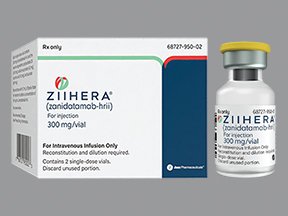 ZIIHERA 300 MG VIAL
The following indications for ZIIHERA (zanidatamab-hrii) have been approved by the FDA:
Indications:
HER2-positive biliary tract malignancy
Professional Synonyms:
None.
Indications:
HER2-positive biliary tract malignancy
Professional Synonyms:
None.
The following dosing information is available for ZIIHERA (zanidatamab-hrii):
If adverse events occur during zanidatamab-hrii therapy, temporary interruption of therapy, dosage reduction, and/or discontinuance of the drug may be necessary. In general, if dosage reduction is necessary, the recommended dosage is 15 mg/kg. If a dosage of 15 mg/kg is not tolerated, zanidatamab-hrii should be permanently discontinued.
Administer zanidatamab-hrii via IV infusion in a dedicated line with a low protein-binding 0.2-micron in-line filter. Do not administer via rapid IV bolus injection.
Zanidatamab-hrii is available as a 300-mg single-dose vial of preservative-free lyophilized powder that must be reconstituted and diluted prior to IV infusion. Do not administer in the same IV line with other medications. Store vials of zanidatamab-hrii refrigerated at 2-8degreesC in original carton.
Do not freeze. Zanidatamab-hrii is compatible with 0.9% sodium chloride injection and 5% dextrose injection.
Zanidatamab-hrii is available as a 300-mg single-dose vial of preservative-free lyophilized powder that must be reconstituted and diluted prior to IV infusion. Do not administer in the same IV line with other medications. Store vials of zanidatamab-hrii refrigerated at 2-8degreesC in original carton.
Do not freeze. Zanidatamab-hrii is compatible with 0.9% sodium chloride injection and 5% dextrose injection.
| DRUG LABEL | DOSING TYPE | DOSING INSTRUCTIONS |
|---|---|---|
| ZIIHERA 300 MG VIAL | Maintenance | Adults infuse 20 mg/kg by intravenous route every 2 weeks |
No generic dosing information available.
The following drug interaction information is available for ZIIHERA (zanidatamab-hrii):
There are 0 contraindications.
There are 2 severe interactions.
These drug interactions can produce serious consequences in most patients. Actions required for severe interactions include, but are not limited to, discontinuing one or both agents, adjusting dosage, altering administration scheduling, and providing additional patient monitoring. Review the full interaction monograph for more information.
| Drug Interaction | Drug Names |
|---|---|
| IgG Antibodies and Derivatives/Efgartigimod-alfa SEVERITY LEVEL: 2-Severe Interaction: Action is required to reduce the risk of severe adverse interaction. MECHANISM OF ACTION: The neonatal Fc receptor (FcRn) prevents catabolism and mediates recycling of IgG and albumin, which leads to their long persistence in the body.(1,2) Efgartigimod-alfa binds to FcRn and may decrease systemic exposure of other ligands of FcRn, like immunoglobulins and IgG-based antibodies.(3) CLINICAL EFFECTS: The effectiveness of medicines that bind to FcRn may be decreased.(3) PREDISPOSING FACTORS: None determined. PATIENT MANAGEMENT: The manufacturer of efgartigimod-alfa states that efgartigimod-alfa should not be combined with long-term use of FcRn-binding medications. If the medication is essential for the patient, efgartigimod-alfa should be discontinued.(3) DISCUSSION: Clinical drug interaction studies with efgartigimod-alfa have not been performed. Efgartigimod-alfa may decrease concentrations of compounds that bind to the human FcRn.(3) |
VYVGART, VYVGART HYTRULO |
| IgG Antibodies and Derivatives/Nipocalimab-aahu SEVERITY LEVEL: 2-Severe Interaction: Action is required to reduce the risk of severe adverse interaction. MECHANISM OF ACTION: The neonatal Fc receptor (FcRn) prevents catabolism and mediates recycling of IgG and albumin, which leads to their long persistence in the body.(1,2) Nipocalimab-aahu binds to FcRn and may decrease systemic exposure of other ligands of FcRn, like immunoglobulins and IgG-based antibodies.(3) CLINICAL EFFECTS: The effectiveness of medicines that bind to FcRn may be decreased.(3) PREDISPOSING FACTORS: None determined. PATIENT MANAGEMENT: The manufacturer of nipocalimab-aahu states that nipocalimab-aahu should not be combined with long-term use of FcRn-binding medications. If the medication is essential for the patient, nipocalimab-aahu should be discontinued.(3) DISCUSSION: Clinical drug interaction studies with nipocalimab-aahu have not been performed. Nipocalimab-aahu may decrease concentrations of compounds that bind to the human FcRn.(3) |
IMAAVY |
There are 1 moderate interactions.
The clinician should assess the patient’s characteristics and take action as needed. Actions required for moderate interactions include, but are not limited to, discontinuing one or both agents, adjusting dosage, altering administration.
| Drug Interaction | Drug Names |
|---|---|
| IgG Antibodies and Derivatives/Rozanolixizumab-noli SEVERITY LEVEL: 3-Moderate Interaction: Assess the risk to the patient and take action as needed. MECHANISM OF ACTION: The neonatal Fc receptor (FcRn) prevents catabolism and mediates recycling of IgG and albumin, which leads to their long persistence in the body.(1,2) Rozanolixizumab-noli binds to FcRn and may decrease systemic exposure of other ligands of FcRn, like immunoglobulins and IgG-based antibodies.(3) CLINICAL EFFECTS: The effectiveness of medications that bind to FcRn may be decreased.(3) PREDISPOSING FACTORS: None determined. PATIENT MANAGEMENT: The manufacturer of rozanolixizumab-noli states that concurrent use with medications that bind to the human neonatal Fc receptor (FcRn) should be closely monitored for reduced effectiveness of these medications. If long-term use of such medications is essential for the patient, consider discontinuing rozanolixizumab-noli and use alternative therapies.(3) DISCUSSION: Clinical drug interaction studies with rozanolixizumab-noli have not been performed. Rozanolixizumab-noli may decrease concentrations of compounds that bind to the human FcRn.(3) |
RYSTIGGO |
The following contraindication information is available for ZIIHERA (zanidatamab-hrii):
Drug contraindication overview.
*None.
*None.
There are 0 contraindications.
There are 2 severe contraindications.
Adequate patient monitoring is recommended for safer drug use.
| Severe List |
|---|
| Chronic heart failure |
| Pregnancy |
There are 0 moderate contraindications.
The following adverse reaction information is available for ZIIHERA (zanidatamab-hrii):
Adverse reaction overview.
The most common adverse reactions (incidence >=20%) reported with zanidatamab-hrii in clinical studies were diarrhea, infusion-related reaction, abdominal pain, and fatigue.
The most common adverse reactions (incidence >=20%) reported with zanidatamab-hrii in clinical studies were diarrhea, infusion-related reaction, abdominal pain, and fatigue.
There are 6 severe adverse reactions.
| More Frequent | Less Frequent |
|---|---|
| None. |
Biliary obstruction Biliary tract infection Gastrointestinal obstruction Left ventricular failure Pneumonia Sepsis |
| Rare/Very Rare |
|---|
| None. |
There are 15 less severe adverse reactions.
| More Frequent | Less Frequent |
|---|---|
|
Acute abdominal pain Anemia Anorexia Diarrhea Fatigue Hypoalbuminemia Hypokalemia Hyponatremia Increased alkaline phosphatase Injection site sequelae Lymphopenia Nausea Skin rash Vomiting |
Increased lactate acid dehydrogenase |
| Rare/Very Rare |
|---|
| None. |
The following precautions are available for ZIIHERA (zanidatamab-hrii):
Safety and efficacy of zanidatamab-hrii have not been established in pediatric patients <18 years of age.
Contraindicated
Severe Precaution
Management or Monitoring Precaution
Contraindicated
| None |
Severe Precaution
| None |
Management or Monitoring Precaution
| None |
There are no human or animal data on zanidatamab-hrii use in pregnant women. However, based on its mechanism of action, zanidatamab-hrii can cause fetal harm when administered to a pregnant woman. Oligohydramnios, fatal pulmonary hypoplasia, skeletal abnormalities, and neonatal death have been reported in women receiving an anti-HER2 antibody during pregnancy in postmarketing experience.
Verify the pregnancy status of females of reproductive potential prior to the initiation of zanidatamab-hrii. Advise pregnant women and females of reproductive potential that exposure to zanidatamab-hrii during pregnancy or within 4 months prior to conception can result in fetal harm. Advise females of reproductive potential to use effective contraception while receiving zanidatamab-hrii and for 4 months following the last dose of zanidatamab-hrii.
In women who received zanidatamab during pregnancy or within 4 months prior to conception, monitor for oligohydramnios. If oligohydramnios occurs, perform fetal testing that is appropriate for gestational age and consistent with local standard of care.
Verify the pregnancy status of females of reproductive potential prior to the initiation of zanidatamab-hrii. Advise pregnant women and females of reproductive potential that exposure to zanidatamab-hrii during pregnancy or within 4 months prior to conception can result in fetal harm. Advise females of reproductive potential to use effective contraception while receiving zanidatamab-hrii and for 4 months following the last dose of zanidatamab-hrii.
In women who received zanidatamab during pregnancy or within 4 months prior to conception, monitor for oligohydramnios. If oligohydramnios occurs, perform fetal testing that is appropriate for gestational age and consistent with local standard of care.
It is not known whether zanidatamab-hrii is distributed into human milk. Effects of the drug on breastfed infants or milk production are also not known. However, published data suggest that human IgG is present in human milk but does not enter neonatal or infant circulation in substantial amounts.
Consider the developmental and health benefits of breastfeeding along with the mother's clinical need for zanidatamab-hrii treatment and any potential adverse effects on the breastfed child from zanidatamab-hrii or the underlying maternal condition. The half-life of zanidatamab-hrii of approximately 21 days, and the washout period of 4 months should also be taken into consideration.
Consider the developmental and health benefits of breastfeeding along with the mother's clinical need for zanidatamab-hrii treatment and any potential adverse effects on the breastfed child from zanidatamab-hrii or the underlying maternal condition. The half-life of zanidatamab-hrii of approximately 21 days, and the washout period of 4 months should also be taken into consideration.
In clinical studies, 49% of 80 patients were >=65 years of age; 3% were >=75 years of age. No overall differences in safety or efficacy were observed between geriatric patients (>=65 years of age) and younger adults (<65 years of age).
The following prioritized warning is available for ZIIHERA (zanidatamab-hrii):
WARNING: Zanidatamab can cause serious (possibly fatal) harm to an unborn baby if used during pregnancy. Discuss the use of reliable forms of birth control with your doctor.
WARNING: Zanidatamab can cause serious (possibly fatal) harm to an unborn baby if used during pregnancy. Discuss the use of reliable forms of birth control with your doctor.
The following icd codes are available for ZIIHERA (zanidatamab-hrii)'s list of indications:
| HEr2-positive biliary tract malignancy | |
| C22.1 | Intrahepatic bile duct carcinoma |
| C23 | Malignant neoplasm of gallbladder |
| C24 | Malignant neoplasm of other and unspecified parts of biliary tract |
| C24.0 | Malignant neoplasm of extrahepatic bile duct |
| C24.1 | Malignant neoplasm of ampulla of vater |
| C24.8 | Malignant neoplasm of overlapping sites of biliary tract |
| C24.9 | Malignant neoplasm of biliary tract, unspecified |
Formulary Reference Tool