Please wait while the formulary information is being retrieved.
Drug overview for ORLYNVAH (sulopenem etzadroxil/probenecid):
Generic name: SULOPENEM ETZADROXIL/PROBENECID (SUL-oh-PEN-em/proe-BEN-e-sid)
Drug class: Beta-Lactams
Therapeutic class: Anti-Infective Agents
Sulopenem etzadroxil and probenecid (sulopenem etzadroxil/probenecid) is a fixed combination of sulopenem etzadroxil (a penem antibacterial) and probenecid (a renal tubular transport inhibitor).
No enhanced Uses information available for this drug.
Generic name: SULOPENEM ETZADROXIL/PROBENECID (SUL-oh-PEN-em/proe-BEN-e-sid)
Drug class: Beta-Lactams
Therapeutic class: Anti-Infective Agents
Sulopenem etzadroxil and probenecid (sulopenem etzadroxil/probenecid) is a fixed combination of sulopenem etzadroxil (a penem antibacterial) and probenecid (a renal tubular transport inhibitor).
No enhanced Uses information available for this drug.
DRUG IMAGES
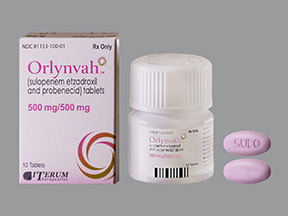 ORLYNVAH 500-500 MG TABLET
The following indications for ORLYNVAH (sulopenem etzadroxil/probenecid) have been approved by the FDA:
Indications:
E. coli urinary tract infection
Klebsiella urinary tract infection
Proteus urinary tract infection
Professional Synonyms:
E. coli UTI
Klebsiella UTI
Urinary tract infection due to Escherichia coli
Urinary tract infection due to Klebsiella species
Urinary tract infection due to Proteus species
UTI due to Proteus species
Indications:
E. coli urinary tract infection
Klebsiella urinary tract infection
Proteus urinary tract infection
Professional Synonyms:
E. coli UTI
Klebsiella UTI
Urinary tract infection due to Escherichia coli
Urinary tract infection due to Klebsiella species
Urinary tract infection due to Proteus species
UTI due to Proteus species
The following dosing information is available for ORLYNVAH (sulopenem etzadroxil/probenecid):
*The recommended dosage is one tablet (sulopenem etzadroxil 500 mg and probenecid 500 mg) orally twice daily for 5 days.
*Administration of sulopenem etzadroxil/probenecid with food is recommended.
*Administration of sulopenem etzadroxil/probenecid is not recommended in patients with creatinine clearance (CrCL) less than 15 mL/min or patients on hemodialysis. No dosage adjustment is required for patients with CrCL greater than or equal to15 mL/min.
*If a dose of sulopenem etzadroxil/probenecid is missed, instruct patients to take the dose as soon as possible. Do not double the dose to make up for the missed dose.
*Administration of sulopenem etzadroxil/probenecid with food is recommended.
*Administration of sulopenem etzadroxil/probenecid is not recommended in patients with creatinine clearance (CrCL) less than 15 mL/min or patients on hemodialysis. No dosage adjustment is required for patients with CrCL greater than or equal to15 mL/min.
*If a dose of sulopenem etzadroxil/probenecid is missed, instruct patients to take the dose as soon as possible. Do not double the dose to make up for the missed dose.
No enhanced Administration information available for this drug.
| DRUG LABEL | DOSING TYPE | DOSING INSTRUCTIONS |
|---|---|---|
| ORLYNVAH 500-500 MG TABLET | Maintenance | Adults take 1 tablet by oral route 2 times per day for 5 days |
No generic dosing information available.
The following drug interaction information is available for ORLYNVAH (sulopenem etzadroxil/probenecid):
There are 2 contraindications.
These drug combinations generally should not be dispensed or administered to the same patient. A manufacturer label warning that indicates the contraindication warrants inclusion of a drug combination in this category, regardless of clinical evidence or lack of clinical evidence to support the contraindication.
| Drug Interaction | Drug Names |
|---|---|
| Ketorolac/OAT3 Inhibitors SEVERITY LEVEL: 1-Contraindicated Drug Combination: This drug combination is contraindicated and generally should not be dispensed or administered to the same patient. MECHANISM OF ACTION: Inhibitors of organic anion transporter 3 (OAT3) may inhibit the renal clearance of ketorolac. CLINICAL EFFECTS: Enhanced ketorolac toxicity including gastrointestinal and renal toxicity as well as increased risk of bleeding. PREDISPOSING FACTORS: The risk for bleeding episodes may be greater in patients with disease-associated factors (e.g. thrombocytopenia). Drug associated risk factors include concurrent use of multiple drugs which inhibit anticoagulant/antiplatelet metabolism and/or have an inherent risk for bleeding (e.g. NSAIDs). PATIENT MANAGEMENT: Concomitant administration of ketorolac and organic anion transporter 3 (OAT3) inhibitors are contraindicated by the manufacturer. If concurrent therapy is deemed medically necessary, monitor patients receiving concurrent therapy for signs of blood loss, including decreased hemoglobin, hematocrit, fecal occult blood, and/or decreased blood pressure and promptly evaluate patients with any symptoms. When applicable, perform agent-specific laboratory test (e.g. INR, aPTT) to monitor efficacy and safety of anticoagulation. Discontinue anticoagulation in patients with active pathologic bleeding. Instruct patients to report any signs and symptoms of bleeding, such as unusual bleeding from the gums or nose; unusual bruising; red or black, tarry stools; red, pink or dark brown urine; acute abdominal or joint pain and/or swelling. DISCUSSION: Probenecid has been reported to increase serum concentrations and toxicity of nonsteroidal anti-inflammatory drugs (e.g., indomethacin, ketoprofen, naproxen).(1-3) Based upon material from the manufacturer of ketorolac, concurrent administration of probenecid and ketorolac also increases serum concentrations of the NSAID ketorolac and produces a 2-fold increase in the half-life of ketorolac and a 3-fold increase in the area under the plasma concentration-time curve.(4) Ketorolac is a potent NSAID analgesic and increasing the serum concentrations may increase the risk of occurrence of serious renal, GI and hematologic side effects. OAT3 inhibitors linked to this monograph include: cabotegravir, leflunomide, nitisinone, probenecid, teriflunomide, and vadadustat.(5) |
BUPIVACAINE-KETOROLAC-KETAMINE, KETOROLAC TROMETHAMINE, R.E.C.K.(ROPIV-EPI-CLON-KETOR), ROPIVACAINE-CLONIDINE-KETOROLC, ROPIVACAINE-KETOROLAC-KETAMINE, SPRIX, TORONOVA II SUIK, TORONOVA SUIK |
| Irinotecan/UGT1A1 Inhibitors SEVERITY LEVEL: 1-Contraindicated Drug Combination: This drug combination is contraindicated and generally should not be dispensed or administered to the same patient. MECHANISM OF ACTION: Inhibitors of UGT1A1 may inhibit the metabolism of SN-38, the active metabolite of irinotecan.(1) Atazanavir may inhibit the metabolism of irinotecan by UGT1A1.(1,2) This increases the system exposure to SN-38, the active metabolite of irinotecan.(3) CLINICAL EFFECTS: Concurrent use of UGT1A1 inhibitors may result in increased exposure to and toxicity from irinotecan.(1) PREDISPOSING FACTORS: None determined. PATIENT MANAGEMENT: The US manufacturer of irinotecan states do not administer UGT1A1 inhibitors with irinotecan unless there are no therapeutic alternatives. The increased exposure to the active metabolite should be taken into consideration when co-administering these agents.(1) The US manufacturer of atazanavir states that concurrent use of irinotecan is contraindicated.(2) The Australian manufacturer of atazanavir states that irinotecan should not be administered with atazanavir.(3) DISCUSSION: Because atazanavir inhibits UGT1A1 at therapeutic concentrations, it is expected to interfere with the metabolism of irinotecan. Therefore, the manufacturer of atazanavir states that irinotecan should not be administered with atazanavir.(1,2) UGT1A1 inhibitors linked to this monograph include: atazanavir, capivasertib, belumosudil, erlotinib, gemfibrozil, lapatinib, nilotinib, pazopanib, probenecid, regorafenib, and sorafenib. One or more of the drug pairs linked to this monograph have been included in a list of interactions that should be considered "high-priority" for inclusion and should not be inactivated in EHR systems. This DDI subset was vetted by an expert panel commissioned by the U.S. Office of the National Coordinator (ONC) for Health Information Technology. |
CAMPTOSAR, IRINOTECAN HCL, ONIVYDE |
There are 12 severe interactions.
These drug interactions can produce serious consequences in most patients. Actions required for severe interactions include, but are not limited to, discontinuing one or both agents, adjusting dosage, altering administration scheduling, and providing additional patient monitoring. Review the full interaction monograph for more information.
| Drug Interaction | Drug Names |
|---|---|
| Doripenem; Meropenem/OAT3 Inhibitors SEVERITY LEVEL: 2-Severe Interaction: Action is required to reduce the risk of severe adverse interaction. MECHANISM OF ACTION: Inhibitors of organic anion transporter 3 (OAT3) may inhibit the renal excretion of doripenem (1) and meropenem(2) by competing with them for active tubular secretion. CLINICAL EFFECTS: Concurrent use of organic anion transporter 3 (OAT3) inhibitors may result in elevated levels of and toxicity from doripenem(1) or meropenem.(2) PREDISPOSING FACTORS: None determined. PATIENT MANAGEMENT: The US manufacturer of doripenem states that concurrent use of organic anion transporter 3 (OAT3) inhibitors is not recommended.(1) The US manufacturer of meropenem states that concurrent use of OAT3 inhibitors is not recommended.(2) DISCUSSION: Probenecid has been shown to increase doripenem half-life (T1/2) and area-under-curve (AUC) by 53% and 75%, respectively.(1) In a study in six subjects, concurrent probenecid increased meropenem T1/2 by 33%.(3) Other studies have shown probenecid to increase the T1/2 of meropenem by 38% and the extent of meropenem systemic exposure by 58%.(2) OAT3 inhibitors linked to this monograph include: cabotegravir, leflunomide, nitisinone, probenecid, teriflunomide, and vadadustat.(4) |
MEROPENEM, MEROPENEM-0.9% NACL, VABOMERE |
| Belinostat/UGT1A1 Inhibitors SEVERITY LEVEL: 2-Severe Interaction: Action is required to reduce the risk of severe adverse interaction. MECHANISM OF ACTION: Inhibitors of UGT1A1 may inhibit the metabolism of belinostat.(1) CLINICAL EFFECTS: Concurrent use of UGT1A1 inhibitor may result in increased exposure to and toxicity from belinostat. Toxicities from belinostat include thrombocytopenia, neutropenia, anemia, infections, hepatotoxicity, and gastrointestinal toxicity.(1) PREDISPOSING FACTORS: None determined. PATIENT MANAGEMENT: Avoid the use of UGT1A1 inhibitors in patients receiving belinostat. If concurrent use cannot be avoided, a dose reduction by 25% is recommended as follows: -If starting dose is 1,000 mg/m2 - reduce dose to 750 mg/m2 -If starting dose is 750 mg/m2 - reduce dose to 562.5 mg/m2 -If starting dose is 500 mg/m2 - interrupt belinostat treatment for the duration of the UGT1A1 inhibitor. After discontinuation of the UGT1A1 inhibitor for 5 half-lives, resume belinostat at the dosage that was taken prior to the UGT1A1 inhibitor.(1) If concurrent use is required, the dose of belinostat may need to be reduced in response to dose-limiting toxicities. The manufacturer of belinostat recommends a 25% dose reduction (to 750 mg/m2) in patients who are homozygous for the UGT1A1*28 allele.(1) DISCUSSION: Belinostat is primarily metabolized by UGT1A1 and inhibitors of UGT1A1 are expected to increase belinostat levels and dose limiting toxicities.(1) In a PKPB model, belinostat half-life increased by 1.5-fold, area-under-curve (AUC) increased by 1.4-fold, concentration maximum (Cmax) decreased by 33%, and renal excretion increased by 2.5-fold following administration with atazanavir (UGT1A1 inhibitor).(1) UGT1A1 inhibitors linked include: atazanavir, belumosudil, capivasertib, erlotinib, gemfibrozil, indinavir, ketoconazole, lapatinib, nilotinib, pazopanib, probenecid, regorafenib, and sorafenib. |
BELEODAQ |
| Baricitinib/OAT3 Inhibitors SEVERITY LEVEL: 2-Severe Interaction: Action is required to reduce the risk of severe adverse interaction. MECHANISM OF ACTION: Inhibitors of organic anion transporter 3 (OAT3) may inhibit the renal elimination of baricitinib.(1,2) CLINICAL EFFECTS: Concurrent use of organic anion transporter 3 (OAT3) inhibitors may result in an increase in both the therapeutic and toxic effects of baricitinib.(1,2) PREDISPOSING FACTORS: None determined. PATIENT MANAGEMENT: If concurrent therapy with a strong organic anion transporter 3 (OAT3) inhibitor is warranted, and the recommended dosage is 4 mg once daily, reduce to 2 mg once daily. If the recommended dosage is 2 mg once daily, reduce dose to 1 mg once daily. If the recommended dosage is 1 mg once daily, consider discontinuing probenecid.(2) OAT3 inhibitors with less inhibitor potency are not expected to cause a clinically significant change in baricitinib levels.(1,2) DISCUSSION: In a clinical pharmacology study, dosing of probenecid (an OAT3 inhibitor with strong inhibition potential) resulted in approximately a 2-fold increase in area-under-curve (AUC) with no change in time maximum (Tmax) or concentration maximum (Cmax) of baricitinib.(1,2) OAT3 inhibitors linked to this monograph include: cabotegravir, nitisinone, probenecid and vadadustat.(1-3) |
OLUMIANT |
| Sacituzumab Govitecan/UGT1A1 Inhibitors SEVERITY LEVEL: 2-Severe Interaction: Action is required to reduce the risk of severe adverse interaction. MECHANISM OF ACTION: Inhibitors of UGT1A1 may inhibit the metabolism of SN-38, the topoisomerase inhibitor which is the antineoplastic component of sacituzumab govitecan.(1) CLINICAL EFFECTS: Concurrent use of UGT1A1 inhibitors may result in increased exposure to and toxicity from sacituzumab govitecan. Toxicities from sacituzumab govitecan include neutropenia, severe diarrhea, nausea, and vomiting.(1) PREDISPOSING FACTORS: None determined. PATIENT MANAGEMENT: Avoid the use of inhibitors of UGT1A1 in patients receiving sacituzumab govitecan.(1) DISCUSSION: SN-38, the small molecule moiety of sacituzumab govitecan, is metabolized by UGT1A1, and inhibitors of UGT1A1 are expected to increase SN-38 levels and dose limiting toxicities.(1) In a clinical trial, patients homozygous for decreased function UGT1A1*28 allele had a 26% incidence of Grade 4 neutropenia, compared to 13% of patients heterozygous for the UGT1A1*28 allele and 11% of patients homozygous for the wild type allele.(1) Coadministration of ketoconazole (a CYP3A4 and UGT1A1 inhibitor) with irinotecan, has been reported to result in increased exposure to SN-38, an active metabolite of irinotecan.(2) UGT1A1 inhibitors linked to this monograph include: atazanavir, belumosudil, capivasertib, erlotinib, gemfibrozil, indinavir, ketoconazole, lapatinib, nilotinib, pazopanib, probenecid, regorafenib, and sorafenib. |
TRODELVY |
| Lorazepam Extended Release/UGT Inhibitors SEVERITY LEVEL: 2-Severe Interaction: Action is required to reduce the risk of severe adverse interaction. MECHANISM OF ACTION: Inhibitors of UDP-glucuronosyltransferases (UGT) may inhibit the metabolism of lorazepam.(1) CLINICAL EFFECTS: Concurrent use of UGT inhibitors may result in increased exposure to and toxicity from lorazepam, including profound sedation, respiratory depression, and coma.(1) PREDISPOSING FACTORS: None determined. PATIENT MANAGEMENT: The US manufacturer of lorazepam extended release capsules states the initiating a UGT inhibitor during therapy with lorazepam extended release capsules should be avoided. If a UGT inhibitor is initiated, discontinue lorazepam extended release capsules and switch patient to a reduced dose of lorazepam tablets during concurrent therapy.(1) DISCUSSION: In a study in 8 healthy males, pretreatment with valproate (250 mg twice daily for 3 days) decreased the total clearance of a single dose of lorazepam (2 mg intravenously) by 40% in 6 subjects. The formation rate of lorazepam glucuronide was decreased by 55% in these subjects. Lorazepam concentrations were about 2-fold higher for at least 12 hours post-dose during concurrent valproate.(2,4) In a randomized, double-blind, placebo-controlled study in 16 healthy males, concurrent divalproex (500 mg every 12 hours for 12 days) increased the area-under-curve (AUC), maximum concentration (Cmax), and minimum concentration (Cmin) of lorazepam (1 mg every 12 hours, Days 6-10) by 20%, 8%, and 31%, respectively. Lorazepam clearance was decreased by 31% during concurrent divalproex.(5) There is one case report of coma following the injection of 6 mg of lorazepam over 24 hours in a patient maintained on valproate (1000 mg). The patient remained in a coma for between 48 and 72 hours.(6) In a study in 9 healthy subjects, pretreatment with probenecid (500 mg every 6 hours) increased the half-life (T1/2) of a single intravenous dose of lorazepam (2 mg) by 130%. Lorazepam clearance was decreased by 45%. There was no change in lorazepam apparent volume of distribution.(2,7) UGT inhibitors linked to this monograph include: atazanavir, belumosudil, capivasertib, erlotinib, gemfibrozil, indinavir, ketoconazole, lapatinib, mefenamic acid, nilotinib, pazopanib, probenecid, regorafenib, sorafenib, and valproic acid. |
LOREEV XR |
| Pexidartinib/UGT1A4 Inhibitors SEVERITY LEVEL: 2-Severe Interaction: Action is required to reduce the risk of severe adverse interaction. MECHANISM OF ACTION: Inhibitors of UGT1A4 may inhibit the metabolism of pexidartinib.(1) CLINICAL EFFECTS: Concurrent use of a inhibitors of UGT1A4 may result in elevated levels and increased effects of pexidartinib, such as hepatotoxicity.(1,2) Symptoms can include nausea, vomiting, jaundice, dark urine, abdominal pain, and unexplained fatigue. PREDISPOSING FACTORS: None determined. PATIENT MANAGEMENT: The US manufacturer of pexidartinib states that pexidartinib coadministration with inhibitors of UGT1A4 should be avoided.(1) If coadministration with a UGT1A4 inhibitor cannot be avoided, reduce the pexidartinib dose according to the following recommendations. If the planned total daily dose is currently 500 mg, modify the total daily dose to 250 mg by administering 125 mg twice daily. If the planned total daily dose is currently 375 mg, modify the total daily dose to 250 mg by administering 125 mg twice daily. If the planned total daily dose is currently 250 mg, modify the total daily dose to 125 mg by administering 125 mg once daily. If concomitant use of a UGT1A4 inhibitor is discontinued, increase the pexidartinib dose to the dose that was used before starting the inhibitor after three plasma half-lives of the UGT1A4 inhibitor. Monitor liver tests, including AST, ALT, total bilirubin, direct bilirubin, ALP and gamma-glutamyltransferase (GGT) according to the recommendations in the Turalio package insert. Advise patients to immediately report any symptoms of hepatotoxicity. DISCUSSION: Coadministration of probenecid (UGT1A4 inhibitor) increased pexidartinib maximum concentration (Cmax) and area-under-the-curve (AUC) by 5% and 60%.(1) Inhibitors of UGT1A4 linked to this monograph include: probenecid.(1,2) |
TURALIO |
| Fecal Microbiota Spores/Antibiotics SEVERITY LEVEL: 2-Severe Interaction: Action is required to reduce the risk of severe adverse interaction. MECHANISM OF ACTION: Fecal microbiota spores is a suspension of live bacterial spores, which may be compromised by concurrent use of antibiotics.(1) CLINICAL EFFECTS: Antibiotics may decrease the effectiveness of fecal microbiota spores.(1) PREDISPOSING FACTORS: None determined. PATIENT MANAGEMENT: Antibiotics should not be used concurrently with fecal microbiota spores. Antibacterial treatment should be completed for 2 to 4 days before initiating treatment with fecal microbiota spores.(1) DISCUSSION: Antibiotics may compromise the effectiveness of fecal microbiota spores. |
VOWST |
| Methotrexate(Oncology-Inj)/OAT3 Inhibitors SEVERITY LEVEL: 2-Severe Interaction: Action is required to reduce the risk of severe adverse interaction. MECHANISM OF ACTION: Inhibitors of organic anion transporter 3 (OAT3) may inhibit the renal elimination of methotrexate. CLINICAL EFFECTS: Concurrent use of organic anion transporter 3 (OAT3) inhibitors may result in an increase in both the therapeutic and toxic effects of methotrexate, leading to increased risk of severe neurotoxicity, stomatitis, and myelosuppression, including neutropenia. PREDISPOSING FACTORS: Risk factors for methotrexate toxicity include: - High-dose oncology regimens - Impaired renal function, ascites, or pleural effusions PATIENT MANAGEMENT: If coadministration cannot be avoided, monitor closely for methotrexate adverse reactions. DISCUSSION: Concomitant administration of methotrexate and probenecid has been shown to increase methotrexate plasma levels two to four times higher than when methotrexate is administered alone.(2-5) OAT3 inhibitors linked to this monograph include: cabotegravir, nitisinone, probenecid and vadadustat.(7) |
METHOTREXATE, METHOTREXATE SODIUM, METHOTREXATE-NACL |
| Seladelpar/Probenecid SEVERITY LEVEL: 2-Severe Interaction: Action is required to reduce the risk of severe adverse interaction. MECHANISM OF ACTION: Probenecid may inhibit the renal elimination of seladelpar.(1,2) CLINICAL EFFECTS: Concurrent use of probenecid may result in an increase in both the therapeutic and toxic effects of seladelpar, such as hepatotoxicity.(1) Symptoms can include nausea, vomiting, jaundice, dark urine, abdominal pain, and unexplained fatigue. PREDISPOSING FACTORS: None determined. PATIENT MANAGEMENT: The manufacturer of seladelpar states that concurrent administration of seladelpar with probenecid should be avoided.(1) DISCUSSION: In a study in healthy subjects, concurrent administration of seladelpar (single 10 mg dose) with probenecid (500 mg) resulted in approximately a 2-fold increase in area-under-curve (AUC) and a 4.69-fold increase in concentration maximum (Cmax) of seladelpar.(1) |
LIVDELZI |
| Pralatrexate/Probenecid SEVERITY LEVEL: 2-Severe Interaction: Action is required to reduce the risk of severe adverse interaction. MECHANISM OF ACTION: Inhibitors of multidrug resistance-associated protein 2 (MRP2) such as probenecid may inhibit the renal elimination of pralatrexate.(1) CLINICAL EFFECTS: Concurrent use of probenecid with pralatrexate may result in an increase in both the therapeutic and toxic effects of pralatrexate, leading to increased risk of severe neurotoxicity, stomatitis, and myelosuppression, including neutropenia. PREDISPOSING FACTORS: Patients with severe renal impairment (eGFR 15 to < 30 mL/min/1.73 m2) may be at greater risk for increased exposure and adverse reactions. PATIENT MANAGEMENT: Administration of probenecid with pralatrexate should be avoided.(1) If coadministration is unavoidable, monitor for increased risk of adverse reactions. DISCUSSION: Concurrent administration of probenecid resulted in delayed clearance of pralatrexate and increased pralatrexate exposure.(1) |
FOLOTYN, PRALATREXATE |
| Fecal Microbiota/Antibiotics SEVERITY LEVEL: 2-Severe Interaction: Action is required to reduce the risk of severe adverse interaction. MECHANISM OF ACTION: Fecal microbiota is a suspension of live bacteria, which may be compromised by concurrent use of antibiotics.(1) CLINICAL EFFECTS: Antibiotics may decrease the effectiveness of fecal microbiota.(1) PREDISPOSING FACTORS: None determined. PATIENT MANAGEMENT: Antibiotics should not be used concurrently with fecal microbiota. Antibacterial treatment should be completed for 24 to 72 hours before initiating treatment with fecal microbiota. Do not use antibiotics for up to 8 weeks after fecal microbiota.(1) DISCUSSION: Antibiotics may compromise the effectiveness of fecal microbiota. |
REBYOTA |
| Pemetrexed/OAT3 Inhibitors SEVERITY LEVEL: 2-Severe Interaction: Action is required to reduce the risk of severe adverse interaction. MECHANISM OF ACTION: Inhibitors of organic anion transporter 3 (OAT3) may inhibit the renal elimination of pemetrexed. CLINICAL EFFECTS: Concurrent use of organic anion transporter 3 (OAT3) inhibitors may result in an increase in both the therapeutic and toxic effects of pemetrexed, including myelosuppression, neutropenia, renal toxicity, and gastrointestinal toxicity. PREDISPOSING FACTORS: This interaction is expected to be more severe in patients with mild to moderate renal function insufficiency (creatinine clearance (CrCl) of 45 ml/min to 79 ml/min). PATIENT MANAGEMENT: Avoid concomitant administration of OAT3 inhibitors before and after administration of pemetrexed when possible. If concomitant administration cannot be avoided, monitor patients more frequently for myelosuppression, renal, and gastrointestinal toxicity. DISCUSSION: In patients with normal renal function, ibuprofen (400 mg 4 times daily) decreased the clearance of pemetrexed by 20% and increased its area-under-curve (AUC) by 20%.(1) In two randomized, controlled cross-over trials, 27 cancer patients with a creatinine clearance (CrCl) less than or equal to 60 ml/min received pemetrexed (500 mg/m2) infusion on Day 1 of a 21-day cycle and either aspirin 325 mg or ibuprofen 400 mg orally every 6 hours starting 2 days before pemetrexed administration. Ibuprofen decreased the clearance of pemetrexed by 16%, increased its maximum concentration (Cmax) by 15%, and increased the AUC by 20%.(2) OAT3 inhibitors linked to this monograph include: cabotegravir, nitisinone, probenecid, and vadadustat.(3) |
AXTLE, PEMETREXED, PEMETREXED DISODIUM, PEMFEXY, PEMRYDI RTU |
There are 8 moderate interactions.
The clinician should assess the patient’s characteristics and take action as needed. Actions required for moderate interactions include, but are not limited to, discontinuing one or both agents, adjusting dosage, altering administration.
| Drug Interaction | Drug Names |
|---|---|
| Methotrexate (low strength inj, oral)/OAT3 Inhibitors SEVERITY LEVEL: 3-Moderate Interaction: Assess the risk to the patient and take action as needed. MECHANISM OF ACTION: Inhibitors of organic anion transporter 3 (OAT3) may inhibit the renal elimination of methotrexate. CLINICAL EFFECTS: Concurrent use of organic anion transporter 3 (OAT3) inhibitors may result in an increase in both the therapeutic and toxic effects of methotrexate, leading to increased risk of severe neurotoxicity, stomatitis, and myelosuppression, including neutropenia. PREDISPOSING FACTORS: Risk factors for methotrexate toxicity include: - High-dose oncology regimens - Impaired renal function, ascites, or pleural effusions PATIENT MANAGEMENT: If concurrent use cannot be avoided, monitor methotrexate blood levels closely and adjust the dose accordingly. DISCUSSION: Concomitant administration of methotrexate and probenecid has been shown to increase methotrexate plasma levels two to four times higher than when methotrexate is administered alone. OAT3 inhibitors linked to this monograph include: cabotegravir, nitisinone, probenecid and vadadustat.(7) |
METHOTREXATE, RASUVO, TREXALL, XATMEP |
| Uricosurics/Aspirin (Greater Than 100 mg); Salicylates SEVERITY LEVEL: 3-Moderate Interaction: Assess the risk to the patient and take action as needed. MECHANISM OF ACTION: Not clearly established. Protein binding displacement is a possibility. CLINICAL EFFECTS: May observe hyperuricemia and gout resulting from reduced uricosuric response. PREDISPOSING FACTORS: None determined. PATIENT MANAGEMENT: Avoid chronic, moderate to high doses of salicylates. DISCUSSION: This interaction is well documented. Occasional small doses of salicylates do not appear to inhibit the action of uricosurics. |
ACETYL SALICYLIC ACID, ASA-BUTALB-CAFFEINE-CODEINE, ASCOMP WITH CODEINE, ASPIRIN, BALSALAZIDE DISODIUM, BISMUTH SUBSALICYLATE, BUTALBITAL-ASPIRIN-CAFFEINE, CARISOPRODOL-ASPIRIN, CARISOPRODOL-ASPIRIN-CODEINE, CHOLINE MAGNESIUM TRISALICYLAT, COLAZAL, DURLAZA, MB CAPS, NORGESIC, NORGESIC FORTE, ORPHENADRINE-ASPIRIN-CAFFEINE, ORPHENGESIC FORTE, PHENYL SALICYLATE, SALSALATE, SODIUM SALICYLATE, URELLE, URETRON D-S, URIBEL TABS, URIMAR-T, URNEVA, URO-MP, URO-SP, YOSPRALA |
| Dyphylline/Probenecid SEVERITY LEVEL: 3-Moderate Interaction: Assess the risk to the patient and take action as needed. MECHANISM OF ACTION: It appears that probenecid reduces the renal excretion rate of dyphylline. CLINICAL EFFECTS: Increased serum levels of dyphylline. PREDISPOSING FACTORS: None determined. PATIENT MANAGEMENT: If both drugs are given, adjust the dyphylline dose as needed based on serum dyphylline levels and patient response. DISCUSSION: Additional documentation is necessary to confirm this potential interaction. Since theophylline is eliminated by hepatic metabolism rather than renal excretion, it is recommended as an alternative to dyphylline when probenecid is given concurrently. However, the benefits of using this combination may outweigh the risks, especially in cases of theophylline intolerance. Professional judgement should be exercised. |
DYPHYLLINE |
| Zidovudine/Probenecid SEVERITY LEVEL: 3-Moderate Interaction: Assess the risk to the patient and take action as needed. MECHANISM OF ACTION: Inhibition of zidovudine metabolism by probenecid. CLINICAL EFFECTS: Increased serum zidovudine levels and cutaneous reactions with systemic symptoms (eg, fever, malaise, myalgia,) have been reported. PREDISPOSING FACTORS: There may be an increased tendency of patients with disorders of the immune system to develop adverse reaction to these drugs. PATIENT MANAGEMENT: Observe patient for unexpected cutaneous reactions. It may be necessary to reduce the dosing frequency of zidovudine if probenecid is administered concurrently. DISCUSSION: Concomitant administration of zidovudine and probenecid may be therapeutically beneficial in reducing the daily dose of zidovudine. However, because of the narrow therapeutic index of zidovudine, the frequent need to treat patients with immune system disorders with various additional drugs, and the known ability of probenecid to inhibit metabolism or renal excretion of many drugs, would make combined zidovudine/probenecid treatment difficult to manage in many of these type of patients. Cutaneous reactions have been reported in many patients receiving zidovudine and probenecid concurrently. |
LAMIVUDINE-ZIDOVUDINE, RETROVIR, ZIDOVUDINE |
| Selected Cephalosporins & Penicillins/Probenecid SEVERITY LEVEL: 3-Moderate Interaction: Assess the risk to the patient and take action as needed. MECHANISM OF ACTION: Probenecid impairs the clearance of some cephalosporins and penicillins via inhibition of renal anion transporters in the proximal tubule.(49) It has also been hypothesized that probenecid may affect tissue distribution of cephalosporins.(1-5) CLINICAL EFFECTS: The concurrent administration of probenecid may result in increased maximum concentration (Cmax), area-under-curve (AUC), and half-life of the cephalosporin or penicillin.(49) While this may improve antibiotic efficacy,(46-48) increased levels may also increase the risk for antibiotic-associated nephrotoxicity.(4) PREDISPOSING FACTORS: Underlying renal dysfunction may increase the risk for nephrotoxicity. PATIENT MANAGEMENT: In patients receiving the combination to improve antibiotic efficacy, monitor for antibiotic adverse effects and consider monitoring renal function. In patients receiving probenecid therapy to prevent or treat hyperuricemia, exposure to the antibiotic will be increased. A decrease in antibiotic dose or frequency may be required. The US manufacturer of piperacillin-tazobactam states probenecid should not be coadministered with piperacillin-tazobactam unless the benefit outweighs the risk.(50) DISCUSSION: Concurrent use of probenecid with a cephalosporin or penicillin may cause an increase in the Cmax, AUC, and an increased elimination half life of the antibiotic.(6-8,49) This may be beneficial or necessary in difficult to treat infections,(46-48) but an increased risk for adverse effects should be expected. Antibiotics not dose adjusted for concurrent use with probenecid may be associated with an increased risk for adverse effects, such as nephrotoxicity. Probenecid administered concurrently with piperacillin-tazobactam prolongs the half-life of piperacillin by 21% and tazobactam by 71%. In a study in 8 healthy males, concurrent administration of probenecid (1 g) with piperacillin (1 g IM) increased piperacillin's Cmax and AUC by 30% and 60%. Renal clearance was reduced by 40%.(51) The cephalosporins affected by probenecid include cefazolin,(9-11) cephacetrile,(12,13) cephaloglycin,(14,15) cephalexin,(16-21) cephradine, (22-23) cefoxitin,(24-28) cefadroxil(29), cefaclor,(23) cefamandole,(30) ceftizoxime,(31,32) cefuroxime,(33,34) cefprozil,(35) cefonicid,(36) cefmetazole,(37) cefmenoxime,(38) and cefditoren.(39) Probenecid has been shown not to affect moxalactam,(4,40,41) ceforanide, (4,42), cefoperazone, ceftazidime(4,34,43) or ceftriaxone.(4) |
AMOXICILLIN, AMOXICILLIN TRIHYDRATE, AMOXICILLIN-CLAVULANATE POT ER, AMOXICILLIN-CLAVULANATE POTASS, AUGMENTIN, AUGMENTIN ES-600, AUGMENTIN XR, BICILLIN C-R, BICILLIN L-A, CEFACLOR, CEFACLOR ER, CEFADROXIL, CEFAZOLIN SODIUM, CEFAZOLIN SODIUM-0.9% NACL, CEFAZOLIN SODIUM-DEXTROSE, CEFAZOLIN SODIUM-STERILE WATER, CEFAZOLIN-D5W, CEFDINIR, CEFEPIME, CEFEPIME HCL, CEFEPIME-DEXTROSE, CEFOTAN, CEFOTAXIME SODIUM, CEFOTETAN, CEFOXITIN, CEFOXITIN SODIUM, CEFPODOXIME PROXETIL, CEFPROZIL, CEFUROXIME, CEFUROXIME SODIUM, CEPHALEXIN, DICLOXACILLIN SODIUM, EXTENCILLINE, LANSOPRAZOL-AMOXICIL-CLARITHRO, LENTOCILIN S, MOXATAG, OMECLAMOX-PAK, PENICILLIN G POTASSIUM, PENICILLIN G SODIUM, PENICILLIN GK-ISO-OSM DEXTROSE, PFIZERPEN, PIPERACILLIN-TAZOBACTAM, PIVYA, TALICIA, VOQUEZNA DUAL PAK, VOQUEZNA TRIPLE PAK, ZOSYN |
| Selected NSAIDs/Probenecid SEVERITY LEVEL: 3-Moderate Interaction: Assess the risk to the patient and take action as needed. MECHANISM OF ACTION: Probenecid may inhibit the renal tubular secretion of some NSAIDs. Probenecid may also prevent biliary clearance of NSAIDs. CLINICAL EFFECTS: The decreased clearance of NSAIDs may lead to increased blood levels and an increase in adverse effects. PREDISPOSING FACTORS: None determined. PATIENT MANAGEMENT: Patients receiving concurrent therapy should be monitored for an increase in NSAID-related adverse effects, including renal insufficiency. The dose of the NSAID may need to be decreased or probenecid may need to be discontinued. DISCUSSION: Probenecid has been reported to increase the blood levels of indomethacin by 2-fold to 6-fold.(1,2) Probenecid has been reported to increase levels of oral ketoprofen by 93%;(3) however, no effect was seen on intramuscular ketoprofen in another study.(4) Probenecid has also been shown to increase naproxen levels.(5) Probenecid has been shown to increase the maximum concentration (Cmax) of tenoxicam. No other pharmacokinetic parameters were affected.(6) This interaction may result in clinical benefits in some patients. |
ANAPROX DS, ARTHROTEC 50, ARTHROTEC 75, CALDOLOR, CAMBIA, CELEBREX, CELECOXIB, COMBOGESIC, COMBOGESIC IV, CONSENSI, DICLOFENAC, DICLOFENAC POTASSIUM, DICLOFENAC SODIUM, DICLOFENAC SODIUM ER, DICLOFENAC SODIUM MICRONIZED, DICLOFENAC SODIUM-MISOPROSTOL, EC-NAPROSYN, ELYXYB, ETODOLAC, ETODOLAC ER, FELDENE, FENOPROFEN CALCIUM, FENOPRON, FLURBIPROFEN, HYDROCODONE-IBUPROFEN, IBU, IBUPAK, IBUPROFEN, IBUPROFEN LYSINE, IBUPROFEN-FAMOTIDINE, INDOCIN, INDOMETHACIN, INDOMETHACIN ER, INFLAMMACIN, INFLATHERM(DICLOFENAC-MENTHOL), KETOPROFEN, KETOPROFEN MICRONIZED, LODINE, LOFENA, LURBIRO, MECLOFENAMATE SODIUM, NABUMETONE, NABUMETONE MICRONIZED, NALFON, NAPRELAN, NAPROSYN, NAPROTIN, NAPROXEN, NAPROXEN SODIUM, NAPROXEN SODIUM CR, NAPROXEN SODIUM ER, NAPROXEN-ESOMEPRAZOLE MAG, NEOPROFEN, ORUDIS, PHENYLBUTAZONE, PIROXICAM, RELAFEN DS, SULINDAC, SUMATRIPTAN SUCC-NAPROXEN SOD, TOLECTIN 600, TOLMETIN SODIUM, TOXICOLOGY SALIVA COLLECTION, TRESNI, TREXIMET, VYSCOXA, ZIPSOR, ZORVOLEX |
| Lorazepam; Mexazolam/UGT Inhibitors SEVERITY LEVEL: 3-Moderate Interaction: Assess the risk to the patient and take action as needed. MECHANISM OF ACTION: Inhibitors of UDP-glucuronosyltransferases (UGT) may inhibit the metabolism of lorazepam.(1-4) One of the active metabolites of mexazolam is lorazepam. CLINICAL EFFECTS: Concurrent use of UGT inhibitors may increase levels of and clinical effects from lorazepam, including profound sedation, respiratory depression, and coma.(1-4) PREDISPOSING FACTORS: None determined. PATIENT MANAGEMENT: The US manufacturers of lorazepam state that the dosage of lorazepam should be reduced by 50% in patients receiving UGT inhibitors.(1,2) DISCUSSION: In a study in 9 healthy subjects, pretreatment with probenecid (500 mg every 6 hours) increased the half-life (T1/2) of a single intravenous dose of lorazepam (2 mg) by 130%. Lorazepam clearance was decreased by 45%. There was no change in lorazepam apparent volume of distribution.(1,4) In 7 patients given probenecid 1G orally one hour prior to induction anesthesia with midazolam, there was no significant change in plasma protein binding due to probenecid pretreatment. The mean free midazolam fractions were 3.31% prior and 3.34% following pretreatment.(5) UGT inhibitors linked to this monograph include: atazanavir, belumosudil, capivasertib, erlotinib, gemfibrozil, indinavir, ketoconazole, lapatinib, mefenamic acid, nilotinib, pazopanib, probenecid, regorafenib, and sorafenib. |
ATIVAN, LORAZEPAM, LORAZEPAM INTENSOL |
| Probenecid/Pyrazinamide SEVERITY LEVEL: 3-Moderate Interaction: Assess the risk to the patient and take action as needed. MECHANISM OF ACTION: Pyrazinamide has been shown to inhibit urate secretion.(1) CLINICAL EFFECTS: May observe hyperuricemia and gout resulting from reduced probenecid response. PREDISPOSING FACTORS: None determined. PATIENT MANAGEMENT: Monitor patients receiving concurrent probenecid and pyrazinamide for signs and symptoms of gout flares. DISCUSSION: In a study in 18 males, pyrazinamide inhibited urate secretion, but had no effect on probenecid secretion.(1) |
PYRAZINAMIDE |
The following contraindication information is available for ORLYNVAH (sulopenem etzadroxil/probenecid):
Drug contraindication overview.
*Patients with a history of hypersensitivity to the components of sulopenem etzadroxil/probenecid or other beta-lactam antibacterial drugs. *Patients with known blood dyscrasias. *Patients with known uric acid kidney stones. *Concomitant use of sulopenem etzadroxil/probenecid and ketorolac tromethamine.
*Patients with a history of hypersensitivity to the components of sulopenem etzadroxil/probenecid or other beta-lactam antibacterial drugs. *Patients with known blood dyscrasias. *Patients with known uric acid kidney stones. *Concomitant use of sulopenem etzadroxil/probenecid and ketorolac tromethamine.
There are 3 contraindications.
Absolute contraindication.
| Contraindication List |
|---|
| Hemolytic anemia from pyruvate kinase and g6PD deficiencies |
| Urate renal calculi |
| Uric acid nephropathy |
There are 1 severe contraindications.
Adequate patient monitoring is recommended for safer drug use.
| Severe List |
|---|
| Clostridioides difficile infection |
There are 1 moderate contraindications.
Clinically significant contraindication, where the condition can be managed or treated before the drug may be given safely.
| Moderate List |
|---|
| Gout |
The following adverse reaction information is available for ORLYNVAH (sulopenem etzadroxil/probenecid):
Adverse reaction overview.
The most common adverse reactions (>=2%) in patients treated with sulopenem etzadroxil/probenecid were diarrhea, nausea, vulvovaginal mycotic infection, headache, and vomiting.
The most common adverse reactions (>=2%) in patients treated with sulopenem etzadroxil/probenecid were diarrhea, nausea, vulvovaginal mycotic infection, headache, and vomiting.
There are 36 severe adverse reactions.
| More Frequent | Less Frequent |
|---|---|
| None. |
Urate renal calculi |
| Rare/Very Rare |
|---|
|
Abdominal distension Abnormal hepatic function tests Acute cognitive impairment Allergic dermatitis Anaphylaxis Anemia Angioedema Aplastic anemia Back pain Candidiasis Chest tightness Drug fever Dyspnea Erythema Fever Hemolytic anemia Hepatic necrosis Hepatomegaly Hypersensitivity drug reaction Hypertension Leukopenia Migraine Myositis Nephrotic syndrome Peripheral edema Presyncope Pruritus of skin Renal colic Rib pain Skin rash Syncope Tachycardia Uric acid nephropathy Urticaria Wheezing |
There are 37 less severe adverse reactions.
| More Frequent | Less Frequent |
|---|---|
|
Acute gouty arthritis Anorexia Diarrhea Headache disorder Nausea Vomiting Vulvovaginal candidiasis |
Acute abdominal pain Dizziness Flushing Gingival pain Increased urinary frequency |
| Rare/Very Rare |
|---|
|
Arthralgia Back pain Bacterial vaginosis Constipation Cough Dizziness Drowsy Dyspepsia Eructation Fatigue Flatulence Flushing Gastroesophageal reflux disease General weakness Loss of taste Malaise Pain Paresthesia Polydipsia Pruritus of skin Skin rash Vaginal discharge Vertigo Vulvovaginal pruritus Xerostomia |
The following precautions are available for ORLYNVAH (sulopenem etzadroxil/probenecid):
The safety and effectiveness of sulopenem etzadroxil/probenecid in pediatric patients have not been established.
Contraindicated
Severe Precaution
Management or Monitoring Precaution
Contraindicated
| None |
Severe Precaution
| None |
Management or Monitoring Precaution
| None |
There are no available data on sulopenem etzadroxil use in pregnant women to evaluate for a drug-associated risk of major birth defects, miscarriage or adverse maternal or fetal outcomes. Sulopenem etzadroxil was orally administered during organogenesis in embryo-fetal studies in mice, rats, and rabbits. In pregnant mice, maternal toxicity and an increased litter incidence of a fetal malformation, cleft palate, was observed with an oral dose of sulopenem etzadroxil associated with plasma sulopenem exposure approximately 23 times the clinical sulopenem exposure for the maximum recommended human dose (MRHD) of 1000 mg/day sulopenem etzadroxil.
In pregnant rats and rabbits, orally administered sulopenem etzadroxil was not associated with fetal malformations at any dose, but in rats, maternal toxicity and reduced fetal body weights occurred at sulopenem etzadroxil doses associated with sulopenem plasma exposures approximately 2 and 6 times, respectively, the clinical sulopenem exposure for the MRHD of sulopenem etzadroxil. In rabbits, maternal toxicity and reduced fetal body weights occurred at sulopenem etzadroxil doses associated with sulopenem plasma exposures approximately 0.1 and 0.2
times, respectively, the clinical sulopenem exposure for the MRHD of sulopenem etzadroxil. Available published data over several decades of probenecid use in pregnant woman have not identified a drug-associated risk of miscarriage, major birth defects, or adverse maternal or fetal outcomes. Probenecid crosses the placental barrier and appears in cord blood.
The estimated background risk of major birth defects and miscarriage for the indicated population is unknown. All pregnancies have a background risk of birth defect, loss, or other adverse outcomes. In the U.S. general population, the estimated background risk of major birth defects and miscarriage in clinically recognized pregnancies is 2% to 4% and 15% to 20%, respectively.
In pregnant rats and rabbits, orally administered sulopenem etzadroxil was not associated with fetal malformations at any dose, but in rats, maternal toxicity and reduced fetal body weights occurred at sulopenem etzadroxil doses associated with sulopenem plasma exposures approximately 2 and 6 times, respectively, the clinical sulopenem exposure for the MRHD of sulopenem etzadroxil. In rabbits, maternal toxicity and reduced fetal body weights occurred at sulopenem etzadroxil doses associated with sulopenem plasma exposures approximately 0.1 and 0.2
times, respectively, the clinical sulopenem exposure for the MRHD of sulopenem etzadroxil. Available published data over several decades of probenecid use in pregnant woman have not identified a drug-associated risk of miscarriage, major birth defects, or adverse maternal or fetal outcomes. Probenecid crosses the placental barrier and appears in cord blood.
The estimated background risk of major birth defects and miscarriage for the indicated population is unknown. All pregnancies have a background risk of birth defect, loss, or other adverse outcomes. In the U.S. general population, the estimated background risk of major birth defects and miscarriage in clinically recognized pregnancies is 2% to 4% and 15% to 20%, respectively.
There are no data on the presence of sulopenem etzadroxil or its metabolite in human milk, the effects on the breastfed infant, or the effects on milk production. The active metabolite of sulopenem etzadroxil, sulopenem, was present in rat milk after oral dosing of sulopenem etzadroxil to lactating female rats. When a drug is present in animal milk, it is likely that the drug will be present in human milk.
Probenecid is present in human milk based on a case report. There are no reports of adverse effects in infants associated with probenecid exposure through breastmilk. There is no information on the effects of probenecid on milk production. The developmental and health benefits of breastfeeding should be considered along with the mother's clinical need for sulopenem etzadroxil/probenecid and any potential adverse effects on the breast-fed child from the drugs or from the underlying maternal condition.
Probenecid is present in human milk based on a case report. There are no reports of adverse effects in infants associated with probenecid exposure through breastmilk. There is no information on the effects of probenecid on milk production. The developmental and health benefits of breastfeeding should be considered along with the mother's clinical need for sulopenem etzadroxil/probenecid and any potential adverse effects on the breast-fed child from the drugs or from the underlying maternal condition.
In uUTI Trial 1, there were 436 patients 65 years of age and older. Of the total number of sulopenem etzadroxil/probenecid-treated patients in this study, 224 (20.2%) were 65 years of age and older, while 80 (7.2%) were 75 years of age and older. No overall differences in safety or effectiveness of sulopenem etzadroxil/probenecid were observed between patients 65 years and older and younger adult patients.
In uUTI Trial 2, there were 452 patients 65 years of age and older. Of the total number of sulopenem etzadroxil/probenecid-treated patients in this study, 218 (26.2%) were 65 years of age and older, while 86 (10.3%) were 75 years of age and older. No overall differences in safety or effectiveness of sulopenem etzadroxil/probenecid were observed between patients 65 years and older and younger adult patients.
No clinically meaningful differences in the pharmacokinetics of sulopenem etzadroxil/probenecid were observed in geriatric patients compared to younger adult patients. No dosage adjustment based on age is required. Sulopenem etzadroxil/probenecid is known to be substantially excreted by the kidney, and geriatric patients are anticipated to have reduced renal function. Recommendations for use in elderly patients should be based on renal function.
In uUTI Trial 2, there were 452 patients 65 years of age and older. Of the total number of sulopenem etzadroxil/probenecid-treated patients in this study, 218 (26.2%) were 65 years of age and older, while 86 (10.3%) were 75 years of age and older. No overall differences in safety or effectiveness of sulopenem etzadroxil/probenecid were observed between patients 65 years and older and younger adult patients.
No clinically meaningful differences in the pharmacokinetics of sulopenem etzadroxil/probenecid were observed in geriatric patients compared to younger adult patients. No dosage adjustment based on age is required. Sulopenem etzadroxil/probenecid is known to be substantially excreted by the kidney, and geriatric patients are anticipated to have reduced renal function. Recommendations for use in elderly patients should be based on renal function.
The following prioritized warning is available for ORLYNVAH (sulopenem etzadroxil/probenecid):
No warning message for this drug.
No warning message for this drug.
The following icd codes are available for ORLYNVAH (sulopenem etzadroxil/probenecid)'s list of indications:
| E. coli urinary tract infection | |
| B96.2 | Escherichia coli [e. coli ] as the cause of diseases classified elsewhere |
| B96.20 | Unspecified escherichia coli [e. coli] as the cause of diseases classified elsewhere |
| B96.29 | Other escherichia coli [e. coli] as the cause of diseases classified elsewhere |
| N30.0 | Acute cystitis |
| N30.00 | Acute cystitis without hematuria |
| N30.01 | Acute cystitis with hematuria |
| N30.9 | Cystitis, unspecified |
| N30.90 | Cystitis, unspecified without hematuria |
| N30.91 | Cystitis, unspecified with hematuria |
| N39.0 | Urinary tract infection, site not specified |
| O23.0 | Infections of kidney in pregnancy |
| O23.00 | Infections of kidney in pregnancy, unspecified trimester |
| O23.01 | Infections of kidney in pregnancy, first trimester |
| O23.02 | Infections of kidney in pregnancy, second trimester |
| O23.03 | Infections of kidney in pregnancy, third trimester |
| O23.1 | Infections of bladder in pregnancy |
| O23.10 | Infections of bladder in pregnancy, unspecified trimester |
| O23.11 | Infections of bladder in pregnancy, first trimester |
| O23.12 | Infections of bladder in pregnancy, second trimester |
| O23.13 | Infections of bladder in pregnancy, third trimester |
| O23.2 | Infections of urethra in pregnancy |
| O23.20 | Infections of urethra in pregnancy, unspecified trimester |
| O23.21 | Infections of urethra in pregnancy, first trimester |
| O23.22 | Infections of urethra in pregnancy, second trimester |
| O23.23 | Infections of urethra in pregnancy, third trimester |
| O23.3 | Infections of other parts of urinary tract in pregnancy |
| O23.30 | Infections of other parts of urinary tract in pregnancy, unspecified trimester |
| O23.31 | Infections of other parts of urinary tract in pregnancy, first trimester |
| O23.32 | Infections of other parts of urinary tract in pregnancy, second trimester |
| O23.33 | Infections of other parts of urinary tract in pregnancy, third trimester |
| O23.4 | Unspecified infection of urinary tract in pregnancy |
| O23.40 | Unspecified infection of urinary tract in pregnancy, unspecified trimester |
| O23.41 | Unspecified infection of urinary tract in pregnancy, first trimester |
| O23.42 | Unspecified infection of urinary tract in pregnancy, second trimester |
| O23.43 | Unspecified infection of urinary tract in pregnancy, third trimester |
| O23.9 | Unspecified genitourinary tract infection in pregnancy |
| O23.90 | Unspecified genitourinary tract infection in pregnancy, unspecified trimester |
| O23.91 | Unspecified genitourinary tract infection in pregnancy, first trimester |
| O23.92 | Unspecified genitourinary tract infection in pregnancy, second trimester |
| O23.93 | Unspecified genitourinary tract infection in pregnancy, third trimester |
| Klebsiella urinary tract infection | |
| B96.1 | Klebsiella pneumoniae [k. pneumoniae] as the cause of diseases classified elsewhere |
| N30.0 | Acute cystitis |
| N30.00 | Acute cystitis without hematuria |
| N30.01 | Acute cystitis with hematuria |
| N30.9 | Cystitis, unspecified |
| N30.90 | Cystitis, unspecified without hematuria |
| N30.91 | Cystitis, unspecified with hematuria |
| N39.0 | Urinary tract infection, site not specified |
| O23.0 | Infections of kidney in pregnancy |
| O23.00 | Infections of kidney in pregnancy, unspecified trimester |
| O23.01 | Infections of kidney in pregnancy, first trimester |
| O23.02 | Infections of kidney in pregnancy, second trimester |
| O23.03 | Infections of kidney in pregnancy, third trimester |
| O23.1 | Infections of bladder in pregnancy |
| O23.10 | Infections of bladder in pregnancy, unspecified trimester |
| O23.11 | Infections of bladder in pregnancy, first trimester |
| O23.12 | Infections of bladder in pregnancy, second trimester |
| O23.13 | Infections of bladder in pregnancy, third trimester |
| O23.2 | Infections of urethra in pregnancy |
| O23.20 | Infections of urethra in pregnancy, unspecified trimester |
| O23.21 | Infections of urethra in pregnancy, first trimester |
| O23.22 | Infections of urethra in pregnancy, second trimester |
| O23.23 | Infections of urethra in pregnancy, third trimester |
| O23.3 | Infections of other parts of urinary tract in pregnancy |
| O23.30 | Infections of other parts of urinary tract in pregnancy, unspecified trimester |
| O23.31 | Infections of other parts of urinary tract in pregnancy, first trimester |
| O23.32 | Infections of other parts of urinary tract in pregnancy, second trimester |
| O23.33 | Infections of other parts of urinary tract in pregnancy, third trimester |
| O23.4 | Unspecified infection of urinary tract in pregnancy |
| O23.40 | Unspecified infection of urinary tract in pregnancy, unspecified trimester |
| O23.41 | Unspecified infection of urinary tract in pregnancy, first trimester |
| O23.42 | Unspecified infection of urinary tract in pregnancy, second trimester |
| O23.43 | Unspecified infection of urinary tract in pregnancy, third trimester |
| O23.9 | Unspecified genitourinary tract infection in pregnancy |
| O23.90 | Unspecified genitourinary tract infection in pregnancy, unspecified trimester |
| O23.91 | Unspecified genitourinary tract infection in pregnancy, first trimester |
| O23.92 | Unspecified genitourinary tract infection in pregnancy, second trimester |
| O23.93 | Unspecified genitourinary tract infection in pregnancy, third trimester |
| Proteus urinary tract infection | |
| B96.4 | Proteus (mirabilis) (morganii) as the cause of diseases classified elsewhere |
| N30.0 | Acute cystitis |
| N30.00 | Acute cystitis without hematuria |
| N30.01 | Acute cystitis with hematuria |
| N30.9 | Cystitis, unspecified |
| N30.90 | Cystitis, unspecified without hematuria |
| N30.91 | Cystitis, unspecified with hematuria |
| N39.0 | Urinary tract infection, site not specified |
| O23.0 | Infections of kidney in pregnancy |
| O23.00 | Infections of kidney in pregnancy, unspecified trimester |
| O23.01 | Infections of kidney in pregnancy, first trimester |
| O23.02 | Infections of kidney in pregnancy, second trimester |
| O23.03 | Infections of kidney in pregnancy, third trimester |
| O23.1 | Infections of bladder in pregnancy |
| O23.10 | Infections of bladder in pregnancy, unspecified trimester |
| O23.11 | Infections of bladder in pregnancy, first trimester |
| O23.12 | Infections of bladder in pregnancy, second trimester |
| O23.13 | Infections of bladder in pregnancy, third trimester |
| O23.2 | Infections of urethra in pregnancy |
| O23.20 | Infections of urethra in pregnancy, unspecified trimester |
| O23.21 | Infections of urethra in pregnancy, first trimester |
| O23.22 | Infections of urethra in pregnancy, second trimester |
| O23.23 | Infections of urethra in pregnancy, third trimester |
| O23.3 | Infections of other parts of urinary tract in pregnancy |
| O23.30 | Infections of other parts of urinary tract in pregnancy, unspecified trimester |
| O23.31 | Infections of other parts of urinary tract in pregnancy, first trimester |
| O23.32 | Infections of other parts of urinary tract in pregnancy, second trimester |
| O23.33 | Infections of other parts of urinary tract in pregnancy, third trimester |
| O23.4 | Unspecified infection of urinary tract in pregnancy |
| O23.40 | Unspecified infection of urinary tract in pregnancy, unspecified trimester |
| O23.41 | Unspecified infection of urinary tract in pregnancy, first trimester |
| O23.42 | Unspecified infection of urinary tract in pregnancy, second trimester |
| O23.43 | Unspecified infection of urinary tract in pregnancy, third trimester |
| O23.9 | Unspecified genitourinary tract infection in pregnancy |
| O23.90 | Unspecified genitourinary tract infection in pregnancy, unspecified trimester |
| O23.91 | Unspecified genitourinary tract infection in pregnancy, first trimester |
| O23.92 | Unspecified genitourinary tract infection in pregnancy, second trimester |
| O23.93 | Unspecified genitourinary tract infection in pregnancy, third trimester |
Formulary Reference Tool