Please wait while the formulary information is being retrieved.
Drug overview for FOTIVDA (tivozanib hcl):
Generic name: tivozanib HCl (tye-VOE-za-nib)
Drug class: Antineoplastic - Protein-Tyrosine Kinase Inhibitors
Therapeutic class: Antineoplastics
Tivozanib, an inhibitor of multiple kinases including vascular endothelial growth factor receptors (i.e., VEGFR-1, VEGFR-2, VEGFR-3), stem cell factor receptor (c-kit), and platelet-derived growth factor receptor (PDGFR) beta, is an antineoplastic agent.
No enhanced Uses information available for this drug.
Generic name: tivozanib HCl (tye-VOE-za-nib)
Drug class: Antineoplastic - Protein-Tyrosine Kinase Inhibitors
Therapeutic class: Antineoplastics
Tivozanib, an inhibitor of multiple kinases including vascular endothelial growth factor receptors (i.e., VEGFR-1, VEGFR-2, VEGFR-3), stem cell factor receptor (c-kit), and platelet-derived growth factor receptor (PDGFR) beta, is an antineoplastic agent.
No enhanced Uses information available for this drug.
DRUG IMAGES
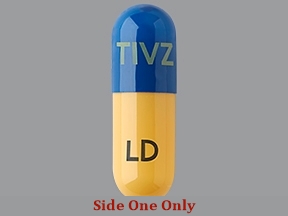 FOTIVDA 0.89 MG CAPSULE
 FOTIVDA 1.34 MG CAPSULE
The following indications for FOTIVDA (tivozanib hcl) have been approved by the FDA:
Indications:
Renal cell carcinoma
Professional Synonyms:
Carcinoma of kidney
Grawitz tumor
Hypernephroid carcinoma
Hypernephroma
Kidney adenocarcinoma
Nephroid carcinoma
Renal adenocarcinoma
Renal carcinoma
Renal cell adenocarcinoma
Indications:
Renal cell carcinoma
Professional Synonyms:
Carcinoma of kidney
Grawitz tumor
Hypernephroid carcinoma
Hypernephroma
Kidney adenocarcinoma
Nephroid carcinoma
Renal adenocarcinoma
Renal carcinoma
Renal cell adenocarcinoma
The following dosing information is available for FOTIVDA (tivozanib hcl):
Dosage of tivozanib hydrochloride is expressed in terms of tivozanib.
If adverse effects occur during tivozanib therapy, temporary interruption of therapy, dosage reduction, and/or permanent discontinuance of the drug may be necessary (see Table 1). If dosage modification is required, the dosage of tivozanib should be reduced to 0.89 mg for 21 days followed by a 7-day rest period (in 28-day cycles).
GI adverse effects (i.e., diarrhea, nausea, vomiting) should be managed with appropriate treatment prior to tivozanib dosage reduction or treatment interruption.
Table 1. Recommended Dosage Modification for Tivozanib Toxicity.
Adverse Reaction and Severity Modification Hypertension Grade 3 (despite optimal Withhold therapy; when hypertension antihypertensive therapy) improves to grade 2 or less, resume at reduced dosage Grade 4 Permanently discontinue therapy Cardiac Failure Grade 3 Withhold therapy; when toxicity improves to grade 0 to 1 or baseline, resume at a reduced dosage or discontinue therapy depending on severity and persistence of the toxicity Grade 4 Permanently discontinue therapy Arterial Thromboembolic Events Any grade Permanently discontinue therapy Hemorrhagic Events Grade 3 or 4 Permanently discontinue therapy Proteinuria >=2 g proteinuria per 24 hours Withhold therapy, when proteinuria improves to <=2 g per 24 hours, resume at a reduced dosage Nephrotic syndrome Permanently discontinue therapy Reversible Posterior Leukoencephalopathy Syndrome (RPLS) Any grade Permanently discontinue therapy Other Adverse Effects Grade 2 or 3 (persistent or Withhold therapy; when toxicity intolerable); Grade 4 laboratory improves to grade 0 to 1 or abnormality baseline, resume at a reduced dosage Grade 4 Permanently discontinue therapy
If adverse effects occur during tivozanib therapy, temporary interruption of therapy, dosage reduction, and/or permanent discontinuance of the drug may be necessary (see Table 1). If dosage modification is required, the dosage of tivozanib should be reduced to 0.89 mg for 21 days followed by a 7-day rest period (in 28-day cycles).
GI adverse effects (i.e., diarrhea, nausea, vomiting) should be managed with appropriate treatment prior to tivozanib dosage reduction or treatment interruption.
Table 1. Recommended Dosage Modification for Tivozanib Toxicity.
Adverse Reaction and Severity Modification Hypertension Grade 3 (despite optimal Withhold therapy; when hypertension antihypertensive therapy) improves to grade 2 or less, resume at reduced dosage Grade 4 Permanently discontinue therapy Cardiac Failure Grade 3 Withhold therapy; when toxicity improves to grade 0 to 1 or baseline, resume at a reduced dosage or discontinue therapy depending on severity and persistence of the toxicity Grade 4 Permanently discontinue therapy Arterial Thromboembolic Events Any grade Permanently discontinue therapy Hemorrhagic Events Grade 3 or 4 Permanently discontinue therapy Proteinuria >=2 g proteinuria per 24 hours Withhold therapy, when proteinuria improves to <=2 g per 24 hours, resume at a reduced dosage Nephrotic syndrome Permanently discontinue therapy Reversible Posterior Leukoencephalopathy Syndrome (RPLS) Any grade Permanently discontinue therapy Other Adverse Effects Grade 2 or 3 (persistent or Withhold therapy; when toxicity intolerable); Grade 4 laboratory improves to grade 0 to 1 or abnormality baseline, resume at a reduced dosage Grade 4 Permanently discontinue therapy
Administer tivozanib hydrochloride orally once daily without regard to food. Swallow capsules whole with a glass of water; do not open the capsules. If a dose of tivozanib hydrochloride is missed, take the dose at the next scheduled time.
Do not take two doses at the same time. Store tivozanib hydrochloride at 20-25degreesC. Excursions are permitted between 15-30degreesC.
Do not take two doses at the same time. Store tivozanib hydrochloride at 20-25degreesC. Excursions are permitted between 15-30degreesC.
| DRUG LABEL | DOSING TYPE | DOSING INSTRUCTIONS |
|---|---|---|
| FOTIVDA 0.89 MG CAPSULE | Maintenance | Adults take 1 capsule (0.89 mg) by oral route once daily for 21 consecutive days, followed by 7 days off, of a 28-day cycle |
| FOTIVDA 1.34 MG CAPSULE | Maintenance | Adults take 1 capsule (1.34 mg) by oral route once daily for 21 consecutive days, followed by 7 days off, of a 28-day cycle |
No generic dosing information available.
The following drug interaction information is available for FOTIVDA (tivozanib hcl):
There are 0 contraindications.
There are 2 severe interactions.
These drug interactions can produce serious consequences in most patients. Actions required for severe interactions include, but are not limited to, discontinuing one or both agents, adjusting dosage, altering administration scheduling, and providing additional patient monitoring. Review the full interaction monograph for more information.
| Drug Interaction | Drug Names |
|---|---|
| Tivozanib/Strong CYP3A4 Inducers SEVERITY LEVEL: 2-Severe Interaction: Action is required to reduce the risk of severe adverse interaction. MECHANISM OF ACTION: Strong CYP3A4 inducers may induce the metabolism of tivozanib by CYP3A4.(1,2) CLINICAL EFFECTS: The concurrent use of strong CYP3A4 inducers and tivozanib may result in decreased levels of tivozanib, which may lead to treatment failure.(1,2) PREDISPOSING FACTORS: Induction effects may be more likely with regular use of the inducer for longer than 1-2 weeks. PATIENT MANAGEMENT: The US manufacturer of tivozanib recommends avoiding concomitant use of strong CYP3A4 inducers.(1) The UK manufacturer of tivozanib states that concurrent use with strong CYP3A4 inducers should be undertaken with caution.(2) DISCUSSION: Concomitant use of multiple doses of rifampin (a strong CYP3A inducer) did not change tivozanib maximum concentration (Cmax) but decreased tivozanib area-under-curve (AUC) by 52%.(1) In a study in health volunteers, concurrent administration of single dose tivozanib (1340 mcg) with rifampin 600 mg once daily (a strong CYP3A4 inducer) decreased the half-life of tivozanib from 121 to 54 hours and decreased single dose AUC by 48%. The clinical effects of strong CYP3A4 inducers on repeated daily dosing has not been studied.(2) Strong CYP3A4 inducers linked to this monograph include: apalutamide, barbiturates, carbamazepine, dexamethasone, encorafenib, enzalutamide, fosphenytoin, ivosidenib, lumacaftor, mitotane, phenobarbital, phenytoin, primidone, rifampin, and rifapentine.(3,4) |
ASA-BUTALB-CAFFEINE-CODEINE, ASCOMP WITH CODEINE, BRAFTOVI, BUPIVACAINE-DEXAMETH-EPINEPHRN, BUTALB-ACETAMINOPH-CAFF-CODEIN, BUTALBITAL, BUTALBITAL-ACETAMINOPHEN, BUTALBITAL-ACETAMINOPHEN-CAFFE, BUTALBITAL-ASPIRIN-CAFFEINE, CARBAMAZEPINE, CARBAMAZEPINE ER, CARBATROL, CEREBYX, DEXABLISS, DEXAMETHASONE, DEXAMETHASONE ACETATE, DEXAMETHASONE ACETATE MICRO, DEXAMETHASONE INTENSOL, DEXAMETHASONE ISONICOTINATE, DEXAMETHASONE MICRONIZED, DEXAMETHASONE SOD PHOS-WATER, DEXAMETHASONE SODIUM PHOSPHATE, DEXAMETHASONE-0.9% NACL, DEXLYT, DILANTIN, DILANTIN-125, DMT SUIK, DONNATAL, DOUBLEDEX, EQUETRO, ERLEADA, FIORICET, FOSPHENYTOIN SODIUM, HEMADY, LIDOCIDEX-I, LYSODREN, MAS CARE-PAK, MITOTANE, MYSOLINE, ORKAMBI, PENTOBARBITAL SODIUM, PHENOBARBITAL, PHENOBARBITAL SODIUM, PHENOBARBITAL-BELLADONNA, PHENOBARBITAL-HYOSC-ATROP-SCOP, PHENOHYTRO, PHENYTEK, PHENYTOIN, PHENYTOIN SODIUM, PHENYTOIN SODIUM EXTENDED, PRIFTIN, PRIMIDONE, RIFADIN, RIFAMPIN, SEZABY, TAPERDEX, TEGRETOL, TEGRETOL XR, TENCON, TIBSOVO, XTANDI, ZCORT |
| Sodium Iodide I 131/Myelosuppressives; Immunomodulators SEVERITY LEVEL: 2-Severe Interaction: Action is required to reduce the risk of severe adverse interaction. MECHANISM OF ACTION: Sodium iodide I 131 can cause depression of the hematopoetic system. Myelosuppressives and immunomodulators also suppress the immune system.(1) CLINICAL EFFECTS: Concurrent use of sodium iodide I 131 with agents that cause bone marrow depression, including myelosuppressives or immunomodulators, may result in an enhanced risk of hematologic disorders, including anemia, blood dyscrasias, bone marrow depression, leukopenia, and thrombocytopenia. Bone marrow depression may increase the risk of serious infections and bleeding.(1) PREDISPOSING FACTORS: None determined. PATIENT MANAGEMENT: The US manufacturer of sodium iodide I 131 states that concurrent use with bone marrow depressants may enhance the depression of the hematopoetic system caused by large doses of sodium iodide I 131.(1) Sodium iodide I 131 causes a dose-dependent bone marrow suppression, including neutropenia or thrombocytopenia, in the 3 to 5 weeks following administration. Patients may be at increased risk of infections or bleeding during this time. Monitor complete blood counts within one month of therapy. If results indicate leukopenia or thrombocytopenia, dosimetry should be used to determine a safe sodium iodide I 131 activity.(1) DISCUSSION: Hematologic disorders including death have been reported with sodium iodide I 131. The most common hematologic disorders reported include anemia, blood dyscrasias, bone marrow depression, leukopenia, and thrombocytopenia.(1) |
HICON, SODIUM IODIDE I-131 |
There are 0 moderate interactions.
The following contraindication information is available for FOTIVDA (tivozanib hcl):
Drug contraindication overview.
*None.
*None.
There are 2 contraindications.
Absolute contraindication.
| Contraindication List |
|---|
| Invasive surgical procedure |
| Lactation |
There are 11 severe contraindications.
Adequate patient monitoring is recommended for safer drug use.
| Severe List |
|---|
| Acute myocardial infarction |
| Cerebrovascular accident |
| Child-pugh class B hepatic impairment |
| Chronic heart failure |
| Disease of liver |
| Hypertension |
| Impaired wound healing |
| Increased risk of bleeding |
| Pregnancy |
| Proteinuria |
| Thromboembolic disorder |
There are 2 moderate contraindications.
Clinically significant contraindication, where the condition can be managed or treated before the drug may be given safely.
| Moderate List |
|---|
| Hyperthyroidism |
| Hypothyroidism |
The following adverse reaction information is available for FOTIVDA (tivozanib hcl):
Adverse reaction overview.
The most common (>=20%) adverse reactions were fatigue, hypertension, diarrhea, decreased appetite, nausea, dysphonia, hypothyroidism, cough, and stomatitis. The most common grade 3 or 4 laboratory abnormalities (>=5%) were decreased sodium, increased lipase, and decreased phosphate.
The most common (>=20%) adverse reactions were fatigue, hypertension, diarrhea, decreased appetite, nausea, dysphonia, hypothyroidism, cough, and stomatitis. The most common grade 3 or 4 laboratory abnormalities (>=5%) were decreased sodium, increased lipase, and decreased phosphate.
There are 23 severe adverse reactions.
| More Frequent | Less Frequent |
|---|---|
|
Hypertension Hyponatremia Hypophosphatemia |
Arterial thrombosis Avascular necrosis of bone Heart failure Hemorrhage Hyperbilirubinemia Hyperthyroidism Increased alanine transaminase Increased aspartate transaminase Lymphopenia Thrombocytopenic disorder Venous thrombosis |
| Rare/Very Rare |
|---|
|
Gastrointestinal fistula Gastrointestinal perforation Hypertensive crisis Impaired wound healing Myocardial ischemia Nephrotic syndrome Pancreatitis Pneumonia Posterior reversible encephalopathy syndrome |
There are 18 less severe adverse reactions.
| More Frequent | Less Frequent |
|---|---|
|
Anorexia Cough Diarrhea Elevated serum lipase Fatigue Hypothyroidism Nausea Stomatitis Voice change |
Delirium Hyperglycemia Increased hemoglobin Palmar-plantar erythrodysesthesia Prolonged activated partial thromboplastin time Proteinuria Skin rash Vomiting Weight loss |
| Rare/Very Rare |
|---|
| None. |
The following precautions are available for FOTIVDA (tivozanib hcl):
Safety and efficacy of tivozanib have not been established in pediatric patients. Growth plate hypertrophy, absence of active corpora lutea, and absence of maturing follicles have been observed in young and growing cynomolgus monkeys receiving repeated dosages of tivozanib at 4.4 times the maximum recommended clinical dose in humans.
Teeth abnormalities (e.g., malocclusions, tooth loss, brittle teeth) and growth plate hypertrophy also have been observed in rats receiving repeated dosages of tivozanib at 0.7 times the maximum recommended clinical dose in humans.
Contraindicated
Severe Precaution
Management or Monitoring Precaution
Teeth abnormalities (e.g., malocclusions, tooth loss, brittle teeth) and growth plate hypertrophy also have been observed in rats receiving repeated dosages of tivozanib at 0.7 times the maximum recommended clinical dose in humans.
Contraindicated
| None |
Severe Precaution
| None |
Management or Monitoring Precaution
| None |
Tivozanib may cause fetal harm if administered to pregnant women based on its mechanism of action and animal findings. Verify pregnancy status prior to initiation of tivozanib in females of reproductive potential.
It is not known whether tivozanib or its metabolites are distributed into human milk or if the drug has any effect on milk production or the nursing infant. Patients should not breast-feed while receiving tivozanib and for one month after the last dose.
In the pooled safety population of 1008 patients in the principal safety and efficacy studies, 29% of patients were >=65 years of age. No overall differences in safety were observed between geriatric patients and younger adults.
The following prioritized warning is available for FOTIVDA (tivozanib hcl):
No warning message for this drug.
No warning message for this drug.
The following icd codes are available for FOTIVDA (tivozanib hcl)'s list of indications:
| Renal cell carcinoma | |
| C64 | Malignant neoplasm of kidney, except renal pelvis |
| C64.1 | Malignant neoplasm of right kidney, except renal pelvis |
| C64.2 | Malignant neoplasm of left kidney, except renal pelvis |
| C64.9 | Malignant neoplasm of unspecified kidney, except renal pelvis |
Formulary Reference Tool