Please wait while the formulary information is being retrieved.
Drug overview for LANSOPRAZOL-AMOXICIL-CLARITHRO (lansoprazole/amoxicillin trihydrate/clarithromycin):
Generic name: LANSOPRAZOLE/AMOXICILLIN TRIHYDRATE/CLARITHROMYCIN (lan-SOE-pra-zole/a-MOX-i-SIL-in/kla-RITH-roe-MYE-sin)
Drug class: Beta-Lactams
Therapeutic class: Gastrointestinal Therapy Agents
Amoxicillin is an aminopenicillin antibiotic that is structurally related Clarithromycin is a semisynthetic macrolide antibiotic with a broader Lansoprazole, commonly referred to as an acid- or proton-pump inhibitor, is a gastric antisecretory agent. spectrum than that of erythromycins. to ampicillin.
Amoxicillin shares the uses of other aminopenicillins and is used Clarithromycin is used orally for the treatment of pharyngitis and Lansoprazole is used orally for the short-term treatment and symptomatic principally for the treatment of infections caused by susceptible relief of active duodenal and benign gastric ulcer and as maintenance tonsillitis, mild to moderate respiratory tract infections (acute bacterial exacerbation of chronic bronchitis, acute maxillary sinusitis, gram-negative bacteria (e.g., Haemophilus influenzae, Escherichia coli, therapy following healing of duodenal ulcers. Lansoprazole also is used community-acquired pneumonia), uncomplicated skin and skin structure orally in combination with amoxicillin (dual therapy) or with Proteus mirabilis, Salmonella). Amoxicillin also is used for the treatment clarithromycin and amoxicillin (triple therapy) for the treatment of infections, and acute otitis media caused by susceptible organisms. of infections caused by susceptible gram-positive bacteria (e.g., Clarithromycin also is used orally in the treatment of disseminated Helicobacter pylori infection and duodenal ulcer disease. Lansoprazole also Streptococcus pneumoniae, enterococci, nonpenicillinase-producing has been used in other multiple-drug regimens+ for the treatment of H. infections caused by Mycobacterium avium complex (MAC) in patients with staphylococci, Listeria); however, like other aminopenicillins, amoxicillin advanced human immunodeficiency virus (HIV) infection and for prevention of generally should not be used for the treatment of streptococcal or pylori infection associated with peptic ulcer disease.
Lansoprazole also is disseminated MAC infection (both primary and secondary prophylaxis) in staphylococcal infections when a natural penicillin would be effective. used orally for the treatment of nonsteroidal anti-inflammatory agent (NSAIA)-induced gastric ulcers in patients who continue NSAIA use, and for HIV-infected individuals. the prevention of NSAIA-induced gastric ulcers in patients with a documented history of gastric ulcer who require the use of an NSAIA.
Oral Oral clarithromycin is used in combination with amoxicillin and lansoprazole also is used for short-term treatment and symptomatic relief lansoprazole or omeprazole (triple therapy) for the treatment of Helicobacter pylori infection and duodenal ulcer disease. Clarithromycin of gastroesophageal reflux disease (e.g., erosive esophagitis), as also is used orally in combination with omeprazole (dual therapy) or maintenance therapy following healing of erosive esophagitis to reduce its ranitidine bismuth citrate for the treatment of H. pylori infection in recurrence and in the long-term treatment of pathologic GI hypersecretory conditions.
Lansoprazole is used orally as self-medication for short-term patients with an active duodenal ulcer. Clarithromycin also has been used orally in other multiple-drug regimens (with or without amoxicillin, treatment of frequent heartburn. lansoprazole, omeprazole, or ranitidine bismuth citrate) for the treatment of H. pylori infection associated with peptic ulcer disease. Safety and efficacy of clarithromycin extended-release tablets have been established only for the treatment of certain respiratory tract infections in adults (acute bacterial exacerbations of chronic bronchitis, acute maxillary sinusitis, community-acquired pneumonia); safety and efficacy of the extended-release formulation of the drug have not been established for the treatment of other infections that are treated with clarithromycin conventional tablets or oral suspension.
DRUG IMAGES
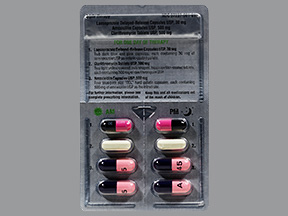 LANSOPRAZOL-AMOXICIL-CLARITHRO
The following indications for LANSOPRAZOL-AMOXICIL-CLARITHRO (lansoprazole/amoxicillin trihydrate/clarithromycin) have been approved by the FDA:
Indications:
Duodenal ulcer due to H. pylori
Helicobacter pylori gastritis
Professional Synonyms:
Campylobacter gastritis
DU due to H. pylori
Duodenal ulcer due to Campylobacter pylori
Duodenal ulcer due to Helicobacter pylori
H. pylori gastritis
The following dosing information is available for LANSOPRAZOL-AMOXICIL-CLARITHRO (lansoprazole/amoxicillin trihydrate/clarithromycin):
Dosage of amoxicillin, which is available for oral use as the trihydrate, is expressed in terms of anhydrous amoxicillin.
The usual adult dosage of amoxicillin for the treatment of mild to moderate infections of the ear, nose, or throat; skin and skin structure; or genitourinary tract is 500 mg every 12 hours or 250 mg every 8 hours. A dosage of 875 mg every 12 hours or 500 mg every 8 hours should be used for the treatment of severe infections of the ear, nose, or throat; skin and skin structure; or genitourinary tract in adults. The usual adult dosage of amoxicillin for the treatment of mild, moderate, or severe lower respiratory tract infections is 875 mg every 12 hours or 500 mg every 8 hours.
A single 3-g oral dose of amoxicillin has been used effectively for the initial treatment of acute, uncomplicated urinary tract infections in nonpregnant women+.
When oral amoxicillin is used in neonates and infants 12 weeks of age or younger, the manufacturer states that a dosage up to 30 mg/kg daily can be given in divided doses every 12 hours.
The usual dosage of oral amoxicillin for pediatric patients 3 months of age or older for the treatment of mild to moderate infections of the ear, nose, throat, skin and skin structure, or genitourinary tract is 20 mg/kg daily in divided doses every 8 hours or 25 mg/kg daily in divided doses every 12 hours. The usual dosage of oral amoxicillin for pediatric patients 3 months of age or older for the treatment of mild, moderate, or severe lower respiratory tract infections or for the treatment of severe infections of the ear, nose, throat, skin and skin structure, or genitourinary tract is 40 mg/kg daily in divided doses every 8 hours or 45 mg/kg daily in divided doses every 12 hours.
When oral amoxicillin is used for the treatment of mild to moderate infections in children beyond the neonatal period, the American Academy of Pediatrics (AAP) recommends a dosage of 25-50 mg/kg daily given in 3 divided doses.
When oral amoxicillin is used for step-down therapy in the treatment of severe infections in children beyond the neonatal period, AAP recommends a dosage of 80-100 mg/kg daily given in 3 divided doses. For highly susceptible pathogens, AAP states that a dosage of 90 mg/kg daily given in 2 divided doses can be used.
In patients with renal impairment, doses and/or frequency of administration of amoxicillin should be modified in response to the degree of renal impairment, severity of the infection, and susceptibility of the causative organisms. The manufacturer states that adults with severe renal impairment and creatinine clearances less than 30 mL/minute should not receive the commercially available film-coated tablets containing 875 mg of amoxicillin. The recommended dosage of amoxicillin for adults with creatinine clearances of 10-30 mL/minute is 250 or 500 mg every 12 hours, depending on the severity of the infection, and the recommended dosage for adults with creatinine clearances less than 10 mL/minute is 250 or 500 mg every 24 hours, depending on the severity of the infection.
Patients undergoing hemodialysis should receive 250 or 500 mg of amoxicillin every 24 hours, depending on the severity of the infection, and should receive an additional dose of the drug during and after each dialysis period.
The manufacturer states that data are insufficient to recommend dosage for pediatric patients with renal impairment.
Safety and efficacy of clarithromycin extended-release tablets have been established for the treatment of acute bacterial exacerbations of chronic bronchitis, acute maxillary sinusitis, and community-acquired pneumonia (CAP) in adults; safety and efficacy of the extended-release formulation of the drug have not been established for the treatment of other infections that are treated with clarithromycin conventional tablets or oral suspension.
Clarithromycin generally may be used without dosage adjustment in patients with hepatic impairment and normal renal function. However, in patients with creatinine clearances less than 30 mL/minute with or without hepatic impairment, the dosage should be halved or the dosing interval for clarithromycin doubled. An initial clarithromycin dose of 500 mg (conventional tablets or oral suspension) followed by 250 mg twice daily has been suggested for adults with creatinine clearances less than 30 mL/minute when a usual dosage of 500 mg twice daily would have been used in adults with normal renal function; a dosage of 250 mg (conventional tablets or oral suspension) daily has been suggested for such patients when a usual dosage of 250 mg twice daily would have been used in individuals with normal renal function.
Lansoprazole is administered orally. Lansoprazole also has been administered by IV infusion; however, a parenteral dosage form no longer is commercially available in the US. If a dose of lansoprazole is missed, the dose should be taken as soon as possible.
However, if the next scheduled dose is due, the missed dose should be omitted, and the next dose taken at the regularly scheduled time. A double dose should not be administered to make up for a missed dose.
No dosing information available.
No generic dosing information available.
The following drug interaction information is available for LANSOPRAZOL-AMOXICIL-CLARITHRO (lansoprazole/amoxicillin trihydrate/clarithromycin):
There are 100 contraindications.
These drug combinations generally should not be dispensed or administered to the same patient. A manufacturer label warning that indicates the contraindication warrants inclusion of a drug combination in this category, regardless of clinical evidence or lack of clinical evidence to support the contraindication.
| Drug Interaction | Drug Names |
|---|---|
| Live Typhoid Vaccine/Antimicrobials SEVERITY LEVEL: 1-Contraindicated Drug Combination: This drug combination is contraindicated and generally should not be dispensed or administered to the same patient. MECHANISM OF ACTION: The antimicrobial may be active against the organism in the live-vaccine. Antimicrobial therapy may prevent the vaccine organism from replicating enough to trigger an immune response.(1) CLINICAL EFFECTS: Vaccination may be ineffective. PREDISPOSING FACTORS: None determined. PATIENT MANAGEMENT: Do not give oral typhoid vaccine until 72 hours after the last dose of antimicrobial. If possible, to optimize vaccine effectiveness, do not start antibacterial drugs for 72 hours after the last dose of oral typhoid vaccine. A longer interval should be considered for long-acting antimicrobials, such as azithromycin.(3) DISCUSSION: Because antimicrobial therapy may prevent sufficient vaccine-organism replication to generate an immune response, the manufacturer of live-attenuated typhoid vaccine and the Centers for Disease Control (CDC) state that the vaccine should not be administered to patients receiving antimicrobial therapy.(1-3) |
VIVOTIF |
| Ergot Alkaloids/Selected Macrolide Antibiotics SEVERITY LEVEL: 1-Contraindicated Drug Combination: This drug combination is contraindicated and generally should not be dispensed or administered to the same patient. MECHANISM OF ACTION: The macrolides may inhibit the hepatic metabolism of ergot alkaloids by inhibition of CYP3A4.(1) CLINICAL EFFECTS: Concurrent use may result in increased levels of ergot alkaloids, which may result in clinical signs of ergotism, including vasospasm, dysesthesia, renal ischemia, and peripheral ischemia. PREDISPOSING FACTORS: None determined. PATIENT MANAGEMENT: The manufacturer of ergotamine(2) and dihydroergotamine (3) state that the concurrent use of these agents with clarithromycin, erythromycin, or troleandomycin is contraindicated. The US manufacturer of methylergonovine states that methylergonovine should not be administered with potent CYP3A4 inhibitors such as the macrolide antibiotics clarithromycin, erythromycin, and troleandomycin.(4) The US manufacturer of clarithromycin states that concurrent administration of ergotamine or dihydroergotamine is contraindicated.(5) It would be prudent to avoid the concurrent use of all ergot alkaloids and macrolide antibiotics that inhibit CYP3A4. Patients receiving concurrent therapy with macrolides and ergot alkaloids should be monitored for clinical signs of ergotism. One or both agents may need to be discontinued. Patients should be treated symptomatically for ergotism. DISCUSSION: Three case reports have documented clinical signs of ergotism following concomitant therapy with erythromycin and ergotamine. Symptoms included vasospasm, dysesthesia, renal ischemia, and peripheral ischemia. Symptoms occurred within one to seven days of concurrent therapy and with small doses of ergotamine.(6-8) Five case reports have documented peripheral vasospasm following the concurrent administration of ergotamine and troleandomycin. Ergotamine dosages ranged from single dose to long term therapy.(9-12) A similar interaction was reported for ergotamine and troleandomycin(13) and ergotamine and clarithromycin.(14) Other case reports document similar interactions between dihydroergotamine and erythromycin(15-19), troleandomycin(16-19), and ponsinomycin(20). One or more of the drug pairs linked to this monograph have been included in a list of interactions that should be considered "high-priority" for inclusion and should not be inactivated in EHR systems. This DDI subset was vetted by an expert panel commissioned by the U.S. Office of the National Coordinator (ONC) for Health Information Technology. |
BREKIYA, CAFERGOT, DIHYDROERGOTAMINE MESYLATE, ERGOLOID MESYLATES, ERGOMAR, ERGOTAMINE TARTRATE, ERGOTAMINE-CAFFEINE, METHYLERGONOVINE MALEATE, METHYSERGIDE MALEATE, MIGERGOT, MIGRANAL, TRUDHESA |
| Vardenafil (Greater Than 2.5 mg)/Strong CYP3A4 Inhibitors SEVERITY LEVEL: 1-Contraindicated Drug Combination: This drug combination is contraindicated and generally should not be dispensed or administered to the same patient. MECHANISM OF ACTION: Strong CYP3A4 inhibitors may inhibit the metabolism of vardenafil.(1-3) CLINICAL EFFECTS: Concurrent use of strong CYP3A4 inhibitors may result in increased levels, clinical effects, and side effects of vardenafil.(1-3) PREDISPOSING FACTORS: None determined. PATIENT MANAGEMENT: The US manufacturer of vardenafil states that a maximum dose of 2.5 mg of vardenafil every 24 hours should not be exceeded in patients taking strong CYP3A4 inhibitors.(1) Note that other countries have different warnings. The Canadian(3) and UK(3) manufacturer of vardenafil state that vardenafil should not exceed 5 mg in patients taking clarithromycin. The UK manufacturer of vardenafil states that the concurrent use of vardenafil with strong CYP3A4 inhibitors should be avoided.(3) The US manufacturer of cobicistat states that a maximum dose of 2.5 mg of vardenafil every 72 hours should not be exceeded in patients taking cobicistat.(4) DISCUSSION: Concurrent use of ketoconazole (200 mg, a strong inhibitor of CYP3A4) with vardenafil (5 mg) increased the vardenafil area-under-curve (AUC) and maximum concentration (Cmax) by 10-fold and 4-fold, respectively.(1-3) Concurrent administration of erythromycin (500 mg three times daily, a moderate inhibitor of CYP3A4) with vardenafil (5 mg) increased the AUC and Cmax of vardenafil by 4-fold and 3-fold, respectively.(1-3) |
VARDENAFIL HCL |
| Selected Macrolides/Selected HMG-CoA Reductase Inhibitors SEVERITY LEVEL: 1-Contraindicated Drug Combination: This drug combination is contraindicated and generally should not be dispensed or administered to the same patient. MECHANISM OF ACTION: The macrolides may inhibit the metabolism of the HMG-CoA reductase inhibitors by CYP3A4. CLINICAL EFFECTS: Concurrent therapy may result in increased levels of the HMG-CoA reductase inhibitors, which may produce rhabdomyolysis. Symptoms of rhabdomyolysis include muscle pain, tenderness, weakness, elevated creatine kinase levels, and reddish-brown, heme positive urine. PREDISPOSING FACTORS: The risk for myopathy or rhabdomyolysis may be greater in patients 65 years and older, inadequately treated hypothyroidism, renal impairment, carnitine deficiency, malignant hyperthermia, or in patients with a history of myopathy or rhabdomyolysis. Patients with a SLCO1B1 polymorphism that leads to decreased function of the hepatic uptake transporter OATP1B1 may have increased statin concentrations and be predisposed to myopathy or rhabdomyolysis. PATIENT MANAGEMENT: The concurrent administration of lovastatin(1) or simvastatin(2,3) with clarithromycin or erythromycin is contraindicated. If treatment with clarithromycin or erythromycin is required, suspend lovastatin or simvastatin therapy during antibiotic use. DISCUSSION: Concurrent administration of cerivastatin and erythromycin to patients with hypercholesterolemia resulted in increases in cerivastatin steady state AUC and Cmax by 50% and 24%, respectively.(4) In a study in 12 healthy subjects, pretreatment with seven days of erythromycin resulted in increases in the AUC and Cmax of a single dose of cerivastatin (300 mcg) by 21% and 13%, respectively.(5) An in-vitro study in human liver microsomes showed that the metabolism of cerivastatin was inhibited by troleandomycin.(6) In a study in 12 healthy subjects, pretreatment with erythromycin increased the Cmax and AUC of a single dose of simvastatin by 3.4-fold and 6.2-fold, respectively. Pretreatment with erythromycin also increased the Cmax and AUC of simvastatin acid by 5.0-fold and 3.9-fold, respectively.(7) In a study in healthy subjects, clarithromycin increased the AUC of simvastatin, atorvastatin, and pravastatin by 10-fold, greater than 4-fold, and almost 2-fold, respectively.(8) There are several case reports of patients developing rhabdomyolysis (characterized by myalgia, weakness, elevated creatine kinase levels, and heme positive urine) following the addition of erythromycin to lovastatin therapy.(9-13) Another article reported two cases of rhabdomyolysis, one following the addition of clarithromycin to lovastatin therapy and the other following the addition of azithromycin to lovastatin therapy.(14) One patient developed rhabdomyolysis and severe myopathy after treatment with roxithromycin and combination simvastatin and gemfibrozil.(15) One or more of the drug pairs linked to this monograph have been included in a list of interactions that should be considered "high-priority" for inclusion and should not be inactivated in EHR systems. This DDI subset was vetted by an expert panel commissioned by the U.S. Office of the National Coordinator (ONC) for Health Information Technology. |
EZETIMIBE-SIMVASTATIN, FLOLIPID, LOVASTATIN, SIMVASTATIN, VYTORIN, ZOCOR |
| Eletriptan/Selected Macrolide; Ketolide Antibiotics SEVERITY LEVEL: 1-Contraindicated Drug Combination: This drug combination is contraindicated and generally should not be dispensed or administered to the same patient. MECHANISM OF ACTION: Macrolide or ketolide antibiotics which are moderately-strong to strong inhibitors of CYP3A4 may inhibit the metabolism of eletriptan.(1-3) CLINICAL EFFECTS: Concurrent use may result in elevated levels of and adverse effects from eletriptan.(1,2) Antibiotic agents linked to this monograph are clarithromycin, erythromycin, josamycin, telithromycin and troleandomycin. PREDISPOSING FACTORS: None determined. PATIENT MANAGEMENT: The US manufacturer of eletriptan states that eletriptan should not be used within at least 72 hours of treatment with strong CYP3A4 inhibitors such as clarithromycin or troleandomycin.(2) The UK manufacturer of eletriptan states that eletriptan should not be used together with clarithromycin, erythromycin, or josamycin.(1) If migraine treatment is needed during macrolide or ketolide antibiotic therapy use triptans not metabolized by CYP3A4 such as frovatriptan, sumatriptan, or zolmitriptan.(4-7) DISCUSSION: In a clinical study with a moderate to strong CYP3A4 inhibitor, erythromycin 1000 mg increased the eletriptan maximum concentration (Cmax) and area-under-curve (AUC) by 2-fold and 3.6-fold, respectively. The half-life of eletriptan increased from 4.6 hours to 7.1 hours.(1) In a clinical study with a strong CYP3A4 inhibitor, ketoconazole (400 mg) increased the eletriptan maximum concentration (Cmax) and area-under-curve (AUC) by 2.7-fold and 5.9-fold, respectively. The half-life of eletriptan increased from 4.8 hours to 8.3 hours.(1) The time to Cmax (Tmax) increased from 2.8 hours to 5.4 hours.(2) |
ELETRIPTAN HBR, RELPAX |
| Droperidol/QT Prolonging Agents SEVERITY LEVEL: 1-Contraindicated Drug Combination: This drug combination is contraindicated and generally should not be dispensed or administered to the same patient. MECHANISM OF ACTION: Droperidol has been shown to prolong the QTc interval. Concurrent use with other agents that prolong the QTc interval may result in additive effects on the QTc interval.(1) CLINICAL EFFECTS: The concurrent use of droperidol with other agents that prolong the QTc interval may result in potentially life-threatening cardiac arrhythmias, including torsades de pointes.(1) PREDISPOSING FACTORS: Congestive heart failure, bradycardia, use of a diuretic, cardiac hypertrophy, hypokalemia, hypomagnesemia, age over 65 years, alcohol abuse, and the use of agents such as benzodiazepines, volatile anesthetics, and intravenous opiate may predispose patients to the development of prolonged QT syndrome.(1) Risk may also be increased in patients with other cardiovascular diseases (e.g. myocardial infarction, history of torsade de pointes, congenital long QT syndrome), hypocalcemia, or female gender.(3) Concurrent use of more than one drug known to cause QT prolongation or higher systemic concentrations of either QT prolonging drug are additional risk factors for torsade de pointes. Factors which may increase systemic drug concentrations include rapid infusion of an intravenous dose or impaired metabolism or elimination of the drug (e.g. coadministration with an agent which inhibits its metabolism or elimination, genetic impairment in drug metabolism or elimination, and/or renal/hepatic dysfunction).(3) PATIENT MANAGEMENT: The manufacturer of droperidol states under precautions drug interactions that drugs known to have the potential to prolong the QT interval should not be used together with droperidol.(1) DISCUSSION: Agents that are linked to this monograph may have varying degrees of potential to prolong the QTc interval. Agents linked to this monograph have been shown to prolong the QTc interval either through their mechanism of action, through studies on their effects on the QTc interval, or through reports of QTc prolongation and/or torsades de pointes in clinical trials and/or postmarketing reports.(2) One or more of the drug pairs linked to this monograph have been included in a list of interactions that should be considered "high-priority" for inclusion and should not be inactivated in EHR systems. This DDI subset was vetted by an expert panel commissioned by the U.S. Office of the National Coordinator (ONC) for Health Information Technology. |
DROPERIDOL |
| Irinotecan/Strong CYP3A4 Inhibitors; Darunavir SEVERITY LEVEL: 1-Contraindicated Drug Combination: This drug combination is contraindicated and generally should not be dispensed or administered to the same patient. MECHANISM OF ACTION: Inhibitors of CYP3A4 may inhibit the metabolism of SN-38, the active metabolite of irinotecan. Strong CYP3A4 inhibitors and darunavir may prevent the breakdown of SN-38 to its inactive metabolites APC, NPC, M2, M3, and M4.(1,2) CLINICAL EFFECTS: Coadministration of irinotecan with a strong CYP3A4 inhibitor may result in increased irinotecan plasma concentration, and therefore increased exposure to its active metabolite SN-38. Increased SN-38 exposure may lead to serious toxicity, including severe neutropenia, interstitial pulmonary disease, and even death.(3) PREDISPOSING FACTORS: None determined. PATIENT MANAGEMENT: Concurrent use of irinotecan and strong CYP3A4 inhibitors or darunavir is contraindicated.(2-4) Strong CYP3A4 inhibitors should be discontinued at least 1 week prior to starting irinotecan.(4) The US manufacturer of itraconazole states that concomitant administration with irinotecan is contra-indicated during and two weeks after itraconazole treatment.(5) If concurrent therapy is warranted, consider a four-fold reduction in irinotecan dose.(3) Patients receiving concurrent therapy should be closely monitored for toxicity. DISCUSSION: A randomized cross-over study involving seven patients was performed in which each was given irinotecan 350 mg/m2 IV alone for 90 minutes and followed 3 weeks later by irinotecan 100 mg/m2 given with ketoconazole 200 mg orally 1 hour before or 23 hours after the infusion of irinotecan, or both cycles were given vice versa. With ketoconazole coadministration, the conversion of irinotecan to its inactive metabolite was reduced by 87%, whereas the relative exposure to the active prodrug was increased by 109%. Both hematologic (degree of myelosuppression; percent decrease in neutrophil count) and nonhematologic (nausea, vomiting, and diarrhea) parameters were similar between the courses, despite a 3.5 fold reduced irinotecan dose when given in combination with ketoconazole. The authors concluded that the coadministration of various CYP3A4 inhibitors could potentiate a fatal outcome.(3) A prospective, open-label, randomized study was conducted to determine the pharmacokinetics of lopinavir (LPV)/ritonavir (RTV) administration with irinotecan (CPT11). Eight HIV-infected, Caucasian male patients with Kaposi's sarcoma, stage IV (according to New York University classification) were administered highly active antiretroviral therapy (HAART). HAART consisted of 400 mg lopinavir/ 100 mg ritonavir (Kaletra) twice daily (b.i.d) in association with NRTIs b.i.d. for at least 1 month before the start of anticancer chemotherapy. Patients were then treated with irinotecan as a single agent (150 mg/m2) over a 90 min infusion at days 1 and 10, every 3 weeks. Concomitant LPV/RTV treatment reduced the irinotecan clearance from 21.3 +/- 6.3 to 11.3 +/- 3.5 l/h/m2 (P=0.0008) causing an 89% increase of CPT11 AUC (P=0.001) and a 20% increase in the Cmax of CPT11 (p=0.02). The LPV/RTV treatment increased the AUC of SN38 by 204% (p=0.0001) and AUC of SN38G by 94% (P=0.002). Conversely, LPV/RTV treatment caused an 81% reduction in AUC of APC (p=0.02). Overall, the authors concluded that CYP3A4 inhibitors like LPV/RTV decrease CPT11 clearance and increase SN-38 exposure, potentially leading to CPT11 toxicity if not monitored closely.(7) Strong CYP3A4 Inhibitors include: adagrasib, boceprevir, ceritinib, clarithromycin, cobicistat, ensitrelvir, idelalisib, indinavir, itraconazole, josamycin, ketoconazole, lonafarnib, lopinavir, mibefradil, mifepristone, nefazodone, nelfinavir, nirmatrelvir/ritonavir, paritaprevir, posaconazole, relacorilant, ribociclib, saquinavir, telaprevir, telithromycin, tipranavir, troleandomycin, tucatinib, and voriconazole.(8) One or more of the drug pairs linked to this monograph have been included in a list of interactions that should be considered "high-priority" for inclusion and should not be inactivated in EHR systems. This DDI subset was vetted by an expert panel commissioned by the U.S. Office of the National Coordinator (ONC) for Health Information Technology. |
CAMPTOSAR, IRINOTECAN HCL, ONIVYDE |
| Eplerenone/Strong CYP3A4 Inhibitors; Protease Inhibitors SEVERITY LEVEL: 1-Contraindicated Drug Combination: This drug combination is contraindicated and generally should not be dispensed or administered to the same patient. MECHANISM OF ACTION: Strong inhibitors of CYP3A4 and protease inhibitors may inhibit the metabolism of eplerenone.(1-3) CLINICAL EFFECTS: Concurrent use of eplerenone with a strong inhibitor of CYP3A4 or a protease inhibitor may result in 5-fold increases in eplerenone concentrations and toxicity (e.g. hyperkalemia, hypotension).(1-3) PREDISPOSING FACTORS: Severe renal disease increases the risk for hyperkalemia. PATIENT MANAGEMENT: The manufacturer of eplerenone states that the concurrent use of strong CYP3A4 inhibitors is contraindicated.(1) The US Department of Health and Human Services HIV guidelines state that protease inhibitors are contraindicated with eplerenone.(3) The US manufacturer of itraconazole states that concurrent use of eplerenone is contraindicated during and two weeks after itraconazole treatment.(4) The starting dose of eplerenone for hypertension should be reduced to 25 mg in patients receiving moderate CYP3A4 inhibitors.(1) In all patients taking eplerenone who start taking a moderate CYP3A4 inhibitor, check serum potassium and creatinine levels after 3-7 days of concurrent therapy.(1) DISCUSSION: Ketoconazole (200 mg BID) increased the maximum concentration (Cmax) and area-under-curve (AUC) of a single dose of eplerenone (100 mg) by 1.7-fold and 5.4-fold, respectively.(1) The concurrent use of eplerenone with less potent CYP3A4 inhibitors (erythromycin 500 mg BID, fluconazole 200 mg daily, saquinavir 1200 mg TID, and verapamil 240 mg daily) increased the Cmax of eplerenone by 1.4-fold to 1.6-fold and the AUC of eplerenone by 2.0-fold and 2.9-fold.(1) Strong inhibitors of CYP3A4 and protease inhibitors linked to this monograph include: adagrasib, amprenavir, atazanavir, boceprevir, ceritinib, clarithromycin, cobicistat, darunavir, ensitrelvir, fosamprenavir, idelalisib, indinavir, itraconazole, josamycin, ketoconazole, lonafarnib, lopinavir, mibefradil, mifepristone, nefazodone, nelfinavir, nirmatrelvir/ritonavir, paritaprevir, posaconazole, relacorilant, ribociclib, saquinavir, telaprevir, telithromycin, tipranavir, troleandomycin, tucatinib, and voriconazole.(1,2) |
EPLERENONE |
| Atazanavir; Nelfinavir/Proton Pump Inhibitors SEVERITY LEVEL: 1-Contraindicated Drug Combination: This drug combination is contraindicated and generally should not be dispensed or administered to the same patient. MECHANISM OF ACTION: Proton pump inhibitors increase gastric pH. As gastric pH increases, the solubility of atazanavir and nelfinavir decreases.(1,2) Omeprazole has been shown to inhibit nelfinavir metabolism by CYP2C19.(3) CLINICAL EFFECTS: Concurrent use of atazanavir(1-2,4-8) or nelfinavir(3,8-9) and a proton pump inhibitor may result in decreased levels and effectiveness of atazanavir or nelfinavir. PREDISPOSING FACTORS: None determined. PATIENT MANAGEMENT: The US and Australian manufacturer of atazanavir states that treatment naive patients requiring a proton pump inhibitor should receive 300 mg atazanavir with 100 mg ritonavir. The proton pump inhibitor should not exceed a dose comparable to omeprazole 20 mg daily and should be administered 12 hours before atazanavir/ritonavir.(1,2) Atazanavir should not be administered with proton pump inhibitors without concurrent ritonavir in adults or pediatric patients of at least 13 years of age and weighing at least 40 kg.(1,2) The US and Australian manufacturer of atazanavir states that proton pump inhibitors should not be administered with atazanavir in treatment experienced patients.(1,2) Data are insufficient to recommend a dose of atazanavir in patients weighing less than 40 kg and receiving a proton pump inhibitor.(1) The Canadian and UK manufacturer of atazanavir states that the coadministration of atazanavir and proton pump inhibitors is not recommended. If coadministration is necessary, the dose of atazanavir should be increased to 400 mg daily taken with ritonavir 100 mg daily, and the dose of the proton pump inhibitor should not exceed the equivalent of omeprazole 20 mg.(10,11) The UK manufacturer of esomeprazole states that concurrent use with atazanavir is contraindicated.(9) The US manufacturer of esomeprazole(4) and omeprazole(5) states that concurrent use of atazanavir or nelfinavir is not recommended. The US manufacturers of dexlansoprazole (6), lansoprazole,(7) and pantoprazole(8) state that atazanavir and nelfinavir should not be coadministered with proton pump inhibitors. DISCUSSION: In a study of 16 subjects, atazanavir (400 mg daily) area-under-curve (AUC), maximum concentration (Cmax) and minimum concentration (Cmin) decreased 94%, 96% and 95% respectively, when given with omeprazole (40 mg daily). Omeprazole AUC and Cmax increased 145% and 124% respectively.(1) In a study of 15 subjects, atazanavir AUC, Cmax and Cmin decreased 76%, 72% and 78% respectively, when given with omeprazole (40 mg daily) and ritonavir (100 mg daily).(1) In a study in 13 subjects, administration of omeprazole (20 mg daily) 12 hours before atazanavir/ritonavir (300/100 mg daily) decreased atazanavir Cmax, AUC, and Cmin by 39%, 42%, and 46%, respectively; however, the atazanavir AUC and Cmin were 10% and 2.4-fold higher than average levels seen with atazanavir 400 mg alone.(1) In a study in 14 subjects, administration of omeprazole (20 mg daily) 1 hour before atazanavir/ritonavir (400/100 mg daily) decreased atazanavir Cmax, AUC, and Cmin by 31%, 30%, and 31%, respectively; however, the atazanavir AUC and Cmin were 32% and 3.3-fold higher than average levels seen with atazanavir 400 mg alone.(1) In a study in 10 healthy subjects, concurrent administration of lansoprazole (60 mg daily for 2 days) with atazanavir (400 mg) decreased atazanavir AUC by 94%.(14) In a case report, concurrent esomeprazole decreased atazanavir, but not fosamprenavir levels in a 65 year-old HIV-positive male.(15) In a study in 16 healthy, HIV-negative subjects, the concurrent administration of omeprazole or ranitidine with ritonavir-boosted darunavir had no effect on darunavir pharmacokinetics.(16) In a study in healthy subjects, the concurrent administration of esomeprazole (20 mg daily) with either fosamprenavir (1400 mg twice daily) or fosamprenavir (700 mg twice daily) and ritonavir (100 mg twice daily) for 14 days had no effect on amprenavir pharmacokinetics.(17) In a study in 19 subjects, concurrent omeprazole (40 mg daily) and nelfinavir (1250 mg twice daily) for 4 days decreased nelfinavir AUC, Cmax, and Cmin by 36%, 37%, and 39%.(7,17) The AUC, Cmax, and Cmin of the active M8 metabolite of nelfinavir decreased by 92%, 89%, and 75%, respectively.(4,17) A retrospective review of nelfinavir levels found concurrent use of omeprazole decreased the median M8/nelfinavir ratio.(12) In a case report a 56 year old HIV infected male received omeprazole (40mg daily) and atazanavir/ritonavir (300/100mg) for ten months. Investigators used Bayesian models to determine atazanavir exposure, and found atazanavir levels to be in the 25th percentile of boosted levels, but still above the 75th percentile for unboosted atazanavir.(20) A retrospective review of 76 patients taking proton pump inhibitors and 66 patients not using proton pump inhibitors found no association with a higher virologic failure rate in patients receiving proton pump inhibitors.(21) In a case report, a 50 year-old HIV-infected male with a CD4 count of 1095 cells/ml and an HIV load of 88 copies/ml on a nelfinavir based regimen was switched to an atazanavir/ritonavir (300/100mg daily) regimen. The patient was taking omeprazole (20mg daily) and admitted to taking the atazanavir at 150mg twice daily. The patients CD4 count dropped to 830 cells/ml, but his HIV load dropped to <75 copies/ml. The investigators summarized concurrent use of omeprazole did not adversely affect this patient's virologic load.(22) In a study in 18 healthy subjects, concurrent omeprazole (40 mg daily) with saquinavir/ritonavir (1000/100 mg twice daily) for 4 days increased saquinavir AUC by 83%. No toxicities were noted.(18) In a study in 12 healthy subjects, concurrent omeprazole (40 mg daily) with saquinavir/ritonavir (1000/100 mg twice daily) for 7 weeks increased saquinavir AUC, Cmin, and Cmax by 54%, 73%, 55% respectively. Omeprazole 2 hours prior to saquinavir/ritonavir increased saquinavir AUC, Cmin, and Cmax by 67%, 97%, and 65% respectively. No toxicities were noted.(23) In a study of 14 healthy subjects, concurrent omeprazole (20 mg daily and 40 mg daily) with indinavir (800mg daily) for 7 days decreased indinavir AUC by 34% and 47% respectively and no statistical changes were seen in the Cmax or Tmax of indinavir. When omeprazole (40mg daily) was given with indinavir/ritonavir (800mg/200mg daily) for 7 days indinavir AUC increased by 55% and no statistical changes were seen in indinavir Cmax or Tmax. Omeprazole (40mg daily) showed a Cmax increase of 50% and a half-life increase of 100% in the presence of ritonavir.(24) In a study of 19 healthy subjects, concurrent omeprazole (20 mg daily) with fosamprenavir/ritonavir (1400/200 mg daily) or atazanavir/ritonavir (300/100)for 3 weeks showed no effect on amprenavir pharmacokinetics, but decreased atazanavir AUC and Cmin by 27%.(25) In a retrospective review of 15 HIV-infected patients receiving indinavir (800mg three times daily), nine patients were also receiving omeprazole (20-40mg daily). Of these nine patients, four had plasma concentrations of indinavir below the 95% confidence interval of plasmas concentration in patients receiving indinavir alone, four were within the 95% confidence interval, and one was above the 95% confidence interval.(26) In a case report, a 40 year-old HIV-infected male with extensive antiretroviral history and virological failure began atazanavir/ritonavir (300/100mg daily). The patient was restarted on lansoprazole during atazanavir/ritonavir therapy, and despite lansoprazole and tenofovir therapy the patients plasma concentrations of atazanavir remained consistent with historical values, and the patients Cmin stayed well above the established values for the combination of atazanavir/ritonavir with tenofovir.(27) In a study of 68 healthy subjects, coadministration of omeprazole (40mg daily) with lopinavir/ritonavir (400/100mg twice daily or 800/200mg once daily) showed no statistical change in pharmacokinetics.(28,29) However, when given with atazanavir/ritonavir (300/100 daily) bioavailability of atazanavir decreased by 48-62%.(28) One or more of the drug pairs linked to this monograph have been included in a list of interactions that should be considered "high-priority" for inclusion and should not be inactivated in EHR systems. This DDI subset was vetted by an expert panel commissioned by the U.S. Office of the National Coordinator (ONC) for Health Information Technology. |
ATAZANAVIR SULFATE, EVOTAZ, REYATAZ, VIRACEPT |
| Silodosin; Tamsulosin/Strong CYP3A4 Inhibitors SEVERITY LEVEL: 1-Contraindicated Drug Combination: This drug combination is contraindicated and generally should not be dispensed or administered to the same patient. MECHANISM OF ACTION: Strong CYP3A4 inhibitors may inhibit the metabolism of silodosin and tamsulosin.(1,2) CLINICAL EFFECTS: Coadministration of a strong CYP3A4 inhibitor may cause an increase in silodosin and tamsulosin levels and effects, including severe hypotension.(1,2) PREDISPOSING FACTORS: In patients receiving tamsulosin, the interaction may be worse in patients who are CYP2D6 poor metabolizers because tamsulosin also undergoes metabolism by this pathway.(2) PATIENT MANAGEMENT: The US manufacturer of silodosin states that concurrent use of strong CYP3A4 inhibitors is contraindicated.(1) The US manufacturer of tamsulosin states that tamsulosin should not be used with strong CYP3A4 inhibitors.(2) The US manufacturer of itraconazole states that silodosin or tamsulosin should not be administered until at least 2 weeks after itraconazole treatment.(3) DISCUSSION: Administration of ketoconazole (200 mg daily for 4 days) increased the Cmax and AUC of a single dose of silodosin (4 mg) by 3.7-fold and 2.9-fold, respectively.(1) Administration of ketoconazole (400 mg daily for 4 days) increased the Cmax and AUC of a single dose of silodosin (8 mg) by 3.8-fold and 3.2-fold, respectively.(1) In a study in 24 healthy male subjects, administration of ketoconazole (400 mg daily for 5 days) increased the Cmax and AUC of a single dose of tamsulosin (0.4 mg) by 2.2-fold (90% CI 1.96, 2.45) and 2.8-fold (90% CI 2.56, 3.07), respectively. No serous adverse events were reported when subjects took tamsulosin with ketoconazole.(2,4) Strong inhibitors of CYP3A4 include: adagrasib, boceprevir, ceritinib, clarithromycin, cobicistat, idelalisib, itraconazole, josamycin, ketoconazole, lonafarnib, mibefradil, mifepristone, nefazodone, posaconazole, relacorilant, ribociclib, telaprevir, telithromycin, troleandomycin, tucatinib and voriconazole.(5,6) |
DUTASTERIDE-TAMSULOSIN, JALYN, SILODOSIN, TAMSULOSIN HCL |
| Tolvaptan/Strong CYP3A4 Inhibitors SEVERITY LEVEL: 1-Contraindicated Drug Combination: This drug combination is contraindicated and generally should not be dispensed or administered to the same patient. MECHANISM OF ACTION: Strong inhibitors of CYP3A4 may inhibit the metabolism of tolvaptan.(1) Toxicity may result from an overly rapid correction of serum sodium. CLINICAL EFFECTS: Concurrent use of a strong inhibitor of CYP3A4 may result in increased levels of tolvaptan.(1) Elevated levels of tolvaptan may lead to increased clinical effects such as hypotension, hypovolemia, and thirst, as well as toxicity in the form of neurologic sequelae such as osmotic demyelination syndrome (ODS). ODS can lead to coma and death. Symptoms of ODS include dysarthria, mutism, dysphagia, lethargy, affective changes, spastic quadriparesis, seizures, and coma.(1) PREDISPOSING FACTORS: None determined. PATIENT MANAGEMENT: Concurrent use of tolvaptan and strong CYP3A4 inhibitors is contraindicated.(1) The Australian manufacturer of tolvaptan provides different recommendations with strong CYP3A4 inhibitors based on the indication for tolvaptan. Refer to product labeling for recommendations with strong CYP3A4 inhibitors.(2,3) The US manufacturer of itraconazole states that concurrent use with tolvaptan is contraindicated during and two weeks after itraconazole treatment.(4) DISCUSSION: Tolvaptan is a substrate of CYP3A4. Concurrent administration of ketoconazole (200 mg daily) increased tolvaptan exposure by 5-fold. Administration of ketoconazole at dosages of 400 mg daily would be expected to produce greater increases, as would concurrent administration with other strong CYP3A4 inhibitors.(1) Strong inhibitors of CYP3A4 include: adagrasib, boceprevir, ceritinib, clarithromycin, cobicistat, ensitrelvir, idelalisib, indinavir, itraconazole, josamycin, ketoconazole, lonafarnib, lopinavir/ritonavir, mibefradil, mifepristone, nefazodone, nelfinavir, nirmatrelvir/ritonavir, paritaprevir, posaconazole, relacorilant, ribociclib, saquinavir, telaprevir, telithromycin, tipranavir, tucatinib, and voriconazole.(5) |
JYNARQUE, SAMSCA, TOLVAPTAN |
| Posaconazole Suspension/H2 Antagonists; Proton Pump Inhibitors SEVERITY LEVEL: 1-Contraindicated Drug Combination: This drug combination is contraindicated and generally should not be dispensed or administered to the same patient. MECHANISM OF ACTION: H2 antagonists and proton pump inhibitors (PPIs) increase the stomach pH, possibly reducing gastrointestinal absorption of posaconazole suspension. CLINICAL EFFECTS: Concurrent use of H2 antagonists or proton pump inhibitors (PPIs) may result in decreased effectiveness of posaconazole suspension. PREDISPOSING FACTORS: None determined. PATIENT MANAGEMENT: Avoid the concurrent use of posaconazole suspension with H2 antagonists or proton pump inhibitors (PPIs).(1) If H2 antagonists or PPI therapy is required, use the tablet formulation or powder mix formulation of posaconazole. DISCUSSION: Concurrent cimetidine (400 mg twice daily) decreased both posaconazole (200 mg daily) maximum concentration (Cmax) and area-under-curve (AUC) levels by 39%.(1) No significant effects with other H2 blockers have been noted.(1) Esomeprazole (40 mg daily for 3 days) decreased the Cmax and AUC of a single dose of posaconazole suspension (400 mg) by 46% and 32%, respectively.(1) In a study of posaconazole levels in patients with acute myeloid leukemia or myelodysplastic syndrome, use of pantoprazole was associated with decreased posaconazole levels.(3) In a cross-over study in 5 healthy subjects, esomeprazole decreased the Cmax and AUC of posaconazole suspension by 37% and 84%, respectively. Simultaneous intake of Coca-Cola did not completely counteract the effects of esomeprazole.(4) In a study in healthy subjects, esomeprazole decreased the Cmax and AUC of posaconazole suspension by 55% and 49%, respectively. Simultaneous intake of Coca-Cola did not completely counteract the effects of esomeprazole.(5) |
POSACONAZOLE |
| Topotecan/P-glycoprotein (P-gp) Inhibitors SEVERITY LEVEL: 1-Contraindicated Drug Combination: This drug combination is contraindicated and generally should not be dispensed or administered to the same patient. MECHANISM OF ACTION: Inhibitors of P-glycoprotein may increase the absorption of topotecan.(1) CLINICAL EFFECTS: The concurrent administration of topotecan with an inhibitor of P-glycoprotein may result in elevated levels of topotecan and signs of toxicity. These signs may include but are not limited to anemia, diarrhea, and thrombocytopenia.(1) PREDISPOSING FACTORS: None determined. PATIENT MANAGEMENT: The US manufacturer of topotecan states that the use of topotecan and P-glycoprotein inhibitors should be avoided. If concurrent use is warranted, carefully monitor patients for adverse effects.(1) For patients on daraxonrasib, the manufacturer of daraxonrasib states that it should be taken at least 4 hours apart from P-gp substrates.(2) DISCUSSION: In clinical studies, the combined use of elacridar (100 mg to 1000 mg) increased the area-under-curve (AUC) of topotecan approximately 2.5-fold.(1) Oral cyclosporine (15 mg/kg) increased the AUC of topotecan lactone and total topotecan to 2-fold to 3-fold of the control group, respectively.(1) P-gp inhibitors linked to this monograph include: adagrasib, amiodarone, asciminib, asunaprevir, aumolertinib, azithromycin, belumosudil, bosutinib, carvedilol, cimetidine, clarithromycin, cobicistat, conivaptan, daraxonrasib, daridorexant, deutivacaftor, diltiazem, diosmin, dronedarone, erythromycin, flibanserin, ginseng, hydroquinidine, imlunestrant, isavuconazonium, itraconazole, ivacaftor, josamycin, ketoconazole, ledipasvir, lonafarnib, mavorixafor, neratinib, osimertinib, pibrentasvir/glecaprevir, posaconazole, propafenone, quinidine, ranolazine, selpercatinib, sotorasib, tepotinib, tucatinib, valbenazine, velpatasvir, vemurafenib, vepdegestrant, verapamil, vimseltinib, and voclosporin.(3,4) |
HYCAMTIN |
| Quinidine; Quinine/Selected Macrolides SEVERITY LEVEL: 1-Contraindicated Drug Combination: This drug combination is contraindicated and generally should not be dispensed or administered to the same patient. MECHANISM OF ACTION: Clarithromycin, erythromycin and troleandomycin may inhibit the metabolism of quinidine(1) and quinine(2) by CYP3A4. Azithromycin, clarithromycin and erythromycin have been associated with prolongation of the QT interval.(3,4) CLINICAL EFFECTS: The concurrent use of azithromycin, clarithromycin, erythromycin, or troleandomycin may result in elevated levels and effects from quinidine and quinine, including torsades de pointes.(3,4) PREDISPOSING FACTORS: The risk of QT prolongation or torsade de pointes may be increased in patients with cardiovascular disease (e.g. heart failure, myocardial infarction, history of torsade de pointes, congenital long QT syndrome), hypokalemia, hypomagnesemia, hypocalcemia, bradycardia, female gender, or advanced age.(5) Concurrent use of more than one drug known to cause QT prolongation or higher systemic concentrations of either QT prolonging drug are additional risk factors for torsade de pointes. Factors which may increase systemic drug concentrations include rapid infusion of an intravenous dose or impaired metabolism or elimination of the drug (e.g. co-administration with an agent which inhibits its metabolism or elimination, genetic impairment in drug metabolism or elimination, and/or renal/hepatic dysfunction).(5) PATIENT MANAGEMENT: Concurrent use of quinidine with azithromycin, clarithromycin, erythromycin or troleandomycin should be avoided when possible. If combination therapy is required evaluate patient-specific predisposing risk factors, baseline QTc interval, and monitor as appropriate. Consider obtaining serum calcium, magnesium, and potassium levels and correct any electrolyte abnormalities. The dosage of quinidine may need to be adjusted in patients receiving erythromycin or troleandomycin. The US manufacturer of quinine states that concurrent use of erythromycin or troleandomycin should be avoided.(2) DISCUSSION: In a study in 30 healthy males, pretreatment with erythromycin (250 mg 4 times daily) decreased the total clearance, partial clearance by 3-hydroxylation, and partial clearance by N-oxidation of a single oral dose of quinidine (200 mg) by 34%, 50%, and 33%, respectively. Quinidine maximum concentration (Cmax) increased by 39%.(6) QT prolongation(7) and quinidine toxicity(8) have been reported following erythromycin administration. In a cross-over study in 10 healthy subjects, troleandomycin (500 mg every 8 hours) increased the area-under-curve (AUC) of a single oral dose of quinine sulfate (600 mg) by 87%. Quinine clearance was 45% lower and the formation clearance of 3-hydroxyquinine, quinine's main metabolite, decreased 81%.(2) One or more of the drug pairs linked to this monograph have been included in a list of interactions that should be considered "high-priority" for inclusion and should not be inactivated in EHR systems. This DDI subset was vetted by an expert panel commissioned by the U.S. Office of the National Coordinator (ONC) for Health Information Technology. |
DEXTROMETHORPHAN HBR-QUINIDINE, NUEDEXTA, QUALAQUIN, QUINIDINE GLUCONATE, QUINIDINE SULFATE, QUININE HCL, QUININE SULFATE |
| Saxagliptin (>2.5 mg)/Strong CYP3A4 Inhibitors; Atazanavir; Darunavir SEVERITY LEVEL: 1-Contraindicated Drug Combination: This drug combination is contraindicated and generally should not be dispensed or administered to the same patient. MECHANISM OF ACTION: Strong inhibitors of CYP3A4 may inhibit the metabolism of saxagliptin.(1,2) CLINICAL EFFECTS: Concurrent use of a strong inhibitor of CYP3A4 may result in elevated levels and increased effects of saxagliptin.(1,2) PREDISPOSING FACTORS: None determined. PATIENT MANAGEMENT: The US manufacturer of saxagliptin states that the dose of saxagliptin should be limited to 2.5 mg daily in patients taking strong inhibitors of CYP3A4.(1) DISCUSSION: Pretreatment with ketoconazole (200 mg every 12 hours for 9 days) increased the maximum concentration (Cmax) and area-under-curve (AUC) of a single dose of saxagliptin (100 mg) by 62% and 2.5-fold, respectively. The Cmax and AUC of the active metabolite of saxagliptin decreased 95% and 91%, respectively. The Cmax and AUC of ketoconazole decreased 16% and 13%, respectively.(1,2) Pretreatment with ketoconazole (200 mg every 12 hours for 7 days) increased the Cmax and AUC of a single dose of saxagliptin (100 mg) by 2.4-fold and 3.7-fold, respectively. The Cmax and AUC of the active metabolite of saxagliptin decreased 96% and 90%, respectively.(1) Inhibitors of CYP3A4 linked to this monograph include: adagrasib, atazanavir, boceprevir, ceritinib, clarithromycin, cobicistat, darunavir, ensitrelvir, idelalisib, indinavir, itraconazole, josamycin, ketoconazole, lonafarnib, lopinavir/ritonavir, mibefradil, mifepristone, nefazodone, nelfinavir, nirmatrelvir/ritonavir, paritaprevir, posaconazole, relacorilant, ribociclib, saquinavir, telaprevir, telithromycin, tipranavir, tucatinib, and voriconazole.(1,3,4) |
DAPAGLIFLOZIN-SAXAGLIPTIN, SAXAGLIPTIN HCL, SAXAGLIPTIN-METFORMIN ER |
| Lurasidone/Clarithromycin; Telithromycin SEVERITY LEVEL: 1-Contraindicated Drug Combination: This drug combination is contraindicated and generally should not be dispensed or administered to the same patient. MECHANISM OF ACTION: Strong CYP3A4 inhibitors such as clarithromycin and telithromycin may inhibit the metabolism of lurasidone.(1) CLINICAL EFFECTS: Concomitant use of lurasidone with strong inhibitors of CYP3A4 may lead to orthostatic hypotension, akathisia, acute dystonia, Parkinsonism or other lurasidone toxicities.(1) PREDISPOSING FACTORS: Elderly patients, particularly those with a history of falls, swallowing disorders, Parkinson Disease, Lewy Body Disease, or other dementias are more sensitive to antipsychotics and have a greater risk for adverse effects.(1) PATIENT MANAGEMENT: The US manufacturer of lurasidone states that concurrent use of strong CYP3A4 inhibitors, such as clarithromycin or telithromycin, are contraindicated.(1) DISCUSSION: Pretreatment with ketoconazole (400 mg daily for 5 days), another strong inhibitor of CYP3A4, increased the maximum concentration (Cmax) and area-under-curve (AUC) of a single dose of lurasidone (10 mg) by 6.9-fold and 9.0-fold, respectively.(1) |
LATUDA, LURASIDONE HCL |
| Ticagrelor/Strong CYP3A4 Inhibitors; Protease Inhibitors SEVERITY LEVEL: 1-Contraindicated Drug Combination: This drug combination is contraindicated and generally should not be dispensed or administered to the same patient. MECHANISM OF ACTION: Strong inhibitors of CYP3A4 may inhibit the metabolism of ticagrelor.(1,2) CLINICAL EFFECTS: Concurrent use of a strong inhibitor of CYP3A4 may result in a substantial increase in exposure to and effects from ticagrelor, including increased risk of bleeding.(1,2) PREDISPOSING FACTORS: None determined. PATIENT MANAGEMENT: The UK manufacturer of ticagrelor states that concurrent use of strong CYP3A4 inhibitors is contraindicated.(1) The US manufacturer of ticagrelor states that concurrent use of strong CYP3A4 inhibitors should be avoided.(2) The US manufacturer of itraconazole states that concurrent use of ticagrelor is contraindicated during and two weeks after itraconazole treatment.(3) DISCUSSION: Concurrent ketoconazole increased ticagrelor maximum concentration (Cmax) and area-under-curve (AUC) by 2.4-fold and 7.3-fold, respectively. The Cmax and AUC of the active ticagrelor metabolite decreased by 89% and 56%, respectively.(1) Strong CYP3A4 inhibitors linked include: adagrasib, atazanavir, boceprevir, ceritinib, clarithromycin, cobicistat, darunavir, ensitrelvir, fosamprenavir, idelalisib, indinavir, itraconazole, josamycin, ketoconazole, lonafarnib, lopinavir/ritonavir, mibefradil, mifepristone, nefazodone, nelfinavir, nirmatrelvir/ritonavir, paritaprevir/ritonavir, posaconazole, relacorilant, ribociclib, saquinavir, telaprevir, telithromycin, tucatinib, and voriconazole.(4,5) |
BRILINTA, TICAGRELOR |
| Aliskiren/Selected P-glycoprotein (P-gp) Inhibitors SEVERITY LEVEL: 1-Contraindicated Drug Combination: This drug combination is contraindicated and generally should not be dispensed or administered to the same patient. MECHANISM OF ACTION: Aliskiren is a substrate for the P-glycoprotein (P-gp) system. Inhibitors of P-gp may increase the absorption of aliskiren.(1-3) CLINICAL EFFECTS: The concurrent use of aliskiren and P-gp inhibitors may result in elevated levels of aliskiren. This may result in increased effect and toxicity of aliskiren including hypotension.(1-3) PREDISPOSING FACTORS: None determined. PATIENT MANAGEMENT: The US manufacturer of aliskiren states that concurrent use of itraconazole should be avoided.(1) The UK manufacturer of aliskiren states that the concurrent use of P-gp inhibitors such as itraconazole is contraindicated.(2) The US manufacturer of itraconazole states that concurrent administration of aliskiren is not recommended during and two weeks after itraconazole treatment.(4) The manufacturer of daraxonrasib states P-gp substrates should be administered at least 4 hours apart from daraxonrasib.(7) DISCUSSION: In a study in healthy subjects, concurrent itraconazole (100 mg) increased the maximum concentration (Cmax) and area-under-curve (AUC) of aliskiren (150 mg) by 5.8-fold and 6.5-fold, respectively.(2,3) Selected P-gp inhibitors linked to this monograph include: aumolertinib, clarithromycin, daraxonrasib, indinavir, itraconazole, lopinavir/ritonavir, propafenone, rifampin, vepdegestrant, and vimseltinib.(4,5) |
ALISKIREN, TEKTURNA |
| Rilpivirine/Proton Pump Inhibitors SEVERITY LEVEL: 1-Contraindicated Drug Combination: This drug combination is contraindicated and generally should not be dispensed or administered to the same patient. MECHANISM OF ACTION: Rilpivirine requires an acidic medium for absorption. The proton pump inhibitor induced decrease in gastric pH may result in a decrease in rilpivirine absorption.(1) CLINICAL EFFECTS: Concurrent use of a proton pump inhibitor may result in decreased levels and effectiveness of rilpivirine, as well as the development of resistance.(1) PREDISPOSING FACTORS: None determined. PATIENT MANAGEMENT: The US manufacturer of rilpivirine states that concurrent use of proton pump inhibitors is contraindicated.(1) When substituting antacids for proton pump inhibitors in patients maintained on rilpivirine, administer the antacid at least 2 hours before or 4 hours after rilpivirine.(1) When substituting H2 antagonists for proton pump inhibitors in patients maintained on rilpivirine, administer the H2 antagonist at least 12 hours before or 4 hours after rilpivirine.(1) DISCUSSION: In a study in 16 subjects, omeprazole (20 mg daily) decreased the maximum concentration (Cmax), area-under-curve (AUC), and minimum concentration (Cmin) of rilpivirine (150 mg daily) by 40%, 40%, and 33%, respectively. The Cmax and AUC of omeprazole decreased by 14% and 14%, respectively.(1) In a study in 24 subjects, famotidine (40 mg single dose) administered 12 hours before a single dose of rilpivirine (150 mg) had no significant effect on rilpivirine Cmax or AUC.(1) In a study in 23 subjects, famotidine (40 mg single dose) administered 2 hours before a single dose of rilpivirine (150 mg) decreased the rilpivirine Cmax and AUC by 85% and 76%, respectively.(1) In a study in 24 subjects, famotidine (40 mg single dose) administered 4 hours after a single dose of rilpivirine (150 mg) increased the rilpivirine Cmax and AUC by 21% and 13%, respectively.(1) |
COMPLERA, EDURANT, EDURANT PED, EMTRICITABINE-RILPIVIRNE-TENOF, JULUCA, ODEFSEY, RILPIVIRINE, RILPIVIRINE HCL |
| Slt High Strength Antimuscarinics/Strong CYP3A4 Inhibitors SEVERITY LEVEL: 1-Contraindicated Drug Combination: This drug combination is contraindicated and generally should not be dispensed or administered to the same patient. MECHANISM OF ACTION: Strong CYP3A4 inhibitors may inhibit the metabolism of darifenacin(1) and fesoterodine.(2) CLINICAL EFFECTS: The concurrent administration of a strong inhibitor of CYP3A4 may result in elevated levels of and signs of toxicity from darifenacin(1) and fesoterodine.(2) PREDISPOSING FACTORS: The risk of anticholinergic toxicities including cognitive decline, delirium, falls and fractures is increased in geriatric patients using more than one medicine with anticholinergic properties.(3) PATIENT MANAGEMENT: The US manufacturer of darifenacin states that the daily dose of darifenacin should not exceed 7.5 mg in patients receiving potent CYP3A4 inhibitors.(1) The US manufacturer of fesoterodine states that the daily dose of fesoterodine should not exceed 4 mg in adult patients receiving potent CYP3A4 inhibitors. In pediatric patients, the daily dose of fesoterodine in patients taking strong CYP3A4 inhibitors should be reduced to 4 mg in patients weighing greater than 35 kilograms. Use of fesoterodine in pediatric patients weighing greater than 25 kilograms and up to 35 kilograms is not recommended.(2) The US manufacturer of itraconazole states that concurrent use with fesoterodine is contraindicated in patients with severe renal or hepatic impairment during and two weeks after itraconazole treatment.(4) DISCUSSION: In a study in 10 extensive CYP2D6 metabolizers and 1 poor CYP2D6 metabolizer, concurrent administration of ketoconazole (400 mg) increased the area-under-curve (AUC) and maximum concentration (Cmax) of darifenacin (7.5 mg daily) by 3.9-fold and 4.6-fold, respectively, in extensive metabolizers and by 12.9-fold and 12-fold, respectively, in the poor metabolizer, compared to historical controls. The concurrent administration of ketoconazole (400 mg) and darifenacin (15 mg daily) increased darifenacin AUC and Cmax by 11.5-fold and 10.73-fold, respectively, in extensive metabolizers and by 4.9-fold and 4.9-fold, respectively, in the poor metabolizer, compared to historical controls.(1) Concurrent administration of darifenacin (30 mg daily) and erythromycin, a moderate CYP3A4 inhibitor, increased darifenacin AUC and Cmax by 128% and 95%, respectively. Administration of darifenacin (30 mg daily) and fluconazole, another moderate CYP3A4 inhibitor, increased darifenacin AUC and Cmax by 84% and 88%, respectively. No dosage adjustment is recommended during concurrent therapy with moderate inhibitors of CYP3A4.(1) In a study, co-administration of ketoconazole (200 mg twice a day) increased the Cmax and AUC of the active metabolite of fesoterodine 2.0 and 2.3-fold in CYP2D6 extensive metabolizers and 2.1 and 2.5-fold in CYP2D6 poor metabolizers, respectively. Fesoterodine Cmax and AUC were 4.5-fold and 5.7-fold higher in subjects who were CYP2D6 poor metabolizers and taking ketoconazole when compared to extensive CYP2D6 metabolizers not taking ketoconazole.(2) In another study, ketoconazole (200 mg daily) increased the Cmax and AUC of the active metabolite of fesoterodine 2.2-fold in CYP2D6 extensive metabolizers and 1.5-fold and 1.9-fold in CYP P-450-2D6 poor metabolizers, respectively.(1,2) Fesoterodine Cmax and AUC were 3.4-fold and 4.2-fold higher in subjects who were CYP2D6 poor metabolizers and taking ketoconazole when compared to extensive CYP2D6 metabolizers not taking ketoconazole.(2) Based on a controlled randomized study in 28 healthy adults, oral fluconazole (200 mg daily) taken with oral fesoterodine (8 mg daily) was generally well tolerated in patients. A slightly non-clinically significant rise in plasma fesoterodine levels did occur. No clinically significant side effects were reported. The most common side effects reported by patients include: dizziness, blurred vision and abdominal distension when fluconazole was taken with fesoterodine.(5) Strong inhibitors of CYP3A4 include: adagrasib, boceprevir, ceritinib, clarithromycin, cobicistat, ensitrelvir, grapefruit, idelalisib, indinavir, itraconazole, ketoconazole, levoketoconazole, lonafarnib, lopinavir/ritonavir, mibefradil, mifepristone, nefazodone, nelfinavir, nirmatrelvir/ritonavir, paritaprevir, posaconazole, relacorilant, ribociclib, saquinavir, telaprevir, telithromycin, tipranavir, troleandomycin, tucatinib, and voriconazole.(6) |
DARIFENACIN ER, FESOTERODINE FUMARATE ER, TOVIAZ |
| Atorvastatin (Greater Than 20 mg); Pravastatin (Greater Than 40 mg)/Clarithromycin SEVERITY LEVEL: 1-Contraindicated Drug Combination: This drug combination is contraindicated and generally should not be dispensed or administered to the same patient. MECHANISM OF ACTION: Clarithromycin may inhibit the metabolism of atorvastatin and pravastatin by CYP3A4. CLINICAL EFFECTS: Concurrent clarithromycin may result in increased levels of atorvastatin and pravastatin, which may produce rhabdomyolysis. Symptoms of rhabdomyolysis include muscle pain, tenderness, weakness, elevated creatine kinase levels, and reddish-brown, heme positive urine. PREDISPOSING FACTORS: The risk for myopathy or rhabdomyolysis may be greater in patients 65 years and older, inadequately treated hypothyroidism, renal impairment, carnitine deficiency, malignant hyperthermia, or in patients with a history of myopathy or rhabdomyolysis. Patients with a SLCO1B1 polymorphism that leads to decreased function of the hepatic uptake transporter OATP1B1 may have increased statin concentrations and be predisposed to myopathy or rhabdomyolysis. PATIENT MANAGEMENT: Do not exceed a dosage of 20 mg daily of atorvastatin(1) or 40 mg daily of pravastatin(2) in patients receiving clarithromycin.(1) If possible, consider suspending statin therapy during macrolide therapy. Monitor patients receiving concurrent therapy for signs of rhabdomyolysis. DISCUSSION: In a study in healthy subjects, clarithromycin increased the area-under-curve (AUC) of simvastatin, atorvastatin, and pravastatin by 10-fold, greater than 4-fold, and almost 2-fold, respectively.(3) In a study, concurrent clarithromycin (500 mg BID for 9 days) increased the AUC and maximum concentration (Cmax) of atorvastatin (80 mg daily for 8 days) by 4.4-fold and 5.4-fold, respectively.(1) In a study concurrent clarithromycin (500 mg BID for 9 days) increased the AUC and Cmax of pravastatin (40 mg daily for 8 days) by 110% and 128%, respectively.(2) |
AMLODIPINE-ATORVASTATIN, ATORVALIQ, ATORVASTATIN CALCIUM, CADUET, LIPITOR, PRAVASTATIN SODIUM |
| Flibanserin/Strong or Moderate CYP3A4 Inhibitors SEVERITY LEVEL: 1-Contraindicated Drug Combination: This drug combination is contraindicated and generally should not be dispensed or administered to the same patient. MECHANISM OF ACTION: Flibanserin is primarily metabolized by CYP3A4, though CYP2C19 also plays a role in metabolism.(1) CLINICAL EFFECTS: Concurrent use of a strong or moderate inhibitor of CYP3A4 may result in high to very high levels of and toxicity from flibanserin, including severe hypotension or syncope.(1) PREDISPOSING FACTORS: Patients with any degree of hepatic impairment, who are poor CYP2C19 metabolizers, or who also receive concomitant therapy with strong CYP2C19 inhibitors are expected to have increased systemic concentrations of flibanserin, adding to the risk for hypotension or syncopal episodes.(1) Hypotensive or syncopal episodes are more common when flibanserin is taken during waking hours.(1) PATIENT MANAGEMENT: The concomitant use of flibanserin with moderate or strong CYP3A4 inhibitors significantly increases flibanserin concentrations which may lead to hypotension and syncope. The manufacturer of flibanserin states moderate or strong CYP3A4 inhibitors are contraindicated.(1) If the benefit of initiating a CYP3A4 inhibitor within 2 days of stopping flibanserin clearly outweighs the risk flibanserin-associated hypotension or syncope, monitor and counsel the patient regarding symptoms of hypotension or syncope. Discontinue moderate or strong CYP3A4 inhibitors for 2 weeks before initiating or restarting flibanserin therapy.(1) DISCUSSION: In a drug interaction study with 15 healthy subjects, the combination of flibanserin (100 mg on day 6) and fluconazole (a moderate CYP3A4 and strong CYP2C19 inhibitor, 400 mg once then 200 mg daily for 5 days) resulted in an increased flibanserin exposure of 7-fold. Hypotension or syncope requiring supine placement with leg elevation occurred in 3 subjects (20%). One patient became unresponsive with a blood pressure of 64/41 mm Hg and required emergency room treatment where she required intravenous saline.(1) Though the combination has not been studied, a similar result is plausible with voriconazole, a strong CYP3A4 inhibitor and moderate CYP2C19 inhibitor.(1) In a drug interaction study with flibanserin 50 mg (one-half of the recommended dose) and ketoconazole 400 mg, flibanserin exposure increased 4.5-fold. One of 24 patients(4%) developed syncope.(1) A study of 12 healthy men and women on itraconazole (400 mg once then 200 mg daily for 4 days) with flibanserin 50 mg given 2 hours after itraconazole found that flibanserin exposure was increased 2.6-fold.(1) Strong inhibitors of CYP3A4 include: adagrasib, boceprevir, ceritinib, clarithromycin, cobicistat, ensitrelvir, idelalisib, indinavir, itraconazole, josamycin, ketoconazole, lonafarnib, lopinavir/ritonavir, mibefradil, mifepristone, nefazodone, nelfinavir, nirmatrelvir/ritonavir, paritaprevir, posaconazole, relacorilant, ribociclib, saquinavir, telaprevir, telithromycin, tipranavir, troleandomycin, tucatinib, and voriconazole.(1-3) Moderate inhibitors of CYP3A4 include: amprenavir, aprepitant, atazanavir, avacopan, berotralstat, clofazimine, conivaptan, crizotinib, darunavir/ritonavir, diltiazem, dronedarone, duvelisib, erythromycin, fedratinib, fluconazole (also a CYP2C19 inhibitor), fluvoxamine, fosamprenavir, fosnetupitant, imatinib, isavuconazonium, lenacapavir, letermovir, ledipasvir, netupitant, nilotinib, rilzabrutinib, schisandra, stiripentol, treosulfan, and verapamil.(1-3) |
ADDYI, FLIBANSERIN |
| Macitentan/Strong CYP3A4 Inhibitors SEVERITY LEVEL: 1-Contraindicated Drug Combination: This drug combination is contraindicated and generally should not be dispensed or administered to the same patient. MECHANISM OF ACTION: Strong inhibitors of CYP3A4 may inhibit the metabolism of macitentan.(1) CLINICAL EFFECTS: Concurrent use of a strong inhibitor of CYP3A4 may result in elevated levels and increased effects of macitentan.(1) PREDISPOSING FACTORS: None determined. PATIENT MANAGEMENT: The manufacturer of macitentan states that use of strong inhibitors of CYP3A4 should be avoided. When strong CYP3A4 inhibitors are required (e.g. protease inhibitors in the treatment of HIV), use other treatment options for pulmonary arterial hypertension.(1) The Journal of American College of Cardiology (JACC) states concurrent use of macitentan and nirmatrelvir-ritonavir is not advised. JACC recommends discontinuing macitentan for at least 36 hours before initiation of nirmatrelvir-ritonavir.(2) DISCUSSION: Pretreatment with ketoconazole increased the area-under-curve (AUC) and maximum concentration (Cmax) of macitentan approximately 2.3 and 1.3-fold respectively.(1) Strong inhibitors of CYP3A4 include: adagrasib, boceprevir, ceritinib, clarithromycin, cobicistat, ensitrelvir, idelalisib, indinavir, itraconazole, josamycin, ketoconazole, levoketoconazole, lonafarnib, lopinavir/ritonavir, mibefradil, mifepristone, nefazodone, nelfinavir, nirmatrelvir/ritonavir, paritaprevir, posaconazole, relacorilant, ribociclib, saquinavir, telaprevir, telithromycin, tipranavir, troleandomycin, tucatinib, and voriconazole.(3) |
MACITENTAN, OPSUMIT, OPSYNVI |
| Avanafil/Strong CYP3A4 Inhibitors; Atazanavir; Darunavir SEVERITY LEVEL: 1-Contraindicated Drug Combination: This drug combination is contraindicated and generally should not be dispensed or administered to the same patient. MECHANISM OF ACTION: Inhibitors of CYP3A4 may inhibit the metabolism of avanafil.(1-2) CLINICAL EFFECTS: The concurrent administration of a CYP3A4 inhibitor may result in elevated levels of avanafil, which may result in increased adverse effects such as hypotension, visual changes, and priapism.(1-2) PREDISPOSING FACTORS: None determined. PATIENT MANAGEMENT: The US manufacturer of avanafil states that the concurrent use of strong inhibitors of CYP3A4 is contraindicated.(1) The US Department of Health and Human Services HIV guidelines state that boosted atazanavir or darunavir should not be coadministered with avanafil. Unboosted atazanavir may be coadministered with avanafil doses not exceeding 50 mg every 24 hours.(2) The US manufacturer of itraconazole states that concurrent use of avanafil is contraindicated during and two weeks after itraconazole treatment.(3) DISCUSSION: Ketoconazole (400 mg daily), a strong inhibitor of CYP3A4, increased the maximum concentration (Cmax) and area-under-curve (AUC) of a single dose of avanafil (50 mg) by 3-fold and 13-fold, respectively. The half-life of avanafil increased from 5 hours to 9 hours.(1) Ritonavir (600 mg BID), a strong inhibitor of CYP3A4 and an inhibitor of CYP2C19, increased the Cmax and AUC of a single dose of avanafil (50 mg) by 2.4-fold and 13-fold, respectively. The half-life of avanafil increased from 5 hours to 9 hours.(1) Erythromycin (500 mg BID), a moderate inhibitor of CYP3A4, increased the Cmax and AUC of a single dose of avanafil (200 mg) by 2-fold and 3-fold, respectively. The half-life of avanafil increased from 5 hours to 8 hours.(1) Strong inhibitors of CYP3A4 include: adagrasib, boceprevir, ceritinib, clarithromycin, cobicistat, elvitegravir, ensitrelvir, idelalisib, indinavir, itraconazole, josamycin, ketoconazole, lonafarnib, lopinavir/ritonavir, mibefradil, nefazodone, nelfinavir, nirmatrelvir/ritonavir, paritaprevir, posaconazole, relacorilant, ribociclib, saquinavir, telaprevir, telithromycin, tipranavir, troleandomycin, tucatinib, and voriconazole.(4-5) |
AVANAFIL, STENDRA |
| Anagrelide/QT Prolonging Agents SEVERITY LEVEL: 1-Contraindicated Drug Combination: This drug combination is contraindicated and generally should not be dispensed or administered to the same patient. MECHANISM OF ACTION: Concurrent use of anagrelide with agents that prolong the QTc interval may result in additive effects on the QTc interval.(1-4) CLINICAL EFFECTS: The concurrent use of anagrelide with agents that prolong the QTc interval may result in potentially life-threatening cardiac arrhythmias, including torsades de pointes.(1-4) PREDISPOSING FACTORS: The risk of QT prolongation or torsades de pointes may be increased in patients with cardiovascular disease (e.g. heart failure, myocardial infarction, history of torsades de pointes, congenital long QT syndrome), hypokalemia, hypomagnesemia, hypocalcemia, bradycardia, female gender, or advanced age.(5) Concurrent use of more than one drug known to cause QT prolongation or higher systemic concentrations of either QT prolonging drug are additional risk factors for torsades de pointes. Factors which may increase systemic drug concentrations include rapid infusion of an intravenous dose or impaired metabolism or elimination of the drug (e.g. coadministration with an agent which inhibits its metabolism or elimination, and/or renal/hepatic dysfunction).(5) PATIENT MANAGEMENT: The US manufacturer of anagrelide states that anagrelide should not be used in patients taking medications known to prolong the QT interval.(1) The Australian, Canadian, and UK manufacturers of anagrelide state use of anagrelide should be approached with caution in patients taking medications that can prolong the QTc interval.(2-4) If concurrent therapy is deemed medically necessary, consider obtaining serum calcium, magnesium, and potassium levels and monitoring ECG at baseline and at regular intervals. Correct any electrolyte abnormalities. Instruct patients to report any irregular heartbeat, dizziness, or fainting. DISCUSSION: In a thorough QT study, dose-related QT changes were observed with anagrelide. The maximum mean change in QTcI (95% CI) in comparison to placebo was 7.0 (9.8) ms and 13.0 (15.7) msec following doses of 0.5 mg and 2.5mg, respectively.(1) Agents that are linked to this monograph may have varying degrees of potential to prolong the QTc interval. Agents linked to this monograph have been shown to prolong the QTc interval either through their mechanism of action, through studies on their effects on the QTc interval, or through reports of QTc prolongation and/or torsades de pointes in clinical trials and/or postmarketing reports.(6) One or more of the drug pairs linked to this monograph have been included in a list of interactions that should be considered "high-priority" for inclusion and should not be inactivated in EHR systems. This DDI subset was vetted by an expert panel commissioned by the U.S. Office of the National Coordinator (ONC) for Health Information Technology. |
AGRYLIN, ANAGRELIDE HCL |
| Vorapaxar/Strong CYP3A4 Inhibitors; Protease Inhibitors SEVERITY LEVEL: 1-Contraindicated Drug Combination: This drug combination is contraindicated and generally should not be dispensed or administered to the same patient. MECHANISM OF ACTION: Inhibitors of CYP3A4 may inhibit the metabolism of vorapaxar.(1-3) CLINICAL EFFECTS: Concurrent use of an agent that is a strong inhibitor of CYP3A4 or a protease inhibitor may result in elevated levels of and clinical effects of vorapaxar,(1) including an increased risk of bleeding. PREDISPOSING FACTORS: The risk for bleeding episodes may be greater in patients with disease-associated factors (e.g. thrombocytopenia). Drug associated risk factors include concurrent use of multiple drugs which inhibit anticoagulant/antiplatelet metabolism and/or have an inherent risk for bleeding (e.g. NSAIDs). PATIENT MANAGEMENT: The US manufacturer of vorapaxar states that concurrent use with strong inhibitors of CYP3A4 should be avoided.(1) The US Department of Health and Human Services HIV guidelines state that protease inhibitors should not be coadministered with vorapaxar.(4) The US manufacturer of itraconazole states that concurrent use with vorapaxar is not recommended during and two weeks after itraconazole treatment.(5) If concurrent therapy is warranted, monitor patients receiving concurrent therapy for signs of blood loss, including decreased hemoglobin, hematocrit, fecal occult blood, and/or decreased blood pressure and promptly evaluate patients with any symptoms. When applicable, perform agent-specific laboratory test (e.g. INR, aPTT) to monitor efficacy and safety of anticoagulation. Discontinue anticoagulation in patients with active pathologic bleeding. Instruct patients to report any signs and symptoms of bleeding, such as unusual bleeding from the gums or nose; unusual bruising; red or black, tarry stools; red, pink or dark brown urine; acute abdominal or joint pain and/or swelling. DISCUSSION: In a study in 12 healthy subjects, ketoconazole (400 mg daily for 28 days) increased exposure to vorapaxar (20 mg on Day 7, 2.5 mg on Days 8-28) by 2-fold.(1,2) Strong inhibitors of CYP3A4 and protease inhibitor linked to this monograph include: adagrasib, atazanavir, ceritinib, clarithromycin, cobicistat, darunavir, ensitrelvir, fosamprenavir, idelalisib, indinavir, itraconazole, josamycin, ketoconazole, lonafarnib, lopinavir/ritonavir, mibefradil, nefazodone, nelfinavir, nirmatrelvir/ritonavir, paritaprevir, posaconazole, relacorilant, ribociclib, saquinavir, telaprevir, telithromycin, tipranavir, tucatinib, and voriconazole.(6) |
ZONTIVITY |
| Naloxegol/Strong CYP3A4 Inhibitors SEVERITY LEVEL: 1-Contraindicated Drug Combination: This drug combination is contraindicated and generally should not be dispensed or administered to the same patient. MECHANISM OF ACTION: Inhibitors of CYP3A4 may inhibit the metabolism of naloxegol.(1) CLINICAL EFFECTS: Concurrent use of a strong inhibitor of CYP3A4 may result in increased levels of naloxegol, which may precipitate opioid withdrawal symptoms.(1) PREDISPOSING FACTORS: Patients taking methadone may be more likely to experience gastrointestinal side effects such as abdominal pain and diarrhea as a result of opioid withdrawal.(1) PATIENT MANAGEMENT: The concurrent use of naloxegol and strong CYP3A4 inhibitors is contraindicated.(1) The US manufacturer of itraconazole states that concurrent administration with naloxegol is contraindicated during and two weeks after itraconazole treatment.(5) If concurrent use is deemed medically necessary, monitor patients for signs of opioid withdrawal such as sweating, chills, diarrhea, stomach pain, anxiety, irritability, yawning, restlessness, muscle/joint aches, increased lacrimation, running nose, and piloerection. Monitor patients taking methadone for abdominal pain and diarrhea as well.(1) DISCUSSION: Ketoconazole (400 mg daily for 5 days), a strong inhibitor of CYP3A4, increased the maximum concentration (Cmax) and area-under-curve (AUC) of a single dose of naloxegol by 9.58-fold and 12.85-fold, respectively.(2) Diltiazem (240 mg XR daily), a moderate inhibitor of CYP3A4, increased the Cmax and AUC of a single dose of naloxegol by 2.85 and 3.41, respectively.(2) Strong inhibitors of CYP3A4 include: adagrasib, boceprevir, ceritinib, clarithromycin, cobicistat, ensitrelvir, indinavir, itraconazole, josamycin, ketoconazole, lonafarnib, lopinavir/ritonavir, mibefradil, mifepristone, nefazodone, nelfinavir, nirmatrelvir/ritonavir, paritaprevir, posaconazole, relacorilant, ribociclib, saquinavir, telaprevir, telithromycin, tipranavir, tucatinib, and voriconazole.(1,3,4) |
MOVANTIK |
| Trastuzumab Emtansine/Strong CYP3A4 Inhibitors SEVERITY LEVEL: 1-Contraindicated Drug Combination: This drug combination is contraindicated and generally should not be dispensed or administered to the same patient. MECHANISM OF ACTION: Trastuzumab emtansine is a conjugate of trastuzumab and emtansine, a complex of MCC-DM1. DM1 is a microtubule inhibitor and is metabolized by CYP3A4. Strong inhibitors of CYP3A4 are expected to inhibit the metabolism of DM1.(1-4) CLINICAL EFFECTS: Concurrent use of strong inhibitors of CYP3A4 are expected to increase exposure to and toxicity from DM1, an active metabolite of trastuzumab emtansine, including hepatotoxicity, pneumonitis, hemorrhage, thrombocytopenia, or neurotoxicity.(1-4) PREDISPOSING FACTORS: None determined. PATIENT MANAGEMENT: The US, UK, and Canadian manufacturers recommend avoiding the use of strong CYP3A4 inhibitors in patients undergoing therapy with trastuzumab emtansine. Consider alternatives with no or minimal enzyme inhibition.(1-4) If concurrent use with trastuzumab emtansine is unavoidable, consider delaying trastuzumab emtansine treatment until the strong CYP3A4 inhibitor has cleared from circulation (approximately 3 half-lives of the inhibitor). If strong CYP3A4 inhibitors are used concurrently with trastuzumab emtansine, patients should be closely monitored for toxicity.(1-3) The Australian manufacturer recommends patients receiving strong CYP3A4 inhibitors concomitantly with trastuzumab emtansine should be closely monitored for adverse reactions.(4) DISCUSSION: Trastuzumab emtansine is a conjugate of trastuzumab and emtansine, a complex of MCC-DM1. DM1 is a microtubule inhibitor. In vitro studies in human liver microsomes indicate that DM1 is metabolized by CYP3A4 and inhibition of this isoenzyme is expected to result in elevated levels of and toxicity from DM1.(1-4) Strong inhibitors of CYP3A4 include: adagrasib, boceprevir, ceritinib, clarithromycin, cobicistat, ensitrelvir, idelalisib, indinavir, itraconazole, josamycin, ketoconazole, lonafarnib, lopinavir, mibefradil, mifepristone, nefazodone, nelfinavir, nirmatrelvir/ritonavir, paritaprevir, posaconazole, relacorilant, ribociclib, saquinavir, telaprevir, telithromycin, tipranavir, troleandomycin, tucatinib, and voriconazole.(5,6) |
KADCYLA |
| Isavuconazonium/Selected Strong CYP3A4 Inhibitors SEVERITY LEVEL: 1-Contraindicated Drug Combination: This drug combination is contraindicated and generally should not be dispensed or administered to the same patient. MECHANISM OF ACTION: Concurrent use of strong CYP3A4 inhibitors may inhibit the metabolism of isavuconazonium.(1) CLINICAL EFFECTS: Concurrent use of a strong CYP3A4 inhibitor may result in elevated levels and toxicity from isavuconazonium, leading to antifungal discontinuation. Adverse reactions may include headache, dizziness, paresthesia, somnolence, disturbance in attention, dysgeusia, dry mouth, diarrhea, oral hypoesthesia, vomiting, hot flush, anxiety, restlessness, palpitations, tachycardia, photophobia and arthralgia.(1) PREDISPOSING FACTORS: Patients with familial short QT syndrome may be at increased risk of heart arrhythmias.(1) PATIENT MANAGEMENT: The concurrent use of isavuconazonium with strong inhibitors of CYP3A4 is contraindicated.(1) The US manufacturer of itraconazole states that administration of isavuconazonium is contraindicated during and two weeks after itraconazole treatment. If concurrent therapy is deemed medically necessary, monitor patients for isavuconazonium toxicity, including headache, dizziness, paresthesia, somnolence, disturbance in attention, dysgeusia, dry mouth, diarrhea, oral hypoesthesia, vomiting, hot flush, anxiety, restlessness, palpitations, tachycardia, photophobia and arthralgia. Isavuconazonium or the CYP3A4 inhibitor may need to be discontinued. DISCUSSION: Ketoconazole (200 mg BID) increased the maximum concentration (Cmax) and area-under-curve (AUC) of isavuconazole (from a single dose of isavuconazonium equivalent to 200 mg isavuconazole) by 9% and 422%, respectively.(1) Lopinavir/ritonavir (400 mg/100 mg BID) increased the Cmax and AUC of isavuconazole by 74% and 96%, respectively.(1) Supratherapeutic doses of isavuconazonium (three times the recommended dosage) used in a study resulted in 17.9% of patients discontinuing isavuconazonium therapy.(1) Strong CYP3A4 inhibitors linked to this monograph include: adagrasib, boceprevir, ceritinib, clarithromycin, cobicistat, ensitrelvir, idelalisib, indinavir, itraconazole, josamycin, ketoconazole, levoketoconazole, mibefradil, mifepristone, nefazodone, nelfinavir, posaconazole, relacorilant, ribociclib, saquinavir, telaprevir, telithromycin, tipranavir, tucatinib, and voriconazole. |
CRESEMBA |
| Trabectedin/Strong CYP3A4 Inhibitors SEVERITY LEVEL: 1-Contraindicated Drug Combination: This drug combination is contraindicated and generally should not be dispensed or administered to the same patient. MECHANISM OF ACTION: Agents which strongly inhibit the CYP3A4 enzyme may impede the metabolism of trabectedin. CLINICAL EFFECTS: Concurrent use of strong CYP3A4 inhibitors may increase systemic exposure and the risk for adverse effects from trabectedin.(1) PREDISPOSING FACTORS: None determined. PATIENT MANAGEMENT: When possible, avoid the use of strong CYP3A4 inhibitors in patients receiving trabectedin.(1) The US manufacturer of itraconazole states that concomitant administration with trabectedin is not recommended during and two weeks after itraconazole treatment.(3) If short term use (i.e. less than 14 days) of a CYP3A4 inhibitor is required, administer the strong CYP3A4 inhibitor one week after trabectedin infusion and discontinue it prior to the next trabectedin infusion.(1) Monitor closely for adverse effects and decrease dosage if required. DISCUSSION: In an interaction study, a single dose of trabectedin with ketoconazole 200 mg orally twice daily for 7.5 days increased trabectedin exposure (AUC, area-under-curve) 66% compared with a single dose of trabectedin given alone.(1) Strong CYP3A4 inhibitors linked to this monograph include: adagrasib, boceprevir, ceritinib, clarithromycin, cobicistat, ensitrelvir, idelalisib, itraconazole, josamycin, ketoconazole, lonafarnib, mibefradil, mifepristone, nefazodone, nelfinavir, nirmatrelvir/ritonavir, posaconazole, relacorilant, ribociclib, ritonavir, telaprevir, telithromycin, troleandomycin, tucatinib, and voriconazole.(2) |
EVDI, YONDELIS |
| Cholera Vaccine Live/Selected Antibiotics SEVERITY LEVEL: 1-Contraindicated Drug Combination: This drug combination is contraindicated and generally should not be dispensed or administered to the same patient. MECHANISM OF ACTION: Antibiotics with activity against Vibrio cholerae may attenuate the immunization response to the live cholera vaccine.(1) CLINICAL EFFECTS: Concurrent or recent antibiotic use may make the cholera vaccine ineffective.(1) PREDISPOSING FACTORS: None determined. PATIENT MANAGEMENT: The manufacturer of live cholera vaccine states that it should not be administered to patients who have received antibiotics within 14 days prior to vaccination.(1) If antimalarial prophylaxis with chloroquine is required, administer the live cholera vaccine at least 10 days before beginning chloroquine.(1) Antibiotics linked to this monograph are: macrolides, quinolones, tetracyclines, ampicillin, cefprozil, chloramphenicol, furazolidone, sulfamethoxazole-trimethoprim, and sulfametrole-trimethoprim.(2,3) DISCUSSION: Antibiotics with activity against Vibrio cholerae may attenuate the immunization response to the live cholera vaccine, rendering the vaccine ineffective. |
VAXCHORA ACTIVE COMPONENT, VAXCHORA VACCINE |
| Lomitapide/Strong or Moderate CYP3A4 Inhibitors SEVERITY LEVEL: 1-Contraindicated Drug Combination: This drug combination is contraindicated and generally should not be dispensed or administered to the same patient. MECHANISM OF ACTION: Lomitapide is primarily metabolized via CYP3A4.(1) CLINICAL EFFECTS: Concurrent use of a strong or moderate inhibitor of CYP3A4 may result in high to very high levels of and toxicity from lomitapide.(1) PREDISPOSING FACTORS: The interaction may be more severe in patients with hepatic impairment or with end-stage renal disease.(1) PATIENT MANAGEMENT: Given the magnitude of this interaction and the potential toxicity of lomitapide, moderate and strong CYP3A4 inhibitors are contraindicated.(1) When possible use an alternative to the CYP3A4 inhibitor. If a moderate or strong CYP3A4 inhibitor is required, discontinue lomitapide. Due to its long half-life, it will take 1 to 2 weeks for remaining lomitapide to be eliminated; thus lomitapide adverse effects could occur after discontinuation. The US manufacturer of itraconazole states that concurrent use with lomitapide is contraindicated during and two weeks after itraconazole treatment.(4) DISCUSSION: Concurrent administration with ketoconazole (a strong inhibitor of CYP3A4) increased lomitapide area-under-curve (AUC) by 27-fold.(1) Strong inhibitors of CYP3A4 include: adagrasib, boceprevir, ceritinib, clarithromycin, cobicistat, ensitrelvir, idelalisib, indinavir, itraconazole, josamycin, ketoconazole, lonafarnib, lopinavir/ritonavir, mibefradil, nefazodone, nelfinavir, nirmatrelvir/ritonavir, paritaprevir, posaconazole, relacorilant, ribociclib, saquinavir, telaprevir, telithromycin, tipranavir, tucatinib, and voriconazole.(1-3,5) Moderate inhibitors of CYP3A4 include: amprenavir, aprepitant, atazanavir, avacopan, berotralstat, clofazimine, conivaptan, crizotinib, darunavir/ritonavir, diltiazem, dronedarone, duvelisib, erythromycin, fedratinib, fluconazole (also a CYP2C19 inhibitor), fluvoxamine, fosamprenavir, fosnetupitant, imatinib, isavuconazonium, lenacapavir, lefamulin, letermovir, netupitant, nilotinib, nirogacestat, rilzabrutinib, schisandra, stiripentol, treosulfan, and verapamil.(1-3) |
JUXTAPID |
| Valbenazine (Greater Than 40 mg)/Strong CYP3A4 Inhibitors SEVERITY LEVEL: 1-Contraindicated Drug Combination: This drug combination is contraindicated and generally should not be dispensed or administered to the same patient. MECHANISM OF ACTION: Agents which inhibit the CYP3A4 enzyme may inhibit the metabolism of valbenazine.(1) CLINICAL EFFECTS: Concurrent use of strong CYP3A4 inhibitors may increase systemic exposure and the risk for valbenazine toxicities such as QT prolongation.(1) PREDISPOSING FACTORS: The risk of QT prolongation or torsade de pointes may be increased in patients with cardiovascular disease (e.g. heart failure, myocardial infarction, history of torsade de pointes, congenital long QT syndrome), hypokalemia, hypomagnesemia, hypocalcemia, bradycardia, female gender, or advanced age.(2) Concurrent use of more than one drug known to cause QT prolongation or higher systemic concentrations of either QT prolonging drug are additional risk factors for torsade de pointes. Factors which may increase systemic drug concentrations include rapid infusion of an intravenous dose or impaired metabolism or elimination of the drug (e.g. coadministration with an agent which inhibits its metabolism or elimination, genetic impairment in drug metabolism or elimination, and/or renal/hepatic dysfunction).(2) Concurrent use of strong CYP2D6 inhibitors may further increase levels of valbenazine.(1) PATIENT MANAGEMENT: Reduce the valbenazine dose to 40 mg once daily when valbenazine is coadministered with a strong CYP3A4 inhibitor.(1) During concomitant therapy with a strong CYP3A4 inhibitor, monitor patients closely for prolongation of the QT interval. Obtain serum calcium, magnesium, and potassium levels and monitor ECG at regular intervals. Correct any electrolyte abnormalities. Instruct patients to report any irregular heartbeat, dizziness, or fainting. DISCUSSION: In a drug interaction study in healthy subjects, coadministration of ketoconazole with valbenazine increased valbenazine maximum concentration (Cmax) and area-under-the-curve (AUC) by 2 and 1.5-fold, respectively. Cmax and AUC for the active metabolite of valbenazine (alpha-HTBZ) increased by approximately 2 and 1.6-fold, respectively. Strong CYP3A4 inhibitors linked to this monograph include: adagrasib, boceprevir, ceritinib, clarithromycin, cobicistat, ensitrelvir, idelalisib, indinavir, itraconazole, josamycin, ketoconazole, lonafarnib, lopinavir, mibefradil, mifepristone, nefazodone, nelfinavir, nirmatrelvir/ritonavir, paritaprevir, posaconazole, relacorilant, ribociclib, saquinavir, telaprevir, telithromycin, tipranavir, troleandomycin, tucatinib, and voriconazole.(3) |
INGREZZA, INGREZZA INITIATION PK(TARDIV), INGREZZA SPRINKLE |
| Abemaciclib/Strong CYP3A4 Inhibitors SEVERITY LEVEL: 1-Contraindicated Drug Combination: This drug combination is contraindicated and generally should not be dispensed or administered to the same patient. MECHANISM OF ACTION: Abemaciclib is a substrate of CYP3A4. Strong inhibitors of CYP3A4 may inhibit the metabolism of abemaciclib.(1) CLINICAL EFFECTS: Concurrent use of a strong inhibitor of CYP3A4 may result in increased levels and toxicity from abemaciclib.(1) PREDISPOSING FACTORS: None determined. PATIENT MANAGEMENT: Recommendations for management of this interaction vary in different regions. The US manufacturer of abemaciclib states to avoid concurrent administration with ketoconazole, a strong CYP3A4 inhibitor.(1) The US manufacturer of abemaciclib recommends a dose reduction of abemaciclib if concurrent use with other strong CYP3A4 inhibitors (other than ketoconazole). In patients on the recommended starting dose of abemaciclib 200 mg twice daily or 150 mg twice daily, reduce the abemaciclib dose to 100 mg twice daily. In patients who have had a dose reduction of abemaciclib to 100 mg twice daily due to adverse reactions, further reduce the dose to 50 mg twice daily with concurrent use of a strong CYP3A4 inhibitor.(1) The Australian manufacturer of abemaciclib recommends specific dose recommendations based on the concomitant strong CYP3A4 inhibitor. If given with ketoconazole, the recommended abemaciclib dose is 50 mg once daily. If given with itraconazole, the recommended abemaciclib dose is 50 mg twice daily. If given with clarithromycin, the recommended abemaciclib dose is 100 mg twice daily. For other strong CYP3A4 inhibitors, the recommended abemaciclib dose is 50 mg twice daily.(2) If the concurrent strong CYP3A4 inhibitor is discontinued, increase the abemaciclib dose after 3-5 half-lives of the inhibitor to the dose that was used prior to starting the strong inhibitor.(1,2) Monitor patient for signs and symptoms of abemaciclib toxicity with concurrent use. DISCUSSION: Abemaciclib is a substrate of CYP3A4.(1) Concurrent administration of ketoconazole (a strong CYP3A4 inhibitor) is predicted to increase the area-under-curve (AUC) of abemaciclib up to 16-fold.(1) Concurrent administration of itraconazole (a strong CYP3A4 inhibitor) is predicted to increase the relative potency adjusted unbound AUC of abemaciclib and its active metabolites (M2, M18, and M20) by 2.2-fold.(1) Concurrent administration of clarithromycin (500 mg twice daily, a strong CYP3A4 inhibitor) with a single dose of 50 mg of abemaciclib increased the relative potency adjusted unbound AUC of abemaciclib and its active metabolites (M2, M18, and M20) by 1.7-fold.(1) Strong CYP3A4 inhibitors linked to this monograph include: adagrasib, boceprevir, ceritinib, clarithromycin, cobicistat, ensitrelvir, grapefruit, idelalisib, indinavir, itraconazole, josamycin, levoketoconazole, lonafarnib, mibefradil, mifepristone, nefazodone, nelfinavir, nirmatrelvir, posaconazole, relacorilant, ribociclib, ritonavir, saquinavir, telaprevir, telithromycin, tucatinib, troleandomycin, and voriconazole.(3,4) |
VERZENIO |
| Acalabrutinib/Strong CYP3A4 Inhibitors SEVERITY LEVEL: 1-Contraindicated Drug Combination: This drug combination is contraindicated and generally should not be dispensed or administered to the same patient. MECHANISM OF ACTION: Agents which inhibit the CYP3A4 enzyme may inhibit the metabolism of acalabrutinib.(1) CLINICAL EFFECTS: Concurrent use of strong CYP3A4 inhibitors may increase systemic exposure and the risk for acalabrutinib toxicities such as neutropenia, anemia, or thrombocytopenia.(1) PREDISPOSING FACTORS: None determined. PATIENT MANAGEMENT: Avoid concomitant use of acalabrutinib and strong CYP3A inhibitors. Consider an alternative concomitant medication with less potential for CYP3A4 inhibition. If a CYP3A inhibitor will be used short-term (such as anti-infective for up to 7 days), interrupt acalabrutinib therapy. DISCUSSION: In a drug interaction study in healthy subjects, coadministration of itraconazole (200mg once daily for 5 days) with acalabrutinib increased acalabrutinib maximum concentration (Cmax) and area-under-the-curve (AUC) by 3.9 and 5.1-fold, respectively. Strong CYP3A4 inhibitors linked to this monograph include: adagrasib, boceprevir, clarithromycin, cobicistat, ensitrelvir, idelalisib, indinavir, itraconazole, josamycin, ketoconazole, lonafarnib, mibefradil, mifepristone, nefazodone, nelfinavir, nirmatrelvir/ritonavir, posaconazole, relacorilant, ribociclib, ritonavir, saquinavir, telaprevir, telithromycin, troleandomycin, tucatinib and voriconazole.(3) |
CALQUENCE |
| Cilostazol (Greater Than 50 mg BID)/Strong & Moderate 3A4 Inhibitors that Prolong QT SEVERITY LEVEL: 1-Contraindicated Drug Combination: This drug combination is contraindicated and generally should not be dispensed or administered to the same patient. MECHANISM OF ACTION: Strong and moderate inhibitors of CYP3A4 may inhibit the metabolism of cilostazol at CYP3A4.(1) Both agents have been shown to prolong the QT interval.(1,2) CLINICAL EFFECTS: The concurrent use of cilostazol and strong and moderate inhibitors of CYP3A4 may result in elevated levels of cilostazol, which may produce increased effects of cilostazol and adverse effects.(1) Concurrent use may also result in potentially life-threatening cardiac arrhythmias, including torsades de pointes (TdP).(2) PREDISPOSING FACTORS: In general, the risk of QT prolongation or torsade de pointes may be increased in patients with cardiovascular disease (e.g. heart failure, myocardial infarction, history of torsade de pointes, congenital long QT syndrome), hypokalemia, hypomagnesemia, hypocalcemia, bradycardia, female gender, or advanced age.(1) Concurrent use of more than one drug known to cause QT prolongation or higher systemic concentrations of either QT prolonging drug are additional risk factors for torsade de pointes. Factors which may increase systemic drug concentrations include rapid infusion of an intravenous dose or impaired metabolism or elimination of the drug (e.g. coadministration with an agent which inhibits its metabolism or elimination, genetic impairment in drug metabolism or elimination, and/or renal/hepatic dysfunction).(1) This interaction may also be more severe in patients taking inhibitors of CYP2C19.(1) PATIENT MANAGEMENT: The dose of cilostazol should be limited to 50 mg twice daily in patients receiving concurrent therapy with strong and moderate inhibitors of CYP3A4.(1) If concurrent therapy is warranted, consider obtaining serum calcium, magnesium, and potassium levels and monitoring ECG at baseline and at regular intervals. Correct any electrolyte abnormalities. Instruct patients to report any irregular heartbeat, dizziness, or fainting. DISCUSSION: In a study in 16 healthy males, the administration of a single dose of cilostazol (10 mg) with erythromycin (500 mg every eight hours) increased the maximum concentration (Cmax) and area-under-curve (AUC) of cilostazol by 47% and 73%, respectively. The Cmax and AUC of 4'-trans-hydroxy-cilostazol were increased by 29% and 141%, respectively.(3) Analysis of population pharmacokinetics indicated that the concurrent administration of diltiazem with cilostazol increased cilostazol concentrations by 53%.(1) Concurrent administration of diltiazem and cilostazol decreased cilostazol clearance by 30%, increased the Cmax by 30%, and increased AUC by 40%. In a study, the administration of a single dose of cilostazol (10 mg) with erythromycin (500 mg every eight hours) increased the Cmax and AUC of cilostazol by 47% and 73%, respectively. The AUC of 4'-trans-hydroxy-cilostazol was increased by 141%.(1) In an vitro study in human liver microsomes, ketoconazole inhibited the metabolism of cilostazol.(4) One or more of the drug pairs linked to this monograph have been included in a list of interactions that should be considered "high-priority" for inclusion and should not be inactivated in EHR systems. This DDI subset was vetted by an expert panel commissioned by the U.S. Office of the National Coordinator (ONC) for Health Information Technology. |
CILOSTAZOL |
| Secretin/H2 Antagonists; Proton Pump Inhibitors SEVERITY LEVEL: 1-Contraindicated Drug Combination: This drug combination is contraindicated and generally should not be dispensed or administered to the same patient. MECHANISM OF ACTION: H2 antagonists and proton pump inhibitors (PPIs) may result in an incorrect secretin stimulation test result.(1) CLINICAL EFFECTS: Concurrent use of H2 antagonists and proton pump inhibitors (PPIs) may impact the accuracy of the secretin stimulation test.(1) PREDISPOSING FACTORS: Patients with alcoholic or other liver disease may be hyperresponsive to stimulation with a secretin stimulation test, masking the presence of coexisting pancreatic disease. Consider additional testing and clinical assessment for diagnosis.(1) PATIENT MANAGEMENT: The US manufacturer of human secretin states concurrent use of H2 antagonists and proton pump inhibitors (PPIs) at the time of stimulation testing may cause the patient to be hyperresponsive to secretin stimulation and suggest false gastrinoma results. The manufacturer recommends discontinuing H2 antagonists at least 2 days prior to testing. The US manufacturer of vonoprazan recommends stopping vonoprazan at least 4 weeks prior to testing.(2-3) Consult prescribing information for PPIs before administering prior to a secretin stimulation test.(1) DISCUSSION: Concurrent use of H2 antagonists and proton pump inhibitors (PPIs) may impact the accuracy of the secretin stimulation test.(1) |
CHIRHOSTIM |
| Entrectinib/Strong CYP3A4 Inhibitors that Prolong QT SEVERITY LEVEL: 1-Contraindicated Drug Combination: This drug combination is contraindicated and generally should not be dispensed or administered to the same patient. MECHANISM OF ACTION: Strong inhibitors of CYP3A4 that prolong the QT interval may inhibit the metabolism of entrectinib(1,2) and result in additive effects on the QT interval.(1) CLINICAL EFFECTS: The concurrent use of entrectinib with strong inhibitors of CYP3A4 that prolong the QTc interval may result in elevated levels of and effects from entrectinib, including potentially life-threatening cardiac arrhythmias, including torsades de pointes, hepatotoxicity, CNS effects, hyperuricemia, anemia, or neutropenia.(1,2) Symptoms of hepatotoxicity can include nausea, vomiting, jaundice, dark urine, abdominal pain, and unexplained fatigue.(1) PREDISPOSING FACTORS: The risk of QT prolongation or torsades de pointes may be increased in patients with cardiovascular disease (e.g. heart failure, myocardial infarction, history of torsades de pointes, congenital long QT syndrome), hypokalemia, hypomagnesemia, hypocalcemia, bradycardia, female gender, or advanced age.(2) Concurrent use of more than one drug known to cause QT prolongation or higher systemic concentrations of either QT prolonging drug are additional risk factors for torsades de pointes. Factors which may increase systemic drug concentrations include rapid infusion of an intravenous dose or impaired metabolism or elimination of the drug (e.g. coadministration with an agent which inhibits its metabolism or elimination, and/or renal/hepatic dysfunction).(2) PATIENT MANAGEMENT: Avoid the concurrent use of entrectinib with medications that inhibit CYP3A4 and prolong the QT interval.(1) When concurrent therapy cannot be avoided, obtain ECGs and electrolyte values (serum calcium, magnesium, and potassium) prior to the start of treatment, after initiation of any drug known to prolong the QT interval, and periodically monitor during therapy. Correct any electrolyte abnormalities. Monitor liver tests, including AST and ALT. For adult and pediatric patients 2 years and older, reduce the entrectinib dose as follows: -If the starting dose is 600 mg, reduce the entrectinib dose to 100 mg daily. -If the starting dose is 400 mg, reduce the entrectinib dose to 50 mg daily. -If the starting dose is 300 mg, reduce the entrectinib dose to 50 mg daily. -If the starting dose is 200 mg, reduce the entrectinib dose to 50 mg on alternate days.(1) For pediatric patients less than 2 years old, avoid coadministration with strong CYP3A4 inhibitors.(1) If concomitant use is discontinued, increase the entrectinib dose to the dose that was used before starting the inhibitor after three to five plasma half-lives of the strong CYP3A4 inhibitor. Advise patients to immediately report any symptoms of hepatotoxicity and any irregular heartbeat, dizziness, or fainting. If QTc prolongation develops: ---Monitor and supplement electrolytes as clinically indicated ---Review and adjust concomitant QT prolonging medications ---Interrupt entrectinib therapy for QTc interval greater than 500 ms. ---Follow labeling recommendations regarding restarting entrectinib.(1) If torsade de pointes, polymorphic ventricular tachycardia, and/or signs/symptoms of serious arrhythmia occur, permanently discontinue entrectinib.(1) The Australian manufacturer of entrectinib states avoid the concurrent use of entrectinib with medications that inhibit CYP3A4 and prolong the QT interval. If concurrent therapy with a strong CYP3A4 inhibitor that prolong QT cannot be avoided, reduce the dose of entrectinib to 100 mg once daily.(3) If concomitant use of a strong CYP3A4 inhibitor that prolong QT is discontinued, increase the entrectinib dose to the dose that was used before starting the inhibitor after three to five plasma half-lives of the strong CYP3A4 inhibitor that prolong QT.(3) DISCUSSION: In clinical trials, 3.1% of patients with at least one post-baseline ECG experienced QTcF prolongation of greater than 60 msec after starting entrectinib.(1) Coadministration of itraconazole (strong CYP3A4 inhibitor) with a single 100 mg entrectinib dose increased entrectinib maximum concentration (Cmax) and area-under-the-curve (AUC) by 1.7-fold and 6-fold.(1) Coadministration of a moderate CYP3A4 inhibitor with entrectinib is predicted to increase entrectinib Cmax and AUC by 2.9-fold and 3-fold. Agents that are linked to this monograph may have varying degrees of potential to prolong the QTc interval. Agents linked to this monograph have been shown to prolong the QTc interval either through their mechanism of action, through studies on their effects on the QTc interval, or through reports of QTc prolongation and/or torsades de pointes in clinical trials and/or postmarketing reports.(4) |
ROZLYTREK |
| Oral Lefamulin/Strong & Mod CYP3A4 Inhibitor that Prolong QT SEVERITY LEVEL: 1-Contraindicated Drug Combination: This drug combination is contraindicated and generally should not be dispensed or administered to the same patient. MECHANISM OF ACTION: Inhibitors of CYP3A4 that prolong the QT interval may inhibit the metabolism of oral lefamulin and may result in additive effects on the QTc interval.(1) CLINICAL EFFECTS: The concurrent use of oral lefamulin with inhibitors of CYP3A4 that prolong the QTc interval may result in elevated levels of and effects from lefamulin, including potentially life-threatening cardiac arrhythmias, including torsades de pointes.(1) PREDISPOSING FACTORS: The risk of QT prolongation or torsades de pointes may be increased in patients with cardiovascular disease (e.g. heart failure, myocardial infarction, history of torsades de pointes, congenital long QT syndrome), hypokalemia, hypomagnesemia, hypocalcemia, bradycardia, female gender, or advanced age.(2) Concurrent use of more than one drug known to cause QT prolongation or higher systemic concentrations of either QT prolonging drug are additional risk factors for torsades de pointes. Factors which may increase systemic drug concentrations include rapid infusion of an intravenous dose or impaired metabolism or elimination of the drug (e.g. coadministration with an agent which inhibits its metabolism or elimination, and/or renal/hepatic dysfunction).(2) PATIENT MANAGEMENT: Avoid the concurrent use of lefamulin with medications that prolong the QT interval and inhibit CYP3A4.(1) When concurrent therapy cannot be avoided, obtain ECGs and electrolyte values (serum calcium, magnesium, and potassium) prior to the start of treatment, after initiation of any drug known to prolong the QT interval, and periodically monitor during therapy. Correct any electrolyte abnormalities.(1) Instruct patients to report any irregular heartbeat, dizziness, or fainting. DISCUSSION: In a thorough QT study, intravenous lefamulin increased the QTcF 13.6 msec (90% CI = 15.5 msec) and oral lefamulin increased the QTcF by 9.3 msec (90% CI = 10.9 msec).(1) Coadministration of ketoconazole (strong CYP3A4 inhibitor) with lefamulin tablets increased lefamulin maximum concentration (Cmax) and area-under-the-curve (AUC) by 165% and 58%.(1) In a study, oral lefamulin tablets administered concomitantly with and at 2 or 4 hours before oral midazolam (a CYP3A4 substrate) increased the area-under-curve (AUC) and maximum concentration (Cmax) of midazolam by 200% and 100%, respectively. No clinically significant effect on midazolam pharmacokinetics was observed when co-administered with lefamulin injection.(1) Agents that are linked to this monograph may have varying degrees of potential to prolong the QTc interval. Agents linked to this monograph have been shown to prolong the QTc interval either through their mechanism of action, through studies on their effects on the QTc interval, or through reports of QTc prolongation and/or torsades de pointes in clinical trials and/or postmarketing reports.(3) Strong and moderate CYP3A4 inhibitors linked to this monograph include: adagrasib, ceritinib, clarithromycin, clofazimine, crizotinib, erythromycin, fluconazole, levoketoconazole, nilotinib, posaconazole, ribociclib, telithromycin, and voriconazole.(4) |
XENLETA |
| Alprazolam; Triazolam/Selected Strong CYP3A4 Inhibitors SEVERITY LEVEL: 1-Contraindicated Drug Combination: This drug combination is contraindicated and generally should not be dispensed or administered to the same patient. MECHANISM OF ACTION: Strong CYP3A4 inhibitors may inhibit the metabolism of alprazolam and triazolam.(1,2) CLINICAL EFFECTS: The concurrent administration of alprazolam or triazolam with strong CYP3A4 inhibitors may result in elevated levels of alprazolam or triazolam, which may result in increased adverse effects including profound sedation, respiratory depression, coma, and/or death. PREDISPOSING FACTORS: None determined. PATIENT MANAGEMENT: The US manufacturers of alprazolam and triazolam state that concurrent use with strong CYP3A4 inhibitors is contraindicated.(1,2) The Australian manufacturer of alprazolam states the coadministration of alprazolam with ketoconazole, itraconazole or other azole antifungals is not recommended.(3) DISCUSSION: Many of the strong CYP3A4 inhibitors linked to this monograph have not been studied in combination with alprazolam or triazolam. However, other strong CYP3A4 have been well studied and are expected to cause a similar effect. In a study coadministration with ketoconazole increased alprazolam area-under-curve (AUC) by 3.98-fold.(1) In a study of 12 healthy volunteers, clarithromycin (500 mg twice daily for 2 days) increased the AUC of triazolam by 5-fold.(4) In a randomized, cross-over study in 10 healthy subjects, itraconazole ingested simultaneously, or 3, 12, or 24 hours before triazolam increased triazolam AUC by 3.1-fold, 4.8-fold, 4.6-fold, and 3.8-fold, respectively. The increase in triazolam Cmax ranged from 1.4-fold to 1.8-fold. Subjects noted increased triazolam effects.(5) In a double-blind cross-over study in 9 subjects, itraconazole increased triazolam AUC by 27-fold.(6) In a double-blind cross-over study in 9 subjects, ketoconazole increased triazolam AUC by 22-fold.(4) In a double-blind cross-over study, concurrent ketoconazole decreased triazolam clearance by 91%. Triazolam half-life and Cmax increased 5.1-fold and 1.1-fold, respectively.(7) Serum concentrations and the half-life of triazolam were increased by troleandomycin by as much as 258%.(8) Strong CYP3A4 inhibitors linked to this monograph include: adagrasib, boceprevir, ceritinib, clarithromycin, cobicistat, grapefruit, idelalisib, josamycin, lonafarnib, mibefradil, posaconazole, relacorilant, telaprevir, telithromycin, troleandomycin, tucatinib, and voriconazole.(9) |
ALPRAZOLAM, ALPRAZOLAM ER, ALPRAZOLAM INTENSOL, ALPRAZOLAM ODT, ALPRAZOLAM XR, TRIAZOLAM, XANAX |
| Ubrogepant/Strong CYP3A4 Inhibitors SEVERITY LEVEL: 1-Contraindicated Drug Combination: This drug combination is contraindicated and generally should not be dispensed or administered to the same patient. MECHANISM OF ACTION: Strong inhibitors of CYP3A4 may inhibit the metabolism of ubrogepant.(1) CLINICAL EFFECTS: Concurrent use of ubrogepant with strong CYP3A4 inhibitors may result in a significant increase in exposure of ubrogepant.(1) PREDISPOSING FACTORS: None determined. PATIENT MANAGEMENT: The US manufacturer of ubrogepant states coadministration with strong CYP3A4 inhibitors is contraindicated.(1) DISCUSSION: Coadministration of ubrogepant with ketoconazole, a strong CYP3A4 inhibitor, resulted in a 9.7-fold and 5.3-fold increase in area-under-curve (AUC) and concentration maximum (Cmax), respectively.(1) Strong inhibitors of CYP3A4 include: adagrasib, boceprevir, ceritinib, clarithromycin, cobicistat, ensitrelvir, idelalisib, indinavir, itraconazole, josamycin, ketoconazole, lonafarnib, lopinavir/ritonavir, mibefradil, mifepristone, nefazodone, nelfinavir, nirmatrelvir/ritonavir, paritaprevir, posaconazole, relacorilant, ribociclib, saquinavir, telaprevir, telithromycin, tipranavir, troleandomycin, tucatinib, and voriconazole.(2,3) |
UBRELVY |
| Lemborexant/Strong and Moderate CYP3A4 Inhibitors SEVERITY LEVEL: 1-Contraindicated Drug Combination: This drug combination is contraindicated and generally should not be dispensed or administered to the same patient. MECHANISM OF ACTION: Inhibitors of CYP3A4 may inhibit the metabolism of lemborexant.(1) CLINICAL EFFECTS: Concurrent use of a strong or moderate inhibitor of CYP3A4 may result in increased levels of and effects from lemborexant, including somnolence, fatigue, CNS depressant effects, daytime impairment, headache, and nightmare or abnormal dreams.(1) PREDISPOSING FACTORS: None determined. PATIENT MANAGEMENT: The concurrent use of strong or moderate CYP3A4 inhibitors with lemborexant should be avoided.(1) DISCUSSION: Lemborexant is a CYP3A4 substrate. In a PKPB model, concurrent use of lemborexant with itraconazole increased area-under-curve (AUC) and concentration maximum (Cmax) by 3.75-fold and 1.5-fold, respectively. Concurrent use of lemborexant with fluconazole increased AUC and Cmax by 4.25-fold and 1.75-fold, respectively.(1) Strong inhibitors of CYP3A4 include: adagrasib, boceprevir, ceritinib, clarithromycin, cobicistat, ensitrelvir, idelalisib, indinavir, itraconazole, josamycin, ketoconazole, lonafarnib, lopinavir, mibefradil, mifepristone, nefazodone, nelfinavir, nirmatrelvir, paritaprevir, posaconazole, relacorilant, ribociclib, saquinavir, telaprevir, telithromycin, troleandomycin, tucatinib, and voriconazole.(2) Moderate CYP3A4 inhibitors include: amprenavir, aprepitant, atazanavir, avacopan, berotralstat, clofazimine, conivaptan, crizotinib, darunavir, diltiazem, dronedarone, duvelisib, erythromycin, fedratinib, fluconazole, fluvoxamine, fosamprenavir, fosnetupitant, imatinib, isavuconazonium, oral lefamulin, lenacapavir, letermovir, netupitant, nilotinib, nirogacestat, rilzabrutinib, schisandra, stiripentol, treosulfan, and verapamil.(2) |
DAYVIGO |
| Lumateperone (>10.5 mg)/Strong CYP3A4 Inhib; Protease Inhib SEVERITY LEVEL: 1-Contraindicated Drug Combination: This drug combination is contraindicated and generally should not be dispensed or administered to the same patient. MECHANISM OF ACTION: Strong inhibitors of CYP3A4 and protease inhibitors may inhibit the metabolism of lumateperone.(1,2) CLINICAL EFFECTS: Concurrent use of lumateperone with strong CYP3A4 inhibitors or protease inhibitors increases lumateperone exposure, which may increase the risk of adverse reactions.(1,2) PREDISPOSING FACTORS: Patients with moderate or severe hepatic impairment (Child-Pugh class B or C) may be at higher risk of increased lumateperone exposure.(1) PATIENT MANAGEMENT: The manufacturer of lumateperone recommends decreasing the dosage of lumateperone to 10.5 mg once daily in patients receiving strong CYP3A4 inhibitors.(1) The US Department of Health and Human Services HIV guidelines state that protease inhibitors should not be coadministered with lumateperone.(2) DISCUSSION: Coadministration of lumateperone with itraconazole, a strong CYP3A4 inhibitor, resulted in a 4-fold and 3.5-fold increase in area-under-curve (AUC) and concentration maximum (Cmax), respectively.(1) Coadministration of lumateperone with diltiazem, a moderate CYP3A4 inhibitor, resulted in a 2.5-fold and 2-fold increase AUC and Cmax, respectively.(1) Strong inhibitors of CYP3A4 include: adagrasib, amprenavir, atazanavir, boceprevir, ceritinib, clarithromycin, cobicistat, darunavir, ensitrelvir, fosamprenavir, grapefruit, idelalisib, indinavir, itraconazole, josamycin, ketoconazole, levoketoconazole, lonafarnib, lopinavir/ritonavir, mibefradil, mifepristone, nefazodone, nelfinavir, nirmatrelvir/ritonavir, paritaprevir, posaconazole, relacorilant, ribociclib, saquinavir, telaprevir, telithromycin, tipranavir, troleandomycin, tucatinib, and voriconazole.(2-4) |
CAPLYTA |
| Nimodipine/Strong CYP3A4 Inhibitors SEVERITY LEVEL: 1-Contraindicated Drug Combination: This drug combination is contraindicated and generally should not be dispensed or administered to the same patient. MECHANISM OF ACTION: Nimodipine is metabolized by CYP3A4. Strong inhibitors of CYP3A4 may decrease the metabolism of nimodipine.(1-3) CLINICAL EFFECTS: Concurrent use of strong CYP3A4 inhibitors may result in increased levels of and toxicity from nimodipine.(1-3) PREDISPOSING FACTORS: None determined. PATIENT MANAGEMENT: The US manufacturer of nimodipine capsules states that the concurrent use of strong CYP3A4 inhibitors is contraindicated due to the risk of significant hypotension.(1) The US manufacturer of nimodipine solution states that strong CYP3A4 inhibitors should generally be avoided.(2) The US manufacturers of some strong CYP3A4 inhibitors, including cobicistat(4) and ritonavir,(5) state that concurrent use of CYP3A4 substrates for which increased levels may cause serious or life-threatening events are contraindicated. If coadministration is necessary, monitor the patient closely and adjust the dose of nimodipine as needed.(3) DISCUSSION: In 7 healthy volunteers, cimetidine (a moderate CYP3A4 inhibitor) 200 mg 3 times daily with meals and 400 mg at bedtime increased the area-under-curve (AUC) and maximum concentration (Cmax) of nimodipine (30 mg 3 times daily) by 82% and 54%, respectively. There was no change in blood pressure, heart rate, or tolerability of nimodipine, and no dose adjustment was required.(6) The combination of nimodipine with strong CYP3A4 inhibitors has not been studied, but a more marked effect is expected. Strong inhibitors of CYP3A4 include: adagrasib, boceprevir, ceritinib, clarithromycin, cobicistat, ensitrelvir, idelalisib, indinavir, itraconazole, josamycin, ketoconazole, lonafarnib, lopinavir/ritonavir, mibefradil, mifepristone, nefazodone, nelfinavir, nirmatrelvir/ritonavir, paritaprevir, posaconazole, relacorilant, ribociclib, saquinavir, telaprevir, telithromycin, tipranavir, troleandomycin, tucatinib, and voriconazole.(7-8) |
NIMODIPINE, NYMALIZE |
| Rimegepant/Strong CYP3A4 Inhibitors SEVERITY LEVEL: 1-Contraindicated Drug Combination: This drug combination is contraindicated and generally should not be dispensed or administered to the same patient. MECHANISM OF ACTION: Rimegepant is primarily metabolized by CYP3A4. Strong inhibitors of CYP3A4 may decrease the metabolism of rimegepant.(1) CLINICAL EFFECTS: Concurrent use of strong CYP3A4 inhibitors may result in increased levels of and toxicity from rimegepant.(1) PREDISPOSING FACTORS: None determined. PATIENT MANAGEMENT: The US manufacturer of rimegepant recommends avoiding concomitant use of agents that are strong CYP3A4 inhibitors due to a significant increase in exposure to rimegepant.(1) DISCUSSION: In a drug interaction study, itraconazole, a strong CYP3A4 inhibitor, increased the area-under-curve (AUC) and maximum concentration (Cmax) of rimegepant (75 mg) by 4-fold and 1.5-fold, respectively.(1) Strong inhibitors of CYP3A4 include: adagrasib, boceprevir, ceritinib, clarithromycin, cobicistat, ensitrelvir, idelalisib, indinavir, itraconazole, josamycin, ketoconazole, lonafarnib, lopinavir, mibefradil, mifepristone, nefazodone, nelfinavir, nirmatrelvir/ritonavir, paritaprevir, posaconazole, relacorilant, ribociclib, saquinavir, telaprevir, telithromycin, tipranavir, troleandomycin, tucatinib, and voriconazole.(2-3) |
NURTEC ODT |
| Pimozide/Strong CYP3A4 Inhibitors that Prolong QT SEVERITY LEVEL: 1-Contraindicated Drug Combination: This drug combination is contraindicated and generally should not be dispensed or administered to the same patient. MECHANISM OF ACTION: Strong CYP3A4 inhibitors that prolong the QTc interval may inhibit the metabolism of pimozide and cause an additive risk of QTc prolongation.(1) CLINICAL EFFECTS: Concurrent use of strong CYP3A4 inhibitors that prolong QT may increase the levels and effects of pimozide including additive QTc prolongation and potentially life-threatening cardiac arrhythmias like torsades de pointes. Concurrent use may also result in extrapyramidal symptoms such as akathisia, bradykinesia, cogwheel rigidity, dystonia, hypertonia, and oculogyric crisis.(1) PREDISPOSING FACTORS: The risk of QT prolongation or torsades de pointes may be increased in patients with cardiovascular disease (e.g. heart failure, myocardial infarction, history of torsades de pointes, congenital long QT syndrome), hypokalemia, hypomagnesemia, hypocalcemia, bradycardia, female gender, or advanced age.(2) Concurrent use of more than one drug known to cause QT prolongation or higher systemic concentrations of either QT prolonging drug are additional risk factors for torsades de pointes. Factors which may increase systemic drug concentrations include rapid infusion of an intravenous dose or impaired metabolism or elimination of the drug (e.g. coadministration with an agent which inhibits its metabolism or elimination, genetic impairment in drug metabolism or elimination, and/or renal/hepatic dysfunction).(2) The risk of anticholinergic toxicities including cognitive decline, delirium, falls and fractures is increased in geriatric patients using more than one medicine with anticholinergic properties.(3) PATIENT MANAGEMENT: The use of pimozide with strong CYP3A4 inhibitors that prolong QT is contraindicated, especially when other risk factors for QT prolongation are present. The manufacturer of pimozide states that concomitant treatment with strong CYP3A4 inhibitors is contraindicated and treatment with less potent inhibitors of CYP3A4 should also be avoided.(1) If concurrent use cannot be avoided, then correct or minimize QT prolonging risk factors, use the lowest effective dose of pimozide, and discontinue other concurrent QT prolonging agents or CYP3A4 inhibitors if possible. If concurrent therapy is warranted, consider obtaining serum calcium, magnesium, and potassium levels and monitoring ECG at baseline and at regular intervals. Correct any electrolyte abnormalities.(1) Instruct patients to report any irregular heartbeat, dizziness, or fainting. DISCUSSION: Pimozide is metabolized at CYP3A. Elevated levels of pimozide may prolong the QTc interval resulting in life-threatening ventricular arrhythmias.(1) Strong inhibitors of CYP3A4 that prolong QT include: adagrasib, ceritinib, clarithromycin, levoketoconazole, lonafarnib, lopinavir, posaconazole, ribociclib, saquinavir, telithromycin, and voriconazole.(5,6) |
PIMOZIDE |
| Ivabradine/Strong CYP3A4 Inhibitors that Prolong QT SEVERITY LEVEL: 1-Contraindicated Drug Combination: This drug combination is contraindicated and generally should not be dispensed or administered to the same patient. MECHANISM OF ACTION: Strong inhibitors of CYP3A4 that prolong the QTc interval may inhibit the metabolism of ivabradine and result in additive risk of QT prolongation.(1,2) CLINICAL EFFECTS: Concurrent use of strong inhibitors of CYP3A4 that prolong QT may result in elevated levels of and toxicity from ivabradine including an additive reduction in heart rate which can contribute to QT prolongation or torsades de pointes.(1,2) PREDISPOSING FACTORS: The risk of QT prolongation or torsade de pointes may be increased in patients with cardiovascular disease (e.g. heart failure, myocardial infarction, history of torsade de pointes, congenital long QT syndrome), hypokalemia, hypomagnesemia, hypocalcemia, bradycardia, female gender, or advanced age.(3) Concurrent use of more than one drug known to cause QT prolongation or higher systemic concentrations of either QT prolonging drug are additional risk factors for torsade de pointes. Factors which may increase systemic drug concentrations include rapid infusion of an intravenous dose or impaired metabolism or elimination of the drug (e.g. coadministration with an agent which inhibits its metabolism or elimination, genetic impairment in drug metabolism or elimination, and/or renal/hepatic dysfunction).(3) PATIENT MANAGEMENT: The manufacturer of ivabradine states that concurrent use with strong CYP3A4 inhibitors is contraindicated.(1,2,4,5) Guideline recommendations state ivabradine should not be used with protease inhibitors.(6) If concurrent therapy is deemed medically necessary, monitor patients receiving concurrent therapy for bradycardia (heart rate less than 50 bpm), dizziness, fatigue, hypotension, and/or symptoms of atrial fibrillation (heart palpitations, chest pressure, shortness of breath). DISCUSSION: Concurrent use of potent CYP3A4 inhibitors ketoconazole (200 mg daily) and josamycin (1000 mg twice daily) increased mean ivabradine plasma exposure by 7- to 8-fold.(1) Strong CYP3A4 inhibitors that prolong QT linked to this monograph include: adagrasib, ceritinib, clarithromycin, levoketoconazole, lonafarnib, lopinavir/ritonavir, posaconazole, ribociclib, saquinavir, telithromycin, and voriconazole. |
CORLANOR, IVABRADINE HCL |
| Suvorexant/Strong CYP3A4 Inhibitors; Atazanavir; Darunavir SEVERITY LEVEL: 1-Contraindicated Drug Combination: This drug combination is contraindicated and generally should not be dispensed or administered to the same patient. MECHANISM OF ACTION: Inhibitors of CYP3A4 impair the metabolism of suvorexant.(1) CLINICAL EFFECTS: Concurrent use of suvorexant with a CYP3A4 inhibitor may result in an increase in hypnotic levels and clinical adverse effects such as confusion, memory loss, sleep-walking or sleep-driving behaviors, thought or behavioral changes, or excessive daytime drowsiness, as well as toxic effects such as profound sedation, respiratory depression, coma, and/or death.(1) PREDISPOSING FACTORS: Systemic exposure may also be increased in patients with severe hepatic impairment. Elderly and debilitated patients are more likely to have impaired motor or cognitive performance when treated with hypnotics. PATIENT MANAGEMENT: The US manufacturer of suvorexant states that concurrent use with strong inhibitors of CYP3A4 is not recommended. Consider alternative agents with less CYP3A4 inhibition when possible.(1) The US Department of Health and Human Services HIV guidelines state that suvorexant should not be coadministered with protease inhibitors.(2) Patients requiring concurrent therapy will need a substantially lower dose of suvorexant. Patients should be counseled that concurrent use of a strong CYP3A4 inhibitor with suvorexant may result in an increase in side effects such as confusion, memory loss, sleep-walking or sleep-driving behaviors, or daytime drowsiness. With moderate inhibitors of CYP3A4, the manufacturer recommends a starting dose of 5 mg daily and a maximum dose of 10 mg daily.(1) DISCUSSION: Ketoconazole increased suvorexant AUC and Cmax by approximately 2.75-fold and 1.25-fold, respectively.(1) Strong inhibitors of CYP3A4 include: adagrasib, boceprevir, clarithromycin, cobicistat, elvitegravir, ensitrelvir, indinavir, itraconazole, josamycin, ketoconazole, lonafarnib, lopinavir/ritonavir, mibefradil, nefazodone, nelfinavir, nirmatrelvir/ritonavir, paritaprevir, posaconazole, relacorilant, ribociclib, saquinavir, telaprevir, telithromycin, tipranavir, and voriconazole.(3,4) |
BELSOMRA |
| Cobimetinib/Strong CYP3A4 Inhibitors SEVERITY LEVEL: 1-Contraindicated Drug Combination: This drug combination is contraindicated and generally should not be dispensed or administered to the same patient. MECHANISM OF ACTION: Agents that inhibit the CYP3A4 isoenzyme may inhibit the metabolism of cobimetinib.(1) CLINICAL EFFECTS: Concurrent use of strong CYP3A4 inhibitors may increase levels of and effects from cobimetinib, including hemorrhage, cardiomyopathy, dermatologic reactions, retinopathy, hepatotoxicity, or rhabdomyolysis.(1) PREDISPOSING FACTORS: None determined. PATIENT MANAGEMENT: Avoid the use of strong CYP3A4 inhibitors in patients undergoing therapy with cobimetinib.(1) Consider alternatives with no or minimal enzyme inhibition. The manufacturer of cobimetinib states an alternative to a strong or moderate CYP3A4 inhibitor in patients taking cobimetinib 20 mg or 40 mg daily is recommended.(1) The manufacturer of itraconazole states avoid concomitant use during and 2 weeks after itraconazole treatment.(2,3) DISCUSSION: In a study, itraconazole 200 mg once daily for 14 days followed by a single dose of cobimetinib 10 mg increased mean cobimetinib area-under-curve (AUC) 6.7-fold (90% CI 5.6, 8.0).(1) Strong inhibitors of CYP3A4 include: adagrasib, boceprevir, ceritinib, clarithromycin, cobicistat, ensitrelvir, idelalisib, indinavir, itraconazole, josamycin, ketoconazole, lonafarnib, lopinavir, mibefradil, mifepristone, nefazodone, nelfinavir, nirmatrelvir/ritonavir, paritaprevir, posaconazole, relacorilant, ribociclib, saquinavir, telaprevir, telithromycin, tipranavir, troleandomycin, tucatinib, or voriconazole.(4,5) |
COTELLIC |
| Dabrafenib/Strong CYP3A4 Inhibitors SEVERITY LEVEL: 1-Contraindicated Drug Combination: This drug combination is contraindicated and generally should not be dispensed or administered to the same patient. MECHANISM OF ACTION: Agents that inhibit the CYP3A4 isoenzyme may inhibit the metabolism of dabrafenib.(1) CLINICAL EFFECTS: Concurrent use of strong CYP3A4 inhibitors may increase levels of and effects from dabrafenib, including hemorrhage, cardiomyopathy, uveitis, skin toxicities, or hyperglycemia.(1) PREDISPOSING FACTORS: None determined. PATIENT MANAGEMENT: Avoid the use of strong CYP3A4 inhibitors in patients undergoing therapy with dabrafenib.(1) Consider alternatives with no or minimal enzyme inhibition. If concomitant use is unavoidable, monitor patients closely for toxicity. The manufacturer of itraconazole states avoid concomitant use during and 2 weeks after itraconazole treatment.(2,3) DISCUSSION: Ketoconazole (400 mg daily for 4 days) increased the area-under-curve (AUC) of dabrafenib (75 mg BID) by 71%. The AUC of hydroxy-dabrafenib and desmethyl-dabrafenib increased by 82% and 68%, respectively.(1) Strong inhibitors of CYP3A4 include: adagrasib, boceprevir, ceritinib, clarithromycin, cobicistat, ensitrelvir, indinavir, itraconazole, josamycin, ketoconazole, lopinavir, mibefradil, mifepristone, nefazodone, nelfinavir, nirmatrelvir/ritonavir, posaconazole, relacorilant, ribociclib, saquinavir, telaprevir, telithromycin, tipranavir, troleandomycin, tucatinib, or voriconazole.(4,5) |
TAFINLAR |
| Doxorubicin/Strong CYP3A4 Inhibitors SEVERITY LEVEL: 1-Contraindicated Drug Combination: This drug combination is contraindicated and generally should not be dispensed or administered to the same patient. MECHANISM OF ACTION: Agents that inhibit the CYP3A4 isoenzyme may inhibit the metabolism of doxorubicin.(1) CLINICAL EFFECTS: Concurrent use of strong CYP3A4 inhibitors may increase levels of and effects from doxorubicin, including cardiomyopathy, myelosuppression, or hepatic impairment.(1) PREDISPOSING FACTORS: None determined. PATIENT MANAGEMENT: Avoid the use of strong CYP3A4 inhibitors in patients undergoing therapy with doxorubicin.(1) Consider alternatives with no or minimal enzyme inhibition. DISCUSSION: Doxorubicin is a substrate of CYP3A4.(1) Strong inhibitors of CYP3A4 include: adagrasib, boceprevir, ceritinib, clarithromycin, cobicistat, ensitrelvir, idelalisib, indinavir, itraconazole, josamycin, ketoconazole, lonafarnib, lopinavir, mibefradil, mifepristone, nefazodone, nelfinavir, nirmatrelvir/ritonavir, paritaprevir, posaconazole, relacorilant, ribociclib, saquinavir, telaprevir, telithromycin, tipranavir, troleandomycin, tucatinib, or voriconazole.(2,3) |
ADRIAMYCIN, CAELYX, DOXIL, DOXORUBICIN HCL, DOXORUBICIN HCL LIPOSOME |
| Olaparib/Strong CYP3A4 Inhibitors SEVERITY LEVEL: 1-Contraindicated Drug Combination: This drug combination is contraindicated and generally should not be dispensed or administered to the same patient. MECHANISM OF ACTION: Agents that inhibit the CYP3A4 isoenzyme may inhibit the metabolism of olaparib.(1,2) CLINICAL EFFECTS: Concurrent use of strong CYP3A4 inhibitors may increase levels of and effects from olaparib, including myelodysplastic syndrome, pneumonitis, thromboembolic events, anemia, neutropenia or thrombocytopenia.(1,2) PREDISPOSING FACTORS: None determined. PATIENT MANAGEMENT: Avoid the use of strong CYP3A4 inhibitors in patients undergoing therapy with olaparib.(1,2) Consider alternatives with no or minimal enzyme inhibition. If concomitant use with olaparib cannot be avoided, reduce the olaparib dose. Dosage adjustments are specific to the formulation of olaparib (CAPsules or TABlets).(1,2) -Reduce the dosage of the CAPsule formulation to 150 mg (3 CAPsules) taken twice daily.(1) -Reduce the dosage of the TABlet formulation to 100 mg (one 100 mg TABlet) twice daily).(2) If the CYP3A4 inhibitor is discontinued, resume the dose of olaparib taken prior to initiation of the CYP3A4 inhibitor after 3 to 5 half-lives.(1,2) DISCUSSION: In an interaction study, the area-under-curve (AUC) and concentration maximum (Cmax) of olaparib was increased 2.7- and 1.4-fold, respectively when it was administered with itraconazole (dose not specified), a strong CYP3A4 inhibitor.(1,2,3) Strong inhibitors of CYP3A4 include: adagrasib, boceprevir, ceritinib, clarithromycin, cobicistat, ensitrelvir, idelalisib, indinavir, itraconazole, josamycin, ketoconazole, lonafarnib, lopinavir, mibefradil, mifepristone, nefazodone, nelfinavir, nirmatrelvir/ritonavir, paritaprevir, posaconazole, relacorilant, ribociclib, saquinavir, telaprevir, telithromycin, tipranavir, troleandomycin, tucatinib, and voriconazole.(4,5) |
LYNPARZA |
| Sonidegib/Strong CYP3A4 Inhibitors SEVERITY LEVEL: 1-Contraindicated Drug Combination: This drug combination is contraindicated and generally should not be dispensed or administered to the same patient. MECHANISM OF ACTION: Agents that inhibit the CYP3A4 isoenzyme may inhibit the metabolism of sonidegib.(1) CLINICAL EFFECTS: Concurrent use of strong CYP3A4 inhibitors may increase levels of and effects from sonidegib, including musculoskeletal adverse reactions (elevated creatine kinase) or rhabdomyolysis.(1) PREDISPOSING FACTORS: None determined. PATIENT MANAGEMENT: Avoid the use of strong CYP3A4 inhibitors in patients undergoing therapy with sonidegib.(1) Consider alternatives with no or minimal enzyme inhibition. DISCUSSION: In a study, 15 healthy subjects received a single sonidegib 800 mg alone or after ketoconazole 200 mg twice daily for 14 days. Mean area-under-curve (AUC) and concentration maximum (Cmax) increased by 2.2-fold and 1.5-fold respectively.(1) Strong inhibitors of CYP3A4 include: adagrasib, boceprevir, ceritinib, clarithromycin, cobicistat, ensitrelvir, idelalisib, indinavir, itraconazole, josamycin, ketoconazole, lonafarnib, lopinavir, mibefradil, mifepristone, nefazodone, nelfinavir, nirmatrelvir/ritonavir, paritaprevir, posaconazole, relacorilant, ribociclib, saquinavir, telaprevir, telithromycin, tipranavir, troleandomycin, tucatinib, or voriconazole.(2,3) |
ODOMZO |
| Vincristine/Strong CYP3A4 Inhibitors SEVERITY LEVEL: 1-Contraindicated Drug Combination: This drug combination is contraindicated and generally should not be dispensed or administered to the same patient. MECHANISM OF ACTION: Agents that inhibit the CYP3A4 isoenzyme may inhibit the metabolism of vincristine.(1) CLINICAL EFFECTS: Concurrent use of strong CYP3A4 inhibitors may increase levels of and effects from vincristine, including myelosuppression, neurologic toxicity, tumor lysis syndrome, hepatotoxicity, constipation, or bowel obstruction.(1) PREDISPOSING FACTORS: None determined. PATIENT MANAGEMENT: Avoid the use of strong CYP3A4 inhibitors in patients undergoing therapy with vincristine.(1) Consider alternatives with no or minimal enzyme inhibition. The US manufacturer of vincristine states that concomitant use of strong CYP3A4 inhibitors should be avoided.(1) The manufacturer of lopinavir/ritonavir states that patients who develop significant hematological or gastrointestinal toxicity on concomitant vincristine should temporarily hold lopinavir/ritonavir, or use alternative medications that do not inhibit CYP3A4 or P-gp.(2) The Australian manufacturer of vincristine states coadministration of vincristine with strong CYP3A4 inhibitors should be used with caution.(19) The Australian manufacturer of voriconazole recommends that a dose adjustment of vincristine be considered when coadministered with voriconazole.(20) DISCUSSION: Vincristine is a substrate of CYP3A4. Inhibitors of CYP3A4 may increase toxicity of vincristine.(1) There are several case reports of neurotoxicity with concurrent administration of vincristine and itraconazole (6,12-16), posaconazole (8), and voriconazole.(11) There is a case report of neurotoxicity with concurrent administration of lopinavir-ritonavir with vincristine.(9) In a retrospective study of 29 adults with acute lymphoplastic leukemia (ALL) receiving concurrent vincristine and azole therapy (fluconazole, voriconazole, or posaconazole), patients were more likely to have a dose modification (dose reduction or discontinue drug, 58.6% vs. 23.8%, p = 0.02) and more likely to have symptoms of decreased peristalsis (65.5% vs. 28.6%, p = 0.019). A mean dose reduction of vincristine when combined with an azole was 46.5%. Six patients had to withhold treatment with vincristine because of the severity of the neurotoxicity.(10) In a prospective study in 22 children receiving various chemotherapy with prophylactic itraconazole oral solution (0.5 ml/kg per day), two children receiving vincristine developed non-alcoholic steatohepatitis (NASH) and one child developed syndrome of inappropriate anti-diuretic hormone secretion (SIADH).(17) In a retrospective review, 8 ALL patients on vincristine and voriconazole prophylaxis (200 mg twice a day) did not show any signs of neurotoxicity.(18) Strong inhibitors of CYP3A4 include: adagrasib, boceprevir, ceritinib, clarithromycin, cobicistat, ensitrelvir, fusidic acid, idelalisib, indinavir, itraconazole, josamycin, ketoconazole, lonafarnib, lopinavir, mifepristone, nefazodone, nelfinavir, nirmatrelvir, paritaprevir, posaconazole, relacorilant, ribociclib, saquinavir, telaprevir, telithromycin, tipranavir, troleandomycin, tucatinib, or voriconazole.(3,4) |
VINCASAR PFS, VINCRISTINE SULFATE |
| Bosutinib/Strong CYP3A4 Inhibitors that Prolong QT SEVERITY LEVEL: 1-Contraindicated Drug Combination: This drug combination is contraindicated and generally should not be dispensed or administered to the same patient. MECHANISM OF ACTION: Strong inhibitors of CYP3A4 that prolong the QTc interval may inhibit the metabolism of bosutinib and result in additive risk of QT prolongation.(1) CLINICAL EFFECTS: Concurrent use of strong inhibitors of CYP3A4 that prolong QT may result in elevated levels of and toxicity from bosutinib, including additive QTc prolongation, which may result in potentially life-threatening cardiac arrhythmias, including torsades de pointes (TdP).(1) Other toxicities include nausea, vomiting, diarrhea, abdominal pain, myelosuppression, transaminitis, renal toxicity, and cardiac failure.(1) PREDISPOSING FACTORS: The risk of QT prolongation or torsades de pointes may be increased in patients with cardiovascular disease (e.g. heart failure, myocardial infarction, history of torsades de pointes, congenital long QT syndrome), hypokalemia, hypomagnesemia, hypocalcemia, bradycardia, female gender, or advanced age.(2) Concurrent use of more than one drug known to cause QT prolongation or higher systemic concentrations of either QT prolonging drug are additional risk factors for torsades de pointes. Factors which may increase systemic drug concentrations include rapid infusion of an intravenous dose or impaired metabolism or elimination of the drug (e.g. coadministration with an agent which inhibits its metabolism or elimination, genetic impairment in drug metabolism or elimination, and/or renal/hepatic dysfunction).(2) PATIENT MANAGEMENT: Avoid the use of strong CYP3A4 inhibitors that prolong QT in patients undergoing therapy with bosutinib.(1) Consider alternatives with no or minimal enzyme inhibition and with no effect on the QTc interval. Patients receiving concurrent therapy with a strong CYP3A4 inhibitor and bosutinib should be monitored for prolongation of the QTc interval. When concurrent therapy is warranted: consider obtaining serum calcium, magnesium, and potassium levels and monitoring EKG at baseline and regular intervals. Correct any electrolyte abnormalities. Instruct patients to report any irregular heartbeat, dizziness, or fainting. DISCUSSION: In a randomized, phase I, double-blind, placebo-controlled, sequential group study, 48 healthy adults received a single dose of bosutinib 100, 200, 300, 400, 500, or 600 mg with ketoconazole 400 mg days -1 and days 1-4. Bosutinib area-under-curve (AUC) and maximum concentration (Cmax) increased 7.3-fold and 7.7-fold.(3) In an open-label, randomized, 2-period, crossover study, healthy subjects received a single dose of bosutinib 100 mg alone and with multiple doses of ketoconazole 400 mg. Bosutinib Cmax and AUC increased 5.2-fold and 8.6-fold, respectively.(4) A retrospective review of 618 cancer patients treated with 902 administrations of tyrosine kinase inhibitors were evaluated for rate and incidence of QTc prolongation. In patients who received bosutinib, QTc prolongation was identified in 8 patients(38.1%), with 5 patients (62.5%) having Grade 1 (QTc 450-480 ms) and 3 patients(37.5%) having Grade 2 (QTc 480-500 ms) events. Grade 3 events occurred in 1 (12.5%) patient having QTc greater than or equal to 500 ms. No patients had a QTc change greater than or equal to 60 ms, ventricular tachycardia (VT), sudden cardiac death (SCD), or TdP.(5) Agents that are linked to this monograph may have varying degrees of potential to prolong the QTc interval but are generally accepted to have a risk of causing Torsades de Pointes. Agents linked to this monograph have been shown to prolong the QTc interval either through their mechanism of action, through studies on their effects on the QTc interval, or through reports of QTc prolongation and/or Torsades de Pointes in clinical trials and/or post-marketing reports.(6) Strong inhibitors of CYP3A4 that prolong QT include: adagrasib, ceritinib, clarithromycin, levoketoconazole, lopinavir, posaconazole, ribociclib, saquinavir, telithromycin, and voriconazole.(7,8) |
BOSULIF, BOSUTINIB |
| Ranolazine/Strong CYP3A4 Inhibitors that Prolong QT SEVERITY LEVEL: 1-Contraindicated Drug Combination: This drug combination is contraindicated and generally should not be dispensed or administered to the same patient. MECHANISM OF ACTION: Strong inhibitors of CYP3A4 that prolong the QTc interval may inhibit the metabolism of ranolazine and result in additive effects on the QTc interval.(1,2) CLINICAL EFFECTS: Concurrent use of strong inhibitors of CYP3A4 that prolong the QTc interval may result in elevated levels of and clinical effects from ranolazine, including additive QTc prolongation and life-threatening cardiac arrhythmia like torsades de pointes.(1,2) PREDISPOSING FACTORS: The risk of QT prolongation or torsades de pointes may be increased in patients with cardiovascular disease (e.g. heart failure, myocardial infarction, history of torsades de pointes, congenital long QT syndrome), hypokalemia, hypomagnesemia, hypocalcemia, bradycardia, female gender, or advanced age.(3) Concurrent use of more than one drug known to cause QT prolongation or higher systemic concentrations of either QT prolonging drug are additional risk factors for torsades de pointes. Factors which may increase systemic drug concentrations include rapid infusion of an intravenous dose or impaired metabolism or elimination of the drug (e.g. coadministration with an agent which inhibits its metabolism or elimination, genetic impairment in drug metabolism or elimination, and/or renal/hepatic dysfunction).(3) PATIENT MANAGEMENT: The concurrent use of ranolazine with strong CYP3A4 inhibitors is contraindicated.(1,2) If concurrent therapy is deemed medically necessary, consider obtaining serum calcium, magnesium, and potassium levels and monitoring ECG at baseline and at regular intervals. Correct any electrolyte abnormalities. Instruct patients to report any irregular heartbeat, dizziness, or fainting. DISCUSSION: Concurrent use of ketoconazole (200 mg twice daily), a strong CYP3A4 inhibitor, increased plasma levels of ranolazine (1000 mg twice daily) by 220%.(1) Ranolazine-induced QTc prolongation is dose and concentration-related.(1,2) Strong inhibitors of CYP3A4 that prolong the QTc interval include: adagrasib, ceritinib, clarithromycin, levoketoconazole, lonafarnib, lopinavir, posaconazole, ribociclib, saquinavir, telithromycin, and voriconazole.(1,2,4,5) |
ASPRUZYO SPRINKLE, RANOLAZINE ER |
| Voclosporin/Strong CYP3A4 Inhibitors SEVERITY LEVEL: 1-Contraindicated Drug Combination: This drug combination is contraindicated and generally should not be dispensed or administered to the same patient. MECHANISM OF ACTION: Agents that inhibit the CYP3A4 isoenzyme may inhibit the metabolism of voclosporin.(1) CLINICAL EFFECTS: Concurrent use of strong CYP3A4 inhibitors may increase levels of and effects from voclosporin, including infection, neurotoxicity, nephrotoxicity, hypertension, or hyperkalemia.(1) PREDISPOSING FACTORS: None determined. PATIENT MANAGEMENT: The prescribing information for voclosporin states the use of strong CYP3A4 inhibitors in patients undergoing therapy with voclosporin is contraindicated.(1) Consider alternatives with no or minimal enzyme inhibition. The manufacturer of itraconazole states that concurrent use of voclosporin during and 2 weeks after itraconazole treatment is contraindicated.(2,3) DISCUSSION: Concurrent use of voclosporin and ketoconazole 400 mg daily (strong CYP3A4 inhibitor)for 9 days increased the concentration maximum (Cmax) and area-under-curve (AUC) by 6.45-fold and 18.55-fold, respectively.(1) Concurrent use of voclosporin and verapamil 80 mg three times a day for 10 days (moderate CYP3A4 inhibitor and P-gp inhibitor) increased Cmax and AUC by 2.08-fold and 2.71-fold, respectively.(1) Strong inhibitors of CYP3A4 include: adagrasib, boceprevir, ceritinib, clarithromycin, cobicistat, ensitrelvir, idelalisib, indinavir, itraconazole, josamycin, ketoconazole, lonafarnib, lopinavir, mibefradil, mifepristone, nefazodone, nelfinavir, nirmatrelvir/ritonavir, paritaprevir, posaconazole, relacorilant, ribociclib, saquinavir, telaprevir, telithromycin, tipranavir, troleandomycin, tucatinib, or voriconazole.(4,5) |
LUPKYNIS |
| Sotorasib/H2 Antagonists; Proton Pump Inhibitors SEVERITY LEVEL: 1-Contraindicated Drug Combination: This drug combination is contraindicated and generally should not be dispensed or administered to the same patient. MECHANISM OF ACTION: The aqueous solubility of sotorasib is pH dependent. Higher gastric pH leads to lower solubility which may reduce sotorasib absorption.(1) CLINICAL EFFECTS: Coadministration of proton pump inhibitors (PPIs) or H2 antagonists may reduce the bioavailability of sotorasib, leading to decreased systemic levels and effectiveness.(1) PREDISPOSING FACTORS: None determined. PATIENT MANAGEMENT: Coadministration of sotorasib with proton pump inhibitors, H2 antagonists, and antacids should be avoided. If coadministration with an acid-reducing agent is unavoidable, take sotorasib 4 hours before or 10 hours after a locally acting antacid.(1) The UK manufacturer of sotorasib states if co-administration with an acid-reducing agent (such as a PPI or an H2 antagonist) is required, sotorasib should be taken with an acidic beverage (such as cola). Alternatively, sotorasib should be taken 4 hours before or 10 hours after administration of a local antacid.(2) DISCUSSION: The solubility of sotorasib in the aqueous media decreases over the range pH 1.2 to 6.8 from 1.3 mg/mL to 0.03 mg/mL. In an interaction study, coadministration of repeat doses of omeprazole with a single dose of sotorasib decreased sotorasib maximum concentration (Cmax) by 65% and area-under-curve (AUC) by 57% under fed conditions, and decreased sotorasib Cmax by 57% and AUC by 42% under fasted conditions. Under fasted conditions, co-administration of repeat doses of omeprazole with a single dose of sotorasib and 240ml of an acidic beverage (non-diet cola) decreased sotorasib Cmax by 32% and AUC by 23%. The UK manufacturer of sotorasib states the clinical relevance of the decreased sotorasib exposure when co-administered with omeprazole and cola is unclear and sotorasib efficacy might be reduced.(2) Coadministration of a single dose of famotidine given 10 hours prior to and 2 hours after a single dose of sotorasib under fed conditions decreased sotorasib Cmax by 35% and AUC by 38%.(1) |
LUMAKRAS |
| CYP3A4 Substrates that Prolong QT/Posaconazole SEVERITY LEVEL: 1-Contraindicated Drug Combination: This drug combination is contraindicated and generally should not be dispensed or administered to the same patient. MECHANISM OF ACTION: Posaconazole is a strong inhibitor of CYP3A4 and may inhibit the metabolism of CYP3A4 substrates. Use of posaconazole with agents that prolong the QTc interval may result in an additive effect on the QTc interval.(1,2) CLINICAL EFFECTS: Concurrent administration may result in elevated levels of the CYP3A4 substrate and/or prolongation of the QTc interval, which may result in life-threatening cardiac arrhythmias, including torsades de pointes.(1,2) PREDISPOSING FACTORS: The risk of QT prolongation or torsades de pointes may be increased in patients with cardiovascular disease (e.g. heart failure, myocardial infarction, history of torsades de pointes, congenital long QT syndrome), hypokalemia, hypomagnesemia, hypocalcemia, bradycardia, female gender, or advanced age.(3) Concurrent use of more than one drug known to cause QT prolongation or higher systemic concentrations of either QT prolonging drug are additional risk factors for torsades de pointes. Factors which may increase systemic drug concentrations include rapid infusion of an intravenous dose or impaired metabolism or elimination of the drug (e.g. coadministration with an agent which inhibits its metabolism or elimination, genetic impairment in drug metabolism or elimination, and/or renal/hepatic dysfunction).(3) PATIENT MANAGEMENT: The US manufacturer of posaconazole states that the concurrent use of agents that prolong the QTc interval that are metabolized by CYP3A4 is contraindicated.(1) The UK manufacturer of posaconazole states that CYP3A4 substrates that are known to prolong the QTc interval must not be coadministered.(2) If concurrent therapy is deemed medically necessary, consider obtaining serum calcium, magnesium, and potassium levels and monitoring ECG at baseline and at regular intervals. Correct any electrolyte abnormalities. Instruct patients to report any irregular heartbeat, dizziness, or fainting. DISCUSSION: Posaconazole has been shown to inhibit CYP3A4. Elevated levels of CYP3A4 substrates that are known to prolong the QTc interval may have an additive effect on the QTc interval.(1,2) CYP3A4 substrates that prolong the QTc interval and that are linked to this monograph include: aclarubicin, adagrasib, amiodarone, artemether-lumefantrine, bepridil, clarithromycin, dofetilide, erythromycin, fexinidazole, levomethadyl, lonafarnib, mobocertinib, quizartinib, revumenib, savolitinib, taletrectinib, and telithromycin. |
NOXAFIL, POSACONAZOLE |
| Finerenone/Strong CYP3A4 Inhibitors SEVERITY LEVEL: 1-Contraindicated Drug Combination: This drug combination is contraindicated and generally should not be dispensed or administered to the same patient. MECHANISM OF ACTION: Strong inhibitors of CYP3A4 may inhibit the metabolism of finerenone.(1) CLINICAL EFFECTS: Concurrent use of finerenone with a strong inhibitor of CYP3A4 increases finerenone concentrations and may increase the risk of toxicity (e.g. hyperkalemia, hypotension).(1) PREDISPOSING FACTORS: Severe renal disease increases the risk for hyperkalemia. PATIENT MANAGEMENT: The manufacturer of finerenone states that the concurrent use of strong CYP3A4 inhibitors is contraindicated.(1) The manufacturer of itraconazole states that concurrent use of finerenone during and 2 weeks after itraconazole treatment is contraindicated.(2,3) In all patients taking finerenone with a moderate or weak CYP3A4 inhibitor, monitor serum potassium during drug initiation or dosage adjustment of either finerenone or the moderate or weak CYP3A4 inhibitor. Dose adjustment may be necessary.(1) DISCUSSION: Concurrent use of finerenone with itraconazole, a strong CYP3A4 inhibitor, increased finerenone area-under-curve (AUC) by greater than 400%.(1) Concurrent use of finerenone with erythromycin, a moderate CYP3A4 inhibitor, increased finerenone mean AUC by 248% and concentration maximum (Cmax) by 88%.(1) Strong inhibitors of CYP3A4 include: adagrasib, boceprevir, ceritinib, clarithromycin, cobicistat, ensitrelvir, idelalisib, indinavir, itraconazole, josamycin, ketoconazole, lonafarnib, lopinavir, mibefradil, mifepristone, nefazodone, nelfinavir, nirmatrelvir/ritonavir, paritaprevir, posaconazole, relacorilant, ribociclib, saquinavir, telaprevir, telithromycin, tipranavir, troleandomycin, tucatinib, and voriconazole.(4,5) |
KERENDIA |
| Alfuzosin/Strong CYP3A4 Inhibitors that Prolong QT SEVERITY LEVEL: 1-Contraindicated Drug Combination: This drug combination is contraindicated and generally should not be dispensed or administered to the same patient. MECHANISM OF ACTION: Strong CYP3A4 inhibitors decrease the metabolism of alfuzosin. Concurrent use of alfuzosin with other agents that prolong the QTc interval may result in additive effects on the QTc interval.(1) CLINICAL EFFECTS: Coadministration of strong CYP3A4 inhibitors that prolong the QTc interval may cause an increase in alfuzosin levels and effects, including severe hypotension. Coadministration may lead to additive risk of potentially life-threatening cardiac arrhythmias, including torsades de pointes.(1) PREDISPOSING FACTORS: The risk of QT prolongation or torsade de pointes may be increased in patients with cardiovascular disease (e.g. heart failure, myocardial infarction, history of torsade de pointes, congenital long QT syndrome), hypokalemia, hypomagnesemia, hypocalcemia, bradycardia, female gender, or advanced age.(2) Concurrent use of more than one drug known to cause QT prolongation or higher systemic concentrations of either QT prolonging drug are additional risk factors for torsade de pointes. Factors which may increase systemic drug concentrations include rapid infusion of an intravenous dose or impaired metabolism or elimination of the drug (e.g. coadministration with an agent which inhibits its metabolism or elimination, genetic impairment in drug metabolism or elimination, and/or renal/hepatic dysfunction).(2) PATIENT MANAGEMENT: The US manufacturer of alfuzosin states that concurrent use of strong CYP3A4 inhibitors is contraindicated.(1) If concurrent therapy is warranted, consider obtaining serum calcium, magnesium, and potassium levels and monitoring ECG at baseline and at regular intervals. Correct any electrolyte abnormalities. Instruct patients to report any irregular heartbeat, dizziness, or fainting. DISCUSSION: Repeated administration of ketoconazole (400 mg, a strong inhibitor of CYP3A4) increased the maximum concentration (Cmax) and area-under-curve (AUC) of a single dose of alfuzosin (10 mg) by 2.3-fold and 3.2-fold, respectively.(1) Administration of ketoconazole (200 mg daily) increased the Cmax and AUC of a single dose of alfuzosin (10 mg) by 2.1-fold and 2.5-fold, respectively.(1) Strong inhibitors of CYP3A4 that prolong the QTc interval include: adagrasib, ceritinib, clarithromycin, lonafarnib, posaconazole, ribociclib, telithromycin, and voriconazole.(3) |
ALFUZOSIN HCL ER, UROXATRAL |
| Conivaptan/Selected Strong CYP3A4 Inhibitors SEVERITY LEVEL: 1-Contraindicated Drug Combination: This drug combination is contraindicated and generally should not be dispensed or administered to the same patient. MECHANISM OF ACTION: Strong inhibitors of CYP3A4 may inhibit the metabolism of conivaptan.(1) Toxicity may result from an overly rapid correction of serum sodium. Conivaptan may also increase levels of levoketoconazole.(4) CLINICAL EFFECTS: Concurrent use of a strong inhibitor of CYP3A4 may result in increased levels of conivaptan.(1) Elevated levels of these agents may lead to increased clinical effects such as hypotension, hypovolemia, and thirst, as well as toxicity in the form of neurologic sequelae such as osmotic demyelination syndrome (ODS). ODS can lead to coma and death. Symptoms of ODS include dysarthria, mutism, dysphagia, lethargy, affective changes, spastic quadriparesis, seizures, and coma.(1) PREDISPOSING FACTORS: None determined. PATIENT MANAGEMENT: Concurrent use of conivaptan and strong CYP3A4 inhibitors is contraindicated.(1) The US manufacturer of itraconazole states that concurrent use with conivaptan is contraindicated during and two weeks after itraconazole treatment.(2) DISCUSSION: Conivaptan is a substrate of CYP3A4. Coadministration of conivaptan (10mg) and ketoconazole (a strong CYP3A4 inhibitor, 200 mg) resulted in a 4-fold increase in the AUC and an 11-fold increase in the Cmax of conivaptan.(1) Strong inhibitors of CYP3A4 include: adagrasib, boceprevir, ceritinib, clarithromycin, cobicistat, ensitrelvir, idelalisib, indinavir, itraconazole, josamycin, ketoconazole, levoketoconazole, lonafarnib, lopinavir/ritonavir, mibefradil, mifepristone, nefazodone, nelfinavir, nirmatrelvir/ritonavir, paritaprevir, posaconazole, relacorilant, ribociclib, saquinavir, telaprevir, telithromycin, tipranavir, tucatinib, and voriconazole.(3) |
CONIVAPTAN-D5W, VAPRISOL-5% DEXTROSE |
| Levoketoconazole/Strong CYP3A4 Inhibitors that Prolong QT SEVERITY LEVEL: 1-Contraindicated Drug Combination: This drug combination is contraindicated and generally should not be dispensed or administered to the same patient. MECHANISM OF ACTION: Strong CYP3A4 inhibitors that prolong the QT interval may inhibit the metabolism of levoketoconazole and result in additive effects on the QT interval.(1) CLINICAL EFFECTS: Concurrent administration of a strong CYP3A4 inhibitor that prolongs the QT interval may result in elevated levels of and toxicity from levoketoconazole.(1) Elevated levels of levoketoconazole may increase the risk of QTc prolongation and potentially life-threatening cardiac arrhythmias, including torsades de pointes, hepatotoxicity, hypertension, hypokalemia, and hemorrhagic events.(1) PREDISPOSING FACTORS: The risk of QT prolongation or torsades de pointes may be increased in patients with cardiovascular disease (e.g. heart failure, myocardial infarction, history of torsades de pointes, congenital long QT syndrome), hypokalemia, hypomagnesemia, hypocalcemia, bradycardia, female gender, or advanced age.(2) Concurrent use of more than one drug known to cause QT prolongation or higher systemic concentrations of either QT prolonging drug are additional risk factors for torsades de pointes. Factors which may increase systemic drug concentrations include rapid infusion of an intravenous dose or impaired metabolism or elimination of the drug (e.g. coadministration with an agent which inhibits its metabolism or elimination, genetic impairment in drug metabolism or elimination, and/or renal/hepatic dysfunction).(2) PATIENT MANAGEMENT: The US manufacturer of levoketoconazole states that levoketoconazole is contraindicated with other agents that prolong the QT interval. Avoid the use of strong CYP3A4 inhibitors two weeks before and during levoketoconazole treatment. Levoketoconazole is also contraindicated in patients with a prolonged QTcF interval of greater than 470 msec at baseline, history of torsades de pointes, ventricular tachycardia, ventricular fibrillation, or long QT syndrome (including first-degree family history). Use caution in patients with other risk factors for QT prolongation including congestive heart failure, bradyarrhythmias, and uncorrected electrolyte abnormalities. Consider more frequent ECG monitoring. Prior to starting levoketoconazole, obtain a baseline ECG and correct hypokalemia or hypomagnesemia. If a patient develops QT prolongation with a QTc interval greater than 500 msec, temporarily discontinue levoketoconazole. After resolution of prolonged QTc interval, levoketoconazole may be resumed at a lower dose. If QTc interval prolongation recurs, permanently discontinue levoketoconazole.(1) If concurrent therapy is warranted, consider obtaining serum calcium, magnesium, and potassium levels and monitoring ECG at baseline and at regular intervals. Correct any electrolyte abnormalities. Instruct patients to report any irregular heartbeat, dizziness, or fainting. DISCUSSION: The US manufacturer of levoketoconazole states levoketoconazole is both an inhibitor and substrate of CYP3A4.(1) During phase 1 and 2 studies, which excluded patients with baseline QTcF interval greater than 470 msec, 4 (2.4%) patients experienced QTcF > 500 msec, and 23 (14.7%) patients experienced change-from-baseline QTcF > 60 msec.(1) Agents that are linked to this monograph may have varying degrees of potential to prolong the QTc interval but are generally accepted to have a risk of causing Torsades de Pointes. Agents linked to this monograph have been shown to prolong the QTc interval either through their mechanism of action, through studies on their effects on the QTc interval, or through reports of QTc prolongation and/or Torsades de Pointes in clinical trials and/or post-marketing reports.(3) Strong CYP3A4 inhibitors linked to this monograph include: ceritinib, clarithromycin, lopinavir/ritonavir, posaconazole, ribociclib, saquinavir, telithromycin, and voriconazole.(4) |
RECORLEV |
| Levoketoconazole/H2 Antagonists; Proton Pump Inhibitors SEVERITY LEVEL: 1-Contraindicated Drug Combination: This drug combination is contraindicated and generally should not be dispensed or administered to the same patient. MECHANISM OF ACTION: The aqueous solubility of levoketoconazole is pH dependent. Higher gastric pH leads to lower solubility. H2-receptor antagonists (H2RAs) and proton pump inhibitors (PPIs) increase gastric pH and may decrease the absorption of levoketoconazole.(1) CLINICAL EFFECTS: Coadministration of H2RAs or PPIs may reduce the bioavailability of levoketoconazole, leading to decreased systemic levels and effectiveness.(1) PREDISPOSING FACTORS: None determined. PATIENT MANAGEMENT: Coadministration of levoketoconazole with PPIs and H2RAs should be avoided.(1) DISCUSSION: Levoketoconazole is very slightly soluble in water but soluble below pH 2. H2RAs and PPIs raise gastric pH and may impair dissolution and absorption of levoketoconazole.(1) |
RECORLEV |
| Daridorexant/Strong CYP3A4 Inhibitors SEVERITY LEVEL: 1-Contraindicated Drug Combination: This drug combination is contraindicated and generally should not be dispensed or administered to the same patient. MECHANISM OF ACTION: Strong inhibitors of CYP3A4 may inhibit the metabolism of daridorexant.(1) CLINICAL EFFECTS: Concurrent use of a strong inhibitor of CYP3A4 may result in increased levels of and effects from daridorexant including somnolence, fatigue, CNS depressant effects, daytime impairment, or headache.(1) PREDISPOSING FACTORS: None determined. PATIENT MANAGEMENT: The Canadian and UK manufacturers of daridorexant state that concurrent use of strong CYP3A4 inhibitors is contraindicated.(2-3) The US manufacturer of daridorexant states that concurrent use of strong CYP3A4 inhibitors with daridorexant should be avoided.(1) DISCUSSION: Daridorexant is a CYP3A4 substrate. In a PKPB model, concurrent use of daridorexant with itraconazole, a strong CYP3A4 inhibitor, increased daridorexant area-under-curve (AUC) by 400%.(1) Strong inhibitors of CYP3A4 include: adagrasib, boceprevir, ceritinib, clarithromycin, cobicistat, ensitrelvir, idelalisib, indinavir, itraconazole, josamycin, ketoconazole, levoketoconazole, lonafarnib, lopinavir, mibefradil, mifepristone, nefazodone, nelfinavir, nirmatrelvir, paritaprevir, posaconazole, relacorilant, ribociclib, saquinavir, telaprevir, telithromycin, tipranavir, troleandomycin, tucatinib, and voriconazole.(4) |
QUVIVIQ |
| Mitapivat/Strong CYP3A4 Inhibitors SEVERITY LEVEL: 1-Contraindicated Drug Combination: This drug combination is contraindicated and generally should not be dispensed or administered to the same patient. MECHANISM OF ACTION: Strong inhibitors of CYP3A4 may inhibit the metabolism of mitapivat.(1) CLINICAL EFFECTS: Concurrent use of a strong inhibitor of CYP3A4 may result in increased levels of and effects from mitapivat including decreased estrone and estradiol levels in males, increased urate, back pain, and arthralgias.(1) PREDISPOSING FACTORS: None determined. PATIENT MANAGEMENT: The concurrent use of strong CYP3A4 inhibitors with mitapivat should be avoided.(1) DISCUSSION: Mitapivat is a CYP3A4 substrate. In a pharmacokinetic study with mitapivat 20 mg single dose, itraconazole increased mitapivat area-under-curve (AUC) and concentration maximum (Cmax) by 4.9-fold and 1.7-fold, respectively. In a pharmacokinetic study with mitapivat 50 mg twice daily, itraconazole increased mitapivat AUC and Cmax by 3.6-fold and 2.2-fold, respectively. With ketoconazole, mitapivat doses of 5, 20, or 50 mg twice daily had an AUC and Cmax increased by 3.9-fold and 2.4-fold, respectively.(1) Strong inhibitors of CYP3A4 include: adagrasib, boceprevir, ceritinib, clarithromycin, cobicistat, ensitrelvir, indinavir, itraconazole, josamycin, ketoconazole, levoketoconazole, lopinavir, mibefradil, mifepristone, nefazodone, nelfinavir, nirmatrelvir, paritaprevir, posaconazole, relacorilant, ribociclib, saquinavir, telaprevir, telithromycin, tipranavir, troleandomycin, tucatinib, and voriconazole.(2) |
AQVESME, PYRUKYND |
| Pacritinib/Strong CYP3A4 Inhibitors that Prolong QT SEVERITY LEVEL: 1-Contraindicated Drug Combination: This drug combination is contraindicated and generally should not be dispensed or administered to the same patient. MECHANISM OF ACTION: Strong inhibitors of CYP3A4 that prolong the QTc interval may inhibit the metabolism of pacritinib and result in additive risk of QT prolongation.(1) CLINICAL EFFECTS: Concurrent use of strong CYP3A4 inhibitors that prolong the QTc interval may increase the levels and effects of pacritinib, including additive QTc prolongation, which may result in potentially life-threatening cardiac arrhythmias, including torsades de pointes (TdP).(1) Other toxicities include bleeding, diarrhea, thrombocytopenia, major adverse cardiovascular events, thrombosis, and infection.(1) PREDISPOSING FACTORS: The risk of QT prolongation or torsades de pointes may be increased in patients with cardiovascular disease (e.g. heart failure, myocardial infarction, history of torsades de pointes, congenital long QT syndrome), hypokalemia, hypomagnesemia, hypocalcemia, bradycardia, female gender, or advanced age.(2) Concurrent use of more than one drug known to cause QT prolongation or higher systemic concentrations of either QT prolonging drug are additional risk factors for torsades de pointes. Factors which may increase systemic drug concentrations include rapid infusion of an intravenous dose or impaired metabolism or elimination of the drug (e.g. coadministration with an agent which inhibits its metabolism or elimination, genetic impairment in drug metabolism or elimination, and/or renal/hepatic dysfunction).(2) PATIENT MANAGEMENT: The use of strong CYP3A4 inhibitors that prolong the QTc interval is contraindicated in patients undergoing therapy with pacritinib.(1) Consider alternatives with no or minimal enzyme inhibition and with no effect on the QTc interval. If coadministration is unavoidable, monitor for prolongation of the QTc interval.(1) When concurrent therapy is warranted: consider obtaining serum calcium, magnesium, and potassium levels and monitoring EKG at baseline and regular intervals. Correct any electrolyte abnormalities. Instruct patients to report any irregular heartbeat, dizziness, or fainting. If patients develop QTc prolongation >500 msec or >60 msec from baseline, hold pacritinib. If QTc prolongation resolves to <=480 msec or to baseline within 1 week, resume pacritinib at the same dose. If time to resolution of the QTc interval takes greater than 1 week to resolve, reduce the pacritinib dose according to labeling.(1) DISCUSSION: Clarithromycin (500 mg twice daily for 5 days) increased maximum concentration (Cmax) and area-under-curve (AUC) of a single dose of pacritinib (400 mg) by 30% and 80%, respectively.(1) In a 24 week clinical study, patients treated with pacritinib 200 mg twice daily had a change in QTc from baseline of 11 msec (90% CI: 5-17).(1) Pacritinib has been associated with QTc interval prolongation. In clinical trials, patients with QTc prolongation >500 msec occurred in 1.4% of patients in the treatment arm compared to 1% in the control arm. The treatment arm had a greater incidence of an increase in QTc > 60 msec from baseline than the control arm (1.9% vs 1%, respectively). QTc prolongation adverse reactions were higher in the treatment arm than the control group (3.8% vs 2%, respectively).(1) Agents that are linked to this monograph may have varying degrees of potential to prolong the QTc interval but are generally accepted to have a risk of causing Torsades de Pointes. Agents linked to this monograph have been shown to prolong the QTc interval either through their mechanism of action, through studies on their effects on the QTc interval, or through reports of QTc prolongation and/or Torsades de Pointes in clinical trials and/or post-marketing reports.(5) Strong inhibitors of CYP3A4 that prolong QT include: adagrasib, ceritinib, clarithromycin, levoketoconazole, lopinavir, posaconazole, ribociclib, saquinavir, telithromycin, and voriconazole.(3,4) |
VONJO |
| Sirolimus Protein-Bound/Selected Macrolides SEVERITY LEVEL: 1-Contraindicated Drug Combination: This drug combination is contraindicated and generally should not be dispensed or administered to the same patient. MECHANISM OF ACTION: Macrolide antibiotics may inhibit the metabolism of sirolimus by CYP3A4.(1) CLINICAL EFFECTS: Concurrent use of macrolide antibiotics may result in elevated levels of and side effects from sirolimus.(1) PREDISPOSING FACTORS: None determined. PATIENT MANAGEMENT: Concurrent use with strong CYP3A4 inhibitors should be avoided.(1) If concurrent therapy is warranted, sirolimus levels should be carefully monitored in patients receiving concurrent therapy with macrolide antibiotics. The dosage of sirolimus may need to be adjusted during and/or after macrolide therapy or the macrolide may need to be discontinued. The dosage of the macrolide antibiotic may need to be adjusted. Guidelines from the American Society of Transplantation state that clarithromycin and erythromycin are contraindicated with sirolimus (although product labels do not contraindicate these combinations). If the combination must be used, lower the dose of the immunosuppressant by up to 50 % upon initiation of the antibiotic and monitor levels every 3rd day with sirolimus.(3) DISCUSSION: In an open, randomized, cross-over trial in 18 healthy subjects, concurrent single doses of diltiazem (120 mg) and sirolimus (10 mg) increased sirolimus area-under-curve (AUC) and maximum concentration (Cmax) by 60% and by 43%, respectively. Sirolimus apparent oral clearance and volume of distribution decreased by 38% and 45%, respectively. There were no effects on diltiazem pharmacokinetics or pharmacodynamics.(2) In a study in 26 healthy subjects, concurrent sirolimus (2 mg daily) with verapamil (180 mg twice daily) increased sirolimus AUC and Cmax by 2.2-fold and 2.3-fold, respectively. The AUC and Cmax of the active S-enantiomer of verapamil each increased by 1.5-fold. Verapamil time to Cmax (Tmax) was increased by 1.2 hours.(2) In a study in 24 healthy subjects, concurrent sirolimus (2 mg daily) and erythromycin ethylsuccinate (800 mg 3 times daily) increased sirolimus Cmax, AUC, and time to Cmax (Tmax) by 4.4-fold, 4.2-fold, and 0.4 hours, respectively. Erythromycin Cmax, AUC, and Tmax were increased by 1.6-fold, 1.7-fold, and 0.3 hours, respectively.(2) There are case reports of toxicity with concurrent sirolimus and erythromycin.(4) |
FYARRO |
| Pimavanserin (Greater Than 10 mg)/Strong CYP3A4 Inhibitors that Prolong QT SEVERITY LEVEL: 1-Contraindicated Drug Combination: This drug combination is contraindicated and generally should not be dispensed or administered to the same patient. MECHANISM OF ACTION: Strong inhibitors of CYP3A4 that prolong the QTc interval may inhibit the metabolism of pimavanserin and result in additive effects on the QTc interval.(1) CLINICAL EFFECTS: Concurrent use of strong CYP3A4 inhibitors that prolong the QTc interval may increase systemic exposure and the risk for pimavanserin toxicities such as peripheral edema, confusion, or additive QTc prolongation and life-threatening cardiac arrhythmias like torsades de pointes.(1) PREDISPOSING FACTORS: The risk of QT prolongation or torsade de pointes may be increased in patients with cardiovascular disease (e.g. heart failure, myocardial infarction, history of torsade de pointes, congenital long QT syndrome), hypokalemia, hypomagnesemia, hypocalcemia, bradycardia, female gender, or advanced age.(2) Concurrent use of more than one drug known to cause QT prolongation or higher systemic concentrations of either QT prolonging drug are additional risk factors for torsade de pointes. Factors which may increase systemic drug concentrations include rapid infusion of an intravenous dose or impaired metabolism or elimination of the drug (e.g. coadministration with an agent which inhibits its metabolism or elimination, genetic impairment in drug metabolism or elimination, and/or renal/hepatic dysfunction).(2) PATIENT MANAGEMENT: The manufacturer of pimavanserin recommends avoiding use with agents that prolong the QTc interval.(1) The US Department of Health and Human Services HIV guidelines state that pimavanserin should not be coadministered with saquinavir or lopinavir due to the risk of QTc prolongation.(3) If concomitant use of pimavanserin and a strong CYP3A4 inhibitor is needed, the pimavanserin dose should be reduced to 10 mg once daily.(1) During concomitant therapy with a strong CYP3A4 inhibitor, monitor patients closely for prolongation of the QT interval. Obtain serum calcium, magnesium, and potassium levels and monitor ECG at regular intervals. Correct any electrolyte abnormalities. Instruct patients to report any irregular heartbeat, dizziness, or fainting. DISCUSSION: In a drug interaction study, ketoconazole increased pimavanserin maximum concentration (Cmax) 1.5-fold and area-under-curve(AUC) 3-fold. A thorough QTc study performed in 252 subjects found a mean maximum change from baseline of 13.5 msec (upper bound of the 90% confidence interval was 16.6 msec) at twice the therapeutic dose.(1) Thus, coadministration of pimavanserin and a QT prolonging agent, even at a reduced dose, may increase the risk for significant QT prolongation. Strong CYP3A4 inhibitors linked to this monograph include: adagrasib, ceritinib, clarithromycin, levoketoconazole, lonafarnib, lopinavir, posaconazole, ribociclib, saquinavir, telithromycin, and voriconazole.(4) |
NUPLAZID |
| Futibatinib/Strong CYP3A4 Inhibitors SEVERITY LEVEL: 1-Contraindicated Drug Combination: This drug combination is contraindicated and generally should not be dispensed or administered to the same patient. MECHANISM OF ACTION: Futibatinib is primarily metabolized by CYP3A4. Agents that are strong CYP3A4 inhibitors may inhibit the metabolism of futibatinib.(1) CLINICAL EFFECTS: Concurrent use with inhibitors of CYP3A4 may result in elevated systemic levels and toxicity from futibatinib including hyperphosphatemia, retinal pigment epithelial detachment and elevated liver enzymes.(1) PREDISPOSING FACTORS: None determined. PATIENT MANAGEMENT: The manufacturer of futibatinib states concurrent use with strong CYP3A4 inhibitors should be avoided.(1) DISCUSSION: In an interaction study, multiple doses of itraconazole (an inhibitor of CYP3A4) increased the mean maximum concentration (Cmax) and area-under-curve (AUC) of futibatinib by 51% and 41%, respectively.(1) Strong CYP3A4 inhibitors linked to this monograph include: adagrasib, boceprevir, ceritinib, clarithromycin, cobicistat, ensitrelvir, grapefruit, idelalisib, indinavir, itraconazole, josamycin, ketoconazole, levoketoconazole, lonafarnib, lopinavir, mibefradil, mifepristone, nefazodone, nelfinavir, nirmatrelvir, paritaprevir, posaconazole, relacorilant, ribociclib, saquinavir, telaprevir, telithromycin, tipranavir, troleandomycin, tucatinib, and voriconazole.(2,3) |
LYTGOBI |
| Elacestrant/Strong and Moderate CYP3A4 Inhibitors SEVERITY LEVEL: 1-Contraindicated Drug Combination: This drug combination is contraindicated and generally should not be dispensed or administered to the same patient. MECHANISM OF ACTION: Inhibitors of CYP3A4 may inhibit the metabolism of elacestrant.(1) CLINICAL EFFECTS: Concomitant use of a strong or moderate CYP3A4 inhibitor increases elacestrant plasma concentrations, which may increase the incidence and severity of adverse reactions.(1) PREDISPOSING FACTORS: None determined. PATIENT MANAGEMENT: The US manufacturer of elacestrant states avoid concomitant use of strong or moderate CYP3A4 inhibitors with elacestrant.(1) The US manufacturer of elacestrant does not provide dose modification recommendations with strong and moderate CYP3A4 inhibitors. The Australian and UK manufacturers state concomitant use of strong or moderate CYP3A4 inhibitors should be avoided and an alternative concomitant medicinal product with no or minimal potential to inhibit CYP3A4 should be considered. If concomitant use of a strong CYP3A4 inhibitor is unavoidable, the elacestrant dose should be reduced to 172 mg once daily with careful monitoring of tolerability. Subsequent dose reduction to 86 mg once daily may be considered with moderate CYP3A4 inhibitors based on tolerability. If the CYP3A4 inhibitor is discontinued, the elacestrant dose should be increased to the dose used prior to the initiation of the CYP3A4 inhibitor (after 5 half-lives of the CYP3A4 inhibitor).(2,3) DISCUSSION: Coadministration of itraconazole (a strong CYP3A4 inhibitor) increased elacestrant area-under-curve (AUC) and maximum concentration (Cmax) by 5.3-fold and 4.4-fold, respectively.(1) Coadministration of fluconazole (a moderate CYP3A4 inhibitor) is predicted to increase elacestrant AUC and Cmax by 2.3-fold and 1.6-fold, respectively.(1) Strong inhibitors of CYP3A4 include: adagrasib, boceprevir, ceritinib, clarithromycin, cobicistat, ensitrelvir, idelalisib, indinavir, itraconazole, josamycin, ketoconazole, levoketoconazole, lonafarnib, lopinavir, mibefradil, mifepristone, nefazodone, nelfinavir, nirmatrelvir, paritaprevir, posaconazole, relacorilant, ribociclib, saquinavir, telaprevir, telithromycin, tipranavir, troleandomycin, tucatinib, and voriconazole.(4,5) Moderate CYP3A4 inhibitors include: amprenavir, aprepitant, atazanavir, avacopan, berotralstat, clofazimine, conivaptan, crizotinib, darunavir, diltiazem, dronedarone, duvelisib, erythromycin, fedratinib, fluconazole, fluvoxamine, fosamprenavir, fosnetupitant, imatinib, isavuconazonium, oral lefamulin, lenacapavir, letermovir, netupitant, nilotinib, nirogacestat, rilzabrutinib, schisandra, stiripentol, tofisopam, treosulfan, verapamil, and voxelotor.(4,5) |
ORSERDU |
| Sparsentan/Strong CYP3A4 Inhibitors SEVERITY LEVEL: 1-Contraindicated Drug Combination: This drug combination is contraindicated and generally should not be dispensed or administered to the same patient. MECHANISM OF ACTION: Strong inhibitors of CYP3A4 may inhibit the metabolism of sparsentan.(1) CLINICAL EFFECTS: Concurrent use of a strong inhibitor of CYP3A4 may result in increased levels of and effects from sparsentan including hepatotoxicity, hypotension, hyperkalemia, and renal impairment.(1) PREDISPOSING FACTORS: None determined. PATIENT MANAGEMENT: The concurrent use of strong CYP3A4 inhibitors with sparsentan should be avoided. If concurrent use cannot be avoided, interrupt therapy with sparsentan. When resuming sparsentan, consider dose titration.(1) DISCUSSION: Co-administration of a single dose of sparsentan with itraconazole (a strong CYP3A4 inhibitor) increased concentration maximum (Cmax) and area-under-curve (AUC) of sparsentan by 25% and 174%, respectively.(1) Strong inhibitors of CYP3A4 include: adagrasib, boceprevir, ceritinib, clarithromycin, cobicistat, ensitrelvir, idelalisib, indinavir, itraconazole, josamycin, ketoconazole, levoketoconazole, lopinavir, mibefradil, mifepristone, nefazodone, nelfinavir, nirmatrelvir, paritaprevir, posaconazole, relacorilant, ribociclib, saquinavir, telaprevir, telithromycin, tipranavir, troleandomycin, tucatinib, and voriconazole.(2) |
FILSPARI |
| Leniolisib/Strong CYP3A4 Inhibitors SEVERITY LEVEL: 1-Contraindicated Drug Combination: This drug combination is contraindicated and generally should not be dispensed or administered to the same patient. MECHANISM OF ACTION: Strong inhibitors of CYP3A4 may inhibit the metabolism of leniolisib.(1) CLINICAL EFFECTS: Concurrent use of a strong inhibitor of CYP3A4 may result in increased levels of and effects from leniolisib including neutropenia.(1) Common side effects may also include sinusitis.(1) PREDISPOSING FACTORS: None determined. PATIENT MANAGEMENT: The concurrent use of strong CYP3A4 inhibitors with leniolisib should be avoided.(1) DISCUSSION: Leniolisib exposure was increased 2-fold when coadministered with itraconazole, a strong CYP3A4 inhibitor.(1) Strong inhibitors of CYP3A4 include: adagrasib, boceprevir, ceritinib, clarithromycin, cobicistat, ensitrelvir, idelalisib, indinavir, itraconazole, josamycin, ketoconazole, levoketoconazole, lopinavir, mibefradil, mifepristone, nefazodone, nelfinavir, nirmatrelvir, paritaprevir, posaconazole, relacorilant, ribociclib, saquinavir, telaprevir, telithromycin, tipranavir, troleandomycin, tucatinib, and voriconazole.(2) |
JOENJA |
| Palovarotene/Strong CYP3A4 Inhibitors SEVERITY LEVEL: 1-Contraindicated Drug Combination: This drug combination is contraindicated and generally should not be dispensed or administered to the same patient. MECHANISM OF ACTION: Strong inhibitors of CYP3A4 may inhibit the metabolism of palovarotene.(1,2) CLINICAL EFFECTS: Concurrent use of a strong CYP3A4 inhibitor may result in increased levels of and effects from palovarotene including rash, alopecia, skin exfoliation, photosensitivity, reduction in bone mass, hyperostosis, and night blindness.(1,2) PREDISPOSING FACTORS: None determined. PATIENT MANAGEMENT: The concurrent use of strong CYP3A4 inhibitors with palovarotene should be avoided.(1,2) DISCUSSION: In a clinical trial, ketoconazole, a strong CYP3A4 inhibitor, increased the maximum concentration (Cmax) and area-under-curve (AUC) of palovarotene by 121% and 212%, respectively.(1,2) Strong inhibitors of CYP3A4 include: adagrasib, boceprevir, ceritinib, clarithromycin, cobicistat, ensitrelvir, grapefruit, idelalisib, indinavir, itraconazole, josamycin, ketoconazole, levoketoconazole, lonafarnib, lopinavir, mibefradil, mifepristone, nefazodone, nelfinavir, nirmatrelvir, paritaprevir, posaconazole, relacorilant, ribociclib, saquinavir, telaprevir, telithromycin, tipranavir, troleandomycin, tucatinib, and voriconazole.(3) |
SOHONOS |
| Colchicine (for Cardioprotection)/Strong CYP3A4 Inhibitors;Atazanavir;Darunavir SEVERITY LEVEL: 1-Contraindicated Drug Combination: This drug combination is contraindicated and generally should not be dispensed or administered to the same patient. MECHANISM OF ACTION: Strong CYP3A4 inhibitors may inhibit the metabolism of colchicine.(1,2) CLINICAL EFFECTS: Concurrent use of a strong CYP3A4 inhibitor may result in elevated levels of and toxicity from colchicine. Symptoms of colchicine toxicity include muscle weakness or pain; numbness or tingling in the fingers or toes; myelosuppression; abdominal pain; nausea; severe diarrhea or vomiting; feeling weak or tired; increased infections; and pale or gray color of the lips, tongue, or palms of hands.(1,2) PREDISPOSING FACTORS: This interaction is expected to be more severe in patients with renal or hepatic impairment.(1,2) PATIENT MANAGEMENT: The manufacturer of colchicine used for cardiovascular risk reduction states that concurrent use of colchicine with strong CYP3A4 inhibitors is contraindicated.(1) DISCUSSION: There are several reports of colchicine toxicity(4-6) and death(7,8) following the addition of clarithromycin to therapy. In a retrospective review of 116 patients who received clarithromycin and colchicine during the same hospitalization, 10.2% (9/88) of patients who received simultaneous therapy died, compared to 3.6% (1/28) of patients who received sequential therapy.(9) An FDA review of 117 colchicine-related deaths that were not attributable to overdose found that 60 deaths (51%) involved concurrent use of clarithromycin.(2) In a study in 23 subjects, pretreatment with clarithromycin (250 mg twice daily for 7 days) increased the maximum concentration (Cmax) and area-under-curve (AUC) of a single dose of colchicine (0.6 mg) by 227.2% (range 65.7% to 591.1%) and by 281.5% (range 88.7% to 851.6%), respectively.(1) In a study in 24 subjects, pretreatment with ketoconazole (200 mg twice daily for 5 days) increased the Cmax and AUC of a single dose of colchicine (0.6 mg) by 101.7% (range 19.6% to 219%) and by 212.2% (range 76.7% to 419.6%), respectively.(1) In a study in 18 subjects, pretreatment with ritonavir (100 mg twice daily for 5 days) increased the Cmax and AUC of a single dose of colchicine (0.6 mg) by 184.4% (range 79.2% to 447.4%) and by 296% (range 53.8% to 924.4%), respectively.(1) Colchicine toxicity has been reported with concurrent use of CYP3A4 and P-gp inhibitors such as clarithromycin, cyclosporine, diltiazem, erythromycin, and verapamil.(1,2) Strong inhibitors of CYP3A4 include: adagrasib, atazanavir, boceprevir, ceritinib, clarithromycin, cobicistat, darunavir, ensitrelvir, idelalisib, indinavir, itraconazole, josamycin, ketoconazole, levoketoconazole, lonafarnib, lopinavir/ritonavir, mibefradil, mifepristone, nefazodone, nelfinavir, nirmatrelvir, paritaprevir, posaconazole, relacorilant, ribociclib, saquinavir, telaprevir, telithromycin, tipranavir, troleandomycin, tucatinib, and voriconazole.(1,10) |
LODOCO |
| Disopyramide/Strong CYP3A4 Inhibitors that Prolong QT SEVERITY LEVEL: 1-Contraindicated Drug Combination: This drug combination is contraindicated and generally should not be dispensed or administered to the same patient. MECHANISM OF ACTION: Strong CYP3A4 inhibitors that prolong the QTc interval may inhibit the metabolism of disopyramide and result in additive effects on the QTc interval.(1,2) CLINICAL EFFECTS: Concurrent use of strong CYP3A4 inhibitors that prolong the QT interval with disopyramide may result in elevated levels of disopyramide and serious and/or life-threatening effects, including QT prolongation.(1,2) PREDISPOSING FACTORS: Renal and hepatic impairment may increase risk for excessive QTc prolongation as disopyramide is eliminated renally and hepatically. To prevent increased serum levels and risk for ventricular arrhythmias, disopyramide must be dose adjusted in renal and hepatic insufficiency. The risk of QT prolongation or torsades de pointes may be increased in patients with cardiovascular disease (e.g. heart failure, myocardial infarction, history of torsades de pointes, congenital long QT syndrome), hypokalemia, hypomagnesemia, hypocalcemia, bradycardia, female gender, or advanced age.(3) Concurrent use of more than one drug known to cause QT prolongation or higher systemic concentrations of either QT prolonging drug are additional risk factors for torsades de pointes. Factors which may increase systemic drug concentrations include rapid infusion of an intravenous dose or impaired metabolism or elimination of the drug (e.g. coadministration with an agent which inhibits its metabolism or elimination, genetic impairment in drug metabolism or elimination, and/or renal/hepatic dysfunction).(3) PATIENT MANAGEMENT: The US labeling states coadministration of disopyramide with QT prolonging agents is not advised and coadministration of strong CYP3A4 inhibitors that prolong the QT interval with disopyramide should be avoided. If use of the combination is warranted, clinical monitoring is recommended.(1) The Australian manufacturer of disopyramide states that concurrent use with agents liable to produce torsades de pointes is contraindicated.(2) If concurrent therapy is warranted, consider obtaining serum calcium, magnesium, and potassium levels and monitoring ECG at baseline and at regular intervals. Correct any electrolyte abnormalities. Instruct patients to report any irregular heartbeat, dizziness, or fainting. DISCUSSION: Strong CYP3A4 inhibitors may inhibit the metabolism and increase levels of disopyramide by inhibition of CYP3A4.(1,2) Selected CYP3A4 inhibitors that prolong QT linked to this monograph include: adagrasib, clarithromycin, levoketoconazole and lonafarnib.(4,5) |
DISOPYRAMIDE PHOSPHATE, NORPACE |
| Gepirone/Strong CYP3A4 Inhibitors that Prolong QT SEVERITY LEVEL: 1-Contraindicated Drug Combination: This drug combination is contraindicated and generally should not be dispensed or administered to the same patient. MECHANISM OF ACTION: Strong inhibitors of CYP3A4 that prolong the QTc interval may inhibit the metabolism of gepirone and result in additive risk of QT prolongation.(1) CLINICAL EFFECTS: Concurrent use of strong CYP3A4 inhibitors that prolong QT may increase the levels and effects of gepirone including additive QTc prolongation, which may result in potentially life-threatening cardiac arrhythmias, including torsades de pointes (TdP).(1) Serotonin syndrome may also result. Symptoms of serotonin syndrome may include tremor, agitation, diaphoresis, hyperreflexia, clonus, tachycardia, hyperthermia, and muscle rigidity.(1) PREDISPOSING FACTORS: The risk of QT prolongation or torsades de pointes may be increased in patients with cardiovascular disease (e.g. heart failure, myocardial infarction, history of torsades de pointes, congenital long QT syndrome), hypokalemia, hypomagnesemia, hypocalcemia, bradycardia, female gender, or advanced age.(2) Concurrent use of more than one drug known to cause QT prolongation or higher systemic concentrations of either QT prolonging drug are additional risk factors for torsades de pointes. Factors which may increase systemic drug concentrations include rapid infusion of an intravenous dose or impaired metabolism or elimination of the drug (e.g. coadministration with an agent which inhibits its metabolism or elimination, genetic impairment in drug metabolism or elimination, and/or renal/hepatic dysfunction).(2) PATIENT MANAGEMENT: The use of strong CYP3A4 inhibitors is contraindicated in patients undergoing therapy with gepirone.(1) If coadministration with a strong CYP3A4 inhibitor is unavoidable, monitor for prolongation of the QTc interval more frequently.(1) When concurrent therapy is warranted: consider obtaining serum calcium, magnesium, and potassium levels and monitoring EKG at baseline and regular intervals. Correct any electrolyte abnormalities. Instruct patients to report any irregular heartbeat, dizziness, or fainting. If QTcF is > 450 msec at baseline, do not initiate gepirone. If QTc increases to > 450 msec during treatment, monitor ECGs more frequently and do not increase the dose of gepirone.(1) DISCUSSION: In a study, ketoconazole (200 mg twice daily), a strong CYP3A4 inhibitor, increased the maximum concentration (Cmax) and area-under-curve (AUC) of gepirone 36.3 mg by about 5.25-fold and 5.5-fold, respectively.(1) In a thorough QT study, 100 mg per day of immediate-release gepirone increased the mean QTc by 18.4 msec (upper 90% CI = 22.7 msec) on day 1 and 16.1 msec (upper 90% CI = 20.7) on day 7. The dose of gepirone was 2-fold the exposure of the recommended maximum daily dose.(1) Agents that are linked to this monograph may have varying degrees of potential to prolong the QTc interval. Agents linked to this monograph have been shown to prolong the QTc interval either through their mechanism of action, through studies on their effects on the QTc interval, or through reports of QTc prolongation and/or torsades de pointes in clinical trials and/or postmarketing reports.(3) Strong inhibitors of CYP3A4 that prolong QT include: adagrasib, ceritinib, clarithromycin, levoketoconazole, lonafarnib, lopinavir, posaconazole, ribociclib, saquinavir, telithromycin, and voriconazole.(4,5) |
EXXUA |
| Repotrectinib/Strong and Moderate CYP3A4 Inhibitors SEVERITY LEVEL: 1-Contraindicated Drug Combination: This drug combination is contraindicated and generally should not be dispensed or administered to the same patient. MECHANISM OF ACTION: Inhibitors of CYP3A4 may inhibit the metabolism of repotrectinib.(1) CLINICAL EFFECTS: Concomitant use of a strong or moderate CYP3A4 inhibitor increases repotrectinib plasma concentrations, which may increase the incidence and severity of adverse reactions, including CNS effects (dizziness, ataxia, cognitive disorders), interstitial lung disease/pneumonitis, hepatotoxicity, and myalgia.(1) PREDISPOSING FACTORS: None determined. PATIENT MANAGEMENT: Avoid concomitant use of strong or moderate CYP3A4 inhibitors with repotrectinib. Discontinue CYP3A4 inhibitors for 3 to 5 half lives of the inhibitor prior to initiating repotrectinib.(1) DISCUSSION: In a study, itraconazole (a strong CYP3A4 and P-gp inhibitor) increased the area-under-curve (AUC) and maximum concentration (Cmax) of repotrectinib by 5.9-fold and 1.7-fold, respectively.(1) Strong inhibitors of CYP3A4 include: adagrasib, boceprevir, ceritinib, clarithromycin, cobicistat, ensitrelvir, grapefruit, indinavir, itraconazole, josamycin, ketoconazole, levoketoconazole, lopinavir, mibefradil, mifepristone, nefazodone, nelfinavir, nirmatrelvir, posaconazole, relacorilant, ribociclib, saquinavir, telaprevir, telithromycin, tipranavir, troleandomycin, tucatinib, and voriconazole.(2) Moderate CYP3A4 inhibitors include: amprenavir, aprepitant, atazanavir, berotralstat, clofazimine, conivaptan, darunavir, diltiazem, dronedarone, erythromycin, fluconazole, fluvoxamine, fosamprenavir, fosnetupitant, imatinib, isavuconazonium, letermovir, netupitant, nilotinib, schisandra, stiripentol, tofisopam, treosulfan, and verapamil.(2) |
AUGTYRO |
| Nirogacestat/Strong and Moderate CYP3A4 Inhibitors SEVERITY LEVEL: 1-Contraindicated Drug Combination: This drug combination is contraindicated and generally should not be dispensed or administered to the same patient. MECHANISM OF ACTION: Inhibitors of CYP3A4 may inhibit the metabolism of nirogacestat.(1) CLINICAL EFFECTS: Concomitant use of a strong or moderate CYP3A4 inhibitor increases nirogacestat plasma concentrations, which may increase the incidence and severity of adverse reactions, including hepatotoxicity, diarrhea, hypokalemia, and hypophosphatemia.(1) PREDISPOSING FACTORS: None determined. PATIENT MANAGEMENT: Avoid concomitant use of strong or moderate CYP3A4 inhibitors with nirogacestat.(1) DISCUSSION: In a study, itraconazole (a strong CYP3A4 inhibitor) increased the area-under-curve (AUC) and maximum concentration (Cmax) of nirogacestat by 8.2-fold and 2.5-fold, respectively, following a single 100 mg dose of nirogacestat. In a PKPB model, nirogacestat AUC was predicted to increase by 6.33-, 5.19-, and 3.46-fold following coadministration of multiple doses of nirogacestat (150 mg BID) with itraconazole, ketoconazole and clarithromycin (strong CYP3A inhibitors), respectively.(1) In a PKPB model, nirogacestat AUC was predicted to increase 2.73-and 3.18-fold following coadministration of multiple doses of nirogacestat (150 mg BID) with erythromycin (moderate CYP3A inhibitor) and fluconazole (moderate CYP3A inhibitor), respectively.(1) Strong inhibitors of CYP3A4 include: adagrasib, boceprevir, ceritinib, clarithromycin, cobicistat, ensitrelvir, grapefruit, idelalisib, indinavir, itraconazole, josamycin, ketoconazole, levoketoconazole, lopinavir, mibefradil, mifepristone, nefazodone, nelfinavir, nirmatrelvir, paritaprevir, posaconazole, relacorilant, ribociclib, saquinavir, telaprevir, telithromycin, tipranavir, troleandomycin, tucatinib, and voriconazole.(2) Moderate CYP3A4 inhibitors include: amprenavir, aprepitant, atazanavir, avacopan, berotralstat, clofazimine, conivaptan, crizotinib, darunavir, diltiazem, dronedarone, duvelisib, erythromycin, fedratinib, fluconazole, fluvoxamine, fosamprenavir, fosnetupitant, imatinib, isavuconazonium, oral lefamulin, lenacapavir, letermovir, netupitant, nilotinib, schisandra, stiripentol, tofisopam, treosulfan, verapamil, and voxelotor.(2) |
OGSIVEO |
| Dronedarone/Strong CYP3A4 Inhibitors that Prolong QT SEVERITY LEVEL: 1-Contraindicated Drug Combination: This drug combination is contraindicated and generally should not be dispensed or administered to the same patient. MECHANISM OF ACTION: Strong CYP3A4 inhibitors that prolong the QTc interval may inhibit the metabolism of dronedarone and result in additive risk of QTc prolongation. Dronedarone is a CYP3A4 substrate.(1) CLINICAL EFFECTS: Concurrent use of a strong CYP3A4 inhibitor that prolongs QT may increase the levels and effects of dronedarone, including additive QTc prolongation, which may result in life-threatening cardiac arrhythmias like torsades de pointes( TdP).(1) PREDISPOSING FACTORS: The risk of QT prolongation or torsade de pointes may be increased in patients with cardiovascular disease (e.g. heart failure, myocardial infarction, history of torsade de pointes, congenital long QT syndrome), hypokalemia, hypomagnesemia, hypocalcemia, bradycardia, female gender, or advanced age.(2) Concurrent use of more than one drug known to cause QT prolongation or higher systemic concentrations of either QT prolonging drug are additional risk factors for torsade de pointes. Factors which may increase systemic drug concentrations include rapid infusion of an intravenous dose or impaired metabolism or elimination of the drug (e.g. coadministration with an agent which inhibits its metabolism or elimination, and/or renal/hepatic dysfunction).(2) PATIENT MANAGEMENT: The US manufacturer of dronedarone states that concurrent administration of strong CYP3A4 inhibitors is contraindicated. Concurrent use of drugs that prolong the QT interval is also contraindicated. Treatment with drugs that prolong QTc or are strong CYP3A4 inhibitors must be stopped before starting dronedarone.(1) If alternatives are not available and concurrent therapy is deemed medically necessary, obtain serum calcium, magnesium, and potassium levels and monitor ECG at baseline and at regular intervals. Correct any electrolyte abnormalities. Instruct patients to report any irregular heartbeat, dizziness, or fainting. If the QTc interval is >500 msec, discontinue dronedarone.(1) DISCUSSION: Concurrent use of ketoconazole 200 mg once daily and dronedarone (dosage not stated) increased the area-under-curve (AUC) and maximum concentration (Cmax) of dronedarone by 17-fold and 9-fold, respectively.(1) Dronedarone causes dose-dependent increases in QTc, with 400 mg twice daily taken with food causing an estimated 15 msec increase in QTcF.(1) Strong CYP3A4 inhibitors that prolong QT linked to this monograph include: adagrasib, ceritinib, clarithromycin, levoketoconazole, lonafarnib, lopinavir, posaconazole, ribociclib, saquinavir, telithromycin, and voriconazole. |
MULTAQ |
| Lonafarnib/Strong CYP3A4 Inhibitors that Prolong QT SEVERITY LEVEL: 1-Contraindicated Drug Combination: This drug combination is contraindicated and generally should not be dispensed or administered to the same patient. MECHANISM OF ACTION: Strong CYP3A4 inhibitors that prolong the QTc interval may inhibit the metabolism of lonafarnib and cause an additive risk of QTc prolongation.(1) CLINICAL EFFECTS: Concurrent use of strong CYP3A4 inhibitors that prolong QT may increase the levels and effects of lonafarnib including additive QTc prolongation and potentially life-threatening cardiac arrhythmias like torsades de pointes. Concurrent use may also result in severe nausea and vomiting, increased liver enzymes, myelosuppression, and hypertension.(1) PREDISPOSING FACTORS: The risk of QT prolongation or torsades de pointes may be increased in patients with cardiovascular disease (e.g. heart failure, myocardial infarction, history of torsades de pointes, congenital long QT syndrome), hypokalemia, hypomagnesemia, hypocalcemia, bradycardia, female gender, or advanced age.(2) Concurrent use of more than one drug known to cause QT prolongation or higher systemic concentrations of either QT prolonging drug are additional risk factors for torsades de pointes. Factors which may increase systemic drug concentrations include rapid infusion of an intravenous dose or impaired metabolism or elimination of the drug (e.g. coadministration with an agent which inhibits its metabolism or elimination, genetic impairment in drug metabolism or elimination, and/or renal/hepatic dysfunction).(2) PATIENT MANAGEMENT: The use of lonafarnib with strong CYP3A4 inhibitors is contraindicated.(1) The manufacturer of lonafarnib states that the concurrent use of QT prolonging agents should be avoided. If concurrent use cannot be avoided, obtain ECGs when initiating, during concurrent use, and as clinically indicated.(1) Lonafarnib dose modification recommendation: if the QTc interval is greater than or equal to 500 msec, withhold lonafarnib until the QTc interval is less than 470 msec, then resume lonafarnib at the same dosage.(1) If concurrent therapy is warranted, consider obtaining serum calcium, magnesium, and potassium levels and monitoring ECG at baseline and at regular intervals. Correct any electrolyte abnormalities.(1) Instruct patients to report any irregular heartbeat, dizziness, or fainting. DISCUSSION: With coadministration of a single oral dose of 50 mg lonafarnib following 200 mg ketoconazole (a strong CYP3A4 inhibitor) once daily for 5 days, the area-under-curve (AUC) and maximum concentration (Cmax) were increased by 425% and 270%, respectively.(1) In a thorough QT study, lonafarnib 200 mg twice daily for 9 consecutive days and a single 200 mg dose on day 10 increased the mean QTc interval by 19 msec (upper bound of 90% confidence interval = 27 msec) on day 10 at 48 hours after administration of the morning dose of lonafarnib 200 mg. The Cmax on Day 10 was 2233 ng/ml, which is similar to the mean Cmax of 2695 ng/ml observed in the Hutchinson-Gilford Progeria Syndrome patient population.(1) Strong inhibitors of CYP3A4 that prolong QT include: adagrasib, clarithromycin, lopinavir/ritonavir, telithromycin, and voriconazole.(3) |
ZOKINVY |
| Ensartinib/Dual Strong CYP3A4 & P-gp Inhibitors SEVERITY LEVEL: 1-Contraindicated Drug Combination: This drug combination is contraindicated and generally should not be dispensed or administered to the same patient. MECHANISM OF ACTION: Ensartinib is primarily metabolized by CYP3A4 and is transported by P-glycoprotein (P-gp).(1) Inhibitors of CYP3A4 and P-gp may inhibit the absorption and metabolism of ensartinib.(1) CLINICAL EFFECTS: Concurrent use with dual inhibitors of CYP3A4 and P-gp may result in elevated systemic levels and toxicity from ensartinib.(1) PREDISPOSING FACTORS: None determined. PATIENT MANAGEMENT: The manufacturer of ensartinib states concurrent use with both P-gp and strong CYP3A4 inhibitors should be avoided.(1) DISCUSSION: Ensartinib is predominately metabolized by CYP3A4 and is a P-gp substrate.(1) Dual P-gp and strong CYP3A4 inhibitors linked to this monograph include: boceprevir, clarithromycin, cobicistat, indinavir, itraconazole, josamycin, ketoconazole, levoketoconazole, lonafarnib, lopinavir, mibefradil, mifepristone, nefazodone, nelfinavir, nirmatrelvir, paritaprevir, posaconazole, ritonavir, saquinavir, telaprevir, telithromycin, tipranavir, and tucatinib.(2,3) |
ENSACOVE |
| Suzetrigine/Strong CYP3A4 Inhibitors SEVERITY LEVEL: 1-Contraindicated Drug Combination: This drug combination is contraindicated and generally should not be dispensed or administered to the same patient. MECHANISM OF ACTION: Suzetrigine and M6-SUZ (active metabolite of suzetrigine) are CYP3A4 substrates. Strong CYP3A4 inhibitors increase suzetrigine and M6-SUZ exposures, which may cause suzetrigine adverse reactions.(1) CLINICAL EFFECTS: The concurrent administration of a strong CYP3A4 inhibitor may result in elevated levels of and toxicity from suzetrigine including pruritis, muscle spasms, increased blood creatine phosphokinase, and rash.(1) PREDISPOSING FACTORS: None determined. PATIENT MANAGEMENT: Concurrent use of suzetrigine and strong CYP3A4 inhibitors is contraindicated.(1) DISCUSSION: Concomitant administration of itraconazole (a strong CYP3A4 inhibitor) with a single dose of suzetrigine increased the area-under-curve (AUC) of suzetrigine and active metabolite M6-SUZ by 4.8-fold and 4.4-fold, respectively, while the maximum concentration (Cmax) of suzetrigine increased by 1.5-fold and Cmax of M6-SUZ decreased by 32%.(1) Strong CYP3A4 inhibitors include: adagrasib, boceprevir, ceritinib, clarithromycin, cobicistat, ensitrelvir, grapefruit, idelalisib, indinavir, itraconazole, josamycin, ketoconazole, levoketoconazole, lonafarnib, lopinavir/ritonavir, mibefradil, mifepristone, nefazodone, nelfinavir, nirmatrelvir/ritonavir, paritaprevir, posaconazole, relacorilant, ribociclib, saquinavir, telaprevir, telithromycin, tipranavir, troleandomycin, tucatinib, and voriconazole.(2-3) |
JOURNAVX |
| Gepotidacin/Strong CYP3A4 Inhibitors that Prolong QT SEVERITY LEVEL: 1-Contraindicated Drug Combination: This drug combination is contraindicated and generally should not be dispensed or administered to the same patient. MECHANISM OF ACTION: Strong inhibitors of CYP3A4 that prolong QT may inhibit the metabolism of gepotidacin and result in additive effects on the QTc interval.(1,2) CLINICAL EFFECTS: Concurrent use of strong CYP3A4 inhibitors may result in increased levels and toxicity from gepotidacin,(1) including diarrhea, nausea, abdominal pain and prolongation of the QT interval, which may result in life-threatening arrhythmia and death. Concurrent use may also result in additive QTc prolongation, which may lead to life-threatening cardiac arrhythmias like torsade de pointes.(1) PREDISPOSING FACTORS: The risk of QT prolongation or torsades de pointes may be increased in patients with cardiovascular disease (e.g. heart failure, myocardial infarction, history of torsades de pointes, congenital long QT syndrome), hypokalemia, hypomagnesemia, hypocalcemia, bradycardia, female gender, or advanced age.(2) Concurrent use of more than one drug known to cause QT prolongation or higher systemic concentrations of either QT prolonging drug are additional risk factors for torsades de pointes. Factors which may increase systemic drug concentrations include rapid infusion of an intravenous dose or impaired metabolism or elimination of the drug (e.g. coadministration with an agent which inhibits its metabolism or elimination, genetic impairment in drug metabolism or elimination, and/or renal/hepatic dysfunction).(2) PATIENT MANAGEMENT: The manufacturer of gepotidacin states to avoid concurrent administration with strong CYP3A4 inhibitors.(1) The manufacturer of gepotidacin states that the concurrent use of QT prolonging agents should be avoided. If concurrent use cannot be avoided, obtain ECGs prior to initiating gepotidacin, during concomitant use, and as clinically indicated.(1) If concurrent therapy is warranted, correct any electrolyte abnormalities and instruct patients to report any irregular heartbeat, dizziness, or fainting. DISCUSSION: Gepotidacin is primarily metabolized by CYP3A4.(1) Concomitant administration of a strong inhibitor of CYP3A4 (itraconazole; 200 mg per day for 3 days), and a single 1500 mg dose of gepotidacin resulted in a increase in gepotidacin maximum concentration (Cmax) of 1.4-fold and area under the curve (AUC) of 1.5-fold.(1) The effect of gepotidacin on the QTc interval was evaluated in a randomized, active (moxifloxacin 400 mg) and placebo-controlled, double-blind cross-over trial in healthy subjects who received single intravenous (IV) infusions of gepotidacin over 2 hours. A dose- and concentration-dependent QTc prolongation effect of gepotidacin was observed. The mean placebo-corrected change from baseline QTcF values around Tmax were 12 msec at 1,000 mg IV and 22 msec at 1,800 mg IV (not approved dosing regimens and route of administration). Agents that are linked to this monograph may have varying degrees of potential to prolong the QTc interval. Agents linked to this monograph have been shown to prolong the QTc interval either through their mechanism of action, through studies on their effects on the QTc interval, or through reports of QTc prolongation and/or torsades de pointes in clinical trials and/or postmarketing reports.(3) Strong CYP3A4 inhibitors that prolong the QT interval linked to this monograph include: adagrasib, ceritinib, clarithromycin, levoketoconazole, lonafarnib, lopinavir-ritonavir, posaconazole, ribociclib, saquinavir, telithromycin, and voriconazole.(3,4) |
BLUJEPA |
| Atrasentan/OATP1B1-3 Inhibitors SEVERITY LEVEL: 1-Contraindicated Drug Combination: This drug combination is contraindicated and generally should not be dispensed or administered to the same patient. MECHANISM OF ACTION: OATP1B1 and 1B3 inhibitors may increase the absorption and/or decrease the hepatic uptake of atrasentan.(1) CLINICAL EFFECTS: Concurrent use of OATP1B1 or 1B3 inhibitors may result in elevated levels of and side effects from atrasentan, including fluid retention and hepatotoxicity.(1) PREDISPOSING FACTORS: None determined. PATIENT MANAGEMENT: The manufacturer of atrasentan states that concurrent use of OATP1B1 or 1B3 inhibitors should be avoided.(1) DISCUSSION: In a clinical study, atrasentan maximum concentration (Cmax) was 4.3 times higher and area-under-curve (AUC) was 3.8 times higher following coadministration of a single dose of 0.75 mg atrasentan with cyclosporine (OATP1B1 and 1B3 inhibitor) compared to atrasentan alone. OATP1B1 and OATP1B3 inhibitors include: atazanavir, belumosudil, boceprevir, clarithromycin, cobicistat, cyclosporine, eltrombopag, erythromycin, fostemsavir, gemfibrozil, glecaprevir-pibrentasvir, leflunomide, leniolisib, letermovir, lopinavir, nirmatrelvir, ombitasvir-paritaprevir, resmetirom, ritonavir, roxadustat, saquinavir, simeprevir, telaprevir, teriflunomide, tipranavir, vadadustat, velpatasvir, voclosporin, and voxilaprevir.(1,2) |
VANRAFIA |
| Avutometinib-Defactinib/Strong CYP3A4 Inhibitors SEVERITY LEVEL: 1-Contraindicated Drug Combination: This drug combination is contraindicated and generally should not be dispensed or administered to the same patient. MECHANISM OF ACTION: Avutometinib and defactinib are CYP3A4 substrates. Strong CYP3A4 inhibitors may inhibit the metabolism of defactinib. Avutometinib also undergoes non-enzymatic degradation is not affected by CYP3A4 inhibitors.(1) CLINICAL EFFECTS: The concurrent administration of a strong CYP3A4 inhibitor may result in elevated levels of defactinib and toxicity from avutometinib-defactinib, including hepatotoxicity, rhabdomyolysis, ocular toxicities, and skin toxicities.(1) PREDISPOSING FACTORS: None determined. PATIENT MANAGEMENT: Concurrent use of avutometinib-defactinib and strong CYP3A4 inhibitors should be avoided.(1) DISCUSSION: Defactinib maximum concentration (Cmax) increased by 2.2-fold and area-under-curve (AUC) by 3.9-fold following concomitant use with itraconazole (strong CYP3A4 inhibitor) 200 mg daily for 10 days. The AUC of M4, a major active metabolite of defactinib, increased by 2.2-fold and Cmax decreased by 6.8%.(1) No clinically significant differences in avutometinib pharmacokinetics were observed when used concomitantly with itraconazole.(1) Strong CYP3A4 inhibitors include: adagrasib, boceprevir, ceritinib, clarithromycin, cobicistat, ensitrelvir, grapefruit, idelalisib, indinavir, itraconazole, josamycin, ketoconazole, levoketoconazole, lonafarnib, lopinavir/ritonavir, mibefradil, mifepristone, nefazodone, nelfinavir, nirmatrelvir/ritonavir, paritaprevir, posaconazole, relacorilant, ribociclib, saquinavir, telaprevir, telithromycin, tipranavir, troleandomycin, tucatinib, and voriconazole.(2-3) |
AVMAPKI-FAKZYNJA |
| Defactinib/H2 Antagonists; Proton Pump Inhibitors SEVERITY LEVEL: 1-Contraindicated Drug Combination: This drug combination is contraindicated and generally should not be dispensed or administered to the same patient. MECHANISM OF ACTION: The aqueous solubility of defactinib is pH dependent. Higher gastric pH leads to lower solubility which may reduce defactinib absorption.(1) CLINICAL EFFECTS: Coadministration of H2 antagonists or proton pump inhibitors (PPIs) may reduce the bioavailability of defactinib, leading to decreased systemic levels and effectiveness.(1) PREDISPOSING FACTORS: None determined. PATIENT MANAGEMENT: The manufacturer of defactinib states that concurrent use with H2 antagonists or proton pump inhibitors should be avoided.(1) If concurrent use with an acid-reducing agent cannot be avoided, administer defactinib 2 hours before or 2 hours after the administration of a locally acting antacid.(1) DISCUSSION: In an interaction study, defactinib area-under-the-curve (AUC) decreased by 79% and maximum concentration (Cmax) decreased by 85% following concomitant use of multiple doses of omeprazole 40 mg daily. The AUC and Cmax of N-desmethyl amide (M4), a major metabolite of defactinib, decreased by 83% and 88%, respectively.(1) |
AVMAPKI-FAKZYNJA, FAKZYNJA |
| Taletrectinib/H2 Antagonists; Proton Pump Inhibitors SEVERITY LEVEL: 1-Contraindicated Drug Combination: This drug combination is contraindicated and generally should not be dispensed or administered to the same patient. MECHANISM OF ACTION: The aqueous solubility of taletrectinib is pH dependent. Higher gastric pH leads to lower solubility which may reduce taletrectinib absorption.(1) CLINICAL EFFECTS: Coadministration of H2 antagonists or proton pump inhibitors (PPIs) may reduce the bioavailability of taletrectinib, leading to decreased systemic levels and effectiveness.(1) PREDISPOSING FACTORS: None determined. PATIENT MANAGEMENT: The manufacturer of taletrectinib states that concurrent use with H2 antagonists or proton pump inhibitors should be avoided.(1) If concurrent use with an acid-reducing agent cannot be avoided, administer taletrectinib 2 hours before or 2 hours after the administration of a locally acting antacid.(1) DISCUSSION: In an interaction study, taletrectinib area-under-the-curve (AUC) decreased by 40% and maximum concentration (Cmax) decreased by 65% following concomitant use of omeprazole 40 mg daily.(1) |
IBTROZI |
| Taletrectinib/Strong CYP3A4 Inhibitors that Prolong QT SEVERITY LEVEL: 1-Contraindicated Drug Combination: This drug combination is contraindicated and generally should not be dispensed or administered to the same patient. MECHANISM OF ACTION: Strong inhibitors of CYP3A4 that prolong QT may inhibit the metabolism of taletrectinib and result in additive effects on the QTc interval.(1,2) CLINICAL EFFECTS: Concurrent use of strong CYP3A4 inhibitors may result in increased levels and toxicity from taletrectinib including hepatotoxicity and myalgia. Concurrent use may also result in additive QTc prolongation, which may lead to life-threatening cardiac arrhythmias like torsade de pointes.(1) PREDISPOSING FACTORS: The risk of QT prolongation or torsades de pointes may be increased in patients with cardiovascular disease (e.g. heart failure, myocardial infarction, history of torsades de pointes, congenital long QT syndrome), hypokalemia, hypomagnesemia, hypocalcemia, bradycardia, female gender, or advanced age.(2) Concurrent use of more than one drug known to cause QT prolongation or higher systemic concentrations of either QT prolonging drug are additional risk factors for torsades de pointes. Factors which may increase systemic drug concentrations include rapid infusion of an intravenous dose or impaired metabolism or elimination of the drug (e.g. coadministration with an agent which inhibits its metabolism or elimination, genetic impairment in drug metabolism or elimination, and/or renal/hepatic dysfunction).(2) Taletrectinib should be taken on an empty stomach. Administration with food may increase the risk of QT prolongation or torsade de pointes. PATIENT MANAGEMENT: Avoid concurrent administration with strong CYP3A4 inhibitors that prolong the QTc interval. If concurrent therapy cannot be avoided, adjust the frequency of monitoring as recommended in the prescribing information. Withhold taletrectinib if the QTc interval is >500 msec or the change from baseline is >60 msec.(1) If concurrent therapy is warranted, consider obtaining serum calcium, magnesium, and potassium levels and monitoring ECG at baseline and at regular intervals. Correct any electrolyte abnormalities. Instruct patients to report any irregular heartbeat, dizziness, or fainting. DISCUSSION: Taletrectinib is primarily metabolized by CYP3A4.(1) Concomitant administration of itraconazole 200 mg daily (a strong inhibitor of CYP3A4) and taletrectinib resulted in a increase in taletrectinib maximum concentration (Cmax) of 1.8-fold and area under the curve (AUC) of 3.3-fold.(1) In a pooled safety population, 351 patients had at least one post baseline ECG assessment. Of those patients, 13% experienced an increase in QTcF of >60 msec compared to baseline after receiving taletrectinib and 2.6% had an increase in QTcF to >500 msec. Overall, 3.4% of patients had Grade 3 or greater QTc interval prolongation. The median time from the first dose of taletrectinib to the onset of ECG QT prolongation was 22 days (range: 1 day to 38.7 months). QTc prolongation led to dose interruption and dose reduction, each in 2.8% of patients treated with taletrectinib.(1) Agents that are linked to this monograph may have varying degrees of potential to prolong the QTc interval. Agents linked to this monograph have been shown to prolong the QTc interval either through their mechanism of action, through studies on their effects on the QTc interval, or through reports of QTc prolongation and/or torsades de pointes in clinical trials and/or postmarketing reports.(3) Strong CYP3A4 inhibitors that prolong the QT interval linked to this monograph include: adagrasib, ceritinib, clarithromycin, lonafarnib, lopinavir-ritonavir, ribociclib, saquinavir, telithromycin, and voriconazole.(4,5) |
IBTROZI |
| Sebetralstat/Strong CYP3A4 Inhibitors that Prolong QT SEVERITY LEVEL: 1-Contraindicated Drug Combination: This drug combination is contraindicated and generally should not be dispensed or administered to the same patient. MECHANISM OF ACTION: Strong inhibitors of CYP3A4 that prolong QT may inhibit the metabolism of sebetralstat and result in additive effects on the QTc interval.(1,2) CLINICAL EFFECTS: Concurrent use of strong CYP3A4 inhibitors may result in increased levels and effects of sebetralstat including additive QTc prolongation, which may result in potentially life-threatening cardiac arrhythmias like torsades de pointes (TdP).(1) PREDISPOSING FACTORS: Child-Pugh class B or C hepatic impairment may increase the risk for increased exposure to sebetralstat. Sebetralstat should be avoided in patients with severe hepatic impairment (Child-Pugh class C).(1) The risk of QT prolongation or torsades de pointes may be increased in patients with cardiovascular disease (e.g. heart failure, myocardial infarction, history of torsades de pointes, congenital long QT syndrome), hypokalemia, hypomagnesemia, hypocalcemia, bradycardia, female gender, or advanced age.(2) Concurrent use of more than one drug known to cause QT prolongation or higher systemic concentrations of either QT prolonging drug are additional risk factors for torsades de pointes. Factors which may increase systemic drug concentrations include rapid infusion of an intravenous dose or impaired metabolism or elimination of the drug (e.g. coadministration with an agent which inhibits its metabolism or elimination, genetic impairment in drug metabolism or elimination, and/or renal/hepatic dysfunction).(2) PATIENT MANAGEMENT: The manufacturer of sebetralstat states that concomitant use with strong CYP3A4 inhibitors should be avoided.(1) If concurrent therapy is warranted, consider obtaining serum calcium, magnesium, and potassium levels and monitoring ECG at baseline and at regular intervals. Correct any electrolyte abnormalities. Instruct patients to report any irregular heartbeat, dizziness, or fainting. DISCUSSION: Concomitant use of sebetralstat with itraconazole (200 mg once daily for 6 days), a strong CYP3A4 inhibitor, increased sebetralstat maximum concentration (Cmax) and area-under-curve (AUC) by 2.4-fold and 5.2-fold, respectively.(1) In a study in healthy subjects, the largest mean increase in QTc interval was 10.4 msec (upper confidence interval = 15.3 msec) after administration of sebetralstat (2.5 times the maximum recommended dose). The increase in the QTc interval was concentration dependent.(1) Strong CYP3A4 inhibitors that prolong the QT interval linked to this monograph include: adagrasib, ceritinib, clarithromycin, levoketoconazole, lonafarnib, lopinavir-ritonavir, posaconazole, ribociclib, saquinavir, telithromycin, and voriconazole.(3,4) |
EKTERLY |
| Rilzabrutinib/Proton Pump Inhibitors SEVERITY LEVEL: 1-Contraindicated Drug Combination: This drug combination is contraindicated and generally should not be dispensed or administered to the same patient. MECHANISM OF ACTION: The aqueous solubility of rilzabrutinib is pH dependent. Higher gastric pH leads to lower solubility which may reduce rilzabrutinib absorption.(1) CLINICAL EFFECTS: Coadministration of proton pump inhibitors (PPIs) may reduce the bioavailability of rilzabrutinib, leading to decreased systemic levels and effectiveness.(1) PREDISPOSING FACTORS: None determined. PATIENT MANAGEMENT: The manufacturer of rilzabrutinib states that concurrent use with proton pump inhibitors should be avoided.(1) If the PPI is replaced with an H2 antagonist, administer rilzabrutinib at least 2 hours before taking the H2 antagonist.(1) If the PPI is replaced with an antacid, administer rilzabrutinib at least 2 hours before taking the antacid.(1) DISCUSSION: In an interaction study, coadministration of esomeprazole decreased rilzabrutinib maximum concentration (Cmax) by 55% and area-under-the-curve (AUC) by 51%.(1) In an interaction study, coadministration of famotidine decreased rilzabrutinib Cmax by 35% and AUC by 28%.(1) |
WAYRILZ |
| Rilzabrutinib/Strong CYP3A4 Inhibitors SEVERITY LEVEL: 1-Contraindicated Drug Combination: This drug combination is contraindicated and generally should not be dispensed or administered to the same patient. MECHANISM OF ACTION: Rilzabrutinib is metabolized via CYP3A4. Strong inhibitors of CYP3A4 may inhibit the metabolism of rilzabrutinib.(1) CLINICAL EFFECTS: Concurrent use of strong CYP3A4 inhibitors may increase levels of and effects from rilzabrutinib, including hepatotoxicity and immunosuppression.(1) PREDISPOSING FACTORS: Patients with moderate to severe hepatic impairment (Child-Pugh class B-C) may be more susceptible to the effects of this drug interaction due to the potential for increased rilzabrutinib exposure.(1) PATIENT MANAGEMENT: Avoid the use of strong CYP3A4 inhibitors in patients taking rilzabrutinib. If concurrent use cannot be avoided and the CYP3A4 inhibitor will be used short term (i.e., less than 7 days), interrupt treatment with rilzabrutinib.(1) DISCUSSION: In a clinical study, ritonavir (a strong CYP3A4 inhibitor) increased the maximum concentration (Cmax) of rilzabrutinib by 5-fold and the area-under-curve (AUC) by 8-fold at steady state.(1) Strong inhibitors of CYP3A4 linked to this monograph include: adagrasib, boceprevir, ceritinib, clarithromycin, cobicistat, ensitrelvir, grapefruit, idelalisib, indinavir, itraconazole, josamycin, ketoconazole, levoketoconazole, lopinavir, mibefradil, mifepristone, nefazodone, nelfinavir, nirmatrelvir/ritonavir, paritaprevir, posaconazole, relacorilant, ribociclib, saquinavir, telaprevir, telithromycin, tipranavir, troleandomycin, tucatinib, and voriconazole.(2,3) |
WAYRILZ |
| Remibrutinib/Strong CYP3A4 Inhibitors SEVERITY LEVEL: 1-Contraindicated Drug Combination: This drug combination is contraindicated and generally should not be dispensed or administered to the same patient. MECHANISM OF ACTION: Remibrutinib is metabolized via CYP3A4. Strong inhibitors of CYP3A4 may inhibit the metabolism of remibrutinib.(1) CLINICAL EFFECTS: Concurrent use of strong CYP3A4 inhibitors may increase levels of and effects from remibrutinib, including bleeding.(1) PREDISPOSING FACTORS: The risk for bleeding episodes may be greater in older patients (65 years and over) and patients with disease-associated factors (e.g. thrombocytopenia). Drug associated risk factors include concurrent use of multiple drugs which inhibit anticoagulant/antiplatelet metabolism and/or have an inherent risk for bleeding (e.g. NSAIDs). PATIENT MANAGEMENT: Avoid the use of strong CYP3A4 inhibitors in patients taking remibrutinib.(1) DISCUSSION: In a clinical study, remibrutinib maximum concentration (Cmax) increased by 3.3-fold and area-under-curve (AUC) increased by 4.3-fold following concomitant administration with ritonavir (a strong CYP3A4 inhibitor) 100 mg twice daily for 4 days.(1) Strong inhibitors of CYP3A4 linked to this monograph include: adagrasib, boceprevir, ceritinib, clarithromycin, cobicistat, ensitrelvir, grapefruit, idelalisib, indinavir, itraconazole, josamycin, ketoconazole, levoketoconazole, lonafarnib, lopinavir, mibefradil, mifepristone, nefazodone, nelfinavir, nirmatrelvir/ritonavir, paritaprevir, posaconazole, relacorilant, ribociclib, saquinavir, telaprevir, telithromycin, tipranavir, troleandomycin, tucatinib, and voriconazole.(2,3) |
RHAPSIDO |
| Ziftomenib/Proton Pump Inhibitors SEVERITY LEVEL: 1-Contraindicated Drug Combination: This drug combination is contraindicated and generally should not be dispensed or administered to the same patient. MECHANISM OF ACTION: The aqueous solubility of ziftomenib is pH dependent. Higher gastric pH leads to lower solubility which may reduce ziftomenib absorption.(1) CLINICAL EFFECTS: Coadministration of proton pump inhibitors (PPIs) may reduce the bioavailability of ziftomenib, leading to decreased systemic levels and effectiveness.(1) PREDISPOSING FACTORS: None determined. PATIENT MANAGEMENT: The manufacturer of ziftomenib states that concurrent use with proton pump inhibitors should be avoided.(1) The manufacturer of ziftomenib also states concurrent use with H2 receptor antagonists and antacids should be avoided. If concurrent use cannot be avoided, modify ziftomenib administration time: - Take ziftomenib 2 hours before or 10 hours after administration of an H2 receptor antagonist. - Take ziftomenib 2 hours before or 2 hours after administration of an antacid.(1) DISCUSSION: In an interaction study, coadministration of proton pump inhibitors (PPIs) decreased ziftomenib area-under-the-curve (AUC) by 53% and maximum concentration (Cmax) by 70%.(1) |
KOMZIFTI |
| Solifenacin (Greater Than 5 mg)/Strong CYP3A4 Inhibitors SEVERITY LEVEL: 1-Contraindicated Drug Combination: This drug combination is contraindicated and generally should not be dispensed or administered to the same patient. MECHANISM OF ACTION: Strong CYP3A4 inhibitors may inhibit the metabolism of solifenacin.(1-3) CLINICAL EFFECTS: The concurrent administration of a strong inhibitor of CYP3A4 may result in elevated levels of and signs of toxicity from solifenacin.(1-3) PREDISPOSING FACTORS: The risk of anticholinergic toxicities including cognitive decline, delirium, falls and fractures is increased in geriatric patients using more than one medicine with anticholinergic properties.(4) PATIENT MANAGEMENT: The US and Swedish manufacturers of solifenacin state the daily dose should be limited to 5 mg in adults and should not exceed the starting dose in children and adolescents when administered with strong CYP3A4 inhibitors. The starting dose of solifenacin is 2 mg for patients weighing up to 15 kg, 3 mg for patients over 15 kg to 45 kg, 4 mg for patients over 45 kg to 60 kg, and 5 mg for patients over 60 kg.(1,24) The Swedish manufacturer of the combination product of tamsulosin-solifenacin states that the daily dose of solifenacin should not exceed 6 mg in patients receiving potent CYP3A4 inhibitors.(3) The US manufacturer of itraconazole states that concurrent use with solifenacin is contraindicated in patients with severe renal or hepatic impairment during and two weeks after itraconazole treatment.(5) DISCUSSION: Concurrent use of ketoconazole (400 mg daily for 21 days) increased the Cmax and AUC of solifenacin (10 mg) by 1.5-fold and 2.7-fold,respectively.(1) Strong inhibitors of CYP3A4 include: adagrasib, boceprevir, ceritinib, clarithromycin, cobicistat, ensitrelvir, grapefruit, idelalisib, indinavir, itraconazole, josamycin, ketoconazole, levoketoconazole, lonafarnib, lopinavir/ritonavir, mibefradil, mifepristone, nefazodone, nelfinavir, nirmatrelvir/ritonavir, paritaprevir, posaconazole, relacorilant, ribociclib, saquinavir, telaprevir, telithromycin, tipranavir, troleandomycin, tucatinib, and voriconazole.(6) |
SOLIFENACIN SUCCINATE, VESICARE |
| Levomilnacipran (Greater Than 80mg)/Strong CYP3A4 Inhibitors SEVERITY LEVEL: 1-Contraindicated Drug Combination: This drug combination is contraindicated and generally should not be dispensed or administered to the same patient. MECHANISM OF ACTION: Strong inhibitors of CYP3A4 may inhibit the metabolism of levomilnacipran.(1) CLINICAL EFFECTS: Concurrent use of a strong inhibitor of CYP3A4 may result in elevated levels and increased effects of levomilnacipran.(1) PREDISPOSING FACTORS: None determined. PATIENT MANAGEMENT: The dose of levomilnacipran should not exceed 80 mg daily in patients taking strong inhibitors of CYP3A4.(1) Monitor patients receiving concurrent therapy for agitation, hallucinations, muscle twitching/stiffness/tightness, rapid heartbeat, high or low blood pressure, sweating or fever, nausea or vomiting, diarrhea, abnormal bleeding or bruising, difficulty urinating or the inability to urinate, seizures or convulsions, signs of mania (greatly increased energy, trouble sleeping, racing thoughts, reckless behavior, unusually grand ideas, excessive happiness or irritability, talking more or faster than usual). DISCUSSION: Pretreatment with ketoconazole, a strong inhibitor of CYP3A4, increased the Cmax and AUC of levomilnacipran between 1.25 and 1.50-fold and between 1.50 and 1.75-fold, respectively.(1) Strong inhibitors of CYP3A4 include: adagrasib, boceprevir, ceritinib, clarithromycin, cobicistat, ensitrelvir, grapefruit, idelalisib, indinavir, itraconazole, josamycin, ketoconazole, levoketoconazole, lonafarnib, lopinavir/ritonavir, mibefradil, mifepristone, nefazodone, nelfinavir, nirmatrelvir/ritonavir, paritaprevir, posaconazole, relacorilant, ribociclib, saquinavir, telaprevir, telithromycin, tipranavir, troleandomycin, tucatinib, and voriconazole.(1-3) |
FETZIMA |
| Vilazodone (Greater Than 20 mg)/Strong CYP3A4 Inhibitors SEVERITY LEVEL: 1-Contraindicated Drug Combination: This drug combination is contraindicated and generally should not be dispensed or administered to the same patient. MECHANISM OF ACTION: Strong inhibitors of CYP3A4 may inhibit the metabolism of vilazodone.(1) CLINICAL EFFECTS: Concurrent use of a strong inhibitor of CYP3A4 may result in elevated levels and increased effects of vilazodone.(1) PREDISPOSING FACTORS: None determined. PATIENT MANAGEMENT: The dose of vilazodone should be reduced to 20 mg daily when coadministered with strong inhibitors of CYP3A4.(1) Monitor patients receiving concurrent therapy for agitation, hallucinations, muscle twitching/stiffness/tightness, rapid heartbeat, high or low blood pressure, sweating or fever, nausea or vomiting, diarrhea, abnormal bleeding or bruising, difficulty urinating or the inability to urinate, seizures or convulsions, signs of mania (greatly increased energy, trouble sleeping, racing thoughts, reckless behavior, unusually grand ideas, excessive happiness or irritability, talking more or faster than usual). DISCUSSION: Ketoconazole increased vilazodone concentrations by 50%.(1) Strong inhibitors of CYP3A4 include: adagrasib, boceprevir, ceritinib, clarithromycin, cobicistat, ensitrelvir, grapefruit, idelalisib, indinavir, itraconazole, josamycin, ketoconazole, levoketoconazole, lonafarnib, lopinavir/ritonavir, mibefradil, mifepristone, nefazodone, nelfinavir, nirmatrelvir/ritonavir, paritaprevir, posaconazole, relacorilant, ribociclib, saquinavir, telaprevir, telithromycin, tipranavir, troleandomycin, tucatinib, and voriconazole.(1-3) |
VIIBRYD, VILAZODONE HCL |
| Orforglipron/Strong CYP3A4 and OATP1B Inhibitors SEVERITY LEVEL: 1-Contraindicated Drug Combination: This drug combination is contraindicated and generally should not be dispensed or administered to the same patient. MECHANISM OF ACTION: Orforglipron is metabolized via CYP3A4 and transported by OATP1B. Strong inhibitors of CYP3A4 and OATP1B may increase exposure to orforglipron.(1) CLINICAL EFFECTS: Concurrent use of orforglipron with strong CYP3A4 and OATP1B inhibitors may increase the levels and toxicities of orforglipron, including severe gastrointestinal adverse effects.(1) PREDISPOSING FACTORS: None determined. PATIENT MANAGEMENT: The manufacturer of orforglipron states that concurrent use of drugs that are strong CYP3A4 and OATP1B inhibitors should be avoided.(1) DISCUSSION: In a clinical study, coadministration of orforglipron with clarithromycin 500 mg twice daily, a strong CYP3A4 inhibitor, resulted in a 3.5-fold increase in orforglipron area-under-curve (AUC) and a 1.9-fold increase in maximum concentration (Cmax).(1) In a clinical study, coadministration of orforglipron with cyclosporine 200 mg twice daily, an OATP1B inhibitor, resulted in a 2.6-fold increase in orforglipron AUC and a 1.3-fold increase in Cmax.(1) Strong CYP3A4 and OATP inhibitors include: clarithromycin, cobicistat, lopinavir, nirmatrelvir, paritaprevir, ritonavir, saquinavir, and tipranavir.(2,3) |
FOUNDAYO |
| Zidesamtinib/Strong CYP3A4 Inhibitors that Prolong QT SEVERITY LEVEL: 1-Contraindicated Drug Combination: This drug combination is contraindicated and generally should not be dispensed or administered to the same patient. MECHANISM OF ACTION: Strong CYP3A4 inhibitors that prolong the QTc interval may inhibit the metabolism of zidesamtinib and cause an additive risk of QTc prolongation.(1) CLINICAL EFFECTS: Concurrent use of zidesamtinib with strong CYP3A4 inhibitors that prolong QT may result in elevated zidesamtinib levels and toxicities, including interstitial lung disease, pneumonitis, pancreatitis, myalgias, and additive QT prolongation, which may lead to potentially life-threatening cardiac arrhythmias like torsades de pointes.(1) PREDISPOSING FACTORS: The risk of QT prolongation or torsade de pointes may be increased in patients with cardiovascular disease (e.g. heart failure, myocardial infarction, history of torsade de pointes, congenital long QT syndrome), hypokalemia, hypomagnesemia, hypocalcemia, bradycardia, female gender, and advanced age.(1,2) Concurrent use of more than one drug known to cause QT prolongation or higher systemic concentrations of either QT prolonging drug are additional risk factors for torsade de pointes. Factors which may increase systemic drug concentrations include rapid infusion of an intravenous dose or impaired metabolism or elimination of the drug (e.g. coadministration with an agent which inhibits its metabolism or elimination, genetic impairment in drug metabolism or elimination, and/or renal/hepatic dysfunction).(2) PATIENT MANAGEMENT: The manufacturer of zidesamtinib states that concurrent use of strong CYP3A4 inhibitors should be avoided.(1) The manufacturer of zidesamtinib also states that concurrent use of other drugs that are known to prolong the QTc interval should be monitored more frequently.(1) If concurrent use is warranted, monitor ECG and electrolytes when initiating zidesamtinib, during concurrent use, and as clinically indicated. Consider increasing the frequency of ECG and electrolyte monitoring. Withhold, then resume at same or reduced dose, or permanently discontinue zidesamtinib based on severity.(1) If QTc prolongation occurs, follow recommended dose modifications: - Grade 2 (QTc interval 481-500 ms): Withhold zidesamtinib until recovery to Grade <= 1 or baseline; correct electrolytes and/or change concomitant medications; and resume at same dose. - Grade 3 (QTc interval >= 501 ms or QTc interval increase of > 60 ms from baseline): Withhold zidesamtinib until recovery to Grade <= 1 or baseline; correct electrolytes and/or change concomitant medications; and resume at reduced dose. - Grade 4 (Torsades de pointes; polymorphic ventricular tachycardia; or signs/symptoms of serious arrhythmia): Permanently discontinue zidesamtinib. Consider obtaining serum calcium, magnesium, and potassium levels and correct any electrolyte abnormalities. Instruct patients to report any irregular heartbeat, dizziness, or fainting. DISCUSSION: Zidesamtinib is a CYP3A4 substrate. In a study, itraconazole 200 mg daily (a strong CYP3A4 inhibitor) increased the area-under-curve (AUC) and maximum concentration (Cmax) of zidesamtinib by 2.6-fold and 1.8-fold, respectively.(1) Zidesamtinib 100 mg once daily increased the QTc by 13 ms (upper confidence interval = 19 ms) in patients with advanced ROS1-positive NSCLC and other advanced ROS1-positive solid tumors.(1) In a pooled safety study, QTc increase >60 ms occurred in 2% of patients and 0.2% of patients had an increase in QTcF > 500 ms.(1) Strong CYP3A4 inhibitors linked to this monograph include: adagrasib, ceritinib, clarithromycin, levoketoconazole, lonafarnib, lopinavir, posaconazole, ribociclib, saquinavir, telithromycin, and voriconazole.(3,4) |
JIDEYTRO |
| Daraxonrasib/Dual Strong CYP3A4 and P-gp Inhibitors SEVERITY LEVEL: 1-Contraindicated Drug Combination: This drug combination is contraindicated and generally should not be dispensed or administered to the same patient. MECHANISM OF ACTION: Daraxonrasib is a substrate of CYP3A4 and P-glycoprotein (P-gp). Strong CYP3A4 and P-gp inhibitors may inhibit the metabolism of daraxonrasib.(1) CLINICAL EFFECTS: Concurrent use of dual strong CYP3A4 and P-gp inhibitors may increase the levels and toxicities of daraxonrasib, including dermatologic toxicity, stomatitis, GI perforation, and interstitial lung disease/pneumonitis.(1) PREDISPOSING FACTORS: None determined. PATIENT MANAGEMENT: Concomitant use of daraxonrasib with agents that are both strong CYP3A4 inhibitors and P-gp inhibitors should be avoided.(1) DISCUSSION: In a study, itraconazole 200 mg once daily (a strong CYP3A and P-gp inhibitor) increased the area under curve (AUC) of daraxonrasib by 5.1-fold.(1) Dual strong CYP3A4 and P-gp inhibitors include: clarithromycin, cobicistat, grapefruit, indinavir, itraconazole, josamycin, ketoconazole, levoketoconazole, lonafarnib, lopinavir, mifepristone, nirmatrelvir, paritaprevir, posaconazole, ritonavir, saquinavir, telaprevir, telithromycin, tipranavir, tucatinib.(2-3) |
RASONQUE |
There are 153 severe interactions.
These drug interactions can produce serious consequences in most patients. Actions required for severe interactions include, but are not limited to, discontinuing one or both agents, adjusting dosage, altering administration scheduling, and providing additional patient monitoring. Review the full interaction monograph for more information.
| Drug Interaction | Drug Names |
|---|---|
| Selected Anticoagulants (Vit K antagonists)/Selected Macrolide Antibiotics SEVERITY LEVEL: 2-Severe Interaction: Action is required to reduce the risk of severe adverse interaction. MECHANISM OF ACTION: Macrolide antibiotics may inhibit the metabolism of anticoagulants. CLINICAL EFFECTS: Concurrent use of a macrolide antibiotic may result in increased effects of the anticoagulant with possible elevated INR and/or bleeding. PREDISPOSING FACTORS: Poor nutrition, fever, larger macrolide doses, and older age. The risk for bleeding episodes may be greater in patients with disease-associated factors (e.g. thrombocytopenia). Drug associated risk factors include concurrent use of multiple drugs which inhibit anticoagulant/antiplatelet metabolism and/or have an inherent risk for bleeding (e.g. NSAIDs). PATIENT MANAGEMENT: Closely monitor INR values in patients maintained on anticoagulants in whom macrolide antibiotics are initiated or discontinued. The dose of the anticoagulant may need to be adjusted. If concurrent therapy is warranted, monitor patients receiving concurrent therapy for signs of blood loss, including decreased hemoglobin, hematocrit, fecal occult blood, and/or decreased blood pressure and promptly evaluate patients with any symptoms. When applicable, perform agent-specific laboratory test (e.g. INR, aPTT) to monitor efficacy and safety of anticoagulation. Discontinue anticoagulation in patients with active pathologic bleeding. Instruct patients to report any signs and symptoms of bleeding, such as unusual bleeding from the gums or nose; unusual bruising; red or black, tarry stools; red, pink or dark brown urine; acute abdominal or joint pain and/or swelling. The time of highest risk for a coumarin-type drug interaction is when the precipitant drug is initiated or discontinued. Contact the prescriber before initiating, altering the dose, or discontinuing either drug. DISCUSSION: In a retrospective review comparing patients who received concurrent warfarin and azithromycin to matched controls who received only warfarin, azithromycin had no significant effects on INR values.(1) Another retrospective review compared patients who received concurrent warfarin and azithromycin to matched controls who received concurrent warfarin and felodipine. Azithromycin had no significant effects on INR values.(2) In contrast, there are several case reports of increased warfarin effects 4 to 8 days after the addition of azithromycin.(3-7) There is a case report of a patient with an INR of 8.2 after adding azithromycin to concurrent warfarin therapy. During this time, she also decreased her smoking from (1 pack/day to 2 packs/3 days).(5) There are several case reports of increased INRs after the addition of clarithromycin to warfarin therapy.(8-11) In a study in 8 patients, the addition of erythromycin base (333 mg 3 times daily for 7 days) to warfarin therapy resulted in a 9.9% increase in prothrombin time ratio from baseline (from 1.61 to 1.77). However, values were still within therapeutic range and no patient experienced adverse effects.(12) In another study in 12 healthy subjects, erythromycin (250 mg 4 times daily for 8 days) increased the clearance of a single dose of warfarin (1 mg/kg) by 14%.(13) There are several published case reports of interactions between erythromycin and warfarin(14-19) and acenocoumarol.(20) In a study in 21 healthy subjects, roxithromycin (150 mg twice daily) had no effect on warfarin pharmacokinetics or pharmacodynamics.(21) However, there has been one case report of a parietal abdominal hematoma following concurrent roxithromycin and acenocoumarol.(22) There have been several case reports of increased warfarin effects following the addition of telithromycin to therapy.(23,24) |
ANISINDIONE, DICUMAROL, WARFARIN SODIUM |
| Digoxin, Oral/Macrolide Antibiotics SEVERITY LEVEL: 2-Severe Interaction: Action is required to reduce the risk of severe adverse interaction. MECHANISM OF ACTION: Macrolides may alter the bacterial flora in the GI tract, increasing the bioavailability of digoxin. Some macrolides may inhibit the transport of digoxin by p-glycoprotein in the intestines and kidneys. CLINICAL EFFECTS: Digoxin serum levels may be elevated (up to 2-fold), producing increased therapeutic and adverse effects. Symptoms of digoxin toxicity can include anorexia, nausea, vomiting, headache, fatigue, malaise, drowsiness, generalized muscle weakness, disorientation, hallucinations, visual disturbances, and arrhythmias. The effects of macrolides on the GI flora may persist for several months. PREDISPOSING FACTORS: The increase in serum levels is greatest with those digoxin products with the lowest bioavailability and may not be clinically significant in patients taking digoxin elixir. Low body weight, advanced age, impaired renal function, hypokalemia, hypercalcemia, and/or hypomagnesemia may increase the risk of digoxin toxicity. PATIENT MANAGEMENT: Monitor digoxin serum levels during concurrent macrolide therapy and adjust the dose as needed. The dosage of digitalis glycoside may need to be decreased by 30-50% or the frequency of administration may be reduced. DISCUSSION: In a retrospective review, azithromycin, clarithromycin, and erythromycin use were associated with a 3.7-fold, 7.9-fold, and 3.7-fold increased risk of digoxin toxicity.(1) In a retrospective review, clarithromycin prescription at 7, 14, and 30 days prior was associated with a 4.36-fold, 5.07-fold, and 2.98-fold increase in risk of hospitalization for digoxin toxicity.(2) In a clinical trial in 12 healthy males, clarithromycin (250 mg twice daily for 3 days) increased the area-under-curve (AUC) of a single oral dose of digoxin by 1.7-fold. Clarithromycin increased the AUC of intravenous digoxin by 1.2-fold.(3) In a study in 7 patients with congestive heart failure, clarithromycin therapy increased digoxin levels by 70%.(4) In a study in elderly patients taking digoxin, clarithromycin decreased digoxin renal clearance by 56-60%.(5) In a study in 9 healthy males, clarithromycin and erythromycin had no effect on levels of intravenous digoxin.(6) In a study in 3 subjects, erythromycin increased serum digoxin concentrations 2-fold.(7) Telithromycin has been shown to increase digoxin maximum concentration (Cmax) and trough levels (Cmin) by 73% and 21%, respectively.(8) Elevated digoxin levels and toxicity have been reported during concurrent therapy with azithromycin,(9) clarithromycin,(10-25) erythromycin,(26-30) josamycin,(31) roxithromycin,(32) and telithromycin.(33) Approximately 10% of the patients receiving digoxin excrete significant amounts of inactive digoxin metabolites.(7) Since bacterial flora in the GI tract are involved with the conversion of cardioactive digoxin to the inactive metabolite, administration of macrolides as well as other antibiotics may alter the bacterial flora, interfering with the conversion process. These 10% of the patients are at additional risk of elevated digoxin levels due to the drug interaction. Concomitant administration of erythromycin and digoxin caused digoxin serum concentration to increase 100%. (34) |
DIGOXIN, DIGOXIN MICRONIZED, LANOXIN |
| Selected Immunosuppressants;Temsirolimus/Selected Macrolides SEVERITY LEVEL: 2-Severe Interaction: Action is required to reduce the risk of severe adverse interaction. MECHANISM OF ACTION: Macrolide antibiotics may inhibit the metabolism of cyclosporine, sirolimus, and temsirolimus by CYP3A4. CLINICAL EFFECTS: The concurrent administration of cyclosporine, sirolimus, or temsirolimus with a macrolide that inhibits CYP3A4 may result in elevated levels of cyclosporine, sirolimus, or temsirolimus and possible toxicity. The levels of the macrolide may also be elevated and result in toxicity. PREDISPOSING FACTORS: Progressively decreasing renal/hepatic function. PATIENT MANAGEMENT: Cyclosporine, sirolimus, and temsirolimus levels should be carefully monitored in patients receiving concurrent therapy with macrolide antibiotics. The dosage of cyclosporine, sirolimus, or temsirolimus may need to be adjusted during and/or after macrolide therapy or the macrolide may need to be discontinued. The dosage of the macrolide antibiotic may need to be adjusted. Guidelines from the American Society of Transplantation state that clarithromycin and erythromycin are contraindicated with sirolimus (although product labels do not contraindicate these combinations), and that the use of clarithromycin or erythromycin with cyclosporine should be avoided. If the combination must be used, lower the dose of the immunosuppressant by up to 50 % upon initiation of the antibiotic and monitor levels daily with cyclosporine or every 3rd day with sirolimus. The US manufacturer of sirolimus states that concurrent use with erythromycin, clarithromycin, or telithromycin is not recommended and should be avoided. The US manufacturer of temsirolimus recommends that concurrent therapy with strong CYP3A4 inhibitors such as clarithromycin or telithromycin be avoided. If concurrent use is warranted, a dosage reduction to 12.5 mg/week of temsirolimus should be considered. If the macrolide is discontinued, a washout period of 1 week should be allowed before adjusting the dosage of temsirolimus to previous levels. DISCUSSION: Concomitant administration of cyclosporine and erythromycin has been shown to increase cyclosporine trough serum levels and clinical symptoms of drug toxicity. Maximum effect may be seen one week after concurrent administration. These effects reverse when erythromycin is discontinued. The interaction probably occurs with troleandomycin also. Case reports have documented increased cyclosporine and creatinine levels during concurrent administration with clarithromycin. Several studies have shown that spiramycin does not affect cyclosporine pharmacokinetics. Because studies in rats have shown that azithromycin does not affect CYP P-450, it would not be expected to interact with cyclosporine. One case report exists which describes a potential interaction between cyclosporine and azithromycin; however, the time course of the events suggest that other factors, such as the patient's failing renal graft, may have led to the increased cyclosporine levels in this patient. In a cross-over study in 16 healthy subjects, pretreatment with erythromycin (500 mg 3 times daily for 9 days) increased the maximum concentration (Cmax), area-under-curve (AUC), and half-life (T1/2) of a single oral dose of everolimus (2 mg on Day 5) by 2.0-fold, 4.4-fold, and 39%, respectively. There were no effects on erythromycin levels. In a study in 24 healthy subjects, concurrent sirolimus (2 mg daily) and erythromycin ethylsuccinate (800 mg 3 times daily) increased sirolimus Cmax, AUC, and time to Cmax (Tmax) by 4.4-fold, 4.2-fold, and 0.4 hours, respectively. Erythromycin Cmax, AUC, and Tmax were increased by 1.6-fold, 1.7-fold, and 0.3 hours, respectively. There are case reports of toxicity with concurrent sirolimus and erythromycin. Concurrent administration of ketoconazole, another inhibitor of CYP3A4, had no effects on temsirolimus AUC or Cmax; however, sirolimus AUC and Cmax increased 3.1-fold and 2.2-fold, respectively. Dosage adjustment of temsirolimus to 12.5 mg/week in the presence of strong CYP3A4 inhibitors is expected to adjust levels to the range observed without inhibitors; however, there are no data available with this dose adjustment. Azithromycin, a weak CYP3A4 inhibitor, and spiramycin, which does not inhibit the CYP P-450 system, would not be expected to interact with cyclosporine, sirolimus, or temsirolimus. |
CYCLOSPORINE, CYCLOSPORINE MODIFIED, GENGRAF, NEORAL, SANDIMMUNE, SIROLIMUS, TEMSIROLIMUS, TORISEL |
| Methotrexate/Penicillins SEVERITY LEVEL: 2-Severe Interaction: Action is required to reduce the risk of severe adverse interaction. MECHANISM OF ACTION: Penicillins may compete with the renal tubular secretion of methotrexate. CLINICAL EFFECTS: The concurrent use of methotrexate and penicillins may result in elevated levels of methotrexate and methotrexate toxicity, leading to increased risk of severe neurotoxicity, stomatitis, and myelosuppression. PREDISPOSING FACTORS: Risk factors for methotrexate toxicity include: - High-dose oncology regimens - Impaired renal function, ascites, or pleural effusions PATIENT MANAGEMENT: Patients receiving concurrent therapy with methotrexate and penicillins should be monitored closely for elevated methotrexate levels and methotrexate toxicity. The dose and duration of leucovorin rescue therapy may need to be increased. DISCUSSION: Elevated methotrexate levels, signs of methotrexate toxicity, and death have been reported following the concurrent use of methotrexate (both low dose and high dose) and penicillin derivatives. In a patient being treated with high-dose methotrexate (8 G/m2), the concurrent use of amoxicillin resulted in a 56% decrease in the clearance of methotrexate and signs of methotrexate toxicity.(1) There are two cases of methotrexate toxicity following the addition of amoxicillin to low-dose methotrexate therapy (7.5 mg-10 mg weekly) for psoriasis. In another case, a patient was found to have a toxic methotrexate level 12 days after her last dose of weekly methotrexate (7.5 mg). The patient had been treated with amoxicillin followed by flucloxacillin.(2) In a case report, dicloxacillin decreased methotrexate clearance 93%.(4) Flucloxacillin was shown to increase the area-under-curve (AUC) of methotrexate by 7.3% in a study in 10 subjects.(5) In a case report, a patient on low-dose methotrexate (5 mg) developed methotrexate pneumonia following the addition of flucloxacillin to his regimen.(5) In a patient being treated with high-dose methotrexate (12 G/m2), the concurrent use of mezlocillin increased the half-life of methotrexate from 10.1 to 27.2 hours.(6) In a case report, a patient developed methotrexate toxicity following the addition of penicillin V potassium to his methotrexate (50 mg weekly).(7) In a case report, penicillin decreased methotrexate clearance 36%.(4) In one report, leucovorin rescue therapy had to be continued for 192 hours following the concurrent use of methotrexate (3 G/m2) and piperacillin. During cycles without concurrent piperacillin, leucovorin rescue therapy was only required for 72 hours.(8) There are two reports of neutropenia and death following the concurrent use of piperacillin and low-dose methotrexate (2.5 mg three times weekly in one patient, 5 mg weekly in another) for psoriasis. One of these patients also received flucloxacillin. (3) In another case report, the concurrent use of piperacillin decreased methotrexate clearance by 67%.(4) In a case report, ticarcillin decreased methotrexate clearance by 60%.(4) |
JYLAMVO, METHOTREXATE, METHOTREXATE SODIUM, METHOTREXATE-NACL, RASUVO, TREXALL, XATMEP |
| Thioridazine/QT Prolonging Agents SEVERITY LEVEL: 2-Severe Interaction: Action is required to reduce the risk of severe adverse interaction. MECHANISM OF ACTION: Thioridazine has been shown to prolong the QTc interval. Concurrent use with other agents that prolong the QTc interval may result in additive effects on the QTc interval.(1) CLINICAL EFFECTS: The concurrent use of thioridazine with other agents that prolong the QTc interval may result in potentially life-threatening cardiac arrhythmias, including torsades de pointes.(1) PREDISPOSING FACTORS: Use of thioridazine in patients with reduced CYP2D6 activity (either through genetic predisposition or use of drugs that inhibit CYP2D6 activity) may increase the risk of torsades de pointes and/or sudden death in patients taking thioridazine.(1) The risk of QT prolongation or torsade de pointes may be increased in patients with cardiovascular disease (e.g. heart failure, myocardial infarction, history of torsade de pointes, congenital long QT syndrome), hypokalemia, hypomagnesemia, hypocalcemia, bradycardia, female gender, or advanced age.(4) Concurrent use of more than one drug known to cause QT prolongation or higher systemic concentrations of either QT prolonging drug are additional risk factors for torsade de pointes. Factors which may increase systemic drug concentrations include rapid infusion of an intravenous dose or impaired metabolism or elimination of the drug (e.g. impairment in the drug metabolism or elimination, and/or renal/hepatic dysfunction).(4) PATIENT MANAGEMENT: The manufacturer of thioridazine states under contraindications that the use of thioridazine should be avoided in combination with other drugs that are known to prolong the QTc interval. If concurrent therapy is warranted, consider obtaining serum calcium, magnesium, and potassium levels and monitoring ECG at baseline and at regular intervals. Correct any electrolyte abnormalities. Instruct patients to report any irregular heartbeat, dizziness, or fainting. DISCUSSION: Agents that are linked to this monograph may have varying degrees of potential to prolong the QTc interval. Agents linked to this monograph have been shown to prolong the QTc interval either through their mechanism of action, through studies on their effects on the QTc interval, or through reports of QTc prolongation and/or torsades de pointes in clinical trials and/or postmarketing reports.(2) One or more of the drug pairs linked to this monograph have been included in a list of interactions that should be considered "high-priority" for inclusion and should not be inactivated in EHR systems. This DDI subset was vetted by an expert panel commissioned by the U.S. Office of the National Coordinator (ONC) for Health Information Technology. |
THIORIDAZINE HCL, THIORIDAZINE HYDROCHLORIDE |
| Rifampin; Rifapentine/Clarithromycin; Erythromycin; Telithromycin SEVERITY LEVEL: 2-Severe Interaction: Action is required to reduce the risk of severe adverse interaction. MECHANISM OF ACTION: Rifampin and rifapentine may induce the metabolism of clarithromycin, erythromycin, and telithromycin by CYP3A4.(1-5) CLINICAL EFFECTS: Concurrent use of rifampin or rifapentine may result in decreased levels and effectiveness of clarithromycin, erythromycin, and telithromycin.(1-5) PREDISPOSING FACTORS: Induction effects may be more likely with regular use of the inducer for longer than 1-2 weeks. PATIENT MANAGEMENT: Concurrent use of rifampin or rifapentine with clarithromycin should be approached with caution and may require clarithromycin dose adjustment.(1) Consideration of alternative therapies to rifamycins may be required.(1-2) The UK manufacturer of erythromycin states erythromycin should not be used during and two weeks after treatment with CYP3A4 inducers.(3) Concurrent treatment of rifampin or rifapentine with telithromycin should be avoided.(4-5) The UK manufacturer of telithromycin states that treatment with telithromycin should be avoided during and for two weeks after treatment with rifampin.(4) If concurrent use cannot be avoided, monitor patients receiving concurrent therapy for decreased antibiotic efficacy. DISCUSSION: Clarithromycin and its active metabolite (14-OH-clarithromycin) have different microbiologic activities. Induction of clarithromycin metabolism lowers clarithromycin exposure while increasing the active metabolite exposure. Depending on the infection being treated, CYP3A4 inducers may or may not have an impact on therapeutic efficacy.(2) Concurrent use of telithromycin with rifampin decreased the maximum concentration (Cmax) and area-under-curve (AUC) of telithromycin by 79% and by 86%, respectively.(5) The induction effect decreases during the two weeks following the discontinuation of the inducer.(4) |
PRIFTIN, RIFADIN, RIFAMPIN, RIFAPENTINE |
| Selected Macrolides/Selected Calcium Channel Blockers SEVERITY LEVEL: 2-Severe Interaction: Action is required to reduce the risk of severe adverse interaction. MECHANISM OF ACTION: Some macrolides may inhibit metabolism of calcium channel blockers.(1) In some patients, calcium channel blockers may inhibit the metabolism of the macrolide. Some macrolides have been associated with cardiac arrhythmias, including torsades de pointes.(2) CLINICAL EFFECTS: In some patients, concurrent use may result in elevated levels of and effects from the calcium channel blockers, including hypotension,(2,3) shock,(2) and acute kidney failure.(3) In others, elevated levels of the macrolide may occur, which may increase the risk of sudden death from cardiac causes.(1) PREDISPOSING FACTORS: None determined. PATIENT MANAGEMENT: If possible, avoid the concurrent use of calcium channel blockers with macrolides that inhibit CYP.(1,2) Depending on the infection, azithromycin may be an alternative in patients maintained on calcium channel blockers.(1) If concurrent use is required, monitor patients for and instruct them to report signs of hypotension, cardiac arrhythmias, or renal failure. DISCUSSION: A retrospective review examined sudden cardiac death in Tennessee Medicaid patients. Erythromycin use increased the risk of sudden cardiac death by 1.79-fold. Concurrent use of erythromycin with a potent inhibitor of CYP3A4 (diltiazem, fluconazole, itraconazole, ketoconazole, troleandomycin, or verapamil) increased the risk of sudden cardiac death by 5.35-fold when compared to patients receiving no antibiotic therapy.(2) In a retrospective review of residents of Ontario, Canada aged 66 or older who were receiving calcium channel blockers, use of clarithromycin and erythromycin were associated with an increased risk of hospitalization for hypotension (odds ratio 3.7 and 5.8, respectively). There was no association between use of azithromycin and hospitalization for hypotension.(2) In a retrospective review of residents of Ontario, Canada aged 65 or older who were receiving calcium channel blockers, use of clarithromycin was associated with an increased risk of hospitalization with acute kidney injury when compared to use of azithromycin (0.44% of patients versus 0.22% - odds ratio 1.98). Risk was highest with the use of nifedipine (odds ratio 5.33). Use of clarithromycin was also associated with a higher risk of hospitalization with hypotension (0.12% of patients versus 0.07%, odds ratio 1.60) and all-cause mortality (1.02% of patients versus 0.59%, odds ratio 1.74).(3) In a cross-over study in 12 healthy male subjects, the administration of a single dose of felodipine (10 mg extended-release) after four doses of erythromycin (250 mg) resulted in an increase in felodipine area-under-curve (AUC), maximum concentration (Cmax), and half-life by 149%, 127%, and 61%, respectively. Concurrent administration increased dehydrofelodipine AUC, Cmax, and half-life by 92%, 56%, and 93%, respectively, when compared to felodipine administration alone. Concurrent administration of felodipine and erythromycin decreased felodipine M3 metabolite AUC and Cmax concentrations by 41% and 36%, respectively. The extent of the interaction was extremely variable between subjects.(4) In a case report, a 43 year-old female developed palpitations, flushing, ankle edema, and hypotension 2-4 days after the addition of erythromycin to felodipine therapy. Felodipine levels were found to be elevated.(5) In a case report, a 77 year-old male developed shock, heart block, and multi-organ failure two days after the addition of clarithromycin to nifedipine therapy.(6) In a case report, a 76 year-old female developed hypotension, bradycardia, shortness of breath, and weakness two days after the addition of telithromycin to verapamil therapy.(7) |
CARDENE I.V., CARDIZEM, CARDIZEM CD, CARDIZEM LA, CARTIA XT, DILT-XR, DILTIAZEM 12HR ER, DILTIAZEM 24HR ER, DILTIAZEM 24HR ER (CD), DILTIAZEM 24HR ER (LA), DILTIAZEM 24HR ER (XR), DILTIAZEM HCL, DILTIAZEM HCL-0.7% NACL, DILTIAZEM HCL-0.9% NACL, DILTIAZEM HCL-NACL, DILTIAZEM-D5W, FELODIPINE ER, ISRADIPINE, MATZIM LA, NICARDIPINE HCL, NICARDIPINE HCL-0.9% NACL, NICARDIPINE HCL-NACL, NIFEDIPINE, NIFEDIPINE ER, NIFEDIPINE MICRONIZED, NISOLDIPINE, PROCARDIA XL, SULAR, TIADYLT ER, TIAZAC, TRANDOLAPRIL-VERAPAMIL ER, VERAPAMIL ER, VERAPAMIL ER PM, VERAPAMIL HCL, VERAPAMIL SR |
| Selected Opioids/Selected CYP3A4 Inhibitors SEVERITY LEVEL: 2-Severe Interaction: Action is required to reduce the risk of severe adverse interaction. MECHANISM OF ACTION: CYP3A4 inhibitors may inhibit the metabolism of alfentanil,(1,2) benzhydrocodone,(3) fentanyl,(1,2) hydrocodone,(4) oxycodone,(5) and sufentanil.(6) Benzhydrocodone is a prodrug of hydrocodone.(3) CLINICAL EFFECTS: The concurrent administration of a CYP3A4 inhibitor may result in elevated levels of and toxicity from alfentanil,(1,2) benzhydrocodone,(3) fentanyl,(1,2) hydrocodone,(4) oxycodone,(5) and sufentanil,(6) including profound sedation, respiratory depression, coma, and/or death. PREDISPOSING FACTORS: Heat. PATIENT MANAGEMENT: Monitor patients receiving potent or moderate CYP3A4 inhibitors for an extended period of time. Dosage adjustments should be made if warranted. The manufacturer of itraconazole states that concomitant administration of fentanyl is not recommended during and 2 weeks after itraconazole treatment.(7) Avoid exposing the fentanyl patch application site and surrounding area to direct external heat sources as there have been reports of overdose and death as a result of exposure to heat. The manufacturer of sufentanil sublingual tablets states that if concomitant use with CYP3A4 inhibitors is necessary, consider use of an alternate agent that allows dose adjustment.(6) Respiratory depression can occur at any time during opioid therapy, especially during therapy initiation and following dosage increases. The risk of opioid-related overdose or overdose-related death is increased with higher opioid doses, and this risk persists over the course of therapy. Consider these risks when using concurrently with other agents that may cause CNS depression.(8) Discuss opioid reversal agents (e.g., naloxone, nalmefene) with all patients when prescribing or renewing an opioid analgesic or medicine to treat opioid use disorder (OUD). Consider prescribing an opioid reversal agent (e.g., naloxone, nalmefene) to patients prescribed medicines to treat OUD or opioid analgesics who are at increased risk of opioid overdose (such as those taking CNS depressants) and when a patient has household members/close contacts at risk for accidental overdose. Discuss the options for obtaining an opioid reversal agent (e.g., prescription, over-the-counter, or as part of a community-based program).(9) DISCUSSION: A nested-case control study of patients who were prescribed fentanyl patches, hydromorphone, or oxycodone and were hospitalized for opioid toxicity found that, among 70 cases and 120 control patients, CYP3A4-inhibiting macrolides (erythromycin and clarithromycin) were associated with a higher risk of opioid toxicity (aOR 3.80, 95% CI: 1.36-11.56 with fentanyl; aOR 3.38, 95% CI: 1.28-8.97 with hydromorphone; aOR 3.11, 95% CI: 1.05-9.51 with oxycodone).(10) In a randomized, placebo-controlled trial in 20 healthy subjects, clarithromycin (500 mg twice daily) increased the area-under-curve (AUC) of a single oral dose of oxycodone (10 mg) by 2-fold and 2.3-fold in young and elderly subjects, respectively.(11) In a controlled cross-over study in 6 subjects, 7 days of pretreatment with erythromycin decreased the clearance of alfentanil by 25%. Alfentanil half-life increased by 56%.(12) Erythromycin has been shown to inhibit fentanyl metabolism in vitro.(13) In a randomized, double-blind, placebo-controlled crossover study in 9 subjects, single doses of intravenous fluconazole (400 mg) and oral fluconazole (400 mg) decreased the clearance of a single dose of alfentanil (20 mcg/kg) by 58% and 55%, respectively. Alfentanil half-life almost doubled after both intravenous and oral fluconazole. Both intravenous and oral fluconazole increased subjective effects of alfentanil and increased alfentanil-induced respiratory depression.(14) In a cross-over study, pretreatment with itraconazole (200 mg daily for 4 days) had no effect on a single dose of intravenous fentanyl (3 mcg/kg).(15) In a cross-over study in 12 healthy subjects, itraconazole (200 mg daily for 5 days) increased the AUC and Cmax of a single oral dose of oxycodone (10 mg) by 144% and 45%, respectively. The AUC of noroxycodone decreased 49% and the AUC of oxymorphone increased 359% with concurrent itraconazole and oral oxycodone. Itraconazole increased the AUC of a single intravenous dose of oxycodone (0.1 mg/kg) by 51%.(16) In a randomized cross-over study in 12 healthy subjects, ketoconazole increased the AUC of oxycodone by 2-fold to 3-fold and also increased oxycodone-related nausea, drowsiness, and pruritus.(17) In a randomized cross-over study in 10 healthy subjects, ketoconazole increased the AUC of oxymorphone by 3-fold following a single dose of oxycodone (0.2 mg/kg). Increased side effects were also noted.(18,19) Ketoconazole has been shown to inhibit the metabolism of alfentanil,(20) fentanyl,(13) and oxycodone(21) in vitro. In a study of 11 subjects, ritonavir reduced the clearance of fentanyl 67% and increased the AUC 174%. Eight subjects reported nausea during the study.(22) In a randomized cross-over study in 16 healthy subjects, ritonavir (300 mg twice daily for 4 days) and lopinavir/ritonavir (400/100 mg twice daily for 4 days) increased the AUC of a single dose of oxycodone (10 mg) by 3.0-fold and 2.6-fold, respectively. Oxycodone half-life increased 55% and 58%, respectively, with concurrent ritonavir or lopinavir/ritonavir. Both regimens also increased self-reported oxycodone effects.(23) The Australian manufacturer of ritonavir states that the AUC of fentanyl may be potentially increased 3-fold with concurrent ritonavir.(24) In a randomized cross-over study in 11 healthy subjects, telithromycin (800 mg daily for 4 days) increased the AUC of a single dose of oxycodone (10 mg immediate-release) by 80%. The AUC of noroxycodone was decreased by 46%. There was a modest increase in the pharmacodynamic effects of oxycodone.(25) In a randomized cross-over study in 10 healthy subjects, troleandomycin increased the AUC of alfentanil by 135%.(26) In a randomized cross-over study in 12 healthy subjects, troleandomycin increased the AUC of a single dose of fentanyl (oral transmucosal, 10 mcg/kg) by 76%.(27) Troleandomycin has been shown to inhibit alfentanil(19) and fentanyl(28) metabolism in vitro. In a randomized, cross-over study in 12 healthy subjects, concurrent use of voriconazole and alfentanil increased the AUC of alfentanil 6-fold and decreased its clearance by 85%.(25,29) In a randomized, cross-over study in 12 healthy subjects, voriconazole (400 mg twice daily, Day 1; 200 mg twice daily, Day 2) and fluconazole (400 mg daily, Day 1; 200 mg daily, Day 2) decreased the clearance of a single dose of intravenous fentanyl (5 mcg/kg) by 23% and 16%, respectively.(30) In a randomized cross-over study in 12 healthy subjects, pretreatment with voriconazole for 4 days increased the AUC, Cmax, and half-life of a single dose of oxycodone (10 mg) by 3.6-fold, 1.7-fold, 2.0-fold, respectively.(31) There are case reports of interactions between alfentanil and erythromycin,(32) fentanyl and clarithromycin,(33) fentanyl and fluconazole,(34) fentanyl and itraconazole,(35) and oxycodone and voriconazole.(36) In the case report with fentanyl and fluconazole, the patient died of respiratory depression.(34) A study in healthy subjects shown that the application of heat over the fentanyl patch system increased mean overall fentanyl exposure by 120% and average maximum fentanyl level by 61%.(2) In a single dose study of sufentanil sublingual tablet 15 mcg with a strong CYP3A4 inhibitor, ketoconazole, resulted in 77% and 19% greater AUC and Cmax values of sufentanil, respectively, compared to its administration alone.(6) Strong CYP3A4 inhibitors that have been documented to interact with alfentanil, benzhydrocodone, fentanyl, hydrocodone, and/or oxycodone or would be expected to interact with these agents include: boceprevir, clarithromycin, cobicistat, elvitegravir, ensitrelvir, grapefruit, idelalisib, indinavir, itraconazole, josamycin, ketoconazole, lonafarnib, lopinavir, mibefradil, nefazodone, nelfinavir, nirmatrelvir, paritaprevir, posaconazole, relacorilant, ribociclib, saquinavir, telaprevir, telithromycin, tipranavir, troleandomycin, tucatinib, voriconazole.(37) Moderate CYP3A4 inhibitors that have been documented to interact with alfentanil, benzhydrocodone, fentanyl, hydrocodone, and/or oxycodone include: erythromycin and fluconazole.(37) |
ENDOCET, FENTANYL, FENTANYL CITRATE, FENTANYL CITRATE-0.9% NACL, FENTANYL CITRATE-D5W, FENTANYL CITRATE-STERILE WATER, FENTANYL CITRATE-WATER, FENTANYL-BUPIVACAINE-0.9% NACL, FENTANYL-BUPIVACAINE-NACL, FENTANYL-ROPIVACAINE-0.9% NACL, FENTANYL-ROPIVACAINE-NACL, HYCODAN, HYDROCODONE BITARTRATE, HYDROCODONE BITARTRATE ER, HYDROCODONE-ACETAMINOPHEN, HYDROCODONE-CHLORPHENIRAMNE ER, HYDROCODONE-HOMATROPINE MBR, HYDROCODONE-IBUPROFEN, HYSINGLA ER, NALOCET, OXYCODONE HCL, OXYCODONE HCL ER, OXYCODONE HYDROCHLORIDE, OXYCODONE-ACETAMINOPHEN, OXYCONTIN, PERCOCET, PRIMLEV, PROLATE, ROXICODONE, ROXYBOND, SUFENTANIL CITRAT-KETAMINE HCL, SUFENTANIL CITRATE, XTAMPZA ER |
| Colchicine (for Gout & FMF)/Strong CYP3A4 Inhibitors SEVERITY LEVEL: 2-Severe Interaction: Action is required to reduce the risk of severe adverse interaction. MECHANISM OF ACTION: Strong CYP3A4 inhibitors may inhibit the metabolism of colchicine.(1,2) CLINICAL EFFECTS: Concurrent use of a strong CYP3A4 inhibitor may result in elevated levels of and toxicity from colchicine. Symptoms of colchicine toxicity include muscle weakness or pain; numbness or tingling in the fingers or toes; myelosuppression; abdominal pain; nausea; severe diarrhea or vomiting; feeling weak or tired; increased infections; and pale or gray color of the lips, tongue, or palms of hands.(1,2) PREDISPOSING FACTORS: This interaction is expected to be more severe in patients with renal and/or hepatic impairment(1,2) and in patients who receive concurrent therapy. PATIENT MANAGEMENT: The concurrent use of a strong CYP3A4 inhibitor with colchicine is contraindicated in patients with renal or hepatic impairment.(1-3) Avoid concurrent use in other patients, if possible.(3) In patients without renal or hepatic impairment who are currently taking or have taken strong CYP3A4 inhibitors in the previous 14 days, the dosage of colchicine should be reduced. For gout flares, the recommended colchicine dosage is 0.6 mg (1 tablet) for one dose, then 0.3 mg (half tablet) 1 hour later. This dose should be repeated no earlier than in 3 days.(1,2) For gout prophylaxis, if the original colchicine dosage was 0.6 mg twice daily, use 0.3 mg daily. If the original dosage was 0.6 mg daily, use 0.3 mg every other day.(3-11) For Familial Mediterranean fever (FMF), the recommended maximum daily dose of colchicine is 0.6 mg (may be given as 0.3 mg twice a day).(1,2) Patients should be instructed to immediately report any signs of colchicine toxicity, such as muscle weakness/pain, numbness/tingling in fingers/toes, unusual bleeding or bruising, infections, weakness/tiredness, pale/gray color of the lips/tongue/palms of hands, and/or severe diarrhea/vomiting. DISCUSSION: In a study in 21 subjects, pretreatment with azithromycin (500 mg Day 1, then 250 mg daily Days 2-5) increased the maximum concentration (Cmax) and area-under-curve (AUC) of a single dose of colchicine (0.6 mg) by 21.6% (range -41.7% to 222%) and by 57.1% (range -24.3% to 241.1%), respectively.(1) There are several reports of colchicine toxicity(4-6) and death(7,8) following the addition of clarithromycin to therapy. In a retrospective review of 116 patients who received clarithromycin and colchicine during the same hospitalization, 10.2% (9/88) of patients who received simultaneous therapy died, compared to 3.6% (1/28) of patients who received sequential therapy.(9) An FDA review of 117 colchicine-related deaths that were not attributable to overdose found that 60 deaths (51%) involved concurrent use of clarithromycin.(2) In a study in 23 subjects, pretreatment with clarithromycin (250 mg twice daily for 7 days) increased the maximum concentration (Cmax) and area-under-curve (AUC) of a single dose of colchicine (0.6 mg) by 227.2% (range 65.7% to 591.1%) and by 281.5% (range 88.7% to 851.6%), respectively.(1) In a study in 24 subjects, pretreatment with ketoconazole (200 mg twice daily for 5 days) increased the Cmax and AUC of a single dose of colchicine (0.6 mg) by 101.7% (range 19.6% to 219%) and by 212.2% (range 76.7% to 419.6%), respectively.(1) In a study in 18 subjects, pretreatment with ritonavir (100 mg twice daily for 5 days) increased the Cmax and AUC of a single dose of colchicine (0.6 mg) by 184.4% (range 79.2% to 447.4%) and by 296% (range 53.8% to 924.4%), respectively.(1) Colchicine toxicity has been reported with concurrent use of CYP3A4 and P-gp inhibitors such as clarithromycin, cyclosporine, diltiazem, erythromycin, and verapamil.(1,2) Strong inhibitors of CYP3A4 include: adagrasib, atazanavir, boceprevir, ceritinib, clarithromycin, cobicistat, darunavir, ensitrelvir, idelalisib, indinavir, itraconazole, josamycin, ketoconazole, levoketoconazole, lonafarnib, lopinavir/ritonavir, mibefradil, mifepristone, nefazodone, nelfinavir, nirmatrelvir, posaconazole, relacorilant, ribociclib, ritonavir, saquinavir, telaprevir, telithromycin, tipranavir, tucatinib, and voriconazole.(1,10) |
COLCHICINE, COLCRYS, GLOPERBA, MITIGARE, PROBENECID-COLCHICINE |
| Ziprasidone/Selected QT Prolonging Agents SEVERITY LEVEL: 2-Severe Interaction: Action is required to reduce the risk of severe adverse interaction. MECHANISM OF ACTION: Ziprasidone has been shown to prolong the QTc interval. Concurrent use with other agents that prolong the QTc interval may result in additive effects on the QTc interval.(1) CLINICAL EFFECTS: The concurrent use of ziprasidone with other agents that prolong the QTc interval may result in potentially life-threatening cardiac arrhythmias, including torsades de pointes.(1) PREDISPOSING FACTORS: The risk of QT prolongation or torsade de pointes may be increased in patients with cardiovascular disease (e.g. heart failure, myocardial infarction, history of torsade de pointes, congenital long QT syndrome), hypokalemia, hypomagnesemia, hypocalcemia, bradycardia, female gender, or advanced age.(1,3) Concurrent use of more than one drug known to cause QT prolongation or higher systemic concentrations of either QT prolonging drug are additional risk factors for torsade de pointes. Factors which may increase systemic drug concentrations include rapid infusion of an intravenous dose or impaired metabolism or elimination of the drug (e.g. coadministration with an agent which inhibits its metabolism or elimination, genetic impairment in drug metabolism or elimination, and/or renal/hepatic dysfunction).(3) PATIENT MANAGEMENT: The manufacturer of ziprasidone states under contraindications that ziprasidone should not be used with other drugs that prolong the QT interval such as dofetilide, sotalol, quinidine, other Class Ia and III anti-arrhythmics, mesoridazine, thioridazine, chlorpromazine, droperidol, pimozide, sparfloxacin, gatifloxacin, moxifloxacin, halofantrine, mefloquine, pentamidine, arsenic trioxide, levomethadyl acetate, dolasetron mesylate, probucol or tacrolimus.(1) It would be prudent to avoid the use of ziprasidone with medicines suspected of prolonging the QT interval. If concurrent therapy is warranted, consider obtaining serum calcium, magnesium, and potassium levels and monitoring ECG at baseline and at regular intervals. Correct any electrolyte abnormalities. Instruct patients to report any irregular heartbeat, dizziness, or fainting. DISCUSSION: Agents that are linked to this monograph may have varying degrees of potential to prolong the QTc interval. Agents linked to this monograph have been shown to prolong the QTc interval either through their mechanism of action, through studies on their effects on the QTc interval, or through reports of QTc prolongation and/or torsades de pointes in clinical trials and/or postmarketing reports.(2) |
GEODON, ZIPRASIDONE HCL, ZIPRASIDONE MESYLATE |
| Selected Kinase Inhibitors/Proton Pump Inhibitors SEVERITY LEVEL: 2-Severe Interaction: Action is required to reduce the risk of severe adverse interaction. MECHANISM OF ACTION: The solubility of bosutinib,(1) dacomitinib,(2) dasatinib,(3) erlotinib,(4) gefitinib,(5) neratinib,(6) nilotinib,(7) pazopanib(8), and pexidartinib (9) is pH dependent. Changes in gastric pH from proton pump inhibitors may decrease the absorption of bosutinib,(1) dacomitinib,(2) dasatinib,(3) erlotinib,(4) gefitinib,(5) neratinib,(6) nilotinib,(7) pazopanib,(8) and pexidartinib.(9) CLINICAL EFFECTS: Use of proton pump inhibitors may result in decreased levels and effectiveness of bosutinib,(1) dacomitinib,(2) dasatinib,(3) erlotinib,(4) gefitinib,(5) neratinib,(6) nilotinib,(7) pazopanib,(8) and pexidartinib.(9) PREDISPOSING FACTORS: None determined. PATIENT MANAGEMENT: Avoid the use of proton pump inhibitors (PPIs) in patients receiving treatment with bosutinib,(1) dacomitinib,(2) dasatinib,(3) erlotinib,(4) gefitinib,(5) neratinib,(6) nilotinib,(7) pazopanib,(8) and pexidartinib.(9) Consider the use of short-acting antacids in these patients.(1-9) If antacids are used, separate the administration times by several hours(1-9) but at least 2 hours for bosutinib,(1) dasatinib,(3) nilotinib,(7) and pexidartinib(9), 6 hours for gefitinib,(5) and 3 hours for neratinib.(6) If PPIs are required with gefitinib, administer gefitinib 12 hours after the last dose or 12 hours before the next dose of the PPI. Administer gefitinib 6 hours before or after H2-antagonists or antacids.(5) If H2 antagonist therapy is used with bosutinib, separate administration by at least 2 hours.(1) If H2 antagonist therapy is required with dacomitinib, dacomitinib must be given once daily 10 hours after the H2 blocker and 6 hours before the next dose of the H2 blocker.(2) If H2 antagonist therapy is required with erlotinib, neratinib, nilotinib, or pexidartinib, the kinase inhibitor must be given 10 hours after the H2 blocker and at least 2 hours before the next dose of the H2 blocker.(4,6,7,9) If H2 antagonist therapy is required with gefitinib, gefitinib should be given at least 6 hours before or after the H2 antagonist.(5) The manufacturer of Phyrago states that it can be administered with gastric acid reducing agents. Administration times should be separated with antacids. DISCUSSION: In a study, concurrent rabeprazole decreased the Cmax and AUC of dacomitinib by 51% and 39%, respectively.(2) In a study in 24 healthy subjects, administration of a single dose of dasatinib (50 mg) 10 hours after famotidine decreased dasatinib area-under-curve (AUC) and maximum concentration (Cmax) by 61% and 63%, respectively.(3) In a study in 14 healthy subjects, administration of a single dose of dasatinib (100 mg) 22 hours after omeprazole (40 mg at steady state) decreased dasatinib AUC and Cmax by 43% and 42%, respectively.(3) In a study in 24 healthy subjects, simultaneous administration of dasatinib (50 mg) with aluminum hydroxide/magnesium hydroxide (30 ml) decreased dasatinib AUC and Cmax by 55% and 58%, respectively. In the same subjects, administration of the antacid 2 hours before dasatinib decreased dasatinib Cmax by 26%, but had no effect on dasatinib AUC.(3) In a study, concurrent omeprazole decreased the AUC and Cmax of erlotinib by 46% and 61%, respectively.(4) In a study, administration of erlotinib two hours after a dose of ranitidine (300 mg), erlotinib AUC and Cmax decreased by 33% and 54%, respectively. Administration of erlotinib 10 hours after and two hours before ranitidine (150 mg twice daily), erlotinib AUC and Cmax decreased by 15% and 17%, respectively.(4) In a case report, a patient that was given erlotinib (150 mg daily,) with algeldrate/magnesium hydroxide (800/400 mg four times daily 4 hours before or 2 hours after erlotinib) did not see a significant reduction in serum trough concentrations of erlotinib. When the patient was switched to intravenous pantoprazole via continuous infusion (8 mg per hour), serum erlotinib levels decreased significantly below minimal trough concentrations for effective tyrosine kinase inhibition. When the patient was switched to oral pantoprazole (40 mg twice daily), serum trough levels of erlotinib returned to therapeutic levels.(9) In a study in healthy subjects, high dose ranitidine with sodium carbonate was administered to maintain gastric pH above 5.0 and gefitinib AUC decreased 47%.(5) In a study in 15 healthy subjects, lansoprazole (30 mg at steady state) decreased the Cmax and AUC of a single dose of neratinib (240 mg) by 71% and 65%, respectively.(6) In a study in 22 healthy subjects, pretreatment with esomeprazole (40 mg daily), decreased the Cmax and AUC of a single dose of nilotinib (400 mg) by 27% and 34%, respectively.(7,10) Increasing the dosage of nilotinib or separating the administration time of nilotinib and the proton pump inhibitor is not expected to eliminate the interaction.(7) There were no significant changes in nilotinib pharmacokinetics when famotidine was administered 10 hours before or 2 hours after nilotinib.(7) There were no significant changes in nilotinib pharmacokinetics when an antacid (aluminum hydroxide/magnesium hydroxide/simethicone) was administered 2 hours before or after nilotinib.(7) In a study in 13 patients, esomeprazole (40 mg daily for 5 days) decreased the Cmax and AUC of pazopanib (400 mg daily) by 42% and 40%, respectively, when compared to the administration of pazopanib alone.(11) In an open-label, crossover study in 17 evaluable patients, omeprazole (40 mg daily) had no significant effects on the pharmacokinetics, pharmacodynamics, or safety of bortezomib (1.3 mg/m2).(12) Coadministration of esomeprazole decreased pexidartinib Cmax and AUC by 55% and 50%. (13) Phyrago is not sensitive to increased gastric pH due to its polymer formulation. No clinically significant dasatinib pharmacokinetic changes were seen with concurrent administration of Phyrago with omeprazole (proton pump inhibitor) or famotidine (H2 receptor antagonist).(14) |
BOSULIF, BOSUTINIB, CAVHANZA, DANZITEN, DASATINIB, ERLOTINIB HCL, GEFITINIB, IRESSA, NERLYNX, NILOTINIB HCL, PAZOPANIB HCL, SPRYCEL, TASIGNA, TURALIO, VOTRIENT |
| Paliperidone/QT Prolonging Agents SEVERITY LEVEL: 2-Severe Interaction: Action is required to reduce the risk of severe adverse interaction. MECHANISM OF ACTION: Paliperidone has been shown to cause a modest increase in the QTc interval. Concurrent use with other agents that prolong the QTc interval may result in additive effects on the QTc interval.(1,2) CLINICAL EFFECTS: The concurrent use of paliperidone with other agents that prolong the QTc interval may result in potentially life-threatening cardiac arrhythmias, including torsades de pointes.(1,2) PREDISPOSING FACTORS: The risk of QT prolongation or torsade de pointes may be increased in patients with cardiovascular disease (e.g. heart failure, myocardial infarction, history of torsade de pointes, congenital long QT syndrome), hypokalemia, hypomagnesemia, hypocalcemia, bradycardia, female gender, or advanced age.(4) Concurrent use of more than one drug known to cause QT prolongation or higher systemic concentrations of either QT prolonging drug are additional risk factors for torsade de pointes. Factors which may increase systemic drug concentrations include rapid infusion of an intravenous dose or impaired metabolism or elimination of the drug (e.g. coadministration with an agent which inhibits its metabolism or elimination, genetic impairment in drug metabolism or elimination, and/or renal/hepatic dysfunction).(4) PATIENT MANAGEMENT: The US manufacturer of paliperidone states that the use of paliperidone should be avoided with other drugs that are known to prolong the QTc interval, including Class IA and Class III antiarrhythmics, antipsychotics, antibiotics such as gatifloxacin and moxifloxacin, or any other class of medications known to prolong the QTc interval.(1,2) If concurrent therapy is warranted, consider obtaining serum calcium, magnesium, and potassium levels and monitoring ECG at baseline and at regular intervals. Correct any electrolyte abnormalities. Instruct patients to report any irregular heartbeat, dizziness, or fainting. DISCUSSION: Agents that are linked to this monograph may have varying degrees of potential to prolong the QTc interval. Agents linked to this monograph have been shown to prolong the QTc interval either through their mechanism of action, through studies on their effects on the QTc interval, or through reports of QTc prolongation and/or torsades de pointes in clinical trials and/or postmarketing reports.(3) |
ERZOFRI, INVEGA, INVEGA HAFYERA, INVEGA SUSTENNA, INVEGA TRINZA, PALIPERIDONE ER |
| Maraviroc/Strong CYP3A4 Inhibitors SEVERITY LEVEL: 2-Severe Interaction: Action is required to reduce the risk of severe adverse interaction. MECHANISM OF ACTION: Strong inhibitors of CYP3A4 may inhibit the metabolism of maraviroc.(1) CLINICAL EFFECTS: Concurrent use of a strong inhibitor of CYP3A4 without a dosage adjustment of maraviroc may result in elevated levels of and toxicity from maraviroc. (1) PREDISPOSING FACTORS: This interaction may be more severe in patients with renal and/or hepatic impairment.(1) PATIENT MANAGEMENT: The US manufacturer of maraviroc states that adult patients receiving concurrent therapy with strong inhibitors of CYP3A4 should receive a dose of 150 mg maraviroc twice daily. This is the recommended dose in patients receiving strong CYP3A4 inhibitors regardless of whether or not the patient is also receiving a strong inducer of CYP3A4.(1) In adults, maraviroc should not be used with a strong CYP3A4 inhibitor in patients with a creatinine clearance less than 30 ml/min or end-stage renal disease.(1) Adult patients with hepatic impairment should be closely monitored for maraviroc-related side effects.(1) In pediatric patients aged 2 years and older weighing at least 10 kg, patients receiving concurrent therapy with strong inhibitors of CYP3A4 should receive the following maraviroc dose based on tablet or oral solution (20 mg/ml): - 10 - <20 kg: 50 mg twice daily or 50 mg (2.5ml) twice daily - 20 - <30 kg: 75 mg twice daily or 80 mg (4 ml) twice daily - 30 - <40 kg: 100 mg twice daily or 100 mg (5 ml) twice daily - >= 40 kg: 150 mg twice daily or 150 mg (7.5 ml) twice daily In pediatric patients aged 2 years and older weighing at least 10 kg, no dose recommendations are available with mild to moderate renal impairment. Maraviroc is contraindicated in pediatric patients with severe renal impairment or end-stage renal disease who are on concurrent therapy with strong CYP3A4 inhibitors.(1) NIH guidelines recommend a dose reduction of 150 mg maraviroc twice daily with itraconazole and posaconazole. Dose reduction should also be considered with concurrent isavuconazole and voriconazole.(2) DISCUSSION: In a study in 12 subjects, concurrent atazanavir (400 mg daily) increased the Cmin, AUC, and Cmax of maraviroc (300 mg twice daily) by 4.19-fold, 3.57-fold, and 2.09-fold, respectively.(1) In a study in 12 subjects, concurrent atazanavir/ritonavir (300/100 mg twice daily) increased the Cmin, AUC, and Cmax of maraviroc (300 mg twice daily) by 6.67-fold, 4.88-fold, and 2.67-fold, respectively.(1) In a study in 12 subjects, concurrent darunavir/ritonavir (600/100 mg twice daily) increased the Cmin, AUC, and Cmax of maraviroc (150 mg twice daily) by 8.00-fold, 4.05-fold, and 2.29-fold, respectively.(1) In a study in 10 subjects, concurrent darunavir/ritonavir (600/100 mg twice daily) and etravirine (200 mg twice daily) increased the Cmin, AUC, and Cmax of maraviroc (150 mg twice daily) by 5.27-fold, 3.10-fold, 1.77-fold, respectively.(1) In a study in 12 subjects, concurrent ketoconazole (400 mg daily) increased the Cmin, AUC, and Cmax of maraviroc (100 mg twice daily) by 3.75-fold, 5.00-fold, and 3.38-fold, respectively.(1) In a study in 11 subjects, concurrent lopinavir/ritonavir (400/100 mg twice daily) increased the Cmin, AUC, and Cmax of maraviroc (300 mg twice daily) by 9.24-fold, 3.95-fold, and 1.97-fold, respectively.(1) In a study in 11 subjects, concurrent lopinavir/ritonavir (400/100 mg twice daily) and efavirenz (600 mg daily) increased the Cmin, AUC, and Cmax of maraviroc (300 mg twice daily) by 6.29-fold, 2.53-fold, 1.25-fold, respectively.(1) In a study in 8 subjects, concurrent ritonavir (100 mg twice daily) increased the Cmin, AUC, and Cmax of maraviroc (100 mg twice daily) by 4.55-fold, 2.61-fold, and 1.28-fold, respectively.(1) In a study in 11 subjects, concurrent saquinavir/ritonavir (1000/100 mg twice daily) increased the Cmin, AUC, and Cmax of maraviroc (100 mg twice daily) by 11.3-fold, 9.77-fold, 4.78-fold, respectively.(1) In a study in 11 subjects, concurrent saquinavir/ritonavir (1000/100 mg twice daily) and efavirenz (600 mg daily) increased the Cmin, AUC, and Cmax, of maraviroc (100 mg twice daily) by 8.42-fold, 5.00-fold, and 2.26-fold, respectively.(1) In a study in 12 subjects, concurrent tipranavir/ritonavir (500/200 mg twice daily) increased the Cmin and AUC of maraviroc (150 mg twice daily) by 80% and 2%, respectively. The Cmax of maraviroc decreased by 14%.(1) Strong inhibitors of CYP3A4 include: adagrasib, boceprevir, ceritinib, clarithromycin, cobicistat, delavirdine, idelalisib, isavuconazonium, itraconazole, josamycin, ketoconazole, lonafarnib, mibefradil, mifepristone, nefazodone, relacorilant, ribociclib, posaconazole, telaprevir, telithromycin, tucatinib, and voriconazole.(2) |
MARAVIROC, SELZENTRY |
| Everolimus/Strong CYP3A4 Inhibitors; Atazanavir; Darunavir SEVERITY LEVEL: 2-Severe Interaction: Action is required to reduce the risk of severe adverse interaction. MECHANISM OF ACTION: Strong CYP3A4 inhibitors may inhibit the metabolism of everolimus.(1,2) CLINICAL EFFECTS: Concurrent use of strong CYP3A4 inhibitors may result in elevated levels of and toxicity from everolimus.(1,2) PREDISPOSING FACTORS: None determined. PATIENT MANAGEMENT: The US manufacturer of everolimus states that concurrent use of strong inhibitors of CYP3A4 should be avoided.(1,2) The Department of Health and Human Services HIV guidelines state that darunavir should not be coadministered with everolimus, and therapeutic drug monitoring is recommended when everolimus is used with other protease inhibitors.(3) The American Society of Transplantation (AST) guidelines state that clarithromycin, ketoconazole, voriconazole, and HIV protease inhibitors are contraindicated with everolimus.(4) If the combination of clarithromycin and everolimus must be used, AST guidelines recommend lowering the dose of everolimus by up to 50% upon initiation of the antibiotic and monitoring levels daily.(4) The US manufacturer of itraconazole states that concurrent use of everolimus is not recommended during and two weeks after itraconazole treatment.(5) If everolimus is used with itraconazole or ketoconazole, AST guidelines recommend lowering the dose of everolimus by at least 50% and monitoring everolimus levels closely.(4) Case reports have described the use of voriconazole with everolimus.(6) DISCUSSION: In a study in healthy subjects, concurrent use of ketoconazole, a strong CYP3A4 inhibitor and a Pg-p inhibitor, increased everolimus area-under-curve (AUC) and maximum concentration (Cmax) by 3.9-fold and 15.0-fold, respectively.(1) In a case report, a renal transplant patient on everolimus and started on voriconazole experienced an increase in everolimus trough concentration (Cmin) of 7.5-fold, which was normalized with a lowering of everolimus dose from 1.5 mg twice daily to 0.25 mg twice daily. Voriconazole was discontinued after one month, and another month later, posaconazole was started. Cmin increased by 3.8-fold, which led to an adjustment of everolimus dose from 1 mg twice daily to 0.5 mg twice daily.(6) Strong inhibitors of CYP3A4 include: adagrasib, boceprevir, ceritinib, clarithromycin, cobicistat, idelalisib, indinavir, itraconazole, ketoconazole, lonafarnib, lopinavir, nefazodone, nirmatrelvir/ritonavir, posaconazole, relacorilant, ribociclib, saquinavir, telaprevir, telithromycin, tipranavir, tucatinib, and voriconazole.(1,7,8) Moderate inhibitors of CYP3A4 have been shown to have less of an effect on everolimus pharmacokinetics. In a study in healthy subjects, concurrent use of erythromycin, a moderate CYP3A4 inhibitor and a P-gp inhibitor, increased everolimus AUC and Cmax by 2.0-fold and 4.4-fold, respectively.(1) In a study in healthy subjects, concurrent use of verapamil, a moderate CYP3A4 inhibitor and a P-gp inhibitor, increased everolimus AUC and Cmax by 2.3-fold and 3.5-fold, respectively.(1) |
AFINITOR, AFINITOR DISPERZ, EVEROLIMUS, TORPENZ, YULITHIRA, ZORTRESS |
| Salmeterol/Selected Strong CYP3A4 Inhibitors SEVERITY LEVEL: 2-Severe Interaction: Action is required to reduce the risk of severe adverse interaction. MECHANISM OF ACTION: Strong CYP3A4 inhibitors may inhibit the metabolism of the portion of salmeterol that is swallowed, resulting in significant systemic absorption.(1) An in vitro study showed that ketoconazole completely inhibited the formation of alpha-hydroxysalmeterol by CYP3A4.(1,2) CLINICAL EFFECTS: Concurrent use of strong CYP3A4 inhibitors may result in systemic effects of salmeterol, including palpitations and sinus tachycardia.(1) PREDISPOSING FACTORS: None determined. PATIENT MANAGEMENT: The US manufacturer states that the concurrent use of salmeterol with strong inhibitors of CYP3A4 is not recommended.(1) The Canadian manufacturer of salmeterol states that concurrent use of itraconazole should be approached with caution.(2) The US manufacturer of itraconazole states that concurrent administration with salmeterol is not recommended during and two weeks after itraconazole treatment.(4) Consider the use of alternative agents. DISCUSSION: In a study in 20 healthy subjects, concurrent administration of salmeterol (50 mcg twice daily) and ketoconazole (400 mg once daily) for 7 days increased the plasma area-under-curve (AUC) and maximum concentration (Cmax) of salmeterol 16-fold and 1.4-fold, respectively. Concurrent use did not result in clinically significant changes in heart rate, mean blood potassium, mean blood glucose or mean QTc; however, concurrent use was associated with more frequent increases in QTc duration. Three subjects were withdrawn from the study because of systemic salmeterol effects (2 with QTc prolongation and 1 with palpitations and sinus tachycardia).(1) Strong CYP3A4 inhibitors linked to this monograph include: adagrasib, ceritinib, clarithromycin, idelalisib, itraconazole, josamycin, ketoconazole, lonafarnib, mibefradil, mifepristone, nefazodone, posaconazole, relacorilant, ribociclib, telithromycin, troleandomycin, tucatinib, and voriconazole.(5,6) |
SEREVENT DISKUS |
| Propafenone/QT Prolonging Agents SEVERITY LEVEL: 2-Severe Interaction: Action is required to reduce the risk of severe adverse interaction. MECHANISM OF ACTION: Propafenone has been shown to prolong the QTc interval. Concurrent use with other agents that prolong the QTc interval may result in additive effects on the QTc interval.(1) CLINICAL EFFECTS: The concurrent use of propafenone with other agents that prolong the QTc interval may result in potentially life-threatening cardiac arrhythmias, including torsades de pointes.(1) PREDISPOSING FACTORS: The risk of QT prolongation or torsade de pointes may be increased in patients with cardiovascular disease (e.g. heart failure, myocardial infarction, history of torsade de pointes, congenital long QT syndrome), hypokalemia, hypomagnesemia, hypocalcemia, bradycardia, female gender, or advanced age.(3) Concurrent use of more than one drug known to cause QT prolongation or higher systemic concentrations of either QT prolonging drug are additional risk factors for torsade de pointes. Factors which may increase systemic drug concentrations include rapid infusion of an intravenous dose or impaired metabolism or elimination of the drug (e.g. coadministration with an agent which inhibits its metabolism or elimination, and/or renal/hepatic dysfunction).(3) PATIENT MANAGEMENT: The manufacturer of propafenone states that the use of propafenone with other agents known to prolong the QT interval should be avoided.(1) If concurrent therapy is warranted, consider obtaining serum calcium, magnesium, and potassium levels and monitoring ECG at baseline and at regular intervals. Correct any electrolyte abnormalities. Instruct patients to report any irregular heartbeat, dizziness, or fainting. DISCUSSION: Agents that are linked to this monograph may have varying degrees of potential to prolong the QTc interval. Agents linked to this monograph have been shown to prolong the QTc interval either through their mechanism of action, through studies on their effects on the QTc interval, or through reports of QTc prolongation and/or torsades de pointes in clinical trials and/or postmarketing reports.(2) |
PROPAFENONE HCL, PROPAFENONE HCL ER |
| Vandetanib/QT Prolonging Agents SEVERITY LEVEL: 2-Severe Interaction: Action is required to reduce the risk of severe adverse interaction. MECHANISM OF ACTION: Vandetanib has been shown to prolong the QTc interval. Concurrent use with other agents that prolong the QTc interval may result in additive effects on the QTc interval.(1) CLINICAL EFFECTS: The concurrent use of vandetanib with other agents that prolong the QTc interval may result in potentially life-threatening cardiac arrhythmias, including torsades de pointes.(1) PREDISPOSING FACTORS: The risk of QT prolongation or torsade de pointes may be increased in patients with cardiovascular disease (e.g. heart failure, myocardial infarction, history of torsade de pointes, congenital long QT syndrome), hypokalemia, hypomagnesemia, hypocalcemia, bradycardia, female gender, or advanced age.(3) Concurrent use of more than one drug known to cause QT prolongation or higher systemic concentrations of either QT prolonging drug are additional risk factors for torsade de pointes. Factors which may increase systemic drug concentrations include rapid infusion of an intravenous dose or impaired metabolism or elimination of the drug (e.g. coadministration with an agent which inhibits its metabolism or elimination, genetic impairment in drug metabolism or elimination, and/or renal/hepatic dysfunction).(3) PATIENT MANAGEMENT: The manufacturer of vandetanib states that the use of vandetanib with other agents known to prolong the QT interval should be avoided.(1) The manufacturer of vandetanib states therapy should be interrupted if Corrected QT interval, Fridericia (QTcF) is greater than 500 ms; resume at a reduced dose when the QTcF returns to less than 450 ms. Consult current prescribing information for further details.(1) If concurrent therapy is warranted, consider obtaining serum calcium, magnesium, and potassium levels and monitoring ECG at baseline and at regular intervals. Correct any electrolyte abnormalities. Instruct patients to report any irregular heartbeat, dizziness, or fainting. DISCUSSION: Vandetanib has been shown to prolong the QTc interval in a dose-dependent manner. Vandetanib has a long half-life (19 days) and effects on the QTc interval may not resolve quickly following vandetanib discontinuation.(1) A retrospective review of 618 cancer patients treated with 902 administrations of tyrosine kinase inhibitors were evaluated for rate and incidence of QTc prolongation. In patients who received vandetanib, QTc prolongation was identified in 4 (80%) with 0 (0%) having Grade 1 (QTc 450-480 ms) and 1 (25%) having Grade 2 (QTc 480-500 ms). Grade 3 events occurred in 1 (25%) having QTc greater than or equal to 500 ms and 2 (50%) having QTc change greater than or equal to 60 ms. No patients had ventricular tachycardia, sudden cardiac death, or TdP.(4) Agents that are linked to this monograph may have varying degrees of potential to prolong the QTc interval. Agents linked to this monograph have been shown to prolong the QTc interval either through their mechanism of action, through studies on their effects on the QTc interval, or through reports of QTc prolongation and/or torsades de pointes in clinical trials and/or postmarketing reports.(2) One or more of the drug pairs linked to this monograph have been included in a list of interactions that should be considered "high-priority" for inclusion and should not be inactivated in EHR systems. This DDI subset was vetted by an expert panel commissioned by the U.S. Office of the National Coordinator (ONC) for Health Information Technology. |
CAPRELSA |
| Ivacaftor/Strong and Moderate CYP3A4 Inhibitors SEVERITY LEVEL: 2-Severe Interaction: Action is required to reduce the risk of severe adverse interaction. MECHANISM OF ACTION: Strong and moderate inhibitors of CYP3A4 may inhibit the metabolism of ivacaftor.(1) CLINICAL EFFECTS: Concurrent use of a strong or moderate inhibitor of CYP3A4 may result in elevated levels of and toxicity from ivacaftor.(1) PREDISPOSING FACTORS: This interaction may be more severe in patients with hepatic impairment.(1) PATIENT MANAGEMENT: In patients receiving concurrent strong CYP3A4 inhibitors such as boceprevir, ceritinib, clarithromycin, cobicistat, conivaptan, idelalisib, indinavir, itraconazole, ketoconazole, lopinavir/ritonavir, mibefradil, nefazodone, nelfinavir, nirmatrelvir/ritonavir, posaconazole, ritonavir, saquinavir, telaprevir, telithromycin, troleandomycin, tucatinib, or voriconazole, the dose of ivacaftor should be reduced to one 150 mg tablet or one packet (25 mg if body weight 5 kg to < 7 kg, 50 mg if body weight < 14 kg, 75 mg if weight equal or > 14 kg) two times a week.(1) In patients receiving concurrent moderate CYP3A4 inhibitors such as amprenavir, aprepitant, atazanavir, berotralstat, crizotinib, cyclosporine, darunavir/ritonavir, diltiazem, dronedarone, erythromycin, fluconazole, fosamprenavir, fosaprepitant, imatinib, isavuconazonium, ledipasvir, netupitant, schisandra or verapamil, the dose of ivacaftor should be reduced to one 150 mg tablet or one packet (25 mg if body weight 5 kg to < 7 kg, 50 mg if body weight < 14 kg, 75 mg if weight equal or > 14 kg) daily.(1) In patients who are less than 6 months of age, concurrent use of ivacaftor with strong or moderate CYP3A4 inhibitors is not recommended.(1) DISCUSSION: Concurrent administration with ketoconazole (a strong inhibitor of CYP3A4) increased ivacaftor area-under-curve (AUC) by 8.5-fold.(1) Concurrent administration with fluconazole (a moderate inhibitor of CYP3A4) increased ivacaftor area-under-curve (AUC) by 3-fold.(1) A study in 12 subjects compared ivacaftor alone (study A), ivacaftor with ritonavir (a strong inhibitor of CYP3A4) 50 mg daily on days 1-4 (study B), and ivacaftor with ritonavir 50 mg daily for two weeks prior and on days 1-4 of ivacaftor administration (study C). In study A, B, and C, ivacaftor AUC increased from 10.94 mcg/hr to 215.6 mcg/hr and 216 mcg/hr, respectively, with the addition of ritonavir. Ivacaftor concentration maximum (Cmax) was 0.9944 mcg, 1.812 mcg, and 2.267 mcg in study A, B, and C, respectively.(2) Strong inhibitors of CYP3A4 include: adagrasib, boceprevir, ceritinib, clarithromycin, cobicistat, ensitrelvir, idelalisib, indinavir, itraconazole, josamycin, ketoconazole, lonafarnib, lopinavir/ritonavir, mibefradil, nefazodone, nelfinavir, nirmatrelvir/ritonavir, posaconazole, relacorilant, ribociclib, ritonavir, saquinavir, telaprevir, telithromycin, troleandomycin, tucatinib, and voriconazole.(3-5) Moderate inhibitors of CYP3A4 include: amprenavir, aprepitant, atazanavir, avacopan, berotralstat, clofazimine, conivaptan, crizotinib, darunavir/ritonavir, diltiazem, dronedarone, duvelisib, erythromycin, fedratinib, fluconazole, fluvoxamine, fosamprenavir, fosnetupitant, imatinib, isavuconazonium, lenacapavir, letermovir, ledipasvir, netupitant, nilotinib, nirogacestat, rilzabrutinib, schisandra, stiripentol, treosulfan and verapamil.(3-5) |
KALYDECO |
| Methotrexate (Oncology-Injection )/Proton Pump Inhibitors SEVERITY LEVEL: 2-Severe Interaction: Action is required to reduce the risk of severe adverse interaction. MECHANISM OF ACTION: Proton pump inhibitors may inhibit the active secretion of methotrexate from the kidney via inhibition of the hydrogen-potassium ATPase(1) and may reduce uptake of methotrexate into breast cancer resistance protein via competitive inhibition.(2,3) CLINICAL EFFECTS: The concurrent use of methotrexate and proton pump inhibitors may result in elevated levels of methotrexate and increased methotrexate-related adverse effects and toxicities, leading to increased risk of severe neurotoxicity, stomatitis, and myelosuppression, including neutropenia. PREDISPOSING FACTORS: Risk factors for methotrexate toxicity include: - High-dose oncology regimens - Impaired renal function, ascites, or pleural effusions PATIENT MANAGEMENT: For patients receiving high dose methotrexate with leucovorin rescue, consider discontinuation of proton pump inhibitors for the duration of therapy. Patients receiving concurrent use of methotrexate and proton pump inhibitors should be monitored closely for elevated methotrexate levels and methotrexate toxicity. The US manufacturer of omeprazole states that secretory ability returns gradually over three to five days following discontinuation.(4) Therefore, it would seem prudent to discontinue proton pump inhibitors several days prior to methotrexate therapy. DISCUSSION: In a clinical trial in 74 patients on high dose (1-5 G/m2) methotrexate therapy, data was examined to determine if proton pump inhibitor (omeprazole, pantoprazole, rabeprazole) use affects methotrexate elimination. Delayed elimination was found to be more frequent in those with co-administration of a proton pump inhibitor (31.7% vs. 13.8%), resulting in higher plasma methotrexate concentrations at 24, 48, and 74 hours. The effect was seen with lansoprazole, omeprazole, pantoprazole, and rabeprazole.(2) There are three case reports(1,5,6) of elevated methotrexate levels or delayed methotrexate elimination resulting from concurrent administration of high dose methotrexate and omeprazole, including one patient(6) that developed severe mucositis. In each case, omeprazole was discontinued and normal methotrexate kinetics were observed on subsequent cycles with no further adverse effects noted. In a case report of a 59 year-old male on low dose (15 mg weekly) methotrexate, administration of pantoprazole (20 mg daily) was found to increase the AUC of the metabolite 7-hydroxymethotrexate by 70%.(7) In a clinical trial, 28 adults with rheumatoid arthritis on low dose (7.5-15 mg weekly) methotrexate were assigned to receive lansoprazole (30 mg daily) and naproxen (500 mg twice daily) on Days 1-7 of therapy. The half life of the metabolite 7-hydroxymethotrexate was prolonged with concurrent administration, but no other statistically significant differences were found in regards to the plasma concentration profiles of methotrexate or 7-hydroxymethotrexate.(8) |
METHOTREXATE, METHOTREXATE SODIUM, METHOTREXATE-NACL |
| Mifepristone/Strong CYP3A4 Inhibitors; Amprenavir;Atazanavir SEVERITY LEVEL: 2-Severe Interaction: Action is required to reduce the risk of severe adverse interaction. MECHANISM OF ACTION: Strong inhibitors of CYP3A4 may inhibit the metabolism of mifepristone. CLINICAL EFFECTS: Concurrent use of mifepristone with a strong inhibitor of CYP3A4 may result in a 5-fold increase in area-under-curve (AUC) or 80 per cent decrease in mifepristone clearance, leading to toxicity such as adrenal insufficiency and hypokalemia. PREDISPOSING FACTORS: None determined. PATIENT MANAGEMENT: The manufacturer of mifepristone for use in patients with endogenous Cushing's syndrome states the benefit of the CYP3A4 inhibitor must be carefully weighed against the potential risks and concurrent use should only occur when necessary.(1) If starting mifepristone in a patient already taking a strong CYP3A4 inhibitor, initiate mifepristone at 300 mg and titrate if clinically indicated to a maximum dose of 900 mg.(1) If a strong CYP3A4 inhibitor is started in a patient already taking mifepristone, the following dose adjustments are recommended: - If current mifepristone dose is 300 mg, no dose change warranted; - If current mifepristone dose is 600 mg, reduce dose to 300 mg and titrate if clinically indicated to a maximum dose of 600 mg; - If current mifepristone dose is 900 mg, reduce dose to 600 mg and titrate if clinically indicated to a maximum dose of 900 mg; and - If current mifepristone dose if 1200 mg, reduce dose to 900 mg.(1) DISCUSSION: A drug interaction study examined mifepristone 600 mg daily with concurrent ketoconazole 200 mg twice daily on days 13-17. Concurrent administration increased mifepristone area-under-curve (AUC) and maximum concentration (Cmax) by 1.38-fold and 1.28-fold, respectively.(1) A drug interaction study of 33 healthy subjects on itraconazole 200 mg daily coadministered with mifepristone 900 mg daily for 14 days found that itraconazole increased the Cmax and AUC of mifepristone by 1.1-fold and 1.2-fold, respectively.(1) Strong inhibitors of CYP3A4 include: adagrasib, amprenavir, atazanavir, boceprevir, clarithromycin, cobicistat, ensitrelvir, fosamprenavir, indinavir, itraconazole, josamycin, ketoconazole, lopinavir/ritonavir, mibefradil, nefazodone, nelfinavir, nirmatrelvir/ritonavir, paritaprevir, posaconazole, saquinavir, relacorilant, telaprevir, telithromycin, tipranavir, troleandomycin, tucatinib, and voriconazole.(1,2) |
KORLYM, MIFEPRISTONE |
| Sensitive CYP3A4; CYP2C9; CYP2C19 Substrates/Enzalutamide SEVERITY LEVEL: 2-Severe Interaction: Action is required to reduce the risk of severe adverse interaction. MECHANISM OF ACTION: Enzalutamide may induce the metabolism of agents metabolized by CYP3A4, CYP2C9, and CYP2C19.(1) CLINICAL EFFECTS: Concurrent use of enzalutamide with agents metabolized by CYP3A4, CYP2C9, and CYP2C19 may result in decreased levels and effectiveness of these agents.(1) PREDISPOSING FACTORS: None determined. PATIENT MANAGEMENT: Avoid concurrent use of agents metabolized by CYP3A4, CYP2C9, or CYP2C19 that have a narrow therapeutic index with enzalutamide. If concurrent use is required, consider increased monitoring of the affected agent.(1) Dosage adjustments may be required. DISCUSSION: In a clinical trial in healthy subjects, enzalutamide was shown to reduce the area-under-curve (AUC) of midazolam (a sensitive CYP3A4 substrate), warfarin (a sensitive CYP2C9 substrate), and omeprazole (a sensitive CYP2C19 substrate.(1) A case report in a 77-year-old Caucasian male was initiated on 160 mg of enzalutamide after being stable on warfarin with an INR of 3.5. The INR dropped to 1.4 after approximately 20 days on enzalutamide therapy. Due to the drop in INR, the warfarin dose was increased by 50% which lead to a therapeutic INR. When enzalutamide was discontinued, the warfarin dose was decreased by 33% to remain at a therapeutic level. Upon reinitiation, the warfarin dose was increased once by 50% to achieve a therapeutic INR.(2) Sensitive CYP3A4 substrates with narrow therapeutic indexes include: astemizole, cisapride, clarithromycin, cyclosporine, dihydroergotamine, ergonovine, ergotamine, pimozide, sirolimus, tacrolimus, temsirolimus, and terfenadine.(1,3,4) Sensitive CYP2C9 substrates with narrow therapeutic indexes include: warfarin.(1,3) Sensitive CYP2C19 substrates with narrow therapeutic indexes include: S-mephenytoin.(1,3) |
XTANDI |
| Regorafenib/Strong CYP3A4 Inhibitors SEVERITY LEVEL: 2-Severe Interaction: Action is required to reduce the risk of severe adverse interaction. MECHANISM OF ACTION: Regorafenib and active M2 and M5 metabolites contribute to anticancer activity. Although interpatient variability is high, with repeated dosing the systemic exposure to each component (regorafenib, M2 and M5) is similar. CYP3A4 converts regorafenib to the active M2 metabolite. M2 is subsequently converted, via an unknown pathway, to the active M5 metabolite.(1) Thus, inhibition of CYP3A4 leads to increased serum levels of regorafenib, but decreased levels of both M2 and M5.(1,2) CLINICAL EFFECTS: In an interaction study of regorafenib with a strong CYP3A4 inhibitor, a 33% increase in exposure to regorafenib did not compensate for a 93% decrease in exposure to M2 and M5. Overall, mean exposure to the combination of regorafenib, M2 and M5 decreased by approximately 50 per cent.(1) PREDISPOSING FACTORS: None determined. PATIENT MANAGEMENT: The manufacturer of regorafenib states concomitant use with strong inhibitors of CYP3A4 should be avoided. Whenever possible, to assure maximal efficacy of regorafenib it would be prudent to use an alternative agent in place of the strong CYP3A4 inhibitor.(2) The US manufacturer of itraconazole states that concurrent use of regorafenib is not recommended during and two weeks after itraconazole treatment.(4) DISCUSSION: Regorafenib was approved for use prior to completion of an exposure-response analysis or a population pharmacokinetic study.(1) The outcomes of these studies will increase understanding and improve prediction of regorafenib interaction risks. Strong CYP3A4 inhibitors linked to this monograph are: adagrasib, boceprevir, clarithromycin, cobicistat, ensitrelvir, idelalisib, indinavir, itraconazole, josamycin, ketoconazole, lopinavir/ritonavir, mibefradil, mifepristone, nefazodone, nelfinavir, nirmatrelvir/ritonavir, posaconazole, relacorilant, ribociclib, ritonavir, saquinavir, telaprevir, telithromycin, tucatinib, and voriconazole.(3) |
STIVARGA |
| Dofetilide/QT Prolonging Agents SEVERITY LEVEL: 2-Severe Interaction: Action is required to reduce the risk of severe adverse interaction. MECHANISM OF ACTION: Dofetilide has been shown to prolong the QTc interval in a dose-dependent fashion. Concurrent use with other agents that prolong the QTc interval may result in additive effects on the QTc interval.(1) CLINICAL EFFECTS: The concurrent use of dofetilide with other agents that prolong the QTc interval may result in potentially life-threatening cardiac arrhythmias, including torsades de pointes(TdP).(1) Agents linked to this monograph are: chloroquine, chlorpromazine, dolasetron, domperidone, haloperidol, pentamidine, probucol, and propoxyphene. PREDISPOSING FACTORS: Renal impairment may increase risk for excessive QTc prolongation as dofetilide is primarily renally eliminated. To prevent increased serum levels and risk for ventricular arrhythmias, dofetilide must be dose adjusted for creatinine clearance < or = to 60 mL/min.(1) Risk factors for QT prolongation include: cardiovascular disease (e.g. heart failure, recent myocardial infarction, history of torsades de pointes, congenital long QT syndrome), female sex, hypokalemia, hypomagnesemia, hypocalcemia, bradycardia, advanced age, and concurrent use of agents known to cause QT prolongation.(2) Concurrent use of more than one drug known to cause QT prolongation or higher systemic concentrations of either QT prolonging drug are additional risk factors for torsades de pointes. Factors which may increase systemic drug concentrations include rapid infusion of an intravenous dose or impaired metabolism or elimination of the drug (e.g. coadministration with an agent which inhibits its metabolism or elimination, genetic impairment in drug metabolism or elimination, and/or renal/hepatic dysfunction).(2) PATIENT MANAGEMENT: The manufacturer of dofetilide states that the use of dofetilide with other agents known to prolong the QTc interval is not recommended.(1) Use available alternative agents whenever possible. If concurrent therapy is warranted, consider obtaining serum calcium, magnesium, and potassium levels and monitoring ECG at baseline and at regular intervals. Correct any electrolyte abnormalities. Instruct patients to report any irregular heartbeat, dizziness, or fainting. If dofetilide dose is increased or if dofetilide therapy is reinitiated after an interruption, the patient should be hospitalized for continuous ECG monitoring.(1) DISCUSSION: Agents that are linked to this monograph may have varying degrees of potential to prolong the QTc interval but are generally accepted to have a risk of causing Torsades de Pointes. Agents linked to this monograph have been shown to prolong the QTc interval either through their mechanism of action, through studies on their effects on the QTc interval, or through reports of QTc prolongation and/or Torsades de Pointes in clinical trials and/or post-marketing reports.(3) One or more of the drug pairs linked to this monograph have been included in a list of interactions that should be considered "high-priority" for inclusion and should not be inactivated in EHR systems. This DDI subset was vetted by an expert panel commissioned by the U.S. Office of the National Coordinator (ONC) for Health Information Technology. |
DOFETILIDE, TIKOSYN |
| Bosentan/Strong and Moderate CYP3A4 Inhibitors SEVERITY LEVEL: 2-Severe Interaction: Action is required to reduce the risk of severe adverse interaction. MECHANISM OF ACTION: Bosentan is metabolized by CYP2C9 and CYP3A4. It is also an inducer of these enzymes. With regular dosing bosentan auto-induces its own metabolism.(1) Strong and moderate CYP3A4 inhibitors may inhibit the CYP3A4 mediated metabolism of bosentan.(1,2) CLINICAL EFFECTS: Concurrent use of bosentan with an inhibitor of CYP3A4 may result in elevated levels of and toxicity from bosentan.(1) PREDISPOSING FACTORS: Concurrent use of bosentan, a CYP3A4 inhibitor and a CYP2C9 inhibitor (e.g. amiodarone, fluconazole, miconazole, oxandrolone, sulfinpyrazone, or phenylbutazone)(3) could lead to blockade of both major metabolic pathways for bosentan, resulting in large increases in bosentan plasma concentrations.(1,3) PATIENT MANAGEMENT: Review medication list to see if patient is also receiving a CYP2C9 inhibitor (e.g. amiodarone, fluconazole, miconazole, oxandrolone, sulfinpyrazone, or phenylbutazone). Concomitant use of both a CYP2C9 and CYP3A4 inhibitor is not recommended by the manufacturer as the combination may lead to large increases in bosentan plasma concentrations.(1) For patients stabilized on bosentan when a CYP3A4 inhibitor is initiated, monitor tolerance to concomitant therapy and adjust bosentan dose if needed. In patients who have been receiving a strong CYP3A4 inhibitor for at least 10 days, start bosentan at 62.5 mg once daily or every other day based upon individual tolerability. Discontinue use of bosentan at least 36 hours prior to initiation of a strong CYP3A4 inhibitor. After at least 10 days following the initiation of a strong CYP3A4 inhibitor, resume bosentan at 62.5 mg once daily or every other day based upon individual tolerability. DISCUSSION: In a study in healthy subjects, concurrent bosentan and ketoconazole (a strong CYP3A4 inhibitor) administration increased bosentan steady-state maximum concentrations (Cmax) and area-under-curve (AUC) by 2.1-fold and 2.3-fold, respectively.(2) Strong CYP3A4 inhibitors linked to this monograph include: adagrasib, boceprevir, ceritinib, clarithromycin, itraconazole, josamycin, ketoconazole, levoketoconazole, mibefradil, mifepristone, nefazodone, posaconazole, relacorilant, ribociclib, telaprevir, telithromycin, troleandomycin, tucatinib, and voriconazole.(3) Moderate CYP3A4 inhibitors linked to this monograph include: aprepitant, berotralstat, clofazimine, conivaptan, diltiazem, dronedarone, erythromycin, fluvoxamine, fosnetupitant, imatinib, isavuconazonium, letermovir, netupitant, nilotinib, schisandra, stiripentol, treosulfan, and verapamil.(3) |
BOSENTAN, TRACLEER |
| Riociguat/Dual Strong CYP3A4 Inhibitor & P-gp Inhibitors SEVERITY LEVEL: 2-Severe Interaction: Action is required to reduce the risk of severe adverse interaction. MECHANISM OF ACTION: Riociguat is primarily metabolized by CYP1A1 and to a lesser extent by CYP3A4/3A5, CYP2C8, and CYP2J2.(1) P-glycoprotein (P-gp) and BCRP (breast cancer resistance protein) transport proteins participate in the biliary/fecal elimination of riociguat.(2) Dual inhibitors of CYP3A4 and P-gp may inhibit metabolic and transporter-based elimination of riociguat.(2) CLINICAL EFFECTS: Concurrent use with dual inhibitors of CYP3A4 and P-gp may result in elevated systemic levels and toxicity (e.g. hypotension) from riociguat.(1) PREDISPOSING FACTORS: The risk for riociguat-associated hypotension is higher in patients with a systolic blood pressure (SBP) < or = 110 prior to treatment initiation or dose increase. Patient specific factors such as renal or hepatic impairment, or age > 65 years are associated with higher systemic exposure(1) to riociguat and may increase interaction risk or severity. PATIENT MANAGEMENT: The manufacturer recommends a lower riociguat starting dose of 0.5 mg three times daily in patients receiving concomitant treatment with dual strong CYP and P-gp inhibitors.(1) The US manufacturer of itraconazole states that concurrent use with riociguat is not recommended during and two weeks after itraconazole treatment.(3) Patients stabilized on riociguat when a dual strong CYP and P-gp inhibitor is initiated may need to have their riociguat dose lowered for the duration of concurrent therapy. Monitor blood pressure and counsel patient to report low blood pressure, lightheadedness or chest pain. Patients stabilized on concomitant therapy may need to have their riociguat dose retitrated upward after discontinuation of the dual strong CYP and P-gp inhibitors. DISCUSSION: In an interaction study, ketoconazole (an inhibitor of CYP1A1, CYP3A4, and P-gp) given 400 mg once daily increased the mean maximum concentration (Cmax) and area-under-curve (AUC) of riociguat by 46% and 150%, respectively.(2) The frequency or magnitude of this interaction is difficult to predict in a specific patient due to significant interpatient variability in drug kinetics. For example, between patient variability in systemic exposure(AUC)relative to dose is 90%. The amount of riociguat metabolized may be as low as 27% or as high as 72%. Cigarette smoking induces the CYP1A1 mediated metabolism of riociguat leading to about a 50% decrease in systemic exposure compared with non-smoking patients. |
ADEMPAS, RIOCIGUAT |
| Guanfacine/Strong & Moderate CYP3A4 Inhibitors SEVERITY LEVEL: 2-Severe Interaction: Action is required to reduce the risk of severe adverse interaction. MECHANISM OF ACTION: Strong or moderate inhibitors of CYP3A4 may inhibit the metabolism of guanfacine.(1) CLINICAL EFFECTS: The concurrent administration of a strong or moderate CYP3A4 inhibitor may result in elevated levels of guanfacine, which may result in increased adverse effects such as hypotension, bradycardia, loss of consciousness, and drowsiness.(1) PREDISPOSING FACTORS: None determined. PATIENT MANAGEMENT: Patients maintained on guanfacine may need dosage adjustments if strong or moderate inhibitors of CYP3A4 are initiated or discontinued. The manufacturer of extended-release guanfacine recommends a starting dose of extended-release guanfacine initiated at half the recommended level of the weight based dosing in patients receiving strong or moderate inhibitors of CYP3A4. If a patient has been maintained on extended-release guanfacine and is started on a strong or moderate CYP3A4 inhibitor, the dose of extended-release guanfacine should be decreased to half the recommended weight based dose. If a patient has been maintained on extended-release guanfacine and a strong or moderate CYP3A4 inhibitor and the strong or moderate CYP3A4 inhibitor is discontinued, the dose of extended-release guanfacine may need to be increased to the recommended weight based dose based upon patient response. Extended-release guanfacine target dose range for attention deficit hyperactivity disorder is 0.05-0.12 mg/kg/day. Doses above 4 mg/day have not been evaluated in children ages 6-12 years and doses above 7 mg/day have not been evaluated in adolescents ages 13-17 years.(1) DISCUSSION: Ketoconazole (dosage not stated), a strong inhibitor of CYP3A4, increased the maximum concentration (Cmax) and area-under-curve (AUC) of guanfacine (dosage not stated) by approximately 1.75-fold and 3-fold, respectively.(1) Strong inhibitors of CYP3A4 include: adagrasib, boceprevir, ceritinib, clarithromycin, cobicistat, ensitrelvir, idelalisib, indinavir, itraconazole, josamycin, ketoconazole, levoketoconazole, lonafarnib, lopinavir/ritonavir, mibefradil, mifepristone, nefazodone, nelfinavir, nirmatrelvir/ritonavir, posaconazole, relacorilant, ribociclib, ritonavir, saquinavir, telaprevir, telithromycin, tipranavir, troleandomycin, tucatinib, and voriconazole.(1-3) Moderate inhibitors of CYP3A4 include: amprenavir, aprepitant, atazanavir, avacopan, berotralstat, clofazimine, conivaptan, crizotinib, darunavir, diltiazem, dronedarone, duvelisib, erythromycin, fedratinib, fluconazole, fluvoxamine, fosnetupitant, imatinib, isavuconazonium, lenacapavir, letermovir, netupitant, nilotinib, rilzabrutinib, schisandra, stiripentol, tofisopam, treosulfan and verapamil.(1-3) |
GUANFACINE HCL, GUANFACINE HCL ER, INTUNIV |
| Eliglustat/Strong & Moderate CYP3A4 Inhibitors SEVERITY LEVEL: 2-Severe Interaction: Action is required to reduce the risk of severe adverse interaction. MECHANISM OF ACTION: Strong or moderate inhibitors of CYP3A4 may inhibit the metabolism of eliglustat. If the patient is also taking an inhibitor of CYP2D6, eliglustat metabolism can be further inhibited.(1) CLINICAL EFFECTS: Concurrent use of an agent that is a strong or moderate inhibitor of CYP3A4 may result in elevated levels of and clinical effects of eliglustat, including prolongation of the PR, QTc, and/or QRS intervals, which may result in life-threatening cardiac arrhythmias.(1) PREDISPOSING FACTORS: If the patient has liver disease, is also taking an inhibitor of CYP2D6 and/or is an intermediate or poor metabolizer of CYP2D6, eliglustat metabolism can be further inhibited.(1) The risk of QT prolongation or torsades de pointes may be increased in patients with cardiovascular disease (e.g. heart failure, myocardial infarction, history of torsades de pointes, congenital long QT syndrome), hypokalemia, hypomagnesemia, hypocalcemia, bradycardia, female gender, or advanced age.(2) Concurrent use of more than one drug known to cause QT prolongation or higher systemic concentrations of either QT prolonging drug are additional risk factors for torsades de pointes. Factors which may increase systemic drug concentrations include rapid infusion of an intravenous dose or impaired metabolism or elimination of the drug (e.g. coadministration with an agent which inhibits its metabolism or elimination, genetic impairment in drug metabolism or elimination, and/or renal/hepatic dysfunction).(2) PATIENT MANAGEMENT: The concurrent use of eliglustat with strong or moderate inhibitors of CYP3A4 concomitantly with strong or moderate inhibitors of CYP2D6 in both extensive and intermediate metabolizers of CYP2D6 is contraindicated.(1) The concurrent use of eliglustat with strong inhibitors of CYP3A4 in intermediate and poor metabolizers of CYP2D6 is contraindicated.(1) The concurrent use of eliglustat with moderate inhibitors of CYP3A4 in intermediate and poor metabolizers of CYP2D6 should be avoided.(1) The dosage of eliglustat with strong or moderate inhibitors of CYP3A4 in extensive metabolizers of CYP2D6 should be limited to 84 mg daily.(1) The concurrent use of eliglustat with strong inhibitors of CYP3A4 concomitantly with strong or moderate inhibitors of CYP2D6 is contraindicated.(1) The concurrent use of eliglustat with moderate inhibitors of CYP3A4 concomitantly with strong or moderate inhibitors of CYP2D6 in poor metabolizers of CYP2D6 should be avoided and is contraindicated in extensive and intermediate metabolizers of CYP2D6.(1) If concurrent therapy is warranted, consider obtaining serum calcium, magnesium, and potassium levels and monitoring ECG at baseline and at regular intervals. Correct any electrolyte abnormalities. Instruct patients to report any irregular heartbeat, dizziness, or fainting. DISCUSSION: Ketoconazole (400 mg daily), a strong inhibitor of CYP3A4, increased eliglustat (84 mg BID) maximum concentration (Cmax) and area-under-curve (AUC) by 4-fold and 4.4-fold, respectively, in extensive metabolizers. Physiologically-based pharmacokinetic (PKPB) models suggested ketoconazole would increase eliglustat Cmax and AUC by 4.4-fold and 5.4-fold, respectively, in intermediate metabolizers. PKPB models suggested ketoconazole may increase the Cmax and AUC of eliglustat (84 mg daily) by 4.3-fold and 6.2-fold, respectively, in poor metabolizers.(1) PKPB models suggested fluconazole, a moderate inhibitor of CYP3A4, would increase eliglustat Cmax and AUC by 2.8-fold and 3.2-fold, respectively, in extensive metabolizers and by 2.5-fold and 2.9-fold, respectively in intermediate metabolizers. PKPB models suggest that concurrent eliglustat (84 mg BID), paroxetine (a strong inhibitor of CYP2D6), and ketoconazole would increase eliglustat Cmax and AUC by 16.7-fold and 24.2-fold, respectively, in extensive metabolizers. In intermediate metabolizers, eliglustat Cmax and AUC would be expected to increase 7.5-fold and 9.8-fold, respectively.(1) PKPB models suggest that concurrent eliglustat (84 mg BID), terbinafine (a moderate inhibitor of CYP2D6), and ketoconazole would increase eliglustat Cmax and AUC by 10.2-fold and 13.6-fold, respectively, in extensive metabolizers. In intermediate metabolizers, eliglustat Cmax and AUC would be expected to increase 4.2-fold and 5-fold, respectively.(1) Strong inhibitors of CYP3A4 include: adagrasib, boceprevir, ceritinib, clarithromycin, ensitrelvir, indinavir, itraconazole, josamycin, ketoconazole, levoketoconazole, lonafarnib, lopinavir, mibefradil, mifepristone, nefazodone, nelfinavir, nirmatrelvir/ritonavir, paritaprevir, posaconazole, relacorilant, ribociclib, saquinavir, telaprevir, telithromycin, tucatinib, and voriconazole.(1,3,4) Moderate inhibitors of CYP3A4 include: amprenavir, aprepitant, atazanavir, avacopan, casopitant, clofazimine, conivaptan, crizotinib, darunavir, duvelisib, erythromycin, fluconazole, fosamprenavir, fosnetupitant, isavuconazonium, lenacapavir, letermovir, netupitant, nilotinib, rilzabrutinib, schisandra, stiripentol, tofisopam, and treosulfan.(1,3,4) |
CERDELGA |
| Citalopram/QT Prolonging Agents SEVERITY LEVEL: 2-Severe Interaction: Action is required to reduce the risk of severe adverse interaction. MECHANISM OF ACTION: Concurrent use with other agents that prolong the QTc interval may result in additive effects on the QTc interval.(1-3) CLINICAL EFFECTS: The use of citalopram in patients maintained on agents that prolong the QTc interval may result in potentially life-threatening cardiac arrhythmias, including torsades de pointes.(1-3) PREDISPOSING FACTORS: Higher doses of citalopram, especially doses greater than 40 mg, may increase the risk of QT prolongation. The risk of QT prolongation or torsades de pointes may be increased in patients with cardiovascular disease (e.g. heart failure, myocardial infarction, history of torsades de pointes, congenital long QT syndrome), hypokalemia, hypomagnesemia, hypocalcemia, bradycardia, female gender, or advanced age.(4) Concurrent use of more than one drug known to cause QT prolongation or higher systemic concentrations of either QT prolonging drug are additional risk factors for torsades de pointes. Factors which may increase systemic drug concentrations include rapid infusion of an intravenous dose or impaired metabolism or elimination of the drug (e.g. coadministration with an agent which inhibits its metabolism or elimination, genetic impairment in drug metabolism or elimination, and/or renal/hepatic dysfunction).(4) PATIENT MANAGEMENT: Concurrent use of citalopram with agents known to prolong the QT interval should be avoided. Due to the risk of QT prolongation, citalopram doses greater than 40 mg once daily are not recommended. Citalopram doses should be limited to 20 mg once daily in patients who are CYP2C19 poor metabolizers or patients receiving CYP2C19 inhibitors. If patients have a persistent QTc measurement > 500 ms, discontinue citalopram. If a patient develops symptoms including dizziness, palpitations, or syncope, further evaluation is warranted included cardiac monitoring. The manufacturer recommends ECG monitoring in patients for whom citalopram is not recommended, including those receiving concurrent therapy with agents known to prolong the QT interval. Citalopram should be discontinued in patients with persistent QTc measurements greater than 500 ms.(1-2) Consider obtaining serum calcium, magnesium, and potassium levels at regular intervals. Correct any electrolyte abnormalities. Instruct patients to report any irregular heartbeat, dizziness, or fainting. DISCUSSION: Citalopram has been associated with dose-depended increases in the QTc interval. In healthy subjects, the maximum mean difference in QTc interval seen with 20 mg of citalopram and 60 mg of citalopram were 8.5 msec (90% CI = 6.2-10.8 msec) and 18.5 msec (90% CI = 16.0-21.0 msec), respectively. Based on extrapolation, a 40 mg dose of citalopram is expected to produce a mean increase in the QTc interval of 12.6 msec (90% CI = 10.9-14.3 msec).(1) In a clinical trial of use of citalopram for agitation in Alzheimer's disease, citalopram (30 mg daily) was associated with a mean increase in QTc of 18.1 msec.(5) Agents that are linked to this monograph may have varying degrees of potential to prolong the QTc interval but are generally accepted to have a risk of causing Torsades de Pointes. Agents linked to this monograph have been shown to prolong the QTc interval either through their mechanism of action, through studies on their effects on the QTc interval, or through reports of QTc prolongation and/or Torsades de Pointes in clinical trials and/or post-marketing reports.(6) One or more of the drug pairs linked to this monograph have been included in a list of interactions that should be considered "high-priority" for inclusion and should not be inactivated in EHR systems. This DDI subset was vetted by an expert panel commissioned by the U.S. Office of the National Coordinator (ONC) for Health Information Technology. |
CELEXA, CITALOPRAM HBR |
| Eszopiclone > 2 mg; Zopiclone > 5 mg/Strong 3A4 Inhibitors SEVERITY LEVEL: 2-Severe Interaction: Action is required to reduce the risk of severe adverse interaction. MECHANISM OF ACTION: Strong inhibitors of CYP3A4 impair the metabolism of eszopiclone(1) and zopiclone.(2,3) CLINICAL EFFECTS: Concurrent use of eszopiclone(1) or zopiclone(2,3) with a strong CYP3A4 inhibitor may result in an increase in hypnotic levels and clinical adverse effects such as confusion, memory loss, sleep-walking or sleep-driving behaviors, thought or behavioral changes, or excessive daytime drowsiness, as well as toxic effects such as profound sedation, respiratory depression, coma, and/or death. PREDISPOSING FACTORS: Systemic exposure may also be increased in patients with severe hepatic impairment. Elderly and debilitated patients are more likely to have impaired motor or cognitive performance when treated with hypnotics. PATIENT MANAGEMENT: The US manufacturer of eszopiclone states the total dose should not exceed 2 mg in patients taking strong CYP3A4 inhibitors.(1) The Canadian manufacturer of zopiclone states the prescribed dose should not exceed 5 mg in patients treated with strong CYP3A4 inhibitors.(2) Patients should be counseled that concurrent use of a strong CYP3A4 inhibitor with eszopiclone or zopiclone may result in an increase in side effects such as confusion, memory loss, sleep-walking or sleep-driving behaviors, or daytime drowsiness. DISCUSSION: Concurrent administration of ketoconazole (400 mg daily for 5 days) increased the area-under-curve (AUC) of eszopiclone by 2.2-fold. Eszopiclone maximum concentration (Cmax) and half-life were increased 1.4-fold and 1.3-fold, respectively.(1) An in vitro study in human liver microsomes found that ketoconazole inhibited the metabolism of zopiclone.(2) In a study in 10 subjects, itraconazole (200 mg daily for 4 days) increased the AUC, Cmax, and half-life of zopiclone by 73%, 29%, and 40%, respectively. However, there were no significant differences in clinical effects when compared to placebo.(4) Strong inhibitors of CYP3A4 include: adagrasib, boceprevir, ceritinib, clarithromycin, cobicistat, elvitegravir, ensitrelvir, idelalisib, indinavir, itraconazole, josamycin, ketoconazole, levoketoconazole, lopinavir/ritonavir, mibefradil, mifepristone, nefazodone, nelfinavir, nirmatrelvir/ritonavir, paritaprevir, posaconazole, relacorilant, ribociclib, ritonavir, saquinavir, telaprevir, telithromycin, tipranavir, tucatinib, and voriconazole.(5,6) |
ESZOPICLONE, LUNESTA |
| Ledipasvir; Velpatasvir/Proton Pump Inhibitors SEVERITY LEVEL: 2-Severe Interaction: Action is required to reduce the risk of severe adverse interaction. MECHANISM OF ACTION: The aqueous solubility of ledipasvir and velpatasvir is pH dependent. Higher gastric pH leads to lower solubility which may reduce ledipasvir and velpatasvir absorption.(1-3) CLINICAL EFFECTS: Coadministration of proton pump inhibitors (PPIs) may reduce the bioavailability of ledipasvir and velpatasvir, leading to decreased systemic levels and effectiveness.(1-3) PREDISPOSING FACTORS: None determined. PATIENT MANAGEMENT: Omeprazole 20 mg daily, or comparable doses of other PPIs, may be administered simultaneously with ledipasvir-sofosbuvir under fasting conditions.(1) Coadministration of proton pump inhibitors is not recommended with sofosbuvir-velpatasvir. When concomitant proton pump inhibitor use is necessary in patients receiving sofosbuvir-velpatasvir, velpatasvir-sofosbuvir should be administered with food and taken 4 hours before omeprazole 20 mg. Use with other proton pump inhibitors has not been studied.(2) Omeprazole 20 mg daily may be administered with sofosbuvir-velpatasvir-voxilaprevir. Use with other proton pump inhibitors has not been studied.(3) When clinically appropriate, consider use of H2 blockers or antacids.(1-3) DISCUSSION: In an interaction study, omeprazole 20 mg given once daily simultaneously with ledipasvir-sofosbuvir, decreased ledipasvir exposure (AUC) by 4%. When omeprazole 20 mg once daily was given 2 hours prior to ledipasvir-sofosbuvir dose, ledipasvir exposure (AUC) decreased approximately 50%.(1) In an interaction study, omeprazole 20 mg given once daily simultaneously with sofosbuvir-velpatasvir decreased velpatasvir exposure (AUC) by 37%. When omeprazole 20 mg once daily was given 12 hours prior to sofosbuvir-velpatasvir dose, velpatasvir exposure (AUC) decreased 57%. When omeprazole 20 mg once daily was given 2 hours prior to sofosbuvir-velpatasvir dose, velpatasvir AUC decreased 48%. When omeprazole 20 mg once daily was given 4 hours after sofosbuvir-velpatasvir dose, velpatasvir AUC decreased 33%. When omeprazole 40 mg once daily was given 4 hours after sofosbuvir-velpatasvir dose, velpatasvir AUC decreased 56%.(2) In an interaction study, when omeprazole 20 mg once daily was given 2 hours prior to the sofosbuvir-velpatasvir-voxilaprevir dose, sofosbuvir AUC, velpatasvir AUC, and voxilaprevir AUC decreased 27%, 54%, and 20%, respectively. When omeprazole 20 mg once daily was given 4 hours after the sofosbuvir-velpatasvir-voxilaprevir dose, sofosbuvir AUC, velpatasvir AUC, and voxilaprevir AUC decreased 18%, 51%, and 5%, respectively %.(3) Proton pump inhibitors linked to this monograph are: dexlansoprazole, esomeprazole, lansoprazole, omeprazole, pantoprazole and rabeprazole. |
EPCLUSA, HARVONI, LEDIPASVIR-SOFOSBUVIR, SOFOSBUVIR-VELPATASVIR, VOSEVI |
| Lumacaftor-ivacaftor/Slt Strong CYP3A4 Inhibitor & Substrate SEVERITY LEVEL: 2-Severe Interaction: Action is required to reduce the risk of severe adverse interaction. MECHANISM OF ACTION: Adagrasib, ceritinib, clarithromycin, idelalisib, indinavir, itraconazole, josamycin, ketoconazole, levoketoconazole, lopinavir/ritonavir, nefazodone, nelfinavir, nirmatrelvir/ritonavir, posaconazole, ribociclib, ritonavir, telithromycin, and tucatinib are both strong inhibitors and substrates of CYP3A4.(1,2) Strong inhibitors of CYP3A4 may inhibit the CYP3A4-mediated metabolism of ivacaftor. Lumacaftor is a strong inducer of CYP3A4. Over time, lumacaftor induction moderates the CYP3A4 inhibitor effect on ivacaftor. In addition, lumacaftor may increase the metabolism of agents that are metabolized by CYP3A4.(3) CLINICAL EFFECTS: Concurrent use of a strong inhibitor of CYP3A4 may result in elevated levels of and toxicity from ivacaftor.(3) Concurrent use of lumacaftor with agents that are CYP3A4 substrates may result in decreased levels and effectiveness of the substrate.(3) PREDISPOSING FACTORS: The interaction severity may be increased in patients with hepatic impairment.(3) PATIENT MANAGEMENT: The US manufacturer of lumacaftor-ivacaftor states that concurrent use of sensitive CYP3A4 substrates and those with a narrow therapeutic index are not recommended. An alternative to macrolide antibiotics (e.g. clarithromycin, telithromycin) should be considered, such as ciprofloxacin, azithromycin, and levofloxacin. Azole antifungals are not recommended. Consider an alternative such as fluconazole.(3) The US manufacturer of itraconazole states that concurrent use with lumacaftor-ivacaftor is not recommended two weeks before, during, and two weeks after itraconazole treatment.(5) If concurrent use is necessary, recommended adjustments depend upon whether lumacaftor-ivacaftor or the strong CYP3A4 inhibitor was started first. - If the patient has been stabilized on lumacaftor-ivacaftor therapy when the CYP3A4 inhibitor is started, no dose adjustments are necessary. - If lumacaftor-ivacaftor tablets are started in a patient currently receiving a strong CYP3A4 inhibitor, then begin with one tablet daily for the first week of treatment. Following this period, continue with the recommended daily dose. - If lumacaftor-ivacaftor granules are started in a patient currently receiving a strong CYP3A4 inhibitor, then begin with one packet of oral granules every other day for the first week of treatment. Following this period, continue with the recommended daily dose. If lumacaftor-ivacaftor tablet therapy is stopped for more than one week while taking a strong CYP3A4 inhibitor, when re-initiated the lumacaftor-ivacaftor tablets the dose should be one tablet daily for the first week. Following this period, continue with the recommended daily dose. If lumacaftor-ivacaftor granules therapy is stopped for more than one week while taking a strong CYP3A4 inhibitor, when re-initiated the lumacaftor-ivacaftor granules the dose should be one packet of oral granules every other day for the first week. Following this period, continue with the recommended daily dose. DISCUSSION: In an interaction study lumacaftor reduced exposure to ivacaftor, a CYP3A4 sensitive substrate, by 80%.(3) Concurrent administration with itraconazole (a strong inhibitor of CYP3A4) increased ivacaftor area-under-curve (AUC) by 4.3-fold.(3) A study in 12 subjects compared ivacaftor alone (study A), ivacaftor with ritonavir (a strong inhibitor of CYP3A4) 50 mg daily on days 1-4 (study B), and ivacaftor with ritonavir 50 mg daily for two weeks prior and on days 1-4 of ivacaftor administration (study C). In study A, B, and C, ivacaftor AUC increased from 10.94 mcg/hr to 215.6 mcg/hr and 216 mcg/hr, respectively, with the addition of ritonavir. Ivacaftor concentration maximum (Cmax) was 0.9944 mcg, 1.812 mcg, and 2.267 mcg in study A, B, and C, respectively.(4) Agents that are both strong inhibitors and substrates of CYP3A4 linked to this monograph include: adagrasib, ceritinib, clarithromycin, idelalisib, indinavir, itraconazole, josamycin, ketoconazole, levoketoconazole, lopinavir/ritonavir, nefazodone, nelfinavir, nirmatrelvir/ritonavir, posaconazole, ribociclib, ritonavir, telithromycin, and tucatinib.(1-2) |
ORKAMBI |
| Cariprazine/Strong CYP3A4 Inhibitors; Protease Inhibitors SEVERITY LEVEL: 2-Severe Interaction: Action is required to reduce the risk of severe adverse interaction. MECHANISM OF ACTION: Cariprazine and its major active metabolite DDCAR are metabolized by CYP3A4. CLINICAL EFFECTS: Concurrent use of a strong CYP3A4 inhibitor or protease inhibitor may result in elevated levels of and toxicity from cariprazine.(1-4) PREDISPOSING FACTORS: None determined. PATIENT MANAGEMENT: When possible, avoid the use of strong CYP3A4 inhibitors and protease inhibitors with cariprazine. The US manufacturer of cariprazine states that concurrent use of strong CYP3A4 inhibitors requires a dose adjustment. If a strong CYP3A4 inhibitor is initiated in a patient on a stable dose of cariprazine, the following dose adjustments are recommended: -If current cariprazine dose is 1.5 or 3 mg daily - Decrease cariprazine dose to 0.5 mg daily. -If current cariprazine dose is 4.5 or 6 mg daily - Decrease cariprazine dose to 0.75 mg daily. In adult patients taking a strong CYP3A4 inhibitor when cariprazine is started, the following dose adjustments are recommended: -For schizophrenia or bipolar mania: Start cariprazine dose at 0.5 mg daily; increase to 0.75 mg daily, if needed. -For bipolar depression or adjunctive therapy for treatment of Major Depressive Disorder (MDD): Start cariprazine dose at 0.5 mg daily.(1) -Initiating cariprazine is not recommended in pediatric patients while taking a strong CYP3A4 inhibitor.(1) Cariprazine has two active metabolites, DCAR and DDCAR which have similar in vitro activity and potency. However, DDCAR has a longer half-life (1-3 weeks) than cariprazine (2-4 days), resulting in systemic DDCAR concentrations that are about 4-fold higher than cariprazine. Thus although interaction onset may begin within a few days, the full effect of inhibition may not be seen for 4 or more weeks. When the inhibitor is discontinued, cariprazine, DCAR and DDCAR will begin to fall and the dosage may need be increased. Monitor for decreased effectiveness for 4 or more weeks. The Australian, Canadian, and UK manufacturers of cariprazine state that concurrent use of strong CYP3A4 inhibitors is contraindicated.(2-4) The Canadian manufacturer of cariprazine states that concurrent use of strong CYP3A4 inhibitors is also contraindicated for at least 2 weeks after cariprazine discontinuation.(3) DISCUSSION: In an interaction study, coadministration of ketoconazole 400 mg/day with cariprazine 0.5 mg/day increased cariprazine exposure (AUC, area-under-curve) 4-fold and increased DDCAR AUC about 1.5-fold.(1) In a PKPB model, coadministration of ketoconazole 400 mg/day with cariprazine 0.5 mg/day is predicted to increase cariprazine concentration maximum (Cmax) and AUC by 5.5-fold and 6-fold, respectively. Coadministration of fluconazole 200 mg/day with cariprazine 0.5 mg/day is predicted to increased cariprazine Cmax and AUC by up to 3-fold.(1) Strong CYP3A4 inhibitors linked to this monograph include: adagrasib, atazanavir, boceprevir, ceritinib, clarithromycin, cobicistat, darunavir, ensitrelvir, grapefruit, idelalisib, indinavir, itraconazole, josamycin, ketoconazole, levoketoconazole, lonafarnib, lopinavir-ritonavir, mibefradil, mifepristone, nefazodone, nelfinavir, nirmatrelvir/ritonavir, paritaprevir, posaconazole, relacorilant, ribociclib, saquinavir, telaprevir, telithromycin, tipranavir, troleandomycin, tucatinib, and voriconazole.(6,7) |
VRAYLAR |
| Flecainide/QT Prolonging Agents SEVERITY LEVEL: 2-Severe Interaction: Action is required to reduce the risk of severe adverse interaction. MECHANISM OF ACTION: Flecainide has been shown to prolong the QTc interval. Concurrent use with other agents that prolong the QTc interval may result in additive effects on the QTc interval.(1) CLINICAL EFFECTS: The concurrent use of flecainide with other agents that prolong the QTc interval may result in potentially life-threatening cardiac arrhythmias, including torsades de pointes(TdP).(1) PREDISPOSING FACTORS: In general, the risk of QT prolongation or torsade de pointes may be increased in patients with cardiovascular disease (e.g. heart failure, myocardial infarction, history of torsade de pointes, congenital long QT syndrome), hypokalemia, hypomagnesemia, hypocalcemia, bradycardia, female gender, or advanced age.(1) Concurrent use of more than one drug known to cause QT prolongation or higher systemic concentrations of either QT prolonging drug are additional risk factors for torsade de pointes. Factors which may increase systemic drug concentrations include rapid infusion of an intravenous dose or impaired metabolism or elimination of the drug (e.g. coadministration with an agent which inhibits its metabolism or elimination, genetic impairment in drug metabolism or elimination, and/or renal/hepatic dysfunction).(1) PATIENT MANAGEMENT: If possible, avoid the use of flecainide with other agents known to prolong the QT interval. If concurrent therapy is warranted, consider obtaining serum calcium, magnesium, and potassium levels and monitoring ECG at baseline and at regular intervals. Correct any electrolyte abnormalities. Instruct patients to report any irregular heartbeat, dizziness, or fainting. DISCUSSION: Agents that are linked to this monograph may have varying degrees of potential to prolong the QTc interval but are generally accepted to have a risk of causing Torsades de Pointes. Agents linked to this monograph have been shown to prolong the QTc interval either through their mechanism of action, through studies on their effects on the QTc interval, or through reports of QTc prolongation and/or Torsades de Pointes in clinical trials and/or post-marketing reports.(2) One or more of the drug pairs linked to this monograph have been included in a list of interactions that should be considered "high-priority" for inclusion and should not be inactivated in EHR systems. This DDI subset was vetted by an expert panel commissioned by the U.S. Office of the National Coordinator (ONC) for Health Information Technology. |
FLECAINIDE ACETATE |
| Ibutilide/QT Prolonging Agents SEVERITY LEVEL: 2-Severe Interaction: Action is required to reduce the risk of severe adverse interaction. MECHANISM OF ACTION: Ibutilide has been shown to prolong the QTc interval.(1) Concurrent use with other agents that prolong the QTc interval may result in additive effects on the QTc interval.(2) CLINICAL EFFECTS: The concurrent use of ibutilide with other agents that prolong the QTc interval may result in potentially life-threatening cardiac arrhythmias, including torsades de pointes(TdP).(1,2) PREDISPOSING FACTORS: In general, the risk of QT prolongation or torsade de pointes may be increased in patients with cardiovascular disease (e.g. heart failure, myocardial infarction, history of torsade de pointes, congenital long QT syndrome), hypokalemia, hypomagnesemia, hypocalcemia, bradycardia, female gender, or advanced age.(2) Concurrent use of more than one drug known to cause QT prolongation or higher systemic concentrations of either QT prolonging drug are additional risk factors for torsade de pointes. Factors which may increase systemic drug concentrations include rapid infusion of an intravenous dose or impaired metabolism or elimination of the drug (e.g. coadministration with an agent which inhibits its metabolism or elimination, genetic impairment in drug metabolism or elimination, and/or renal/hepatic dysfunction).(2) PATIENT MANAGEMENT: If possible, avoid the use of ibutilide with other agents known to prolong the QT interval.(1) If concurrent therapy is warranted, consider obtaining serum calcium, magnesium, and potassium levels and monitoring ECG at baseline and at regular intervals. Correct any electrolyte abnormalities. Instruct patients to report any irregular heartbeat, dizziness, or fainting. DISCUSSION: In a study in healthy volunteers, intravenous infusions of ibutilide resulted in prolongation of the QT interval that was directly correlated with ibutilide plasma concentration during and after 10-minute and 8-hour infusions.(1) Agents that are linked to this monograph may have varying degrees of potential to prolong the QTc interval but are generally accepted to have a risk of causing Torsades de Pointes. Agents linked to this monograph have been shown to prolong the QTc interval either through their mechanism of action, through studies on their effects on the QTc interval, or through reports of QTc prolongation and/or Torsades de Pointes in clinical trials and/or post-marketing reports.(3) One or more of the drug pairs linked to this monograph have been included in a list of interactions that should be considered "high-priority" for inclusion and should not be inactivated in EHR systems. This DDI subset was vetted by an expert panel commissioned by the U.S. Office of the National Coordinator (ONC) for Health Information Technology. |
CORVERT, IBUTILIDE FUMARATE |
| Procainamide/QT Prolonging Agents SEVERITY LEVEL: 2-Severe Interaction: Action is required to reduce the risk of severe adverse interaction. MECHANISM OF ACTION: Procainamide has been shown to prolong the QTc interval. Concurrent use with other agents that prolong the QTc interval may result in additive effects on the QTc interval.(1) CLINICAL EFFECTS: The concurrent use of procainamide with other agents that prolong the QTc interval may result in potentially life-threatening cardiac arrhythmias, including torsades de pointes(TdP).(1) PREDISPOSING FACTORS: In general, the risk of QT prolongation or torsade de pointes may be increased in patients with cardiovascular disease (e.g. heart failure, myocardial infarction, history of torsade de pointes, congenital long QT syndrome), hypokalemia, hypomagnesemia, hypocalcemia, bradycardia, female gender, or advanced age.(1) Concurrent use of more than one drug known to cause QT prolongation or higher systemic concentrations of either QT prolonging drug are additional risk factors for torsade de pointes. Factors which may increase systemic drug concentrations include rapid infusion of an intravenous dose or impaired metabolism or elimination of the drug (e.g. coadministration with an agent which inhibits its metabolism or elimination, genetic impairment in drug metabolism or elimination, and/or renal/hepatic dysfunction).(1) PATIENT MANAGEMENT: If possible, avoid the use of procainamide with other agents known to prolong the QT interval. If concurrent therapy is warranted, consider obtaining serum calcium, magnesium, and potassium levels and monitoring ECG at baseline and at regular intervals. Correct any electrolyte abnormalities. Instruct patients to report any irregular heartbeat, dizziness, or fainting. DISCUSSION: Agents that are linked to this monograph may have varying degrees of potential to prolong the QTc interval but are generally accepted to have a risk of causing Torsades de Pointes. Agents linked to this monograph have been shown to prolong the QTc interval either through their mechanism of action, through studies on their effects on the QTc interval, or through reports of QTc prolongation and/or Torsades de Pointes in clinical trials and/or post-marketing reports.(2) One or more of the drug pairs linked to this monograph have been included in a list of interactions that should be considered "high-priority" for inclusion and should not be inactivated in EHR systems. This DDI subset was vetted by an expert panel commissioned by the U.S. Office of the National Coordinator (ONC) for Health Information Technology. |
PROCAINAMIDE HCL |
| Sotalol/QT Prolonging Agents SEVERITY LEVEL: 2-Severe Interaction: Action is required to reduce the risk of severe adverse interaction. MECHANISM OF ACTION: Sotalol has been shown to prolong the QTc interval. Concurrent use with other agents that prolong the QTc interval may result in additive effects on the QTc interval.(1) CLINICAL EFFECTS: The concurrent use of sotalol with other agents that prolong the QTc interval may result in potentially life-threatening cardiac arrhythmias, including torsades de pointes.(1) PREDISPOSING FACTORS: The risk of QT prolongation may be increased by reduced creatinine clearance, female gender, larger doses of sotalol, and a history of cardiomegaly or congestive heart failure.(1) Risk may also be increased in patients with cardiovascular disease (e.g. myocardial infarction, history of torsades de pointes, congenital long QT syndrome), hypokalemia, hypomagnesemia, hypocalcemia, bradycardia, or advanced age.(3) Concurrent use of more than one drug known to cause QT prolongation or higher systemic concentrations of either QT prolonging drug are additional risk factors for torsades de pointes. Factors which may increase systemic drug concentrations include rapid infusion of an intravenous dose or impaired metabolism or elimination of the drug (e.g. coadministration with an agent which inhibits its metabolism or elimination, genetic impairment in drug metabolism or elimination, and/or renal/hepatic dysfunction).(3) PATIENT MANAGEMENT: The manufacturer of sotalol states that concurrent use with other agents known to prolong the QT interval is not recommended.(1) If concurrent therapy is warranted, consider obtaining serum calcium, magnesium, and potassium levels and monitoring ECG at baseline and at regular intervals. Correct any electrolyte abnormalities. Instruct patients to report any irregular heartbeat, dizziness, or fainting. DISCUSSION: Agents that are linked to this monograph may have varying degrees of potential to prolong the QTc interval. Agents linked to this monograph have been shown to prolong the QTc interval either through their mechanism of action, through studies on their effects on the QTc interval, or through reports of QTc prolongation and/or torsades de pointes in clinical trials and/or postmarketing reports.(2) One or more of the drug pairs linked to this monograph have been included in a list of interactions that should be considered "high-priority" for inclusion and should not be inactivated in EHR systems. This DDI subset was vetted by an expert panel commissioned by the U.S. Office of the National Coordinator (ONC) for Health Information Technology. |
BETAPACE, BETAPACE AF, SOTALOL, SOTALOL AF, SOTALOL HCL, SOTYLIZE |
| Chloroquine/QT Prolonging Agents SEVERITY LEVEL: 2-Severe Interaction: Action is required to reduce the risk of severe adverse interaction. MECHANISM OF ACTION: Chloroquine has been shown to prolong the QTc interval. Concurrent use with other agents that prolong the QTc interval may result in additive effects on the QTc interval.(1) CLINICAL EFFECTS: The concurrent use of chloroquine with other agents that prolong the QTc interval may result in potentially life-threatening cardiac arrhythmias, including torsades de pointes(TdP).(1) PREDISPOSING FACTORS: In general, the risk of QT prolongation or torsade de pointes may be increased in patients with cardiovascular disease (e.g. heart failure, myocardial infarction, history of torsade de pointes, congenital long QT syndrome), hypokalemia, hypomagnesemia, hypocalcemia, bradycardia, female gender, or advanced age.(1) Concurrent use of more than one drug known to cause QT prolongation or higher systemic concentrations of either QT prolonging drug are additional risk factors for torsade de pointes. Factors which may increase systemic drug concentrations include rapid infusion of an intravenous dose or impaired metabolism or elimination of the drug (e.g. coadministration with an agent which inhibits its metabolism or elimination, genetic impairment in drug metabolism or elimination, and/or renal/hepatic dysfunction).(1) PATIENT MANAGEMENT: If possible, avoid the use of chloroquine with other agents known to prolong the QT interval. If concurrent therapy is warranted, consider obtaining serum calcium, magnesium, and potassium levels and monitoring ECG at baseline and at regular intervals. Correct any electrolyte abnormalities. Instruct patients to report any irregular heartbeat, dizziness, or fainting. DISCUSSION: Agents that are linked to this monograph may have varying degrees of potential to prolong the QTc interval but are generally accepted to have a risk of causing Torsades de Pointes. Agents linked to this monograph have been shown to prolong the QTc interval either through their mechanism of action, through studies on their effects on the QTc interval, or through reports of QTc prolongation and/or Torsades de Pointes in clinical trials and/or post-marketing reports.(2) One or more of the drug pairs linked to this monograph have been included in a list of interactions that should be considered "high-priority" for inclusion and should not be inactivated in EHR systems. This DDI subset was vetted by an expert panel commissioned by the U.S. Office of the National Coordinator (ONC) for Health Information Technology. |
CHLOROQUINE PHOSPHATE |
| Chlorpromazine/QT Prolonging Agents SEVERITY LEVEL: 2-Severe Interaction: Action is required to reduce the risk of severe adverse interaction. MECHANISM OF ACTION: Chlorpromazine has been shown to prolong the QTc interval. Concurrent use with other agents that prolong the QTc interval may result in additive effects on the QTc interval.(1) CLINICAL EFFECTS: The concurrent use of chlorpromazine with other agents that prolong the QTc interval may result in potentially life-threatening cardiac arrhythmias, including torsades de pointes(TdP).(1) PREDISPOSING FACTORS: In general, the risk of QT prolongation or torsade de pointes may be increased in patients with cardiovascular disease (e.g. heart failure, myocardial infarction, history of torsade de pointes, congenital long QT syndrome), hypokalemia, hypomagnesemia, hypocalcemia, bradycardia, female gender, or advanced age.(1) Concurrent use of more than one drug known to cause QT prolongation or higher systemic concentrations of either QT prolonging drug are additional risk factors for torsade de pointes. Factors which may increase systemic drug concentrations include rapid infusion of an intravenous dose or impaired metabolism or elimination of the drug (e.g. coadministration with an agent which inhibits its metabolism or elimination, genetic impairment in drug metabolism or elimination, and/or renal/hepatic dysfunction).(1) PATIENT MANAGEMENT: If possible, avoid the use of chlorpromazine with other agents known to prolong the QT interval. If concurrent therapy is warranted, consider obtaining serum calcium, magnesium, and potassium levels and monitoring ECG at baseline and at regular intervals. Correct any electrolyte abnormalities. Instruct patients to report any irregular heartbeat, dizziness, or fainting. DISCUSSION: Agents that are linked to this monograph may have varying degrees of potential to prolong the QTc interval but are generally accepted to have a risk of causing Torsades de Pointes. Agents linked to this monograph have been shown to prolong the QTc interval either through their mechanism of action, through studies on their effects on the QTc interval, or through reports of QTc prolongation and/or Torsades de Pointes in clinical trials and/or post-marketing reports.(2) One or more of the drug pairs linked to this monograph have been included in a list of interactions that should be considered "high-priority" for inclusion and should not be inactivated in EHR systems. This DDI subset was vetted by an expert panel commissioned by the U.S. Office of the National Coordinator (ONC) for Health Information Technology. |
CHLORPROMAZINE HCL |
| Donepezil/QT Prolonging Agents SEVERITY LEVEL: 2-Severe Interaction: Action is required to reduce the risk of severe adverse interaction. MECHANISM OF ACTION: Donepezil has been shown to prolong the QTc interval. Concurrent use with other agents that prolong the QTc interval may result in additive effects on the QTc interval.(1) CLINICAL EFFECTS: The concurrent use of donepezil with other agents that prolong the QTc interval may result in potentially life-threatening cardiac arrhythmias, including torsades de pointes(TdP).(1) PREDISPOSING FACTORS: In general, the risk of QT prolongation or torsade de pointes may be increased in patients with cardiovascular disease (e.g. heart failure, myocardial infarction, history of torsade de pointes, congenital long QT syndrome), hypokalemia, hypomagnesemia, hypocalcemia, bradycardia, female gender, or advanced age.(1) Concurrent use of more than one drug known to cause QT prolongation or higher systemic concentrations of either QT prolonging drug are additional risk factors for torsade de pointes. Factors which may increase systemic drug concentrations include rapid infusion of an intravenous dose or impaired metabolism or elimination of the drug (e.g. coadministration with an agent which inhibits its metabolism or elimination, genetic impairment in drug metabolism or elimination, and/or renal/hepatic dysfunction).(1) PATIENT MANAGEMENT: If possible, avoid the use of donepezil with other agents known to prolong the QT interval. If concurrent therapy is warranted, consider obtaining serum calcium, magnesium, and potassium levels and monitoring ECG at baseline and at regular intervals. Correct any electrolyte abnormalities. Instruct patients to report any irregular heartbeat, dizziness, or fainting. DISCUSSION: A pharmacovigilance study based on the FDA Adverse Event Reporting System (FAERS) database found that, of a total of 33,626 cases of TdP/QT prolongation reported between January 2004 and September 2022, 430 cases occurred in patients on donepezil. The disproportionality analysis found a ROR = 8.98, 95% CI (8.16, 9.89) and a PRR = 8.88, chi-square = 2944.95.(2) Agents that are linked to this monograph may have varying degrees of potential to prolong the QTc interval but are generally accepted to have a risk of causing Torsades de Pointes. Agents linked to this monograph have been shown to prolong the QTc interval either through their mechanism of action, through studies on their effects on the QTc interval, or through reports of QTc prolongation and/or Torsades de Pointes in clinical trials and/or post-marketing reports.(3) One or more of the drug pairs linked to this monograph have been included in a list of interactions that should be considered "high-priority" for inclusion and should not be inactivated in EHR systems. This DDI subset was vetted by an expert panel commissioned by the U.S. Office of the National Coordinator (ONC) for Health Information Technology. |
ARICEPT, DONEPEZIL HCL, DONEPEZIL HCL ODT, MEMANTINE HCL-DONEPEZIL HCL ER, NAMZARIC |
| Fluconazole/QT Prolonging Agents SEVERITY LEVEL: 2-Severe Interaction: Action is required to reduce the risk of severe adverse interaction. MECHANISM OF ACTION: Fluconazole has been shown to prolong the QTc interval. Concurrent use with other agents that prolong the QTc interval may result in additive effects on the QTc interval.(1) CLINICAL EFFECTS: The concurrent use of fluconazole with other agents that prolong the QTc interval may result in potentially life-threatening cardiac arrhythmias, including torsades de pointes(TdP).(1) PREDISPOSING FACTORS: In general, the risk of QT prolongation or torsade de pointes may be increased in patients with cardiovascular disease (e.g. heart failure, myocardial infarction, history of torsade de pointes, congenital long QT syndrome), hypokalemia, hypomagnesemia, hypocalcemia, bradycardia, female gender, or advanced age.(1) Concurrent use of more than one drug known to cause QT prolongation or higher systemic concentrations of either QT prolonging drug are additional risk factors for torsade de pointes. Factors which may increase systemic drug concentrations include rapid infusion of an intravenous dose or impaired metabolism or elimination of the drug (e.g. coadministration with an agent which inhibits its metabolism or elimination, genetic impairment in drug metabolism or elimination, and/or renal/hepatic dysfunction).(1) PATIENT MANAGEMENT: If possible, avoid the use of fluconazole with other agents known to prolong the QT interval. If concurrent therapy is warranted, consider obtaining serum calcium, magnesium, and potassium levels and monitoring ECG at baseline and at regular intervals. Correct any electrolyte abnormalities. Instruct patients to report any irregular heartbeat, dizziness, or fainting. DISCUSSION: Agents that are linked to this monograph may have varying degrees of potential to prolong the QTc interval but are generally accepted to have a risk of causing Torsades de Pointes. Agents linked to this monograph have been shown to prolong the QTc interval either through their mechanism of action, through studies on their effects on the QTc interval, or through reports of QTc prolongation and/or Torsades de Pointes in clinical trials and/or post-marketing reports.(2) One or more of the drug pairs linked to this monograph have been included in a list of interactions that should be considered "high-priority" for inclusion and should not be inactivated in EHR systems. This DDI subset was vetted by an expert panel commissioned by the U.S. Office of the National Coordinator (ONC) for Health Information Technology. |
DIFLUCAN, FLUCONAZOLE, FLUCONAZOLE-NACL |
| Pentamidine/QT Prolonging Agents SEVERITY LEVEL: 2-Severe Interaction: Action is required to reduce the risk of severe adverse interaction. MECHANISM OF ACTION: Pentamidine has been shown to prolong the QTc interval. Concurrent use with other agents that prolong the QTc interval may result in additive effects on the QTc interval.(1) CLINICAL EFFECTS: The concurrent use of pentamidine with other agents that prolong the QTc interval may result in potentially life-threatening cardiac arrhythmias, including torsades de pointes(TdP).(1) PREDISPOSING FACTORS: In general, the risk of QT prolongation or torsade de pointes may be increased in patients with cardiovascular disease (e.g. heart failure, myocardial infarction, history of torsade de pointes, congenital long QT syndrome), hypokalemia, hypomagnesemia, hypocalcemia, bradycardia, female gender, or advanced age.(1) Concurrent use of more than one drug known to cause QT prolongation or higher systemic concentrations of either QT prolonging drug are additional risk factors for torsade de pointes. Factors which may increase systemic drug concentrations include rapid infusion of an intravenous dose or impaired metabolism or elimination of the drug (e.g. coadministration with an agent which inhibits its metabolism or elimination, genetic impairment in drug metabolism or elimination, and/or renal/hepatic dysfunction).(1) PATIENT MANAGEMENT: If possible, avoid the use of pentamidine with other agents known to prolong the QT interval. If concurrent therapy is warranted, consider obtaining serum calcium, magnesium, and potassium levels and monitoring ECG at baseline and at regular intervals. Correct any electrolyte abnormalities. Instruct patients to report any irregular heartbeat, dizziness, or fainting. DISCUSSION: Agents that are linked to this monograph may have varying degrees of potential to prolong the QTc interval but are generally accepted to have a risk of causing Torsades de Pointes. Agents linked to this monograph have been shown to prolong the QTc interval either through their mechanism of action, through studies on their effects on the QTc interval, or through reports of QTc prolongation and/or Torsades de Pointes in clinical trials and/or post-marketing reports.(2) One or more of the drug pairs linked to this monograph have been included in a list of interactions that should be considered "high-priority" for inclusion and should not be inactivated in EHR systems. This DDI subset was vetted by an expert panel commissioned by the U.S. Office of the National Coordinator (ONC) for Health Information Technology. |
PENTAM 300, PENTAMIDINE ISETHIONATE |
| Propofol/QT Prolonging Agents SEVERITY LEVEL: 2-Severe Interaction: Action is required to reduce the risk of severe adverse interaction. MECHANISM OF ACTION: Propofol has been shown to prolong the QTc interval. Concurrent use with other agents that prolong the QTc interval may result in additive effects on the QTc interval.(1) CLINICAL EFFECTS: The concurrent use of propofol with other agents that prolong the QTc interval may result in potentially life-threatening cardiac arrhythmias, including torsades de pointes(TdP).(1) PREDISPOSING FACTORS: In general, the risk of QT prolongation or torsade de pointes may be increased in patients with cardiovascular disease (e.g. heart failure, myocardial infarction, history of torsade de pointes, congenital long QT syndrome), hypokalemia, hypomagnesemia, hypocalcemia, bradycardia, female gender, or advanced age.(1) Concurrent use of more than one drug known to cause QT prolongation or higher systemic concentrations of either QT prolonging drug are additional risk factors for torsade de pointes. Factors which may increase systemic drug concentrations include rapid infusion of an intravenous dose or impaired metabolism or elimination of the drug (e.g. coadministration with an agent which inhibits its metabolism or elimination, genetic impairment in drug metabolism or elimination, and/or renal/hepatic dysfunction).(1) PATIENT MANAGEMENT: If possible, avoid the use of propofol with other agents known to prolong the QT interval. If concurrent therapy is warranted, consider obtaining serum calcium, magnesium, and potassium levels and monitoring ECG at baseline and at regular intervals. Correct any electrolyte abnormalities. Instruct patients to report any irregular heartbeat, dizziness, or fainting. DISCUSSION: Agents that are linked to this monograph may have varying degrees of potential to prolong the QTc interval but are generally accepted to have a risk of causing Torsades de Pointes. Agents linked to this monograph have been shown to prolong the QTc interval either through their mechanism of action, through studies on their effects on the QTc interval, or through reports of QTc prolongation and/or Torsades de Pointes in clinical trials and/or post-marketing reports.(2) One or more of the drug pairs linked to this monograph have been included in a list of interactions that should be considered "high-priority" for inclusion and should not be inactivated in EHR systems. This DDI subset was vetted by an expert panel commissioned by the U.S. Office of the National Coordinator (ONC) for Health Information Technology. |
DIPRIVAN, PROPOFOL |
| Osimertinib/QT Prolonging Agents SEVERITY LEVEL: 2-Severe Interaction: Action is required to reduce the risk of severe adverse interaction. MECHANISM OF ACTION: Osimertinib prolongs the QTc interval.(1) Concurrent use with other agents that prolong the QTc interval may result in additive effects on the QTc interval.(2,3) CLINICAL EFFECTS: The concurrent use of osimertinib with other agents that prolong the QTc interval may result in potentially life-threatening cardiac arrhythmias, including torsades de pointes.(2,3) PREDISPOSING FACTORS: The risk of QT prolongation or torsade de pointes may be increased in patients with cardiovascular disease (e.g. heart failure, myocardial infarction, history of torsade de pointes, congenital long QT syndrome), hypokalemia, hypomagnesemia, hypocalcemia, bradycardia, female gender, or advanced age.(3) Concurrent use of more than one drug known to cause QT prolongation or higher systemic concentrations of either QT prolonging drug are additional risk factors for torsade de pointes. Factors which may increase systemic drug concentrations include rapid infusion of an intravenous dose or impaired metabolism or elimination of the drug (e.g. coadministration with an agent which inhibits its metabolism or elimination, genetic impairment in drug metabolism or elimination, and/or renal/hepatic dysfunction).(3) PATIENT MANAGEMENT: Osimertinib prolongs the QT interval. Premarket clinical trials excluded patients with a baseline QTc > or = 470 msec. In these trials 11 patients (2.7%) had increase in QTc greater than 60 msec.(1) Manufacturer recommendations: when feasible, avoid concurrent administrations of osimertinib with drugs known to prolong the QTc interval. Conduct baseline and periodic monitoring with ECGs in patients with congenital long QTc syndrome, congestive heart failure, electrolyte abnormalities (e.g. serum calcium, magnesium, and potassium), or those taking medications known to prolong the QT interval.(1) Dose adjustments (1): - If QTc is greater than 500 msec on at least 2 separate ECGs, withhold osimertinib until QTc is < 481 msec or recovery to baseline (if baseline QTc was greater than or equal to 481 msec), then resume osimertinib at 40 mg per day. - For QTc prolongation with signs or symptoms of life threatening arrhythmia, permanently discontinue osimertinib. During concomitant therapy with another QT prolonging agent, monitor patients closely for prolongation of the QT interval.(1) Obtain serum calcium, magnesium, and potassium levels and monitoring ECG at regular intervals. Correct any electrolyte abnormalities. Instruct patients to report any irregular heartbeat, dizziness, or fainting. DISCUSSION: A retrospective review of 618 cancer patients treated with 902 administrations of tyrosine kinase inhibitors were evaluated for rate and incidence of QTc prolongation. In patients who received osimertinib, QTc prolongation was identified in 4 (25%) with 1 (25%) having Grade 1 (QTc 450-480 ms) and 1 (25%) having Grade 2 (QTc 480-500 ms). Grade 3 events occurred in 1 (25%) having QTc greater than or equal to 500 ms and 1 (25%) having QTc change greater than or equal to 60 ms. No patients had ventricular tachycardia, sudden cardiac death, or TdP.(4) In clinical studies of 1813 patients treated with osimertinib monotherapy, 1.1% of patients were found to have a QTc interval greater than 500 ms and 4.3% of patients had an increase from baseline QTc > 60 ms.(1) Agents that are linked to this monograph may have varying degrees of potential to prolong the QTc interval. Agents linked to this monograph have been shown to prolong the QTc interval either through their mechanism of action, through studies on their effects on the QTc interval, or through reports of QTc prolongation and/or torsades de pointes in clinical trials and/or postmarketing reports.(2) |
TAGRISSO |
| Arsenic/QT Prolonging Agents SEVERITY LEVEL: 2-Severe Interaction: Action is required to reduce the risk of severe adverse interaction. MECHANISM OF ACTION: Arsenic has been shown to prolong the QTc interval. Concurrent use with other agents that prolong the QTc interval may result in additive effects on the QTc interval.(1) CLINICAL EFFECTS: The concurrent use of arsenic with other agents that prolong the QTc interval may result in potentially life-threatening cardiac arrhythmias, including torsades de pointes.(1) PREDISPOSING FACTORS: The risk of torsade de pointes is related to the extent of QT prolongation, concomitant administration of QT prolonging drugs, a history of torsade de pointes, preexisting QT interval prolongation, congestive heart failure, use of potassium-wasting diuretics, or other conditions that result in hypokalemia or hypomagnesemia.(1) Risk may also be increased in patients with other cardiovascular disease (e.g. myocardial infarction, congenital long QT syndrome), hypocalcemia, bradycardia, female gender, or advanced age.(2) Higher systemic concentrations of either QT prolonging drug are additional risk factors for torsade de pointes. Factors which may increase systemic drug concentrations include rapid infusion of an intravenous dose or impaired metabolism or elimination of the drug (e.g. coadministration with an agent which inhibits its metabolism or elimination, genetic impairment in drug metabolism or elimination, and/or renal/hepatic dysfunction).(2) PATIENT MANAGEMENT: The manufacturer of arsenic trioxide states that, if possible, drugs that are known to prolong the QT interval should be discontinued prior to therapy and caution is advised during coadministration.(1) In patients who reach a QTc interval value > 450 msec in men or >460 msec in women, withhold arsenic and any other QT prolonging agents. Monitor electrolytes and correct abnormalities. After the QTc normalizes, follow manufacturer instructions concerning restarting arsenic and escalation of dosing.(1) Instruct patients to report any irregular heartbeat, dizziness, or fainting. DISCUSSION: Agents that are linked to this monograph may have varying degrees of potential to prolong the QTc interval. Agents linked to this monograph have been shown to prolong the QTc interval either through their mechanism of action, through studies on their effects on the QTc interval, or through reports of QTc prolongation and/or torsades de pointes in clinical trials and/or postmarketing reports.(3) One or more of the drug pairs linked to this monograph have been included in a list of interactions that should be considered "high-priority" for inclusion and should not be inactivated in EHR systems. This DDI subset was vetted by an expert panel commissioned by the U.S. Office of the National Coordinator (ONC) for Health Information Technology. |
ARSENIC TRIOXIDE, TRISENOX |
| Lenvatinib/QT Prolonging Agents SEVERITY LEVEL: 2-Severe Interaction: Action is required to reduce the risk of severe adverse interaction. MECHANISM OF ACTION: Concurrent use with other agents that prolong the QTc interval may result in additive effects on the QTc interval.(1) CLINICAL EFFECTS: Concurrent use of lenvatinib in patients taking other medications that prolong the QT interval may result in additive QT prolongation. QT prolongation may result in potentially life-threatening cardiac arrhythmias, including torsades de pointes.(1) PREDISPOSING FACTORS: The risk of QT prolongation or torsades de pointes may be increased in patients with cardiovascular disease (e.g. heart failure, myocardial infarction, history of torsades de pointes, congenital long QT syndrome), hypokalemia, hypomagnesemia, hypocalcemia, hypoalbuminemia, bradycardia, female gender, or advanced age.(1,2) Concurrent use of more than one drug known to cause QT prolongation or higher systemic concentrations of either QT prolonging drug are additional risk factors for torsades de pointes. Factors which may increase systemic drug concentrations include rapid infusion of an intravenous dose or impaired metabolism or elimination of the drug (e.g. coadministration with an agent which inhibits its metabolism or elimination, genetic impairment in drug metabolism or elimination, and/or renal/hepatic dysfunction).(2) PATIENT MANAGEMENT: Monitor electrocardiograms during concurrent therapy with lenvatinib and agents that prolong the QT interval. In a clinical trial of patients with refractory, progressive thyroid cancer, QT prolongation was reported in 9% of lenvatinib patients. Monitor and correct electrolyte abnormalities in all patients.(1) This is particularly important in lenvatinib patients as diarrhea, nausea, vomiting, and decreased appetite are common side effects which may increase the risk for electrolyte disturbances. Monitor ECG at baseline and at regular intervals. Lenvatinib dose must be withheld if the QTc exceeds 500 msec until QTc resolves to less than 480 msec or baseline. Lenvatinib must be resumed at reduced dose when QTc prolongation resolves to less than 480 ms or to baseline. Dose adjustments below are indication specific and are for patients with normal hepatic and renal function:(1) Dose Modifications in Differentiated Thyroid Cancer(DTC): - First occurrence of QTc > 500 msec or onset of another Grade 2 or Grade 3 Adverse Reaction or Grade 4 Laboratory Abnormality: Interrupt therapy until resolved to Grade 0-1 or baseline then decrease dose to 20 mg once daily - Second occurrence of QTc > 500 msec or onset of another Grade 2 or Grade 3 Adverse Reaction or Grade 4 Laboratory Abnormality: Interrupt therapy until resolved to Grade 0-1 or baseline then decrease dose to 14 mg once daily - Third occurrence of QTc > 500 msec or onset of another Grade 2 or Grade 3 Adverse Reaction or Grade 4 Laboratory Abnormality: Interrupt therapy until resolved to Grade 0-1 or baseline then decrease dose 10 mg once daily Dose Modifications in Renal Cell Cancer (RCC): - First occurrence of QTc > 500 msec or onset of another Grade 2 or Grade 3 Adverse Reaction or Grade 4 Laboratory Abnormality: Interrupt therapy until resolved to Grade 0-1 or baseline then decrease dose to 14 mg once daily - Second occurrence of QTc > 500 msec or onset of another Grade 2 or Grade 3 Adverse Reaction or Grade 4 Laboratory Abnormality: Interrupt therapy until resolved to Grade 0-1 or baseline then decrease dose to 10 mg once daily - Third occurrence of QTc > 500 msec or onset of another Grade 2 or Grade 3 Adverse Reaction or Grade 4 Laboratory Abnormality: Interrupt therapy until resolved to Grade 0-1 or baseline then decrease dose 8 mg once daily Dose Modifications in Hepatocellular Carcinoma (HCC) for Actual weight 60 kg or greater: - First occurrence of QTc > 500 msec or onset of another Grade 2 or Grade 3 Adverse Reaction or Grade 4 Laboratory Abnormality: Interrupt therapy until resolved to Grade 0-1 or baseline then decrease dose to 8 mg once daily - Second occurrence of QTc > 500 msec or onset of another Grade 2 or Grade 3 Adverse Reaction or Grade 4 Laboratory Abnormality: Interrupt therapy until resolved to Grade 0-1 or baseline then decrease dose to 4 mg once daily - Third occurrence of QTc > 500 msec or onset of another Grade 2 or Grade 3 Adverse Reaction or Grade 4 Laboratory Abnormality: Interrupt therapy until resolved to Grade 0-1 or baseline then decrease dose 4 mg every other day Dose Modifications in Hepatocellular Carcinoma (HCC) for Actual weight less than 60 kg: - First occurrence of QTc > 500 msec or onset of another Grade 2 or Grade 3 Adverse Reaction or Grade 4 Laboratory Abnormality: Interrupt therapy until resolved to Grade 0-1 or baseline then decrease dose to 4 mg once daily - Second occurrence of QTc > 500 msec or onset of another Grade 2 or Grade 3 Adverse Reaction or Grade 4 Laboratory Abnormality: Interrupt therapy until resolved to Grade 0-1 or baseline then decrease dose to 4 mg every other day - Third occurrence of QTc > 500 msec or onset of another Grade 2 or Grade 3 Adverse Reaction or Grade 4 Laboratory Abnormality: Interrupt therapy until resolved to Grade 0-1 or baseline and discontinue lenvatinib (1) Instruct patients to report any irregular heartbeat, dizziness, or fainting. DISCUSSION: In a clinical trial of patients with refractory, progressive thyroid cancer, QT prolongation was reported in 9% of lenvatinib patients and 2% of placebo patients. The incidence of Grade 3 QT prolongation of > 500 msec was reported in 2% of lenvatinib patients compared with no reports in placebo patients.(1) In contrast, a single lenvatinib dose of 32 mg (1.3 times the recommended daily dose) did not prolong the QT/QTc interval in a thorough QT study performed in healthy subjects.(1) A retrospective review of 618 cancer patients treated with 902 administrations of tyrosine kinase inhibitors were evaluated for rate and incidence of QTc prolongation. In patients who received lenvatinib, QTc prolongation was identified in 9 (42.9%) with 4 (44.4%) having Grade 1 (QTc 450-480 ms) and 3 (33.3%) having Grade 2 (QTc 480-500 ms). Grade 3 events occurred in 0 (0%) having QTc greater than or equal to 500 ms and 1 (11.1%) having QTc change greater than or equal to 60 ms. Ventricular tachycardia was seen in 1 (11.1%) patient.(3) |
LENVIMA |
| Levomethadone; Methadone/QT Prolonging Agents SEVERITY LEVEL: 2-Severe Interaction: Action is required to reduce the risk of severe adverse interaction. MECHANISM OF ACTION: Levomethadone and methadone have been shown to prolong the QTc interval. Concurrent use with other agents that prolong the QTc interval may result in additive effects on the QTc interval.(1,2) CLINICAL EFFECTS: The concurrent use of levomethadone or methadone with other agents that prolong the QTc interval may result in potentially life-threatening cardiac arrhythmias, including torsades de pointes.(1,2) PREDISPOSING FACTORS: The risk of QT prolongation or torsade de pointes may be increased in patients with cardiovascular disease (e.g. heart failure, myocardial infarction, history of torsade de pointes, congenital long QT syndrome), hypokalemia, hypomagnesemia, hypocalcemia, bradycardia, female gender, or advanced age.(3) Concurrent use of more than one drug known to cause QT prolongation or higher systemic concentrations of either QT prolonging drug are additional risk factors for torsade de pointes. Factors which may increase systemic drug concentrations include rapid infusion of an intravenous dose or impaired metabolism or elimination of the drug (e.g. coadministration with an agent which inhibits its metabolism or elimination, genetic impairment in drug metabolism or elimination, and/or renal/hepatic dysfunction).(3) PATIENT MANAGEMENT: Concurrent use of levomethadone or methadone with other agents known to prolong the QT interval should be approached with extreme caution.(1,2) If concurrent therapy is warranted, consider obtaining serum calcium, magnesium, and potassium levels and monitoring ECG at baseline and at regular intervals. Correct any electrolyte abnormalities. Instruct patients to report any irregular heartbeat, dizziness, or fainting. DISCUSSION: Agents that are linked to this monograph may have varying degrees of potential to prolong the QTc interval. Agents linked to this monograph have been shown to prolong the QTc interval either through their mechanism of action, through studies on their effects on the QTc interval, or through reports of QTc prolongation and/or torsades de pointes in clinical trials and/or postmarketing reports.(4) Most cases of methadone-induced QT prolongation are associated with, but not limited to, higher dose treatment (greater than 200 mg daily) and most involve patients being treated for pain with large, multiple daily doses. Cases have been reported in patients treated with doses commonly used for maintenance treatment of opioid addiction.(2) Levomethadone should be used with caution in patients with a history of QT prolongation, advanced heart disease, concomitant CYP3A4 inhibitors, or electrolyte abnormalities. Cases of QT prolongation and torsades de pointes have been reported, most commonly with high doses.(1) One or more of the drug pairs linked to this monograph have been included in a list of interactions that should be considered "high-priority" for inclusion and should not be inactivated in EHR systems. This DDI subset was vetted by an expert panel commissioned by the U.S. Office of the National Coordinator (ONC) for Health Information Technology. |
DISKETS, METHADONE HCL, METHADONE HCL-0.9% NACL, METHADONE HCL-NACL, METHADONE INTENSOL, METHADOSE |
| Ondansetron/QT Prolonging Agents SEVERITY LEVEL: 2-Severe Interaction: Action is required to reduce the risk of severe adverse interaction. MECHANISM OF ACTION: Concurrent use with other agents that prolong the QTc interval may result in additive effects on the QTc interval.(1-3) CLINICAL EFFECTS: The use of ondansetron in patients maintained on agents that prolong the QTc interval may result in potentially life-threatening cardiac arrhythmias, including torsades de pointes.(1-3) PREDISPOSING FACTORS: The risk of QT prolongation or torsades de pointes may be increased in patients with cardiovascular disease (e.g. heart failure, myocardial infarction, history of torsades de pointes, congenital long QT syndrome), hypokalemia, hypomagnesemia, hypocalcemia, bradycardia, female gender, or in the elderly (> or = 75 years of age).(4) Concurrent use of more than one drug known to cause QT prolongation or higher systemic concentrations of either QT prolonging drug are additional risk factors for torsades de pointes. Factors which may increase systemic drug concentrations include rapid infusion of an intravenous dose or impaired metabolism or elimination of the drug (e.g. coadministration with an agent which inhibits its metabolism or elimination, genetic impairment in drug metabolism or elimination, and/or renal/hepatic dysfunction).(4) PATIENT MANAGEMENT: The risk for QT prolongation due to ondansetron is dose and route related. Intravenous (IV) doses lead to higher peak concentrations and systemic exposure and so have a greater risk for QT prolongation compared with the same dose given orally. Faster rates of IV infusion are also associated with a greater risk for QT prolongation.(5) If concomitant therapy is needed, correct electrolyte abnormalities prior to starting therapy. Monitor closely, particularly in patients with predisposing risk factors for QT prolongation (e.g. cardiac disease, female, elderly). Electrocardiogram (ECG) monitoring should be performed in patients receiving concurrent therapy.(1-3) The Canadian manufacturer of Zofran injection has specific recommendations for use of IV ondansetron in oncology patients greater than or equal to 75 years of age (5): - all IV doses must be diluted in 50 - 100 mL of compatible fluid and infused over at least 15 minutes - initial and repeat IV doses must not exceed 8 mg. Instruct patients to report any irregular heartbeat, dizziness, or fainting. DISCUSSION: In a double-blind, randomized, placebo and positive controlled cross-over study, an ondansetron intravenous (IV) dose of 32 mg increased the maximum mean QTcF by 19.6 msec (upper limit of 90% CI: 21.5). A dose of 8mg increased the QTcF by a maximum mean of 5.8 (upper limit of 90% CI: 7.8). A dose of 16 mg was predicted to have a mean increase in QTcF of 9.1 msec (upper limit of 90% CI: 11.2).(1) QT prolongation and torsades de pointes have been reported in post-marketing reports in patients receiving ondansetron.(2-3) In a review of published reports of QT prolongation associated with ondansetron administration, 67% of patients were also receiving another medication known to prolong the QT interval.(6) In a prospective, observational study, administration of a single ondansetron IV dose of 4 mg in the emergency department increased the mean and median QTc interval by 16.2 msec (95% CI 4.2-28.2 msec; p=0.01) and 12 msec (IQR 5.5-18 msec; p<0.01), respectively. Three patients had extreme QTc prolongation. With exclusion of those 3 patients, the median QTc prolongation was 10 msec (IQR 5-15 msec; p<0.01).(7) Agents that are linked to this monograph may have varying degrees of potential to prolong the QTc interval but are generally accepted to have a risk of causing Torsades de Pointes. Agents linked to this monograph have been shown to prolong the QTc interval either through their mechanism of action, through studies on their effects on the QTc interval, or through reports of QTc prolongation and/or Torsades de Pointes in clinical trials and/or post-marketing reports.(8) One or more of the drug pairs linked to this monograph have been included in a list of interactions that should be considered "high-priority" for inclusion and should not be inactivated in EHR systems. This DDI subset was vetted by an expert panel commissioned by the U.S. Office of the National Coordinator (ONC) for Health Information Technology. |
ONDANSETRON HCL, ONDANSETRON HCL-0.9% NACL |
| Sorafenib/QT Prolonging Agents SEVERITY LEVEL: 2-Severe Interaction: Action is required to reduce the risk of severe adverse interaction. MECHANISM OF ACTION: Concurrent use of sorafenib with other agents that prolong the QTc interval may result in additive effects on the QTc interval.(1) CLINICAL EFFECTS: The use of sorafenib patients maintained on agents that prolong the QTc interval may result in potentially life-threatening cardiac arrhythmias, including torsades de pointes.(1) PREDISPOSING FACTORS: The risk of QT prolongation or torsades de pointes may be increased in patients with cardiovascular disease (e.g. heart failure, myocardial infarction, history of torsades de pointes, congenital long QT syndrome), hypokalemia, hypomagnesemia, hypocalcemia, bradycardia, female gender, or advanced age.(2) Concurrent use of more than one drug known to cause QT prolongation or higher systemic concentrations of either QT prolonging drug are additional risk factors for torsades de pointes. Factors which may increase systemic drug concentrations include rapid infusion of an intravenous dose or impaired metabolism or elimination of the drug (e.g. coadministration with an agent which inhibits its metabolism or elimination, genetic impairment in drug metabolism or elimination, and/or renal/hepatic dysfunction).(2) PATIENT MANAGEMENT: Patients receiving concurrent therapy with agents known to prolong the QTc interval should be monitored with electrocardiograms during treatment with sorafenib. Electrolytes (calcium, magnesium, and potassium) should also be monitored.(1) Instruct patients to report any irregular heartbeat, dizziness, or fainting. DISCUSSION: In a non-randomized trial in 53 patients, sorafenib resulted in a mean change in QTc of 8.5 msec (upper bound of 90% CI: 13.3 msec).(1) A retrospective review of 618 cancer patients treated with 902 administrations of tyrosine kinase inhibitors were evaluated for rate and incidence of QTc prolongation. In patients who received sorafenib, QTc prolongation was identified in 13 (31.7%) with 5 (38.5%) having Grade 1 (QTc 450-480 ms) and 4 (30.7%) having Grade 2 (QTc 480-500 ms). Grade 3 events occurred in 2 (15.4%) having QTc greater than or equal to 500 ms and 2 (15.4%) having QTc change greater than or equal to 60 ms. No patients developed ventricular tachycardia, sudden cardiac death, or TdP.(3) Agents that are linked to this monograph may have varying degrees of potential to prolong the QTc interval but are generally accepted to have a risk of causing Torsades de Pointes. Agents linked to this monograph have been shown to prolong the QTc interval either through their mechanism of action, through studies on their effects on the QTc interval, or through reports of QTc prolongation and/or Torsades de Pointes in clinical trials and/or post-marketing reports.(4) |
NEXAVAR, SORAFENIB |
| Telavancin/QT Prolonging Agents SEVERITY LEVEL: 2-Severe Interaction: Action is required to reduce the risk of severe adverse interaction. MECHANISM OF ACTION: Telavancin has been shown to prolong the QTc interval. Concurrent use with other agents that prolong the QTc interval may result in additive effects on the QTc interval.(1) CLINICAL EFFECTS: The concurrent use of telavancin with other agents that prolong the QTc interval may result in potentially life-threatening cardiac arrhythmias, including torsades de pointes.(1) PREDISPOSING FACTORS: The risk of QT prolongation or torsades de pointes may be increased in patients with cardiovascular disease (e.g. heart failure, myocardial infarction, history of torsades de pointes, congenital long QT syndrome), hypokalemia, hypomagnesemia, hypocalcemia, bradycardia, female gender, or advanced age.(2) Concurrent use of more than one drug known to cause QT prolongation or higher systemic concentrations of either QT prolonging drug are additional risk factors for torsades de pointes. Factors which may increase systemic drug concentrations include rapid infusion of an intravenous dose or impaired metabolism or elimination of the drug (e.g. coadministration with an agent which inhibits its metabolism or elimination, genetic impairment in drug metabolism or elimination, and/or renal/hepatic dysfunction).(2) PATIENT MANAGEMENT: The US manufacturer of telavancin recommends against the use of telavancin with other drugs known to cause QT prolongation.(1) If concurrent therapy is warranted, consider obtaining serum calcium, magnesium, and potassium levels and monitoring ECG at baseline and at regular intervals. Correct any electrolyte abnormalities. Instruct patients to report any irregular heartbeat, dizziness, or fainting. DISCUSSION: In a randomized, double-blind, multiple-dose, positive-controlled, placebo-controlled, parallel study in healthy subjects, the mean maximum baseline-corrected, placebo-corrected QTc prolongation was 11.6 msec and 15.1 msec for telavancin at dosages of 7.5 mg/kg and 15 mg/kg, respectively. The estimated mean maximum baseline-corrected, placebo-corrected QTc prolongation for a telavancin dosage of 10 mg/kg is 12-15 msec.(1) In studies in patients, 21% of patients receiving telavancin (214 of 1029, 10 mg/kg) and 16% of patients receiving vancomycin (164 of 1033) received concurrent QT prolonging agents. The rate of QTc prolongation greater than 60 msec was 1.5% (15 patients) in the telavancin group and 0.6% (6 patients) in the vancomycin group. Nine of the 15 telavancin subjects with QTc prolongation received concurrent QT prolongers, compared with 1 of the vancomycin patients.(1) Agents that are linked to this monograph may have varying degrees of potential to prolong the QTc interval but are generally accepted to have a risk of causing Torsades de Pointes. Agents linked to this monograph have been shown to prolong the QTc interval either through their mechanism of action, through studies on their effects on the QTc interval, or through reports of QTc prolongation and/or Torsades de Pointes in clinical trials and/or post-marketing reports.(3) |
VIBATIV |
| Venetoclax/Strong CYP3A4 Inhibitors SEVERITY LEVEL: 2-Severe Interaction: Action is required to reduce the risk of severe adverse interaction. MECHANISM OF ACTION: Strong CYP3A4 inhibitors inhibit the metabolism of venetoclax.(1) CLINICAL EFFECTS: Concurrent use of strong inhibitors of CYP3A4 may result in elevated levels of venetoclax, increasing the risk for tumor lysis syndrome and other toxicities.(1) PREDISPOSING FACTORS: Risk factors for tumor lysis syndrome include (1): - the ramp-up phase of venetoclax therapy when tumor burden is highest - initial magnitude of tumor burden - renal impairment The risk of venetoclax toxicities may be increased in patients with severe hepatic impairment.(1) PATIENT MANAGEMENT: Recommendations vary depending on diagnosis, stage of therapy, and strong CYP3A4 inhibitor. During the initiation/ramp-up phase of venetoclax therapy in patients with chronic lymphocytic leukemia (CLL) or small lymphocytic lymphoma (SLL), strong CYP3A4 inhibitors are contraindicated due to the increased risk for tumor lysis syndrome. During the initiation/ramp-up phase of venetoclax therapy in patients with acute myeloid leukemia (AML) who are taking strong CYP3A4 inhibitors, decrease venetoclax dose as follows: - With posaconazole, decrease venetoclax dose on day 1 to 10 mg, on day 2 to 20 mg, on day 3 to 50 mg, and on day 4 to 70 mg. - With other strong CYP3A4 inhibitors, decrease venetoclax dose on day 1 to 10 mg, on day 2 to 20 mg, on day 3 to 50 mg, and on day 4 to 100 mg. In patients taking a steady daily dosage for CLL, SLL, or AML (after completion of the ramp-up phase), avoid use of a strong CYP3A4 inhibitor if possible. If a strong CYP3A4 inhibitor must be used, decrease venetoclax daily dose as follows: - When used concomitantly with posaconazole, decrease venetoclax to 70 mg daily. - When used concomitantly with other strong CYP3A4 inhibitors, decrease venetoclax to 100 mg daily. Monitor for tumor lysis syndrome, hematologic and non-hematologic toxicity and adjust dosage as directed in prescribing information. If the strong CYP3A4 inhibitor is discontinued, the manufacturer of venetoclax recommends resuming the prior (i.e. pre-inhibitor) venetoclax dose 2 to 3 days after discontinuation of the strong CYP3A4 inhibitor.(1) DISCUSSION: In 11 previously treated NHL subjects, ketoconazole (a strong CYP3A4 inhibitor which also inhibits P-gp and BCRP) 400 mg daily for 7 days increased the maximum concentration (Cmax) and area-under-curve (AUC) of venetoclax by 130 % and 540 %, respectively.(1) In 12 patients with NHL, venetoclax 50 mg single dose was administered on day 1 and day 8 with ketoconazole 400 mg once daily administered on days 5-11 to evaluate pharmacokinetic parameters of concurrent administration. Coadministration increased venetoclax Cmax and AUC with a mean increase of 2.3-fold and 6.4-fold, respectively, with a range in AUC change of 2-12-fold. One patient excluded from statistical analysis due to receiving a dose of ketoconazole of 200 mg once daily had an increase in venetoclax Cmax and AUC of 2.3-fold and 3.5-fold, respectively.(2) In a study in 6 healthy subjects, coadministration of venetoclax and ritonavir (50 mg once daily) for 14 days increased venetoclax's Cmax and AUC by 140 % and 690 %, respectively.(1) Coadministration of posaconazole (a strong CYP3A4 and P-gp inhibitor) 300 mg daily and venetoclax 50 mg daily for 7 days led to a 61 % and 86 % increase in venetoclax Cmax, respectively, compared to venetoclax 400 mg daily administered alone. Venetoclax AUC increased by 90 % and 144 %, respectively.(1) Strong inhibitors of CYP3A4 include: adagrasib, boceprevir, ceritinib, clarithromycin, cobicistat, ensitrelvir, idelalisib, indinavir, itraconazole, josamycin, ketoconazole, lonafarnib, lopinavir, mibefradil, mifepristone, nefazodone, nelfinavir, nirmatrelvir, paritaprevir, posaconazole, relacorilant, ribociclib, saquinavir, telaprevir, telithromycin, tipranavir, troleandomycin, tucatinib, and voriconazole.(3-4) |
VENCLEXTA, VENCLEXTA STARTING PACK |
| Hydroxyzine/QT Prolonging Agents SEVERITY LEVEL: 2-Severe Interaction: Action is required to reduce the risk of severe adverse interaction. MECHANISM OF ACTION: Concurrent use of hydroxyzine with agents that prolong the QTc interval may result in additive effects on the QTc interval.(1-4) CLINICAL EFFECTS: The concurrent use of hydroxyzine with agents that prolong the QTc interval may result in potentially life-threatening cardiac arrhythmias, including torsades de pointes.(1-4) PREDISPOSING FACTORS: The risk of QT prolongation or torsades de pointes may be increased in patients with cardiovascular disease (e.g. heart failure, myocardial infarction, history of torsades de pointes, congenital long QT syndrome), hypokalemia, hypomagnesemia, hypocalcemia, bradycardia, female gender, or advanced age.(5) Concurrent use of more than one drug known to cause QT prolongation or higher systemic concentrations of either QT prolonging drug are additional risk factors for torsades de pointes. Factors which may increase systemic drug concentrations include rapid infusion of an intravenous dose or impaired metabolism or elimination of the drug (e.g. coadministration with an agent which inhibits its metabolism or elimination, and/or renal/hepatic dysfunction).(5) Doses of hydroxyzine greater than 100 mg/day may also increase the risk.(1,2) PATIENT MANAGEMENT: Concurrent use of hydroxyzine with agents known to prolong the QT interval is contraindicated in Canada(1,2) and the UK.(3) The US manufacturer states that concurrent use should be approached with caution.(4) If concurrent therapy is deemed medically necessary, consider obtaining serum calcium, magnesium, and potassium levels and monitoring ECG at baseline and at regular intervals. Correct any electrolyte abnormalities. Instruct patients to report any irregular heartbeat, dizziness, or fainting. DISCUSSION: In vitro data indicates that hydroxyzine blocks the hERG channel, which results in the potential risk of QT interval prolongation.(6) In a placebo controlled, non-thorough QT study, 10 patients in the placebo group (n=152) had a change in QT interval from baseline between 30 ms and 60 ms and one patient presented a change from baseline higher than 60 ms. In the hydroxyzine group (n=148), 14 subjects had a change in QT interval from baseline between 30 and 60 ms and were considered to have a potential risk factor for risk of QT interval prolongation and TdP due to relevant medical history, concomitant medication potentially associated with the induction of prolongation of QT interval, and/or polymedication.(6) Health Canada reviewed 61 cases of QT interval prolongation or torsades de pointes with hydroxyzine. In a majority of cases, patients had additional risk factors for QT prolongation. Three reports provided enough data for a more detailed review. Hydroxyzine was found to be either "possible" or "probably" contribution to QT prolongation/torsades in these reports.(1) The European Medicines Agency's Pharmacovigilance Risk Assessment Committee (PRAC) reviewed 190 case reports found in a search of "torsade de pointes/QT prolongation with hydroxyzine". Forty-two non-fatality cases were subdivided into torsades (n=16), QT prolongation (n=21), and ventricular tachycardia (n=5). All included risk factors for QT interval prolongation and TdP (cardiac disorders, hypokalemia, long QT syndrome, bradycardia, concomitant drugs which are known to prolong the QT interval). Dosages ranged from <= 100 mg/day (n=10), > 100 mg/day to <=300 mg/day (n=4), > 300 mg/day (n=8), overdosages (n=11), and premedication (n=9). Twenty-one cases involving fatalities had at least one risk factor for QT prolongation. The PRAC concluded that post-marketing cases of QT interval prolongation, TdP and ventricular tachycardia confirm the findings of the hERG studies suggesting that hydroxyzine blocks hERG channels. No difference in the risk of QT interval prolongation could be observed based on the indication, age of the subject, or dose.(6) Agents that are linked to this monograph may have varying degrees of potential to prolong the QTc interval. Agents linked to this monograph have been shown to prolong the QTc interval either through their mechanism of action, through studies on their effects on the QTc interval, or through reports of QTc prolongation and/or torsades de pointes in clinical trials and/or postmarketing reports.(7) |
HYDROXYZINE HCL, HYDROXYZINE PAMOATE |
| Sildenafil(PAH);Tadalafil(BPH,PAH)/Slt Strong 3A4 Inhibitors SEVERITY LEVEL: 2-Severe Interaction: Action is required to reduce the risk of severe adverse interaction. MECHANISM OF ACTION: Strong CYP3A4 inhibitors may inhibit the metabolism of sildenafil(1) and tadalafil.(2) CLINICAL EFFECTS: Concurrent use of strong CYP3A4 inhibitors may result in increased levels, clinical effects, and side effects of sildenafil(1) and tadalafil.(2) PREDISPOSING FACTORS: None determined. PATIENT MANAGEMENT: The US manufacturer of sildenafil states that the concurrent use of strong CYP3A4 inhibitors with sildenafil when used for the treatment of pulmonary arterial hypertension (PAH) is not recommended.(5) The US manufacturer of tadalafil states that the concurrent use of strong CYP3A4 inhibitors with tadalafil when used for the treatment of pulmonary arterial hypertension (PAH) is not recommended.(6) The US manufacturer of itraconazole states that the concurrent use of sildenafil or tadalafil is not recommended during and for 2 weeks after treatment with itraconazole, when sildenafil or tadalafil is used for the treatment of PAH.(7) The US manufacturer of sildenafil recommends a starting dose of 25 mg of sildenafil for erectile dysfunction in patients receiving concomitant therapy with strong CYP3A4 inhibitors.(1) The US manufacturer of tadalafil states that the maximum recommended dose of as needed tadalafil for erectile dysfunction in patients taking strong inhibitors of CYP3A4 is 10 mg every 72 hours.(2) The maximum recommended dose of daily tadalafil for erectile dysfunction in patients taking strong inhibitors of CYP3A4 is 2.5 mg.(3) DISCUSSION: Concurrent administration of a single 100 mg dose of sildenafil with erythromycin (500 mg twice daily for five days) resulted in an increase of sildenafil area-under-curve (AUC) by 182%. Therefore, the manufacturer of sildenafil recommends a starting dose of 25 mg of sildenafil in patients receiving concomitant therapy with other strong CYP3A4 inhibitors such as itraconazole or ketoconazole.(1) Concurrent administration of a single 20 mg dose of tadalafil with ketoconazole (400 mg daily) increased tadalafil AUC and maximum concentration (Cmax) by 312% and 22%, respectively. Concurrent administration of a single 10 mg dose of tadalafil with ketoconazole (200 mg daily) increased tadalafil AUC and Cmax by 107% and 15%, respectively.(2) Strong CYP3A4 inhibitors include adagrasib, ceritinib, clarithromycin, ensitrelvir, grapefruit, idelalisib, itraconazole, josamycin, ketoconazole, levoketoconazole, lonafarnib, nefazodone, posaconazole, ribociclib, telithromycin, and voriconazole.(1-4) |
ALYQ, ENTADFI, OPSYNVI, REVATIO, SILDENAFIL CITRATE, TADALAFIL, TADLIQ |
| Deflazacort/Strong and Moderate CYP3A4 Inhibitors SEVERITY LEVEL: 2-Severe Interaction: Action is required to reduce the risk of severe adverse interaction. MECHANISM OF ACTION: Deflazacort is a prodrug and is rapidly metabolized to the active metabolite, 21-desDFZ, by esterases. The metabolite 21-desDFZ is metabolized by CYP3A4 to inactive metabolites.(1) Inhibitors of CYP3A4 may inhibit the metabolism of the active metabolite of deflazacort metabolized by CYP3A4.(1) CLINICAL EFFECTS: Concurrent use of strong or moderate CYP3A4 inhibitors may result in increased systemic exposure to and effects from deflazacort.(1) PREDISPOSING FACTORS: None determined. PATIENT MANAGEMENT: The manufacturer recommends decreasing the dose to one-third of the recommended dose of deflazacort when used concurrently with strong or moderate CYP3A4 inhibitors. For example, if the recommended dose of deflazacort is 36 mg per day, the reduced dose would be 12 mg per day when administered with strong or moderate CYP3A4 inhibitors.(1) DISCUSSION: Deflazacort is a prodrug and is rapidly metabolized to the active metabolite, 21-desDFZ. The metabolite 21-desDFZ is metabolized by CYP3A4.(1) Coadministration of deflazacort with clarithromycin, a strong CYP3A4 inhibitor, increased total geometric mean exposure (maximum concentration (Cmax) and area-under-curve (AUC)) to the active metabolite 21-desDFZ by 2.3- to 3.4-fold.(1) |
DEFLAZACORT, EMFLAZA, JAYTHARI, KYMBEE, PYQUVI |
| Capecitabine/Proton Pump Inhibitors SEVERITY LEVEL: 2-Severe Interaction: Action is required to reduce the risk of severe adverse interaction. MECHANISM OF ACTION: The aqueous solubility of capecitabine is pH dependent. Higher gastric pH leads to lower solubility and altered tablet dissolution which may reduce capecitabine absorption.(1,2) CLINICAL EFFECTS: Coadministration of proton pump inhibitors (PPIs) may reduce the bioavailability of capecitabine, leading to decreased systemic levels and effectiveness.(1,2) PREDISPOSING FACTORS: None determined. PATIENT MANAGEMENT: Coadministration of proton pump inhibitors with capecitabine may decrease bioavailability. When clinically appropriate, consider using H2 blockers or antacids. DISCUSSION: A retrospective study in early stage colorectal cancer patients treated with adjuvant monotherapy capecitabine examined recurrence-free survival (RFS) and overall survival (OS) in 1335 patients with and without concurrent proton pump inhibitor (PPI) therapy. The PPI group was defined as a prescription for a PPI filled at any point in time during capecitabine treatment. Patients in the capecitabine with concurrent PPI group had a statistically significant decrease in 5-year RFS (74% v 83%; hazard ratio (HR) 1.89; 95% confidence interval (CI) 1.07-3.35; p=0.03) compared to capecitabine without PPI therapy. OS was not significantly different between groups (81% PPI v 78% non-PPI; HR 1.13; 95% CI 0.6-2.14; p=0.7). After adjusting for male gender, stage III colorectal cancer, advance age >68, poorer ECOG PS, there was a trend toward decreased RFS in PPI patients (HR 1.65; 95% CI 0.93-2.94; p=0.09).(1) An ad hoc analysis of the TRIO-013/LOCiC trial examined coadministration of PPI therapy, defined as 20% or more overlap between a PPI prescription and trial treatment duration with capecitabine and/or lapatinib, on progression-free survival (PFS) and overall survival (OS). The secondary analysis examined 545 patients in which 42% were on concurrent PPI therapy. Patients in the non-PPI group had an improved median PFS (5.7 v 4.2 months; HR 1.55; 95% CI 1.29-1.81; p<0.001) and median OS (11.3 v 9.2 months; HR 1.34; 95% CI 1.06-1.62; p=0.04) compared with PPI users. A multivariate analysis reviewed effects of PPIs on both PFS and OS with capecitabine alone and found effects of PPI use on both PFS and OS was still significant (HR 1.68; p<0.001 and HR 1.41; p=0.001, respectively).(2) In a study in 12 subjects, concomitant administration of capecitabine with aluminum-magnesium hydroxide containing antacid 20 mL increased area-under-curve (AUC) and concentration maximum (Cmax) by 16% and 35%, respectively.(3) Proton pump inhibitors linked to this monograph include: dexlansoprazole, esomeprazole, lansoprazole, omeprazole, pantoprazole, rabeprazole. |
CAPECITABINE |
| Brigatinib/Strong CYP3A4 Inhibitors SEVERITY LEVEL: 2-Severe Interaction: Action is required to reduce the risk of severe adverse interaction. MECHANISM OF ACTION: Brigatinib is a substrate of CYP3A4. Strong inhibitors of CYP3A4 may inhibit the metabolism of brigatinib.(1) CLINICAL EFFECTS: Concurrent use of a strong inhibitor of CYP3A4 may result in increased levels and toxicity from brigatinib.(1) PREDISPOSING FACTORS: None determined. PATIENT MANAGEMENT: The manufacturer of brigatinib states to avoid concurrent administration with strong CYP3A4 inhibitors. If concurrent therapy cannot be avoided, reduce the once daily dose of brigatinib by approximately 50% (i.e. from 180 mg to 90 mg). Upon discontinuation of a strong CYP3A4 inhibitor, resume the brigatinib dose that was tolerated prior to initiating the strong CYP3A4 inhibitor.(1) Monitor patient for signs of brigatinib toxicity with concurrent use. DISCUSSION: Brigatinib is a substrate of CYP3A4.(1) Concurrent administration of itraconazole (200 mg twice daily, a strong CYP3A4 inhibitor) with a single 90 mg dose of brigatinib increased the brigatinib maximum concentration (Cmax) by 21% and area-under-curve (AUC) by 101% compared to brigatinib alone.(1) Strong CYP3A4 inhibitors linked to this monograph include: adagrasib, boceprevir, clarithromycin, cobicistat, ensitrelvir, idelalisib, indinavir, itraconazole, josamycin, ketoconazole, lonafarnib, mibefradil, mifepristone, nefazodone, nelfinavir, nirmatrelvir/ritonavir, posaconazole, relacorilant, ribociclib, ritonavir, saquinavir, telaprevir, telithromycin, troleandomycin, tucatinib, and voriconazole.(2,3) |
ALUNBRIG |
| Hydroxychloroquine/QT Prolonging Agents SEVERITY LEVEL: 2-Severe Interaction: Action is required to reduce the risk of severe adverse interaction. MECHANISM OF ACTION: Hydroxychloroquine has been observed to prolong the QTc interval. Concurrent use with other agents that prolong the QTc interval may result in additive effects on the QTc interval.(1) CLINICAL EFFECTS: The concurrent use of hydroxychloroquine with other agents that prolong the QTc interval may result in potentially life-threatening cardiac arrhythmias, including torsades de pointes.(1) PREDISPOSING FACTORS: The risk of QT prolongation or torsades de pointes may be increased in patients with cardiovascular disease (e.g. heart failure, myocardial infarction, history of torsades de pointes, congenital long QT syndrome), hypokalemia, hypomagnesemia, hypocalcemia, bradycardia, female gender, or advanced age.(2) Concurrent use of more than one drug known to cause QT prolongation or higher systemic concentrations of either QT prolonging drug are additional risk factors for torsades de pointes. Factors which may increase systemic drug concentrations include rapid infusion of an intravenous dose or impaired metabolism or elimination of the drug (e.g. coadministration with an agent which inhibits its metabolism or elimination, genetic impairment in drug metabolism or elimination, and/or renal/hepatic dysfunction).(2) PATIENT MANAGEMENT: The US manufacturer of hydroxychloroquine states that hydroxychloroquine should not be administered with other agents that prolong the QT interval.(1) If concurrent therapy is warranted, consider obtaining serum calcium, magnesium, and potassium levels and monitoring ECG at baseline and at regular intervals. Correct any electrolyte abnormalities. Instruct patients to report any irregular heartbeat, dizziness, or fainting. DISCUSSION: The manufacturer states that hydroxychloroquine has been shown to prolong the QT interval;(1) however, conditions that hydroxychloroquine treats have also been associated with QT prolongation. Agents that are linked to this monograph may have varying degrees of potential to prolong the QTc interval but are generally accepted to have a risk of causing Torsades de Pointes. Agents linked to this monograph have been shown to prolong the QTc interval either through their mechanism of action, through studies on their effects on the QTc interval, or through reports of QTc prolongation and/or Torsades de Pointes in clinical trials and/or post-marketing reports.(3) |
HYDROXYCHLOROQUINE SULFATE, PLAQUENIL, SOVUNA |
| Neratinib/Strong CYP3A4 Inhibitors;Moderate CYP3A4 & P-gp Dual Inhibitors SEVERITY LEVEL: 2-Severe Interaction: Action is required to reduce the risk of severe adverse interaction. MECHANISM OF ACTION: Inhibitors of CYP3A4 may inhibit the metabolism of neratinib.(1) CLINICAL EFFECTS: Concurrent use of strong CYP3A4 inhibitors or moderate CYP3A4 and P-glycoprotein (P-gp) dual inhibitors may result in increased systemic exposure to and effects from neratinib.(1) PREDISPOSING FACTORS: None determined. PATIENT MANAGEMENT: Avoid the concurrent use of neratinib with strong CYP3A4 inhibitors or moderate CYP3A4 and P-gp dual inhibitors.(1) The Australian and Canadian manufacturer of nirmatrelvir/ritonavir state that concurrent use with neratinib is contraindicated due to the potential for hepatotoxicity and other serious reactions.(2,3) Canadian labeling contraindicates concurrent use of atazanavir/ritonavir and lopinavir/ritonavir with neratinib.(4,5) If concurrent use is warranted, monitor patients closely for increased incidence and severity of diarrhea, abdominal pain, nausea, vomiting, and dehydration. DISCUSSION: Ketoconazole (400 mg daily for 5 days), a strong CYP3A4 inhibitor, increased maximum concentration (Cmax) and area-under-curve (AUC) of a single dose of neratinib by 221% and 381%, respectively.(1) Pharmacokinetic models predicted that verapamil, a moderate CYP3A4 and P-gp dual inhibitor, would increase the Cmax and AUC of neratinib by 203% and 299%, respectively. Fluconazole, a moderate CYP3A4 inhibitor, is not expected to have a significant interaction with neratinib.(1) Strong CYP3A4 inhibitors include: adagrasib, boceprevir, clarithromycin, cobicistat, diltiazem, ensitrelvir, grapefruit juice, idelalisib, indinavir, itraconazole, ketoconazole, lonafarnib, mibefradil, mifepristone, nefazodone, nelfinavir, nirmatrelvir, posaconazole, ribociclib, telaprevir, telithromycin, troleandomycin, tucatinib, and voriconazole.(1,6) Moderate CYP3A4 and P-gp dual inhibitors include: atazanavir, conivaptan, diltiazem, dronedarone, erythromycin, isavuconazole, istradefylline, josamycin, nilotinib, and verapamil.(1,6) |
NERLYNX |
| Inotuzumab Ozogamicin/QT Prolonging Agents SEVERITY LEVEL: 2-Severe Interaction: Action is required to reduce the risk of severe adverse interaction. MECHANISM OF ACTION: Concurrent use of inotuzumab ozogamicin with agents that prolong the QTc interval may result in additive effects on the QTc interval.(1) CLINICAL EFFECTS: The concurrent use of inotuzumab ozogamicin with agents that prolong the QTc interval may result in potentially life-threatening cardiac arrhythmias, including torsades de pointes.(1) PREDISPOSING FACTORS: The risk of QT prolongation or torsades de pointes may be increased in patients with cardiovascular disease (e.g. heart failure, myocardial infarction, history of torsades de pointes, congenital long QT syndrome), hypokalemia, hypomagnesemia, hypocalcemia, bradycardia, female gender, or advanced age.(2) Concurrent use of more than one drug known to cause QT prolongation or higher systemic concentrations of either QT prolonging drug are additional risk factors for torsades de pointes. Factors which may increase systemic drug concentrations include rapid infusion of an intravenous dose or impaired metabolism or elimination of the drug (e.g. coadministration with an agent which inhibits its metabolism or elimination, and/or renal/hepatic dysfunction).(2) PATIENT MANAGEMENT: When possible, discontinue QT prolonging agents prior to therapy with inotuzumab ozogamicin or use alternative agents during inotuzumab ozogamicin therapy.(1) When concurrent therapy cannot be avoided, obtain ECGs and electrolyte values (serum calcium, magnesium, and potassium) prior to the start of treatment, after initiation of any drug known to prolong the QT interval, and periodically monitor during therapy.(1) Correct any electrolyte abnormalities. Instruct patients to report any irregular heartbeat, dizziness, or fainting.(1) DISCUSSION: Inotuzumab ozogamicin was shown to prolong the QT interval in clinical trials. In the INO-VATE trial, 3% (4/162) of patients experienced an increase in QTc equal to or greater than 60 msec. No patients has QTc values greater than 500 msec. Grade 2 QT prolongation was reported in 1% (2/164) patients. There were no reports of Grade 3 QT prolongation or Torsade de Pointes.(1) Agents that are linked to this monograph may have varying degrees of potential to prolong the QTc interval. Agents linked to this monograph have been shown to prolong the QTc interval either through their mechanism of action, through studies on their effects on the QTc interval, or through reports of QTc prolongation and/or torsades de pointes in clinical trials and/or postmarketing reports.(3) |
BESPONSA |
| Ibrutinib/Strong CYP3A4 Inhibitors SEVERITY LEVEL: 2-Severe Interaction: Action is required to reduce the risk of severe adverse interaction. MECHANISM OF ACTION: Agents that inhibit the CYP3A4 isoenzyme may inhibit the metabolism of ibrutinib.(1) CLINICAL EFFECTS: Concurrent use of strong CYP3A4 inhibitors may increase levels of and effects from ibrutinib.(1) PREDISPOSING FACTORS: None determined. PATIENT MANAGEMENT: Avoid the use of strong CYP3A4 inhibitors in patients undergoing therapy with ibrutinib.(1) The concurrent chronic use of strong CYP3A4 inhibitors with ibrutinib is not recommended. For short-term use of strong CYP3A4 inhibitors, such as 7 days or less of antibiotics/antifungals, consider interruption of ibrutinib therapy.(1) The Australian and UK manufacturers of ibrutinib state that use of strong CYP3A4 inhibitors should be avoided. If the benefit outweighs the risk and a strong CYP3A4 inhibitor must be used, reduce the ibrutinib dose to 140 mg for the duration of the inhibitor use or withhold ibrutinib temporarily (for 7 days or less). Monitor patient closely for toxicity and follow dose modification guidance as needed.(2,3) DISCUSSION: In a study in 18 healthy subjects, ketoconazole (400 mg daily for 7 days) increased the Cmax and AUC of ibrutinib (single 40 mg dose) by 24-fold and 29-fold, respectively.(1) The coadministration of multiple doses of voriconazole increased ibrutinib's Cmax and AUC by 6.7-fold and 5.7-fold.(1) Simulations under fed conditions suggest that posaconazole may increase ibrutinib's AUC by 7-fold to 10-fold.(1) Strong inhibitors of CYP3A4 include: adagrasib, boceprevir, ceritinib, clarithromycin, cobicistat, ensitrelvir, idelalisib, indinavir, itraconazole, josamycin, ketoconazole, lonafarnib, lopinavir/ritonavir, mibefradil, mifepristone, nefazodone, nelfinavir, nirmatrelvir, paritaprevir, relacorilant, ribociclib, saquinavir, telaprevir, telithromycin, troleandomycin and tucatinib.(4,5) |
IMBRUVICA |
| Slt Proton Pump Inhibitors/Strong 2C19 and 3A4 Inducers SEVERITY LEVEL: 2-Severe Interaction: Action is required to reduce the risk of severe adverse interaction. MECHANISM OF ACTION: Strong CYP2C19 and CYP3A4 inducers may induce the metabolism of dexlansoprazole, lansoprazole, or pantoprazole.(1-3) CLINICAL EFFECTS: Concurrent use of strong CYP2C19 and CYP3A4 inducers may decrease systemic levels and effectiveness of lansoprazole, dexlansoprazole, or pantoprazole.(1) PREDISPOSING FACTORS: Induction effects may be more likely with regular use of the inducer for longer than 1-2 weeks. PATIENT MANAGEMENT: The manufacturers of lansoprazole and dexlansoprazole recommend avoiding concurrent use of CYP2C19 or CYP3A4 inducers.(1,2) Although the manufacturer of pantoprazole does not mention an interaction with CYP2C19 inducers, pantoprazole is also a substrate of CYP2C19 and CYP3A4.(3) The Clinical Pharmacogenetics Implementation Consortium (CPIC) guidelines indicates the plasma concentrations of dexlansoprazole, lansoprazole, and pantoprazole is based on the variability in CYP2C19 genotype. CYP2C19 phenotype may be linked to variability in plasma concentrations and efficacy of PPIs.(4) If concurrent therapy is warranted, monitor closely for loss of efficacy. Although specific dosing recommendations are not available, a higher dose of the proton pump inhibitor may be considered to maintain PPI efficacy. DISCUSSION: Decreased exposure of lansoprazole, dexlansoprazole, or pantoprazole is expected when used concomitantly with strong CYP2C19 and CYP3A4 inducers. Strong CYP2C19 and CYP3A4 inducers linked to this monograph include: apalutamide, efavirenz, enzalutamide, fosphenytoin, phenytoin, rifampin, and St. John's Wort.(4,5) |
CEREBYX, DILANTIN, DILANTIN-125, EFAVIRENZ, EFAVIRENZ-EMTRIC-TENOFOV DISOP, EFAVIRENZ-LAMIVU-TENOFOV DISOP, ERLEADA, FOSPHENYTOIN SODIUM, PHENYTEK, PHENYTOIN, PHENYTOIN SODIUM, PHENYTOIN SODIUM EXTENDED, RIFADIN, RIFAMPIN, SYMFI, XTANDI |
| Tezacaftor-Ivacaftor/Strong and Moderate CYP3A4 Inhibitors SEVERITY LEVEL: 2-Severe Interaction: Action is required to reduce the risk of severe adverse interaction. MECHANISM OF ACTION: Strong and moderate inhibitors of CYP3A4 may inhibit the metabolism of tezacaftor-ivacaftor.(1,2) CLINICAL EFFECTS: Concurrent use of a strong or moderate inhibitor of CYP3A4 may result in elevated levels of and toxicity from tezacaftor-ivacaftor.(1,2) PREDISPOSING FACTORS: This interaction may be more severe in patients with hepatic impairment.(1,2) PATIENT MANAGEMENT: Refer to current prescribing information for tezacaftor-ivacaftor for dose adjustment recommendations with strong and moderate CYP3A4 inhibitors.(2) Dose modifications for concurrent use of strong CYP3A4 inhibitors: - In adults, patients 12 years and older, and patients 6 to 12 years old weighing at least 30 kg who are receiving concurrent strong CYP3A4 inhibitors, the morning dose of tezacaftor 100 mg/ivacaftor 150 mg should be given twice a week, approximately 3 to 4 days apart. The evening dose of ivacaftor 150 mg should not be taken. - In patients 6 to 12 years old weighing less than 30 kg who are receiving concurrent strong CYP3A4 inhibitors, the morning dose of tezacaftor 50 mg/ivacaftor 75 mg should be given twice a week, approximately 3 to 4 days apart. The evening dose of ivacaftor 75 mg should not be taken.(2) Dose modifications for concurrent use of moderate CYP3A4 inhibitors: - In adults, patients 12 years and older, and patients 6 to 12 years old weighing at least 30 kg who are receiving concurrent moderate CYP3A4 inhibitors, the morning dose of tezacaftor 100 mg/ivacaftor 150 mg should be given every other day alternating with ivacaftor 150 mg. The evening dose of ivacaftor 150 mg should not be taken. - In patients 6 to 12 years old weighing less than 30 kg who are receiving concurrent moderate CYP3A4 inhibitors, the morning dose of tezacaftor 50 mg/ivacaftor 75 mg should be given every other day alternating with ivacaftor 75 mg. The evening dose of ivacaftor 75 mg should not be taken.(2) DISCUSSION: Concurrent administration with ketoconazole (a strong inhibitor of CYP3A4) increased ivacaftor area-under-curve (AUC) by 8.5-fold.(1) Concurrent administration with fluconazole (a moderate inhibitor of CYP3A4) increased ivacaftor AUC by 3-fold.(1) Concurrent administration with itraconazole (a strong inhibitor of CYP3A4) increased tezacaftor AUC by 4-fold and ivacaftor by 15.6-fold.(2) Concurrent administration with fluconazole (a moderate inhibitor of CYP3A4) increased tezacaftor AUC by 2-fold.(2) A study in 12 subjects compared ivacaftor alone (study A), ivacaftor with ritonavir (a strong inhibitor of CYP3A4) 50 mg daily on days 1-4 (study B), and ivacaftor with ritonavir 50 mg daily for two weeks prior and on days 1-4 of ivacaftor administration (study C). In study A, B, and C, ivacaftor AUC increased from 10.94 mcg/hr to 215.6 mcg/hr and 216 mcg/hr, respectively, with the addition of ritonavir. Ivacaftor concentration maximum (Cmax) was 0.9944 mcg, 1.812 mcg, and 2.267 mcg in study A, B, and C, respectively.(3) Strong inhibitors of CYP3A4 include: adagrasib, boceprevir, ceritinib, clarithromycin, cobicistat, ensitrelvir, idelalisib, indinavir, itraconazole, josamycin, ketoconazole, levoketoconazole, lonafarnib, lopinavir/ritonavir, mibefradil, nefazodone, nelfinavir, nirmatrelvir/ritonavir, posaconazole, relacorilant, ribociclib, ritonavir, saquinavir, telaprevir, telithromycin, troleandomycin, tucatinib, and voriconazole.(4-6) Moderate inhibitors of CYP3A4 include: amprenavir, aprepitant, atazanavir, avacopan, berotralstat, clofazimine, conivaptan, crizotinib, darunavir/ritonavir, diltiazem, dronedarone, duvelisib, erythromycin, fedratinib, fluconazole, fluvoxamine, fosamprenavir, fosnetupitant, imatinib, isavuconazonium, lenacapavir, letermovir, netupitant, nilotinib, rilzabrutinib, schisandra, stiripentol, treosulfan, and verapamil.(4-6) |
SYMDEKO |
| Lofexidine/QT Prolonging Agents SEVERITY LEVEL: 2-Severe Interaction: Action is required to reduce the risk of severe adverse interaction. MECHANISM OF ACTION: Lofexidine has been shown to prolong the QTc interval. Concurrent use with other agents that prolong the QTc interval may result in additive effects on the QTc interval.(1,2) CLINICAL EFFECTS: Concurrent use of lofexidine and agents known to prolong the QT interval may exacerbate QT prolongation.(1,2) PREDISPOSING FACTORS: The risk of QT prolongation or torsade de pointes may be increased in patients with cardiovascular disease (e.g. heart failure, myocardial infarction, history of torsade de pointes, congenital long QT syndrome), hypokalemia, hypomagnesemia, hypocalcemia, bradycardia, female gender, advanced age,(3) renal impairment, and/or hepatic impairment.(1,2) Concurrent use of more than one drug known to cause QT prolongation or higher systemic concentrations of either QT prolonging drug are additional risk factors for torsade de pointes. Factors which may increase systemic drug concentrations include rapid infusion of an intravenous dose or impaired metabolism or elimination of the drug (e.g. coadministration with an agent which inhibits its metabolism or elimination, genetic impairment in drug metabolism or elimination, and/or renal/hepatic dysfunction).(3) PATIENT MANAGEMENT: The UK manufacturer of lofexidine states that concurrent use of lofexidine and QT prolonging agents should be avoided.(1) The US manufacturer states that ECGs should be monitored in patients receiving concurrent therapy with lofexidine and agents that are known to prolong the QT interval.(2) Consider obtaining serum calcium, magnesium, and potassium levels at baseline and at regular intervals. Correct any electrolyte abnormalities. Instruct patients to report any irregular heartbeat, dizziness, or fainting. DISCUSSION: In a study of healthy volunteers, lofexidine 1.44 mg to 1.8 mg had a change from baseline in QTc of 14.4 msec and 13.6 msec, respectively.(2) In a dose response study, lofexidine had a mean QTc prolongation of 7.3 msec and 9.3 msec at doses of 2.16 mg/day and 2.88 mg/day, respectively.(2) Agents that are linked to this monograph may have varying degrees of potential to prolong the QTc interval. Agents linked to this monograph have been shown to prolong the QTc interval either through their mechanism of action, through studies on their effects on the QTc interval, or through reports of QTc prolongation and/or torsades de pointes in clinical trials and/or postmarketing reports.(4) |
LOFEXIDINE HCL, LUCEMYRA |
| Aripiprazole Lauroxil Submicronized (Aristada Initio)/Strong CYP3A4 Inhibitors SEVERITY LEVEL: 2-Severe Interaction: Action is required to reduce the risk of severe adverse interaction. MECHANISM OF ACTION: Strong CYP3A4 inhibitors may inhibit the metabolism of aripiprazole.(1) CLINICAL EFFECTS: Concurrent administration of a strong CYP3A4 inhibitor may result in elevated levels of and toxicity from aripiprazole.(1) PREDISPOSING FACTORS: With aripiprazole(1), this interaction is expected to be more severe in patients who are CYP2D6 poor metabolizers, or who receive concomitant treatment with a strong CYP2D6 inhibitor (e.g. bupropion, fluoxetine, paroxetine, quinidine) in addition to treatment with a strong CYP3A4 inhibitor. PATIENT MANAGEMENT: The US manufacturer of the extended release injectable aripiprazole lauroxil, submicronized (Aristada Initio) recommends avoiding use of strong 3A4 inhibitors with Aristada Initio. Aristada Initio is only available as a single strength as a single-dose prefilled syringe.(1) DISCUSSION: Drug interaction studies have not been conducted with Aristada Initio. Aristada Initio has a long half-life (15-18 days).(1) The coadministration of ketoconazole (200 mg daily for 14 days) with a single dose of aripiprazole (15 mg) resulted in increases in the area-under-curve (AUC) of aripiprazole and its active metabolite by 63% and 77%, respectively. Itraconazole is expected to interact similarly.(1) CYP3A4 inhibitors linked to this monograph include: adagrasib, atazanavir, boceprevir, ceritinib, clarithromycin, cobicistat, darunavir, ensitrelvir, idelalisib, indinavir, itraconazole, josamycin, ketoconazole, levoketoconazole, lonafarnib, lopinavir, mibefradil, mifepristone, nefazodone, nelfinavir, nirmatrelvir, paritaprevir, posaconazole, relacorilant, ribociclib, saquinavir, telaprevir, telithromycin, tipranavir, troleandomycin, tucatinib, and voriconazole.(2) |
ARISTADA INITIO |
| Elagolix/Strong CYP3A4 Inhibitors SEVERITY LEVEL: 2-Severe Interaction: Action is required to reduce the risk of severe adverse interaction. MECHANISM OF ACTION: Agents which inhibit the CYP3A4 enzyme may inhibit the metabolism of elagolix.(1) CLINICAL EFFECTS: Concurrent use of strong CYP3A4 inhibitors may increase systemic exposure and the risk for elagolix toxicities including an increased risk of ALT elevations.(1) PREDISPOSING FACTORS: None determined. PATIENT MANAGEMENT: Concomitant use of elagolix 200 mg twice daily and strong CYP3A4 inhibitors for more than 1 month is not recommended. Limit concomitant use of elagolix 150 mg once daily and strong CYP3A4 inhibitors to 6 months. DISCUSSION: In a drug interaction study in 11 healthy subjects, coadministration of ketoconazole (400 mg once daily) with a single dose of elagolix (150 mg) increased elagolix maximum concentration (Cmax) and area-under-the-curve (AUC) by 1.77-fold and 2.2-fold, respectively.(1) Strong CYP3A4 inhibitors linked to this monograph include: adagrasib, boceprevir, ceritinib, clarithromycin, cobicistat, ensitrelvir, indinavir, itraconazole, josamycin, ketoconazole, lopinavir, mibefradil, mifepristone, nefazodone, nelfinavir, paritaprevir, posaconazole, relacorilant, ribociclib, saquinavir, telaprevir, telithromycin, tipranavir, troleandomycin, tucatinib, and voriconazole.(2,3) |
ORIAHNN, ORILISSA |
| Rivaroxaban/Clarithromycin; Erythromycin; Verapamil SEVERITY LEVEL: 2-Severe Interaction: Action is required to reduce the risk of severe adverse interaction. MECHANISM OF ACTION: Clarithromycin, erythromycin, and verapamil may inhibit the metabolism of rivaroxaban by CYP3A4 and by P-glycoprotein.(1-5) CLINICAL EFFECTS: Concurrent use of an agent that is both an inhibitor of P-gp and a moderate inhibitor of CYP3A4 may result in elevated levels of and clinical effects of rivaroxaban, including an increased risk of bleeding, in patients with decreased renal function.(1,2) PREDISPOSING FACTORS: It is expected that this interaction will only be clinically significant in patients with decreased renal function.(1) The risk for bleeding episodes may be greater in patients with disease-associated factors (e.g. thrombocytopenia). Drug associated risk factors include concurrent use of multiple drugs which inhibit anticoagulant/antiplatelet metabolism and/or have an inherent risk for bleeding (NSAIDs). PATIENT MANAGEMENT: The US manufacturer states no precautions are necessary with the concurrent use of agents that are combined moderate inhibitors of CYP3A4 and P-gp inhibitors with rivaroxaban in patients with normal renal function; however, in patients with decreased renal function (CrCL of 15 ml/min to 80 ml/min) these agents should only be used if the benefits of concurrent therapy outweigh the increased risk of bleeding.(1) The Canadian manufacturer states that if such use must be undertaken, caution is required.(3) If concurrent therapy is warranted, monitor patients receiving concurrent therapy for signs of blood loss, including decreased hemoglobin, hematocrit, fecal occult blood, and/or decreased blood pressure and promptly evaluate patients with any symptoms. When applicable, perform agent-specific laboratory test (e.g. INR, aPTT) to monitor efficacy and safety of anticoagulation. Discontinue anticoagulation in patients with active pathologic bleeding. Instruct patients to report any signs and symptoms of bleeding, such as unusual bleeding from the gums or nose; unusual bruising; red or black, tarry stools; red, pink or dark brown urine; acute abdominal or joint pain and/or swelling. DISCUSSION: Clarithromycin (500 mg twice daily) increased the area-under-curve (AUC) and maximum concentration (Cmax) of a single dose of rivaroxaban by 54% and 40%, respectively.(1,2) In a study in 60 healthy males, clarithromycin (500 mg twice daily) increased the AUC and Cmax of a single dose of rivaroxaban (40 mg) by 94% and 92%, respectively.(6) In a case report, a 65 year-old male developed hemoptysis, epistaxis, and intracranial hemorrhage 3 days after the addition of clarithromycin (500 mg twice daily) to rivaroxaban (20 mg daily).(7) In a review of 9 liver transplant patients, mean rivaroxaban levels were significantly higher in patients treated with cyclosporine than with tacrolimus (131.7 ng/ml versus 20.3 ng/ml).(8) In a review of 23 patients who received concurrent rivaroxaban and dronedarone for an average of 9.1+/-6.7 months, there were no thromboembolic or major bleeding events. One fourth of the patients received a reduced dose of rivaroxaban (15 mg daily), despite having normal renal function.(9) Erythromycin (500 mg three times daily) increased the AUC and Cmax of a single dose of rivaroxaban by 30% and 30%, respectively.(1-3) In patients with mild renal impairment (CrCl of 50 ml/min to 79 ml/min) who were receiving erythromycin, rivaroxaban AUC and Cmax were increased 76% and 56% when compared to administration of rivaroxaban in patients with normal renal function receiving rivaroxaban alone. In patients with moderate renal impairment (CrCl of 30 ml/min to 49 ml/min) who were receiving erythromycin, rivaroxaban AUC and Cmax were increased 99% and 64% when compared to administration of rivaroxaban in patients with normal renal function receiving rivaroxaban alone.(1,10) In a post hoc analysis of the ROCKET-AF trial, concomitant use of non-dihydropyridine calcium channel blockers and rivaroxaban was associated with an increased risk of major bleeding and intracranial hemorrhage. There was no difference in efficacy or safety of rivaroxaban versus warfarin and concomitant use of CCB across renal function subgroups.(11) In a study in subjects who were taking verapamil, the combination of verapamil and mild renal insufficiency produced additive effects on the AUC of a single dose of rivaroxaban (20 mg).(12) These changes are not expected to be clinically significant in patients with normal renal function.(1-3) A retrospective cohort study examined 24,943 patients aged 66 years and older with concurrent therapy of an anticoagulant, either rivaroxaban (40.0%), apixaban (31.9%), or dabigatran (28.1%), with either azithromycin or clarithromycin. The primary outcome of hospital admission with major hemorrhage within 30 days on concurrent therapy was higher in patients on clarithromycin (0.77%) compared to azithromycin (0.43%) with an adjusted hazard ratio of 1.71 (95% CI, 1.20-2.45). In a self-controlled case series, 744 major hemorrhage events were identified among 647 unique individuals taking anticoagulants who were exposed to clarithromycin. The rate of events that occurred during clarithromycin use had a significant rate ratio of 1.44 (95% CI, 1.08-1.92).(13) A propensity matched cohort evaluated the concurrent use of combined P-gp and moderate CYP3A4 inhibitors with apixaban or rivaroxaban. Combined inhibitors included amiodarone, diltiazem, erythromycin, dronedarone, and verapamil. Bleeding occurred in 26.4% of patients in the inhibitor group compared to 18.4% in the control group (hazard ratio 1.8; 95% CI 1.19-2.73; p=0.006). Although not statistically significant, patients in the inhibitor group also had a higher rate of major bleeding (15% vs 10.3%) and minor bleeding (8.9% vs 5.2%), respectively.(14) A summary of pharmacokinetic interactions with rivaroxaban and calcium-channel blockers, including verapamil, concluded that concurrent therapy should be avoided if CrCl < 80 ml/min.(15) |
RIVAROXABAN, XARELTO |
| Duvelisib/Strong CYP3A4 Inhibitors SEVERITY LEVEL: 2-Severe Interaction: Action is required to reduce the risk of severe adverse interaction. MECHANISM OF ACTION: Strong inhibitors of CYP3A4 may inhibit the metabolism of duvelisib.(1) CLINICAL EFFECTS: Concurrent use of a strong inhibitor of CYP3A4 may result in elevated levels and increased effects of duvelisib.(1) PREDISPOSING FACTORS: None determined. PATIENT MANAGEMENT: The manufacturer of duvelisib states that use of strong inhibitors of CYP3A4 should be avoided. When strong CYP3A4 inhibitors are required, reduce the dose of duvelisib to 15 mg twice daily.(1) DISCUSSION: Coadministration of ketoconazole (200 mg twice daily for 5 days) with a single oral 10 mg dose of duvelisib increased the area-under-curve (AUC) and maximum concentration (Cmax) of duvelisib approximately 4-fold and 1.7-fold, respectively. Based on physiologically-based pharmacokinetic (PKPB) modeling, the increase in exposure to duvelisib is estimated to be approximately 2-fold at steady state with concurrent use of strong CYP3A4 inhibitors. PKPB modeling showed no effect on duvelisib exposure with concurrent use of mild or moderate CYP3A4 inhibitors.(1) Strong inhibitors of CYP3A4 include: adagrasib, boceprevir, ceritinib, clarithromycin, cobicistat, ensitrelvir, idelalisib, indinavir, itraconazole, josamycin, ketoconazole, lopinavir/ritonavir, mibefradil, mifepristone, nefazodone, nelfinavir, nirmatrelvir/ritonavir, posaconazole, relacorilant, ribociclib, ritonavir, saquinavir, telaprevir, telithromycin, tipranavir, tucatinib, and voriconazole.(2,3) |
COPIKTRA |
| Talazoparib/Selected P-glycoprotein (P-gp) Inhibitors SEVERITY LEVEL: 2-Severe Interaction: Action is required to reduce the risk of severe adverse interaction. MECHANISM OF ACTION: Amiodarone, carvedilol, clarithromycin, itraconazole, and verapamil (inhibitors of P-glycoprotein) may increase the absorption of talazoparib.(1) CLINICAL EFFECTS: The concurrent administration of talazoparib with certain inhibitors of P-glycoprotein may result in elevated levels of talazoparib and signs of toxicity.(1) PREDISPOSING FACTORS: None determined. PATIENT MANAGEMENT: The management of this drug interaction is indication-specific. For the treatment of breast cancer, coadministration of talazoparib with the P-gp inhibitors amiodarone, carvedilol, clarithromycin, itraconazole, and verapamil should be avoided. If coadministration cannot be avoided, the dose of talazoparib should be reduced to 0.75 mg once daily when coadministered.(1) When the P-gp inhibitor is discontinued, increase the talazoparib dose (after 3-5 half-lives of the P-gp inhibitor) to the dose used prior to initiation of the P-gp inhibitor.(1) For the treatment of metastatic castration-resistant prostate cancer, monitor patients for increased adverse reactions and adjust talazoparib dose as recommended in the prescribing information for adverse reactions.(1) DISCUSSION: In patients with advanced solid tumors, coadministration of a single 0.5 mg dose of talazoparib with itraconazole increased talazoparib AUC and Cmax by 56% and 40%, respectively.(1) In clinical studies, coadministration of talazoparib with amiodarone, carvedilol, clarithromycin, itraconazole, or verapamil resulted in an approximately 45% increase in talazoparib exposure and an increase in the rate of talazoparib dose reduction.(1) P-gp inhibitors linked to this monograph include amiodarone, carvedilol, clarithromycin, itraconazole, and verapamil. |
TALZENNA |
| Lorlatinib/Strong CYP3A4 Inhibitors SEVERITY LEVEL: 2-Severe Interaction: Action is required to reduce the risk of severe adverse interaction. MECHANISM OF ACTION: Strong inhibitors of CYP3A4 may inhibit the metabolism of lorlatinib.(1) CLINICAL EFFECTS: Concurrent use of a strong inhibitor of CYP3A4 may result in elevated levels and increased effects of lorlatinib.(1) PREDISPOSING FACTORS: None determined. PATIENT MANAGEMENT: The manufacturer of lorlatinib states that use of strong inhibitors of CYP3A4 should be avoided. When strong CYP3A4 inhibitors are required, reduce the dose of lorlatinib to 75 mg once daily. In patients who have had a dose reduction to 75 mg once daily due to adverse reactions and who initiate a strong CYP3A4 inhibitor, reduce the lorlatinib dose to 50 mg once daily.(1) If concurrent use of a strong CYP3A4 inhibitor is discontinued, increase the lorlatinib dose after 3 plasma half-lives of the strong CYP3A4 inhibitor to the dose that was used before starting the strong inhibitor.(1) DISCUSSION: Coadministration of itraconazole with a single oral 100 mg dose of lorlatinib increased the area-under-curve (AUC) and maximum concentration (Cmax) of lorlatinib approximately 42% and 24%, respectively.(1) Strong inhibitors of CYP3A4 include: adagrasib, boceprevir, clarithromycin, cobicistat, ensitrelvir, indinavir, itraconazole, josamycin, ketoconazole, levoketoconazole, lopinavir/ritonavir, mibefradil, mifepristone, nefazodone, nelfinavir, nirmatrelvir/ritonavir, paritaprevir, posaconazole, relacorilant, ribociclib, saquinavir, telaprevir, telithromycin, tipranavir, tucatinib, and voriconazole.(2,3) |
LORBRENA |
| Larotrectinib/Strong CYP3A4 Inhibitors SEVERITY LEVEL: 2-Severe Interaction: Action is required to reduce the risk of severe adverse interaction. MECHANISM OF ACTION: Agents which inhibit the CYP3A4 enzyme may inhibit the metabolism of larotrectinib.(1) CLINICAL EFFECTS: Concurrent use of strong CYP3A4 inhibitors may increase systemic exposure and the risk for larotrectinib toxicities such as neurotoxicity or hepatotoxicity.(1) PREDISPOSING FACTORS: None determined. PATIENT MANAGEMENT: Avoid concomitant use of larotrectinib and strong CYP3A inhibitors. Consider an alternative concomitant medication with less potential for CYP3A4 inhibition.(1) The US manufacturer of larotrectinib states when concomitant use of larotrectinib and a strong CYP3A4 inhibitor is needed, the larotrectinib dose should be reduced by 50%.(1) If the strong CYP3A4 inhibitor is discontinued, change the larotrectinib dose to the dose used prior to the initiation of the strong CYP3A4 inhibitor after 3 to 5 elimination half-lives.(1) DISCUSSION: In a drug interaction study in healthy subjects, coadministration of itraconazole (strong 3A4 inhibitor) with a single dose of larotrectinib (100 mg) increased larotrectinib maximum concentration (Cmax) and area-under-the-curve (AUC) by 2.8 and 4.3-fold, respectively. (1) Strong CYP3A4 inhibitors linked to this monograph include: adagrasib, boceprevir, clarithromycin, cobicistat, ensitrelvir, idelalisib, indinavir, itraconazole, josamycin, ketoconazole, levoketoconazole, lonafarnib, lopinavir/ritonavir, mibefradil, mifepristone, nefazodone, nelfinavir, nirmatrelvir/ritonavir, paritaprevir, posaconazole, relacorilant, ribociclib, saquinavir, telaprevir, telithromycin, tipranavir, troleandomycin, tucatinib, and voriconazole.(3) |
VITRAKVI |
| Clopidogrel/Selected Strong CYP3A4 Inhibitors SEVERITY LEVEL: 2-Severe Interaction: Action is required to reduce the risk of severe adverse interaction. MECHANISM OF ACTION: Clopidogrel is a prodrug and is converted to its active metabolite via a 2 step process. The first conversion step is mediated by CYP2C19, CYP1A2 and CYP2B6, while the second step is mediated by CYP3A4, CYP2B6 and CYP2C19.(1,2) CYP2C19 contributes to both steps and is thought to be the more important enzyme involved in formation of the pharmacologically active metabolite.(1) CYP3A4 is responsible for 39.8% of the second step of metabolism. Strong CYP3A4 inhibitors may inhibit the metabolism of clopidogrel to its active form by CYP3A4.(1,3) CLINICAL EFFECTS: Concurrent use of strong CYP3A4 inhibitors may result in decreased clopidogrel effectiveness, resulting in increased risk of adverse cardiac events.(1) PREDISPOSING FACTORS: None determined. PATIENT MANAGEMENT: The US manufacturer of clopidogrel does not make specific recommendations for concurrent use with strong CYP3A4 inhibitors. Patient monitoring for adequate inhibition of platelet reactivity with clopidogrel is warranted. Consider alternatives to strong CYP3A4 inhibitors in patients stabilized on clopidogrel and alternatives to clopidogrel in patients stabilized on strong CYP3A4 inhibitors. If concurrent therapy is warranted, consider appropriate testing to assure adequate inhibition of platelet reactivity. DISCUSSION: In a randomized, cross-over study in healthy subjects, ketoconazole (400 mg daily) decreased the maximum concentration (Cmax) of the active metabolite of clopidogrel (300 mg loading dose, followed by 75 mg daily) by 61%. The area-under-curve (AUC) of the active metabolite of clopidogrel was decreased by 22% following the loading dose and by 29% during maintenance dosing. Clopidogrel-induced inhibition of platelet aggregation was decreased by 28% following the loading dose and by 33% during the maintenance dose.(4) A randomized cross over study in 12 healthy volunteers and 9 HIV-infected patients evaluated the impact of boosted antiretroviral therapy (ARV) on the pharmacokinetics and efficacy of clopidogrel. Healthy patients had 3.2-fold lower AUC (p=0.02) and Cmax of clopidogrel active metabolite (p=0.03) than HIV patients. Platelet reactivity was also 35% lower in health patients compared to HIV patients (p=0.04). All healthy patients had a platelet reactivity below the cut-off value at 4 hours after clopidogrel dose, while 44% of HIV patients were above the cut-off value of 206.(5) A cross-sectional study in 240 post acute coronary syndrome (ACS) patients compared platelet reactivity under aspirin and P2Y12 inhibitor therapy between HIV and non-HIV patients with first episode ACS on dual antiplatelet therapy. Study evaluated residual platelet aggregation (RPA), P2Y12 assay (PRU), and VASP platelet reactivity index (VASP-PRI). HIV patients were all on antiretroviral (ARV) therapy, most commonly with protease inhibitors (darunavir, lopinavir, atazanavir, and indinavir in combination with ritonavir in all but two patients). Patients on ARV containing protease inhibitors compared to other combinations had increased platelet reactivity to P2Y12 inhibitors and higher prevalence of high residual platelet reactivity (HPR) (OR 4.4 (95%CI 1.1-18.1) with RPA, P = 0.04; OR 3.1 (95%CI = 0.84-11.5) with VASP-PRI; P = 0.09, and OR 4.3 (95%CI 1.02-18.1) with PRU, P = 0.047). Patients with CD4 T cell count lower than 350/mm3 also had consistently increased platelet reactivity to P2Y12 inhibitors and higher prevalence of HPR (OR 3.41 (95%CI 0.60-19.4) with RPA, P = 0.17; OR 7.1 (95%CI 0.94-54.2) with VASP-PRI, P = 0.06; and OR 7.9 (95%CI 1.42-44.8) with PRU, P = 0.002), although this association was not significant for all three tests.(6) Selected strong CYP3A4 inhibitors linked to this monograph include: adagrasib, boceprevir, ceritinib, clarithromycin, ensitrelvir, idelalisib, itraconazole, josamycin, levoketoconazole, mibefradil, nefazodone, posaconazole, relacorilant, ribociclib, telaprevir, telithromycin, tucatinib, and troleandomycin.(7) |
CLOPIDOGREL, CLOPIDOGREL BISULFATE, PLAVIX |
| Fedratinib/Strong CYP3A4 Inhibitors SEVERITY LEVEL: 2-Severe Interaction: Action is required to reduce the risk of severe adverse interaction. MECHANISM OF ACTION: Strong inhibitors of CYP3A4 may inhibit the metabolism of fedratinib.(1) CLINICAL EFFECTS: Concurrent use of a strong inhibitor of CYP3A4 may result in elevated levels and increased effects of fedratinib, such as neutropenia, thrombocytopenia, hepatotoxicity, or gastrointestinal toxicity.(1) Symptoms of hepatotoxicity can include nausea, vomiting, jaundice, dark urine, abdominal pain, and unexplained fatigue. PREDISPOSING FACTORS: None determined. PATIENT MANAGEMENT: Consider alternative therapies that do not strongly inhibit CYP3A4 when taking fedratinib.(1) Reduce the fedratinib dose to 200 mg once daily when administered concurrently with a strong CYP3A4 inhibitor.(1) If the strong CYP3A4 inhibitor is discontinued, the fedratinib dose should be increased to 300 mg once daily during the first two weeks after discontinuation of the CYP3A4 inhibitor, and then to 400 mg once daily thereafter as tolerated.(1) Monitor liver tests, including AST, ALT, and bilirubin. Advise patients to immediately report any symptoms of hepatotoxicity. DISCUSSION: In a pharmacokinetic study in healthy subjects, coadministration of ketoconazole 200 mg twice daily (strong CYP3A4 inhibitor) with a single 300 mg fedratinib dose increased fedratinib area-under-the-curve (AUC) by 3.06-fold and maximum concentration (Cmax) by 1.93-fold. The exposure to fedratinib was determined to be similar to the exposure from a single 500 mg dose of fedratinib alone.(1,2) Based on modeling and simulation, coadministration of a strong CYP3A4 inhibitor, such as ketoconazole 400 mg once daily, with fedratinib 400 mg once daily is predicted to increased fedratinib AUC by 2-fold.(1) Based on modeling and simulation, coadministration of a moderate CYP3A4 inhibitor, such as erythromycin 500 mg three times daily or diltiazem 120 mg twice daily, with fedratinib 400 mg once daily is predicted to increased fedratinib AUC by 1.2-fold and 1.1-fold, respectively.(1) Strong inhibitors of CYP3A4 include: adagrasib, boceprevir, ceritinib, clarithromycin, cobicistat, ensitrelvir, idelalisib, indinavir, itraconazole, josamycin, ketoconazole, lopinavir/ritonavir, mibefradil, mifepristone, nefazodone, nelfinavir, nirmatrelvir/ritonavir, posaconazole, relacorilant, ribociclib, ritonavir, saquinavir, telaprevir, telithromycin, and tucatinib.(1,3,4) |
INREBIC |
| Istradefylline/Strong CYP3A4 Inhibitors SEVERITY LEVEL: 2-Severe Interaction: Action is required to reduce the risk of severe adverse interaction. MECHANISM OF ACTION: Strong inhibitors of CYP3A4 may inhibit the metabolism of istradefylline.(1) CLINICAL EFFECTS: Concurrent use of a strong inhibitor of CYP3A4 may result in elevated levels and increased effects of istradefylline, such as dyskinesias, impulse control disorder, hallucinations and psychosis.(1) PREDISPOSING FACTORS: Patients with hepatic impairment may be exposed to higher concentrations of istradefylline and may be more susceptible to the effects of strong CYP3A4 inhibitors.(1) PATIENT MANAGEMENT: The manufacturer of istradefylline states that the maximum dose of istradefylline in patients on concomitant strong CYP3A4 inhibitors is 20 mg daily.(1) DISCUSSION: Coadministration of ketoconazole (a strong CYP3A4 inhibitor) 200 mg twice daily for 4 days with a single 40 mg dose of istradefylline increased the area-under-the-curve (AUC) of istradefylline by 2.5-fold, but did not affect the maximum concentration (Cmax).(1) Strong inhibitors of CYP3A4 include: adagrasib, boceprevir, ceritinib, clarithromycin, cobicistat, ensitrelvir, idelalisib, indinavir, itraconazole, josamycin, ketoconazole, lopinavir/ritonavir, mibefradil, mifepristone, nefazodone, nelfinavir, nirmatrelvir/ritonavir, posaconazole, relacorilant, ribociclib, ritonavir, saquinavir, telaprevir, telithromycin, tucatinib, and voriconazole.(2,3) |
NOURIANZ |
| Naldemedine/Strong CYP3A4 Inhibitors SEVERITY LEVEL: 2-Severe Interaction: Action is required to reduce the risk of severe adverse interaction. MECHANISM OF ACTION: Inhibitors of CYP3A4 may inhibit the metabolism of naldemedine.(1) CLINICAL EFFECTS: Concurrent use of strong inhibitors of CYP3A4 may result in increased levels and potential risk of adverse reactions of naldemedine.(1) PREDISPOSING FACTORS: None determined. PATIENT MANAGEMENT: The UK manufacturer states concurrent use of a strong inhibitor of CYP3A4 should be avoided.(1) The US manufacturer recommends monitoring for potential naldemedine-related adverse reactions.(2) If concurrent use is unavoidable, monitor patients for signs of naldemedine adverse reactions, such as abdominal pain and opioid withdrawal. DISCUSSION: Itraconazole, a strong inhibitor of CYP3A, increased exposure to naldemedine area-under-curve (AUC) by 2.9-fold which may result in an increased risk of adverse reactions.(1) Strong inhibitors of CYP3A include: adagrasib, boceprevir, ceritinib, clarithromycin, cobicistat, ensitrelvir, idelalisib, indinavir, itraconazole, josamycin, ketoconazole, lonafarnib, lopinavir/ritonavir, mibefradil, mifepristone, nefazodone, nelfinavir, nirmatrelvir/ritonavir, posaconazole, relacorilant, ribociclib, ritonavir, saquinavir, telaprevir, telithromycin, troleandomycin, tucatinib, and voriconazole.(1-4) |
SYMPROIC |
| Elexacaftor-Tezacaftor-Ivacaftor/Strong CYP3A4 Inhibitors SEVERITY LEVEL: 2-Severe Interaction: Action is required to reduce the risk of severe adverse interaction. MECHANISM OF ACTION: Strong inhibitors of CYP3A4 may inhibit the metabolism of elexacaftor-tezacaftor-ivacaftor.(1) CLINICAL EFFECTS: Concurrent use of a strong CYP3A4 inhibitor may result in elevated levels of and toxicity from elexacaftor-tezacaftor-ivacaftor.(1) PREDISPOSING FACTORS: This interaction may be more severe in patients with hepatic impairment.(1) PATIENT MANAGEMENT: The dosage of elexacaftor-tezacaftor-ivacaftor should be reduced when co-administered with strong CYP3A4 inhibitors. -The evening dose of ivacaftor should not be taken. -For individuals 12 years and older or children 6 to less than 12 years old weighing more than 30 kg, the morning dose of therapy should be modified as follows: Day 1 - two tablets of elexacaftor-tezacaftor-ivacaftor; Day 2 - no dose; Day 3 - no dose; Day 4 - two tablets of elexacaftor-tezacaftor-ivacaftor. Thereafter, continue two elexacaftor-tezacaftor-ivacaftor tablets twice a week, approximately 3 to 4 days apart. -For children 2 to less than 6 years old weighing less than 14 kg, the morning dose of therapy should be modified as follows: Day 1 - one packet of elexacaftor-tezacaftor-ivacaftor (elexacaftor 80 mg/tezacaftor 40 mg/ivacaftor 60 mg); Day 2 - no dose; Day 3 - no dose; Day 4 - one packet of elexacaftor-tezacaftor-ivacaftor. Thereafter, continue two elexacaftor-tezacaftor-ivacaftor tablets twice a week, approximately 3 to 4 days apart. -For children 2 to less than 6 years old weighing 14 kg or more, the morning dose of therapy should be modified as follows: Day 1 - one packet of elexacaftor-tezacaftor-ivacaftor (elexacaftor 100 mg/tezacaftor 50 mg/ivacaftor 75 mg); Day 2 - no dose; Day 3 - no dose; Day 4 - one packet of elexacaftor-tezacaftor-ivacaftor. Thereafter, continue two elexacaftor-tezacaftor-ivacaftor tablets twice a week, approximately 3 to 4 days apart. -For children 6 to less than 12 years old weighing less than 30 kg, the morning dose of therapy should be modified as follows: Day 1 - two tablets of elexacaftor-tezacaftor-ivacaftor (elexacaftor 50 mg/tezacaftor 25 mg/ivacaftor 37.5 mg); Day 2 - no dose; Day 3 - no dose; Day 4 - two tablets of elexacaftor-tezacaftor-ivacaftor. Thereafter, continue two elexacaftor-tezacaftor-ivacaftor tablets twice a week, approximately 3 to 4 days apart.(1) DISCUSSION: Co-administration with itraconazole, a strong CYP3A4 inhibitor, increased elexacaftor area-under-curve (AUC) by 2.8-fold and tezacaftor AUC by 4 to 4.5-fold. When co-administered with itraconazole and ketoconazole, ivacaftor AUC increased by 15.6-fold and 8.5-fold, respectively.(1) A study in 12 subjects compared ivacaftor alone (study A), ivacaftor with ritonavir (a strong inhibitor of CYP3A4) 50 mg daily on days 1-4 (study B), and ivacaftor with ritonavir 50 mg daily for two weeks prior and on days 1-4 of ivacaftor administration (study C). In study A, B, and C, ivacaftor AUC increased from 10.94 mcg/hr to 215.6 mcg/hr and 216 mcg/hr, respectively, with the addition of ritonavir. Ivacaftor concentration maximum (Cmax) was 0.9944 mcg, 1.812 mcg, and 2.267 mcg in study A, B, and C, respectively.(2) Strong inhibitors of CYP3A4 include: adagrasib, boceprevir, ceritinib, clarithromycin, cobicistat, ensitrelvir, idelalisib, indinavir, itraconazole, josamycin, ketoconazole, levoketoconazole, lonafarnib, lopinavir/ritonavir, mibefradil, nefazodone, nelfinavir, nirmatrelvir/ritonavir, paritaprevir, posaconazole, relacorilant, ribociclib, saquinavir, telaprevir, telithromycin, tipranavir, troleandomycin, tucatinib, and voriconazole.(3-5) |
TRIKAFTA |
| Salmeterol Combinations/Selected CYP3A4 Inhibitors SEVERITY LEVEL: 2-Severe Interaction: Action is required to reduce the risk of severe adverse interaction. MECHANISM OF ACTION: Inhibitors of CYP3A4 may inhibit the CYP3A4 metabolism of the portion of both the corticosteroid (budesonide or fluticasone) and salmeterol that is swallowed, resulting in significant systemic absorption.(1-18) CLINICAL EFFECTS: Inhibitors of CYP3A4 may result in increased systemic exposure and effects of budesonide or fluticasone, including Cushing's syndrome and adrenal suppression. Systemic effects of salmeterol, including palpitations and sinus tachycardia, may also occur.(1-18) PREDISPOSING FACTORS: The risk of Cushing's syndrome and adrenal suppression may be higher in patients with concurrent use of systemic glucocorticoids. PATIENT MANAGEMENT: Concurrent therapy of budesonide-salmeterol or fluticasone-salmeterol with strong CYP3A4 inhibitors is not recommended.(18) Alternative corticosteroids that are less affected by CYP3A4 inhibitors should be considered, like beclomethasone. Canadian labeling contraindicates concurrent use of atazanavir/ritonavir, darunavir/cobicistat, and lopinavir/ritonavir with salmeterol.(19-22) If concurrent therapy is warranted, patients should be closely monitored for systemic effects. Advise patients receiving concurrent therapy to rinse their mouth thoroughly after administering budesonide-salmeterol or fluticasone-salmeterol to limit the amount of drug that is swallowed. DISCUSSION: A study in 18 healthy subjects examined the effects of ritonavir (100 mg twice daily) on fluticasone nasal spray (200 mcg daily). In most subjects, fluticasone was undetectable (<10 pg/ml) when administered alone. In subjects in whom fluticasone was detectable when given alone, maximum concentration (Cmax) and area-under-curve (AUC) averaged 11.9 pg/ml and 8.43 pg x hr/ml, respectively. With concurrent ritonavir, fluticasone Cmax and AUC increased to 318 pg/ml and 3102.6 pg x hr/ml, respectively.(8,13,17) This reflects increases in Cmax and AUC by 25-fold and 350-fold, respectively. The cortisol AUC decreased by 86%.(18) There have been many case reports of Cushing's syndrome in patients treated concurrently with ritonavir and fluticasone.(23-41) In a study in 20 healthy subjects, concurrent administration of salmeterol (50 mcg twice daily) and ketoconazole (400 mg once daily, a strong inhibitor of CYP3A4) for 7 days increased the plasma AUC and Cmax of salmeterol 16-fold and 1.4-fold, respectively. Concurrent use did not result in clinically significant changes in heart rate, mean blood potassium, mean blood glucose or mean QTc; however, concurrent use was associated with more frequent increases in QTc duration. Three subjects were withdrawn from the study because of systemic salmeterol effects (2 with QTc prolongation and 1 with palpitations and sinus tachycardia).(18) An in vitro study showed that ketoconazole completely inhibited the metabolism of salmeterol to alpha-hydroxysalmeterol by CYP3A4.(42) Selected CYP3A4 inhibitors linked to this monograph include: adagrasib, atazanavir, boceprevir, ceritinib, clarithromycin, cobicistat, darunavir, ensitrelvir, idelalisib, indinavir, itraconazole, josamycin, ketoconazole, levoketoconazole, lonafarnib, lopinavir, mibefradil, nefazodone, nelfinavir, nirmatrelvir, paritaprevir, posaconazole, relacorilant, ribociclib, saquinavir, telaprevir, telithromycin, tipranavir, troleandomycin, tucatinib, and voriconazole.(43) |
ADVAIR DISKUS, ADVAIR HFA, FLUTICASONE-SALMETEROL, FLUTICASONE-SALMETEROL HFA, WIXELA INHUB |
| Avapritinib/Strong CYP3A4 Inhibitors SEVERITY LEVEL: 2-Severe Interaction: Action is required to reduce the risk of severe adverse interaction. MECHANISM OF ACTION: Strong inhibitors of CYP3A4 may inhibit the metabolism of avapritinib.(1) CLINICAL EFFECTS: Concurrent use of avapritinib with a strong CYP3A4 inhibitor increases avapritinib plasma concentrations, which may increase the incidence and severity of adverse reactions of avapritinib.(1) PREDISPOSING FACTORS: None determined. PATIENT MANAGEMENT: Avoid concomitant use of avapritinib with strong CYP3A4 inhibitors.(1) DISCUSSION: Coadministration of avapritinib 300 mg once daily with itraconazole 200 mg daily, a strong CYP3A4 inhibitor, is predicted to increase avapritinib AUC by 600% at steady state.(1) Strong inhibitors of CYP3A4 include: adagrasib, boceprevir, ceritinib, clarithromycin, cobicistat, ensitrelvir, idelalisib, indinavir, itraconazole, josamycin, ketoconazole, lonafarnib, lopinavir/ritonavir, mibefradil, mifepristone, nefazodone, nelfinavir, nirmatrelvir/ritonavir, posaconazole, relacorilant, ribociclib, saquinavir, telaprevir, telithromycin, troleandomycin, tucatinib, and voriconazole.(2,3) |
AYVAKIT |
| Romidepsin/Strong CYP3A4 Inhibitors that Prolong QT SEVERITY LEVEL: 2-Severe Interaction: Action is required to reduce the risk of severe adverse interaction. MECHANISM OF ACTION: Strong CYP3A4 inhibitors may inhibit the metabolism of romidepsin.(1) CLINICAL EFFECTS: Concurrent use of strong inhibitors of CYP3A4 may result in elevated levels of and toxicity from romidepsin, including prolongation of the QT interval which may result in life-threatening arrhythmia and death; myelosuppression including thrombocytopenia, neutropenia, lymphopenia or anemia; serious infections; or tumor lysis syndrome.(1) PREDISPOSING FACTORS: The risk of QT prolongation or torsade de pointes may be increased in patients with cardiovascular disease (e.g. heart failure, myocardial infarction, history of torsade de pointes, congenital long QT syndrome), hypokalemia, hypomagnesemia, hypocalcemia, bradycardia, female gender, or advanced age. Concurrent use of more than one drug known to cause QT prolongation or higher systemic concentrations of either QT prolonging drug are additional risk factors for torsade de pointes. Factors which may increase systemic drug concentrations include rapid infusion of an intravenous dose or impaired metabolism or elimination of the drug (e.g. coadministration with an agent which inhibits its metabolism or elimination, and/or renal/hepatic dysfunction).(2) PATIENT MANAGEMENT: The US manufacturer of romidepsin states that appropriate cardiovascular monitoring, such as baseline and regular monitoring of ECG and obtaining serum calcium, magnesium, and potassium levels, should be performed if concurrent therapy with agents known to prolong the ECG is warranted. Monitor for romidepsin toxicity and follow recommended dose modifications for toxicity, if necessary, when romidepsin is initially co-administered with strong CYP3A4 inhibitors. Instruct patients to report any irregular heartbeat, dizziness, or fainting episodes; unusual tiredness, shortness of breath, paleness, unusual or unexplained bleeding or bruising; signs of infection such as fever, cough, flu-like symptoms; burning on urination; muscle aches; or worsening of skin problems.(1) DISCUSSION: In patients with advanced cancer, ketoconazole increased the Cmax and AUC of romidepsin (8mg/m2) by 10% and 25%, respectively.(1) In two clinical trials, discontinuation of romidepsin secondary to QT prolongation occurred in at least 2% of patients.(1) Strong inhibitors of CYP3A4 that prolong QT include: adagrasib, ceritinib, clarithromycin, levoketoconazole, lonafarnib, lopinavir/ritonavir, posaconazole, ribociclib, saquinavir, telithromycin, and voriconazole.(3) |
ISTODAX, ROMIDEPSIN |
| Oxaliplatin/QT Prolonging Agents SEVERITY LEVEL: 2-Severe Interaction: Action is required to reduce the risk of severe adverse interaction. MECHANISM OF ACTION: Concurrent use of oxaliplatin with agents that prolong the QTc interval may result in additive effects on the QTc interval.(1) CLINICAL EFFECTS: The concurrent use of oxaliplatin with agents that prolong the QTc interval may result in potentially life-threatening cardiac arrhythmias, including torsades de pointes.(1) PREDISPOSING FACTORS: The risk of QT prolongation or torsades de pointes may be increased in patients with cardiovascular disease (e.g. heart failure, myocardial infarction, history of torsades de pointes, congenital long QT syndrome), hypokalemia, hypomagnesemia, hypocalcemia, bradycardia, female gender, or advanced age.(2) Concurrent use of more than one drug known to cause QT prolongation or higher systemic concentrations of either QT prolonging drug are additional risk factors for torsades de pointes. Factors which may increase systemic drug concentrations include rapid infusion of an intravenous dose or impaired metabolism or elimination of the drug (e.g. coadministration with an agent which inhibits its metabolism or elimination, and/or renal/hepatic dysfunction).(2) PATIENT MANAGEMENT: Avoid the concurrent use of oxaliplatin in patients with congenital long QT syndrome. ECG monitoring is recommended if oxaliplatin therapy is initiated in patients with congestive heart failure, bradyarrhythmias, drugs known to prolong the QT interval, and electrolyte abnormalities.(1) When concurrent therapy cannot be avoided, obtain ECGs and electrolyte values (serum calcium, magnesium, and potassium) prior to the start of treatment, after initiation of any drug known to prolong the QT interval, and periodically monitor during therapy. Correct any electrolyte abnormalities. Instruct patients to report any irregular heartbeat, dizziness, or fainting. DISCUSSION: Prescribing information for oxaliplatin states post-marketing cases of QT prolongation and ventricular arrhythmias, including fatal Torsades de Pointes, have been reported.(1) Case reports have documented QT prolongation in patients with varying cancer indications for oxaliplatin.(3-6) Agents that are linked to this monograph may have varying degrees of potential to prolong the QTc interval. Agents linked to this monograph have been shown to prolong the QTc interval either through their mechanism of action, through studies on their effects on the QTc interval, or through reports of QTc prolongation and/or torsades de pointes in clinical trials and/or postmarketing reports.(7) |
OXALIPLATIN |
| Osilodrostat/Strong CYP3A4 Inhibitors that Prolong QT SEVERITY LEVEL: 2-Severe Interaction: Action is required to reduce the risk of severe adverse interaction. MECHANISM OF ACTION: Strong inhibitors of CYP3A4 that prolong the QT interval may inhibit the metabolism of osilodrostat(1,2) and result in additive effects on the QT interval.(1) CLINICAL EFFECTS: The concurrent use of osilodrostat with strong inhibitors of CYP3A4 that prolong the QTc interval may result in elevated levels of and effects from osilodrostat, including potentially life-threatening cardiac arrhythmias, including torsades de pointes.(1) PREDISPOSING FACTORS: The risk of increased exposure to osilodrostat is higher if the coadministered drug also inhibits other CYP or UDP-glucuronosyltransferases (UGT) enzymes, or if the patient is taking other drugs that inhibit other CYP or UGT enzymes.(1) The risk of QT prolongation or torsades de pointes may be increased in patients with cardiovascular disease (e.g. heart failure, myocardial infarction, history of torsades de pointes, congenital long QT syndrome), hypokalemia, hypomagnesemia, hypocalcemia, bradycardia, female gender, or advanced age.(2) Concurrent use of more than one drug known to cause QT prolongation or higher systemic concentrations of either QT prolonging drug are additional risk factors for torsades de pointes. Factors which may increase systemic drug concentrations include rapid infusion of an intravenous dose or impaired metabolism or elimination of the drug (e.g. coadministration with an agent which inhibits its metabolism or elimination, and/or renal/hepatic dysfunction).(2) PATIENT MANAGEMENT: The US manufacturer of osilodrostat recommends a dose reduction by half the current dose of osilodrostat with concomitant use of agents that are strong CYP3A4 inhibitors due to a significant increase in exposure to osilodrostat.(1) Use caution when using osilodrostat concurrently with other agents that can prolong the QT interval and consider more frequent ECG monitoring. A dose-dependent QT interval prolongation was noted in clinical studies. Prior to initiating therapy with osilodrostat, obtain a baseline ECG and monitor for QTc interval changes thereafter. Consider temporary discontinuation of therapy if the QTc interval increases > 480 msec. When concurrent therapy cannot be avoided, obtain ECGs and electrolyte values (serum calcium, magnesium, and potassium) prior to the start of treatment, after initiation of any drug known to prolong the QT interval, and periodically monitor during therapy. Correct any electrolyte abnormalities. Instruct patients to report any irregular heartbeat, dizziness, or fainting.(2) DISCUSSION: Osilodrostat is metabolized by multiple CYP and UGT enzymes. Strong CYP3A4 inhibitors are predicted to inhibit metabolism of osilodrostat.(1) QTc prolongation has been reported with osilodrostat. In a thorough QT study in 86 healthy patients, osilodrostat increased baseline QTcF by 1.73 msec at a 10 mg dose and 25.38 msec at a 150 mg dose (up to 2.5 times the maximum recommended dosage). The predicted mean placebo-corrected QTcF at the highest recommended dose in clinical practice (30 mg twice daily) was estimated as 5.3 msec.(1) In a clinical study, five patients (4%) were reported to have an event of QT prolongation, three patients (2%) had a QTcF increase of > 60 msec from baseline, and 18 patients (13%) had a new QTcF value of > 450 msec.(1) Agents that are linked to this monograph may have varying degrees of potential to prolong the QTc interval. Agents linked to this monograph have been shown to prolong the QTc interval either through their mechanism of action, through studies on their effects on the QTc interval, or through reports of QTc prolongation and/or torsades de pointes in clinical trials and/or postmarketing reports.(3) Strong CYP3A4 inhibitors linked to this monograph include: adagrasib, ceritinib, clarithromycin, levoketoconazole, lonafarnib, lopinavir/ritonavir, posaconazole, ribociclib, saquinavir, telithromycin, and voriconazole.(4,5) |
ISTURISA |
| Selumetinib/Strong and Moderate CYP3A4 Inhibitors SEVERITY LEVEL: 2-Severe Interaction: Action is required to reduce the risk of severe adverse interaction. MECHANISM OF ACTION: Inhibitors of CYP3A4 may inhibit the metabolism of selumetinib.(1) CLINICAL EFFECTS: Concurrent use of a strong or moderate inhibitor of CYP3A4 may result in increased levels of and effects from selumetinib, including vomiting, diarrhea, skin rashes, ocular toxicity (e.g., blurred vision, visual loss), cardiomyopathy, and rhabdomyolysis.(1) PREDISPOSING FACTORS: None determined. PATIENT MANAGEMENT: The US manufacturer of selumetinib states that the coadministration of selumetinib with strong or moderate CYP3A4 inhibitors should be avoided. If coadministration cannot be avoided, the dosage of selumetinib should be reduced as follows: -If the current dose is 25 mg/m2 twice daily, reduce to 20 mg/m2 twice daily. -If the current dosage is 20 mg/m2 twice daily, reduce to 15 mg/m2 twice daily. If the strong or moderate CYP3A4 inhibitor is discontinued, resume the selumetinib dose that was taken prior to the initiation of the inhibitor after 3 half-lives of the CYP3A4 inhibitor have elapsed.(1) DISCUSSION: In a study of 26 healthy subjects, itraconazole 200 mg twice daily (a strong CYP3A4 inhibitor) increased the area-under-curve (AUC) and maximum concentration (Cmax) of selumetinib 25 mg by 49% and 19%, respectively. Fluconazole 400 mg loading dose then 200 mg daily (a moderate CYP3A4 inhibitor and strong CYP2C19 inhibitor) increased AUC and Cmax of selumetinib (25 mg) by 53% and 26%.(1,2) In a pharmacokinetic model, erythromycin (a moderate CYP3A4 inhibitor) was predicted to increase selumetinib AUC and Cmax by 41% and 23%, respectively.(1) Strong inhibitors of CYP3A4 include: adagrasib, boceprevir, ceritinib, clarithromycin, cobicistat, ensitrelvir, idelalisib, indinavir, itraconazole, josamycin, ketoconazole, levoketoconazole, lonafarnib, lopinavir/ritonavir, mibefradil, mifepristone, nefazodone, nelfinavir, nirmatrelvir/ritonavir, paritaprevir, posaconazole, relacorilant, ribociclib, saquinavir, telaprevir, telithromycin, tipranavir, troleandomycin, tucatinib and voriconazole.(3) Moderate CYP3A4 inhibitors include: amprenavir, aprepitant, atazanavir, avacopan, berotralstat, clofazimine, conivaptan, crizotinib, darunavir, diltiazem, dronedarone, duvelisib, erythromycin, fedratinib, fluconazole, fluvoxamine, fosamprenavir, fosnetupitant, imatinib, isavuconazonium, lenacapavir, letermovir, netupitant, nilotinib, rilzabrutinib, schisandra, stiripentol, tofisopam, treosulfan, and verapamil.(3) |
KOSELUGO |
| Pemigatinib/Strong and Moderate CYP3A4 Inhibitors SEVERITY LEVEL: 2-Severe Interaction: Action is required to reduce the risk of severe adverse interaction. MECHANISM OF ACTION: Inhibitors of CYP3A4 may inhibit the metabolism of pemigatinib.(1) CLINICAL EFFECTS: Concomitant use of a strong or moderate CYP3A4 inhibitor increases pemigatinib plasma concentrations, which may increase the incidence and severity of adverse reactions.(1) PREDISPOSING FACTORS: None determined. PATIENT MANAGEMENT: The US manufacturer of pemigatinib states that coadministration with strong or moderate CYP3A4 inhibitors should be avoided. If coadministration cannot be avoided, the dosage of pemigatinib should be reduced as follows: -Reduce dose from 13.5 mg to 9 mg. -Reduce dose from 9 mg to 4.5 mg. If the strong or moderate CYP3A4 inhibitor is discontinued, resume the pemigatinib dose that was taken prior to the initiation of the inhibitor after 3 half-lives of the CYP3A4 inhibitor have elapsed.(1) DISCUSSION: Itraconazole, a strong CYP3A4 inhibitor, increased the maximum concentration (Cmax) by 17% and area-under-curve (AUC) by 88% following a single oral pemigatinib dose of 4.5 mg. Concomitant use of moderate CYP3A4 inhibitors is predicted to increase pemigatinib exposure by approximately 50-80%.(1) Strong inhibitors of CYP3A4 include: adagrasib, boceprevir, ceritinib, clarithromycin, cobicistat, ensitrelvir, grapefruit, idelalisib, indinavir, itraconazole, josamycin, ketoconazole, levoketoconazole, lonafarnib, lopinavir/ritonavir, mibefradil, mifepristone, nefazodone, nelfinavir, nirmatrelvir/ritonavir, paritaprevir, posaconazole, relacorilant, ribociclib, saquinavir, telaprevir, telithromycin, tipranavir, troleandomycin, tucatinib, and voriconazole.(2) Moderate CYP3A4 inhibitors include: amprenavir, aprepitant, atazanavir, avacopan, berotralstat, clofazimine, conivaptan, crizotinib, darunavir, diltiazem, dronedarone, duvelisib, erythromycin, fedratinib, fluconazole, fluvoxamine, fosamprenavir, fosnetupitant, imatinib, isavuconazonium, lenacapavir, letermovir, netupitant, nilotinib, rilzabrutinib, schisandra, stiripentol, tofisopam, treosulfan, and verapamil.(2) |
PEMAZYRE |
| Selpercatinib/Strong CYP3A4 Inhibitors that Prolong QT SEVERITY LEVEL: 2-Severe Interaction: Action is required to reduce the risk of severe adverse interaction. MECHANISM OF ACTION: Strong CYP3A4 inhibitors that prolong the QT interval may inhibit the metabolism of selpercatinib and result in additive effects on the QT interval.(1) CLINICAL EFFECTS: Concurrent administration of a strong CYP3A4 inhibitor that prolongs the QT interval may result in elevated levels of and toxicity from selpercatinib.(1) Elevated levels of selpercatinib may increase the risk of QTc prolongation and potentially life-threatening cardiac arrhythmias, including torsades de pointes, hepatotoxicity, hypertension, and severe or life-threatening hemorrhagic events.(1) PREDISPOSING FACTORS: The risk of QT prolongation or torsades de pointes may be increased in patients with cardiovascular disease (e.g. heart failure, myocardial infarction, history of torsades de pointes, congenital long QT syndrome), hypokalemia, hypomagnesemia, hypocalcemia, bradycardia, female gender, or advanced age.(2) Concurrent use of more than one drug known to cause QT prolongation or higher systemic concentrations of either QT prolonging drug are additional risk factors for torsades de pointes. Factors which may increase systemic drug concentrations include rapid infusion of an intravenous dose or impaired metabolism or elimination of the drug (e.g. coadministration with an agent which inhibits its metabolism or elimination, genetic impairment in drug metabolism or elimination, and/or renal/hepatic dysfunction).(2) PATIENT MANAGEMENT: The US manufacturer of selpercatinib recommends avoiding concomitant use of strong CYP3A4 inhibitors with selpercatinib. If concomitant use cannot be avoided, monitor the QTc interval more frequently and reduce the dose of selpercatinib as follows: - If the current dose of selpercatinib is 160 mg twice daily, decrease the dose to 80 mg twice daily. - If the current dose of selpercatinib is 120 mg twice daily, decrease the dose to 40 mg twice daily. - If the current dose of selpercatinib is 80 mg twice daily, decrease the dose to 40 mg twice daily. - If the current dose of selpercatinib is 40 mg three times daily, decrease the dose to 40 mg once daily.(1) When concurrent therapy is warranted, consider obtaining serum calcium, magnesium, and potassium levels and monitoring ECG at baseline and at regular intervals. Correct any electrolyte abnormalities. Instruct patients to report any irregular heartbeat, dizziness, or fainting.(2) If grade 3 QT interval prolongation occurs, withhold selpercatinib until recovery to baseline or Grades 0 or 1, then resume selpercatinib at a reduced dose. If grade 4 QT interval prolongation occurs, discontinue selpercatinib.(1) After the CYP3A4 inhibitor has been discontinued for 3 to 5 elimination half-lives, resume selpercatinib at the dose taken prior to initiating the CYP3A inhibitor.(1) DISCUSSION: In a thorough QT study, selpercatinib 160 mg twice daily increased QTc by a mean of 10.6 msec (upper 90% confidence interval: 12.1 msec). An increase in QTcF interval to greater than 500 msec was measured in 6% of patients and an increase in the QTcF interval of at least 60 msec over baseline was measured in 15% of patients.(1) In a study, itraconazole (a strong CYP3A inhibitor) increased the area-under-curve (AUC) and maximum concentration (Cmax) of selpercatinib by 133% and 30%, respectively.(1) Agents that are linked to this monograph may have varying degrees of potential to prolong the QTc interval. Agents linked to this monograph have been shown to prolong the QTc interval either through their mechanism of action, through studies on their effects on the QTc interval, or through reports of QTc prolongation and/or torsades de pointes in clinical trials and/or postmarketing reports.(3) Strong CYP3A4 inhibitors linked to this monograph include: adagrasib, ceritinib, clarithromycin, levoketoconazole, lonafarnib, lopinavir/ritonavir, posaconazole, ribociclib, saquinavir, telithromycin, and voriconazole.(4) |
RETEVMO |
| Selpercatinib/Proton Pump Inhibitors SEVERITY LEVEL: 2-Severe Interaction: Action is required to reduce the risk of severe adverse interaction. MECHANISM OF ACTION: The solubility of selpercatinib is pH dependent. Increase in gastric pH from proton pump inhibitors (PPIs) may decrease the solubility and absorption of selpercatinib.(1) CLINICAL EFFECTS: Use of proton pump inhibitors may result in decreased levels and effectiveness of selpercatinib.(1) PREDISPOSING FACTORS: None determined. PATIENT MANAGEMENT: Avoid the use of proton pump inhibitors (PPIs), H2 antagonists, and locally acting antacids in patients receiving treatment with selpercatinib. If coadministration with PPIs cannot be avoided, take selpercatinib with food.(1) If the PPI is replaced with a H2 antagonist, take selpercatinib 2 hours before or 10 hours after the H2 antagonist.(1) If the PPI is replaced with an antacid, take selpercatinib 2 hours before or 2 hours after the antacid.(1) DISCUSSION: In a study, omeprazole decreased the area-under-curve (AUC) and maximum concentration (Cmax) of selpercatinib (administered fasting) by 69% and 88%, respectively. When selpercatinib was administered with food, omeprazole did not significantly affect selpercatinib levels.(1) |
RETEVMO |
| Quetiapine/Strong CYP3A4 Inhibitors that Prolong QT SEVERITY LEVEL: 2-Severe Interaction: Action is required to reduce the risk of severe adverse interaction. MECHANISM OF ACTION: Strong CYP3A4 inhibitors may inhibit the metabolism of quetiapine.(1) Quetiapine is a sensitive substrate for CYP3A4 and so an approximately 5-fold or higher increase in exposure (AUC, area-under-curve) is possible when quetiapine is given with a strong CYP3A4 inhibitor.(2) In addition, concurrent use with other agents that prolong the QTc interval may result in additive effects on the QTc interval.(1) CLINICAL EFFECTS: Concurrent use of a strong CYP3A4 inhibitor that also prolongs the QT interval may result in elevated levels of and toxicity from quetiapine,(1-4) including potentially life-threatening cardiac arrhythmias, such as torsades de pointes.(1,5) PREDISPOSING FACTORS: The risk of QT prolongation or torsades de pointes may be increased in patients with cardiovascular disease (e.g. heart failure, myocardial infarction, history of torsades de pointes, congenital long QT syndrome), hypokalemia, hypomagnesemia, hypocalcemia, bradycardia, female gender, or advanced age.(5) Concurrent use of more than one drug known to cause QT prolongation or higher systemic concentrations of either QT prolonging drug are additional risk factors for torsades de pointes. Factors which may increase systemic drug concentrations include rapid infusion of an intravenous dose or impaired metabolism or elimination of the drug (e.g. coadministration with an agent which inhibits its metabolism or elimination, genetic impairment in drug metabolism or elimination, and/or renal/hepatic dysfunction).(5) PATIENT MANAGEMENT: The US manufacturer of quetiapine states that concurrent use with agents known to prolong the QT interval should be avoided.(1) If addition of concomitant therapy with a strong CYP3A4 inhibitor is required, US manufacturers state the quetiapine dose should be reduced to 1/6th of the original dose. When the inhibitor is discontinued, return to the original quetiapine dose.(1) The UK manufacturer states the concurrent use of quetiapine with strong CYP3A4 inhibitors is contraindicated.(5) If concurrent therapy is warranted, consider obtaining serum calcium, magnesium, and potassium levels and monitoring ECG at baseline and at regular intervals. Correct any electrolyte abnormalities. Instruct patients to report any irregular heartbeat, dizziness, fainting, excessive drowsiness, rapid pulse/hypotension, weakness, fatigue, dizziness, or muscle stiffness/tremors (EPS). Monitor patients when strong inhibitors of CYP3A4 are co-prescribed with quetiapine as the magnitude of the interaction is highly variable between patients. Use of higher doses of either the CYP3A4 inhibitor or quetiapine are other factors which may affect the magnitude of this interaction. Decrease the quetiapine dose if needed. DISCUSSION: In a study, concurrent use of ketoconazole (200 mg daily for 4 days, a strong inhibitor of CYP3A4) and quetiapine resulted in an increase in quetiapine Cmax and AUC by 3.35-fold and 6.2-fold, respectively. Ketoconazole also decreased the mean apparent oral clearance of quetiapine by 84%, and increased quetiapine mean elimination half-life by 2.6-fold.(1,6) Although quetiapine was not associated with QT or QTc changes in clinical trials, QT prolongation has been reported in post-marketing reports in conjunction with the use of other agents known to prolong the QT interval.(1) Strong inhibitors of CYP3A4 that also are known QT prolonging agents include: adagrasib, ceritinib, clarithromycin, levoketoconazole, lonafarnib, lopinavir, posaconazole, ribociclib, saquinavir, telithromycin, and voriconazole.(7,8) These agents may have varying degrees of potential to prolong the QTc interval but are generally accepted to have a risk of causing Torsades de Pointes. Agents linked to this monograph have been shown to prolong the QTc interval either through their mechanism of action, through studies on their effects on the QTc interval, or through reports of QTc prolongation and/or Torsades de Pointes in clinical trials and/or post-marketing reports.(8) |
QUETIAPINE FUMARATE, QUETIAPINE FUMARATE ER, SEROQUEL, SEROQUEL XR |
| Lurbinectedin/Strong CYP3A4 Inhibitors SEVERITY LEVEL: 2-Severe Interaction: Action is required to reduce the risk of severe adverse interaction. MECHANISM OF ACTION: Strong CYP3A4 inhibitors may inhibit the metabolism of lurbinectedin.(1) CLINICAL EFFECTS: Concurrent use of strong CYP3A4 inhibitors with lurbinectedin may increase systemic exposure and the risk for toxicities such as myelosuppression, hepatotoxicity, neuropathy, fatigue, nausea, and musculoskeletal pain.(1) PREDISPOSING FACTORS: None determined. PATIENT MANAGEMENT: The US manufacturer of lurbinectedin states that the concurrent use of lurbinectedin with strong CYP3A4 inhibitors should be avoided. If the use of a strong CYP3A4 inhibitor cannot be avoided, reduce the dose of lurbinectedin by 50%. After discontinuation of the strong CYP3A4 inhibitor for 5 half-lives of the inhibitor, resume the lurbinectedin dose used before starting the inhibitor.(1) DISCUSSION: Itraconazole (a strong CYP3A4 inhibitor) increased the area-under-curve (AUC) of total lurbinectedin by 2.7-fold and unbound lurbinectedin by 2.4-fold.(1) In a study including data from 443 patients with solid and hematologic malignancies treated in six phase I and three phase II trials with lurbinectedin as a single agent or combined with other agents, lurbinectedin clearance decreased by 30%, area-under-curve (AUC) increased by 42%, and concentration maximum (Cmax) increased by 7% when coadministered with a CYP3A inhibitor.(2) Strong inhibitors of CYP3A4 include: adagrasib, boceprevir, ceritinib, clarithromycin, cobicistat, ensitrelvir, grapefruit, idelalisib, indinavir, itraconazole, josamycin, ketoconazole, levoketoconazole, lonafarnib, lopinavir/ritonavir, mibefradil, mifepristone, nefazodone, nelfinavir, nirmatrelvir/ritonavir, paritaprevir, posaconazole, relacorilant, ribociclib, saquinavir, telaprevir, telithromycin, tipranavir, troleandomycin, tucatinib, and voriconazole.(3,4) |
ZEPZELCA |
| Selected Cephalosporins/Long Acting Antacids; H2s;PPIs SEVERITY LEVEL: 2-Severe Interaction: Action is required to reduce the risk of severe adverse interaction. MECHANISM OF ACTION: Absorption of oral cefpodoxime or cefuroxime may be reduced in patients receiving concomitant treatment with acid reducing agents.(1-5) CLINICAL EFFECTS: Antibiotic efficacy against organisms with a high minimum inhibitory concentration (MIC) to cefpodoxime or cefuroxime could be decreased. PREDISPOSING FACTORS: Taking cefpodoxime or cefuroxime on an empty stomach magnifies this effect. PATIENT MANAGEMENT: If possible, avoid the use of H2 antagonists and proton pump inhibitors(PPIs) in patients taking cefpodoxime or cefuroxime. If concurrent therapy is needed with antacids, H2 antagonists, or PPIs, administer cefpodoxime or cefuroxime after eating to maximize oral absorption. Some vitamin preparations may contain sufficient quantities of calcium and/or magnesium salts with antacid properties to interact as well. DISCUSSION: In a study of ten subjects, administration of cefpodoxime after single dose famotidine 40 mg decreased both maximum concentration (Cmax) and area-under-curve (AUC) by approximately 40 percent compared with administration of cefpodoxime on an empty stomach.(3) In a study of 17 subjects, administration of cefpodoxime after single dose ranitidine 150 mg decreased Cmax and AUC by approximately 40 percent compared with administration of cefpodoxime on an empty stomach.(4) In a study performed prior to the introduction of PPIs, administration of ranitidine 300 mg and sodium bicarbonate followed by cefuroxime taken on a empty stomach lowered both Cmax and AUC of cefuroxime by approximately 40 per cent compared with administration of cefuroxime alone on an empty stomach. Postprandial administration of cefuroxime in subjects taking ranitidine was similar to that of subjects taking cefuroxime on an empty stomach.(5) |
CEFPODOXIME PROXETIL, CEFUROXIME |
| Vemurafenib/Strong CYP3A4 Inhibitors that Prolong QT SEVERITY LEVEL: 2-Severe Interaction: Action is required to reduce the risk of severe adverse interaction. MECHANISM OF ACTION: Vemurafenib is a substrate of CYP3A4. Strong inhibitors of CYP3A4 may inhibit the metabolism of vemurafenib.(1) Use of CYP3A4 inhibitors that prolong the QTc interval may result in additive effects on the QTc interval. CLINICAL EFFECTS: Concurrent use of a strong inhibitor of CYP3A4 that prolongs the QTc interval may result in increased levels and toxicity from vemurafenib, including additive QT prolongation and life-threatening cardiac arrhythmias like torsades de pointes.(1) PREDISPOSING FACTORS: The risk of QT prolongation or torsades de pointes may be increased in patients with cardiovascular disease (e.g. heart failure, myocardial infarction, history of torsades de pointes, congenital long QT syndrome), hypokalemia, hypomagnesemia, hypocalcemia, bradycardia, female gender, or advanced age.(2) Concurrent use of more than one drug known to cause QT prolongation or higher systemic concentrations of either QT prolonging drug are additional risk factors for torsades de pointes. Factors which may increase systemic drug concentrations include rapid infusion of an intravenous dose or impaired metabolism or elimination of the drug (e.g. coadministration with an agent which inhibits its metabolism or elimination, genetic impairment in drug metabolism or elimination, and/or renal/hepatic dysfunction).(2) PATIENT MANAGEMENT: The manufacturer of vemurafenib states to avoid concurrent administration with strong CYP3A4 inhibitors and replace these drugs with alternative drugs whenever possible.(1) If concurrent therapy is warranted, monitor the patient for signs of vemurafenib toxicity. Consider dose reduction of vemurafenib if clinically indicated. Consider obtaining serum calcium, magnesium, and potassium levels. Correct any electrolyte abnormalities. Instruct patients to report any irregular heartbeat, dizziness, or fainting. Vemurafenib should not be initiated in patients taking medications known to prolong the QT interval, patients having a baseline QTc greater than 500 msec, uncorrectable electrolyte abnormalities, or known long QT syndrome.(1) All patients receiving vemurafenib should undergo ECG testing at baseline, after 15 days of treatment, monthly during the first 3 months of treatment, and then every 3 months. If a patient's QTc exceeds 500 msec during treatment, vemurafenib should be discontinued and cardiac risk factors for QT prolongation should be controlled. Consider discontinuing other medications known to prolong the QT interval at this time. If the patient's QTc decreases below 500 msec, vemurafenib may be introduced at a lower dosage according to the current labeling recommendations. If the patient's QTc remains greater than 500 msec and increased >60 msec from pre-treatment values after controlling cardiac risk factors for prolongation, permanently discontinue vemurafenib.(1) DISCUSSION: A study of vemurafenib 960 mg twice daily with itraconazole 200 mg daily increased vemurafenib area-under-curve (AUC) by 40% with a similar increase in concentration maximum (Cmax).(1) Vemurafenib is associated with concentration-dependent QTc interval prolongation. In the first month of treatment, the largest mean QTc change was 12.8 msec (upper boundary of 90% CI: 14.9 msec). In the first 6 months of treatment, the largest mean QTc change was 15.1 msec (upper boundary of 90% CI: 17.7 msec).(1) Strong CYP3A4 inhibitors that prolong QT linked to this monograph include: adagrasib, ceritinib, clarithromycin, levoketoconazole, lonafarnib, lopinavir, posaconazole, ribociclib, saquinavir, telithromycin, and voriconazole.(3,4) |
ZELBORAF |
| Axitinib/Strong CYP3A4 Inhibitors SEVERITY LEVEL: 2-Severe Interaction: Action is required to reduce the risk of severe adverse interaction. MECHANISM OF ACTION: Agents that inhibit the CYP3A4 isoenzyme may inhibit the metabolism of axitinib.(1) CLINICAL EFFECTS: Concurrent use of strong CYP3A4 inhibitors may increase levels of and effects from axitinib, including hypertension, thromboembolic events, or hepatotoxicity.(1) PREDISPOSING FACTORS: None determined. PATIENT MANAGEMENT: Avoid the use of strong CYP3A4 inhibitors in patients undergoing therapy with axitinib.(1) Consider alternatives with no or minimal enzyme inhibition. If concurrent use with axitinib is warranted, consider decreasing the dose of axitinib by one-half (e.g. start with an initial dose of 2 mg twice daily). Subsequent doses may be increased or decreased based on patient response. When the CYP3A4 inhibitor has been discontinued, allow a washout period equal to 3-5 half-lives of the inhibitor before increasing the dose of axitinib.(1) The manufacturer of itraconazole states avoid concomitant use during and 2 weeks after itraconazole treatment.(2,3) DISCUSSION: Ketoconazole (400 mg twice daily, a strong inhibitor of CYP3A4) increased the maximum concentration (Cmax) and area-under-curve (AUC) of axitinib (5 mg) by approximately 1.5-fold and 2-fold, respectively. Recommended dosage adjustments are expected to produce AUC levels comparable to axitinib administered without a strong CYP3A4 inhibitor; however, no data is available.(1) Strong inhibitors of CYP3A4 include: adagrasib, boceprevir, ceritinib, clarithromycin, cobicistat, ensitrelvir, idelalisib, indinavir, itraconazole, josamycin, ketoconazole, lonafarnib, lopinavir, mibefradil, mifepristone, nefazodone, nelfinavir, nirmatrelvir/ritonavir, paritaprevir, posaconazole, relacorilant, ribociclib, saquinavir, telaprevir, telithromycin, tipranavir, troleandomycin, tucatinib, or voriconazole.(4,5) |
INLYTA |
| Cabazitaxel/Strong CYP3A4 Inhibitors SEVERITY LEVEL: 2-Severe Interaction: Action is required to reduce the risk of severe adverse interaction. MECHANISM OF ACTION: Agents that inhibit the CYP3A4 isoenzyme may inhibit the metabolism of cabazitaxel.(1) CLINICAL EFFECTS: Concurrent use of strong CYP3A4 inhibitors may increase levels of and effects from cabazitaxel, including bone marrow suppression, renal failure, cystitis, or pulmonary dysfunction.(1) PREDISPOSING FACTORS: None determined. PATIENT MANAGEMENT: Avoid the use of strong CYP3A4 inhibitors in patients undergoing therapy with cabazitaxel.(1) Consider alternatives with no or minimal enzyme inhibition. If concurrent use is required, consider a 25% cabazitaxel dose reduction.(1) The manufacturer of itraconazole states avoid concomitant use during and 2 weeks after itraconazole treatment.(2,3) DISCUSSION: In a study in 23 advanced cancer patients, ketoconazole (400 mg daily) increased the exposure of cabazitaxel (5 mg/m2) by 25%.(1) Strong inhibitors of CYP3A4 include: adagrasib, boceprevir, ceritinib, clarithromycin, cobicistat, ensitrelvir, idelalisib, indinavir, itraconazole, josamycin, ketoconazole, lonafarnib, lopinavir, mibefradil, mifepristone, nefazodone, nelfinavir, nirmatrelvir/ritonavir, paritaprevir, posaconazole, relacorilant, ribociclib, saquinavir, telaprevir, telithromycin, tipranavir, troleandomycin, tucatinib, or voriconazole.(4,5) |
JEVTANA |
| Cabozantinib S-Malate Capsules/Strong CYP3A4 Inhibitors SEVERITY LEVEL: 2-Severe Interaction: Action is required to reduce the risk of severe adverse interaction. MECHANISM OF ACTION: Agents that inhibit the CYP3A4 isoenzyme may inhibit the metabolism of cabozantinib.(1) CLINICAL EFFECTS: Concurrent use of strong CYP3A4 inhibitors may increase levels of and effects from cabozantinib, including hemorrhage, thrombotic events, hypertension and hypertensive crisis, diarrhea, proteinuria, or osteonecrosis of the jaw.(1) PREDISPOSING FACTORS: None determined. PATIENT MANAGEMENT: Avoid the use of strong CYP3A4 inhibitors in patients undergoing therapy with cabozantinib.(1) Consider alternatives with no or minimal enzyme inhibition. Dosage adjustments are specific to the formulation of cabozantinib prescribed. If concurrent use of cabozantinib CAPsules are warranted, the dose of cabozantinib CAPsules should be reduced by 40 mg (e.g. from 140 mg to 100 mg daily or from 100 mg to 60 mg daily).(1) When the CYP3A4 inhibitor has been discontinued, resume the dose of cabozantinib that was used previously 2-3 days after discontinuation of the inhibitor.(1) The manufacturer of itraconazole states avoid concomitant use during and 2 weeks after itraconazole treatment.(2,3) DISCUSSION: In a study in healthy subjects, ketoconazole (400 mg daily for 27 days) increased the area-under-curve (AUC) of a single dose of cabozantinib by 38%.(1) Strong inhibitors of CYP3A4 include: adagrasib, boceprevir, ceritinib, clarithromycin, cobicistat, ensitrelvir, idelalisib, indinavir, itraconazole, josamycin, ketoconazole, levoketoconazole, lonafarnib, lopinavir, mibefradil, mifepristone, nefazodone, nelfinavir, nirmatrelvir/ritonavir, paritaprevir, posaconazole, relacorilant, ribociclib, saquinavir, telaprevir, telithromycin, tipranavir, troleandomycin, tucatinib, or voriconazole.(4,5) |
COMETRIQ |
| Docetaxel/Strong CYP3A4 Inhibitors SEVERITY LEVEL: 2-Severe Interaction: Action is required to reduce the risk of severe adverse interaction. MECHANISM OF ACTION: Agents that inhibit the CYP3A4 isoenzyme may inhibit the metabolism of docetaxel.(1) CLINICAL EFFECTS: Concurrent use of strong CYP3A4 inhibitors may increase levels of and effects from docetaxel, including cutaneous reactions, neurologic reactions, eye disorders, or asthenia.(1) PREDISPOSING FACTORS: None determined. PATIENT MANAGEMENT: Avoid the use of strong CYP3A4 inhibitors in patients undergoing therapy with docetaxel.(1) Consider alternatives with no or minimal enzyme inhibition. If concurrent therapy with docetaxel is required, consider a 50% reduction in the dose of docetaxel. Monitor patients receiving concurrent therapy closely for signs of toxicity.(1) The manufacturer of itraconazole states avoid concomitant use during and 2 weeks after itraconazole treatment.(3,4) DISCUSSION: In a randomized, cross-over study in 7 cancer patients, patients received docetaxel (100 mg/m2 intravenous) alone and docetaxel (10 mg/m2 intravenous) with ketoconazole (200 mg daily for 3 days). The mean dose-normalized area-under-curve (AUC) of docetaxel increased 2.2-fold and docetaxel clearance decreased 49% when administered with ketoconazole.(1) In a randomized, cross-over study in 7 subjects, subjects received docetaxel (100 mg/m2) alone and docetaxel (15 mg/m2) with ketoconazole (400 mg 3 times daily). Ketoconazole decreased docetaxel clearance by 50%. There was large inter-patient variability.(2) In a study in 15 subjects, ketoconazole increased fecal docetaxel excretion by 2-fold but did not affect urinary parent drug excretion.(5) In a study in 41 patients, concurrent ketoconazole allowed a dose of 70 mg docetaxel with similar docetaxel AUC and toxicity compared to the administration of docetaxel (75 mg/m2) alone.(6) A study in 42 patients examined escalating doses of ketoconazole on docetaxel pharmacokinetics. Ketoconazole at doses of 1200 mg daily, 800 mg daily, and 600 mg daily increased docetaxel exposure 2.6-fold, 1.6-fold, and 1.3 to 1.5-fold, respectively.(7) A parallel study in 82 subjects compared docetaxel (75 mg/m2) alone with docetaxel (70 mg) with ketoconazole. Concurrent ketoconazole decreased docetaxel clearance by 40%. Similar docetaxel AUC and tumor efficacy were noted, with decreased toxicity during concurrent ketoconazole and reduced-dose docetaxel therapy.(8) In a study in 12 patients, the administration of ritonavir (100 mg) simultaneously or 60 minutes before docetaxel (100 mg orally) increased the bioavailability of docetaxel by 131% and 161%, respectively.(9) Data from two clinical trials involving patients taking docetaxel concurrently with ritonavir and patients taking docetaxel oral or I.V. alone were analyzed in order to determine the impact of ritonavir's strong inhibition of CYP3A4 on the pharmacokinetics of docetaxel. Patients from the first trial were randomly assigned to receive either ritonavir 100 mg followed by oral docetaxel 10 mg 60 minutes later on day 1, ritonavir 100 mg and docetaxel 10 mg simultaneously on day 8, and I.V. docetaxel 100 mg on day 22 or an identical regimen with the only difference being that days 1 and 8 were reversed. The second trial was utilized solely for the data on patients being administered oral docetaxel 75 mg/m2 alone or I.V. docetaxel 100 mg/m2. The results of the study showed an increase in the gut bioavailability of docetaxel from 19 to 39% with co-administration of ritonavir as well as a reduction in the clearance of docetaxel by approximately 90%.(10) There are several case reports of docetaxel toxicity in patients treated with concurrent ritonavir.(11,12) Strong inhibitors of CYP3A4 include: adagrasib, boceprevir, ceritinib, clarithromycin, cobicistat, ensitrelvir, idelalisib, indinavir, itraconazole, josamycin, ketoconazole, lonafarnib, lopinavir, mibefradil, mifepristone, nefazodone, nelfinavir, nirmatrelvir/ritonavir, paritaprevir, posaconazole, relacorilant, ribociclib, saquinavir, telaprevir, telithromycin, tipranavir, troleandomycin, tucatinib, or voriconazole.(13,14) |
BEIZRAY, BEIZRAY-ALBUMIN, DOCETAXEL, DOCIVYX |
| Erlotinib/Strong CYP3A4 Inhibitors SEVERITY LEVEL: 2-Severe Interaction: Action is required to reduce the risk of severe adverse interaction. MECHANISM OF ACTION: Agents that inhibit the CYP3A4 isoenzyme may inhibit the metabolism of erlotinib.(1) CLINICAL EFFECTS: Concurrent use of strong CYP3A4 inhibitors may increase levels of and effects from erlotinib, including interstitial lung disease, renal failure, hepatotoxicity, gastrointestinal perforation, skin disorders, ocular disorders, or cerebrovascular events.(1) PREDISPOSING FACTORS: None determined. PATIENT MANAGEMENT: Avoid the use of strong CYP3A4 inhibitors in patients undergoing therapy with erlotinib.(1) Consider alternatives with no or minimal enzyme inhibition. If concurrent therapy with erlotinib is required, decrease the dose of erlotinib by 50 mg decrements.(1) The AU manufacturer of erlotinib cautions administering erlotinib with potent CYP3A4 inhibitors and states the dose of erlotinib should be reduced if toxicity is observed.(2) DISCUSSION: Co-administration of erlotinib with a strong CYP3A4 inhibitor, ketoconazole, increased erlotinib area-under-curve (AUC) by 67%.(1) In a study, 24 healthy subjects received a single erlotinib 100 mg dose alone or after ketoconazole 200 mg twice daily for 5 days. Mean AUC and concentration maximum (Cmax) increased by approximately 2-fold.(3) Strong inhibitors of CYP3A4 include: adagrasib, boceprevir, ceritinib, clarithromycin, cobicistat, ensitrelvir, idelalisib, indinavir, itraconazole, josamycin, ketoconazole, lonafarnib, lopinavir, mibefradil, mifepristone, nefazodone, nelfinavir, nirmatrelvir/ritonavir, paritaprevir, posaconazole, relacorilant, ribociclib, saquinavir, telaprevir, telithromycin, tipranavir, troleandomycin, tucatinib, or voriconazole.(4,5) |
ERLOTINIB HCL |
| Idelalisib/Strong CYP3A4 Inhibitors SEVERITY LEVEL: 2-Severe Interaction: Action is required to reduce the risk of severe adverse interaction. MECHANISM OF ACTION: Agents that inhibit the CYP3A4 isoenzyme may inhibit the metabolism of idelalisib.(1) CLINICAL EFFECTS: Concurrent use of strong CYP3A4 inhibitors may increase levels of and effects from idelalisib, including hepatotoxicity, diarrhea, colitis, pneumonitis, neutropenia or intestinal perforation.(1) PREDISPOSING FACTORS: None determined. PATIENT MANAGEMENT: Avoid the use of strong CYP3A4 inhibitors in patients undergoing therapy with idelalisib.(1) Consider alternatives with no or minimal enzyme inhibition. If concurrent use with idelalisib is warranted, monitor patients for toxicity and follow toxicity dose modification guidelines.(1) The Australian manufacturer of idelalisib states that while no initial dose adjustment of idelalisib is considered necessary when coadministered with a CYP3A4 inhibitor, intensified monitoring of side effects is recommended.(2) DISCUSSION: In a study in healthy subjects, ketoconazole (400 mg daily for 4 days) increased the area-under-curve (AUC) of idelalisib (400 mg single dose) by 1.8-fold.(1) Strong inhibitors of CYP3A4 include: adagrasib, boceprevir, clarithromycin, cobicistat, ensitrelvir, indinavir, itraconazole, josamycin, ketoconazole, lopinavir, mibefradil, nefazodone, nelfinavir, nirmatrelvir/ritonavir, paritaprevir, posaconazole, relacorilant, saquinavir, telaprevir, telithromycin, tipranavir, troleandomycin, tucatinib, or voriconazole.(3,4) |
ZYDELIG |
| Ixabepilone/Strong CYP3A4 Inhibitors SEVERITY LEVEL: 2-Severe Interaction: Action is required to reduce the risk of severe adverse interaction. MECHANISM OF ACTION: Agents that inhibit the CYP3A4 isoenzyme may inhibit the metabolism of ixabepilone.(1) CLINICAL EFFECTS: Concurrent use of strong CYP3A4 inhibitors may increase levels of and effects from ixabepilone, including hepatotoxicity, peripheral neuropathy, myelosuppression, or neutropenia.(1) PREDISPOSING FACTORS: None determined. PATIENT MANAGEMENT: Avoid the use of strong CYP3A4 inhibitors in patients undergoing therapy with ixabepilone.(1) Consider alternatives with no or minimal enzyme inhibition. If concurrent use with ixabepilone is warranted, a dose reduction to 20 mg/m2 of ixabepilone should be considered. Patients receiving concurrent therapy should be closely monitored for acute toxicities (e.g. frequent monitoring of peripheral blood counts). If the inhibitor is discontinued, allow a 1 week washout period before adjusting the dose of ixabepilone to recommended amounts.(1) DISCUSSION: In vitro studies indicate that CYP3A4 is the main route of metabolism for ixabepilone.(1) Strong inhibitors of CYP3A4 include: adagrasib, boceprevir, ceritinib, clarithromycin, cobicistat, ensitrelvir, idelalisib, indinavir, itraconazole, josamycin, ketoconazole, lonafarnib, lopinavir, mibefradil, mifepristone, nefazodone, nelfinavir, nirmatrelvir/ritonavir, paritaprevir, posaconazole, relacorilant, ribociclib, saquinavir, telaprevir, telithromycin, tipranavir, troleandomycin, tucatinib, or voriconazole.(2,3) |
IXEMPRA |
| Paclitaxel/Strong CYP3A4 Inhibitors SEVERITY LEVEL: 2-Severe Interaction: Action is required to reduce the risk of severe adverse interaction. MECHANISM OF ACTION: Agents that inhibit the CYP3A4 isoenzyme may inhibit the metabolism of paclitaxel.(1) CLINICAL EFFECTS: Concurrent use of strong CYP3A4 inhibitors may increase levels of and effects from paclitaxel, including myelosuppression, neutropenia, sensory neuropathy, pneumonitis, anemia, or thrombocytopenia.(1) PREDISPOSING FACTORS: None determined. PATIENT MANAGEMENT: Avoid the use of strong CYP3A4 inhibitors in patients undergoing therapy with paclitaxel.(1) Consider alternatives with no or minimal enzyme inhibition. DISCUSSION: In vitro studies indicate CYP3A4 may be the secondary pathway for two minor metabolites of paclitaxel.(1) Strong inhibitors of CYP3A4 include: adagrasib, boceprevir, ceritinib, clarithromycin, cobicistat, ensitrelvir, idelalisib, indinavir, itraconazole, josamycin, ketoconazole, lonafarnib, lopinavir, mibefradil, mifepristone, nefazodone, nelfinavir, nirmatrelvir/ritonavir, paritaprevir, posaconazole, relacorilant, ribociclib, saquinavir, telaprevir, telithromycin, tipranavir, troleandomycin, tucatinib, or voriconazole.(2,3) |
ABRAXANE, PACLITAXEL, PACLITAXEL PROTEIN-BOUND |
| Palbociclib/Strong CYP3A4 Inhibitors SEVERITY LEVEL: 2-Severe Interaction: Action is required to reduce the risk of severe adverse interaction. MECHANISM OF ACTION: Agents that inhibit the CYP3A4 isoenzyme may inhibit the metabolism of palbociclib.(1) CLINICAL EFFECTS: Concurrent use of strong CYP3A4 inhibitors may increase levels of and effects from palbociclib, including neutropenia, interstitial lung disease, or pneumonitis.(1) PREDISPOSING FACTORS: None determined. PATIENT MANAGEMENT: Avoid the use of strong CYP3A4 inhibitors in patients undergoing therapy with palbociclib.(1) Consider alternatives with no or minimal enzyme inhibition. If concurrent use with palbociclib cannot be avoided, reduce the dose of palbociclib to 75 mg daily. If the 3A4 inhibitor is discontinued, a washout period of 3-5 half-lives of the inhibitor should occur before the palbociclib dose is adjusted upward.(1) DISCUSSION: In a study in 12 healthy subjects, itraconazole (200 mg daily) increased the concentration maximum (Cmax) and area-under-curve (AUC) of a single dose of palbociclib by 34% and 87%, respectively.(1) Strong inhibitors of CYP3A4 include: adagrasib, boceprevir, ceritinib, clarithromycin, cobicistat, ensitrelvir, idelalisib, indinavir, itraconazole, josamycin, ketoconazole, lonafarnib, lopinavir, mibefradil, mifepristone, nefazodone, nelfinavir, nirmatrelvir/ritonavir, paritaprevir, posaconazole, relacorilant, ribociclib, saquinavir, telaprevir, telithromycin, tipranavir, troleandomycin, tucatinib, or voriconazole.(2,3) |
IBRANCE |
| Ponatinib/Strong CYP3A4 Inhibitors SEVERITY LEVEL: 2-Severe Interaction: Action is required to reduce the risk of severe adverse interaction. MECHANISM OF ACTION: Agents that inhibit the CYP3A4 isoenzyme may inhibit the metabolism of ponatinib.(1) CLINICAL EFFECTS: Concurrent use of strong CYP3A4 inhibitors may increase levels of and effects from ponatinib, including thromboembolic events, hepatotoxicity, heart failure, hypertension, pancreatitis, neuropathy, ocular toxicity, hemorrhage, myelosuppression, or tumor lysis syndrome.(1) PREDISPOSING FACTORS: None determined. PATIENT MANAGEMENT: Avoid the use of strong CYP3A4 inhibitors in patients undergoing therapy with ponatinib.(1) Consider alternatives with no or minimal enzyme inhibition. If concurrent administration with ponatinib is warranted, the recommended ponatinib dose should be reduced based on current daily dose during concomitant treatment:(1) -If current daily dose is 45 mg, reduce to 30 mg daily. -If current daily dose is 30 mg, reduce to 15 mg daily. -If current daily dose is 15 mg, reduce to 10 mg daily. -If current daily dose is 10 mg, avoid concurrent use with strong CYP3A4 inhibitors. Even with the dose reduction, patients receiving concomitant therapy may be at increased risk for adverse reactions. Assure recommended monitoring (e.g. complete blood counts, liver function, lipase, blood pressure measurement) is scheduled and patient is aware of signs of thrombosis (e.g. symptoms of myocardial infarction or stroke). If the ponatinib dose has been reduced due to coadministration of a CYP3A4 inhibitor, and the inhibitor is subsequently discontinued, reevaluate ponatinib efficacy and safety to determine if a dose increase is appropriate.(1) DISCUSSION: In 22 healthy volunteers, ketoconazole (400 mg once daily) increased the concentration maximum (Cmax) and area-under-curve (AUC) of a single 15 mg dose of ponatinib by 47% and 78%, respectively.(1) Strong inhibitors of CYP3A4 include: adagrasib, boceprevir, ceritinib, clarithromycin, cobicistat, ensitrelvir, idelalisib, indinavir, itraconazole, josamycin, ketoconazole, lonafarnib, lopinavir, mibefradil, mifepristone, nefazodone, nelfinavir, nirmatrelvir/ritonavir, paritaprevir, posaconazole, relacorilant, ribociclib, saquinavir, telaprevir, telithromycin, tipranavir, troleandomycin, tucatinib, or voriconazole.(2,3) |
ICLUSIG |
| Vinblastine/Strong CYP3A4 Inhibitors SEVERITY LEVEL: 2-Severe Interaction: Action is required to reduce the risk of severe adverse interaction. MECHANISM OF ACTION: Agents that inhibit the CYP3A4 isoenzyme may inhibit the metabolism of vinblastine.(1) CLINICAL EFFECTS: Concurrent use of strong CYP3A4 inhibitors may increase levels of and effects from vinblastine, including leukopenia, alopecia, hypertension, or constipation.(1) PREDISPOSING FACTORS: None determined. PATIENT MANAGEMENT: Avoid the use of strong CYP3A4 inhibitors in patients undergoing therapy with vinblastine.(1) Consider alternatives with no or minimal enzyme inhibition. The manufacturer of vinblastine states that caution should be used if coadministered with strong CYP3A4 inhibitors.(1) The manufacturer of lopinavir/ritonavir states that patients who develop significant hematological or gastrointestinal toxicity on concomitant vinblastine should temporarily hold lopinavir/ritonavir, or use alternative medications that do not inhibit CYP3A4 or P-gp.(2) DISCUSSION: There have been 2 case reports of vinblastine hematologic toxicity during concurrent lopinavir-ritonavir therapy. In both cases, vinblastine was administered without toxicity when lopinavir-ritonavir therapy was suspended.(3,4) Strong inhibitors of CYP3A4 include: adagrasib, boceprevir, ceritinib, clarithromycin, cobicistat, ensitrelvir, idelalisib, indinavir, itraconazole, josamycin, ketoconazole, lonafarnib, lopinavir, mifepristone, nefazodone, nelfinavir, nirmatrelvir, paritaprevir, posaconazole, relacorilant, ribociclib, saquinavir, telaprevir, telithromycin, tipranavir, troleandomycin, tucatinib, or voriconazole.(5,6) |
VINBLASTINE SULFATE |
| Ceritinib/Strong CYP3A4 Inhibitors that Prolong QT SEVERITY LEVEL: 2-Severe Interaction: Action is required to reduce the risk of severe adverse interaction. MECHANISM OF ACTION: Strong inhibitors of CYP3A4 that prolong the QTc interval may inhibit the metabolism of ceritinib and result in additive risk of QT prolongation.(1) CLINICAL EFFECTS: Concurrent use of strong inhibitors of CYP3A4 that prolong QT may result in elevated levels of and toxicity from ceritinib, including additive QTc prolongation, which may result in potentially life-threatening cardiac arrhythmias, including torsades de pointes (TdP).(1) Other toxicities include bradycardia, nausea, vomiting, diarrhea, abdominal pain, transaminitis, hyperglycemia, interstitial lung disease, and pancreatitis.(1) PREDISPOSING FACTORS: The risk of QT prolongation or torsades de pointes may be increased in patients with cardiovascular disease (e.g. heart failure, myocardial infarction, history of torsades de pointes, congenital long QT syndrome), hypokalemia, hypomagnesemia, hypocalcemia, bradycardia, female gender, or advanced age.(2) Concurrent use of more than one drug known to cause QT prolongation or higher systemic concentrations of either QT prolonging drug are additional risk factors for torsades de pointes. Factors which may increase systemic drug concentrations include rapid infusion of an intravenous dose or impaired metabolism or elimination of the drug (e.g. coadministration with an agent which inhibits its metabolism or elimination, genetic impairment in drug metabolism or elimination, and/or renal/hepatic dysfunction).(2) Patients with severe hepatic impairment (Child-Pugh C) may be at increased risk of this interaction. Ceritinib dose reduction may be warranted in severe hepatic impairment. See prescribing information for recommendations.(1) PATIENT MANAGEMENT: Avoid the use of strong CYP3A4 inhibitors that prolong QT in patients undergoing therapy with ceritinib.(1) Consider alternatives with no or minimal enzyme inhibition and with no effect on the QTc interval. If concurrent use with ceritinib is unavoidable, reduce the dosage of ceritinib by one-third, rounding to the nearest 150 mg dosage strength. If the strong CYP3A4 inhibitor is discontinued, resume the dose that was taken prior to using the inhibitor.(1) Patients receiving concurrent therapy with a strong CYP3A4 inhibitor and ceritinib should be monitored for prolongation of the QTc interval. When concurrent therapy is warranted: consider obtaining serum calcium, magnesium, and potassium levels and monitoring EKG at baseline and regular intervals. Correct any electrolyte abnormalities. Instruct patients to report any irregular heartbeat, dizziness, or fainting.(1) DISCUSSION: In a study in 19 healthy subjects, ketoconazole (200 mg twice daily for 14 days) increased the maximum concentration (Cmax) and area-under-curve (AUC) of a single dose of ceritinib (450 mg) by 22% and 2.9-fold, respectively. The steady-state AUC of ceritinib at reduced doses after concurrent ketoconazole was predicted by simulations to be similar to the steady-state AUC of ceritinib alone.(1) In a clinical trial 3% of patients experienced a QTc interval increase over baseline greater than 60 msec. Less than 1% of patients (1 of 304) treated with ceritinib was found to have a QTc greater than 500 msec. The upper limit of the 90% confidence interval for mean QTC increase was 16 msec at ceritinib 750 mg. Data suggested that ceritinib produces concentration-dependent QTc interval prolongation.(1) Agents that are linked to this monograph may have varying degrees of potential to prolong the QTc interval but are generally accepted to have a risk of causing Torsades de Pointes. Agents linked to this monograph have been shown to prolong the QTc interval either through their mechanism of action, through studies on their effects on the QTc interval, or through reports of QTc prolongation and/or Torsades de Pointes in clinical trials and/or post-marketing reports.(3) Strong inhibitors of CYP3A4 that prolong QT include: adagrasib, clarithromycin, lopinavir, posaconazole, telithromycin, and voriconazole.(4,5) |
ZYKADIA |
| Crizotinib/Strong CYP3A4 Inhibitors that Prolong QT SEVERITY LEVEL: 2-Severe Interaction: Action is required to reduce the risk of severe adverse interaction. MECHANISM OF ACTION: Strong inhibitors of CYP3A4 that prolong the QTc interval may inhibit the metabolism of crizotinib and result in additive risk of QT prolongation.(1) CLINICAL EFFECTS: Concurrent use of strong inhibitors of CYP3A4 that prolong QT may result in elevated levels of and toxicity from crizotinib, including additive QTc prolongation, which may result in potentially life-threatening cardiac arrhythmias, including torsades de pointes (TdP).(1) Other toxicities include neutropenia, bradycardia, hepatotoxicity, interstitial lung disease, and severe visual loss.(1) PREDISPOSING FACTORS: The risk of QT prolongation or torsades de pointes may be increased in patients with cardiovascular disease (e.g. heart failure, myocardial infarction, history of torsades de pointes, congenital long QT syndrome), hypokalemia, hypomagnesemia, hypocalcemia, bradycardia, female gender, or advanced age.(2) Concurrent use of more than one drug known to cause QT prolongation or higher systemic concentrations of either QT prolonging drug are additional risk factors for torsades de pointes. Factors which may increase systemic drug concentrations include rapid infusion of an intravenous dose or impaired metabolism or elimination of the drug (e.g. coadministration with an agent which inhibits its metabolism or elimination, genetic impairment in drug metabolism or elimination, and/or renal/hepatic dysfunction).(2) PATIENT MANAGEMENT: Avoid the use of strong CYP3A4 inhibitors that prolong the QTc interval in patients undergoing therapy with crizotinib.(1) Consider alternatives with no or minimal enzyme inhibition and with no effect on the QTc interval. In Adults: If concurrent use of crizotinib for metastatic non-small cell lung cancer or inflammatory myofibroblastic tumor in adults and a strong CYP3A4 inhibitor is unavoidable, a dose reduction of crizotinib to 250 mg daily is recommended. In Pediatrics or Young Adults: If concurrent use of crizotinib for systemic anaplastic large cell lymphoma (in pediatrics), inflammatory myofibroblastic tumor (in pediatrics) or systemic anaplastic large cell lymphoma (in young adults) and a strong CYP3A4 inhibitor is unavoidable, dose reductions of crizotinib based on body surface area (BSA) are recommended for both capsule and pellet formulations. See prescribing information for dose reductions. If the strong CYP3A4 inhibitor is discontinued and not replaced with another strong CYP3A4 inhibitor, resume the dose of crizotinib that was taken prior to initiating the inhibitor.(1) Patients receiving concurrent therapy with a strong CYP3A4 inhibitor with crizotinib should be monitored for prolongation of the QTc interval.(1) When concurrent therapy is warranted, consider obtaining serum calcium, magnesium, and potassium levels and monitoring EKG at baseline and regular intervals. Correct any electrolyte abnormalities. Instruct patients to report any irregular heartbeat, dizziness, or fainting. DISCUSSION: Ketoconazole (200 mg twice daily) increased maximum concentration (Cmax) and area-under-curve (AUC) of a single dose of crizotinib (150 mg) by 44% and 216%, respectively. Itraconazole (200 mg twice daily) increased the Cmax and AUC of crizotinib (250 mg daily) by 33% and 57%, respectively.(1) A retrospective review of 618 cancer patients treated with 902 administrations of tyrosine kinase inhibitors were evaluated for rate and incidence of QTc prolongation. In patients who received crizotinib, QTc prolongation was identified in 1 patient (50%) with 1 patient (100%) having a Grade 1 event. No patients had a QTc change greater than or equal to 60 ms, VT, SCD, or TdP.(3) Agents that are linked to this monograph may have varying degrees of potential to prolong the QTc interval but are generally accepted to have a risk of causing Torsades de Pointes. Agents linked to this monograph have been shown to prolong the QTc interval either through their mechanism of action, through studies on their effects on the QTc interval, or through reports of QTc prolongation and/or Torsades de Pointes in clinical trials and/or post-marketing reports.(4) Strong inhibitors of CYP3A4 that prolong QT include: adagrasib, ceritinib, clarithromycin, levoketoconazole, lonafarnib, lopinavir, posaconazole, ribociclib, telithromycin, and voriconazole.(5,6) |
XALKORI |
| Dasatinib/Strong CYP3A4 Inhibitors that Prolong QT SEVERITY LEVEL: 2-Severe Interaction: Action is required to reduce the risk of severe adverse interaction. MECHANISM OF ACTION: Strong inhibitors of CYP3A4 that prolong the QTc interval may inhibit the metabolism of dasatinib and result in additive risk of QT prolongation.(1) CLINICAL EFFECTS: Concurrent use of strong inhibitors of CYP3A4 that prolong QT may result in elevated levels of and toxicity from dasatinib, including additive QTc prolongation, which may result in potentially life-threatening cardiac arrhythmias, including torsades de pointes (TdP).(1) Other toxicities include myelosuppression, serious hemorrhages, fluid retention, pulmonary hypertension, cardiac ischemia, transient ischemic attacks, and severe dermatological reactions.(1) PREDISPOSING FACTORS: The risk of QT prolongation or torsades de pointes may be increased in patients with cardiovascular disease (e.g. heart failure, myocardial infarction, history of torsades de pointes, congenital long QT syndrome), hypokalemia, hypomagnesemia, hypocalcemia, bradycardia, female gender, or advanced age.(2) Concurrent use of more than one drug known to cause QT prolongation or higher systemic concentrations of either QT prolonging drug are additional risk factors for torsades de pointes. Factors which may increase systemic drug concentrations include rapid infusion of an intravenous dose or impaired metabolism or elimination of the drug (e.g. coadministration with an agent which inhibits its metabolism or elimination, genetic impairment in drug metabolism or elimination, and/or renal/hepatic dysfunction).(2) PATIENT MANAGEMENT: Avoid the use of strong CYP3A4 inhibitors that prolong QT in patients undergoing therapy with dasatinib.(1) Consider alternatives with no or minimal enzyme inhibition and with no effect on the QTc interval. If concurrent use with dasatinib and a strong inhibitor of CYP3A4 is warranted, consider decreasing the dose of dasatinib to 20 mg daily in patients taking dasatinib 70 mg daily, 20 mg daily in patients taking dasatinib 100 mg daily, and to 40 mg daily in patients taking dasatinib 140 mg daily. If this dose is not tolerated, either the strong CYP3A4 inhibitor must be discontinued or dasatinib should be stopped until therapy with the CYP3A4 inhibitor has been completed. When the CYP3A4 inhibitor has been discontinued, a one-week washout period should be allowed before the dosage of dasatinib is increased. For patients taking 60 mg or 40 mg daily, consider interrupting dasatinib until the inhibitor is discontinued. Allow a washout period of approximately one week after the inhibitor is stopped before reinitiating dasatinib.(1) Patients receiving concurrent therapy with a strong CYP3A4 inhibitor and dasatinib should be monitored for prolongation of the QTc interval. When concurrent therapy is warranted: consider obtaining serum calcium, magnesium, and potassium levels and monitoring EKG at baseline and regular intervals. Correct any electrolyte abnormalities. Instruct patients to report any irregular heartbeat, dizziness, or fainting. DISCUSSION: In a study in healthy subjects, concurrent ketoconazole (200 mg twice daily) with dasatinib (20 mg) increased dasatinib maximum concentration (Cmax) and area-under-curve (AUC) by 4-fold and 5-fold, respectively. Recommended dosage adjustments are expected to adjust the dasatinib AUC to ranges observed without CYP3A4 inhibitors; however, there are no clinical data available.(1) A retrospective review of 618 cancer patients treated with 902 administrations of tyrosine kinase inhibitors were evaluated for rate and incidence of QTc prolongation. In patients who received dasatinib, QTc prolongation was identified in 48 patients(41.7%) with 8 patients(16.7%) having Grade 1 and 15 patients(31.3%) having Grade 2 events. Grade 3 events occurred in 8 patients(16.7%) having QTc greater than or equal to 500 ms and 14 patients (29.2%) having QTc change greater than or equal to 60 ms. VT was seen in 2 (4.2%) patients and 1 (2.1%) patient experienced TdP.(3) Agents that are linked to this monograph may have varying degrees of potential to prolong the QTc interval but are generally accepted to have a risk of causing Torsades de Pointes. Agents linked to this monograph have been shown to prolong the QTc interval either through their mechanism of action, through studies on their effects on the QTc interval, or through reports of QTc prolongation and/or Torsades de Pointes in clinical trials and/or post-marketing reports.(4) Strong inhibitors of CYP3A4 that prolong QT include: adagrasib, ceritinib, clarithromycin, levoketoconazole, lonafarnib, lopinavir, posaconazole, ribociclib, telithromycin, and voriconazole.(5,6) |
DASATINIB, PHYRAGO, SPRYCEL |
| Lapatinib/Strong CYP3A4 Inhibitors that Prolong QT SEVERITY LEVEL: 2-Severe Interaction: Action is required to reduce the risk of severe adverse interaction. MECHANISM OF ACTION: Strong inhibitors of CYP3A4 that prolong the QTc interval may inhibit the metabolism of lapatinib and result in additive risk of QT prolongation.(1) CLINICAL EFFECTS: Concurrent use of strong inhibitors of CYP3A4 that prolong QT may result in elevated levels of and toxicity from dasatinib, including additive QTc prolongation, which may result in potentially life-threatening cardiac arrhythmias, including torsades de pointes (TdP).(1) Other toxicities include severe diarrhea, cardiotoxicity, hepatotoxicity, interstitial lung disease, and severe dermatological reactions.(1) PREDISPOSING FACTORS: The risk of QT prolongation or torsades de pointes may be increased in patients with cardiovascular disease (e.g. heart failure, myocardial infarction, history of torsades de pointes, congenital long QT syndrome), hypokalemia, hypomagnesemia, hypocalcemia, bradycardia, female gender, or advanced age.(2) Concurrent use of more than one drug known to cause QT prolongation or higher systemic concentrations of either QT prolonging drug are additional risk factors for torsades de pointes. Factors which may increase systemic drug concentrations include rapid infusion of an intravenous dose or impaired metabolism or elimination of the drug (e.g. coadministration with an agent which inhibits its metabolism or elimination, genetic impairment in drug metabolism or elimination, and/or renal/hepatic dysfunction).(2) PATIENT MANAGEMENT: Avoid the use of strong CYP3A4 inhibitors in patients undergoing therapy with lapatinib.(1) Consider alternatives with no or minimal enzyme inhibition and with no effect on the QTc interval. If concurrent use with lapatinib is warranted, a dose reduction to 500 mg/day should be considered. If the 3A4 inhibitor is discontinued, at least 1 week should elapse before the lapatinib dose is adjusted upward.(1) Patients receiving concurrent therapy with a strong CYP3A4 inhibitor and lapatinib should be monitored for prolongation of the QTc interval. When concurrent therapy is warranted: consider obtaining serum calcium, magnesium, and potassium levels and monitoring EKG at baseline and regular intervals. Correct any electrolyte abnormalities. Instruct patients to report any irregular heartbeat, dizziness, or fainting. DISCUSSION: In a study in healthy subjects, ketoconazole (200 mg twice daily for 7 days) increased lapatinib area-under-curve (AUC) and half-life (T1/2) by 3.6-fold and 1.7-fold, respectively. The dosage adjustment to 500 mg/day is based on pharmacokinetic studies and is predicted to adjust lapatinib AUC to the range observed without inhibitors; however, there are no clinical data with this dosage adjustment in patients receiving strong CYP3A4 inhibitors.(1) Agents that are linked to this monograph may have varying degrees of potential to prolong the QTc interval but are generally accepted to have a risk of causing Torsades de Pointes. Agents linked to this monograph have been shown to prolong the QTc interval either through their mechanism of action, through studies on their effects on the QTc interval, or through reports of QTc prolongation and/or Torsades de Pointes in clinical trials and/or post-marketing reports.(3) Strong inhibitors of CYP3A4 that prolong QT include: adagrasib, ceritinib, clarithromycin, levoketoconazole, lonafarnib, lopinavir, posaconazole, ribociclib, telithromycin, and voriconazole.(4,5) |
LAPATINIB, TYKERB |
| Nilotinib/Strong CYP3A4 Inhibitors that Prolong QT SEVERITY LEVEL: 2-Severe Interaction: Action is required to reduce the risk of severe adverse interaction. MECHANISM OF ACTION: Agents that inhibit the CYP3A4 isoenzyme may inhibit the metabolism of nilotinib.(1-3) CLINICAL EFFECTS: Concurrent use of strong inhibitors of CYP3A4 that prolong QT may result in elevated levels of and toxicity from nilotinib, including additive QTc prolongation, which may result in potentially life-threatening cardiac arrhythmias, including torsades de pointes (TdP).(1-3) Other toxicities include myelosuppression, severe hemorrhage, vascular occlusive events, hepatotoxicity, pancreatitis, and fluid retention.(1-3) PREDISPOSING FACTORS: The risk of QT prolongation or torsades de pointes may be increased in patients with cardiovascular disease (e.g. heart failure, myocardial infarction, history of torsades de pointes, congenital long QT syndrome), hypokalemia, hypomagnesemia, hypocalcemia, bradycardia, female gender, or advanced age.(4) Concurrent use of more than one drug known to cause QT prolongation or higher systemic concentrations of either QT prolonging drug are additional risk factors for torsades de pointes. Factors which may increase systemic drug concentrations include rapid infusion of an intravenous dose or impaired metabolism or elimination of the drug (e.g. coadministration with an agent which inhibits its metabolism or elimination, genetic impairment in drug metabolism or elimination, and/or renal/hepatic dysfunction).(4) PATIENT MANAGEMENT: Avoid the use of strong CYP3A4 inhibitors that prolong QT in patients undergoing therapy with nilotinib.(1-3) Consider alternatives with no or minimal enzyme inhibition and with no effect on the QTc interval. Consider interrupting nilotinib therapy if a strong CYP3A4 inhibitor is needed. If concurrent use is warranted with nilotinib hydrochloride, a dose reduction to 300 mg once daily in patients with resistant or intolerant Ph+CML or to 200 mg once daily in patients with newly diagnosed Ph+CML-CP should be considered.(1) If concurrent use is warranted with nilotinib tartrate, a dose reduction to 142 mg once daily in patients with resistant or intolerant Ph+CML or to 95 mg once daily in patients with newly diagnosed Ph+CML-CP should be considered.(2) If concurrent use is warranted with nilotinib orally disintegrating tablets, a dose reduction to 120 mg once daily in patients with resistant or intolerant Ph+CML or to 80 mg once daily in patients with newly diagnosed Ph+CML-CP should be considered.(3) If the 3A4 inhibitor is discontinued, a washout period should occur before the nilotinib dose is adjusted upward.(1-3) Patients receiving concurrent therapy with a strong CYP3A4 inhibitor and nilotinib should be monitored for prolongation of the QTc interval. When concurrent therapy is warranted: consider obtaining serum calcium, magnesium, and potassium levels and monitoring EKG at baseline and regular intervals. Correct any electrolyte abnormalities. Instruct patients to report any irregular heartbeat, dizziness, or fainting. DISCUSSION: In a study in healthy subjects, concurrent ketoconazole (400 mg daily) increased nilotinib area-under-curve (AUC) by 3-fold.(1-3) A retrospective review of 618 cancer patients treated with 902 administrations of tyrosine kinase inhibitors were evaluated for rate and incidence of QTc prolongation. In patients who received nilotinib, QTc prolongation was identified in 29 patients (38.7%) with 1 patient(3.5%) having Grade 1 and 2 patients(7%) having Grade 2 events. Grade 3 events occurred in 9 patients (31%) having QTc greater than or equal to 500 ms and 17 patients(58.6%) having QTc change greater than or equal to 60 ms. No patients developed VT, SCD, or TdP.(5) Agents that are linked to this monograph may have varying degrees of potential to prolong the QTc interval but are generally accepted to have a risk of causing Torsades de Pointes. Agents linked to this monograph have been shown to prolong the QTc interval either through their mechanism of action, through studies on their effects on the QTc interval, or through reports of QTc prolongation and/or Torsades de Pointes in clinical trials and/or post-marketing reports.(6) Strong inhibitors of CYP3A4 that prolong QT include: adagrasib, ceritinib, clarithromycin, levoketoconazole, lonafarnib, lopinavir, posaconazole, ribociclib, telithromycin, and voriconazole.(7,8) |
CAVHANZA, DANZITEN, NILOTINIB HCL, TASIGNA |
| Pazopanib/Strong CYP3A4 Inhibitors that Prolong QT SEVERITY LEVEL: 2-Severe Interaction: Action is required to reduce the risk of severe adverse interaction. MECHANISM OF ACTION: Strong inhibitors of CYP3A4 that prolong the QTc interval may inhibit the metabolism of pazopanib and result in additive risk of QT prolongation.(1) CLINICAL EFFECTS: Concurrent use of strong inhibitors of CYP3A4 that prolong QT may result in elevated levels of and toxicity from pazopanib, including additive QTc prolongation, which may result in potentially life-threatening cardiac arrhythmias, including torsades de pointes (TdP).(1) Other toxicities include hepatotoxicity, cardiac dysfunction, serious hemorrhage, arterial and venous thrombosis, thrombotic microangiopathy, gastrointestinal perforation and fistula, hypertension, hypothyroidism, interstitial lung disease, and proteinuria.(1) PREDISPOSING FACTORS: The risk of QT prolongation or torsades de pointes may be increased in patients with cardiovascular disease (e.g. heart failure, myocardial infarction, history of torsades de pointes, congenital long QT syndrome), hypokalemia, hypomagnesemia, hypocalcemia, bradycardia, female gender, or advanced age.(2) Concurrent use of more than one drug known to cause QT prolongation or higher systemic concentrations of either QT prolonging drug are additional risk factors for torsades de pointes. Factors which may increase systemic drug concentrations include rapid infusion of an intravenous dose or impaired metabolism or elimination of the drug (e.g. coadministration with an agent which inhibits its metabolism or elimination, genetic impairment in drug metabolism or elimination, and/or renal/hepatic dysfunction).(2) PATIENT MANAGEMENT: Avoid the use of strong CYP3A4 inhibitors in patients undergoing therapy with pazopanib.(1) Consider alternatives with no or minimal enzyme inhibition. If concurrent administration with pazopanib is warranted, the dosage of pazopanib should be reduced to 400 mg. Additional dosage reductions may be required if adverse events occur.(1) Patients receiving concurrent therapy with a strong CYP3A4 inhibitor and pazopanib should be monitored for prolongation of the QTc interval. When concurrent therapy is warranted: consider obtaining serum calcium, magnesium, and potassium levels and monitoring EKG at baseline and regular intervals. Correct any electrolyte abnormalities. Instruct patients to report any irregular heartbeat, dizziness, or fainting. DISCUSSION: Administration of multiple doses of oral pazopanib (400 mg) with multiple doses of oral ketoconazole (400 mg) increased the area-under-curve (AUC) and maximum concentration (Cmax) of pazopanib by 1.7-fold and 1.5-fold, respectively. Administration of a single dose of pazopanib ophthalmic drops and ketoconazole, an inhibitor of CYP3A4 and P-gp, increased the AUC and Cmax of pazopanib by 220% and 150%, respectively. Administration of lapatinib (1500 mg), a weak inhibitor of CYP3A4, P-gp, and BCRP, increased the AUC and Cmax of pazopanib (800 mg) by 50% and 60%, respectively. Decreasing the dosage of pazopanib to 400 mg in patients receiving strong CYP3A4 inhibitors is expected to adjust the AUC of pazopanib to the normal range; however, there are no clinical data available to support this.(1) A retrospective review of 618 cancer patients treated with 902 administrations of tyrosine kinase inhibitors were evaluated for rate and incidence of QTc prolongation. In patients who received pazopanib, QTc prolongation was identified in 32 patients (19.4%) with 18 patients (56.3%) having Grade 1 and 4 patients (12.5%) having Grade 2 events. Grade 3 events occurred in 3 patients (9.3%) having QTc greater than or equal to 500 ms and 4 patients (12.5%) having QTc change greater than or equal to 60 ms. VT was seen in 2 (6.3%) patients and 1 (3.1%) patient experienced SCD.(3) Agents that are linked to this monograph may have varying degrees of potential to prolong the QTc interval but are generally accepted to have a risk of causing Torsades de Pointes. Agents linked to this monograph have been shown to prolong the QTc interval either through their mechanism of action, through studies on their effects on the QTc interval, or through reports of QTc prolongation and/or Torsades de Pointes in clinical trials and/or post-marketing reports.(4) Strong inhibitors of CYP3A4 that prolong QT include: adagrasib, ceritinib, clarithromycin, levoketoconazole, lonafarnib, lopinavir, posaconazole, ribociclib, telithromycin, and voriconazole.(5,6) |
PAZOPANIB HCL, VOTRIENT |
| Sunitinib/Strong CYP3A4 Inhibitors that Prolong QT SEVERITY LEVEL: 2-Severe Interaction: Action is required to reduce the risk of severe adverse interaction. MECHANISM OF ACTION: Strong inhibitors of CYP3A4 that prolong the QTc interval may inhibit the metabolism of sunitinib and result in additive risk of QT prolongation.(1) CLINICAL EFFECTS: Concurrent use of strong inhibitors of CYP3A4 that prolong QT may result in elevated levels of and toxicity from sunitinib, including additive QTc prolongation, which may result in potentially life-threatening cardiac arrhythmias, including torsades de pointes (TdP).(1) Other toxicities include neutropenia, hepatotoxicity, hypertension, cardiotoxicity, hemorrhagic events, thrombotic microangiopathy, proteinuria, severe dermatological reactions, thyroid dysfunction, hypoglycemia, and osteonecrosis of the jaw.(1) PREDISPOSING FACTORS: The risk of QT prolongation or torsades de pointes may be increased in patients with cardiovascular disease (e.g. heart failure, myocardial infarction, history of torsades de pointes, congenital long QT syndrome), hypokalemia, hypomagnesemia, hypocalcemia, bradycardia, female gender, or advanced age.(2) Concurrent use of more than one drug known to cause QT prolongation or higher systemic concentrations of either QT prolonging drug are additional risk factors for torsades de pointes. Factors which may increase systemic drug concentrations include rapid infusion of an intravenous dose or impaired metabolism or elimination of the drug (e.g. coadministration with an agent which inhibits its metabolism or elimination, genetic impairment in drug metabolism or elimination, and/or renal/hepatic dysfunction).(2) PATIENT MANAGEMENT: Avoid the use of strong CYP3A4 inhibitors that prolong QT in patients undergoing therapy with sunitinib.(1) Consider alternatives with no or minimal enzyme inhibition and with no effect on the QTc interval. If concurrent therapy with sunitinib is warranted, a dosage reduction of sunitinib to a minimum of 37.5 mg daily in patients with gastrointestinal stromal tumors (GIST) or advanced renal cell carcinoma (RCC) or to a minimum of 25 mg in patients with pancreatic neuroendocrine tumors (pNET) should be considered. Monitor QT interval more frequently.(1) Patients receiving concurrent therapy with a strong CYP3A4 inhibitor and sunitinib should be monitored for prolongation of the QTc interval. When concurrent therapy is warranted: consider obtaining serum calcium, magnesium, and potassium levels and monitoring EKG at baseline and regular intervals. Correct any electrolyte abnormalities. Instruct patients to report any irregular heartbeat, dizziness, or fainting. DISCUSSION: In a study in healthy subjects, concurrent ketoconazole increased the combined (sunitinib plus primary active metabolite) maximum concentration (Cmax) and area-under-curve (AUC) by 49% and 51%, respectively, of a single dose of sunitinib.(1) A retrospective review of 618 cancer patients treated with 902 administrations of tyrosine kinase inhibitors were evaluated for rate and incidence of QTc prolongation. In patients who received sunitinib, QTc prolongation was identified in 26 patients(19.4%) with 16 patients(61.5%) having Grade 1 and 6 patients(23.1%) having Grade 2 events. Grade 3 events occurred in 1 patient(3.8%) having QTc greater than or equal to 500 ms and 1 patient(3.8%) having QTc change greater than or equal to 60 ms. VT was seen in 1 (3.8%) patient and 1 (3.8%) patient experienced SCD.(3) Strong inhibitors of CYP3A4 that prolong QT include: adagrasib, ceritinib, clarithromycin, levoketoconazole, lonafarnib, lopinavir, posaconazole, ribociclib, telithromycin, and voriconazole.(4,5) |
SUNITINIB MALATE, SUTENT |
| Toremifene/Strong CYP3A4 Inhibitors that Prolong QT SEVERITY LEVEL: 2-Severe Interaction: Action is required to reduce the risk of severe adverse interaction. MECHANISM OF ACTION: Strong inhibitors of CYP3A4 that prolong the QTc interval may inhibit the metabolism of toremifene and result in additive risk of QT prolongation.(1) CLINICAL EFFECTS: Concurrent use of strong inhibitors of CYP3A4 that prolong QT may result in elevated levels of and toxicity from toremifene, including additive QTc prolongation, which may result in potentially life-threatening cardiac arrhythmias, including torsades de pointes (TdP).(1) Other toxicities include hepatotoxicity and hypercalcemia.(1) PREDISPOSING FACTORS: The risk of QT prolongation or torsades de pointes may be increased in patients with cardiovascular disease (e.g. heart failure, myocardial infarction, history of torsades de pointes, congenital long QT syndrome), hypokalemia, hypomagnesemia, hypocalcemia, bradycardia, female gender, or advanced age.(2) Concurrent use of more than one drug known to cause QT prolongation or higher systemic concentrations of either QT prolonging drug are additional risk factors for torsades de pointes. Factors which may increase systemic drug concentrations include rapid infusion of an intravenous dose or impaired metabolism or elimination of the drug (e.g. coadministration with an agent which inhibits its metabolism or elimination, genetic impairment in drug metabolism or elimination, and/or renal/hepatic dysfunction).(2) PATIENT MANAGEMENT: Avoid the use of strong CYP3A4 inhibitors that prolong QT in patients undergoing therapy with toremifene.(1) Consider alternatives with no or minimal enzyme inhibition and with no effect on the QTc interval. If treatment with a strong CYP3A4 inhibitor is required, toremifene therapy should be interrupted. If it is not possible to interrupt toremifene therapy, electrocardiograms (ECGs) should be obtained and patients should be closely monitored for QT prolongation.(1) Consider obtaining serum calcium, magnesium, and potassium levels at baseline and regular intervals. Correct any electrolyte abnormalities. Instruct patients to report any irregular heartbeat, dizziness, or fainting. DISCUSSION: In a study in 18 subjects, ketoconazole (200 mg daily) increased the maximum concentration (Cmax) and area-under-curve (AUC) of toremifene (80 mg daily) by 1.4-fold and 2.9-fold, respectively. N-demethyltoremifene Cmax and AUC decreased by 56% and 20%, respectively.(1) Strong inhibitors of CYP3A4 that prolong QT include: adagrasib, ceritinib, clarithromycin, levoketoconazole, lonafarnib, lopinavir, posaconazole, ribociclib, telithromycin, and voriconazole.(3,4) |
FARESTON, TOREMIFENE CITRATE |
| Relugolix/P-glycoprotein (P-gp) Inhibitors SEVERITY LEVEL: 2-Severe Interaction: Action is required to reduce the risk of severe adverse interaction. MECHANISM OF ACTION: Relugolix is a substrate of the intestinal P-glycoprotein (P-gp) efflux transporter. Inhibitors of P-gp may increase the absorption of relugolix.(1) CLINICAL EFFECTS: The concurrent administration of relugolix with an inhibitor of P-glycoprotein may result in elevated levels of relugolix and adverse effects, including hot flashes, skin flushing, musculoskeletal pain, hyperglycemia, acute renal injury, transaminitis, arrhythmias, and hemorrhage.(1) PREDISPOSING FACTORS: None determined. PATIENT MANAGEMENT: The US manufacturer of relugolix states that the coadministration of relugolix with P-gp inhibitors should be avoided. If the P-gp inhibitor is to be used short-term, relugolix may be held for up to 2 weeks. If treatment with relugolix is interrupted for longer than 7 days, resume relugolix with a loading dose of 360 mg on the first day, followed by 120 mg once daily.(1) If coadministration with a P-gp inhibitor cannot be avoided, relugolix should be taken at least 6 hours before the P-gp inhibitor. Monitor the patient more frequently for adverse events.(1) For patients on daraxonrasib, the manufacturer of daraxonrasib states that it should be taken at least 4 hours apart from P-gp substrates.(2) DISCUSSION: Coadministration of relugolix with erythromycin (a P-gp and moderate CYP3A4 inhibitor) increased the area-under-curve (AUC) and maximum concentration (Cmax) of relugolix by 6.2-fold. Voriconazole (a strong CYP3A4 inhibitor) did not have a clinically significant effect on the pharmacokinetics of relugolix.(1) P-gp inhibitors linked to this monograph include: amiodarone, asunaprevir, aumolertinib, azithromycin, belumosudil, capmatinib, carvedilol, cimetidine, clarithromycin, cobicistat, conivaptan, curcumin, cyclosporine, daclatasvir, danicopan, daraxonrasib, daridorexant, deutivacaftor, diltiazem, diosmin, dronedarone, eliglustat, erythromycin, flibanserin, fluvoxamine, fostamatinib, ginkgo, ginseng, glecaprevir/pibrentasvir, indinavir, itraconazole, ivacaftor, josamycin, ketoconazole, lapatinib, lonafarnib, mavorixafor, mibefradil, mifepristone, neratinib, osimertinib, paroxetine, pirtobrutinib, posaconazole, propafenone, quinidine, quinine, ranolazine, ritonavir, sarecycline, schisandra, selpercatinib, simeprevir, sotorasib, telaprevir, telithromycin, tepotinib, tucatinib, valbenazine, velpatasvir, vemurafenib, venetoclax, vepdegestrant, verapamil, vimseltinib, and voclosporin.(3,4) |
MYFEMBREE, ORGOVYX |
| Glasdegib/Strong CYP3A4 Inhibitors that Prolong QT SEVERITY LEVEL: 2-Severe Interaction: Action is required to reduce the risk of severe adverse interaction. MECHANISM OF ACTION: Strong CYP3A4 inhibitors that prolong the QTc interval may inhibit the metabolism of glasdegib and result in additive effects on the QTc interval.(1) CLINICAL EFFECTS: Concurrent use of strong CYP3A4 inhibitors that prolong the QTc interval may increase systemic exposure and the risk for glasdegib toxicities such as neutropenia. Concurrent use may also result in additive QTc prolongation, which may lead to life-threatening cardiac arrhythmias like torsade de pointes.(1) PREDISPOSING FACTORS: The risk of QT prolongation or torsade de pointes may be increased in patients with cardiovascular disease (e.g. heart failure, myocardial infarction, history of torsade de pointes, congenital long QT syndrome), hypokalemia, hypomagnesemia, hypocalcemia, bradycardia, female gender, or advanced age.(2) Concurrent use of more than one drug known to cause QT prolongation or higher systemic concentrations of either QT prolonging drug are additional risk factors for torsade de pointes. Factors which may increase systemic drug concentrations include rapid infusion of an intravenous dose or impaired metabolism or elimination of the drug (e.g. coadministration with an agent which inhibits its metabolism or elimination, genetic impairment in drug metabolism or elimination, and/or renal/hepatic dysfunction).(2) PATIENT MANAGEMENT: Avoid concurrent use of glasdegib with medications that prolong the QT interval.(1) When concurrent therapy cannot be avoided, obtain ECGs and electrolyte values (serum calcium, magnesium, and potassium) prior to the start of treatment, after initiation of any drug known to prolong the QT interval, and periodically monitor during therapy. Correct any electrolyte abnormalities. Instruct patients to report any irregular heartbeat, dizziness, or fainting. If QTc prolongation develops: ---Monitor and supplement electrolytes as clinically indicated. ---Review and adjust concomitant QT prolonging medications. ---Interrupt glasdegib therapy for QTc interval greater than 500 ms. ---Monitor ECGs at least weekly for 2 weeks following resolution of QTc prolongation. ---Follow labeling recommendations regarding restarting glasdegib.(1) DISCUSSION: In a drug interaction study in healthy subjects, coadministration of ketoconazole (strong 3A4 inhibitor) with glasdegib increased glasdegib maximum concentration (Cmax) and area-under-the-curve (AUC) by 1.4 and 2.4-fold, respectively.(1) In a randomized, single-dose, double-blind, 4-way cross-over, placebo- and open-label moxifloxacin-controlled study in 36 healthy subjects, the largest placebo and baseline-adjusted QTc interval change was 8 msec (90% CI: 6-10 msec) with a single 150 mg dose of glasdegib. (The 150 mg single dose was used to achieve therapeutic plasma concentrations.) With two-fold therapeutic plasma concentrations (achieved with a 300 mg single dose), the QTc change was 13 msec (90% CI: 11-16 msec).(1) Strong CYP3A4 inhibitors that prolong QT linked to this monograph include: adagrasib, ceritinib, clarithromycin, levoketoconazole, lonafarnib, lopinavir, posaconazole, ribociclib, saquinavir, telithromycin, and voriconazole.(3) |
DAURISMO |
| Carbamazepine/Clarithromycin; Telithromycin SEVERITY LEVEL: 2-Severe Interaction: Action is required to reduce the risk of severe adverse interaction. MECHANISM OF ACTION: Carbamazepine may induce the metabolism of clarithromycin and telithromycin by CYP3A4.(1-4) Clarithromycin and telithromycin may inhibit the hepatic metabolism of carbamazepine by CYP3A4.(1-6) CLINICAL EFFECTS: Concurrent use of carbamazepine with clarithromycin or telithromycin may result in decreased levels and effectiveness of the macrolide.(1-4) In addition, serum carbamazepine levels may increase, with subsequent increases in the pharmacological and toxic effects of carbamazepine, including dizziness, ataxia, blurred vision, or SIADH.(5-6) PREDISPOSING FACTORS: Factors that may increase the risk of a severe interaction include simultaneous use of other drugs (i.e., other anticonvulsants) or high carbamazepine blood levels near the toxic range before initiation of a CYP3A4 inhibitor. PATIENT MANAGEMENT: Concurrent use of carbamazepine with clarithromycin should be approached with caution and may require clarithromycin dose adjustment.(1) Consideration of alternative therapies to carbamazepine may be required.(1-2) Concurrent treatment of carbamazepine with telithromycin should be avoided.(4-5) The UK manufacturer of telithromycin states that treatment with telithromycin should be avoided during and for two weeks after treatment with carbamazepine.(4) The manufacturer of carbamazepine states CYP3A4 inhibitors may increase plasma levels. If concurrent use is warranted, close monitoring of carbamazepine levels is indicated and dosage adjustment may be required.(5) In patients receiving concurrent therapy with carbamazepine and a CYP3A4 inhibitor, carbamazepine levels should be monitored closely and the patient observed for signs of toxicity (dizziness, ataxia, blurred vision, or SIADH). The dosage of carbamazepine may need to be adjusted or carbamazepine may need to be discontinued.(5) DISCUSSION: Concurrent use of telithromycin with potent CYP3A4 inducers such as carbamazepine could result in major reductions of telithromycin plasma concentrations and decreased telithromycin clinical effectiveness. The induction effect decreases during the two weeks following the discontinuation of the inducer.(3) Carbamazepine is almost completely metabolized to carbamazepine-10,11-epoxide, with only 5% of the drug excreted unchanged. Pharmacokinetic studies have indicated the major pathway for carbamazepine metabolism is catalyzed by CYP3A4, with minor contributions from CYP2C8 and CYP3A5.(5,6) |
CARBAMAZEPINE, CARBAMAZEPINE ER, CARBATROL, EQUETRO, TEGRETOL, TEGRETOL XR |
| Pimavanserin (Less Than or Equal To 10 mg)/Strong CYP3A4 Inhibitors that Prolong QT SEVERITY LEVEL: 2-Severe Interaction: Action is required to reduce the risk of severe adverse interaction. MECHANISM OF ACTION: Strong inhibitors of CYP3A4 that prolong the QTc interval may inhibit the metabolism of pimavanserin and result in additive effects on the QTc interval.(1) CLINICAL EFFECTS: Concurrent use of strong CYP3A4 inhibitors that prolong the QTc interval may increase systemic exposure and the risk for pimavanserin toxicities such as peripheral edema, confusion, or additive QTc prolongation and life-threatening cardiac arrhythmias like torsades de pointes.(1) PREDISPOSING FACTORS: The risk of QT prolongation or torsade de pointes may be increased in patients with cardiovascular disease (e.g. heart failure, myocardial infarction, history of torsade de pointes, congenital long QT syndrome), hypokalemia, hypomagnesemia, hypocalcemia, bradycardia, female gender, or advanced age.(2) Concurrent use of more than one drug known to cause QT prolongation or higher systemic concentrations of either QT prolonging drug are additional risk factors for torsade de pointes. Factors which may increase systemic drug concentrations include rapid infusion of an intravenous dose or impaired metabolism or elimination of the drug (e.g. coadministration with an agent which inhibits its metabolism or elimination, genetic impairment in drug metabolism or elimination, and/or renal/hepatic dysfunction).(2) PATIENT MANAGEMENT: The manufacturer of pimavanserin recommends avoiding use with agents that prolong the QTc interval.(1) The US Department of Health and Human Services HIV guidelines state that pimavanserin should not be coadministered with saquinavir or lopinavir due to the risk of QTc prolongation.(3) If concomitant use of pimavanserin and a strong CYP3A4 inhibitor is needed, the pimavanserin dose should be reduced to 10 mg once daily.(1) During concomitant therapy with a strong CYP3A4 inhibitor, monitor patients closely for prolongation of the QT interval. Obtain serum calcium, magnesium, and potassium levels and monitor ECG at regular intervals. Correct any electrolyte abnormalities. Instruct patients to report any irregular heartbeat, dizziness, or fainting. DISCUSSION: In a drug interaction study, ketoconazole increased pimavanserin maximum concentration (Cmax) 1.5-fold and area-under-curve(AUC) 3-fold. A thorough QTc study performed in 252 subjects found a mean maximum change from baseline of 13.5 msec (upper bound of the 90% confidence interval was 16.6 msec) at twice the therapeutic dose.(1) Thus, coadministration of pimavanserin and a QT prolonging agent, even at a reduced dose, may increase the risk for significant QT prolongation. Strong CYP3A4 inhibitors linked to this monograph include: adagrasib, ceritinib, clarithromycin, levoketoconazole, lonafarnib, lopinavir, posaconazole, ribociclib, saquinavir, telithromycin, and voriconazole.(4) |
NUPLAZID |
| Brincidofovir/OATP1B1-3 Inhibitors SEVERITY LEVEL: 2-Severe Interaction: Action is required to reduce the risk of severe adverse interaction. MECHANISM OF ACTION: OATP1B1 and 1B3 inhibitors may increase the absorption and/or decrease the hepatic uptake of brincidofovir.(1) CLINICAL EFFECTS: Concurrent use of OATP1B1 or 1B3 inhibitors may result in elevated levels of and side effects from brincidofovir.(1) PREDISPOSING FACTORS: None determined. PATIENT MANAGEMENT: The manufacturer of brincidofovir states that alternative medications that are not OATP1B1 or 1B3 inhibitors should be considered. If concurrent use is necessary, instruct the patient to take the OATP1B1 or 1B3 inhibitor at least 3 hours after brincidofovir and increase monitoring for side effects, including transaminase and bilirubin elevations and GI side effects like diarrhea.(1) DISCUSSION: In a clinical trial, single-dose oral cyclosporine (600 mg, an OATP1B1 and 1B3 inhibitor) increased the mean brincidofovir area-under-curve (AUC) and maximum concentration (Cmax) by 374% and 269%, respectively.(1) OATP1B1 and 1B3 inhibitors include: atazanavir, belumosudil, boceprevir, clarithromycin, cyclosporine, darunavir, eltrombopag, encorafenib, erythromycin, gemfibrozil, glecaprevir-pibrentasvir, ledipasvir, leflunomide, leniolisib, letermovir, lopinavir, ombitasvir-paritaprevir, paritaprevir, resmetirom, rifampin, ritonavir, roxadustat, saquinavir, simeprevir, sofosbuvir, telaprevir, teriflunomide, tipranavir, vadadustat, velpatasvir, and voclosporin.(1,2) |
TEMBEXA |
| Artemether;Lumefantrine/Strong CYP3A4 Inhib that Prolong QT SEVERITY LEVEL: 2-Severe Interaction: Action is required to reduce the risk of severe adverse interaction. MECHANISM OF ACTION: Potent inhibitors of CYP3A4 that prolong the QTc interval may inhibit the metabolism of artemether and lumefantrine and result in additive effects on the QTc interval.(1) CLINICAL EFFECTS: Concurrent use of potent CYP3A4 inhibitors that prolong the QTc interval with artemether-lumefantrine may result in elevated levels of the antimalarial agents and increased risk of toxicities, including additive prolongation of the QTc interval, which may result in life threatening arrhythmia and death.(1) PREDISPOSING FACTORS: The risk of QT prolongation or torsades de pointes may be increased in patients with cardiovascular disease (e.g. heart failure, myocardial infarction, history of torsades de pointes, congenital long QT syndrome), hypokalemia, hypomagnesemia, hypocalcemia, bradycardia, female gender, or advanced age.(2) Concurrent use of more than one drug known to cause QT prolongation or higher systemic concentrations of either QT prolonging drug are additional risk factors for torsades de pointes. Factors which may increase systemic drug concentrations include rapid infusion of an intravenous dose or impaired metabolism or elimination of the drug (e.g. coadministration with an agent which inhibits its metabolism or elimination, genetic impairment in drug metabolism or elimination, and/or renal/hepatic dysfunction).(2) PATIENT MANAGEMENT: The US manufacturer of artemether-lumefantrine states that the use of artemether-lumefantrine should be avoided in patients taking drugs that are known to prolong the QTc interval. Concurrent use with potent CYP3A4 inhibitors should be approached with caution.(1) If concurrent therapy is warranted, consider obtaining serum calcium, magnesium, and potassium levels and monitoring ECG at baseline and at regular intervals. Correct any electrolyte abnormalities. Instruct patients to report any irregular heartbeat, dizziness, or fainting. DISCUSSION: In a study in 13 healthy subjects, administration of ketoconazole (400 mg Day 1, 200 mg Days 2-5, a potent inhibitor of CYP3A4) with a single dose of artemether-lumefantrine (20 mg/120 mg) increased the area-under-curve (AUC) of artemether and lumefantrine by 2.3-fold and 1.6-fold, respectively.(1) Agents that are linked to this monograph may have varying degrees of potential to prolong the QTc interval. Agents linked to this monograph have been shown to prolong the QTc interval either through their mechanism of action, through studies on their effects on the QTc interval, or through reports of QTc prolongation and/or torsades de pointes in clinical trials and/or postmarketing reports.(3) Strong CYP3A4 inhibitors that prolong the QTc interval linked to this monograph include: ceritinib, clarithromycin, lopinavir, ribociclib, saquinavir, telithromycin, and voriconazole.(4,5) |
COARTEM |
| Methylphenidate XR-ODT/H2 Antagonists;Proton Pump Inhibitors SEVERITY LEVEL: 2-Severe Interaction: Action is required to reduce the risk of severe adverse interaction. MECHANISM OF ACTION: The solubility of methylphenidate extended release orally disintegrating tablets (XR-ODT) is pH-dependent. At elevated pH, methylphenidate may be released from the tablets more quickly, resulting in increased absorption.(1) CLINICAL EFFECTS: Coadministration of H2 antagonists or proton pump inhibitors (PPIs) may result in an altered pharmacokinetic profile of methylphenidate XR-ODT, which may change the effectiveness and/or adverse effects of methylphenidate XR-ODT.(1,2) PREDISPOSING FACTORS: None determined. PATIENT MANAGEMENT: Coadministration of methylphenidate XR-ODT with H2 antagonists or PPIs is not recommended.(1,2) DISCUSSION: In in vitro studies, when media pH was increased from 1.2 to 6.8, percentage release of methylphenidate from the XR-ODT tablet was increased by 67% at 0.5 hours, and by 93% at 2.5 hours. The increased dissolution of methylphenidate at higher pH may result in increased drug absorption and change the concentration-time profile of methylphenidate, which is correlated with pharmacological effect.(1) |
COTEMPLA XR-ODT, METHYLPHENIDATE ER ODT |
| Intravenous Lefamulin/Selected QT Prolonging Agents SEVERITY LEVEL: 2-Severe Interaction: Action is required to reduce the risk of severe adverse interaction. MECHANISM OF ACTION: Concurrent use of lefamulin with agents that prolong the QTc interval may result in additive effects on the QTc interval.(1) CLINICAL EFFECTS: The concurrent use of lefamulin with agents that prolong the QTc interval may result in potentially life-threatening cardiac arrhythmias, including torsades de pointes.(1) PREDISPOSING FACTORS: The risk of QT prolongation or torsades de pointes may be increased in patients with cardiovascular disease (e.g. heart failure, myocardial infarction, history of torsades de pointes, congenital long QT syndrome), hypokalemia, hypomagnesemia, hypocalcemia, bradycardia, female gender, or advanced age.(2) Concurrent use of more than one drug known to cause QT prolongation or higher systemic concentrations of either QT prolonging drug are additional risk factors for torsades de pointes. Factors which may increase systemic drug concentrations include rapid infusion of an intravenous dose or impaired metabolism or elimination of the drug (e.g. coadministration with an agent which inhibits its metabolism or elimination, and/or renal/hepatic dysfunction).(2) PATIENT MANAGEMENT: Avoid the concurrent use of lefamulin with other medications that prolong the QT interval.(1) When concurrent therapy cannot be avoided, obtain ECGs and electrolyte values (serum calcium, magnesium, and potassium) prior to the start of treatment, after initiation of any drug known to prolong the QT interval, and periodically monitor during therapy. Correct any electrolyte abnormalities.(1) Instruct patients to report any irregular heartbeat, dizziness, or fainting. DISCUSSION: In a thorough QT study, intravenous lefamulin increased the QTcF by 13.6 msec (90% CI = 15.5 msec) and oral lefamulin increased the QTcF by 9.3 msec (90% CI = 10.9 msec).(1) Agents that are linked to this monograph may have varying degrees of potential to prolong the QTc interval. Agents linked to this monograph have been shown to prolong the QTc interval either through their mechanism of action, through studies on their effects on the QTc interval, or through reports of QTc prolongation and/or torsades de pointes in clinical trials and/or postmarketing reports.(3) |
XENLETA |
| Ribociclib/Strong CYP3A4 Inhibitors that Prolong QT SEVERITY LEVEL: 2-Severe Interaction: Action is required to reduce the risk of severe adverse interaction. MECHANISM OF ACTION: Strong inhibitors of CYP3A4 that prolong the QTc interval may inhibit the metabolism of ribociclib and result in additive risk of QT prolongation.(1) CLINICAL EFFECTS: Concurrent use of strong CYP3A4 inhibitors may increase systemic exposure and the risk for ribociclib toxicities such as neutropenia or QT prolongation. QT prolongation may result in potentially life-threatening cardiac arrhythmias, including torsades de pointes.(1) PREDISPOSING FACTORS: The risk of QT prolongation or torsade de pointes may be increased in patients with cardiovascular disease (e.g. heart failure, myocardial infarction, history of torsade de pointes, congenital long QT syndrome), hypokalemia, hypomagnesemia, hypocalcemia, bradycardia, female gender, or advanced age.(2) Concurrent use of more than one drug known to cause QT prolongation or higher systemic concentrations of either QT prolonging drug are additional risk factors for torsade de pointes. Factors which may increase systemic drug concentrations include rapid infusion of an intravenous dose or impaired metabolism or elimination of the drug (e.g. coadministration with an agent which inhibits its metabolism or elimination, genetic impairment in drug metabolism or elimination, and/or renal/hepatic dysfunction).(2) PATIENT MANAGEMENT: Avoid concomitant use of ribociclib and strong CYP3A inhibitors that prolong the QTc interval. Consider an alternative concomitant medication with less potential for CYP3A4 inhibition. The US manufacturer states the following dose modifications are needed if use of a strong CYP3A4 inhibitor cannot be avoided: -For patients with early breast cancer, decrease ribociclib to 200 mg once daily. -For patients with advanced or metastatic breast cancer, decrease ribociclib to 400 mg once daily. -If the strong CYP3A4 inhibitor is discontinued, change the ribociclib dose (after at least 5 half-lives of the strong CYP3A4 inhibitor) to the dose used prior to the initiation of the strong CYP3A4 inhibitor.(1) The Swedish manufacturer states that if patients must be given a strong CYP3A4 inhibitor concurrently with ribociclib, the ribociclib dose should be reduced to 400 mg once daily. In patients who have had their ribociclib dose reduced to 400 mg daily and in whom coadministration of a strong CYP3A4 inhibitor cannot be avoided, the ribociclib dose should be further reduced to 200 mg. In patients who have had their ribociclib dose reduced to 200 mg daily and in whom coadministration of a strong CYP3A4 inhibitor cannot be avoided, ribociclib treatment should be interrupted.(4) During concomitant therapy with a strong CYP3A4 inhibitor, monitor patients closely for prolongation of the QT interval. Obtain serum calcium, magnesium, and potassium levels and monitor ECG at regular intervals. Correct any electrolyte abnormalities. Instruct patients to report any irregular heartbeat, dizziness, or fainting. DISCUSSION: Ribociclib has been shown to prolong the QTc interval in a concentration-dependent manner. At steady state, the mean increase in QTc interval exceeded 20 msec.(1) In a drug interaction study in healthy subjects, coadministration of ritonavir (100 mg twice a day for 14 days) with a single dose of ribociclib (400 mg) increased ribociclib maximum concentration (Cmax) and area-under-the-curve (AUC) by 1.7 and 3.2-fold, respectively. Cmax and AUC for LEQ803 (ribociclib metabolite) decreased by 96% and 98%, respectively.(1) Data from a pharmacokinetic simulation suggests that erythromycin, a moderate CYP3A4 inhibitor, may increase ribociclib (600 mg)Cmax and AUC by 1.2-fold and 1.3-fold. The increase of ribociclib's Cmax and AUC was estimated to be 1.4-fold and 2.1-fold in patients on ribociclib 400 mg. The increase of ribociclib's Cmax and AUC was estimated to be 1.7-fold and 2.8-fold in patients on ribociclib 200 mg.(4) Strong CYP3A4 inhibitors linked to this monograph include: adagrasib, clarithromycin, lopinavir, posaconazole, saquinavir, telithromycin, and voriconazole.(3) |
KISQALI |
| Avacopan/Strong CYP3A4 Inhibitors SEVERITY LEVEL: 2-Severe Interaction: Action is required to reduce the risk of severe adverse interaction. MECHANISM OF ACTION: Agents that inhibit the CYP3A4 isoenzyme may inhibit the metabolism of avacopan.(1) CLINICAL EFFECTS: Concurrent use of strong CYP3A4 inhibitors may increase levels of and effects from avacopan, including serious infections, elevated liver enzymes, or hepatotoxicity.(1) PREDISPOSING FACTORS: None determined. PATIENT MANAGEMENT: Reduce the dose of avacopan to 30 mg once daily when coadministered with strong CYP3A4 inhibitors.(1) Australian and UK manufacturers of avacopan state coadministration with strong CYP3A4 inhibitors should be used with caution. Patients must be monitored for potential increase of side effects due to the increased exposure of avacopan.(2,3) Monitor liver tests, including AST, ALT, alkaline phosphatase, and total bilirubin. Advise patients to report any symptoms of hepatotoxicity. DISCUSSION: In a study, administration of itraconazole 200 mg once daily for 4 days increased the maximum concentration (Cmax) and area-under-curve (AUC) of avacopan by 1.87-fold and 2.19-fold.(1) Strong inhibitors of CYP3A4 include: adagrasib, boceprevir, ceritinib, clarithromycin, cobicistat, ensitrelvir, idelalisib, indinavir, itraconazole, josamycin, ketoconazole, lopinavir, mibefradil, mifepristone, nefazodone, nelfinavir, nirmatrelvir/ritonavir, paritaprevir, posaconazole, relacorilant, ribociclib, saquinavir, telaprevir, telithromycin, tipranavir, troleandomycin, tucatinib, or voriconazole.(4,5) |
TAVNEOS |
| Trazodone/Select CYP3A4 Inhibitors that Prolong QT SEVERITY LEVEL: 2-Severe Interaction: Action is required to reduce the risk of severe adverse interaction. MECHANISM OF ACTION: CYP3A4 inhibitors may inhibit the metabolism of trazodone.(1-7) Trazodone has been shown to prolong the QT interval. Other agents that prolong the QT interval may have an additive effect. Trazodone's active metabolite meta-chlorophenylpiperazine (m-CPP) is metabolized by CYP2D6. Telithromycin and lopinavir-ritonavir are also weak CYP2D6 inhibitors.(1) CLINICAL EFFECTS: Concurrent use of CYP3A4 inhibitors may result in elevated levels of and adverse effects from trazodone, including nausea, dizziness, hypotension, syncope, serotonin syndrome, and cardiac arrhythmias including QT prolongation or torsades de pointes, which may be life-threatening.(1) Symptoms of serotonin syndrome may include tremor, agitation, diaphoresis, hyperreflexia, clonus, tachycardia, hyperthermia, and muscle rigidity. PREDISPOSING FACTORS: This interaction may be more severe with larger and/or routine doses of trazodone. The risk of QT prolongation or torsades de pointes may be increased in patients with cardiovascular disease (e.g. heart failure, myocardial infarction, history of torsades de pointes, congenital long QT syndrome), hypokalemia, hypomagnesemia, hypocalcemia, bradycardia, female gender, or advanced age.(8) Concurrent use of more than one drug known to cause QT prolongation or higher systemic concentrations of either QT prolonging drug are additional risk factors for torsades de pointes. Factors which may increase systemic drug concentrations include rapid infusion of an intravenous dose or impaired metabolism or elimination of the drug (e.g. coadministration with an agent which inhibits its metabolism or elimination, genetic impairment in drug metabolism or elimination, and/or renal/hepatic dysfunction).(8) PATIENT MANAGEMENT: The US manufacturer of trazodone states that concurrent use with agents known to prolong the QT interval should be avoided.(1) If concurrent use is warranted, a lower dose of trazodone should be considered in patients receiving CYP3A4 inhibitors.(1-7) If concurrent therapy is warranted, consider obtaining serum calcium, magnesium, and potassium levels and monitoring ECG at baseline and at regular intervals. Correct any electrolyte abnormalities. Instruct patients to report any irregular heartbeat, dizziness, or fainting. In addition to QT prolongation, patients should be monitored for signs and symptoms of serotonin syndrome. Instruct patients to report muscle twitching, tremors, shivering and stiffness, fever, heavy sweating, heart palpitations, restlessness, confusion, agitation, trouble with coordination, or severe diarrhea. DISCUSSION: In a cross-over study in 10 healthy subjects, pretreatment with clarithromycin (500 mg, 4 doses given over 32 hours) increased the maximum concentration, (Cmax) half-life, and area-under-curve (AUC) of a single dose of trazodone (50 mg) by 35% (p<0.005), 96% (p<0.02), and 99% (p<0.001), respectively. Trazodone oral clearance decreased by 46% (p<0.001). Pharmacodynamic effects of trazodone were also increased, as shown by changes in self-rated sedation, observer-rated sedation, digit-symbol substitution test (DSST) scores.(9) In a study in 10 healthy subjects, short-term ritonavir (four doses of 200 mg twice daily) increased the AUC and half-life of a single dose of trazodone (50 mg) by 2.4-fold and 2.2-fold, respectively. The Cmax of trazodone increased 34% and its clearance decreased 52%. Three subjects experienced nausea, dizziness, or hypotension and one of these subjects also experienced syncope during concurrent administration.(1-3) In a single case report, a female experienced serotonin syndrome characterized by high blood pressure (240/120 mmHg); intermittent numbness of the right side of her lips and nose and fingers of the right hand; nausea; loose stools; flushed, pruritic skin; confusion; and difficulty concentrating four days after the addition of trazodone (25-50 mg daily) to nefazodone.(7) An in vitro study in human liver microsomes showed that indinavir, ketoconazole, and ritonavir inhibited the metabolism of trazodone.(6) Strong and moderate CYP3A4 inhibitors linked to this monograph include: ceritinib, clarithromycin, levoketoconazole, lonafarnib, lopinavir/ritonavir, posaconazole, ribociclib, telithromycin, and voriconazole are considered to be potent inhibitors of the CYP3A4 isoenzyme.(10) Fluconazole's inhibition of CYP3A4 is dose dependent.(11) |
RALDESY, TRAZODONE HCL |
| Upadacitinib (Greater Than or Equal To 30 mg)/Strong CYP3A4 Inhibitors SEVERITY LEVEL: 2-Severe Interaction: Action is required to reduce the risk of severe adverse interaction. MECHANISM OF ACTION: Strong inhibitors of CYP3A4 may inhibit the metabolism of upadacitinib.(1,2) CLINICAL EFFECTS: Concurrent use of a strong CYP3A4 inhibitor may result in elevated levels of and toxicity from upadacitinib, including neutropenia, serious infections, thrombosis, myocardial infarction, stroke, GI perforation, and transaminitis.(1,2) Concurrent use of upadacitinib with immunosuppressives or immunomodulators, including idelalisib, lonafarnib, and ribociclib, may result in an increased risk of serious infections. PREDISPOSING FACTORS: None determined. PATIENT MANAGEMENT: The manufacturer of upadacitinib states that upadacitinib requires a dose adjustment with concurrent strong CYP3A4 inhibitors.(1) If upadacitinib is being used for atopic dermatitis concurrently with strong CYP3A4 inhibitors, limit the upadacitinib dose to 15 mg once daily. Coadministration of upadacitinib 30 mg once daily with strong CYP3A4 inhibitors is not recommended.(1) If upadacitinib is being used for ulcerative colitis concurrently with strong CYP3A4 inhibitors, limit the upadacitinib dose to 30 mg once daily for 8 weeks during the induction phase and then 15 mg once daily in the maintenance phase.(1) If upadacitinib is being used for Crohn's disease concurrently with strong CYP3A4 inhibitors, limit the upadacitinib dose to 30 mg once daily for 12 weeks during the induction phase and then 15 mg once daily in the maintenance phase.(1) If upadacitinib is being used for rheumatoid arthritis, psoriatic arthritis, ankylosing spondylitis, non-radiographic axial spondyloarthritis, polyarticular juvenile idiopathic arthritis, or giant cell arteritis, no dose adjustment is needed with strong CYP3A4 inhibitors. Monitor closely for adverse reactions.(1) Concurrent use of upadacitinib 15 mg with strong CYP3A4 inhibitors should be approached with caution. Patients should be closely monitored for adverse reactions.(1,2) For concurrent treatment with nirmatrelvir-ritonavir, dose adjustments should be considered throughout the nirmatrelvir-ritonavir treatment and for 3 days following the last dose of nirmatrelvir-ritonavir.(3) DISCUSSION: In a study of 11 subjects, ketoconazole (400 mg daily for 6 days, a strong CYP3A4 inhibitor) increased the maximum concentration (Cmax) and area-under-curve (AUC) of single-dose upadacitinib 3 mg by 1.7-fold and 1.75-fold, respectively.(1,2) Strong inhibitors of CYP3A4 include: adagrasib, boceprevir, ceritinib, clarithromycin, cobicistat, ensitrelvir, grapefruit, idelalisib, indinavir, itraconazole, josamycin, ketoconazole, lonafarnib, lopinavir, mibefradil, mifepristone, nefazodone, nelfinavir, nirmatrelvir/ritonavir, paritaprevir, posaconazole, relacorilant, ribociclib, saquinavir, telaprevir, telithromycin, tipranavir, troleandomycin, tucatinib, and voriconazole.(4,5) |
RINVOQ, RINVOQ LQ |
| Amiodarone/Strong CYP3A4 Inhibitors that Prolong QT SEVERITY LEVEL: 2-Severe Interaction: Action is required to reduce the risk of severe adverse interaction. MECHANISM OF ACTION: Strong CYP3A4 inhibitors that prolong the QTc interval may inhibit the metabolism of amiodarone and result in additive risk of QT prolongation. Amiodarone is a CYP3A4 substrate.(1) CLINICAL EFFECTS: Concurrent use of strong CYP3A4 inhibitors that prolong QT may increase the levels and effects of amiodarone including additive QTc prolongation, which may result in potentially life-threatening cardiac arrhythmias like torsades de pointes (TdP).(1) PREDISPOSING FACTORS: The risk of QT prolongation or torsades de pointes may be increased in patients with cardiovascular disease (e.g. heart failure, myocardial infarction, history of torsades de pointes, congenital long QT syndrome), hypokalemia, hypomagnesemia, hypocalcemia, bradycardia, female gender, or advanced age.(2) Concurrent use of more than one drug known to cause QT prolongation or higher systemic concentrations of either QT prolonging drug are additional risk factors for torsades de pointes. Factors which may increase systemic drug concentrations include rapid infusion of an intravenous dose or impaired metabolism or elimination of the drug (e.g. coadministration with an agent which inhibits its metabolism or elimination, genetic impairment in drug metabolism or elimination, and/or renal/hepatic dysfunction).(2) PATIENT MANAGEMENT: The US manufacturer of amiodarone states that the concurrent use of QT prolonging agents should be avoided and that the need to co-administer amiodarone with any other drug known to prolong the QTc interval must be based on a careful assessment of the potential risks and benefits of doing so for each patient. Concurrent use with CYP3A4 inhibitors should also be avoided.(1) If concurrent therapy is deemed medically necessary, consider obtaining serum calcium, magnesium, and potassium levels and monitoring ECG at baseline and at regular intervals. Correct any electrolyte abnormalities. Instruct patients to report any irregular heartbeat, dizziness, or fainting. DISCUSSION: QTc prolongation has been reported during concurrent amiodarone and azole antifungals, fluoroquinolones, and macrolide antibiotics.(1) A retrospective review of patients who received concurrent amiodarone and haloperidol over a 24 month period found 49 patients who received concurrent therapy for 381 exposures. The mean increase in QTc interval was 9.8 msec; the average change in QTc interval per patient was 23.6 msec.(3) Agents that are linked to this monograph may have varying degrees of potential to prolong the QTc interval. Agents linked to this monograph have been shown to prolong the QTc interval either through their mechanism of action, through studies on their effects on the QTc interval, or through reports of QTc prolongation and/or torsades de pointes in clinical trials and/or postmarketing reports.(4) Strong inhibitors of CYP3A4 that prolong QT include: adagrasib, ceritinib, clarithromycin, lonafarnib, ribociclib, telithromycin, and voriconazole.(5,6) |
AMIODARONE HCL, AMIODARONE HCL-D5W, NEXTERONE, PACERONE |
| Tolterodine (Greater Than 1 mg IR or Greater Than 2 mg ER)/Strong CYP3A4 Inhibitors that Prolong QT SEVERITY LEVEL: 2-Severe Interaction: Action is required to reduce the risk of severe adverse interaction. MECHANISM OF ACTION: Strong CYP3A4 inhibitors may inhibit the metabolism of tolterodine by CYP3A4.(1,2) Tolterodine has been observed to prolong the QTc interval. Concurrent use with other agents that prolong the QTc interval may result in additive effects on the QTc interval.(1,2) CLINICAL EFFECTS: The concurrent administration of tolterodine with strong CYP3A4 inhibitors may result in elevated levels of tolterodine and signs of toxicity, including potentially life-threatening arrhythmias.(1,2) PREDISPOSING FACTORS: Patients who are CYP2D6 poor metabolizers may be at increased risk.(1,2) The risk of QT prolongation or torsades de pointes may be increased in patients with cardiovascular disease (e.g. heart failure, myocardial infarction, history of torsades de pointes, congenital long QT syndrome), hypokalemia, hypomagnesemia, hypocalcemia, bradycardia, female gender, or advanced age.(3) Concurrent use of more than one drug known to cause QT prolongation or higher systemic concentrations of either QT prolonging drug are additional risk factors for torsades de pointes. Factors which may increase systemic drug concentrations include rapid infusion of an intravenous dose or impaired metabolism or elimination of the drug (e.g. coadministration with an agent which inhibits its metabolism or elimination, genetic impairment in drug metabolism or elimination, and/or renal/hepatic dysfunction).(3) The risk of anticholinergic toxicities including cognitive decline, delirium, falls and fractures is increased in geriatric patients using more than one medicine with anticholinergic properties.(4) PATIENT MANAGEMENT: The manufacturer of tolterodine recommends that a maximum tolterodine dosage of 1 mg twice daily of the non extended release dosage form(1) or 2 mg once daily of the extended release dosage form(2) be used in patients receiving concurrent therapy with strong CYP3A4 inhibitors. The manufacturer of tolterodine states concurrent use agents known to prolong the QT interval should be used with caution. Consider close observation in patients with a known history of QT prolongation or patients taking antiarrhythmic medications.(1,2) If concurrent therapy is warranted, consider obtaining serum calcium, magnesium, and potassium levels and monitoring ECG at baseline and at regular intervals. Correct any electrolyte abnormalities. Instruct patients to report any irregular heartbeat, dizziness, or fainting. DISCUSSION: In a study in eight subjects who were deficient in CYP2D6, the concurrent administration of tolterodine (2 mg) with ketoconazole (200 mg once daily for four days), another inhibitor of CYP3A4, resulted in a 60% decrease in tolterodine clearance.(6) Tolterodine AUC and Cmax increased 2.5-fold and 2-fold, respectively.(2) In a study of the effect of tolterodine immediate release tablets, the effect on the QT interval appeared greater for 8 mg/day (two times the therapeutic dose) compared to 4 mg/day. Tolterodine 2 mg BID and tolterodine 4 mg BID increased the QTcF by 5.01 msec (0.28-9.74 msec) and 11.84 msec (7.11-16.58 msec), respectively. The change in QT interval was more pronounced in CYP2D6 poor metabolizers (PM) than extensive metabolizers (EMs).(1,2) Strong inhibitors of CYP3A4 include: adagrasib, ceritinib, clarithromycin, lonafarnib, lopinavir, posaconazole, ribociclib, saquinavir, telithromycin, and voriconazole.(1,7,8) |
TOLTERODINE TARTRATE, TOLTERODINE TARTRATE ER |
| Oral Midazolam/Macrolide Antibiotics SEVERITY LEVEL: 2-Severe Interaction: Action is required to reduce the risk of severe adverse interaction. MECHANISM OF ACTION: Macrolides may inhibit the metabolism and first-pass clearance of oral midazolam through inhibition of CYP3A4.(1) CLINICAL EFFECTS: Serum concentrations of midazolam may be increased, enhancing its pharmacological effects. Toxic effects of increased midazolam levels include profound sedation, respiratory depression, coma, and/or death.(1) PREDISPOSING FACTORS: None determined. PATIENT MANAGEMENT: Recommendations for concurrent use of oral midazolam with macrolide antibiotics vary between products and between regions. The Australian, Canadian, and UK manufacturers of clarithromycin state that concurrent use of oral midazolam is contraindicated.(2-4) The US manufacturers of clarithromycin, midazolam, and telithromycin advise caution when using oral midazolam with CYP3A4 inhibitors. Patients should be counseled about possible increased sedation and observed for this side effect. Decreasing the dose of midazolam may be necessary.(1,5,6) If concurrent use is necessary, monitor patients for unusual dizziness or lightheadedness, extreme sleepiness, slowed or difficult breathing, or unresponsiveness. DISCUSSION: In a study of 12 healthy volunteers, clarithromycin (250 mg twice daily for 5 days) increased the area-under-curve (AUC) of oral midazolam (15 mg) by 3.57-fold.(7) Sixteen elderly volunteers who received clarithromycin pre-treatment (500 mg twice daily for 7 days) had increases in the AUC of oral midazolam of 8-fold and of IV midazolam of 3.2-fold.(8) In a study involving 12 healthy volunteers, oral erythromycin (500 mg three times daily for 7 days) was followed by a single oral 15 mg midazolam dose. Concomitant administration of erythromycin and oral midazolam produced a decrease in midazolam clearance and an increase in the half-life and serum concentration of midazolam, with an AUC increase of 4.4-fold. Sedation produced by midazolam was pronounced and long-lasting. When midazolam was given IV, first-pass metabolism was avoided and the effects of the interaction were less profound. A single IV dose of 0.15 mg/kg midazolam given after 1 week of erythromycin 500 mg three times daily resulted in a 54% decrease in midazolam clearance.(9) Oral use of midazolam and IV erythromycin has been associated with unconsciousness in an 8-year-old boy.(10,11) In a study of 10 healthy volunteers, roxithromycin (300 mg daily for 6 days) increased the AUC of oral midazolam (15 mg) by 1.5-fold.(12) Concurrent administration of telithromycin increased the AUC of IV and oral midazolam by 2-fold and 6-fold, respectively.(6) |
MIDAZOLAM, MIDAZOLAM HCL |
| Selected Steroids/Selected Strong CYP3A4 Inhibitors SEVERITY LEVEL: 2-Severe Interaction: Action is required to reduce the risk of severe adverse interaction. MECHANISM OF ACTION: Strong CYP3A4 inhibitors may inhibit the metabolism of corticosteroids metabolized by CYP3A4. CLINICAL EFFECTS: Concurrent use of strong CYP3A4 inhibitors may result in increased systemic exposure to and effects from corticosteroids metabolized by CYP3A4, including Cushing's syndrome and adrenal suppression. PREDISPOSING FACTORS: None determined. PATIENT MANAGEMENT: If possible, avoid concurrent therapy between corticosteroids metabolized by CYP3A4 and strong CYP3A4 inhibitors. Alternative corticosteroids that are less affected by CYP3A4 inhibitors should be considered, like beclomethasone, prednisone, and prednisolone. If concurrent therapy is warranted, patients should be closely monitored for systemic effects. The corticosteroid may need to be discontinued. DISCUSSION: In a study, boceprevir (800 mg TID for 7 days) increased the area-under-curve (AUC) of a single dose of prednisone (40 mg) by 22%. The maximum concentration (Cmax) and AUC of prednisolone increased by 16% and 37%, respectively.(3) A study of 14 healthy adults found that concurrent use of ketoconazole with ciclesonide increased the AUC of ciclesonide's active metabolite, des-ciclesonide, by approximately 3.6-fold at steady state, while levels of ciclesonide remained unchanged. However, the study concluded that no dosage adjustments were required because ciclesonide has a very low potential to cause side effects.(4) A study in 18 healthy subjects examined the effects of ritonavir (100 mg twice daily) on fluticasone nasal spray (200 mcg daily). In most subjects, fluticasone was undetectable (<10 pg/ml) when administered alone. In subjects in whom fluticasone was detectable when given alone, Cmax and area-under-curve AUC averaged 11.9 pg/ml and 8.43 pg x hr/ml, respectively. With concurrent ritonavir, fluticasone Cmax and AUC increased to 318 pg/ml and 3102.6 pg x hr/ml, respectively.(6-8) This reflects increases in Cmax and AUC by 25-fold and 350-fold, respectively.(6) The cortisol AUC decreased by 86%.(10-13) In a study in 10 healthy subjects, ritonavir (200 mg twice daily for 4 and 14 days) increased the AUC of a single dose of prednisolone by 1.41-fold and 1.30-fold, respectively, after 4 days and 14 days of ritonavir.(14) There have been several case reports of Cushing's syndrome in patients treated concurrently with ritonavir and inhaled budesonide,(15-16) dexamethasone,(17) injectable triamcinolone,(18-21) nasal fluticasone.(23-41) Hepatitis has also been reported with concurrent budesonide and ritonavir.(42) In a study in 9 healthy subjects, mibefradil (50 mg once daily for 3 days) increased the AUC, Cmax, and elimination half-life of methylprednisolone by 3.8-fold, 1.8-fold, and 2.7-fold, respectively.(43) In a study in 8 healthy subjects, following nefazodone administration the following changes were seen with methylprednisolone: mean (+/-SD) area under the concentration-time curve was significantly higher (1393 +/- 343 vs. 2966 +/- 928 ug*h/L; P < 0.005), apparent clearance was lower (28.7 +/- 7.2 vs. 14.6 +/- 7.8 L/h; P < 0.02) and the terminal elimination half-life was longer (2.28 +/- 0.49 vs. 3.32 +/- 0.95 hours; P < 0.02).(44) Selected steroids metabolized by CYP3A4 are linked to this monograph.(45) Selected CYP3A4 inhibitors linked to this monograph include: adagrasib, boceprevir, ceritinib, clarithromycin, erythromycin, itraconazole, josamycin, ketoconazole, lonafarnib, mibefradil, nefazodone, paritaprevir, posaconazole, ribociclib, telaprevir, telithromycin, troleandomycin, tucatinib, and voriconazole.(1-2,45) |
AIRSUPRA, ALDOSTERONE, ALKINDI SPRINKLE, ALVESCO, ANALPRAM HC, ANUCORT-HC, ANUSOL-HC, ARNUITY ELLIPTA, AZELASTINE-FLUTICASONE, BETALOAN SUIK, BETAMETHASONE ACETATE MICRO, BETAMETHASONE ACETATE-SOD PHOS, BETAMETHASONE DIPROPIONATE, BETAMETHASONE SOD PHOS-ACETATE, BETAMETHASONE SOD PHOS-WATER, BETAMETHASONE SODIUM PHOSPHATE, BETAMETHASONE VALERATE, BREO ELLIPTA, BREYNA, BREZTRI AEROSPHERE, BUDESONIDE, BUDESONIDE DR, BUDESONIDE EC, BUDESONIDE ER, BUDESONIDE MICRONIZED, BUDESONIDE-FORMOTEROL FUMARATE, BUPIVACAINE-DEXAMETH-EPINEPHRN, CELESTONE, CLOBETASOL PROPIONATE MICRO, CORTEF, CORTENEMA, CORTIFOAM, CORTISONE ACETATE, DEPO-MEDROL, DESONIDE MICRONIZED, DESOXIMETASONE, DESOXYCORTICOSTERONE ACETATE, DEXABLISS, DEXAMETHASONE, DEXAMETHASONE ACETATE, DEXAMETHASONE ACETATE MICRO, DEXAMETHASONE INTENSOL, DEXAMETHASONE ISONICOTINATE, DEXAMETHASONE MICRONIZED, DEXAMETHASONE SOD PHOS-WATER, DEXAMETHASONE SODIUM PHOSPHATE, DEXAMETHASONE-0.9% NACL, DEXLYT, DEXONTO, DMT SUIK, DOUBLEDEX, DYMISTA, EOHILIA, FLUDROCORTISONE ACETATE, FLUOCINOLONE ACETONIDE, FLUOCINOLONE ACETONIDE MICRO, FLUOCINONIDE MICRONIZED, FLUTICASONE FUROATE, FLUTICASONE PROPIONATE, FLUTICASONE PROPIONATE HFA, FLUTICASONE PROPIONATE MICRO, FLUTICASONE-VILANTEROL, HEMADY, HEMMOREX-HC, HEXATRIONE, HYDROCORTISONE, HYDROCORTISONE ACETATE, HYDROCORTISONE SOD SUCCINATE, HYDROCORTISONE-PRAMOXINE, KENALOG-10, KENALOG-40, KENALOG-80, KHINDIVI, LIDOCAINE-HYDROCORTISONE, LIDOCIDEX-I, MAS CARE-PAK, MEDROL, MEDROLOAN II SUIK, MEDROLOAN SUIK, METHYLPREDNISOLONE, METHYLPREDNISOLONE AC MICRO, METHYLPREDNISOLONE ACETATE, METHYLPREDNISOLONE SODIUM SUCC, OMNARIS, PROCTOCORT, PROCTOFOAM-HC, PULMICORT, PULMICORT FLEXHALER, SOLU-CORTEF, SOLU-MEDROL, SYMBICORT, TAPERDEX, TARPEYO, TICANASE, TRELEGY ELLIPTA, TRIAMCINOLONE, TRIAMCINOLONE ACETONIDE, TRIAMCINOLONE DIACETATE, TRIAMCINOLONE DIACETATE MICRO, TRILOAN II SUIK, TRILOAN SUIK, UCERIS, XHANCE, ZCORT, ZILRETTA |
| Mavacamten/Strong CYP3A4 Inhibitors SEVERITY LEVEL: 2-Severe Interaction: Action is required to reduce the risk of severe adverse interaction. MECHANISM OF ACTION: Strong CYP3A4 inhibitors may inhibit the metabolism of mavacamten.(1-3) CLINICAL EFFECTS: Concurrent use of an inhibitor of CYP3A4 increases plasma exposure of mavacamten which may increase the incidence and severity of adverse reactions of mavacamten.(1-3) PREDISPOSING FACTORS: CYP2C19 poor metabolizers may experience an increased incidence or severity of adverse effects.(1-3) PATIENT MANAGEMENT: The US manufacturer of mavacamten recommends initiating mavacamten at one dose below the recommended starting dose in patients who are on stable therapy with a strong CYP3A4 inhibitor. Reduce dose by one level (i.e., 15 to 10 mg, 10 to 5 mg, or 5 to 2.5 mg) in patients who are on mavacamten treatment and intend to initiate a strong CYP3A4 inhibitor. Schedule clinical and echocardiographic assessment 4 weeks after inhibitor initiation, and do not up-titrate mavacamten until 12 weeks after inhibitor initiation.(1) Avoid initiation of concomitant strong CYP3A4 inhibitors in patients who are on stable treatment with the lowest recommended dose of mavacamten because a lower dose is not available.(1) For short-term use (e.g. 1 week), interrupt mavacamten therapy for the duration of the strong CYP3A4 inhibitor. After therapy with the strong CYP3A4 inhibitor is discontinued, mavacamten may be reinitiated at the previous dose immediately upon discontinuation.(1) The Canadian manufacturers of mavacamten state concomitant use with strong CYP3A4 inhibitors is contraindicated.(2) The UK manufacturer of mavacamten states concomitant use with strong CYP3A4 inhibitors is dependent on CYP2C19 phenotype. In patients who are CYP2C19 poor metabolizers, concurrent use of strong CYP3A4 inhibitors is contraindicated. In patient who are CYP2C19 intermediate, normal, rapid, or ultrarapid metabolizers, strong CYP3A4 inhibitors may be used concurrently without dose adjustment of mavacamten. Monitor left ventricular ejection fraction (LVEF) in 4 weeks then resume usual monitoring schedule.(3) DISCUSSION: Concomitant use of mavacamten (15 mg) with ketoconazole 400 mg, a strong CYP3A4 inhibitor, once daily is predicted to increase mavacamten area-under-curve (AUC) and maximum concentration (Cmax) up to 130% and 90%, respectively.(1) Strong inhibitors of CYP3A4 include: adagrasib, boceprevir, ceritinib, clarithromycin, cobicistat, ensitrelvir, idelalisib, indinavir, itraconazole, josamycin, ketoconazole, lonafarnib, lopinavir, mibefradil, mifepristone, nefazodone, nelfinavir, nirmatrelvir/ritonavir, paritaprevir, posaconazole, relacorilant, ribociclib, saquinavir, telaprevir, telithromycin, tipranavir, troleandomycin, and tucatinib.(4,5) |
CAMZYOS |
| Tacrolimus/Selected Macrolides SEVERITY LEVEL: 2-Severe Interaction: Action is required to reduce the risk of severe adverse interaction. MECHANISM OF ACTION: Macrolide antibiotics may inhibit the metabolism of tacrolimus by CYP3A4. CLINICAL EFFECTS: The concurrent administration of tacrolimus with a macrolide that inhibits CYP3A4 may result in elevated levels of tacrolimus and possible toxicity, including QT prolongation, nephrotoxicity, neurotoxicity, cardiovascular toxicity, hypertension, anemia, and increased risk of serious infections. The levels of the macrolide may also be elevated and result in toxicity. PREDISPOSING FACTORS: The risk of QT prolongation or torsades de pointes may be increased in patients with cardiovascular disease (e.g. heart failure, myocardial infarction, history of torsades de pointes, congenital long QT syndrome), hypokalemia, hypomagnesemia, hypocalcemia, bradycardia, female gender, or advanced age. Concurrent use of more than one drug known to cause QT prolongation or higher systemic concentrations of either QT prolonging drug are additional risk factors for torsades de pointes. Factors which may increase systemic drug concentrations include rapid infusion of an intravenous dose or impaired metabolism or elimination of the drug (e.g. coadministration with an agent which inhibits its metabolism or elimination, genetic impairment in drug metabolism or elimination, and/or renal/hepatic dysfunction). PATIENT MANAGEMENT: Tacrolimus levels should be carefully monitored in patients receiving concurrent therapy with macrolide antibiotics. The dosage of tacrolimus may need to be adjusted during and/or after macrolide therapy or the macrolide may need to be discontinued. The dosage of the macrolide antibiotic may need to be adjusted. Guidelines from the American Society of Transplantation state that the use of clarithromycin or erythromycin with tacrolimus should be avoided. If the combination must be used, lower the dose of the immunosuppressant by up to 50 % upon initiation of the antibiotic and monitor levels daily with tacrolimus. The US manufacturer of tacrolimus states that coadministration with a strong CYP3A4 inhibitor may result in a rapid and sharp rise in tacrolimus concentration despite immediate tacrolimus dose reduction. Frequent monitoring of tacrolimus levels should start within 1-3 days of initiation of concurrent therapy and continue as necessary. If concurrent therapy is warranted, consider obtaining serum calcium, magnesium, and potassium levels and monitoring ECG at baseline and at regular intervals. Correct any electrolyte abnormalities. Instruct patients to report any irregular heartbeat, dizziness, or fainting. DISCUSSION: In a study of 6 normal volunteers, a significant increase in tacrolimus oral bioavailability (14% versus 30%) was observed with concomitant ketoconazole, another inhibitor of CYP3A4, administration (200 mg). The apparent oral clearance of tacrolimus during ketoconazole administration was significantly decreased compared to tacrolimus alone (0.430 L/hr/kg versus 0.148 L/hr/kg). Overall, IV clearance of tacrolimus was not significantly changed by ketoconazole coadministration, although it was highly variable between patients. Several case reports have documented elevated tacrolimus levels and a decrease in renal function following the addition of erythromycin to tacrolimus therapy. There have been two reports of elevated tacrolimus levels and decreased renal function following the addition of clarithromycin to tacrolimus therapy. In vitro studies have shown that the metabolism of tacrolimus is inhibited by erythromycin, josamycin, and troleandomycin. Azithromycin, a weak CYP3A4 inhibitor, and spiramycin, which does not inhibit the CYP P-450 system, would not be expected to interact with tacrolimus. |
ASTAGRAF XL, ENVARSUS XR, PROGRAF, TACROLIMUS, TACROLIMUS XL |
| Bromocriptine; Cabergoline/Selected Macrolide Antibiotics SEVERITY LEVEL: 2-Severe Interaction: Action is required to reduce the risk of severe adverse interaction. MECHANISM OF ACTION: Selected macrolide antibiotics that are strong CYP3A4 inhibitors may inhibit the metabolism of bromocriptine and cabergoline.(1-3) CLINICAL EFFECTS: Concurrent use of selected macrolide antibiotics may result in increased levels of bromocriptine and cabergoline, which may result in increased side effects of these agents.(1-3) PREDISPOSING FACTORS: None determined. PATIENT MANAGEMENT: Use caution with concurrent therapy with bromocriptine and cabergoline with selected macrolide antibiotics.(1-3) The US manufacturer of bromocriptine states use caution when co-administering drugs that are inhibitors of CYP3A4. Concomitant use of strong CYP3A4 inhibitors should be avoided. Ensure adequate washout of strong CYP3A4 inhibitor drug before initiating bromocriptine.(2) DISCUSSION: Concurrent administration of selected macrolide antibiotics with bromocriptine or cabergoline may increase the side effects of these agents. Clarithromycin, josamycin, telithromycin and troleandomycin are strong CYP3A4 inhibitors.(4) Itraconazole has been shown to increase cabergoline concentrations with concurrent use. A case report including 2 patients with concurrent therapy of cabergoline and itraconazole noted plasma levels of cabergoline to be increased by 300% in one of the patients. This increase in cabergoline concentrations was noted to increase clinical improvement.(6) A study compared ten healthy male volunteers taking cabergoline (1 mg/day) alone for 6 days or a single oral dose of cabergoline plus clarithromycin (400 mg/day) for 6 days. Mean plasma cabergoline concentrations increased 2.6-fold with clarithromycin coadministration. The study also compared seven patients with Parkinson's disease receiving stable doses of cabergoline alone and with the addition of clarithromycin (400 mg/day for 6 days). Cabergoline plasma concentrations increased 1.7-fold during clarithromycin coadministration.(7) A study in five healthy subjects found that concurrent administration of erythromycin, a moderate CYP3A4 inhibitor, and bromocriptine resulted in a 268% increase in area-under-curve (AUC) for bromocriptine and a 4.6-fold increase in bromocriptine maximum concentration (Cmax).(8) |
BROMOCRIPTINE MESYLATE, CABERGOLINE, CYCLOSET |
| Clozapine/Strong CYP3A4 Inhibitors that Prolong QT SEVERITY LEVEL: 2-Severe Interaction: Action is required to reduce the risk of severe adverse interaction. MECHANISM OF ACTION: CYP3A4 inhibitors may inhibit the metabolism of clozapine.(1,2) Concurrent use of clozapine with agents that prolong the QTc interval may result in additive effects on the QTc interval.(1) CLINICAL EFFECTS: The concurrent administration of clozapine with CYP3A4 inhibitors may result in elevated levels of clozapine and an increase in clozapine related side effects such as orthostatic hypotension, syncope, QT prolongation, profound sedation and seizures.(1) The use of clozapine in patients maintained on agents that prolong the QTc interval may result in potentially life-threatening cardiac arrhythmias, including torsades de pointes.(1) PREDISPOSING FACTORS: The risk of QT prolongation or torsades de pointes may be increased in patients with cardiovascular disease (e.g. heart failure, myocardial infarction, history of torsades de pointes, congenital long QT syndrome), hypokalemia, hypomagnesemia, hypocalcemia, bradycardia, female gender, or advanced age.(3) Concurrent use of more than one drug known to cause QT prolongation or higher systemic concentrations of either QT prolonging drug are additional risk factors for torsades de pointes. Factors which may increase systemic drug concentrations include rapid infusion of an intravenous dose or impaired metabolism or elimination of the drug (e.g. coadministration with an agent which inhibits its metabolism or elimination, genetic impairment in drug metabolism or elimination, and/or renal/hepatic dysfunction).(3) The risk of anticholinergic toxicities including cognitive decline, delirium, falls and fractures is increased in geriatric patients using more than one medicine with anticholinergic properties.(4) PATIENT MANAGEMENT: Clozapine levels should be monitored in patients receiving concurrent therapy with strong CYP3A4 inhibitors. Patients should be monitored for signs of clozapine toxicity, including QT prolongation. The dosage of clozapine may need to be adjusted, or one or both agents may need to be discontinued. Clozapine levels should also be monitored following the discontinuation of of the CYP3A4 inhibitor from concurrent therapy.(1) If concurrent therapy is warranted in patients receiving clozapine, consider obtaining serum calcium, magnesium, and potassium levels and monitoring ECG at baseline and at regular intervals. Correct any electrolyte abnormalities. Instruct patients to report any irregular heartbeat, dizziness, or fainting. DISCUSSION: In a study in 92 psychiatric patients maintained on clozapine, the ratio of clozapine levels/dose was found to correlate with expression of CYP3A4.(1) Clozapine is a substrate of CYP1A2, CYP2D6, and CYP3AA4.(2) |
CLOZAPINE, CLOZAPINE ODT, CLOZARIL, VERSACLOZ |
| Pexidartinib/Strong CYP3A4 Inhibitors SEVERITY LEVEL: 2-Severe Interaction: Action is required to reduce the risk of severe adverse interaction. MECHANISM OF ACTION: Strong inhibitors of CYP3A4 may inhibit the metabolism of pexidartinib.(1,2) CLINICAL EFFECTS: Concurrent use of a strong inhibitor of CYP3A4 may result in elevated levels and increased effects of pexidartinib, such as hepatotoxicity.(1,2) Symptoms can include nausea, vomiting, jaundice, dark urine, abdominal pain, and unexplained fatigue. PREDISPOSING FACTORS: None determined. PATIENT MANAGEMENT: The US manufacturer of pexidartinib states that pexidartinib coadministration with strong inhibitors of CYP3A4 should be avoided.(1) If coadministration with a strong CYP3A4 inhibitor cannot be avoided, reduce the pexidartinib dose according to the following recommendations. If the planned total daily dose is currently 500 mg, modify the total daily dose to 250 mg by administering 125 mg twice daily. If the planned total daily dose is currently 375 mg, modify the total daily dose to 250 mg by administering 125 mg twice daily. If the planned total daily dose is currently 250 mg, modify the total daily dose to 125 mg by administering 125 mg once daily. If concomitant use of a strong CYP3A4 inhibitor is discontinued, increase the pexidartinib dose to the dose that was used before starting the inhibitor after three plasma half-lives of the strong CYP3A4 inhibitor. Monitor liver tests, including AST, ALT, total bilirubin, direct bilirubin, ALP and gamma-glutamyltransferase (GGT) according to the recommendations in the Turalio package insert. Advise patients to immediately report any symptoms of hepatotoxicity. DISCUSSION: Coadministration of itraconazole (strong CYP3A4 inhibitor) increased pexidartinib maximum concentration (Cmax) and area-under-the-curve (AUC) by 48% and 70%.(1) Strong inhibitors of CYP3A4 include: adagrasib, boceprevir, ceritinib, clarithromycin, cobicistat, ensitrelvir, indinavir, itraconazole, josamycin, ketoconazole, lopinavir/ritonavir, mibefradil, mifepristone, nefazodone, nelfinavir, nirmatrelvir/ritonavir, posaconazole, relacorilant, ribociclib, ritonavir, saquinavir, telaprevir, telithromycin, tucatinib, and voriconazole.(1,3) |
TURALIO |
| Adagrasib/Strong CYP3A4 Inhibitors that Prolong QT SEVERITY LEVEL: 2-Severe Interaction: Action is required to reduce the risk of severe adverse interaction. MECHANISM OF ACTION: Strong inhibitors of CYP3A4 that prolong the QTc interval may inhibit the metabolism of adagrasib and result in additive effects on the QTc interval.(1,2) CLINICAL EFFECTS: Concurrent use of a strong inhibitor of CYP3A4 that prolongs the QTc interval may result in elevated levels and increased effects of adagrasib, such as hepatotoxicity, intersitial lung disease or pneumonitis, or gastrointestinal adverse reactions.(1,2) Symptoms can include nausea, vomiting, jaundice, dark urine, abdominal pain, and unexplained fatigue. Concurrent use may also result in additive QTc prolongation, which may lead to life-threatening cardiac arrhythmias like torsade de pointes.(1) PREDISPOSING FACTORS: The risk of QT prolongation or torsade de pointes may be increased in patients with cardiovascular disease (e.g. heart failure, myocardial infarction, history of torsade de pointes, congenital long QT syndrome), hypokalemia, hypomagnesemia, hypocalcemia, bradycardia, female gender, or advanced age.(4) Concurrent use of more than one drug known to cause QT prolongation or higher systemic concentrations of either QT prolonging drug are additional risk factors for torsade de pointes. Factors which may increase systemic drug concentrations include rapid infusion of an intravenous dose or impaired metabolism or elimination of the drug (e.g. coadministration with an agent which inhibits its metabolism or elimination, genetic impairment in drug metabolism or elimination, and/or renal/hepatic dysfunction).(4) PATIENT MANAGEMENT: The US manufacturer of adagrasib states that the concurrent use of QT prolonging agents should be avoided.(1) The US manufacturer of adagrasib states that adagrasib coadministration with strong inhibitors of CYP3A4 should be avoided until adagrasib concentrations have reached steady state (approximately 8 days).(1) When concurrent therapy cannot be avoided, obtain ECGs and electrolyte values (serum calcium, magnesium, and potassium) prior to the start of treatment, after initiation of any drug known to prolong the QT interval, and periodically monitor during therapy. Correct any electrolyte abnormalities. Instruct patients to report any irregular heartbeat, dizziness, or fainting. If patients develop QTc prolongation >500 msec or >60 msec from baseline, withhold adagrasib until QTc interval less than 481 msec or QTc interval returns to baseline. Resume adagrasib at the next lower dose level. If patients develop torsade de pointes, polymorphic ventricular tachycardia, or signs and symptoms of serious or life-threatening arrhythmia, permanently discontinue adagrasib.(1) Monitor liver tests, including AST, ALT, total bilirubin, according to the recommendations in the Krazati package insert. Advise patients to immediately report any symptoms of hepatotoxicity. Monitor for new or worsening respiratory symptoms indicative of interstitial lung disease or pneumonitis. DISCUSSION: Coadministration of itraconazole (strong CYP3A4 inhibitor) increased adagrasib (single dose 200 mg) maximum concentration (Cmax) and area-under-the-curve (AUC) by 2.4-fold and 4-fold. No clinically significant differences in the pharmacokinetics of adagrasib at steady state were predicted when used concomitantly with itraconazole.(1) Adagrasib has been associated with QTc interval prolongation. Adagrasib increased QTc in a concentration-dependent manner. In patients administered adagrasib 600 mg twice daily, the mean QTcF change from baseline was 18 msec. In the pooled safety population, 6% of 366 patients with at least one post-baseline ECG had an average QTc greater than 501 msec and 11% of patients had a increase from baseline QTc greater than 60 msec.(1) Agents that are linked to this monograph may have varying degrees of potential to prolong the QTc interval but are generally accepted to have a risk of causing Torsades de Pointes. Agents linked to this monograph have been shown to prolong the QTc interval either through their mechanism of action, through studies on their effects on the QTc interval, or through reports of QTc prolongation and/or Torsades de Pointes in clinical trials and/or post-marketing reports.(4) Strong inhibitors of CYP3A4 linked to this monograph include: clarithromycin, telithromycin, and voriconazole.(1,3) |
KRAZATI |
| Pemetrexed/Proton Pump Inhibitors SEVERITY LEVEL: 2-Severe Interaction: Action is required to reduce the risk of severe adverse interaction. MECHANISM OF ACTION: Proton pump inhibitors may inhibit the active secretion of pemetrexed from the kidney via the organic anion transporter 3 (OAT3).(1,2,3) CLINICAL EFFECTS: The concurrent use of pemetrexed and proton pump inhibitors may result in increased levels and toxicities of pemetrexed, including severe neurotoxicity, stomatitis, and myelosuppression, including neutropenia. PREDISPOSING FACTORS: Risk factors for pemetrexed toxicity include high-dose oncology regimens, impaired renal function, and concurrent use of nephrotoxic medications. PATIENT MANAGEMENT: For patients receiving pemetrexed, consider discontinuation of proton pump inhibitors for the duration of pemetrexed therapy. If concurrent use cannot be avoided, monitor closely for elevated pemetrexed levels and toxicity. DISCUSSION: A prospective observational study of 156 patients receiving pemetrexed-based therapy found that severe hematological toxicity, namely neutropenia and anemia, occurred in 34/55 patients (61.8%) taking concurrent proton pump inhibitors (PPIs) and in 36/101 patients (35.6%) who did not consume PPIs. In Cox regression multivariable analysis, the hazard ratio for severe hematological toxicity with PPI use was 2.51 (95% CI = 1.47-4.26). Esomeprazole, pantoprazole, and lansoprazole were the most consumed PPIs in the study, but no correlation was investigated.(1) A retrospective review of 61 patients investigated medication-related causes of severe hematological toxicity in patients on pemetrexed/carboplatin chemotherapy. Twenty-three patients took PPIs: lansoprazole (n=16), esomeprazole (n=5), omeprazole (n=1), and rabeprazole (n=1). In a multiple logistic regression analysis, use of PPIs in patients receiving pemetrexed/carboplatin combination chemotherapy was associated severe hematotoxicity (odds ratio: 5.34, 95% CI: 1.06-26.94, P = 0.042).(2) In an in vitro analysis and retrospective study, lansoprazole, rabeprazole, pantoprazole, esomeprazole, omeprazole, and vonoprazan were shown to inhibit OAT3-mediated uptake of pemetrexed, with lansoprazole having the greatest inhibitory effect. In the multivariate analysis of 108 patients, concurrent use of lansoprazole (but not other PPIs) and pemetrexed/carboplatin was a significant risk factor for the development of hematological toxicity (odds ratio: 10.004, P = 0.005).(3) In a retrospective study of 74 patients who received pemetrexed, 24 patients (32%) were on concomitant PPIs. Pemetrexed toxicity was associated with cystatin clearance (p=0.0135), albumin level (p=0.0333), and proton pump inhibitors (p=0.035) on multivariate analysis. Most patients (n=14) took esomeprazole or omeprazole, with the remainder taking lansoprazole (n=5), pantoprazole (n=4) or an unspecified agent.(4) |
AXTLE, PEMETREXED, PEMETREXED DISODIUM, PEMFEXY, PEMRYDI RTU |
| Pirtobrutinib/Strong CYP3A4 Inhibitors SEVERITY LEVEL: 2-Severe Interaction: Action is required to reduce the risk of severe adverse interaction. MECHANISM OF ACTION: Strong inhibitors of CYP3A4 may inhibit the metabolism of pirtobrutinib.(1) CLINICAL EFFECTS: Concurrent use of a strong inhibitor of CYP3A4 may result in increased levels of and effects from pirtobrutinib including hemorrhage and cytopenias such as neutropenia, anemia, and thrombocytopenia.(1) PREDISPOSING FACTORS: None determined. PATIENT MANAGEMENT: The concurrent use of strong CYP3A4 inhibitors with pirtobrutinib should be avoided. If concurrent use cannot be avoided, reduce the dose of pirtobrutinib by 50 mg. If the current pirtobrutinib dosage is 50 mg once daily, interrupt pirtobrutinib treatment for the duration of strong CYP3A4 inhibitor use.(1) After discontinuation of a strong CYP3A4 inhibitor for 5 half-lives, resume the previous pirtobrutinib dose.(1) DISCUSSION: Co-administration of a single 200 mg dose of pirtobrutinib with itraconazole (a strong CYP3A4 inhibitor) increased area-under-curve (AUC) of pirtobrutinib by 49%.(1) Strong inhibitors of CYP3A4 include: adagrasib, boceprevir, ceritinib, clarithromycin, cobicistat, ensitrelvir, idelalisib, indinavir, itraconazole, josamycin, ketoconazole, levoketoconazole, lonafarnib, lopinavir, mibefradil, mifepristone, nefazodone, nelfinavir, nirmatrelvir, paritaprevir, posaconazole, relacorilant, ribociclib, saquinavir, telaprevir, telithromycin, tipranavir, troleandomycin, tucatinib, and voriconazole.(2) |
JAYPIRCA |
| Omaveloxolone/Strong CYP3A4 Inhibitors SEVERITY LEVEL: 2-Severe Interaction: Action is required to reduce the risk of severe adverse interaction. MECHANISM OF ACTION: Strong inhibitors of CYP3A4 may inhibit the metabolism of omaveloxolone.(1) CLINICAL EFFECTS: Concurrent use of a strong inhibitor of CYP3A4 may result in increased levels of and effects from omaveloxolone including hepatotoxicity and hyperlipidemia.(1) PREDISPOSING FACTORS: None determined. PATIENT MANAGEMENT: The concurrent use of strong CYP3A4 inhibitors with omaveloxolone should be avoided. If concurrent use cannot be avoided, reduce the omaveloxolone dosage to 50 mg daily and monitor closely. If adverse reactions emerge, coadministration with strong CYP3A4 inhibitors should be discontinued.(1) DISCUSSION: Coadministration of omaveloxolone with itraconazole (a strong CYP3A4 inhibitor) increased the concentration maximum (Cmax) and area-under-curve (AUC) of omaveloxolone by 3-fold and 4-fold, respectively.(1) Strong inhibitors of CYP3A4 include: adagrasib, boceprevir, ceritinib, clarithromycin, cobicistat, ensitrelvir, idelalisib, indinavir, itraconazole, josamycin, ketoconazole, levoketoconazole, lopinavir, mibefradil, mifepristone, nefazodone, nelfinavir, nirmatrelvir, paritaprevir, posaconazole, relacorilant, ribociclib, saquinavir, telaprevir, telithromycin, tipranavir, troleandomycin, tucatinib, and voriconazole.(2) |
SKYCLARYS |
| Tretinoin/Strong CYP3A4 Inhibitors SEVERITY LEVEL: 2-Severe Interaction: Action is required to reduce the risk of severe adverse interaction. MECHANISM OF ACTION: Strong inhibitors of CYP3A4 may inhibit the metabolism of tretinoin.(1) CLINICAL EFFECTS: Concurrent use of a strong CYP3A4 inhibitor may result in increased levels of and effects from tretinoin including hepatotoxicity and hyperlipidemia.(1) Retinoids, including tretinoin, have been associated with intracranial hypertension, especially in pediatric patients. Early signs and symptoms include papilledema, headache, nausea, vomiting, and visual disturbances.(1) PREDISPOSING FACTORS: None determined. PATIENT MANAGEMENT: The concurrent use of strong CYP3A4 inhibitors with tretinoin should be avoided. If concurrent use cannot be avoided, monitor patients more frequently for adverse reactions.(1) Evaluate patients with symptoms for intracranial hypertension (such as papilledema, headache, nausea, vomiting, and visual disturbances), and, if present, institute care in concert with neurological assessment. Consider interruption, dose reduction, or discontinuation of tretinoin as appropriate.(1) The Australian manufacturer of tretinoin states that serum concentration levels should be monitored and, if needed, appropriate dose adjustments of tretinoin should be considered during treatment with antifungal agents such as posaconazole, voriconazole, ketoconazole, and itraconazole, and during the following days after treatment.(2) DISCUSSION: In 13 patients on tretinoin for 4 weeks, single-dose ketoconazole (400 to 1200 mg) increased tretinoin area-under-curve (AUC) by 72%.(1) Strong inhibitors of CYP3A4 include: adagrasib, boceprevir, ceritinib, clarithromycin, cobicistat, ensitrelvir, idelalisib, indinavir, itraconazole, josamycin, ketoconazole, levoketoconazole, lonafarnib, lopinavir, mibefradil, mifepristone, nefazodone, nelfinavir, nirmatrelvir, paritaprevir, posaconazole, relacorilant, ribociclib, saquinavir, telaprevir, telithromycin, tipranavir, troleandomycin, tucatinib, and voriconazole.(3) |
RETINOIC ACID, TRETINOIN, TRETINOIN ACID |
| Quizartinib/Strong CYP3A4 Inhibitors that Prolong QT SEVERITY LEVEL: 2-Severe Interaction: Action is required to reduce the risk of severe adverse interaction. MECHANISM OF ACTION: Strong inhibitors of CYP3A4 that prolong the QTc interval may inhibit the metabolism of quizartinib and result in additive effects on the QTc interval.(1) CLINICAL EFFECTS: Concurrent use of a strong inhibitor of CYP3A4 that prolongs the QTc interval may result in elevated levels and increased effects of quizartinib such as neutropenia.(1) Concurrent use may also result in additive QTc prolongation, which may lead to life-threatening cardiac arrhythmias like torsade de pointes.(1) PREDISPOSING FACTORS: The risk of QT prolongation or torsades de pointes may be increased in patients with cardiovascular disease (e.g. heart failure, myocardial infarction, history of torsades de pointes, congenital long QT syndrome), hypokalemia, hypomagnesemia, hypocalcemia, bradycardia, female gender, or advanced age.(2) Concurrent use of more than one drug known to cause QT prolongation or higher systemic concentrations of either QT prolonging drug are additional risk factors for torsades de pointes. Factors which may increase systemic drug concentrations include rapid infusion of an intravenous dose or impaired metabolism or elimination of the drug (e.g. coadministration with an agent which inhibits its metabolism or elimination, genetic impairment in drug metabolism or elimination, and/or renal/hepatic dysfunction).(2) PATIENT MANAGEMENT: The US manufacturer of quizartinib recommends reducing the dosage of quizartinib when used concomitantly with strong CYP3A inhibitors.(1) The manufacturer recommends the following dose reduction: -If the patient is taking 53 mg once daily, reduce the dose to 26.5 mg once daily. -If the patient is taking 35.4 mg once daily, reduce the dose to 17.7 mg once daily. -If the patient is taking 26.5 mg once daily, reduce the dose to 17.7 mg once daily. -If the patient is taking 17.7 mg once daily, interrupt treatment with quizartinib for the duration of strong CYP3A4 inhibitor use. After discontinuation of a strong CYP3A4 inhibitor for 5 half-lives, resume the quizartinib dose that was taken before initiating the strong inhibitor. Quizartinib is only available through a restricted REMS program due to the serious risk of QT prolongation, torsades de pointes (TdP), and cardiac arrest. The manufacturer recommends monitoring as follows: -Initiate quizartinib only if the QTcF is less than or equal to 450 ms. -During induction and consolidation, monitor ECGs prior to initiation and then at minimum once weekly during treatment. -During maintenance, monitor ECGs prior to initiation and then at minimum once weekly for the first month following dose initiation and escalation and clinically therafter. Dose escalation may occur only if the QTcF is less than or equal to 450 ms. The manufacturer recommends the following dose modifications for adverse reactions: -If the QTcF is 450 ms to 480 ms (Grade 1) - Continue quizartinib dose. -If the QTcF is 481 ms to 500 ms (Grade 2) - Reduce the dose of quizartinib without interruption based on prescribing information. Resume the previous dose in the next cycle if the QTcF has decreased to less than 450 ms. -If the QTcF is greater than 500 ms (Grade 3) - Interrupt quizartinib. Resume at a reduced dose based on prescribing information when the QTcF is less than 450 ms. Maintain the dose of 26.5 mg once daily during maintenance if the QTcF is greater than 500 ms during induction or consolidation. -If recurrent QTcF is greater than 500 ms (Grade 3) - Permanently discontinue quizartinib if QTcF is greater than 500 ms despite dose reduction and correction/elimination of other risk factors. -If TdP, polymorphic ventricular tachycardia, or signs/symptoms of life-threatening arrhythmia occur (Grade 4) - Permanently discontinue quizartinib. Obtain ECGs and electrolyte values (serum calcium, magnesium, and potassium) prior to the start of treatment, after initiation of any drug known to prolong the QT interval, and periodically monitor during therapy. Correct any electrolyte abnormalities. Instruct patients to report any irregular heartbeat, dizziness, or fainting. DISCUSSION: The area-under-curve (AUC) of quizartinib increased by 94% and the maximum concentration (Cmax) by 17% following coadministration of a single 26.5 mg quizartinib dose with ketoconazole (a strong CYP3A4 inhibitor). The AUC of active metabolite AC886 decreased by 15% and decreased Cmax by 60%.(1) Quizartinib has been associated with QTc interval prolongation, torsades de pointes, ventricular arrhythmias, cardiac arrest, and sudden death. Quizartinib increased QTc in a dose- and concentration-dependent manner.(1) In an exposure-response analysis, quizartinib had a predicted concentration-dependent QTc prolongation of 18 to 24 ms (upper bound of 2-sided 90% CI: 21 and 27 ms) at a median steady-state Cmax dose of 26.5 mg and 53 mg during maintenance therapy.(1) In patients administered quizartinib, 2.3% of 265 patients had a QTcF greater than 500 msec and 10% of patients had a increase from baseline QTcF greater than 60 msec.(1) In patients administered quizartinib during the induction phase, torsades de pointes occurred in approximately 0.2% of patients, cardiac arrest occurred in 0.6%, including 0.4% with a fatal outcome, and 0.1% of patients experienced ventricular fibrillation.(1) Agents that are linked to this monograph may have varying degrees of potential to prolong the QTc interval but are generally accepted to have a risk of causing torsades de pointes. Agents linked to this monograph have been shown to prolong the QTc interval either through their mechanism of action, through studies on their effects on the QTc interval, or through reports of QTc prolongation and/or torsades de pointes in clinical trials and/or postmarketing reports.(3) Strong inhibitors of CYP3A4 include: adagrasib, ceritinib, clarithromycin, lonafarnib, lopinavir, ribociclib, saquinavir, telithromycin, and voriconazole.(4,5) |
VANFLYTA |
| Meperidine/Selected CYP3A4 Inhibitors SEVERITY LEVEL: 2-Severe Interaction: Action is required to reduce the risk of severe adverse interaction. MECHANISM OF ACTION: CYP3A4 inhibitors may inhibit the metabolism of meperidine. CLINICAL EFFECTS: The concurrent administration of a CYP3A4 inhibitor may result in elevated levels of and toxicity from meperidine, including profound sedation, respiratory depression, coma, and/or death. PREDISPOSING FACTORS: None determined. PATIENT MANAGEMENT: If concomitant use is necessary, consider dose reduction of meperidine until stable drug effects are achieved. Monitor patients for respiratory depression and sedation at frequent intervals.(1) If the CYP3A4 inhibitor is discontinued, consider increasing the meperidine dose until stable drug effects are achieved. Monitor for signs of opioid withdrawal.(1) The Australian manufacturer of nirmatrelvir/ritonavir contraindicates co-administration with meperidine.(2) Respiratory depression can occur at any time during opioid therapy, especially during therapy initiation and following dosage increases. The risk of opioid-related overdose or overdose-related death is increased with higher opioid doses, and this risk persists over the course of therapy. Consider these risks when using concurrently with other agents that may cause CNS depression.(3) Discuss opioid reversal agents (e.g., naloxone, nalmefene) with all patients when prescribing or renewing an opioid analgesic or medicine to treat opioid use disorder (OUD). Consider prescribing an opioid reversal agent (e.g., naloxone, nalmefene) to patients prescribed medicines to treat OUD or opioid analgesics who are at increased risk of opioid overdose (such as those taking CNS depressants) and when a patient has household members/close contacts at risk for accidental overdose. Discuss the options for obtaining an opioid reversal agent (e.g., prescription, over-the-counter, or as part of a community-based program).(4) DISCUSSION: Plasma concentrations of the active metabolite normeperidine may be increased by ritonavir (strong CYP3A4 inhibitor).(1) Strong CYP3A4 inhibitors that would be expected to interact with meperidine include: boceprevir, clarithromycin, cobicistat, elvitegravir, idelalisib, indinavir, itraconazole, josamycin, ketoconazole, lonafarnib, lopinavir, mibefradil, nelfinavir, nirmatrelvir, paritaprevir, posaconazole, relacorilant, ribociclib, saquinavir, telaprevir, telithromycin, tipranavir, troleandomycin, tucatinib, voriconazole.(5) Moderate CYP3A4 inhibitors include: erythromycin and fluconazole.(5) |
DEMEROL, MEPERIDINE HCL, MEPERIDINE HCL-0.9% NACL |
| Erdafitinib/Strong CYP3A4 or Strong & Moderate CYP2C9 Inhib SEVERITY LEVEL: 2-Severe Interaction: Action is required to reduce the risk of severe adverse interaction. MECHANISM OF ACTION: Erdafitinib is metabolized by CYP3A4 and CYP2C9. Strong inhibitors of CYP3A4 or moderate inhibitors of CYP2C9 may inhibit the metabolism of erdafitinib.(1) CLINICAL EFFECTS: Concurrent use of strong CYP3A4 or moderate CYP2C9 inhibitors may increase the levels and effects of erdafitinib, including retinopathy and hyperphosphatemia.(1) PREDISPOSING FACTORS: None determined. PATIENT MANAGEMENT: The US prescribing information states that concurrent use of erdafitinib with strong CYP3A4 inhibitors or moderate CYPC9 inhibitors should be avoided. If concurrent use cannot be avoided, monitor closely for adverse reactions and consider a dose modification based on prescribing information. If the strong CYP3A4 or moderate CYP2C9 inhibitor is discontinued, consider increasing the erdafitinib dose if patient does not have any drug-related toxicity.(1) If concurrent use with nitisinone cannot be avoided, the manufacturer of nitisinone recommends reducing the dosage of a CYP2C9 substrate like erdafitinib by one-half.(2) DISCUSSION: In PKPB models, concurrent use of fluconazole (a moderate CYP2C9 and CYP3A4 inhibitor) resulted in erdafitinib mean ratios for concentration maximum (Cmax) and area-under-curve (AUC) of 121% and 148% , respectively, compared to erdafitinib alone.(1) In PKPB models, concurrent use of itraconazole (a strong CYP3A4 inhibitor and P-gp inhibitor) resulted in erdafitinib mean ratios for Cmax and AUC of 105% and 134%, respectively, compared to erdafitinib alone.(1) Strong inhibitors of CYP3A4 include: adagrasib, boceprevir, ceritinib, clarithromycin, cobicistat, ensitrelvir, idelalisib, indinavir, itraconazole, josamycin, ketoconazole, levoketoconazole, lonafarnib, lopinavir, mibefradil, mifepristone, nefazodone, nelfinavir, nirmatrelvir, paritaprevir, posaconazole, relacorilant, ribociclib, saquinavir, telaprevir, telithromycin, tipranavir, troleandomycin, tucatinib, and voriconazole.(3,4) Strong CYP2C9 inhibitors include: camizestrant.(3,4) Moderate inhibitors of CYP2C9 include: adagrasib, amiodarone, apazone, asciminib, benzbromarone, fluconazole, miconazole, mifepristone, milk thistle, nitisinone, oxandrolone, phenylbutazone, and sulfaphenazole.(3,4) |
BALVERSA |
| Capivasertib/Strong CYP3A4 Inhibitors SEVERITY LEVEL: 2-Severe Interaction: Action is required to reduce the risk of severe adverse interaction. MECHANISM OF ACTION: Strong CYP3A4 inhibitors may inhibit the CYP3A4 metabolism of capivasertib.(1) CLINICAL EFFECTS: Concurrent use of strong CYP3A4 inhibitors may result in increased systemic exposure to and effects from capivasertib, hyperglycemia, severe diarrhea, and cutaneous adverse reactions.(1) PREDISPOSING FACTORS: None determined. PATIENT MANAGEMENT: Avoid concomitant use with strong CYP3A4 inhibitors. If concomitant use cannot be avoided, reduce the capivasertib dose to 320 mg twice daily for 4 days followed by 3 days off.(1) After discontinuation of the strong CYP3A4 inhibitor for 3 to 5 half-lives of the inhibitor, resume the capivasertib dosage that was taken prior to initiating the strong CYP3A4 inhibitor.(1) DISCUSSION: Itraconazole (strong CYP3A4 inhibitor) is predicted to increase capivasertib area-under-curve (AUC) by up to 1.7-fold and maximum concentration (Cmax) by up to 1.4-fold.(1) Strong CYP3A4 inhibitors linked to this monograph include: adagrasib, boceprevir, ceritinib, clarithromycin, cobicistat, ensitrelvir, grapefruit, idelalisib, indinavir, itraconazole, josamycin, ketoconazole, levoketoconazole, lonafarnib, lopinavir, mibefradil, mifepristone, nefazodone, nelfinavir, nirmatrelvir, paritaprevir, posaconazole, relacorilant, ribociclib, saquinavir, telaprevir, telithromycin, tipranavir, troleandomycin, tucatinib, and voriconazole.(2,3) |
TRUQAP |
| Dexmedetomidine Sublingual/QT Prolonging Agents SEVERITY LEVEL: 2-Severe Interaction: Action is required to reduce the risk of severe adverse interaction. MECHANISM OF ACTION: Dexmedetomidine sublingual has been shown to prolong the QTc interval. Concurrent use with other agents that prolong the QTc interval may result in additive effects on the QTc interval.(1) CLINICAL EFFECTS: The concurrent use of dexmedetomidine sublingual with other agents that prolong the QTc interval may result in potentially life-threatening cardiac arrhythmias, including torsades de pointes.(1) PREDISPOSING FACTORS: The risk of QT prolongation or torsade de pointes may be increased in patients with cardiovascular disease (e.g. heart failure, myocardial infarction, history of torsade de pointes, congenital long QT syndrome), hypokalemia, hypomagnesemia, hypocalcemia, bradycardia, female gender, or advanced age.(2) Concurrent use of more than one drug known to cause QT prolongation or higher systemic concentrations of either QT prolonging drug are additional risk factors for torsade de pointes. Factors which may increase systemic drug concentrations include rapid infusion of an intravenous dose or impaired metabolism or elimination of the drug (e.g. coadministration with an agent which inhibits its metabolism or elimination, genetic impairment in drug metabolism or elimination, and/or renal/hepatic dysfunction).(2) PATIENT MANAGEMENT: The manufacturer of dexmedetomidine sublingual states that concurrent use should be avoided with other agents known to prolong the QTc interval.(1) If concurrent therapy is warranted, consider obtaining serum calcium, magnesium, and potassium levels and monitoring ECG at baseline and at regular intervals. Correct any electrolyte abnormalities. Instruct patients to report any irregular heartbeat, dizziness, or fainting. DISCUSSION: In a QT study, dexmedetomidine sublingual had a concentration dependent effect on the QT interval. The mean QTc (95% confidence interval) increased from baseline by 6 (7) msec with a 120 mcg single dose, 8 (9) msec with 120 mcg followed by 2 additional doses of 60 mcg (total 3 doses), 8 (11) msec with a single 180 mcg dose, and 11 (14) msec with 180 mcg followed by 2 additional doses of 90 mcg (total 3 doses), respectively.(1) Agents that are linked to this monograph may have varying degrees of potential to prolong the QTc interval. Agents linked to this monograph have been shown to prolong the QTc interval either through their mechanism of action, through studies on their effects on the QTc interval, or through reports of QTc prolongation and/or torsades de pointes in clinical trials and/or postmarketing reports.(3) |
IGALMI |
| Encorafenib/CYP3A4 Inhibitors and Substrates that Prolong QT SEVERITY LEVEL: 2-Severe Interaction: Action is required to reduce the risk of severe adverse interaction. MECHANISM OF ACTION: Encorafenib is a CYP3A4 substrate and a strong CYP3A4 inducer. Strong and moderate inhibitors of CYP3A4 may inhibit the metabolism of encorafenib. Also, the metabolism of sensitive substrates of CYP3A4 may be induced by encorafenib.(1) Encorafenib may prolong the QTc interval. Concomitant use with other QT prolonging agents may result in an additive risk of QT prolongation.(1) CLINICAL EFFECTS: Concomitant use of encorafenib with agents that are both strong or moderate CYP3A4 inhibitors and CYP3A4 substrates may result in increased levels and effects from encorafenib including QT prolongation. Concomitant use may also result in decreased levels and effectiveness of the CYP3A4 substrate.(1) PREDISPOSING FACTORS: The risk of QT prolongation or torsades de pointes may be increased in patients with cardiovascular disease (e.g. heart failure, myocardial infarction, history of torsades de pointes, congenital long QT syndrome), hypokalemia, hypomagnesemia, hypocalcemia, bradycardia, female gender, or advanced age.(2) Concurrent use of more than one drug known to cause QT prolongation or higher systemic concentrations of either QT prolonging drug are additional risk factors for torsades de pointes. Factors which may increase systemic drug concentrations include rapid infusion of an intravenous dose or impaired metabolism or elimination of the drug (e.g. coadministration with an agent which inhibits its metabolism or elimination, and/or renal/hepatic dysfunction).(2) Induction effects may be more likely with regular use of the inducer for longer than 1-2 weeks. PATIENT MANAGEMENT: Avoid concomitant use of encorafenib with strong or moderate CYP3A4 inhibitors that are also CYP3A4 substrates and prolong the QTc interval.(1) The US manufacturer of encorafenib states that it should be avoided with CYP3A4 substrates for which decreased plasma concentrations may result in decreased therapeutic efficacy. If coadministration cannot be avoided, refer to the CYP3A4 substrate prescribing information for recommendations.(1) In addition, concurrent use of strong or moderate CYP3A4 inhibitors or QT prolonging medications with encorafenib should be avoided.(1) The net effect of this two-way interaction is unknown and optimal doses of the drugs when used concurrently have not been determined. The manufacturer provides recommendations for dose modification when encorafenib is used with a CYP3A4 inhibitor, but the recommendations may not apply when there is a two-way interaction. Dose modifications mentioned below are informational only. If concurrent use of strong or moderate CYP3A4 inhibitors with encorafenib is unavoidable, reduce the encorafenib dose as follows: - If the current daily dose of encorafenib is 450 mg, reduce encorafenib to 150 mg with strong CYP3A4 inhibitors, and 225 mg with moderate CYP3A4 inhibitors. - If the current daily dose of encorafenib is 300 mg, reduce encorafenib to 75 mg with strong CYP3A4 inhibitors, and 150 mg with moderate CYP3A4 inhibitors. - If the current daily dose of encorafenib is 225 mg or 150 mg, reduce encorafenib to 75 mg with both strong and moderate CYP3A4 inhibitors. - After the inhibitor has been discontinued for 3 to 5 half-lives, resume encorafenib dose that was taken prior to initiating the CYP3A4 inhibitor.(1) When concurrent therapy cannot be avoided, monitor patients closely for prolongation of the QT interval. Obtain ECGs and electrolyte values (serum calcium, magnesium, and potassium) at regular intervals. Correct any electrolyte abnormalities. Instruct patients to report any irregular heartbeat, dizziness, or fainting. Recommended dosage modifications for encorafenib and QTc prolongation adverse reactions include: - QTcF greater than 500 ms and less than or equal to 60 ms increase from baseline: Withhold encorafenib until QTcF less than or equal to 500 ms. Resume at reduced dose. If more than one recurrence, permanently discontinue encorafenib. - QTcF greater than 500 ms and greater than 60 ms increase from baseline: Permanently discontinue encorafenib.(1) See encorafenib prescribing information for additional information regarding dose reductions.(1) DISCUSSION: Coadministration of posaconazole (strong CYP3A4 inhibitor) or diltiazem (moderate CYP3A4 inhibitor) increased the area-under-curve (AUC) of encorafenib by 3-fold and 2-fold, respectively, and increased the maximum concentration (Cmax) by 68% and 45%, respectively, after a single dose of encorafenib 50 mg (0.1 times the recommended dose).(1) Encorafenib 450 mg daily with binimetinib 45 mg twice daily decreased the AUC and Cmax of single dose of midazolam 2 mg, a sensitive CYP3A4 substrate, by 82% and 74%, respectively, relative to midazolam 2 mg alone.(1) Encorafenib has been associated with a dose-dependent QTc interval prolongation. Following administration of encorafenib in combination with binimetinib, the largest mean (90% CI) QTcF change from baseline was 18 ms (14-22 ms), based on central tendency analysis.(1) Following administration of encorafenib in combination with cetuximab and mFOLFOX6, an increase of QTcF >500 ms was measured in 4% (9/226) of patients. Following administration of encorafenib with cetuximab and FOLFIRI, an increase of QTcF >500 ms was measured in 1.5% (1/65) of patients.(1) Agents that are linked to this monograph may have varying degrees of potential to prolong the QTc interval. Agents linked to this monograph have been shown to prolong the QTc interval either through their mechanism of action, through studies on their effects on the QTc interval, or through reports of QTc prolongation and/or torsades de pointes in clinical trials and/or postmarketing reports.(3) Agents that are both strong CYP3A4 inhibitors and CYP3A4 substrates and prolong the QTc interval linked to this monograph include: adagrasib, ceritinib, clarithromycin, and ribociclib.(4) Agents that are both moderate CYP3A4 inhibitors and CYP3A4 substrates and prolong the QTc interval linked to this monograph include: crizotinib, dronedarone, erythromycin, oral lefamulin and nilotinib.(4) |
BRAFTOVI |
| Ivosidenib/CYP3A4 Inhibitors and Substrates that Prolong QT SEVERITY LEVEL: 2-Severe Interaction: Action is required to reduce the risk of severe adverse interaction. MECHANISM OF ACTION: Ivosidenib is a CYP3A4 substrate and a strong CYP3A4 inducer. Strong and moderate inhibitors of CYP3A4 may inhibit the metabolism of ivosidenib. Also, the metabolism of sensitive substrates of CYP3A4 may be induced by ivosidenib.(1) Ivosidenib may prolong the QTc interval. Concomitant use with other QT prolonging agents may result in an additive risk of QT prolongation.(1) CLINICAL EFFECTS: Concomitant use of ivosidenib with agents that are both strong or moderate CYP3A4 inhibitors and CYP3A4 substrates may result in increased levels and effects from ivosidenib including QT prolongation. Concomitant use may also result in decreased levels and effectiveness of the CYP3A4 substrate.(1) PREDISPOSING FACTORS: The risk of QT prolongation or torsades de pointes may be increased in patients with cardiovascular disease (e.g. heart failure, myocardial infarction, history of torsades de pointes, congenital long QT syndrome), hypokalemia, hypomagnesemia, hypocalcemia, bradycardia, female gender, or advanced age.(2) Concurrent use of more than one drug known to cause QT prolongation or higher systemic concentrations of either QT prolonging drug are additional risk factors for torsades de pointes. Factors which may increase systemic drug concentrations include rapid infusion of an intravenous dose or impaired metabolism or elimination of the drug (e.g. coadministration with an agent which inhibits its metabolism or elimination, and/or renal/hepatic dysfunction).(2) Induction effects may be more likely with regular use of the inducer for longer than 1-2 weeks. PATIENT MANAGEMENT: Avoid concomitant use of ivosidenib with strong or moderate CYP3A4 inhibitors that are also CYP3A4 substrates and prolong the QTc interval. Consider an alternative concomitant medication with less potential for CYP3A4 interaction.(1) The US manufacturer of ivosidenib states that if coadministration with a sensitive CYP3A4 substrate cannot be avoided, monitor patients for loss of therapeutic effect of these drugs.(1) The net effect of this two-way interaction is unknown and optimal doses of the drugs when used concurrently have not been determined. The manufacturer provides recommendations for dose modification when ivosidenib is used with a CYP3A4 inhibitor, but the recommendations may not apply when there is a two-way interaction. Dose modifications mentioned below are informational only. If coadministration of a strong CYP3A4 inhibitor cannot be avoided, reduce ivosidenib dose to 250 mg once daily. After the inhibitor has been discontinued for at least 5 half-lives, resume the ivosidenib dose that was taken prior initiating the CYP3A4 inhibitor (500 mg once daily).(1) No dose adjustment is recommended for ivosidenib when coadministered with moderate CYP3A4 inhibitors.(1) When concurrent therapy cannot be avoided, monitor patients closely for prolongation of the QT interval. Obtain ECGs and electrolyte values (serum calcium, magnesium, and potassium) at regular intervals. Correct any electrolyte abnormalities.(1) Instruct patients to report any irregular heartbeat, dizziness, or fainting. Recommended dosage modifications for ivosidenib and QTc interval prolongation adverse reactions include: - QTc interval greater than 480 msec (millisecond) and less than 500 msec: Monitor and supplement electrolyte levels as clinically indicated. Review and adjust concomitant medications with known QTc interval-prolonging effects. Withhold ivosidenib until after the QT interval returns to less than or equal to 480 msec. Resume ivosidenib at a dose of 500 mg once daily. Monitor ECGs at least weekly for 2 weeks following resolution of QTc prolongation. - QTc interval greater than 500 msec: Monitor and supplement electrolyte levels as clinically indicated. Review and adjust concomitant medications with known QTc interval-prolonging effects. Withhold ivosidenib until after the QT interval returns to within 30 msec of baseline or less than or equal to 480 msec. Resume ivosidenib at a reduced dose of 250 mg once daily. Monitor ECGs at least weekly for 2 weeks following resolution of QTc prolongation. Consider re-escalating the dose of ivosidenib to 500 mg daily if an alternative etiology for QTc prolongation can be identified. - QTc interval prolongation with signs/symptoms of life-threatening arrhythmia: Permanently discontinue ivosidenib.(1) See ivosidenib prescribing information for additional information regarding dose reductions.(1) DISCUSSION: In a drug interaction study in healthy subjects, coadministration of itraconazole (200 mg once daily for 18 days) with a single dose of ivosidenib (250 mg) increased ivosidenib area-under-the-curve (AUC) by 269%. No change was seen in ivosidenib's maximum concentration (Cmax).(1) Data from a pharmacokinetic simulation suggests that fluconazole, a moderate CYP3A4 inhibitor, may increase ivosidenib (500 mg) single-dose AUC by 173%. In regards to multiple-dosing, coadministration of ivosidenib with fluconazole is predicted to increase ivosidenib Cmax and AUC by 152% and 190%, respectively.(1) In a PBPK model, ivosidenib 500 mg for 15 days was predicted to decrease the AUC and Cmax of midazolam 5 mg by 82% and 73%, respectively.(3) In clinical trials of ivosidenib, 9% of patients experienced a QTc interval greater than 500 msec and 14% of patients had an increased from baseline QTc interval of greater than 60 msec. Patients with a baseline QTc of equal to or greater than 450 msec without pre-existing bundle branch block, or with a history of long QT syndrome were excluded from this trial.(1) Agents that are linked to this monograph may have varying degrees of potential to prolong the QTc interval. Agents linked to this monograph have been shown to prolong the QTc interval either through their mechanism of action, through studies on their effects on the QTc interval, or through reports of QTc prolongation and/or torsades de pointes in clinical trials and/or postmarketing reports.(3) Agents that are both strong CYP3A4 inhibitors and CYP3A4 substrates and prolong the QTc interval linked to this monograph include: clarithromycin and ribociclib.(4) Agents that are both moderate CYP3A4 inhibitors and CYP3A4 substrates and prolong the QTc interval linked to this monograph include: erythromycin and oral lefamulin.(4) |
TIBSOVO |
| Pralsetinib/Dual Strong CYP3A4 and P-gp Inhibitors that Prolong QT SEVERITY LEVEL: 2-Severe Interaction: Action is required to reduce the risk of severe adverse interaction. MECHANISM OF ACTION: Combined strong CYP3A4 and P-glycoprotein (P-gp) inhibitors that prolong the QTc interval may inhibit the metabolism of pralsetinib and result in additive risk of QT prolongation.(1-3) CLINICAL EFFECTS: Concurrent administration of a combined strong CYP3A4 and P-gp inhibitor that prolongs QT may result in elevated levels of and toxicity from pralsetinib, including additive QTc prolongation, which may result in potentially life-threatening cardiac arrhythmias like torsades de pointes (TdP).(1-3) Other toxicities include hemorrhagic events, pneumonitis, hepatotoxicity, and hypertension.(1-3) PREDISPOSING FACTORS: The risk of QT prolongation or torsades de pointes may be increased in patients with cardiovascular disease (e.g. heart failure, myocardial infarction, history of torsades de pointes, congenital long QT syndrome), hypokalemia, hypomagnesemia, hypocalcemia, bradycardia, female gender, or advanced age.(4) Concurrent use of more than one drug known to cause QT prolongation or higher systemic concentrations of either QT prolonging drug are additional risk factors for torsades de pointes. Factors which may increase systemic drug concentrations include rapid infusion of an intravenous dose or impaired metabolism or elimination of the drug (e.g. coadministration with an agent which inhibits its metabolism or elimination, genetic impairment in drug metabolism or elimination, and/or renal/hepatic dysfunction).(4) PATIENT MANAGEMENT: Coadministration of pralsetinib with combined strong CYP3A4 and P-gp inhibitors that prolong QT should be avoided. If coadministration with a combined strong CYP3A4 and P-gp inhibitor that prolongs QT cannot be avoided, use with caution reduce the dose of pralsetinib as follows: -If the current dose is 400 mg once daily, decrease the dose to 200 mg daily. -If the current dose is 300 mg once daily, decrease the dose to 200 mg daily. -If the current dose is 200 mg once daily, decrease the dose to 100 mg daily. After the inhibitor is discontinued for three to five half-lives, resume the dose of pralsetinib at the dose taken prior to initiation of the inhibitor.(1) When concurrent therapy is warranted: consider obtaining serum calcium, magnesium, and potassium levels and monitoring EKG at baseline and regular intervals. Correct any electrolyte abnormalities. Instruct patients to report any irregular heartbeat, dizziness, or fainting. If the QTc interval exceeds 500 ms, interrupt pralsetinib therapy until QTc is <470 ms. Resume pralsetinib at the same dose if risk factors that cause QT prolongation an are identified and corrected. If risk factors that cause QT prolongation are not identified, resume pralsetinib at a reduced dose. Permanently discontinue pralsetinib if the patient develops life-threatening arrhythmia.(3) DISCUSSION: Coadministration of itraconazole 200 mg once daily (a strong CYP3A4 and P-gp inhibitor) with a single pralsetinib 200 mg dose increased pralsetinib concentration maximum (Cmax) by 84% and area-under-curve (AUC) by 251%.(1) In clinical trials, QTc prolongation developed in 5.1% of patients on pralsetinib, with 2 patients (0.4%) having serious prolongation. Two patients required dose reductions or interruptions. No patients required permanent discontinuation of pralsetinib, and there was no life-threatening or fatal QT prolongation.(2) In a secondary analysis of the phase II ARROW study, ECG and plasma concentrations of 34 patients were examined. At steady state, mean change in QTc was 4.9-7.7 ms, with a greater QTc increase at higher concentrations, especially above 3,000 ng/mL. Although median minimum concentration (Cmin) is 1,150 ng/mL, there is a large interindividual variation and concentrations above 3,000 ng/mL may be expected in some patients.(2) Combined strong CYP3A4 and P-gp inhibitors linked to this monograph include: adagrasib, clarithromycin, levoketoconazole, lonafarnib, lopinavir/ritonavir, posaconazole, saquinavir, and telithromycin.(5,6) |
GAVRETO |
| Givinostat/QT Prolonging Agents SEVERITY LEVEL: 2-Severe Interaction: Action is required to reduce the risk of severe adverse interaction. MECHANISM OF ACTION: Givinostat may prolong the QTc interval. Concurrent use with other agents that prolong the QTc interval may result in additive effects on the QTc interval.(1) CLINICAL EFFECTS: The concurrent use of givinostat with other agents that prolong the QTc interval may result in potentially life-threatening cardiac arrhythmias, including torsades de pointes.(1) PREDISPOSING FACTORS: The risk of QT prolongation or torsade de pointes may be increased in patients with cardiovascular disease (e.g. heart failure, myocardial infarction, history of torsade de pointes, congenital long QT syndrome), hypokalemia, hypomagnesemia, hypocalcemia, bradycardia, female gender, or advanced age.(2) Concurrent use of more than one drug known to cause QT prolongation or higher systemic concentrations of either QT prolonging drug are additional risk factors for torsade de pointes. Factors which may increase systemic drug concentrations include rapid infusion of an intravenous dose or impaired metabolism or elimination of the drug (e.g. coadministration with an agent which inhibits its metabolism or elimination, genetic impairment in drug metabolism or elimination, and/or renal/hepatic dysfunction).(2) PATIENT MANAGEMENT: The manufacturer of givinostat states that the concurrent use of QT prolonging agents should be avoided. If concurrent use cannot be avoided, obtain ECGs prior to initiating givinostat, during concomitant use, and as clinically indicated.(1) If the QTc interval is greater than 500 ms or the change from baseline is greater than 60 ms, withhold givinostat therapy.(1) If concurrent therapy is warranted, consider obtaining serum calcium, magnesium, and potassium levels and monitoring ECG at baseline and at regular intervals. Correct any electrolyte abnormalities.(1) Instruct patients to report any irregular heartbeat, dizziness, or fainting. DISCUSSION: In a QT study, the largest mean increase in QTc interval of 13.6 ms (upper confidence interval of 17.1 ms) occurred 5 hours after administration of givinostat 265.8 mg (approximately 5 times the recommended 53.2 mg dose in patients weighing 60 kg or more).(1) Agents that are linked to this monograph may have varying degrees of potential to prolong the QTc interval. Agents linked to this monograph have been shown to prolong the QTc interval either through their mechanism of action, through studies on their effects on the QTc interval, or through reports of QTc prolongation and/or torsades de pointes in clinical trials and/or postmarketing reports.(3) |
DUVYZAT |
| Revumenib/Strong CYP3A4 Inhibitors that Prolong QT SEVERITY LEVEL: 2-Severe Interaction: Action is required to reduce the risk of severe adverse interaction. MECHANISM OF ACTION: Strong inhibitors of CYP3A4 that prolong the QTc interval may inhibit the metabolism of revumenib and result in additive risk of QT prolongation.(1) CLINICAL EFFECTS: Concurrent use of strong CYP3A4 inhibitors may increase the levels of and effects from revumenib including QTc prolongation, which may result in potentially life-threatening cardiac arrhythmias like torsades de pointes (TdP).(1) PREDISPOSING FACTORS: The risk of QT prolongation or torsades de pointes may be increased in patients with cardiovascular disease (e.g. heart failure, myocardial infarction, history of torsades de pointes, congenital long QT syndrome), hypokalemia, hypomagnesemia, hypocalcemia, bradycardia, female gender, or advanced age.(2) Concurrent use of more than one drug known to cause QT prolongation or higher systemic concentrations of either QT prolonging drug are additional risk factors for torsades de pointes. Factors which may increase systemic drug concentrations include rapid infusion of an intravenous dose or impaired metabolism or elimination of the drug (e.g. coadministration with an agent which inhibits its metabolism or elimination, genetic impairment in drug metabolism or elimination, and/or renal/hepatic dysfunction).(2) PATIENT MANAGEMENT: The manufacturer of revumenib states that concomitant use of other drugs that may prolong the QTc interval should be avoided. If concurrent use cannot be avoided, obtain ECGs prior to initiating revumenib, during concomitant use, and as clinically indicated.(1) If the QTc interval is greater than 480 ms, withhold revumenib therapy. Resume revumenib after the QTc interval drops to 480 msec or less.(1) If concomitant use of strong CYP3A4 inhibitors is unavoidable, dose reduction of revumenib is necessary. -For patients 1 year and older who weigh at least 40 kg, decrease the dosage of revumenib to 160 mg twice daily. -For patients 1 year and older who weigh less than 40 kg, decrease the dosage of revumenib to 95 mg/m2 twice daily. Refer to the revumenib prescribing information for total tablet dosage by body surface area. If the strong CYP3A4 inhibitor is discontinued, increase the dose of revumenib to the recommended dose without strong CYP3A4 inhibitors after at least 5 half-lives of the inhibitor.(1) If coadministration with a strong CYP3A4 inhibitor that prolongs QT is unavoidable, monitor for prolongation of the QTc interval.(1) When concurrent therapy is warranted: consider obtaining serum calcium, magnesium, and potassium levels and monitoring EKG at baseline and regular intervals. Correct any electrolyte abnormalities. Instruct patients to report any irregular heartbeat, dizziness, or fainting. DISCUSSION: In a study, azole antifungals that are strong CYP3A4 inhibitors (i.e., posaconazole, itraconazole, and voriconazole) increased the area-under-curve (AUC) and maximum concentration (Cmax) of revumenib by 2-fold. Cobicistat (a strong CYP3A4 inhibitor) increased the AUC and Cmax of revumenib by 2.5-fold.(1) In clinical trials, QTc interval prolongation was reported as an adverse event in 29% of 135 patients treated with the recommended dosage of revumenib; 12% of patients had Grade 3 QTc prolongation. Revumenib increased the QTc interval in a concentration-dependent manner. At the mean steady-state Cmax using the highest approved recommended dosage of revumenib without CYP3A4 inhibitors, QTc increase was predicted to be 27 msec (upper bound of 90% confidence interval = 30 msec). At the steady-state Cmax using the highest approved recommended dosage of revumenib with CYP3A4 inhibitors, QTc increase was predicted to be 19 msec (upper bound of 90% confidence interval = 22 msec).(1) Agents that are linked to this monograph may have varying degrees of potential to prolong the QTc interval. Agents linked to this monograph have been shown to prolong the QTc interval either through their mechanism of action, through studies on their effects on the QTc interval, or through reports of QTc prolongation and/or torsades de pointes in clinical trials and/or postmarketing reports.(3) Strong inhibitors of CYP3A4 that prolong the QT interval include: adagrasib, ceritinib, clarithromycin, lonafarnib, lopinavir, ribociclib, saquinavir.(4,5) |
REVUFORJ |
| Sunvozertinib/Strong CYP3A4 Inhibitors SEVERITY LEVEL: 2-Severe Interaction: Action is required to reduce the risk of severe adverse interaction. MECHANISM OF ACTION: Agents that inhibit the CYP3A4 isoenzyme may inhibit the metabolism of sunvozertinib.(1) CLINICAL EFFECTS: Concurrent use of strong CYP3A4 inhibitors may increase levels of and effects from sunvozertinib, including interstitial lung disease, gastrointestinal adverse reactions, dermatologic adverse reactions, or ocular toxicity.(1) PREDISPOSING FACTORS: None determined. PATIENT MANAGEMENT: Avoid the use of strong CYP3A4 inhibitors in patients undergoing therapy with sunvozertinib.(1) Consider alternatives with no or minimal enzyme inhibition. If concurrent therapy with sunvozertinib is required, decrease the dose of sunvozertinib from 200 mg to 150 mg.(1) After discontinuing the CYP3A4 inhibitor, the prior sunvozertinib dose can be resumed after 3 to 5 half-lives of the CYP3A4 inhibitor.(1) DISCUSSION: Co-administration of sunvozertinib with a strong CYP3A4 inhibitor, itraconazole, increased sunvozertinib area-under-curve (AUC) and maximum concentration (Cmax) by 1.5-fold and 1.3-fold.(1) Strong inhibitors of CYP3A4 include: adagrasib, boceprevir, ceritinib, clarithromycin, cobicistat, ensitrelvir, grapefruit, idelalisib, indinavir, itraconazole, josamycin, ketoconazole, levoketoconazole, lonafarnib, lopinavir, mibefradil, mifepristone, nefazodone, nelfinavir, nirmatrelvir/ritonavir, paritaprevir, posaconazole, relacorilant, ribociclib, saquinavir, telaprevir, telithromycin, tipranavir, troleandomycin, tucatinib, and voriconazole.(2,3) |
ZEGFROVY |
| Dordaviprone/Strong CYP3A4 Inhibitors that Prolong QT SEVERITY LEVEL: 2-Severe Interaction: Action is required to reduce the risk of severe adverse interaction. MECHANISM OF ACTION: Dordaviprone is a CYP3A4 substrate and has been shown to prolong the QTc interval. Strong CYP3A4 inhibitors that prolong the QTc interval may inhibit the metabolism of dordaviprone and result in additive risk of QT prolongation.(1) CLINICAL EFFECTS: Concurrent use of strong CYP3A4 inhibitors that prolong QT may increase the levels and effects of dordaviprone, including additive QTc prolongation, which may result in potentially life-threatening cardiac arrhythmias like torsades de pointes (TdP).(1) PREDISPOSING FACTORS: This interaction may be more severe in patients with renal or hepatic impairment.(1) The risk of QT prolongation or torsades de pointes may be increased in patients with cardiovascular disease (e.g. heart failure, myocardial infarction, history of torsades de pointes, congenital long QT syndrome), hypokalemia, hypomagnesemia, hypocalcemia, bradycardia, female gender, or advanced age.(2) Concurrent use of more than one drug known to cause QT prolongation or higher systemic concentrations of either QT prolonging drug are additional risk factors for torsades de pointes. Factors which may increase systemic drug concentrations include rapid infusion of an intravenous dose or impaired metabolism or elimination of the drug (e.g. coadministration with an agent which inhibits its metabolism or elimination, genetic impairment in drug metabolism or elimination, and/or renal/hepatic dysfunction).(2) PATIENT MANAGEMENT: The US manufacturer of dordaviprone states that the concurrent use of QT prolonging agents should be avoided. If current use cannot be avoided, separate administration of dordaviprone and the QT-prolonging agent. The manufacturer does not provide details about how to separate administration and states that the exposure-response relationship and time course of pharmacodynamic response is not fully characterized. Dordaviprone's time to maximum concentration (Tmax) occurs at 1.4 hours (0.5, 5.6 hours) and mean terminal half-life is 11 hours.(1) Concomitant use with strong CYP3A4 inhibitors should also be avoided.(1) If concomitant use with a strong CYP3A4 inhibitor cannot be avoided in adult and pediatric patients who weigh at least 52.5 kg, reduce the dordaviprone dosage from 625 mg to 375 mg once weekly. Recommended doses for patients weighing less than 52.5 kg receiving strong CYP3A4 inhibitors has not been established.(1) Baseline and periodic monitoring of ECG and electrolytes is recommended.(1) Increase the frequency of monitoring in patients with congenital long QT syndrome, existing QTc prolongation, history of ventricular arrhythmias, electrolyte abnormalities, heart failure, or who are taking strong CYP3A4 inhibitors.(1) If QTc interval prolongation occurs, dose modifications are warranted. If QTc is >500 msec or the change from baseline is >60 msec, interrupt dordaviprone therapy until QTc interval is <= 480 msec or returns to baseline. If the patient has Torsades de pointes, polymorphic ventricular tachycardia, or signs or symptoms of serious or life-threatening arrhythmia, permanently discontinue dordaviprone.(1) If concurrent therapy is warranted, consider obtaining serum calcium, magnesium, and potassium levels and monitoring ECG at baseline and at regular intervals. Correct any electrolyte abnormalities. Instruct patients to report any irregular heartbeat, dizziness, or fainting. DISCUSSION: In a study, concomitant use of dordaviprone with itraconazole 200 mg daily for 8 days (a strong CYP3A4 inhibitor) increased dordaviprone maximum concentration (Cmax) and area-under-curve (AUC) by 2-fold and 4-fold, respectively.(1) Moderate CYP3A4 inhibitors (fluconazole or erythromycin) are predicted to increase dordaviprone Cmax and AUC by 1.5-fold and 2.5-fold.(1) Dordaviprone causes concentration-dependent QTc interval prolongation. In a QT study, the estimated change in QTcF was 11.8 msec (90% CI: 9.8, 13.7) with dordaviprone at 1.2 times the maximum recommended dose.(1) In a pooled safety analysis, out of 82 patients with a post-baseline ECG, 6% of patients had an increase in QTc of >60 msec from baseline and 1.2% had an increase in QTc >500 msec.(1) Strong inhibitors of CYP3A4 that prolong QT include: adagrasib, ceritinib, clarithromycin, levoketoconazole, lonafarnib, lopinavir-ritonavir, posaconazole, ribociclib, saquinavir, telithromycin, and voriconazole.(3,4) |
MODEYSO |
| Elinzanetant/Strong CYP3A4 Inhibitors SEVERITY LEVEL: 2-Severe Interaction: Action is required to reduce the risk of severe adverse interaction. MECHANISM OF ACTION: Elinzanetant is metabolized via CYP3A4. Strong inhibitors of CYP3A4 may inhibit the metabolism of elinzanetant.(1,2) CLINICAL EFFECTS: Concurrent use of elinzanetant with strong CYP3A4 inhibitors may result in a significant increase in exposure of elinzanetant.(1,2) PREDISPOSING FACTORS: None determined. PATIENT MANAGEMENT: The Canadian manufacturer of elinzanetant states coadministration with strong CYP3A4 inhibitors is contraindicated.(1) The US manufacturer of elinzanetant states concurrent use with strong CYP3A4 inhibitors should be avoided.(2) DISCUSSION: Coadministration of elinzanetant with itraconazole 200 mg daily, a strong CYP3A4 inhibitor, resulted in a 4.6-fold to 6.3-fold increase in area-under-curve (AUC) and a 3.3-fold increase in maximum concentration (Cmax).(1) Strong inhibitors of CYP3A4 include: adagrasib, boceprevir, ceritinib, clarithromycin, cobicistat, ensitrelvir, grapefruit, idelalisib, indinavir, itraconazole, josamycin, ketoconazole, levoketoconazole, lonafarnib, lopinavir/ritonavir, mibefradil, mifepristone, nefazodone, nelfinavir, nirmatrelvir/ritonavir, paritaprevir, posaconazole, relacorilant, ribociclib, saquinavir, telaprevir, telithromycin, tipranavir, troleandomycin, tucatinib, and voriconazole.(3,4) |
LYNKUET |
| Imlunestrant/Strong CYP3A4 Inhibitors SEVERITY LEVEL: 2-Severe Interaction: Action is required to reduce the risk of severe adverse interaction. MECHANISM OF ACTION: Agents that inhibit the CYP3A4 isoenzyme may inhibit the metabolism of imlunestrant.(1) CLINICAL EFFECTS: Concurrent use of strong CYP3A4 inhibitors may increase levels of and effects from imlunestrant, including hepatotoxicity, myelosuppression, interstitial lung disease, and gastrointestinal adverse effects.(1) PREDISPOSING FACTORS: This interaction is expected to be more severe in patients with hepatic impairment.(1) The recommended dosage of imlunestrant for patients with moderate (Child-Pugh B) or severe (Child-Pugh C) hepatic impairment is 200 mg once daily. See prescribing information for recommendations.(1) PATIENT MANAGEMENT: Avoid concomitant use of imlunestrant with strong CYP3A4 inhibitors. If concomitant use cannot be avoided, reduce the dose of imlunestrant to 200 mg once daily.(1) DISCUSSION: In a clinical study, imlunestrant area-under-curve (AUC) increased 2.1-fold and maximum concentration (Cmax) increased by 1.9-fold following concomitant use of itraconazole (strong CYP3A inhibitor) for multiple days.(1) Strong inhibitors of CYP3A4 include: adagrasib, boceprevir, ceritinib, clarithromycin, cobicistat, ensitrelvir, grapefruit (Citrus paradisi), idelalisib, indinavir, itraconazole, josamycin, ketoconazole, levoketoconazole, lonafarnib, lopinavir/ritonavir, mibefradil, mifepristone, nefazodone, nelfinavir, nirmatrelvir/ritonavir, paritaprevir, posaconazole, relacorilant, ribociclib, saquinavir, telaprevir, telithromycin, tipranavir, troleandomycin, tucatinib, or voriconazole.(2,3) |
INLURIYO |
| Ziftomenib/Strong CYP3A4 Inhibitors that Prolong QT SEVERITY LEVEL: 2-Severe Interaction: Action is required to reduce the risk of severe adverse interaction. MECHANISM OF ACTION: Ziftomenib is a CYP3A4 substrate and has been shown to prolong the QTc interval. Strong CYP3A4 inhibitors that prolong the QTc interval may inhibit the metabolism of ziftomenib and result in additive risk of QT prolongation.(1) CLINICAL EFFECTS: Concurrent use of strong CYP3A4 inhibitors may increase the levels and effects of ziftomenib, including differentiation syndrome, neutropenia, and additive QTc prolongation, which may result in potentially life-threatening cardiac arrhythmias like torsades de pointes (TdP).(1) PREDISPOSING FACTORS: The risk of QT prolongation or torsades de pointes may be increased in patients with cardiovascular disease (e.g. heart failure, myocardial infarction, history of torsades de pointes, congenital long QT syndrome), hypokalemia, hypomagnesemia, hypocalcemia, bradycardia, female gender, or advanced age.(2) Concurrent use of more than one drug known to cause QT prolongation or higher systemic concentrations of either QT prolonging drug are additional risk factors for torsades de pointes. Factors which may increase systemic drug concentrations include rapid infusion of an intravenous dose or impaired metabolism or elimination of the drug (e.g. coadministration with an agent which inhibits its metabolism or elimination, genetic impairment in drug metabolism or elimination, and/or renal/hepatic dysfunction).(2) PATIENT MANAGEMENT: The US manufacturer of ziftomenib states that concomitant use with strong CYP3A4 inhibitors should be monitored more closely for adverse reactions.(1) The manufacturer of ziftomenib states that the concurrent use of QT prolonging agents should be avoided. If concurrent use cannot be avoided, obtain ECGs prior to initiating ziftomenib, during concomitant use, and as clinically indicated. More frequent ECG monitoring may be necessary. Do not initiate ziftomenib if baseline QTcF > 480 ms.(1) Perform ECG at least once weekly for the first 4 weeks on treatment, then at least monthly thereafter. If the QTc interval is greater than 500 ms or the change from baseline is greater than 60 ms, withhold ziftomenib therapy.(1) If concurrent therapy is warranted, consider obtaining serum calcium, magnesium, and potassium levels and monitoring ECG at baseline and at regular intervals. Correct any electrolyte abnormalities. Instruct patients to report any irregular heartbeat, dizziness, or fainting. DISCUSSION: Concomitant use of ziftomenib with itraconazole, voriconazole, and posaconazole (strong CYP3A4 inhibitors) is predicted to increase ziftomenib area-under-curve (AUC) and maximum concentration (Cmax) by 3-fold and 2-fold, respectively.(1) Moderate CYP3A4 inhibitors (fluconazole, erythromycin, and isavuconazole) are predicted to increase ziftomenib AUC and Cmax by 2-fold and 2-fold, respectively.(1) Weak CYP3A4 inhibitors (cimetidine) are predicted to increase ziftomenib AUC and Cmax by 1.4-fold and 1.4-fold, respectively.(1) In clinical trials, QTc interval prolongation was reported as an adverse event in 12% of 112 patients treated with the recommended dosage of ziftomenib. QTc was >500 ms in 9% of patients and the increase from baseline QTcF was >60 ms in 12% of patients. Ziftomenib increased the QTc interval in a concentration-dependent manner. At a dose of 600 mg daily, the largest mean increase in QTc was 7.7 ms (upper bound of confidence interval = 12.6 ms).(1) Strong inhibitors of CYP3A4 include: adagrasib, clarithromycin, levoketoconazole, and lonafarnib.(3,4) |
KOMZIFTI |
| Sevabertinib/Strong CYP3A4 Inhibitors SEVERITY LEVEL: 2-Severe Interaction: Action is required to reduce the risk of severe adverse interaction. MECHANISM OF ACTION: Sevabertinib is metabolized via CYP3A4. Strong inhibitors of CYP3A4 may inhibit the metabolism of sevabertinib.(1) CLINICAL EFFECTS: Concurrent use of sevabertinib with strong CYP3A4 inhibitors may result in a significant increase in exposure of sevabertinib.(1) PREDISPOSING FACTORS: None determined. PATIENT MANAGEMENT: The US manufacturer of sevabertinib states coadministration with strong CYP3A4 inhibitors should be avoided.(1) If coadministration with strong CYP3A4 inhibitors cannot be avoided, reduce sevabertinib dosage as follows: - If current dosage is 20 mg twice daily; reduce to 10 mg twice daily - If current dosage is 10 mg twice daily; reduce to 10 mg once daily - If current dosage is 10 mg once daily; withhold sevabertinib until the strong CYP3A4 inhibitor is discontinued.(1) After the strong CYP3A4 inhibitor has been discontinued for 3 to 5 elimination half-lives, resume the sevabertinib dosage that was used prior to initiating the strong inhibitor.(1) DISCUSSION: Coadministration of sevabertinib with itraconazole 200 mg daily, a strong CYP3A4 inhibitor, resulted in a 2.3-fold increase in area-under-curve (AUC) and a 1.6-fold increase in maximum concentration (Cmax).(1) Strong inhibitors of CYP3A4 include: adagrasib, boceprevir, ceritinib, clarithromycin, cobicistat, ensitrelvir, grapefruit, idelalisib, indinavir, itraconazole, josamycin, ketoconazole, levoketoconazole, lonafarnib, lopinavir/ritonavir, mibefradil, mifepristone, nefazodone, nelfinavir, nirmatrelvir/ritonavir, paritaprevir, posaconazole, relacorilant, ribociclib, saquinavir, telaprevir, telithromycin, tipranavir, troleandomycin, tucatinib, and voriconazole.(2,3) |
HYRNUO |
| Vepdegestrant/Strong CYP3A4 Inhibitors that Prolong QT SEVERITY LEVEL: 2-Severe Interaction: Action is required to reduce the risk of severe adverse interaction. MECHANISM OF ACTION: Strong CYP3A4 inhibitors that prolong the QTc interval may inhibit the metabolism of vepdegestrant and cause an additive risk of QTc prolongation.(1) CLINICAL EFFECTS: Concurrent use of strong CYP3A4 inhibitors that prolong QT may result in elevated vepdegestrant levels and toxicities, including neutropenia, hepatotoxicity, and additive QT prolongation, which may lead to potentially life-threatening cardiac arrhythmias like torsades de pointes.(1) PREDISPOSING FACTORS: The risk of QT prolongation or torsade de pointes may be increased in patients with cardiovascular disease (e.g. heart failure, myocardial infarction, history of torsade de pointes, congenital long QT syndrome), hypokalemia, hypomagnesemia, hypocalcemia, bradycardia, female gender, and advanced age.(1,2) Concurrent use of more than one drug known to cause QT prolongation or higher systemic concentrations of either QT prolonging drug are additional risk factors for torsade de pointes. Factors which may increase systemic drug concentrations include rapid infusion of an intravenous dose or impaired metabolism or elimination of the drug (e.g. coadministration with an agent which inhibits its metabolism or elimination, genetic impairment in drug metabolism or elimination, and/or renal/hepatic dysfunction).(2) PATIENT MANAGEMENT: The manufacturer of vepdegestrant states that concurrent use of strong CYP3A4 inhibitors should be avoided.(1) The manufacturer of vepdegestrant also states that concurrent use of other drugs that are known to prolong the QTc interval should be avoided.(1) In patients taking 200 mg daily of vepdegestrant, if concurrent use cannot be avoided, lower the dosage of vepdegestrant to 100 mg daily. After the CYP3A4 inhibitor is discontinued for 3 to 5 elimination half-lives, resume vepdegestrant 200 mg daily. Patients on vepdegestrant 100 mg daily should avoid coadministration of strong CYP3A4 inhibitors.(1) For levoketoconazole, the manufacturer states that levoketoconazole is contraindicated with other agents that prolong the QT interval.(3) If concurrent use is warranted, monitor ECG when initiating vepdegestrant, during concurrent use, and as clinically indicated. Consider increasing the frequency of ECG monitoring. Do not initiate vepdegestrant in patients with a baseline QTc >470 ms. Withhold vepdegestrant if the QTc is >480 ms or the change from baseline is >60 ms.(1) Consider obtaining serum calcium, magnesium, and potassium levels and correct any electrolyte abnormalities. Instruct patients to report any irregular heartbeat, dizziness, or fainting. DISCUSSION: Vepdegestrant is a CYP3A4 substrate. In a study, itraconazole 200 mg daily (a strong CYP3A4 inhibitor) increased the area-under-curve (AUC) and maximum concentration (Cmax) of vepdegestrant by 1.7-fold and 1.5-fold, respectively.(1) Vepdegestrant 200 mg daily increased QTc by 12 ms (upper confidence interval = 15 ms) in patients with ESR1 mutation-positive breast cancer.(1) In VERITAC-2, QTc prolongation occurred in 10% of patients, with 1.6% of patients having Grade 3 events. QTc was >500 ms in 1.6% of patients and QTc increase from baseline of >60 ms occurred in 2.6% of patients.(1) Strong CYP3A4 inhibitors that prolong the QTc interval linked to this monograph include: adagrasib, ceritinib, clarithromycin, levoketoconazole, lonafarnib, lopinavir, posaconazole, ribociclib, saquinavir, telithromycin and voriconazole.(4,5) |
VEPPANU |
| Sonrotoclax/Strong CYP3A4 Inhibitors SEVERITY LEVEL: 2-Severe Interaction: Action is required to reduce the risk of severe adverse interaction. MECHANISM OF ACTION: Strong CYP3A4 inhibitors inhibit the metabolism of sonrotoclax.(1) CLINICAL EFFECTS: Concurrent use of strong CYP3A4 inhibitors may result in elevated levels of sonrotoclax, increasing the risk for tumor lysis syndrome and other toxicities.(1) PREDISPOSING FACTORS: Risk factors for tumor lysis syndrome include higher tumor burden such as bulky lymphadenopathy or lymphocytosis and reduced renal function.(1) PATIENT MANAGEMENT: Recommendations vary depending the stage of therapy. During the initiation and ramp-up phase of sonrotoclax therapy, strong CYP3A4 inhibitors are contraindicated due to the increased risk for tumor lysis syndrome. In patients taking the target daily dose of sonrotoclax after the ramp-up phase who start a strong CYP3A4 inhibitor, decrease sonrotoclax daily dose to 20 mg. Monitor for tumor lysis syndrome, hematologic and non-hematologic toxicity and adjust dosage as directed in prescribing information. If the strong CYP3A4 inhibitor is discontinued, resume the prior (i.e., pre-inhibitor) sonrotoclax dose at least 5 days after discontinuation of the inhibitor.(1) DISCUSSION: In a study, itraconazole (a strong CYP3A inhibitor and P-gp inhibitor) increased the area-under-curve (AUC) and maximum concentration (Cmax) of sonrotoclax by 11-fold and 4-fold, respectively. Posaconazole (a strong CYP3A inhibitor) increased sonrotoclax AUC and Cmax by 13-fold and 7-fold, respectively.(1) Strong inhibitors of CYP3A4 include: adagrasib, boceprevir, ceritinib, clarithromycin, cobicistat, ensitrelvir, grapefruit, idelalisib, indinavir, itraconazole, josamycin, ketoconazole, levoketoconazole, lonafarnib, lopinavir, mibefradil, mifepristone, nefazodone, nelfinavir, nirmatrelvir, paritaprevir, posaconazole, relacorilant, ribociclib, saquinavir, telaprevir, telithromycin, tipranavir, troleandomycin, tucatinib, and voriconazole.(3-4) |
BEQALZI |
| Iberdomide/Strong CYP3A4 Inhibitors SEVERITY LEVEL: 2-Severe Interaction: Action is required to reduce the risk of severe adverse interaction. MECHANISM OF ACTION: Iberdomide is primarily metabolized by CYP3A4. Strong inhibitors of CYP3A4 may inhibit the metabolism of iberdomide.(1) CLINICAL EFFECTS: Concurrent use of strong CYP3A4 inhibitors may increase the levels and effects of iberdomide, including thromboembolic events and hematologic abnormalities (neutropenia, thrombocytopenia).(1) PREDISPOSING FACTORS: None determined. PATIENT MANAGEMENT: The manufacturer of iberdomide states that concomitant use of strong CYP3A4 inhibitors should be avoided. If concomitant use with strong CYP3A4 inhibitors cannot be avoided, reduce iberdomide dose to 1 mg every other day on Days 1 to 21 of a 28-day cycle.(1) DISCUSSION: In a clinical study of healthy subjects, itraconazole (a strong CYP3A inhibitor) increased iberdomide area-under-curve (AUC) to 2.4-fold.(1) Strong inhibitors of CYP3A4 include: adagrasib, boceprevir, ceritinib, clarithromycin, cobicistat, ensitrelvir, idelalisib, indinavir, itraconazole, josamycin, ketoconazole, levoketoconazole, lonafarnib, lopinavir, mibefradil, mifepristone, nefazodone, nelfinavir, nirmatrelvir, paritaprevir, posaconazole, relacorilant, ribociclib, saquinavir, telaprevir, telithromycin, tipranavir, troleandomycin, tucatinib, and voriconazole.(2,3) |
ZENBEXUS |
| Cabozantinib S-Malate Tablets/Strong CYP3A4 Inhibitors SEVERITY LEVEL: 2-Severe Interaction: Action is required to reduce the risk of severe adverse interaction. MECHANISM OF ACTION: Agents that inhibit the CYP3A4 isoenzyme may inhibit the metabolism of cabozantinib.(1) CLINICAL EFFECTS: Concurrent use of strong CYP3A4 inhibitors may increase levels of and effects from cabozantinib, including hemorrhage, thrombotic events, hypertension and hypertensive crisis, diarrhea, proteinuria, or osteonecrosis of the jaw.(1) PREDISPOSING FACTORS: None determined. PATIENT MANAGEMENT: Avoid the use of strong CYP3A4 inhibitors in patients undergoing therapy with cabozantinib.(1) Consider alternatives with no or minimal enzyme inhibition. Dosage adjustments are specific to the formulation of cabozantinib prescribed. If concurrent use of cabozantinib TABlets are warranted, reduce the daily dose of cabozantinib TABlets by 20 mg (e.g. from 60 mg to 40 mg daily, or from 40 mg to 20 mg daily, or from 20 mg daily to 20 mg every other day in pediatric patients 12 years of age and older with bodyweight less than 40kg).(1) When the CYP3A4 inhibitor has been discontinued, resume the dose of cabozantinib that was used previously 2-3 days after discontinuation of the inhibitor.(1) The manufacturer of itraconazole states avoid concomitant use during and 2 weeks after itraconazole treatment.(2,3) DISCUSSION: In a study in healthy subjects, ketoconazole (400 mg daily for 27 days) increased the area-under-curve (AUC) of a single dose of cabozantinib by 38%.(3,4) Strong inhibitors of CYP3A4 include: adagrasib, boceprevir, ceritinib, clarithromycin, cobicistat, ensitrelvir, idelalisib, indinavir, itraconazole, josamycin, ketoconazole, levoketoconazole, lonafarnib, lopinavir, mibefradil, mifepristone, nefazodone, nelfinavir, nirmatrelvir/ritonavir, paritaprevir, posaconazole, relacorilant, ribociclib, saquinavir, telaprevir, telithromycin, tipranavir, troleandomycin, tucatinib, or voriconazole.(4,5) |
CABOMETYX |
| Tavapadon/Strong CYP3A4 Inhibitors SEVERITY LEVEL: 2-Severe Interaction: Action is required to reduce the risk of severe adverse interaction. MECHANISM OF ACTION: Tavapadon is primarily metabolized by CYP3A4. Strong CYP3A4 inhibitors may inhibit the metabolism of tavapadon.(1) CLINICAL EFFECTS: Concurrent use of strong CYP3A4 inhibitors may increase the levels and toxicities of tavapadon, including hypotension, altered impulse control, hallucinations, and dyskinesias.(1) PREDISPOSING FACTORS: The risk of hallucinations appears to be increased in patients 65 years of age and older. PATIENT MANAGEMENT: During tavapadon titration, concomitant use with strong CYP3A4 inhibitors should be avoided. During tavapadon maintenance, if strong CYP3A4 inhibitors are initiated, decrease the dosing frequency from once daily to every 7 days: - If the current dose of tavapadon is 5 mg daily, lower dosage to 5 mg every 7 days. - If the current dose of tavapadon is 10 mg daily, lower dosage to 10 mg every 7 days. - If the current dose of tavapadon is 15 mg daily, lower dosage to 15 mg every 7 days. If the CYP3A4 inhibitor is discontinued, resume the prior maintenance dosage of tavapadon and monitor patients for clinical response and tolerability.(1) DISCUSSION: In a clinical study, itraconazole 200 mg daily for 14 days increased tavapadon area-under-curve (AUC) by 5-fold and maximum concentration (Cmax) by 4-fold. When itraconazole is given with tavapadon once weekly, steady-state AUC and Cmax are predicted to fluctuate between +84% to -23% and +50% to -41%, respectively, across the 7-day dosing interval compared to tavapadon once daily alone.(1) Strong inhibitors of CYP3A4 include: adagrasib, boceprevir, ceritinib, clarithromycin, cobicistat, ensitrelvir, grapefruit, idelalisib, indinavir, itraconazole, josamycin, ketoconazole, levoketoconazole, lonafarnib, lopinavir, mibefradil, mifepristone, nefazodone, nelfinavir, nirmatrelvir, paritaprevir, posaconazole, relacorilant, ribociclib, saquinavir, telaprevir, telithromycin, tipranavir, troleandomycin, tucatinib, and voriconazole.(2-3) |
JUVMO |
There are 84 moderate interactions.
The clinician should assess the patient’s characteristics and take action as needed. Actions required for moderate interactions include, but are not limited to, discontinuing one or both agents, adjusting dosage, altering administration.
| Drug Interaction | Drug Names |
|---|---|
| Selected Xanthine Derivatives/Selected Macrolide Antibiotics SEVERITY LEVEL: 3-Moderate Interaction: Assess the risk to the patient and take action as needed. MECHANISM OF ACTION: The macrolides may inhibit the metabolism of the xanthine derivatives at CYP3A4. Theophylline decreases the bioavailability and increases the renal clearance of erythromycin by unknown mechanisms. CLINICAL EFFECTS: The concurrent administration of xanthine derivatives and some macrolides may result in elevated levels and increased clinical and adverse effects of the xanthine derivatives. The serum levels of erythromycin may be decreased. PREDISPOSING FACTORS: This interaction may be more severe in patients who have decreased xanthine clearance rates secondary to CHF, viral URI's, hepatic impairment, acute pulmonary edema, or cor pulmonale. Large xanthine doses may also pre-dispose patients to the clinical effects of the interaction. PATIENT MANAGEMENT: Patients receiving concurrent therapy with these agents should be monitored for signs of xanthine toxicity (e.g. nausea, seizures, nervousness, etc.). Theophylline levels should be monitored during and following concurrent macrolide therapy. The dosage of the xanthine derivative may need to be adjusted. DISCUSSION: Several controlled studies have demonstrated that concurrent administration of erythromycin and aminophylline,(1-5) oxtriphylline,(6) and theophylline(7-17) may reduce theophylline clearance and increase theophylline serum levels and half-life. Theophylline toxicity has been reported with concomitant administration of these drugs, usually after concurrent therapy exceeds five days. In contrast to these reports, other studies found that concurrent erythromycin and aminophylline(18-20) or theophylline(21-24) had no effects on theophylline levels. Studies have shown that aminophylline(3) and theophylline(7-8,25) can increase the clearance of erythromycin, resulting in lower erythromycin levels. Elevated theophylline levels have also been reported during concurrent administration of theophylline with clarithromycin.(26) Elevated theophylline levels have also been reported during concurrent administration of theophylline with troleandomycin.(27-28) Azithromycin,(29) dirithromycin,(30-32) miocamycin,(33-34) ponsinomycin, (35) roxithromycin,(36-38) and spiramycin(39) have been shown to not have clinically significant effects on theophylline levels. |
AMINOPHYLLINE, THEO-24, THEOPHYLLINE, THEOPHYLLINE ANHYDROUS, THEOPHYLLINE ER, THEOPHYLLINE ETHYLENEDIAMINE |
| Oral Contraceptives/Penicillins SEVERITY LEVEL: 3-Moderate Interaction: Assess the risk to the patient and take action as needed. MECHANISM OF ACTION: Estrogens and progesterones are extensively excreted in bile, principally as glycuronide conjugates. Subsequently, they undergo enterohepatic circulation where bacterial hydrolysis occurs, allowing for reabsorption of the oral contraceptives through the bowel wall and eventual urinary excretion. Treatment with antibiotics destroys the gut flora and prevents steroid reabsorption, resulting in lower than normal concentrations of the contraceptive and excretion via the feces rather than the urine. CLINICAL EFFECTS: May observe reduced pharmacologic effects of oral contraceptives with resultant breakthrough bleeding and pregnancy. Reduced effects may be seen for several days after discontinuation of antibiotic therapy. PREDISPOSING FACTORS: None determined. PATIENT MANAGEMENT: Current guidelines suggest that additional precautions are not necessary when non-enzyme inducing antibiotics are used concurrently with hormonal contraceptives; however, some patients may still prefer to use an additional method of contraception. DISCUSSION: Evidence for this interaction is limited and conflicting; however, the CDC and the Faculty of Sexual and Reproductive Healthcare Clinical Effectiveness Unit no longer recommend use of a backup contraceptive method during use of a non-enzyme inducing antibiotic. Reports of breakthrough bleeding and loss of contraceptive protection leading to unwanted pregnancies have occurred in women taking oral contraceptive agents who received concurrent ampicillin, amoxicillin, penicillin G, or oxacillin. Several studies have shown that the administration of ampicillin or penicillin to pregnant and nonpregnant women resulted in lowered urinary estrogen excretion, in some women as soon as three days after ampicillin therapy began. However in one small prospective study, plasma ethinyl estradiol concentrations showed a tendency to decrease during ampicillin administration on the third, fourth, and fifth morning of ampicillin administration, but were never lower than pretreatment values. In another small prospective study of women taking low dose combination contraceptives, concurrent ampicillin therapy neither altered the plasma levels nor the AUC of norethisterone and ethinyl estradiol. In addition, progesterone levels were in an anovulatory range. In another prospective study of 13 women taking long term oral contraceptive steroids, concurrent ampicillin was not associated with any significant changes in plasma concentrations of ethinyl estradiol, levonorgestrel, follicle stimulating hormone or progesterone, although lower concentrations of ethinyl estradiol were noted in two women. |
2-METHOXYESTRADIOL, AFIRMELLE, ALTAVERA, ALYACEN, AMETHIA, AMETHYST, APRI, ARANELLE, ASHLYNA, AUBRA, AUBRA EQ, AUROVELA, AUROVELA 24 FE, AUROVELA FE, AVERI, AVIANE, AYUNA, AZURETTE, BALCOLTRA, BALZIVA, BEYAZ, BLISOVI 24 FE, BLISOVI FE, BRIELLYN, CAMILA, CAMRESE, CAMRESE LO, CAZIANT, CHARLOTTE 24 FE, CHATEAL EQ, CRYSELLE, CYRED, CYRED EQ, DASETTA, DAYSEE, DEBLITANE, DESOGESTR-ETH ESTRAD ETH ESTRA, DESOGESTREL-ETHINYL ESTRADIOL, DIETHYLSTILBESTROL, DOLISHALE, DROSPIRENONE-ETH ESTRA-LEVOMEF, DROSPIRENONE-ETHINYL ESTRADIOL, ELINEST, ELLA, EMZAHH, ENPRESSE, ENSKYCE, ERRIN, ESTARYLLA, ESTRADIOL, ESTRADIOL BENZOATE, ESTRADIOL CYPIONATE, ESTRADIOL HEMIHYDRATE, ESTRADIOL HEMIHYDRATE MICRO, ESTRADIOL MICRONIZED, ESTRADIOL VALERATE, ESTRIOL, ESTRIOL MICRONIZED, ESTRONE, ETHINYL ESTRADIOL, FALMINA, FEIRZA, FEMLYV, FINZALA, GALBRIELA, GEMMILY, HAILEY, HAILEY 24 FE, HAILEY FE, HEATHER, ICLEVIA, INCASSIA, INTROVALE, ISIBLOOM, JAIMIESS, JASMIEL, JENCYCLA, JOLESSA, JOYEAUX, JULEBER, JUNEL, JUNEL FE, JUNEL FE 24, KAITLIB FE, KALLIGA, KARIVA, KELNOR 1-35, KURVELO, LARIN, LARIN 24 FE, LARIN FE, LESSINA, LEVONEST, LEVONORG-ETH ESTRAD-FE BISGLYC, LEVONORGESTREL-ETH ESTRADIOL, LO LOESTRIN FE, LO-ZUMANDIMINE, LOESTRIN, LOESTRIN FE, LOJAIMIESS, LORYNA, LOW-OGESTREL, LUIZZA, LUTERA, LYLEQ, LYZA, MARLISSA, MELEYA, MIBELAS 24 FE, MICROGESTIN, MICROGESTIN FE, MILI, MINZOYA, MONO-LINYAH, NATAZIA, NECON, NEXTSTELLIS, NIKKI, NORA-BE, NORETHINDRON-ETHINYL ESTRADIOL, NORETHINDRONE, NORETHINDRONE-E.ESTRADIOL-IRON, NORGESTIMATE-ETHINYL ESTRADIOL, NORTREL, NYLIA, OCELLA, ORQUIDEA, ORTHO TRI-CYCLEN, ORTHO-NOVUM, PHILITH, PIMTREA, PORTIA, RECLIPSEN, RIVELSA, ROSYRAH, SAFYRAL, SETLAKIN, SHAROBEL, SIMLIYA, SIMPESSE, SLYND, SPRINTEC, SYEDA, TARINA 24 FE, TARINA FE, TARINA FE 1-20 EQ, TAYTULLA, TILIA FE, TRI-ESTARYLLA, TRI-LEGEST FE, TRI-LINYAH, TRI-LO-ESTARYLLA, TRI-LO-MARZIA, TRI-LO-MILI, TRI-LO-SPRINTEC, TRI-MILI, TRI-SPRINTEC, TRI-VYLIBRA, TRI-VYLIBRA LO, TULANA, TURQOZ, TYBLUME, TYDEMY, VALTYA, VELIVET, VESTURA, VIENVA, VIORELE, VOLNEA, VYFEMLA, VYLIBRA, WERA, WYMZYA FE, XARAH FE, XELRIA FE, YASMIN 28, YAZ, ZARAH, ZOVIA 1-35, ZUMANDIMINE |
| Itraconazole; Ketoconazole/Agents Affecting Gastric pH SEVERITY LEVEL: 3-Moderate Interaction: Assess the risk to the patient and take action as needed. MECHANISM OF ACTION: Antacids, buffers in didanosine products, H2 antagonists, and proton-pump inhibitors increase the stomach pH. Quinapril tablets may contain a high percentage of magnesium. Since some orally administered azole antifungal agents require an acidic medium for optimal absorption, agents may decrease the absorption of azole antifungal agents. CLINICAL EFFECTS: Simultaneous administration of an antacid, buffered didanosine, a H2 antagonist, or a proton-pump inhibitor may result in decreased therapeutic effects of the azole antifungal. PREDISPOSING FACTORS: None determined. PATIENT MANAGEMENT: If the concurrent administration of these two agents cannot be avoided, consider administering two capsules of glutamic acid hydrochloride 15 minutes before administering the antifungal and separate the administration times of the antifungal and the agent affecting gastric pH by at least two hours. DISCUSSION: Itraconazole, ketoconazole, and posaconazole require an acidic medium for predictable dissolution and absorption decreases as pH increases and proton pump inhibitors are expected to decrease their absorption.(1-4) In a study in 11 healthy subjects, omeprazole (40 mg daily) decreased the maximum concentration (Cmax) and area-under-curve (AUC) of itraconazole (200 mg single dose) by 66% and 64%, respectively.(5) In a study in 15 healthy subjects, omeprazole (40 mg daily) had no effect on the pharmacokinetics of itraconazole solution.(6) In a study in 9 healthy subjects, omeprazole (60 mg) decreased the AUC of ketoconazole (200 mg single dose) by 83.4% compared to control (ketoconazole alone). Administration of Coca-Cola (240 ml) with ketoconazole and omeprazole raised ketoconazole AUC to 65% of control values.(7) Omeprazole has been shown to have no significant effect on the absorption of fluconazole(8) or voriconazole.(9) Case reports and in-vivo studies have documented significant decreases in ketoconazole levels during concurrent therapy with H-2 antagonists, including cimetidine and ranitidine. Concurrent administration of itraconazole and famotidine resulted in a significant decrease in itraconazole levels, but no significant changes in famotidine levels. An interaction should be expected to occur between both ketoconazole or itraconazole and the other H-2 antagonists.(10-14) In randomized, open-labeled, cross-over study in 12 healthy subjects, simultaneous administration of an antacid decreased the area-under-curve (AUC) and maximum concentration (Cmax) of a single dose of itraconazole (200 mg) by 66% and 70%, respectively. Time to Cmax (Tmax) increased by 70%.(15) This interaction has also been reported in a case report.(16) In a study in 3 subjects, simultaneous administration of a combination aluminum hydroxide/magnesium hydroxide (30 ml) decreased the AUC of a single dose of ketoconazole (200 mg) by 41%.(172) In a case report, a patient receiving concurrent ketoconazole with aluminum hydroxide, cimetidine, and sodium bicarbonate did not respond to therapy until cimetidine was discontinued and the administration time of aluminum hydroxide and cimetidine was changed to 2 hours after ketoconazole. In a follow-up study in 2 subjects, concurrent cimetidine and sodium hydroxide lowered ketoconazole levels.(18) In a study in 14 subjects, simultaneous administration of aluminum hydroxide/magnesium hydroxide (20 ml, 1800 mg/1200 mg) had no significant effects on fluconazole pharmacokinetics.(3) In a randomized, open-label, cross-over study in 6 subjects, simultaneous administration of itraconazole with buffered didanosine tablets resulted in undetectable levels of itraconazole.(19) In a randomized cross-over study in 12 HIV-positive subjects, administration of buffered didanosine tablets 2 hours after ketoconazole had no effects on ketoconazole levels.(20) In a randomized, cross-over, open-label study in 24 healthy subjects, simultaneous administration of enteric-coated didanosine had no effect on ketoconazole pharmacokinetics.(21) One or more of the drug pairs linked to this monograph have been included in a list of interactions that could be considered for classification as "non-interruptive" in EHR systems. This DDI subset was vetted by an expert panel commissioned by the U.S. Office of the National Coordinator (ONC) for Health Information Technology. |
ITRACONAZOLE, ITRACONAZOLE MICRONIZED, KETOCONAZOLE, SPORANOX, TOLSURA |
| Etoposide/P-glycoprotein (P-gp) Inhibitors SEVERITY LEVEL: 3-Moderate Interaction: Assess the risk to the patient and take action as needed. MECHANISM OF ACTION: P-glycoprotein (P-gp) inhibition may increase etoposide cellular concentration, decrease biliary or renal elimination, and increase systemic absorption of oral etoposide.(1-4) CLINICAL EFFECTS: Increased cellular or systemic levels of etoposide may result in etoposide toxicity. PREDISPOSING FACTORS: The interaction magnitude may be greater in patients receiving oral etoposide, or with impaired renal or hepatic function. PATIENT MANAGEMENT: Anticipate and monitor for increased hematologic and gastrointestinal toxicities. Adjust or hold etoposide dose when needed. In patients receiving high-dose cyclosporine therapy, etoposide dosages should be reduced by 50%.(1) Monitor for signs of etoposide toxicity. Dosages may need further adjustment. The manufacturer of vimseltinib states concurrent use with P-gp substrates should be avoided. If concurrent use cannot be avoided, take vimseltinib at least 4 hours prior to etoposide.(5) The manufacturer of daraxonrasib states that P-gp substrates should be taken 4 hours apart from daraxonrasib.(6) DISCUSSION: In a study in 16 patients, the administration of etoposide plus cyclosporine increased etoposide area-under-curve (AUC) by 59% and half-life by 73%. Etoposide renal clearance was decreased by 38% and nonrenal clearance was decreased by 52%. White blood cell count nadir was significantly lower during concurrent therapy with cyclosporine and etoposide (1200 mm3) when compared to etoposide alone (2500 mm3). There was also a trend for higher dosages of cyclosporine to exert increased effects on etoposide, although this difference did not reach statistical significance.(1) P-gp inhibitors linked to this monograph include: asciminib, asunaprevir, aumolertinib, azithromycin, belumosudil, capmatinib, cimetidine, clarithromycin, cyclosporine, daraxonrasib, daridorexant, danicopan, deutivacaftor, diosmin, flibanserin, fostamatinib, glecaprevir/pibrentasvir, imlunestrant, itraconazole, ivacaftor, josamycin, ketoconazole, lonafarnib, mavorixafor, neratinib, osimertinib, pirtobrutinib, posaconazole, propafenone, quinidine, selpercatinib, sofosbuvir/velpatasvir/voxilaprevir, sotorasib, tepotinib, tucatinib, valbenazine, vemurafenib, vepdegestrant, verapamil, vimseltinib, and voclosporin. |
AVOPEF, ETOPOPHOS, ETOPOSIDE, VEPESID |
| Sildenafil (for ED); Tadalafil (for ED)/Selected Strong CYP3A4 Inhibitors SEVERITY LEVEL: 3-Moderate Interaction: Assess the risk to the patient and take action as needed. MECHANISM OF ACTION: Strong CYP3A4 inhibitors may inhibit the metabolism of sildenafil(1) and tadalafil.(2) CLINICAL EFFECTS: Concurrent use of strong CYP3A4 inhibitors may result in increased levels, clinical effects, and side effects of sildenafil(1) and tadalafil.(2) PREDISPOSING FACTORS: None determined. PATIENT MANAGEMENT: The US manufacturer of sildenafil states the recommended dose of sildenafil when used for erectile dysfunction in patients receiving concomitant therapy with strong CYP3A4 inhibitors is 25 mg in a 48 hour period.(1) The US manufacturer of tadalafil states that the maximum recommended dose of as needed tadalafil for erectile dysfunction in patients taking strong inhibitors of CYP3A4 is 10 mg every 72 hours.(2) The maximum recommended dose of daily tadalafil for erectile dysfunction in patients taking strong inhibitors of CYP3A4 is 2.5 mg.(3) The US manufacturer of tadalafil chewable tablets (Chewtadzy) states the maximum recommended dose of as needed tadalafil for erectile dysfunction in patients taking strong CYP3A4 inhibitors is 10 mg every 72 hours. The use of tadalafil chewable tablets (Chewtazdy) for once daily use for erectile dysfunction or benign prostatic hyperplasia (BPH) is not recommended in patients taking strong CYP3A4 inhibitors due to the lack of a 2.5 mg tablet strength.(3) DISCUSSION: Concurrent administration of a single 100 mg dose of sildenafil with erythromycin (500 mg twice daily for five days) resulted in an increase of sildenafil area-under-curve (AUC) by 182%. Therefore, the manufacturer of sildenafil recommends a starting dose of 25 mg of sildenafil in patients receiving concomitant therapy with other strong CYP3A4 inhibitors such as itraconazole or ketoconazole.(1) Concurrent administration of a single 20 mg dose of tadalafil with ketoconazole (400 mg daily) increased tadalafil AUC and maximum concentration (Cmax) by 312% and 22%, respectively. Concurrent administration of a single 10 mg dose of tadalafil with ketoconazole (200 mg daily) increased tadalafil AUC and Cmax by 107% and 15%, respectively.(2) Strong CYP3A4 inhibitors include adagrasib, ceritinib, clarithromycin, ensitrelvir, grapefruit, idelalisib, itraconazole, josamycin, ketoconazole, levoketoconazole, lonafarnib, nefazodone, posaconazole, relacorilant, ribociclib, telithromycin, tucatinib, and voriconazole.(4,5) |
CIALIS, SILDENAFIL CITRATE, TADALAFIL, VIAGRA, VYBRIQUE |
| Cilostazol (Less Than or Equal To 50 mg BID)/Strong & Moderate 3A4 Inhibitors that Prolong QT SEVERITY LEVEL: 3-Moderate Interaction: Assess the risk to the patient and take action as needed. MECHANISM OF ACTION: Strong and moderate inhibitors of CYP3A4 may inhibit the metabolism of cilostazol at CYP3A4.(1) Both agents have been shown to prolong the QT interval.(1,2) CLINICAL EFFECTS: The concurrent use of cilostazol and strong and moderate inhibitors of CYP3A4 may result in elevated levels of cilostazol, which may produce increased effects of cilostazol and adverse effects.(1) Concurrent use may also result in potentially life-threatening cardiac arrhythmias, including torsades de pointes(TdP).(2) PREDISPOSING FACTORS: In general, the risk of QT prolongation or torsade de pointes may be increased in patients with cardiovascular disease (e.g. heart failure, myocardial infarction, history of torsade de pointes, congenital long QT syndrome), hypokalemia, hypomagnesemia, hypocalcemia, bradycardia, female gender, or advanced age.(1) Concurrent use of more than one drug known to cause QT prolongation or higher systemic concentrations of either QT prolonging drug are additional risk factors for torsade de pointes. Factors which may increase systemic drug concentrations include rapid infusion of an intravenous dose or impaired metabolism or elimination of the drug (e.g. coadministration with an agent which inhibits its metabolism or elimination, genetic impairment in drug metabolism or elimination, and/or renal/hepatic dysfunction).(1) This interaction may also be more severe in patients taking inhibitors of CYP2C19.(1) PATIENT MANAGEMENT: The dose of cilostazol should be limited to 50 mg twice daily in patients receiving concurrent therapy with strong and moderate inhibitors of CYP3A4.(1) If concurrent therapy is warranted, consider obtaining serum calcium, magnesium, and potassium levels and monitoring ECG at baseline and at regular intervals. Correct any electrolyte abnormalities. Instruct patients to report any irregular heartbeat, dizziness, or fainting. DISCUSSION: In a study in 16 healthy males, the administration of a single dose of cilostazol (10 mg) with erythromycin (500 mg every eight hours) increased the maximum concentration (Cmax) and area-under-curve (AUC) of cilostazol by 47% and 73%, respectively. The Cmax and AUC of 4'-trans-hydroxy-cilostazol were increased by 29% and 141%, respectively.(3) Analysis of population pharmacokinetics indicated that the concurrent administration of diltiazem with cilostazol increased cilostazol concentrations by 53%.(1) Concurrent administration of diltiazem and cilostazol decreased cilostazol clearance by 30%, increased the Cmax by 30%, and increased AUC by 40%. In a study, the administration of a single dose of cilostazol (10 mg) with erythromycin (500 mg every eight hours) increased the Cmax and AUC of cilostazol by 47% and 73%, respectively. The AUC of 4'-trans-hydroxy-cilostazol was increased by 141%.(1) In an vitro study in human liver microsomes, ketoconazole inhibited the metabolism of cilostazol.(4) One or more of the drug pairs linked to this monograph have been included in a list of interactions that should be considered "high-priority" for inclusion and should not be inactivated in EHR systems. This DDI subset was vetted by an expert panel commissioned by the U.S. Office of the National Coordinator (ONC) for Health Information Technology. |
CILOSTAZOL |
| Midazolam/Macrolide Antibiotics SEVERITY LEVEL: 3-Moderate Interaction: Assess the risk to the patient and take action as needed. MECHANISM OF ACTION: Macrolides may inhibit the metabolism of midazolam through inhibition of CYP3A4. CLINICAL EFFECTS: Serum concentrations of midazolam may be increased, enhancing its pharmacological effects. Toxic effects of increased midazolam levels include profound sedation, respiratory depression, coma, and/or death. PREDISPOSING FACTORS: None determined. PATIENT MANAGEMENT: Patients should be cautioned about possible increased sedation and observed for this side effect. Decreasing the dose of midazolam may be necessary. If concurrent use is necessary, monitor patients for unusual dizziness or lightheadedness, extreme sleepiness, slowed or difficult breathing, or unresponsiveness. DISCUSSION: In a study of 12 healthy volunteers, clarithromycin (250 mg twice daily for 5 days) increased the area-under-curve (AUC) of oral midazolam (15 mg) by 3.57-fold.(1) Sixteen elderly volunteers who received clarithromycin pre-treatment (500 mg twice daily for 7 days) had increases in the AUC of oral midazolam of 8-fold and of IV midazolam of 3.2-fold.(2) In a study involving 12 healthy volunteers, oral erythromycin (500 mg three times daily for 7 days) was followed by a single oral 15 mg midazolam dose. Concomitant administration of erythromycin and oral midazolam produced a decrease in midazolam clearance and an increase in the half-life and serum concentration of midazolam, with an AUC increase of 4.4-fold. Sedation produced by midazolam was pronounced and long-lasting. When midazolam was given IV, first-pass metabolism was avoided and the effects of the interaction were less profound. A single IV dose of 0.15 mg/kg midazolam given after 1 week of erythromycin 500 mg three times daily resulted in a 54% decrease in midazolam clearance.(3) Oral use of midazolam and IV erythromycin has been associated with unconsciousness in an 8-year-old boy.(4,5) In a study of 10 healthy volunteers, roxithromycin (300 mg daily for 6 days) increased the AUC of oral midazolam (15 mg) by 1.5-fold.(6) Concurrent administration of telithromycin increased the AUC of IV and oral midazolam by 2-fold and 6-fold, respectively.(7) |
MIDAZOLAM, MIDAZOLAM HCL, MIDAZOLAM HCL-0.8% NACL, MIDAZOLAM HCL-0.9% NACL, MIDAZOLAM HCL-D5W, MIDAZOLAM HCL-NACL, MIDAZOLAM-0.9% NACL, MIDAZOLAM-NACL, MKO (MIDAZOLAM-KETAMINE-ONDAN) |
| Selected Anticoagulants (Vit K antag)/Selected Penicillins SEVERITY LEVEL: 3-Moderate Interaction: Assess the risk to the patient and take action as needed. MECHANISM OF ACTION: Unknown. CLINICAL EFFECTS: Large doses of parenterally administered penicillins and oral amoxicillin appear to increase the risk of bleeding during concurrent administration of anticoagulants. PREDISPOSING FACTORS: Renal failure may predispose patients to penicillin-induced coagulation abnormalities. A study suggests that various inflammatory syndromes or the nature of the infection can affect INR levels. The risk for bleeding episodes may be greater in patients with additional disease-associated factors (e.g. thrombocytopenia). Drug associated risk factors include concurrent use of multiple drugs which inhibit anticoagulant/antiplatelet metabolism and/or have an inherent risk for bleeding (e.g. NSAIDs). PATIENT MANAGEMENT: Monitor patient INR for an increase in the hypoprothrombinemic response to anticoagulants during concomitant administration of penicillins. Adjust the dose of warfarin accordingly. When concurrent therapy is warranted, monitor patients receiving concurrent therapy for signs of blood loss, including decreased hemoglobin and/or hematocrit, fecal occult blood, and/or decreased blood pressure and promptly evaluate patients with any symptoms. Discontinue anticoagulation in patients with active pathologic bleeding. Instruct patients to report any signs and symptoms of bleeding, such as unusual bleeding from the gums or nose; unusual bruising; red or black, tarry stools; red, pink or dark brown urine; acute abdominal or joint pain and/or swelling. The time of highest risk for a coumarin-type drug interaction is when the precipitant drug is initiated or discontinued. Contact the prescriber before initiating, altering the dose or discontinuing either drug. DISCUSSION: High dose parenteral administration of penicillins and oral amoxicillin have been reported to cause an increase in the hypoprothrombinemic effects of warfarin producing bleeding. Significant clinical effects have been reported with combined administration of warfarin and either carbenicillin or penicillin G. There have been several case reports and retrospective reviews documenting increased acenocoumarol and warfarin effects, including bleeding, following the addition of amoxicillin, with and without clavulanic acid, to therapy. In a randomized controlled trial, adult ambulatory patients that had no recent and ongoing infectious or inflammatory conditions received warfarin to a target INR between 2 and 3 with amoxicillin-clavulanic acid (1 gram twice daily for seven days) or placebo. The results showed the mean maximum INR increase from baseline to day 10 did not differ between amoxicillin/clavulanic acid (0.22 +/- 0.3) and the placebo period (0.24 +/- 0.6, p = 0.94). No patient experienced an INR of greater than 3.5. No bleeding events were reported during the entire study. A prospective cross-sectional observational study in 120 patients evaluated warfarin drug interactions, particularly with high-dose amoxicillin/clavulanate. The study found that patients on amoxicillin/clavulanate had a relative risk of having an INR >=4 of 4.8 compared to patients not on amoxicillin/clavulanate (95% CI 2.1-11.3, p < 0.001). This risk was primarily driven by patients on high-dose amoxicillin/clavulanate, who were 5.8 times more likely to have INR >=4 (95% CI 3.5-9.6, p<0.001). Significantly more patients on high-dose than normal dose amoxicillin/clavulanate had an INR value >= 4 (87.5% v. 28.9%, respectively). Nine out of ten patients who experienced bleeding during hospitalization were prescribed amoxicillin/clavulanate. A large systematic review was performed on 72 warfarin drug-drug interactions studies that reported on bleeding, thromboembolic events, or death. Most studies were retrospective cohorts. A meta-analysis of 11 of those studies found a higher rate of clinically significant bleeding in patients on warfarin and antimicrobials (OR=1.63; 95% CI 1.45-1.83). Increased bleeding risk was also seen in subgroup analyses with penicillins (OR=1.59; 95% CI 1.14-2.20) and amoxicillin (OR=1.78; 95% CI 1.14-2.79). A case-control nested cohort study of Medicare beneficiaries with warfarin prescriptions was evaluated for antibiotic use and warfarin toxicity in older adults. An increased risk of bleeding was associated with penicillins with an adjusted odds ratio of 1.92. Parenteral penicillins linked to this monograph include: almecillin, amdinocillin, amoxicillin, ampicillin, azlocillin, bacampicillin, carbenicillin, cyclacillin, hetacillin, mezlocillin, penicillin, penicillin G, penicillin V, phenethicillin, piperacillin, and ticarcillin. Oral penicillins linked to this monograph include: amoxicillin and penicillin. |
ANISINDIONE, DICUMAROL, WARFARIN SODIUM |
| Slt Low Strength Antimuscarinics/Strong CYP3A4 Inhibitors SEVERITY LEVEL: 3-Moderate Interaction: Assess the risk to the patient and take action as needed. MECHANISM OF ACTION: Strong CYP3A4 inhibitors may inhibit the metabolism of darifenacin(1) and fesoterodine.(2) CLINICAL EFFECTS: The concurrent administration of a strong inhibitor of CYP3A4 may result in elevated levels of and signs of toxicity from darifenacin(1) and fesoterodine.(2) PREDISPOSING FACTORS: None determined. PATIENT MANAGEMENT: The US manufacturer of darifenacin states that the daily dose of darifenacin should not exceed 7.5 mg in patients receiving potent CYP3A4 inhibitors.(1) The US manufacturer of fesoterodine states that the daily dose of fesoterodine should not exceed 4 mg in adult patients receiving potent CYP3A4 inhibitors. In pediatric patients, the daily dose of fesoterodine taking strong CYP3A4 inhibitors should be reduced to 4 mg in patients weighing greater than 35 kilograms. Use of fesoterodine in pediatric patients weighing greater than 25 kilograms and up to 35 kilograms is not recommended.(2) DISCUSSION: In a study in 10 extensive CYP2D6 metabolizers and 1 poor CYP2D6 metabolizer, concurrent administration of ketoconazole (400 mg) increased the area-under-curve (AUC) and maximum concentration (Cmax) of darifenacin (7.5 mg daily) by 3.9-fold and 4.6-fold, respectively, in extensive metabolizers and by 12.9-fold and 12-fold, respectively, in the poor metabolizer, compared to historical controls. The concurrent administration of ketoconazole (400 mg) and darifenacin (15 mg daily) increased darifenacin AUC and Cmax by 11.5-fold and 10.73-fold, respectively, in extensive metabolizers and by 4.9-fold and 4.9-fold, respectively, in the poor metabolizer, compared to historical controls.(1) Concurrent administration of darifenacin (30 mg daily) and erythromycin, a moderate CYP3A4 inhibitor, increased darifenacin AUC and Cmax by 128% and 95%, respectively. Administration of darifenacin (30 mg daily) and fluconazole, another moderate CYP3A4 inhibitor, increased darifenacin AUC and Cmax by 84% and 88%, respectively. No dosage adjustment is recommended during concurrent therapy with moderate inhibitors of CYP3A4.(1) In a study, co-administration of ketoconazole (200 mg twice a day) increased the Cmax and AUC of the active metabolite of fesoterodine 2.0 and 2.3-fold in CYP2D6 extensive metabolizers and 2.1 and 2.5-fold in CYP2D6 poor metabolizers, respectively. Fesoterodine Cmax and AUC were 4.5-fold and 5.7-fold higher in subjects who were CYP2D6 poor metabolizers and taking ketoconazole when compared to extensive CYP2D6 metabolizers not taking ketoconazole.(2) In another study, ketoconazole (200 mg daily) increased the Cmax and AUC of the active metabolite of fesoterodine 2.2-fold in CYP2D6 extensive metabolizers and 1.5-fold and 1.9-fold in CYP2D6 poor metabolizers, respectively.(1,2) Fesoterodine Cmax and AUC were 3.4-fold and 4.2-fold higher in subjects who were CYP2D6 poor metabolizers and taking ketoconazole when compared to extensive CYP2D6 metabolizers not taking ketoconazole.(2) Based on a controlled randomized study in 28 healthy adults, oral fluconazole (200 mg daily) taken with oral fesoterodine (8 mg daily) was generally well tolerated in patients. A slightly non-clinically significant rise in plasma fesoterodine levels did occur. No clinically significant side effects were reported. The most common side effects reported by patients include: dizziness, blurred vision and abdominal distension when fluconazole was taken with fesoterodine.(3) Strong inhibitors of CYP3A4 include: adagrasib, boceprevir, ceritinib, clarithromycin, cobicistat, ensitrelvir, grapefruit, idelalisib, indinavir, itraconazole, josamycin, ketoconazole, lonafarnib, lopinavir/ritonavir, mibefradil, mifepristone, nefazodone, nelfinavir, nirmatrelvir/ritonavir, paritaprevir, posaconazole, relacorilant, ribociclib, saquinavir, telaprevir, telithromycin, tipranavir, tucatinib, and voriconazole.(4) |
DARIFENACIN ER, FESOTERODINE FUMARATE ER, TOVIAZ |
| Clarithromycin/Selected Protease Inhibitors; Cobicistat SEVERITY LEVEL: 3-Moderate Interaction: Assess the risk to the patient and take action as needed. MECHANISM OF ACTION: The exact mechanism is unknown. The metabolism of clarithromycin by CYP3A4 may be inhibited. CLINICAL EFFECTS: Concurrent administration may result in elevated levels of clarithromycin(1-11), reduced levels of 14-OH-clarithromycin,(1-5) and QTc prolongation.(1,2) PREDISPOSING FACTORS: Patients with decreased renal function (as shown by a creatinine clearance (CrCL) of 60 ml/min or less are more susceptible to effects of the interaction.(2-4,6-8) The risk of QT prolongation or torsade de pointes may be increased in patients with cardiovascular disease (e.g. heart failure, myocardial infarction, history of torsades de pointes, congenital long QT syndrome), hypokalemia, hypomagnesemia, hypocalcemia, bradycardia, female gender, or advanced age.(12) Concurrent use of more than one drug known to cause QT prolongation or higher systemic concentrations of either QT prolonging drug are additional risk factors for torsades de pointes. Factors which may increase systemic drug concentrations include rapid infusion of an intravenous dose or impaired metabolism or elimination of the drug (e.g. coadministration with an agent which inhibits its metabolism or elimination, genetic impairment in drug metabolism or elimination, and/or renal/hepatic dysfunction).(12) PATIENT MANAGEMENT: The manufacturer of atazanavir recommends consideration of a 50% reduction in clarithromycin dosage in patients receiving atazanavir. For indications other than Mycobacterium avium complex, consider an alternative to clarithromycin.(1,2) The manufacturer of cobicistat says that alternative antibiotics should be considered with concomitant use of cobicistat coadministered with atazanavir or darunavir.(9) The manufacturers of darunavir,(6) the combination of lopinavir and ritonavir,(7) ritonavir,(4) and tipranavir coadministered with ritonavir(5) recommend that the dose of clarithromycin be reduced by 50% in patients with a CrCl of 30 ml/min to 60 ml/min. For patients with a CrCl of less than 30 ml/min, the dose of clarithromycin should be reduced by 75%. No adjustment is necessary in patients with normal renal function. The manufacturer of the combination of elvitegravir, cobicistat, emtricitabine, and tenofovir disoproxil states that no adjustment is necessary in patients with a CrCl greater than or equal to 60 ml/min. In patients with a CrCl of 50 ml/min to 60 ml/min, the dose of clarithromycin should be reduced by 50%.(8) The manufacturer of clarithromycin states that in patients receiving ritonavir, the dose of clarithromycin be reduced by 50% in patients with a CrCl of 30 ml/min to 60 ml/min. For patients with a CrCl of less than 30 ml/min, the dose of clarithromycin should be reduced by 75%. No dosage adjustment is necessary in patients with normal renal function.(3) Dosages of clarithromycin in excess of 1000 mg per day should not be used in patients taking protease inhibitors.(3) If concurrent therapy is warranted, consider obtaining serum calcium, magnesium, and potassium levels and monitoring ECG at baseline and at regular intervals. Correct any electrolyte abnormalities. Instruct patients to report any irregular heartbeat, dizziness, or fainting. DISCUSSION: In a study in 29 subjects, clarithromycin (500 mg twice daily) increased the maximum concentration (Cmax), area-under-curve (AUC), and minimum concentration (Cmin) of atazanavir (400 mg daily) by 6%, 28%, and 91%, respectively. In a study in 21 subjects, atazanavir (400 mg daily) increased the Cmax, AUC, and Cmin of clarithromycin by 50%, 94%, and 160%, respectively, and decreased the Cmax, AUC, and Cmin of OH-clarithromycin by 72%, 70%, and 62%, respectively.(1) In a study in 17 subjects, concurrent clarithromycin (500 mg twice daily) and darunavir/ritonavir (400/100 mg twice daily) decreased the Cmax and AUC of darunavir by 17%, 13%, respectively. Clarithromycin Cmax, AUC, and Cmin increased by 1.26-fold, 1.57-fold, and 2.74-fold, respectively.(6) In a study in 22 subjects, concurrent clarithromycin and ritonavir increased clarithromycin AUC,(1,4) Cmax,(4) and Cmin(4) by 77%, 31%, and 2.8-fold, respectively. The AUC,(1,3) Cmax,(3) and Cmin(3) of 14-OH-clarithromycin decreased by 100%, 99%, and 100%, respectively. Ritonavir AUC, Cmax, Cmin increased by 12%, 15%, 14%, respectively.(4) In a study in 24 subjects, concurrent clarithromycin (500 mg twice daily) and tipranavir/ritonavir (500/200 mg twice daily) increased tipranavir Cmax, AUC, and Cmin by 1.40-fold, 1.66-fold, 2.00-fold, respectively. The AUC and Cmin of clarithromycin increased 1.19-fold and 1.68-fold, respectively. The Cmax, AUC, and Cmin of 14-OH-clarithromycin decreased by 97%, 97%, and 95%, respectively.(5) In a controlled study in 21 healthy volunteers the use of tipranavir/ritonavir (500/200 for 7 days) concurrently with clarithromycin (500mg twice daily for 14 days) led to increased TPV/r Cmax, AUC, and Cp12h by 40%, 66%, and 100% respectively. The formation of the active metabolite 14-OH-CLR was decreased by 95%, and both AUC and Cmax of 14-OH-CLR were decreased by 97% in the presence of tipranavir. Single dose tipranavir/ritonavir result in no statistical change in clarithromycin AUC or Cmax, but a 50% increase in Cp12h was identified. Multiple dose tipranavir/ritonavir showed a 19% increase in clarithromycin AUC, no change in Cmax, and a 68% increase in Cp12h versus clarithromycin alone.(13) Selected protease inhibitors linked to this monograph include: atazanavir, boceprevir, cobicistat, darunavir, ensitrelvir, lopinavir, ritonavir, telaprevir, and tipranavir. |
APTIVUS, ATAZANAVIR SULFATE, DARUNAVIR, EVOTAZ, GENVOYA, KALETRA, LOPINAVIR-RITONAVIR, NORVIR, PAXLOVID, PREZCOBIX, PREZCOBIX PED, PREZISTA, REYATAZ, RITONAVIR, STRIBILD, SYMTUZA, XOCOVA |
| Selected Cephalosporins & Penicillins/Probenecid SEVERITY LEVEL: 3-Moderate Interaction: Assess the risk to the patient and take action as needed. MECHANISM OF ACTION: Probenecid impairs the clearance of some cephalosporins and penicillins via inhibition of renal anion transporters in the proximal tubule.(49) It has also been hypothesized that probenecid may affect tissue distribution of cephalosporins.(1-5) CLINICAL EFFECTS: The concurrent administration of probenecid may result in increased maximum concentration (Cmax), area-under-curve (AUC), and half-life of the cephalosporin or penicillin.(49) While this may improve antibiotic efficacy,(46-48) increased levels may also increase the risk for antibiotic-associated nephrotoxicity.(4) PREDISPOSING FACTORS: Underlying renal dysfunction may increase the risk for nephrotoxicity. PATIENT MANAGEMENT: In patients receiving the combination to improve antibiotic efficacy, monitor for antibiotic adverse effects and consider monitoring renal function. In patients receiving probenecid therapy to prevent or treat hyperuricemia, exposure to the antibiotic will be increased. A decrease in antibiotic dose or frequency may be required. The US manufacturer of piperacillin-tazobactam states probenecid should not be coadministered with piperacillin-tazobactam unless the benefit outweighs the risk.(50) DISCUSSION: Concurrent use of probenecid with a cephalosporin or penicillin may cause an increase in the Cmax, AUC, and an increased elimination half life of the antibiotic.(6-8,49) This may be beneficial or necessary in difficult to treat infections,(46-48) but an increased risk for adverse effects should be expected. Antibiotics not dose adjusted for concurrent use with probenecid may be associated with an increased risk for adverse effects, such as nephrotoxicity. Probenecid administered concurrently with piperacillin-tazobactam prolongs the half-life of piperacillin by 21% and tazobactam by 71%. In a study in 8 healthy males, concurrent administration of probenecid (1 g) with piperacillin (1 g IM) increased piperacillin's Cmax and AUC by 30% and 60%. Renal clearance was reduced by 40%.(51) The cephalosporins affected by probenecid include cefazolin,(9-11) cephacetrile,(12,13) cephaloglycin,(14,15) cephalexin,(16-21) cephradine, (22-23) cefoxitin,(24-28) cefadroxil(29), cefaclor,(23) cefamandole,(30) ceftizoxime,(31,32) cefuroxime,(33,34) cefprozil,(35) cefonicid,(36) cefmetazole,(37) cefmenoxime,(38) and cefditoren.(39) Probenecid has been shown not to affect moxalactam,(4,40,41) ceforanide, (4,42), cefoperazone, ceftazidime(4,34,43) or ceftriaxone.(4) |
ORLYNVAH, PROBENECID, PROBENECID-COLCHICINE |
| Aripiprazole IR/Strong CYP3A4 Inhib; Atazanavir; Darunavir SEVERITY LEVEL: 3-Moderate Interaction: Assess the risk to the patient and take action as needed. MECHANISM OF ACTION: Strong CYP3A4 inhibitors may inhibit the metabolism of aripiprazole.(1-2) CLINICAL EFFECTS: Concurrent administration of a strong CYP3A4 inhibitor may result in elevated levels of and toxicity from aripiprazole.(1-2) PREDISPOSING FACTORS: This interaction is expected to be more severe in patients who are CYP2D6 poor metabolizers, or who receive concomitant treatment with a strong CYP2D6 inhibitor (e.g. bupropion, fluoxetine, paroxetine, quinidine) in addition to treatment with a strong CYP3A4 inhibitor.(1-2) PATIENT MANAGEMENT: The US manufacturer of aripiprazole states that the dose of immediate release oral or injectable aripiprazole should be reduced to one-half of its normal dose when strong CYP3A4 inhibitors are coadministered, unless aripiprazole is being administered as adjunctive therapy for Major Depressive Disorder. If the patient is also receiving a strong CYP2D6 inhibitor or is a known CYP2D6 poor metabolizer, the dose of aripiprazole should be reduced to one-fourth its normal dose. When the inhibitors are discontinued, the dose of aripiprazole should be increased.(1) The US Department of Health and Human Services HIV guidelines state that patients on ritonavir- or cobicistat-boosted protease inhibitors should have their dose of aripiprazole decreased to one-fourth of the usual dose. Patients on unboosted atazanavir should have their aripiprazole decreased to one-half of the usual dose.(2) DISCUSSION: The coadministration of ketoconazole (200 mg daily for 14 days) with a single oral dose of aripiprazole (15 mg) resulted in increases in the area-under-curve (AUC) of aripiprazole and its active metabolite by 63% and 77%, respectively. In simulations, the combination of strong CYP2D6 and CYP3A4 inhibitors is predicted to increase aripiprazole Cmax and AUC by 4.5-fold. The concurrent use of strong CYP3A4 inhibitors in poor CYP2D6 metabolizers is predicted to increase aripiprazole Cmax and AUC by 3-fold.(1) CYP3A4 inhibitors linked to this monograph include: adagrasib, atazanavir, boceprevir, ceritinib, clarithromycin, cobicistat, darunavir, ensitrelvir, grapefruit, idelalisib, indinavir, itraconazole, josamycin, ketoconazole, levoketoconazole, lonafarnib, lopinavir, mibefradil, mifepristone, nefazodone, nelfinavir, nirmatrelvir, paritaprevir, posaconazole, relacorilant, ribociclib, saquinavir, telaprevir, telithromycin, tipranavir, troleandomycin, tucatinib, and voriconazole.(3) |
ABILIFY, ARIPIPRAZOLE, ARIPIPRAZOLE ODT, OPIPZA |
| Selected Antidiabetic Agents/Clarithromycin; Telithromycin SEVERITY LEVEL: 3-Moderate Interaction: Assess the risk to the patient and take action as needed. MECHANISM OF ACTION: Clarithromycin and telithromycin may inhibit the metabolism of glipizide(1) and glyburide(1,2) by CYP3A4. CLINICAL EFFECTS: Concurrent use of glipizide or glyburide and clarithromycin or telithromycin may result in elevated levels of and effects from glipizide and glyburide, including hypoglycemia. PREDISPOSING FACTORS: None determined. PATIENT MANAGEMENT: Patients maintained on glipizide or glyburide should be closely monitored if clarithromycin or telithromycin is added to or withdrawn from concurrent therapy. A dosage adjustment of the antidiabetic agent may be required during macrolide therapy. DISCUSSION: In a study in 12 healthy subjects, clarithromycin (250 mg twice daily) increased the area-under-curve (AUC) and maximum concentration (Cmax) of a single dose of glyburide (0.875 mg) by 1.35-fold and 1.25-fold, respectively.(2) Severe hypoglycemia has been reported in patients following the addition of clarithromycin to glipizide and glyburide therapy.(1) |
GLIPIZIDE, GLIPIZIDE ER, GLIPIZIDE-METFORMIN, GLYBURIDE, GLYBURIDE-METFORMIN HCL |
| Cinacalcet/Strong CYP3A4 Inhibitors SEVERITY LEVEL: 3-Moderate Interaction: Assess the risk to the patient and take action as needed. MECHANISM OF ACTION: Strong CYP3A4 inhibitors may inhibit the metabolism of cinacalcet by CYP3A4.(1) CLINICAL EFFECTS: Concurrent use of strong CYP3A4 inhibitors may result in elevated levels of and toxicity from cinacalcet.(1) PREDISPOSING FACTORS: None determined. PATIENT MANAGEMENT: PTH and serum calcium concentrations should be closely monitored if a strong CYP3A4 inhibitor is initiated or discontinued in patients receiving cinacalcet therapy. The dosage of cinacalcet may need to be adjusted.(1) DISCUSSION: In a study, administration of cinacalcet on day 5 of a seven day course of ketoconazole (200 mg twice daily) increased cinacalcet area-under-curve (AUC) and maximum concentration (Cmax) by 2.3-fold and by 2.2-fold, respectively.(1) Strong inhibitors of CYP3A4 include: adagrasib, boceprevir, ceritinib, clarithromycin, cobicistat, ensitrelvir, idelalisib, indinavir, itraconazole, josamycin, ketoconazole, lonafarnib, lopinavir, mibefradil, mifepristone, nefazodone, nelfinavir, nirmatrelvir/ritonavir, paritaprevir, posaconazole, relacorilant, ribociclib, saquinavir, telaprevir, telithromycin, tipranavir, troleandomycin, tucatinib and voriconazole.(2) |
CINACALCET HCL, SENSIPAR |
| Eszopiclone; Zopiclone; Zolpidem/Strong CYP3A4 Inhibitors SEVERITY LEVEL: 3-Moderate Interaction: Assess the risk to the patient and take action as needed. MECHANISM OF ACTION: Strong inhibitors of CYP3A4 impair the metabolism of eszopiclone, zopiclone, and zolpidem.(1-5,8) CLINICAL EFFECTS: Concurrent use of eszopiclone, zopiclone, or zolpidem with a strong CYP3A4 inhibitor may result in an increase in hypnotic levels and clinical effects, as well as toxic effects such as profound sedation, respiratory depression, coma, and/or death. PREDISPOSING FACTORS: Systemic exposure may also be increased in patients with severe hepatic impairment. Elderly and debilitated patients are more likely to have impaired motor or cognitive performance when treated with hypnotics. PATIENT MANAGEMENT: The US manufacturer of eszopiclone states the total dose should not exceed 2 mg in patients taking strong CYP3A4 inhibitors.(1) The Canadian manufacturer of zopiclone states the prescribed dose should not exceed 5 mg in patients treated with strong CYP3A4 inhibitors.(8) Patients should be counseled that concurrent use of a strong CYP3A4 inhibitor with eszopiclone, zopiclone, or zolpidem may result in an increase in side effects such as confusion, memory loss, sleep-walking or sleep-driving behaviors, or daytime drowsiness. DISCUSSION: Concurrent administration of ketoconazole (400 mg daily for 5 days) increased the area-under-curve (AUC) of eszopiclone by 2.2-fold. Eszopiclone maximum concentration (Cmax) and half-life were increased 1.4-fold and 1.3-fold, respectively.(1) An in vitro study in human liver microsomes found that ketoconazole inhibited the metabolism of zopiclone.(2) In a study in 10 subjects, itraconazole (200 mg daily for 4 days) increased the AUC, Cmax, and half-life of zopiclone by 73%, 29%, and 40%, respectively. However, there were no significant differences in clinical effects when compared to placebo.(6) In a randomized, double-blind, cross-over study in 12 healthy subjects, concurrent use of ketoconazole (200 mg twice daily) and zolpidem (5 mg) decreased zolpidem clearance by 64% and increased its AUC 1.83-fold. In the same study, concurrent use of itraconazole and fluconazole with zolpidem had no clinically significant effects on zolpidem pharmacokinetics.(3,5) In a randomized, cross-over study in 10 healthy subjects, concurrent use of itraconazole (200 mg daily for 4 days) with a single dose of zolpidem (10 mg on day 4) increased the AUC of zolpidem by 34% when compared to placebo. However, there were no significant differences in clinical effects when compared to placebo.(5,7) Strong CYP3A4 inhibitors linked to this monograph are: adagrasib, boceprevir, ceritinib, clarithromycin, cobicistat, ensitrelvir, idelalisib, indinavir, itraconazole, josamycin, lonafarnib, nefazodone, nelfinavir, nirmatrelvir/ritonavir, posaconazole, relacorilant, ribociclib, ritonavir, telaprevir, telithromycin, troleandomycin, tucatinib, and voriconazole. |
AMBIEN, AMBIEN CR, EDLUAR, ESZOPICLONE, LUNESTA, ZOLPIDEM TARTRATE, ZOLPIDEM TARTRATE ER |
| Buspirone/Strong CYP3A4 Inhibitors SEVERITY LEVEL: 3-Moderate Interaction: Assess the risk to the patient and take action as needed. MECHANISM OF ACTION: Strong inhibitors of CYP3A4 may inhibit the metabolism of buspirone.(1-4) CLINICAL EFFECTS: Concurrent use of a strong CYP3A4 inhibitor may result in elevated levels of and increased effects from buspirone, including lightheadedness, asthenia, dizziness, and somnolence.(1-4) PREDISPOSING FACTORS: None determined. PATIENT MANAGEMENT: The Australian,(2) UK,(3) and US(4) manufacturers of buspirone recommend a lower dose of 2.5 mg twice daily of buspirone in patients receiving strong CYP3A4 inhibitors. DISCUSSION: In a study in 8 healthy subjects, pretreatment with 4 days of erythromycin (1.5 g/day) increased the area-under curve (AUC) and maximum concentration (Cmax) of a single dose of buspirone (10 mg) by 6-fold and 5-fold, respectively. The relative increase in buspirone AUC varied by 15-fold. There was a significant difference in scores on the Digit Symbol Substitution test when buspirone was administered with erythromycin.(1) In a study in 8 healthy subjects, pretreatment with itraconazole (200 mg daily for 4 days) increased the Cmax and AUC of buspirone by 13-fold and 19-fold, respectively.(1,2) However, only the Critical Flicker Fusion test showed statistically significant differences when compared to the administration of buspirone alone.(1) In a study in 6 subjects, pretreatment with itraconazole (200 mg daily for 4 days) increased the Cmax and AUC of buspirone by 10.5-fold and 14.5-fold, respectively. The Cmax and AUC of the piperazine metabolite of buspirone increased by 57% and 50%, respectively.(3) In a study in healthy subjects, concurrent use of buspirone (2.5 mg or 5 mg twice daily) with nefazodone (250 mg twice daily) resulted in increases in the Cmax and AUC of buspirone, up to 20-fold and up to 50-fold, respectively. The concentration of 1-pyrimidinylpiperazine (a buspirone metabolite) decreased 50%.(4) |
BUCAPSOL, BUSPIRONE HCL |
| Clarithromycin; Erythromycin/Rifabutin SEVERITY LEVEL: 3-Moderate Interaction: Assess the risk to the patient and take action as needed. MECHANISM OF ACTION: Clarithromycin and erythromycin inhibit CYP3A4 isoenzymes and may inhibit the CYP3A4 mediated metabolism of rifabutin.(1-5) Rifabutin has been shown to induce CYP3A4 isoenzymes and therefore may accelerate the metabolism of clarithromycin and erythromycin and may decrease the plasma concentrations of both agents.(2,3) CLINICAL EFFECTS: The clinical effects of clarithromycin or erythromycin may be decreased. Rifabutin plasma levels may be increased possibly leading to toxicity. PREDISPOSING FACTORS: In patients with hepatic impairment or severe renal impairment, increased rifabutin levels from this interaction may have an even greater impact. PATIENT MANAGEMENT: The US manufacturer of rifabutin recommends using caution and monitoring for adverse events when rifabutin is given with CYP3A4 inhibitors. Reduce the dose or suspend use of rifabutin if toxicity is suspected.(1) The Australian manufacturer of rifabutin recommends reducing the dose of rifabutin to 300 mg daily when given concomitantly with clarithromycin.(2) The US manufacturer of clarithromycin states the concomitant use of clarithromycin and rifabutin should be approached with caution.(5) DISCUSSION: Concurrent use of clarithromycin and rifabutin in 12 HIV-infected patients resulted in the rifabutin area-under-curve (AUC) increasing by 75% and the clarithromycin AUC decreasing by 50%.(1) In a study in 34 subjects, rifabutin (300 mg daily) decreased clarithromycin area-under-curve (AUC) by 44%. The AUC of 14-hydroxyclarithromycin was 57% higher.(6) The Australian and U.K. manufacturers of rifabutin have stated that rifabutin has been shown to induce CYP3A4 isoenzymes and may decrease the plasma concentrations of erythromycin.(2,3) The Australian manufacturer of erythromycin has stated that erythromycin is an inhibitor of CYP3A4 isoenzymes and there have been published reports and spontaneous reports of CYP3A4 based interactions with erythromycin and rifabutin.(2) |
RIFABUTIN, TALICIA |
| Loperamide/CYP3A4; CYP2C8; P-glycoprotein (P-gp) Inhibitors SEVERITY LEVEL: 3-Moderate Interaction: Assess the risk to the patient and take action as needed. MECHANISM OF ACTION: Inhibitors of CYP3A4, CYP2C8, and/or P-gp may increase loperamide systemic absorption and facilitate entry into central nervous system (CNS).(1) CLINICAL EFFECTS: Concurrent use of inhibitors of CYP3A4, CYP2C8, and/or P-gp may increase levels of loperamide, resulting in respiratory depression.(1) PREDISPOSING FACTORS: None determined. PATIENT MANAGEMENT: Use loperamide with caution in patients receiving inhibitors of CYP3A4, CYP2C8, and/or P-gp. Consider lower doses of loperamide in these patients and monitor for adverse effects. The manufacturer of lonafarnib recommends starting loperamide at a dose of 1 mg and slowly increasing the dose as needed.(2) DISCUSSION: In a randomized, cross-over study in 12 healthy subjects, itraconazole (100 mg twice daily for 5 days - first dose 200 mg), gemfibrozil (600 mg twice daily), and the combination of itraconazole and gemfibrozil (same dosages) increased the area-under-curve (AUC) of single doses of loperamide (4 mg) by 2.9-fold, 1.6-fold, and 4.2-fold, respectively.(3) In a study of healthy subjects, lonafarnib (100 mg twice daily for 5 days) increased the AUC and maximum concentration (Cmax) of single dose loperamide (2 mg) by 299% and 214%, respectively.(3) In a study in 18 healthy males, quinidine increased the AUC of a single dose of loperamide by 2.2-fold and markedly decreased pupil size.(4) In a study in 8 healthy subjects, subjects experienced respiratory depression when a single dose of loperamide (16 mg) was administered with a single dose of quinidine (600 mg) but not when loperamide was administered alone.(6) Loperamide plasma levels increased 2-fold to 3-fold.(5) Coadministration of trofinetide 12,000 mg twice daily with 4 mg of loperamide increased the AUC of loperamide by 1.73-fold and the Cmax by 1.95-fold. Administration of trofinetide 2 hours prior to loperamide increased the AUC of loperamide by 1.22-fold and the Cmax by 1.44-fold.(7) |
LOPERAMIDE |
| Clarithromycin/NNRTIs SEVERITY LEVEL: 3-Moderate Interaction: Assess the risk to the patient and take action as needed. MECHANISM OF ACTION: Efavirenz, etravirine, and nevirapine may induce the metabolism of clarithromycin via CYP3A4. Clarithromycin may inhibit the metabolism of etravirine by CYP3A4. Also, delavirdine may inhibit the metabolism of clarithromycin by CYP3A4. CLINICAL EFFECTS: Concurrent use of clarithromycin with efavirenz, etravirine, or nevirapine may alter blood levels of clarithromycin and its active metabolite, 14-OH-clarithromycin, resulting in decreased effectiveness and/or toxicity. Concurrent use of clarithromycin may increase etravirine levels. Concurrent use of clarithromycin with delavirdine may increase the levels and toxicities of clarithromycin. PREDISPOSING FACTORS: None determined. PATIENT MANAGEMENT: The US manufacturers of efavirenz,(1,2) etravirine,(3) and nevirapine(4) state that concurrent use with clarithromycin is not recommended and that alternative antibiotic agents, such as azithromycin, should be considered. If concurrent therapy is warranted, monitor patients closely for efficacy and adverse effects. No dosage adjustment of efavirenz(2) or the combination of efavirenz/emtricitabine/tenofovir(3) is recommended. The US manufacturer of delavirdine recommends that the dose of clarithromycin be reduced by 50% in patients with a CrCl of 30 ml/min to 60 ml/min. For patients with a CrCl of less than 30 ml/min, the dose of clarithromycin should be reduced by 75%. No adjustment is necessary in patients with normal renal function.(5) DISCUSSION: In a study in 11 subjects, concurrent efavirenz (400 mg) and clarithromycin (500 mg twice daily) decreased the maximum concentration (Cmax), AUC, and minimum concentration (Cmin) by 26%, 39%, and 53%, respectively. The Cmax, AUC, and Cmin of 14-OH-clarithromycin increased by 49%, 34%, and 26%, respectively. The Cmax of efavirenz increased by 11%. In uninfected subjects, 46% developed a rash during concurrent therapy.(1,2) In a study in 15 subjects, concurrent clarithromycin (500 mg twice daily) increased the Cmax, AUC, and Cmin of etravirine (dosage not stated) by 46%, 42%, and 46%, respectively. The Cmax, AUC, and Cmin of clarithromycin decreased by 34%, 39%, and 53%, respectively. The Cmax, AUC, and Cmin of 14-OH-clarithromycin increased by 33%, 21%, and 5%, respectively.(3) In a study in 15 subjects, concurrent nevirapine (200 mg daily for 14 days, then 200 mg twice daily for 14 days) and clarithromycin (500 mg twice daily) decreased the Cmax, AUC, and Cmin of clarithromycin by 23%, 31%, and 56%, respectively. The Cmax and AUC of 14-OH-clarithromycin increased by 47% and 42 %, respectively.(4) Although 14-OH-clarithromycin is an active metabolite, it has reduced activity against Mycobacterium avium-intracellulare complex.(4) In a study in 6 subjects, concurrent delavirdine (300 mg 3 times daily) with clarithromycin (500 mg 3 times daily) increased the area-under-curve (AUC) of clarithromycin by 100%. There was no effect on delavirdine levels.(5) |
EFAVIRENZ, EFAVIRENZ-EMTRIC-TENOFOV DISOP, EFAVIRENZ-LAMIVU-TENOFOV DISOP, ETRAVIRINE, INTELENCE, NEVIRAPINE, NEVIRAPINE ER, SYMFI |
| Amphetamines/H2 Antagonists; Proton Pump Inhibitors SEVERITY LEVEL: 3-Moderate Interaction: Assess the risk to the patient and take action as needed. MECHANISM OF ACTION: H2 antagonists and proton pump inhibitors (PPIs) may alter the timing of absorption of amphetamines. CLINICAL EFFECTS: Concurrent use of amphetamines and H2 antagonists or PPIs may result in an increased absorption rate and a change in timing of peak amphetamine levels. PREDISPOSING FACTORS: None determined. PATIENT MANAGEMENT: The US manufacturer states that patients receiving concurrent amphetamines and H2 antagonists or PPIs should be monitored for changes in the timing and clinical effects of amphetamines.(1) Monitor patients receiving concurrent therapy for changes in amphetamine effectiveness and side effects. The Canadian manufacturer states that concurrent use of proton pump inhibitors and amphetamines should be avoided.(3) DISCUSSION: During concurrent use of a proton pump inhibitor, the median time to maximum concentration (Tmax) of Adderall XR decreased from 5 hours to 2.75 hours.(3) In a 4-way crossover study in healthy subjects, omeprazole had no effect on the total exposure a single dose of mixed amphetamine salts (20 mg); however median Tmax decreased from 5 hours to 2.75 hours. Approximately 50% of subjects had a decrease in Tmax of equal to or greater than 1 hour.(4) |
ADDERALL, ADDERALL XR, ADZENYS XR-ODT, AMPHETAMINE ER ODT, AMPHETAMINE SULFATE, DESOXYN, DEXEDRINE, DEXTROAMPHETAMINE SULFATE, DEXTROAMPHETAMINE SULFATE ER, DEXTROAMPHETAMINE-AMPHET ER, DEXTROAMPHETAMINE-AMPHETAMINE, DYANAVEL XR, EVEKEO, METHAMPHETAMINE HCL, MYDAYIS, PROCENTRA, ZENZEDI |
| Saxagliptin(<=2.5 mg)/Strong CYP3A4 Inhibitors; Atazanavir; Darunavir SEVERITY LEVEL: 3-Moderate Interaction: Assess the risk to the patient and take action as needed. MECHANISM OF ACTION: Strong inhibitors of CYP3A4 may inhibit the metabolism of saxagliptin.(1,2) CLINICAL EFFECTS: Concurrent use of a strong inhibitor of CYP3A4 may result in elevated levels and increased effects of saxagliptin.(1,2) PREDISPOSING FACTORS: None determined. PATIENT MANAGEMENT: The US manufacturer of saxagliptin states that the dose of saxagliptin should be limited to 2.5 mg daily in patients taking strong inhibitors of CYP3A4.(1) DISCUSSION: Pretreatment with ketoconazole (200 mg every 12 hours for 9 days) increased the maximum concentration (Cmax) and area-under-curve (AUC) of a single dose of saxagliptin (100 mg) by 62% and 2.5-fold, respectively. The Cmax and AUC of the active metabolite of saxagliptin decreased 95% and 91%, respectively. The Cmax and AUC of ketoconazole decreased 16% and 13%, respectively.(1,2) Pretreatment with ketoconazole (200 mg every 12 hours for 7 days) increased the Cmax and AUC of a single dose of saxagliptin (100 mg) by 2.4-fold and 3.7-fold, respectively. The Cmax and AUC of the active metabolite of saxagliptin decreased 96% and 90%, respectively.(1) Inhibitors of CYP3A4 linked to this monograph include: adagrasib, atazanavir, boceprevir, ceritinib, clarithromycin, cobicistat, darunavir, ensitrelvir, idelalisib, indinavir, itraconazole, josamycin, ketoconazole, lonafarnib, lopinavir/ritonavir, mibefradil, mifepristone, nefazodone, nelfinavir, nirmatrelvir/ritonavir, paritaprevir, posaconazole, relacorilant, ribociclib, saquinavir, telaprevir, telithromycin, tipranavir, tucatinib, and voriconazole.(1,3,4) |
SAXAGLIPTIN HCL, SAXAGLIPTIN-METFORMIN ER |
| Methotrexate(low strength inj, oral)/Proton Pump Inhibitors SEVERITY LEVEL: 3-Moderate Interaction: Assess the risk to the patient and take action as needed. MECHANISM OF ACTION: Proton pump inhibitors(PPIs) may inhibit the active secretion of methotrexate from the kidney via inhibition of the hydrogen-potassium ATPase(1) and may reduce uptake of methotrexate into breast cancer resistance protein via competitive inhibition.(2,3) CLINICAL EFFECTS: The concurrent use of methotrexate and proton pump inhibitors may result in elevated levels of methotrexate and increased methotrexate-related adverse effects and toxicities, leading to increased risk of severe neurotoxicity, stomatitis, and myelosuppression, including neutropenia.(1-7,9) PREDISPOSING FACTORS: High dose methotrexate therapy appears to increase the risk for and severity of this interaction.(4,9) PATIENT MANAGEMENT: Patients receiving concurrent use of methotrexate and proton pump inhibitors should be monitored closely for elevated methotrexate levels and methotrexate toxicity. The US manufacturer of omeprazole states that secretory ability returns gradually over three to five days following discontinuation.(4) This interaction has best described in patients receiving high dose methotrexate for cancer treatment. Therefore, it would seem prudent to discontinue proton pump inhibitors several days prior to high dose methotrexate therapy. The magnitude and frequency of this interaction in patients receiving less than or equal to 15 mg weekly is less clear. While a small study suggested lansoprazole was safe in rheumatoid arthritis patients taking 7.5 - 15 mg weekly(8), at least one case report of PPI associated methotrexate toxicity at a low dose (15 mg IM weekly) has been described.(7) DISCUSSION: In a clinical trial in 74 patients on high dose (1-5 G/m2) methotrexate therapy, data was examined to determine if proton pump inhibitor (omeprazole, pantoprazole, rabeprazole) use affects methotrexate elimination. Delayed elimination was found to be more frequent in those with co-administration of a proton pump inhibitor (31.7% vs. 13.8%), resulting in higher plasma methotrexate concentrations at 24, 48, and 74 hours. The effect was seen with lansoprazole, omeprazole, pantoprazole, and rabeprazole.(2) There are three case reports(1,5,6) of elevated methotrexate levels or delayed methotrexate elimination resulting from concurrent administration of high dose methotrexate and omeprazole, including one patient(6) that developed severe mucositis. In each case, omeprazole was discontinued and normal methotrexate kinetics were observed on subsequent cycles with no further adverse effects noted. In a case report of a 59 year-old male on low dose (15 mg weekly) methotrexate, administration of pantoprazole (20 mg daily) was found to increase the AUC of the metabolite 7-hydroxymethotrexate by 70%.(7) In a manufacturer sponsored clinical trial, 28 adults with rheumatoid arthritis on low dose (7.5-15 mg weekly) methotrexate were assigned to receive lansoprazole (30 mg daily) and naproxen (500 mg twice daily) on Days 1-7 of therapy. The half life of the metabolite 7-hydroxymethotrexate was prolonged with concurrent administration, but no other statistically significant differences were found in regards to the plasma concentration profiles of methotrexate or 7-hydroxymethotrexate.(8) |
JYLAMVO, METHOTREXATE, RASUVO, TREXALL, XATMEP |
| Mycophenolate Mofetil/Proton Pump Inhibitors SEVERITY LEVEL: 3-Moderate Interaction: Assess the risk to the patient and take action as needed. MECHANISM OF ACTION: The exact mechanism is unknown. One theory is that proton pump inhibitors may prevent mycophenolate mofetil from being converted to mycophenolic acid in the gastrointestinal tract.(1-5) CLINICAL EFFECTS: Concurrent use of proton pump inhibitors (PPIs) may result in decreased mycophenolic acid levels and effects, including increased risk of transplant rejection. PREDISPOSING FACTORS: Other factors which may affect systemic mycophenolate exposure include renal function, serum albumin, gender, race, the choice of calcineurin inhibitor (CNI), and use of other drugs which inhibit absorption or enterohepatic recirculation of mycophenolate. PATIENT MANAGEMENT: If concurrent treatment of mycophenolate mofetil and a PPI is needed, evaluate predisposing risk factors (e.g. renal function, gender, race, and presence of other interacting drugs) which may increase or decrease mycophenolate exposure. If a patient is at risk for low mycophenolic acid levels, options may include converting to delayed release mycophenolic acid (mycophenolate sodium) which is not susceptible to this interaction (4,8,9), or monitoring mycophenolic acid levels to assure therapeutic concentrations are attained. DISCUSSION: A study compared 21 heart transplant patients maintained on mycophenolate mofetil and pantoprazole (40 mg daily) to 12 patients maintained on mycophenolate without pantoprazole. There was no significant difference in mycophenolate dose between the groups. However, mycophenolic acid levels at 30 minutes, 1 hour, 2 hours, and 12 hours were significantly lower in patients who received pantoprazole (63%, 44%, 34%, 52%, respectively). Mycophenolic acid area-under-curve (AUC) and maximum concentration (Cmax) were also significantly lower in patients who received pantoprazole (30% and 78%, respectively). There was a trend for more acute rejection episodes and transplant vasculopathy in patients receiving pantoprazole.(1) A study compared 23 patients with autoimmune diseases maintained on mycophenolate mofetil and pantoprazole (40 mg daily) to 13 patients maintained on mycophenolate without pantoprazole. There was no significant difference in mycophenolate dose between the groups. The AUC and Cmax of mycophenolic acid decreased by 37% and 60%, respectively, in patients treated with pantoprazole. The activity of mycophenolic acid decreased by 42% in patients receiving pantoprazole.(2) In a study in 22 heart transplant patients receiving mycophenolate mofetil (1000 mg twice daily), mycophenolic acid levels at 30 and 60 minutes post-dose were 55% and 37% lower, respectively, when patients were receiving pantoprazole (40 mg daily). The AUC and Cmax of mycophenolic acid were both 41% when patients were receiving pantoprazole. The time to reach Cmax (Tmax) was 29% longer.(3) A study in 12 healthy subjects compared the effects of pantoprazole (40 mg twice daily) on single doses of mycophenolate mofetil (1000 mg) and enteric-coated mycophenolate sodium (720 mg). Pantoprazole decreased the Cmax and AUC of mycophenolic acid following mycophenolate mofetil administration by 57% and 27%, respectively. There were no effects on mycophenolate acid following mycophenolate sodium administration.(4) A study in renal transplant patients, patients receiving mycophenolate mofetil and tacrolimus without PPI therapy (n=22) were compared to patients receiving concurrent mycophenolate mofetil, tacrolimus, and lansoprazole (30 mg, n=22) and patients receiving concurrent mycophenolate mofetil, tacrolimus, and rabeprazole (10 mg, n=17). Mycophenolic acid Cmax, dose-adjusted Cmax, and AUC(0-6h) were significantly lower in patients receiving lansoprazole when compared to patients not receiving PPI therapy. There were no significant differences between patients receiving rabeprazole and those not receiving PPI therapy; however, rabeprazole acid lowering effects are lower than lansoprazole.(5) A cross-sectional, retrospective analysis of renal transplant patients on omeprazole, mycophenolate, and a calcineurin inhibitor found that in the first week post-transplant the mycophenolate active moiety levels were reduced to a point of clinical significance. However, after that first week, the effect seemed to be less clinically significant.(6) In a study of heart transplant patients, use of pantoprazole (20 mg to 80 mg daily) significantly reduced the AUC of mycophenolic acid produced from a mean daily dose of 2.2+/-0.8 mycophenolate mofetil (p=0.02). However, mycophenolic acid minimum concentration (Cmin) was not significantly different.(7) In a study in healthy subjects, the Cmax and AUC of mycophenolic acid were decreased when mycophenolate mofetil was administered with omeprazole (20 mg BID); however, there was no effect on the Cmax or AUC of mycophenolic acid when enteric-coated mycophenolate mofetil was administered with omeprazole.(8) In a study in heart or lung transplant patients, concurrent pantoprazole had no effect on the Cmax, Tmax, or AUC of mycophenolic acid following administration of enteric-coated mycophenolate sodium. Additionally no significant difference of inosine 5?-monophosphate dehydrogenase (IMPDH) activity was seen with EC-mycophenolate given alone or with pantoprazole.(9) In a subanalysis of the CLEAR Study, there were no significant effects of omeprazole or pantoprazole on mycophenolic acid levels in the study group randomized to received intensified dosing with mycophenolate mofetil (1.5 g BID for 5 days, then 1 g BID).(10) |
CELLCEPT, MYCOPHENOLATE MOFETIL, MYHIBBIN |
| Tacrolimus/Selected Proton Pump Inhibitors SEVERITY LEVEL: 3-Moderate Interaction: Assess the risk to the patient and take action as needed. MECHANISM OF ACTION: Some proton-pump inhibitors (PPIs) may inhibit the metabolism of tacrolimus by CYP3A4 and intestinal CYP3A5. CLINICAL EFFECTS: Concurrent use may increase tacrolimus levels in some patients and result in toxic effects, including nephrotoxicity, neurotoxicity, and prolongation of the QTc interval and life-threatening cardiac arrhythmias, including torsades de pointes. PREDISPOSING FACTORS: This interaction may be is more severe in patients who are poor metabolizers of CYP2C19. The risk of QT prolongation or torsade de pointes may be increased in patients with cardiovascular disease (e.g. heart failure, myocardial infarction, history of torsade de pointes, congenital long QT syndrome), hypokalemia, hypomagnesemia, hypocalcemia, bradycardia, female gender, or advanced age.(17) Concurrent use of more than one drug known to cause QT prolongation or higher systemic concentrations of either QT prolonging drug are additional risk factors for torsade de pointes. Factors which may increase systemic drug concentrations include rapid infusion of an intravenous dose or impaired metabolism or elimination of the drug (e.g. coadministration with an agent which inhibits its metabolism or elimination, and/or renal/hepatic dysfunction).(17) PATIENT MANAGEMENT: Consider monitoring tacrolimus levels when initiating or discontinuing a PPI other than pantoprazole in patients who are poor metabolizers of CYP2C19 or whose genotype is unknown. The dosage of tacrolimus may need to be adjusted. Pantoprazole may be an alternative to other PPIs in patients maintained on tacrolimus. When concurrent therapy of selected proton pump inhibitors and tacrolimus is warranted, consider obtaining serum calcium, magnesium, and potassium levels and monitoring ECG at baseline and at regular intervals. Correct any electrolyte abnormalities. Instruct patients to report any irregular heartbeat, dizziness, or fainting. DISCUSSION: In vitro studies have shown that omeprazole inhibits the metabolism of tacrolimus.(1,2) In a case report, tacrolimus levels increased 1.8-fold in a pediatric live-transplant patient following the initiation of omeprazole.(3) In another report, the tacrolimus concentration/dose ratio was higher during omeprazole therapy when compared to rabeprazole therapy.(4) In a study in 48 renal transplant patients, the dose/weight normalized trough levels of tacrolimus decreased 15% following the switch of cimetidine to omeprazole.(5) In contrast, in a study in 51 renal transplant patients found no difference in tacrolimus level/dose ratio following the discontinuation of omeprazole.(6) In a study in 12 renal transplant patients who were CYP3A5-nonexpressors, there was no effect by omeprazole on tacrolimus pharmacokinetics.(7) A study in 89 liver transplant patients showed that the interaction between omeprazole and tacrolimus was more severe in patients that are either poor or intermediate metabolizers of CYP2C19.(8) There are three reports of elevated tacrolimus levels during the use of lansoprazole.(9,10,11,12) In a study in 73 renal transplant patients, lansoprazole and rabeprazole had significant effects on tacrolimus levels only in patients who were poor or intermediate metabolizers of CYP2C19.(13) In a study in 19 healthy subjects, lansoprazole increased tacrolimus levels in extensive and poor CYP2C19 metabolizers by 81% and 20%, respectively.(14) In contrast, a study in 55 liver-transplant patients, rabeprazole had no effect on tacrolimus concentrations regardless of CYP3A5 or CYP2C19 genotype.(15) In a study in 12 transplant recipients, pantoprazole had no effect on tacrolimus levels.(16) |
ASTAGRAF XL, ENVARSUS XR, PROGRAF, TACROLIMUS, TACROLIMUS XL |
| Vardenafil (Less Than or Equal To 2.5 mg)/Strong CYP3A4 Inhibitors SEVERITY LEVEL: 3-Moderate Interaction: Assess the risk to the patient and take action as needed. MECHANISM OF ACTION: Strong CYP3A4 inhibitors may inhibit the metabolism of vardenafil.(1-3) CLINICAL EFFECTS: Concurrent use of strong CYP3A4 inhibitors may result in increased levels, clinical effects, and side effects of vardenafil, including hypotension, visual changes, and sustained erections.(1-3) PREDISPOSING FACTORS: None determined. PATIENT MANAGEMENT: The US manufacturer of vardenafil states that a maximum dose of 2.5 mg of vardenafil every 24 hours should not be exceeded in patients taking strong CYP3A4 inhibitors.(1) Note that other countries have different warnings. The Canadian(3) and UK(3) manufacturer of vardenafil state that vardenafil should not exceed 5 mg in patients taking clarithromycin. The UK manufacturer of vardenafil states that the concurrent use of vardenafil with strong CYP3A4 inhibitors should be avoided.(3) The US manufacturer of cobicistat states that a maximum dose of 2.5 mg of vardenafil every 72 hours should not be exceeded in patients taking cobicistat.(4) DISCUSSION: Concurrent use of ketoconazole (200 mg, a strong inhibitor of CYP3A4) with vardenafil (5 mg) increased the vardenafil area-under-curve (AUC) and maximum concentration (Cmax) by 10-fold and 4-fold, respectively.(1-3) Concurrent administration of erythromycin (500 mg three times daily, a moderate inhibitor of CYP3A4) with vardenafil (5 mg) increased the AUC and Cmax of vardenafil by 4-fold and 3-fold, respectively.(1-3) |
VARDENAFIL HCL |
| Fingolimod/QT Prolonging Agents SEVERITY LEVEL: 3-Moderate Interaction: Assess the risk to the patient and take action as needed. MECHANISM OF ACTION: Fingolimod is a sphingosine 1-phosphate (S1P) receptor modulator. Initiation of fingolimod has a negative chronotropic effect leading to a mean decrease in heart rate of 13 beats per minute (bpm) after the first dose. The first dose has also been associated with heart block.(1-3) Fingolimod blocks the capacity of lymphocytes to egress from lymph nodes, reducing the number of lymphocytes in peripheral blood. The mechanism by which fingolimod exerts therapeutic effects in multiple sclerosis is unknown but may involve the reduction of lymphocyte migration into the central nervous system.(1-3) CLINICAL EFFECTS: The heart rate lowering effect of fingolimod is biphasic with an initial decrease usually within 6 hours, followed by a second decrease 12 to 24 hours after the first dose. Symptomatic bradycardia and heart block, including third degree block, have been observed. Bradycardia may be associated with an increase in the QTc interval, increasing the risk for torsades de pointes. There is no consistent signal of increased incidence of QTc outliers, either absolute or change from baseline, associated with fingolimod treatment.(1-3) PREDISPOSING FACTORS: Pre-existing cardiovascular or cerebrovascular disease (e.g. heart failure, ischemic heart disease, history of myocardial infarction, stroke, or heart block), severe untreated sleep apnea, a prolonged QTc interval prior to fingolimod initiation, factors associated with QTc prolongation (e.g. hypokalemia, hypomagnesemia), or concomitant treatment with QT prolonging agents may increase risk for cardiovascular toxicity due to fingolimod. The risk of QT prolongation or torsades de pointes may also be increased in patients with a history of torsades de pointes, hypocalcemia, bradycardia, female gender, or advanced age.(4) Concurrent use of more than one drug known to cause QT prolongation or higher systemic concentrations of the QT prolonging drug are additional risk factors for torsades de pointes. Factors which may increase systemic drug concentrations include rapid infusion of an intravenous dose or impaired metabolism or elimination of the drug (e.g. coadministration with an agent which inhibits its metabolism or elimination, genetic impairment in drug metabolism or elimination, and/or renal/hepatic dysfunction).(4) PATIENT MANAGEMENT: Patients with a baseline QTc interval greater than or equal to 500 milliseconds should not be started on fingolimod. Patients with pre-existing cardiovascular or cerebrovascular disease (e.g. heart failure, ischemic heart disease, history of myocardial infarction, stroke, or heart block), severe untreated sleep apnea, or a prolonged QTc interval prior to fingolimod initiation should receive cardiologist consultation to evaluate the risks of fingolimod therapy. In all patients, first dose monitoring is recommended to monitor for bradycardia for the first 6 hours. Check blood pressure and pulse hourly. ECG monitoring is recommended prior to dosing and at the end of the observation period. US monitoring recommendations include additional monitoring for the following patients:(1) If heart rate (HR) is less than 45 beats per minute (bpm), the heart rate 6 hours postdose is at the lowest value postdose, or if the ECG shows new onset of second degree or higher AV block at the end of the monitoring period, then monitoring should continue until the finding has resolved. Continuous overnight ECG monitoring is recommended in patients requiring pharmacologic intervention for symptomatic bradycardia, some preexisting heart and cerebrovascular conditions, prolonged QTc before dosing or during 6 hours observation, concurrent therapy with QT prolonging drugs, or concurrent therapy with drugs that slow heart rate or AV conduction. Consult the prescribing information for full monitoring recommendations. United Kingdom recommendations:(3) Obtain a 12-lead ECG prior to initiating fingolimod therapy. Consult a cardiologist for pretreatment risk-benefit assessment if patient has a resting heart rate less than 55 bpm, history of syncope, second degree or greater AV block, sick-sinus syndrome, concurrent therapy with beta-blockers, Class Ia, or Class III antiarrhythmics, heart failure or other significant cardiovascular disease. Perform continuous ECG monitoring, measure blood pressure and heart rate every hour, and perform a 12-lead ECG 6 hours after the first dose. Monitoring should be extended beyond 6 hours if symptomatic bradycardia or new onset of second degree AV block, Mobitz Type II or third degree AV block has occurred at any time during the monitoring period. If heart rate 6 hours after the first dose is less than 40 bpm, has decreased more than 20 bpm compared with baseline, or if a new onset second degree AV block, Mobitz Type I (Wenckebach) persists, then monitoring should also be continued. If fingolimod treatment is discontinued for more than two weeks, the effects on heart rate and conduction could recur. Thus, first dose monitoring precautions should be followed upon reintroduction of fingolimod. Instruct patients to report any irregular heartbeat, dizziness, or fainting. DISCUSSION: After the first dose of fingolimod, heart rate decrease may begin within an hour. Decline is usually maximal at approximately 6 hours followed by a second decrease 12 to 24 hours after the first dose. The second dose may further decrease heart rate, but the magnitude of change is smaller than the first dose. With continued, chronic dosing, heart rate gradually returns to baseline in about one month.(1,2) In a thorough QT interval study of doses of 1.25 or 2.5 mg fingolimod at steady-state, when a negative chronotropic effect of fingolimod was still present, fingolimod treatment resulted in a prolongation of QTc, with the upper boundary of the 90% confidence interval (CI) of 14.0 msec. The cause of death in a patient who died within 24 hour after taking the first dose of fingolimod was not conclusive; however a link to fingolimod or a drug interaction with fingolimod could not be ruled out.(1) |
FINGOLIMOD, GILENYA, TASCENSO ODT |
| Atorvastatin (Less Than or Equal To 20 mg); Pitavastatin; Pravastatin (Less Than or Equal To 40 mg)/Clarithromycin SEVERITY LEVEL: 3-Moderate Interaction: Assess the risk to the patient and take action as needed. MECHANISM OF ACTION: Clarithromycin may inhibit the metabolism of atorvastatin and pravastatin by CYP3A4. CLINICAL EFFECTS: Concurrent clarithromycin may result in increased levels of atorvastatin and pravastatin, which may produce rhabdomyolysis. Symptoms of rhabdomyolysis include muscle pain, tenderness, weakness, elevated creatine kinase levels, and reddish-brown, heme positive urine. PREDISPOSING FACTORS: The risk for myopathy or rhabdomyolysis may be greater in patients 65 years and older, inadequately treated hypothyroidism, renal impairment, carnitine deficiency, malignant hyperthermia, or in patients with a history of myopathy or rhabdomyolysis. Patients with a SLCO1B1 polymorphism that leads to decreased function of the hepatic uptake transporter OATP1B1 may have increased statin concentrations and be predisposed to myopathy or rhabdomyolysis. PATIENT MANAGEMENT: Do not exceed a dosage of 20 mg daily of atorvastatin(1) or 40 mg daily of pravastatin(2) in patients receiving clarithromycin.(1) If possible, consider suspending statin therapy during macrolide therapy. Monitor patients receiving concurrent therapy for signs of rhabdomyolysis. DISCUSSION: In a study in healthy subjects, clarithromycin increased the area-under-curve (AUC) of simvastatin, atorvastatin, and pravastatin by 10-fold, greater than 4-fold, and almost 2-fold, respectively.(3) In a study, concurrent clarithromycin (500 mg BID for 9 days) increased the AUC and maximum concentration (Cmax) of atorvastatin (80 mg daily for 8 days) by 4.4-fold and 5.4-fold, respectively.(1) In a study concurrent clarithromycin (500 mg BID for 9 days) increased the AUC and Cmax of pravastatin (40 mg daily for 8 days) by 110% and 128%, respectively.(2) In a study, pretreatment with erythromycin (500 mg 4 times daily for 6 days) increased the area-under-curve (AUC) and maximum concentration (Cmax) of a single dose of pitavastatin (4 mg on Day 4) by 2.8-fold and 3.6-fold, respectively.(4) |
AMLODIPINE-ATORVASTATIN, ATORVASTATIN CALCIUM, CADUET, LIPITOR, LIVALO, PITAVASTATIN CALCIUM, PRAVASTATIN SODIUM, ZYPITAMAG |
| Bedaquiline/QT Prolonging Agents SEVERITY LEVEL: 3-Moderate Interaction: Assess the risk to the patient and take action as needed. MECHANISM OF ACTION: Concurrent use of bedaquiline with other agents that prolong the QTc interval may result in additive effects on the QTc interval.(1) CLINICAL EFFECTS: The use of bedaquiline patients maintained on agents that prolong the QTc interval may result in potentially life-threatening cardiac arrhythmias, including torsades de pointes.(1) PREDISPOSING FACTORS: The risk of QT prolongation or torsades de pointes may be increased in patients with cardiovascular disease (e.g. heart failure, myocardial infarction, history of torsades de pointes, congenital long QT syndrome), hypokalemia, hypomagnesemia, hypocalcemia, bradycardia, female gender, or advanced age.(2) Concurrent use of more than one drug known to cause QT prolongation or higher systemic concentrations of either QT prolonging drug are additional risk factors for torsades de pointes. Factors which may increase systemic drug concentrations include rapid infusion of an intravenous dose or impaired metabolism or elimination of the drug (e.g. coadministration with an agent which inhibits its metabolism or elimination, genetic impairment in drug metabolism or elimination, and/or renal/hepatic dysfunction).(2) PATIENT MANAGEMENT: Bedaquiline should be used with caution in patients receiving therapy with agents that prolong the QT interval. Patients should receive a baseline electrocardiogram (ECG) before initiation, 2 weeks after initiation, during treatment as clinically indicated, and at the expected time of maximum increase of the QT interval when receiving concurrent agents that prolong the QT interval. Bedaquiline and other QT prolonging agents should be discontinued if the patient develops a clinically significant ventricular arrhythmia or a QTcF of greater than 500 msec confirmed by repeat ECGs. If a patient develops syncope, perform an ECG.(1) Also consider obtaining serum calcium, magnesium, and potassium levels at baseline and regular intervals. Correct any electrolyte abnormalities. Instruct patients to report any irregular heartbeat, dizziness, or fainting. DISCUSSION: In a clinical trial, mean increases in QTc were greater in patients treated with bedaquiline than with placebo. At Week 1, bedaquiline increased QTc by an average of 9.9 msec, compared with 2.5 msec for placebo. At Week 24, bedaquiline increased QTc by an average of 15.7 msec, compared with 6.2 msec for placebo. In another clinical trial in which patients received bedaquiline with other QT prolonging agents, QT prolongation was additive and proportional to the number of QT prolonging drugs used. Patients receiving bedaquiline alone averaged a QTc increase of 23.7 msec over baseline, while patients receiving bedaquiline with at least one other QT prolonging agent averaged a QTc increase of 30.7 msec.(1) In a study, bedaquiline was coadministered with QTc prolonging agents clofazimine and levofloxacin. In the study, 5% of patients had a QTc >= 500 ms and 43% of patients had an increase in QTc >= 60 ms from baseline.(1) Agents that are linked to this monograph may have varying degrees of potential to prolong the QTc interval but are generally accepted to have a risk of causing Torsades de Pointes. Agents linked to this monograph have been shown to prolong the QTc interval either through their mechanism of action, through studies on their effects on the QTc interval, or through reports of QTc prolongation and/or Torsades de Pointes in clinical trials and/or post-marketing reports.(3) |
SIRTURO |
| Afatinib/P-glycoprotein (P-gp) Inhibitors SEVERITY LEVEL: 3-Moderate Interaction: Assess the risk to the patient and take action as needed. MECHANISM OF ACTION: Inhibitors of P-glycoprotein (P-gp) may increase the absorption of afatinib.(1) CLINICAL EFFECTS: The concurrent administration of afatinib with an inhibitor of P-glycoprotein may result in elevated levels of afatinib and signs of toxicity. These signs may include but are not limited to worsening diarrhea, stomatitis, skin rash/exfoliation/bullae or paronychia.(1) PREDISPOSING FACTORS: None determined. PATIENT MANAGEMENT: The US manufacturer of afatinib states the afatinib dose should be reduced by 10 mg if the addition of a P-glycoprotein inhibitor is not tolerated.(1) If afatinib dose was reduced due to addition of a P-gp inhibitor, resume the previous dose after the P-gp inhibitor is discontinued.(1) The manufacturer of vimseltinib states concurrent use with P-gp substrates should be avoided. If concurrent use cannot be avoided, take vimseltinib at least 4 hours prior to afatinib.(2) The manufacturer of daraxonrasib states P-gp substrates should be administered at least 4 hours apart from daraxonrasib.(4) DISCUSSION: A drug interaction study evaluated the effects of ritonavir 200 mg twice daily on afatinib exposure. Administration of ritonavir 1 hour before afatinib administration increased systemic exposure by 48%. Afatinib exposure was not changed when ritonavir was administered simultaneously with or 6 hours after afatinib dose.(1) P-glycoprotein inhibitors linked to this monograph are: amiodarone, asciminib, asunaprevir, aumolertinib, azithromycin, belumosudil, capmatinib, carvedilol, cimetidine, clarithromycin, cobicistat, cyclosporine, danicopan, daraxonrasib, daridorexant, deutivacaftor, diosmin, dronedarone, erythromycin, flibanserin, fostamatinib, ginseng, glecaprevir/pibrentasvir, hydroquinidine, imlunestrant, isavuconazonium, itraconazole, ivacaftor, josamycin, ketoconazole, lapatinib, ledipasvir, lonafarnib, mavorixafor, neratinib, osimertinib, posaconazole, propafenone, quinidine, ranolazine, ritonavir, saquinavir, selpercatinib, sofosbuvir/velpatasvir/voxilaprevir, sotorasib, telaprevir, tepotinib, tucatinib, valbenazine, vemurafenib, vepdegestrant, verapamil, vimseltinib and voclosporin.(1-3) |
AFATINIB, GILOTRIF |
| Levomilnacipran (Less Than or Equal To 80 mg)/Strong CYP3A4 Inhibitors SEVERITY LEVEL: 3-Moderate Interaction: Assess the risk to the patient and take action as needed. MECHANISM OF ACTION: Strong inhibitors of CYP3A4 may inhibit the metabolism of levomilnacipran.(1) CLINICAL EFFECTS: Concurrent use of a strong inhibitor of CYP3A4 may result in elevated levels and increased effects of levomilnacipran.(1) PREDISPOSING FACTORS: None determined. PATIENT MANAGEMENT: The dose of levomilnacipran should not exceed 80 mg daily in patients taking strong inhibitors of CYP3A4.(1) DISCUSSION: Pretreatment with ketoconazole, a strong inhibitor of CYP3A4, increased the maximum concentration (Cmax) and area-under-curve (AUC) of levomilnacipran between 1.25 and 1.50-fold and between 1.50 and 1.75-fold, respectively.(1) Strong inhibitors of CYP3A4 include: adagrasib, boceprevir, ceritinib, clarithromycin, cobicistat, ensitrelvir, grapefruit, idelalisib, indinavir, itraconazole, josamycin, ketoconazole, levoketoconazole, lonafarnib, lopinavir, mibefradil, mifepristone, nefazodone, nelfinavir, nirmatrelvir, paritaprevir, posaconazole, relacorilant, ribociclib, saquinavir, telaprevir, telithromycin, tipranavir, troleandomycin, tucatinib and voriconazole.(1-3) |
FETZIMA |
| Clarithromycin/QT Prolonging Agents SEVERITY LEVEL: 3-Moderate Interaction: Assess the risk to the patient and take action as needed. MECHANISM OF ACTION: Clarithromycin may prolong the QTc interval. Concurrent use with other agents that prolong the QTc interval may result in additive effects on the QTc interval.(1-15) CLINICAL EFFECTS: The concurrent use of clarithromycin with other agents that prolong the QTc interval may result in potentially life-threatening cardiac arrhythmias, including torsades de pointes.(1-15) PREDISPOSING FACTORS: The risk of QT prolongation or torsade de pointes may be increased in patients with cardiovascular disease (e.g. heart failure, myocardial infarction, history of torsade de pointes, congenital long QT syndrome), hypokalemia, hypomagnesemia, hypocalcemia, bradycardia, female gender, or advanced age.(1) Concurrent use of more than one drug known to cause QT prolongation or higher systemic concentrations of either QT prolonging drug are additional risk factors for torsade de pointes. Factors which may increase systemic drug concentrations include rapid infusion of an intravenous dose or impaired metabolism or elimination of the drug (e.g. coadministration with an agent which inhibits its metabolism or elimination, and/or renal/hepatic dysfunction).(1) PATIENT MANAGEMENT: General monitoring when concurrent therapy is warranted: consider obtaining serum calcium, magnesium, and potassium levels at baseline and regular intervals. Correct any electrolyte abnormalities. Instruct patients to report any irregular heartbeat, dizziness, or fainting. Agent specific recommendations: The manufacturers of apomorphine,(2) clarithromycin,(3) gatifloxacin,(4) gemifloxacin,(5) norfloxacin,(6) and sevoflurane(7) state that these agents should used with caution with other agents known to prolong the QT interval. While the US FDA and manufacturer recommend no special precautions when escitalopram is used with QT prolonging agents,(8,9) Health Canada and the Canadian manufacturer of escitalopram discourage the concurrent use of agents known to prolong the QT interval(10,11) and the UK manufacturer states that concurrent use is contraindicated.(12) The US manufacturer of ciprofloxacin states that ciprofloxacin should be used with caution with other agents known to prolong the QT interval, especially in the elderly.(13) The UK manufacturer of ciprofloxacin states that ciprofloxacin should be used with caution in patients at risk for torsades.(14) DISCUSSION: Agents that are linked to this monograph may have varying degrees of potential to prolong the QTc interval but are generally accepted to have a risk of causing Torsades de Pointes. Agents linked to this monograph have been shown to prolong the QTc interval either through their mechanism of action, through studies on their effects on the QTc interval, or through reports of QTc prolongation and/or Torsades de Pointes in clinical trials and/or post-marketing reports.(15) One or more of the drug pairs linked to this monograph have been included in a list of interactions that should be considered "high-priority" for inclusion and should not be inactivated in EHR systems. This DDI subset was vetted by an expert panel commissioned by the U.S. Office of the National Coordinator (ONC) for Health Information Technology. |
APOKYN, APOMORPHINE HCL, CESIUM CHLORIDE, CIPRO, CIPROFLOXACIN, CIPROFLOXACIN HCL, CIPROFLOXACIN-D5W, ESCITALOPRAM OXALATE, GATIFLOXACIN SESQUIHYDRATE, GRANISETRON HCL, GRANISOL, HALOPERIDOL, HALOPERIDOL DECANOATE, HALOPERIDOL LACTATE, LEVOFLOXACIN, LEVOFLOXACIN HEMIHYDRATE, LEVOFLOXACIN-D5W, LEXAPRO, MOXIFLOXACIN, MOXIFLOXACIN HCL, OFLOXACIN, ONAPGO, RUBRACA, SANCUSO, SEVOFLURANE, SIGNIFOR, SIGNIFOR LAR, SUSTOL, ULTANE, VFEND, VFEND IV, VORICONAZOLE, VORICONAZOLE (HPBCD) |
| Nintedanib/Dual CYP3A4 & P-gp Inhibitors SEVERITY LEVEL: 3-Moderate Interaction: Assess the risk to the patient and take action as needed. MECHANISM OF ACTION: Nintedanib is a substrate for the P-glycoprotein (P-gp) transporter and is metabolized to a minor extent by CYP3A4. CLINICAL EFFECTS: Concurrent use of an agent that is both an inhibitor of P-gp and CYP3A4 may result in elevated levels of and clinical effects of nintedanib. PREDISPOSING FACTORS: None determined. PATIENT MANAGEMENT: The manufacturer of nintedanib recommends close monitoring for nintedanib patients receiving drugs which are both P-gp and CYP3A4 inhibitors. In an interaction study ketoconazole increased exposure to nintedanib by 60%. Nintedanib therapy may need to be interrupted or the dose may need to be reduced.(1) DISCUSSION: In an interaction study coadministration with ketoconazole, a P-gp and CYP3A4 inhibitor, increased nintedanib exposure (area-under-curve, AUC) and maximum concentration (Cmax) by 1.61-fold and 1.83 fold respectively.(1) Strong CYP3A4 & P-gp inhibitors include: adagrasib, boceprevir, clarithromycin, cobicistat, grapefruit, indinavir, itraconazole, josamycin, ketoconazole, levoketoconazole, lonafarnib, lopinavir, mibefradil, mifepristone, nefazodone, nelfinavir, nirmatrelvir, paritaprevir, posaconazole, ritonavir, saquinavir, telaprevir, telithromycin, tipranavir, and tucatinib. Moderate CYP3A4 & P-gp inhibitors include: conivaptan, diltiazem, dronedarone, erythromycin, fluvoxamine, isavuconazonium, schisandra, and verapamil. Weak CYP3A4 & P-gp inhibitors include: amiodarone, azithromycin, cimetidine, cyclosporine, daclatasvir, daridorexant, diosmin, flibanserin, fluvoxamine, fostamatinib, glecaprevir/pibrentasvir, ivacaftor, lapatinib, mavorixafor, ranolazine, and vepdegestrant.(2) |
NINTEDANIB ESYLATE, OFEV |
| Edoxaban (Greater Than 30 mg)/Select P-gp Inhibitors SEVERITY LEVEL: 3-Moderate Interaction: Assess the risk to the patient and take action as needed. MECHANISM OF ACTION: Edoxaban is a substrate for P-glycoprotein (P-gp). Inhibitors of P-gp may increase intestinal absorption and decrease renal tubular elimination of edoxaban.(1,2) CLINICAL EFFECTS: Concurrent use with selected P-gp inhibitors may result in higher systemic concentrations of edoxaban which may increase the risk for bleeding.(1,2) PREDISPOSING FACTORS: Bleeding risk may be increased in patients with creatinine clearance below 50 mL per minute(1-4). Use of multiple agents which increase edoxaban exposure or affect hemostasis would be expected to increase the risk for bleeding. The risk for bleeding episodes may be greater in patients with disease-associated factors (e.g. thrombocytopenia). Drug associated risk factors include concurrent use of multiple drugs which inhibit anticoagulant/antiplatelet metabolism and/or have an inherent risk for bleeding (e.g. NSAIDs). PATIENT MANAGEMENT: Management recommendations between approving regulatory agencies (FDA or European Medicines Agency, EMA) are conflicting. EMA approved prescribing information specifically states that dosage adjustments are not required solely for concomitant use with amiodarone, quinidine, or verapamil regardless of indication.(3,4) Potential interactions with azithromycin, clarithromycin, or oral itraconazole are not described.(3) FDA approved prescribing recommendations for edoxaban are indication specific:(2) - For prevention of stroke or embolic events due to nonvalvular atrial fibrillation, no edoxaban dose adjustments are recommended during concomitant therapy with P-glycoprotein inhibitors. - For treatment of deep vein thrombosis (DVT) or pulmonary embolism (PE), the edoxaban dose should be reduced to 30 mg daily during concomitant use with azithromycin, clarithromycin, oral itraconazole, quinidine or verapamil. The manufacturer of vimseltinib states concurrent use with P-gp substrates should be avoided. If concurrent use cannot be avoided, take vimseltinib at least 4 hours prior to edoxaban.(6) Monitor patients receiving anticoagulant therapy for signs of blood loss, including decreased hemoglobin and/or hematocrit, fecal occult blood, and/or decreased blood pressure and promptly evaluate patients with any symptoms. When applicable, perform agent-specific laboratory test (e.g. anti Factor Xa inhibition) to monitor efficacy and safety of anticoagulation. Discontinue anticoagulation in patients with active pathologic bleeding. Instruct patients to report any signs and symptoms of bleeding, such as unusual bleeding from the gums or nose; unusual bruising; red or black, tarry stools; red, pink or dark brown urine; acute abdominal or joint pain and/or swelling. Discontinue edoxaban in patients with active bleeding. The manufacturer of daraxonrasib states P-gp substrates should be administered at least 4 hours apart from daraxonrasib.(9) DISCUSSION: Edoxaban in vivo interaction studies have been performed for quinidine and verapamil. In vivo interaction studies have not been conducted for the remaining P-gp inhibitors linked to this monograph.(1,4) In an interaction study, the effect of repeat administration of quinidine (300 mg TID) on a single oral dose of edoxaban 60 mg was evaluated in healthy subjects. Both peak (Cmax) and total systemic exposure (AUC) to edoxaban and to the active M4 metabolite increased approximately 1.75-fold.(1) In an interaction study, the effect of repeat administration of verapamil (240 mg Verapamil SR Tablets (Calan SR) QD for 11 Days) on a single oral dose of edoxaban 60 mg on the morning of Day 10 was evaluated in healthy subjects. Total and peak systemic exposure to edoxaban increased 1.53-fold and 1.53-fold, respectively. Total and peak systemic exposure to the active M4 metabolite increased 1.31-fold and 1.28-fold, respectively.(1) Based upon the above results, patients in the DVT/PE trial had a 50% dose reduction (from 60 mg to 30 mg) during concomitant therapy with P-glycoprotein inhibitors. Approximately 0.5% of these patients required a dose reduction solely due to P-gp inhibitor use. This low rate of concurrent therapy was too small to allow for detailed statistical evaluation. Almost all of these patients were receiving quinidine or verapamil. In these patients, both trough edoxaban concentrations (Ctrough) used to evaluate bleeding risk, and total edoxaban exposure (AUC or area-under-curve) used to evaluate treatment efficacy, were lower than patients who did not require any edoxaban dose adjustment. In this DVT/PE comparator trial, subgroup analysis revealed that warfarin had numerically better efficacy than edoxaban in patients receiving P-gp inhibitors. Based upon the overall lower exposure to edoxaban in P-gp dose adjusted subjects, both EMA and FDA Office of Clinical Pharmacology (OCP) concluded that the edoxaban 50% dose reduction overcorrected for the difference in exposure.(1,4) Consequently, EMA recommended no edoxaban dose adjustments for patients receiving concomitant therapy with quinidine or verapamil.(3,4) A summary of pharmacokinetic interactions with edoxaban and verapamil concluded that if concurrent use is considered safe.(7) P-gp inhibitors linked to this interaction are: amiodarone, asciminib, asunaprevir, aumolertinib, azithromycin, belumosudil, capmatinib, carvedilol, cimetidine, clarithromycin, cobicistat, conivaptan, daclatasvir, danicopan, daraxonrasib, daridorexant, diltiazem, diosmin, flibanserin, fostamatinib, ginseng, glecaprevir/pibrentasvir, hydroquinidine, imlunestrant, indinavir, oral itraconazole, ivacaftor, josamycin, ledipasvir, lonafarnib, neratinib, osimertinib, pirtobrutinib, posaconazole, propafenone, quinidine, ranolazine, selpercatinib, sotorasib, telaprevir, telithromycin, tezacaftor, tepotinib, tucatinib, valbenazine, velpatasvir, vemurafenib, vepdegestrant, verapamil, vimseltinib, and voclosporin.(8) |
SAVAYSA |
| Eribulin/QT Prolonging Agents SEVERITY LEVEL: 3-Moderate Interaction: Assess the risk to the patient and take action as needed. MECHANISM OF ACTION: Eribulin has been shown to prolong the QTc interval. Concurrent use with other agents that prolong the QTc interval may result in additive effects on the QTc interval.(1) CLINICAL EFFECTS: The concurrent use of eribulin with other agents that prolong the QTc interval may result in potentially life-threatening cardiac arrhythmias, including torsades de pointes.(1) PREDISPOSING FACTORS: The risk of QT prolongation or torsade de pointes may be increased in patients with cardiovascular disease (e.g. heart failure, myocardial infarction, history of torsade de pointes, congenital long QT syndrome), hypokalemia, hypomagnesemia, hypocalcemia, bradycardia, female gender, or advanced age.(2) Concurrent use of more than one drug known to cause QT prolongation or higher systemic concentrations of either QT prolonging drug are additional risk factors for torsade de pointes. Factors which may increase systemic drug concentrations include rapid infusion of an intravenous dose or impaired metabolism or elimination of the drug (e.g. coadministration with an agent which inhibits its metabolism or elimination, and/or renal/hepatic dysfunction).(2) PATIENT MANAGEMENT: The US manufacturer of eribulin states that patients receiving concurrent therapy with eribulin and other agents known to prolong the QT interval should receive ECG monitoring.(1) If concurrent therapy is warranted, consider obtaining serum calcium, magnesium, and potassium levels and monitoring ECG at baseline and at regular intervals. Correct any electrolyte abnormalities. Instruct patients to report any irregular heartbeat, dizziness, or fainting. DISCUSSION: QT prolongation, independent of eribulin concentration, was observed on Day 8 of therapy but not on Day 1 in an uncontrolled open-label ECG study in 26 patients.(1) Agents that are linked to this monograph may have varying degrees of potential to prolong the QTc interval but are generally accepted to have a risk of causing Torsades de Pointes. Agents linked to this monograph have been shown to prolong the QTc interval either through their mechanism of action, through studies on their effects on the QTc interval, or through reports of QTc prolongation and/or Torsades de Pointes in clinical trials and/or post-marketing reports.(3) |
ERIBULIN MESYLATE, HALAVEN |
| Clarithromycin; Erythromycin/Selected Strong CYP3A4 Inducers SEVERITY LEVEL: 3-Moderate Interaction: Assess the risk to the patient and take action as needed. MECHANISM OF ACTION: Strong CYP3A4 inducers may increase the metabolism of clarithromycin and erythromycin through CYP3A4. In addition, clarithromycin and erythromycin may inhibit the metabolism of phenytoin. CLINICAL EFFECTS: Concomitant treatment may reduce the levels and efficacy of clarithromycin and erythromycin. If the patient is on phenytoin, the levels of and toxicity from phenytoin may increase. PREDISPOSING FACTORS: Induction effects may be more likely with regular use of the inducer for longer than 1-2 weeks. PATIENT MANAGEMENT: Monitor patients for reduced efficacy of clarithromycin and erythromycin during concurrent therapy. Monitor phenytoin levels and for signs of phenytoin toxicity. DISCUSSION: In a study in 34 subjects, rifabutin (300 mg daily, an inducer of CYP3A4) decreased clarithromycin area-under-curve (AUC) by 44%. The AUC of 14-hydroxyclarithromycin was 57% higher.(1) In a study in 21 patients, 109 blood samples were tested for phenytoin plasma concentration. Of the 109 samples tested, 22 samples were from patients receiving concurrent phenytoin and clarithromycin (dose not stated) and 87 samples were from patients receiving phenytoin without concurrent clarithromycin. The mean phenytoin dose in patients receiving concurrent clarithromycin was 4.0+/-0.3mg/Kg compared to 5.5+/-0.2mg/Kg in patients not receiving clarithromycin. The resultant phenytoin concentration with concurrent clarithromycin was 13.8+/-1.9mg/L compared to 7.6+/-0.6mg/L without concurrent clarithromycin. The concentration to dose ratio when phenytoin was taken with clarithromycin was 3.9+/-0.8 compared to 1.6+/-0.2 when phenytoin was taken without clarithromycin.(2) Two separate cross-over studies in which single dose mean phenytoin clearance was measured when given alone and during a seven day course of therapy with erythromycin, concluded that single-dose phenytoin clearance is unaffected by the concurrent administration of erythromycin.(3,4) However, in one of the above studies, occasional, large interindividual changes in phenytoin clearance were reported when phenytoin was given with erythromycin.(3) Strong CYP3A4 inducers linked to this monograph include: apalutamide, barbiturates, fosphenytoin, mitotane, phenobarbital, phenytoin, and St. John's wort.(5) |
ASA-BUTALB-CAFFEINE-CODEINE, ASCOMP WITH CODEINE, BUTALB-ACETAMINOPH-CAFF-CODEIN, BUTALBITAL, BUTALBITAL-ACETAMINOPHEN, BUTALBITAL-ACETAMINOPHEN-CAFFE, BUTALBITAL-ASPIRIN-CAFFEINE, CEREBYX, DILANTIN, DILANTIN-125, DONNATAL, ERLEADA, FIORICET, FOSPHENYTOIN SODIUM, LYSODREN, MITOTANE, MYSOLINE, PENTOBARBITAL SODIUM, PHENOBARBITAL, PHENOBARBITAL SODIUM, PHENOBARBITAL-HYOSC-ATROP-SCOP, PHENOHYTRO, PHENYTEK, PHENYTOIN, PHENYTOIN SODIUM, PHENYTOIN SODIUM EXTENDED, PRIMIDONE, SEZABY, TENCON |
| Clonazepam/Strong CYP3A4 Inhibitors SEVERITY LEVEL: 3-Moderate Interaction: Assess the risk to the patient and take action as needed. MECHANISM OF ACTION: Strong CYP3A4 inhibitors may inhibit the metabolism of clonazepam by CYP3A4.(1,2) CLINICAL EFFECTS: The concurrent administration of strong CYP3A4 inhibitors with clonazepam may result in elevated levels of and increased clinical effects from clonazepam. Toxic effects of increased levels of benzodiazepines include profound sedation, respiratory depression, coma, and/or death.(1,2) PREDISPOSING FACTORS: None determined. PATIENT MANAGEMENT: Patients receiving concurrent therapy with strong CYP3A4 inhibitors should be monitored for increased clonazepam effects. The dosage of clonazepam may need to be decreased or discontinued.(1,2) If concurrent use is necessary, monitor patients for unusual dizziness or lightheadedness, extreme sleepiness, slowed or difficult breathing, or unresponsiveness. DISCUSSION: In a study in 98 patients with schizophrenia or bipolar disorder, the expression of CYP3A4 was found to be the major determinant of clonazepam plasma concentrations normalized by the dose and bodyweight (1263 +/- 482.9 and 558.5 +/- 202.4 ng/mL per mg/kg bodyweight in low and normal expressers, respectively, p<0.0001).(2) Strong CYP3A4 inhibitors linked to this monograph include: adagrasib, boceprevir, ceritinib, clarithromycin, cobicistat, itraconazole, josamycin, ketoconazole, mibefradil, mifepristone, nefazodone, paritaprevir, posaconazole, relacorilant, ribociclib, telaprevir, telithromycin, troleandomycin, tucatinib, and voriconazole.(3,4) |
CLONAZEPAM, KLONOPIN |
| Lansoprazole/Sucralfate SEVERITY LEVEL: 3-Moderate Interaction: Assess the risk to the patient and take action as needed. MECHANISM OF ACTION: Sucralfate may decrease the absorption of lansoprazole.(3) CLINICAL EFFECTS: The simultaneous administration of sucralfate and lansoprazole may decrease the absorption of lansoprazole, which may result in therapeutic failures. PREDISPOSING FACTORS: None determined. PATIENT MANAGEMENT: Lansoprazole should be taken at least 30 minutes prior to sucralfate.(1) DISCUSSION: In a single-dose crossover study, concurrent administration of lansoprazole (30 mg) with sucralfate (1 gram) resulted in delayed absorption of lansoprazole and a 17% reduction in lansoprazole's bioavailability.(1) |
CARAFATE, ORAFATE, PROTHELIAL, SUCRALFATE |
| Edoxaban (Less Than or Equal To 30 mg)/Select P-gp Inhibitors SEVERITY LEVEL: 3-Moderate Interaction: Assess the risk to the patient and take action as needed. MECHANISM OF ACTION: Edoxaban is a substrate for P-glycoprotein (P-gp). Inhibitors of P-gp may increase intestinal absorption and decrease renal tubular elimination of edoxaban.(1,2) CLINICAL EFFECTS: Concurrent use with selected P-gp inhibitors may result in higher systemic concentrations of edoxaban which may increase the risk for bleeding.(1,2) PREDISPOSING FACTORS: Bleeding risk may be increased in patients with creatinine clearance below 50 mL per minute(1-4). Use of multiple agents which increase edoxaban exposure or affect hemostasis would be expected to increase the risk for bleeding. The risk for bleeding episodes may be greater in patients with disease-associated factors (e.g. thrombocytopenia). Drug associated risk factors include concurrent use of multiple drugs which inhibit anticoagulant/antiplatelet metabolism and/or have an inherent risk for bleeding (e.g. NSAIDs). PATIENT MANAGEMENT: Management recommendations between approving regulatory agencies (FDA or European Medicines Agency, EMA) are conflicting. EMA approved prescribing information specifically states that dosage adjustments are not required solely for concomitant use with amiodarone, quinidine, or verapamil regardless of indication.(3,4) Potential interactions with azithromycin, clarithromycin, or oral itraconazole are not described.(3) FDA approved prescribing recommendations for edoxaban are indication specific:(2) - For prevention of stroke or embolic events due to nonvalvular atrial fibrillation, no edoxaban dose adjustments are recommended during concomitant therapy with P-glycoprotein inhibitors. - For treatment of deep vein thrombosis (DVT) or pulmonary embolism (PE), the edoxaban dose should be reduced to 30 mg daily during concomitant use with azithromycin, clarithromycin, oral itraconazole, quinidine or verapamil. The manufacturer of vimseltinib states concurrent use with P-gp substrates should be avoided. If concurrent use cannot be avoided, take vimseltinib at least 4 hours prior to edoxaban.(6) Monitor patients receiving anticoagulant therapy for signs of blood loss, including decreased hemoglobin and/or hematocrit, fecal occult blood, and/or decreased blood pressure and promptly evaluate patients with any symptoms. When applicable, perform agent-specific laboratory test (e.g. anti Factor Xa inhibition) to monitor efficacy and safety of anticoagulation. Discontinue anticoagulation in patients with active pathologic bleeding. Instruct patients to report any signs and symptoms of bleeding, such as unusual bleeding from the gums or nose; unusual bruising; red or black, tarry stools; red, pink or dark brown urine; acute abdominal or joint pain and/or swelling. Discontinue edoxaban in patients with active bleeding. The manufacturer of daraxonrasib states P-gp substrates should be administered at least 4 hours apart from daraxonrasib.(9) DISCUSSION: Edoxaban in vivo interaction studies have been performed for quinidine and verapamil. In vivo interaction studies have not been conducted for the remaining P-gp inhibitors linked to this monograph.(1,4) In an interaction study, the effect of repeat administration of quinidine (300 mg TID) on a single oral dose of edoxaban 60 mg was evaluated in healthy subjects. Both peak (Cmax) and total systemic exposure (AUC) to edoxaban and to the active M4 metabolite increased approximately 1.75-fold.(1) In an interaction study, the effect of repeat administration of verapamil (240 mg Verapamil SR Tablets (Calan SR) QD for 11 Days) on a single oral dose of edoxaban 60 mg on the morning of Day 10 was evaluated in healthy subjects. Total and peak systemic exposure to edoxaban increased 1.53-fold and 1.53-fold, respectively. Total and peak systemic exposure to the active M4 metabolite increased 1.31-fold and 1.28-fold, respectively.(1) Based upon the above results, patients in the DVT/PE trial had a 50% dose reduction (from 60 mg to 30 mg) during concomitant therapy with P-glycoprotein inhibitors. Approximately 0.5% of these patients required a dose reduction solely due to P-gp inhibitor use. This low rate of concurrent therapy was too small to allow for detailed statistical evaluation. Almost all of these patients were receiving quinidine or verapamil. In these patients, both trough edoxaban concentrations (Ctrough) used to evaluate bleeding risk, and total edoxaban exposure (AUC or area-under-curve) used to evaluate treatment efficacy, were lower than patients who did not require any edoxaban dose adjustment. In this DVT/PE comparator trial, subgroup analysis revealed that warfarin had numerically better efficacy than edoxaban in patients receiving P-gp inhibitors. Based upon the overall lower exposure to edoxaban in P-gp dose adjusted subjects, both EMA and FDA Office of Clinical Pharmacology (OCP) concluded that the edoxaban 50% dose reduction overcorrected for the difference in exposure.(1,4) Consequently, EMA recommended no edoxaban dose adjustments for patients receiving concomitant therapy with quinidine or verapamil.(3,4) A summary of pharmacokinetic interactions with edoxaban and verapamil concluded that if concurrent use is considered safe.(7) P-gp inhibitors linked to this interaction are: amiodarone, asciminib, asunaprevir, aumolertinib, azithromycin, belumosudil, capmatinib, carvedilol, cimetidine, clarithromycin, cobicistat, conivaptan, daclatasvir, danicopan, daraxonrasib, daridorexant, diltiazem, diosmin, flibanserin, fostamatinib, ginseng, glecaprevir/pibrentasvir, hydroquinidine, imlunestrant, indinavir, oral itraconazole, ivacaftor, josamycin, ledipasvir, lonafarnib, mavorixafor, neratinib, osimertinib, pirtobrutinib, posaconazole, propafenone, quinidine, ranolazine, selpercatinib, sotorasib, telaprevir, telithromycin, tezacaftor, tepotinib, tucatinib, valbenazine, velpatasvir, vemurafenib, vepdegestrant, verapamil, vimseltinib, and voclosporin.(8) |
SAVAYSA |
| Rosuvastatin/Clarithromycin SEVERITY LEVEL: 3-Moderate Interaction: Assess the risk to the patient and take action as needed. MECHANISM OF ACTION: Clarithromycin has been shown to inhibit organic anion-transporting polypeptide (OATP) OATP1B1 and OATP1B3. Rosuvastatin is a substrate of this transporter.(1,2) CLINICAL EFFECTS: Simultaneous use of clarithromycin may result in increased levels and side effects from rosuvastatin, including rhabdomyolysis.(1,2) PREDISPOSING FACTORS: The risk for myopathy or rhabdomyolysis may be greater in patients 65 years and older, inadequately treated hypothyroidism, renal impairment, carnitine deficiency, malignant hyperthermia, or in patients with a history of myopathy or rhabdomyolysis. Patients with a SLCO1B1 polymorphism that leads to decreased function of the hepatic uptake transporter OATP1B1 may have increased statin concentrations and be predisposed to myopathy or rhabdomyolysis. Patients on rosuvastatin with ABCG2 polymorphisms leading to decreased or poor BCRP transporter function may have increased rosuvastatin concentrations and risk of myopathy. PATIENT MANAGEMENT: Concurrent use may result in increased risk of side effects associated with rosuvastatin. If concurrent therapy is warranted, close monitoring would be prudent for statin related side effects including rhabdomyolysis. Educate the patient of signs and symptoms of rhabdomyolysis.(1) DISCUSSION: In a cohort study of over 100,000 patients who received co-prescription of clarithromycin or azithromycin (control group) with concurrent rosuvastatin therapy were reviewed for 30 days after index date for outcomes including hospital admission for rhabdomyolysis, admission for acute kidney injury, admission for hyperkalemia, and all-cause mortality. In the cohort population, 76% of patients received rosuvastatin therapy followed by pravastatin (21%) and fluvastatin (3%). Concurrent use with clarithromycin was associated with increased risk of hospital admission for acute kidney injury (relative risk (RR) 1.46, 95% CI 1.16-1.84), hospital admission for hyperkalemia (RR 1.87, 95% CI 1.05-3.32), and all-cause mortality (RR 1.32, 95% CI 1.07-1.62). The overall number of admissions for rhabdomyolysis were limited (13 events with clarithromycin) therefore did not reach statistical significance (RR 2.21, 95% CI 0.84-5.81).(2) |
CRESTOR, EZALLOR SPRINKLE, ROSUVASTATIN CALCIUM, ROSZET |
| Pitolisant/QT Prolonging Agents SEVERITY LEVEL: 3-Moderate Interaction: Assess the risk to the patient and take action as needed. MECHANISM OF ACTION: Concurrent use of pitolisant with agents that prolong the QTc interval may result in additive effects on the QTc interval.(1) CLINICAL EFFECTS: The concurrent use of pitolisant with agents that prolong the QTc interval may result in potentially life-threatening cardiac arrhythmias, including torsades de pointes.(1) PREDISPOSING FACTORS: Patients who are CYP2D6 poor metabolizers or on concurrent use with CYP2D6 inhibitors are at increased risk for higher systemic exposure to pitolisant and may be at increased risk of QT prolongation.(1) The risk of QT prolongation or torsades de pointes may be increased in patients with cardiovascular disease (e.g. heart failure, myocardial infarction, history of torsades de pointes, congenital long QT syndrome), hypokalemia, hypomagnesemia, hypocalcemia, bradycardia, female gender, or advanced age.(2) Concurrent use of more than one drug known to cause QT prolongation or higher systemic concentrations of either QT prolonging drug are additional risk factors for torsades de pointes. Factors which may increase systemic drug concentrations include rapid infusion of an intravenous dose or impaired metabolism or elimination of the drug (e.g. coadministration with an agent which inhibits its metabolism or elimination, and/or renal/hepatic dysfunction).(2) PATIENT MANAGEMENT: When concurrent therapy cannot be avoided, obtain ECGs and electrolyte values (serum calcium, magnesium, and potassium) prior to the start of treatment, after initiation of any drug known to prolong the QT interval, and periodically monitor during therapy. Correct any electrolyte abnormalities. Instruct patients to report any irregular heartbeat, dizziness, or fainting.(2) DISCUSSION: In two dedicated QT prolongation studies, supra-therapeutic doses of pitolisant at 3-6 times the therapeutic dose (108-216 mg) were seen to cause mild to moderate QTc prolongation (10-13 ms). A study in patients who were CYP2D6 poor metabolizers had higher systemic exposure up to 3-fold compared to CYP2D6 extensive metabolizers.(1) Agents that are linked to this monograph may have varying degrees of potential to prolong the QTc interval. Agents linked to this monograph have been shown to prolong the QTc interval either through their mechanism of action, through studies on their effects on the QTc interval, or through reports of QTc prolongation and/or torsades de pointes in clinical trials and/or postmarketing reports.(3) |
WAKIX |
| Brexpiprazole/Strong CYP3A4 Inhibitors; Protease Inhibitors SEVERITY LEVEL: 3-Moderate Interaction: Assess the risk to the patient and take action as needed. MECHANISM OF ACTION: Strong CYP3A4 inhibitors may inhibit the metabolism of brexpiprazole.(1) CLINICAL EFFECTS: Concurrent administration of a strong CYP3A4 inhibitor may result in elevated levels of and toxicity from brexpiprazole.(1) PREDISPOSING FACTORS: With brexpiprazole(1) this interaction is expected to be more severe in patients who are CYP2D6 poor metabolizers, or who receive concomitant treatment with a strong CYP2D6 inhibitor (e.g. bupropion, fluoxetine, paroxetine, quinidine) in addition to treatment with a strong CYP3A4 inhibitor. Strong CYP3A4 inhibitors are expected to increase brexpiprazole levels 4.8-fold in poor CYP2D6 metabolizers. Concurrent use of strong CYP2D6 and CYP3A4 inhibitors is expected to increase brexpiprazole levels 5.1-fold in extensive metabolizers of CYP2D6. With brexpiprazole, the interaction may also be more severe in patients taking moderate CYP2D6 inhibitors.(1) PATIENT MANAGEMENT: The US manufacturer of brexpiprazole recommends the following dose adjustments for patients who are receiving a strong CYP3A4 inhibitor: - in patients taking a strong CYP3A4 inhibitor without a strong or moderate CYP2D6 inhibitor, administer half the usual dosage of brexpiprazole. - in patients taking a strong CYP3A4 inhibitor who are poor CYP2D6 metabolizers or are receiving a strong or moderate inhibitor of CYP2D6, decrease the dose to one-fourth the usual dose.(1) The dose of brexpiprazole should be adjusted to its original level if the CYP3A4 inhibitor is discontinued.(1) The US Department of Health and Human Services HIV guidelines recommend that patients taking any ritonavir- or cobicistat-boosted protease inhibitor have their dose of brexpiprazole decreased to 25% of the usual dose. Patients on unboosted atazanavir should have their dose of brexpiprazole decreased to 50% of the usual dose.(2) DISCUSSION: Coadministration of ketoconazole increased the AUC of brexpiprazole approximately 2-fold.(1) CYP3A4 inhibitors linked to this monograph include: adagrasib, amprenavir, atazanavir, boceprevir, clarithromycin, cobicistat, darunavir, ensitrelvir, fosamprenavir, idelalisib, indinavir, itraconazole, josamycin, ketoconazole, levoketoconazole, lonafarnib, lopinavir/ritonavir, mibefradil, mifepristone, nefazodone, nelfinavir, nirmatrelvir, paritaprevir, posaconazole, relacorilant, ribociclib, saquinavir, telaprevir, telithromycin, tipranavir, tucatinib, and voriconazole.(3) |
REXULTI |
| Iloperidone/Strong CYP3A4 Inhibitors that Prolong QT SEVERITY LEVEL: 3-Moderate Interaction: Assess the risk to the patient and take action as needed. MECHANISM OF ACTION: Strong CYP3A4 inhibitors may inhibit the metabolism of iloperidone.(1) CLINICAL EFFECTS: Concurrent administration of a strong CYP3A4 inhibitor may result in elevated levels of and toxicity from iloperidone.(1) Elevated levels of iloperidone may increase the risk of QTc prolongation.(1) PREDISPOSING FACTORS: The risk of QT prolongation or torsades de pointes may be increased in patients with cardiovascular disease (e.g. heart failure, myocardial infarction, history of torsades de pointes, congenital long QT syndrome), hypokalemia, hypomagnesemia, hypocalcemia, bradycardia, female gender, advanced age, and with concurrent use of inhibitors of CYP2D6, which metabolizes iloperidone.(2) Concurrent use of more than one drug known to cause QT prolongation or higher systemic concentrations of either QT prolonging drug are additional risk factors for torsades de pointes. Factors which may increase systemic drug concentrations include rapid infusion of an intravenous dose or impaired metabolism or elimination of the drug (e.g. coadministration with an agent which inhibits its metabolism or elimination, genetic impairment in drug metabolism or elimination, and/or renal/hepatic dysfunction).(2) PATIENT MANAGEMENT: The US manufacturer of iloperidone states that the dose of iloperidone should be reduced to one-half of its normal dose when strong CYP3A inhibitors are coadministered. If the patient is also receiving a CYP2D6 inhibitor, iloperidone should be reduced to one-half of its normal dose but no additional dose reduction is required with both a CYP2D6 inhibitor and CYP3A4 inhibitor. When the inhibitor is discontinued, the dose of iloperidone should be increased.(1) When concurrent therapy is warranted, consider obtaining serum calcium, magnesium, and potassium levels and monitoring ECG at baseline and at regular intervals. Correct any electrolyte abnormalities. Instruct patients to report any irregular heartbeat, dizziness, or fainting. DISCUSSION: Coadministration of ketoconazole (200 mg twice daily for 4 days) increased the AUC of iloperidone (3 mg single dose) and its P88 and P95 metabolites by 57%, 55%, and 35%, respectively.(1) Coadministration of ketoconazole (200 mg twice daily) and iloperidone (12 mg twice daily) was associated with a mean QTcF increase of 19 msec from baseline, compared with an increase of 9 msec with iloperidone alone.(1) Coadministration of ketoconazole and paroxetine (a CYP2D6 inhibitor) did not increase the effects on iloperidone compared with either agent alone.(1) |
FANAPT |
| Zanubrutinib/Strong CYP3A4 Inhibitors SEVERITY LEVEL: 3-Moderate Interaction: Assess the risk to the patient and take action as needed. MECHANISM OF ACTION: Strong inhibitors of CYP3A4 may inhibit the metabolism of zanubrutinib.(1) CLINICAL EFFECTS: Concurrent use of a strong CYP3A4 inhibitor may result in elevated levels of and toxicity from zanubrutinib.(1) PREDISPOSING FACTORS: Patients with severe hepatic impairment (Child-Pugh class C) have elevated zanubrutinib plasma concentrations and may be more susceptible to the effects of this interaction.(1) PATIENT MANAGEMENT: The dosage of zanubrutinib should be reduced when coadministered with strong CYP3A4 inhibitors. Interrupt the dose as recommended by prescribing information for adverse reactions.(1) The US manufacturer of zanubrutinib states that when it is coadministered with: -Clarithromycin 250 mg twice daily, limit the dose of zanubrutinib to 80 mg twice daily. -Clarithromycin 500 mg twice daily, limit the dose of zanubrutinib to 80 mg once daily. -Posaconazole suspension 100 mg once daily, limit the dose of zanubrutinib to 80 mg twice daily. -Posaconazole suspension at a dosage higher than 100 mg once daily, or posaconazole delayed-release tablets 300 mg once daily, or posaconazole intravenous 300 mg once daily, limit the dose of zanubrutinib to 80 mg once daily. -Other CYP3A4 inhibitors, limit the dose of zanubrutinib to 80 mg once daily.(1) The Canadian manufacturer of zanubrutinib states that the dosage of zanubrutinib should be reduced to 80 mg once daily when coadministered with all strong CYP3A4 inhibitors.(2) DISCUSSION: Co-administration with itraconazole 200 mg once daily, a strong CYP3A4 inhibitor, increased zanubrutinib concentration maximum (Cmax) and area-under-curve (AUC) by 157% and 278%, respectively.(1) Strong inhibitors of CYP3A4 include: adagrasib, boceprevir, ceritinib, clarithromycin, cobicistat, ensitrelvir, idelalisib, indinavir, itraconazole, josamycin, ketoconazole, lopinavir/ritonavir, mibefradil, mifepristone, nefazodone, nelfinavir, nirmatrelvir/ritonavir, posaconazole, relacorilant, ribociclib, ritonavir, saquinavir, telaprevir, telithromycin, troleandomycin, tucatinib, and voriconazole.(3-5) |
BRUKINSA |
| Mefloquine/Selected Strong CYP3A4 Inhibitors;Protease Inhibitors SEVERITY LEVEL: 3-Moderate Interaction: Assess the risk to the patient and take action as needed. MECHANISM OF ACTION: Inhibitors of CYP3A4 may inhibit the metabolism of mefloquine.(1) CLINICAL EFFECTS: Concurrent use of strong CYP3A4 inhibitors or protease inhibitors with mefloquine may result in elevated levels of mefloquine and toxicity.(1) PREDISPOSING FACTORS: None determined. PATIENT MANAGEMENT: The manufacturer of mefloquine states that concurrent use with strong CYP3A4 inhibitors should be approached with caution.(1) The US Department of Health and Human Services HIV guidelines recommend considering alternative therapies to protease inhibitors or monitoring for adverse events and virologic response.(2) DISCUSSION: In a study in 8 healthy subjects, administration of ketoconazole (400 mg daily) for 10 days followed by a single 500 mg dose of mefloquine resulted in an increase in the AUC of mefloquine by 79%. The elimination half-life was increased from 322 hours to 448 hours.(1) Strong CYP3A4 inhibitors and protease inhibitors linked to this monograph include: adagrasib, atazanavir, boceprevir, ceritinib, clarithromycin, cobicistat, darunavir, ensitrelvir, fosamprenavir, idelalisib, indinavir, itraconazole, josamycin, ketoconazole, levoketoconazole, mibefradil, mifepristone, nefazodone, nelfinavir, nirmatrelvir/ritonavir, paritaprevir, posaconazole, relacorilant, ribociclib, saquinavir, telaprevir, telithromycin, tipranavir, troleandomycin, tucatinib, and voriconazole.(3,4) |
MEFLOQUINE HCL |
| Amisulpride/QT Prolonging Agents SEVERITY LEVEL: 3-Moderate Interaction: Assess the risk to the patient and take action as needed. MECHANISM OF ACTION: Amisulpride has been shown to prolong the QT interval. Concurrent use with QT prolonging agents may result in additive effects on the QT interval.(1) CLINICAL EFFECTS: The concurrent use of amisulpride with agents that prolong the QTc interval may result in potentially life-threatening cardiac arrhythmias, including torsades de pointes.(1) PREDISPOSING FACTORS: The risk of QT prolongation or torsades de pointes may be increased in patients with cardiovascular disease (e.g. heart failure, myocardial infarction, history of torsades de pointes, congenital long QT syndrome), hypokalemia, hypomagnesemia, hypocalcemia, bradycardia, female gender, or advanced age.(2) Concurrent use of more than one drug known to cause QT prolongation or higher systemic concentrations of either QT prolonging drug are additional risk factors for torsades de pointes. Factors which may increase systemic drug concentrations include rapid infusion of an intravenous dose or impaired metabolism or elimination of the drug (e.g. coadministration with an agent which inhibits its metabolism or elimination, and/or renal/hepatic dysfunction).(2) PATIENT MANAGEMENT: Use caution when using amisulpride concurrently with other agents that can prolong the QT interval. Amisulpride may cause a dose and concentration dependent increase in the QTc interval. When concurrent therapy cannot be avoided, obtain ECGs and electrolyte values (serum calcium, magnesium, and potassium) prior to the start of treatment, after initiation of any drug known to prolong the QT interval, and periodically monitor during therapy. ECG monitoring is recommended in patients with pre-existing arrhythmias or cardiac conduction disorders; electrolyte abnormalities; congestive heart failure; or in patients taking medications or with other medical conditions known to prolong the QT interval. Correct any electrolyte abnormalities.(1) Instruct patients to report any irregular heartbeat, dizziness, or fainting.(2) DISCUSSION: QT prolongation and torsades de pointes have been reported with amisulpride. In a study in 40 patients with post operative nausea and vomiting, amisulpride increased baseline QTcF by 5 msec after a 2-minute intravenous infusion of 5 mg and by 23.4 msec after an 8-minute intravenous infusion of 40 mg. Based on an exposure-response relationship, it is expected that a 10 mg intravenous infusion over 1 minute may increase the QTcF by 13.4 msec.(1) Agents that are linked to this monograph may have varying degrees of potential to prolong the QTc interval. Agents linked to this monograph have been shown to prolong the QTc interval either through their mechanism of action, through studies on their effects on the QTc interval, or through reports of QTc prolongation and/or torsades de pointes in clinical trials and/or postmarketing reports.(3) |
BARHEMSYS |
| Fostamatinib/Strong CYP3A4 Inhibitors SEVERITY LEVEL: 3-Moderate Interaction: Assess the risk to the patient and take action as needed. MECHANISM OF ACTION: Strong CYP3A4 inhibitors may inhibit the metabolism of R406, the active metabolite of fostamatinib.(1) CLINICAL EFFECTS: Concurrent administration of a strong CYP3A4 inhibitor may result in elevated levels of and toxicity from R406, the major metabolite of fostamatinib.(1) Elevated levels of fostamatinib may increase the risk of hepatotoxicity, hypertension, diarrhea, and neutropenia.(1) PREDISPOSING FACTORS: None determined. PATIENT MANAGEMENT: Recommendations for concurrent use of fostamatinib with strong CYP3A4 inhibitors differ in different regions. The US manufacturer of fostamatinib advises monitoring for fostamatinib toxicities that may require a dose reduction.(1) The UK manufacturer of fostamatinib states that a 50% dose reduction of fostamatinib may be warranted for short-term use of a strong CYP3A4 inhibitor (e.g., antifungals, antibacterials). After discontinuation of the CYP3A4 inhibitor for 2-3 days, the original dose of fostamatinib that was used prior to the start of the inhibitor should be resumed. Monitor the patient for fostamatinib toxicities that may require dose reduction.(2) DISCUSSION: In a study of 8 healthy males, ketoconazole (200 mg twice daily), a strong CYP3A4 inhibitor, increased the area-under-curve (AUC) and maximum concentration (Cmax) of single-dose fostamatinib 80 mg by 102% and 37%, respectively.(3) Strong CYP3A4 inhibitors linked to this monograph include: adagrasib, boceprevir, ceritinib, clarithromycin, cobicistat, ensitrelvir, idelalisib, indinavir, itraconazole, josamycin, ketoconazole, lonafarnib, lopinavir, mibefradil, mifepristone, nefazodone, nelfinavir, nirmatrelvir/ritonavir, paritaprevir, posaconazole, relacorilant, ribociclib, saquinavir, telaprevir, telithromycin, tipranavir, troleandomycin, tucatinib, and voriconazole.(3) |
TAVALISSE |
| Ruxolitinib/Strong CYP3A4 Inhibitors SEVERITY LEVEL: 3-Moderate Interaction: Assess the risk to the patient and take action as needed. MECHANISM OF ACTION: Agents that inhibit the CYP3A4 isoenzyme may inhibit the metabolism of ruxolitinib.(1) CLINICAL EFFECTS: Concurrent use of strong CYP3A4 inhibitors may increase levels of and effects from ruxolitinib, including thrombocytopenia, risk of infection, non-melanoma skin cancer, lipid elevations.(1) PREDISPOSING FACTORS: In patients taking ruxolitinib, this interaction may be more severe in patients with a low platelet count.(1) PATIENT MANAGEMENT: Reduce the dosage of ruxolitinib when coadministered with strong CYP3A4 inhibitors. Dose modifications of ruxolitinib in patients on concomitant strong CYP3A4 inhibitors depend on the indication. For myelofibrosis, starting doses of ruxolitinib therapy in patients concurrently taking strong CYP3A4 inhibitors is based on platelet count: -In patients with a platelet count greater than or equal to 100 X 10x9/L who are receiving a strong inhibitor of CYP3A4, the recommended starting dose of ruxolitinib is 10 mg twice daily or ruxolitinib XR 22 mg once daily. -In patients with a platelet count greater than 50 X 10x9/L to less than 100 X 10x9/L who are receiving a strong inhibitor of CYP3A4, the recommended starting dose of ruxolitinib is 5 mg once daily. Do not use ruxolitinib XR. For polycythemia vera, the starting dose of ruxolitinib in patients concurrently taking a strong CYP3A4 inhibitor is 5 mg twice daily or ruxolitinib XR 11 mg once daily. In patients with a diagnosis of myelofibrosis or polycythemia vera who are stabilized on ruxolitinib doses of 10 mg twice daily or more or on ruxolitinib XR doses of 22 mg once daily or more, and in whom a strong CYP3A4 inhibitor is initiated, reduce the dose of ruxolitinib by 50% (rounded up to the closest available tablet strength). In patients with a diagnosis of myelofibrosis or polycythemia vera who are stabilized on ruxolitinib doses of 5 mg twice daily in whom a strong CYP3A4 inhibitor is initiated, reduce the dose of ruxolitinib to 5 mg once daily. Do not use ruxolitinib XR. In patients with a diagnosis of myelofibrosis or polycythemia vera stabilized on ruxolitinib doses of 5 mg once daily or ruxolitinib XR doses of 11 mg once daily, avoid the use of strong CYP3A4 inhibitors or interrupt ruxolitinib therapy for the duration of the CYP3A4 inhibitor treatment. In patients with a diagnosis of acute or chronic graft-versus-host disease, no dose adjustment is recommended for concurrent use of strong CYP3A4 inhibitors in patients on ruxolitinib. It is recommended to increase the frequency of blood count monitoring when ruxolitinib is used with strong CYP3A4 inhibitors for acute or chronic graft-versus-host disease. The dose should be adjusted based on monitoring of safety and efficacy.(1) DISCUSSION: In healthy subjects, ketoconazole (200 mg twice daily for 4 days) increased the concentration maximum (Cmax), area-under-curve (AUC), and half-life of a single dose of ruxolitinib (10 mg) by 33%, 91%, and 62%, respectively. There was also a corresponding increase in pSTAT3 inhibition, a pharmacodynamic marker for ruxolitinib.(1) In healthy subjects, erythromycin (a moderate inhibitor of CYP3A4, 500 mg twice daily for 4 days) increased the Cmax and AUC of a single dose of ruxolitinib (10 mg) by 8% and 27%, respectively. Therefore, no dosage adjustment is recommended with moderate or mild inhibitors of CYP3A4.(1) Strong inhibitors of CYP3A4 include: adagrasib, boceprevir, ceritinib, clarithromycin, cobicistat, ensitrelvir, idelalisib, indinavir, itraconazole, josamycin, ketoconazole, lonafarnib, lopinavir, mibefradil, mifepristone, nefazodone, nelfinavir, nirmatrelvir/ritonavir, paritaprevir, posaconazole, relacorilant, ribociclib, saquinavir, telaprevir, telithromycin, tipranavir, troleandomycin, tucatinib, or voriconazole.(2,3) |
JAKAFI, JAKAFI XR |
| Tofacitinib/Strong CYP3A4 Inhibitors SEVERITY LEVEL: 3-Moderate Interaction: Assess the risk to the patient and take action as needed. MECHANISM OF ACTION: Agents that inhibit the CYP3A4 isoenzyme may inhibit the metabolism of tofacitinib.(1) CLINICAL EFFECTS: Concurrent use of strong CYP3A4 inhibitors may increase levels of and effects from tofacitinib, including serious infections, thrombosis, gastrointestinal perforation, neutropenia, anemia, elevated liver enzymes, or lipid elevations.(1) PREDISPOSING FACTORS: None determined. PATIENT MANAGEMENT: In patients taking a strong CYP3A4 inhibitor, the starting dose of tofacitinib should be reduced as follows: - Xeljanz for rheumatoid arthritis, psoriatic arthritis, and ankylosing spondylitis: reduce to 5 mg once daily. - Xeljanz XR for rheumatoid arthritis, psoriatic arthritis, and ankylosing spondylitis: switch to Xeljanz 5 mg once daily. - Xeljanz for ulcerative colitis: - Induction: 5 mg twice daily for 8 weeks. If needed continue for maximum of 16 weeks. - Maintenance: 5 mg once daily. May consider 5 mg twice daily if loss of response. - Xeljanz XR for ulcerative colitis: - Induction: 11 mg once daily for 8 weeks. If needed continue for maximum of 16 weeks. - Maintenance: Not recommended. Switch to Xeljanz and follow strong CYP3A4 inhibitor recommendation. - Xeljanz oral solution for polyarticular course juvenile idiopathic arthritis (pcJIA) or psoriatic arthritis (patients 2 years or older): - >= 10 kg to <20 kg: 3.2 mg once daily - >= 20 kg to <40 kg: 4 mg once daily - >= 40 kg: 5 mg once daily (1)(1) For concurrent treatment with nirmatrelvir-ritonavir, dose adjustments should be considered throughout the nirmatrelvir-ritonavir treatment and for 3 days following the last dose of nirmatrelvir-ritonavir.(2) DISCUSSION: In a study, administration of ketoconazole, increased the area-under-curve (AUC) of tofacitinib by more than 2-fold.(1) Strong inhibitors of CYP3A4 include: adagrasib, boceprevir, ceritinib, clarithromycin, cobicistat, ensitrelvir, grapefruit, indinavir, itraconazole, josamycin, ketoconazole, lopinavir, mibefradil, mifepristone, nefazodone, nelfinavir, nirmatrelvir/ritonavir, paritaprevir, posaconazole, relacorilant, saquinavir, telaprevir, telithromycin, tipranavir, troleandomycin, tucatinib, or voriconazole.(3,4) |
TOFACITINIB CITRATE, TOFACITINIB CITRATE ER, XELJANZ, XELJANZ XR |
| Repaglinide/Strong CYP3A4 Inhibitors SEVERITY LEVEL: 3-Moderate Interaction: Assess the risk to the patient and take action as needed. MECHANISM OF ACTION: Strong CYP3A4 inhibitors may inhibit the metabolism of repaglinide by CYP3A4.(1-3) CLINICAL EFFECTS: Concurrent use of repaglinide and strong CYP3A4 inhibitors may result in elevated levels of and effects from repaglinide, including hypoglycemia. PREDISPOSING FACTORS: Concurrent administration with a CYP2C8 inhibitor. PATIENT MANAGEMENT: Patients maintained on repaglinide should be closely monitored if a strong CYP3A4 inhibitor is added to or withdrawn from concurrent therapy. A dosage adjustment of the antidiabetic agent may be required during therapy with a strong CYP3A4 inhibitor. DISCUSSION: In a study, concurrent administration of itraconazole (100 mg twice daily for 3 days) increased the area-under-curve (AUC) and maximum concentration (Cmax) of a single dose of repaglinide (0.25 mg) by 1.4 fold and 1.5 fold, respectively. Concurrent administration of itraconazole (100 mg twice daily for 3 days) and gemfibrozil (600 mg twice daily for 3 days) increased the area-under-curve (AUC) and maximum concentration (Cmax) of a single dose of repaglinide (0.25 mg) by 19 fold and 2.8 fold, respectively.(1,5) In a randomized, double-blind, crossover study in nine healthy subjects, clarithromycin (250 mg daily for 5 days) increased the area-under-curve (AUC) and maximum concentration (Cmax) of a single dose of repaglinide (0.25 mg) by 40% and 67%, respectively. The AUC and Cmax of insulin increased by 51% and 61%, respectively.(2) In a randomized, cross-over study of 12 healthy volunteers, telithromycin (800 mg for 3 days) raised the mean Cmax and AUC of repaglinide (0.25 mg single dose on day 3) to 138% and 177% respectively. Telithromycin did not effect the elimination half-life of repaglinide. Telithromycin increased the urinary excretion of unchanged repaglinide to 229%. The renal clearance of repaglinide was increased by telithromycin to 138%. Telithromycin also lowered the Cmax of blood glucose by 10% and mean concentration of blood glucose by as much as 12% after repaglinide intake.(3) Severe hypoglycemia has been reported in patients following the addition of clarithromycin to repaglinide therapy.(4) |
REPAGLINIDE |
| Galantamine/QT Prolonging Agents SEVERITY LEVEL: 3-Moderate Interaction: Assess the risk to the patient and take action as needed. MECHANISM OF ACTION: Galantamine may reduce heart rate by increasing acetylcholine in the heart and increasing vagal tone. Bradycardia has been associated with increased risk of QTc interval prolongation.(1) Concurrent use of galantamine with other agents that prolong the QTc interval may result in additive effects on the QTc interval.(2) CLINICAL EFFECTS: The use of galantamine in patients maintained on agents that prolong the QTc interval may result in potentially life-threatening cardiac arrhythmias, including torsades de pointes.(2) PREDISPOSING FACTORS: The risk of QT prolongation or torsade de pointes may be increased in patients with cardiovascular disease (e.g. heart failure, myocardial infarction, history of torsade de pointes, congenital long QT syndrome), hypokalemia, hypomagnesemia, hypocalcemia, bradycardia, female gender, advanced age or when receiving concomitant treatment with an inhibitor of CYP3A4.(3) Concurrent use of more than one drug known to cause QT prolongation or higher systemic concentrations of either QT prolonging drug are additional risk factors for torsade de pointes. Factors which may increase systemic drug concentrations include rapid infusion of an intravenous dose or impaired metabolism or elimination of the drug (e.g. coadministration with an agent which inhibits its metabolism or elimination, genetic impairment in drug metabolism or elimination, and/or renal/hepatic dysfunction).(3) PATIENT MANAGEMENT: The UK manufacturer of galantamine states that it should be used with caution in patients treated with drugs that affect the QTc interval.(2) If concurrent therapy is warranted, monitor ECG more frequently and consider obtaining serum calcium, magnesium, and potassium levels at baseline and at regular intervals. Correct any electrolyte abnormalities. Instruct patients to report any irregular heartbeat, dizziness, or fainting. DISCUSSION: Therapeutic doses of galantamine have been reported to cause QTc prolongation in patients.(2) An 85 year old male with dementia was restarted on galantamine 8 mg daily after a 2-week treatment interruption due to a syncopal episode that occurred 3 months previously. During his prior syncopal episode, he was hypotensive and bradycardic, but QTc interval was normal. After restarting galantamine, he was found to be hypotension and bradycardiac again, and QTc interval was significantly prolonged to 503 msec, over 60 msec longer than when he was off galantamine. Galantamine was discontinued and his QTc interval returned to baseline.(4) A 47 year old schizophrenic male experienced prolongation of the QTc interval to 518 msec after galantamine was increased from 8 mg daily to 12 mg daily. Although he was also on quetiapine and metoprolol, he had been stable on his other medications. His QTc interval normalized after galantamine was stopped.(5) The European pharmacovigilance (Eudravigilance) database contains 14 reports of torsades de pointe in patients on galantamine as of October 2019.(1) A pharmacovigilance study based on the FDA Adverse Event Reporting System (FAERS) database found that, of a total of 33,626 cases of TdP/QT prolongation reported between January 2004 and September 2022, 54 cases occurred in patients on galantamine. The disproportionality analysis found a ROR = 5.12, 95% CI (3.92,6.68) and a PRR = 5.11, chi-square = 175.44.(6) Agents that are linked to this monograph may have varying degrees of potential to prolong the QTc interval but are generally accepted to have a risk of causing Torsades de Pointes. Agents linked to this monograph have been shown to prolong the QTc interval either through their mechanism of action, through studies on their effects on the QTc interval, or through reports of QTc prolongation and/or Torsades de Pointes in clinical trials and/or post-marketing reports.(7) |
GALANTAMINE ER, GALANTAMINE HBR, GALANTAMINE HYDROBROMIDE, ZUNVEYL |
| Belumosudil/Proton Pump Inhibitors SEVERITY LEVEL: 3-Moderate Interaction: Assess the risk to the patient and take action as needed. MECHANISM OF ACTION: Belumosudil is best absorbed in an acidic environment. Proton pump inhibitors (PPIs) decrease gastric acidity and may decrease belumosudil absorption and systemic concentrations.(1) CLINICAL EFFECTS: Coadministration of PPIs with belumosudil decreases systemic concentrations of belumosudil, which may decrease the efficacy of belumosudil.(1) PREDISPOSING FACTORS: None determined. PATIENT MANAGEMENT: Increase the dosage of belumosudil to 200 mg twice daily when coadministered with PPIs.(1) DISCUSSION: Coadministration of rabeprazole decreased belumosudil maximum concentration (Cmax) by 87% and area-under-curve (AUC) by 80%, and omeprazole decreased belumosudil Cmax by 68% and AUC by 47% in healthy subjects.(1) |
REZUROCK |
| Midostaurin/Strong CYP3A4 Inhibitors that Prolong QT SEVERITY LEVEL: 3-Moderate Interaction: Assess the risk to the patient and take action as needed. MECHANISM OF ACTION: Strong inhibitors of CYP3A4 that prolong the QTc interval may inhibit the metabolism of midostaurin and result in additive risk of QT prolongation.(1) CLINICAL EFFECTS: Concurrent use of strong inhibitors of CYP3A4 that prolong QT may result in elevated levels of and toxicity from midostaurin, including additive QTc prolongation, which may result in potentially life-threatening cardiac arrhythmias, including torsades de pointes (TdP).(1) PREDISPOSING FACTORS: The risk of QT prolongation or torsades de pointes may be increased in patients with cardiovascular disease (e.g. heart failure, myocardial infarction, history of torsades de pointes, congenital long QT syndrome), hypokalemia, hypomagnesemia, hypocalcemia, bradycardia, female gender, or advanced age.(2) Concurrent use of more than one drug known to cause QT prolongation or higher systemic concentrations of either QT prolonging drug are additional risk factors for torsades de pointes. Factors which may increase systemic drug concentrations include rapid infusion of an intravenous dose or impaired metabolism or elimination of the drug (e.g. coadministration with an agent which inhibits its metabolism or elimination, genetic impairment in drug metabolism or elimination, and/or renal/hepatic dysfunction).(2) PATIENT MANAGEMENT: The manufacturer of midostaurin states to consider alternative therapies that do not inhibit CYP3A4 whenever possible. Consider interval assessments of QT by electrocardiogram (ECG) if taken concurrently with medications that can prolong the QT interval.(1) Monitor patient for signs of midostaurin toxicity with concurrent use, especially during the first week of concurrent therapy in advanced systemic mastocytosis (SM) population and during the first week of each cycle of chemotherapy in acute myeloid leukemia (AML) population.(1) If concurrent therapy is warranted, consider obtaining serum calcium, magnesium, and potassium levels and monitoring ECG at baseline and at regular intervals. Correct any electrolyte abnormalities. Instruct patients to report any irregular heartbeat, dizziness, or fainting. DISCUSSION: Midostaurin is a substrate of CYP3A4.(1) Concurrent administration of ketoconazole (400 mg daily for 10 days, a strong CYP3A4 inhibitor) with a single 50 mg dose of midostaurin on day 6 increased the area-under-curve (AUC) of midostaurin and the active metabolite, CGP62221, 10.4-fold and 3.5-fold, respectively. The AUC over time to last measurable concentration of CGP62221 increased by 1.2-fold compared to midostaurin alone.(1) Concurrent administration of itraconazole (100 mg twice daily on days 22-28 for 13 doses, a strong CYP3A4 inhibitor) with multiple doses of midostaurin (100 mg twice daily on days 1-2 and 50 mg twice daily on days 3-28) increased day 28 minimum concentration (Cmin) of midostaurin, CGP62221 and CGP52421 by 2.1-fold, 1.2-fold, and 1.3-fold, respectively, compared to day 21 Cmin concentrations with midostaurin alone.(1) Strong CYP3A4 inhibitors linked to this monograph include: ceritinib, clarithromycin, lopinavir/ritonavir, posaconazole, ribociclib, saquinavir, telithromycin, and voriconazole.(3,4) |
RYDAPT |
| Siponimod/QT Prolonging Agents SEVERITY LEVEL: 3-Moderate Interaction: Assess the risk to the patient and take action as needed. MECHANISM OF ACTION: Siponimod is a sphingosine-1-phosphate (S1P) receptor modulator. Initiation of siponimod has a negative chronotropic effect. Siponimod blocks the capacity of lymphocytes to egress from lymph nodes, reducing the number of lymphocytes in peripheral blood. The mechanism by which siponimod exerts therapeutic effects in multiple sclerosis is unknown, but may involve reduction of lymphocyte migration into the central nervous system.(1,2) CLINICAL EFFECTS: The heart rate lowering effect of siponimod starts within an hour, and the Day 1 decline is maximal at approximately 3-4 hours. This leads to a mean decrease in heart rate of 5-6 beats per minute after the first dose. The first dose has also been associated with heart block. With continued up-titration, further heart rate decreases are seen on subsequent days, with maximal decrease from Day 1-baseline reached on Day 5-6. Symptomatic bradycardia has been observed. Bradycardia may be associated with an increase in the QTc interval, increasing the risk for torsades de pointes.(1) PREDISPOSING FACTORS: Pre-existing cardiovascular or cerebrovascular disease (e.g. heart failure, ischemic heart disease, history of myocardial infarction, stroke, or heart block), severe untreated sleep apnea, a prolonged QTc interval prior to siponimod initiation, factors associated with QTc prolongation (e.g. hypokalemia, hypomagnesemia), or concomitant treatment with QT prolonging agents may increase risk for cardiovascular toxicity due to siponimod. The risk of QT prolongation or torsades de pointes may also be increased in patients with a history of torsades de pointes, hypocalcemia, bradycardia, female gender, or advanced age.(3) Concurrent use of more than one drug known to cause QT prolongation or higher systemic concentrations of the QT prolonging drug are additional risk factors for torsades de pointes. Factors which may increase systemic drug concentrations include rapid infusion of an intravenous dose or impaired metabolism or elimination of the drug (e.g. coadministration with an agent which inhibits its metabolism or elimination, genetic impairment in drug metabolism or elimination, and/or renal/hepatic dysfunction).(3) PATIENT MANAGEMENT: Prior to initiation of siponimod, obtain an ECG to determine if preexisting conduction abnormalities are present.(1) Advice from a cardiologist is recommended in patients with preexisting heart and cerebrovascular conditions, prolonged QTc interval before or during the 6 hour observation, risk factors for QT prolongation, concurrent therapy with QT prolonging drugs or drugs that slow the heart rate or AV conduction.(1) In patients with heart rate (HR) less than 55 beats per minute (bpm), first- or second-degree AV block, or history of myocardial infarction or heart failure, first dose monitoring is recommended with hourly pulse and blood pressure to monitor for bradycardia for the first 6 hours. ECG monitoring is recommended prior to dosing and at the end of the observation period.(1) Additional US monitoring recommendations include: If HR is less than 45 bpm, the heart rate 6 hours postdose is at the lowest value postdose or if the ECG shows new onset of second degree or higher AV block at the end of the monitoring period, then monitoring should continue until the finding has resolved. If patient requires treatment for symptomatic bradycardia, second-degree or higher AV block, or QTc interval greater than or equal to 500 msec, perform continuous overnight ECG monitoring. Repeat the first dose monitoring strategy for the second dose of siponimod. If a titration dose is missed or if 4 or more consecutive daily doses are missed during maintenance treatment, reinitiate Day 1 of the dose titration and follow titration monitoring recommendations. Patient will need to be observed in the doctor's office or other facility for at least 6 hours after the first dose and after reinitiation if treatment is interrupted or discontinued for certain periods. Consult the prescribing information for full monitoring recommendations. United Kingdom recommendations:(3) In certain patients, it is recommended that an electrocardiogram (ECG) is obtained prior to dosing and at the end of the observation period. If post-dose bradyarrhythmia or conduction-related symptoms occur or if ECG 6 hours post-dose shows new onset second-degree or higher AV block or QTc > 500 msec, appropriate management should be initiated and observation continued until the symptoms/findings have resolved. If pharmacological treatment is required, monitoring should be continued overnight and 6-hour monitoring should be repeated after the second dose. During the first 6 days of treatment, if a titration dose is missed on one day, treatment needs to be re-initiated with a new titration pack. If there is a missed dose after day 6 the prescribed dose should be taken at the next scheduled time; the next dose should not be doubled. If maintenance treatment is interrupted for 4 or more consecutive daily doses, siponimod needs to be re-initiated with a new titration pack.(1,2) DISCUSSION: After the first dose of siponimod, heart rate decrease may begin within an hour. Decline is usually maximal at approximately 3-4 hours. With continued, chronic dosing, heart rate gradually returns to baseline in about 10 days.(1,2) A transient, dose-dependent decrease in heart rate was observed during the initial dosing phase of siponimod, which plateaued at doses greater than or equal to 5 mg, and bradyarrhythmic events (AV blocks and sinus pauses) were detected at a higher incidence under siponimod treatment than placebo. AV blocks and sinus pauses occurred above the recommended dose of 2 mg, with notably higher incidence under non-titrated conditions compared to dose titration conditions.(1) |
MAYZENT |
| Ponesimod/QT Prolonging Agents SEVERITY LEVEL: 3-Moderate Interaction: Assess the risk to the patient and take action as needed. MECHANISM OF ACTION: Ponesimod is a sphingosine 1-phosphate (S1P) receptor 1 modulator. Initiation of ponesimod has a negative chronotropic effect leading to a mean decrease in heart rate of 6 beats per minute (bpm) after the first dose. The first dose has also been associated with heart block.(1) CLINICAL EFFECTS: After a dose of ponesimod, a decrease in heart rate typically begins within an hour and reaches its nadir within 2-4 hours. The heart rate typically recovers to baseline levels 4-5 hours after administration. All patients recovered from bradycardia. The conduction abnormalities typically were transient, asymptomatic, and resolved within 24 hours. Second- and third-degree AV blocks were not reported. With up-titration after Day 1, the post-dose decrease in heart rate is less pronounced. Bradycardia may be associated with an increase in the QTc interval, increasing the risk for torsades de pointes.(1,2) PREDISPOSING FACTORS: Pre-existing cardiovascular or cerebrovascular disease (e.g. heart failure, ischemic heart disease, history of myocardial infarction, stroke, or heart block), severe untreated sleep apnea, a prolonged QTc interval prior to ponesimod initiation, factors associated with QTc prolongation, or concomitant treatment with QT prolonging agents may increase risk for cardiovascular toxicity due to ponesimod.(1) The risk of QT prolongation or torsades de pointes may also be increased in patients with a history of torsades de pointes, hypocalcemia, bradycardia, female gender, or advanced age.(2) Concurrent use of more than one drug known to cause QT prolongation or higher systemic concentrations of the QT prolonging drug are additional risk factors for torsades de pointes. Factors which may increase systemic drug concentrations include rapid infusion of an intravenous dose or impaired metabolism or elimination of the drug (e.g. coadministration with an agent which inhibits its metabolism or elimination, genetic impairment in drug metabolism or elimination, and/or renal/hepatic dysfunction).(2) PATIENT MANAGEMENT: Prior to initiation of ponesimod, obtain an ECG to determine if preexisting conduction abnormalities are present. Ponesimod is generally not recommended in patients who are receiving concurrent treatment with a QT prolonging agent, anti-arrhythmic drugs, or drugs that may decrease heart rate. Consultation with a cardiologist is recommended.(1) In patients with heart rate (HR) less than 55 beats per minute (bpm), first- or second-degree AV block, or history of myocardial infarction or heart failure, monitor patients for 4 hours after the first dose for signs and symptoms of bradycardia with a minimum of hourly pulse and blood pressure measurements. Obtain an ECG in these patients prior to dosing and at the end of the 4-hour observation period.(1) Additional US monitoring recommendations include: If HR is less than 45 bpm, the heart rate 4 hours post-dose is at the lowest value post-dose or if the ECG shows new onset of second degree or higher AV block at the end of the monitoring period, then monitoring should continue until the finding has resolved. If patient requires treatment for symptomatic bradycardia, second-degree or higher AV block, or QTc interval greater than or equal to 500 msec, perform continuous overnight ECG monitoring and repeat the first dose monitoring strategy for the second dose of ponesimod. Consult the prescribing information for full monitoring recommendations. If fewer than 4 consecutive doses are missed during titration: resume treatment with the first missed titration dose and resume the titration schedule at that dose and titration day. If fewer than 4 consecutive doses are missed during maintenance: resume treatment with the maintenance dosage. If 4 or more consecutive daily doses are missed during treatment initiation or maintenance treatment, reinitiate Day 1 of the dose titration (new starter pack) and follow first-dose monitoring recommendations. Instruct patients to report any irregular heartbeat, dizziness, or fainting. DISCUSSION: After the first dose of ponesimod, heart rate decrease may begin within the first hour. Decline is usually maximal at approximately 4 hours. With continued, chronic dosing, post-dose decrease in heart rate is less pronounced. Heart rate gradually returns to baseline in about 4-5 hours.(1) |
PONVORY |
| Ozanimod/QT Prolonging Agents SEVERITY LEVEL: 3-Moderate Interaction: Assess the risk to the patient and take action as needed. MECHANISM OF ACTION: Ozanimod is a sphingosine 1-phosphate (S1P) receptor modulator. Initiation of ozanimod has a negative chronotropic effect leading to a mean decrease in heart rate of 13 beats per minute (bpm) after the first dose. The first dose has also been associated with heart block.(1,2) Ozanimod blocks the capacity of lymphocytes to egress from lymph nodes, reducing the number of lymphocytes in peripheral blood. The mechanism by which ozanimod exerts therapeutic effects in multiple sclerosis is unknown but may involve the reduction of lymphocyte migration into the central nervous system. CLINICAL EFFECTS: The initial heart rate lowering effect of ozanimod usually occurs within 5 hours. With continued up-titration, the maximal heart rate effect of ozanimod occurred on Day 8. Symptomatic bradycardia and heart block, including third degree block, have been observed. Bradycardia may be associated with an increase in the QTc interval, increasing the risk for torsades de pointes.(1,2) PREDISPOSING FACTORS: Pre-existing cardiovascular or cerebrovascular disease (e.g. heart failure, ischemic heart disease, history of myocardial infarction, stroke, or heart block), severe untreated sleep apnea, a prolonged QTc interval prior to ozanimod initiation, factors associated with QTc prolongation (e.g. hypokalemia, hypomagnesemia), or concomitant treatment with QT prolonging agents may increase risk for cardiovascular toxicity due to ozanimod.(1,2) The risk of QT prolongation or torsades de pointes may also be increased in patients with a history of torsades de pointes, hypocalcemia, bradycardia, female gender, or advanced age.(3) Concurrent use of more than one drug known to cause QT prolongation or higher systemic concentrations of the QT prolonging drug are additional risk factors for torsades de pointes. Factors which may increase systemic drug concentrations include rapid infusion of an intravenous dose or impaired metabolism or elimination of the drug (e.g. coadministration with an agent which inhibits its metabolism or elimination, genetic impairment in drug metabolism or elimination, and/or renal/hepatic dysfunction).(3) PATIENT MANAGEMENT: Prior to initiation of ozanimod, obtain an ECG to determine if preexisting conduction abnormalities are present. Patients with preexisting cardiac conditions, significant QT prolongation (QTc >450 msec in males, >470 msec in females), concurrent Class Ia or Class III antiarrhythmics, or receiving concurrent treatment with a QT prolonging agent at the time ozanimod is initiated or resumed should be referred to a cardiologist.(1) The US recommendations state: Dose titration is recommended with initiation of ozanimod due to transient decrease in heart rate and AV conduction delays.(1) United Kingdom recommendations:(2) Due to the risk of transient decreases in HR with the initiation of ozanimod, first dose, 6-hour monitoring for signs and symptoms of symptomatic bradycardia is recommended in patients with resting HR <55 bpm, second-degree [Mobitz type I] AV block or a history of myocardial infarction or heart failure. Patients should be monitored with hourly pulse and blood pressure measurement during this 6-hour period. An ECG prior to and at the end of this 6-hour period is recommended. Additional monitoring after 6 hours is recommended in patients with: heart rate less than 45 bpm, heart rate at the lowest value post-dose (suggesting that the maximum decrease in HR may not have occurred yet), evidence of a new onset second-degree or higher AV block at the 6-hour post dose ECG, or QTc interval greater than 500 msec. In these cases, appropriate management should be initiated and observation continued until the symptoms/findings have resolved. Instruct patients to report any irregular heartbeat, dizziness, or fainting.(2,3) DISCUSSION: After the first dose of ozanimod heart rate decline is usually maximal at approximately 5 hours, returning to baseline at 6 hours. With continued, chronic dosing, maximum heart rate effect occurred on day 8.(1,2) |
ZEPOSIA |
| Atogepant/Strong CYP3A4 Inhibitors SEVERITY LEVEL: 3-Moderate Interaction: Assess the risk to the patient and take action as needed. MECHANISM OF ACTION: Agents that inhibit the CYP3A4 isoenzyme may inhibit the metabolism of atogepant.(1) CLINICAL EFFECTS: Concurrent use of strong CYP3A4 inhibitors may increase levels of and effects from atogepant, including nausea, constipation, and fatigue.(1) PREDISPOSING FACTORS: None determined. PATIENT MANAGEMENT: The manufacturer of atogepant recommends that patients on concomitant strong CYP3A4 inhibitors receive atogepant 10 mg once daily for prevention of episodic migraines and for prevention of chronic migraines.(1) DISCUSSION: In a study of healthy subjects, itraconazole, a strong CYP3A4 inhibitor, increased the atogepant area-under-curve (AUC) by 5.5-fold and maximum concentration (Cmax) by 2.15-fold.(1) Strong inhibitors of CYP3A4 include: adagrasib, boceprevir, ceritinib, clarithromycin, cobicistat, ensitrelvir, idelalisib, indinavir, itraconazole, josamycin, ketoconazole, lonafarnib, lopinavir, mibefradil, mifepristone, nefazodone, nelfinavir, nirmatrelvir/ritonavir, paritaprevir, posaconazole, relacorilant, ribociclib, saquinavir, telaprevir, telithromycin, tipranavir, troleandomycin, tucatinib, or voriconazole.(2,3) |
QULIPTA |
| Upadacitinib (Less Than 30 mg)/Strong CYP3A4 Inhibitors SEVERITY LEVEL: 3-Moderate Interaction: Assess the risk to the patient and take action as needed. MECHANISM OF ACTION: Strong inhibitors of CYP3A4 may inhibit the metabolism of upadacitinib.(1,2) CLINICAL EFFECTS: Concurrent use of a strong CYP3A4 inhibitor may result in elevated levels of and toxicity from upadacitinib, including neutropenia, serious infections, thrombosis, myocardial infarction, stroke, GI perforation, and transaminitis.(1,2) Concurrent use of upadacitinib with immunosuppressives or immunomodulators, including idelalisib, lonafarnib, and ribociclib, may result in an increased risk of serious infections. PREDISPOSING FACTORS: None determined. PATIENT MANAGEMENT: The manufacturer of upadacitinib states that upadacitinib requires a dose adjustment with concurrent strong CYP3A4 inhibitors.(1) If upadacitinib is being used for atopic dermatitis concurrently with strong CYP3A4 inhibitors, limit the upadacitinib dose to 15 mg once daily. Coadministration of upadacitinib 30 mg once daily with strong CYP3A4 inhibitors is not recommended.(1) If upadacitinib is being used for ulcerative colitis concurrently with strong CYP3A4 inhibitors, limit the upadacitinib dose to 30 mg once daily for 8 weeks during the induction phase and then 15 mg once daily in the maintenance phase.(1) If upadacitinib is being used for Crohn's disease concurrently with strong CYP3A4 inhibitors, limit the upadacitinib dose to 30 mg once daily for 12 weeks during the induction phase and then 15 mg once daily in the maintenance phase.(1) If upadacitinib is being used for rheumatoid arthritis, psoriatic arthritis, ankylosing spondylitis, non-radiographic axial spondyloarthritis, polyarticular juvenile idiopathic arthritis, or giant cell arteritis, no dose adjustment is needed with strong CYP3A4 inhibitors. Monitor closely for adverse reactions.(1) Concurrent use of upadacitinib 15 mg with strong CYP3A4 inhibitors should be approached with caution. Patients should be closely monitored for adverse reactions.(1,2) For concurrent treatment with nirmatrelvir-ritonavir, dose adjustments should be considered throughout the nirmatrelvir-ritonavir treatment and for 3 days following the last dose of nirmatrelvir-ritonavir.(3) DISCUSSION: In a study of 11 subjects, ketoconazole (400 mg daily for 6 days, a strong CYP3A4 inhibitor) increased the maximum concentration (Cmax) and area-under-curve (AUC) of single-dose upadacitinib 3 mg by 1.7-fold and 1.75-fold, respectively.(1,2) Strong inhibitors of CYP3A4 include: adagrasib, boceprevir, ceritinib, clarithromycin, cobicistat, ensitrelvir, grapefruit, idelalisib, indinavir, itraconazole, josamycin, ketoconazole, lonafarnib, lopinavir, mibefradil, mifepristone, nefazodone, nelfinavir, nirmatrelvir/ritonavir, paritaprevir, posaconazole, relacorilant, ribociclib, saquinavir, telaprevir, telithromycin, tipranavir, troleandomycin, tucatinib, and voriconazole.(4,5) |
RINVOQ |
| Tolterodine (Less Than or Equal to 1 mg or Less Than or Equal to 2 mg ER)/Strong CYP3A4 Inhibitors that Prolong QT SEVERITY LEVEL: 3-Moderate Interaction: Assess the risk to the patient and take action as needed. MECHANISM OF ACTION: Strong CYP3A4 inhibitors may inhibit the metabolism of tolterodine by CYP3A4.(1,2) Tolterodine has been observed to prolong the QTc interval. Concurrent use with other agents that prolong the QTc interval may result in additive effects on the QTc interval.(1,2) CLINICAL EFFECTS: The concurrent administration of tolterodine with strong CYP3A4 inhibitors may result in elevated levels of tolterodine and signs of toxicity, including potentially life-threatening cardiac arrhythmias.(1,2) PREDISPOSING FACTORS: Patients who are CYP2D6 poor metabolizers may be at increased risk.(1,2) The risk of QT prolongation or torsades de pointes may be increased in patients with cardiovascular disease (e.g. heart failure, myocardial infarction, history of torsades de pointes, congenital long QT syndrome), hypokalemia, hypomagnesemia, hypocalcemia, bradycardia, female gender, or advanced age.(3) Concurrent use of more than one drug known to cause QT prolongation or higher systemic concentrations of either QT prolonging drug are additional risk factors for torsades de pointes. Factors which may increase systemic drug concentrations include rapid infusion of an intravenous dose or impaired metabolism or elimination of the drug (e.g. coadministration with an agent which inhibits its metabolism or elimination, genetic impairment in drug metabolism or elimination, and/or renal/hepatic dysfunction).(3) The risk of anticholinergic toxicities including cognitive decline, delirium, falls and fractures is increased in geriatric patients using more than one medicine with anticholinergic properties.(4) PATIENT MANAGEMENT: The manufacturer of tolterodine recommends that a maximum tolterodine dosage of 1 mg twice daily of the non extended release dosage form(1) or 2 mg once daily of the extended release dosage form(2) be used in patients receiving concurrent therapy with strong CYP3A4 inhibitors. The manufacturer of tolterodine states concurrent use agents known to prolong the QT interval should be used with caution. Consider close observation in patients with a known history of QT prolongation or patients taking antiarrhythmic medications.(1,2) If concurrent therapy is warranted, consider obtaining serum calcium, magnesium, and potassium levels and monitoring ECG at baseline and at regular intervals. Correct any electrolyte abnormalities. Instruct patients to report any irregular heartbeat, dizziness, or fainting. DISCUSSION: In a study in eight subjects who were deficient in CYP2D6, the concurrent administration of tolterodine (2 mg) with ketoconazole (200 mg once daily for four days), another inhibitor of CYP3A4, resulted in a 60% decrease in tolterodine clearance.(6) Tolterodine AUC and Cmax increased 2.5-fold and 2-fold, respectively.(2) In a study of the effect of tolterodine immediate release tablets, the effect on the QT interval appeared greater for 8 mg/day (two times the therapeutic dose) compared to 4 mg/day. Tolterodine 2 mg BID and tolterodine 4 mg BID increased the QTcF by 5.01 msec (0.28-9.74 msec) and 11.84 msec (7.11-16.58 msec), respectively. The change in QT interval was more pronounced in CYP2D6 poor metabolizers (PM) than extensive metabolizers (EMs).(1,2) Strong inhibitors of CYP3A4 include: adagrasib, ceritinib, clarithromycin, lonafarnib, lopinavir, posaconazole, ribociclib, saquinavir, telithromycin, and voriconazole.(1,7,8) |
TOLTERODINE TARTRATE, TOLTERODINE TARTRATE ER |
| Gilteritinib/Strong CYP3A4 Inhibitors that Prolong QT SEVERITY LEVEL: 3-Moderate Interaction: Assess the risk to the patient and take action as needed. MECHANISM OF ACTION: Strong inhibitors of CYP3A4 that prolong the QTc interval may inhibit the metabolism of gilteritinib and result in additive risk of QT prolongation.(1) CLINICAL EFFECTS: Concurrent use of strong CYP3A4 inhibitors that prolong the QTc interval may increase the levels and effects of gilteritinib, including additive QTc prolongation, which may result in potentially life-threatening cardiac arrhythmias, including torsades de pointes (TdP).(1) PREDISPOSING FACTORS: The risk of QT prolongation or torsades de pointes may be increased in patients with cardiovascular disease (e.g. heart failure, myocardial infarction, history of torsades de pointes, congenital long QT syndrome), hypokalemia, hypomagnesemia, hypocalcemia, bradycardia, female gender, or advanced age.(2) Concurrent use of more than one drug known to cause QT prolongation or higher systemic concentrations of either QT prolonging drug are additional risk factors for torsades de pointes. Factors which may increase systemic drug concentrations include rapid infusion of an intravenous dose or impaired metabolism or elimination of the drug (e.g. coadministration with an agent which inhibits its metabolism or elimination, genetic impairment in drug metabolism or elimination, and/or renal/hepatic dysfunction).(2) PATIENT MANAGEMENT: The use of gilteritinib with strong CYP3A4 inhibitors should be used with caution. Consider alternatives with no or minimal enzyme inhibition. If concurrent use is warranted, monitor patients more frequently for adverse reactions. Interrupt and reduce gilteritinib dose if toxicities occur.(1) If coadministration with a strong CYP3A4 inhibitor is unavoidable, monitor for prolongation of the QTc interval. When concurrent therapy is warranted: consider obtaining serum calcium, magnesium, and potassium levels and monitoring EKG at baseline and regular intervals. Correct any electrolyte abnormalities. Instruct patients to report any irregular heartbeat, dizziness, or fainting. Prior to initiation of therapy with gilteritinib, obtain baseline ECG and on days 8 and 15 of cycle 1, and prior to the start of the next two subsequent cycles. If QTc prolongation develops: ---Monitor and supplement electrolytes as clinically indicated ---Review and adjust concomitant QT prolonging medications For a QTc interval greater than 500 msec: ---Interrupt gilteritinib therapy ---Resume gilteritinib therapy at 80 mg when the QTc interval returns to within 30 msec of baseline or <= 480 msec. For QTc interval increased by > 30 msec on ECG on Day 8 of cycle 1: ---Confirm with ECG on Day 9 ---If confirmed, consider dose reduction to 80 mg.(1) DISCUSSION: Itraconazole (a strong CYP3A4 inhibitor) increased maximum concentration (Cmax) and area-under-curve (AUC) of a single dose of gilteritinib by 20% and 1200%, respectively.(1) In the gilteritinib clinical trial, 1.4% of patients developed a QTc interval greater than 500 msec and 7% of patients had an increase QTc greater than 60 msec.(1) Agents that are linked to this monograph may have varying degrees of potential to prolong the QTc interval but are generally accepted to have a risk of causing Torsades de Pointes. Agents linked to this monograph have been shown to prolong the QTc interval either through their mechanism of action, through studies on their effects on the QTc interval, or through reports of QTc prolongation and/or Torsades de Pointes in clinical trials and/or post-marketing reports.(5) Strong inhibitors of CYP3A4 that prolong QT include: ceritinib, clarithromycin, lonafarnib, lopinavir, ribociclib, saquinavir, telithromycin, and voriconazole.(3,4) |
XOSPATA |
| Triclabendazole/QT Prolonging Agents SEVERITY LEVEL: 3-Moderate Interaction: Assess the risk to the patient and take action as needed. MECHANISM OF ACTION: Triclabendazole has been observed to prolong the QTc interval. Concurrent use with other agents that prolong the QTc interval may result in additive effects on the QTc interval.(1) Triclabendazole is partially metabolized by CYP1A2. Ciprofloxacin, propafenone, and vemurafenib are CYP1A2 inhibitors and may inhibit the CYP1A2 mediated metabolism of triclabendazole. CLINICAL EFFECTS: The concurrent use of triclabendazole with other agents that prolong the QTc interval may result in potentially life-threatening cardiac arrhythmias, including torsades de pointes.(1) PREDISPOSING FACTORS: The risk of QT prolongation or torsades de pointes may be increased in patients with cardiovascular disease (e.g. heart failure, myocardial infarction, history of torsades de pointes, congenital long QT syndrome), hypokalemia, hypomagnesemia, hypocalcemia, bradycardia, female gender, or advanced age.(2) Concurrent use of more than one drug known to cause QT prolongation or higher systemic concentrations of either QT prolonging drug are additional risk factors for torsades de pointes. Factors which may increase systemic drug concentrations include rapid infusion of an intravenous dose or impaired metabolism or elimination of the drug (e.g. coadministration with an agent which inhibits its metabolism or elimination, genetic impairment in drug metabolism or elimination, and/or renal/hepatic dysfunction).(2) Hepatic impairment and concurrent use of CYP1A2 inhibitors may raise triclabendazole levels and increase the risk of QT prolongation.(1) PATIENT MANAGEMENT: The manufacturer of triclabendazole states concurrent use with agents known to prolong the QT interval should be used with caution. Monitor ECG in patients with a history of QTc prolongation, symptoms of long QT interval, electrolyte imbalances, concurrent CYP1A2 inhibitors, or hepatic impairment. If signs of a cardiac arrhythmia develop, stop treatment with triclabendazole and monitor ECG.(1) If concurrent therapy is warranted, consider obtaining serum calcium, magnesium, and potassium levels and monitoring ECG at baseline and at regular intervals. Correct any electrolyte abnormalities. Instruct patients to report any irregular heartbeat, dizziness, or fainting. DISCUSSION: In a thorough QT study, a dose-dependent prolongation in the QTc interval was observed with triclabendazole. The largest placebo-corrected mean increase in QTc was 9.2 msec (upper limit of confidence interval (UCI): 12.2 msec) following oral administration of 10 mg/kg triclabendazole twice daily (at the recommended dose), and the largest placebo-corrected mean increase in QTc was 21.7 msec (UCI: 24.7 msec) following oral administration of 10 mg/kg triclabendazole twice daily for 3 days (3 times the approved recommended dosing duration).(1) Agents that are linked to this monograph may have varying degrees of potential to prolong the QTc interval but are generally accepted to have a risk of causing Torsades de Pointes. Agents linked to this monograph have been shown to prolong the QTc interval either through their mechanism of action, through studies on their effects on the QTc interval, or through reports of QTc prolongation and/or Torsades de Pointes in clinical trials and/or post-marketing reports.(3) |
EGATEN |
| Lumateperone (<=10.5 mg)/Strong CYP3A4 Inhib; Protease Inhib SEVERITY LEVEL: 3-Moderate Interaction: Assess the risk to the patient and take action as needed. MECHANISM OF ACTION: Strong inhibitors of CYP3A4 and protease inhibitors may inhibit the metabolism of lumateperone.(1,2) CLINICAL EFFECTS: Concurrent use of lumateperone with strong CYP3A4 inhibitors or protease inhibitors increases lumateperone exposure, which may increase the risk of adverse reactions.(1,2) PREDISPOSING FACTORS: Patients with moderate or severe hepatic impairment (Child-Pugh class B or C) may be at higher risk of increased lumateperone exposure.(1) PATIENT MANAGEMENT: The manufacturer of lumateperone recommends decreasing the dosage of lumateperone to 10.5 mg once daily in patients receiving strong CYP3A4 inhibitors.(1) The US Department of Health and Human Services HIV guidelines state that protease inhibitors should not be coadministered with lumateperone.(2) DISCUSSION: Coadministration of lumateperone with itraconazole, a strong CYP3A4 inhibitor, resulted in a 4-fold and 3.5-fold increase in area-under-curve (AUC) and concentration maximum (Cmax), respectively.(1) Coadministration of lumateperone with diltiazem, a moderate CYP3A4 inhibitor, resulted in a 2.5-fold and 2-fold increase AUC and Cmax, respectively.(1) Strong inhibitors of CYP3A4 include: adagrasib, amprenavir, atazanavir, boceprevir, ceritinib, clarithromycin, cobicistat, darunavir, ensitrelvir, fosamprenavir, grapefruit, idelalisib, indinavir, itraconazole, josamycin, ketoconazole, levoketoconazole, lonafarnib, lopinavir/ritonavir, mibefradil, mifepristone, nefazodone, nelfinavir, nirmatrelvir/ritonavir, paritaprevir, posaconazole, relacorilant, ribociclib, saquinavir, telaprevir, telithromycin, tipranavir, troleandomycin, tucatinib, and voriconazole.(2-4) |
CAPLYTA |
| Valbenazine (Less Than or Equal to 40 mg)/Strong CYP3A4 Inhibitors SEVERITY LEVEL: 3-Moderate Interaction: Assess the risk to the patient and take action as needed. MECHANISM OF ACTION: Agents which inhibit the CYP3A4 enzyme may inhibit the metabolism of valbenazine.(1) CLINICAL EFFECTS: Concurrent use of strong CYP3A4 inhibitors may increase systemic exposure and the risk for valbenazine toxicities such as QT prolongation.(1) PREDISPOSING FACTORS: The risk of QT prolongation or torsade de pointes may be increased in patients with cardiovascular disease (e.g. heart failure, myocardial infarction, history of torsade de pointes, congenital long QT syndrome), hypokalemia, hypomagnesemia, hypocalcemia, bradycardia, female gender, or advanced age.(2) Concurrent use of more than one drug known to cause QT prolongation or higher systemic concentrations of either QT prolonging drug are additional risk factors for torsade de pointes. Factors which may increase systemic drug concentrations include rapid infusion of an intravenous dose or impaired metabolism or elimination of the drug (e.g. coadministration with an agent which inhibits its metabolism or elimination, genetic impairment in drug metabolism or elimination, and/or renal/hepatic dysfunction).(2) Concurrent use of strong CYP2D6 inhibitors may further increase levels of valbenazine.(1) PATIENT MANAGEMENT: Reduce the valbenazine dose to 40 mg once daily when valbenazine is coadministered with a strong CYP3A4 inhibitor.(1) During concomitant therapy with a strong CYP3A4 inhibitor, monitor patients closely for prolongation of the QT interval. Obtain serum calcium, magnesium, and potassium levels and monitor ECG at regular intervals. Correct any electrolyte abnormalities. Instruct patients to report any irregular heartbeat, dizziness, or fainting. DISCUSSION: In a drug interaction study in healthy subjects, coadministration of ketoconazole with valbenazine increased valbenazine maximum concentration (Cmax) and area-under-the-curve (AUC) by 2 and 1.5-fold, respectively. Cmax and AUC for the active metabolite of valbenazine (alpha-HTBZ) increased by approximately 2 and 1.6-fold, respectively. Strong CYP3A4 inhibitors linked to this monograph include: adagrasib, boceprevir, ceritinib, clarithromycin, cobicistat, ensitrelvir, idelalisib, indinavir, itraconazole, josamycin, ketoconazole, lonafarnib, lopinavir, mibefradil, mifepristone, nefazodone, nelfinavir, nirmatrelvir/ritonavir, paritaprevir, posaconazole, relacorilant, ribociclib, saquinavir, telaprevir, telithromycin, tipranavir, troleandomycin, tucatinib, and voriconazole.(3) |
INGREZZA, INGREZZA SPRINKLE |
| Bortezomib/Strong CYP3A4 Inhibitors SEVERITY LEVEL: 3-Moderate Interaction: Assess the risk to the patient and take action as needed. MECHANISM OF ACTION: Strong inhibitors of CYP3A4 may inhibit the metabolism of bortezomib.(1) CLINICAL EFFECTS: Concurrent use of a strong inhibitor of CYP3A4 may result in increased levels of and effects from bortezomib including peripheral neuropathy, thrombocytopenia, and neutropenia.(1) PREDISPOSING FACTORS: Patients with moderate to severe hepatic impairment have increased exposure to bortezomib. PATIENT MANAGEMENT: The concurrent use of strong CYP3A4 inhibitors with bortezomib should be approached with caution. If concurrent use is necessary, monitor patients for signs of bortezomib toxicity and consider a dose reduction of bortezomib.(1) DISCUSSION: In a 2-way crossover study, 12 patients were randomized to receive concomitant ketoconazole (a strong CYP3A4 inhibitor) during one of either 2 cycles of bortezomib. Ketoconazole 400 mg daily for 4 days increased the AUC of bortezomib by 35% and increased blood proteasome inhibitory effect by 24-46%. However, the frequency and grade of adverse events were not increased by ketoconazole.(2) In a retrospective review, 6 patients with relapsed multiple myeloma received bortezomib; 2 patients were also on itraconazole (a strong CYP3A4 inhibitor), 1 patient was on lansoprazole (a CYP2C19 inhibitor), and 1 patient was on itraconazole and lansoprazole. New or worsening peripheral neuropathy and grade 4 thrombocytopenia occurred in all 3 patients on itraconazole, and grade 3 neutropenia occurred in 2 of the patients, compared to none of the patients not on itraconazole.(3) In a case report, two patient with refractory multiple myeloma started on bortezomib with itraconazole or voriconazole and developed paralytic ileus 12 and 15 days later. The authors suggest that these were cases of autonomic neuropathy caused by concomitant use of itraconazole or voriconazole with bortezomib.(4) In a retrospective study of 48 patients with relapsed or refractory multiple myeloma on bortezomib, concomitant use of itraconazole was a risk factor for developing early-onset peripheral neuropathy [OR 19.0 (1.89-190.96, p=0.01)] on multivariate logistic regression analysis.(5) Strong inhibitors of CYP3A4 include: adagrasib, boceprevir, ceritinib, clarithromycin, cobicistat, ensitrelvir, idelalisib, indinavir, itraconazole, josamycin, ketoconazole, levoketoconazole, lonafarnib, lopinavir, mibefradil, mifepristone, nefazodone, nelfinavir, nirmatrelvir, paritaprevir, posaconazole, relacorilant, ribociclib, saquinavir, telaprevir, telithromycin, tipranavir, troleandomycin, tucatinib, and voriconazole.(6) |
BORTEZOMIB, BORUZU, VELCADE |
| Aripiprazole Lauroxil (Aristada)/Strong CYP3A4 Inhibitors; Atazanavir; Darunavir SEVERITY LEVEL: 3-Moderate Interaction: Assess the risk to the patient and take action as needed. MECHANISM OF ACTION: Strong CYP3A4 inhibitors may inhibit the metabolism of aripiprazole.(1) CLINICAL EFFECTS: Concurrent administration of a strong CYP3A4 inhibitor may result in elevated levels of and toxicity from aripiprazole.(1) PREDISPOSING FACTORS: This interaction is expected to be more severe in patients who are CYP2D6 poor metabolizers, or who receive concomitant treatment with a strong CYP2D6 inhibitor (e.g. bupropion, fluoxetine, paroxetine, quinidine) in addition to treatment with a strong CYP3A4 inhibitor.(1) PATIENT MANAGEMENT: The US manufacturer of aripiprazole lauroxil extended-release injection (Aristada) recommends the following dose adjustments for patients who receive a strong CYP3A4 inhibitor for greater than 14 days:(1) - in patients already receiving aripiprazole lauroxil, reduce dose to the next lower strength. For patients receiving 441 mg, no further dose reduction is necessary, if tolerated. - for patients who are known to be poor CYP2D6 metabolizers and are taking a strong CYP3A4 inhibitor for greater than 14 days, reduce dose to 441 mg per month. For patients receiving 441 mg, no further dose reduction is necessary, if tolerated. - for patients taking both a strong CYP2D6 and CYP3A4 inhibitor for greater than 14 days, avoid 662 mg, 882 mg, and 1,064 mg doses. No dose adjustment is necessary in patients taking the 441 mg dose, if tolerated. DISCUSSION: The coadministration of ketoconazole (200 mg daily for 14 days) with a single oral dose of aripiprazole (15 mg) resulted in increases in the area-under-curve (AUC) of aripiprazole and its active metabolite by 63% and 77%, respectively. In simulations, the combination of strong CYP2D6 and CYP3A4 inhibitors is predicted to increase aripiprazole Cmax and AUC by 4.5-fold. The concurrent use of strong CYP3A4 inhibitors in poor CYP2D6 metabolizers is predicted to increase aripiprazole Cmax and AUC by 3-fold.(1) CYP3A4 inhibitors linked to this monograph include: adagrasib, atazanavir, boceprevir, ceritinib, clarithromycin, cobicistat, darunavir, ensitrelvir, idelalisib, indinavir, itraconazole, josamycin, ketoconazole, levoketoconazole, lonafarnib, lopinavir, mibefradil, mifepristone, nefazodone, nelfinavir, nirmatrelvir, paritaprevir, posaconazole, relacorilant, ribociclib, saquinavir, telaprevir, telithromycin, tipranavir, troleandomycin, tucatinib, and voriconazole.(2) |
ARISTADA |
| Allopurinol/Amoxicillin, Ampicillin, Bendamustine SEVERITY LEVEL: 3-Moderate Interaction: Assess the risk to the patient and take action as needed. MECHANISM OF ACTION: The exact mechanism is unknown. Allopurinol, amoxicillin, ampicillin, and bendamustine have been documented to cause cases of Stevens-Johnson syndrome (SJS), Toxic epidermal necrolysis (TEN), and Drug reaction with eosinophilia and systemic symptoms (DRESS).(1) CLINICAL EFFECTS: Concurrent administration of allopurinol with amoxicillin, ampicillin or bendamustine may result in an increased incidence of rash which may be severe. PREDISPOSING FACTORS: Patients who are HLA-B*58:01 positive may be at increased risk. PATIENT MANAGEMENT: Consider an alternative to amoxicillin, ampicillin, or bendamustine in patients with a history of serious skin rashes, such as SJS, TEN, or DRESS. Discontinue allopurinol at the first appearance of skin rash or other signs which may indicate a hypersensitivity reaction when used with amoxicillin or ampicillin or bendamustine. Instruct patients to seek medical attention for any peeling skin rash or blisters.(1) DISCUSSION: In the Boston Collaborative Drug Surveillance Program, drug rash was seen in 22.4% of 67 hospitalized patients (relative risk 3.0) receiving concurrent allopurinol and ampicillin compared to 7.5% of 1257 patients receiving only ampicillin and 2.1% of 283 patients rceiving only allopurinol.(4) A hospital drug monitoring program found the observed risk of developing an exanthema with concurrent use is as follows: aminopenicillin without allopurinol 10.1%, aminopenicillin combined with allopurinol 7.2%, allopurinol without aminopenicillin 3.0%, or neither of the two drugs 1.5%.(6) A case-control study did not find a statistically significant increased risk of SJS with concurrent use of allopurinol and amoxicillin or ampicillin (allopurinol alone 4.4% vs. with amoxicillin 6.8%; allopurinol alone 0.1% vs. with ampicillin 2.7% at 1 month)(allopurinol alone 4.4% vs. with amoxicillin 5.7% or allopurinol alone 0.2% vs. with ampicillin 2.9% at 3 months).(8) In a retrospective study looking at mortality data, records were screened for administration of high risk drugs associated with SJS. Allopurinol and ampicillin was one of the drug combinations listed as contributing to mortality in patients (p = 0.049).(9) |
ALLOPURINOL, ALLOPURINOL SODIUM, ALOPRIM, ZYLOPRIM |
| Zuranolone/Strong CYP3A4 Inhibitors SEVERITY LEVEL: 3-Moderate Interaction: Assess the risk to the patient and take action as needed. MECHANISM OF ACTION: Strong inhibitors of CYP3A4 may inhibit the metabolism of zuranolone.(1) CLINICAL EFFECTS: Concurrent use of strong CYP3A4 inhibitors may increase the levels and effects of zuranolone, including somnolence and CNS depression.(1) PREDISPOSING FACTORS: None determined. PATIENT MANAGEMENT: The US prescribing information recommends dose adjustment if zuranolone is to be given with a strong CYP3A4 inhibitor. Reduce the zuranolone dose to 30 mg orally once daily in the evening for 14 days when used concurrently with strong CYP3A4 inhibitors.(1) DISCUSSION: Coadministration of zuranolone with itraconazole (a strong CYP3A4 inhibitor) increased the maximum concentration (Cmax) by 25% and area-under-curve (AUC) by 62%.(1) Strong inhibitors of CYP3A4 include: adagrasib, boceprevir, ceritinib, clarithromycin, cobicistat, ensitrelvir, idelalisib, indinavir, itraconazole, josamycin, ketoconazole, levoketoconazole, lonafarnib, lopinavir, mibefradil, mifepristone, nefazodone, nelfinavir, nirmatrelvir, paritaprevir, posaconazole, relacorilant, ribociclib, saquinavir, telaprevir, telithromycin, tipranavir, troleandomycin, tucatinib, and voriconazole.(2,3) |
ZURZUVAE |
| Amlodipine; Levamlodipine/Slt Strong CYP3A4 Inhibit SEVERITY LEVEL: 3-Moderate Interaction: Assess the risk to the patient and take action as needed. MECHANISM OF ACTION: Strong CYP3A4 inhibitors may inhibit the first-pass and elimination metabolism of calcium channel blockers by CYP3A4. CLINICAL EFFECTS: The concurrent use of strong CYP3A4 inhibitors with calcium channel blockers metabolized by CYP3A4 may result in elevated levels of the calcium channel blocker and risk of adverse effects, including hypotension and bradycardia. PREDISPOSING FACTORS: None determined. PATIENT MANAGEMENT: The concurrent use of strong CYP3A4 inhibitors with calcium channel blockers should be approached with caution. When these agents are used concurrently, the dose of the calcium channel blocker may need to be adjusted or an alternative agent considered. Monitor patients for increased calcium channel blocker effects. If the strong CYP3A4 inhibitor is discontinued, the dose of the calcium channel blocker may need to be increased and patients should be observed for decreased effects. DISCUSSION: Coadministration of a 180 mg dose of diltiazem (moderate CYP3A4 inhibitor) with 5 mg amlodipine resulted in a 60% increase in amlodipine systemic exposure. Strong inhibitor of CYP3A4 may increase plasma concentrations of amlodipine to a greater extent.(1) In a study in 19 healthy subjects, telaprevir (750 mg every 8 hours for 7 days) increased the maximum concentration (Cmax) and area-under-curve (AUC) of a single dose of amlodipine (5mg) by 1.27-fold and 2.79-fold, respectively.(3) Strong CYP3A4 inhibitors include: adagrasib, ceritinib, clarithromycin, cobicistat, ensitrelvir, fluconazole, idelalisib, indinavir, itraconazole, josamycin, ketoconazole, levoketoconazole, lopinavir, mibefradil, mifepristone, nefazodone, nelfinavir, posaconazole, relacorilant, ribociclib, saquinavir, telithromycin, tipranavir, troleandomycin, tucatinib, and voriconazole.(4,5) |
AMLODIPINE BESILATE, AMLODIPINE BESYLATE, AMLODIPINE BESYLATE-BENAZEPRIL, AMLODIPINE-ATORVASTATIN, AMLODIPINE-OLMESARTAN, AMLODIPINE-VALSARTAN, AMLODIPINE-VALSARTAN-HCTZ, AZOR, CADUET, CONSENSI, EXFORGE, EXFORGE HCT, KATERZIA, LOTREL, NORLIQVA, NORVASC, OLMESARTAN-AMLODIPINE-HCTZ, PRESTALIA, SDAMLO, TELMISARTAN-AMLODIPINE, TRIBENZOR |
| Etrasimod/Strong and Moderate 3A4 Inhibitors that Prolong QT SEVERITY LEVEL: 3-Moderate Interaction: Assess the risk to the patient and take action as needed. MECHANISM OF ACTION: Strong and moderate inhibitors of CYP3A4 may impair the CYP3A4-mediated metabolism of etrasimod. Etrasimod is metabolized by CYP2C8, CYP2C9, and CYP3A4.(1) Initiation of etrasimod has a negative chronotropic effect, which may increase the risk of developing QT prolongation.(1) CLINICAL EFFECTS: In patients who are poor metabolizers of CYP2C9 or are also taking a strong or moderate CYP2C9 inhibitor, concurrent use of a strong or moderate inhibitor of CYP3A4 may result in elevated levels of and clinical effects from etrasimod including immunosuppression, decreased lung function, bradycardia, and AV conduction delays. Initiation of etrasimod may result in a transient decrease in heart rate. A mean decrease in heart rate of 7.2 (8.98) beats per minute was seen 2 to 3 hours after the first dose. The first dose has also been associated with heart block. Symptomatic bradycardia has been observed. Bradycardia may be associated with an increase in the QTc interval, increasing the risk for torsades de pointes.(1) PREDISPOSING FACTORS: Pre-existing cardiovascular or cerebrovascular disease (e.g. heart failure, ischemic heart disease, history of myocardial infarction, stroke, or heart block), severe untreated sleep apnea, a prolonged QTc interval prior to etrasimod initiation, factors associated with QTc prolongation (e.g. hypokalemia, hypomagnesemia), or concomitant treatment with QT prolonging agents may increase risk for cardiovascular toxicity due to etrasimod. The risk of QT prolongation or torsades de pointes may also be increased in patients with a history of torsades de pointes, hypocalcemia, bradycardia, female gender, or advanced age.(2) Concurrent use of more than one drug known to cause QT prolongation or higher systemic concentrations of the QT prolonging drug are additional risk factors for torsades de pointes. Factors which may increase systemic drug concentrations include rapid infusion of an intravenous dose or impaired metabolism or elimination of the drug (e.g. coadministration with an agent which inhibits its metabolism or elimination, genetic impairment in drug metabolism or elimination, and/or renal/hepatic dysfunction).(2) CYP2C9 poor metabolizers (e.g., *2/*3, *3/*3) may have decreased clearance of etrasimod when etrasimod is used concomitantly with strong or moderate inhibitors of CYP3A4. Patients who are also taking a strong or moderate CYP2C9 inhibitor may also have decreased etrasimod clearance.(1) PATIENT MANAGEMENT: Concomitant use of etrasimod with strong or moderate CYP3A4 inhibitors in patients who are CYP2C9 poor metabolizers is not recommended.(1) Concomitant use of etrasimod with strong or moderate CYP3A4 inhibitors in patients who are also taking a strong or moderate CYP2C9 inhibitor is not recommended. (1) If concurrent therapy is unavoidable, obtain an ECG to determine if preexisting conduction abnormalities are present prior to initiation of etrasimod.(1) Advice from a cardiologist is recommended in patients with preexisting heart and cerebrovascular conditions, prolonged QTc interval, risk factors for QT prolongation, concurrent therapy with QT prolonging drugs or drugs that slow the heart rate or AV conduction.(1) Monitor blood pressure during treatment.(1) DISCUSSION: Initiation of etrasimod may result in a transient decrease in heart rate or transient AV conduction delays.(1) A transient decrease in heart rate was observed during the initial dosing phase of etrasimod and bradyarrhythmic events (AV blocks) were detected at a higher incidence under etrasimod treatment than placebo.(1) CYP2C9 activity is decreased in individuals with genetic variants such as CYP2C9*2 and CYP2C9*3 alleles. The impact of CYP2C9 genetic variants on the pharmacokinetics of etrasimod has not been directly evaluated. Increased exposure of etrasimod in patients who are CYP2C9 poor metabolizers is expected with concomitant use of moderate to strong inhibitors of CYP3A4.(1) Concomitant use of etrasimod with steady-state fluconazole (a moderate CYP2C9 and CYP3A4 inhibitor) increased etrasimod area-under-curve (AUC) by 84%.(1) Strong CYP3A4 inhibitors include: ceritinib, clarithromycin, levoketoconazole, lopinavir/ritonavir, posaconazole, saquinavir, telithromycin, and voriconazole.(2,3) Moderate CYP3A4 inhibitors include: clofazimine, dronedarone, erythromycin, and oral lefamulin.(2,3) |
VELSIPITY |
| Vamorolone/Strong CYP3A4 Inhibitors SEVERITY LEVEL: 3-Moderate Interaction: Assess the risk to the patient and take action as needed. MECHANISM OF ACTION: Strong CYP3A4 inhibitors may inhibit the metabolism of vamorolone which is metabolized by CYP3A4.(1) CLINICAL EFFECTS: Concurrent use of strong CYP3A4 inhibitors may result in increased systemic exposure to and effects from vamorolone, including Cushing's syndrome and adrenal suppression. PREDISPOSING FACTORS: None determined. PATIENT MANAGEMENT: If vamorolone is used concurrently with a strong CYP3A4 inhibitor, reduce the dose of vamorolone to 4 mg/kg once daily. No dose adjustment is needed with moderate or weak CYP3A4 inhibitors.(1) DISCUSSION: In a study, multiple doses of itraconazole (a strong CYP3A4 inhibitor) increased vamorolone concentration maximum (Cmax) and area-under-curve (AUC) by 8% and 44%, respectively.(1) Strong CYP3A4 inhibitors linked to this monograph include: adagrasib, boceprevir, ceritinib, clarithromycin, cobicistat, ensitrelvir, idelalisib, indinavir, itraconazole, josamycin, ketoconazole, levoketoconazole, lonafarnib, lopinavir, mibefradil, nefazodone, nelfinavir, nirmatrelvir, paritaprevir, posaconazole, ribociclib, saquinavir, telaprevir, telithromycin, tipranavir, troleandomycin, tucatinib, and voriconazole.(2) |
AGAMREE |
| Mavorixafor/Strong CYP3A4 Inhibitors that Prolong QT SEVERITY LEVEL: 3-Moderate Interaction: Assess the risk to the patient and take action as needed. MECHANISM OF ACTION: Strong CYP3A4 inhibitors that prolong the QTc interval may inhibit the metabolism of mavorixafor and result in additive risk of QT prolongation.(1) Mavorixafor is also a substrate of P-glycoprotein (P-gp). P-gp inhibitors may increase mavorixafor exposure.(1) Many CYP3A4 inhibitors also inhibit P-glycoprotein (P-gp), including adagrasib, clarithromycin, lopinavir/ritonavir, saquinavir, and telithromycin.(2) CLINICAL EFFECTS: Concurrent use of strong CYP3A4 inhibitors that prolong QT may increase the levels and effects of mavorixafor including additive QTc prolongation, which may result in potentially life-threatening cardiac arrhythmias like torsades de pointes (TdP).(1) PREDISPOSING FACTORS: The risk of QT prolongation or torsades de pointes may be increased in patients with cardiovascular disease (e.g. heart failure, myocardial infarction, history of torsades de pointes, congenital long QT syndrome), hypokalemia, hypomagnesemia, hypocalcemia, bradycardia, female gender, or advanced age.(3) Concurrent use of more than one drug known to cause QT prolongation or higher systemic concentrations of either QT prolonging drug are additional risk factors for torsades de pointes. Factors which may increase systemic drug concentrations include rapid infusion of an intravenous dose or impaired metabolism or elimination of the drug (e.g. coadministration with an agent which inhibits its metabolism or elimination, genetic impairment in drug metabolism or elimination, and/or renal/hepatic dysfunction).(3) PATIENT MANAGEMENT: Reduce the dose of mavorixafor to 200 mg once daily when used concomitantly with strong CYP3A4 inhibitors.(1) If concurrent use is warranted, monitor ECG prior to initiation, during concurrent therapy, and as clinically indicated.(1) When concurrent therapy is warranted: consider obtaining serum calcium, magnesium, and potassium levels and monitoring EKG at baseline and regular intervals. Correct any electrolyte abnormalities. Instruct patients to report any irregular heartbeat, dizziness, or fainting. If QT prolongation occurs, a dose reduction or discontinuation of mavorixafor may be required.(1) DISCUSSION: In a study with healthy subjects, itraconazole 200 mg daily (a strong CYP3A4 and P-gp inhibitor) increased the exposure to single-dose mavorixafor 200 mg similar to that from single-dose mavorixafor 400 mg alone. This suggests that itraconazole increased mavorixafor exposure by about 2-fold.(1) A study in healthy volunteers found that ritonavir 100 mg twice daily (a strong CYP3A4 inhibitor and P-gp inhibitor) increased the area-under-curve (AUC) and maximum concentration (Cmax) of single-dose mavorixafor 200 mg by 60% and 39%, respectively.(4) Agents that are linked to this monograph may have varying degrees of potential to prolong the QTc interval. Agents linked to this monograph have been shown to prolong the QTc interval either through their mechanism of action, through studies on their effects on the QTc interval, or through reports of QTc prolongation and/or torsades de pointes in clinical trials and/or postmarketing reports.(5) Strong inhibitors of CYP3A4 that prolong QT include: adagrasib, ceritinib, clarithromycin, lonafarnib, lopinavir/ritonavir, posaconazole, ribociclib, saquinavir, telithromycin, and voriconazole.(2,6) |
XOLREMDI |
| Aripiprazole IM Monthly (Abilify Maintena)/Strong CYP3A4 Inhibitors; Atazanavir; Darunavir SEVERITY LEVEL: 3-Moderate Interaction: Assess the risk to the patient and take action as needed. MECHANISM OF ACTION: Strong CYP3A4 inhibitors may inhibit the metabolism of aripiprazole.(1) CLINICAL EFFECTS: Concurrent administration of a strong CYP3A4 inhibitor may result in elevated levels of and toxicity from aripiprazole.(1) PREDISPOSING FACTORS: This interaction is expected to be more severe in patients who are CYP2D6 poor metabolizers, or who receive concomitant treatment with a strong CYP2D6 inhibitor (e.g. bupropion, fluoxetine, paroxetine, quinidine) in addition to treatment with a strong CYP3A4 inhibitor.(1-2) PATIENT MANAGEMENT: The US manufacturer of aripiprazole IM monthly injection (Abilify Maintena) recommends the following dose adjustments for patients who receive a strong CYP3A4 inhibitor for longer than 14 days:(1) - if the aripiprazole dose is 400 mg per month and a strong CYP3A4 inhibitor is started, then decrease aripiprazole dose to 300 mg per month. - if the aripiprazole dose is 400 mg per month and patient receives concomitant treatment with a strong CYP3A4 inhibitor AND a strong CYP2D6 inhibitor, then decrease dose to 200 mg per month. - if the aripiprazole dose is 300 mg per month and a strong CYP3A4 inhibitor is started, then decrease aripiprazole dose to 200 mg per month. Patients who are CYP2D6 poor metabolizers and receive treatment with a strong CYP3A inhibitor should also receive 200 mg per month. - if the aripiprazole dose is 300 mg per month and patient receives concomitant treatment with a strong CYP3A4 inhibitor AND a strong CYP2D6 inhibitor, then decrease dose to 160 mg per month. The monthly aripiprazole dose may need to be increased if long-term CYP3A4 inhibitor treatment is discontinued.(1) DISCUSSION: There have been no specific drug-drug interaction studies with aripiprazole long-acting injections. The coadministration of ketoconazole (200 mg daily for 14 days) with a single oral dose of aripiprazole (15 mg) resulted in increases in the area-under-curve (AUC) of aripiprazole and its active metabolite by 63% and 77%, respectively. In simulations, the combination of strong CYP2D6 and CYP3A4 inhibitors is predicted to increase aripiprazole Cmax and AUC by 4.5-fold. The concurrent use of strong CYP3A4 inhibitors in poor CYP2D6 metabolizers is predicted to increase aripiprazole Cmax and AUC by 3-fold.(1) CYP3A4 inhibitors linked to this monograph include: adagrasib, atazanavir, boceprevir, ceritinib, clarithromycin, cobicistat, darunavir, ensitrelvir, idelalisib, indinavir, itraconazole, josamycin, ketoconazole, levoketoconazole, lonafarnib, lopinavir, mibefradil, mifepristone, nefazodone, nelfinavir, nirmatrelvir, paritaprevir, posaconazole, relacorilant, ribociclib, saquinavir, telaprevir, telithromycin, tipranavir, troleandomycin, tucatinib, and voriconazole.(2) |
ABILIFY MAINTENA |
| Aripiprazole IM Every 2 Months (Abilify Asimtufii)/Strong CYP3A4 Inhibitors; Atazanavir; Darunavir SEVERITY LEVEL: 3-Moderate Interaction: Assess the risk to the patient and take action as needed. MECHANISM OF ACTION: Strong CYP3A4 inhibitors may inhibit the metabolism of aripiprazole.(1) CLINICAL EFFECTS: Concurrent administration of a strong CYP3A4 inhibitor may result in elevated levels of and toxicity from aripiprazole.(1) PREDISPOSING FACTORS: This interaction is expected to be more severe in patients who are CYP2D6 poor metabolizers, or who receive concomitant treatment with a strong CYP2D6 inhibitor (e.g. bupropion, fluoxetine, paroxetine, quinidine) in addition to treatment with a strong CYP3A4 inhibitor.(1) PATIENT MANAGEMENT: The US manufacturer of aripiprazole IM every 2 months injection (Abilify Asimtufii) makes the following recommendations for patients who receive a strong CYP3A4 inhibitor for greater than 14 days:(1) - if the aripiprazole dose is 960 mg every 2 months and a strong CYP3A4 inhibitor is started, reduce the aripiprazole dose to 720 mg once every 2 months. - if the patient is taking both a strong CYP3A4 inhibitor AND a strong CYP2D6 inhibitor, avoid use of Abilify Asimtufii. - if the patient is a poor CYP2D6 metabolizer and receives treatment with a strong CYP3A4 inhibitor, avoid use of Abilify Asimtufii. DISCUSSION: There have been no specific drug-drug interaction studies with aripiprazole long-acting injections. The coadministration of ketoconazole (200 mg daily for 14 days) with a single oral dose of aripiprazole (15 mg) resulted in increases in the area-under-curve (AUC) of aripiprazole and its active metabolite by 63% and 77%, respectively. In simulations, the combination of strong CYP2D6 and CYP3A4 inhibitors is predicted to increase aripiprazole Cmax and AUC by 4.5-fold. The concurrent use of strong CYP3A4 inhibitors in poor CYP2D6 metabolizers is predicted to increase aripiprazole Cmax and AUC by 3-fold.(1) CYP3A4 inhibitors linked to this monograph include: adagrasib, atazanavir, boceprevir, ceritinib, clarithromycin, cobicistat, darunavir, ensitrelvir, idelalisib, indinavir, itraconazole, josamycin, ketoconazole, levoketoconazole, lonafarnib, lopinavir, mibefradil, mifepristone, nefazodone, nelfinavir, nirmatrelvir, paritaprevir, posaconazole, relacorilant, ribociclib, saquinavir, telaprevir, telithromycin, tipranavir, troleandomycin, tucatinib, and voriconazole.(2) |
ABILIFY ASIMTUFII |
| Vanzacaftor-Tezacaftor-Deutivacaftor/Strong CYP3A4 Inhibitors SEVERITY LEVEL: 3-Moderate Interaction: Assess the risk to the patient and take action as needed. MECHANISM OF ACTION: Strong inhibitors of CYP3A4 may inhibit the metabolism of vanzacaftor-tezacaftor-deutivacaftor. Vanzacaftor, tezacaftor, and deutivacaftor are CYP3A4 substrates.(1) CLINICAL EFFECTS: Concurrent use of a strong CYP3A4 inhibitor may result in elevated levels of and toxicity from vanzacaftor-tezacaftor-deutivacaftor, such as hepatotoxicity.(1) PREDISPOSING FACTORS: This interaction may be more severe in patients with hepatic impairment.(1) PATIENT MANAGEMENT: The US manufacturer of vanzacaftor-tezacaftor-deutivacaftor states that concurrent use with strong CYP3A4 inhibitors requires a dose adjustment. If concurrent use is warranted, the following dose adjustments are recommended: -For individuals 12 years and older AND any weight OR children 6 to less than 12 years old AND weight greater than or equal to 40 kg - one tablet of vanzacaftor 10mg/tezacaftor 50 mg/deutivacaftor 125 mg once a week; -For children 6 to less than 12 years old AND weighing less than 40 kg - two tablets of vanzacaftor 4 mg/tezacaftor 20 mg/deutivacaftor 50 mg once a week.(1) DISCUSSION: Concurrent administration with itraconazole (200 mg every 12 hours on Day 1, followed by 200 mg daily, a strong inhibitor of CYP3A4) with tezacaftor (25 mg daily)-ivacaftor (50 mg daily) increased tezacaftor area-under-curve (AUC) and concentration maximum (Cmax) by 4-fold and 2.83-fold, respectively.(1) Concurrent administration with itraconazole (200 mg daily, a strong inhibitor of CYP3A4) with single-dose elexacaftor 20 mg-tezacaftor 50 mg-deutivacaftor 50 mg increased tezacaftor AUC and Cmax by 4.51-fold and 1.48-fold and deutivacaftor AUC and Cmax by 11.1-fold and 1.96-fold.(1) Concurrent administration with itraconazole (200 mg daily, a strong inhibitor of CYP3A4) with vanzacaftor (5 mg single dose) increased vanzacaftor AUC and Cmax by 6.37-fold and 1.55-fold, respectively.(1) Concurrent administration with fluconazole (200 mg daily, a moderate inhibitor of CYP3A4) with vanzacaftor (20 mg daily)-tezacaftor (100 mg daily)-deutivacaftor (250 mg daily) is predicted to increase vanzacaftor AUC and Cmax by 2.55-fold and 2.48-fold and deutivacaftor by 3.13-fold and 2.27-fold, respectively.(1) Concurrent administration with erythromycin (500 mg four times daily, a moderate inhibitor of CYP3A4) with vanzacaftor (20 mg daily)-tezacaftor (100 mg daily)-deutivacaftor (250 mg daily) is predicted to increase vanzacaftor AUC and Cmax by 3.29-fold and 3.19-fold and deutivacaftor by 4.13-fold and 2.89-fold, respectively.(1) Concurrent administration with verapamil (80 mg three times daily, a moderate inhibitor of CYP3A4) with vanzacaftor (20 mg daily)-tezacaftor (100 mg daily)-deutivacaftor (250 mg daily) is predicted to increase vanzacaftor AUC and Cmax by 3.93-fold and 3.8-fold and deutivacaftor by 5.11-fold and 3.43-fold, respectively.(1) Strong inhibitors of CYP3A4 include: adagrasib, boceprevir, ceritinib, clarithromycin, cobicistat, ensitrelvir, grapefruit, idelalisib, indinavir, itraconazole, josamycin, ketoconazole, levoketoconazole, lonafarnib, lopinavir/ritonavir, mibefradil, mifepristone, nefazodone, nelfinavir, nirmatrelvir/ritonavir, paritaprevir, posaconazole, relacorilant, ribociclib, saquinavir, telaprevir, telithromycin, tipranavir, troleandomycin, tucatinib, and voriconazole.(2-4) |
ALYFTREK |
| Apixaban/Clarithromycin SEVERITY LEVEL: 3-Moderate Interaction: Assess the risk to the patient and take action as needed. MECHANISM OF ACTION: Clarithromycin is a combined P-glycoprotein (P-gp) and strong CYP3A4 inhibitor.(1) Concurrent use may inhibit the metabolism of apixaban by CYP3A4 and increase its absorption through P-gp.(2-5) CLINICAL EFFECTS: Concurrent use of clarithromycin may result in elevated levels of and clinical effects of apixaban, including an increased risk of bleeding.(1-5) PREDISPOSING FACTORS: This interaction may be more clinically significant in patients with decreased renal function.(1-5) The risk for bleeding episodes may be greater in older patients (65 years and over) and patients with disease-associated factors (e.g. thrombocytopenia). Drug associated risk factors include concurrent use of multiple drugs which inhibit anticoagulant/antiplatelet metabolism and/or have an inherent risk for bleeding (e.g. NSAIDs). PATIENT MANAGEMENT: The Australian(2), Canadian(3), UK(4), and US(5) manufacturers of apixaban state that concurrent use of clarithromycin is expected to increase apixaban levels to a lesser extent than agents that are strong inhibitors of both P-gp and CYP3A4. No dose adjustment of apixaban is necessary. Use caution when administering apixaban with clarithromycin. If concurrent therapy is warranted, monitor patients receiving concurrent therapy for signs of blood loss, including decreased hemoglobin, hematocrit, fecal occult blood, and/or decreased blood pressure and promptly evaluate patients with any symptoms. When applicable, perform agent-specific laboratory test (e.g. INR, aPTT) to monitor efficacy and safety of anticoagulation. Discontinue anticoagulation in patients with active pathologic bleeding. Instruct patients to report any signs and symptoms of bleeding, such as unusual bleeding from the gums or nose; unusual bruising; red or black, tarry stools; red, pink or dark brown urine; acute abdominal or joint pain and/or swelling. DISCUSSION: In an open-label non-randomized crossover pharmacokinetic study of 19 healthy volunteers, clarithromycin 500 mg twice daily for 4 days increased the area-under-curve (AUC) and maximum concentration (Cmax) of single-dose apixaban 10 mg by 60% and 30%, respectively, compared to apixaban alone. Adverse events were mild, and the frequency did not increase with the combination.(6) An open-label pharmacokinetic study of 12 healthy volunteers evaluated use of clarithromycin (500 mg twice daily with pre-treatment for 7 days) with therapeutic dose of edoxaban (60 mg) and a microdose cocktail of apixaban (25 mcg), edoxaban (50 mcg), and rivaroxaban (25 mcg). Apixaban AUC increased by 60% and Cmax increased by 30%. Compared to therapeutic doses of edoxaban, microdosed edoxaban over-estimated the effect of clarithromycin on edoxaban exposure; the authors stated that the microdose direct oral anticoagulant (DOAC) interactions with clarithromycin are not expected to be clinically relevant.(7) A cohort from two Belgian health databases examined 193,072 atrial fibrillation patients who were at least 45 years old and newly started on dabigatran, rivaroxaban, apixaban or edoxaban. Patients were classified by whether they had concomitant CYP3A4 and P-gp interacting drugs at baseline. On multivariate analysis, concomitant P-gp/CYP3A4 inhibitor use with DOACs was associated with higher risks of major bleeding (aHR 1.24, 95% CI 1.18-1.30), intracranial bleeding (aHR 1.07, 95% CI 1.02-1.11), GI bleeding [aHR 1.20, 95% CI (1.12-1.28)], and all-cause mortality [aHR 1.07, 95% CI (1.02-1.11)]. Although the specific combination of apixaban with clarithromycin was not evaluated, subgroup analysis found that clarithromycin increased the risks of major bleeding [aHR 1.55, 95% CI (1.14-2.11)] and GI bleeding [aHR 1.52, 95% CI 1.03-2.25)] from DOACs, while concurrent P-gp/CYP3A4 inhibitors increased the risk of major bleeding from apixaban [aHR 1.27, 95% CI 1.07-1.35].(8) An analysis of the FDA Adverse Event Reporting System (FAERS) database looking at hemorrhagic signals associated with coadministration of apixaban, dabigatran, rivaroxaban, or edoxaban with azithromycin, clarithromycin, erythromycin, fluconazole, itraconazole, ketoconazole, posaconazole or voriconazole found 27,544 cases of apixaban-related hemorrhagic events, with 315 cases involving CYP3A4 inhibitors. The combination of apixaban and clarithromycin was associated with increased risk of hemorrhagic events in multiple logistic regression (ROR 1.60, 95% CI 1.16-2.20).(9) A population-based retrospective cohort study examined 24,943 patients aged 66 years and older on concurrent therapy with an anticoagulant [rivaroxaban (40.0%), apixaban (31.9%), or dabigatran (28.1%)] and either azithromycin or clarithromycin. The primary outcome of hospital admission with major hemorrhage on an anticoagulant within 30 days on concurrent therapy was higher in patients on clarithromycin (0.77%) compared to azithromycin (0.43%) with an adjusted hazard ratio of 1.71 (95% CI, 1.20-2.45). Hemorrhage rate was similarly elevated when comparing periods of clarithromycin use with periods of nonuse within the same individual. Although the data was not shown, the outcome did not differ by DOAC type or mean daily dose. There was a high proportion (33%) of patients with baseline eGFR <=60 mL/min/1.73m2, which was the same in the clarithromycin and azithromycin groups but this was accounted for in the adjusted analysis.(10) |
ELIQUIS, ELIQUIS SPRINKLE |
| Roflumilast/Strong or Moderate CYP3A4 Inhibitors; Dual CYP3A4 and CYP1A2 Inhibitors SEVERITY LEVEL: 3-Moderate Interaction: Assess the risk to the patient and take action as needed. MECHANISM OF ACTION: Agents that are either strong or moderate CYP3A4 inhibitors or dual inhibitors of CYP1A2 and CYP3A4 may inhibit the metabolism of roflumilast.(1) CLINICAL EFFECTS: The coadministration of roflumilast with strong or moderate CYP3A4 inhibitors or dual inhibitors of CY3A4 and CYP1A2 may increase roflumilast systemic exposure and may result in increased adverse reactions.(1) PREDISPOSING FACTORS: None determined. PATIENT MANAGEMENT: The manufacturer of roflumilast states concurrent use with CYP3A4 inhibitors or dual inhibitors of CYP3A4 and CYP1A2 should be approached with caution and the risk should be weighed carefully against the benefit. Consider alternatives with no or minimal enzyme inhibition.(1) DISCUSSION: In healthy subjects, concurrent use of roflumilast (500 mcg single dose) with erythromycin, a moderate CYP3A4 inhibitor, (500 mg three times daily for 15 days) increased the area-under-curve (AUC) and concentration maximum (Cmax) of roflumilast by 70% and 40%, respectively, and decreased the AUC and Cmax of roflumilast N-oxide by 4% and 34%, respectively.(1,2) In healthy subjects, concurrent use of roflumilast (500 mcg single dose) with ketoconazole, a strong CYP3A4 inhibitor, (200 mg twice daily for 13 days) increased the AUC and Cmax of roflumilast by 99% and 23%, respectively, and decreased the AUC and Cmax of roflumilast N-oxide by 3% and 38%, respectively.(1) In healthy subjects, concurrent use of roflumilast (500 mcg single dose) with fluvoxamine, a dual CYP3A4 and CYP1A2 inhibitor, (50 mg daily for 14 days) increased the AUC and Cmax of roflumilast by 156% and 12%, respectively, and decreased the AUC and Cmax of roflumilast N-oxide by 52% and 210%, respectively.(1) In healthy subjects, concurrent use of roflumilast (500 mcg single dose) with cimetidine, a dual CYP3A4 and CYP1A2 inhibitor, (400 mg twice daily for 14 days) increased the AUC and Cmax of roflumilast by 85% and 46%, respectively, and increased the AUC and decreased Cmax of roflumilast N-oxide by 27% and 4%, respectively.(1) Strong CYP3A4 inhibitors linked to this monograph include: adagrasib, boceprevir, ceritinib, clarithromycin, cobicistat, ensitrelvir, idelalisib, indinavir, itraconazole, josamycin, ketoconazole, levoketoconazole, lonafarnib, lopinavir, mibefradil, mifepristone, nefazodone, nelfinavir, nirmatrelvir, paritaprevir, posaconazole, relacorilant, saquinavir, telaprevir, tipranavir, tucatinib, and voriconazole.(3,4) Moderate CYP3A4 inhibitors linked to this monograph include: amprenavir, aprepitant, atazanavir, avacopan, berotralstat, clofazimine, conivaptan, crizotinib, darunavir, diltiazem, dronedarone, duvelisib, erythromycin, fedratinib, fluconazole, fluvoxamine, fosamprenavir, fosnetupitant, imatinib, isavuconazole, lefamulin (oral), lenacapavir, letermovir, netupitant, nilotinib, nirogacestat, schisandra, stiripentol, tofisopam, treosulfan, and voxelotor.(3,4) Dual CYP3A4 and CYP1A2 inhibitors linked to this monograph include: belumosudil, cannabidiol, cimetidine, ciprofloxacin, fluvoxamine, glecaprevir/pibrentasvir, grapefruit, osilodrostat, piperine, ribociclib, rucaparib, simeprevir, telithromycin, troleandomycin, verapamil, and viloxazine.(3,4) |
DALIRESP, ROFLUMILAST |
| Paltusotine (Less Than 60 mg)/Proton Pump Inhibitors SEVERITY LEVEL: 3-Moderate Interaction: Assess the risk to the patient and take action as needed. MECHANISM OF ACTION: The aqueous solubility of paltusotine is pH dependent. Higher gastric pH leads to lower solubility which may reduce paltusotine absorption.(1) CLINICAL EFFECTS: Coadministration of proton pump inhibitors (PPIs) may reduce the bioavailability of paltusotine, leading to decreased systemic levels and effectiveness.(1) PREDISPOSING FACTORS: None determined. PATIENT MANAGEMENT: The manufacturer of paltusotine states that concomitant use of paltusotine with PPIs may require an increased dosage of paltusotine. Patients who are already on paltusotine 60 mg daily should avoid concomitant use with PPIs.(1) DISCUSSION: In an interaction study, paltusotine area-under-the-curve (AUC) was decreased by 21% with 20 mg dose and 42% with 60 mg dose levels.(1) |
PALSONIFY |
| Nerandomilast/Strong CYP3A4 Inhibitors SEVERITY LEVEL: 3-Moderate Interaction: Assess the risk to the patient and take action as needed. MECHANISM OF ACTION: Agents that are strong CYP3A4 inhibitors may inhibit the metabolism of nerandomilast.(1) CLINICAL EFFECTS: The coadministration of nerandomilast with strong CYP3A4 inhibitors may increase nerandomilast systemic exposure and may result in increased adverse reactions.(1) PREDISPOSING FACTORS: None determined. PATIENT MANAGEMENT: The manufacturer of nerandomilast states the dose of nerandomilast should be reduced to 9 mg twice daily with concurrent use of strong CYP3A4 inhibitors.(1) DISCUSSION: In healthy subjects, concurrent use of nerandomilast with itraconazole, a strong CYP3A4 inhibitor, (200 mg once daily for 4 days) increased the area-under-curve (AUC) and concentration maximum (Cmax) of nerandomilast by 2.2-fold and 1.3-fold, respectively.(1) Strong CYP3A4 inhibitors linked to this monograph include: adagrasib, boceprevir, ceritinib, clarithromycin, cobicistat, ensitrelvir, grapefruit, idelalisib, indinavir, itraconazole, josamycin, ketoconazole, levoketoconazole, lonafarnib, lopinavir, mibefradil, mifepristone, nefazodone, nelfinavir, nirmatrelvir, paritaprevir, posaconazole, relacorilant, ribociclib, saquinavir, telaprevir, telithromycin, tipranavir, troleandomycin, tucatinib, and voriconazole.(2,3) |
JASCAYD |
| Immune Checkpoint Inhibitors/Proton Pump Inhibitors SEVERITY LEVEL: 3-Moderate Interaction: Assess the risk to the patient and take action as needed. MECHANISM OF ACTION: The mechanism of this interaction has not been fully investigated. Proposed mechanisms include: 1. Proton pump inhibitor (PPI)-induced changes of the microbiota (dysbiosis) causing resistance to immune checkpoint inhibitors, 2. Co-administration of PPIs with corticosteroids or non steroidal anti-inflammatory drugs (NSAIDs) and immune checkpoint inhibitors resulting in poorer prognosis.(1) CLINICAL EFFECTS: PPIs may decrease the therapeutic effects of immune checkpoint inhibitors. Several observational studies have shown a reduction in progression free survival (PFS), overall survival (OS), and tumor response in patients on concurrent treatment with immune checkpoint inhibitors and PPIs.(1) PREDISPOSING FACTORS: None determined. PATIENT MANAGEMENT: Concurrent use of immune checkpoint inhibitors and PPIs should be approached with caution. Manufacturers of immune checkpoint inhibitors do not provide recommendations on the concurrent use of PPIs. Primary literature on the concurrent use of these agents include recommendations to evaluate the risks and benefits of PPI use and consideration of alternative therapy when possible such as histamine H2-receptor antagonists (H2RAs) or antacids.(1-3) DISCUSSION: A meta analysis of 23 studies evaluating the impact of acid suppressing therapy on the efficacy of immune checkpoint inhibitors found coadministration of a PPI decreased PFS (HR 1.34 [95% confidence interval (CI), 1.13 to 1.58]) and OS (HR 1.43 [95% CI, 1.21 to 1.69]) compared with patients not treated with PPIs. Furthermore, the meta analysis identified that H2RAs did not affect OS. These results were consistent across cancer types.(1) In another meta analysis of 22 studies (5 prospective and 17 retrospective, n=16,072) evaluating the impact of concomitant medications on survival outcomes in patients treated with systemic therapy for advanced unresectable or metastatic renal cell carcinoma, concomitant use of PPIs (n=3959) was significantly associated with worse OS in patients treated with immune checkpoint inhibitors (HR 1.22, P=0.01).(4) A retrospective analysis of 635 patients treated with immune checkpoint inhibitors found PPI use was associated with significantly decreased OS (9 vs 26.5 months), PFS (3.5 vs. 8 months), and tumor response (61% vs. 72%).(5) Analysis of retrospective data from clinical trials of atezolizumab for urothelial carcinoma and non-small-cell lung cancer, among patients using a PPI within 30 days before or after therapy initiation, OS was significantly worse for patients randomized to treatment with atezolizumab than for patients randomized to chemotherapy.(6,7) A retrospective study of 381 patients treated with immune checkpoint inhibitors found use of acid-suppression therapy (n=168 PPIs, n=37 potassium competitive acid blocker, n=13 H2RAs) was associated with significantly shorter PFS and OS (2.9 vs. 6.2 months and 12.3 vs. 24 months, respectively) compared with patients who did not use acid-suppression therapy. However, when stratified by concomitant use of corticosteroids or NSAIDs, use of acid-suppression therapy was not associated with worse progression-free or overall survival.(8) In a retrospective cohort study of patients with advanced non-small-cell lung cancer treated with pembrolizumab, exposure to PPIs was associated with worse OS (HR, 1.13; 95% CI, 1.10-1.17).(9) Analysis of US and Japanese adverse drug event reporting system databases found administration of immune checkpoint inhibitors and PPIs was associated with an increased risk of adverse events including acute kidney injury (10) and congenital, familial and genetic disorders.(11) In a meta analysis of 14 observational studies, the risk of immune checkpoint inhibitor related AKI (ICI-AKI) in cancer patients concurrently using PPIs was found to be significantly higher (pooled OR of 1.84 [95% CI 1.16-2.90]) in comparison to the overall incidence of AKI from all-causes (1.57 [95% CI 1.02-2.40]).(12) In contrast to these findings, other studies have not found a negative effect on PFS or OS when patients are co-administered PPIs and immune checkpoint inhibitors. In a retrospective study of 159 patients treated with ipilimumab, coadministration of PPIs was associated with increased odds of experiencing a partial or complete response to ipilimumab (OR 3.73 [95% CI, 1.26 to 11.04]).(13) In another retrospective study of 233 patients who received nivolumab or pembrolizumab, use of PPI had no effect on OS (HR 1.2 [95% CI, 0.8-1.9]) or PFS (HR 1.1 [95% CI, 0.8 to 1.5]).(14) A nested case-control study of patients (n=38,930) with cancer who were new PPI or immune checkpoint inhibitor users and had no history of AKI before cohort entry, found the risk of AKI in patients treated with both PPIs and immune checkpoint inhibitors was not higher than then additional or multiplication of the risks in those who were treated with PPIs or immune checkpoint inhibitors alone. The study reinforces the association between PPIs and immune checkpoint inhibitors use and the increased risk of AKI and the need for careful monitoring and evaluation of kidney function when treated with both medicines.(15) |
BAVENCIO, IMFINZI, IMJUDO, JEMPERLI, KEYTRUDA, KEYTRUDA QLEX, LIBTAYO, LOQTORZI, OPDIVO, OPDIVO QVANTIG, OPDUALAG, TECENTRIQ, TECENTRIQ HYBREZA, TEVIMBRA, UNLOXCYT, YERVOY, ZYNYZ |
| Clofazimine/QT Prolonging Agents SEVERITY LEVEL: 3-Moderate Interaction: Assess the risk to the patient and take action as needed. MECHANISM OF ACTION: Clofazimine has been shown to prolong the QTc interval. Concurrent use with other agents that prolong the QTc interval may result in additive effects on the QTc interval.(1) CLINICAL EFFECTS: The concurrent use of clofazimine with other agents that prolong the QTc interval may result in potentially life-threatening cardiac arrhythmias, including torsades de pointes (TdP).(1) PREDISPOSING FACTORS: In general, the risk of QT prolongation or torsade de pointes may be increased in patients with cardiovascular disease (e.g. heart failure, myocardial infarction, history of torsade de pointes, congenital long QT syndrome), hypokalemia, hypomagnesemia, hypocalcemia, bradycardia, female gender, or advanced age.(2) Concurrent use of more than one drug known to cause QT prolongation or higher systemic concentrations of either QT prolonging drug are additional risk factors for torsade de pointes. Factors which may increase systemic drug concentrations include rapid infusion of an intravenous dose or impaired metabolism or elimination of the drug (e.g. coadministration with an agent which inhibits its metabolism or elimination, genetic impairment in drug metabolism or elimination, and/or renal/hepatic dysfunction).(2) PATIENT MANAGEMENT: The concurrent use of clofazimine with other agents known to prolong the QTc interval should be approached with caution and monitored closely. Monitor ECG and electrolytes regularly if clofazimine is administered with concurrent QTc prolonging drugs.(1) If concurrent therapy is warranted, consider obtaining serum calcium, magnesium, and potassium levels and monitoring ECG at baseline and at regular intervals. Correct any electrolyte abnormalities. Instruct patients to report any irregular heartbeat, dizziness, or fainting. DISCUSSION: Clofazimine has been reported to cause QTc prolongation and torsades de pointes when combined with medications that also prolong the QT interval.(1) In a pharmacovigilance analysis based on FAERS data from 2004-2025, a disproportionality analysis identified multiple serious and consistent safety signals associated with clofazimine. The most prominent safety signals included QT prolongation (ROR 37.61).(3) In an observational cohort of 321 patients with rifampin-resistant tuberculosis (RR-TB), the mean maximum increase of QTcF was 27.1 ms (IQR 13.8-42.4) for treatment with fluoroquinolones, 43.3 ms (IQR 31.3-65.9) for clofazimine, and 53.2 ms (IQR 36.2-73.2) for clofazimine with fluoroquinolone. Clofazimine was significantly associated with QTcF >=501 ms in multivariable analysis (adjusted HR 4.35, 95% CI 2.01-9.44).(4) A post-hoc analysis of an open label phase 2/3 randomized controlled trial compared QTcF associated with RR-TB therapies using bedaquiline/pretomanid/linezolid (BPaL), BPaL with clofazimine (BPaLC), or BPaL with moxifloxacin (BPaLM). Only 1 incidence of QTcF >500 ms occurred in the BPaLC arm. Peak QTcF values were higher in the BPaLC arm than in the BPaL or BPaLM arms (446.5 ms +/- 19.4 ms, 436 ms +/- 22.2 ms, 439.5 ms +/- 20.7 ms, respectively), but the differences were considered to be small and not clinically important.(5) An analysis of a phase 3 randomized controlled trial (STREAM) compared the effects of a short 9-month regimen (moxifloxacin + clofazimine) with a long 20-month regimen (moxifloxacin or levofloxacin) on the QT interval. The long regimen had a median maximum QTcF change of 30 ms (IQR 22-41) compared to 50 ms (IQR 36-65 ms) on the short regimen. Thirty-one patients (11%) on the short regimen had a maximum QTcF >=500 ms, compared to seven patients (5%) on the long regimen.(6) In a case report, a 66 year old male on clofazimine 300 mg daily for 11 days for leprosy developed torsades de pointe. Although his magnesium level was also low, it was believed that clofazimine alone or with the electrolyte disturbance was responsible for his arrhythmia.(7) Agents that are linked to this monograph may have varying degrees of potential to prolong the QTc interval but are generally accepted to have a risk of causing Torsades de Pointes. Agents linked to this monograph have been shown to prolong the QTc interval either through their mechanism of action, through studies on their effects on the QTc interval, or through reports of QTc prolongation and/or Torsades de Pointes in clinical trials and/or post-marketing reports.(8) |
CLOFAZIMINE, LAMPRENE |
| Solifenacin (Less Than or Equal To 5 mg)/Strong CYP3A4 Inhibitors SEVERITY LEVEL: 3-Moderate Interaction: Assess the risk to the patient and take action as needed. MECHANISM OF ACTION: Strong CYP3A4 inhibitors may inhibit the metabolism of solifenacin.(1-3) CLINICAL EFFECTS: The concurrent administration of a strong inhibitor of CYP3A4 may result in elevated levels of and signs of toxicity from solifenacin.(1-3) PREDISPOSING FACTORS: None determined. PATIENT MANAGEMENT: The US and Swedish manufacturers of solifenacin state the daily dose should be limited to 5 mg in adults and should not exceed the starting dose in children and adolescents when administered with strong CYP3A4 inhibitors. The starting dose of solifenacin is 2 mg for patients weighing up to 15 kg, 3 mg for patients over 15 kg to 45 kg, 4 mg for patients over 45 kg to 60 kg, and 5 mg for patients over 60 kg.(1,2) The Swedish manufacturer of the combination product of tamsulosin-solifenacin states that the daily dose of solifenacin should not exceed 6 mg in patients receiving potent CYP3A4 inhibitors.(3) DISCUSSION: Concurrent use of ketoconazole (400 mg daily for 21 days) increased the Cmax and AUC of solifenacin (10 mg) by 1.5-fold and 2.7-fold,respectively.(1) Strong inhibitors of CYP3A4 include: adagrasib, boceprevir, ceritinib, clarithromycin, cobicistat, ensitrelvir, grapefruit, idelalisib, indinavir, itraconazole, josamycin, ketoconazole, lonafarnib, lopinavir/ritonavir, mibefradil, mifepristone, nefazodone, nelfinavir, nirmatrelvir/ritonavir, paritaprevir, posaconazole, relacorilant, ribociclib, saquinavir, telaprevir, telithromycin, tipranavir, troleandomycin, tucatinib, and voriconazole.(4) |
SOLIFENACIN SUCCINATE, VESICARE |
| Vilazodone (Less Than or Equal To 20 mg)/Strong CYP3A4 Inhibitors SEVERITY LEVEL: 3-Moderate Interaction: Assess the risk to the patient and take action as needed. MECHANISM OF ACTION: Strong inhibitors of CYP3A4 may inhibit the metabolism of vilazodone.(1) CLINICAL EFFECTS: Concurrent use of a strong inhibitor of CYP3A4 may result in elevated levels and increased effects of vilazodone.(1) PREDISPOSING FACTORS: None determined. PATIENT MANAGEMENT: The dose of vilazodone should be reduced to 20 mg daily when coadministered with strong inhibitors of CYP3A4.(1) DISCUSSION: Ketoconazole increased vilazodone concentrations by 50%.(1) Strong inhibitors of CYP3A4 include: adagrasib, boceprevir, clarithromycin, cobicistat, ensitrelvir, grapefruit, idelalisib, indinavir, itraconazole, josamycin, ketoconazole, lonafarnib, lopinavir/ritonavir, mibefradil, mifepristone, nefazodone, nelfinavir, nirmatrelvir/ritonavir, paritaprevir, posaconazole, relacorilant, ribociclib, saquinavir, telaprevir, telithromycin, tipranavir, troleandomycin, tucatinib, and voriconazole.(1-3) |
VIIBRYD, VILAZODONE HCL |
| Milsaperidone/Strong CYP3A4 Inhibitors that Prolong QT SEVERITY LEVEL: 3-Moderate Interaction: Assess the risk to the patient and take action as needed. MECHANISM OF ACTION: Strong CYP3A4 inhibitors that prolong QT may inhibit the metabolism of milsaperidone and may result in additive effects on the QTc interval.(1) CLINICAL EFFECTS: Concurrent administration of milsaperidone with strong CYP3A4 inhibitors may result in elevated milsaperidone levels and toxicities, including the risk for QTc prolongation.(1) PREDISPOSING FACTORS: The risk of QT prolongation or torsades de pointes may be increased in patients with cardiovascular disease (e.g. heart failure, myocardial infarction, history of torsades de pointes, congenital long QT syndrome), hypokalemia, hypomagnesemia, hypocalcemia, bradycardia, female gender, advanced age, and with concurrent use of inhibitors of CYP2D6, which metabolizes milsaperidone.(2) Concurrent use of more than one drug known to cause QT prolongation or higher systemic concentrations of either QT prolonging drug are additional risk factors for torsades de pointes. Factors which may increase systemic drug concentrations include rapid infusion of an intravenous dose or impaired metabolism or elimination of the drug (e.g. coadministration with an agent which inhibits its metabolism or elimination, genetic impairment in drug metabolism or elimination, and/or renal/hepatic dysfunction).(2) PATIENT MANAGEMENT: The US manufacturer of milsaperidone states that the concurrent administration of other drugs that are known to prolong the QTc interval should be avoided.(1) If patients have a persistent QTc > 500 msec, discontinue milsaperidone.(1) If concurrent use is necessary, the US manufacturer of milsaperidone states that the maintenance dose of milsaperidone should be reduced to one-half of its normal dose when initiating a strong CYP3A4 inhibitor. If starting milsaperidone with a stable dose of a strong CYP3A4 inhibitor, follow the recommended titration schedule in the labeling.(1) Further dose reduction is not required for concurrent administration of milsaperidone with both a CYP2D6 inhibitor and CYP3A4 inhibitor. The maintenance dose of milsaperidone should be reduced to one-half of its normal dose when initiating a strong CYP2D6 inhibitor and a strong CYP3A4 inhibitor. If starting milsaperidone with a stable dose of a strong CYP2D6 inhibitor and a strong CYP3A4 inhibitor, follow the recommended titration schedule in the labeling.(1) When the inhibitor is discontinued milsaperidone exposure will wane and the dose of milsaperidone should be titrated to the recommended dose in the labeling.(1) If concurrent therapy is warranted, consider obtaining serum calcium, magnesium, and potassium levels and monitoring ECG at baseline and at regular intervals. Correct any electrolyte abnormalities. Instruct patients to report any irregular heartbeat, dizziness, or fainting. DISCUSSION: Milsaperidone and iloperidone rapidly interconvert in vivo. Coadministration of ketoconazole (200 mg twice daily, an inhibitor of CYP3A4) and iloperidone (12 mg twice daily) was associated with a mean QTcF increase of 19 msec from baseline, compared with an increase of 9 msec with iloperidone alone.(1) Coadministration of paroxetine (20 mg daily, an inhibitor of CYP2D6) and iloperidone (12 mg twice daily) was associated with a mean QTcF increase of 19 msec from baseline, compared with an increase of 9 msec with iloperidone alone.(1) Concomitant administration of ketoconazole (a strong CY3A4 inhibitor) (200 mg twice daily for 4 days) with a 3 mg single dose of iloperidone increased the iloperidone area-under-curve (AUC) by 57%, the milsaperidone AUC by 55%, and the P95 AUC by 35%.(1) Coadministration of ketoconazole (a CYP3A4 inhibitor) and paroxetine (strong CYP2D6 inhibitor) did not increase the effects on iloperidone compared with either agent alone.(1) Strong CYP3A4 inhibitors that prolong the QTc interval linked to this monograph include: ceritinib, clarithromycin, lopinavir/ritonavir, posaconazole, ribociclib, saquinavir, telithromycin, and voriconazole.(2,3) |
BYSANTI |
| Dabigatran/Clarithromycin SEVERITY LEVEL: 3-Moderate Interaction: Assess the risk to the patient and take action as needed. MECHANISM OF ACTION: Dabigatran is a substrate for the P-glycoprotein (P-gp) transporter. Inhibition of intestinal P-gp leads to increased absorption of dabigatran. Clarithromycin is a P-gp inhibitor. CLINICAL EFFECTS: The concurrent use of dabigatran with P-gp inhibitors, like clarithromycin, may lead to elevated plasma levels of dabigatran, increasing the risk for bleeding. PREDISPOSING FACTORS: Factors associated with an increased risk for bleeding include renal impairment, concomitant use of P-gp inhibitors, patient age >74 years, coexisting conditions (e.g. recent trauma) or use of drugs (e.g. NSAIDs) associated with bleeding risk, and patient weight < 50 kg. PATIENT MANAGEMENT: Assess renal function and evaluate other pre-existing risk factors for bleeding prior to initiating concurrent therapy. The US and and Canadian manufacturers of dabigatran state that no dosage adjustment is necessary with clarithromycin.(1-2) The UK and Australian manufacturers state that dabigatran should be used with caution with clarithromycin.(3-4) If concurrent therapy is warranted, monitor patients for signs of blood loss, including decreased hemoglobin and/or hematocrit, fecal occult blood, and/or decreased blood pressure and promptly evaluate patients with any symptoms. Consider regular monitoring of hemoglobin, platelet levels, and/or activated partial thromboplastin time (aPTT) or ecarin clotting time (ECT). When applicable, perform agent-specific laboratory test (e.g. INR, aPTT) to monitor efficacy and safety of anticoagulation. Discontinue anticoagulation in patients with active pathologic bleeding. Instruct patients to report any signs and symptoms of bleeding, such as unusual bleeding from the gums or nose; unusual bruising; red or black, tarry stools; red, pink or dark brown urine; acute abdominal or joint pain and/or swelling. DISCUSSION: When clarithromycin (500 mg twice daily) was administered together with dabigatran etexilate in healthy volunteers, an increase of dabigatran area-under-curve (AUC) by about 1.19-fold and maximum concentration (Cmax) by about 1.15-fold were observed.(1-4) In an evaluation with healthy male volunteers on dabigatran and clarithromycin, clarithromycin increased Cmax and AUC of dabigatran by 60.2% and 49.1%, respectively. In another evaluation of the PK relationship between dabigatran and clarithromycin, a 68% increase in Cmax was observed, which was consistent with predicted PK models.(5-6) In a population-based retrospective cohort study, coprescribing clarithromycin vs azithromycin with a DOAC was associated with a higher risk of a hospital admission with major hemorrhage (51 of 6,592 patients [0.77%] taking clarithromycin vs 79 of 18,351 patients [0.43%] taking azithromycin; adjusted hazard ratio, 1.71 [95% CI, 1.20-2.45]; absolute risk difference, 0.34%).(7) In a case report, a 75 year old female on dabigatran for atrial fibrillation who was started on clarithromycin for bronchitis. After 3 days of concomitant treatment, she experienced severe coughing and bruising on the left side of her waist. The patient was switched from clarithromycin to levofloxacin and bruising was resolved.(8) |
DABIGATRAN ETEXILATE, PRADAXA |
| Zilurgisertib (Less Than or Equal To 50 mg)/Strong CYP3A4 Inhibitors SEVERITY LEVEL: 3-Moderate Interaction: Assess the risk to the patient and take action as needed. MECHANISM OF ACTION: Zilurgisertib is primarily metabolized by CYP3A4. Strong CYP3A4 inhibitors may inhibit the metabolism of zilurgisertib.(1) CLINICAL EFFECTS: Concurrent use of strong CYP3A4 inhibitors may increase the levels and toxicities of zilurgisertib including headaches, arthralgias, and upper respiratory infections.(1) PREDISPOSING FACTORS: None determined. PATIENT MANAGEMENT: When used concomitantly with a strong CYP3A4 inhibitor, reduce zilurgisertib dose to 50 mg once daily.(1) DISCUSSION: In a clinical study, itraconazole increased zilurgisertib area-under-curve (AUC) by 2.13-fold and maximum concentration (Cmax) by 1.28-fold.(1) Strong inhibitors of CYP3A4 include: adagrasib, boceprevir, ceritinib, clarithromycin, cobicistat, ensitrelvir, grapefruit, idelalisib, indinavir, itraconazole, josamycin, ketoconazole, levoketoconazole, lonafarnib, lopinavir, mibefradil, mifepristone, nefazodone, nelfinavir, nirmatrelvir, paritaprevir, posaconazole, relacorilant, ribociclib, saquinavir, telaprevir, telithromycin, tipranavir, troleandomycin, tucatinib, and voriconazole.(2-3) |
ATEBRIOZ |
The following contraindication information is available for LANSOPRAZOL-AMOXICIL-CLARITHRO (lansoprazole/amoxicillin trihydrate/clarithromycin):
Drug contraindication overview.
Known severe hypersensitivity to lansoprazole or any ingredient in the formulation.
There are 3 contraindications.
Absolute contraindication.
| Contraindication List |
|---|
| Congenital long QT syndrome |
| Torsades de pointes |
| Ventricular tachycardia |
There are 12 severe contraindications.
Adequate patient monitoring is recommended for safer drug use.
| Severe List |
|---|
| Cholestatic hepatitis |
| Chronic kidney disease stage 3A (moderate) GFR 45-59 ml/min |
| Chronic kidney disease stage 3B (moderate) GFR 30-44 ml/min |
| Chronic kidney disease stage 4 (severe) GFR 15-29 ml/min |
| Chronic kidney disease stage 5 (failure) GFr<15 ml/min |
| Clostridioides difficile infection |
| Hypokalemia |
| Hypomagnesemia |
| Infectious mononucleosis |
| Myasthenia gravis |
| Prolonged QT interval |
| Severe hepatic disease |
There are 9 moderate contraindications.
Clinically significant contraindication, where the condition can be managed or treated before the drug may be given safely.
| Moderate List |
|---|
| Bradycardia |
| Coronary artery disease |
| CYp2c19 poor metabolizer |
| Disease of liver |
| Fracture |
| Hypomagnesemia |
| Kidney disease with likely reduction in glomerular filtration rate (GFr) |
| Osteoporosis |
| Vitamin b12 deficiency |
The following adverse reaction information is available for LANSOPRAZOL-AMOXICIL-CLARITHRO (lansoprazole/amoxicillin trihydrate/clarithromycin):
Adverse reaction overview.
Adverse effects occurring in 1% or more of patients receiving oral lansoprazole and more frequently than with placebo include abdominal pain, diarrhea, nausea, and constipation.
There are 95 severe adverse reactions.
| More Frequent | Less Frequent |
|---|---|
| None. |
Anaphylaxis Exfoliative dermatitis Urticaria |
| Rare/Very Rare |
|---|
|
Abnormal hepatic function tests Acquired hemolytic anemia Acute generalized exanthematous pustulosis Acute hepatic failure Acute myocardial infarction Acute pancreatitis Acute renal failure Agranulocytosis Anaphylaxis Angina Angioedema Aplastic anemia Atrial fibrillation Autoimmune hemolytic anemia Biliary calculus Bradycardia Bullous dermatitis Cardiac arrest Cardiac arrhythmia Cataracts Cellulitis Cerebrovascular accident Chest pain Cholecystitis Cholestasis Cholestatic hepatitis Clostridioides difficile infection Crystalluria DRESS syndrome Drowsy Drug-induced hepatitis Drug-induced psychosis Dyskinesia Enterocolitis Eosinophilia Erythema multiforme Esophagitis Exfoliative dermatitis Extrasystoles Fracture Furred tongue Gastroenteritis General weakness Glaucoma Hallucinations Hearing loss Hemorrhage Hepatitis Hyperbilirubinemia Hypersensitivity angiitis Hypersensitivity drug reaction Hypertension Hypocalcemia Hypokalemia Hyponatremia Hypotension Hypothyroidism Idiopathic thrombocytopenic purpura IgA vasculitis Interstitial nephritis Jaundice Kidney stone Laryngeal edema Leukopenia Maculopapular rash Muscle spasm Myopathy Neuromuscular blockade Neutropenic disorder Obstructive hyperbilirubinemia Pancytopenia Pharyngeal edema Prolonged QT interval Pulmonary fibrosis Pulmonary thromboembolism Renal failure Rhabdomyolysis Seizure disorder Serum sickness Stevens-johnson syndrome Subacute cutaneous lupus erythematosus Systemic lupus erythematosus Throat constriction Thrombocytopenic disorder Thrombocytosis Thrombotic thrombocytopenic purpura Torsades de pointes Toxic epidermal necrolysis Unconsciousness Urticaria Ventricular arrhythmias Ventricular tachycardia |
There are 107 less severe adverse reactions.
| More Frequent | Less Frequent |
|---|---|
|
Acute abdominal pain Constipation Diarrhea Dizziness Dysgeusia Nausea Pruritus of skin Skin rash Upper respiratory infection Vomiting Vulvovaginal candidiasis |
Abdominal pain with cramps Appetite changes Arthralgia Cramps Dyspepsia Flatulence Headache disorder Insomnia Musculoskeletal pain Pain in oropharynx Pruritus of skin Skin rash |
| Rare/Very Rare |
|---|
|
Abdominal distension Acne vulgaris Acute cognitive impairment Agitation Anemia Anorexia Asthma Behavioral disorders Benign fundic gland polyposis of stomach Blistering skin Bursitis Candidiasis Chills Colitis Constipation Cough Dental discoloration Depersonalization Depression Dizziness Dream disorder Drowsy Dysarthria Dysgeusia Dysmenorrhea Dyspareunia Edema Edema of the oral soft tissue Epistaxis Eructation Erythema Facial edema Fatigue Fever Flatulence Flu-like symptoms Furred tongue Gastritis Gastroesophageal reflux disease General weakness Glossitis Gynecomastia Hearing loss Hyperhidrosis Hypomagnesemia Insomnia Libido changes Loss of sense of smell Loss of taste Lymphadenopathy Malaise Manic disorder Menstrual disorder Migraine Mucocutaneous candidiasis Muscle weakness Myalgia Myositis Nervousness Pain Palpitations Paresthesia Parosmia Pruritus of skin Rectal pain Restless leg syndrome Stomatitis Symptoms of anxiety Syncope Tachycardia Tenesmus Tinnitus Tongue discoloration Tonsillitis Tremor Urinary retention Urticaria Vasodilation of blood vessels Vertigo Visual field defect Vitamin b12 deficiency Voice change Vomiting Xerostomia |
The following precautions are available for LANSOPRAZOL-AMOXICIL-CLARITHRO (lansoprazole/amoxicillin trihydrate/clarithromycin):
Safety and efficacy of oral lansoprazole in pediatric patients 1-17 years of age have been established for short-term treatment of symptomatic gastroesophageal reflux disease (GERD) and erosive esophagitis. In an open-label study in children 1-11 years of age, symptomatic improvement occurred following 8-12 weeks of lansoprazole therapy in 76% of children with symptomatic GERD; in a limited subset of children with endoscopically documented erosive esophagitis, rates of symptomatic improvement and healing were 81 and 100%, respectively. Lansoprazole was initiated at a dosage of 15 mg daily in children weighing 30 kg or less and a dosage of 30 mg daily in those weighing more than 30 kg; dosage could be increased up to 30 mg twice daily in children who continued to experience symptoms 2 or more weeks after initiating therapy with the drug.
In an open-label study in adolescents 12-17 years of age with GERD, symptomatic improvement occurred following 8 weeks of therapy with lansoprazole 15 mg daily in 71% of those with nonerosive disease; in a smaller group of adolescents with erosive esophagitis, rates of symptomatic improvement and healing were 78 and 96%, respectively, following 8-12 weeks of therapy with lansoprazole 30 mg daily. The most commonly reported adverse effects in pediatric patients receiving lansoprazole include headache, abdominal pain, constipation, nausea, and dizziness. Efficacy of oral lansoprazole has not been established in infants younger than 1 year of age.
In a controlled study in infants 1 month to younger than 1 year of age with symptomatic GERD, lansoprazole was no more effective than placebo in reducing feeding-associated episodes of crying, fussing, or irritability; in both the placebo and lansoprazole groups, the response rate was 54%. Safety and efficacy of lansoprazole for self-medication of frequent heartburn have not been established in children younger than 18 years of age.
Contraindicated
Severe Precaution
Management or Monitoring Precaution
In an open-label study in adolescents 12-17 years of age with GERD, symptomatic improvement occurred following 8 weeks of therapy with lansoprazole 15 mg daily in 71% of those with nonerosive disease; in a smaller group of adolescents with erosive esophagitis, rates of symptomatic improvement and healing were 78 and 96%, respectively, following 8-12 weeks of therapy with lansoprazole 30 mg daily. The most commonly reported adverse effects in pediatric patients receiving lansoprazole include headache, abdominal pain, constipation, nausea, and dizziness. Efficacy of oral lansoprazole has not been established in infants younger than 1 year of age.
In a controlled study in infants 1 month to younger than 1 year of age with symptomatic GERD, lansoprazole was no more effective than placebo in reducing feeding-associated episodes of crying, fussing, or irritability; in both the placebo and lansoprazole groups, the response rate was 54%. Safety and efficacy of lansoprazole for self-medication of frequent heartburn have not been established in children younger than 18 years of age.
Contraindicated
| None |
Severe Precaution
| None |
Management or Monitoring Precaution
| None |
Safe use of amoxicillin during pregnancy has not been definitely established. There are no adequate or controlled studies using aminopenicillins in pregnant women, and amoxicillin should be used during pregnancy only when clearly needed. However, amoxicillin has been administered to pregnant women without evidence of adverse effects to the fetus.
In addition, amoxicillin is included in the US Centers For Disease Control and Prevention (CDC) recommendations for the treatment of chlamydial infections+ during pregnancy and included in CDC recommendations for the treatment of cutaneous anthrax+ or for postexposure prophylaxis+ following exposure to Bacillus anthracis spores. Category B. Although there are no adequate and controlled studies to date in humans, clarithromycin has been associated with adverse effects on pregnancy outcome and/or embryofetal development in animals at dosages that produced plasma drug concentrations 2-17 times those achieved with the maximum recommended human dosage.
While the potential risk to the fetus has not been clearly elucidated to date, the manufacturer states that clarithromycin should be used during pregnancy only when safer drugs cannot be used or are ineffective. If clarithromycin is administered during pregnancy or if the patient becomes pregnant while receiving the drug, the patient should be informed of the potential hazard to the fetus. Teratogenicity studies in rats with oral or IV clarithromycin dosages up to 160 mg/kg daily administered during the period of major organogenesis and in rabbits at oral dosages up to 125 mg/kg daily (approximately twice the maximum recommended human dosage on a mg/m2 basis) or IV dosages of 30 mg/ kg daily administered during days 6-18 of gestation did not demonstrate evidence of teratogenicity.
However, other studies in a different rat strain demonstrated a low incidence of cardiovascular anomalies at a clarithromycin dosage of 150 mg/kg daily (resulting in plasma concentrations 2 times those in humans) administered during gestation days 6-15. Studies in mice revealed a variable incidence of cleft palate with oral dosages of 1000 mg/kg daily (resulting in plasma concentrations 17 times those in humans) during gestation days 6-15; cleft palate also was observed at a dosage of 500 mg/kg daily. In monkeys, an oral dosage of 70 mg/kg daily (approximately equivalent to the maximum recommended human dosage on a mg/m2 basis) produced fetal growth retardation at plasma concentrations twice those attained in humans.
Because amoxicillin is distributed into milk and may lead to sensitization of infants, the drug should be used with caution in nursing women. Because of its general safety in infants, CDC states that amoxicillin is an option for anti-infective prophylaxis in breast-feeding women when B. anthracis is known to be penicillin susceptible and there is no contraindication to maternal amoxicillin use.
Lansoprazole or its metabolites are distributed into milk in rats; it is not known whether lansoprazole is distributed into human milk. The manufacturer states that a decision should be made whether to discontinue nursing or the drug, taking into account the importance of the drug to the woman. Clarithromycin should be used with caution in nursing women.
The drug is distributed into milk. In 12 women who received oral clarithromycin in a dosage of 250 mg twice daily for 6 days, mean peak concentrations of clarithromycin and 14-hydroxyclarithromycin in milk were 25 and 75%, respectively, of corresponding serum concentrations. Pre-weaned rats, exposed indirectly via consumption of milk from dams treated with 150 mg/kg daily of clarithromycin for 3 weeks, did not demonstrate adverse effects despite evidence indicating higher drug concentrations in milk than in plasma.
The frequency of adverse effects in geriatric patients appears to be similar to that in younger patients. Clearance of lansoprazole may be decreased in geriatric patients, but accumulation of the drug does not occur with once-daily dosing and dosage adjustment is not necessary.
The following prioritized warning is available for LANSOPRAZOL-AMOXICIL-CLARITHRO (lansoprazole/amoxicillin trihydrate/clarithromycin):
No warning message for this drug.
The following icd codes are available for LANSOPRAZOL-AMOXICIL-CLARITHRO (lansoprazole/amoxicillin trihydrate/clarithromycin)'s list of indications:
| Duodenal ulcer due to h. pylori | |
| B96.81 | Helicobacter pylori [h. pylori] as the cause of diseases classified elsewhere |
| Helicobacter pylori gastritis | |
| B96.81 | Helicobacter pylori [h. pylori] as the cause of diseases classified elsewhere |
Formulary Reference Tool