Please wait while the formulary information is being retrieved.
Drug overview for JOENJA (leniolisib phosphate):
Generic name: leniolisib phosphate
Drug class:
Therapeutic class: Metabolic Modifiers
Leniolisib phosphate is a kinase inhibitor.
No enhanced Uses information available for this drug.
Generic name: leniolisib phosphate
Drug class:
Therapeutic class: Metabolic Modifiers
Leniolisib phosphate is a kinase inhibitor.
No enhanced Uses information available for this drug.
DRUG IMAGES
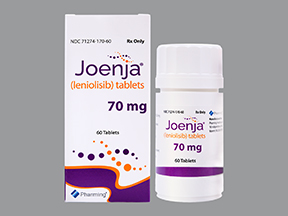 JOENJA 70 MG TABLET
The following indications for JOENJA (leniolisib phosphate) have been approved by the FDA:
Indications:
Activated phosphoinositide 3-kinase delta syndrome
Professional Synonyms:
None.
Indications:
Activated phosphoinositide 3-kinase delta syndrome
Professional Synonyms:
None.
The following dosing information is available for JOENJA (leniolisib phosphate):
Dosage of leniolisib phosphate is expressed in terms of leniolisib.
Administer leniolisib orally with or without food. Leniolisib phosphate is available as tablets containing 70 mg of leniolisib. If a dose is missed by more than 6 hours, wait and take the next dose at the usual time.
If vomiting occurs within 1 hour after taking leniolisib, take another dose as soon as possible. If vomiting occurs more than 1 hour after dosing, wait and take the next dose at the usual time. Store leniolisib tablets at 20-25degreesC (excursions permitted between 15-30degreesC). Do not refrigerate.
If vomiting occurs within 1 hour after taking leniolisib, take another dose as soon as possible. If vomiting occurs more than 1 hour after dosing, wait and take the next dose at the usual time. Store leniolisib tablets at 20-25degreesC (excursions permitted between 15-30degreesC). Do not refrigerate.
| DRUG LABEL | DOSING TYPE | DOSING INSTRUCTIONS |
|---|---|---|
| JOENJA 70 MG TABLET | Maintenance | Adults take 1 tablet (70 mg) by oral route 2 times per day approximately 12 hours apart |
No generic dosing information available.
The following drug interaction information is available for JOENJA (leniolisib phosphate):
There are 12 contraindications.
These drug combinations generally should not be dispensed or administered to the same patient. A manufacturer label warning that indicates the contraindication warrants inclusion of a drug combination in this category, regardless of clinical evidence or lack of clinical evidence to support the contraindication.
| Drug Interaction | Drug Names |
|---|---|
| Efalizumab; Natalizumab/Immunosuppressives; Immunomodulators SEVERITY LEVEL: 1-Contraindicated Drug Combination: This drug combination is contraindicated and generally should not be dispensed or administered to the same patient. MECHANISM OF ACTION: Natalizumab,(1-3) efalizumab,(4) immunosuppressives, and immunomodulators all suppress the immune system. CLINICAL EFFECTS: Concurrent use of natalizumab(1-3) or efalizumab(4) with immunosuppressives or immunomodulators may result in an increased risk of infections, including progressive multifocal leukoencephalopathy (PML), an opportunistic infection caused by the JC virus (JCV). PREDISPOSING FACTORS: Previous JCV infection, longer duration of natalizumab treatment - especially if greater than 2 years, and prior or concomitant treatment with immunosuppressant medication are all independent risk factors which increase the risk for PML.(1,5) The FDA has estimated PML incidence stratified by risk factors: If anti-JCV antibody positive, no prior immunosuppressant use and natalizumab treatment less than 25 months, incidence <1/1,000. If anti-JCV antibody positive, history of prior immunosuppressant use and natalizumab treatment less than 25 months, incidence 2/1,000 If anti-JCV antibody positive, no prior immunosuppressant use and natalizumab treatment 25-48 months, incidence 4/1,000 If anti-JCV antibody positive, history of prior immunosuppressant use and natalizumab treatment 25-48 months, incidence 11/1,000. PATIENT MANAGEMENT: The US manufacturer of natalizumab states patients with Crohn's disease should not receive concurrent immunosuppressants, with the exception of limited overlap of corticosteroids, due to the increased risk for PML. For new natalizumab patients currently receiving chronic oral corticosteroids for Crohn's Disease, begin corticosteroid taper when therapeutic response to natalizumab has occurred. If corticosteroids cannot be discontinued within six months of starting natalizumab, discontinue natalizumab.(3) The US manufacturer of natalizumab states that natalizumab should not ordinarily be used in multiple sclerosis patients receiving immunosuppressants or immunomodulators due to the increased risk for PML. Immunosuppressives include, but are not limited to azathioprine, cyclophosphamide, cyclosporine, mercaptopurine, methotrexate, mitoxantrone, mycophenolate, and corticosteroids.(3,6) The UK manufacturer of natalizumab states that concurrent use with immunosuppressives or antineoplastic agents is contraindicated.(1) The Canadian manufacturer of natalizumab states that natalizumab should not be used with immunosuppressive or immunomodulatory agents.(2) The US manufacturer of certolizumab states that concurrent therapy with natalizumab is not recommended.(7) DISCUSSION: Progressive multifocal leukoencephalopathy has been reported in patients receiving concurrent natalizumab were recently or concomitantly taking immunomodulators or immunosuppressants.(1-5,8,9) In a retrospective cohort study of multiple sclerosis patients newly initiated on a disease-modifying therapy, use of high-efficacy agents (alemtuzumab, natalizumab, or ocrelizumab) resulted in the same risk of overall infections as moderate-efficacy agents, but there was an elevated risk of serious infections (adjusted hazard ratio [aHR] = 1.24, 95% confidence interval (CI) = 1.06-1.44) and UTIs (aHR = 1.21, 95% CI = 1.14-1.30).(10) |
TYRUKO, TYSABRI |
| Talimogene laherparepvec/Selected Immunosuppressants SEVERITY LEVEL: 1-Contraindicated Drug Combination: This drug combination is contraindicated and generally should not be dispensed or administered to the same patient. MECHANISM OF ACTION: Talimogene laherparepvec is a live, attenuated herpes simplex virus.(1) CLINICAL EFFECTS: Concurrent use of talimogene laherparepvec in patients receiving immunosuppressive therapy may cause a life-threatening disseminated herpetic infection.(1) PREDISPOSING FACTORS: None determined. PATIENT MANAGEMENT: Talimogene laherparepvec is contraindicated in immunosuppressed patients.(1) The magnitude of immunocompromise and associated risks due to immunosuppressant drugs should be determined by a physician. DISCUSSION: Concurrent use of talimogene laherparepvec in patients receiving immunosuppressive therapy may cause a life-threatening disseminated herpetic infection.(1) |
IMLYGIC |
| Elbasvir-Grazoprevir/OATP1B1-3 Inhibitors SEVERITY LEVEL: 1-Contraindicated Drug Combination: This drug combination is contraindicated and generally should not be dispensed or administered to the same patient. MECHANISM OF ACTION: Inhibitors of OATP1B1/3 may decrease the hepatocyte uptake and increase the plasma concentrations of elbasvir and grazoprevir.(1-3) CLINICAL EFFECTS: Concurrent use of an inhibitor of OATP1B1/3 may result in elevated levels of grazoprevir and an increased risk of ALT elevations.(1-3) PREDISPOSING FACTORS: None determined. PATIENT MANAGEMENT: Concurrent use of elbasvir-grazoprevir and OATP1B1/3 inhibitors is contraindicated.(1-2,4) If concurrent use is deemed medically necessary, monitor the patient for toxicity and elevated AST levels. DISCUSSION: In a study in 10 subjects, atazanavir/ritonavir (300/100 mg daily) increased the maximum concentration (Cmax), area-under-curve (AUC), and minimum concentration (Cmin) of elbasvir (50 mg daily) by 4.15-fold, 4.76-fold, and 6.45-fold, respectively. There were no clinically significant effects on atazanavir levels.(1,2) In a study in 12 subjects, atazanavir/ritonavir (300/100 mg daily) increased the Cmax, AUC, and Cmin of grazoprevir (200 mg daily) by 6.24-fold, 10.58-fold, and 11.64-fold, respectively. There were no clinically significant effects on atazanavir levels.(1,2) In a study in 14 subjects, cyclosporine (400 mg single dose) increased the Cmax, AUC, and Cmin of elbasvir (50 mg daily) by 1.95-fold, 1.98-fold, and 2.21-fold, respectively. The Cmax, AUC, and Cmin of grazoprevir (200 mg daily) increased by 17-fold, 15.21-fold, and 3.39-fold, respectively. There were no clinically significant effects on cyclosporine levels.(1,2) In a study in 10 subjects, darunavir/ritonavir (600/100 mg twice daily) increased the Cmax, AUC, and Cmin of elbasvir (50 mg daily) by 1.67-fold, 1.66-fold, and 1.82-fold, respectively. There were no clinically significant effects on darunavir levels.(1,2) In a study in 13 subjects, darunavir/ritonavir (600/100 mg twice daily) increased the Cmax, AUC, and Cmin of grazoprevir (200 mg daily) by 5.27-fold, 7.50-fold, and 8.05-fold, respectively. There were no clinically significant effects on darunavir levels.(1,2) In a study in 10 subjects, lopinavir/ritonavir (400/100 mg twice daily) increased the Cmax, AUC, and Cmin of elbasvir (50 mg daily) by 2.87-fold, 3.71-fold, and 4.58-fold, respectively. There were no clinically significant effects on lopinavir levels.(1,2) In a study in 13 subjects, lopinavir/ritonavir (400/100 mg twice daily) increased the Cmax, AUC, and Cmin of grazoprevir (200 mg daily) by 7.31-fold, 12.86-fold, and 21.70-fold, respectively. There were no clinically significant effects on lopinavir levels.(1,2) In single dose studies, rifampin increased levels of both elbasvir and grazoprevir. In a study in 14 subjects, rifampin (600 mg single IV dose) increased the Cmax, AUC, and Cmin of a single dose of elbasvir (50 mg) by 41%, 22%, and 31%, respectively. In a study in 14 subjects, rifampin (600 mg single oral dose) increased the Cmax, AUC, and Cmin of a single dose of elbasvir (50 mg) by 29%, 17%, and 21%, respectively. In a study in 12 subjects, rifampin (600 mg single IV dose) increased the Cmax, AUC, and Cmin of a single dose of grazoprevir (200 mg) by 10.94-fold, 10.21-fold, and 1.77-fold, respectively. In a study in 12 subjects, rifampin (600 mg single oral dose) increased the Cmax, AUC, and Cmin of a single dose of grazoprevir (200 mg) by 6.52-fold, 8.35-fold, and 1.61-fold, respectively.(1) OATP1B1/3 inhibitors include: atazanavir, belumosudil, cyclosporine, darunavir, fostemsavir, leniolisib, letermovir, lopinavir, nirmatrelvir/ritonavir, paritaprevir, resmetirom, roxadustat, saquinavir, tipranavir, vadadustat, and voclosporin.(1-3) |
ZEPATIER |
| Pazopanib/Selected Inhibitors of P-gp or BCRP SEVERITY LEVEL: 1-Contraindicated Drug Combination: This drug combination is contraindicated and generally should not be dispensed or administered to the same patient. MECHANISM OF ACTION: Inhibitors of P-glycoprotein (P-gp) or BCRP may increase the absorption of pazopanib.(1) CLINICAL EFFECTS: The concurrent administration of pazopanib with an inhibitor of P-glycoprotein or BCRP may result in elevated levels of pazopanib and signs of toxicity.(1) PREDISPOSING FACTORS: The risk of QT prolongation or torsade de pointes may be increased in patients with cardiovascular disease (e.g. heart failure, myocardial infarction, history of torsade de pointes, congenital long QT syndrome), hypokalemia, hypomagnesemia, hypocalcemia, bradycardia, female gender, or advanced age.(2) Concurrent use of more than one drug known to cause QT prolongation or higher systemic concentrations of either QT prolonging drug are additional risk factors for torsade de pointes. Factors which may increase systemic drug concentrations include rapid infusion of an intravenous dose or impaired metabolism or elimination of the drug (e.g. coadministration with an agent which inhibits its metabolism or elimination, and/or renal/hepatic dysfunction).(2) PATIENT MANAGEMENT: The US manufacturer of pazopanib states concurrent use of P-gp inhibitors or BCRP inhibitors should be avoided.(1) Monitor patients for increased side effects from pazopanib. If concurrent therapy is warranted, consider obtaining serum calcium, magnesium, and potassium levels and monitoring ECG at baseline and at regular intervals. Correct any electrolyte abnormalities. Instruct patients to report any irregular heartbeat, dizziness, or fainting. DISCUSSION: Pazopanib is a substrate of P-gp and BCRP. Inhibitors of these transporters are expected to increase pazopanib levels.(1) BCRP inhibitors linked to this monograph include: asciminib, belumosudil, clopidogrel, cyclosporine, curcumin, darolutamide, eltrombopag, enasidenib, febuxostat, fostemsavir, grazoprevir, lazertinib, leflunomide, leniolisib, momelotinib, oteseconazole, pirtobrutinib, regorafenib, resmetirom, ritonavir, rolapitant, roxadustat, tafamidis, teriflunomide, tolvaptan, turmeric, vadadustat, and zongertinib.(1,3-5) P-glycoprotein inhibitors linked to this monograph include: asunaprevir, belumosudil, capmatinib, carvedilol, cyclosporine, danicopan, daridorexant, diltiazem, flibanserin, fostamatinib, ginseng, glecaprevir/pibrentasvir, imlunestrant, isavuconazonium, ivacaftor, ledipasvir, neratinib, sofosbuvir/velpatasvir/voxilaprevir, tepotinib, tezacaftor, ticagrelor, valbenazine, verapamil, vimseltinib, and voclosporin.(3,4) |
PAZOPANIB HCL, VOTRIENT |
| Zavegepant/OATP1B3 Inhibitors SEVERITY LEVEL: 1-Contraindicated Drug Combination: This drug combination is contraindicated and generally should not be dispensed or administered to the same patient. MECHANISM OF ACTION: Zavegepant is a substrate of the organic anion transporting polypeptide 1B3 (OATP1B3) transporter. Inhibitors of OATP1B3 may increase zavegepant exposure.(1) CLINICAL EFFECTS: Concurrent use of OATP1B3 inhibitors may result in increased levels of and toxicity from zavegepant.(1) PREDISPOSING FACTORS: None determined. PATIENT MANAGEMENT: Concurrent administration of zavegepant with OATP1B3 inhibitors should be avoided.(1) DISCUSSION: In a study, rifampin (an OATP1B3 and NTCP inhibitor) at steady state increased the area-under-curve (AUC) and maximum concentration (Cmax) of zavegepant by 2.3-fold and 2.2-fold. Since rifampin is also a CYP3A4 inducer and zavegepant is metabolized by CYP3A4, concurrent use of zavegepant with other OATP1B3 inhibitors that are not CYP3A4 inducers may have an even more significant effect on zavegepant exposure.(1) OATP1B3 inhibitors include: atazanavir, belumosudil, cobicistat, cyclosporine, darolutamide, enasidenib, encorafenib, fostemsavir, glecaprevir/pibrentasvir, leflunomide, leniolisib, letermovir, lopinavir/ritonavir, paritaprevir, resmetirom, rifampin, ritonavir, teriflunomide, velpatasvir, voclosporin, and voxilaprevir.(2-9) |
ZAVZPRET |
| Leniolisib/Strong CYP3A4 Inhibitors SEVERITY LEVEL: 1-Contraindicated Drug Combination: This drug combination is contraindicated and generally should not be dispensed or administered to the same patient. MECHANISM OF ACTION: Strong inhibitors of CYP3A4 may inhibit the metabolism of leniolisib.(1) CLINICAL EFFECTS: Concurrent use of a strong inhibitor of CYP3A4 may result in increased levels of and effects from leniolisib including neutropenia.(1) Common side effects may also include sinusitis.(1) PREDISPOSING FACTORS: None determined. PATIENT MANAGEMENT: The concurrent use of strong CYP3A4 inhibitors with leniolisib should be avoided.(1) DISCUSSION: Leniolisib exposure was increased 2-fold when coadministered with itraconazole, a strong CYP3A4 inhibitor.(1) Strong inhibitors of CYP3A4 include: adagrasib, boceprevir, ceritinib, clarithromycin, cobicistat, idelalisib, indinavir, itraconazole, josamycin, ketoconazole, levoketoconazole, lopinavir, mibefradil, mifepristone, nefazodone, nelfinavir, nirmatrelvir, paritaprevir, posaconazole, ribociclib, saquinavir, telaprevir, telithromycin, tipranavir, troleandomycin, tucatinib, and voriconazole.(2) |
APTIVUS, CLARITHROMYCIN, CLARITHROMYCIN ER, EVOTAZ, GENVOYA, ITRACONAZOLE, ITRACONAZOLE MICRONIZED, KALETRA, KETOCONAZOLE, KISQALI, KORLYM, KRAZATI, LANSOPRAZOL-AMOXICIL-CLARITHRO, LOPINAVIR-RITONAVIR, MIFEPREX, MIFEPRISTONE, NEFAZODONE HCL, NOXAFIL, OMECLAMOX-PAK, PAXLOVID, POSACONAZOLE, PREZCOBIX, RECORLEV, SPORANOX, STRIBILD, SYMTUZA, TOLSURA, TUKYSA, VFEND, VFEND IV, VIRACEPT, VOQUEZNA TRIPLE PAK, VORICONAZOLE, VORICONAZOLE (HPBCD), ZYDELIG, ZYKADIA |
| Leniolisib/Strong and Moderate CYP3A4 Inducers SEVERITY LEVEL: 1-Contraindicated Drug Combination: This drug combination is contraindicated and generally should not be dispensed or administered to the same patient. MECHANISM OF ACTION: Leniolisib is metabolized by CYP3A4. Strong and moderate inducers of CYP3A4 may increase the metabolism of leniolisib.(1) CLINICAL EFFECTS: Concurrent use of a strong or moderate inducer of CYP3A4 may result in decreased levels and effectiveness of leniolisib.(1) PREDISPOSING FACTORS: Induction effects may be more likely with regular use of the inducer for longer than 1-2 weeks. PATIENT MANAGEMENT: Avoid concomitant use of leniolisib with strong or moderate CYP3A4 inducers.(1) DISCUSSION: PBPK model-based simulations predicted a maximum decrease of 78% and 58% in leniolisib area-under-curve (AUC) with rifampin (strong CYP3A4 inducer) and efavirenz (moderate CYP3A4 inducer), respectively.(1) Strong inducers of CYP3A4 include: apalutamide, barbiturates, carbamazepine, encorafenib, enzalutamide, fosphenytoin, ivosidenib, lumacaftor, mitotane, phenobarbital, phenytoin, primidone, rifampin, rifapentine, and St. John's wort.(2,3) Moderate inducers of CYP3A4 include: belzutifan, cenobamate, dabrafenib, dipyrone, efavirenz, elagolix, etravirine, lesinurad, lorlatinib, mavacamten, mitapivat, modafinil, nafcillin, pacritinib, pexidartinib, repotrectinib, rifabutin, sotorasib, telotristat, thioridazine, and tovorafenib.(2,3) |
AQVESME, ASA-BUTALB-CAFFEINE-CODEINE, ASCOMP WITH CODEINE, AUGTYRO, BRAFTOVI, BUTALB-ACETAMINOPH-CAFF-CODEIN, BUTALBITAL, BUTALBITAL-ACETAMINOPHEN, BUTALBITAL-ACETAMINOPHEN-CAFFE, BUTALBITAL-ASPIRIN-CAFFEINE, CAMZYOS, CARBAMAZEPINE, CARBAMAZEPINE ER, CARBATROL, CEREBYX, DILANTIN, DILANTIN-125, DONNATAL, EFAVIRENZ, EFAVIRENZ-EMTRIC-TENOFOV DISOP, EFAVIRENZ-LAMIVU-TENOFOV DISOP, EQUETRO, ERLEADA, ETRAVIRINE, FIORICET, FOSPHENYTOIN SODIUM, INTELENCE, LORBRENA, LUMAKRAS, LYSODREN, MITOTANE, MODAFINIL, MYSOLINE, NAFCILLIN, NAFCILLIN SODIUM, OJEMDA, ORKAMBI, PENTOBARBITAL SODIUM, PHENOBARBITAL, PHENOBARBITAL SODIUM, PHENOBARBITAL-BELLADONNA, PHENOBARBITAL-HYOSC-ATROP-SCOP, PHENOHYTRO, PHENYTEK, PHENYTOIN, PHENYTOIN SODIUM, PHENYTOIN SODIUM EXTENDED, PRIFTIN, PRIMIDONE, PROVIGIL, PYRUKYND, RIFABUTIN, RIFADIN, RIFAMPIN, SEZABY, SYMFI, TAFINLAR, TALICIA, TEGRETOL, TEGRETOL XR, TENCON, THIORIDAZINE HCL, THIORIDAZINE HYDROCHLORIDE, TIBSOVO, TURALIO, VONJO, WELIREG, XCOPRI, XERMELO, XTANDI |
| Atrasentan/OATP1B1-3 Inhibitors SEVERITY LEVEL: 1-Contraindicated Drug Combination: This drug combination is contraindicated and generally should not be dispensed or administered to the same patient. MECHANISM OF ACTION: OATP1B1 and 1B3 inhibitors may increase the absorption and/or decrease the hepatic uptake of atrasentan.(1) CLINICAL EFFECTS: Concurrent use of OATP1B1 or 1B3 inhibitors may result in elevated levels of and side effects from atrasentan, including fluid retention and hepatotoxicity.(1) PREDISPOSING FACTORS: None determined. PATIENT MANAGEMENT: The manufacturer of atrasentan states that concurrent use of OATP1B1 or 1B3 inhibitors should be avoided.(1) DISCUSSION: In a clinical study, atrasentan maximum concentration (Cmax) was 4.3 times higher and area-under-curve (AUC) was 3.8 times higher following coadministration of a single dose of 0.75 mg atrasentan with cyclosporine (OATP1B1 and 1B3 inhibitor) compared to atrasentan alone. OATP1B1 and OATP1B3 inhibitors include: atazanavir, belumosudil, boceprevir, clarithromycin, cobicistat, cyclosporine, eltrombopag, erythromycin, fostemsavir, gemfibrozil, glecaprevir-pibrentasvir, leflunomide, leniolisib, letermovir, lopinavir, nirmatrelvir, ombitasvir-paritaprevir, resmetirom, ritonavir, roxadustat, saquinavir, simeprevir, telaprevir, teriflunomide, tipranavir, vadadustat, velpatasvir, voclosporin, and voxilaprevir.(1,2) |
VANRAFIA |
| BCRP, OATP1B1, and OATP1B3 Substrates/Leniolisib SEVERITY LEVEL: 1-Contraindicated Drug Combination: This drug combination is contraindicated and generally should not be dispensed or administered to the same patient. MECHANISM OF ACTION: Leniolisib is an inhibitor of the BCRP, OATP1B1, and OATP1B3 transporters and may increase the absorption and/or decrease the elimination of drugs that are substrates of these transporters.(1) CLINICAL EFFECTS: Concurrent use of leniolisib with drugs that are substrates of the BCRP, OATP1B1, and OATP1B3 transporters may result in increased toxicity of the substrate.(1) PREDISPOSING FACTORS: None determined. PATIENT MANAGEMENT: Avoid coadministration of leniolisib with substrates of BCRP, OATP1B1, and OATP1B3.(1) DISCUSSION: When co-administered, leniolisib increased rosuvastatin (a substrate of BCRP, OATP1B1, and OATP1B3) systemic exposure by 2-fold.(1) Substrates of BCRP, OATP1B1, and OATP1B3 that are linked to this monograph include: diclofenac, fluvastatin, glecaprevir, glyburide, imatinib, irinotecan, letermovir, lovastatin, methotrexate, mitoxantrone, momelotinib, paritaprevir, pitavastatin, pravastatin, repaglinide, simvastatin, and sulfasalazine.(1,2) |
ARTHROTEC 50, ARTHROTEC 75, AZULFIDINE, CAMBIA, CAMPTOSAR, DICLOFENAC, DICLOFENAC EPOLAMINE, DICLOFENAC POTASSIUM, DICLOFENAC SODIUM, DICLOFENAC SODIUM ER, DICLOFENAC SODIUM MICRONIZED, DICLOFENAC SODIUM-MISOPROSTOL, EZETIMIBE-SIMVASTATIN, FLECTOR, FLOLIPID, FLUVASTATIN ER, FLUVASTATIN SODIUM, GLEEVEC, GLYBURIDE, GLYBURIDE-METFORMIN HCL, IMATINIB MESYLATE, IMKELDI, INFLAMMACIN, INFLATHERM(DICLOFENAC-MENTHOL), IRINOTECAN HCL, JYLAMVO, LEFLUNICLO, LESCOL XL, LICART, LIVALO, LOFENA, LOVASTATIN, MAVYRET, METHOTREXATE, METHOTREXATE SODIUM, METHOTREXATE-NACL, MITOXANTRONE HCL, OJJAARA, ONIVYDE, PITAVASTATIN CALCIUM, PRAVASTATIN SODIUM, PREVYMIS, RASUVO, REPAGLINIDE, SIMVASTATIN, SULFASALAZINE, SULFASALAZINE DR, TRESNI, TREXALL, VYTORIN, XATMEP, ZIPSOR, ZOCOR, ZORVOLEX, ZYPITAMAG |
| BCRP, OATP1B1, and OATP1B3 Substrates that Prolong QT/Leniolisib SEVERITY LEVEL: 1-Contraindicated Drug Combination: This drug combination is contraindicated and generally should not be dispensed or administered to the same patient. MECHANISM OF ACTION: Leniolisib is an inhibitor of the BCRP, OATP1B1, and OATP1B3 transporters and may increase the absorption and/or decrease the elimination of drugs that are substrates of these transporters.(1) CLINICAL EFFECTS: Concurrent use of leniolisib with drugs that are substrates of the BCRP, OATP1B1, and OATP1B3 transporters may result in increased toxicity of the substrate, including QTc prolongation, which may lead to life-threatening cardiac arrhythmias like torsade de pointes.(1) PREDISPOSING FACTORS: The risk of QT prolongation or torsade de pointes may be increased in patients with cardiovascular disease (e.g. heart failure, myocardial infarction, history of torsade de pointes, congenital long QT syndrome), hypokalemia, hypomagnesemia, hypocalcemia, bradycardia, female gender, or advanced age.(2) Concurrent use of more than one drug known to cause QT prolongation or higher systemic concentrations of either QT prolonging drug are additional risk factors for torsade de pointes. Factors which may increase systemic drug concentrations include rapid infusion of an intravenous dose or impaired metabolism or elimination of the drug (e.g. coadministration with an agent which inhibits its metabolism or elimination, genetic impairment in drug metabolism or elimination, and/or renal/hepatic dysfunction).(2) PATIENT MANAGEMENT: Avoid coadministration of leniolisib with substrates of BCRP, OATP1B1, and OATP1B3.(1) If concurrent therapy is warranted, consider obtaining serum calcium, magnesium, and potassium levels and monitoring ECG at baseline and at regular intervals. Correct any electrolyte abnormalities. Instruct patients to report any irregular heartbeat, dizziness, or fainting. DISCUSSION: When co-administered, leniolisib increased rosuvastatin (a substrate of BCRP, OATP1B1, and OATP1B3) systemic exposure by 2-fold.(1) Agents that are linked to this monograph may have varying degrees of potential to prolong the QTc interval but are generally accepted to have a risk of causing Torsades de Pointes. Agents linked to this monograph have been shown to prolong the QTc interval either through their mechanism of action, through studies on their effects on the QTc interval, or through reports of QTc prolongation and/or Torsades de Pointes in clinical trials and/or post-marketing reports.(4) Substrates of BCRP, OATP1B1, and OATP1B3 that prolong QT that are linked to this monograph include: ciprofloxacin, lapatinib.(1,4) |
CIPRO, CIPROFLOXACIN, CIPROFLOXACIN HCL, CIPROFLOXACIN-D5W, LAPATINIB, TYKERB |
| Topotecan/Selected Inhibitors of BCRP with Myelosuppression SEVERITY LEVEL: 1-Contraindicated Drug Combination: This drug combination is contraindicated and generally should not be dispensed or administered to the same patient. MECHANISM OF ACTION: Inhibitors of the BCRP transporter may increase the intestinal absorption and hepatic uptake of topotecan.(1) Also, topotecan in combination with myelosuppressive agents may result in additive or synergistic effects on the immune system.(1) CLINICAL EFFECTS: The concurrent administration of topotecan with an inhibitor of BCRP may result in elevated levels of topotecan and signs of toxicity. These signs may include but are not limited to anemia, diarrhea, thrombocytopenia, and increased risk of serious infections.(1) PREDISPOSING FACTORS: None determined. PATIENT MANAGEMENT: The US manufacturer of topotecan states that the use of topotecan and BCRP inhibitors should be avoided. If concurrent use is warranted, carefully monitor patients for adverse effects.(1) DISCUSSION: In clinical studies, the combined use of elacridar (100 mg to 1000 mg), a BCRP and P-gp inhibitor, increased the area-under-curve (AUC) of topotecan approximately 2.5-fold.(1) BCRP inhibitors linked to this monograph include: cyclosporine, encorafenib, leflunomide, leniolisib, momelotinib, and teriflunomide.(2,3) |
HYCAMTIN, TOPOTECAN HCL |
| Ubrogepant (Greater Than 50 mg)/P-gp or BCRP Inhibitors SEVERITY LEVEL: 1-Contraindicated Drug Combination: This drug combination is contraindicated and generally should not be dispensed or administered to the same patient. MECHANISM OF ACTION: Inhibitors of P-glycoprotein (P-gp) or BCRP may increase the absorption of ubrogepant.(1) CLINICAL EFFECTS: The concurrent administration of ubrogepant with an inhibitor of P-glycoprotein or BCRP may result in elevated levels of ubrogepant.(1) PREDISPOSING FACTORS: None determined. PATIENT MANAGEMENT: The manufacturer recommends a dosage adjustment of ubrogepant when coadministered with P-gp or BCRP inhibitors. The dose of ubrogepant should not exceed 50 mg for initial dose. If a second dose of ubrogepant is needed, the dose should not exceed 50 mg.(1) For patients on concurrent therapy with vimseltinib and ubrogepant: the manufacturer of vimseltinib states concurrent use with P-gp substrates should be avoided. If concurrent use cannot be avoided, take vimseltinib at least 4 hours prior to ubrogepant.(3) DISCUSSION: Ubrogepant is a substrate of P-gp and BCRP transporters. Use of P-gp or BCRP inhibitors may increase the exposure of ubrogepant. Clinical drug interaction studies with inhibitors of these transporters were not conducted. The US manufacturer of ubrogepant recommends dose adjustment if ubrogepant is coadministered with P-gp or BCRP inhibitors.(1) BCRP inhibitors linked to this monograph include: belumosudil, clopidogrel, curcumin, eltrombopag, febuxostat, fostemsavir, leniolisib, momelotinib, oteseconazole, regorafenib, resmetirom, ritonavir, rolapitant, roxadustat, tafamidis, oral tedizolid, turmeric, vadadustat, and zongertinib.(2-5) P-glycoprotein inhibitors linked to this monograph include: asunaprevir, belumosudil, capmatinib, carvedilol, danicopan, daridorexant, imlunestrant, neratinib, osimertinib, propafenone, quinidine, selpercatinib, sofosbuvir/velpatasvir/voxilaprevir, tepotinib, valbenazine, vimseltinib, and voclosporin.(2-5) |
UBRELVY |
There are 26 severe interactions.
These drug interactions can produce serious consequences in most patients. Actions required for severe interactions include, but are not limited to, discontinuing one or both agents, adjusting dosage, altering administration scheduling, and providing additional patient monitoring. Review the full interaction monograph for more information.
| Drug Interaction | Drug Names |
|---|---|
| Deferiprone/Selected Myelosuppressive Agents SEVERITY LEVEL: 2-Severe Interaction: Action is required to reduce the risk of severe adverse interaction. MECHANISM OF ACTION: Concurrent use of deferiprone with other drugs known to be associated with neutropenia or agranulocytosis may increase the frequency or risk for severe toxicity.(1) CLINICAL EFFECTS: Concurrent use of deferiprone and myelosuppressive agents may result in severe neutropenia or agranulocytosis, which may be fatal. PREDISPOSING FACTORS: Agranulocytosis may be less common in patients receiving deferiprone for thalassemia, and more common in patients treated for other systemic iron overload conditions (e.g. myelodysplastic syndromes, sickle cell disease).(2,3) Inadequate monitoring appears to increase the risk for severe outcomes. Manufacturer post market surveillance found that in all fatal cases of agranulocytosis reported between 1999 and 2005, data on weekly white blood count (WBC) monitoring was missing. In three fatal cases, deferiprone was continued for two to seven days after the detection of neutropenia or agranulocytosis.(2) PATIENT MANAGEMENT: If possible, discontinue one of the drugs associated with risk for neutropenia or agranulocytosis. If alternative therapy is not available, documentation and adherence to the deferiprone monitoring protocol is essential. Baseline absolute neutrophil count (ANC) must be at least 1,500/uL prior to starting deferiprone. Monitor ANC weekly during therapy. If infection develops, interrupt deferiprone therapy and monitor ANC more frequently. If ANC is less than 1,500/uL but greater than 500/uL, discontinue deferiprone and any other drugs possibly associated with neutropenia. Initiate ANC and platelet counts daily until recovery (i.e. ANC at least 1,500/uL). If ANC is less than 500/uL, discontinue deferiprone, evaluate patient and hospitalize if appropriate. Do not resume deferiprone unless potential benefits outweigh potential risks.(1) DISCUSSION: Drugs linked to this monograph have an FDA Boxed Warning for risk of neutropenia, agranulocytosis, or pancytopenia, or have > 5% risk for neutropenia and/or warnings describing risk for myelosuppression in manufacturer prescribing information.(1-25) In pooled clinical studies submitted to the FDA, 6.1% of deferiprone patients met criteria for neutropenia and 1.7% of patients developed agranulocytosis.(1) The time to onset of agranulocytosis was highly variable with a range of 65 days to 9.2 years (median, 161 days).(3) |
DEFERIPRONE, DEFERIPRONE (3 TIMES A DAY), FERRIPROX, FERRIPROX (2 TIMES A DAY), FERRIPROX (3 TIMES A DAY) |
| Tofacitinib/Immunosuppressives; Immunomodulators SEVERITY LEVEL: 2-Severe Interaction: Action is required to reduce the risk of severe adverse interaction. MECHANISM OF ACTION: Concurrent use of tofacitinib and azathioprine, other biologic disease-modifying antirheumatic drugs (DMARDs), or potent immunosuppressants may result in additive or synergistic effects on the immune system.(1) CLINICAL EFFECTS: Concurrent use of tofacitinib and azathioprine, other biologic DMARDs, or potent immunosuppressants use may increase the risk of serious infections.(1) PREDISPOSING FACTORS: None determined. PATIENT MANAGEMENT: Tofacitinib should not be used concurrently with azathioprine, other biologic DMARDs, or cyclosporine.(1) Patient should be monitored for decreases in lymphocytes and neutrophils. Therapy should be adjusted based on the indication. - For all indications: If absolute neutrophil count (ANC) or lymphocyte count is less than 500 cells/mm3, discontinue tofacitinib. - For rheumatoid arthritis or psoriatic arthritis and absolute neutrophil count (ANC) 500 to 1000 cells/mm3: interrupt dosing. When ANC is greater than 1000 cells/mm3, resume Xeljanz 5 mg twice daily or Xeljanz XR 11 mg once daily. - For ulcerative colitis and ANC 500 to 1000 cells/mm3: -If taking Xeljanz 10 mg twice daily, decrease to 5 mg twice daily. When ANC is greater than 1000 cells/mm3, increase to 10 mg twice daily based on clinical response. -If taking Xeljanz 5 mg twice daily, interrupt dosing. When ANC is greater than 1000 cells/mm3, resume 5 mg twice daily. -If taking Xeljanz XR 22 mg once daily, decrease to 11 mg once daily. When ANC is greater than 1000 cells/mm3, increase to 22 mg once daily based on clinical response. -If taking Xeljanz XR 11 mg once daily, interrupt dosing. When ANC is greater than 1000 cells/mm3, resume 11 mg once daily. - For polyarticular course juvenile idiopathic arthritis (pcJIA) and ANC 500 to 1000 cells/mm3: interrupt dosing until ANC is greater than 1000 cells/mm3.(1) DISCUSSION: Concurrent use of tofacitinib and azathioprine, other biologic DMARDs, or potent immunosuppressants may increase the risk of infection.(1) Serious infections due to bacterial, mycobacterial, invasive fungal, viral, or other opportunistic pathogens have been reported in patients receiving tofacitinib. Some patients presented with disseminated disease and were often taking concomitant immunomodulating agents. In the ulcerative colitis population, a greater risk of serious infections was seen with a higher tofacitinib dose. In 7 placebo-controlled rheumatoid arthritis trials (0-3 months exposure), the overall frequency of infections was 20% in the tofacitinib 5 mg twice daily group and 22% in the tofacitinib 10 mg twice daily group compared to 18% in the placebo group. Serious infections were reported in 11 patients (1.7 events per 100 patient-years) with a rate difference between treatment groups of 1.1 (-0.4, 2.5) events per 100 patient-years for both tofacitinib 5 mg twice daily and 10 mg twice daily. During 0-12 months exposure, serious infections were reported in 34 patients (2.7 events per 100 patient years) in the tofacitinib 5 mg twice daily group and 33 patients (2.7 events per 100 patient years) in the tofacitinib 10 mg twice daily group.(1) |
TOFACITINIB CITRATE, TOFACITINIB CITRATE ER, XELJANZ, XELJANZ XR |
| Clozapine/Selected Myelosuppressive Agents SEVERITY LEVEL: 2-Severe Interaction: Action is required to reduce the risk of severe adverse interaction. MECHANISM OF ACTION: Clozapine and other myelosuppressive agents may be associated with neutropenia or agranulocytosis.(2) CLINICAL EFFECTS: Moderate neutropenia, even if due to combination therapy, may require abrupt discontinuation of clozapine resulting in decompensation of the patient's psychiatric disorder (e.g. schizophrenia). The disease treated by the myelosuppressive agent may be compromised if myelosuppression requires dose reduction, delay, or discontinuation of the myelosuppressive agent. Undetected severe neutropenia or agranulocytosis may be fatal. PREDISPOSING FACTORS: Low white blood counts prior to initiation of the myelosuppressive agent may increase risk for clinically significant neutropenia. PATIENT MANAGEMENT: If a patient stabilized on clozapine therapy requires treatment with a myelosuppressive agent, the clozapine prescriber should consult with prescriber of the myelosuppressive agent (e.g. oncologist) to discuss treatment and monitoring options.(2) More frequent absolute neutrophil count (ANC) monitoring or treatment alternatives secondary to neutropenic episodes may need to be considered. The U.S. Food and Drug Administration (FDA) recommends that prescribers monitor patients' ANC according to the monitoring frequencies described in the prescribing information. Severe neutropenia remains a serious, potentially fatal risk that is greatest in the first several months of clozapine treatment. ANC monitoring can help identify neutropenia early to allow for timely intervention.(1-2) Australia, Canada, and U.K.: Clozapine is only available through a restricted distribution system which requires documentation of the ANC prior to dispensing. For most clozapine patients, clozapine treatment must be interrupted for a suspected clozapine-induced ANC < 1000 cells/microliter. For patients with benign ethnic neutropenia (BEN), treatment must be interrupted for suspected clozapine-induced neutropenia < 500 cells/microliter.(2) DISCUSSION: Concurrent use of clozapine and selected myelosuppressive agents may require more frequent ANC monitoring or consideration of treatment alternatives secondary to neutropenic episodes. Agents linked to this interaction generally have > 5% risk for neutropenia and/or warnings describing risk for myelosuppression in manufacturer prescribing information.(3-26) |
CLOZAPINE, CLOZAPINE ODT, CLOZARIL, VERSACLOZ |
| Eluxadoline/OATP1B1 Inhibitors SEVERITY LEVEL: 2-Severe Interaction: Action is required to reduce the risk of severe adverse interaction. MECHANISM OF ACTION: OATP1B1 inhibitors may decrease the hepatic uptake of eluxadoline.(1) CLINICAL EFFECTS: Concurrent use of OATP1B1 inhibitors may result in elevated levels of and side effects from eluxadoline, including constipation, nausea, abdominal pain, and impaired mental and physical abilities.(1) PREDISPOSING FACTORS: None determined. PATIENT MANAGEMENT: Patients receiving concurrent OATP1B1 inhibitors should receive a dose of eluxadoline of 75 mg twice daily. Monitor patients for impaired mental or physical abilities, abdominal pain, nausea, and constipation.(1) DISCUSSION: Concurrent administration of a single dose (600 mg) of cyclosporine, an OATP1B1 inhibitor, increased the maximum concentration (Cmax) and area-under-curve (AUC) of a single dose of eluxadoline (100 mg) by 4.4-fold and 6.2-fold, respectively.(1) OATP1B1 inhibitors include: atazanavir, belumosudil, boceprevir, cyclosporine, darunavir, encorafenib, eltrombopag, erythromycin, gemfibrozil, leflunomide, leniolisib, letermovir, lopinavir, paritaprevir, resmetirom, rifampin, ritonavir, roxadustat, saquinavir, simeprevir, telaprevir, teriflunomide, tipranavir, vadadustat, and voclosporin.(1,2) |
VIBERZI |
| Selected Multiple Sclerosis Agents/Immunosuppressants; Immunomodulators SEVERITY LEVEL: 2-Severe Interaction: Action is required to reduce the risk of severe adverse interaction. MECHANISM OF ACTION: Ocrelizumab or ofatumumab in combination with immunosuppressives and immune-modulators all suppress the immune system.(1,2) CLINICAL EFFECTS: Concurrent use of ocrelizumab or ofatumumab with immunosuppressive or immune-modulating agents may result in an increased risk of serious infections, such as disseminated herpetic infection or progressive multifocal leukoencephalopathy (PML), an opportunistic infection caused by the JC virus (JCV).(1,2) PREDISPOSING FACTORS: Incomplete washout of previously prescribed immunosuppressive or immune-modulating medications. PATIENT MANAGEMENT: The ocrelizumab US prescribing information states: - Ocrelizumab and other immune-modulating or immunosuppressive therapies, (including immunosuppressant doses of corticosteroids) are expected to increase the risk of immunosuppression, and the risk of additive immune system effects must be considered if these therapies are coadministered with ocrelizumab. When switching from drugs with prolonged immune effects, such as daclizumab, fingolimod, natalizumab, teriflunomide, or mitoxantrone, the duration and mode of action of these drugs must be considered to avoid unintended additive immunosuppressive effects when initiating ocrelizumab.(1) The ofatumumab US prescribing information states: - Ofatumumab and other immunosuppressive therapies (including systemic corticosteroids) may have the potential for increased immunosuppressive effects and increase the risk of infection. When switching between therapies, the duration and mechanism of action of each therapy should be considered due to the potential for additive immunosuppressive effects. Ofatumumab for MS therapy has not been studied in combination with other MS agents that suppress the immune system.(2) DISCUSSION: Fatal disseminated herpes zoster and herpes simplex infections and cases of progressive multifocal leukoencephalopathy (PML) have been reported in patients who previously received immunomodulators or immunosuppressants.(1,2) In a retrospective cohort study of multiple sclerosis patients newly initiated on a disease-modifying therapy, use of high-efficacy agents (alemtuzumab, natalizumab, or ocrelizumab) resulted in the same risk of overall infections as moderate-efficacy agents, but there was an elevated risk of serious infections (adjusted hazard ratio [aHR] = 1.24, 95% confidence interval (CI) = 1.06-1.44) and UTIs (aHR = 1.21, 95% CI = 1.14-1.30).(3) |
KESIMPTA PEN, OCREVUS, OCREVUS ZUNOVO |
| Voxilaprevir/Selected OATP1B1-3 Inhibitors SEVERITY LEVEL: 2-Severe Interaction: Action is required to reduce the risk of severe adverse interaction. MECHANISM OF ACTION: OATP1B1 and OATP1B3 inhibitors may increase exposure to voxilaprevir.(1) CLINICAL EFFECTS: Concurrent use of OATP1B1 and OATP1B3 inhibitors may result in increased levels of and toxicity from voxilaprevir.(1) PREDISPOSING FACTORS: None determined. PATIENT MANAGEMENT: Concurrent administration of voxilaprevir with OATP1B1 and OATP1B3 inhibitors is not recommended.(1,4) If concurrent therapy is warranted, monitor patients for adverse effects. The American Society of Transplantation guidelines state that the combination of voxilaprevir and cyclosporine is contraindicated.(3) DISCUSSION: In a study in 25 subjects, cyclosporine (600 mg single dose) increased the maximum concentration (Cmax) and area-under-curve (AUC) of voxilaprevir (100 mg single dose) by 19.02-fold and 9.39-fold, respectively. There were no significant effects on cyclosporine levels.(1) OATP inhibitors include: atazanavir, belumosudil, cyclosporine, encorafenib, fostemsavir, leniolisib, letermovir, lopinavir, paritaprevir, resmetirom, roxadustat, vadadustat, and voclosporin.(1,2,4) |
VOSEVI |
| Upadacitinib/Immunosuppressives; Immunomodulators SEVERITY LEVEL: 2-Severe Interaction: Action is required to reduce the risk of severe adverse interaction. MECHANISM OF ACTION: Upadacitinib, immunosuppressives, and immunomodulators all suppress the immune system. CLINICAL EFFECTS: Concurrent use of upadacitinib with immunosuppressives or immunomodulators may result in an increased risk of serious infections. PREDISPOSING FACTORS: None determined. PATIENT MANAGEMENT: The US manufacturer of upadacitinib states that concurrent use of upadacitinib with immunosuppressives or immunomodulators is not recommended. DISCUSSION: Serious infections have been reported in patients receiving upadacitinib. Reported infections included pneumonia, cellulitis, tuberculosis, multidermatomal herpes zoster, oral/esophageal candidiasis, cryptococcosis. Reports of viral reactivation, including herpes virus reactivation and hepatitis B reactivation, were reported in clinical studies with upadacitinib.(1) |
RINVOQ, RINVOQ LQ |
| Inebilizumab/Immunosuppressives; Immunomodulators SEVERITY LEVEL: 2-Severe Interaction: Action is required to reduce the risk of severe adverse interaction. MECHANISM OF ACTION: Inebilizumab, immunosuppressives, and immunomodulators all suppress the immune system.(1) CLINICAL EFFECTS: Concurrent use of inebilizumab with immunosuppressive or immunomodulating agents may result in myelosuppression including neutropenia resulting in an increased risk for serious infections.(1) PREDISPOSING FACTORS: None determined. PATIENT MANAGEMENT: The US manufacturer of inebilizumab states that the concurrent use of inebilizumab with immunosuppressive agents, including systemic corticosteroids, may increase the risk of infection. If concurrent therapy is warranted, consider the risk of additive immune suppression and monitor based on prescribing information for both agents.(1) DISCUSSION: Inebilizumab has not been studied in combination with other immunosuppressants. If concurrent therapy is warranted, consider the potential for increased immunosuppressive risks from both agents. The most common infections reported by inebilizumab treated patients in the randomized and open-label clinical trial periods included urinary tract infections (20%), nasopharyngitis (13%), upper respiratory tract infections (8%), and influenza (7%). Although there been no cases of Hepatitis B virus reactivation or progressive multifocal leukoencephalopathy reported in patients taking inebilizumab, these infections have been observed in patients taking other B-cell-depleting antibodies.(1) |
UPLIZNA |
| Baricitinib/Immunosuppressives; Immunomodulators SEVERITY LEVEL: 2-Severe Interaction: Action is required to reduce the risk of severe adverse interaction. MECHANISM OF ACTION: Concurrent use of baricitinib with other biologic disease-modifying antirheumatic drugs (DMARDs) or potent immunosuppressants such as azathioprine or cyclosporine may result in additive or synergistic effects on the immune system. CLINICAL EFFECTS: Concurrent use of baricitinib with other biologic DMARDs or potent immunosuppressants such as azathioprine or cyclosporine may increase the risk of serious infections.(1) PREDISPOSING FACTORS: None determined. PATIENT MANAGEMENT: The US manufacturer of baricitinib states that concurrent use of baricitinib with biologic DMARDs or potent immunosuppressants is not recommended.(1) DISCUSSION: Most patients who developed serious infections while being treated with baricitinib were on concomitant immunosuppressants like methotrexate and corticosteroids. The combination of baricitinib with other biologic DMARDs has not been studied.(1) |
OLUMIANT |
| Leflunomide; Teriflunomide/Selected Immunosuppressants SEVERITY LEVEL: 2-Severe Interaction: Action is required to reduce the risk of severe adverse interaction. MECHANISM OF ACTION: Concurrent use of leflunomide or teriflunomide and potent immunosuppressants may result in additive or synergistic effects on the immune system.(1,2) Leflunomide is a prodrug and is converted to its active metabolite teriflunomide.(1) CLINICAL EFFECTS: Concurrent use of leflunomide or teriflunomide with immunosuppressants may result in an increased risk of serious infections, including opportunistic infections, especially Pneumocystis jiroveci pneumonia, tuberculosis (including extra-pulmonary tuberculosis), and aspergillosis. PREDISPOSING FACTORS: None determined. PATIENT MANAGEMENT: If leflunomide or teriflunomide is used concurrently with immunosuppressive agents, chronic CBC monitoring should be performed more frequently, every month instead of every 6 to 8 weeks. If bone marrow suppression or a serious infection occurs, leflunomide or teriflunomide should be stopped and rapid drug elimination procedure should be performed.(1,2) DISCUSSION: Pancytopenia, agranulocytosis and thrombocytopenia have been reported in patients receiving leflunomide or teriflunomide alone, but most frequently in patients taking concurrent immunosuppressants.(1,2) Severe and potentially fatal infections, including sepsis, have been reported in patients receiving leflunomide or teriflunomide, especially Pneumocystis jiroveci pneumonia and aspergillosis. Tuberculosis has also been reported.(1,2) |
ARAVA, AUBAGIO, LEFLUNICLO, LEFLUNOMIDE, TERIFLUNOMIDE |
| Ponesimod/Immunosuppressives; Immunomodulators SEVERITY LEVEL: 2-Severe Interaction: Action is required to reduce the risk of severe adverse interaction. MECHANISM OF ACTION: Ponesimod in combination with immunosuppressives and immune-modulators all suppress the immune system.(1) CLINICAL EFFECTS: Concurrent use of ponesimod with immunosuppressive or immune-modulating agents may result in an increased risk of serious infections, such as disseminated herpetic infection, cryptococcal infection, or progressive multifocal leukoencephalopathy (PML), an opportunistic infection caused by the JC virus (JCV).(1) PREDISPOSING FACTORS: Incomplete washout of previously prescribed immunosuppressive or immune-modulating medications. PATIENT MANAGEMENT: The ponesimod US prescribing information states ponesimod has not been studied in combination with anti-neoplastic, immune-modulating, or immunosuppressive therapies. Caution should be used during concomitant administration because of the risk of additive immune effects during therapy and in the weeks following administration. When switching from drugs with prolonged immune effects, the half-life and mode of action of these drugs must be considered in order to avoid unintended additive immunosuppressive effects. Initiating treatment with ponesimod after alemtuzumab is not recommended. However, ponesimod can generally be started immediately after discontinuation of beta interferon or glatiramer acetate.(1) DISCUSSION: Fatal disseminated herpes zoster and herpes simplex infections, cryptococcal meningitis, disseminated cryptococcal infections, and cases of progressive multifocal leukoencephalopathy (PML) have been reported in patients who previously received immunomodulators or immunosuppressants.(1) |
PONVORY |
| Brincidofovir/OATP1B1-3 Inhibitors SEVERITY LEVEL: 2-Severe Interaction: Action is required to reduce the risk of severe adverse interaction. MECHANISM OF ACTION: OATP1B1 and 1B3 inhibitors may increase the absorption and/or decrease the hepatic uptake of brincidofovir.(1) CLINICAL EFFECTS: Concurrent use of OATP1B1 or 1B3 inhibitors may result in elevated levels of and side effects from brincidofovir.(1) PREDISPOSING FACTORS: None determined. PATIENT MANAGEMENT: The manufacturer of brincidofovir states that alternative medications that are not OATP1B1 or 1B3 inhibitors should be considered. If concurrent use is necessary, instruct the patient to take the OATP1B1 or 1B3 inhibitor at least 3 hours after brincidofovir and increase monitoring for side effects, including transaminase and bilirubin elevations and GI side effects like diarrhea.(1) DISCUSSION: In a clinical trial, single-dose oral cyclosporine (600 mg, an OATP1B1 and 1B3 inhibitor) increased the mean brincidofovir area-under-curve (AUC) and maximum concentration (Cmax) by 374% and 269%, respectively.(1) OATP1B1 and 1B3 inhibitors include: atazanavir, belumosudil, boceprevir, clarithromycin, cyclosporine, darunavir, eltrombopag, encorafenib, erythromycin, gemfibrozil, glecaprevir-pibrentasvir, ledipasvir, leflunomide, leniolisib, letermovir, lopinavir, ombitasvir-paritaprevir, paritaprevir, resmetirom, rifampin, ritonavir, roxadustat, saquinavir, simeprevir, sofosbuvir, telaprevir, teriflunomide, tipranavir, vadadustat, velpatasvir, and voclosporin.(1,2) |
TEMBEXA |
| Sodium Iodide I 131/Myelosuppressives; Immunomodulators SEVERITY LEVEL: 2-Severe Interaction: Action is required to reduce the risk of severe adverse interaction. MECHANISM OF ACTION: Sodium iodide I 131 can cause depression of the hematopoetic system. Myelosuppressives and immunomodulators also suppress the immune system.(1) CLINICAL EFFECTS: Concurrent use of sodium iodide I 131 with agents that cause bone marrow depression, including myelosuppressives or immunomodulators, may result in an enhanced risk of hematologic disorders, including anemia, blood dyscrasias, bone marrow depression, leukopenia, and thrombocytopenia. Bone marrow depression may increase the risk of serious infections and bleeding.(1) PREDISPOSING FACTORS: None determined. PATIENT MANAGEMENT: The US manufacturer of sodium iodide I 131 states that concurrent use with bone marrow depressants may enhance the depression of the hematopoetic system caused by large doses of sodium iodide I 131.(1) Sodium iodide I 131 causes a dose-dependent bone marrow suppression, including neutropenia or thrombocytopenia, in the 3 to 5 weeks following administration. Patients may be at increased risk of infections or bleeding during this time. Monitor complete blood counts within one month of therapy. If results indicate leukopenia or thrombocytopenia, dosimetry should be used to determine a safe sodium iodide I 131 activity.(1) DISCUSSION: Hematologic disorders including death have been reported with sodium iodide I 131. The most common hematologic disorders reported include anemia, blood dyscrasias, bone marrow depression, leukopenia, and thrombocytopenia.(1) |
HICON, SODIUM IODIDE I-131 |
| Fingolimod/Immunosuppressives; Immunomodulators SEVERITY LEVEL: 2-Severe Interaction: Action is required to reduce the risk of severe adverse interaction. MECHANISM OF ACTION: Fingolimod in combination with immunosuppressives and immune-modulators all suppress the immune system.(1-3) CLINICAL EFFECTS: Concurrent use of fingolimod with immunosuppressive or immune-modulating agents may result in an increased risk of serious infections, such as disseminated herpetic infection or progressive multifocal leukoencephalopathy (PML), an opportunistic infection caused by the JC virus (JCV).(1-3) PREDISPOSING FACTORS: Incomplete washout of previously prescribed immunosuppressive or immune-modulating medications. PATIENT MANAGEMENT: Recommendations for fingolimod regarding this interaction differ between regulatory approving agencies. The fingolimod US prescribing information states: - Antineoplastic, immune-modulating, or immunosuppressive therapies, (including corticosteroids) are expected to increase the risk of immunosuppression, and the risk of additive immune system effects must be considered if these therapies are coadministered with fingolimod. When switching from drugs with prolonged immune effects, such as natalizumab, teriflunomide or mitoxantrone, the duration and mode of action of these drugs must be considered to avoid unintended additive immunosuppressive effects when initiating fingolimod.(1) The fingolimod Canadian prescribing information states: - Concurrent use with immunosuppressive or immunomodulatory agents is contraindicated due to the risk of additive immune system effects. However, co-administration of a short course of corticosteroids (up to 5 days) did not increase the overall rate of infection in patients participating Phase III clinical trials.(2) The fingolimod UK specific product characteristics states: - Fingolimod is contraindicated in patients currently receiving immunosuppressive therapies or those immunocompromised by prior therapies. When switching patients from another disease modifying therapy to Gilenya, the half-life and mode of action of the other therapy must be considered in order to avoid an additive immune effect whilst at the same time minimizing the risk of disease activation.(3) DISCUSSION: Fatal disseminated herpes zoster and herpes simplex infections and cases of progressive multifocal leukoencephalopathy (PML) have been reported in patients who previously received immunomodulators or immunosuppressants.(1-3) |
FINGOLIMOD, GILENYA, TASCENSO ODT |
| Ozanimod/Immunosuppressives; Immunomodulators SEVERITY LEVEL: 2-Severe Interaction: Action is required to reduce the risk of severe adverse interaction. MECHANISM OF ACTION: Ozanimod in combination with immunosuppressives and immune-modulators all suppress the immune system.(1) CLINICAL EFFECTS: Concurrent use of ozanimod with immunosuppressive or immune-modulating agents may result in an increased risk of serious infections, such as disseminated herpetic infection or progressive multifocal leukoencephalopathy (PML), an opportunistic infection caused by the JC virus (JCV).(1) PREDISPOSING FACTORS: Incomplete washout of previously prescribed immunosuppressive or immune-modulating medications. PATIENT MANAGEMENT: The ozanimod US prescribing information state this information regarding this interaction: -Ozanimod has not been studied in combination with anti-neoplastic, immune-modulating, or immunosuppressive therapies. Caution should be used during concomitant administration because of the risk of additive immune effects during therapy and in the week following administration. When switching from drugs with prolonged immune effects, the half-life and mode of action of these drugs must be considered in order to avoid unintended additive immunosuppressive effects. Initiating treatment with ozanimod after alemtuzumab is not recommended. However, ozanimod can generally be started immediately after discontinuation of beta interferon or glatiramer acetate.(1) DISCUSSION: Fatal disseminated herpes zoster and herpes simplex infections and cases of progressive multifocal leukoencephalopathy (PML) have been reported in patients who previously received immunomodulators or immunosuppressants.(1) |
ZEPOSIA |
| Siponimod/Immunosuppressives; Immunomodulators SEVERITY LEVEL: 2-Severe Interaction: Action is required to reduce the risk of severe adverse interaction. MECHANISM OF ACTION: Siponimod in combination with immunosuppressives and immune-modulators all suppress the immune system.(1) CLINICAL EFFECTS: Concurrent use of siponimod with immunosuppressive or immune-modulating agents may result in an increased risk of serious infections, such as disseminated herpetic infection or progressive multifocal leukoencephalopathy (PML), an opportunistic infection caused by the JC virus (JCV).(1) PREDISPOSING FACTORS: Incomplete washout of previously prescribed immunosuppressive or immune-modulating medications. PATIENT MANAGEMENT: The siponimod US prescribing information state this information regarding this interaction: -Siponimod has not been studied in combination with anti-neoplastic, immune-modulating, or immunosuppressive therapies. Caution should be used during concomitant administration because of the risk of additive immune effects during therapy and in the week following administration. When switching from drugs with prolonged immune effects, the half-life and mode of action of these drugs must be considered in order to avoid unintended additive immunosuppressive effects. Initiating treatment with siponimod after alemtuzumab is not recommended. However, siponimod can generally be started immediately after discontinuation of beta interferon or glatiramer acetate.(1) DISCUSSION: Fatal disseminated herpes zoster and herpes simplex infections and cases of progressive multifocal leukoencephalopathy (PML) have been reported in patients who previously received immunomodulators or immunosuppressants.(1) |
MAYZENT |
| Cladribine Oral/Slt Inhibitors of BCRP with Myelosuppression SEVERITY LEVEL: 2-Severe Interaction: Action is required to reduce the risk of severe adverse interaction. MECHANISM OF ACTION: Inhibitors of BCRP may increase the absorption of cladribine.(1-2) Also, cladribine in combination with immunosuppressives and immune-modulators all suppress the immune system.(1-2) CLINICAL EFFECTS: The concurrent administration of cladribine with an inhibitor of BCRP may result in elevated levels of cladribine and signs of toxicity.(1-2) Concurrent use of cladribine with immunosuppressive or immune-modulating agents may result in an increased risk of serious infections, such as disseminated herpetic infection or progressive multifocal leukoencephalopathy (PML), an opportunistic infection caused by the JC virus (JCV).(1-2) PREDISPOSING FACTORS: Incomplete washout of previously prescribed immunosuppressive or immune-modulating medications. PATIENT MANAGEMENT: The manufacturer of cladribine states concurrent use of BCRP inhibitors should be avoided during the 4- to 5-day cladribine treatment.(1-2) Selection of an alternative concurrent medication with no or minimal transporter inhibiting proprieties should be considered. If this is not possible, dose reduction to the minimum mandatory dose of the BCRP inhibitor, separation in timing of administration, and careful patient monitoring is recommended.(1-2) Myelosuppression risk recommendations for cladribine regarding this interaction differ between regulatory approving agencies. The cladribine US prescribing information states: -Concomitant use with myelosuppressive or other immunosuppressive drugs is not recommended. Acute short-term therapy with corticosteroids can be administered. In patients who have previously been treated with immunomodulatory or immunosuppressive drugs, consider potential additive effect, the mode of action, and duration of effect of the other drugs prior to initiation of cladribine.(1) The cladribine Canadian prescribing information states: -Use of cladribine in immunocompromised patients is contraindicated because of a risk of additive effects on the immune system. Acute short-term therapy with corticosteroids can be administered during cladribine treatment.(2) Monitor for signs of hematologic toxicity. Lymphocyte counts should be monitored. DISCUSSION: Cladribine is a substrate of BCRP. Inhibitors of this transporter are expected to increase cladribine levels.(1-2) BCRP inhibitors linked to this monograph include: asciminib, belumosudil, cyclosporine, encorafenib, leflunomide, leniolisib, momelotinib, pirtobrutinib, and teriflunomide.(1,2) Fatal disseminated herpes zoster and herpes simplex infections and cases of progressive multifocal leukoencephalopathy (PML) have been reported in patients who previously received immunomodulators or immunosuppressants.(1-2) |
CLADRIBINE, MAVENCLAD |
| Live Vaccines/Leniolisib SEVERITY LEVEL: 2-Severe Interaction: Action is required to reduce the risk of severe adverse interaction. MECHANISM OF ACTION: Leniolisib modifies the immune system. Immune response to live vaccines may be decreased during treatment with leniolisib.(1) CLINICAL EFFECTS: The expected serum antibody response may not be obtained.(1) PREDISPOSING FACTORS: Immunosuppressive diseases (e.g. hematologic malignancies, HIV disease), treatments (e.g. radiation) and drugs may all increase the magnitude of immunodeficiency. PATIENT MANAGEMENT: The manufacturer of leniolisib states live, attenuated vaccinations may be less effective if administered during leniolisib treatment.(1) DISCUSSION: Killed or inactivated vaccines do not pose a danger to immunocompromised patients.(1) |
ACAM2000 (NATIONAL STOCKPILE), ADENOVIRUS TYPE 4, ADENOVIRUS TYPE 4 AND TYPE 7, ADENOVIRUS TYPE 7, BCG VACCINE (TICE STRAIN), DENGVAXIA, ERVEBO (NATIONAL STOCKPILE), FLUMIST 2025-2026, FLUMIST HOME 2025-2026, M-M-R II VACCINE, PRIORIX, PROQUAD, ROTARIX, ROTATEQ, STAMARIL, VARIVAX VACCINE, VAXCHORA ACTIVE COMPONENT, VAXCHORA VACCINE, VIVOTIF, YF-VAX |
| Ritlecitinib/Immunosuppressives; Immunomodulators SEVERITY LEVEL: 2-Severe Interaction: Action is required to reduce the risk of severe adverse interaction. MECHANISM OF ACTION: Ritlecitinib, immunosuppressives, and immunomodulators all suppress the immune system. CLINICAL EFFECTS: Concurrent use of ritlecitinib with immunosuppressives or immunomodulators may result in an increased risk of serious infections. PREDISPOSING FACTORS: None determined. PATIENT MANAGEMENT: The US manufacturer of ritlecitinib states that concurrent use of ritlecitinib with other JAK inhibitors, biologic immunomodulators, cyclosporine or other potent immunosuppressants is not recommended.(1) DISCUSSION: Serious infections have been reported in patients receiving ritlecitinib. Reported infections included appendicitis, COVID-19 infection (including pneumonia), and sepsis. Reports of viral reactivation, including herpes virus reactivation was reported in clinical studies with ritlecitinib.(1) |
LITFULO |
| Etrasimod/Immunosuppressives; Immunomodulators SEVERITY LEVEL: 2-Severe Interaction: Action is required to reduce the risk of severe adverse interaction. MECHANISM OF ACTION: Etrasimod causes reversible sequestration of lymphocytes in lymphoid tissues, resulting in a mean 55% decrease in peripheral blood lymphocyte count at 52 weeks.(1) Other immunosuppressives and immune-modulators also suppress the immune system. CLINICAL EFFECTS: Concurrent use of etrasimod with immunosuppressive or immune-modulating agents may result in an increased risk of serious and fatal infections, such as disseminated herpetic infection, cryptococcal infection, or progressive multifocal leukoencephalopathy (PML).(1) PREDISPOSING FACTORS: Incomplete washout of previously prescribed immunosuppressive or immune-modulating medications increases the risk of adverse effects. PATIENT MANAGEMENT: The etrasimod US prescribing information states etrasimod has not been studied in combination with anti-neoplastic, immune-modulating, or immunosuppressive therapies. Concomitant administration of these therapies with etrasimod should be avoided because of the risk of additive immune effects during therapy and in the weeks following administration. Etrasimod's effect on peripheral lymphocytes may persist for up to 5 weeks after discontinuation.(1) When switching from drugs with prolonged immune effects, the half-life and mode of action of these drugs must be considered in order to avoid unintended additive immunosuppressive effects.(1) DISCUSSION: Fatal disseminated herpes zoster and herpes simplex infections, cryptococcal meningitis, disseminated cryptococcal infections, and cases of progressive multifocal leukoencephalopathy (PML) have been reported in patients treated with other sphingosine-1 phosphate receptor modulators.(1) |
VELSIPITY |
| Ropeginterferon alfa-2b/Slt Immunosuppress; Immunomodulator SEVERITY LEVEL: 2-Severe Interaction: Action is required to reduce the risk of severe adverse interaction. MECHANISM OF ACTION: Ropeginterferon alfa-2b and immunosuppressives both suppress the immune system. CLINICAL EFFECTS: Concurrent use of ropeginterferon alfa-2b with immunosuppressives may result in an increased risk of serious infections. PREDISPOSING FACTORS: None determined. PATIENT MANAGEMENT: Avoid concurrent use of myelosuppressive agents.(1-2) If concurrent use cannot be avoided, monitor for effects of excessive immunosuppression. DISCUSSION: In clinical trials, 20% of patients experienced leukopenia. Interferon alfa products may cause fatal or life-threatening infections.(1-2) |
BESREMI |
| Atorvastatin/Selected BCRP Inhibitors SEVERITY LEVEL: 2-Severe Interaction: Action is required to reduce the risk of severe adverse interaction. MECHANISM OF ACTION: BCRP inhibitors may result in increased absorption of atorvastatin.(1) CLINICAL EFFECTS: Administration of atorvastatin with BCRP inhibitors may result in elevated levels of atorvastatin, which could result in rhabdomyolysis.(1) PREDISPOSING FACTORS: The risk for myopathy or rhabdomyolysis may be greater in patients 65 years and older, inadequately treated hypothyroidism, renal impairment, carnitine deficiency, malignant hyperthermia, or in patients with a history of myopathy or rhabdomyolysis. Patients with a SLCO1B1 polymorphism that leads to decreased function of the hepatic uptake transporter OATP1B1 may have increased statin concentrations and be predisposed to myopathy or rhabdomyolysis. PATIENT MANAGEMENT: Atorvastatin is a substrate of the efflux transporter BCRP.(1) The US manufacturers of darolutamide and leniolisib recommend avoiding concurrent use with BCRP substrates such as atorvastatin.(2,3) If concurrent therapy is deemed medically necessary, monitor patients for signs and symptoms of myopathy/rhabdomyolysis, including muscle pain/tenderness/weakness, fever, unusual tiredness, changes in the amount of urine, and/or discolored urine.(2) DISCUSSION: Concurrent administration of darolutamide with rosuvastatin increased the mean area-under-the-curve (AUC) and maximum concentration (Cmax) of rosuvastatin approximately 5-fold.(2) The study authors found that darolutamide has no effect on total or renal clearance of rosuvastatin and thus no likely effect on OATP or OAT3, which suggests the increase in rosuvastatin plasma concentrations is due to BCRP inhibition.(4) Concurrent administration of leniolisib with rosuvastatin increased the systemic exposure of rosuvastatin by 2-fold.(3) BCRP inhibitors linked to this monograph include: darolutamide and leniolisib.(5,6) |
AMLODIPINE-ATORVASTATIN, ATORVALIQ, ATORVASTATIN CALCIUM, CADUET, LIPITOR |
| Deuruxolitinib/Immunosuppressives; Immunomodulators SEVERITY LEVEL: 2-Severe Interaction: Action is required to reduce the risk of severe adverse interaction. MECHANISM OF ACTION: Deuruxolitinib, immunosuppressives, and immunomodulators all suppress the immune system.(1) CLINICAL EFFECTS: Concurrent use of deuruxolitinib and potent immunosuppressants may increase the risk of serious infections.(1) PREDISPOSING FACTORS: None determined. PATIENT MANAGEMENT: The US manufacturer of deuruxolitinib states that concurrent use of deuruxolitinib with other JAK inhibitors, biologic immunomodulators, cyclosporine or other potent immunosuppressants is not recommended.(1) If concurrent use cannot be avoided, patients should be monitored for signs and symptoms of infection. If a patient develops a serious or opportunistic infection, interrupt deuruxolitinib treatment until the infection is controlled. DISCUSSION: Serious infections have been reported in patients receiving treatment with deuruxolitinib.(1) |
LEQSELVI |
| Rosuvastatin/Selected BCRP Inhibitors SEVERITY LEVEL: 2-Severe Interaction: Action is required to reduce the risk of severe adverse interaction. MECHANISM OF ACTION: BCRP inhibitors may result in increased absorption of rosuvastatin.(1-3) CLINICAL EFFECTS: Administration of rosuvastatin with BCRP inhibitors may result in elevated levels of rosuvastatin, which could result in rhabdomyolysis.(1) PREDISPOSING FACTORS: The risk for myopathy or rhabdomyolysis may be greater in patients 65 years and older, inadequately treated hypothyroidism, renal impairment, carnitine deficiency, malignant hyperthermia, or in patients with a history of myopathy or rhabdomyolysis. Patients with a SLCO1B1 polymorphism that leads to decreased function of the hepatic uptake transporter OATP1B1 may have increased statin concentrations and be predisposed to myopathy or rhabdomyolysis. PATIENT MANAGEMENT: Rosuvastatin is a substrate of the efflux transporter BCRP.(1) The US manufacturers of leniolisib(2) and selpercatinib(3) recommend avoiding concurrent use with BCRP substrates such as rosuvastatin. If concurrent therapy is deemed medically necessary, monitor patients for signs and symptoms of myopathy/rhabdomyolysis, including muscle pain/tenderness/weakness, fever, unusual tiredness, changes in the amount of urine, and/or discolored urine.(1) DISCUSSION: Concurrent administration of leniolisib with rosuvastatin increased the systemic exposure of rosuvastatin by 2-fold.(2) Concurrent administration of selpercatinib with rosuvastatin increased the mean area-under-the-curve (AUC) and maximum concentration (Cmax) of rosuvastatin approximately 1.9-fold and 1.7-fold.(3) BCRP inhibitors linked to this monograph include: leniolisib and selpercatinib. |
CRESTOR, EZALLOR SPRINKLE, ROSUVASTATIN CALCIUM, ROSUVASTATIN-EZETIMIBE, ROSZET |
| Elagolix/Leniolisib SEVERITY LEVEL: 2-Severe Interaction: Action is required to reduce the risk of severe adverse interaction. MECHANISM OF ACTION: OATP1B1 inhibitors such as leniolisib may decrease the hepatic uptake of elagolix.(1,2) Moderate CYP3A4 inducers such as elagolix may increase the metabolism of leniolisib.(3) CLINICAL EFFECTS: Concurrent use of an inhibitor of OATP1B1 may result in elevated levels of and side effects from elagolix, including an increased risk of ALT elevations.(1) Concurrent use of a moderate CYP3A4 inducer may decrease the serum levels and effectiveness of leniolisib.(3) PREDISPOSING FACTORS: Induction effects may be more likely with regular use of the inducer for longer than 1-2 weeks. PATIENT MANAGEMENT: Avoid concomitant use of leniolisib with elagolix.(2) DISCUSSION: Single-dose rifampin 600 mg (an OATP1B1 inhibitor) increased the maximum concentration (Cmax) and area-under-curve (AUC)of elagolix by 4.37-fold and 5.58-fold, respectively.(1) PBPK model-based simulations predicted a maximum decrease of 78% and 58% in leniolisib area-under-curve (AUC) with rifampin (strong CYP3A4 inducer) and efavirenz (moderate CYP3A4 inducer), respectively.(1) When co-administered, leniolisib increased rosuvastatin (a substrate of BCRP, OATP1B1, and OATP1B3) systemic exposure by 2-fold.(2) |
ORIAHNN, ORILISSA |
| Bosentan/Leniolisib SEVERITY LEVEL: 2-Severe Interaction: Action is required to reduce the risk of severe adverse interaction. MECHANISM OF ACTION: OATP1B1 inhibitors such as leniolisib may decrease the hepatic uptake of bosentan.(1,2) Moderate CYP3A4 inducers such as bosentan may increase the metabolism of leniolisib.(1,2) CLINICAL EFFECTS: Concurrent use of an inhibitor of OATP1B1 may result in elevated levels of and side effects from bosentan.(1) Concurrent use of a moderate CYP3A4 inducer may decrease the serum levels and effectiveness of leniolisib.(2) PREDISPOSING FACTORS: Induction effects may be more likely with regular use of the inducer for longer than 1-2 weeks. PATIENT MANAGEMENT: Concomitant use of leniolisib with substrates of BCRP, OATP1B1, and OATP1B3 such as bosentan should be avoided.(1) Avoid concomitant use of leniolisib with moderate CYP3A4 inducers.(2) DISCUSSION: Bosentan is a substrate of OATP1B1.(4) PBPK model-based simulations predicted a maximum decrease of 78% and 58% in leniolisib area-under-curve (AUC) with rifampin (strong CYP3A4 inducer) and efavirenz (moderate CYP3A4 inducer), respectively.(1) |
BOSENTAN, TRACLEER |
There are 8 moderate interactions.
The clinician should assess the patient’s characteristics and take action as needed. Actions required for moderate interactions include, but are not limited to, discontinuing one or both agents, adjusting dosage, altering administration.
| Drug Interaction | Drug Names |
|---|---|
| Ubrogepant (Less Than or Equal To 50 mg)/P-gp or BCRP Inhibitors SEVERITY LEVEL: 3-Moderate Interaction: Assess the risk to the patient and take action as needed. MECHANISM OF ACTION: Inhibitors of P-glycoprotein (P-gp) or BCRP may increase the absorption of ubrogepant.(1) CLINICAL EFFECTS: The concurrent administration of ubrogepant with an inhibitor of P-glycoprotein or BCRP may result in elevated levels of ubrogepant.(1) PREDISPOSING FACTORS: None determined. PATIENT MANAGEMENT: The manufacturer recommends a dosage adjustment of ubrogepant when coadministered with P-gp or BCRP inhibitors. The dose of ubrogepant should not exceed 50 mg for initial dose. If a second dose of ubrogepant is needed, the dose should not exceed 50 mg.(1) For patients on concurrent therapy with vimseltinib and ubrogepant: The manufacturer of vimseltinib states concurrent use with P-gp substrates should be avoided. If concurrent use cannot be avoided, take vimseltinib at least 4 hours prior to ubrogepant.(3) DISCUSSION: Ubrogepant is a substrate of P-gp and BCRP transporters. Use of P-gp or BCRP inhibitors may increase the exposure of ubrogepant. Clinical drug interaction studies with inhibitors of these transporters were not conducted. The US manufacturer of ubrogepant recommends dose adjustment if ubrogepant is coadministered with P-gp or BCRP inhibitors.(1) BCRP inhibitors linked to this monograph include: belumosudil, clopidogrel, curcumin, eltrombopag, febuxostat, fostemsavir, leniolisib, momelotinib, oteseconazole, regorafenib, resmetirom, ritonavir, rolapitant, roxadustat, tafamidis, oral tedizolid, turmeric, vadadustat, and zongertinib.(2-5) P-glycoprotein inhibitors linked to this monograph include: asunaprevir, belumosudil, capmatinib, carvedilol, danicopan, daridorexant, imlunestrant, neratinib, osimertinib, propafenone, quinidine, selpercatinib, sofosbuvir/velpatasvir/voxilaprevir, tepotinib, valbenazine, vimseltinib, and voclosporin.(2-5) |
UBRELVY |
| Ustekinumab/Immunosuppressives; Immunomodulators SEVERITY LEVEL: 3-Moderate Interaction: Assess the risk to the patient and take action as needed. MECHANISM OF ACTION: Ustekinumab, immunosuppressives, and immunomodulators all suppress the immune system.(1) CLINICAL EFFECTS: Concurrent use of ustekinumab with immunosuppressive or immunomodulating agents may result in an increased risk for serious infections.(1) PREDISPOSING FACTORS: None determined. PATIENT MANAGEMENT: The US manufacturer of ustekinumab recommends caution because the concurrent use of ustekinumab with immunosuppressive agents may increase the risk of infection. If concurrent therapy is warranted, consider the risk of additive immune suppression and monitor based on prescribing information for both agents.(1) DISCUSSION: Ustekinumab has not been studied in combination with other immunosuppressants in psoriasis studies. In psoriatic arthritis studies, concomitant methotrexate use did not appear to influence the safety or efficacy of ustekinumab. In Crohn's disease and ulcerative colitis studies, concomitant use of immunosuppressants or corticosteroids did not appear to influence the safety or efficacy of ustekinumab. If concurrent therapy is warranted, consider the potential for increased immunosuppressive risks from both agents.(1) The most common infections reported by ustekinumab treated patients in the clinical trial periods included nasopharyngitis(8%) and upper respiratory tract infection(5%). Serious bacterial, mycobacterial, fungal, and viral infections were observed in patients receiving ustekinumab. Cases of interstitial pneumonia, eosinophilic pneumonia, and cryptogenic organizing pneumonia resulting in respiratory failure or prolonged hospitalization have been reported in patients receiving ustekinumab.(1) |
IMULDOSA, OTULFI, PYZCHIVA, PYZCHIVA AUTOINJECTOR, SELARSDI, STARJEMZA, STELARA, STEQEYMA, USTEKINUMAB, USTEKINUMAB-AAUZ, USTEKINUMAB-AEKN, USTEKINUMAB-TTWE, WEZLANA, YESINTEK |
| COVID-19 Vaccines/Immunosuppressives; Immunomodulators SEVERITY LEVEL: 3-Moderate Interaction: Assess the risk to the patient and take action as needed. MECHANISM OF ACTION: Immunosuppressants and immunomodulators may prevent the immune system from properly responding to the COVID-19 vaccine.(1-3) CLINICAL EFFECTS: Administration of a COVID-19 vaccine with immunosuppressants or immunomodulators may interfere with vaccine-induced immune response and impair the efficacy of the vaccine. However, patients should be offered and given a COVID-19 vaccine even if the use and timing of immunosuppressive agents cannot be adjusted.(1-3) PREDISPOSING FACTORS: None determined. PATIENT MANAGEMENT: The Centers for Disease Control and Prevention (CDC),(1) Infectious Diseases Society of America (IDSA),(2) and the American College of Rheumatology (ACR)(3) have published guidances for COVID-19 vaccination in patients on immunosuppressants. The CDC states that all immunocompromised patients over 6 months of age should receive at least 1 dose of COVID-19 vaccine if eligible. See the CDC's Interim Clinical Considerations for Use of COVID-19 Vaccines for specific recommendations based on age, vaccination history, and vaccine manufacturer.(1) The CDC advises planning for vaccination at least 2 weeks before starting or resuming immunosuppressive therapy.(1) IDSA recommends timing COVID-19 vaccination at least 2 weeks before starting or at least 3 months after completing immunosuppressive therapy.(2) The ACR states that in general, immunosuppressants and immunomodulators should be held for 1-2 weeks after each vaccine dose.(3) Patients should be offered and given a COVID-19 vaccine even if the use and timing of immunosuppressive agents cannot be adjusted, though the immune response will likely be blunted. COVID-19 vaccines should not be delayed in patients taking immunosuppressive therapies.(1-2) See below for specific recommendations for certain agents. B-cell depleting agents, including rituximab: The CDC states that the utility of B-cell quantification to guide clinical care is not known and is not recommended. Patients who receive B-cell depleting therapy on a continuing basis should receive COVID-19 vaccines about 4 weeks before the next scheduled dose. For patients who received 1 or more doses of COVID-19 vaccine during treatment with B-cell-depleting therapies that were administered over a limited period (e.g., as part of a treatment regimen for certain malignancies), revaccination may be considered according to the current CDC recommendations for unvaccinated patients. The suggested interval to start revaccination is about 6 months after completion of the B-cell-depleting therapy.(1) IDSA recommends waiting for at least 3-6 months after the last infusion of B-cell depleting therapy before administering COVID-19 vaccines.(2) The ACR recommends consulting with the rheumatologist to determine optimal timing of COVID-19 vaccination. Measuring CD19 B cells may be considered to determine need for a booster vaccine dose. If B cell levels are not measured, a supplemental vaccine dose 2-4 weeks before the next scheduled dose of rituximab is recommended.(3) Recipients of hematopoietic cell transplant or CAR-T-cell therapy who received one or more doses of COVID-19 vaccine prior to or during treatment should undergo revaccination following the current CDC recommendations for unvaccinated patients. Revaccination should start at least 3 months (12 weeks) after transplant or CAR-T-cell therapy.(1,2) The CDC includes abatacept, cyclophosphamide, and TNF-alpha and cytokine inhibitors in their general recommendation to hold therapy for at least 2 weeks following vaccination (1) while the ACR provides different recommendations:(3) *Abatacept: - Subcutaneous abatacept should be withheld for 1-2 weeks after each vaccine dose, as disease activity allows. - For intravenous abatacept, time administration so that vaccination will occur 1 week before the next abatacept infusion. *Cyclophosphamide: When feasible, administer cyclophosphamide 1 week after each COVID-19 vaccine dose. *TNF-alpha inhibitors and cytokine inhibitors: The ACR was not able to reach consensus on whether to modify dosing or timing of these agents with COVID-19 vaccination. DISCUSSION: IDSA recommendations are based on cohort and case control studies in immunocompromised patients that found low to modest vaccine effectiveness (37-61%) but lower risks of COVID-19 association hospitalization, COVID-19 related mortality, and critical illness.(2) The ACR convened a COVID-19 Vaccine Guidance Task Force to provide guidance on optimal use of COVID-19 vaccines in rheumatology patients. These recommendations are based on limited clinical evidence of COVID-19 vaccines in patients without rheumatic and musculoskeletal disorders and evidence of other vaccines in this patient population.(3) The ACR recommendation for rituximab is based on studies of humoral immunity following receipt of other vaccines. These studies have uncertain generalizability to vaccination against COVID-19, as it is unknown if efficacy is attributable to induction of host T cells versus B cell (antibody-based) immunity.(3) The ACR recommendation for mycophenolate is based on preexisting data of mycophenolate on non-COVID-19 vaccine immunogenicity. Emerging data suggests that mycophenolate may impair SARS-CoV-2 vaccine response in rheumatic and musculoskeletal disease and transplant patients.(3) The ACR recommendation for methotrexate is based on data from influenza vaccines and pneumococcal vaccines with methotrexate.(3) The ACR recommendation for JAK inhibitors is based on concerns related to the effects of JAK inhibitors on interferon signaling that may result in a diminished vaccine response.(3) The ACR recommendation for subcutaneous abatacept is based on several studies suggesting a negative effect of abatacept on vaccine immunogenicity. The first vaccine dose primes naive T cells, naive T cell priming is inhibited by CTLA-4, and abatacept is a CTLA-4Ig construct. CTLA-4 should not inhibit boosts of already primed T cells at the time of the second vaccine dose.(3) |
COMIRNATY 2025-2026 (12Y UP), COMIRNATY 2025-2026(5-11Y), MNEXSPIKE 2025-2026 (12Y UP), NUVAXOVID 2025-2026, SPIKEVAX 2025-2026 (12Y UP), SPIKEVAX 2025-2026 (6M-11Y) |
| Atogepant/OATP1B1-3 Inhibitors SEVERITY LEVEL: 3-Moderate Interaction: Assess the risk to the patient and take action as needed. MECHANISM OF ACTION: Atogepant is a substrate of OATP1B1 and 1B3. Inhibitors of these transporters may increase the GI absorption and/or decrease the hepatic uptake of atogepant.(1) CLINICAL EFFECTS: Concurrent use of OATP1B1 or 1B3 inhibitors may result in elevated levels of and side effects from atogepant, including nausea, constipation and fatigue.(1) PREDISPOSING FACTORS: None determined. PATIENT MANAGEMENT: The manufacturer of atogepant states that, when used concurrently with an OATP inhibitor for prevention of episodic migraine, the atogepant dose should be limited to 10 mg or 30 mg once daily. When used concurrently with an OATP inhibitor for prevention of chronic migraines, the atogepant dose should be limited to 30 mg once daily.(1) DISCUSSION: In a clinical trial of healthy subjects, single-dose rifampin, an OATP inhibitor, increased the atogepant area-under-curve (AUC) and maximum concentration (Cmax) by 2.85-fold and 2.23-fold, respectively.(1) OATP1B1 and 1B3 inhibitors include: atazanavir, belumosudil, cyclosporine, darunavir, eltrombopag, erythromycin, gemfibrozil, glecaprevir-pibrentasvir, ledipasvir, leflunomide, leniolisib, letermovir, paritaprevir, resmetirom, ritonavir, roxadustat, simeprevir, sofosbuvir, teriflunomide, vadadustat, velpatasvir, and voclosporin.(1,2) |
QULIPTA |
| Sarilumab/Immunosuppressives; Immunomodulators SEVERITY LEVEL: 3-Moderate Interaction: Assess the risk to the patient and take action as needed. MECHANISM OF ACTION: Sarilumab, immunosuppressives, and immunomodulators all suppress the immune system.(1) CLINICAL EFFECTS: Concurrent use of sarilumab with immunosuppressive or immunomodulating agents may result in an increased risk for serious infections.(1) PREDISPOSING FACTORS: None determined. PATIENT MANAGEMENT: The US manufacturer of sarilumab recommends caution because the concurrent use of sarilumab with immunosuppressive agents may increase the risk of infection. If concurrent therapy is warranted, consider the risk of additive immune suppression and monitor based on prescribing information for both agents.(1) DISCUSSION: Sarilumab was studied as monotherapy and in combination with methotrexate or conventional disease modifying antirheumatic drugs (DMARDs) in rheumatoid arthritis studies. Sarilumab has not been studied with biological DMARDs and concurrent use should be avoided. If concurrent therapy is warranted, consider the potential for increased immunosuppressive risks from both agents.(1) The most common infections reported by sarilumab treated patients in the clinical trial periods included pneumonia and cellulitis. Serious bacterial, mycobacterial, fungal, and viral infections were observed in patients receiving sarilumab. Cases of tuberculosis, candidiasis, and pneumocystis with sarilumab have been reported.(1) |
KEVZARA |
| Ublituximab/Immunosuppressives; Immunomodulators SEVERITY LEVEL: 3-Moderate Interaction: Assess the risk to the patient and take action as needed. MECHANISM OF ACTION: Ublituximab, immunosuppressives, and immunomodulators all suppress the immune system.(1) CLINICAL EFFECTS: Concurrent use of ublituximab with immunosuppressive or immunomodulating agents may result in an increased risk for serious infections.(1) PREDISPOSING FACTORS: Incomplete washout of previously prescribed immunosuppressive or immune-modulating medications. PATIENT MANAGEMENT: The US manufacturer of ublituximab recommends caution because the concurrent use of ublituximab with immunomodulating or immunosuppressive agents, including immunosuppressant doses of corticosteroids, may increase the risk of infection.(1) If concurrent therapy is warranted, consider the risk of additive immune suppression and monitor based on prescribing information for both agents. When switching from agents with immune effects, the half-life and mechanism of action of these drugs must be taken into consideration in order to prevent additive immunosuppressive effects.(1) DISCUSSION: The most common infections reported by ublituximab-treated patients in the clinical trial periods included upper respiratory tract infections and urinary tract infections. Serious, including life-threatening or fatal, bacterial and viral infections were observed in patients receiving ublituximab.(1) Serious and/or fatal bacterial, fungal, and new or reactivated viral infections have been associated with other anti-CD20 B-cell depleting therapies. There were no cases of progressive multifocal leukoencephalopathy (PML) reported during the clinical trials; however, there have been reports of PML during or following completion of other anti-CD20 B-cell depleting therapies.(1) |
BRIUMVI |
| Tocilizumab/Immunosuppressives; Immunomodulators SEVERITY LEVEL: 3-Moderate Interaction: Assess the risk to the patient and take action as needed. MECHANISM OF ACTION: Tocilizumab, immunosuppressives, and immunomodulators all suppress the immune system.(1) CLINICAL EFFECTS: Concurrent use of tocilizumab with immunosuppressive or immunomodulating agents may result in an increased risk for serious infections.(1) PREDISPOSING FACTORS: None determined. PATIENT MANAGEMENT: The US manufacturer of tocilizumab recommends caution because the concurrent use of tocilizumab with immunosuppressive agents may increase the risk of infection. If concurrent therapy is warranted, consider the risk of additive immune suppression and monitor based on prescribing information for both agents.(1) DISCUSSION: Tocilizumab was studied as monotherapy and in combination with methotrexate, non-biologic DMARDs or corticosteroids, depending on the indication. Tocilizumab has not been studied with biological DMARDs and concurrent use should be avoided. If concurrent therapy is warranted, consider the potential for increased immunosuppressive risks from both agents.(1) The most common infections reported by tocilizumab treated patients in the clinical trial periods included pneumonia, urinary tract infection, cellulitis, herpes zoster, gastroenteritis, diverticulitis, sepsis and bacterial arthritis. Serious bacterial, mycobacterial, fungal, and viral infections were observed in patients receiving tocilizumab. Cases of tuberculosis, cryptococcus, aspergillosis, candidiasis, and pneumocystosis have been reported.(1) |
ACTEMRA, ACTEMRA ACTPEN, AVTOZMA, AVTOZMA AUTOINJECTOR, TOFIDENCE, TYENNE, TYENNE AUTOINJECTOR |
| Cladribine Oncology Inj/Immunosuppressives; Immunomodulators SEVERITY LEVEL: 3-Moderate Interaction: Assess the risk to the patient and take action as needed. MECHANISM OF ACTION: Cladribine in combination with immunosuppressives and immune-modulators all suppress the immune system.(1-4) CLINICAL EFFECTS: Concurrent use of cladribine with immunosuppressive or immune-modulating agents may result in an increased risk of serious infections.(1-4) PREDISPOSING FACTORS: Incomplete washout of previously prescribed immunosuppressive or immune-modulating medications. PATIENT MANAGEMENT: Recommendations for cladribine regarding this interaction differ between regulatory approving agencies. The cladribine US, UK, and Australian prescribing information state: -Caution should be exercised if cladribine injection is administered before, after, or in conjunction with other drugs known to cause immunosuppression or myelosuppression.(1-3) The cladribine Canadian prescribing information states: -Proceed carefully in patients with severe bone marrow impairment of any etiology since further suppression of bone marrow function should be anticipated.(4) DISCUSSION: Severe bone marrow suppression, including neutropenia, anemia and thrombocytopenia, has been commonly observed in patients treated with cladribine injection, especially at high doses.(1-4) |
CLADRIBINE |
The following contraindication information is available for JOENJA (leniolisib phosphate):
Drug contraindication overview.
*None.
*None.
There are 1 contraindications.
Absolute contraindication.
| Contraindication List |
|---|
| Lactation |
There are 1 severe contraindications.
Adequate patient monitoring is recommended for safer drug use.
| Severe List |
|---|
| Pregnancy |
There are 0 moderate contraindications.
The following adverse reaction information is available for JOENJA (leniolisib phosphate):
Adverse reaction overview.
The most common adverse reactions (incidence >10%) reported with leniolisib in clinical trials were headache, sinusitis, and atopic dermatitis.
The most common adverse reactions (incidence >10%) reported with leniolisib in clinical trials were headache, sinusitis, and atopic dermatitis.
There are 1 severe adverse reactions.
| More Frequent | Less Frequent |
|---|---|
| None. | None. |
| Rare/Very Rare |
|---|
|
Anaphylaxis |
There are 10 less severe adverse reactions.
| More Frequent | Less Frequent |
|---|---|
|
Atopic dermatitis Headache disorder Sinusitis |
Alopecia Back pain Diarrhea Fatigue Fever Neck pain Tachycardia |
| Rare/Very Rare |
|---|
| None. |
The following precautions are available for JOENJA (leniolisib phosphate):
The safety and effectiveness of leniolisib for the treatment of APDS have been established in pediatric patients >=12 years of age. Use of leniolisib for this indication is supported by evidence from an adequate and well-controlled study in adults and pediatric patients >=12 years of age. There is no recommended dosage for pediatric patients >=12 years of age who weigh <45 kg. The safety and effectiveness of leniolisib phosphate have not been established in pediatric patients <12 years of age.
Contraindicated
Severe Precaution
Management or Monitoring Precaution
Contraindicated
| None |
Severe Precaution
| None |
Management or Monitoring Precaution
| None |
Leniolisib can cause fetal harm based on findings from animal studies. There are no available data on leniolisib use in pregnant women to inform a drug-associated risk of major birth defects, miscarriage, or other adverse maternal or fetal outcomes. In animal reproduction studies, oral administration of leniolisib to pregnant rats and rabbits during the period of organogenesis at exposures approximately 2-6 times the MRHD based on AUC produced embryofetal toxicity, including decreased fetal body weight, visceral and skeletal variations, and external, visceral, and skeletal malformations in the presence of maternal toxicity.
Observed malformations included eye bulge, microphthalmia, anophthalmia, and reduction in orbital socket size. Verify pregnancy status in females of reproductive potential prior to initiating leniolisib. Advise pregnant women of the potential risk to a fetus.
Observed malformations included eye bulge, microphthalmia, anophthalmia, and reduction in orbital socket size. Verify pregnancy status in females of reproductive potential prior to initiating leniolisib. Advise pregnant women of the potential risk to a fetus.
It is unknown whether leniolisib or its metabolites distribute into human milk, affect milk production, or affect the breast-fed child. Leniolisib is present in rat milk; if a drug is present in animal milk, it is likely present in human milk. Because of the potential for serious adverse reactions in breast-fed infants, advise women not to breast-feed during treatment with the drug and for 1 week after the last dose.
Experience in patients >=65 years of age is insufficient to determine whether they respond differently to leniolisib than younger adult patients.
The following prioritized warning is available for JOENJA (leniolisib phosphate):
No warning message for this drug.
No warning message for this drug.
The following icd codes are available for JOENJA (leniolisib phosphate)'s list of indications:
| Activated phosphoinositide 3-kinase delta syndrome | |
| D81.82 | Activated phosphoinositide 3-kinase delta syndrome [APDs] |
Formulary Reference Tool